By Celebamerica Editorial Staff | Last updated: 14 November 2026
Andy Murray’s net worth in 2026 is estimated at between $100 million and $165 million (£80 million to £130 million). That is the honest range across the 2026 reporting, and it is the figure this article works from. Celebrity Net Worth lists Murray at $140 million (updated 15 May 2026), which sits near the middle of that range, while The Sunday Times Rich List 2026 puts him at £110 million, joint-tenth among Britain’s wealthiest sportspeople alongside England captain Harry Kane.
The spread exists because nobody outside Murray’s own accountants can see the private side of his money: the value of his hotel, his management company and his startup stakes moves with each set of accounts, and different outlets value those holdings differently. What is not in doubt is where the money came from. Murray banked $64.7 million in official prize money across a 19-year professional career, earned $10 million to $15 million a year from endorsements in his peak seasons, and then turned the winnings into lasting assets: a five-star hotel in his home town, a sports management company now valued at just under £21.5 million, and stakes in more than 40 startups. This is the full breakdown of how Britain’s greatest modern tennis player built a fortune that kept growing after he stopped playing.
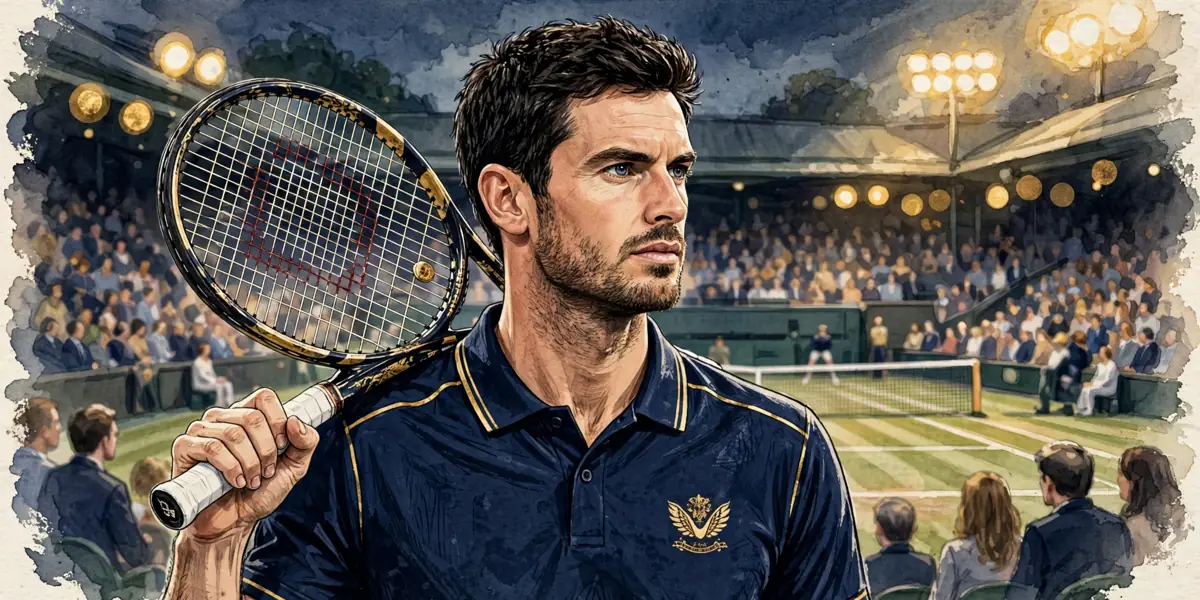
Andy Murray Net Worth 2026: Quick Facts
| Full Name | Sir Andrew Barron Murray |
|---|---|
| Date of Birth | 15 May 1987 |
| Birthplace | Dunblane, Scotland |
| Estimated Net Worth (2026) | $100 million – $165 million; Celebrity Net Worth lists $140 million; The Sunday Times Rich List 2026 lists £110 million |
| Career Prize Money | $64,687,542 (ATP official total; fifth all-time when he retired) |
| Peak Income Sources | Tournament prize money; endorsements with Castore, Jaguar, Under Armour, Adidas and Head; appearance fees |
| Key Ventures | Cromlix Hotel (five-star, Dunblane); 77 Sports Management; 40+ startup investments via Seedrs; stakes in Castore, Manors and Hylo |
| Career Highlights | 3 Grand Slam titles; 2 Olympic singles gold medals; 46 singles titles; world No. 1 in 2016; Davis Cup winner 2015 |
| Spouse | Kim Sears (married 2015); four children |
| Status | Retired from professional tennis, August 2024 |
In This Article
- Andy Murray Net Worth 2026: Quick Facts
- Early Life in Dunblane: From School Courts to the World Stage
- The Career That Built the Fortune
- Prize Money: 64.7 Million Dollars Earned on Court
- Endorsements: Castore, Jaguar and the Deals That Paid Off
- Cromlix Hotel: The Five-Star Bet Near Dunblane
- 77 Sports Management and the Startup Portfolio
- Homes, Cars and Other Assets
- How the Fortune Grew: Career Milestones and Money
- Andy Murray vs the Big Three: A Money Comparison
- Personal Life: Kim Sears, Four Children and Life After Tennis
- After Retirement: Coaching Djokovic and What’s Next
- Andy Murray Net Worth: Frequently Asked Questions
- Final Thoughts: The Bottom Line on Andy Murray’s Fortune
- Sources and How We Estimated
Early Life in Dunblane: From School Courts to the World Stage
Andy Murray was born on 15 May 1987 in Dunblane, a small town in central Scotland, to Judy Murray, a tennis coach, and William Murray. His older brother Jamie Murray would go on to become a doubles specialist and a multiple Grand Slam doubles champion in his own right. Tennis was the family trade: Judy coached both boys from childhood, and Andy was hitting balls at the local club before most children his age had picked a sport at all.
His childhood carries a story that still shapes how Britain sees him. In March 1996, when Murray was eight years old, a gunman attacked Dunblane Primary School, the school he attended, killing 16 children and a teacher. Murray survived — he was in a classroom elsewhere in the building — and he has spoken only rarely about that day in the years since, once describing it as something he preferred not to dwell on in public. It is part of his story, not a detail to be mined for colour, and it helps explain the guardedness that marked his public manner for much of his career.
By his early teens Murray’s talent was obvious enough that the family made hard choices. At 15 he moved to Barcelona to train at the Sánchez-Casal Academy, a step that cost the family a great deal and meant long stretches away from home. He turned professional in 2005, won his first ATP title in San Jose in February 2006, and broke into the world’s top 10 the following year. The money was modest at first — early-round prize cheques and a first equipment deal — but the trajectory was set: Murray was the first British man in a generation with a realistic path to the very top of the sport.
That path ran through the most competitive era men’s tennis has ever seen. Murray’s whole prime overlapped with Roger Federer, Rafael Nadal and Novak Djokovic, three players who between them collected 66 Grand Slam singles titles. Murray won three of his own, reached 11 Grand Slam finals, and spent 41 weeks as world No. 1. The prize money and the endorsements that followed were earned against the hardest competition the sport has produced.
The Career That Built the Fortune
Murray’s breakthrough came at the 2012 US Open, where he beat Novak Djokovic in a five-set final to win his first Grand Slam title and become the first British man to win a major singles title since Fred Perry in 1936. Weeks earlier he had won Olympic singles gold at London 2012, beating Roger Federer on Centre Court at Wimbledon, and taken silver in the mixed doubles with Laura Robson. The following summer he did what no British man had done in 77 years: he won Wimbledon, beating Djokovic in straight sets in the 2013 final.
He won Wimbledon again in 2016, beating Milos Raonic in the final, and in November 2016 he reached world No. 1 after winning the Paris Masters, finishing the year as the year-end No. 1 ahead of Djokovic. That 2016 season was the richest of his career in every sense: he won nine titles including the ATP Finals in London, defended his Olympic singles gold in Rio — the first tennis player ever to win two Olympic singles titles — and led Great Britain to Davis Cup glory the previous year, in 2015, winning all 11 of his rubbers in the campaign.
For readers who want the full story of his life and career rather than the money, our Andy Murray biography covers his rise, his titles and his retirement in detail. The money story cannot be separated from the tennis story: every pound of it traces back to those seasons at the top.
Then came the hip. A chronic hip problem that first flared in 2017 ended his 2017 season, wrecked his 2018, and led to hip resurfacing surgery in January 2019 — an operation that left him with a metal hip and, at the time, an uncertain future in the sport. He fought back to win the European Open in Antwerp in October 2019, one of the most emotional wins of his career, and kept playing through 2024, but he never again reached the heights of 2016. His final match came at the Paris Olympics in August 2024, a men’s doubles quarter-final defeat alongside Dan Evans. He left the court to a standing ovation and a career that had already made him wealthy for life.
Prize Money: 64.7 Million Dollars Earned on Court
The one part of Andy Murray’s wealth that is a matter of public record, down to the dollar, is his prize money. The ATP lists his official career prize money at $64,687,542, a total that placed him fifth on the tour’s all-time prize-money list when he retired. Only Federer, Djokovic and Nadal — and, by the time he retired, very few others — had earned more from tournament play alone.
Prize money on the ATP Tour is heavily weighted toward the top. Grand Slam winners now take home several million dollars per title, and Murray’s three major titles, his 14 Masters 1000 titles and his ATP Finals crown in 2016 were the paydays that built the base of his fortune. His best single season was 2016, when the Wimbledon title, the Olympic gold, the ATP Finals win and the year-end No. 1 ranking combined into the biggest prize-money year of his career.
| Prize Money Fact | Figure |
|---|---|
| Official career prize money (ATP) | $64,687,542 |
| All-time ATP prize-money ranking at retirement | 5th |
| Grand Slam singles titles | 3 (US Open 2012; Wimbledon 2013, 2016) |
| Olympic singles gold medals | 2 (London 2012; Rio 2016) |
| Career singles titles | 46 |
| Masters 1000 titles | 14 |
| Weeks at world No. 1 | 41 |
Two things are worth noting about that $64.7 million. First, it is gross prize money before tax, travel, coaching and support-team costs, which for a top player run into seven figures a year. Second, it is only part of the picture: in his peak years Murray earned $10 million to $15 million a year on and off the court, according to Celebrity Net Worth, which means endorsements and appearance fees roughly matched or exceeded his prize money in his best seasons. The prize money was the foundation; the commercial deals were the multiplier.
Endorsements: Castore, Jaguar and the Deals That Paid Off
Murray’s endorsement career followed the usual arc for a British sporting star, with one difference: he was unusually willing to bet on small British companies rather than simply collecting cheques from the biggest global brands. His first major apparel deal was with Adidas, who dressed him through the early years of his rise. In late 2014 he moved to Under Armour on a four-year deal, a switch that put him at the centre of the American brand’s push into tennis and football.
The deal that mattered most came in 2019, when Murray signed with Castore, the British sportswear company founded by brothers Tom and Phil Beahon. He became Castore’s first flagship athlete, and the partnership went beyond a standard kit deal: Castore launched the AMC (Andy Murray Collection) apparel line with him, and Murray took an equity stake in the company. That stake is the kind of arrangement that can be worth far more than a fee if the company grows — and Castore did grow, signing kit deals with McLaren’s Formula 1 team, Wolverhampton Wanderers, Newcastle United, Aston Villa, Sevilla and Bayer Leverkusen, and landing its founders on The Sunday Times Rich List 2026 at £350 million. Murray’s early backing of the brand is now one of the smartest commercial calls of his career.
His longest-running car partnership was with Jaguar, for whom he served as a brand ambassador from 2016. He has also been associated with Head rackets throughout his career — he played with a Head Radical for almost his entire professional life — and with a string of other sponsors including Standard Life, Royal Bank of Scotland, Highland Spring and, in the early years, Fred Perry. None of these deals was ever going to match the numbers of a football superstar, but stacked across a 19-year career at the top of a global sport, they added tens of millions of dollars to his fortune.
The Castore lesson: Murray’s deal with Castore was an equity partnership, not just a sponsorship fee. When a small British brand he backed early grew into a kit supplier for Formula 1 and Premier League clubs, his stake grew with it — the clearest example of how he turned fame into ownership rather than just income.
Cromlix Hotel: The Five-Star Bet Near Dunblane
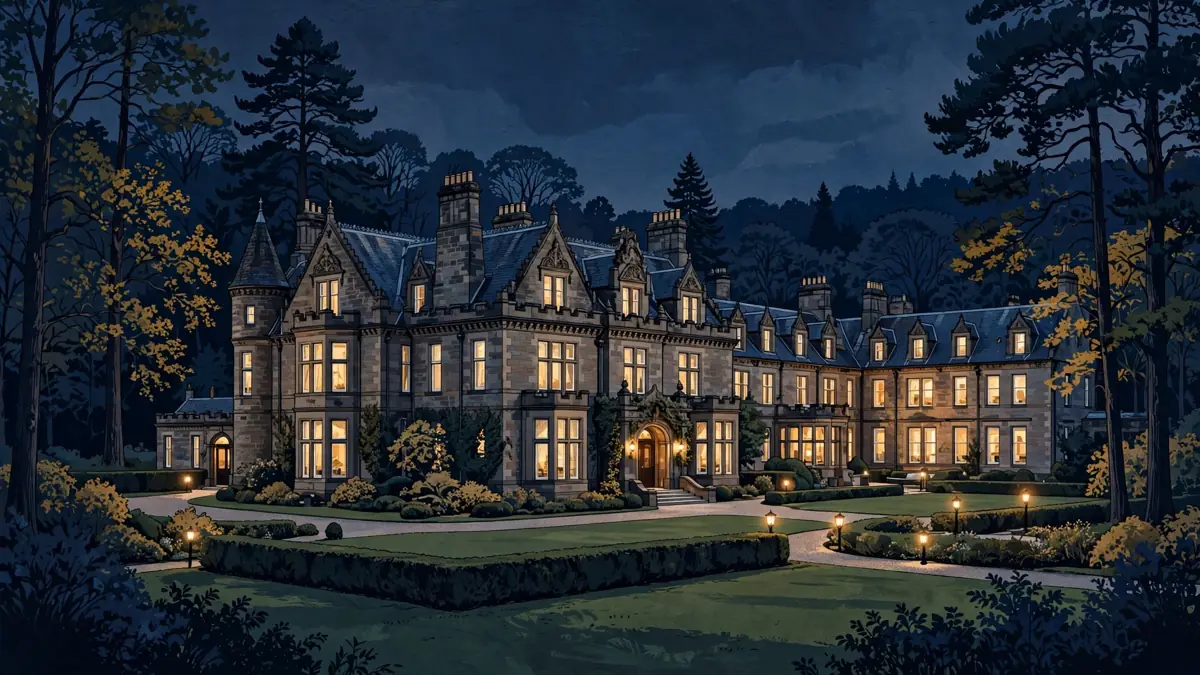
The most famous asset in Andy Murray’s portfolio sits a few miles from where he grew up. In 2013, the year he first won Wimbledon, Murray bought Cromlix House, a Victorian mansion set in 34 acres of woodland near Dunblane, for a reported £1.8 million. He renovated it and reopened it as the Cromlix Hotel, a five-star country-house hotel that has since become one of Scotland’s most decorated small hotels: it has been named Scotland’s AA Hotel of the Year and was awarded a Michelin Key in 2024.
The hotel was not an easy investment. Like most luxury hospitality businesses it went through difficult trading years, and reports around its accounts have at various points shown losses as the renovation costs and running costs bit. But the direction of travel in 2026 is positive: the hotel returned to profitability in 2025, and in May 2026 it relaunched with a new wellness cottage and two fine-dining restaurants, a clear sign that Murray and his wife Kim — who has been closely involved in the hotel — see it as a long-term holding rather than a trophy purchase.
Cromlix matters to the net-worth picture in two ways. First, it is a real asset: a five-star hotel on 34 acres of Scottish countryside, bought for £1.8 million and developed for more than a decade, is worth far more than its purchase price today. Second, it is a working business, not a passive property: it employs local staff, draws guests from around the world, and gives Murray an income stream that has nothing to do with tennis. For a sports star planning a second act, that is exactly the kind of asset that holds its value after the cheering stops.
77 Sports Management and the Startup Portfolio
If Cromlix is Murray’s most visible business, 77 Sports Management is his most interesting one. He co-founded the agency in 2017 — the “77” marks the 77 years between Fred Perry’s 1936 Wimbledon title and Murray’s own in 2013 — to mentor and represent young athletes in tennis, football and track. The latest accounts for the company value it at just under £21.5 million, according to reporting on The Sunday Times Rich List 2026, and it oversees a range of his business interests including his investment in Cromlix.
Through 77 Sports Management, Murray became one of British sport’s most active startup investors. He has put money into more than 40 startups via the crowdfunding platform Seedrs, spreading small stakes across technology, health, wellness and sport. His best-known startup bets include his equity in Castore, his investment in Game4Padel — the padel operator bringing the fast-growing racket sport to the UK — and, in 2026, new stakes in Manors, a golf attire brand, and Hylo, a running-shoe company. The pattern is consistent: early-stage British brands in sport and wellness, where his name and his understanding of the market are part of the value he brings.
Startup investing is high-risk by nature, and not every one of those 40-plus bets will pay off. But the portfolio approach is the point: a handful of winners — a Castore, for example — can cover many small losses. It is also the clearest evidence that Murray thought about his money as a business rather than a windfall. Most tennis players of his generation collected endorsement fees and bought property; Murray built a management company, took equity, and backed founders.
Homes, Cars and Other Assets
Beyond Cromlix and the 77 Sports Management portfolio, Murray’s assets are deliberately low-key for a man worth nine figures. The family home is in Oxshott, Surrey, a village popular with sports stars for its privacy and its proximity to London’s airports and training bases. He has also been reported to own property in Scotland near his family, though the details of his private property holdings are not public and this article does not guess at them.
His car collection reflects the Jaguar ambassadorship more than any personal extravagance: over the years he has been pictured with Jaguar models including the F-Type, and he has spoken about his fondness for cars without ever building the kind of headline-grabbing garage some footballers favour. There are no reports of private jets, superyachts or the trophy assets that inflate other athletes’ net-worth stories, and that restraint is part of why the $100 million to $165 million range is credible — Murray’s wealth is in businesses and investments, not in depreciating toys.
One asset that is hard to put a price on is his name itself. A knighthood — awarded in the 2017 New Year Honours list, with the ceremony at Buckingham Palace in 2019 — and a record as Britain’s most successful tennis player of the Open era give him a standing that keeps paying: speaking engagements, advisory roles, board seats and media work all flow from it, and all of them will keep earning long after his playing career is a memory.
How the Fortune Grew: Career Milestones and Money
Murray never published his accounts, and no outlet has access to his bank statements, so a year-by-year net-worth chart would be guesswork. What can be tracked honestly is the sequence of career and business milestones that built the fortune, and the figures that attach to each of them.
| Year | Milestone |
|---|---|
| 2005 | Turns professional; first ATP final in Bangkok |
| 2006 | First ATP title (San Jose); breaks into the world top 20 |
| 2009–2014 | Adidas apparel deal; first Grand Slam finals (US Open 2008, Australian Open 2010, 2011) |
| 2012 | Olympic singles gold at London 2012; first Grand Slam title at the US Open — the breakthrough year for prize money and endorsements |
| 2013 | Wins Wimbledon; buys Cromlix House for a reported £1.8 million |
| 2014 | Signs four-year apparel deal with Under Armour |
| 2015 | Leads Great Britain to Davis Cup victory; marries Kim Sears |
| 2016 | Second Wimbledon title; second Olympic gold in Rio; world No. 1 and year-end No. 1 — the richest season of his career |
| 2017 | Co-founds 77 Sports Management; receives knighthood in the New Year Honours list |
| 2019 | Hip resurfacing surgery; signs with Castore as its first flagship athlete and takes an equity stake |
| 2024 | Retires after the Paris Olympics; career prize money stands at $64.7 million |
| 2025 | Cromlix Hotel returns to profitability; new startup stakes in Manors and Hylo follow in 2026 |
| 2026 | Cromlix relaunches in May with a wellness cottage and two restaurants; Sunday Times Rich List values Murray at £110 million |
The shape of that timeline tells its own story. The fortune was built in two waves: the playing wave, from 2012 to 2016, when prize money and endorsements peaked; and the business wave, from 2017 onwards, when Murray converted sporting capital into ownership — a hotel, a management company, equity in brands he believed in. The second wave is why his net worth did not fall off a cliff when he stopped playing, as it does for so many retired athletes. By the time he retired in 2024, the businesses were doing the earning.
Andy Murray vs the Big Three: A Money Comparison
Murray’s career will always be measured against Federer, Nadal and Djokovic, and the money is no exception. The comparison is flattering to Murray in one way and humbling in another: he earned far more than any other player of his generation outside the Big Three, but the gap to the very top of the sport’s money list is wide — and it is mostly a gap in endorsements, not prize money.
On court, Murray’s $64.7 million in prize money sits close behind the Big Three’s totals. Off court, the difference opens up. Roger Federer’s net worth is listed by Celebrity Net Worth at around $550 million — and Forbes declared Federer a billionaire in 2025, thanks largely to his equity stake in the Swiss running-shoe brand On, a deal that dwarfs any single endorsement in tennis history. Djokovic and Nadal, whose fortunes Celebrity Net Worth lists at roughly $240 million and $220 million respectively, also out-earned Murray commercially, helped by longer spells at No. 1 and by the global reach of their personal brands.
None of that diminishes Murray’s achievement. He is the fourth-richest men’s tennis player of his era by prize money, and his $100 million to $165 million fortune is larger than the career earnings of almost every player who ever picked up a racket. The comparison also underlines his business sense: Federer made his fortune from one huge equity bet, while Murray spread his across a hotel, a management company and 40-plus startups. Different routes, same destination — wealth that outlasts a playing career.
The next generation is already following the path Murray and the Big Three laid. For a sense of where the sport’s money is heading, our profiles of Novak Djokovic’s age and career stage, Rafael Nadal’s age at retirement, and Emma Raducanu’s net worth — the British star whose commercial rise shows how quickly a young player’s value can grow — put Murray’s numbers in context.
Personal Life: Kim Sears, Four Children and Life After Tennis
Murray married Kim Sears, his long-term girlfriend and the daughter of tennis coach Nigel Sears, on 11 April 2015 at Dunblane Cathedral, with the reception held at the couple’s own Cromlix Hotel. The couple have four children — daughters Sophia (born 2016) and Edie (2017), son Teddy (2019) and daughter Lola (2021) — and have kept their family life deliberately private, splitting their time between Surrey and Scotland.
Kim has been more than a supporting presence in the business story: she has been closely involved in Cromlix, and reporting on the couple’s combined wealth in 2026 regularly treats the hotel as a joint project. Estimates of Kim Sears’ own net worth circulate online in the $2.7 million to $5 million range, but those figures come from low-grade aggregator sites rather than named reporting, and this article does not rely on them. What is solid is that the couple’s combined business interests — hotel, management company and investments — are run as a family enterprise.
Off court, Murray has been one of the most outspoken male players on equality in tennis, arguing for years that women’s matches deserved equal billing and equal prize money, and he has twice hired women as his coach — first Amélie Mauresmo in 2014, a move that drew attention at the time. He has also been candid about the mental strain of his career, including the pressure of carrying British expectations at Wimbledon year after year, and about his love of football — he is a lifelong Hibernian supporter. None of that shows up in a net-worth figure, but it explains why his reputation has held up so well since retirement: the public sees a man who earned his money and kept his head.
After Retirement: Coaching Djokovic and What’s Next
Retirement did not mean leaving tennis. In November 2024, just three months after his final match, Murray took one of the most surprising jobs in the sport: he became the coach of Novak Djokovic, his old rival, for the 2025 Australian Open. The partnership lasted until May 2025, when the two men announced they were parting ways, but it showed that Murray’s knowledge of the game is valued at the very top — and that his post-playing career will have no shortage of options.
What comes next is an open question, and an interesting one for his net worth. Former players of Murray’s standing earn from commentary, coaching, board roles and speaking, and his business portfolio — Cromlix, 77 Sports Management and the startup stakes — gives him income that does not depend on any of it. The likeliest path is a mix: more involvement in the hotel and the management company, selective coaching or advisory work, and the kind of ambassadorial roles that come to a knighted champion with three Grand Slam titles. The fortune is built; the second career is about keeping it growing.
Andy Murray Net Worth: Frequently Asked Questions
What is Andy Murray’s net worth in 2026?
Andy Murray’s net worth in 2026 is estimated at between $100 million and $165 million (£80 million to £130 million). Celebrity Net Worth lists him at $140 million (updated 15 May 2026), while The Sunday Times Rich List 2026 puts him at £110 million. The range reflects different valuations of his hotel, management company and startup stakes.
How much prize money did Andy Murray earn in his career?
Murray earned $64,687,542 in official ATP prize money across his career, placing him fifth on the tour’s all-time prize-money list when he retired in 2024. His biggest prize-money season was 2016, when he won Wimbledon, Olympic gold and the ATP Finals and finished the year as world No. 1.
Does Andy Murray own the Cromlix Hotel?
Yes. Murray bought Cromlix House near Dunblane in 2013 for a reported £1.8 million and turned it into the five-star Cromlix Hotel. The hotel has been named Scotland’s AA Hotel of the Year and earned a Michelin Key in 2024. It returned to profitability in 2025 and relaunched in May 2026 with a new wellness cottage and two restaurants.
What is 77 Sports Management?
77 Sports Management is the sports management agency Murray co-founded in 2017 to mentor and represent young athletes. The latest accounts value the company at just under £21.5 million. Through it, Murray has invested in more than 40 startups via the Seedrs platform, including stakes in Castore, Game4Padel, Manors and Hylo.
Who is Andy Murray’s wife?
Andy Murray is married to Kim Sears, whom he wed on 11 April 2015 at Dunblane Cathedral. They have four children: Sophia, Edie, Teddy and Lola. Kim has been closely involved in the running of the Cromlix Hotel.
How many Grand Slam titles did Andy Murray win?
Murray won three Grand Slam singles titles: the US Open in 2012 and Wimbledon in 2013 and 2016. He also won two Olympic singles gold medals (London 2012 and Rio 2016), 46 career singles titles and the Davis Cup with Great Britain in 2015, and spent 41 weeks as world No. 1.
When did Andy Murray retire?
Murray retired from professional tennis in August 2024 after the Paris Olympics, where his final match was a men’s doubles quarter-final alongside Dan Evans. He had previously had hip resurfacing surgery in January 2019 and played through the final years of his career with a metal hip.
How does Andy Murray’s net worth compare to Roger Federer’s?
Federer is considerably wealthier: Celebrity Net Worth lists him at around $550 million, and Forbes declared him a billionaire in 2025, largely thanks to his equity stake in the running-shoe brand On. Murray’s $100 million to $165 million fortune is still larger than that of almost every other tennis player in history, and it is built more on businesses — a hotel, a management company and startup stakes — than on endorsements alone.
Final Thoughts: The Bottom Line on Andy Murray’s Fortune
Andy Murray’s net worth in 2026 sits in a range of $100 million to $165 million, with $140 million from Celebrity Net Worth as the most-cited central figure and £110 million from The Sunday Times Rich List as the UK-side anchor. The range is honest: it reflects real disagreement between reputable outlets about how to value a hotel, a management company and a portfolio of startup stakes that no outsider can audit.
What the numbers cannot show is the shape of the achievement. Murray made his fortune in the hardest era in tennis history, against three of the greatest players who ever lived, and then did something most athletes never manage: he turned the winnings into ownership. The Cromlix Hotel, 77 Sports Management and a portfolio of more than 40 startups mean his money now works without him having to pick up a racket — and the 2026 relaunch of Cromlix and the new stakes in Manors and Hylo show he is still building. For a boy from Dunblane who survived the worst day in his town’s history and went on to end a 77-year wait for a British Wimbledon champion, the fortune is the least interesting part of the story. It is also, by any measure, a very large one.
For more on the tennis stars whose careers and fortunes overlap with Murray’s, browse our net worth profiles — from the Big Three to the next generation of British talent.
Sources and How We Estimated
This article’s figures come from named, dated sources, not from aggregator sites that publish numbers without showing their work. The central net-worth range of $100 million to $165 million (£80 million to £130 million) comes from 2026 reporting that surveyed the published estimates; Celebrity Net Worth lists $140 million (updated 15 May 2026) and The Sunday Times Rich List 2026 lists £110 million, with coverage in GiveMeSport and SPORTbible. Career prize money of $64,687,542 is the official ATP total, published by the ATP Tour. Details of the Cromlix Hotel’s purchase price, awards and 2026 relaunch, and of 77 Sports Management’s valuation, come from 2026 reporting on the Rich List and the hotel’s own announcements as covered in the press.
How we estimated: where reputable sources disagree, we publish the range and name the source behind each figure rather than picking a single number and pretending it is certain. Prize money is a matter of public record; the value of private businesses and startup stakes is not, so estimates of Murray’s total wealth will always carry a margin of error. Figures are estimates and may differ from the private reality. Figures for peers (Federer, Djokovic, Nadal) are Celebrity Net Worth’s published estimates, with Forbes’ 2025 billionaire listing for Federer noted separately. This article was last updated on 14 November 2026.