Roger Federer net worth in 2026 is estimated at $950 million to $1.1 billion, with Forbes as the anchor source — and the range matters more than any single number this year. Forbes put the Swiss champion at about $1.1 billion when it added him to its World’s Billionaires List in March 2026, then revised its estimate down to roughly $952 million in August 2026 after shares in On Holding, the Swiss sportswear company in which Federer owns a stake, fell sharply. Celebrity Net Worth, which uses a more conservative method, lists him at $750 million. The honest picture as of November 10, 2026: Federer crossed the billion-dollar line in 2025, slipped just below it on paper in the summer of 2026, and remains one of only two tennis players ever to reach billionaire territory.
That is a remarkable place to end up for a man who earned his living with a racket. Federer banked around $130.6 million in career prize money, the third-highest total in tennis history, but prize money is the smallest part of the story. He earned close to $1 billion from endorsements alone across his career, according to Celebrity Net Worth, and his early investment in On — a stake reported at about 3 percent in 2019 for roughly $50 million — did more for his fortune than any tournament he ever won. This article breaks down every stream: the prize money, the Uniqlo and Rolex deals, the On stake, the businesses, the property, and the year-by-year climb, with each figure tied to the outlet that reported it.
Last updated: November 10, 2026. By Celebamerica Editorial Staff.
Quick Facts: Roger Federer Financial Snapshot
| Full Name | Roger Federer |
|---|---|
| Date of Birth | August 8, 1981 (age 45 in 2026) |
| Birthplace | Basel, Switzerland |
| Estimated Net Worth (2026) | $950 million – $1.1 billion (Forbes: $1.1B in March 2026, ~$952M in August 2026; Celebrity Net Worth: $750M) |
| Career Prize Money | ~$130.6 million (ATP Tour; third-highest in tennis history) |
| Primary Income Sources | Endorsements (Uniqlo, Rolex, Mercedes-Benz, Moët & Chandon, Lindt, Credit Suisse and more), On Holding equity stake, prize money, Laver Cup and business ventures |
| Key Ventures | On Holding (investor, ~2.5–3% stake), Team8 management agency (co-founder), Laver Cup (co-creator), Roger Federer Foundation |
| Career Highlights | 20 Grand Slam singles titles, 103 tour-level titles, 310 weeks as world No. 1, 1,251 match wins, inducted into the International Tennis Hall of Fame on August 29, 2026 |
| Spouse | Mirka Federer (married 2009) |
| Children | Four — twin daughters Myla and Charlene (born 2009), twin sons Leo and Lenny (born 2014) |
| Residence | Switzerland (Valbella; new estate under construction in Rapperswil-Jona on Lake Zurich) |
Table of Contents
- Quick Facts: Roger Federer Financial Snapshot
- Early Life and Background
- Career Rise: From Basel to World No. 1
- How Much Is Roger Federer Worth in 2026?
- Prize Money and Tournament Earnings
- Endorsements: Uniqlo, Rolex and the Billion-Dollar Brand
- The On Investment: The Deal That Made Him a Billionaire
- Business Ventures and Investments
- Net Worth Growth Timeline
- Real Estate and Assets
- Federer vs the Big Three: A Peer Comparison
- Personal Life
- Hall of Fame Induction 2026
- Criticism and the Uniqlo Switch
- Frequently Asked Questions
- Bottom Line
- Sources and Reporting
Early Life and Background
Roger Federer was born on August 8, 1981, in Basel, Switzerland, to Robert Federer, a Swiss-German pharmaceutical executive, and Lynette Federer, a South African who worked for the same company. He grew up in the suburb of Münchenstein, a short drive from the French and German borders, and the mix of languages and cultures at home — German, French and English were all part of daily life — later became one of the reasons sponsors found him so easy to sell around the world.
He picked up a racket at three and was playing club tennis by six, but tennis was not his only sport. As a boy he played football seriously, and for a while it looked like the choice between the two could go either way. His parents, to their credit, never forced the decision. Federer has said in interviews over the years that football taught him footwork and reading space, and anyone who watched him glide across a grass court would believe it. By his early teens the racket had won.
The junior years were not the smooth coronation the later career suggests. Young Federer was famously fiery — racket-throwing, shouting, a temper that coaches had to work around. The turning point, by his own telling, came when he realised the outbursts were costing him matches he should have won. The calm, almost eerie composure that defined his prime was learned, not born. He turned professional in 1998 at 17, ranked outside the top 300, and spent the next few years climbing: a first ATP title in Milan in 2001, a first win over Pete Sampras at Wimbledon the same summer, and the sense, already, that something unusual was taking shape.
Those early years matter to the money story because they set the pattern of Federer’s whole commercial life. He was never a player who chased the biggest cheque in the room. From his first deals he favoured long partnerships with a small group of premium brands, and that patience — staying with Rolex, Wilson and others for decades rather than flipping sponsors — is a large part of why his endorsement income eventually approached $1 billion.
Career Rise: From Basel to World No. 1
The breakthrough came at Wimbledon in 2003. Federer, then 21, beat Mark Philippoussis in the final to win his first Grand Slam, and the dam broke. He won the Australian Open, Wimbledon and the US Open in 2004, finished that year as world No. 1, and then held the top ranking for a record 237 consecutive weeks from February 2004 to August 2008. No man before or since has owned the sport so completely for so long.
The numbers from the prime years still look unreal written down: 20 Grand Slam singles titles, including a men’s-record eight at Wimbledon, six Australian Opens, five US Opens and one French Open, completed at Roland Garros in 2009. He won 103 tour-level titles, second only to Jimmy Connors in the Open era, and 1,251 tour-level matches. He spent 310 weeks at No. 1 in total. He won the Davis Cup with Switzerland in 2014 and Olympic doubles gold with Stan Wawrinka in Beijing in 2008, adding Olympic singles silver at London 2012.
What made the run commercially priceless was not just the winning but the way he won. The one-handed backhand, the footwork, the absence of visible effort — Federer played tennis the way luxury brands want their products to look. Sponsors were not buying a tennis player; they were buying elegance, and elegance does not go out of fashion. That is why his earning power barely dipped when his results did, and why he remained the highest-paid tennis player in the world for years after he stopped being the best player in it.
The rivalries shaped the second half of the career. Rafael Nadal, who beat him in the epic 2008 Wimbledon final, and Novak Djokovic, who overtook him in the head-to-head and in the weeks-at-No. 1 record, pushed Federer to keep playing into his late thirties — and pushed the sport’s popularity, and its prize money, to heights none of the three could have reached alone. The three men between them turned men’s tennis into a global television product, and Federer, as the most marketable of the three, collected the largest share of the commercial upside. For the full story of his life and career beyond the money, our sister site’s Roger Federer biography covers his journey from Basel junior to global icon in detail.
The final act was a long goodbye. Knee surgery in 2020, another in 2021, and a body that would no longer do what the mind asked. He announced his retirement in September 2022 and played his last match at the Laver Cup in London, in doubles alongside Nadal, with both men in tears at the end. He retired, by Forbes’ count, with roughly $1 billion in pre-tax career earnings from tennis and endorsements combined — and, as the next sections show, his wealth kept growing after he stopped playing.
How Much Is Roger Federer Worth in 2026?
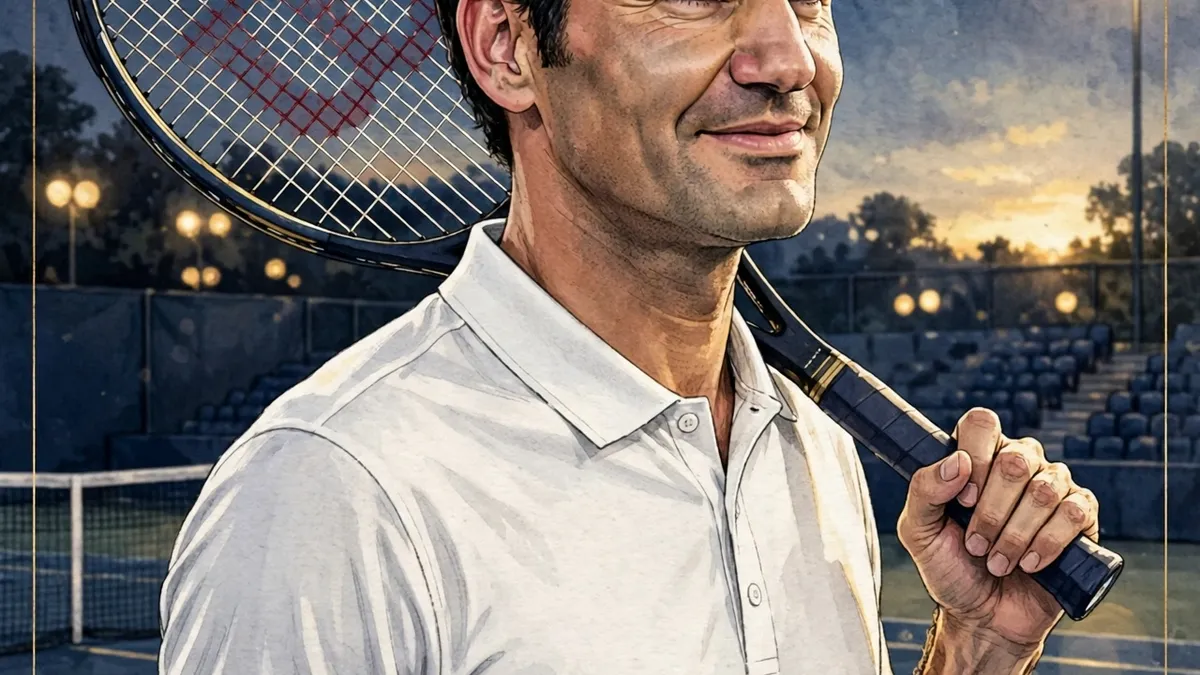
The short answer: somewhere between $950 million and $1.1 billion, depending on the date and the source, with Forbes as the best anchor. Here is the dated record, source by source, so readers can see exactly where the range comes from.
- Bloomberg, June 2025: valued Federer at about $1.3 billion — the highest published figure, and the first time a major outlet put him clearly above the billion mark.
- Forbes, March 2026: listed him at $1.1 billion on its annual World’s Billionaires List, his debut on the ranking. The ATP Tour reported the news on March 11, 2026, and Tennis.com followed on March 13, 2026, noting that he first crossed the billion-dollar mark in August 2025. Federer became only the second tennis player in history to reach billionaire status, after Romanian former player and businessman Ion Tiriac, who made the list in 2007.
- Forbes, August 11, 2026: revised the estimate down to $952.4 million after On Holding shares plunged about 19 percent in a single day following a second-quarter sales miss. Forbes estimated his On stake at about 2.5 percent at that point, and the share drop cut more than $50 million from his fortune in short order.
- Celebrity Net Worth: lists Federer at $750 million — a far more conservative figure that appears to weight his liquid wealth and career earnings more heavily than the market value of his On stake.
- Parade, January 2026: reported the Forbes $1.1 billion figure while also citing Celebrity Net Worth’s $750 million, and noted he had earned around $1 billion from endorsements alone.
Why do the numbers move so much? Because Federer’s fortune is now mostly tied to a single listed stock. When On’s share price rises, he is a billionaire; when it falls, he is not — at least on paper. The Tennis Tour Calendar’s September 2026 update put it neatly: a central estimate of about $950 million as of September 30, 2026, with a reasonable public-information range of $850 million to $1.05 billion, and On shares closing that month at $29.61. Our range of $950 million to $1.1 billion sits inside that logic: the Forbes March snapshot at the top, the Forbes August revision at the bottom.
The honest summary: Federer is a billionaire on Forbes’ March 2026 snapshot and a near-billionaire on its August 2026 revision. The $750 million Celebrity Net Worth figure is an outlier on the low side and looks stale against the On stake’s value. Nobody outside Federer’s own accountants knows his exact private balance sheet — no audited figure is public — so any outlet that states one number without a range is oversimplifying.
What is not in doubt is the scale. Whether the true number is $952 million or $1.1 billion, Federer sits in a club of perhaps half a dozen athletes in history who have built a ten-figure fortune, alongside LeBron James, Tiger Woods, Cristiano Ronaldo and Lionel Messi. And he is the only one of them who did it primarily as a tennis player, a sport whose total prize money is a fraction of football’s or basketball’s.
Prize Money and Tournament Earnings
Federer’s official career prize money stands at about $130.6 million, according to the ATP Tour — the third-highest total in tennis history. Only Novak Djokovic, at roughly $189 million, and Rafael Nadal, at roughly $135 million, sit ahead of him, and both played longer at the top and benefited from the prize-money inflation of the 2010s and 2020s. Tennis.com, reporting the Forbes listing in March 2026, put the figure at nearly $131 million.
That number, large as it is, is worth putting in proportion. Prize money accounts for roughly one-eighth of Federer’s fortune. The rest came from sponsors, appearance fees and investments. It is a useful corrective to the idea that athletes get rich from winning: Federer got rich from being Federer, and the winning was the advertisement.
| Prize Money Comparison | Career Prize Money (ATP) |
|---|---|
| Novak Djokovic | ~$189 million |
| Rafael Nadal | ~$135 million |
| Roger Federer | ~$130.6 million |
Beyond the official prize money, Federer earned millions more in appearance fees — the guaranteed payments tournaments offer star players simply to show up. The biggest events in Asia and the Middle East were long reported to pay him seven-figure guarantees for a single week’s work, though the exact figures were never confirmed publicly and we do not invent them here. He also earned substantial sums from exhibition matches and the Laver Cup, the team event he co-created, which became a commercial success in its own right.
The earnings peak came late. In 2020, Forbes ranked him the world’s highest-paid athlete, with $106.3 million earned over twelve months — almost all of it from endorsements, since he played barely any tennis that year because of knee surgery. Parade noted the same figure in its 2026 profile. It was the first time a tennis player had topped Forbes’ athlete rich list, and it proved the point that would define his retirement: Federer’s brand had outgrown his results.
Endorsements: Uniqlo, Rolex and the Billion-Dollar Brand
Endorsements are the engine of the Federer fortune. Celebrity Net Worth credits him with around $1 billion in lifetime endorsement income, and Parade’s 2026 profile repeats the figure. No tennis player before him came close. The portfolio was built on a simple rule: few brands, long deals, premium positioning.
Uniqlo — the $300 million deal. The headline contract came in 2018, when Federer left Nike after more than two decades and signed a reported ten-year, $300 million agreement with Japanese apparel giant Uniqlo. The structure was the story: the deal reportedly pays him whether he plays or not, which meant his 2022 retirement did not cost him a cent of it. Nike had reportedly offered far less to renew, and Federer — who had worn Nike since his teens — walked away from the swoosh in one of the most talked-about sponsor switches in sports history. Uniqlo got a global ambassador who wears its clothes everywhere from Wimbledon to the Met Gala; Federer got $30 million a year guaranteed into his fifties.
Rolex. The watch deal is the longest and most natural of the partnerships. Federer has been a Rolex ambassador since 2006, and the pairing — Swiss precision, quiet luxury, no shouting — fits him better than any endorsement in sport. The exact value has never been disclosed, but industry estimates have long placed it among the richest watch deals in athletics, and Federer still wears Rolex at every public appearance.
The rest of the portfolio. Over the years the roster has included Mercedes-Benz, Moët & Chandon, Lindt chocolate, Credit Suisse, Jura coffee machines, NetJets, Rimowa luggage, Barilla pasta and Sunrise telecom. The pattern is consistent: Swiss or Swiss-adjacent luxury, food and finance, brands that want to be associated with calm excellence rather than noise. He was selective to a fault — Federer turned down far more deals than he signed, which is exactly why the ones he did sign paid so much.
Two things made the endorsement machine unusual. First, the deals were global rather than regional: Federer sold watches in Geneva, cars in Stuttgart, chocolate in Tokyo, and the sponsors paid for all of it at once. Second, they were built to survive retirement. The Uniqlo contract, the Rolex relationship and the equity-style deals were all structured for a post-playing career, so the income did not stop when the tennis did. Most athletes’ earnings collapse at retirement. Federer’s went up.
The On Investment: The Deal That Made Him a Billionaire
If endorsements built the fortune, one investment finished it. In 2019, Federer bought into On, a Swiss running-shoe company founded in Zurich in 2010, taking a reported stake of about 3 percent for a reported $50 million. He did not just write a cheque: he joined as a global ambassador, helped design the “The Roger” tennis-inspired shoe line, and put his name behind a small Swiss startup in a market dominated by Nike and Adidas.
It was the best financial decision of his life. On went public on the New York Stock Exchange in September 2021, and the value of Federer’s stake multiplied. By 2021, Forbes estimated the stake was already worth more than $300 million — about six times what he reportedly paid. Athlon Sports, reporting in November 2026, noted the same figures: $50 million in, more than $300 million within two years.
The stake is also the reason his net worth now moves with the stock market. On’s shares had a strong run through 2024 and into 2025, carrying Federer past the billion-dollar line in August 2025 and onto Forbes’ list in March 2026 at $1.1 billion. Then came the second-quarter 2026 results, which missed market expectations: On reported sales of 850.3 million Swiss francs for the quarter, up 13.5 percent year on year, but the market wanted more, and the shares fell about 19 percent on August 11, 2026. Forbes cut its estimate of Federer’s fortune to $952.4 million the same day, with his stake then estimated at about 2.5 percent.
The lesson is not that Federer is poorer — he has not sold a share, and the stake is worth whatever the market says on a given day — but that modern athlete wealth is equity wealth. A decade ago, an athlete’s net worth was mostly cash and property. Federer’s is mostly a bet on a shoe company he believed in before anyone else did. On was due to report third-quarter results on November 10, 2026, the day this article was published, and the next Forbes revision will follow the share price, not the other way around.
Business Ventures and Investments
Federer’s business life beyond On is quieter but deliberate. In 2013 he co-founded Team8, a sports management and marketing agency, with his long-time agent Tony Godsick. The agency manages his own affairs and a small roster of players, and it is the commercial engine behind the Laver Cup, the Ryder Cup-style team event Federer co-created in 2017. The Laver Cup — Europe versus the World, played each September — has grown into one of tennis’s most valuable properties, with sold-out arenas and global television deals, and Federer owns a piece of it.
The Roger Federer Foundation, founded in 2003, is the other pillar. It funds education programmes for children in southern Africa and Switzerland, and Federer has donated millions of dollars to it over the years, including a widely reported $1 million-plus commitment to early-childhood education in Malawi. It is a charity rather than a money-maker, but it matters to the financial picture in one respect: it shows where a share of the fortune goes, and it is part of why sponsors trust him. A brand that partners with Federer is partnering with the foundation’s reputation too.
He has also made smaller, less publicised investments in Swiss startups and sports technology, though the details of most are not public and we do not speculate on them. What is public is the philosophy: Federer invests in things he understands and uses — shoes he wears, events he plays, companies from his home country — and he holds them for years rather than flipping them. It is the same patience that defined his sponsor strategy, applied to equity.
Net Worth Growth Timeline
| Year | Milestone | Estimated Net Worth |
|---|---|---|
| 2003 | First Wimbledon title; early sponsor deals with Nike, Wilson and Rolex taking shape | ~$10 million |
| 2007 | World No. 1 for a fourth straight year; prize money and endorsements compounding | ~$80–100 million |
| 2012 | Seventh Wimbledon title; Olympic silver; peak earning years | ~$150–180 million |
| 2017 | Australian Open comeback title at 35; renewed commercial peak | ~$300–350 million |
| 2018 | Signs reported 10-year, $300M Uniqlo deal; 20th Grand Slam at the Australian Open | ~$400–450 million |
| 2019 | Buys reported ~3% stake in On for ~$50M | ~$450–500 million |
| 2020 | Forbes’ highest-paid athlete ($106.3M in 12 months); knee surgery limits play | ~$500–550 million |
| 2021 | On lists on the NYSE; Federer’s stake estimated above $300M | ~$600–700 million |
| 2022 | Retires at the Laver Cup; Forbes counts ~$1B in pre-tax career earnings | ~$700–800 million |
| August 2025 | First crosses the $1 billion mark as On shares climb (Bloomberg ~$1.3B in June 2025) | ~$1–1.3 billion |
| March 2026 | Debuts on Forbes’ World’s Billionaires List at $1.1B | $1.1 billion (Forbes) |
| August 2026 | On shares fall ~19% after Q2 results; Forbes revises to $952.4M | ~$952 million (Forbes) |
| November 2026 | Hall of Fame inductee; On Q3 results due | $950M – $1.1B range |
Two notes on the table. First, the pre-2025 figures are our reconstructions from reported earnings, deals and valuations, not published net worth estimates — the outlets that now track his fortune did not publish annual snapshots before the billionaire coverage began, so the early numbers carry a wider margin. Second, the sharpest single jump in the whole timeline is not a tournament win but an IPO: the On listing in 2021 did more for Federer’s wealth in a day than any season of tennis ever did.
Real Estate and Assets
Federer’s property portfolio is as Swiss as the man himself: discreet, expensive, and mostly on the shores of Lake Zurich. The centrepiece for years was the glass-walled house in Wollerau, in the canton of Schwyz — a three-storey, roughly 500-square-metre residence with floor-to-ceiling glass, a pool and underground parking, built for about $8.1 million and designed so his parents could live in their own apartment within the same structure. He listed it in 2017 for a reported 5.4 million Swiss francs (about $5.3 million) and sold it the following year, after moving his official residence to Valbella in Graubünden in 2015.
Valbella, in the Lenzerheide ski region, is the family’s mountain base: a chalet bought in 2014, with its own tennis court, used for ski holidays and summer breaks. He also owns a penthouse in Dubai’s Le Rêve tower in the Marina, bought in 2014 for a reported $23.5 million, which doubled as a winter training base during his playing days — five bedrooms, marina views, a private pool and gym.
The biggest project, though, is still rising. In 2018 Federer bought a 16,000 to 18,000-square-metre waterfront plot in Kempraten, part of Rapperswil-Jona on Lake Zurich, with Swiss reports valuing the land alone at 40 to 50 million Swiss francs. The planned estate — six buildings, a private tennis court, and a total price tag reported north of $50 million — has been years in construction, slowed by the pandemic, contaminated soil and a long-running dispute over lake access that Federer finally settled in late 2024 by dropping the boathouse plan. Swissinfo reported in August 2025 that construction was moving ahead. When finished it will be his primary residence and, by some distance, the most valuable single asset he owns. He also sold a roughly 5,800-square-metre plot in Herrliberg in 2024, according to Blick.
The car collection is the one area where Federer lets himself be seen enjoying the money. He is a long-time Mercedes-Benz ambassador, and the garage has reportedly included an AMG GT, an SLS AMG, a G-Class and a vintage Mercedes 300 SL, alongside Porsches and a Range Rover. As with most celebrity car collections, the precise inventory and values are not publicly confirmed, so we list the reported highlights rather than a priced catalogue.

Federer vs the Big Three: A Peer Comparison
Federer, Nadal and Djokovic are the three greatest men’s players of all time, and the money comparison between them is closer than the trophy comparison. Djokovic leads on prize money at roughly $189 million — his dominance of the 2010s and 2020s, when purses were largest, explains the gap — and Nadal sits second at about $135 million. Federer, third at $130.6 million, earned the least of the three on court and the most off it, by a wide margin. His endorsement income dwarfs both rivals’: Djokovic’s long-term deals with Lacoste, Asics and others are lucrative but smaller, and Nadal’s Nike and Kia partnerships, while substantial, never approached a single $300 million contract.
The generational baton has now passed to the players who grew up watching the three of them. Carlos Alcaraz, whose age and rise we cover in our Carlos Alcaraz age profile, and the women’s game’s new stars — Coco Gauff, profiled in our Coco Gauff biography — are building the next era of tennis wealth, with prize money and social-media earnings their predecessors never had. Serena Williams, whose career earnings and business empire we detail in our Serena Williams biography, remains the benchmark for turning tennis fame into lasting business wealth on the women’s side, with a venture portfolio that rivals Federer’s own. On height and physical comparisons, our Novak Djokovic height and Rafael Nadal height profiles round out the Big Three picture.
| Player | Grand Slams | Career Prize Money | Estimated Net Worth (2026) |
|---|---|---|---|
| Roger Federer | 20 | ~$130.6M | $950M – $1.1B |
| Rafael Nadal | 22 | ~$135M | ~$200–220M (reported estimates) |
| Novak Djokovic | 24 | ~$189M | ~$250–300M (reported estimates) |
The table’s lesson is the article’s lesson: in tennis, winning pays, but being loved pays more. Federer won fewer Slams than either rival and earned less prize money than either, yet he is worth several times more than both combined — because sponsors, investors and fans valued the Federer brand at a level no trophy count could produce. For more tennis wealth profiles, browse our net worth category.
Personal Life
Federer married Miroslava “Mirka” Vavrinec, a former Swiss professional player he met at the Sydney Olympics in 2000, in April 2009. Mirka retired from playing in 2002 because of a foot injury and has managed much of Federer’s off-court life ever since — scheduling, public relations and the family calendar. At the Hall of Fame induction in August 2026 she introduced him on stage, telling the Newport crowd it was her honour to present “my husband, my best friend and now the newest member of the International Tennis Hall of Fame.” The couple have four children: twin daughters Myla Rose and Charlene Riva, born in July 2009, and twin sons Leo and Lenny, born in May 2014.
Family has always shaped the decisions that look, from the outside, like financial ones. The Wollerau house was designed around his parents living under the same roof. The move to Valbella was about raising children in the mountains. The Rapperswil-Jona estate is a family compound, not a showpiece. And the Uniqlo deal, with its guaranteed pay through retirement, was reportedly attractive in part because it removed any financial pressure to keep playing through injury — a choice that let him retire on his own terms in 2022 rather than limping on for appearance fees.
He remains based in Switzerland, still trains most days, plays exhibition and charity matches, and turns up at the Laver Cup each year in his role as co-creator. The public image — courteous, multilingual, never a scandal — has held for a quarter of a century, which is itself a commercial asset: sponsors pay a premium for athletes who do not embarrass them.
Hall of Fame Induction 2026
On August 29, 2026, Federer was inducted into the International Tennis Hall of Fame in Newport, Rhode Island, becoming its 272nd member. The ceremony, held on the grass courts of the Hall of Fame’s stadium court before one of the largest crowds in its history, was introduced by Mirka and attended by seven fellow former world No. 1s — his idol Stefan Edberg, John McEnroe, Andy Roddick, Marat Safin, Lleyton Hewitt, Jim Courier and Mats Wilander — along with Billie Jean King and Martina Navratilova. Broadcaster Mary Carillo was inducted alongside him in the contributor category.
Federer, 45, broke down in tears several times during his acceptance speech, calling the honour “one of the greatest honours of my life” and saying that fame was never his goal — he simply wanted to spend his life doing something he loved. Novak Djokovic, his fiercest rival, sent a video tribute congratulating the new “Hall of Famer.” The induction, announced in November 2025, was the formal close of the playing career: five years after his last match, tennis’s governing institutions had put him where everyone expected him to be, next to the best players in the sport’s history.
For the money story, the induction is a reminder of how the value endures. Hall of Fame status keeps Federer on television, in sponsor campaigns and on stage at the sport’s biggest events for decades — and every appearance renews the brand that the Uniqlo and Rolex deals are built on. Retirement ended the prize money. It did not end the earning.
Criticism and the Uniqlo Switch
Federer’s career has been remarkably free of scandal, and the criticism he has faced is mostly commercial rather than personal. The loudest came in 2018, when he left Nike after 24 years for Uniqlo. Fans complained that the new kit lacked the style of the Nike outfits, and — more awkwardly — that he kept wearing Nike shoes at Wimbledon that year because the Uniqlo deal covered clothing only. The switch was also questioned on loyalty grounds, though the reported $300 million over ten years, guaranteed regardless of results, made the business case hard to argue with.
He has also faced the standard criticism aimed at every wealthy athlete with a foundation: that philanthropy doubles as brand management. The Roger Federer Foundation’s work in African education is real and independently documented, and Federer has kept it largely separate from his commercial deals, which is more than can be said for many of his peers. On the court, the only recurring complaint was that he kept playing past his prime — the 2019 Wimbledon final loss to Djokovic, after holding two championship points, is still cited as the match that cost him the Slam record. None of it dented the brand.
Frequently Asked Questions
What is Roger Federer’s net worth in 2026?
Roger Federer’s net worth in 2026 is estimated at $950 million to $1.1 billion. Forbes listed him at $1.1 billion on its World’s Billionaires List in March 2026, then revised its estimate to about $952 million in August 2026 after On Holding shares fell. Celebrity Net Worth lists a more conservative $750 million. The range reflects the market value of his stake in On, which moves with the share price.
Is Roger Federer a billionaire?
He was, on Forbes’ March 2026 snapshot, which put him at $1.1 billion and made him only the second tennis player ever to reach billionaire status after Ion Tiriac in 2007. By Forbes’ August 2026 revision, after On shares dropped about 19 percent, he sat just below the line at roughly $952 million. Whether he counts as a billionaire on any given day depends on On’s share price, since he has not sold his stake.
How much prize money did Roger Federer earn in his career?
About $130.6 million in official ATP prize money, the third-highest total in tennis history behind Novak Djokovic (about $189 million) and Rafael Nadal (about $135 million). Prize money is only a small part of his fortune — he earned close to $1 billion from endorsements alone, according to Celebrity Net Worth.
How much is Roger Federer’s stake in On worth?
Federer bought a reported 3 percent stake in On in 2019 for a reported $50 million. By 2021, after On’s New York listing, Forbes estimated the stake was worth more than $300 million. Forbes’ August 2026 estimate put his holding at about 2.5 percent, with the value moving in line with On’s share price — the August share drop cut more than $50 million from his estimated fortune in a single day.
How much does Uniqlo pay Roger Federer?
Federer’s reported 2018 deal with Uniqlo is worth about $300 million over ten years, or roughly $30 million a year. The contract reportedly pays him whether he plays or not, so his 2022 retirement did not reduce it. He left Nike after more than two decades to sign it, in one of the biggest sponsor switches in sports history.
How many Grand Slams did Roger Federer win?
Twenty Grand Slam singles titles: a men’s-record eight at Wimbledon, six Australian Opens, five US Opens and one French Open. He also won 103 tour-level titles, spent 310 weeks as world No. 1 — including a record 237 consecutive weeks — and won 1,251 tour-level matches. He was inducted into the International Tennis Hall of Fame on August 29, 2026.
Where does Roger Federer live?
Federer lives in Switzerland. His family base has been Valbella, in the Graubünden mountains, since 2015, and he is building a large new estate on a 16,000 to 18,000-square-metre waterfront plot in Rapperswil-Jona on Lake Zurich, with the land alone reported at 40 to 50 million Swiss francs. He also owns a penthouse in Dubai’s Le Rêve tower, bought in 2014 for a reported $23.5 million.
Who is Roger Federer’s wife?
Roger Federer is married to Miroslava “Mirka” Federer, a former Swiss professional tennis player he met at the Sydney Olympics in 2000. They married in April 2009 and have four children: twin daughters Myla and Charlene, born in 2009, and twin sons Leo and Lenny, born in 2014. Mirka introduced him on stage at his International Tennis Hall of Fame induction in August 2026.
Bottom Line
Roger Federer retires from tennis as one of the richest athletes in history — and the numbers explain themselves. Roughly $130.6 million in prize money, close to $1 billion in endorsements, a reported $300 million Uniqlo contract that pays him into his fifties, and an On stake that turned a reported $50 million into more than $300 million and carried him onto Forbes’ billionaires list. The honest 2026 figure is a range, $950 million to $1.1 billion, because his fortune now rises and falls with a single stock — and that, more than any trophy, is the modern story of athlete wealth. Federer won 20 Grand Slams. The investment won him the billion.
Sources and Reporting
Figures in this article are drawn from named, published sources: Forbes (World’s Billionaires List, March 2026, $1.1 billion; August 11, 2026 revision, $952.4 million), ATP Tour (March 11, 2026 billionaires-list report; August 2026 Hall of Fame induction coverage; career prize money of ~$130.6 million), Tennis.com (March 13, 2026 Forbes debut report), Parade (January 2026 net worth profile, $1.1 billion per Forbes, $750 million per Celebrity Net Worth, ~$1 billion lifetime endorsements), Celebrity Net Worth ($750 million estimate), Bloomberg (June 2025, ~$1.3 billion valuation), Essentially Sports (March 2026 billionaires coverage; December 2024 property report), Tennis World USA (November 2026 On investment report) and Athlon Sports (November 2026 On stake report, $50 million in, $300 million-plus by 2021).
How we estimated: this article anchors on Forbes, the only outlet to publish dated, revised valuations of Federer in 2026, and reports the full range rather than a single figure. Where sources disagree — Forbes at $1.1 billion in March and $952 million in August, Celebrity Net Worth at $750 million — the disagreement is stated, not smoothed over. Property figures come from reported asking prices, land values and sale reports, not confirmed transaction prices, and are labelled as such. No audited personal balance sheet for Federer is public, so every figure here is an estimate based on public reporting. Early timeline values before 2025 are our reconstructions from reported earnings and deals.