Micah Parsons net worth is estimated at $15 million to $25 million as of November 2026. That range is the honest answer, and the reason for the spread is the story of this article: the most widely quoted figure about Parsons, $7 million from Pro Football Network, was published before the trade that changed his finances, while the higher estimates from Velontia ($15 million-plus) and NetWorthBreakdown ($25 million) try to price in the deal that followed. None of these outlets has seen Parsons’ bank statements, and he has never disclosed his finances, so any single number presented as fact would be a guess dressed up as reporting.
What is documented, down to the dollar, is the contract that now sits underneath every estimate. On 28 August 2025 the Dallas Cowboys traded Parsons to the Green Bay Packers for defensive tackle Kenny Clark and first-round picks in 2026 and 2027, and Green Bay immediately signed him to a four-year, $186 million extension with $136 million guaranteed, $120 million of it fully guaranteed at signing, and a $44 million signing bonus. At $46.5 million a year on average, it made him the highest-paid non-quarterback in NFL history at the time. Over The Cap puts his career on-field earnings through five seasons at about $62.2 million, and his 2026 cash payout at about $40.6 million. Forbes’ 2026 ranking put his earnings for the year at $86.4 million, $83.4 million of it on the field and $3 million off it, the most of any NFL player who is not a quarterback.
So the net worth question has two halves that pull in opposite directions. The old number is too low because it predates the biggest contract ever given to a defensive player. The new number cannot be pinned down yet because most of that contract is still to be paid, and because net worth is what a player keeps after taxes, agent fees, and spending, not what a contract is worth on paper. This article works through both halves: the dated, per-source estimates, the contract year by year, the endorsements, the assets, and the injury that has kept him off the field for most of 2026. Last updated: 14 November 2026. By Celebamerica Editorial Staff.
Micah Parsons Quick Facts
| Full Name | Micah Aaron Parsons |
|---|---|
| Date of Birth | 26 May 1999 (age 27 as of November 2026) |
| Birthplace | Harrisburg, Pennsylvania, USA |
| Height / Weight | 6 ft 3 in / 245 lbs |
| Position | Edge rusher / Linebacker |
| Current Team | Green Bay Packers (jersey No. 1; formerly Dallas Cowboys, No. 11) |
| College | Penn State (2018–2019; opted out of the 2020 season) |
| NFL Draft | 12th overall, 2021 NFL Draft (Dallas Cowboys) |
| Estimated Net Worth | $15 million to $25 million as of November 2026 (Velontia: $15 million-plus; NetWorthBreakdown: $25 million; Pro Football Network’s $7 million figure predates the Packers extension) |
| Headline Contract | 4-year, $186 million Packers extension (August 2025); $136 million guaranteed, $120 million fully guaranteed at signing; $44 million signing bonus; $46.5 million average annual value (Over The Cap, via Tom Pelissero’s reporting) |
| Career On-Field Earnings | About $62.2 million through five NFL seasons (Over The Cap / Pro Football Network) |
| 2026 Earnings | $86.4 million per Forbes’ 2026 ranking ($83.4 million on-field, $3 million off-field) — earnings in the year, not net worth |
| Peak / Primary Income Sources | NFL salary and bonuses; signing and option bonuses; endorsements (Beats by Dre, Oakley, Nike and Adidas have all been linked to him in reports) |
| Key Honours | NFL Defensive Rookie of the Year 2021; 2× First-team All-Pro (2021, 2022); 4× Pro Bowl (2021–2024); Butkus Award (pro) 2021; consensus All-American at Penn State (2019) |
Table of Contents
- Micah Parsons Net Worth in 2026: The Honest Range
- From Harrisburg to Penn State: Early Life
- The Dallas Cowboys Years: From Rookie Star to Franchise Cornerstone
- The Trade That Shook the NFL: Dallas to Green Bay
- Inside the Packers Extension: How the Deal Is Built
- Year-by-Year Money: Salary, Bonuses and Career Earnings
- Endorsements and Off-Field Income
- Assets, Cars and Lifestyle
- Net Worth Growth: How the Fortune Builds From Here
- The ACL Injury and the 2026 Comeback
- Personal Life
- How Parsons Stacks Up Against Other NFL Stars
- What Could Change the Number
- Frequently Asked Questions
- Final Thoughts: The Bottom Line on Micah Parsons
- Sources and How We Estimated
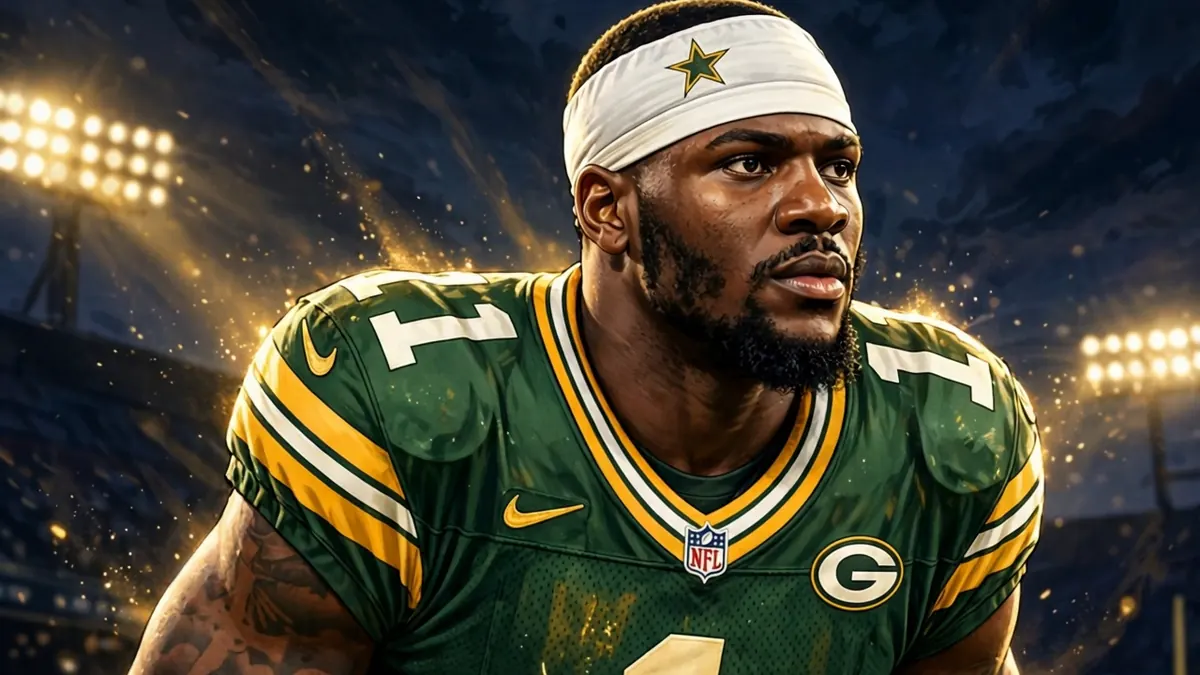
Micah Parsons Net Worth in 2026: The Honest Range
Ask ten sites for Micah Parsons’ net worth and you will get answers that disagree by a factor of three. That disagreement is not a mistake to be smoothed over; it is the most useful fact about the number. Here is what each named source actually says, and when it said it.
Pro Football Network, in its contract and net worth profile of Parsons, put his net worth at $7 million — and said so in the same breath as the trade, noting the figure was estimated prior to the move to Green Bay and the signing of the extension, and that it was “widely viewed as conservative” and “expected to rise significantly following the deal, which alone included a $44 million signing bonus.” That is the most careful of the published figures, and also the most out of date. It describes the Parsons of August 2025, a player who had earned roughly $62.2 million on the field across five seasons but had not yet banked a dollar of his new deal.
Velontia, in a profile published in July 2026, puts Parsons’ net worth at over $15 million in 2026, built from his NFL salary, bonuses, and endorsement deals, and names Nike and Beats by Dre among the brands behind his off-field income. NetWorthBreakdown goes higher still, at $25 million, and breaks that figure into rough buckets: $12 million from his NFL contract, $7 million from endorsements and sponsorships, $4 million from investments and real estate, $2 million from social media and brand deals, with smaller amounts from appearances and other income. That breakdown is the site’s own model, not a leak of Parsons’ accounts, and one of its own claims — $255 million in career earnings — does not square with the contract record, which puts his career on-field earnings at about $62.2 million through five seasons. The $25 million headline is still worth reporting because it is a published 2026 estimate, but its internal maths should not be quoted as if it were audited.
Other outlets land between the poles. BiographyWallah repeats the $7 million figure. SportsHackster puts him at $10 million-plus. The pattern is plain: every estimate that predates the Packers extension sits at $7 million to $10 million, and every estimate written after it sits at $15 million to $25 million. Our range of $15 million to $25 million follows the post-extension sources while staying below the level that would require assuming Parsons has already kept most of his signing bonus after tax.
Why the range is wide — and why it will narrow fast. A $44 million signing bonus does not land in a player’s net worth whole. Federal and state tax, agent commission (typically around 3 percent in the NFL), and the timing of the payments all take a cut, and the rest of the $186 million is paid out over four seasons. What the extension does guarantee is direction: with about $40.6 million in 2026 cash alone, Parsons’ net worth will climb steeply for as long as he stays healthy and under contract. Any estimate published before August 2025 is now a historical document, not a current figure.
The other number that gets confused with net worth is the Forbes figure. Forbes’ 2026 ranking of the highest-paid athletes put Parsons’ earnings for the year at $86.4 million — $83.4 million on the field and $3 million off it — the top total of any NFL player who is not a quarterback, and, in Forbes’ May 2026 ranking as reported at the time, the top NFL earner outright. That is money earned in a single year, driven by the timing of his option bonus, not money kept. It belongs in this article because it shows the scale of the cash flowing through his career in 2026, but it is not his net worth, and no honest profile should present it as one.
From Harrisburg to Penn State: Early Life
Micah Aaron Parsons was born on 26 May 1999 in Harrisburg, Pennsylvania, the state capital, and grew up there playing football at Central Dauphin High School, where he was one of the most talked-about high school defenders in the country. He arrived at Penn State in 2018 as a five-star recruit, and the production came fast: he led the Nittany Lions in tackles as a freshman with 82, starting only one game, and then put together a sophomore season in 2019 that made him a consensus All-American and the Big Ten Linebacker of the Year, with 109 tackles, five sacks, and four forced fumbles in 13 games.
His college career lasted only 26 games. Parsons opted out of the 2020 season over COVID-19 concerns, a decision that cost him a year of tape and, in the eyes of some scouts, raised questions that his testing and interviews at the draft would have to answer. He finished at Penn State with 191 tackles, 6.5 sacks, six forced fumbles, and a Cotton Bowl MVP award from his final college game. He graduated from Penn State a year after leaving, a detail that matters to the way he talks about his own path: the classroom was not an afterthought.
The Penn State connection still shapes his story in the NFL. He shared the programme with Saquon Barkley, whose own net worth profile traces a running back who went from the same school to the top of the draft, and the two have been linked in coverage ever since — two Penn State stars who became the faces of their franchises. For Parsons, the college years also set the template for everything that followed: a player who arrived with rare physical tools, produced immediately, and then bet on himself when the conventional path told him to play another year.
That bet paid off on draft night. Dallas took him 12th overall in the 2021 NFL Draft, and the Cowboys’ plan for him was unusual from the start. He had played off-ball linebacker at Penn State, but defensive coordinator Dan Quinn saw an edge rusher, and the injuries in Dallas’ front seven in his rookie season pushed him there sooner than anyone planned. The move turned a good draft pick into a franchise-altering one.
The Dallas Cowboys Years: From Rookie Star to Franchise Cornerstone
Parsons’ rookie season in 2021 is one of the best debut years by a defensive player in modern NFL history. He finished with 84 tackles, 13 sacks, 20 tackles for loss, 30 quarterback hits, and three forced fumbles, set a Dallas rookie record with 13 sacks, and collected 12 sacks in his first 13 games — the fourth-most by a rookie in league history at that point, behind only Julius Peppers, Reggie White, and Leslie O’Neal. He was the unanimous NFL Defensive Rookie of the Year, a first-team All-Pro, a Pro Bowler, the winner of the Butkus Award as the league’s top linebacker, and the runner-up for Defensive Player of the Year. He was the only first-year player voted first-team All-Pro.
What made the season strange, and valuable, was the versatility. Seven of his 13 sacks came from the linebacker spot and six from defensive end, and head coach Mike McCarthy talked openly about wanting his position to keep moving around. That flexibility became Parsons’ calling card: an edge rusher who could drop into coverage, a linebacker who could win one-on-one against a tackle, a player offensive coordinators had to account for on every snap.
The next three seasons confirmed it was not a one-year flash. In 2022 he recorded 13.5 sacks, 65 tackles, three forced fumbles, three fumble recoveries, and a touchdown, and was again a first-team All-Pro and Pro Bowler, finishing second in Defensive Player of the Year voting and eighth in MVP voting. In 2023 he posted 14 sacks and 64 tackles and earned second-team All-Pro honours. In 2024, a season in which he missed time, he still managed 12 sacks and 43 tackles and made his fourth straight Pro Bowl. Across four seasons in Dallas he totalled 52.5 sacks and 256 tackles, made four Pro Bowls, and collected three All-Pro selections.
Dallas built its defence around him and paid him like a rookie while doing it. His four-year rookie deal was worth $17,079,792 in total, including a $9,781,667 signing bonus, according to Over The Cap — a figure some outlets have reported differently, with Velontia citing a $14.6 million valuation, a reminder that even contract reporting can vary by source. Either way, the deal was a bargain for the Cowboys and a countdown clock for Parsons: every sack he recorded on a rookie contract raised the price of the next one.
He played alongside the core of the Cowboys’ expensive roster, including quarterback Dak Prescott, whose net worth story is inseparable from the same salary-cap squeeze that would eventually shape Parsons’ own future in Dallas. Prescott’s four-year, $240 million extension made him the league’s highest-paid quarterback by average annual value, and the Cowboys’ books had to hold two of the most expensive players at their positions at once. That tension sat underneath the final year of Parsons’ rookie deal, and it is the thread that leads directly to the trade.
The Trade That Shook the NFL: Dallas to Green Bay
By the summer of 2025 the negotiation between Parsons and the Cowboys had stalled in public. Parsons had asked for a trade in August after no progress on a new deal, and his holdout ran through the preseason. Dallas exercised his fifth-year option, which paid him about $21.3 million in 2025 cash, but the long-term extension never came. On 28 August 2025, a week before kickoff, the Cowboys traded him to the Green Bay Packers.
The return was heavy: veteran defensive tackle Kenny Clark and first-round picks in 2026 and 2027. It was the kind of package a team pays for a player it believes can change its defence for half a decade, and it was also an admission by Dallas that it had let the most talented defensive player on its roster reach the point where keeping him cost more than trading him. Cowboys owner Jerry Jones later linked the move to the team’s wider planning around Prescott’s future, a connection that only underlined how much of the trade was about the salary cap as well as the player.
Green Bay did not wait to see how Parsons would settle in. The Packers signed him to his extension immediately, before he had played a snap for them, a sign of how certain they were about what they were buying — the same kind of franchise-defining commitment Green Bay once made to Aaron Rodgers, whose biography covers the quarterback era that defined the modern Packers. The deal ran through the 2029 season and, at $46.5 million a year on average, made him the highest-paid non-quarterback in the league — ahead of the extensions signed that same year by Myles Garrett and T.J. Watt, which is where the peer comparison later in this article begins.
His first season in Green Bay delivered on the price. Parsons appeared in 14 games in 2025, recording 41 tackles, 12.5 sacks, two forced fumbles, and a pass deflection, with 12 tackles for loss. He logged a sack in his Packers debut despite a limited snap count while working back from a preseason back issue. By the time the season ended, he had 65 career sacks and 297 career tackles, and the Packers had a pass rusher under contract through his age-30 season. The trade had given Green Bay its defensive centrepiece and given Parsons the contract that resets every number in his financial story.
Inside the Packers Extension: How the Deal Is Built
The headline is four years and $186 million. The structure underneath it is what decides how much of that money Parsons actually keeps, and when. Over The Cap, working from the contract details reported by Tom Pelissero, lays it out like this: $136 million in total guarantees, of which $120 million was fully guaranteed at signing, a $44 million signing bonus, and a maximum value of $188 million if incentives are reached. The $46.5 million average annual value made him the highest-paid edge rusher in NFL history when he signed.
The guarantees are layered, and the layers matter. His 2025 salary was fully guaranteed. His 2026 salary and a $38 million option bonus are fully guaranteed at signing, and a $34.443 million option bonus in 2027 is also fully guaranteed. The deal also carries annual per-game and workout bonuses, and the new-money guarantee — the guarantee on the extension itself, separate from money already owed — is $112 million. In plain terms, Parsons would have to suffer a career-ending setback almost immediately for Green Bay to escape most of this deal, and even then the dead-cap charge in 2026 alone is listed at $113.1 million by Pro Football Network.
The contract also uses option bonuses to keep the salary-cap hit down, a piece of engineering that has been widely explained since the signing. The 2026 option bonus of $38 million sits as guaranteed base salary and then converts to a bonus that is spread for cap purposes at $7.6 million a year over five years, thanks to a void year added when the option is exercised. The 2027 option bonus of $34.443 million works the same way, spreading at about $6.9 million a year over five years. The result is a 2026 cap charge of about $19.2 million on a player taking home about $40.6 million in cash — a gap that explains why the deal looks team-friendly on the cap sheet and player-friendly in the bank account at the same time.
The back end of the deal is where the money gets big. With no more option bonuses after 2027, his base salaries climb to $40.55 million in 2028 and $43.55 million in 2029. Those are the years that will decide whether Parsons ends his career as one of the richest defensive players ever, and they are also the years most exposed to injury risk — a point that became painfully real in December 2025, as the injury section below explains.
One more number belongs here because it is so often misread: the $186 million is not $186 million in the bank. It is the total value of the extension if Parsons plays it out and hits its triggers, spread over four seasons, before tax, before agent fees, and before the cost of living the life of a star athlete. Over The Cap’s own “potential earnings” figure for Parsons, counting everything from his rookie deal through the end of the extension, is $226.8 million. That is the scale of the career. His net worth is the share of it he keeps.
Year-by-Year Money: Salary, Bonuses and Career Earnings
The table below follows Over The Cap’s contract record, with Pro Football Network’s reporting alongside it. The “cash due” column is the money Parsons actually receives in each year, which is the figure that matters for net worth; the cap charge is an accounting number for the team.
| Season | Team | Cash Received | What Drove It |
|---|---|---|---|
| 2021–2024 | Dallas Cowboys | $17.08 million in total | Four-year rookie deal worth $17,079,792, including a $9,781,667 signing bonus (Over The Cap). Base salaries in the middle years were modest; the signing bonus was paid up front |
| 2025 | Dallas / Green Bay | $21.16 million | Fifth-year option cash, plus the Packers extension signed at the trade — $44 million signing bonus, $136 million guaranteed (Over The Cap cash flows) |
| 2026 | Green Bay Packers | About $40.6 million | $2.387 million base salary, $38 million option bonus, $250,000 workout bonus; $19.2 million cap hit (Over The Cap) |
| 2027 | Green Bay Packers | About $38 million | $3.107 million base salary, $34.443 million option bonus (Over The Cap) |
| 2028 | Green Bay Packers | About $41 million | $40.55 million base salary (Over The Cap) |
| 2029 | Green Bay Packers | About $45 million | $43.55 million base salary (Over The Cap) |
A note on the early years, because the table invites a wrong conclusion. The rookie-deal total looks small next to the extension because that is how rookie deals work: the big money arrives up front as a signing bonus, and the base salaries that follow are modest by star standards. Parsons earned about $62.2 million on the field through his first five seasons, per Over The Cap’s career earnings total of $62,249,820, and the great majority of the increase in that total after 2025 comes from the extension, not from the Dallas years.
Forbes’ 2026 figure sits on top of this table and needs its own explanation. The $83.4 million in on-field earnings Forbes credits Parsons with for 2026 is higher than the $40.6 million cash payout Over The Cap lists, because Forbes’ methodology counts money in the year it is earned under its ranking window, including bonus money whose timing differs from the cash-flow view, and because its ranking was published in May 2026, before the season played out. The two sources are measuring related but different things, and the gap between them is a good reason to treat any single “he makes X a year” claim with care. What both agree on is the direction: 2026 is by far the biggest-earning year of Parsons’ career.
The tax reality. Parsons’ 2026 cash of about $40.6 million will be taxed in Wisconsin, where he now plays, and in the states where the Packers play road games, under the “jock tax” rules that split an athlete’s income across jurisdictions. Federal tax alone takes a large share at the top rate, and agent commission runs at about 3 percent. A reasonable rule of thumb used by sports finance writers is that a player keeps roughly half to 55 percent of headline contract cash after tax and fees. Applied to his $62.2 million in career earnings through 2025, that points to a kept figure in the low $30 millions before spending — which is consistent with a net worth estimate in the $15 million to $25 million range once housing, cars, and lifestyle spending are accounted for, and with the expectation that the number climbs quickly as the $40 million-plus cash years arrive.
Endorsements and Off-Field Income
For a defensive player, Parsons’ off-field income is unusually strong — and still small next to his contract. Forbes put his 2026 off-field earnings at $3 million, against $83.4 million on the field. That ratio tells the truth about where NFL defensive stars make their money: the contract is the business, and endorsements are the bonus.
The brands most consistently linked to Parsons are Beats by Dre and Oakley, named by both Velontia and other profiles, alongside Nike in Velontia’s reporting and Adidas in OddsPedia’s account of his Forbes ranking. The Nike-versus-Adidas split is a genuine reporting conflict rather than a mistake on one side: different outlets, writing at different times, have attached him to different footwear and apparel partners, and no single endorsement list has been confirmed by Parsons himself in the sources reviewed for this article. What is safe to say is that his sponsor roster sits with the big sports and lifestyle brands, that his off-field income runs to a few million dollars a year, and that the trade to Green Bay — one of the league’s most storied franchises, with a national fanbase far larger than its small-market home suggests — can only help that side of his income.
Parsons also hosts a podcast, The Edge, with Bleacher Report, which gives him a media platform beyond the field and a second stream of income that does not depend on his knees. Podcasting and media work are becoming a standard second act for NFL stars, and for Parsons they serve a double purpose: they keep his name in front of fans during the long months of injury recovery, and they build a public profile that sponsors pay for. His social media following, which NetWorthBreakdown credits with about $2 million of his estimated net worth through brand deals, is part of the same picture — a player who understands that attention is an asset, and who has been building it since his Penn State days.
None of this makes him a business mogul yet, and this article will not pretend otherwise. There is no verified record in the sources reviewed of Parsons owning a major company, launching a product line, or investing in a startup at the scale of the NBA-style portfolios that some outlets like to invent for athletes. His wealth, for now, is a football fortune with endorsements attached, not a diversified empire. That may change — the extension gives him the capital to invest seriously for the first time — but the change has not been documented yet, and the honest thing is to say so.
Assets, Cars and Lifestyle
The public record on Parsons’ assets is thin, and the thinness is worth stating plainly rather than filling with decoration. SportsHackster reports that he owns a fleet including a Rolls-Royce and a Bentley and lives in an estate in Dallas, but that profile offers no addresses, no purchase prices, and no dates, and it should be read as gossip-tier reporting rather than verified fact. No property records, no car collection features, and no investment announcements for Parsons appeared in the reputable sources reviewed for this article.
What can be said with more confidence is about the shape of his spending, because it follows the pattern of almost every young NFL star. The rookie years were lean by the standards of his fame: a $17 million rookie deal spread over four years, with a signing bonus that had to cover taxes, an agent, and the cost of establishing a professional life. The fifth-year option year changed the picture, and the extension changes it again. A player taking home about $40 million in cash in a single year can buy a house, a car collection, and an investment portfolio in the same twelve months — and the fact that Parsons’ net worth estimates jump from $7 million to $25 million across sources is, in part, different outlets guessing at how much of that new money he has already kept.
One move that is documented is the move itself. Traded from Dallas to Green Bay in late August 2025, Parsons went from Texas — a state with no income tax — to Wisconsin, where his salary is taxed. That is a real cost, and it is one of the quieter reasons the structure of his deal matters: the $38 million option bonus in 2026 and the $34.4 million option bonus in 2027 are taxed as income in the year they are paid, and the “jock tax” splits his earnings across every state in which the Packers play. None of this makes him poor. It does mean the distance between a $186 million contract and a net worth figure is wider than a headline suggests.

Net Worth Growth: How the Fortune Builds From Here
The most useful way to think about Parsons’ net worth is as a staircase with one very large step still to come. Before August 2025, he was a star on a rookie deal and a fifth-year option: rich by any normal measure, with about $62.2 million in career on-field earnings, but not yet in possession of the kind of money that changes a family’s fortunes for generations. The extension is that step. If he plays it out, the cash due across 2026 to 2029 is about $164.6 million — $40.6 million, $38 million, $41 million, and $45 million in successive years — on top of what he has already earned. Even after tax and fees, that is enough to move his net worth from the tens of millions into the region of $80 million to $100 million by 2030, provided he stays healthy and under contract.
That projection is not a prediction dressed as fact; it is arithmetic with conditions attached, and the conditions are the story of the next section. An ACL tear in December 2025 has already cost him most of the 2026 season, and while his contract guarantees protect his pay, they do not protect his next contract. Parsons is under team control through 2029, when he will be 30, and the deal after this one — if there is one at the same level — will depend on what his body looks like at that age. The history of edge rushers says the late twenties are the peak earning years, and Parsons is in them now. Every season he plays at his 2021–2025 level adds tens of millions to his lifetime earnings; every season lost to injury subtracts from the next negotiation, not this one.
The growth table below uses only published estimates and contract figures, so the gaps in it are honest gaps — years in which no outlet published a figure are left without one, rather than filled with invented numbers.
| Point in Time | What Was Published | Source |
|---|---|---|
| 2021 (rookie year) | Rookie deal $17.08 million total, $9.78 million signing bonus | Over The Cap |
| Before August 2025 | Net worth estimated at $7 million | Pro Football Network |
| August 2025 | Traded to Green Bay; 4-year, $186 million extension, $136 million guaranteed | Over The Cap / Tom Pelissero reporting |
| Through five seasons | Career on-field earnings about $62.2 million | Over The Cap / Pro Football Network |
| 2026 (Forbes ranking) | 2026 earnings $86.4 million ($83.4 million on-field, $3 million off-field) | Forbes, via OddsPedia |
| July 2026 | Net worth estimated at $15 million-plus | Velontia |
| 2026 | Net worth estimated at $25 million | NetWorthBreakdown |
| 2026–2029 (contract) | Cash due about $164.6 million across the four extension years | Over The Cap cash flows |
Read the table from top to bottom and the shape of the story is clear. The estimates that predate the extension cluster at the bottom. The estimates written after it cluster higher. And the contract cash that will arrive between now and 2029 dwarfs everything that came before it. If Parsons’ net worth is $15 million to $25 million today, it is a number with a steep slope in front of it — and the slope is the reason this profile will look out of date within two years, in the good direction, if he stays on the field.
The ACL Injury and the 2026 Comeback
On 14 December 2025, in a loss at Denver, Parsons tore the ACL in his left knee without contact. It ended his first season in Green Bay after 14 games and 12.5 sacks, and it did more damage than a standard ACL tear: surgeons also performed full repairs on both the medial and lateral menisci, which kept him non-weight-bearing for about two months and stretched the recovery beyond the usual timeline for an ACL reconstruction alone.
The recovery has been slow and public. Parsons opened the 2026 season on the physically unable to perform list and spent the first two months of the season rehabbing rather than playing. In January, less than a month after surgery, he had said he believed he could return inside the first four weeks of the season; by training camp he had revised that to a Week 6 return in Dallas, the revenge game against the team that traded him. Neither date held. Coach Matt LaFleur said in late October that there was a chance Parsons would practise the following week, and on Wednesday 4 November 2026 Parsons finally returned to the practice field, taking part in individual drills for the first time in nearly eleven months. The Packers opened his 21-day practice window that day, giving them three weeks to activate him or return him to the PUP list.
The reported target for his return to game action is Week 12, the Thanksgiving Eve game against the Los Angeles Rams on 25 November 2026, according to NFL Network’s Ian Rapoport, with the Packers’ Week 11 bye giving him extra time. Parsons himself has been candid about the limits of that return, saying he does not expect to play 50 or 60 snaps the way he did before, that his knee is not built for that yet, and that he may not be the All-Pro player he once was until later, after he has gone through all his phases. His conditioning, he said, is the lowest of his career, and he has not been through a training camp.
For the net worth question, the injury matters in two ways and does not matter in a third. It does not threaten the extension: his 2026 salary and option bonus are fully guaranteed, so he is paid whether he plays or not. It does affect his next contract, because the deal after 2029 will be priced on the player he is at 30, not the player he was at 26. And it affects his endorsement value in the short term, because a player who is not on television every Sunday is a quieter commercial presence. The comeback, if it lands in late November as reported, limits all three costs. As of 14 November 2026, he has not yet played a snap in the 2026 season.
Personal Life
Parsons keeps his private life largely out of the headlines, and this profile will not fill that silence with speculation. He has not publicly confirmed a marriage, and he rarely discusses relationships in interviews, preferring to keep the focus on football. What he has spoken about, often, is Harrisburg: the city where he grew up, the high school programme that shaped him, and the sense of representing a place that does not produce NFL stars every year. That rootedness is part of his public image — a player who talks about his hometown the way other stars talk about their brands.
Off the field he is known for the “Lion” mentality he has carried since Penn State, a nickname that fits a player whose game is built on hunting quarterbacks, and for a competitive streak that shows up in the way he talks about other edge rushers. He has been open about the mental side of the game, including the frustration of the contract standoff in Dallas and the patience the ACL recovery has demanded of him. The podcast gives him a place to say those things in his own words, and it is the closest thing to a window into his life outside football that he offers.
He is 27, under contract through 2029, and at the age when NFL players start to think about what comes after football. The extension gives him the financial freedom to make those choices slowly, and the injury has given him an unwanted preview of life without the game. Both will shape the second half of his career more than any single season will.
How Parsons Stacks Up Against Other NFL Stars
Parsons’ contract did not arrive in a vacuum. The summer of 2025 reset the market for edge rushers, and his deal sits at the top of it. The comparison below uses reported average annual values, which are the cleanest way to rank contracts of different lengths.
| Player | Position | Reported Deal | Average Annual Value |
|---|---|---|---|
| Micah Parsons (Green Bay) | Edge rusher | 4 years, $186 million (2025) | $46.5 million |
| T.J. Watt (Pittsburgh) | Edge rusher | 3 years, $123 million (2025) | $41 million |
| Myles Garrett (Cleveland) | Edge rusher | 4 years, $160 million (2025) | $40 million |
| Nick Bosa (San Francisco) | Edge rusher | 5 years, $170 million (2023) | $34 million |
| Maxx Crosby (Las Vegas) | Edge rusher | 3 years, $106.5 million (2025) | $35.5 million |
The gap between Parsons and the next man on the list — $5.5 million a year over Watt — is the market’s verdict on a 26-year-old pass rusher with four straight Pro Bowls, and it is also a reflection of timing: Parsons signed last, after Watt and Garrett had already moved the market, and Green Bay paid the price of being last to the table. It is worth noting that the quarterback market sits far above all of this. Dak Prescott’s $60 million-a-year average on his Cowboys extension is the comparison that explains why Dallas found Parsons so expensive to keep, and why Green Bay, which had no quarterback on a $60 million deal, could afford him.
The Forbes ranking adds a second comparison. Parsons’ $86.4 million in 2026 earnings put him at the top of the NFL’s earners for the year among non-quarterbacks, and at the top of the league outright in Forbes’ May 2026 ranking as reported at the time. That is a one-year figure driven by bonus timing, not a career ranking, and later-season projections moved other names above him — but the point stands: in the single biggest-earning year of his life so far, Parsons earned more than any defensive player in the league, and more than all but a handful of quarterbacks. For more profiles of the league’s highest earners, see our Net Worth section, which covers the contracts and fortunes of the NFL’s biggest stars.
There is one more comparison that puts the number in perspective. Parsons’ career on-field earnings of about $62.2 million through five seasons are modest next to veterans who have played a decade on second and third contracts — and that is exactly the point. He is 27, and the $186 million extension means his career earnings will roughly quadruple by the time he is 30 if he plays it out. The players he is compared with today are the players he will be compared with on wealth in five years’ time, not the ones whose net worth figures were built over fifteen seasons.
What Could Change the Number
Four things could move Parsons’ net worth sharply in either direction from here, and a reader who wants to track the number should watch them rather than the estimates.
Health. The ACL and meniscus repairs are the single biggest risk. If the comeback lands in late November and he returns to his 2025 level, the extension plays out as written and the next negotiation starts from strength. If the knee costs him more time, the guaranteed money still arrives, but the deal after 2029 shrinks. His own words — that he may not be the All-Pro player he was until later — are the most honest guide to the timeline.
The 2028 and 2029 salaries. The $40.55 million base salary in 2028 and $43.55 million in 2029 are the largest single-season paydays of his career, and they are also the years when Green Bay could look to restructure. A restructure would not reduce his pay, but it would change when the money arrives, and timing is what turns a contract into a net worth figure.
Endorsements. At $3 million a year, his off-field income is the smallest part of his earnings and the part with the most room to grow. A healthy return, a deep Packers playoff run, and the national exposure that comes with Green Bay would all lift it. So would a second act in media: the podcast is a start, and players with his profile often add broadcasting or business ventures in their late twenties.
Spending and investment. The least visible factor and the most decisive one. Two players with the same contract can end their careers tens of millions of dollars apart, and the difference is what they did with the money while it was arriving. There is no public record of Parsons’ investments yet, which means this factor is unknowable from outside — and it is the reason every net worth figure for an active player should be read as a range, not a balance.
Frequently Asked Questions
What is Micah Parsons’ net worth in 2026?
Micah Parsons’ net worth is estimated at $15 million to $25 million as of November 2026. Velontia puts it at over $15 million, NetWorthBreakdown at $25 million, while Pro Football Network’s widely quoted $7 million figure was published before his trade to Green Bay and the $186 million extension, so it is now out of date. He has never disclosed his finances, so all published figures are estimates built from contract records and reporting.
How much is Micah Parsons’ contract with the Packers worth?
Four years and $186 million, signed in August 2025 immediately after his trade from Dallas. The deal includes $136 million in total guarantees, $120 million fully guaranteed at signing, a $44 million signing bonus, and an average annual value of $46.5 million, making him the highest-paid non-quarterback in NFL history at the time. Its maximum value is $188 million.
How much does Micah Parsons make per year?
His contract averages $46.5 million a year. In cash terms, Over The Cap lists his 2026 payout at about $40.6 million — a $2.387 million base salary plus a $38 million option bonus and a $250,000 workout bonus. Forbes’ 2026 ranking put his total earnings for the year at $86.4 million, $83.4 million on the field and $3 million off it, a figure driven by bonus timing rather than a single year’s salary.
Why was Micah Parsons traded from the Cowboys?
Contract talks between Parsons and Dallas stalled through the summer of 2025, Parsons asked for a trade in August after no progress on a new deal, and on 28 August 2025 the Cowboys traded him to the Green Bay Packers for defensive tackle Kenny Clark and first-round picks in 2026 and 2027. The Cowboys had exercised his fifth-year option, worth about $21.3 million in 2025 cash, but never agreed the long-term extension.
What is Micah Parsons’ salary in 2026?
His 2026 base salary is $2,387,000, but his cash for the year is about $40.6 million once the fully guaranteed $38 million option bonus and a $250,000 workout bonus are included, according to Over The Cap. His salary-cap charge for 2026 is about $19.2 million, because the option bonus is spread for cap purposes over five years.
Is Micah Parsons injured?
Yes. Parsons tore the ACL in his left knee on 14 December 2025 against Denver, with full repairs to both the medial and lateral menisci, ending his 2025 season. He opened 2026 on the physically unable to perform list and returned to practice on 4 November 2026, with the Packers opening a 21-day window to activate him. Reports point to a Week 12 return against the Los Angeles Rams on 25 November 2026. He had not played in the 2026 season as of 14 November 2026.
How many sacks does Micah Parsons have in his career?
65 career sacks through the 2025 season: 52.5 in four seasons with Dallas (13 in 2021, 13.5 in 2022, 14 in 2023, 12 in 2024) and 12.5 in 14 games for Green Bay in 2025. He also has 297 career tackles, four Pro Bowl selections, and two first-team All-Pro honours, and was the unanimous NFL Defensive Rookie of the Year in 2021.
How old is Micah Parsons?
Micah Parsons was born on 26 May 1999 in Harrisburg, Pennsylvania, making him 27 years old as of November 2026. He was drafted 12th overall by the Dallas Cowboys in the 2021 NFL Draft out of Penn State, where he played in 2018 and 2019 before opting out of the 2020 season.
Final Thoughts: The Bottom Line on Micah Parsons
Micah Parsons’ net worth is estimated at $15 million to $25 million as of November 2026 — a range, not a single number, because the sources disagree and the most quoted figure predates the contract that changed everything. The $7 million estimate from Pro Football Network described a player on a rookie deal. The $15 million-plus and $25 million estimates from Velontia and NetWorthBreakdown describe a player who has since signed the richest contract ever given to a defensive player. The truth sits between them, and it is moving: with about $40.6 million in cash due in 2026 and about $164.6 million due across the four years of his extension, Parsons’ fortune is on the steepest slope of his career.
What makes his story different from most net worth profiles is that the money is not the most interesting part of it. The trade, the standoff, the record deal, and now the long road back from a torn ACL — that is a career that has already had three acts before the age of 27, and the fourth, the comeback, is still being written. If the knee holds and the Packers’ bet pays off, the next version of this profile will carry a much bigger number. If it does not, the $120 million fully guaranteed at signing means the number will still be large. Either way, the $186 million contract is the fact that anchors everything else, and it is the reason no estimate written before August 2025 should be quoted as current.
Sources and How We Estimated
How we estimated this: We worked from contract records published by Over The Cap (contract value, guarantees, signing and option bonuses, cash flows, career earnings, cap charges), reporting from Pro Football Network (the pre-trade $7 million net worth estimate and career earnings), Forbes’ 2026 highest-paid athletes ranking as reported by OddsPedia and Dose (2026 earnings of $86.4 million), and the published net worth estimates of Velontia ($15 million-plus, July 2026) and NetWorthBreakdown ($25 million). Where the outlets disagree, we print the range and name who says what. Net worth figures for public personalities are estimates built from public reporting, not audited financial statements, and they do not account for taxes, agent fees, or private spending, which we flag wherever they affect the number.
Named sources consulted for this article:
- Over The Cap — contract details, cash flows, career earnings
- Pro Football Network — contract, salary, and pre-trade net worth estimate
- Forbes — 2026 highest-paid athletes ranking (earnings figures as reported by OddsPedia)
- Velontia — 2026 net worth estimate ($15 million-plus) and endorsement reporting
- NetWorthBreakdown — 2026 net worth estimate ($25 million)
- NFL — draft, trade, and injury reporting
- NBC Sports — injury return reporting (Ian Rapoport, NFL Network)
Figures that changed while this article was being written: Parsons returned to practice on 4 November 2026 and is targeting a Week 12 return on 25 November 2026; his 2026 season debut had not yet happened as of 14 November 2026. If that date moves, the injury section of this profile should be updated, but the contract and net worth figures will not change.