By Celebamerica Editorial Staff | Last updated: November 17, 2026
Virat Kohli is one of the greatest batters cricket has ever produced, and his biography reads like a two-decade masterclass in hunger, fitness and reinvention. Born on 5 November 1988 in Delhi, Kohli went from a nine-year-old at the West Delhi Cricket Academy to the captain of India, the holder of 86 international centuries, and the most valuable celebrity brand in the country. As of November 2026 he is 38 years old, still playing one-day internationals for India and the Indian Premier League for Royal Challengers Bengaluru, and his estimated net worth sits between $120 million and $135 million, anchored on Celebrity Net Worth at $120 million.
What makes Kohli’s story different from the usual tale of a gifted youngster is how deliberately he rebuilt himself at every stage. The chubby teenager who loved his food became the fittest player in Indian cricket. The fiery youngster who swore at crowds became a captain who turned India into a team that expected to win anywhere in the world. And the batter who once chased records became, in the final years of his career, a player chasing only trophies — and finally collecting them, with a T20 World Cup in 2024, a Champions Trophy in 2025 and back-to-back IPL titles with Royal Challengers Bengaluru in 2025 and 2026. This is the full story: the Delhi childhood, the rise, the captaincy, the records, the money, the businesses, the family and the goodbyes.
Table of Contents
- Quick Facts: Virat Kohli at a Glance
- Early Life in Delhi: The Boy Who Would Not Leave the Nets
- The Rise: Under-19 World Cup to India Debut
- Captain Kohli: Building a Ruthless India
- Records That Define the King
- RCB and the IPL: Eighteen Years to Two Titles
- The Goodbyes: T20Is in 2024, Tests in 2025
- The Money Behind the Biography
- Business Ventures: One8, Wrogn and More
- Personal Life: Anushka, Vamika and Akaay
- Controversies and the Scrutiny That Comes With Fame
- Legacy: Where Kohli Stands Among the Greats
- Frequently Asked Questions
- Final Thoughts
- Sources and Reporting
Quick Facts: Virat Kohli at a Glance
| Full Name | Virat Kohli |
|---|---|
| Date of Birth | November 5, 1988 (age 38 as of November 2026) |
| Birthplace | Delhi, India |
| Height | 5 ft 9 in (175 cm) |
| Role | Right-handed top-order batter; occasional right-arm medium bowler |
| International Debut | ODI: August 2008 vs Sri Lanka; Test: June 2011 vs West Indies; T20I: June 2010 vs Zimbabwe |
| Teams | India (2008–present, ODIs only since 2025); Royal Challengers Bengaluru (IPL, 2008–present); Delhi (domestic) |
| International Centuries | 86 — 30 in Tests, 55 in ODIs, 1 in T20Is (to November 15, 2026, per ESPNcricinfo) |
| Estimated Net Worth (2026) | $120 million–$135 million (₹1,050–1,150 crore); anchored on Celebrity Net Worth ($120 million, updated April 27, 2026) |
| Peak / Primary Income Sources | Brand endorsements (largest share), IPL salary, BCCI central contract, business ventures |
| Key Ventures / Works | One8 lifestyle brand, Wrogn fashion label, One8 Commune restaurants, FC Goa stake, Digit Insurance and Blue Tribe investments |
| Spouse and Children | Married Anushka Sharma on December 11, 2017; daughter Vamika (born January 2021), son Akaay (born February 2024) |
| Major Honours | 2011 World Cup, 2013 Champions Trophy, 2024 T20 World Cup, 2025 Champions Trophy; IPL titles 2025 and 2026; Arjuna Award 2013, Padma Shri 2017, Khel Ratna 2018 |
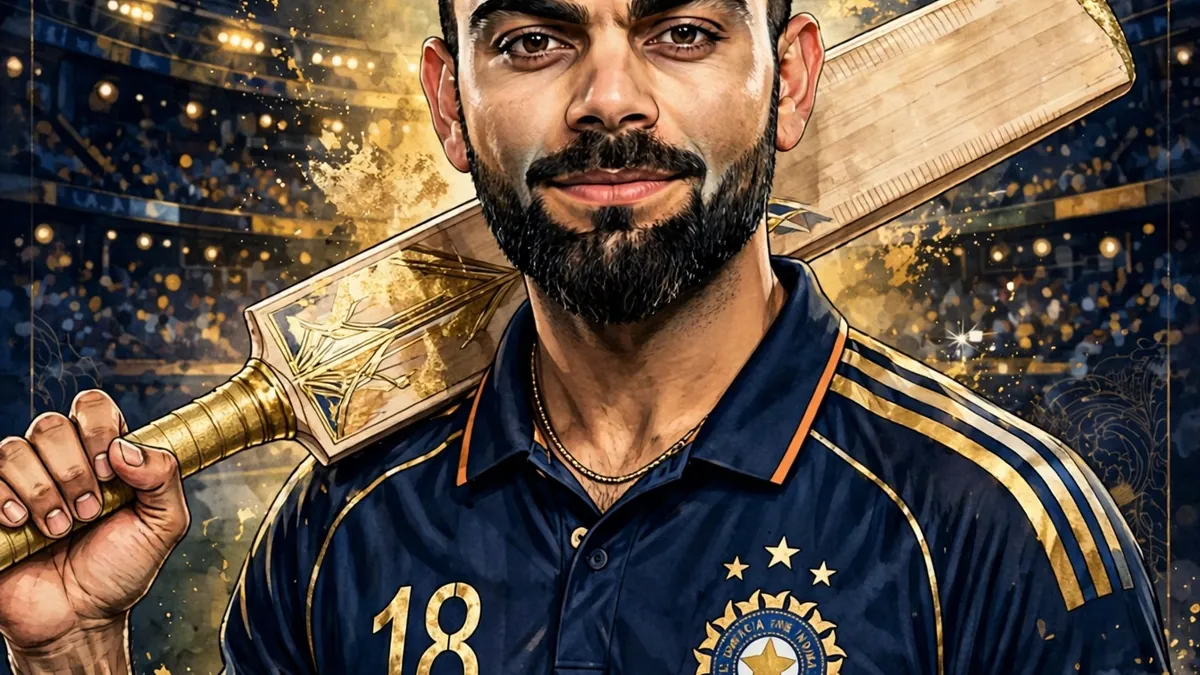
Early Life in Delhi: The Boy Who Would Not Leave the Nets
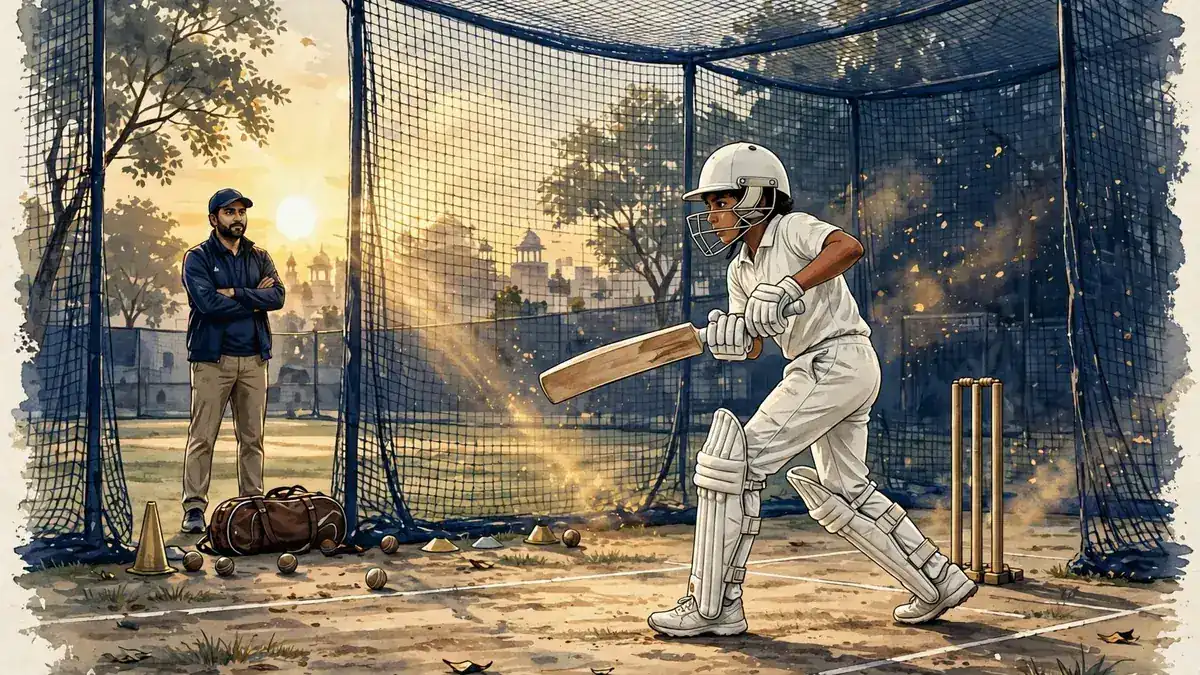
Virat Kohli grew up in a middle-class home in West Delhi, the youngest of three children. His father, Prem Nath Kohli, was a criminal lawyer; his mother, Saroj Kohli, kept the home. His elder brother Vikas and elder sister Bhavna watched a small boy fall for cricket so completely that the family arranged his life around the game. When Kohli was nine, his father enrolled him at the West Delhi Cricket Academy, where coach Rajkumar Sharma took charge of a restless, sharp-eyed kid who batted with unusual certainty for his age.
The academy years set the pattern for everything that followed. Kohli was not the most naturally gifted child in the nets — coaches from that period remember other boys with prettier techniques — but he was the one who stayed longest, asked the most questions and hated losing the most. Sharma has spoken over the years about a boy who treated every practice match like a final, and that edge never left him. It is the same edge that, two decades later, would have him sprinting between wickets in his late thirties while younger men walked.
School cricket followed quickly. Kohli played for Delhi at age-group levels, scored heavily, and by his mid-teens was marked out as a future India player. Then, in December 2006, his father died suddenly. Kohli was 18, in the middle of a Ranji Trophy match for Delhi against Karnataka, and he did what still gets retold in Indian dressing rooms: he went home for the cremation, returned the next morning, and scored 90. His family has said since that his father had wanted him to play for India, and Kohli treated that innings as a promise kept. It is the earliest public sign of the trait that would define him — the ability to wall off everything outside the crease and do the job in front of him.
Those Delhi years also explain his game. He learned on slow, low pitches where timing mattered more than power, and on dusty maidans where a batter had to manufacture runs rather than wait for them. The cover drive that became his signature was built there, hour after hour, and so was the running between wickets that turned ones into twos. When people ask why Kohli’s batting looks so complete, the honest answer starts in West Delhi, not in an international stadium.
The Rise: Under-19 World Cup to India Debut
Kohli’s first moment on the wider stage came in 2008, when he captained India to victory at the Under-19 World Cup in Malaysia. India beat South Africa in a rain-shortened final, and Kohli finished the tournament with 235 runs at an average close to 50, but the runs were only half the story. Scouts and commentators noticed a captain who thought like a senior player: setting fields with intent, backing his bowlers, and batting with a calm that belied his age. The 2008 batch — Ravindra Jadeja was in it, and so was the core of a generation — was quickly fast-tracked, and Kohli’s ODI debut followed within months, against Sri Lanka at Dambulla in August 2008.
The early international years were a slow burn rather than an explosion. Kohli opened the batting in that first series, looked raw, and was dropped. He came back in late 2009 with a first ODI century — 107 against Sri Lanka at Eden Gardens in Kolkata in December 2009 — and from there the door never closed again. By the 2011 World Cup, played at home, he was a fixture in the middle order. He scored a century in India’s opening game against Bangladesh and, at 22, finished the tournament a World Cup winner as India beat Sri Lanka in the Mumbai final. MS Dhoni, the captain who lifted that trophy, became both a mentor and, later, the man whose Test captaincy Kohli would inherit.
The Test debut came in June 2011 against West Indies at Kingston, and it was a rude awakening: scores of 4 and 15, and a reminder that the red ball asked different questions. Kohli answered them in Australia in early 2012, scoring his first Test century — 116 in Adelaide — in a series where almost every other Indian batter struggled. That innings is worth remembering because it set his template for overseas Tests: stand up tall, play late, and refuse to be bullied. It was also the series where his confrontation with the Sydney crowd, dealt with in the controversies section below, first showed the world how combustible he could be.
Between 2012 and 2014, the runs piled up in every format. He scored centuries in England, South Africa, New Zealand and Australia, and by the time he was handed the Test captaincy in late 2014 he was already India’s best batter across formats by a distance. The rise, in short, took about six years — and it never really stopped. Even in 2026, at 38, he was still adding to his ODI century tally, with his 55th arriving against West Indies in September of that year.
Captain Kohli: Building a Ruthless India
When MS Dhoni retired from Test cricket midway through the 2014–15 tour of Australia, Kohli inherited a team that was talented but soft overseas. He changed that with a simple, repeated demand: fitness first, and no excuses. Under Kohli, India became the first Asian team to win a Test series in Australia, in 2018–19, and built a home record so strong that visiting teams started planning their tours around survival rather than victory. He captained India in 68 Tests and won 40 of them — more than any other Indian captain — and the number matters less than the way those wins came: with fast bowlers hunting in packs, a fielding standard that shamed the old Indian sides, and a captain who celebrated wickets like they were personal victories.
Jasprit Bumrah was the sharp end of that transformation. Kohli backed Bumrah’s unusual action and his yorkers when plenty of judges doubted them, and Bumrah repaid the faith by becoming the spearhead of an attack that could take 20 wickets anywhere. The partnership between captain and fast bowler is one of the real stories of Kohli’s Test leadership: he gave his bowlers attacking fields, long spells and public trust, and in return they gave him the wins that made India the number one Test side for long stretches of his reign.
He took over the white-ball captaincy in 2017 and held it until the end of 2021. The limited-overs record was strong — India won bilateral series almost everywhere, and Kohli’s own batting as captain was absurd, averaging well above 70 in ODIs during his peak years — but the ICC trophies did not come. The 2017 Champions Trophy final was lost to Pakistan, the 2019 World Cup ended in a semi-final defeat to New Zealand, and the 2021 T20 World Cup ended in the group stage. Those defeats were used against him, fairly and unfairly, and they shaped the messy end of his captaincy: he stepped down as T20I captain in late 2021, was removed as ODI captain weeks later in a public disagreement with the board over how the decision was communicated, and gave up the Test captaincy in January 2022 after a series defeat in South Africa.
It is worth saying plainly that the captaincy years cost him something as a batter. The weight of leading in all three formats, plus the scrutiny that followed every selection and every press conference, coincided with a lean patch from late 2019 to late 2022 in which the centuries dried up. He has spoken since about how the break from leadership, and a month away from the game in 2022, helped him reset. What followed — a T20I century against Afghanistan in September 2022, his first in nearly three years, and then the great run of 2023 — suggests he was right. The captaincy made India harder; stepping away from it gave Kohli back his batting.
Records That Define the King
Numbers alone do not explain Kohli, but his numbers are so large that any biography has to lay them out. As of November 15, 2026, per ESPNcricinfo’s records, he had scored 86 international centuries — 30 in Tests, 55 in ODIs and one in T20Is — with 28,613 international runs in total. Only Sachin Tendulkar, on 100 international centuries, has more. The gap is 14, and with Tests and T20Is behind him, every future hundred must come in ODIs. He has said the 2027 ODI World Cup will be his last World Cup for India, which gives the chase a deadline.
The ODI record is the centrepiece. His 55 ODI centuries are the most by any batter in the format, six clear of Tendulkar’s 49. He passed Tendulkar’s mark with his 50th ODI hundred in the 2023 World Cup semi-final against New Zealand at the Wankhede, in front of Tendulkar himself, in the stands. It was one of those rare sporting moments where the record and the occasion matched perfectly: a home World Cup, a semi-final, the master watching his record fall to a player he had mentored from a distance for years. His ODI average sits close to 58, and he has scored more than 15,100 ODI runs, second on the all-time list behind Tendulkar.
| Format | Matches / Runs / Centuries (to November 15, 2026) |
|---|---|
| Tests (2011–2025) | 123 matches, 9,230 runs at 46.85, 30 centuries, highest score 254 not out |
| ODIs (2008–present) | More than 315 matches, more than 15,100 runs at close to 58, 55 centuries — the format record |
| T20Is (2010–2024) | 125 matches, 4,188 runs at 48.69, 1 century, highest score 122 not out |
| IPL (2008–present) | More than 8,600 runs for Royal Challengers Bengaluru — the most by any player in IPL history; 8 IPL centuries |
| International total | 86 centuries, 28,613 runs; second only to Tendulkar’s 100 centuries |
Other records fill out the picture. He holds the record for the most runs in a single IPL season — 973 in 2016, with four centuries. He was the fastest to 8,000, 9,000, 10,000, 11,000 and 12,000 ODI runs, and the fastest to 50 ODI centuries. In chases, he is without peer in the modern game: 45 of his 55 ODI hundreds have come in winning causes, and his average in successful ODI chases is the stuff of coaching manuals. He has won the ICC Cricketer of the Year award twice, in 2017 and 2018, and was named the ICC Cricketer of the Decade for 2011–2020. None of those are paper records. They were earned against the best attacks of his era, in every country that plays the game.
One more number belongs here because it explains the brand value that follows later in this article: Kohli is the most-followed cricketer on Instagram, with a following reported at more than 270 million. That audience is a commercial asset, but it is also a measure of something rarer — a cricketer who became a pop-culture figure in the way only Tendulkar had before him, and arguably bigger, because Kohli’s fame arrived in the age of the smartphone.
RCB and the IPL: Eighteen Years to Two Titles
No part of Kohli’s story carries as much emotion as Royal Challengers Bengaluru. He joined RCB as an 18-year-old in the first IPL season in 2008 and has played for no other franchise since — the only player in the league’s history to spend his whole IPL career with one team. For 17 seasons that loyalty was a running joke and a quiet wound: three finals lost, in 2009, 2011 and 2016, the last of them after Kohli’s record-breaking 973-run season, and a fanbase that filled stadiums every year believing this time would be different.
It finally was, in 2025. RCB beat Punjab Kings by six runs in the final at Ahmedabad on June 3, 2025, to win their first IPL title after 18 years, and Kohli — who had scored 657 runs in the campaign — wept on the field as the last wicket fell. He said afterward that the win meant the world to him, but that it still sat “five levels under Test cricket”, a line that told you everything about where his heart lay even in his happiest franchise moment. The wait had been so long that the relief looked almost like grief.
Then came the season nobody had dared to predict. In 2026 RCB defended the title, beating Gujarat Titans by five wickets in the final at Ahmedabad on May 31, 2026, chasing 156 with 12 balls to spare. Kohli finished unbeaten on 75 off 42 balls — including his fastest IPL fifty, off 25 balls — and hit the winning runs with a six, taking the Player of the Match award. He scored 675 runs in the season at an average of 56.25, and, as ESPNcricinfo noted at the time, he did it without the pressure that had weighed on the 2025 campaign. RCB became only the third franchise, after Chennai Super Kings and Mumbai Indians, to win back-to-back IPL titles. The same year, Kohli passed another quiet milestone, becoming the first player with 600 or more runs in four consecutive IPL seasons.
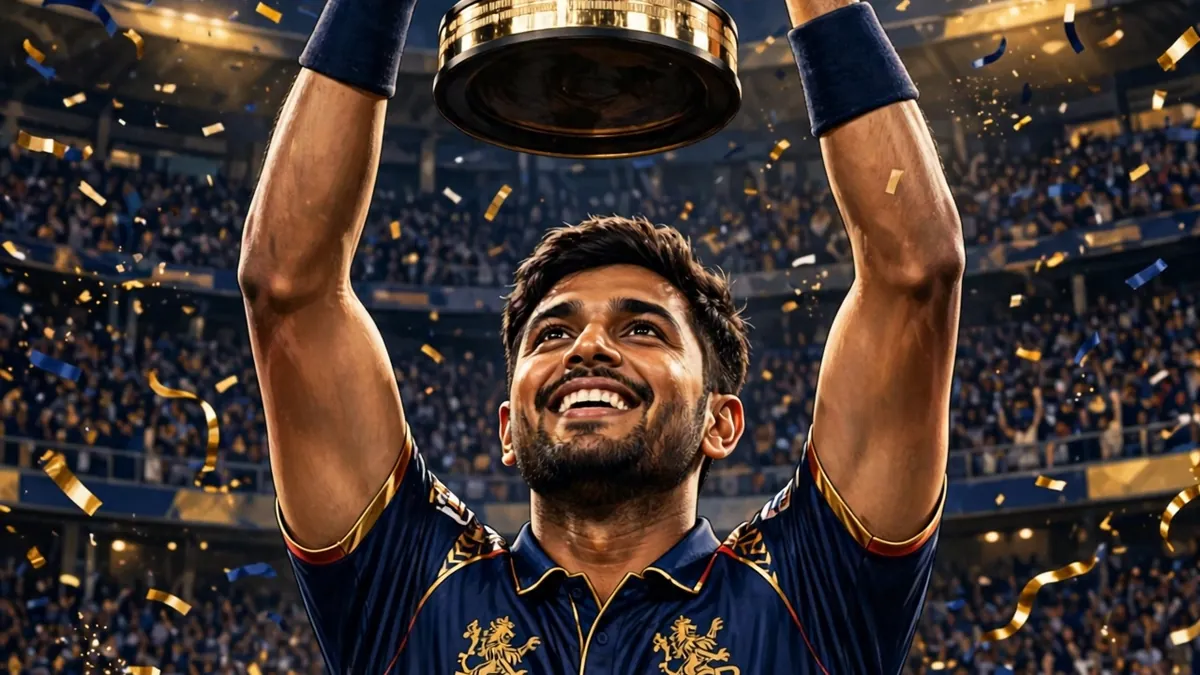
The IPL also explains a large part of Kohli’s wealth, which is covered in the money section below. He has been retained by RCB for ₹21 crore a season in recent years, the joint-highest retention bracket in the league, and he has earned an IPL salary in every season since 2008. But the money is the smaller part of the story. The IPL is where Kohli became a household name beyond cricket’s old audience, where the “King Kohli” chant was born, and where a one-club loyalty that looked naive for years was finally repaid twice over.
The Goodbyes: T20Is in 2024, Tests in 2025
Kohli has always done farewells on his own terms, and both of his retirements arrived the moment a job was finished. The first came on June 29, 2024, in Barbados, hours after India beat South Africa in the T20 World Cup final. Kohli was named Player of the Match for a 76 that held India’s innings together, and then he announced, in the post-match presentation, that this was his last T20 international. India had waited 11 years for an ICC trophy; Kohli had waited 14 years for a T20 World Cup. He left the format with 4,188 runs at 48.69, the best average of any batter with a serious T20I career, and one century — 122 not out against Afghanistan in 2022.
The second goodbye was quieter and, for many fans, harder to accept. On May 12, 2025, Kohli announced his retirement from Test cricket in a short social-media post, just weeks before India were due to tour England for five Tests. There was no farewell series, no final home Test, no lap of honour. He finished with 123 Tests, 9,230 runs at 46.85, 30 centuries and a best of 254 not out, and as captain of 68 of those matches with 40 wins. The timing shocked even former players — he was 36, still fit, still capable — but those close to him said the decision had been building for months. He had given Test cricket everything, and the format, in his own words after the IPL title weeks later, still sat above everything else he had won.
What remains is the one-day game. Kohli still plays ODIs for India, and he has said the 2027 ODI World Cup will be his final World Cup. The months after his Test retirement were productive: he scored a century against Pakistan in India’s Champions Trophy win in March 2025, added his 55th ODI hundred against West Indies in September 2026, and was still scoring fifties for India in New Zealand in November 2026. Rohit Sharma, his long-time opening partner and the man who succeeded him as white-ball captain, has walked a similar late-career path, and the two of them together now carry India’s ODI batting into its final stretch before the next World Cup. For readers who want the money side of this late-career phase, our Virat Kohli net worth profile on CelebAmerica sets out the 2026 figures in full.
The Money Behind the Biography
A biography of Kohli would be incomplete without the money, because the money is part of how the modern game works — and Kohli is the richest cricketer of his generation. His net worth in 2026 is estimated at $120 million to $135 million, roughly ₹1,050 crore to ₹1,150 crore. The anchor for that range is Celebrity Net Worth, which last updated its Kohli page on April 27, 2026, at $120 million; Indian outlets reporting through 2026, including Jagran Josh and StartupTalky, place the figure a little higher, between ₹1,050 crore and ₹1,150 crore. Nobody outside Kohli’s own finance team knows the exact private number, so this page shows the range rather than pretending one figure exists. The full breakdown lives in our sister coverage — GuideNetWorth’s Virat Kohli net worth profile works through the same sources from the wealth angle.
The income streams break down into four parts. Endorsements are the largest by a distance: Forbes has reported Kohli earning more than $20 million a year from endorsements in past years, and Indian outlets put his annual endorsement income at ₹80–100 crore, with per-brand deals reported at ₹7–10 crore depending on scope. His portfolio has included Puma, MRF, Audi, Hero MotoCorp and Valvoline, among more than 30 brands over the years. Second is the IPL: his RCB retention is worth ₹21 crore a season, and he has drawn an IPL salary every year since 2008. Third is the BCCI central contract — he sits in Grade B for the 2025–26 season on a ₹3 crore retainer, down from the Grade A+ ₹7 crore tier he held before his Test retirement, a drop that is itself a measure of how the board’s contract system rewards all-format players. Fourth is the business portfolio, covered in the next section.
The headline in one line: Kohli earns more from endorsements in a year than most cricketers earn in a career — and since 2025, when he sold One8 to Agilitas Sports and took a stake in the buyer instead, he has been converting fame into ownership rather than just fees.
| Income stream | What the reporting says (2026) |
|---|---|
| Estimated net worth | $120 million–$135 million (₹1,050–1,150 crore); anchored on Celebrity Net Worth ($120 million, updated April 27, 2026) |
| Endorsements | Largest stream; Forbes has reported $20 million+ a year; Indian outlets estimate ₹80–100 crore a year, ₹7–10 crore per brand deal |
| IPL salary | ₹21 crore a season from Royal Challengers Bengaluru; with RCB since 2008 |
| BCCI contract (2025–26) | Grade B retainer, ₹3 crore a year (was Grade A+, ₹7 crore, before his Test retirement) |
| Brand value | ₹3,542 crore (about $427 million) — Forbes India Showstoppers 2026 / Kroll; India’s most valuable celebrity brand |
| Property (reported) | Sea-facing apartment at Omkar 1973, Worli, Mumbai, reported at about ₹34 crore; Alibaug holiday villa reported at ₹19–32 crore |
Brand value deserves its own note because it is a different thing from net worth. Kroll’s Celebrity Brand Valuation Study 2024 put Kohli’s brand at $231.1 million, and the Forbes India Showstoppers 2026 list put it at ₹3,542 crore, about $427 million — ahead of every Bollywood star in the country. Brand value is what a name can earn, not what a person owns, and Kohli’s figure says something simple: in India, no celebrity sells more than he does. That is why the endorsement cheques keep coming even as he plays fewer formats, and why his post-cricket earning power is expected to stay high for years after he stops playing altogether.
The property portfolio is modest by the standards of his wealth, and that is in keeping with his public image. The reported holdings are a sea-facing apartment at Omkar 1973 in Worli, Mumbai, valued in reporting at about ₹34 crore, and a holiday villa at Awas village in Alibaug reported at ₹19–32 crore, plus the family home in Gurugram. There are no fleets of supercars in the reporting, though he has owned Audis and other premium cars over the years — the cars are a footnote, not the story. The story is that a boy from West Delhi built a fortune of more than a thousand crore rupees from a bat, a brand and a set of businesses he chose carefully.
Business Ventures: One8, Wrogn and More
Kohli’s business career began, as it does for most athletes, with his name on other people’s products. It changed when he started building his own. The first and biggest is One8, the lifestyle brand named after his jersey number, 18, which began as an athleisure collaboration with Puma in 2017 and grew into apparel, footwear, fragrances and a restaurant chain, One8 Commune. In December 2025 Kohli sold One8 to Agilitas Sports and, in the same move, invested ₹40 crore for a 1.94% stake in Agilitas itself — swapping a brand he owned for a slice of a bigger company. It was the clearest sign yet that he now thinks like an owner rather than an endorser.
Wrogn, the youth fashion label he co-created with Universal Sportsbiz in 2014, is the older venture and the more complicated one. It built a real retail presence across India on casual clothing and graphic T-shirts, but the financial reporting has been harder reading: Forbes has reported that Wrogn lost ₹75.5 crore in 2025, with revenue down about 9% to ₹223 crore and accumulated losses around ₹709 crore. That is the honest other side of athlete entrepreneurship — not every bet pays, and the same brand power that sells a label cannot by itself fix its economics. Kohli’s stake in Wrogn is a reminder that his business story has setbacks in it, not just wins.
The rest of the portfolio is a mix of hospitality, sport and start-ups. One8 Commune, the restaurant chain, has expanded across major Indian cities, and he also owns Nueva, a fine-dining restaurant in Delhi. In sport he holds a stake in FC Goa, the Indian Super League club, a bet on football’s growth in India that dates back to the league’s early years. His start-up investments include Digit Insurance, the insurtech firm, and Blue Tribe Foods, the plant-based meat company, alongside earlier interests in fitness and wellness ventures. None of these is valued publicly in a way that allows a precise figure, which is one reason net-worth estimates for Kohli carry a range rather than a single number — the private stakes are real, but their current value is a matter of judgement, not record.
What ties the portfolio together is control. Kohli’s team, led by his long-time manager Bunty Sajdeh of Cornerstone, has been careful about which deals he signs and how long they run, and the shift since 2025 — from fees to equity — follows the same logic. A cricketer’s playing career ends; a stake in a growing company does not. If the One8-Agilitas deal is the template, the next decade of Kohli’s business life will look less like a row of endorsement logos and more like a small investment house with a very famous founder.
Personal Life: Anushka, Vamika and Akaay
Kohli married Bollywood actor and producer Anushka Sharma on December 11, 2017, in a private ceremony in Tuscany, Italy, after the two met on the set of a shampoo commercial in 2013. The wedding was kept deliberately small — family and close friends, no media — and the couple have guarded their privacy with unusual discipline ever since. They are, by most measures, India’s most famous couple, and also one of its most private. Their daughter Vamika was born in January 2021 and their son Akaay in February 2024; the children’s faces have been kept out of the public eye, and the couple have asked photographers and fans to respect that boundary.
The family spends long stretches in London, a choice that has been widely reported and widely discussed. The reasons are personal rather than professional — privacy, schooling, and a life away from the constant attention that follows Kohli in India — and Kohli has never made a show of explaining it. What is visible is the effect: a player who, in his late thirties, looks calmer off the field than the firebrand of his twenties, and who talks about fatherhood as the thing that changed his priorities more than any trophy did.
Fitness is the other pillar of his personal life, and it is not a hobby. Kohli’s transformation from a youngster who loved butter chicken and late nights into the athlete who set India’s yo-yo test standard is one of the best-documented turnarounds in sport. He cut out fried food and sugar, rebuilt his diet around grilled food and vegetables, and made strength and conditioning a daily discipline. The change showed up first in his running between wickets and his fielding, then in his batting — he could bat long, recover fast, and play three formats without breaking down. Younger Indian players now take his fitness standard as the baseline, which may be his most lasting gift to the team.
Kohli turned 38 on November 5, 2026, and the birthday coverage that week said as much about his standing as any statistic: tributes from the BCCI, from former captains and from opponents, all circling the same point — that he is still adding to his record. Readers who want the full age breakdown can find it in our Virat Kohli age profile on CelebAmerica.
Controversies and the Scrutiny That Comes With Fame
A biography that skipped Kohli’s controversies would be dishonest, because the fire that made him great also got him into trouble. The first big one came in Sydney in January 2012, when he raised his middle finger at a section of the crowd that had been abusing him; he was fined 50% of his match fee and, characteristically, did not pretend to be sorry about the provocation, only about the gesture. It set the tone for a decade of run-ins with crowds, opponents and the odd journalist — most of them minor, all of them amplified by the fact that Kohli never learned to hide what he felt.
In 2018 he drew wider criticism for a video in which he told a fan who said he preferred English and Australian batters that he should leave India. The remark was widely reported and widely condemned, and Kohli’s camp later framed it as a heat-of-the-moment response rather than a considered view. It remains the clearest example of how his instinct — answer the critic, never walk away — could misfire when the audience was not a cricket crowd but a whole country.
The most consequential dispute was the captaincy saga of late 2021. Kohli announced he would step down as T20I captain after the World Cup; weeks later the board removed him as ODI captain, and the two sides then disagreed in public about whether he had been asked to reconsider. Kohli said at a press conference that he had not been asked to stay on; the board president at the time said he had. The row dominated Indian cricket for weeks and ended with Kohli giving up the Test captaincy in January 2022. It was an undignified end to a successful leadership era, and it is worth recording because it explains the gap between Kohli and the establishment that followed — a gap that has since narrowed, but never fully closed.
None of this amounts to a scandal in the sense that matters most: there has never been a serious allegation of corruption, fixing or off-field misconduct against Kohli. The controversies are those of temper and pride, not of character in the darker sense, and the record shows a player who learned from them. The Kohli of 2026 — the one who mentors younger players, who speaks about Test cricket like a guardian of the format, who leaves a press conference rather than escalating it — is not the Kohli of Sydney in 2012. The fire is still there; it is just aimed better.
Legacy: Where Kohli Stands Among the Greats
Where does Kohli rank? The honest answer is that it depends on the format, and that is what makes him unusual. In ODIs, the case for him as the greatest ever is stronger than for anyone except Tendulkar, and on some measures — average, centuries, chases won — he is already ahead. In T20Is, his average of 48.69 and his record in World Cups make him one of the format’s defining batters. In Tests, his record is very good rather than peerless: 9,230 runs at 46.85, with 30 centuries, puts him behind Tendulkar, Dravid and Gavaskar in the Indian pantheon, though his captaincy record — 40 wins in 68 Tests — is the best of any Indian leader. Put the three formats together, add the captaincy and the IPL, and there is no Indian cricketer since Tendulkar who has mattered as much, for as long, across as many fronts.
His wider legacy is about what he changed. He made fitness non-negotiable in Indian cricket, and the team that followed him is faster, stronger and better in the field than any Indian side before it. He made India believe it could win Test series abroad, and then did it in Australia. He turned chasing in white-ball cricket into a science, and a generation of young batters now studies his tempo the way earlier generations studied Tendulkar’s straight drive. And he did it all as the most-watched cricketer on the planet, carrying a level of daily scrutiny that no previous Indian star had to manage.
The comparison with Tendulkar will follow him to the end, and it should, because it is the right comparison. Tendulkar finished with 100 international centuries; Kohli, at 86, needs 14 more, all of them in ODIs, before the 2027 World Cup. Whether he gets there or not, the chase itself has become the final act of his career — and the fact that it is even a conversation, two decades after a nine-year-old joined an academy in West Delhi, is the measure of what he has done. For more on the man he is chasing, see our Sachin Tendulkar biography on CelebAmerica, and for the modern greats of the same era, our Babar Azam net worth profile sets out how the next generation measures up.
Frequently Asked Questions
How old is Virat Kohli in 2026?
Virat Kohli was born on November 5, 1988, in Delhi, and turned 38 on November 5, 2026. He is 38 years old as of November 2026.
What is Virat Kohli’s net worth in 2026?
Virat Kohli’s net worth in 2026 is estimated at $120 million to $135 million, roughly ₹1,050 crore to ₹1,150 crore. The range is anchored on Celebrity Net Worth, which put the figure at $120 million in its April 27, 2026 update, while Indian outlets report up to ₹1,150 crore.
How many centuries has Virat Kohli scored?
Virat Kohli has scored 86 international centuries as of November 15, 2026 — 30 in Tests, 55 in ODIs and one in T20Is, per ESPNcricinfo. His 55 ODI centuries are the most by any batter in the format, six clear of Sachin Tendulkar’s 49, which he passed with his 50th in the 2023 World Cup semi-final.
Has Virat Kohli retired from cricket?
Not entirely. Kohli retired from T20 internationals on June 29, 2024, after India won the T20 World Cup, and from Test cricket on May 12, 2025. He still plays ODIs for India and the IPL for Royal Challengers Bengaluru, and has said the 2027 ODI World Cup will be his last World Cup.
Who is Virat Kohli’s wife?
Virat Kohli’s wife is Bollywood actor and producer Anushka Sharma. They married on December 11, 2017, in a private ceremony in Tuscany, Italy. They have two children: daughter Vamika, born in January 2021, and son Akaay, born in February 2024.
How many IPL titles has Virat Kohli won?
Virat Kohli has won two IPL titles, both with Royal Challengers Bengaluru: the first in 2025, when RCB beat Punjab Kings by six runs, and the second in 2026, when RCB beat Gujarat Titans by five wickets. Kohli scored an unbeaten 75 off 42 balls in the 2026 final and was named Player of the Match.
What is Virat Kohli’s height?
Virat Kohli is 5 feet 9 inches tall (175 cm). His height is listed at 175 cm across his player profiles.
What businesses does Virat Kohli own?
Kohli’s main ventures are the One8 lifestyle brand, which he sold to Agilitas Sports in December 2025 while taking a 1.94% Agilitas stake, the Wrogn fashion label he co-created in 2014, the One8 Commune restaurant chain, and the Nueva restaurant. He also holds a stake in FC Goa and has invested in start-ups including Digit Insurance and Blue Tribe Foods.
Final Thoughts
Virat Kohli’s biography is not finished, and that is the most interesting thing about it. At 38, with two formats behind him and one World Cup left in front of him, he is playing the final act of a career that has already given cricket a new template: the modern superstar as athlete, captain, brand and businessman, all at once. The numbers — 86 centuries, more than 28,600 international runs, two IPL titles at the end of an 18-year wait — will be argued over for decades. The character behind them is harder to argue with: a boy from West Delhi who lost his father at 18, promised himself he would play for India, and then spent 18 years keeping that promise at a standard almost nobody else has matched.
If there is one thread to take from the whole story, it is that Kohli never waited for permission. He rebuilt his body when nobody asked him to, rebuilt India’s Test team when it was comfortable losing abroad, and rebuilt his business life from fees to ownership when the cheques were already large enough. The 2027 World Cup will decide whether the century chase ends at 100 or short of it, but the biography is already secure. Whatever happens next, the king of this era of Indian cricket has already been crowned — twice, in Ahmedabad, in red and gold.
For more celebrity life stories in this series, browse the biography section on CelebAmerica.
Sources and Reporting
This biography was researched from live reporting and statistical records in November 2026. Career totals and century counts are from ESPNcricinfo (86 international centuries — 30 Tests, 55 ODIs, 1 T20I — to November 15, 2026, as reported by SportsAdda). The net-worth range is anchored on Celebrity Net Worth ($120 million, updated April 27, 2026), with higher Indian estimates from Jagran Josh and StartupTalky. Brand value is from the Forbes India Showstoppers 2026 list and Kroll’s Celebrity Brand Valuation Study. IPL 2025 and 2026 finals reporting is from ESPNcricinfo and the Royal Challengers Bengaluru official site. Business reporting on One8 and Agilitas, Wrogn’s finances and the endorsement figures draws on Forbes, Jagran Josh and Indian business outlets. Test and T20I retirement dates and career figures are from ICC and BCCI reporting.
How we estimated: net worth figures are estimates built from named sources, not audited statements. Where sources disagree, this article publishes the range and names the source behind each end of it. Private finances, business stakes and property values are reported as outlets have valued them, and the true figures may differ. Statistics are stated as of the dates cited and will move as Kohli keeps playing ODIs.