50 Cent — born Curtis James Jackson III on July 6, 1975, in South Jamaica, Queens — is an American rapper, actor, television producer and businessman whose net worth is estimated at $100 million as of November 2026, according to Celebrity Net Worth. Published estimates for 2026 run from $40 million to $100 million, with Celebrity Net Worth anchoring the top of that range. He is 51 years old in 2026, and his story runs from selling drugs on Queens street corners at 12, to surviving nine bullets in May 2000, to a debut album that sold millions, a Vitamin Water payout worth about $100 million after taxes, a 2015 bankruptcy, and a second act as one of television’s most bankable producers.
Few careers in hip-hop cover as much ground. Jackson went from a shelved Columbia Records deal to Eminem and Dr. Dre’s Shady/Aftermath machine, from the G-Unit clothing line and a best-selling video game to the Starz drama Power, which he executive produced and starred in. In December 2025 he executive produced Netflix’s four-part docuseries Sean Combs: The Reckoning, and in January 2026 his G-Unit Film & Television company finalized a $124 million redevelopment deal in Shreveport, Louisiana, backed by up to $50 million in state funding. This biography traces the full arc — the Queens childhood, the shooting, the music, the money, the bankruptcy, the television empire, and what he is building now — with every figure tied to a named source and ranges shown wherever sources disagree.
Last updated: November 17, 2026. By Celebamerica Editorial Staff.
Quick Facts: 50 Cent at a Glance
| Full Name | Curtis James Jackson III |
|---|---|
| Stage Name | 50 Cent |
| Date of Birth | July 6, 1975 (age 51 in November 2026) |
| Birthplace | South Jamaica, Queens, New York City, United States |
| Height | 6 ft (183 cm) |
| Estimated Net Worth | $40 million – $100 million; anchored at $100 million by Celebrity Net Worth (2026) |
| Peak Net Worth | $155 million, per Forbes, May 2015 — before his Chapter 11 bankruptcy filing two months later |
| Breakthrough Album | Get Rich or Die Tryin’ (February 6, 2003) |
| Primary Income Sources | Music royalties and touring, television production (Power franchise, BMF), business equity, real estate |
| Key Ventures | G-Unit Records (2003), G-Unit Film & Television, G-Unit Studios Shreveport, Sire Spirits, SMS Audio |
| Children | Two sons: Marquise (born 1996) and Sire (born 2012) |
| Grammy Awards | 1 win from 14 nominations |
| Albums Sold | More than 30 million worldwide |
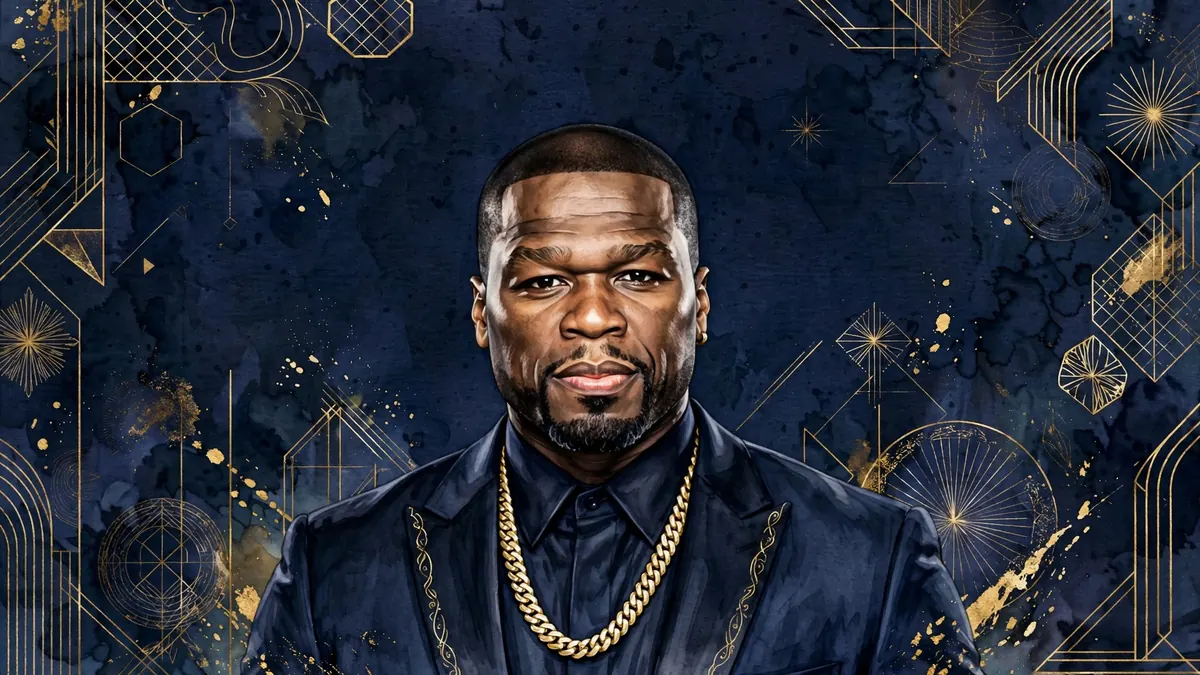
Table of Contents
- Early Life: South Jamaica, Queens
- How Curtis Jackson Became 50 Cent
- Shot Nine Times: The May 2000 Attack
- Breakthrough: Eminem, Dr. Dre and Get Rich or Die Tryin’
- G-Unit: Building a Rap Empire
- Music Career After the Peak: Albums, Tours and the Final Lap
- The Money: Vitamin Water, Bankruptcy and the Rebuild
- Power and Television: The Starz Empire
- Business Ventures Beyond Music
- G-Unit Studios and the Shreveport Bet
- The Diddy Docuseries: Sean Combs: The Reckoning
- Real Estate, Cars and Assets
- Personal Life: Family, Sons and Feuds
- Controversies and Legal Troubles
- Net Worth Timeline: From Nothing to Nine Figures and Back
- How 50 Cent Compares to His Peers
- Frequently Asked Questions About 50 Cent
- Final Thoughts: The Bottom Line
- Sources and Reporting
Early Life: South Jamaica, Queens
Curtis James Jackson III was born on July 6, 1975, in Queens, New York City, and raised in the South Jamaica neighborhood by his mother, Sabrina. His father left before he was born, and his mother — who sold drugs herself — died when Curtis was eight years old. He went to live with his grandparents, in a house where, by his own account in his memoir From Pieces to Weight: Once Upon a Time in Southside Queens (2005), there were eight children and not much money to go around.
South Jamaica in the 1980s was in the middle of the crack epidemic, and Jackson was pulled into the street economy early. He has said he began selling drugs at age 12, and by his teens he was earning far more on the corner than any legal job a teenager in Queens could find. School was an afterthought. In 1994, at 18, he was arrested on drug charges and later served time in a boot camp program, where he earned his GED. The arrest, he has said since, was the jolt that made him look for another way out — and the way out he picked was rap.
Even in those years, the traits that would later define his business career were visible: a head for numbers, a willingness to take a risk on himself, and a refusal to accept a small payout when a bigger one might be negotiated. He started writing rhymes in the basement of a friend’s house, teaching himself to build songs around hooks and punchlines, and studying the rappers who had turned street credibility into record deals. The neighborhood gave him the material; the discipline to turn it into a career came later, and it came the hard way.
How Curtis Jackson Became 50 Cent
Jackson took his stage name from Kelvin “50 Cent” Martin, a Brooklyn robber who was killed in 1987 and whose nickname, in street slang, meant someone who would rob anybody, for any amount — even fifty cents. The name was a statement of intent: Jackson wanted to be known as a man who could not be intimidated and who would take any opportunity, however small. As Britannica notes, the name stuck, and it has followed him from mixtape covers to television credits for nearly three decades.
His first break came through Jam Master Jay of Run-DMC, who signed Jackson to his JMJ Records label in the late 1990s and taught him the mechanics of writing a song — count the bars, build the hook, make every line earn its place. In 1999, Columbia Records signed him, and he recorded his debut album, Power of the Dollar. The album’s lead single, “How to Rob,” was a piece of calculated provocation: over a spare beat, Jackson listed famous rappers he would rob, name by name. It got him noticed — and it made him enemies in the industry before he had a record on the shelves. The album was never released. What happened next, in May 2000, nearly ended his career before it began.
Shot Nine Times: The May 2000 Attack
On May 24, 2000, Jackson was attacked outside his grandmother’s former home in South Jamaica. According to Wikipedia’s account, drawn from contemporary reporting, he had got into a friend’s car and was asked to go back inside the house for some jewelry; his young son was in the house and his grandmother was in the front yard. When he returned to the car, another car pulled up nearby and an assailant walked up with a 9mm handgun and fired nine shots at close range. Jackson was hit in the hand, arm, hip, both legs, chest and left cheek.
He survived, barely, after weeks in hospital and months of recovery that at one point left him using a walker. A bullet fragment lodged in his tongue left him with the slight slur that became part of his vocal signature. Columbia Records dropped him and shelved Power of the Dollar. For most artists, that would have been the end. For Jackson, the shooting became the foundation of his public identity — proof, in his telling, that he had a purpose, and a story no other rapper could match. In his memoir he wrote that after being shot nine times at close range and not dying, he started to think he must have a purpose in life. The industry, which had written him off, would spend the next two years watching him rebuild from mixtapes.
With no label, Jackson went back to the mixtape circuit, recording in Canada with producer Sha Money XL and flooding the streets with free tapes — Guess Who’s Back? (2002) among them. The tapes did what a marketing budget could not: they made him the most talked-about unsigned rapper in New York. Eminem heard Guess Who’s Back?, played it for Dr. Dre, and in 2002 Jackson signed a joint deal with Shady Records, Aftermath Entertainment and Interscope Records. His first appearance on a major release was “Wanksta,” on the 8 Mile soundtrack in late 2002. By the time his debut album arrived, he was already the most discussed figure in the music industry.
Breakthrough: Eminem, Dr. Dre and Get Rich or Die Tryin’
Get Rich or Die Tryin’ was released on February 6, 2003, with Eminem and Dr. Dre as executive producers, and it landed like an event. The lead single, “In Da Club,” spent nine weeks at No. 1 on the Billboard Hot 100, and the album sold 872,000 copies in its first week in the United States. Britannica records that it sold 6 million copies within a year and was the best-selling album of 2003. It has since been certified 9× Platinum in the US, with more than 12 million copies sold worldwide.
What made the album work was not just the singles. Jackson’s writing — blunt, funny, menacing by turns — matched Dre’s clean, heavy production and Eminem’s ear for hooks. Songs like “21 Questions” (featuring Nate Dogg), “P.I.M.P.” and “Many Men” turned his biography into a catalog: the shooting, the drug years, the hunger for money, all delivered in a voice that sounded like it had earned every line. The album made Jackson a star on a scale few debuts ever reach, and it made G-Unit, his crew of Lloyd Banks, Tony Yayo and Young Buck, into a brand in its own right.
The follow-up, The Massacre (March 2005), sold 1.14 million copies in its first week and produced the hit “Candy Shop.” Curtis followed in September 2007, released on the same day as Kanye West’s Graduation in a much-hyped sales showdown that West won — a rare public defeat for Jackson, who had promised to retire if he lost. He did not retire, but the moment marked a shift: the era when a 50 Cent album was the biggest event in rap was ending, and Jackson’s attention was already moving toward business and television. Before I Self Destruct (2009) and Animal Ambition (2014) sold respectably without matching the first two albums, and Jackson has spent the decade since teasing a sixth studio album, Street King Immortal, which has never arrived. His catalog still moves: across his career he has sold more than 30 million albums worldwide, won one Grammy from 14 nominations — for “Crack a Bottle” with Eminem and Dr. Dre in 2010 — and stayed a touring draw long after his chart peak.
G-Unit: Building a Rap Empire
Jackson founded G-Unit Records in 2003, at the height of his fame, and signed his own crew first: Lloyd Banks, Tony Yayo and Young Buck. The label’s early releases — Banks’s The Hunger for More (2004) and Yayo’s Thoughts of a Predicate Felon (2005) — both sold well, and the G-Unit name became a franchise: a clothing line with Marc Ecko, a sneaker deal, G-Unit Books, and the video game 50 Cent: Bulletproof (2005). The model was simple and, for its time, unusual: the artist owned the label, the label owned the artists’ development, and the brand extended into every product the audience might buy.
The empire had its fractures. The Game, signed to G-Unit in 2004, was expelled from the group in 2005 after a public falling-out with Jackson that played out on radio and on record — one of the most covered rap feuds of the decade. Young Buck left the label in 2008 amid contract and money disputes. But the label’s core idea survived: Jackson kept the G-Unit name as the banner for everything he built afterward, from G-Unit Film & Television (founded in 2003 as G-Unit Films) to the studio complex in Shreveport. The name that started as a crew became a company.
Jackson’s ear for talent and his instinct for the mixtape market also shaped a generation of New York rap. His run of mixtapes between 2002 and 2007 — Guess Who’s Back?, 50 Cent Is the Future, No Mercy, No Fear — set the template for how a rapper could build demand without a label, a template later used by artists across the industry. As a peer, his closest comparisons on this site include Jay-Z’s biography, whose own move from rapper to businessman ran on a parallel track, and 21 Savage’s biography, a younger rapper who has spoken about Jackson’s influence on his own career.
Music Career After the Peak: Albums, Tours and the Final Lap
Jackson’s recording career after 2007 was quieter, but his live career was not. He toured steadily through the 2010s, and in 2023 he mounted The Final Lap Tour, a world tour marking twenty years since Get Rich or Die Tryin’. According to Celebrity Net Worth, the tour grossed about $103.6 million from roughly 1.18 million tickets, making it one of only two rap tours in history to clear $100 million on a single run — the other belonging to Drake. Jackson financed the tour himself, carrying the upfront risk in return for a larger share of the profit, a decision that says a lot about how he thinks about money: own the risk, own the return.
The tour’s success fed directly into the rebuilt fortune described below. It also showed that nostalgia, packaged well, is a durable product: audiences who bought Get Rich or Die Tryin’ as teenagers in 2003 were now in their forties with money to spend, and Jackson gave them a show built around the catalog they already loved. In December 2024 he added a six-show Las Vegas residency at PH Live, Planet Hollywood — a format that pays a headliner well for a short run and keeps the brand in front of a new audience. His peers in the live market include Future, whose own touring and catalog runs on a similar model, and Drake, whose tours set the commercial bar Jackson’s Final Lap was measured against.
On record, Jackson has released sparingly since Animal Ambition in 2014, preferring guest verses, soundtrack work and the occasional single to full albums. The unreleased Street King Immortal has become a running joke among fans — announced in 2011, delayed repeatedly, and still unreleased as of 2026. Jackson has said in interviews that music is no longer where the money is for him, and the numbers back him up: his television and business income now outweighs what a new album would earn. The catalog, though, keeps paying. Streaming royalties from Get Rich or Die Tryin’ and The Massacre arrive every month, and “In Da Club” remains one of the most licensed rap songs of its era.
The Money: Vitamin Water, Bankruptcy and the Rebuild
The single most consequential financial decision of Jackson’s career came in 2004, when Glacéau, the company behind Vitamin Water, offered him an endorsement deal. Instead of taking a cash fee, he negotiated a minority equity stake and promoted his own flavor, Formula 50. When Coca-Cola bought Glacéau for $4.1 billion in May 2007, his stake paid off. Forbes reported that he made about $100 million after taxes from the sale — the largest hip-hop endorsement payout of its time. Other reports put the pre-tax figure as high as $400 million, but Celebrity Net Worth notes that bankers later estimated his stake at closer to 2.5 percent, which fits the Forbes after-tax figure better than the bigger number. The honest reading: he made roughly $100 million after taxes, and the exact pre-tax total was never disclosed.
The Vitamin Water money made Jackson rich, but it did not make him careful. By 2015 he was spending heavily — a 52-room mansion in Farmington, Connecticut, bought from Mike Tyson in 2003 for $4.1 million, cost about $72,000 a month to maintain, according to his own bankruptcy filings — and losing money in court. In July 2015 he filed for Chapter 11 bankruptcy in Connecticut, listing roughly $32 million in debts against about $25 million in assets. The filing followed a $7 million judgment against him in a lawsuit brought by Lastonia Leviston, and it was widely read as a strategic move to protect future earnings while he restructured. Forbes had estimated his wealth at $155 million just two months earlier, in May 2015 — the peak number, and the last one before the crash.
The rebuild was methodical. Under a court-approved plan he paid about $23 million to creditors over five years, and the bankruptcy was discharged in February 2017. Television did the heavy lifting: the Starz deal, the Power franchise, BMF, and the Final Lap Tour’s profits. For readers who want the full year-by-year breakdown of the fortune, our sister site’s net-worth file — 50 Cent’s net worth in detail — lays out the estimates and the sources behind them. As of November 2026, Celebrity Net Worth puts the rebuilt fortune at $100 million, with other trackers lower: ClutchPoints put him at $60 million in January 2025, and Net Worth Radar modeled $80 million in October 2026. The fair range for 2026 is $40 million to $100 million, anchored at $100 million by Celebrity Net Worth’s March 2026 update and its November 4, 2026 snapshot.
The Vitamin Water lesson: Jackson’s 2004 decision — equity instead of a fee — is the template he has applied ever since. Take ownership over cash, let the asset grow, and accept the risk. It made him $100 million once, and it is the same logic behind the Shreveport studio: own the building, own the production, own the upside.
Power and Television: The Starz Empire
Jackson’s second act began on television. Power, the Starz crime drama he executive produced and starred in as Kanan Stark, ran from 2014 to 2020 and became one of the network’s most valuable properties. In 2018 he signed a three-series commitment with Starz that trade reports said could earn him up to $150 million across multiple shows, and the franchise grew: Power Book II: Ghost (2020–2024), Power Book III: Raising Kanan (2021– ) and Power Book IV: Force (2022–2024). He also created and executive produced BMF (2021–2025), the Starz drama about the Black Mafia Family, and signed a non-exclusive development deal with Fox Entertainment in 2023, as Variety reported.
The television business suits Jackson’s strengths. He is a hands-on producer who casts, promotes and argues about his shows on social media, where his trolling of rivals doubles as marketing. The Power universe gave Starz a franchise it could build a schedule around, and it gave Jackson something music never had: backend participation in a long-running asset that pays for years. G-Unit Film & Television, founded in 2005, now supplies content to Starz, ABC, BET+, Netflix and Hulu, and its projects in development include the boxing drama Fightland for Starz and Hip Hop Cop, a Hulu series based on Ron Stallworth’s book The Gangs of Zion. He has also worked as an actor beyond his own shows, with roles in Home of the Brave (2006), Righteous Kill (2008) alongside Robert De Niro and Al Pacino, Southpaw (2015), Den of Thieves (2018) and The Expendables 4 (2023).
Business Ventures Beyond Music
Jackson’s business portfolio is wide, and not everything in it worked. The successes: G-Unit Records and the G-Unit clothing line, the Vitamin Water equity stake, Sire Spirits — his premium spirits company behind Branson cognac and Le Chemin du Roi champagne — and SMS Audio, the headphone company he launched in 2011 to compete in the market Beats had opened. The misses: the Street King energy drink, launched in 2011 with a promise to donate to hunger relief, which never took off; and a string of smaller ventures that came and went. The pattern is consistent with his own account of his career: he takes a lot of swings, and the hits pay for the misses.
He has also written three books: the memoir From Pieces to Weight (2005), The 50th Law (2009), written with Robert Greene, and Hustle Harder, Hustle Smarter (2020). The 50th Law, which reframes his street experience as a set of principles about fear and power, became a bestseller and is still the book he is most often asked about. His business thinking owes an obvious debt to that period: negotiate from strength, own the asset, and never let a deal depend on someone else’s goodwill. Compared with his peers, Jackson’s empire is smaller than Jay-Z’s — Forbes valued Jay-Z at $2.8 billion in 2026 — but it is built on the same idea: the music is the advertisement, and the business is the product.
G-Unit Studios and the Shreveport Bet
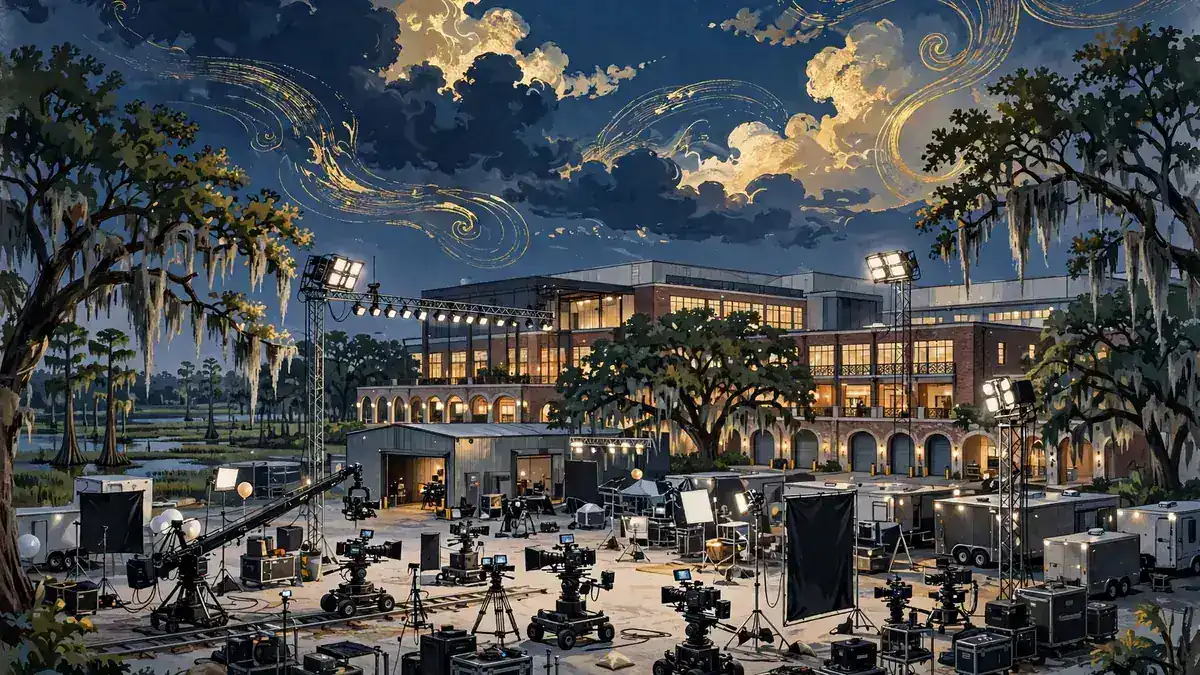
The biggest bet of Jackson’s second act is a city most entertainment executives had never thought about: Shreveport, Louisiana. In April 2024, G-Unit Studios took a 30-year lease on the city-owned Millennium Studios, a 985,000-square-foot production campus, at a rent of $2,400 a year. In March 2025 the Shreveport City Council approved a second 30-year lease, for the 77,000-square-foot Stageworks building, at $200 a month, with G-Unit taking on maintenance and operating costs. Jackson’s pitch was that Louisiana’s film tax incentives and low costs could support a production hub outside the usual Hollywood–Atlanta pipeline, and the city bought in.
In January 2026 the bet got bigger. Louisiana Economic Development announced that Jackson’s company would undertake a $124 million redevelopment of entertainment properties in downtown Shreveport — renovating the Stageworks venue, upgrading the former Millennium Studios campus, building a dome-style immersive venue and adding a green-space park — with the state committing up to $50 million in performance-based funding. Essence reported the deal on January 15, 2026, and Celebrity Net Worth’s November 2026 update noted the agreement as part of its $100 million estimate. A company-commissioned economic impact study projected nearly $19 billion in economic activity and more than 6,000 jobs over time, though those are the study’s projections, not results.
Progress has been slower than the announcements. In June 2026, Jackson’s team told Shreveport officials that about $11 million had been spent in the city so far, that Stageworks was roughly 20–25 percent complete, the G-Unit studio about 10 percent complete and the G-Dome 15–20 percent complete, with a target of having production running at Stageworks by the end of November 2026. The Shreveport project is the clearest test of Jackson’s business model: he is not renting studio space, he is building a town’s entertainment economy around his company, and the payoff — if it comes — will be measured in years, not quarters.
The Diddy Docuseries: Sean Combs: The Reckoning
Jackson’s most talked-about project of the past two years is also his most personal. He and Sean “Diddy” Combs have been rivals for two decades — a feud that has played out on record, on social media and in interviews — and in December 2023 Jackson signed on as executive producer of a documentary about Combs. The result, Sean Combs: The Reckoning, directed by Alexandria Stapleton, was released on Netflix on December 2, 2025, as a four-part series examining the allegations against Combs and the fall of the Bad Boy empire.
The series was a hit: reports put its first-week viewing at 21.8 million views, and it drew strong reviews — The Guardian gave it four stars — along with a cease-and-desist letter from Combs’s legal team the day before release, calling it a “shameful hit piece” and claiming Netflix had used footage that was never authorized. Netflix and the director have said the footage was legally obtained, and Stapleton has said she had full creative control, with Jackson not holding creative control over the series despite his executive producer credit. Combs was convicted in October 2025 on two counts of transporting individuals for prostitution and sentenced to four years and two months in federal prison; he was acquitted of the more serious trafficking and racketeering charges.
The docuseries also produced one of the year’s most repeated false claims. Social media posts said Jackson had been paid $50 million for his role as executive producer. Multiple fact-checks found no invoices, contracts or industry sources to support the number, and Netflix has not disclosed production budgets or talent fees. The $50 million figure should be treated as unverified internet chatter, not a payday. What the series did do, verifiably, was put Jackson at the center of the biggest music story of 2025 — and prove that G-Unit Film & Television could deliver a global Netflix hit.
Real Estate, Cars and Assets
Jackson’s property history reads like a map of his finances. The best-known holding was the Farmington, Connecticut mansion he bought from boxer Mike Tyson in 2003 for $4.1 million — a 52-room property with 19 bedrooms, a casino, a nightclub and a basketball court. He listed it for $18.5 million in 2007 and spent years cutting the price before finally selling it in 2019 for $2.9 million, a loss that says as much about the house’s running costs — about $72,000 a month, per his bankruptcy filings — as about the market. He has also owned property in New York and New Jersey, and Celebrity Net Worth reports he has acquired roughly 20 properties in Shreveport as part of the studio project, where real estate is an input to the business rather than a trophy.
His car collection has been a recurring feature of his public image — Rolls-Royces, Lamborghinis and a custom Pontiac G8 among them — but cars are the least interesting part of the asset picture. The assets that matter are the ones that earn: the music catalog, the Power franchise backend, the Sire Spirits brands, and the Shreveport property. The bankruptcy taught him the difference. Before 2015 he collected things; after 2017 he has collected equity. The Shreveport land, the studio leases at $2,400 a year and $200 a month, and the state-backed redevelopment are the clearest expression of that shift: assets bought cheap, held long, and built into a business.
Personal Life: Family, Sons and Feuds
Jackson has two sons. Marquise, born in 1996 to his former partner Shaniqua Tompkins, has been estranged from his father for years — a rift that has played out publicly, with both men trading accusations on social media. Sire, born in 2012 to model Daphne Joy, is a regular presence in Jackson’s posts, and Jackson has spoken warmly about fatherhood with his younger son, including launching a Sire Spirits-linked audio brand in his name. Jackson has never married. His most public relationships were with actress Vivica A. Fox in the early 2000s and comedian Chelsea Handler around 2010.
He stands 6 ft tall — for a full breakdown of his height and how it compares with other rappers, see our sister site’s profile of 50 Cent’s height. Physically, the 51-year-old Jackson keeps the gym habit that has defined his image since the Get Rich or Die Tryin’ era, and his social media presence — tens of millions of followers across Instagram and X — is a business tool as much as a personal outlet: he promotes his shows, settles scores and tests public reaction to new projects there, often in the same post.
Feuds have been a constant. Beyond Combs, his long-running conflicts include Ja Rule, with whom he traded diss tracks in the early 2000s; The Game, whose expulsion from G-Unit in 2005 ended in a shooting outside a New York radio station; Rick Ross, with whom he feuded from 2009; and Floyd Mayweather, a former friend turned public rival. Jackson treats feuds as content and content as marketing, and the approach has worked: his enemies keep him in the news between projects, and the news keeps his shows selling. The cost is real, though — the Leviston lawsuit that helped trigger his bankruptcy grew directly out of a feud, when he posted a sex tape involving Leviston and Rick Ross’s associate, and the $7 million judgment that followed was one of the debts that pushed him into Chapter 11.
Controversies and Legal Troubles
Jackson’s legal history is inseparable from his biography. The 1994 drug arrest and boot camp sentence came before fame. In 2013 he pleaded guilty to one count of vandalism after an incident involving Daphne Joy, the mother of his younger son, and received three years’ probation. In 2015, the Leviston judgment and the bankruptcy filing put his finances under a court’s microscope for two years — a period he has since described as a lesson in how fast money can go. In 2023, a microphone he threw into the crowd during a Los Angeles concert injured a fan; no charges were ultimately filed.
He has also faced criticism for the way he uses social media — mocking rivals, posting about ongoing legal cases, and, in the case of the Diddy docuseries, being accused of turning a serious subject into a personal vendetta. His answer, consistently, is that he is an entertainer and a businessman, and that the attention is the point. The record supports a mixed verdict: the trolling has cost him millions in court, and it has also kept him relevant for two decades in an industry that discards most stars within five years. Readers should weigh both sides rather than taking either his version or his critics’ version at face value.
Net Worth Timeline: From Nothing to Nine Figures and Back
| Year | Estimated Net Worth | What Happened |
|---|---|---|
| 1996 | Near zero | Unsigned, selling drugs in Queens, recording in a friend’s basement. |
| 2000 | Near zero | Shot nine times in May; dropped by Columbia Records; debut album shelved. |
| 2003 | $10 million – $20 million | Get Rich or Die Tryin’ sells millions; G-Unit Records founded; clothing and game deals follow. |
| 2007 | $100 million – $150 million | Coca-Cola buys Glacéau for $4.1 billion; Forbes reports about $100 million after taxes for Jackson. |
| 2015 | $155 million (Forbes, May) → bankruptcy (July) | Peak estimate in May; Chapter 11 filing in July with about $32 million in debts. |
| 2017 | $30 million – $40 million | Bankruptcy discharged in February after about $23 million paid to creditors; TV income rebuilding the base. |
| 2020 | $40 million – $60 million | Power franchise and BMF generating steady production income. |
| 2023 | $60 million – $80 million | Final Lap Tour grosses about $103.6 million; Fox development deal signed. |
| 2026 | $40 million – $100 million (anchored $100 million, Celebrity Net Worth) | Shreveport $124 million deal finalized in January; Diddy docuseries a Netflix hit; estimates vary by how much of the studio project is counted. |
The timeline is the story in miniature: a fortune built on one extraordinary deal, lost to spending and lawsuits, and rebuilt on steadier ground — television backend, touring profit and property. The 2026 range is wide because the Shreveport project is a development, not a finished asset: trackers that count only realized income land near $40 million to $60 million, while Celebrity Net Worth’s $100 million counts the tour profits, the studio property and the production company’s value. Neither number is audited, and both are estimates.
How 50 Cent Compares to His Peers
Jackson’s $100 million sits in the middle of hip-hop’s wealth ladder — far below the billionaires, far above most working rappers. The comparison puts the scale in context:
| Artist | Estimated Net Worth (2026) | Source |
|---|---|---|
| Jay-Z | $2.8 billion | Forbes, 2026 |
| Dr. Dre | $1 billion | Forbes, 2026 |
| Eminem | $300 million | Celebrity Net Worth, May 2026 |
| Drake | $250 million | Celebrity Net Worth, 2026 |
| Snoop Dogg | $160 million | Celebrity Net Worth, 2026 |
| 50 Cent | $100 million | Celebrity Net Worth, 2026 |
| Lil Wayne | $160 million – $170 million | Celebrity Net Worth, 2026 |
The gap between Jackson and the top of the list is a gap in asset type, not talent. Jay-Z and Dr. Dre became billionaires on equity sales — Armand de Brignac and D’Ussé for Jay-Z, Beats for Dre — while Jackson’s one equity home run, Vitamin Water, paid $100 million and was followed by a bankruptcy that reset him. Eminem, his mentor and label boss, kept his catalog and touring income compounding without a bankruptcy in between. What Jackson has that most of his peers do not is a second career: his television company earns money that has nothing to do with rap, and the Shreveport studio could, if the development delivers, become the asset that closes some of that gap. For the same-person angles on his peers, see Snoop Dogg’s net worth and Lil Wayne’s net worth on this site.
Frequently Asked Questions About 50 Cent
What is 50 Cent’s real name and how old is he in 2026?
His real name is Curtis James Jackson III. He was born on July 6, 1975, in South Jamaica, Queens, New York City, which makes him 51 years old in November 2026. He took the stage name 50 Cent from Kelvin “50 Cent” Martin, a Brooklyn robber who died in 1987.
What is 50 Cent’s net worth in 2026?
Published estimates for 2026 range from $40 million to $100 million. Celebrity Net Worth anchors the top of the range at $100 million, based on its March 2026 update and its November 4, 2026 snapshot. Forbes last put him at $155 million in May 2015, two months before he filed for Chapter 11 bankruptcy. The figure is an estimate from public sources, not an audited balance sheet.
How did 50 Cent get shot nine times?
On May 24, 2000, outside his grandmother’s former home in South Jamaica, Queens, an assailant fired nine shots at close range with a 9mm handgun. Jackson was hit in the hand, arm, hip, both legs, chest and left cheek. He survived after weeks in hospital, Columbia Records dropped him, and his debut album Power of the Dollar was shelved. A bullet fragment in his tongue left him with the slight slur in his voice.
What is 50 Cent’s most successful album?
Get Rich or Die Tryin’ (February 6, 2003) is his biggest album by a wide margin. It sold 872,000 copies in its first week in the US, was the best-selling album of 2003 with 6 million copies sold within a year, and is certified 9× Platinum in the US with more than 12 million copies sold worldwide. Its lead single “In Da Club” spent nine weeks at No. 1 on the Billboard Hot 100.
How much did 50 Cent make from Vitamin Water?
Forbes reported he made about $100 million after taxes when Coca-Cola bought Glacéau, Vitamin Water’s parent company, for $4.1 billion in May 2007. He had taken a minority equity stake in 2004 instead of a cash endorsement fee and promoted his Formula 50 flavor. Some reports claimed up to $400 million before taxes, but Celebrity Net Worth notes bankers later estimated his stake at about 2.5 percent, which fits the Forbes after-tax figure better. The exact pre-tax total was never disclosed.
Why did 50 Cent file for bankruptcy in 2015?
He filed for Chapter 11 bankruptcy in Connecticut in July 2015, listing about $32 million in debts against about $25 million in assets. The filing followed a $7 million court judgment in a lawsuit brought by Lastonia Leviston, plus heavy spending — his Connecticut mansion alone cost about $72,000 a month to maintain. Under a court-approved plan he paid about $23 million to creditors over five years, and the bankruptcy was discharged in February 2017.
What TV shows has 50 Cent produced?
His biggest television work is the Power franchise on Starz, which he executive produced and starred in as Kanan Stark: Power (2014–2020), Power Book II: Ghost (2020–2024), Power Book III: Raising Kanan (2021– ) and Power Book IV: Force (2022–2024). He also created and executive produced BMF (2021–2025) and executive produced the Netflix docuseries Sean Combs: The Reckoning (December 2025). His company, G-Unit Film & Television, also has projects in development with Starz, Fox, Hulu and Netflix.
What is 50 Cent doing in 2026?
In January 2026 his company finalized a $124 million redevelopment deal for G-Unit Studios in Shreveport, Louisiana, backed by up to $50 million in state funding; by June 2026 his team reported about $11 million spent there, with production targeted at Stageworks by the end of November 2026. He also executive produced the Netflix hit Sean Combs: The Reckoning, which premiered December 2, 2025 and drew a reported 21.8 million views in its first week, and he continues to develop new series through G-Unit Film & Television.
Final Thoughts: The Bottom Line
50 Cent’s biography is two stories in one. The first is the rap story: a kid from South Jamaica who survived nine bullets, made the best-selling album of 2003, and became one of the defining voices of his era. The second is the business story: a man who turned one equity deal into $100 million, lost it to spending and lawsuits, and rebuilt it — more slowly, more carefully — on television, touring and property. The second story is the more interesting one, because it is still being written in Shreveport, where a $124 million studio development will decide whether the rebuild becomes something bigger than a recovery.
What endures is the discipline underneath the noise. Jackson has been counted out three times — after the shooting, after the bankruptcy, and after his chart peak — and each time he has found a new way to earn. The fortune, at $40 million to $100 million depending on the tracker, is smaller than his peak and smaller than his mentors’. The career, though, is larger than almost anyone who started where he did. For more profiles of rappers and moguls who made the same crossing from music to business, browse our celebrity biography archive.
Sources and Reporting
This biography was researched from live sources in November 2026. Money figures are estimates from public reporting, not audited disclosures, and they differ between trackers because private companies are never valued publicly.
- Celebrity Net Worth — 50 Cent net worth $100 million (March 2026 update; November 4, 2026 snapshot); Final Lap Tour gross about $103.6 million; Shreveport agreement details.
- Forbes — May 2015 estimate of $155 million; about $100 million after taxes from the Glacéau sale; 2026 wealth rankings for Jay-Z ($2.8 billion) and Dr. Dre ($1 billion).
- Britannica — biography updated November 1, 2026: birth, shooting, Get Rich or Die Tryin’ sales and stage-name origin.
- Billboard — chart history for “In Da Club” and Final Lap Tour box office reporting.
- Variety — Starz three-series deal and the 2023 Fox Entertainment development deal.
- Essence — January 15, 2026 report on the $124 million G-Unit Studios Shreveport deal and $50 million in Louisiana funding.
- Netflix — Sean Combs: The Reckoning, released December 2, 2025, four parts, executive produced by Curtis “50 Cent” Jackson.
- Wikipedia — 50 Cent and Sean Combs: The Reckoning entries for dates, credits and the May 24, 2000 shooting account.
- Shreveport-Bossier Advocate — June 10, 2026 report on G-Unit’s Shreveport progress: $11 million spent, completion percentages and production targets.
How we estimated: the headline figure is a range because the sources disagree. Celebrity Net Worth’s $100 million anchors the top; ClutchPoints ($60 million, January 2025) and Net Worth Radar ($80 million, October 2026) sit lower. Forbes’s $155 million is a 2015 peak, not a current figure, and the $400 million Vitamin Water claim is an unverified pre-tax number that does not fit the bankers’ stake estimate. Where sources conflicted, this article shows the range and names the source behind each number. Private fortunes change constantly, so treat every figure here as a well-researched approximation, not a balance sheet.