Babar Azam’s net worth in 2026 is estimated at $5 million to $7 million. That is the honest range most 2026 reporting settles on: Surprise Sports puts it at $5 million, CricketWinner at about $5.4 million (roughly ₹50 crore), SportsDigest at $6–7 million, and KyroSports at ₹41 crore, or $5–7 million. A few outlets publish far higher numbers — Possible11 claims $10–12 million and CricketNetWorth claims $25 million — but those figures do not line up with his publicly reported contracts, match fees and endorsement deals, and this article explains exactly why.
Babar, born October 15, 1994 in Lahore, Pakistan, is the finest batter of his generation from Pakistan and one of the most marketable athletes the country has ever produced. He has captained Pakistan across formats, spent long stretches ranked the world’s number one ODI batter, and in 2026 became the fastest batter in history to 12,000 T20 runs. His money comes from a Pakistan Cricket Board (PCB) central contract, international match fees, a top Pakistan Super League (PSL) deal with Peshawar Zalmi, a marquee Big Bash League (BBL) contract with the Sydney Sixers, and endorsement deals with brands such as Pepsi, Puma and Gray-Nicolls. Nothing here is hidden behind a single made-up number: every figure below carries its source, and where sources disagree, the range stays visible. Last updated: November 10, 2026. By Celebamerica Editorial Staff.
Quick Facts: Babar Azam at a Glance
| Full Name | Mohammad Babar Azam |
|---|---|
| Date of Birth | October 15, 1994 |
| Birthplace | Lahore, Punjab, Pakistan |
| Estimated Net Worth (2026) | $5 million – $7 million (consensus range; see the estimate breakdown below) |
| Primary Income Sources | PCB central contract, international match fees, PSL salary (Peshawar Zalmi), BBL marquee deal (Sydney Sixers), brand endorsements |
| Key Teams | Pakistan (all formats), Peshawar Zalmi (PSL), Sydney Sixers (BBL), Karachi Kings (formerly, PSL) |
| Key Ventures & Works | Endorsements with Pepsi, Puma, Gray-Nicolls and telecom brands; cover-drive batting brand built on ODI and T20 records |
| Career Highlights | Former Pakistan captain in all formats; long-time world No. 1 ODI batter; fastest to 12,000 T20 runs (2026); 20 ODI centuries |
Table of Contents
- Quick Facts: Babar Azam at a Glance
- Early Life and Background in Lahore
- Career Rise: From Ball Boy to Pakistan Captain
- The Money: Where Babar Azam’s Wealth Comes From
- The PCB Central Contract and Match Fees
- Franchise Leagues: PSL and the Big Bash
- Endorsements and Brand Deals
- Assets: Homes, Cars and Investments
- Net Worth Growth Timeline
- How Babar Compares With His Peers
- Personal Life
- Controversies and Setbacks
- Frequently Asked Questions
- Final Thoughts: The Bottom Line
- Sources and Reporting

Early Life and Background in Lahore
Babar Azam was born on October 15, 1994, in Lahore, a city that lives and breathes cricket. He grew up in a cricket-mad household: his cousins Kamran Akmal, Umar Akmal and Adnan Akmal all played international cricket for Pakistan, so the game was less a hobby than the family trade. As a boy he was a ball boy at Gaddafi Stadium during international matches, watching the players he would one day join from the boundary rope. That detail matters, because it explains the polish of his game — he studied the best batters up close before he ever faced a ball in anger.
He came through Lahore’s age-group cricket and Pakistan’s Under-19 system, where his technique stood out at once. Where many young Pakistani batters relied on raw timing and wrist, Babar batted with a still head, a straight bat and a cover drive that coaches describe as textbook. He played the 2010 and 2012 Under-19 World Cups, captaining the side in 2012, and his domestic record for Lahore and later for the Pakistan A team made his senior call-up a matter of when, not if. For readers who want the full life story rather than the money picture, our sister site carries a detailed Babar Azam biography covering his family, his early years and his rise through the ranks.
Lahore also shaped his public image. He speaks Punjabi and Urdu at home, keeps a low-key social circle, and has stayed close to his family even as his fame grew. The humility is part of the brand: sponsors like a player who is both a star and, by all accounts, a steady professional. That combination — elite output plus a clean image — is the foundation of everything in the money sections below.
Career Rise: From Ball Boy to Pakistan Captain
Babar made his ODI debut against Zimbabwe in May 2015 and his T20I debut in 2016, with his Test debut following against the West Indies in October 2016. His rise was fast by any measure. In ODIs he scored three consecutive centuries against the West Indies in 2016, a feat that announced him as a generational talent, and he went on to hold the ICC’s number one ODI batting ranking for long stretches, a position he has traded with the best batters in the world ever since.
By late 2025 he had played about 61 Tests, 140 ODIs and 136 T20Is, according to SportsDigest, with 4,366 Test runs, 6,501 ODI runs and 4,429 T20I runs at averages above 39 in each format. CricketWinner’s 2026 tally puts him at 4,674 Test runs, 6,626 ODI runs and 4,596 T20I runs, with nine Test centuries, 20 ODI centuries and three T20I centuries. The small gaps between outlets come from different cut-off dates; the picture is the same either way — a batter who scores heavily in every format, year after year.
The captaincy followed. Babar led Pakistan in all three formats, taking the white-ball captaincy in 2019–2020 and the Test captaincy in 2020. Under him Pakistan reached the semi-final of the 2021 T20 World Cup and the final of the 2022 T20 World Cup, and he led the side to the top of the ODI rankings. He stepped away from the captaincy more than once — first in late 2023, then again after a brief return in 2024 — saying he wanted to focus on his batting. The leadership years added to his market value even as they added pressure: a captain sells more shirts, fronts more campaigns and commands a bigger franchise fee than a squad player ever will.
His one-day record deserves a closer look, because it is the engine of his reputation. At the 2019 World Cup in England he scored 474 runs, the most by a Pakistan batter in a single World Cup, and he has been the anchor of Pakistan’s ODI batting ever since — the player the innings is built around while others bat around him. The ICC rankings rewarded that consistency: he held the number one ODI batting spot for more than 1,000 days across his spells at the top, a run of dominance that only a handful of batters in history have matched. It is that ranking, as much as any single innings, that keeps his name first on every franchise shortlist and every sponsor’s wish list.
Then came 2026. In a year when his form had been questioned and his central contract downgraded, Babar set a record that shut down the doubters: he became the fastest batter in history to 12,000 T20 runs, a mark reported by IceCric News in its 2026 richest-cricketers ranking. Records like that are not just statistics — they are the reason his next contracts, and his endorsement rate, stay high even in a lean year.
The Money: Where Babar Azam’s Wealth Comes From
Babar’s wealth is built on five streams, and none of them is a mystery. First, the PCB central contract — a monthly retainer that is the backbone of any Pakistan cricketer’s income. Second, international match fees, paid per appearance in Tests, ODIs and T20Is. Third, the PSL, where as Peshawar Zalmi’s captain and marquee player he earns one of the league’s top salaries. Fourth, overseas franchise cricket, led by the Sydney Sixers’ marquee deal in Australia’s Big Bash League. Fifth, endorsements — the deals with Pepsi, Puma, Gray-Nicolls and telecom brands that turn a famous face into steady commercial income.
What he does not have, compared with Indian stars such as Virat Kohli or Rohit Sharma, is an IPL contract. Pakistani players are not part of the Indian Premier League, and that single absence is worth millions a year in lost earnings. It is the main reason Babar’s net worth sits in the single-digit millions while Indian counterparts of similar stature sit far higher. A Medium ranking of the richest Pakistani cricketers in 2026 puts Babar at $5–10 million and notes exactly this point: his exclusion from the IPL caps his earning ceiling compared with global peers.
The table below sets out the five streams with the best-reported figures for each. The numbers are estimates drawn from named outlets, not official disclosures — the PCB does not publish individual contract values, and Babar himself has never disclosed his finances. Read them as a well-sourced range, not as an audit.
| Income Stream | Reported Figure |
|---|---|
| PCB central contract | Category B, 2025–26: about PKR 3 million per month (KyroSports; down from Category A at about PKR 4.5 million) |
| International match fees | Above PKR 1.25 million per Test, plus ODI and T20I fees (KyroSports) |
| PSL — Peshawar Zalmi | About $220,000 per season (KyroSports, SportsDigest); retained for about PKR 7 crore before PSL 11 (IceCric News) |
| BBL — Sydney Sixers | Marquee deal up to AUD 420,000, about ₹2.35 crore (KyroSports, SportsDigest) |
| Endorsements | Roughly ₹50 lakh per deal (KyroSports); brands include Pepsi, Puma, Gray-Nicolls |
Why the range, not one number? The 2026 estimates for Babar Azam run from $5 million (Surprise Sports) to $25 million (CricketNetWorth). The bulk of serious reporting — Surprise Sports, CricketWinner, SportsDigest, KyroSports and IceCric News — lands between $5 million and $7 million, and that band is consistent with his documented contracts. The $10–12 million figure from Possible11 and the $25 million figure from CricketNetWorth are outliers with no contract-level evidence behind them. This article anchors on the $5–7 million consensus and treats the outliers as what they are: uncorroborated.
The PCB Central Contract and Match Fees
The PCB central contract is the steadiest money Babar earns, and it is also the stream that changed most in 2025–26. According to KyroSports, reporting in May 2026, Babar moved from Category A to Category B for the 2025–26 contract year, with his monthly retainer cut from about PKR 4.5 million to about PKR 3 million. The downgrade followed a lean run of form and the PCB’s decision to trim its top tier. IceCric News, reporting in 2026, confirms the same figure: under his new central contract he earns about PKR 3 million per month.
One wrinkle deserves a straight answer. SportsDigest reports that Babar earns around PKR 8 million a month under his PCB contract, while CricketWinner’s 2026 breakdown also lists around PKR 8 million per month. That figure sits oddly beside the Category B cut reported by KyroSports and IceCric News. The likeliest reading is that the higher number bundles the retainer with match fees and allowances, or reflects an earlier contract year before the downgrade. This article uses the PKR 3 million retainer as the contract figure, because two independent 2026 reports tie it to the Category B downgrade with specific before-and-after numbers, and treats the PKR 8 million figure as a bundled or older estimate. Either way, the PCB money is in the hundreds of thousands of dollars a year, not the millions — a point that matters when weighing the $25 million claim later.
On top of the retainer come match fees. KyroSports reports Babar earns above PKR 1.25 million for every Test match, with separate fees for ODIs and T20Is. A busy year of international cricket — a home series, an away tour, a World Cup — can add a substantial sum on top of the retainer, which is why his annual PCB income is best read as retainer plus fees plus win bonuses, not as the retainer alone. The PCB has also raised match fees in recent years, so the fee stream has grown even as the retainer was trimmed.
The contract story also tells you something about where Babar stands with the board. A Category B deal for a player of his stature is a message: perform, or the top tier stays out of reach. But it is also a reminder that the PCB’s pay scale is modest next to the boards of India, England and Australia. Babar’s PCB income is a fraction of what a comparable England or India star earns from their board — which is exactly why the franchise leagues matter so much to his bottom line.
Franchise Leagues: PSL and the Big Bash
The PSL is Babar’s most reliable franchise income. He began his PSL career with Karachi Kings, then moved to Peshawar Zalmi, where he now plays as captain and the franchise’s marquee name. KyroSports and SportsDigest both report his PSL salary at about $220,000 a season, while IceCric News reports that Peshawar Zalmi retained him for about PKR 7 crore before PSL 11 — a figure that works out higher than the $220,000 salary once the rupee conversion and the new retention structure are taken into account. Either way, he is among the best-paid players in the league, and the captaincy carries its own premium in visibility and commercial value.
The bigger story is the Big Bash. In a move that made headlines across the cricket world, Babar signed with the Sydney Sixers as a marquee player for the 2025–26 BBL season. KyroSports reports the deal is worth a maximum of AUD 420,000 — about ₹2.35 crore — under the league’s platinum category, and SportsDigest describes it as a record-breaking, multi-year deal earning him over AUD 420,000. For a Pakistan player, a BBL marquee deal is rare air: it is the kind of contract that signals global demand, and it opens the door to further overseas league deals in the years ahead. Australia’s fast bowlers have long been the BBL’s headline acts — our Pat Cummins profile covers the other side of that same league — but Babar’s signing showed the Sixers were buying batting star power, not just local pace.
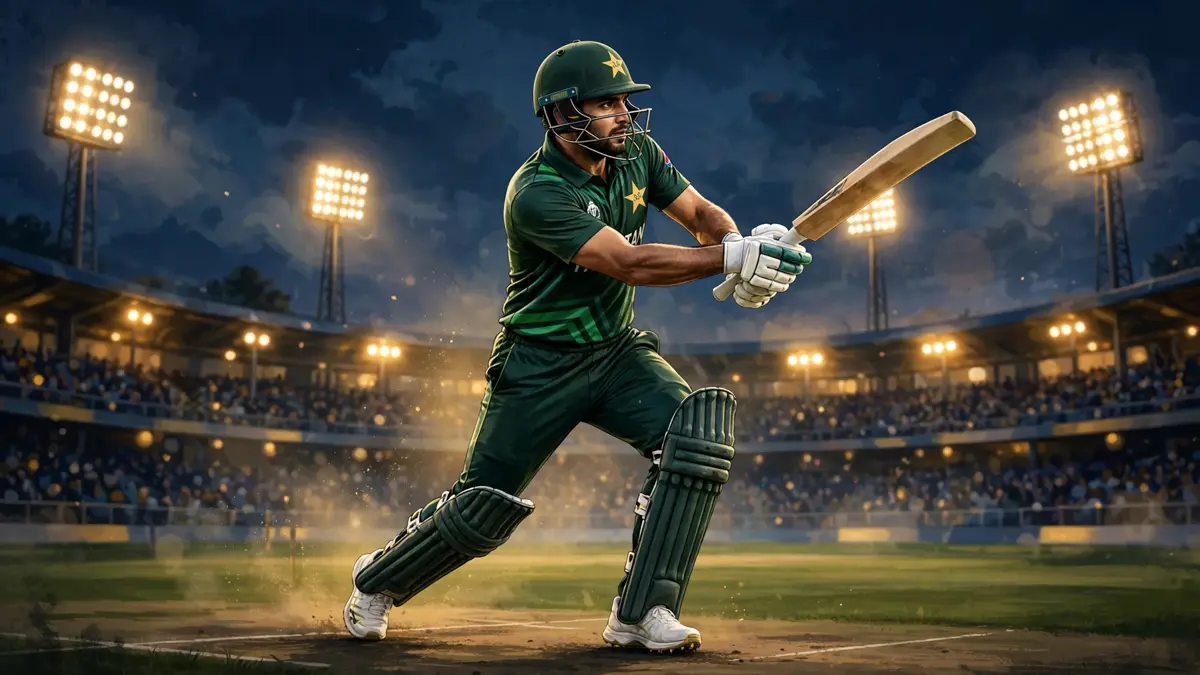
He has also played in other leagues over the years, including stints in the Caribbean Premier League and the Lanka Premier League, though none of those deals matches the PSL or BBL in value. The pattern is clear: his franchise income is concentrated in two leagues, and the BBL deal is the one with the most room to grow. If the Sixers deal extends, or if other leagues come calling after his 12,000-run T20 record, that stream could lift his net worth meaningfully in the next two or three years.
Endorsements and Brand Deals
Endorsements are the quiet earner in Babar’s portfolio. He is Pakistan’s most marketable active cricketer, and brands pay for that. The names most often attached to him are Pepsi, Puma and Gray-Nicolls, with telecom brands also in the mix, according to SportsDigest, KyroSports and TheCelebWiki. Gray-Nicolls supplies his bats — a natural fit for a batter whose cover drive is his calling card — while Puma covers his footwear and apparel, and Pepsi puts him in front of the mass market in Pakistan and beyond.
KyroSports reports he earns roughly ₹50 lakh per endorsement deal. That figure is a guide, not a rate card: the biggest deals will pay more, smaller appearances less, and the total depends on how many active deals he holds in a given year. Even so, the shape of the income is clear — endorsements add a six-figure sum in dollars each year, on top of his cricket earnings, and they are the stream most likely to grow as his global profile rises. The BBL deal helps here too: visibility in Australia puts him in front of sponsors who never watched the PSL.
What he has not done, so far, is turn endorsement fame into a business empire. Possible11 notes there is currently no publicly verified information suggesting Babar owns major businesses or startup investments, and no reporting ties him to a restaurant chain, a fashion label or a tech venture of the kind some cricketers build. His wealth is cricket wealth — contracts, fees and deals — rather than business wealth. That is a fair description of where he stands in 2026, and it is another reason the $25 million outlier figure looks shaky: there is no visible business portfolio to account for the gap.
Assets: Homes, Cars and Investments
Public reporting on Babar’s assets is thin, and this section says so plainly rather than inventing a garage full of cars. What is known: he owns a home in Lahore, where he lives with his family, and he is regularly photographed with premium vehicles, as most star cricketers are. No reputable outlet has published a verified list of his properties or cars with values attached, and no property registry or court filing has put a number on his real estate.
That absence is normal. Pakistani cricketers do not file the public wealth disclosures that, say, American athletes do, and Babar is a private person who does not show off his possessions on social media. The honest statement is that his assets are his Lahore home, his vehicles and his savings and investments from a decade of top-level cricket — and that no sourced figure exists for their combined value. Any article that prices his house or lists his cars to the dollar is guessing, and this one will not.
On investments, the same caution applies. There is no verified report of Babar holding a stake in a startup, a franchise or a property development. His financial life, as far as the public record shows, is built on cricket income rather than on deal-making off the field. If that changes — a business launch, a brand of his own — it will be worth a fresh look, because it would change the shape of his net worth. For now, the wealth sits in the contracts and the bank, not in a portfolio of companies.
Net Worth Growth Timeline
Babar’s wealth has grown in step with his career, and the timeline reads like a steady climb with one sharp acceleration.
| Period | What changed |
|---|---|
| 2015–2017 | International debut and three straight ODI centuries; first central contract and first PSL deal with Karachi Kings. Net worth likely under $1 million. |
| 2018–2020 | Established as Pakistan’s best batter; white-ball captaincy in 2019–2020; endorsement deals begin in earnest. Wealth builds toward the low single-digit millions. |
| 2021–2023 | Captain in all formats; long spells as world No. 1 ODI batter; T20 World Cup final in 2022; move to Peshawar Zalmi as captain. Peak earning years, with the PCB’s top category contract. |
| 2024–2025 | Captaincy ends; form dips; central contract downgraded to Category B in 2025–26, cutting the retainer from about PKR 4.5 million to about PKR 3 million a month. |
| 2025–2026 | Sydney Sixers marquee BBL deal worth up to AUD 420,000; fastest to 12,000 T20 runs. New income stream offsets the PCB cut; consensus net worth settles at $5–7 million. |
The lesson of the timeline is that Babar’s money follows his batting, and his batting has never stayed down for long. The 2025–26 dip in his PCB deal is real, but the BBL signing and the 12,000-run record arrived in the same window, and the two roughly cancel each other out. That is why the consensus estimate has held steady at $5–7 million rather than falling: one stream shrank, another opened up.
How Babar Compares With His Peers
Context turns a number into a story. Set Babar beside the batters he is most often measured against, and the $5–7 million figure makes sense.
Virat Kohli, the batter Babar is most compared with, earns many times more — an IPL deal alone dwarfs Babar’s entire annual income, and Kohli’s endorsement portfolio is among the largest in world sport. Our Virat Kohli age profile traces a career that has run longer at the very top and inside the richest league in cricket. Rohit Sharma sits in the same bracket: an IPL captain and a global brand, with earnings Babar cannot match while Pakistani players sit outside the IPL. Our Rohit Sharma height profile covers the other half of India’s great modern opening pair.
Among fast bowlers, the comparison runs the other way. Jasprit Bumrah’s biography shows a bowler whose IPL and India deals put him in a different pay league, even though Babar’s batting record is comparable in its own way. And Joe Root, England’s run-machine, earns a central contract from the ECB that sits far above the PCB’s scale — his story is covered in our Joe Root biography. The thread running through every comparison is the same: Babar’s talent is world-class, but the leagues and boards around him pay less than the ones around his peers. His net worth is a story of talent meeting a smaller market.
Inside Pakistan, Babar stands at the top. CricketWinner’s 2026 ranking of the richest Pakistani cricketers puts him third on its list at about ₹50 crore, behind only the retired greats with decades of earnings and business ventures behind them, and IceCric News places him second among the current team’s richest players. Among active Pakistani cricketers he is, by most measures, the highest earner — a position his BBL deal is likely to strengthen.

Personal Life
Babar keeps his private life private, and the public record reflects that. He is unmarried as of 2026, despite regular speculation in the Pakistani press, and he has never confirmed a relationship publicly. His family remains central to his life: his father, Azam Siddique, has spoken publicly about his son’s early years and the sacrifices behind the career, and Babar often credits his family for keeping him grounded.
He is known for a disciplined routine — training, rest and faith — and for staying out of the social-media storms that follow many stars. His Instagram and X accounts are mostly cricket: training clips, match moments, sponsor posts and the occasional family photo. That restraint is part of why sponsors trust him. In an era when a single careless post can cost a deal, Babar’s feed is about as safe as a cricketer’s gets.
Off the field he is involved in charity work in Pakistan, including appearances and donations tied to children’s causes and to cricket development, though he does not publicise these efforts the way some players do. He has also spoken about wanting to give back to Lahore’s young cricketers, the same age-group system that produced him.
Controversies and Setbacks
No honest profile skips the rough patches, and Babar has had several. The first is form. After years at the top of the rankings, his batting went through a lean spell in 2024 and 2025, with a long wait for an international century and questions about his strike rate in T20 cricket. Critics argued he scored too slowly for the modern game; supporters pointed to his consistency and his record. The 2026 record — fastest to 12,000 T20 runs — answered the loudest critics, but the debate about his T20 tempo has not gone away.
The second is the captaincy. Babar stepped down as captain in late 2023, returned briefly in 2024, and stepped down again. Each change brought a round of press conferences, leaked dressing-room stories and public second-guessing. He has handled the churn with more composure than most, but the stop-start leadership cost him the platform that a settled captain enjoys — and, with it, some commercial shine.
The third is the contract downgrade. The PCB’s decision to move him from Category A to Category B for 2025–26 was read by many as a verdict on his form, and it came with a real pay cut. Babar has not complained publicly. The professional response — the BBL deal, the record, the runs — is the answer he has chosen. There have also been occasional off-field rumours, including old allegations that resurfaced on social media, but none has resulted in any charge or finding against him, and they do not belong in a money profile beyond this note: they have not affected his contracts or his endorsements in any documented way.
Frequently Asked Questions
What is Babar Azam’s net worth in 2026?
Babar Azam’s net worth in 2026 is estimated at $5 million to $7 million. Surprise Sports puts it at $5 million, CricketWinner at about $5.4 million (₹50 crore), SportsDigest at $6–7 million and KyroSports at ₹41 crore ($5–7 million). Higher figures of $10–12 million and $25 million appear on some sites, but they are outliers without contract-level evidence behind them.
How much does Babar Azam earn from the PCB central contract?
For the 2025–26 contract year Babar holds a Category B PCB central contract worth about PKR 3 million per month, down from Category A at about PKR 4.5 million per month, according to KyroSports and IceCric News. Some outlets report a higher figure of about PKR 8 million a month, which likely bundles the retainer with match fees and allowances or reflects an earlier contract year.
What is Babar Azam’s PSL salary with Peshawar Zalmi?
Babar Azam earns about $220,000 per PSL season as captain of Peshawar Zalmi, according to KyroSports and SportsDigest. IceCric News reports he was retained for about PKR 7 crore before PSL 11, which reflects the league’s newer retention structure. He previously played for Karachi Kings before moving to Zalmi.
How much did the Sydney Sixers pay Babar Azam in the Big Bash League?
Babar Azam signed with the Sydney Sixers as a marquee player for the 2025–26 Big Bash League season on a deal worth up to AUD 420,000, about ₹2.35 crore, according to KyroSports. SportsDigest describes it as a record-breaking, multi-year deal earning him over AUD 420,000.
What brands does Babar Azam endorse?
Babar Azam’s main endorsement deals are with Pepsi, Puma and Gray-Nicolls, with telecom brands also in the mix, according to SportsDigest, KyroSports and TheCelebWiki. KyroSports reports he earns roughly ₹50 lakh per endorsement deal. He has no publicly verified business or startup investments.
Why do some websites say Babar Azam is worth $25 million?
CricketNetWorth claims Babar Azam is worth $25 million, and Possible11 claims $10–12 million, but neither figure lines up with his documented income: a PCB retainer of about PKR 3 million a month, a PSL salary of about $220,000 a season, a BBL deal of up to AUD 420,000 and endorsement deals of roughly ₹50 lakh each. The bulk of 2026 reporting — Surprise Sports, CricketWinner, SportsDigest and KyroSports — lands at $5–7 million, which is the range this article uses.
How old is Babar Azam and where was he born?
Babar Azam was born on October 15, 1994, in Lahore, Pakistan, which makes him 32 years old in November 2026. He grew up in a cricketing family — his cousins Kamran, Umar and Adnan Akmal all played international cricket for Pakistan — and he was a ball boy at Gaddafi Stadium as a boy.
What records does Babar Azam hold?
Babar Azam became the fastest batter in history to 12,000 T20 runs in 2026, has spent long stretches ranked the world’s No. 1 ODI batter, and has scored 20 ODI centuries, nine Test centuries and three T20I centuries. He has captained Pakistan in all three formats and led the side to the 2022 T20 World Cup final. As of late 2025 he had played about 61 Tests, 140 ODIs and 136 T20Is.
Final Thoughts: The Bottom Line
Babar Azam’s net worth in 2026 sits at $5 million to $7 million — a fortune built the old-fashioned way, one innings at a time. There is no hidden business empire and no IPL windfall behind it. There is a PCB contract, a PSL captaincy, a marquee BBL deal and a set of endorsement contracts with brands that want the most trusted face in Pakistani cricket. The $25 million figure you may have seen elsewhere does not survive a look at the contracts. The $5–7 million range does, and it is the number this article stands behind.
The more interesting story is what happens next. The Sydney Sixers deal put Babar in front of a new audience, the 12,000-run record reminded the world what he can do, and a return to top form would likely restore his Category A contract. If those three threads hold together, his net worth has clear room to grow past the current range. If they do not, the range will hold — because the base of PSL, BBL and endorsement income is now wide enough to carry him through a lean year. Either way, Babar Azam has already secured his place: the finest batter Pakistan has produced in a generation, and the country’s highest-earning active cricketer. For more on the money side of the sport, browse our net worth profiles.
Sources and Reporting
How we estimated: Babar Azam has never disclosed his finances, and the PCB does not publish individual contract values. This estimate is built from publicly reported figures in named outlets — Surprise Sports ($5 million), CricketWinner ($5.4 million / ₹50 crore), SportsDigest ($6–7 million), KyroSports (₹41 crore / $5–7 million, with contract details), IceCric News (₹41–50 crore / $6–7 million) — and cross-checked against the outlier claims of Possible11 ($10–12 million) and CricketNetWorth ($25 million), which were set aside for lack of contract-level evidence. Where sources disagree, the range is shown and the disagreement is explained. Estimates may differ from private reality. Figures are in US dollars unless stated, with rupee and Australian dollar figures converted at the rates the source outlets used.
Sources consulted: Surprise Sports, CricketWinner, SportsDigest, KyroSports, IceCric News, TheCelebWiki, Possible11, CricketNetWorth. Career statistics as reported by SportsDigest and CricketWinner in 2025–2026. By Celebamerica Editorial Staff.