By Celebamerica Editorial Staff | Last updated: November 14, 2026
MS Dhoni net worth in 2026 is estimated at ₹1,060–1,200 crore, roughly $127–145 million. That is the range published by the cricket-money trackers that follow him most closely — CricTracker, CricHeroes, SportsMint and Cricket Winner all land on the same ₹1,060–1,200 crore band in their 2026 updates, while Celebrity Net Worth sits at the top of it at about $145 million and Unstop comes in lower at over ₹1,000 crore, around $120 million. The spread is honest, not sloppy: Dhoni’s stakes in unlisted companies are estimated, never audited, so no single number can be exact.
What makes the figure hold up is the shape of the money behind it. Dhoni still draws a ₹4 crore salary each Indian Premier League season from the Chennai Super Kings, the franchise he has led since 2008, and his endorsements bring in an estimated ₹40–100 crore a year, according to SportsMint. Around that sit real businesses — the sports brand Seven, co-ownership of Chennaiyin FC, a stake in drone maker Garuda Aerospace and his own production house, Dhoni Entertainment — plus a brand value the Kroll Celebrity Brand Valuation Report put at $102.9 million in late 2025. This is the story of how a ticket collector from Ranchi built one of Indian sport’s largest personal fortunes, and where every rupee of it comes from.
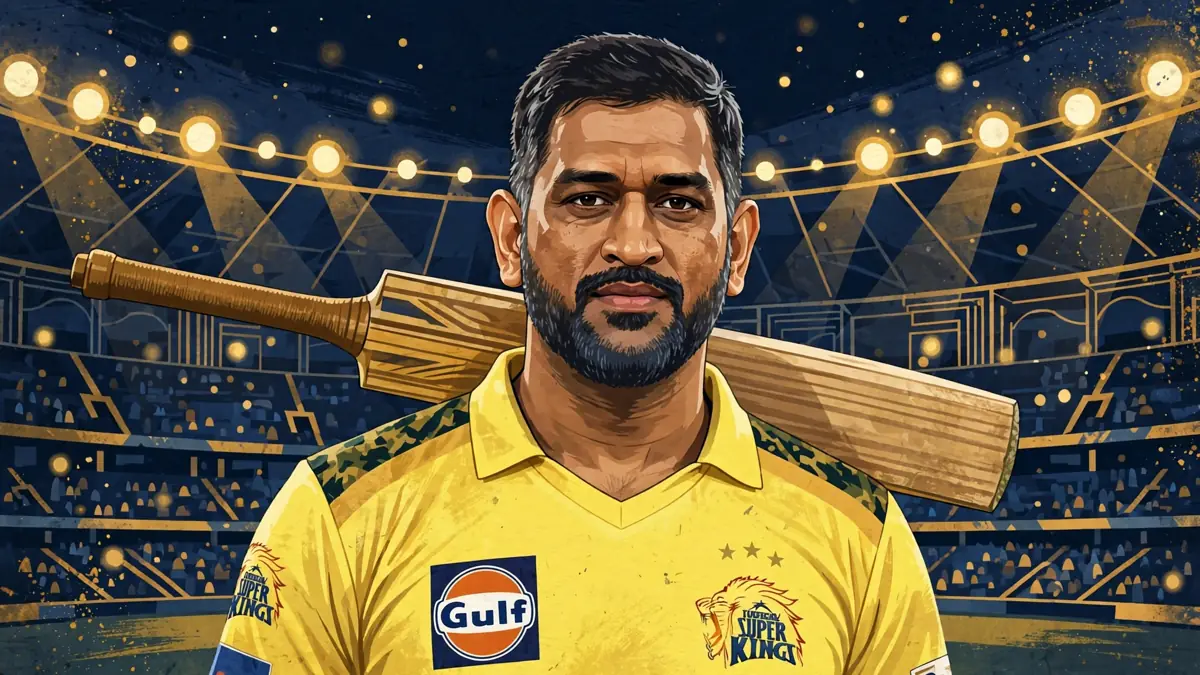
Quick Facts: MS Dhoni
| Full Name | Mahendra Singh Dhoni |
|---|---|
| Date of Birth | July 7, 1981 (age 45 in 2026) |
| Birthplace | Ranchi, Jharkhand (then Bihar), India |
| Estimated Net Worth (2026) | ₹1,060–1,200 crore (about $127–145 million), per CricTracker, CricHeroes, SportsMint and Cricket Winner; Celebrity Net Worth ~$145 million; Unstop ~$120 million |
| IPL Salary (2026) | ₹4 crore per season, Chennai Super Kings (uncapped player retention) |
| Primary Income Sources | IPL salary, brand endorsements (₹40–100 crore/year), business equity |
| Key Ventures | Seven (sports brand), Chennaiyin FC (co-owner), Garuda Aerospace, Dhoni Entertainment, 7InkBrews, EMotorad |
| Brand Value | $102.9 million (₹869 crore), Kroll Celebrity Brand Valuation Report, late 2025 |
| International Career | India, 2004–2020; captain of the 2007 T20 World Cup, 2011 ODI World Cup and 2013 Champions Trophy winning sides |
| Spouse | Sakshi Singh Dhoni (married 2010); daughter Ziva |
Table of Contents
- From Ranchi to the Indian Team
- The Rise: 2007, 2011 and the Captain Who Never Panicked
- Money and Net Worth in 2026
- IPL Salary and Career Cricket Earnings
- Endorsements: the Brand Machine
- Business Empire: Seven, Chennaiyin FC, Garuda Aerospace and More
- Houses, Cars and Bikes: What Dhoni Owns
- Net Worth Growth: How the Fortune Compounded
- How Dhoni Compares With Tendulkar and Kohli
- Personal Life: Sakshi, Ziva and Life Away From Cricket
- Controversies and Legal Issues
- Frequently Asked Questions
- Final Thoughts
- Sources and Reporting
From Ranchi to the Indian Team
Mahendra Singh Dhoni was born on July 7, 1981, in Ranchi, in what was then the state of Bihar and is now Jharkhand. His father, Pan Singh, worked for MECON, a public-sector engineering consultancy, and his mother, Devaki Devi, kept the household. Ranchi in the 1980s and 1990s was a long way from India’s cricket nurseries in Mumbai and Delhi, and the path from there to the national team ran through school cricket, club cricket in the city, and the Bihar (later Jharkhand) state side.
The detail every Dhoni profile returns to is the railway job. After finishing school, Dhoni took a post as a travelling ticket examiner with South Eastern Railway at Kharagpur, in West Bengal. He worked the trains, played for the Railways cricket team when he could, and kept turning up for Bihar in the Ranji Trophy. The job gave him a steady income and, just as usefully, time to play. It also gave the story its cleanest before-and-after: the ticket collector who checked other people’s journeys ended up captaining his country.
His early cricket was shaped by two accidents of talent-spotting. At school he was first a goalkeeper in football, and a coach who noticed his reflexes pushed him behind the stumps. As a wicketkeeper-batsman he stood out less for technique than for force — a long-haired hitter from a small town who struck the ball harder than batsmen with far better coaching. His Ranji Trophy performances for Bihar, then Jharkhand after the state was carved out in 2000, and a strong season with India A on tour, put him on the selectors’ radar. He made his one-day international debut against Bangladesh in December 2004, and his Test debut a year later, against Sri Lanka in Chennai.
The breakthrough came quickly. In April 2005, in only his fifth ODI, Dhoni smashed 148 against Pakistan at Visakhapatnam. Later that year he hit 183 not out against Sri Lanka at Jaipur, still one of the great ODI innings by a wicketkeeper. The long hair, the helicopter shot — a flick over midwicket he developed playing tennis-ball cricket — and the sheer power made him a crowd favourite before he had played twenty matches. By 2007, when Rahul Dravid gave up the one-day captaincy after India’s early exit from the World Cup in the Caribbean, Dhoni was the natural, if young, choice to lead.
The Rise: 2007, 2011 and the Captain Who Never Panicked
Dhoni’s captaincy began with the tournament nobody expected India to win. At the inaugural ICC World Twenty20 in South Africa in September 2007, a young Indian side beat Pakistan in a bowl-out in the group stage and again in a last-over final at Johannesburg. Dhoni handed the final over to Joginder Sharma, a call that looked reckless until it worked, and it set the template for his leadership: calm on the surface, willing to back an unorthodox choice, and unbothered by the noise around him. The win also changed Indian cricket’s economics — it fed directly into the launch of the Indian Premier League the following year, the tournament that would make Dhoni one of the best-paid cricketers on the planet.
The peak of his career, and the image that defines it, came on April 2, 2011, at the Wankhede Stadium in Mumbai. Chasing 275 against Sri Lanka in the World Cup final, Dhoni promoted himself above the in-form Yuvraj Singh and finished the match with a six over long-on. India won its first 50-over World Cup in 28 years, and the captain who had hit the winning runs became, in the eyes of a billion people, the man who could not be rattled. Two years later he completed the set, leading India to the 2013 ICC Champions Trophy in England — the only captain in history to have won the T20 World Cup, the ODI World Cup and the Champions Trophy.
Across formats he played 90 Tests, 350 ODIs and 98 T20 internationals for India, scoring 10,773 ODI runs at an average of 50.57 — a figure that says as much about his finishing as his batting, since he so often stayed unbeaten at the end of a chase. As a keeper he finished with more than 800 international dismissals across formats, and his stumping speed became a running joke among commentators: batsmen were out before they realised their foot had left the ground. He gave up Test captaincy at the end of 2014 and retired from Test cricket days later, stepped down from limited-overs captaincy in early 2017, and announced his retirement from international cricket on August 15, 2020, with a short Instagram post: “Thanks a lot for ur love and support throughout. From 1929 hrs consider me as Retired.”
For readers who want the career story in full, our sister site carries MS Dhoni’s full biography on GuideNetWorth, from the Kharagpur railway platform to the World Cup final. The rest of this article is about the money that career produced, and what he did with it after the international game ended.
Money and Net Worth in 2026
The headline number first, with the sources attached to it. CricTracker’s 2026 page on Dhoni puts his net worth between ₹1,060 crore and ₹1,200 crore, and says his wealth comes from IPL earnings, endorsements, business ventures, investments and real estate. CricHeroes’ 2026 breakdown publishes the same ₹1,060–1,200 crore band, worth $127–145 million. SportsMint’s July 2026 birthday piece repeats the identical range, and Cricket Winner’s July 2026 profile does the same, adding that Dhoni still earns an estimated ₹60–130 crore a year across his income streams. Four independent trackers converging on one band is the strongest signal this kind of estimate ever gives.
Outside that consensus, the spread is narrower than it looks. Celebrity Net Worth, the global tracker, lists Dhoni at about $145 million — the top end of the band. Unstop, whose salary-focused profile was last updated in May 2026, puts him at over ₹1,000 crore, about $120 million. Business Today, reporting in 2026, estimated around $127 million, or roughly ₹1,215 crore. IPL.com’s September 2026 round-up of India’s richest cricketers gives a band of around ₹1,000–1,215 crore. Every one of those numbers sits within, or just touches, the ₹1,000–1,200 crore zone. Nobody with a serious methodology puts him below ₹1,000 crore, and nobody puts him above ₹1,215 crore.
| Source | Estimate (2026) | What it counts |
|---|---|---|
| CricTracker (July 2026) | ₹1,060–1,200 crore | IPL earnings, endorsements, businesses, investments, real estate |
| CricHeroes (2026) | ₹1,060–1,200 crore ($127–145M) | CSK salary, endorsements, business equity |
| SportsMint (July 2026) | ₹1,060–1,200 crore ($127–145M) | Endorsements, IPL salary, business interests |
| Cricket Winner (July 2026) | ₹1,060–1,200 crore | IPL salary, endorsements, business investments |
| Business Today (2026) | ~$127M / ~₹1,215 crore | Overall wealth estimate |
| Celebrity Net Worth (2026) | ~$145 million | Global estimate, top of the range |
| Unstop (May 2026) | Over ₹1,000 crore (~$120M) | Salary-led estimate, lower end |
Why the range exists is worth saying plainly. Dhoni’s listed, visible income — his IPL salary, his BCCI earnings, his per-deal endorsement fees — can be added up with reasonable confidence. What cannot be added up exactly is the value of his equity: his stakes in Seven, Garuda Aerospace, 7InkBrews, EMotorad and a dozen other private companies are not traded on any exchange, and the companies do not publish valuations. CricHeroes notes this directly: the wide band exists because private equity holdings are estimated rather than audited. Forbes India, which discounts unlisted stakes heavily, had him near ₹1,060 crore in its 2025–26 celebrity list; the Hurun India Rich List had him near ₹1,100 crore in 2025. Trackers that price brand association at a premium land higher. The honest answer is the band, and the band is ₹1,060–1,200 crore.
One number that often gets mixed up with net worth is brand value. The Kroll Celebrity Brand Valuation Report of late 2025 put Dhoni’s brand value alone at $102.9 million, about ₹869 crore. That is what his name is worth to advertisers, not what he owns — but it explains why the endorsement cheques stay large five years after he stopped playing international cricket. A brand value that high, attached to a 45-year-old retired cricketer, is almost unheard of in Indian sport. It is also the reason his annual income has not fallen off a cliff since retirement: SportsMint and Cricket Winner both estimate he still takes in ₹60–130 crore a year, with endorsements doing most of the work.
The anchored figure: ₹1,060–1,200 crore (about $127–145 million) in 2026, per CricTracker, CricHeroes, SportsMint and Cricket Winner. Celebrity Net Worth anchors the top at ~$145 million; Unstop anchors the floor at over ₹1,000 crore (~$120 million). Business Today (2026) sits inside the band at ~$127 million.
IPL Salary and Career Cricket Earnings
The IPL is where Dhoni’s fortune started, and it is still paying him. At the first IPL auction in 2008, the Chennai Super Kings bought him for $1.5 million — the highest bid of that auction, and a statement that the new league’s most valuable asset was the Indian captain. He has stayed with CSK ever since, through five title wins, two seasons when the franchise was suspended, and a brief 2016–17 spell with Rising Pune Supergiant while CSK sat out. No player is more identified with a single IPL franchise than Dhoni is with Chennai.
His retention fees tell the story of a career in reverse: the price fell as the player aged, but the value of keeping him never did. CSK retained him at ₹15 crore a season for the 2018–2021 cycle, then at ₹12 crore for 2022–2024. Ahead of the 2025 season he was retained for ₹4 crore under the IPL’s uncapped-player rule — a category for Indian players who have not played international cricket for five years — and the same ₹4 crore applied for 2026. Unstop’s IPL salary table lists the same figure: ₹4 crore for 2026 with Chennai Super Kings. The pay cut is real, but so is the logic: at 44 and 45, Dhoni is a wicketkeeper, finisher and mentor whose presence fills stadiums and sells the franchise, and CSK has said openly that the decision to keep playing is his.
| Period | CSK Salary | Notes |
|---|---|---|
| 2008–2010 | ~₹6 crore/year ($1.5M) | Highest bid at the first IPL auction, 2008 |
| 2018–2021 | ₹15 crore/year | Retention after CSK’s return from suspension |
| 2022–2024 | ₹12 crore/year | Retained as captain for the new cycle |
| 2025–2026 | ₹4 crore/year | Uncapped-player retention; still playing at 44–45 |
| Cumulative IPL earnings | ~₹188.84 crore | By end of the 2024 season, per Unstop |
That cumulative figure is the one to remember. Unstop estimates that by the end of the 2024 IPL season, Dhoni’s total earnings from the league stood at approximately ₹188.84 crore, averaging about ₹11.11 crore a season across his career. Add his BCCI income — central contracts and match fees over a 16-year international career, which Unstop estimates at more than ₹50 crore — and his on-field cricket earnings alone run past ₹240 crore. That is before a single endorsement or business deal. It is also why the IPL, more than any other single source, built the base of the fortune: a decade and a half of top-of-the-market salaries, paid every year, in a league that kept growing.
The 2025 and 2026 seasons added ₹4 crore a year to that total, and the question of whether he plays on is now an annual event in itself. CSK’s management has made clear the call is Dhoni’s, and each season he returns, the franchise’s ticket sales, television ratings and sponsorship interest jump. At this point the ₹4 crore salary is almost the smallest part of what he is worth to Chennai — the brand value he brings to the team dwarfs the pay cheque, which is exactly how a 45-year-old wicketkeeper stays one of the league’s most valuable players.
Endorsements: the Brand Machine
If the IPL built the base of Dhoni’s wealth, endorsements built the tower on top of it. SportsMint reports his annual endorsement income at ₹40–100 crore, at ₹4–6 crore per deal, and calls endorsements his principal source of earnings. Unstop, working from per-deal figures, says he has endorsed about 50 brands across his career, with deals fetching ₹3.5–6 crore per endorsement a year. CricHeroes puts the annual endorsement figure above ₹100 crore. The three estimates differ on the total, but they agree on the order of size: endorsements now bring in more than his cricket salary by a wide margin, and they have done so for years.
The reason is the Kroll number quoted above. A brand value of $102.9 million in late 2025, for a player who retired from international cricket in 2020, tells advertisers something simple: Dhoni’s image has not decayed. He is “Captain Cool” — calm, reliable, uncontroversial — and that persona sells everything from bikes to biscuits to financial products. He has fronted brands across categories that rarely share a face: motorcycles and mutual funds, soft drinks and sportswear, electronics and education. The breadth matters commercially, because it means his endorsement income does not depend on any single sector having a good year.
There is also a structural point that separates Dhoni from most retired athletes. His endorsement deals are not nostalgia deals. He is still playing the IPL, still on television every April and May, still captaining — or at least still leading — the most followed franchise in the league. Every IPL season refreshes his visibility with a new audience, including viewers too young to remember the 2011 final. That annual refresh is what keeps a retired international’s endorsement rate at active-player levels, and it is why SportsMint could report in July 2026 that his brand operations “contribute significantly” to a net worth still growing at 45.
Two caveats belong here. First, per-deal figures of ₹4–6 crore are reported averages, not audited contracts; the real fees for individual brands vary and are never published. Second, the ₹100 crore-plus annual endorsement figure from CricHeroes sits above SportsMint’s ₹40–100 crore band — the honest read is that endorsements are worth tens of crores a year, likely ₹60–100 crore, and that they are the single largest line in his current income. Neither tracker puts the number small, and that is the point that matters for the net worth estimate.
Business Empire: Seven, Chennaiyin FC, Garuda Aerospace and More
Dhoni the businessman is a different figure from Dhoni the endorser. An endorser rents out his face; an owner keeps the upside. Over the last decade he has moved steadily from the first to the second, and CricHeroes counts stakes in more than 15 companies in his portfolio. The four names that matter most are Seven, Chennaiyin FC, Garuda Aerospace and Dhoni Entertainment — and each one tells a different part of the story.
Seven is the oldest and most personal of the four. Launched in 2016 as a sports and athleisure brand, it sells footwear, apparel and accessories, and Dhoni is both its face and its owner. The name is his shirt number, and the brand is built directly on the Captain Cool image: affordable, unfussy, aimed at the mass Indian market rather than the premium shelf. It has never published revenue figures, and its scale should not be overstated, but as a piece of the portfolio it is the one most tied to Dhoni himself — if the brand grows, it grows because of him.
Chennaiyin FC is the football bet. Dhoni is a co-owner of the Indian Super League club, alongside Bollywood actor Abhishek Bachchan and Vita Dani, and the club won the ISL title in 2015 and again in 2017–18. Indian football clubs are not big money-makers — the league’s economics are thin, and most clubs run at a loss — so the value here is long-term: a stake in a growing league, in a city where Dhoni is already a hero through CSK. It is a holding, not a cash machine, and it should be read that way in any net worth estimate.
Garuda Aerospace is the most interesting holding, and the one with the clearest upside. The Chennai-based drone company counts Dhoni as an investor and brand ambassador, and the drone sector in India has grown fast on the back of government support for agricultural and industrial drones. Dhoni’s involvement is public and prominent — he has appeared at the company’s launches and events — and a stake in a scaling technology company is exactly the kind of asset that explains why trackers give his wealth a wide band: if Garuda’s valuation rises, so does his net worth, and nobody outside the company knows by how much.
Dhoni Entertainment is the family business. Founded in 2019 with his wife Sakshi, the production house makes films and documentaries — its best-known project is the documentary on the 2011 World Cup run and the Tamil film “Let’s Get Married” — and Cricket Winner reports a valuation of around ₹800 crore for the company, while noting the figure has not been officially confirmed. That caveat matters: an unconfirmed valuation is not an asset value, and it should not be added to the net worth total. What the company does show is intent — Dhoni is building media assets with his wife that can outlast his playing days by decades.
Around those four sit the smaller stakes: 7InkBrews, the beverage company; EMotorad, the electric bicycle maker; and a set of earlier investments in fitness, hospitality and sports technology. None of them is individually large enough to move the headline figure, but together they are the reason his wealth keeps growing after retirement. A cricketer who only earns ends up with a flat fortune; a cricketer who owns pieces of growing companies ends up with a compounding one. The portfolio is also diversified across sectors — sportswear, football, drones, media, beverages, e-mobility — which is more deliberate than it looks. If one sector stalls, the others carry the total.

Houses, Cars and Bikes: What Dhoni Owns
Dhoni’s spending is famous for one thing above all: the garage. He is one of India’s best-known collectors of cars and motorcycles, and the collection is the most visible part of his wealth — far more so than his houses, which he keeps private. The cars most often reported in his collection include a Hummer H2, an Audi Q7, a Jeep Grand Cherokee Trackhawk and a Nissan Jonga, the old military vehicle he has spoken about fondly. The bikes are the real passion: a Yamaha RD350, a Harley-Davidson Fat Boy, a Confederate Hellcat and a long list of vintage and custom machines, reportedly numbering in the dozens. He has a workshop at his Ranchi farmhouse where the bikes are kept and maintained, and he has said the collection is a hobby he funds from his earnings, not an investment — which is the honest way to read it. Vehicles lose value; they are a lifestyle line, not an asset line.
On property, the reporting is thinner, and this article will not fill the gaps with guesses. What is widely reported is the farmhouse in Ranchi — a large property on the outskirts of the city, often described as spread over several acres, where he lives with his family when he is not travelling for the IPL. He also owns property in Dehradun, where his family has roots through his wife’s side. The value of these homes is not public, and no tracker breaks them out separately; they sit inside the overall ₹1,060–1,200 crore estimate rather than on top of it. Any article that gives a precise price for the Ranchi farmhouse is guessing, and this one will not.
What can be said with confidence is the shape of the spending. Dhoni is not a conspicuous consumer in the usual celebrity sense — no private jet, no chain of restaurants, no fashion label splurge. The money goes into the garage, into the businesses, and into the farmhouse. That restraint is part of why the fortune has compounded: the income stayed high after retirement while the spending stayed narrow, and the difference went into equity.
Net Worth Growth: How the Fortune Compounded
The growth of Dhoni’s wealth follows the shape of his career, and the shape is easy to read. The first phase was the salary phase: the 2008 IPL auction at $1.5 million, the BCCI central contract, and match fees that added up to more than ₹50 crore over 16 years of international cricket. The second phase was the endorsement phase: the World Cup win in 2011 turned him into the most bankable face in Indian sport, and the per-deal fees and the sheer number of brands — around 50 across his career — pushed his annual income far above his playing salary. The third phase, which he is in now, is the equity phase: the IPL salary is down to ₹4 crore, but the endorsements still run at tens of crores a year and the business stakes do the compounding.
| Year / Period | Reported Figure | Source |
|---|---|---|
| 2008 | $1.5M IPL auction price (highest bid) | IPL auction records, widely reported |
| By end of 2024 | ~₹188.84 crore cumulative IPL earnings | Unstop |
| 2025 | ~₹1,100 crore | Hurun India Rich List |
| 2025–26 | ~₹1,060 crore | Forbes India Celebrity 100 (via CricHeroes) |
| 2026 | ₹1,060–1,200 crore ($127–145M) | CricTracker, CricHeroes, SportsMint, Cricket Winner |
| 2030 (projected) | ₹1,500–2,000 crore | CricHeroes projection |
The 2025 figures are worth a closer look, because they show how the range works. Forbes India, which discounts unlisted stakes, had Dhoni near ₹1,060 crore for 2025–26. Hurun, which values assets differently, had him near ₹1,100 crore for 2025. The 2026 trackers then put the band at ₹1,060–1,200 crore. Read together, the story is not a jump but a plateau with a rising ceiling: the floor has held around ₹1,060 crore for two years while the top of the range has crept up as the business portfolio is priced more generously.
CricHeroes projects the total could reach ₹1,500–2,000 crore by 2030. That is a projection, not a fact, and it depends on the private companies in his portfolio growing — above all Garuda Aerospace and Seven. It is included here because it is the only published forward estimate, and because it shows the direction of travel: a retired cricketer whose wealth is still projected to grow by a third or more in four years is a cricketer whose money now works independently of his bat. The annual income of ₹60–130 crore that SportsMint and Cricket Winner report for 2026, against a much lower spending profile, is what makes that projection plausible rather than fanciful.
How Dhoni Compares With Tendulkar and Kohli
Among cricketers, only one man sits above Dhoni on the 2026 rich lists. CricHeroes’ ranking of the richest cricketers in the world for 2026 puts Sachin Tendulkar’s biography at the top of the sport’s money table, with Tendulkar estimated at $170 million (about ₹1,415 crore), ahead of Dhoni at $127 million and Virat Kohli’s net worth at $125 million (about ₹1,040 crore). Tendulkar’s lead comes from a longer post-retirement commercial career and a larger portfolio of long-term brand associations; he stopped playing in 2013 and his earnings never really stopped either.
The gap between Dhoni and Kohli is the interesting one. Kohli is still playing international cricket, still captaining in the public eye, and still the most followed cricketer on social media by a wide margin — yet Dhoni, retired since 2020 and five years older, sits marginally ahead of him on the 2026 trackers. The reason is the mix: Kohli’s wealth is still weighted toward playing contracts and endorsements, while Dhoni’s has a larger equity component. If the private companies in Dhoni’s portfolio keep growing, that gap should widen; if Kohli signs the kind of long-term deals his profile commands, it could close. Either way, the two of them and Tendulkar form a clear top three, well clear of the next tier of cricketers.
Below them, the field is spread wide. Rohit Sharma’s age profile on this site covers the current India captain, who took over the leadership Dhoni once held and whose own net worth sits well below the top three. And Dhoni’s IPL story includes the 2016–17 Rising Pune Supergiant season, when Ben Stokes’ net worth was still being built as the English all-rounder played alongside him in Pune. The comparison that flatters Dhoni most, though, is not with other cricketers but with other retired athletes: very few sportspeople anywhere in the world are worth more at 45, five years after retirement, than they were at the peak of their playing career. Dhoni is one of them.
Personal Life: Sakshi, Ziva and Life Away From Cricket
Dhoni married Sakshi Singh Dhoni — Sakshi Rawat before the wedding — on July 4, 2010, in a quiet ceremony in Dehradun, a day before his 29th birthday. The two had known each other since school days in Ranchi, and Sakshi has since become his business partner as well as his wife, co-founding Dhoni Entertainment with him in 2019. Their daughter, Ziva, was born in February 2015, and she has become a familiar face at CSK matches and in the family’s social media posts — including the famous video of her singing in the team dugout.
Off the field, Dhoni is famously private for a man of his fame. He does not give many interviews, he keeps his family out of the spotlight where he can, and his public statements are short. He is also, by every account, a man of settled routines: the bikes, the farmhouse, the dogs, and a love of the Indian Army — he holds the honorary rank of Lieutenant Colonel in the Territorial Army, awarded in 2011, and has completed parachute training with the Parachute Regiment. The Army connection is genuine, not ceremonial decoration: he has trained with the regiment and spoken about it as one of the proudest parts of his life.
Physically, he is listed at 5 feet 9 inches (175 cm) — the figure Wikipedia carries, citing ESPNcricinfo, and the one most sources use. Our own profile on MS Dhoni’s height works through the competing claims, including the 175–180 cm range some trackers quote, and settles on 175 cm as the most widely cited number. It is a small detail, but it is the kind of detail that gets argued about endlessly online, and it is settled there.
Controversies and Legal Issues
Dhoni’s public image is unusually clean for a figure of his size, but three episodes belong in any honest profile of him. The first is the Amrapali case. Dhoni was the brand ambassador for the Amrapali Group, a real estate developer, and in 2019 he went to court against the company over unpaid endorsement dues reported at ₹150 crore, after homebuyers complained that flats they had paid for were never delivered. The Supreme Court took up the homebuyers’ case the same year. Dhoni’s position was that of a creditor and a former endorser, not a builder, and the case is a reminder of the risk a celebrity takes when lending a face to a developer.
The second was a magazine cover. In 2013, Business Today pictured Dhoni on its cover depicted as the Hindu god Vishnu, holding products he endorsed. A case was filed against him for allegedly hurting religious sentiments. In 2017 the Supreme Court quashed the proceedings, ruling that the cover did not amount to an offence. The episode is worth recording because it shows how far Dhoni’s image had travelled by 2013 — he was no longer just a cricketer on a cover, he was a cultural figure whose likeness carried religious weight.
The third is the one that touched his team rather than him. In 2013 the IPL spot-fixing scandal led to the suspension of the Chennai Super Kings for the 2015 and 2016 seasons, and to questions about the franchise’s management. Dhoni himself was never charged with any offence, and he has said publicly that the suspension period was the hardest of his career — harder, he has said, than any defeat on the field. He returned to lead CSK to the title in 2018, the season after the suspension ended. The episode is part of the record, and the absence of any charge against him is part of it too.
Frequently Asked Questions
What is MS Dhoni’s net worth in 2026?
MS Dhoni’s net worth in 2026 is estimated at ₹1,060–1,200 crore, about $127–145 million, according to CricTracker, CricHeroes, SportsMint and Cricket Winner. Celebrity Net Worth puts him at the top of that range at about $145 million, while Unstop’s lower estimate is over ₹1,000 crore (about $120 million). The range exists because his stakes in private companies are estimated, not audited.
How much does MS Dhoni earn from the IPL?
Dhoni earns ₹4 crore per season from the Chennai Super Kings in 2025 and 2026, retained under the IPL’s uncapped-player rule. His cumulative IPL earnings stood at about ₹188.84 crore by the end of the 2024 season, according to Unstop — an average of roughly ₹11.11 crore a season across his IPL career.
What is MS Dhoni’s annual income in 2026?
SportsMint and Cricket Winner estimate Dhoni still earns ₹60–130 crore a year in 2026, even though he no longer plays international cricket. Endorsements worth an estimated ₹40–100 crore a year do most of the work, with his ₹4 crore CSK salary and income from his businesses making up the rest.
How many brands does MS Dhoni endorse?
Dhoni has endorsed around 50 brands across his career, according to Unstop, at roughly ₹3.5–6 crore per deal a year. His brand value alone was put at $102.9 million (₹869 crore) by the Kroll Celebrity Brand Valuation Report in late 2025, which is why his endorsement income has stayed high five years after his international retirement.
What businesses does MS Dhoni own?
Dhoni owns the sports brand Seven, co-owns Indian Super League club Chennaiyin FC, holds a stake in drone maker Garuda Aerospace, and runs the production house Dhoni Entertainment with his wife Sakshi. CricHeroes counts stakes in more than 15 companies in total, including 7InkBrews and EMotorad.
Is MS Dhoni the richest cricketer in the world?
No — Sachin Tendulkar leads the 2026 rich lists at about $170 million (₹1,415 crore), per CricHeroes. Dhoni is second at about $127 million, just ahead of Virat Kohli at about $125 million. He is the second-richest cricketer in the world in 2026, and the richest retired cricketer still playing the IPL.
How old is MS Dhoni in 2026?
MS Dhoni was born on July 7, 1981, in Ranchi, and turned 45 on July 7, 2026. He retired from international cricket on August 15, 2020, but continues to play in the Indian Premier League for the Chennai Super Kings.
When did MS Dhoni retire from cricket?
Dhoni retired from Test cricket in December 2014 and from all international cricket on August 15, 2020, announcing it with a short post on Instagram. He has not retired from the IPL, where he still plays for the Chennai Super Kings — he was retained for ₹4 crore for the 2025 and 2026 seasons.
Final Thoughts
MS Dhoni’s net worth in 2026 — ₹1,060–1,200 crore, about $127–145 million — is the fortune of a man who was paid well, spent carefully, and invested early. The IPL gave him the base: nearly ₹189 crore in league earnings alone. The World Cup years gave him the brand: a face worth $102.9 million to advertisers, still earning ₹40–100 crore a year in endorsements at 45. And the last decade gave him the compounding: stakes in Seven, Chennaiyin FC, Garuda Aerospace and a dozen other companies that keep the total growing long after the international runs stopped.
What sets the number apart is how little of it depends on him still playing. The ₹4 crore CSK salary is now a small line in a ₹60–130 crore annual income. If he stops playing tomorrow, the endorsements and the businesses carry on — which is why trackers project the fortune toward ₹1,500–2,000 crore by 2030. Second-richest cricketer in the world, five years retired, still adding to the total: that is the measure of the career, and of the money sense behind it. For more profiles in this series, see our net worth collection.
Sources and Reporting
Figures in this article are estimates from named public sources, not audited accounts. The headline range — ₹1,060–1,200 crore ($127–145 million) — comes from CricTracker, CricHeroes, SportsMint and Cricket Winner, all in 2026 updates; Celebrity Net Worth (~$145 million), Unstop (over ₹1,000 crore, ~$120 million) and Business Today (~$127 million, 2026) provide the edges of the range. IPL salary and cumulative earnings figures come from Unstop’s 2026 salary profile; brand value comes from the Kroll Celebrity Brand Valuation Report (late 2025); the 2030 projection comes from CricHeroes. Career facts (debut dates, match counts, captaincy honours) are drawn from the public record as reported by ESPNcricinfo and the ICC. Where sources disagree, this article publishes the range and names the source behind each end of it. Private company valuations, including the reported ₹800 crore figure for Dhoni Entertainment, are flagged as unconfirmed wherever they appear.
How we estimated: we took the 2026 tracker consensus (₹1,060–1,200 crore) as the anchor, checked it against the global tracker (Celebrity Net Worth, ~$145M) and the lower salary-led estimate (Unstop, ~$120M), and cross-checked the moving parts — IPL salary (₹4 crore, uncapped retention), cumulative IPL earnings (~₹188.84 crore, Unstop), endorsement income (₹40–100 crore/year, SportsMint) and brand value ($102.9M, Kroll) — against the total. No figure was invented, and no private valuation was treated as fact. Estimates of private wealth can differ from reality; the range published here is the honest picture the public sources support.
Sources: CricTracker · CricHeroes · SportsMint · Cricket Winner · Celebrity Net Worth · Unstop · Business Today · IPL · Kroll