Last updated: November 23, 2026 | By Celebamerica Editorial Staff
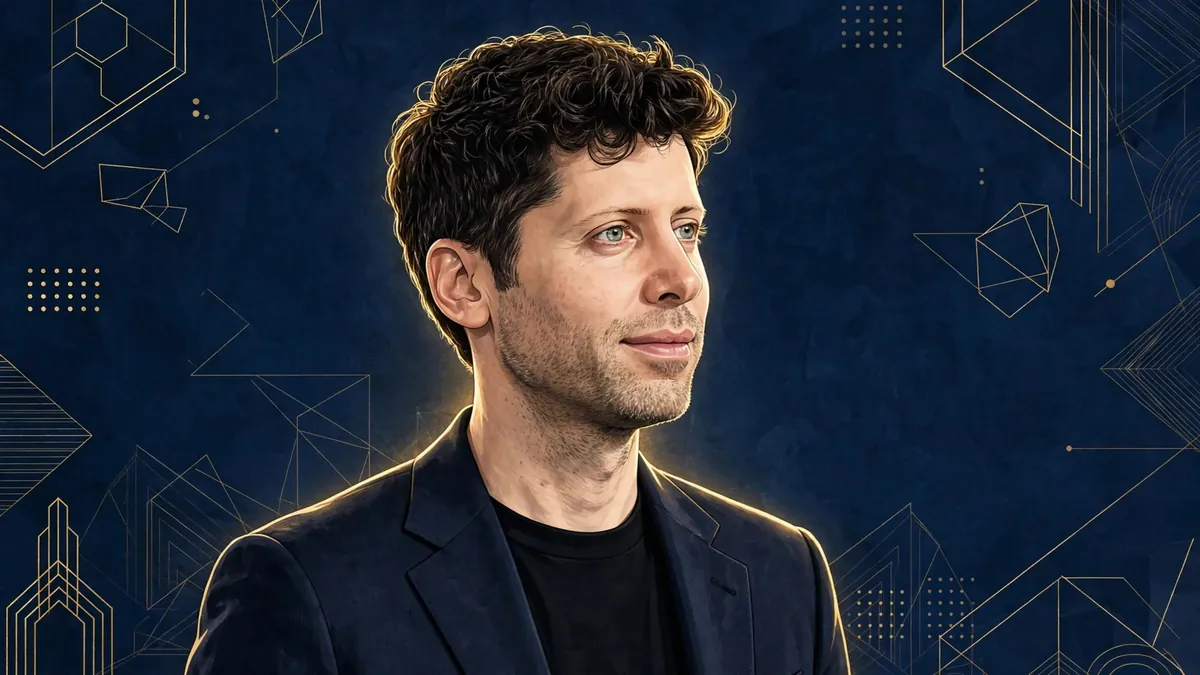
Sam Altman, the chief executive of OpenAI, is worth an estimated $3.3 billion to more than $4 billion as of November 2026, according to Forbes. The range is wide on purpose: Forbes’ own real-time tracker has moved between about $3.1 billion and $3.3 billion through the autumn of 2026, while a separate Forbes estimate published after court disclosures in May 2026 put him above $4 billion. Both figures come from the same source, and the gap between them tells you almost everything about how Altman built his fortune.
Here is the twist that makes his wealth unlike any other tech billionaire’s: Altman owns no direct equity in OpenAI, the company he runs. His reported OpenAI salary sits between roughly $65,000 and $76,001 a year. Every billion in his name comes from somewhere else — early angel checks written years before ChatGPT existed, a one-third stake in a nuclear fusion startup, and a portfolio of more than 400 companies assembled during his five years running Y Combinator. This article breaks down each piece with named sources and dates, explains why the estimates disagree, and tracks how the number has moved from about $1 billion in 2024 to the $3.3 billion to $4 billion-plus range in 2026.
Sam Altman at a Glance
| Full Name | Samuel Harris Altman |
|---|---|
| Date of Birth | April 22, 1985 (age 41 in 2026) |
| Birthplace | Chicago, Illinois, USA; raised in Clayton, Missouri |
| Estimated Net Worth | $3.3 billion to $4 billion-plus (Forbes, 2026) |
| Current Role | Co-founder and CEO of OpenAI (CEO since 2019) |
| OpenAI Equity | None — 0% direct stake, per Forbes and court testimony |
| OpenAI Salary | Reported at $65,000 to $76,001 per year |
| Primary Income Sources | Venture investments: Helion Energy, Stripe, Reddit, Airbnb, Uber and 400-plus startups |
| Key Ventures | Loopt (co-founder, 2005), Y Combinator president (2014–2019), OpenAI (co-founder, 2015), Hydrazine Capital (2012), Tools for Humanity (co-founder) |
| Largest Single Asset | Roughly one-third of Helion Energy, valued at $1.65–$1.7 billion in a December 31, 2025 court exhibit |
| Education | Stanford University, computer science, 2003–2005 (left without a degree) |
| Partner | Oliver Mulherin (married 2024, per public reporting) |
Contents
- Sam Altman at a Glance
- Early Life and Education
- Loopt and Y Combinator: The First Money
- Founding OpenAI and Becoming CEO
- The 2023 Firing — and the Five-Day Return
- How Much Is Sam Altman Worth in 2026?
- Where the Money Sits: The Portfolio, Line by Line
- Helion Energy: The Fusion Bet That Anchors His Fortune
- Stripe, Reddit and the Rest of the Portfolio
- The Salary That Shocked Silicon Valley
- Net Worth Timeline: From Startup Founder to Billionaire
- Sam Altman vs. Other Tech Billionaires
- Personal Life, Homes and Cars
- Controversies and Legal Questions
- Frequently Asked Questions
- The Bottom Line
- Sources and Reporting
Early Life and Education
Samuel Harris Altman was born on April 22, 1985, in Chicago, Illinois, and grew up in Clayton, a suburb of St. Louis, Missouri, as the oldest of four children. His mother, Connie Gibstine, is a dermatologist, and his father, Jerry Altman, worked as a real estate broker. The household was comfortable but not wealthy in the way Silicon Valley fortunes usually begin, and Altman has described his childhood in interviews as ordinary in most respects — except for one detail that set the course of his life. When he was about eight years old, he was given an Apple Macintosh computer, taught himself to program, and spent his free hours taking machines apart and putting them back together.
He attended John Burroughs School, a private academy in St. Louis, where he built the school’s website and first showed the mix of technical skill and self-direction that would define his career. He came out as gay at 17, after an incident at school around National Coming Out Day — a step he has spoken about openly in later years, in a time and place where it took real nerve. In 2003 he entered Stanford University to study computer science. He lasted two years. In 2005, at 19, he left Stanford without a degree to build a startup full time. The decision looked reckless to most people watching at the time. It is the single decision everything else in this story follows from, because the startup he left to build put him inside Y Combinator’s very first batch — and Y Combinator is where the money story actually starts.
Altman’s early life matters to the net worth question for a specific reason: unlike founders who got rich from one company, Altman’s wealth is the product of hundreds of small decisions made over two decades. He did not inherit a fortune, and he did not cash out of a single blockbuster IPO. He placed small bets, early, on other people’s companies, and kept doing it for years while running other people’s accelerators and then his own lab. Understanding the fortune means understanding the pattern, not just the total.
Loopt and Y Combinator: The First Money
In 2005 Altman co-founded Loopt, a location-based social networking app that let friends see where each other were — a clever idea that arrived before the iPhone existed and before location sharing had a mass market. Loopt was part of the very first Y Combinator batch, and over its life it raised more than $30 million from venture firms. The app never found a large enough audience to stand on its own, and in 2012 Green Dot acquired Loopt for a reported $43.4 million. Altman’s personal share of that sale was never disclosed, and it was not a fortune-making exit by Silicon Valley standards — but it was enough. It gave a 27-year-old founder his first real capital, and it bought him the freedom to invest rather than take a salary.
He had already started. In 2011, while still running Loopt, Altman joined Y Combinator as a part-time partner, advising batches of young founders. In April 2012 he co-founded Hydrazine Capital, a venture fund, with his brother Jack Altman; Peter Thiel supplied most of the outside money as lead backer. Hydrazine concentrated heavily on Y Combinator graduates, and Altman’s personal checks went into Stripe, Reddit, Airbnb and Instacart years before those companies reached multibillion-dollar valuations or public markets. The Stripe check is the stuff of legend now: he invested a reported $15,000 in the payments company’s earliest days, a stake that a December 2025 court exhibit would later value at $633 million.
Then came the job that turned a good angel investor into one of the best-positioned people in technology. In February 2014, Y Combinator founder Paul Graham announced that Altman would become president of the accelerator. He held the role from 2014 to 2019, and he expanded the program’s scale sharply — more batches, more companies, more sectors. The presidency gave him something no amount of money could buy: a first look at nearly every ambitious startup in America, and the right to write a small check into the best of them before anyone else had priced them. By the time he left Y Combinator in 2019, he was connected to more than 400 companies as an investor, founder or chairman. That portfolio, not OpenAI, is the foundation of the fortune Forbes now counts.

Founding OpenAI and Becoming CEO
Altman co-founded OpenAI in December 2015 as a nonprofit research lab, alongside Elon Musk, Greg Brockman, Ilya Sutskever and several researchers, with the stated aim of building artificial general intelligence safely and sharing its benefits. The lab’s early years were quiet by today’s standards — research papers, small teams, and a mission statement that sounded more like a university department than a future trillion-dollar company. Altman formally became chief executive in 2019, the same year the lab created a capped-profit arm so it could raise the enormous sums needed to train large models. That structural change is the hinge of the whole net worth story: as OpenAI moved from nonprofit to capped-profit and then toward a full for-profit restructuring, Altman repeatedly chose not to take equity in it.
The decision looked eccentric at the time and looks almost absurd in hindsight. OpenAI closed a $122 billion funding round at an $852 billion valuation in March 2026, according to reporting from that period, and a Bloomberg-reported funding round in November 2026 priced the company at $1.25 trillion. Altman owns none of it directly. At the DealBook Summit on November 18, 2026, co-founder Greg Brockman recalled urging him to take equity, and Altman conceded he should have listened. He has said publicly that he took the job because he believed in the mission, and that the money was never the point. Whatever the motive, the choice is now a matter of public record — confirmed under oath in court and restated by Forbes in every estimate it publishes.
For the full arc of how Altman went from a St. Louis schoolboy with a Macintosh to the chief executive of the most talked-about company on earth, Sam Altman’s full biography on GuideNetWorth covers his life and career in detail. What follows here is the money side of that story: what he owns, what it is worth, and why two careful counters can look at the same man and arrive at figures a billion dollars apart.
Under Altman’s leadership, OpenAI released ChatGPT in November 2022, and the product became the fastest-adopted consumer application in history. Weekly users reached a reported 900 million by February 2026. The company’s valuation climbed with each funding round, its headcount swelled into the thousands, and Altman became one of the most recognized executives in the world — testifying before the US Congress, meeting heads of state, and steering a company whose computing bills run into the tens of billions. Through all of it, his personal balance sheet stayed almost entirely separate from OpenAI’s. His wealth grew because the companies he had backed years earlier — in energy, payments, social media and longevity science — were maturing at the same time his day job made him famous.
The 2023 Firing — and the Five-Day Return
On Friday, November 17, 2023, Altman was asked to join a video call. On the other end were most of the OpenAI board. Ilya Sutskever, the company’s chief scientist and a co-founder, told him he was being fired. The board’s stated reason was that he had not been “consistently candid” with them. The announcement landed like a bomb in Silicon Valley: the chief executive of the most important AI company in the world, removed without warning, with no successor named and no detailed explanation offered.
What followed was five days of open chaos. Microsoft, OpenAI’s largest backer, offered Altman a job leading a new AI research division. Nearly the entire OpenAI staff signed a letter saying they would quit and follow him unless the board resigned. Investors, employees and customers revolted in public. By November 21, 2023, the board had caved: Altman was reinstated as chief executive, most of the directors who fired him were replaced, and a new board was seated. He has run the company without interruption since.
The episode matters to the wealth story in two ways. First, it showed how little financial leverage Altman had over OpenAI itself: a founder-CEO with a large equity stake cannot be fired that easily, because the stake itself is leverage. Altman had none, and he was removed in a single phone call. Second, it made his outside portfolio suddenly visible. In the months that followed, reporters began asking a question that had rarely been asked before: if the OpenAI chief owns no OpenAI stock, where exactly does his money come from? The answer arrived in the most unlikely place — a courtroom, two and a half years later.
How Much Is Sam Altman Worth in 2026?
The honest answer is a range, and anyone who gives you a single number to the dollar is guessing. Forbes, the most widely cited counter of Altman wealth, has published three materially different figures for him inside the last two years, and each one was defensible on the day it was printed. Here is the dated record:
| Source and Date | Estimate | What It Was Based On |
|---|---|---|
| Forbes, 2024 | About $1 billion | First Forbes billionaire-list estimate; known venture portfolio |
| Bloomberg Billionaires Index, March 1, 2024 | At least $2 billion | First Bloomberg valuation, reported by Fortune |
| Forbes, April 2026 | $3.3 billion | Known venture holdings, pre-trial |
| Forbes, May 2026 (revised) | More than $4 billion | Court disclosures from Musk v. OpenAI trial added nearly $1 billion |
| Forbes real-time tracker, July 27, 2026 | $3.3 billion | Live tracker, ranked about 1,308th in the world |
| Forbes real-time tracker, September 24, 2026 | $3.3 billion | Live tracker, ranked near 1,308th in the world |
| Forbes real-time tracker, October 5, 2026 | $3.3 billion | Live tracker, per Forbes profile |
| Forbes real-time tracker, October 25, 2026 | About $3.2 billion | Live tracker, ranked about 1,310th in the world |
| Forbes real-time tracker, November 19, 2026 | $3.1 billion | Live tracker, ranked 1,338th in the world |
Our anchored figure for this article is $3.3 billion to more than $4 billion, using Forbes as the anchor source. The lower end is the Forbes real-time tracker figure that held steady through most of the summer and autumn of 2026. The upper end is the Forbes estimate published in May 2026 after court filings forced several private stakes into the open for the first time, adding nearly $1 billion to its prior count. The tracker’s day-to-day drift down to $3.1 billion in mid-November 2026 reflects the way Forbes marks private holdings: it re-prices them off the last funding round or the latest comparable transaction, not a live market price, so the number wobbles as new information arrives.
Why do other outlets run higher? Some aggregators publish figures in the $5 billion to $6.5 billion range, and at least one editorial estimate has gone as high as $6.1 billion. None of those is backed by an audited filing, and the most careful recent reporting treats them as outliers. The reason for the spread is simple and worth stating plainly: nearly everything Altman owns is private, illiquid, and valued by outsiders rather than priced by a market. A fusion company with no revenue, a payments company that last raised at one valuation and tendered shares at another, a longevity startup whose valuation fell by more than half between rounds — each of these can be marked two or three different ways, and each mark moves the total by hundreds of millions.
The one number that is not an estimate: Altman holds zero direct equity in OpenAI. That fact was stated under oath in the Musk v. OpenAI trial, confirmed by Forbes, and confirmed again by OpenAI itself when it said Altman would receive no equity stake in the restructured entity. Whatever OpenAI is worth — $852 billion in March 2026, $1.25 trillion by one November 2026 funding report — none of it sits on Altman’s personal balance sheet.
Where the Money Sits: The Portfolio, Line by Line
Most of what can be verified with precision about Altman’s wealth comes from a single event: the spring 2026 trial of Elon Musk’s lawsuit against OpenAI and Altman, which alleged the company had abandoned its nonprofit mission and that Altman had personal conflicts of interest. Musk’s lawyers showed the jury a list of Altman’s stakes in nine companies that had done business with OpenAI, with fair-market values dated December 31, 2025. The combined value of those nine stakes was more than $2 billion. Four of the positions were named in reporting of the exhibit, and they account for most of the disclosed total:
| Holding | Reported Value (Dec 31, 2025 court exhibit) | What It Is |
|---|---|---|
| Helion Energy | $1.65–$1.7 billion | Nuclear fusion developer; Altman owns roughly one-third |
| Stripe | $633 million | Payments and financial software; early angel stake |
| Retro Biosciences | $258 million | Anti-aging drug developer; Altman invested about $180 million |
| Oklo | About $237 million | Nuclear fission startup; 6.65 million shares |
| Five further companies | Balance of the $2 billion-plus total | Smaller positions in pharma and tech firms with OpenAI dealings |
Those four named holdings add up to roughly $2.8 billion on their own at December 2025 marks — already close to the full Forbes estimate — which shows how concentrated the fortune is. Helion alone is about half of it. But the exhibit is not a complete inventory. Altman is connected to more than 400 companies as an investor, founder or chairman, and the nine companies in the exhibit were only the ones with commercial dealings with OpenAI. His Reddit position, for example, was not in the nine: the exhibit showed he had sold his entire Reddit stake by the end of 2025. Earlier, in October 2024, CNBC had reported that position — about 12.2 million shares, a 7.6 percent post-IPO stake — at roughly $1.2 billion. The sale means that money is now cash or redeployed elsewhere, not shares, and no public filing says where it went.
The honest way to read the portfolio is as three layers. The top layer is Helion, a single concentrated bet worth roughly half the fortune. The middle layer is a handful of large venture positions — Stripe, Retro Biosciences, Oklo — each worth a few hundred million. The bottom layer is a long tail of hundreds of smaller bets made through Hydrazine Capital and his personal angel investing, most of them worth little individually but meaningful in aggregate. No public source puts a precise figure on that tail, which is one more reason the headline number carries wide error bars.
Helion Energy: The Fusion Bet That Anchors His Fortune
Helion Energy, based in Everett, Washington, is trying to do something no private company has ever done: generate electricity from nuclear fusion at commercial scale. Altman backed the company in its early years, served as its chairman from 2015 until March 2026, and in 2021 wrote a personal cheque of a reported $375 million — an almost unheard-of personal bet on a single private company. Court filings valued his stake, roughly one-third of the company, at about $1.65 billion to $1.7 billion as of December 31, 2025. He also holds warrants to buy more shares. At that mark, the Helion position alone was worth more than twice the Stripe and Retro Biosciences stakes combined.
The valuation story since then has only made the position larger on paper. In June 2026 Helion announced a $465 million Series G funding round led by Thrive Capital, valuing the company at $15.5 billion post-money — nearly triple its $5.4 billion valuation from the Series F round in January 2025. The round was later reported as oversubscribed and closed at $500 million in September 2026, still at the $15.5 billion valuation. Helion has raised more than $1.5 billion in total, and in June 2026 it became the first company in the world to secure the regulatory licenses needed to build and operate a fusion power plant, from the Washington State Department of Health, for its Orion plant in Malaga, Washington. Its Polaris prototype hit 150 million degrees Celsius using deuterium-tritium fuel in February 2026, a milestone reported by TechCrunch, and the company has a binding commitment to deliver power to Microsoft by 2028.
Here is where careful reporting has to slow down. A one-third stake in a company valued at $15.5 billion would be worth about $5 billion on simple arithmetic — far more than the $1.65 billion court mark. That does not mean Altman’s Helion stake is suddenly worth $5 billion, and Forbes has not marked it that way. Private-company valuations are not share prices: different share classes, liquidation preferences, warrants and the timing of the mark all change the value of one holder’s stake, and the December 2025 exhibit predates the Series G entirely. What the Series G does prove is direction — the asset that anchors Altman’s fortune has been revalued sharply upward by outside investors, and any future Forbes revision will have to reckon with it. It also explains why Altman stepped down as Helion chairman in March 2026, as OpenAI weighed a larger energy-supply arrangement with the company: separating his personal fortune from his employer’s procurement decisions reduced the appearance of conflict, and the timing — just before the Series G — was widely read as a governance move.
There is a real risk on the other side of the bet, and it is worth naming. Helion has no commercial revenue yet. Fusion has absorbed billions of dollars and decades of promises across the whole industry, and no private fusion company has ever delivered power to a grid. If Helion misses its technical milestones or its Microsoft deadline slips, the $15.5 billion valuation could fall as fast as it rose — and because Helion is roughly half of Altman’s fortune, his net worth would fall with it. That concentration is the single biggest risk in his financial life, and it is the reason the Forbes number moves in hundreds of millions at a time.
Stripe, Reddit and the Rest of the Portfolio
Stripe is the second-largest disclosed position and the oldest. Altman invested a reported $15,000 in the payments company in its earliest days, during his Y Combinator years, and the stake grew as Stripe became one of the most valuable private companies in the world. The December 2025 court exhibit priced it at $633 million. Stripe’s own valuation has kept climbing since: it reached $65 billion by mid-2024, and a February 2026 tender offer priced the company at $159 billion. Stripe processes payments for OpenAI’s API and ChatGPT subscriptions, which is why the stake appeared in the trial exhibit at all — and why it sits at the center of the conflict-of-interest questions Musk’s lawsuit raised. Altman has said in court that he recused himself from key discussions involving companies in which he invested.
Reddit is the position that best shows how Altman invests — and how he exits. He was an early investor, served on its board, and put a combined $60 million across two funding rounds in 2021, according to reporting on his portfolio. Entities affiliated with him owned 8.7 percent of Reddit before its 2024 listing, per Bloomberg, and he held about 12.2 million shares at the time of the IPO, a 7.6 percent post-IPO stake that CNBC reported in October 2024 at roughly $1.2 billion — about a 20-fold return on the money he put in. By the end of 2025, the court exhibit showed, he had sold the entire position. The Reddit story is also a reminder that a large part of Altman’s wealth has already been realized in cash, not just marked on paper: the stakes that show up in exhibits are the ones he still holds, not the full history of what he has made.
Retro Biosciences, the longevity company, is the third named position at $258 million in the December 2025 exhibit, against a personal investment of about $180 million. The company closed a funding round in May 2026 valuing it at $1.8 billion, down from a $5 billion figure that had circulated in late 2025, per STAT News — a useful warning that private marks move in both directions. Oklo, the nuclear fission startup, rounds out the named four: Altman’s 6.65 million shares were worth roughly $237 million at recent prices, with the company valued around $6.7 billion. He was formerly chairman of Oklo as well as Helion, and stepped back from both chairmanships as the governance questions around his portfolio intensified.
Beyond the named four, the portfolio fans out into the infrastructure layer of the AI economy: energy supply (Helion, Oklo), payment rails (Stripe), data supply (Reddit), longevity science (Retro Biosciences), and identity infrastructure (Tools for Humanity, the company behind World, which Altman co-founded and chairs). He also co-founded Merge Labs, a brain-computer interface company. The pattern is deliberate — he invests in the things the AI industry will need to exist at scale — and it is also the pattern that creates the conflicts his critics point to: the man who runs the biggest AI company is a major shareholder in the companies that power it, pay for it, and supply it with data.
The Salary That Shocked Silicon Valley
Altman’s reported OpenAI salary is $65,000 to $76,001 a year, depending on the source and the year. The higher figure, $76,001, is the more recent report, up from $73,546 the year before; the $65,000 figure appears in earlier coverage. Either way, it is an absurdly small number next to the fortune it sits beside: at $76,001 a year, it would take more than 43,000 years of gross salary to reach $3.3 billion. It is also far below what other chief executives of companies OpenAI’s size earn — most take home eight-figure packages of salary, bonus and stock. Altman takes a token wage and no stock at all.
He has said the salary is a deliberate choice, tied to the idea that the person running a company built to develop artificial general intelligence should not be seen to profit personally from its success. Critics read it differently: a tiny salary paired with a multi-billion-dollar portfolio of companies that do business with OpenAI looks less like selflessness than like a different kind of compensation, routed through the portfolio instead of the payroll. Both readings are on the record, and the court case made sure both got an airing. What is not in dispute is the arithmetic: the salary contributes nothing measurable to the net worth figure. Every dollar of the $3.3 billion to $4 billion-plus range was made before OpenAI, or beside it — never from it.
The salary detail also answers the question people ask most often about Altman, once they learn the headline number: how does a man worth billions earn less than a junior software engineer? The answer is that the salary was never the income. The income was the angel portfolio, built in his twenties and thirties while he was running Y Combinator, and the Helion bet, placed with his own money in 2021. OpenAI pays him almost nothing because, financially speaking, it does not need to — and because, as he conceded at the DealBook Summit in November 2026, the equity he turned down would have been worth vastly more than anything in his portfolio.
Net Worth Timeline: From Startup Founder to Billionaire
| Year | Milestone | Money Significance |
|---|---|---|
| 2005 | Co-founds Loopt at 19; leaves Stanford | First startup; Y Combinator’s first batch |
| 2011 | Joins Y Combinator as part-time partner | Deal flow begins; early angel checks follow |
| 2012 | Co-founds Hydrazine Capital with brother Jack; Green Dot acquires Loopt for a reported $43.4 million | First liquidity event; fund capital for investing |
| 2014–2019 | President of Y Combinator | Portfolio grows past 400 companies |
| 2015 | Co-founds OpenAI; chairs Helion Energy | The two tracks of his life begin together |
| 2019 | Becomes OpenAI CEO | Salary reported from about $65,000; no equity taken |
| 2021 | Invests a reported $375 million of personal money in Helion; $60 million into Reddit across two rounds | The two biggest personal bets of his life |
| November 2023 | Fired by OpenAI board; reinstated five days later | Exposes his lack of equity leverage |
| March 2024 | Reddit lists; Bloomberg Billionaires Index first values Altman at $2 billion-plus | Reddit stake worth a reported $600 million-plus at listing |
| 2024 | Forbes first lists Altman as a billionaire at about $1 billion | Public billionaire status begins |
| October 2024 | Reddit stake reported at about $1.2 billion (CNBC) | Peak public mark for the Reddit position |
| May 2026 | Musk v. OpenAI trial exhibits disclose $2 billion-plus in stakes; Forbes revises estimate above $4 billion | The most detailed public window into his wealth ever |
| June 2026 | Helion Series G values the company at $15.5 billion | Anchoring asset revalued nearly threefold |
| November 2026 | Forbes real-time tracker at $3.1–$3.3 billion; OpenAI funding round reported at $1.25 trillion (Bloomberg) | Tracker dips as private marks are revised; OpenAI value irrelevant to his fortune |
The timeline shows a fortune built in two distinct waves. The first wave, from 2005 to 2019, was slow and quiet: small checks, a modest exit, and a portfolio assembled one company at a time while Altman ran other people’s institutions. The second wave, from 2021 onward, was fast and public: a $375 million personal bet on fusion, a Reddit IPO that turned a $60 million investment into a billion-dollar position, and a court case that forced the whole portfolio into daylight. Forbes’ count followed the same curve — about $1 billion in 2024, $2 billion-plus by Bloomberg’s first estimate in March 2024, $3.3 billion by April 2026, and above $4 billion after the May 2026 disclosures. The real-time tracker has since drifted back toward $3.1–$3.3 billion, which says less about Altman’s spending than about how Forbes re-marks private stakes as new rounds and transactions arrive.
Sam Altman vs. Other Tech Billionaires
Altman is the odd one out in every peer comparison, and the comparison is what makes his story worth telling. Most tech billionaires own a large slice of one company they founded. Altman owns no slice of the company he runs, and a third of a company most people have never heard of. Put him beside the founders who built their fortunes the conventional way and the contrast is sharp:
| Person | Fortune Built From | 2026 Scale |
|---|---|---|
| Sam Altman | 400-plus venture bets; Helion, Stripe, Reddit | $3.3 billion to $4 billion-plus (Forbes) |
| Jeff Bezos | Amazon equity (founder stake) | Hundreds of billions — see our Jeff Bezos net worth breakdown |
| Mark Zuckerberg | Meta equity (founder stake) | Hundreds of billions — see our Mark Zuckerberg net worth profile |
| Bill Gates | Microsoft equity, then diversified investments | Hundreds of billions — see our Bill Gates net worth profile |
| Warren Buffett | Berkshire Hathaway equity and investing | Hundreds of billions — see our Warren Buffett net worth profile |
Bezos, Zuckerberg and Gates each hold — or held — a founder’s stake in a single company that went public and compounded for decades. Buffett built his fortune by buying whole businesses through Berkshire Hathaway. Altman is the only one of the five whose wealth is a portfolio of other people’s companies, assembled as an investor rather than an operator. He is also the only one whose fortune would survive the disappearance of the company he is famous for running: if OpenAI vanished tomorrow, Altman’s net worth would barely move. The reverse is true for Bezos, Zuckerberg and Gates — their fortunes are their companies.
That independence cuts both ways. A founder with a large stake in a public company can borrow against it, sell small pieces of it, and watch it compound with the market. Altman’s wealth is locked in private companies that cannot be sold quickly, revalued only when someone else raises money, and exposed to single-company risk in a way a diversified public holding is not. Helion alone is about half his fortune. No peer on this list has half of everything riding on one private company that has never sold a product. For more entrepreneur fortunes built the conventional way — founder stakes, public listings and long compounding — browse our Net Worth section.
Personal Life, Homes and Cars
Altman keeps his private life quieter than most billionaires, and the public record reflects that. He grew up the oldest of four children in Clayton, Missouri, and he has spoken about his mother, a dermatologist, and his father, a real estate broker, as steady influences rather than sources of wealth. He is married to Oliver Mulherin, an Australian software engineer; the two married in 2024, according to public reporting, and they have spoken about starting a family. He came out as gay at 17 and has been open about it since, including in profiles that note how unusual that candor was in the St. Louis of the early 2000s.
On homes and cars, honesty requires a short paragraph rather than a long one: there is no verified public inventory of Altman’s real estate or vehicles, and this article will not invent one. He is reported to live in San Francisco, where OpenAI is based, and his lifestyle in public is famously low-key for a billionaire — he has talked about owning few possessions and spending little on display. That fits the rest of the picture: a man whose salary is $76,001, who wears plain clothes to congressional hearings, and whose money sits in cap tables rather than garages. What can be documented is the portfolio, the salary, and the stakes — and those are where the fortune actually lives. Readers looking for a list of mansions and supercars will not find one here, because no reliable source has published one, and a net worth article that invents assets is worse than one that admits what it does not know.
His public interests outside work are consistent with his investments: longevity science, nuclear energy, and the long-term future of artificial intelligence. He has funded longevity research personally, including his large investment in Retro Biosciences, and he has written and spoken for years about abundance — cheap energy, cheap intelligence, and what a world with both might look like. Those are not hobbies in the usual billionaire sense; they are the same thesis as the portfolio, expressed in essays instead of term sheets.
Controversies and Legal Questions
No honest account of Altman’s wealth can skip the legal fight that revealed it. Elon Musk’s lawsuit against OpenAI and Altman, which went to trial in the spring of 2026, alleged that the company had abandoned its nonprofit mission and that Altman had personal conflicts of interest through his investments in companies doing business with OpenAI. Musk’s suit sought $150 billion in damages and Altman’s removal as an officer and board member. Altman has rejected the claims, and in court he described recusing himself from key discussions involving companies in which he invested. The trial’s court exhibits — the list of nine stakes valued at more than $2 billion as of December 31, 2025 — are the single best public source on his wealth, which is an irony worth noting: the most detailed disclosure of Altman’s money came from the people suing him, not from Altman himself.
State attorneys general have also pressed for scrutiny of OpenAI’s restructuring and Altman’s conflicts, and the US Congress has requested documents on the company’s conflict policies. None of that has produced a finding of wrongdoing against Altman personally in the public record as of November 2026, and the restructuring of OpenAI into a for-profit entity has proceeded with Altman receiving no equity stake — a fact OpenAI itself confirmed. The governance questions are real, though, and they attach directly to the fortune: when the chief executive of OpenAI owns a third of a fusion company that sells power to the AI industry, and a large stake in the payments company that processes OpenAI’s subscriptions, the line between personal investing and corporate interest gets thin. Altman stepped down as chairman of Helion in March 2026 and had earlier stepped back from Oklo’s chairmanship, moves widely read as answers to exactly that concern.
The November 2023 firing remains the other controversy that defines him. The board’s stated reason — that he had not been “consistently candid” — was never expanded into a detailed public charge, and the directors who fired him were themselves replaced within days. Supporters read the episode as a governance failure by a board that did not understand what it was destroying. Critics read it as evidence that even Altman’s allies had doubts about his candor. The truth, as with the net worth figure, sits in a range rather than a single point — and the episode is the reason every estimate of his wealth now comes with a footnote about what he does not own.
Frequently Asked Questions
What is Sam Altman’s net worth in 2026?
Sam Altman’s net worth in 2026 is estimated at $3.3 billion to more than $4 billion, according to Forbes. The Forbes real-time tracker held at about $3.3 billion through most of the summer and autumn of 2026, dipping to about $3.1 billion by November 19, 2026, while a Forbes estimate published in May 2026 — after court disclosures in the Musk v. OpenAI trial — put him above $4 billion. The range reflects the difficulty of pricing private-company stakes, not a change in his cash.
Does Sam Altman own shares in OpenAI?
No. Sam Altman holds no direct equity in OpenAI — a 0% stake, stated under oath in the Musk v. OpenAI trial, confirmed by Forbes, and confirmed again by OpenAI itself when it said he would receive no equity in the restructured entity. His fortune comes entirely from venture investments made outside OpenAI, not from the company he runs.
How much does Sam Altman earn as OpenAI CEO?
Altman’s reported OpenAI salary is between about $65,000 and $76,001 a year, depending on the source and the year, with $76,001 the more recent figure. At that rate it would take more than 43,000 years of gross salary to reach $3.3 billion — which is why his salary contributes nothing measurable to his net worth. The money comes from his investment portfolio, not his paycheck.
What is Sam Altman’s biggest investment?
Helion Energy, the nuclear fusion startup. Altman owns roughly one-third of Helion, and a court exhibit valued that stake at $1.65–$1.7 billion as of December 31, 2025 — about half his total fortune. He invested a reported $375 million of his own money in Helion in 2021 and chaired the company from 2015 until March 2026. Helion’s June 2026 Series G round valued the company at $15.5 billion, nearly triple its January 2025 valuation.
How did Sam Altman become a billionaire?
Through early venture investing, not through OpenAI. He co-founded Loopt in 2005, joined Y Combinator as a partner in 2011, ran it as president from 2014 to 2019, and used those years to write small early checks into Stripe, Reddit, Airbnb, Uber and hundreds of other startups. His biggest wins were a $15,000 early Stripe investment now valued at $633 million, a Reddit stake that reached about $1.2 billion in 2024, and the Helion fusion bet.
Was Sam Altman fired from OpenAI?
Yes, briefly. On November 17, 2023, the OpenAI board fired Altman, saying he had not been “consistently candid” with them. Nearly the entire staff threatened to quit, Microsoft offered him a job, and within five days the board reversed course: Altman was reinstated as chief executive on November 21, 2023, and most of the directors who fired him were replaced. He has run the company without interruption since.
How old is Sam Altman?
Sam Altman was born on April 22, 1985, in Chicago, Illinois, which makes him 41 years old in 2026. He grew up in Clayton, Missouri, attended Stanford University from 2003 to 2005, and left without a degree at 19 to build his first startup, Loopt.
What companies has Sam Altman invested in?
Altman is connected to more than 400 companies as an investor, founder or chairman. The best-documented holdings are Helion Energy (fusion, about one-third owned), Stripe (payments, $633 million), Reddit (sold by the end of 2025 after a stake worth about $1.2 billion in 2024), Retro Biosciences (longevity, $258 million), Oklo (nuclear fission, about $237 million), Airbnb, Uber and Tools for Humanity, the company behind World, which he co-founded.
The Bottom Line
Sam Altman is worth an estimated $3.3 billion to more than $4 billion in 2026, and the strangest thing about the number is what it does not include. The chief executive of the most valuable private company in the world owns none of it. His salary would not buy a house in San Francisco. His fortune is a portfolio of bets placed years ago — a third of a fusion company, an early slice of a payments giant, a Reddit stake already sold — and it rises and falls on private valuations that no market prices day to day. That is why Forbes can print $3.3 billion in July, $4 billion in May, and $3.1 billion in November without contradicting itself: the man is the same, the companies are the same, and only the marks move. If Helion delivers fusion power to Microsoft by 2028, the top of the range will look conservative. If it misses, the bottom of the range will look generous. Either way, Altman has already made the point his career keeps making — that in Silicon Valley, the person who picks the companies sometimes ends up richer than the person who runs one.
Sources and Reporting
This article was researched from live reporting in November 2026. Net worth figures are estimates, not audited personal accounts, and private-company stakes can change value sharply between funding rounds. Figures are dated to their source wherever the source gives a date.
How we estimated: Forbes is the anchor source for the headline range — its real-time tracker at $3.3 billion through most of 2026 (dipping to $3.1 billion by November 19, 2026) and its revised May 2026 estimate above $4 billion after the Musk v. OpenAI trial disclosures. Individual holding values come from the trial’s court exhibits as reported by Reuters and others, with values dated December 31, 2025. Helion’s $15.5 billion Series G valuation comes from the company’s June 2026 announcement as reported by GeekWire, TechCrunch and Business Wire. Where sources disagree, this article publishes the range and names the source behind each end of it, rather than picking a single flattering number.
- Forbes — real-time billionaire tracker and Sam Altman profile; May 2026 revised estimate above $4 billion
- Reuters — May 13, 2026 reporting of the Forbes estimate and the trial exhibits (Helion $1.7 billion, Stripe $633 million, Retro Biosciences $258 million)
- Bloomberg — Bloomberg Billionaires Index first valuation, March 2024; November 2026 OpenAI funding round reporting
- GeekWire — Helion Series G $15.5 billion valuation, June 2026; Altman testimony on the Helion stake
- TechCrunch — Helion Series G coverage and Polaris prototype milestone, February 2026
- Business Wire — Helion $465 million Series G announcement, June 4, 2026
- CNBC — Reddit stake valued at about $1.2 billion, October 2024
Estimates may differ from private reality. Altman’s holdings are mostly private and illiquid, no complete personal financial statement has been published, and valuations of companies like Helion Energy depend on funding rounds and technical milestones that can move quickly in either direction.