Warren Buffett’s net worth is about $145 billion as of September 2026, according to Forbes, with Bloomberg putting his wealth at the same figure. That makes the 96-year-old investor from Omaha the world’s 10th-richest person — a ranking he has held, in one form or another, for most of the last two decades. Forbes had valued him slightly higher earlier in the year, at $148.9 billion in January 2026, when he ranked ninth in the world.
What makes that number so unusual is not just its size. Buffett built it from almost nothing, kept nearly all of it in a single company’s stock, took a $100,000 salary for more than forty years, and has already given away more than $68 billion of it. Then, at the end of 2025, he did the thing the investing world had waited decades to see: he stepped down as chief executive of Berkshire Hathaway, handing the company to Greg Abel — and in September 2026 he stepped down as board chairman too, with his son Howard taking the chair.
This is the full story of Warren Buffett’s money in 2026: how much he is worth, where every part of it comes from, how it grew year by year, what he owns, what he gave away, and what happens to the fortune now that the Oracle of Omaha has finally handed over the keys.
By Celebamerica Editorial Staff | Last updated: November 13, 2026
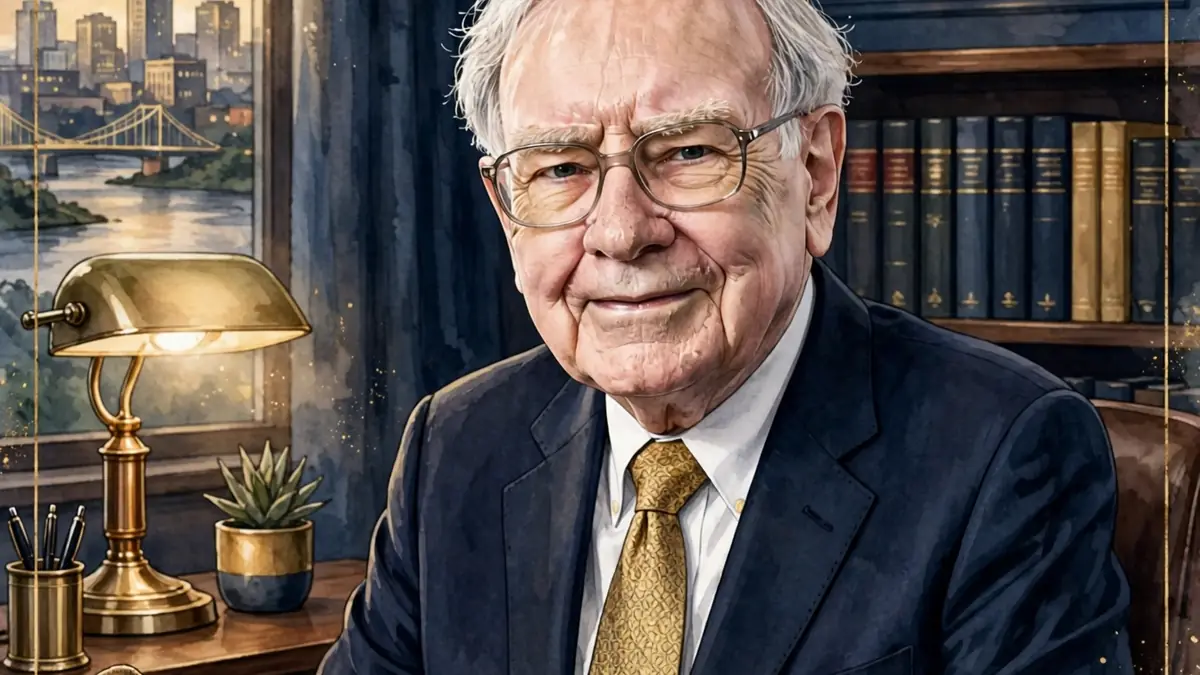
Quick Facts: Warren Buffett at a Glance
| Full Name | Warren Edward Buffett |
|---|---|
| Date of Birth | August 30, 1930 (age 96 in 2026) |
| Birthplace | Omaha, Nebraska, United States |
| Estimated Net Worth | About $145 billion (Forbes, September 2026; Bloomberg agrees). Range across trackers: roughly $144–$149 billion in 2026. |
| World Ranking | 10th richest person in the world (Forbes, September 2026); 9th in January 2026 |
| Primary Income Source | Berkshire Hathaway shares — about 99% of his fortune |
| Salary as CEO | $100,000 a year for more than four decades; no bonus, no stock awards |
| Key Ventures | Berkshire Hathaway (chairman emeritus), GEICO, BNSF Railway, See’s Candies, Dairy Queen, Coca-Cola and Apple stakes |
| Home | The same five-bedroom house in Omaha, bought for $31,500 in 1958 |
| Charitable Giving | More than $68 billion given away by early 2026; pledged to give away 99% of his fortune |
| Family | Three children: Susan, Howard and Peter Buffett; wife Astrid Menks (married 2006); first wife Susan Thompson Buffett (died 2004) |
In This Article
- Quick Facts: Warren Buffett at a Glance
- Early Life in Omaha: The Boy Who Bought His First Stock at 11
- The Rise: From Paper Routes to the Buffett Partnership
- Berkshire Hathaway: Turning a Dying Textile Mill Into a Trillion-Dollar Empire
- Where the Money Comes From: The 2026 Breakdown
- Net Worth Timeline: Year by Year, 1986 to 2026
- Assets and Lifestyle: The Billionaire Who Lives Like a Middle Manager
- Giving It Away: The 99 Percent Pledge
- Personal Life: Family, Health and the Man Behind the Money
- Controversies and Setbacks
- How Buffett Compares to Other Billionaires
- Frequently Asked Questions
- The Bottom Line
- Sources and Reporting
Early Life in Omaha: The Boy Who Bought His First Stock at 11
Warren Edward Buffett was born on August 30, 1930, in Omaha, Nebraska, the middle child of Howard Buffett, a stockbroker who later served in the United States Congress, and Leila Stahl Buffett. The family lived through the Great Depression, and money was a constant topic at the dinner table — not because the Buffetts were poor, but because Howard’s work put the stock market at the center of family life.
By most accounts, including Alice Schroeder’s biography The Snowball, young Warren was obsessed with numbers from the start. He sold chewing gum, Coca-Cola and magazines door to door. He delivered newspapers — the Washington Post route he later ran as a teenager in Washington, D.C., after his father was elected to Congress, was famously profitable. At 13, he filed his first tax return and deducted his bicycle as a business expense. At 15, he bought a 40-acre farm in Nebraska with his paper-route savings and rented it out to a tenant farmer.
The move that set everything in motion came at age 11, when he bought three shares of Cities Service Preferred for $38 each. The stock dropped to $27, and he sold at $40 — a small profit, and a lesson he never forgot: patience. The shares later rose far higher. He has told the story for decades as the moment he learned that the market rewards people who wait.
Buffett’s formal education took him to the Wharton School at the University of Pennsylvania, then to the University of Nebraska, where he graduated in 1950. Harvard Business School rejected him. That rejection changed his life: instead, he went to Columbia University to study under Benjamin Graham, the father of value investing and author of The Intelligent Investor. Graham’s idea — buy a dollar’s worth of value for fifty cents, and treat a share as a piece of a real business — became the spine of everything Buffett did afterward. If you want the fuller story of those years, our Warren Buffett age profile covers his life decade by decade, from the paper routes to his 96th birthday in August 2026.
After Columbia, Buffett went to work for Graham’s firm, Graham-Newman, and made a Saturday train trip to meet Lorimer Davidson at GEICO — a visit that taught him the economics of insurance float, the pool of premium money an insurer holds before paying claims. Float would later become the engine of Berkshire Hathaway. He returned to Omaha in 1956, married Susan Thompson in 1952, and started Buffett Associates with $100 of his own money and about $105,000 raised from family and friends.
The Rise: From Paper Routes to the Buffett Partnership
The Buffett Partnership ran from 1956 to 1969, and its record reads like a dare: Buffett compounded his partners’ money at roughly 29.5% a year before fees, against about 7.4% a year for the Dow Jones Industrial Average over the same stretch. He charged no management fee — only a share of profits above a 6% hurdle — and he wrote his partners long, plain-English letters explaining every decision. Those letters became the template for the Berkshire Hathaway shareholder letters that investors still study today.
By 1962, the partnership had begun buying shares in Berkshire Hathaway, a struggling textile mill in New Bedford, Massachusetts. Buffett liked the price, not the business. A dispute with the mill’s management over a tender offer price — they offered him $11.50 a share after verbally agreeing to $11.75 — annoyed him enough that he bought control of the company in 1965 instead of selling. He has called it the worst investment decision of his life in dollar terms, because the textile business kept eating capital for two decades. But the purchase gave him something far more valuable: a listed company he could use as a vehicle to buy other businesses.
In 1967, Berkshire bought National Indemnity, an Omaha auto insurer, for $8.6 million. That was the real beginning. Insurance gave Berkshire float — billions of dollars of other people’s money, held at low cost, that could be invested while claims were settled. In 1972 came See’s Candies for $25 million, a purchase that taught Buffett and his partner Charlie Munger the value of a beloved brand with pricing power. In 1977, Berkshire bought the Buffalo Evening News. In 1988, Buffett began building the Coca-Cola stake that would become one of the most famous investments in history: about $1.3 billion of stock that now pays Berkshire roughly $816 million a year in dividends, according to Motley Fool reporting from 2025.
Charlie Munger, who joined Buffett as vice chairman in 1978 and stayed until his death in November 2023 at age 99, pushed Buffett past Graham’s strict “cheap stock” discipline toward buying wonderful businesses at fair prices. The two men ran Berkshire as a partnership of equals in everything but title, and Munger’s fingerprints are on the best decisions of the last forty years — See’s, Coca-Cola, the shift toward whole-company ownership. For the full arc of Buffett’s life and career, our sister site’s Warren Buffett biography walks through the same story from the biography angle, with more on his early years and the Munger partnership.
By the end of the partnership era, Buffett was already a multi-millionaire. The fortune that followed was built inside Berkshire, and it was built slowly — which is the whole point of the Buffett story.
Berkshire Hathaway: Turning a Dying Textile Mill Into a Trillion-Dollar Empire
Berkshire Hathaway today is a conglomerate worth more than $1 trillion, with nearly 200 operating businesses and a stock portfolio that reads like a who’s who of American industry. The transformation from a failing textile mill took sixty years, and the numbers behind it are the reason Buffett’s personal fortune exists at all.
From 1965 through 2025, Berkshire’s shares compounded at about 19.7% a year, against about 10.5% a year for the S&P 500, according to Berkshire’s own performance record in its 2025 annual report. That gap — roughly nine percentage points a year, held for six decades — is the single most important fact in this article. A $10,000 investment in Berkshire in 1965 would be worth tens of millions today. The same money in the S&P 500 would be worth a small fraction of that. Buffett’s fortune is that compounding curve, owned personally.
The empire has three layers. The first is insurance: GEICO, National Indemnity and Berkshire Hathaway Reinsurance, which together generate the float that funds everything else. The second is a collection of wholly owned operating companies — BNSF Railway (bought for $26 billion in 2010, the biggest deal of Buffett’s life), Berkshire Hathaway Energy, Precision Castparts, Duracell, Dairy Queen, See’s Candies, NetJets, Benjamin Moore and dozens more. The third is the stock portfolio: a concentrated set of stakes in public companies, led by Apple, American Express, Bank of America and Coca-Cola.
Apple deserves its own paragraph, because it became the largest single position in Berkshire’s portfolio and the largest driver of Buffett’s paper wealth in the 2020s. Buffett, who once said he avoided technology stocks because he did not understand them, built the Apple stake between 2016 and 2018 and watched it grow into a position worth well over $100 billion. In 2024 he sold a large part of it — about $143 billion of stock sales across the portfolio that year, according to AOL Finance reporting — which helped push Berkshire’s cash pile to record levels.
That cash pile is the story of Buffett’s final years as CEO. Berkshire ended 2025 with roughly $382 billion in cash, and reports through 2026 put the figure at about $397 billion, a record. Buffett could not find enough businesses at prices he liked, so he let the cash build rather than overpay — the same discipline that defined his whole career. What Greg Abel does with that pile is now the biggest open question in American business. Abel, who took over as CEO on January 1, 2026, has said he will run Berkshire on Buffett’s principles, and in March 2026 he told CNBC he would spend his entire after-tax salary — $25 million a year, against Buffett’s $100,000 — buying Berkshire stock for as long as he is in charge.
The one-number summary: Berkshire’s market value is more than $1 trillion. Buffett owns about 13.7% of its economic value, according to the company’s 2026 proxy statement — 196,317 Class A shares and 1,114 Class B shares as of the March 4, 2026 record date — plus 30% of its voting power. Multiply his stake by the share price and you get his net worth, almost to the dollar. Everything else he owns is a rounding error.
Where the Money Comes From: The 2026 Breakdown
Most billionaires have complicated balance sheets — property empires, private equity funds, art collections, sports teams. Buffett’s is the simplest of any major fortune on earth, and that simplicity is worth spelling out, because it is the reason his net worth moves the way it does.
| Wealth Source | Estimated Value (2026) |
|---|---|
| Berkshire Hathaway shares | About $143–$147 billion — roughly 99% of his fortune |
| Cash and personal bank accounts | Small relative to the total; Buffett keeps little cash outside Berkshire |
| Real estate | The Omaha house (bought for $31,500 in 1958) and a vacation home in Laguna Beach, California, bought for $150,000 in 1971 |
| Salary and dividends | $100,000 a year as CEO for over 40 years; Berkshire pays no dividend, so no dividend income from his own shares |
| Other investments | No meaningful separate portfolio — no hedge fund, no private equity, no crypto |
That last line is the point competitors often miss. Buffett does not own a yacht, a private jet fleet, or a string of mansions. He has no second fortune hidden in a family office. The $145 billion is Berkshire stock, and Berkshire stock is the $145 billion. When Berkshire’s share price rises 10%, Buffett gets about $14 billion richer on paper. When it falls, he gets poorer by the same amount — and he has watched that happen many times without selling a share in panic.
It also explains why his net worth has drifted lower in recent years even while Berkshire’s stock has done well: he keeps giving shares away. Every summer he donates billions of dollars of Berkshire stock to charity, which shrinks his share count. The 2026 gift was about $6 billion, the largest annual donation of his life, and it broke a two-decade pattern — for the first time, the Gates Foundation was not the main recipient. By February 2026 he had given away $68.3 billion in total, around 32% of his net worth at that point, according to Forbes.
His salary deserves a note of its own. Buffett took $100,000 a year for more than four decades, with no bonus and no stock awards. It is the most famous pay package in corporate America, and it ended the day he retired: his successor Greg Abel’s salary was set at $25 million a year, as Berkshire disclosed in a January 2026 SEC filing. Buffett never needed the money — his wealth was the stock — but the $100,000 sent a message to every Berkshire manager about how the boss thought about pay. For more on how the richest people in the world actually get paid, see our Jeff Bezos net worth profile — Amazon’s founder took a similarly modest salary for years, then built his fortune the same way, in stock.
Net Worth Timeline: Year by Year, 1986 to 2026
Buffett’s fortune did not arrive in a straight line. It compounded, stalled, crashed and recovered — and the crashes are part of the story, because they show how much of his wealth has always been one stock’s price on one day.
| Year | Estimated Net Worth |
|---|---|
| 1986 | About $1.4 billion — first appearance on the Forbes 400 |
| 1990 | About $3.3 billion |
| 1995 | About $10 billion |
| 2000 | About $28 billion |
| 2008 | About $62 billion — Forbes’ richest person in the world |
| 2009 | About $37 billion — fell to second after donations and the financial crisis |
| 2015 | About $72 billion |
| 2020 | About $67 billion |
| 2023 | About $118 billion |
| 2024 | About $133 billion |
| January 2026 | $148.9 billion (Forbes) — 9th richest in the world |
| September 2026 | About $145 billion (Forbes and Bloomberg) — 10th richest in the world |
Two moments in that table deserve attention. The first is 2008 to 2009: Buffett lost about $25 billion in a single year, the largest dollar loss of any person on the Forbes list that year, and he did it by giving money away during a market crash — donating billions to charity while Berkshire’s stock fell with everything else. He went from the richest person on earth to second place and treated it as a non-event.
The second is the jump from 2020 to 2026. In six years his fortune roughly doubled, from about $67 billion to about $145 billion, driven by Berkshire’s stock and the Apple position. He was 90 years old when that run began. More than 99% of Buffett’s wealth was made after his 50th birthday, and the great bulk of it after 65 — a fact he cites whenever young investors ask him for the secret. The secret is time: compounding needs decades, and Buffett had more of them than almost anyone in history.
One more number belongs here. Berkshire’s own record shows its shares compounding at about 19.7% a year from 1965 through 2025. At that rate, money doubles roughly every four years. Buffett’s personal fortune is what happens when one man holds one compounding machine for sixty years and never cashes out.
Assets and Lifestyle: The Billionaire Who Lives Like a Middle Manager
The most reported fact about Warren Buffett’s life is also the most revealing: he still lives in the house he bought in 1958 for $31,500. It is a five-bedroom home in Omaha’s Dundee neighborhood, and he has called it the third-best investment he ever made. He bought a vacation home in Laguna Beach, California, in 1971 for $150,000 and held it for decades. That is the property portfolio of a man worth $145 billion.

His daily routine is famously unglamorous. He drives himself to work — for years in a Cadillac, which he has said he buys at a discount after hail damage — and stops at McDonald’s for breakfast, spending a few dollars depending on how the market looks that morning. He drinks Coca-Cola (Cherry Coke is his preferred flavor), eats at Dairy Queen, and has said he works in an office with no computer on his desk. He reads for five or six hours a day: annual reports, newspapers, filings. He has described his job as sitting in a room reading and thinking, and he has done it in the same plain Omaha office for decades.
He owns no yacht and no art collection worth reporting. He flies on NetJets — a Berkshire company, so the world’s most famous frugal billionaire is, in a sense, his own best customer. His suits are not bespoke in the billionaire sense; he has joked that his suits come off the rack and his barber charges $18. None of this is an act. People who know him, from his children to his business partners, say the same thing: the man who reads annual reports for fun genuinely prefers a hamburger to a tasting menu.
That modesty is also a business tool. Berkshire’s culture — decentralized, low overhead, no corporate jets for headquarters staff, no marble lobbies — starts with the boss. When the chief executive takes $100,000 and lives in the same house for seventy years, nobody at headquarters can argue for a bigger office. The lifestyle is the management philosophy, made visible.
For a fuller picture of the man behind the money — his height, his health, his daily habits — see our Warren Buffett height profile, which covers the physical details and the routines that have kept him working into his late nineties.
Giving It Away: The 99 Percent Pledge
In 2006, Buffett announced the largest charitable commitment in history at the time: he would give away the bulk of his Berkshire stock, mostly to the Bill & Melinda Gates Foundation, in annual installments. In 2010, he and Bill and Melinda Gates founded The Giving Pledge, asking the world’s billionaires to commit at least half their fortunes to charity. Buffett’s own pledge is 99%.
The numbers since then are staggering. By February 2026, Buffett had given away $68.3 billion, according to Forbes — around 32% of his total net worth at that point, and the largest lifetime total of any living donor. His annual gifts run into the billions: the 2026 donation, about $6 billion in Berkshire shares, was the biggest single-year gift he had ever made. Most of it went to four family foundations — the Susan Thompson Buffett Foundation, the Howard G. Buffett Foundation, the Sherwood Foundation and the NoVo Foundation — plus the Gates Foundation.
The 2026 gift marked a shift. For the first time in two decades, the Gates Foundation was not the main recipient, and Buffett has said he expects his remaining fortune to be distributed by his children after his death, through a charitable trust with a ten-year wind-down. His plan, stated in his will and in public letters, is that the money should be spent — not preserved — within a decade of his passing. He has written that he wants his children, who are now in their sixties and seventies, to finish the job of giving it away.
That plan also answers the question people ask most about Buffett’s money: what happens to $145 billion when he dies? The answer is that almost none of it stays in the family as wealth. His children are well provided for, but the fortune itself is earmarked for charity. The estate tax bill will be large, the foundations will receive the rest, and the Buffett name will end up attached to one of the largest charitable transfers in history rather than to a dynasty.
The Gates connection runs deep. Bill Gates has called Buffett his closest friend and his mentor, and the two men spent decades vacationing together, playing bridge, and arguing about business. For the Gates side of that friendship — and the fortune Gates built in parallel — see our Bill Gates biography.
Personal Life: Family, Health and the Man Behind the Money
Buffett married Susan Thompson in 1952. They had three children — Susan, Howard and Peter — and remained married until Susan’s death in 2004, though they had lived apart for much of the later years of the marriage, with Susan’s full support and encouragement. In 2006, Buffett married Astrid Menks, his longtime companion, in a small Omaha ceremony. His children have all built their own lives: Susan Buffett runs the Sherwood Foundation in Omaha, Howard Buffett is a farmer and philanthropist who now chairs Berkshire Hathaway’s board, and Peter Buffett is a musician and composer.
Howard Buffett’s rise to the chair is one of the most important facts of 2026. When Warren stepped down as board chairman in September 2026, Howard took over — a succession Buffett had planned for years, and one that keeps the board in the family while the company itself is run by Greg Abel. It is a neat division of the empire: Abel runs the business, Howard chairs the board, and Warren, as chairman emeritus, remains available to advise.
Health-wise, Buffett has been remarkably durable. He was treated for prostate cancer in 2012 and declared cancer-free later that year. He has said he feels fine, works full days, and shows no sign of slowing down mentally — shareholders at the 2025 annual meeting in Omaha watched the 94-year-old answer questions for hours. He turned 96 on August 30, 2026, and his retirement from the chief executive role was his own choice, announced at that May 2025 meeting, not a health decision.
Outside work, his pleasures are famously simple: bridge (he plays online several times a week and once sponsored a bridge tournament for journalists), the ukulele (he has played it in public for decades, including at shareholder meetings), Nebraska football, and reading. He has been a fan of the University of Nebraska Cornhuskers his whole life and has said his happiest days involve a good book and a Cherry Coke.
Controversies and Setbacks
No honest profile of Buffett skips the rough patches, and there have been several — though none of them dented his fortune the way a bad bet dents other billionaires’.
The first was the Salomon Brothers scandal in 1991. Berkshire was a major shareholder in the Wall Street bank when it was caught breaking Treasury auction rules. Buffett stepped in as interim chairman, told Congress that he would rather lose money than lose reputation, and spent a year cleaning up the firm. He later sold the stake. The episode is now taught in business schools as a case study in crisis management — and as proof that Buffett’s reputation is a business asset he guards like cash.
The second was the 2008 financial crisis, when Berkshire’s stock fell by half and Buffett’s own fortune dropped by about $25 billion in a year. He used the crisis to make two of his most famous deals: a $5 billion investment in Goldman Sachs and a $3 billion investment in General Electric, both on terms that paid Berkshire billions in dividends and warrants. Critics said he got a sweetheart deal because only Buffett could write a check that big that fast. He has never denied it — that was the point. Being the lender of last resort is profitable when you are the only one with the money.
The third was a string of investment mistakes he has owned publicly in his shareholder letters: the Dexter Shoe purchase in 1993, paid for in Berkshire stock that would later be worth billions; the 2015 Precision Castparts deal, on which Berkshire later took a $10 billion write-down; and the textile mill itself, which he has called his worst decision. His habit of naming his errors in print, with numbers attached, is part of why investors trust him: a man who tells you about his $10 billion mistake is a man you believe about the rest.
There have also been quieter criticisms. Some investors argue Berkshire has grown too big to repeat its old returns, and Buffett himself has said so — he has warned for years that Berkshire’s size makes it harder to move the needle. Others note that his refusal to pay a dividend or split the Class A shares keeps Berkshire’s stock price above $700,000 a share, out of reach for ordinary investors. (The Class B shares, created in 1996, were his answer to that criticism.) And his 2024 sale of much of the Apple stake drew questions about whether he saw trouble ahead. He has said only that he still loves Apple as a business and that the sale was about price, not the company.
How Buffett Compares to Other Billionaires
Buffett’s $145 billion puts him tenth in the world, but the comparison that matters is not the ranking — it is how different his fortune is from the nine people above him.
| Billionaire | Estimated Net Worth (2026) |
|---|---|
| Warren Buffett | About $145 billion — Berkshire Hathaway stock |
| Bill Gates | About $100–$115 billion — Microsoft stock and investments |
| Jeff Bezos | About $230 billion — Amazon stock |
| Mark Zuckerberg | About $200 billion — Meta stock |
| Elon Musk | About $400 billion — Tesla, SpaceX and other ventures |
The table tells the story in one glance. Musk’s fortune is built on companies he founded and runs. Bezos and Zuckerberg built theirs the same way. Buffett is the only person in the top ten whose fortune comes from investing in other people’s companies — buying pieces of businesses he did not start and holding them for decades. He never founded a technology company, never took a company public, and never sold a startup. He bought well and waited.
He is also the oldest person on any rich list by a wide margin, and the only one whose fortune is actively shrinking by choice — through donations — while he is still alive. Gates is the closest parallel, and the two men have spent twenty years giving together. For the Gates side of that friendship — and the fortune Gates built in parallel — see our Bill Gates biography; for the Amazon fortune built the same stock-first way, see our Jeff Bezos net worth profile, and for the Meta fortune, our Mark Zuckerberg biography.
One more comparison is worth making, because it is the one Buffett himself makes: against the market. Berkshire’s 19.7% annual compounding from 1965 through 2025, against 10.5% for the S&P 500, means a dollar in Berkshire grew to roughly 5,500 times its starting value, while a dollar in the index grew to about 390 times. That gap is the whole Buffett story — not a single deal, not a single year, but sixty years of not making the big mistake.
For readers who want to place Buffett in the wider world of celebrity wealth, our Net Worth category collects every fortune profile on this site, from tech founders to athletes and entertainers.
Frequently Asked Questions
What is Warren Buffett’s net worth in 2026?
Warren Buffett’s net worth is about $145 billion as of September 2026, according to Forbes, with Bloomberg estimating the same figure. Forbes had valued him at $148.9 billion in January 2026, when he ranked ninth in the world; by September he ranked tenth. The figure moves daily with Berkshire Hathaway’s share price, since about 99% of his fortune is Berkshire stock.
How did Warren Buffett make his money?
Buffett made his money by buying businesses and stocks and holding them for decades. He started the Buffett Partnership in 1956, took control of Berkshire Hathaway in 1965, and used the company’s insurance float to buy whole businesses — GEICO, BNSF Railway, See’s Candies, Dairy Queen — and large stakes in public companies such as Apple and Coca-Cola. Berkshire’s shares compounded at about 19.7% a year from 1965 through 2025, and Buffett’s personal fortune is his roughly 13.7% stake in the company.
Is Warren Buffett still the CEO of Berkshire Hathaway?
No. Buffett retired as chief executive at the end of 2025, and Greg Abel took over as CEO on January 1, 2026. Buffett then stepped down as chairman of the board in September 2026, with his son Howard Buffett taking the chair. Buffett remains chairman emeritus, a director, and Berkshire’s largest shareholder.
How old is Warren Buffett?
Warren Buffett was born on August 30, 1930, in Omaha, Nebraska, and turned 96 on August 30, 2026. He is the oldest person on the Forbes billionaire list by a wide margin, and he built most of his fortune after the age of 50.
What is Warren Buffett’s salary?
Buffett took a salary of $100,000 a year as Berkshire Hathaway’s chief executive for more than four decades, with no bonus and no stock awards. His successor Greg Abel’s salary was set at $25 million a year in January 2026, according to a Berkshire SEC filing. Buffett never needed a large salary because his wealth was in Berkshire stock, not pay.
How much has Warren Buffett given to charity?
By February 2026, Buffett had given away $68.3 billion, according to Forbes — the largest lifetime total of any living donor. His 2026 annual gift of about $6 billion in Berkshire shares was the biggest of his life. He has pledged to give away 99% of his fortune, mostly through the Gates Foundation and four family foundations, and his will directs that the rest be spent within ten years of his death.
Where does Warren Buffett live?
Buffett still lives in the five-bedroom house in Omaha, Nebraska, that he bought in 1958 for $31,500. He has lived there for nearly seventy years, drives himself to work, and eats at McDonald’s and Dairy Queen. He also owned a vacation home in Laguna Beach, California, bought in 1971 for $150,000.
What happens to Warren Buffett’s fortune when he dies?
Almost all of it goes to charity. Buffett has pledged to give away 99% of his fortune, and his will places his remaining Berkshire shares in a charitable trust to be run by his three children — Susan, Howard and Peter — with instructions to spend the money within ten years of his death. His children are provided for separately, but the fortune itself is not being passed down as a family inheritance.
The Bottom Line
Warren Buffett is worth about $145 billion in 2026 — Forbes and Bloomberg agree on the number — and the remarkable thing about it is how plain the recipe is. He bought good businesses at fair prices, held them for decades, reinvested the cash they threw off, and never spent the money on himself. He took a $100,000 salary, lived in the same house for seventy years, and gave away $68 billion while he was still alive to watch it go.
The era that made the fortune is now over. Greg Abel runs Berkshire, Howard Buffett chairs the board, and the $397 billion cash pile is the biggest question in American business. But the fortune itself is not going anywhere: it is Berkshire stock, and Berkshire is a collection of real businesses — railroads, insurers, candy shops and soda companies — that will keep earning money long after the man who assembled them is gone. The final act of the Buffett story is not about making the money. It is about giving it away, and on that score the work is already two-thirds done.
Sources and Reporting
How we estimated: Buffett’s net worth is an estimate, not a disclosed figure — no filing requires him to publish a personal total. We anchor on Forbes ($148.9 billion in January 2026; about $144.7 billion in September 2026) and Bloomberg (about $145 billion in September 2026), and report the range of roughly $144–$149 billion across trackers in 2026. The estimate is arithmetic: Buffett’s Berkshire share count, disclosed in the company’s 2026 proxy statement (196,317 Class A shares and 1,114 Class B shares, about 13.7% of economic interest), multiplied by the share price on the measurement date. Berkshire’s cash position, market value and compounding record come from the company’s own annual report and SEC filings. Charitable totals come from Forbes reporting. Where sources disagree, we show the range rather than picking the biggest number.
Named sources consulted for this article: Forbes, Bloomberg, Berkshire Hathaway, Wikipedia, TheStreet, Motley Fool, CNBC, Reuters. Figures are estimates based on public reporting and market prices, and will move with Berkshire Hathaway’s share price. This article is not investment advice.