As of November 2026, Georges St-Pierre’s net worth is estimated at $20 million to $30 million. Celebrity Net Worth puts the figure at $20 million in an update dated November 20, 2026, Sports Brief reports $30 million, and BounceMojo lands in the middle at $25 million. We publish the range because the sources disagree — and because no single outlet has access to the private finances of a fighter who retired from the UFC in 2019 and has kept his business dealings quiet ever since.
What makes the range credible is the paper trail behind it. St-Pierre, known to every fight fan as GSP, fought his way from a $6,000 UFC debut purse in 2004 to a reported $10 million payday for his comeback fight against Michael Bisping in 2017. Along the way he became a two-division UFC champion with a 26–2 record, one of the biggest pay-per-view draws of his era, a pitchman for Under Armour, NOS Energy and 888poker, a published author, and a Marvel movie villain. This page breaks down where every part of that fortune came from, what the numbers actually mean, and which figures you should not believe.
By Celebamerica Editorial Staff | Last updated: November 23, 2026
Quick Facts: Georges St-Pierre at a Glance
| Full Name | Georges St-Pierre |
|---|---|
| Nickname | GSP, Rush |
| Date of Birth | May 19, 1981 |
| Birthplace | Saint-Isidore, Quebec, Canada |
| Estimated Net Worth (2026) | $20 million – $30 million |
| Career Record | 26 wins, 2 losses (8 knockouts) |
| UFC Titles | Welterweight champion (three reigns); Middleweight champion (2017) |
| Peak Annual Earnings | About $12 million in 2013, per Forbes |
| Primary Income Sources | UFC fight purses, pay-per-view bonuses, endorsements |
| Key Endorsements | Under Armour, Reebok, NOS Energy, 888poker, Hayabusa, Bacardi, EA Sports |
| Acting Highlights | Batroc in Captain America: The Winter Soldier (2014) and The Falcon and the Winter Soldier (2021); Kickboxer: Vengeance (2016); I Kill the Bear (2026) |
| Book | The Way of the Fight (2013) |
| Retired | February 2019 |
Contents
- From Saint-Isidore to the Octagon
- The UFC Rise: Titles, Losses and Revenge
- The Money: Fight Purses and Pay-Per-View
- Endorsements and Sponsorships
- Acting, Books and Life After Fighting
- Real Estate and Assets
- Net Worth Growth Timeline
- How GSP Compares to Other MMA Greats
- Personal Life
- Controversies and Setbacks
- Frequently Asked Questions
- Bottom Line
- Sources and Reporting
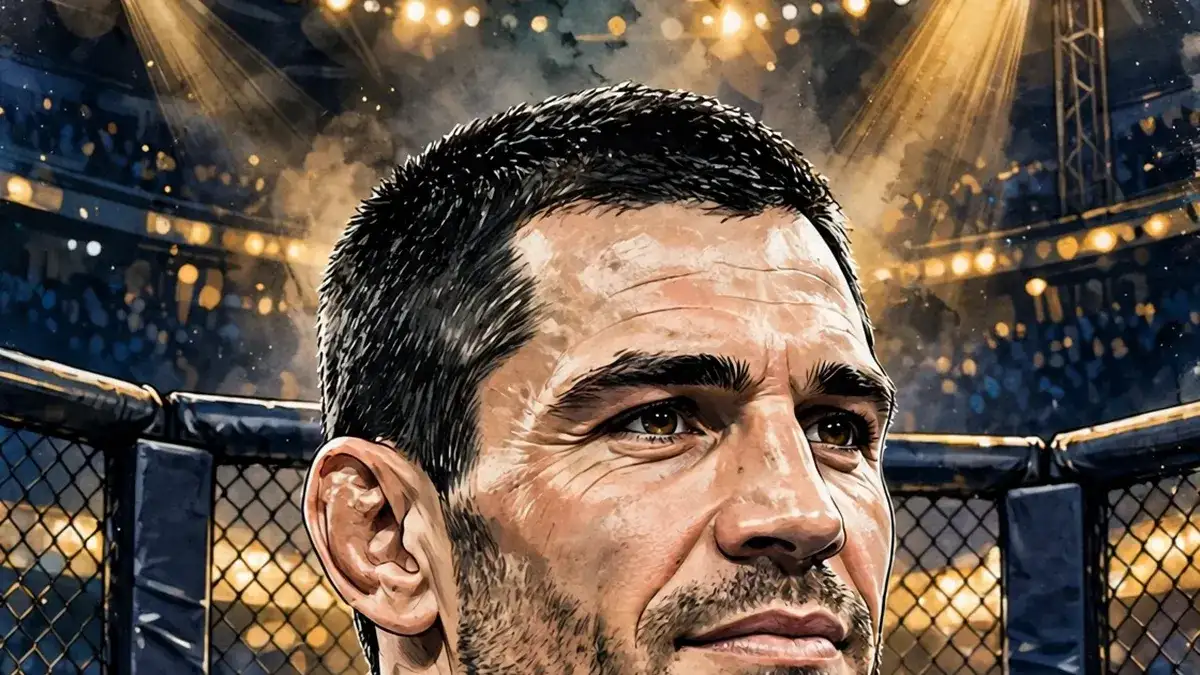
From Saint-Isidore to the Octagon
Georges St-Pierre was born on May 19, 1981, in Saint-Isidore, a small town in Quebec, Canada. His childhood was not an easy one. He has spoken openly, including in his 2013 book The Way of the Fight, about being bullied at school and about the fear that followed him through his early years. His father put him in Kyokushin karate when he was seven years old, not to build a fighter but to give a scared kid a way to stand up for himself. By the age of 12 he held a second-dan black belt.
Before mixed martial arts paid him anything, St-Pierre worked the kind of jobs that keep a young athlete’s training funded and little else. He worked as a nightclub bouncer on Montreal’s South Shore and spent about six months working as a garbageman to pay for his school fees, a detail he has confirmed in interviews. The bouncer work taught him something useful: how to stay calm when a stranger wants a fight. The garbage truck taught him something else: that he did not want to do manual labour for the rest of his life.
He made his professional MMA debut in 2002 at the age of 20, fighting on small Canadian cards while studying kinesiology and training in wrestling, Brazilian jiu-jitsu and boxing to round out the karate base. What separated him from other prospects of that era was not one skill but the absence of a weak one. He could strike, wrestle and grapple, and he trained like a professional before he was paid like one, travelling to New York, Thailand and Brazil to learn from specialists. That habit — spending money on his own development rather than on the trappings of early success — runs through his whole financial story. When he finally earned a real UFC paycheck, he has said, he put it back into training trips and coaching instead of cars and jewellery.
For the full story of his childhood, his family and the road into the UFC, our Georges St-Pierre biography covers the life story in detail. This article focuses on the money: how much he earned, where it came from, and what it adds up to in 2026.
The UFC Rise: Titles, Losses and Revenge
St-Pierre’s UFC debut came at UFC 46 in January 2004, against Karo Parisyan. He won by unanimous decision. The purse tells you everything about where the sport was at the time: $3,000 to show and $3,000 to win, $6,000 in total before taxes and expenses. St-Pierre has talked about that first cheque in interviews since, including on Demetrious Johnson’s podcast in 2026, and the figure still shocks fans who only know the million-dollar paydays of his later career.
His rise was fast. By the end of 2004 he was fighting Matt Hughes for the welterweight title at UFC 50, and he lost by armbar in the first round. The disclosed pay for that fight was $9,000 to show. Two years later, at UFC 65 in November 2006, he beat Hughes by second-round TKO to win the welterweight championship for the first time. Then came the shock that defines his career as much as any win: in April 2007, at UFC 69, Matt Serra knocked him out in the first round. It remains one of the biggest upsets in UFC history, and it cost St-Pierre his title after a single defence.
What happened next is why fighters and coaches still study him. He did not demand an immediate rematch or blame anyone. He rebuilt his game, beat Josh Koscheck and Hughes again, won the interim title at UFC 79 in December 2007, and then unified the belts by stopping Serra in Montreal at UFC 83 in April 2008. From there he went on a run that has never been matched at welterweight: nine consecutive title defences, against B.J. Penn, Thiago Alves, Dan Hardy, Josh Koscheck, Jake Shields, Carlos Condit, Nick Diaz and Johny Hendricks. He beat every style the division could throw at him, and he did it in front of crowds that kept getting bigger — including the Toronto shows that turned him into Canada’s biggest combat sports star.

He walked away the first time in December 2013, days after a disputed split-decision win over Johny Hendricks at UFC 167, vacating the title and saying he needed a break from the sport. Four years later he came back for one more mountain: middleweight. At UFC 217 in November 2017 he submitted Michael Bisping in the third round to win the middleweight title, becoming only the fourth fighter in UFC history to hold championships in two weight classes. He vacated that belt a month later, citing ulcerative colitis, and in February 2019 he announced his retirement for good. Final record: 26 wins, 2 losses, with 8 knockouts. He retired as a champion, on his own terms, which is something almost no fighter in the sport’s history has managed.
The honours followed after the fighting stopped. He was inducted into the UFC Hall of Fame in 2020 and into Canada’s Sports Hall of Fame in 2023, and he remains a fixture in every serious conversation about the greatest mixed martial artist of all time — a debate that usually comes down to him, Jon Jones and Anderson Silva.
The Money: Fight Purses and Pay-Per-View
Understanding GSP’s fortune means understanding how UFC fighters actually get paid, because the disclosed purse is only the visible part. A UFC fighter’s pay has three layers: the show-and-win purse reported to athletic commissions, a share of pay-per-view revenue for champions and headliners, and sponsorship money. In St-Pierre’s case, the first layer was modest for most of his career, and the second layer is where the real money lived.
The disclosed numbers, compiled from athletic commission records, add up to about $7,037,000 across his UFC career, according to Surprise Sports. That total covers only the show-and-win purses — it leaves out every pay-per-view bonus and every endorsement dollar. His late-career purses show the scale: $400,000 to show and $400,000 to win was his standard championship purse from 2009 onward, rising to $450,000 for the Hendricks fight and a disclosed $2,580,000 for the Bisping fight at UFC 217. His first fight, remember, paid $6,000 in total. The climb from one to the other is the whole story of his earning power.
| Fight | Disclosed purse (approx.) |
|---|---|
| UFC 46 vs Karo Parisyan (Jan 2004) | $6,000 ($3,000 to show, $3,000 to win) |
| UFC 50 vs Matt Hughes (Oct 2004) | $9,000 to show |
| UFC 94 vs B.J. Penn (Jan 2009) | $400,000 |
| UFC 100 vs Thiago Alves (Jul 2009) | $400,000 |
| UFC 129 vs Jake Shields (Apr 2011) | $400,000 |
| UFC 154 vs Carlos Condit (Nov 2012) | $470,000 |
| UFC 158 vs Nick Diaz (Mar 2013) | $400,000 |
| UFC 167 vs Johny Hendricks (Nov 2013) | $450,000 |
| UFC 217 vs Michael Bisping (Nov 2017) | $2,580,000 |
| Career disclosed purses (total) | About $7,037,000 (excludes PPV and sponsors) |
The pay-per-view money is where the numbers get serious, and also where they get less certain, because the UFC has never published its PPV contracts. Celebrity Net Worth lays out the mechanics using Randy Couture’s contract, which became public: a champion could earn roughly $1 per buy up to 175,000 buys, $1.50 up to 300,000, $2 up to 330,000 and $3 above that. Apply that scale to UFC 158, which sold about 950,000 pay-per-views, and St-Pierre’s PPV bonus alone was at least $2.85 million — and UFC president Dana White suggested his total earnings that night were closer to $5 million. Celebrity Net Worth puts his UFC 158 take at between $3.25 million and $5.4 million once all income is counted.
St-Pierre himself told the Canadian press in 2011 that he was making $4 million to $5 million per fight at his peak, a remark later quoted in the UFC’s antitrust court filings. Forbes reported that he earned about $12 million in 2013 alone, his last full year as champion. And his final fight was his biggest: multiple outlets, including TheSportster and EssentiallySports, report that the Bisping comeback at UFC 217 earned him around $10 million once pay-per-view, sponsorships and other income were added in. TheSportster also reports his total UFC earnings at more than $26 million, with an average of about $1 million per fight across his career.
The one figure to ignore: Surprise Sports lists St-Pierre’s net worth at $60 million. No other major source comes close to that number — Celebrity Net Worth says $20 million, Sports Brief and Players Bio say $30 million, BounceMojo says $25 million, LowKick MMA says $20 million. A $60 million fortune would require roughly double his documented career earnings with no business sale or windfall to explain the gap, and none is on record. We flag it here as an outlier and anchor on the $20 million to $30 million range instead.
Two things kept his fortune intact where other fighters lost theirs. First, he negotiated hard. Approaching the end of his UFC contract in 2008, with two fights left, he refused to re-sign early and let himself become a free agent, a gamble he described in a 2021 interview with Wealthsimple Magazine. The UFC came back with a far better deal, and his pay jumped from five figures to seven. Second, he spent carefully. He has said repeatedly that he reinvested his early cheques in training and coaching rather than lifestyle, and there is no record of the lavish spending, failed businesses or legal troubles that have drained other fighters’ fortunes. The money went in, and most of it stayed in.
Endorsements and Sponsorships
If fight purses built the base of St-Pierre’s wealth, endorsements built the second floor. At his peak he was one of the most marketable athletes in combat sports: clean-cut, bilingual, polite in two languages, and a champion who never embarrassed a sponsor. Brands noticed. Celebrity Net Worth reports that his endorsements added $1 million to $2 million per fight on top of his UFC pay, and Forbes credited about $3 million of his $12 million in 2013 earnings to endorsements, memorabilia and licensing of his image.
The sponsor list reads like a tour of the brands that wanted a piece of MMA’s growth in the late 2000s and early 2010s. Under Armour made him the face of its underwear line, a mainstream deal that put a cage fighter in malls across North America. NOS Energy, owned by Coca-Cola, put him on cans and in commercials. He signed with 888poker, Hayabusa, Affliction, Electronic Arts and Bacardi, and later with Reebok and Google. For a fighter, that breadth mattered: he was not dependent on one sponsor or one product category, so when the UFC’s own sponsorship rules tightened and individual fighter sponsors were squeezed out of the octagon, he had already banked the biggest years of that market.
The sponsorship era also explains part of the gap between his disclosed purses and his net worth. A fighter with $7 million in disclosed purses and $20 million to $30 million in net worth did not get there on purses alone. Pay-per-view bonuses account for the largest share of the difference, but a decade of endorsement income — several million dollars at his peak, year after year — accounts for much of the rest. He also licensed his name and image, wrote a book, and took paid speaking and appearance work, all of which added income without adding damage to his body.
It is worth noting what he did not do. He never launched a supplement empire, a gym franchise or a clothing line on the scale of some of his peers, and there is no record of him taking equity stakes in major startups. His wealth is, by the standards of modern athlete fortunes, old-fashioned: earned in the cage, topped up by sponsors, and held rather than gambled. That conservatism is a big reason the $20 million to $30 million range has held steady across sources for years instead of swinging wildly.
Acting, Books and Life After Fighting
St-Pierre started acting while he was still fighting, and he has taken it more seriously since retiring. His first credits were low-budget action films — Never Surrender (2009), Hell’s Chain and Death Warrior — but his break came in 2013, when Marvel cast him as Georges Batroc, the French mercenary known as Batroc the Leaper, in Captain America: The Winter Soldier (2014). The opening fight scene, aboard a hijacked ship, used savate — French kickboxing — and acrobatic movement, and it made him the rare athlete whose acting debut came in one of the biggest films of the year. He returned to the role in Marvel’s Disney+ series The Falcon and the Winter Soldier in 2021, and voiced Batroc in the animated What If…? the same year.
More film work followed: Kavi in Kickboxer: Vengeance (2016) alongside Jean-Claude Van Damme, Bruno Sinclaire in Cartels (2017), and a string of independent films and series since, including the French-language Netflix drama La Cage (2024) and the Crave comedy series I Kill the Bear, which premiered in November 2026. Acting fees for roles like these are modest next to a UFC main-event purse — supporting parts in action films pay working-actor money, not star money — but they serve a different purpose: they keep him visible, keep income flowing after retirement, and give him a second career with a much longer shelf life than fighting.

He has been candid about the transition. After retirement he told interviewers he was taking acting, audition and English classes full time, comparing himself to a white belt starting over. In an interview with the Dan LeBatard Show he said that every fighter needs a goal after the cage, and that acting gave him one — the same discipline, focus and attention to craft, applied to a job that does not involve getting hit. He also served as executive producer on the TV series The Boneyard with Georges St-Pierre in 2016, a first step into producing.
His book, The Way of the Fight, published in 2013, is the other piece of his post-fighting income. Part memoir, part philosophy, it covers the bullying, the fear before fights, the Serra loss and the discipline behind his career, and it has stayed in print as the standard English-language account of his life. Book royalties are a small line next to fight pay, but the book did something more valuable: it fixed his public image as a thoughtful, disciplined athlete rather than just a tough one, and that image is what keeps sponsors and casting directors calling.
Since retiring he has also stayed close to the sport as a commentator, analyst and mentor, and he has spoken publicly in favour of better pay for fighters — telling TheSportster that modern UFC fighters are underpaid and pointing to the ESPN broadcast deal as a factor in how fighter pay is structured. He has not returned to competition, despite periodic rumours, and he has said he retired on top precisely so he would not become one of the fighters who hangs on too long.
Real Estate and Assets
St-Pierre has never been a real-estate mogul in the public record, and the one property transaction that is documented is a useful reality check on his wealth. In October 2023 he listed his home in Saint-Lambert, Quebec, on Montreal’s South Shore, for $2.239 million, according to Celebrity Net Worth. He sold the house in 2024 for $1.925 million, roughly 14 percent below the asking price. A $1.9 million home sale is consistent with a $20 million to $30 million net worth — a comfortable, substantial house, not a trophy mansion — and the fact that he took a discount to sell it suggests a man clearing a property rather than chasing a top price.
Beyond that sale, there is little on the public record about his property holdings, car collection or investment portfolio, and we will not invent any. He is known to have kept his lifestyle modest by athlete standards: no fleet of supercars in the press, no nightclub empire, no public splurges. What is documented is the absence of the usual wealth-destroyers — no bankruptcy filings, no lawsuits over debts, no failed restaurant or clothing venture in the headlines. For a retired fighter, that absence is itself a financial fact. Many of his contemporaries earned similar money and kept far less of it.
His assets, as far as they can be documented, break down into four buckets: cash and investments accumulated from fight purses, pay-per-view bonuses and endorsements; ongoing income from acting, appearances and his book; the value of his name and image, which still earns licensing and appearance fees; and whatever property he holds in Quebec. The first bucket is the largest by far. The honest summary is that his fortune is liquid and earned, not tied up in businesses or property empires, which is also why estimates of it have stayed in a tight range for years.
Net Worth Growth Timeline
| Year | Milestone |
|---|---|
| 2004 | UFC debut at UFC 46; total purse $6,000. Net worth effectively zero — a working fighter paying for his own training. |
| 2006 | Wins the UFC welterweight title from Matt Hughes at UFC 65. First championship pay and first major sponsors. |
| 2008 | Beats Serra to unify the title, then lets his contract run out and re-signs as a free agent on far better terms. Pay jumps into seven figures per fight. |
| 2011 | Tells the Canadian press he makes $4 million to $5 million per fight. Headlines UFC 129 in Toronto at the peak of his drawing power. |
| 2013 | Forbes reports about $12 million in earnings for the year, including roughly $3 million from endorsements and licensing. Publishes The Way of the Fight. Retires in December after UFC 167. |
| 2017 | Comeback at UFC 217: beats Michael Bisping for the middleweight title in a reported $10 million payday, the biggest of his career. |
| 2019 | Announces his final retirement in February. Record 26–2. Moves full time into acting and training. |
| 2020–2023 | UFC Hall of Fame (2020); returns as Batroc in The Falcon and the Winter Soldier (2021); inducted into Canada’s Sports Hall of Fame (2023). |
| 2024 | Sells his Saint-Lambert home for $1.925 million. Acting work continues, including La Cage on Netflix. |
| 2026 | Estimated net worth $20 million to $30 million — Celebrity Net Worth $20 million, Sports Brief $30 million, BounceMojo $25 million. Stars in the Crave series I Kill the Bear. |
The shape of that timeline matters more than any single number. His wealth was built in a relatively short window — roughly 2008 to 2017 — and it has been preserved since, not multiplied by some business windfall. Fighters who earn fast and spend fast end up with a spike and a crash; St-Pierre’s curve rises, plateaus, and holds. That is the pattern of someone who treated a fighting career as a business with an end date, and planned for the years after it.
How GSP Compares to Other MMA Greats
Net worth is only half the question for fight fans. The other half is where St-Pierre sits among the sport’s all-time greats, and on that question the money and the legacy point in the same direction: he is richer than almost every fighter of his era except one, and his record is cleaner than nearly all of them.
| Fighter | Career record | Estimated net worth (2026) |
|---|---|---|
| Georges St-Pierre | 26–2, two-division champion | $20 million – $30 million |
| Conor McGregor | 22–6, two-division champion | About $200 million (BounceMojo) |
| Khabib Nurmagomedov | 29–0, lightweight champion | About $40 million (CelebAmerica) |
McGregor is the outlier in every sense. Our profile of Conor McGregor and the BounceMojo rich list both put him near $200 million, a figure built less on fighting than on the Proper No. Twelve whiskey sale and a global fame that St-Pierre never chased. Khabib Nurmagomedov’s net worth, at about $40 million, sits a step above GSP’s range — the unbeaten Dagestani earned huge paydays late in a shorter career and has built business interests since retiring. But neither man’s record matches St-Pierre’s combination of longevity and dominance: 26 wins, only two losses, both avenged, nine straight title defences, and titles in two divisions.
The greatest-of-all-time debate usually narrows to three names. Jon Jones has the longest championship run in UFC history and a claim based on pure dominance, but his career has been interrupted by suspensions and controversies that St-Pierre’s never was. Anderson Silva held the middleweight title for nearly seven years and produced the most spectacular finishes the sport has seen, but he lost more often late in his career and never won a second division’s belt. St-Pierre’s case rests on completeness: he beat everyone, avenged both losses, retired as champion twice, and never failed a drug test or brought scandal to the sport. That is why, in polls of fighters and coaches, he so often finishes first.
The women’s side of the sport offers a useful contrast. Amanda Nunes’ net worth reflects a career as the greatest female fighter ever — two-division champion, like GSP — but built in an era and a division where pay-per-view money was smaller, and her fortune is correspondingly smaller. The comparison shows how much of a fighter’s wealth is a matter of timing: St-Pierre headlined at the exact moment the UFC’s pay-per-view business exploded, and he was the sport’s biggest draw in Canada, its most reliable market outside the United States.
Personal Life
St-Pierre guards his private life more closely than most public figures, and this article respects that by reporting only what he has said publicly. He lives in the Montreal area, in the province where he was born and raised, and he has spent much of his retirement training, coaching and working on his acting. He has spoken about dealing with anxiety and obsessive-compulsive tendencies, and about the fear he felt before every fight — a candour that runs through his book and his interviews, and that has made him an advocate for mental health awareness among athletes. He has also spoken about the bullying he endured as a child and about the karate training that gave him confidence, a story he has told in schools and youth programmes.
He has never married publicly and keeps his relationships out of the press. What he does talk about freely is training: he still trains daily, still studies martial arts, and still works with the coaches and training partners from his competitive years. In interviews he describes retirement not as an ending but as a change of goal — from winning titles to building an acting career and staying healthy. That discipline, the same one that kept his money intact, is the through-line of his life after fighting.
Controversies and Setbacks
A career as long as St-Pierre’s has its share of disputes, and an honest profile records them. The two losses are the first: the first-round knockout by Matt Serra at UFC 69 in 2007, and the first-round armbar loss to Matt Hughes at UFC 50 in 2004. Both were avenged — Hughes twice, Serra once — which is why they read today as chapters rather than stains. The Serra loss in particular is remembered as one of the great upsets in the sport, and St-Pierre has said it taught him more than any win.
The most disputed win of his career came at UFC 167 in November 2013, when he kept his title against Johny Hendricks by split decision. Many observers, including Hendricks and a large part of the media, scored the fight for the challenger, and the decision remains one of the most argued in UFC history. St-Pierre announced his break from the sport days later, which only fed the debate. He has never hidden from it: he has acknowledged the fight was close and that Hendricks fought well, while maintaining that he won rounds on effective striking and control.
Two other episodes deserve a mention. After UFC 94 in January 2009, B.J. Penn’s camp accused St-Pierre’s corner of applying Vaseline to his body between rounds — the so-called “greasing” controversy. The Nevada Athletic Commission investigated and took no action against St-Pierre, and the episode is remembered now as a footnote to a dominant win. More substantially, St-Pierre was one of the first major UFC stars to speak publicly about performance-enhancing drugs in the sport, calling for stricter, independent testing in 2013 and saying the issue was one reason he wanted a break. The UFC later adopted USADA testing, and St-Pierre’s stance is now seen as ahead of its time rather than disruptive.
Finally, the ulcerative colitis that followed his 2017 comeback forced him to vacate the middleweight title after just a month and ended any thought of defending it. It was a medical setback, not a scandal, but it closed the door on the second chapter of his career almost as soon as it opened, and it is part of why his final retirement in 2019 felt definitive rather than temporary.
Frequently Asked Questions
What is Georges St-Pierre’s net worth in 2026?
Georges St-Pierre’s net worth is estimated at $20 million to $30 million in 2026. Celebrity Net Worth puts the figure at $20 million in an update dated November 20, 2026, Sports Brief reports $30 million, and BounceMojo reports $25 million. We publish the range because the sources disagree, and we flag the $60 million figure from Surprise Sports as an outlier that no other major source supports.
How much did Georges St-Pierre make per fight?
His disclosed show-and-win purse was $400,000 per championship fight from 2009 onward, but that was only part of his pay. As a champion he also earned a share of pay-per-view revenue — Celebrity Net Worth estimates $3.25 million to $5.4 million for UFC 158 alone — plus $1 million to $2 million per fight in endorsements. He told the Canadian press in 2011 that he made $4 million to $5 million per fight at his peak, and his 2017 comeback against Michael Bisping reportedly earned him around $10 million in total.
What is Georges St-Pierre’s UFC record?
Georges St-Pierre retired with a professional MMA record of 26 wins and 2 losses, with 8 knockouts. He won the UFC welterweight title three times, defended it nine consecutive times — a division record — and won the middleweight title in 2017, becoming only the fourth fighter in UFC history to hold championships in two weight classes. Both of his losses, to Matt Hughes and Matt Serra, were avenged.
Why did Georges St-Pierre retire?
He stepped away twice. In December 2013, after a disputed win over Johny Hendricks at UFC 167, he vacated the welterweight title and said he needed a break, citing burnout and concerns about drug testing in the sport. He returned in 2017, won the middleweight title from Michael Bisping, then vacated it after a month because of ulcerative colitis. He announced his final retirement in February 2019, saying he wanted to leave the sport on top rather than fight past his prime.
What is Georges St-Pierre doing now?
Since retiring, St-Pierre has focused on acting, training and advocacy. He returned as Batroc in Marvel’s The Falcon and the Winter Soldier in 2021, appeared in the Netflix drama La Cage in 2024, and stars in the Crave comedy series I Kill the Bear, which premiered in November 2026. He trains daily in Montreal, takes acting classes, and has spoken publicly about fighter pay and mental health awareness.
What movies has Georges St-Pierre been in?
His best-known role is Georges Batroc, the villain known as Batroc the Leaper, in Captain America: The Winter Soldier (2014) and The Falcon and the Winter Soldier (2021). His other film credits include Never Surrender (2009), Kickboxer: Vengeance (2016) as Kavi, Cartels (2017), and the French-language Netflix drama La Cage (2024). He also played a role in the Crave comedy series I Kill the Bear (2026).
How much is Georges St-Pierre’s house worth?
His home in Saint-Lambert, Quebec, on Montreal’s South Shore, was listed for $2.239 million in October 2023 and sold in 2024 for $1.925 million, about 14 percent below the asking price, according to Celebrity Net Worth. It is the only property transaction of his that is on the public record.
Is Georges St-Pierre the greatest UFC fighter of all time?
He is in every serious greatest-of-all-time conversation, and many fighters and coaches pick him. His case rests on completeness: 26 wins against 2 losses, both avenged, nine straight welterweight title defences, championships in two divisions, and a career with no failed drug test or major scandal. Jon Jones and Anderson Silva are the usual rivals for the title — Jones for dominance, Silva for longevity and spectacle — but St-Pierre is the only one of the three who retired as champion twice and left the sport entirely on his own terms.
Bottom Line
Georges St-Pierre’s net worth of $20 million to $30 million is the fortune of a fighter who earned at the very top of his sport and kept almost all of it. He started on $6,000 a fight, negotiated his way to multi-million-dollar paydays, added a decade of endorsement income from brands like Under Armour and NOS Energy, and then walked away twice — in 2013 and for good in 2019 — before the sport could take the money back in damage and decline. The Bisping comeback, worth a reported $10 million, was the perfect final cheque: one more title, one more fortune, and then out.
What the range hides is how unusual that outcome is. Most fighters of his era earned similar money and kept far less. St-Pierre kept his because he spent on training instead of lifestyle, negotiated instead of accepting, and retired while he was still the champion. His second career in film and television will not make him another fortune, but it does not need to — the first one, built the hard way between 2004 and 2017, is still there. For more profiles of the sport’s biggest earners, browse our Net Worth section.
Sources and Reporting
How we estimated: Net worth figures are estimates drawn from published sources, not from private financial records. Celebrity Net Worth reports $20 million (updated November 20, 2026); Sports Brief and Players Bio report $30 million; BounceMojo reports $25 million; LowKick MMA reports $20 million. We publish the range of $20 million to $30 million because the sources disagree, and we flag the $60 million figure from Surprise Sports as an outlier that no other major source supports. Disclosed fight purses come from athletic commission records as compiled by Surprise Sports (about $7,037,000 in total, excluding pay-per-view and sponsorships). Pay-per-view estimates follow the contract mechanics described by Celebrity Net Worth. Forbes reported about $12 million in 2013 earnings. Career earnings and payday figures are attributed to TheSportster and EssentiallySports. Real-estate details come from Celebrity Net Worth. Acting credits are drawn from IMDb and contemporary reporting by Sportsnet, Global News and ComicBook.com. Figures may differ from private reality; no figure here comes from St-Pierre’s own financial statements, which are not public.
Sources consulted: Celebrity Net Worth, Sports Brief, BounceMojo, TheSportster, LowKick MMA, Surprise Sports, Forbes, EssentiallySports, IMDb, Sportsnet, Wealthsimple Magazine. Last updated November 23, 2026.