Last updated: 14 November 2026 | By Celebamerica Editorial Staff
Mark Zuckerberg’s net worth in 2026 sits near $220 billion, according to Forbes’ real-time billionaires tracker, which put the Meta founder at $220.3 billion on 9 November 2026. That single number hides a wild ride: Forbes’ own estimates for Zuckerberg swung between roughly $212 billion and $258 billion during 2026 alone, because almost all of his fortune is tied to one thing — his roughly 13 percent stake in Meta Platforms, the company behind Facebook, Instagram, WhatsApp and Threads. When Meta’s share price climbs, he gains billions in a day; when it dips, the same billions vanish.
Forbes’ annual World’s Billionaires list, the fixed snapshot published each spring, put Zuckerberg at $222 billion in 2026, ranking him among the five richest people on earth. Bloomberg’s index landed near $227 billion on 10 November 2026, while Celebrity Net Worth carried a lower reading near $215 billion. The honest answer, then, is a dated range — about $212 billion to $258 billion across 2026, anchored on Forbes’ real-time tracker at roughly $220 billion in mid-November — and the rest of this article explains exactly where that money sits, how it moves, and what Zuckerberg does with it.
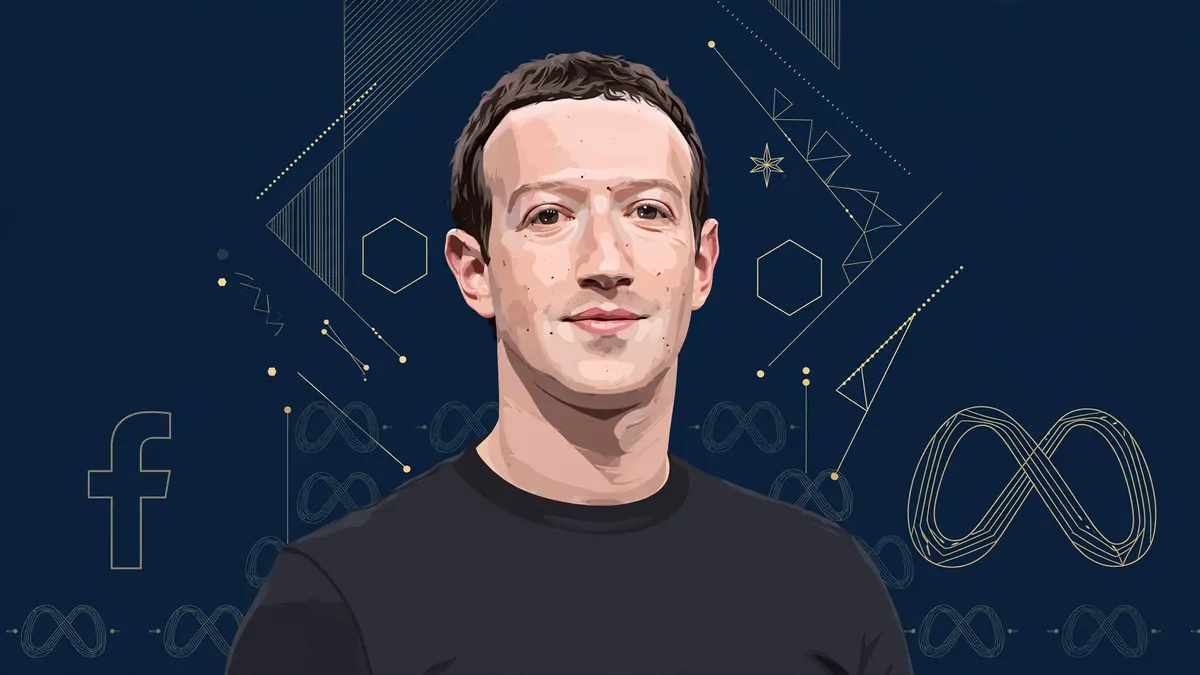
| Full Name | Mark Elliot Zuckerberg |
|---|---|
| Date of Birth | 14 May 1984 (age 42 in 2026) |
| Birthplace | White Plains, New York, USA |
| Estimated Net Worth | About $220 billion (Forbes real-time, 9 November 2026); 2026 range roughly $212–258 billion |
| Primary Income Source | Meta Platforms stock — about 13% ownership, about 60.8% of voting power |
| Key Ventures | Meta Platforms (Facebook, Instagram, WhatsApp, Messenger, Threads, Reality Labs); Chan Zuckerberg Initiative |
| Annual Base Salary | $1 as Meta CEO (plus security and other compensation reported in SEC filings) |
| Spouse | Dr. Priscilla Chan (married 2012); three daughters |
In This Article
- Early Life and Education
- From Harvard Dorm Room to Facebook
- Building Meta: Acquisitions and the Rebrand
- How Mark Zuckerberg Makes His Money
- The Net Worth Breakdown
- Net Worth Over Time
- How He Compares With His Peers
- Real Estate and Assets
- Cars and Lifestyle
- Philanthropy: The Chan Zuckerberg Initiative
- Personal Life and Family
- Controversies and Legal Battles
- What Comes Next for Zuckerberg and Meta
- Frequently Asked Questions
- The Bottom Line
- Sources and Reporting
Early Life and Education
Mark Elliot Zuckerberg was born on 14 May 1984 in White Plains, New York, and grew up in Dobbs Ferry, a village in Westchester County. His father, Edward Zuckerberg, ran a dental practice out of the family home; his mother, Karen, worked as a psychiatrist. He is the only son among four children, with sisters Randi, Donna and Arielle. The house had computers early, and his father taught him Atari BASIC programming when he was still a child. By 12 he had built ZuckNet, a small messaging program that let the computers in his father’s dental office talk to each other and to the family home — a rough sketch, in miniature, of the network he would later build for the world.
A private tutor, software developer David Newman, worked with him through his early teens, and by high school Zuckerberg was writing software well beyond classroom level. With his friend Adam D’Angelo he built Synapse, a music-recommendation program that learned a listener’s taste. The project drew acquisition interest from Microsoft and AOL while Zuckerberg was still a teenager, and he turned it down. That instinct — keep the thing, keep control of it — would define his whole career.
He attended Ardsley High School before transferring to Phillips Exeter Academy in New Hampshire, where he studied classics alongside computer science and captained the fencing team. He arrived at Harvard University in 2002, living in Kirkland House and studying psychology and computer science. Harvard gave him two things that mattered more than the degree he never finished: a network of collaborators, and a campus full of people who wanted a better way to find each other online. Readers who want the full life story can read Mark Zuckerberg’s full biography on CelebAmerica, which covers his school years and early projects in detail.
From Harvard Dorm Room to Facebook
In his sophomore year Zuckerberg built two campus programs that pointed straight at what came next. CourseMatch let Harvard students pick classes based on what their friends were taking. Facemash, built in 2003, let students rate each other’s photos — it drew traffic fast, got him hauled before Harvard’s disciplinary board, and showed him how hungry students were for a social directory. On 4 February 2004, from his Kirkland House dorm room, he launched “thefacebook.com” with roommates Eduardo Saverin, Andrew McCollum, Dustin Moskovitz and Chris Hughes. It was open only to Harvard students at first, then spread to other universities within weeks.
He left Harvard in his sophomore year and moved the operation to Palo Alto, California, in the summer of 2004, raising early money from PayPal co-founder Peter Thiel, who put in $500,000 for a little over 10 percent of the young company. The site dropped the “the” in 2005, becoming Facebook, and opened to everyone over 13 with an email address in September 2006. Growth from there was relentless: a million users by the end of 2004, 100 million by 2008, a billion by 2012. The full arc of that rise — including the early disputes with the Winklevoss twins over the ConnectU idea, which ended in a reported $65 million settlement in 2008 — is covered in Mark Zuckerberg’s biography on GuideNetWorth, our sister site.
At 23, in 2008, Forbes named Zuckerberg the youngest self-made billionaire in the world, with an estimated $1.5 billion. He has stayed on the billionaire lists ever since, and the gap between that first $1.5 billion and today’s $220 billion is almost entirely the story of one company’s share price.
Building Meta: Acquisitions and the Rebrand
Zuckerberg’s second great skill, after building the product, was buying the products that might have replaced it. In April 2012 Facebook paid about $1 billion in cash and stock for Instagram, a 13-person photo app with no revenue. Critics called it overpriced at the time. Instagram now counts around two billion monthly users and generates tens of billions of dollars in advertising a year, making the deal one of the best acquisitions in tech history. Two years later Facebook paid about $19 billion for WhatsApp, the messaging app, and about $2 billion for Oculus, the virtual-reality startup — the two deals that set up Meta’s two next bets, messaging and the metaverse.
Facebook went public on 18 May 2012, raising about $16 billion at $38 a share in what was then the largest tech IPO ever. The stock stumbled in its first year, falling below $18, and plenty of commentators wrote the company off. Zuckerberg did not sell. He bought back control of the story by shifting the whole company to mobile advertising, and the share price recovered and then climbed for a decade.
In October 2021 he renamed the parent company Meta Platforms, a public bet that the next computing platform would be virtual and augmented reality rather than the phone. The Family of Apps — Facebook, Instagram, WhatsApp, Messenger and Threads — kept their names under the Meta umbrella. The rebrand has cost a fortune: Reality Labs, the division building the metaverse hardware and software, has posted operating losses in the tens of billions of dollars since 2020, according to Meta’s own filings. In 2025 Zuckerberg changed tack again, pouring money into artificial intelligence instead, with Meta guiding 2026 capital spending of $115 billion to $135 billion, largely to build the data centres and chips behind its Superintelligence Labs effort, per the company’s January 2026 earnings release. A reported $14.3 billion investment in Scale AI in June 2025, which brought Scale’s founder Alexandr Wang into Meta to run the AI push, showed how far he was willing to go to catch up in the AI race.

How Mark Zuckerberg Makes His Money
Almost everything Zuckerberg owns is Meta stock. He does not draw a tycoon’s salary, he has no second business empire, and he has never sold the bulk of his stake. That concentration is the whole story of his wealth: one holding, one share price, one daily verdict from the market.
Meta’s 2026 proxy statement, filed with the SEC in April 2026, lists Zuckerberg as holding 639,347 Class A shares and 341,823,978 Class B shares as of 1 April 2026. The Class B shares carry ten votes each, giving him about 60.8 percent of Meta’s total voting power. A later filing, Meta’s definitive information statement of 2 November 2026, put his economic stake at about 13.4 percent and his voting control at about 60.6 percent. In plain terms, he owns roughly an eighth of the company and controls well over half its votes. No other big-company founder of his generation holds that much power over a company that size.
The money behind the shares is advertising. Meta reported revenue of $200.97 billion for 2025, up 22 percent on 2024, and net income of $60.46 billion, according to the company’s fourth-quarter and full-year 2025 results published on 28 January 2026. More than 3 billion people use Meta’s apps every month, and advertisers pay to reach them. When that advertising engine grows — as it did through 2025 — the share price rises and Zuckerberg’s paper fortune follows. When investors worry, about AI spending, about regulation or about a weak quarter, the fortune shrinks just as fast.
His cash pay is famously small. Zuckerberg has taken a $1 annual base salary for years. Meta’s filings show his total reported compensation at $25.1 million for 2025, per the company’s DEF 14C information statement — and nearly all of that is the cost of his personal security programme and related protection, not pay he takes home. Meta has told investors for years that his security costs run into the tens of millions annually because of his public profile. He has also sold Meta shares from time to time, mostly in pre-arranged plans tied to his giving and to taxes, but those sales are a rounding error next to the stake he still holds. The fortune is the stock, and the stock is the fortune.
The one-line version: Zuckerberg owns about 13% of Meta and controls about 60% of its votes. Meta earned $200.97 billion in revenue and $60.46 billion in profit in 2025, and the market’s verdict on those numbers is what moves his net worth up or down by billions in a single session.
The Net Worth Breakdown
Because Zuckerberg’s wealth is so concentrated, it can be broken down in a few lines rather than a long list of businesses. The table below uses the figures disclosed in Meta’s filings and the trackers that follow him, all dated so a reader can see how fresh each number is.
| Component | Detail (as of November 2026) |
|---|---|
| Meta shares | About 342 million shares in total (Class A + Class B), worth roughly $215–255 billion depending on the share price on the day — the overwhelming bulk of the fortune |
| Economic stake | About 13.4% of Meta, per Meta’s 2 November 2026 information statement |
| Voting power | About 60.6% of Meta’s votes, per the same filing, through super-voting Class B shares |
| Cash and other holdings | Small next to the stock: cash from past share sales, plus real estate (see below); no second public company stake of any size |
| Real estate | Portfolio reported at well over $500 million across Palo Alto, Hawaii, Lake Tahoe, Washington DC, Florida and Ireland |
| Philanthropy pledged | 99% of the couple’s Meta shares pledged to the Chan Zuckerberg Initiative over their lifetimes (2015 pledge) |
Two points about that breakdown matter more than the arithmetic. First, the estimate is not cash in a bank account. Zuckerberg could not sell his whole stake at once without moving the share price, and he has never tried. Second, the trackers disagree because they measure on different days with different methods: Forbes counts the shares and applies the market price on its own schedule; Bloomberg applies its own adjustments and its own valuation dates; Celebrity Net Worth uses a more conservative read. That is why this article gives a range with dates instead of pretending one exact number exists.
Net Worth Over Time
Zuckerberg’s fortune has never moved in a straight line. It has doubled, halved and doubled again as Meta’s story changed. The timeline below uses Forbes’ annual lists and dated real-time readings, so the swings are visible in one place — something most short net-worth pages never show.
| Year / Date | Forbes estimate |
|---|---|
| 2008 | $1.5 billion — youngest self-made billionaire at 23 |
| 2017 | $56 billion |
| 2021 | $134 billion (annual list); peaked far higher during the pandemic tech rally |
| 2022 | Fell sharply as Meta’s shares lost more than half their value in the post-pandemic sell-off |
| 2024 | $177 billion |
| 2025 | $216 billion (annual list); $251 billion real-time in October 2025 |
| Spring 2026 | $222 billion (Forbes World’s Billionaires annual list) |
| September 2026 | $258 billion (Forbes real-time, cited by Wikipedia) |
| 18 October 2026 | $243.3 billion (Forbes real-time) |
| 6 November 2026 | $212 billion (Forbes real-time) |
| 9 November 2026 | $220.3 billion (Forbes real-time), ranked fourth in the world |
The 2022 drop is the most instructive part of that table. Meta’s shares fell by roughly two-thirds from their 2021 peak as Apple changed its privacy rules, cutting into ad targeting, and as investors lost patience with the metaverse spending. Zuckerberg’s fortune fell by tens of billions in months. He answered with what Meta called its “year of efficiency” in 2023, cutting thousands of jobs and slowing hiring, and the shares recovered. The 2026 swing is the same pattern on a shorter fuse: about $258 billion in September, about $212 billion in early November, about $220 billion a few days later. A fortune built on one stock will always move like that. Anyone quoting a single exact figure for Zuckerberg without a date is quoting a number that was already out of date when it was published.
How He Compares With His Peers
On Forbes’ real-time list of 9 November 2026, Zuckerberg ranked fourth in the world at $220.3 billion, just ahead of Google co-founder Sergey Brin at about $220 billion and Dell founder Michael Dell at about $204 billion. Days earlier, on 6 November, he had sat fifth at about $212 billion after passing Dell on the list. The top of the ranking reshuffles constantly, because all five names at the top hold most of their wealth in a single company’s stock.
The comparison that says most about Zuckerberg is with the two other founders who built their fortunes the same way. Jeff Bezos’ net worth on CelebAmerica shows a similar arc — an Amazon stake that made him the world’s richest person for years — and the two men are now neighbours of a sort: Bezos bought on Indian Creek Island near Miami, and Zuckerberg bought a $170 million home on the same island in March 2026. Warren Buffett’s net worth on CelebAmerica is the contrast case: a fortune built over six decades of patient investing rather than one founding stake, and a man who has given away far more of his wealth in his lifetime than Zuckerberg has so far. Bill Gates’ biography on CelebAmerica covers the third model — a software founder who stepped back from his company and turned full-time to philanthropy, a path Zuckerberg and Chan have said they intend to follow in their own way through the Chan Zuckerberg Initiative. For readers who enjoy ranking the world’s richest founders side by side, our Net Worth section carries the full set of profiles.
Real Estate and Assets
Zuckerberg’s spending is famously restrained for a man worth $220 billion — he wears the same grey T-shirts, drives modest cars, and has said he does not collect the usual billionaire trophies. Real estate is the one place where that restraint disappears. His property portfolio is reported to be worth well over $500 million, spread across six locations, and it keeps growing.
The home base is Palo Alto, California, a short drive from Meta’s Menlo Park headquarters. He bought his first house in the Crescent Park neighbourhood in May 2011 for about $7 million, then quietly bought the neighbouring houses one by one — eleven properties in total, at a reported cost of more than $110 million, some bought for double or triple their market value. Five of the houses were joined into one large family compound with guesthouses, gardens, a pickleball court and a pool. Neighbours have complained for years about the construction and the security presence; Zuckerberg has kept buying anyway.
Hawaii is the biggest holding by land. Since 2014 he has bought land on Kauai’s North Shore, starting with about 750 acres for around $100 million and adding close to 600 more acres in 2021 for a reported $53 million. The compound, known as Koolau Ranch, now covers roughly 1,400 acres, with reports putting the total cost of land and construction near $270 million and the value near $300 million. In 2025 he added about 962 more acres of ranch land for a reported $65 million, taking the total past 2,300 acres. Wired reported that the ranch includes a 5,000-square-foot underground shelter with its own energy supply, and that workers on the site sign non-disclosure agreements. The secrecy around the project has made it one of the most talked-about billionaire properties in America.

The rest of the portfolio fills out the map. In the Lake Tahoe area he bought two neighbouring estates in 2018 and 2019 for a reported $59 million combined. In March 2025 he paid $23 million in cash for a 15,000-square-foot mansion in Washington DC’s Woodland Normanstone neighbourhood, close to the centre of American politics. In March 2026 he bought a home on Indian Creek Island near Miami for a reported $170 million — nine bedrooms, eleven bathrooms, on an island of just 41 lots where homes start at about $60 million. And in August 2026 he and Chan bought Strancally Castle, a 440-acre estate in County Waterford, Ireland, with a 196-year-old castle, for a reported €51.17 million (about $57.1 million). The Irish purchase, like the Florida one, was reported in the same weeks that California voters were preparing to vote on a proposed one-time wealth tax — a ballot measure that may explain why a California-based billionaire is suddenly buying homes in other states and other countries.
Cars and Lifestyle
For a man who could buy any car ever made, Zuckerberg’s garage is almost comically ordinary. Over the years he has been photographed in an Acura TSX, a Honda Fit and a Volkswagen Golf GTI — sensible, mid-priced cars, not supercars. He has said he does not care much about cars, and the record backs him up: there is no reported fleet of Ferraris, no yacht of note, and no private jet collection in the style of some of his peers. Meta does provide him with private air travel as part of his security programme, but that is the company’s spending, not his.
The daily routine is famously plain, too. He has said he wears the same grey T-shirt most days so he does not waste time choosing clothes. He works out regularly — he has posted about jiu-jitsu training and about completing the Murph workout challenge — and he has taken up surfing and hydrofoiling near his Hawaii home. The one big personal purchase that is visible is not a thing at all: it is the time and money poured into his family’s homes and into the Chan Zuckerberg Initiative. The man who runs the world’s biggest social network lives, by billionaire standards, like a man who never noticed he got rich.
Philanthropy: The Chan Zuckerberg Initiative
In December 2015, after the birth of their first daughter, Zuckerberg and Chan announced they would give 99 percent of their Meta shares — then worth about $45 billion — to charitable causes over the course of their lives. The vehicle is the Chan Zuckerberg Initiative (CZI), a limited liability company rather than a traditional foundation, which lets it fund non-profits, invest in for-profit companies and lobby for policy change. CZI’s stated focus is science, education and housing, with a headline goal of helping cure, prevent or manage all disease by the end of the century. Its science arm funds the Chan Zuckerberg Biohub network and open tools for researchers; its education work backs personalised learning and teacher training; its housing work concentrates on the Bay Area, where Meta’s growth helped push up prices.
The 99 percent figure deserves a careful reading, and this is where many net-worth pages go wrong. It is a pledge over their lifetimes, not a donation already made. The shares are still theirs, still counted in his net worth by Forbes and Bloomberg, and still voted by him. CZI has committed billions since 2015, but the bulk of the fortune remains in Meta stock. That is not a criticism — it is how the pledge was designed — but readers should know the difference between money promised and money given. The couple have also given directly outside CZI, including $100 million to Newark’s public schools in 2010 and $300 million-plus to election administration during the 2020 pandemic election cycle, a gift that drew heavy political argument and later pledges from Zuckerberg to stop giving to election infrastructure.
Personal Life and Family
Zuckerberg met Priscilla Chan at Harvard in 2003, at a fraternity party while he was waiting to hear whether he would be disciplined over Facemash. They married on 19 May 2012, the day after Facebook’s IPO, in a small ceremony in the backyard of their Palo Alto home — guests had been told they were coming to celebrate Chan’s graduation from medical school. Chan is a paediatrician by training and the co-founder and co-CEO of the Chan Zuckerberg Initiative.
The couple have three daughters: Maxima, born in December 2015; August, born in August 2017; and Aurelia, born in March 2023. They keep their children out of the public eye and have said little about their family life beyond Chan’s own writing about motherhood and Zuckerberg’s occasional posts. Zuckerberg is reported to be about 5 ft 7 in tall, and he is known to be red-green colourblind — a fact he has mentioned himself, and one reason Facebook’s original colour scheme was blue, a colour he sees clearly. He reads widely, has set himself public yearly challenges in the past — from learning Mandarin to reading a book every fortnight — and has said he wants his daughters to grow up with the same ordinary routines he had, money or not.
Controversies and Legal Battles
No honest profile of Zuckerberg can skip the controversies, because they are part of why Meta is valued the way it is. The first came in 2004, when the Winklevoss twins and Divya Narendra accused him of stealing their ConnectU idea; the case settled in 2008 for a reported $65 million in cash and stock, and the twins later tried, and failed, to reopen it. The second wave came with privacy: the 2018 Cambridge Analytica scandal, in which data on tens of millions of Facebook users was harvested by a political consultancy, led to Zuckerberg testifying before the US Congress twice in a week, a $5 billion fine from the Federal Trade Commission in 2019, and years of regulatory pressure in the US and Europe.
The company has also faced antitrust action. The US Federal Trade Commission sued in 2020 to unwind the Instagram and WhatsApp acquisitions, arguing they were bought to kill competition — a case that was still working through the courts in 2026. In October 2026 Meta disclosed a new corporate structure, including a Class C share arrangement and an eight-year California residency commitment for Zuckerberg, tied to Proposition 40, a proposed California ballot measure that would impose a one-time tax of about 5 percent on the assets of people worth more than $1 billion, retroactive to 1 January 2026. The filing put Zuckerberg at the centre of a national argument about taxing billionaires, and it helps explain the timing of his recent property purchases in Florida and Ireland.
Zuckerberg has also been criticised for Meta’s role in spreading misinformation, for the mental-health effects of Instagram on teenagers, and for his personal security spending. He has answered most of it the same way: in public hearings, in long posts on his own profile, and by pointing to the money Meta spends on safety systems and fact-checking. Whether that answer satisfies his critics is a separate question, and this profile does not take a side. What matters for his net worth is that none of these fights has so far broken the advertising business that pays for everything else.
What Comes Next for Zuckerberg and Meta
The next two years will decide whether Zuckerberg’s fortune keeps climbing or stalls. Meta has told investors it will spend $115 billion to $135 billion on capital projects in 2026, mostly data centres and chips for artificial intelligence, and the company is hiring AI researchers at pay levels that have startled even Silicon Valley. If the AI bet pays off — if Meta’s models and its AI glasses and its agents become the next platform — the share price, and Zuckerberg’s fortune with it, has room to run. If the spending does not produce revenue, investors will ask the same question they asked about the metaverse, and the fortune will swing down again just as fast.
There is also the question of succession and control. Zuckerberg is 42, healthy, and in full control of his company through his super-voting shares. He has shown no sign of stepping back. The 99 percent pledge means that over decades, most of this fortune is earmarked for giving, but the timing is his and Chan’s to choose. For now, the honest summary is the one Forbes’ tracker gives every morning: a fortune of roughly $220 billion, moving a few billion in either direction with each trading day, built on a company that reaches more than 3 billion people a month and sells their attention to advertisers.
Frequently Asked Questions
What is Mark Zuckerberg’s net worth in 2026?
Forbes’ real-time billionaires tracker put Mark Zuckerberg’s net worth at $220.3 billion on 9 November 2026, ranking him fourth in the world. The honest range for 2026 is roughly $212 billion to $258 billion: Forbes recorded $258 billion in September 2026, $243.3 billion on 18 October 2026 and about $212 billion on 6 November 2026. Forbes’ annual World’s Billionaires list put him at $222 billion in 2026, while Bloomberg’s index landed near $227 billion on 10 November 2026 and Celebrity Net Worth carried a lower reading near $215 billion.
How did Mark Zuckerberg make his money?
He made it by founding Facebook in his Harvard dorm room in February 2004 and keeping a large stake in the company as it grew into Meta Platforms. Facebook went public in May 2012, raising about $16 billion, and Zuckerberg’s roughly 13 percent stake grew with the share price. His fortune also reflects three big acquisitions he pushed through: Instagram for about $1 billion in 2012, WhatsApp for about $19 billion in 2014 and Oculus for about $2 billion in 2014.
How much of Meta does Mark Zuckerberg own?
Meta’s 2026 proxy statement lists Zuckerberg as holding 639,347 Class A shares and 341,823,978 Class B shares as of 1 April 2026, worth about 13 percent of the company economically and about 60.8 percent of its voting power. A later Meta filing, the definitive information statement of 2 November 2026, put his economic stake at about 13.4 percent and his voting control at about 60.6 percent, because his Class B shares carry ten votes each.
What is Mark Zuckerberg’s salary as Meta CEO?
Zuckerberg takes a $1 annual base salary as Meta’s CEO, a practice he has followed for years. Meta’s filings reported his total compensation at $25.1 million for 2025, and nearly all of that was the cost of his personal security programme and related protection rather than pay he takes home. His wealth comes from his Meta shares, not from his salary.
How old is Mark Zuckerberg?
Mark Zuckerberg was born on 14 May 1984 in White Plains, New York, so he is 42 years old in 2026. He was 19 when he launched Facebook from his Harvard dorm room in February 2004, and 23 when Forbes named him the youngest self-made billionaire in the world in 2008, with an estimated $1.5 billion.
How tall is Mark Zuckerberg?
Mark Zuckerberg is reported to be about 5 ft 7 in tall (around 171 cm). His height is a popular search question, but it has nothing to do with his fortune — the number that matters for his net worth is Meta’s share price, not his height.
Is Mark Zuckerberg the richest person in the world?
No. On Forbes’ real-time list of 9 November 2026 he ranked fourth in the world at $220.3 billion, behind Elon Musk and the other founders at the very top of the ranking. He has never held the number one spot on Forbes’ annual list, though he reached second in October 2024. His ranking moves often, because his fortune is tied to Meta’s share price and the other names at the top hold their wealth in single-company stock too.
How much has Mark Zuckerberg given away?
In December 2015 Zuckerberg and his wife Priscilla Chan pledged to give 99 percent of their Meta shares — then worth about $45 billion — to charitable causes over their lifetimes through the Chan Zuckerberg Initiative. That is a lifetime pledge, not a completed donation: the shares are still theirs and still count in his net worth. The initiative has committed billions since 2015 to science, education and housing, and the couple have also given directly, including $100 million to Newark public schools in 2010.
The Bottom Line
Mark Zuckerberg is worth about $220 billion in November 2026 — Forbes’ real-time figure was $220.3 billion on 9 November — and the range across 2026 runs from roughly $212 billion to $258 billion. It is one of the simplest fortunes in the world to explain and one of the hardest to pin down: about 13 percent of Meta, about 60 percent of its votes, and a share price that moves billions in a day. Meta earned $200.97 billion in revenue and $60.46 billion in profit in 2025, and as long as that engine keeps running, Zuckerberg stays among the five richest people alive. The open question is not how much he is worth today. It is whether the $115 billion-plus he is now spending on artificial intelligence turns Meta into the next platform — or becomes the second expensive bet, after the metaverse, that investors make him pay for.
Sources and Reporting
How we estimated: this article anchors on Forbes’ real-time billionaires tracker and Forbes’ 2026 World’s Billionaires list, with Bloomberg’s Billionaires Index and Celebrity Net Worth as cross-checks. Where the trackers disagree, we publish the dated range and name the source behind each figure. Share counts and voting power come from Meta’s own SEC filings — the 2026 proxy statement (filed April 2026) and the definitive information statement of 2 November 2026. Meta’s revenue and profit figures come from the company’s fourth-quarter and full-year 2025 results (28 January 2026). Estimates are outside valuations of a public stock holding and move with the market; they are not a statement of cash held or of Zuckerberg’s private finances. Real-estate figures are reported purchase prices and reported valuations, not appraisals.
Sources consulted: Forbes, Bloomberg, Celebrity Net Worth, U.S. Securities and Exchange Commission, Meta Investor Relations, Wikipedia, The Motley Fool, Inc., The Wall Street Journal, The New York Times, Wired, Chan Zuckerberg Initiative.