Lex Fridman’s net worth is estimated at $8 million to $12 million as of November 2026, with about $10 million the fairest single figure to carry. That is the midpoint of the full-profile estimates — the ones that count his podcast sponsorships, YouTube advertising, Patreon support, speaking work, and MIT pay together. The lowest figure you will see online, about $2.1 million from Net Worth Spot (updated October 1, 2026), counts YouTube advertising only, and the site itself says the real figure is likely higher once other income is included. At the other end, Zyntharo puts him at $10 million to $20 million. Nobody has access to his bank accounts, his MIT salary is not public, and he has never confirmed a number himself — so any page that prints one exact figure as fact is guessing. This page shows where every number comes from, then walks through how a research scientist who started a podcast as a side project built one of the most valuable interview shows on the internet.
Lex Fridman is an American computer scientist and podcast host, born August 15, 1983, and 43 years old in November 2026. He works as a research scientist at the MIT Laboratory for Information and Decision Systems, and since 2018 he has hosted the Lex Fridman Podcast, a long-form interview show that began under the name Artificial Intelligence Podcast and now runs past 500 episodes with more than 5 million YouTube subscribers. His guests have ranged from AI researchers and physicists to three heads of government in a single year. He did not get rich the way most podcasters do — no exclusive platform deal, no merchandise empire, no book tour. He got there slowly, by turning a reputation for asking patient, serious questions into an audience that advertisers and supporters pay to reach.
By Celebamerica Editorial Staff | Last updated: November 14, 2026
Quick Facts: Lex Fridman
| Full Name | Alexei Alexandrovich Fridman (known as Lex Fridman) |
|---|---|
| Date of Birth | August 15, 1983 (age 43 in November 2026) |
| Birthplace | Chkalovsk, Tajik Soviet Socialist Republic (now Tajikistan); grew up in Moscow |
| Estimated Net Worth | $8 million – $12 million as of 2026; anchor figure about $10 million (see the breakdown below) |
| Primary Income Sources | Lex Fridman Podcast sponsorships and YouTube advertising, Patreon and direct supporter contributions, speaking engagements, MIT research salary |
| Key Works | The Lex Fridman Podcast (2018–present, 500+ episodes); MIT research on human-centered AI and self-driving cars |
| Education | BS and MS in computer science, Drexel University (2010); PhD in electrical and computer engineering, Drexel University (2014) |
| Height | 5 feet 9 inches (175 cm) |
| Current Home | Texas (as of February 2024, per the Boston Globe); still employed by MIT |
Table of Contents
- From Chkalovsk to Chicago: Early Life and Education
- The MIT Years: Research, Robots, and Self-Driving Cars
- How the Podcast Started: An MIT Course Turned Global Stage
- Lex Fridman Net Worth in 2026: The Honest Range
- Where the Money Comes From: Income Streams in Detail
- Net Worth Growth: Year by Year
- How He Compares: Lex Fridman vs Other Podcasters
- Assets, Lifestyle, and Spending
- Personal Life: Family, Fitness, and Life in Texas
- The 1986 Mix-Up: Why Some Sites Get His Age Wrong
- Criticism and Controversies: The Other Side of the Conversation
- Frequently Asked Questions
- The Bottom Line
- Sources and How We Estimated
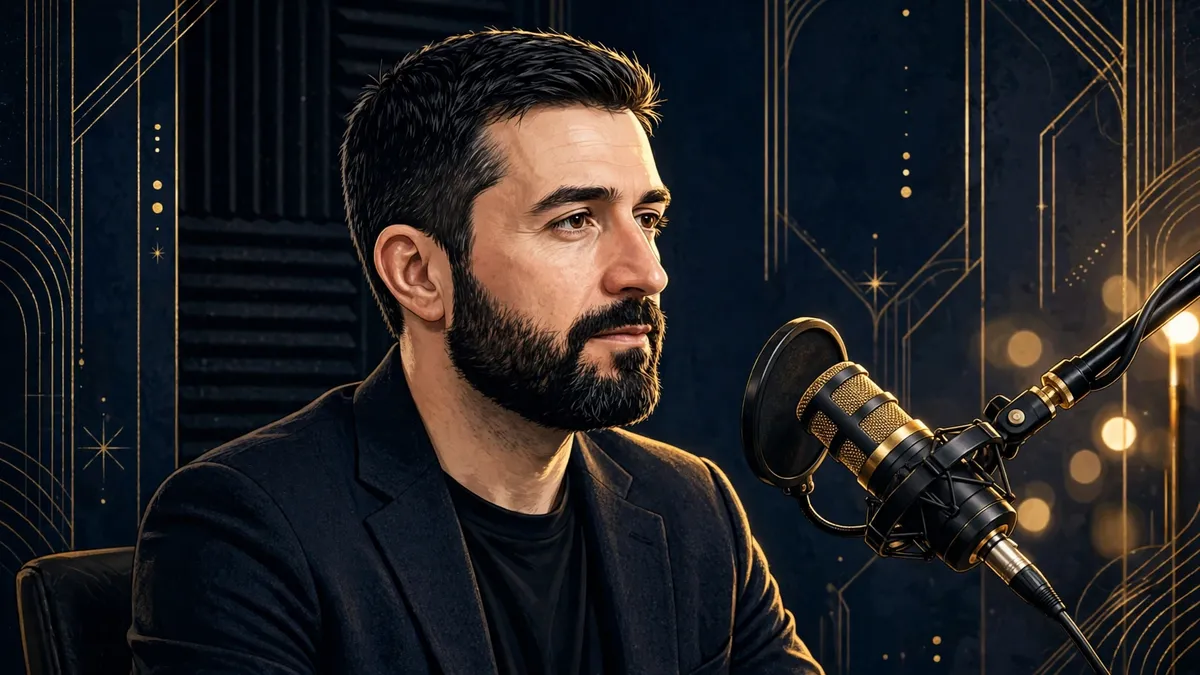
From Chkalovsk to Chicago: Early Life and Education
Lex Fridman was born Alexei Alexandrovich Fridman on August 15, 1983, in Chkalovsk, a town in what was then the Tajik Soviet Socialist Republic. He grew up in Moscow, in a Jewish family shaped by science: his father, Alexander Fridman, is a plasma physicist and professor at Drexel University. The household ran on physics, mathematics, and argument — the kind of dinner table where a question was answered with a better question. That habit never left him. Anyone who has watched one of his four-hour interviews will recognise it: the patient follow-up, the refusal to rush past a half-formed answer.
When Lex was 11, the family moved to the United States and settled in the Chicago area, in Naperville, Illinois. He arrived speaking little English. He attended Neuqua Valley High School, and the adjustment was real — a Soviet-born kid in an American suburb, catching up on a language while keeping up in maths and science. He has spoken about the move as the defining break of his life: everything after it, from the PhD to the podcast, was built on the other side of that crossing.
He went to Drexel University in Philadelphia, where he earned both a BS and an MS in computer science in 2010, then a PhD in electrical and computer engineering in 2014. His doctoral dissertation, “Learning of Identity from Behavioral Biometrics for Active Authentication,” was about recognising people from how they behave — how they type, how they move a mouse, the small patterns that give a person away. It was not a famous thesis. It was the kind of work that matters to specialists and to almost nobody else. But the subject — identity, behaviour, what makes a person who they are — reads now like a preview of the interviewer he became. His age today, 43, and the full timeline of his life are covered in detail on this site.
After Drexel, he spent a short spell at Google, working on machine learning. Google was the obvious path: good pay, strong teams, a name that opens doors. He left it. In 2015 he moved to MIT’s AgeLab as a research scientist, working on the psychology of driving and big-data analytics to understand driver behaviour — how people actually behave behind the wheel, not how they say they behave. That question, human behaviour inside a machine system, became the thread of his research career. It also became, indirectly, the thread of his fortune. MIT gave him the credibility that would later make presidents and Nobel laureates sit down with him; the podcast gave him the audience that turned that credibility into money.
The MIT Years: Research, Robots, and Self-Driving Cars
Fridman’s MIT work sits in a field called human-centered artificial intelligence: AI built around how people actually think, move, and make mistakes. At AgeLab he studied drivers, using sensors and data to map attention, fatigue, and distraction. The practical goal was safer cars. The deeper question was always the same one his PhD had asked — how do you read a human being from the traces they leave behind?
His breakthrough moment as a researcher came in 2019, and it arrived by accident. He published a preprint of an MIT study on Tesla’s Autopilot system, finding that drivers using the semi-autonomous system stayed focused on the road. Elon Musk praised the study publicly. Overnight, a little-known research scientist had the attention of the most followed person in technology — and of everyone who follows that person. Fridman has said since that the Musk episode changed his life more than any paper he published. Within a year, Musk sat down for an interview on Fridman’s podcast, and the view counts jumped from respectable to enormous.
In 2019, the same year, Fridman moved to an unpaid role at MIT AgeLab. Since 2022 he has worked as a research scientist at the MIT Laboratory for Information and Decision Systems (LIDS), one of the institute’s leading research groups. He also worked until December 2025 for the Center for Complex Engineering Systems, a collaboration between MIT and King Abdulaziz City for Science and Technology. As of February 2024, the Boston Globe reported that he lives in Texas but remains employed by MIT and is on campus regularly. That arrangement — a Texas address, a Boston affiliation — suits him. It keeps the MIT name on his work without chaining him to a laboratory schedule, and it leaves his weeks free for the thing that now pays most of his bills: the podcast.
What does MIT pay a research scientist? The number is not public, and this site will not invent one. Academic research salaries at that level generally sit in the low six figures, and profile sites that try to put a number on it — Strokecast, for example, suggests $80,000 to $150,000 a year — are estimating, not reporting. What matters for the net worth picture is proportion: MIT pay is a small slice of his income now, and it may be the least important slice financially. What MIT gives him is not a salary. It is a door that opens to guests nobody else can reach, and a reputation that makes sponsors trust the show.

How the Podcast Started: An MIT Course Turned Global Stage
Fridman started his podcast in 2018. It was originally called the Artificial Intelligence Podcast, and it began as an extension of an MIT course — conversations with researchers about the field, recorded in a straightforward, unpolished style. The early episodes were long, technical, and aimed at people who already cared about machine learning. There was no plan to interview presidents. There was barely a plan to interview anyone outside AI.
In 2020 he renamed it the Lex Fridman Podcast, as the guest list widened beyond AI into physics, neuroscience, philosophy, history, music, sport, and politics. The format never changed: one guest, one long conversation, usually two to four hours, sometimes five or six. No co-host, no panel, no shouting. The show’s growth was slow at first and then sudden. By February 2024, the Boston Globe reported 3.6 million YouTube subscribers. Wikipedia’s channel figures, last updated in December 2025, list 4.88 million subscribers and 855 million total views. By October 31, 2026, the channel stood at about 5.07 million subscribers, and a podcast database tracking the show counted 504 published episodes by November 2026.
The guest list is the asset. It runs from the expected — AI researchers, physicists, neuroscientists — to the unexpected: Donald Trump in September 2024, Volodymyr Zelenskyy in January 2025, and Narendra Modi in March 2025, three sitting or former heads of government interviewed within twelve months. Elon Musk, Joe Rogan, Mark Zuckerberg, Jeff Bezos, and the physicist Max Tegmark have all sat across from him. Andrew Huberman, the Stanford neuroscientist whose own podcast is one of the biggest in science, has appeared five times; Huberman’s own story is told in our Andrew Huberman biography. For a fuller account of how the researcher became the interviewer, our sister site’s Lex Fridman biography traces the same journey from MIT to podcast fame in more detail.
Why does the guest list matter for money? Because in podcasting, access is the product. Advertisers pay to reach an audience, and Fridman’s audience is unusually valuable: educated, patient, and willing to sit through hours of conversation. A listener who finishes a four-hour episode on consciousness is a listener a sponsor will pay a premium to reach. That is the economic engine under everything else in this article — and it is why his net worth kept climbing even though he monetises far less aggressively than podcasters with similar audiences.
Lex Fridman Net Worth in 2026: The Honest Range
Search for Lex Fridman’s net worth and the spread is almost comical: the lowest figure is about $2.1 million and the highest is $20 million, a tenfold gap. That gap is not a mystery once you look at what each source actually counts. The table below lays out every major published estimate, what it includes, and how much weight it deserves.
| Source | Estimate | What It Counts |
|---|---|---|
| Net Worth Spot (updated October 1, 2026) | About $2.1 million, up to $3 million | YouTube advertising revenue only; the site says the real figure is likely higher once other income is counted |
| Finty | About $4 million | Blended estimate; methodology not fully published |
| Net Worth Breakdown | $4 million | Podcast sponsorships $2M, YouTube ads $1M, Patreon $600K, speaking $300K, research and consulting $100K (the site’s own model) |
| WorthCollector (2025) | About $8 million | Academic career plus podcasting; roughly $2 million a year from podcasting and YouTube |
| Starinfozone (2026) | $8 million – $12 million | Upper-range full-profile estimate for 2026 |
| GuestCollab (2026) | $10 million – $12 million | Upper-range estimate; note this is the same page that prints the wrong 1986 birth year, so treat its figures with care |
| Zyntharo (2026) | $10 million – $20 million | Highest published range; includes speculative upside from sponsorships and a possible future platform deal |
Three groups emerge. The first is the YouTube-only model: Net Worth Spot’s $2.1 million, built from channel views and a per-thousand-views advertising rate, with an upside to $3 million. That model is honest about its limits — it counts one revenue stream and says so. It is useful as a floor, not as a net worth. The second group is the mid-range blended estimates, $4 million from Finty and Net Worth Breakdown, which try to count everything but use conservative assumptions on sponsorships and speaking. The third group is the full-profile estimates, $8 million to $12 million from Starinfozone and GuestCollab, with Zyntharo stretching to $20 million at the top end.
Our anchored range: $8 million to $12 million, with about $10 million as the single figure to carry. The full-profile cluster is the best guide because Fridman’s income plainly extends well beyond YouTube ads — he has run sponsors for years, takes Patreon support, and speaks publicly — and the cluster’s midpoint, $10 million, is where its two most careful estimates agree. The $2.1 million YouTube-only figure is real but incomplete, and the $20 million top end assumes a platform deal or book income that does not exist on the public record. Treat $10 million as a reasoned estimate, not a bank balance.
One more check on the anchor: our sister site’s biography, updated October 31, 2026, reached the same $8–12 million cluster and the same $10 million midpoint from the same sources, and our own age profile, updated November 13, 2026, put the range at $3 million to $12 million with $8 million the most-cited figure. The overlap is reassuring — three separate passes over the same sources, all landing in the same band. The difference between $8 million and $10 million as an anchor is a matter of which source you weight most; the difference between $2.1 million and $10 million is a matter of counting one income stream or all of them.
It is also worth saying plainly what Fridman has not done. He has not signed an exclusive platform deal of the kind Joe Rogan signed with Spotify. He has not published a book. He has not launched a merchandise line or a supplement brand. Zyntharo argues that a platform deal at his guest tier could be worth $50 million to $100 million and says he has reportedly received offers and turned them down to protect his independence. That is plausible — his whole brand is independence — but it is reported, not confirmed, and it is not income. What he has is a large, loyal audience and a deliberately light touch on monetisation. That combination produces a fortune in the low eight figures, not the nine figures a harder-selling host with the same audience might have built.
Where the Money Comes From: Income Streams in Detail
Fridman’s income has five streams, and they are not equal. Podcast sponsorships and YouTube advertising do most of the work. Patreon and direct support add a steady layer. Speaking engagements pay well when they happen. MIT pay is the smallest slice and the most stable. Below is what is known about each — and, where the numbers come from a model rather than a disclosure, that is stated.
YouTube advertising
The Lex Fridman channel is the show’s main stage, and YouTube advertising is its most measurable income. Net Worth Spot estimates he earns about $529,100 a year from YouTube ads alone, based on view counts and standard advertising rates. That figure is a model, not a pay stub: actual advertising rates vary by season, by audience geography, and by how many viewers skip the ads. But the direction is clear. With 855 million total views on the channel (Wikipedia, December 2025) and new episodes routinely passing a million views, the advertising line is worth hundreds of thousands of dollars a year, every year, with almost no extra effort once an episode is published. Old episodes keep earning too — a 2019 conversation with Elon Musk still draws viewers in 2026, and every view carries an ad.
Zyntharo’s model puts YouTube ad revenue higher, at $3 million to $6 million a year, which looks generous against Net Worth Spot’s $529,100. The truth is probably between them: long-form content earns more per view than short clips, and Fridman’s audience skews toward the high-income viewers advertisers pay most to reach. Even so, Zyntharo’s top end should be treated as an optimistic reading, not a fact. What is certain is that YouTube ads are his most reliable income — the one stream that pays whether or not he records a new episode that week.
Podcast sponsorships
Sponsorships are the biggest stream and the least transparent. Fridman reads sponsor messages himself, in his own voice, usually at the start of an episode — the format advertisers value most, because listeners trust a host-read message more than a pre-recorded ad. He keeps the sponsor list short. That is a choice, and it costs him money: a host with 5 million subscribers could carry far more sponsors than he does. It also protects the show. A listener who trusts the host listens to the ad; a listener who feels sold to skips it.
How much is a sponsorship worth? Net Worth Breakdown’s model assigns $2 million to podcast sponsorships and ads, while Zyntharo puts sponsorships at $2 million to $5 million a year. Neither number is disclosed by Fridman or his sponsors, so both are estimates built from industry rates: a show of this size can charge tens of thousands of dollars per sponsored episode, and with roughly 50 episodes a year, the arithmetic reaches seven figures quickly. The honest statement is that sponsorships are his largest income stream, worth low-to-mid seven figures a year, and that the exact figure is private.
Patreon and direct support
Fridman runs a Patreon where supporters pay monthly for early access and extras. It is a smaller stream than sponsorships or YouTube ads, but it matters for two reasons. First, it is direct: no platform takes a large cut, and no advertiser sets the terms. Second, it is a measure of loyalty — people who pay monthly for a free podcast are the core of the audience, and that core is what sponsors are buying access to. Net Worth Breakdown’s model puts Patreon and memberships at $600,000, and Zyntharo puts Patreon and direct support at $500,000 to $2 million a year. Both are models. The public record confirms the Patreon exists and is active; it does not confirm how many supporters it has.
Speaking engagements
A researcher who has interviewed three heads of government gets invited to speak. Fridman appears at conferences, universities, and corporate events, and speaking fees for a name of his profile typically run into five figures per appearance. Net Worth Breakdown’s model assigns $300,000 to speaking. That is plausible as an order of magnitude and unprovable as a precise figure — he does not publish a fee schedule, and event organisers do not disclose what they pay. Speaking is likely his most variable stream: a busy year of appearances pays well, a quiet year pays little, and the podcast schedule leaves limited room for travel.
MIT salary and research work
His MIT role pays a research scientist’s salary. The exact figure is not public, and estimates such as Strokecast’s $80,000 to $150,000 a year are guesses based on academic pay scales. Whatever the number, it is the smallest of his five streams — and the one that has nothing to do with how rich he is. Its value to his fortune is indirect: the MIT affiliation is what gets a Nobel laureate or a prime minister to say yes to an interview, and those interviews are what the audience, the sponsors, and the supporters are paying for. In that sense, the MIT job is not a salary. It is the engine of the whole business.

Net Worth Growth: Year by Year
Fridman did not become a millionaire overnight. He became one the slow way, episode by episode, and the timeline below shows how the money followed the audience. These are estimates built from the sources named in the range table — no year here is a disclosed fact, and the early years are the least certain. What is certain is the shape: flat for years, then a steep climb after 2019, then steady growth as the show passed 500 episodes.
| Year | Estimated Net Worth | What Changed |
|---|---|---|
| 2018 | Under $500,000 | Podcast launches as the Artificial Intelligence Podcast; income is mostly MIT pay; the show is a side project with a small audience |
| 2019 | About $500,000 – $1 million | Musk praises his Tesla Autopilot study; the Musk interview sends view counts sharply upward; sponsorships begin in earnest |
| 2020 | About $1 million – $2 million | Show renamed the Lex Fridman Podcast; guest list widens beyond AI; YouTube advertising grows with the subscriber base |
| 2021 | About $2 million – $3 million | Patreon support grows; sponsorship rates rise as the audience passes 2 million subscribers |
| 2022 | About $3 million – $5 million | Moves to a research scientist role at MIT LIDS; the show becomes his main income, ahead of academic pay |
| 2023 | About $4 million – $6 million | Subscriber base passes 3 million; long-form interviews with tech founders and scientists become appointment viewing |
| 2024 | About $6 million – $9 million | 3.6 million subscribers by February (Boston Globe); the Trump interview in September 2024 brings a new audience |
| 2025 | About $8 million – $11 million | Interviews with Zelenskyy and Modi; channel passes 5 million subscribers; WorthCollector puts him at about $8 million |
| 2026 | $8 million – $12 million | 504 episodes by November; full-profile estimates cluster at $8–12 million; anchor about $10 million |
The pattern is worth pausing on. Most celebrity fortunes in this niche come from a single spike — a contract, a sale, a viral moment. Fridman’s came from compounding: each episode added a few thousand subscribers, each thousand subscribers raised the sponsorship rate a little, and the back catalogue kept earning while he recorded the next one. He was 35 when he started the show and 40 when it passed 3 million subscribers. That is late by internet standards and fast by academic ones. It is also the reason his fortune is durable: it rests on an audience that returns week after week, not on a single deal that could expire.
How He Compares: Lex Fridman vs Other Podcasters
Fridman is not the richest podcaster, and he would probably be the first to say that is not the point. But the comparison shows what his choices cost him — and what they bought him. The table below uses reported third-party estimates; like his own figure, none of these are disclosed bank balances.
| Host | Reported Net Worth (2026) | Audience Model | What Sets Them Apart |
|---|---|---|---|
| Joe Rogan | About $200 million (reported) | Spotify exclusive deal, reported at $250 million in 2024 | Scale and a platform deal Fridman has not taken; Rogan’s show is the commercial ceiling for the format. See our Joe Rogan age profile for his timeline. |
| Lex Fridman | $8 million – $12 million | Independent; YouTube, sponsors, Patreon | The most intellectually ambitious guest list in podcasting, with no exclusive deal |
| Andrew Huberman | About $5 million – $10 million (reported) | Independent; sponsors, YouTube, premium content | A fellow science communicator and five-time Fridman guest; see our Andrew Huberman net worth profile for the full breakdown |
| MrBeast | About $85 million (reported; Forbes 2024), with his company valued far higher | YouTube scale, Feastables, Beast Industries | The opposite model: maximum monetisation, maximum scale; see our MrBeast biography |
The gap between Rogan and Fridman is the gap between a platform deal and independence. Rogan’s Spotify contract, reported at $250 million when renewed in 2024, is worth more than twenty times Fridman’s entire estimated fortune. Huberman is the closest comparison: a scientist who built a podcast on long, serious conversations, monetised through sponsors and YouTube, with a fortune in the same single-digit millions. MrBeast shows the other extreme — a creator who turned YouTube into a consumer-goods empire. Fridman sits between Huberman and Rogan: richer than the pure science communicator, far poorer than the platform-deal star, and — by every account, including his own public statements about turning down offers — content with that position.
There is a second comparison that matters more than money: influence per dollar. No other podcaster in his wealth bracket has interviewed three heads of government in twelve months, or hosted the conversations on AI safety, consciousness, and nuclear risk that fill his back catalogue. Zyntharo’s point, that a $50 million to $100 million platform deal would not be implausible at his guest tier, is really a point about leverage: he could be much richer tomorrow if he wanted to be. He has chosen not to be, and that choice is part of why the guests keep saying yes.
Assets, Lifestyle, and Spending
There is no public record of Lex Fridman buying a mansion, a supercar, or a private jet, and that absence is itself information. He is not a collector of visible wealth. He lives in Texas, where the Boston Globe placed him in February 2024, and no property purchase of his has been reported in the press or in public records that profile sites have cited. That does not mean he owns nothing — it means nothing he owns has been made public, and this site will not fill the gap with invention. A man worth $8 million to $12 million who has not been photographed beside a Lamborghini is a man who spends quietly, or saves.
What is known about his spending is small and consistent with the public image. He trains in Brazilian jiu-jitsu — he holds a black belt — and martial arts training is a recurring part of his life and his podcast conversations. He has talked about the discipline of training, the humility of being submitted by a better grappler, and the way the mat strips away status. It is the kind of spending that shows up as gym fees and travel to seminars, not as a line item a wealth profile can total. He dresses simply on camera — a dark shirt, often a blazer — and the studio behind him is functional rather than lavish. The money, as far as anyone outside his accounts can tell, goes into the show: better equipment, better production, time to prepare for guests who expect a host who has read their work.
His most valuable asset is not a thing at all. It is the show itself: a library of more than 500 long-form interviews, an audience of over 5 million subscribers, and a reputation that brings world leaders to a microphone in a Texas studio. That library earns every day — old episodes keep drawing views, and every view carries an ad — and it grows more valuable as the guest list lengthens. If he ever did sell the show or sign an exclusive deal, the price would reflect that library, not his bank balance. Until then, his wealth is best understood as a working asset: a business he owns outright, with no partners, no investors, and no platform taking a cut.
Personal Life: Family, Fitness, and Life in Texas
Fridman keeps his private life private, and this profile respects that boundary — what follows is only what is on the public record. His father, Alexander Fridman, is a plasma physicist and professor at Drexel University, the school where Lex earned all three of his degrees. His mother has stayed out of the public eye. He has spoken warmly about his father’s influence: a home where science was a daily language and where a question was worth more than an answer. He has not spoken publicly about a wife or children, and no reliable source reports him as married. Profile sites that claim otherwise are guessing, and this page will not repeat their guesses.
He is 5 feet 9 inches tall (175 cm), a figure confirmed by multiple profile sources and covered in detail in our Lex Fridman height profile. He is a black belt in Brazilian jiu-jitsu and trains regularly, often discussing the sport with guests who share the interest. He has described training as one of the few places where his mind goes quiet — a useful counterweight to a job that consists of thinking in public for four hours at a time. He moved to Texas by early 2024, and the move fits the pattern of his career: away from the coasts, toward space and quiet, with the MIT affiliation kept as a professional anchor rather than a daily address.
His public persona is the same on camera and off it, by most accounts: soft-spoken, curious, unfailingly polite, and willing to sit with an idea longer than most interviewers would. He asks guests about love, death, and meaning as readily as he asks about neural networks, and that range is the show’s signature. It is also, in a roundabout way, the source of his wealth: the audience that stays for the physics also stays for the philosophy, and an audience that stays is an audience sponsors pay to reach.
The 1986 Mix-Up: Why Some Sites Get His Age Wrong
Some profile sites print 1986 as Lex Fridman’s birth year, which would make him 40 in 2026 instead of 43. That figure has no primary source behind it. Wikipedia lists August 15, 1983, Drexel University — the school that awarded all three of his degrees — records the same life story, and a structured biographical record updated on November 9, 2026, confirms 1983 as well. The 1986 figure appears on pages that contradict themselves, giving 1983 in one paragraph and 1986 in the next, and it has spread because profile sites copy each other without checking. Even Zyntharo, one of the sources in the net worth table above, prints 1987 in its biography section while giving a net worth figure other sources support — a reminder that a page can be right about money and wrong about a birth date, and that every figure in this article was checked against more than one source.
The confusion matters for the net worth story in one small way: it changes the age at which he did things. He was 35 when he started the podcast, not 32; 36 when Musk praised his study, not 33; 40 when the show passed 3 million subscribers, not 37. None of those numbers changes the money. But getting the age right is part of getting the person right, and this page uses 1983 throughout because the strongest sources agree on it. Our Lex Fridman age profile covers the full dispute, source by source.
Criticism and Controversies: The Other Side of the Conversation
No profile of Fridman is complete without the criticism, and the criticism is substantial. It comes mostly from journalists and researchers who argue that his style — patient, open-ended, reluctant to challenge a guest — gives a platform to ideas that deserve pushback. The most detailed case is Business Insider’s April 2023 investigation, “Peace, love, and Hitler: How Lex Fridman’s podcast became a safe space for the anti-woke tech elite,” which argued that his interviews with figures on the tech right, conducted without hard follow-up questions, let controversial claims stand unexamined. The Boston Globe’s February 2024 profile, “How podcaster Lex Fridman became MIT’s highest-profile science ambassador,” took a warmer view, but noted the same tension: a scientist who interviews anyone, including people whose views many scientists find objectionable, and who rarely argues back.
The criticism has not hurt his audience — if anything, the interviews that draw the most criticism also draw the most views — but it has shaped how MIT and the academic world see him. Some researchers worry that his platform lends scientific credibility to guests who have not earned it. Others defend him, arguing that a long conversation is a better test of an idea than a short debate, and that listeners are capable of judging for themselves. Fridman himself has said little in response, beyond restating his approach: ask honest questions, listen fully, and let the conversation speak for itself.
There are no legal issues, lawsuits, or financial scandals on the public record. He has not been accused of fraud, tax trouble, or any of the money controversies that fill other net worth profiles. The controversies around him are about the interviews, not the income — about who gets a microphone and what they do with it. For a net worth profile, that distinction matters: his fortune is not tied to a company under investigation or a deal under dispute. It is tied to an audience that keeps growing, including — or perhaps because of — the arguments about him.
Frequently Asked Questions
What is Lex Fridman’s net worth in 2026?
Lex Fridman’s net worth is estimated at $8 million to $12 million as of November 2026, with about $10 million the fairest single figure. The range comes from full-profile estimates that count podcast sponsorships, YouTube advertising, Patreon support, speaking, and MIT pay together. Net Worth Spot’s lower figure of about $2.1 million counts YouTube advertising only, and Zyntharo’s top end of $20 million includes speculative upside. No figure is confirmed by Fridman himself.
How does Lex Fridman make his money?
Mostly from the Lex Fridman Podcast: sponsorships read in his own voice, YouTube advertising on a channel with more than 5 million subscribers and 855 million views, and Patreon support from listeners. Speaking engagements add a variable stream, and his MIT research scientist role pays an academic salary that is the smallest of his five income streams. He has no exclusive platform deal, no book, and no merchandise line on the public record.
How old is Lex Fridman?
Lex Fridman is 43 years old as of November 2026. He was born on August 15, 1983, in Chkalovsk, in what was then the Tajik Soviet Socialist Republic. Some profile sites print 1986, but that figure has no primary source; Wikipedia, Drexel University, and a biographical record updated in November 2026 all confirm 1983.
How many subscribers does Lex Fridman have?
His YouTube channel had about 5.07 million subscribers as of October 31, 2026, with 855 million total views (Wikipedia’s channel figures, last updated December 2025). The Boston Globe reported 3.6 million subscribers in February 2024, so the channel has added roughly 1.5 million subscribers in under three years. A podcast database tracking the show counted 504 published episodes by November 2026.
What is Lex Fridman’s salary at MIT?
His MIT salary is not public. He works as a research scientist at the MIT Laboratory for Information and Decision Systems, and profile sites that estimate academic pay in that role suggest roughly $80,000 to $150,000 a year — an estimate, not a reported figure. MIT pay is the smallest of his income streams; the affiliation’s real value to his fortune is the access it gives him to world-class guests.
Did Lex Fridman sign a Spotify deal like Joe Rogan?
No. Unlike Joe Rogan, whose Spotify deal was reported at $250 million in 2024, Fridman has not signed an exclusive platform deal, and his show remains independent across YouTube and podcast platforms. Zyntharo reports that he has received offers and turned them down to protect his editorial independence, and says a deal at his guest tier could be worth $50 million to $100 million — but that is a hypothetical, not income.
How tall is Lex Fridman?
Lex Fridman is 5 feet 9 inches tall (175 cm), according to multiple profile sources including Starinfozone. That is about average for an American man, and it surprises some viewers because he often interviews taller guests on camera.
Is Lex Fridman a billionaire?
No. Lex Fridman’s estimated net worth of $8 million to $12 million puts him far below billionaire status. He is a multimillionaire built on one independent podcast, and he has deliberately avoided the exclusive platform deal, book, and merchandise empire that would be needed to reach nine figures. His influence — interviews with three heads of government in a single year — is far larger than his fortune.
The Bottom Line
Lex Fridman is worth an estimated $8 million to $12 million, with about $10 million the fairest single figure, as of November 2026. He built it the slow way: a PhD from Drexel, a research post at MIT, a podcast started as a side project in 2018, and more than 500 long conversations that turned a reputation for patience into an audience of over 5 million subscribers. Sponsorships and YouTube advertising do most of the work; Patreon, speaking, and MIT pay fill in the rest. He could be far richer — a platform deal at his guest tier might be worth $50 million to $100 million — and he has chosen not to be. That choice is the story: a fortune built on independence, measured not by what he took but by what he turned down.
Explore more profiles in our Net Worth category.
Sources and How We Estimated
How we estimated: Lex Fridman has never disclosed his net worth, his MIT salary, or his sponsorship rates, and no public filing reveals them. Every figure in this article is a third-party estimate, labelled as such. We gathered the published estimates, grouped them by what they count — YouTube advertising only, blended models, or full profiles — and anchored on the full-profile cluster ($8 million to $12 million) because his income plainly extends beyond YouTube ads. The anchor, about $10 million, is the midpoint of that cluster, where its two most careful estimates agree. Where sources disagreed — the birth year, the subscriber count, the top-end range — we named the stronger source and said why. Estimates may differ from private reality; treat the range as a reasoned judgement, not a bank balance.
Sources consulted: Wikipedia — Lex Fridman (biography, channel statistics, MIT roles); Net Worth Spot (YouTube-only estimate, updated October 1, 2026); Zyntharo (net worth range and revenue-stream model); Net Worth Breakdown ($4 million model breakdown); GuestCollab ($10–12 million estimate); Starinfozone ($8–12 million estimate, height); Strokecast (2025 range and MIT pay estimate); the Boston Globe (February 2024 profile, 3.6 million subscribers, Texas residence); Business Insider (April 2023 investigation). Finty and WorthCollector figures are cited from their published Lex Fridman profiles. Figures were last checked against live sources on November 14, 2026.