Rajinikanth net worth in 2026 is estimated at $50 million to $60 million — roughly ₹430 crore to ₹560 crore. That range reflects honest disagreement among the trackers: Celebrity Net Worth lists him at $50 million, while Alux, in a fresh November 2026 estimate, puts him at about $60 million (₹562 crore) with a stated range of $45 million to $75 million. Zoom TV, TechnoSports, Filmibeat and ET Now reporting all cluster around ₹430 crore, so the lower end of the range is the most widely repeated figure and the upper end is the newer, fee-based estimate. He has never disclosed his finances, and no audited figure exists — every number here is a media estimate, and this article says which source each one comes from.
What makes the 2026 number different from the stale ₹430 crore that has circulated for years is the money that has landed since 2023. Jailer (2023) reportedly paid him a ₹110 crore fee plus a ₹100 crore profit-share cheque handed over after the film became a hit. Coolie followed in 2025, and Jailer 2 — released worldwide on October 15, 2026 and reported as the highest-grossing Tamil film of the year — carried a reported fixed fee of about ₹110 crore, with profit sharing that could take his total toward ₹180 crore. Add it up and Alux counts roughly ₹520 crore of reported pay from those three films alone, before tax. At 75, turning 76 on December 12, 2026, Rajinikanth is not winding down. He is earning more per film than at any point in a career that has already run for five decades and more than 170 films.
This is the story of how a boy born Shivaji Rao Gaikwad in Bengaluru, who once collected bus fares for a living, became Thalaivar — the biggest star Tamil cinema has ever produced — and built a fortune that now sits somewhere between ₹430 crore and ₹560 crore.
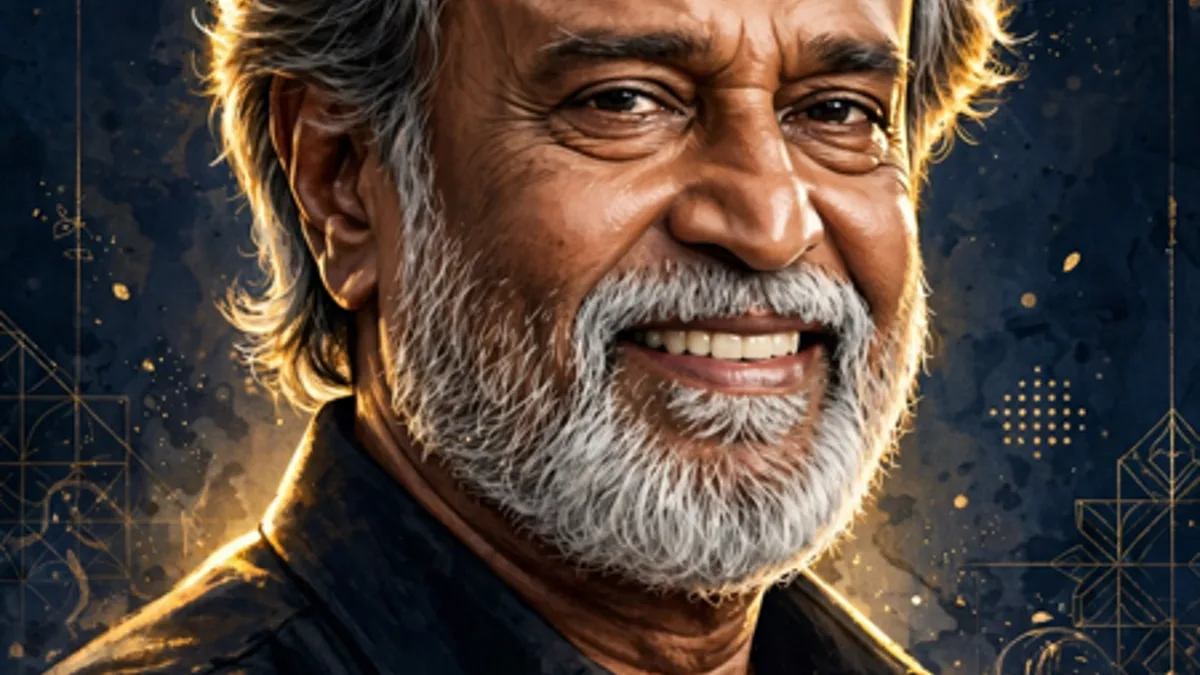
Last updated: November 21, 2026. By Celebamerica Editorial Staff.
Rajinikanth Quick Facts
| Full Name | Shivaji Rao Gaikwad (screen name Rajinikanth) |
|---|---|
| Date of Birth | December 12, 1950 — turns 76 on December 12, 2026 |
| Birthplace | Bengaluru, Karnataka, India |
| Estimated Net Worth (2026) | $50 million–$60 million (₹430–₹560 crore); Celebrity Net Worth: $50M; Alux (Nov 2026): ~$60M, range $45M–$75M |
| Primary Income Sources | Film fees and profit shares (Jailer, Coolie, Jailer 2), production, property |
| Career Span | 1975–present; 170+ films across Tamil, Telugu, Hindi, Kannada, Malayalam and Bengali cinema |
| Major Honours | Padma Bhushan (2000), Padma Vibhushan (2016), Dadasaheb Phalke Award (2021) |
| Spouse | Latha Rajinikanth (married 1981) |
| Children | Aishwarya Rajinikanth and Soundarya Rajinikanth |
| Residence | Poes Garden, Chennai (reported value ₹35–₹40 crore) |
Table of Contents
- Rajinikanth Quick Facts
- Early Life: From Bus Conductor to the Big Screen
- The Rise of Thalaivar: Career Breakthrough
- The Money: How Rajinikanth Built His Fortune
- Film Fees Over Time: From Lakhs to Crores
- Jailer, Coolie and Jailer 2: The Record Paydays
- Income Streams Beyond Acting
- Real Estate: Poes Garden and Beyond
- Car Collection
- Net Worth Growth Timeline
- Personal Life and Family
- Philanthropy and Giving Back
- Rajinikanth vs Kamal Haasan: A Peer Comparison
- Frequently Asked Questions
- Bottom Line
- Sources and Reporting
Early Life: From Bus Conductor to the Big Screen
Rajinikanth was born Shivaji Rao Gaikwad on December 12, 1950, in Bengaluru, then part of Mysore State, into a Marathi family. His father, Ramoji Rao Gaikwad, was a police constable, and his mother, Jijabai, died when he was young. Money was tight. The boy who would one day command fees of more than ₹100 crore a film grew up in a household where every rupee counted, and that early scarcity shaped the famously frugal, low-key man he remains today — the superstar who still wears simple clothes and drives himself to shoots is not an act; it is the person he was before the fame.
Before cinema, he worked a string of ordinary jobs. He was a coolie, carrying luggage, and a carpenter’s helper. Then, in Bengaluru, he joined the Bangalore Transport Service as a bus conductor, collecting fares on city routes. The job is now legend in Tamil Nadu — fans still tell stories of the conductor with the quick smile and the flair for flipping tickets — but at the time it was simply work. What set him apart was that he was already acting: he performed in stage plays with friends, and his talent was plain enough that people around him kept telling him to take it seriously.
The turning point came when a friend, Raj Bahadur, encouraged him to apply to the Madras Film Institute. Rajinikanth enrolled, trained, and was spotted there by the director K. Balachander, one of Tamil cinema’s most respected filmmakers. Balachander gave him his first film role in Apoorva Raagangal (1975), a Tamil drama starring Kamal Haasan. Rajinikanth played a minor role — an abusive husband — but Balachander saw something and kept casting him. Within a few years the supporting player was a leading man, and within a decade he was the biggest star in South Indian cinema.
The bus-conductor origin is not a piece of trivia to skip past. It explains why his stardom feels different from the dynastic kind. He had no film family, no godfather, no inherited audience. He arrived in Chennai with a bus conductor’s wages behind him and built the rest from screen presence alone — the walk, the cigarette flip, the dialogue delivery, the timing. Those mannerisms became a brand before branding was a word in Indian cinema, and they are the reason his name still opens films fifty years later.
The Rise of Thalaivar: Career Breakthrough
The 1970s and 1980s built the foundation. After Apoorva Raagangal, Rajinikanth worked at a furious pace — dozens of films a year in the early days — playing villains, anti-heroes and romantic leads with equal ease. Films like Bhairavi (1978), where he first played a full hero, and Mullum Malarum (1978), directed by J. Mahendran, showed a performer with real range. By the early 1980s he was a bankable star in Tamil cinema and was crossing over into Telugu, Kannada and Hindi films as well.
The 1990s turned stardom into superstardom. Annamalai (1992), Baashha (1995) and Muthu (1995) were not just hits — they were cultural events. Baashha remains one of the most quoted Tamil films ever made, and Muthu found an audience in Japan, where Rajinikanth became an unlikely sensation and the film ran to packed houses. His dialogue, his style, his screen persona — the word fans use for him is Thalaivar, “the leader” — made him more than an actor. He became a figure people organized their calendars around: release days were holidays in parts of Tamil Nadu, with milk poured over cut-outs and fans queuing from dawn.
The 2000s brought scale. Chandramukhi (2005) ran for hundreds of days. Sivaji: The Boss (2007), directed by S. Shankar, was the most expensive Indian film of its time and a box-office smash. Then came Enthiran (2010), released in Hindi as Robot, with Aishwarya Rai — a science-fiction spectacle that grossed hundreds of crores worldwide and remains one of the highest-grossing Tamil films of all time. The 2018 sequel 2.0, again with Shankar, cost a reported ₹500+ crore to make and earned Rajinikanth one of the largest fees of his career at the time, a reported ₹110 crore.
Through it all, the pattern held: fewer films than his peers, but each one an event. While other stars chased volume, Rajinikanth chased scale — one big release every year or two, each carrying the weight of an entire industry’s hopes. That scarcity is part of the money story. When a Rajinikanth film arrives, distributors pay a premium, and that premium flows back to him in fees and profit shares that few Indian actors can match.
His career also crossed into politics-adjacent territory more than once — he has flirted with a political entry, most seriously in 2017–2020, before stepping back in December 2020 citing health reasons. The episode matters for the money story only in one way: he chose cinema over politics, and the films that followed — Annaatthe (2021), Jailer (2023), Vettaiyan (2024), Coolie (2025) and now Jailer 2 (2026) — are the ones paying him the most he has ever earned.
The Money: How Rajinikanth Built His Fortune
Rajinikanth’s fortune is built on one thing above all: film fees, and in recent years, profit shares on top of them. He is not known as a businessman in the way some of his peers are — there is no sprawling production empire, no chain of restaurants, no tech portfolio attached to his name. The money comes from the screen, from property bought over decades in Chennai and Bengaluru, and from the careful, famously modest way he lives. That is why the estimates vary so much: the fortune is concentrated in a small number of very large, very recent paydays, and different trackers count them differently.
The core of the disagreement is simple. The ₹430 crore figure that Zoom TV, TechnoSports, Filmibeat, ET Now and networthguru.in all repeat is a long-circulating media estimate — a snapshot built from his career earnings up to roughly 2024, his property and his cars, minus the very large sums he has given away over the years. Alux’s November 2026 estimate of about $60 million (₹562 crore) takes a different approach: it builds the number from reported fees film by film, counts the three huge paydays since 2023, and assumes he keeps about 60% after tax and costs. The two methods produce different answers, and both are honest about being estimates.
Here is how the money breaks down by source, as reported:
- Film fees and profit shares: the dominant source. Reported pay of roughly ₹520 crore from Jailer, Coolie and Jailer 2 alone, before tax, per Alux’s November 2026 breakdown.
- Real estate: the Poes Garden home in Chennai (₹35–₹40 crore), a Bengaluru farmhouse (reported ~₹20 crore), plus properties in Mumbai and Chennai held by the family.
- Endorsements: historically rare — Rajinikanth has long avoided brand endorsements, which is unusual for a star of his size and is one reason his net worth is lower than some peers with similar fame.
- Production and other ventures: modest. He has produced films through family-linked ventures, but production is not a major wealth engine for him.
The other thing to understand is what he does with the money. Rajinikanth is one of Indian cinema’s most generous givers. TechnoSports notes that he has spent heavily on charity work over the years and helped many people directly — and that giving is part of why his net worth, in their words, is “meagre in terms of his earnings per year.” A star who earned ₹210 crore from a single film and kept all of it would be worth far more. The fortune is smaller than the gross earnings because a large share has gone to tax, to family, and to giving.
How we anchor the figure: we report a range of $50 million–$60 million (₹430–₹560 crore). The lower end is the widely repeated ₹430 crore from Zoom TV, TechnoSports, Filmibeat/ET Now and networthguru.in; the upper end is Alux’s November 2026 fee-based estimate of about $60 million (₹562 crore), with a stated range of $45 million–$75 million. Celebrity Net Worth lists $50 million. No source is audited, and Rajinikanth has never disclosed his finances.
Film Fees Over Time: From Lakhs to Crores
There is no public record of Rajinikanth’s earliest fees — in the 1970s he was paid in thousands and lakhs, like every newcomer — but the trajectory is one of the steepest in Indian cinema. By the 1990s he was among the highest-paid actors in the country. By the 2000s, Sivaji and Enthiran were paying him sums that made headlines. And the last four years have dwarfed everything before them.
| Film / Period | Reported Fee | Source / Note |
|---|---|---|
| Early career (1975–1980s) | Thousands to lakhs per film | No public records; industry-standard newcomer pay of the era |
| 1990s peak (Baashha, Muthu era) | Among India’s highest-paid actors | Contemporary trade reporting; exact figures not publicly documented |
| 2.0 (2018) | Reported ₹110 crore | Widely reported at release |
| Jailer (2023) | ₹110 crore fee + ₹100 crore profit-share cheque | Alux (Nov 2026); the ₹100 crore cheque was reported as handed over after the film’s success |
| Coolie (2025) | Part of ~₹520 crore combined pay for the three recent films | Alux (Nov 2026) — includes Jailer, Coolie and Jailer 2 |
| Jailer 2 (2026) | ~₹110 crore fixed; up to ~₹180 crore with profit share | networthguru.in; Zoom TV (Oct 2026); figures unconfirmed by the actor or producers |
Zoom TV’s October 2026 report puts his current per-film range at ₹150 crore to ₹210 crore, which is consistent with the Jailer 2 numbers: a ₹110 crore base that can rise toward ₹180 crore once the profit share lands, and higher still if the film over-performs. The exact split between fixed fee and profit share is never confirmed by the producers — Sun Pictures does not publish actor contracts — so treat every figure in this table as reported, not confirmed.
One comparison puts the scale in perspective. In the 1970s, a bus conductor in Bengaluru earned a few hundred rupees a month. In 2026, a single Rajinikanth film can pay more than ₹100 crore before profit sharing. That is not just a pay rise; it is the whole arc of Indian cinema’s economics, from a regional industry to a global one, compressed into one man’s career.
Jailer, Coolie and Jailer 2: The Record Paydays
The three films that define Rajinikanth’s late-career earnings are also the three that revived his box-office standing after a mixed run in the late 2010s and early 2020s. Jailer, directed by Nelson Dilipkumar and produced by Sun Pictures, released in August 2023 and became a monster hit — Sacnilk reported a worldwide gross of ₹604.50 crore. Rajinikanth played Muthuvel Pandian, a retired jailer drawn back into violence, and the film’s success was so large that the producers reportedly handed him a ₹100 crore profit-share cheque on top of his ₹110 crore fee. That single cheque, widely reported at the time, is the most concrete public evidence of how much a Rajinikanth hit is worth to the people who make it.
Coolie, released in 2025 and also directed by Lokesh Kanagaraj, kept the momentum going. It was a different kind of film — a gritty action drama with a large ensemble — but the economics were the same: a Rajinikanth opening is the most valuable weekend in Tamil cinema, and his fee reflected it. Alux folds Coolie into the roughly ₹520 crore of reported pay from the three recent films, and notes that more than half of his estimated net worth was earned after his 72nd birthday — a remarkable sentence about any 75-year-old, let alone one who debuted in 1975.
Jailer 2 arrived on October 15, 2026, again directed by Nelson Dilipkumar and produced by Sun Pictures, and was reported by TechnoSports as the highest-grossing Tamil film of 2026. The fee reports split into two numbers: a fixed fee of about ₹110 crore, and a total that could reach around ₹180 crore once profit sharing is counted. Neither figure has been confirmed by Rajinikanth or Sun Pictures, and the profit-share portion depends on the film’s final collections — but even the fixed fee alone makes it one of the largest single-film payments ever reported for an Indian actor of his age.
There is a business logic to these numbers that is worth spelling out. A Rajinikanth film does not just sell tickets; it sells opening-weekend certainty. Distributors, exhibitors and streaming buyers all pay for the guarantee that the first three days will be full. Sun Pictures can afford a ₹110 crore fee because the film’s pre-release business — theatrical rights, music, satellite and streaming — is priced on that certainty. The profit share is the producer’s way of sharing the upside when the film beats its already-high expectations, as Jailer did. For the actor, it means the fee is a floor, not a ceiling.

Income Streams Beyond Acting
Acting is the fortune; everything else is a footnote — and that is a deliberate choice. Rajinikanth has spent most of his career turning down the endorsement deals that fill other stars’ balance sheets. He has appeared in very few commercials, and he has never built the kind of brand portfolio — watches, phones, real-estate brands, fantasy sports — that his contemporaries rely on. In an industry where a top star can earn tens of crores a year from endorsements alone, that restraint costs him real money, and it is one reason his net worth trails the most commercially aggressive names in Indian cinema.
What he does have is a long association with the businesses around his films: music rights, satellite and streaming deals, and the merchandising that surrounds a Rajinikanth release. These flow to the producers more than to him, but the profit-share model on Jailer shows how he captures a slice of the upside when a film over-performs. He has also been involved in production through family-linked ventures, including projects associated with his daughters, but none of these has been reported as a major wealth engine.
He has also, at various points, been linked to political and social ventures — most notably the Rajini Makkal Mandram, the fan-club network that was once expected to become a political party before he abandoned the plan in December 2020. None of these generated income, and they are worth mentioning only because they consumed time and attention that might otherwise have gone to films. The through-line is consistent: Rajinikanth earns from acting, keeps his lifestyle modest, and gives a great deal away.
That modesty is not a rumour. He is widely reported to live simply, to travel without a large entourage, and to have kept the same Poes Garden home for decades rather than trading up. For a man whose films gross hundreds of crores, the gap between what he earns and what he spends is the quiet engine of the fortune — and of the giving that keeps the fortune smaller than the earnings would suggest.
Real Estate: Poes Garden and Beyond
Rajinikanth’s best-known asset is his home in Poes Garden, Chennai — the upmarket neighbourhood that has been his address for decades. Filmibeat, citing ET Now, values the house at an estimated ₹35–₹40 crore. Zoom TV’s reporting puts the figure at ₹35 crore. It is a large, comfortable home in one of Chennai’s most expensive residential pockets, and it has become a landmark in its own right: fans gather outside the gate on his birthday and on film-release days, and the house is as much a symbol of his Chennai identity as any film location.
Beyond Poes Garden, the family’s property holdings are reported to include a farmhouse in Bengaluru, valued at around ₹20 crore in Zoom TV’s reporting, and properties in Mumbai and Chennai held by his wife Latha — including a beach-facing Mumbai home reported at about ₹6.7 crore and Chennai properties in the ₹3–₹6 crore range. These are media-reported figures, not public records, and the family has never published a property list. Taken together, though, they describe a portfolio built slowly over decades: a primary home in Chennai, a Bengaluru base that connects to his roots, and family properties in Mumbai.
The property story is also a story about timing. Rajinikanth bought in Chennai and Bengaluru long before either city’s real estate boom, so the current values reflect decades of appreciation as much as any purchase price. That is the unglamorous side of celebrity wealth: the biggest gains often come not from a single deal but from holding good property for a very long time. His Poes Garden home, bought when Chennai prices were a fraction of today’s, is now worth more than most film stars’ entire annual income.
Car Collection
Rajinikanth’s car collection is modest by superstar standards, and that is in keeping with the man. The cars most often reported in his garage are a Bentley Bentayga, a Rolls-Royce Phantom and a Honda Civic, according to Zoom TV’s October 2026 reporting. The Bentley and the Rolls-Royce are the showpieces — luxury SUVs and sedans in the ₹3–₹7 crore range each, depending on specification — while the Civic is the everyday car that tells you more about him than the other two combined.
He is not a collector in the sense of the stars who own dozens of cars and rotate them for the cameras. The collection is small, functional and long-held, and it is reported rather than flaunted. There are no public garage tours, no social-media showcases of new purchases. For a star of his stature, the restraint is the story: the cars are comfortable, expensive and few, which is roughly how he approaches everything else that money can buy.
Net Worth Growth Timeline
Because no audited figures exist, a timeline of Rajinikanth’s net worth is really a timeline of reported estimates — and it shows how much the number has moved in the last few years. The older ₹430 crore figure was already circulating in late 2024, and the newer estimates that push past ₹500 crore are driven almost entirely by the three films since 2023.
| Period | Reported Estimate | What Drove It |
|---|---|---|
| Late 1970s–1980s | Modest; no public estimates | Rapid rise from newcomer to Tamil cinema’s top star |
| 1990s | Not publicly tracked | Annamalai, Baashha, Muthu; superstardom and overseas reach |
| 2000s–2010s | Rising steadily; Enthiran and 2.0 era | Big-budget blockbusters; 2.0 fee reported at ₹110 crore |
| Late 2024 | ~₹430 crore | The long-circulating media estimate (Zoom TV, TechnoSports, ET Now) |
| Early 2026 | ₹430–₹500 crore+ (ET Now via Filmibeat) | Jailer profit share and Coolie fees entering the picture |
| November 2026 | ~$60M / ₹562 crore (Alux); $50M (Celebrity Net Worth) | Jailer 2 release; fee-based model counting ~₹520 crore from three films since 2023 |
The jump from ₹430 crore to ₹560 crore in under two years is not a mystery once you look at the fees: a ₹110 crore fee plus a ₹100 crore profit share from Jailer, a large Coolie payday, and a ₹110–₹180 crore Jailer 2 deal add up to more than ₹500 crore of gross reported pay in three films. Even after tax and costs — Alux assumes he keeps about 60% — that is enough to move the estimate by more than ₹100 crore. The older ₹430 crore figure is not wrong; it is simply a snapshot from before the money landed.
A note of caution belongs here. Net worth estimates for Indian film stars are among the least reliable numbers in celebrity reporting: fees are reported, not confirmed; tax, costs and giving are estimated; property values are guessed. The honest way to read this timeline is as a range that has moved upward, not as a precise balance sheet. The direction is clear — up, and sharply since 2023 — even if the exact figure is not.
Personal Life and Family
Rajinikanth married Latha Rangachari in 1981. Latha, a singer and the founder of The Ashram school in Chennai, has been a constant presence in his life and a partner in his philanthropic work. The couple have two daughters: Aishwarya Rajinikanth, a film director and producer who directed 3 (2012) and Lal Salaam (2024), and Soundarya Rajinikanth, a graphic designer and filmmaker who directed Kochadaiiyaan (2014), the motion-capture film starring her father.
The family keeps a low profile. There are no reality-show appearances, no family brand ventures, no social-media empires. Aishwarya and Soundarya have both worked in cinema, but on their own terms, and the family home in Poes Garden remains the centre of their private life. Rajinikanth’s grandchildren are kept out of the public eye, and he has consistently refused to turn his family into content — a choice that sets him apart from many stars of his generation.
His health has been a public concern at times. In December 2020 he was hospitalised in Hyderabad with fluctuating blood pressure while shooting Annaatthe, and he has spoken openly about the kidney-related health issues that led him to step back from his planned political entry. He is reported to follow a disciplined routine and to have cut back on the punishing schedules of his younger years — one film at a time, with proper gaps. At 75, that discipline is part of why he is still working at the top of the industry.
Off screen, he is known for a spiritual streak that is as famous as his films. He is a devotee of the Himalayas — he has made well-known trips to the mountains, including to Badrinath and Kedarnath — and he has spoken about meditation and the teachings of Ramakrishna and Swami Satchidananda. Fans who meet him often remark on the contrast: the screen persona is thunder, the man is quiet, simple and quick to deflect praise toward others.

Philanthropy and Giving Back
Rajinikanth’s giving is one of the least documented and most widely attested parts of his life. He does not run a branded foundation with a website and an annual report; instead, he has a long record of quiet, direct help — paying for medical treatment, supporting students, helping families in distress — much of it through his wife Latha’s school and through intermediaries, without publicity. TechnoSports notes that he has spent heavily on charity work over the years and helped many people directly, and that this giving is a real reason his net worth is lower than his lifetime earnings would suggest.
There are also the public gestures that do get reported. He has donated to film-industry welfare funds, contributed to disaster relief, and supported the Nadigar Sangam (the South Indian Artistes’ Association) and its welfare schemes for struggling actors. During the Covid-19 pandemic he contributed to relief efforts, and he has repeatedly used his birthday as an occasion for giving rather than celebration — distributing aid and support to those who need it rather than staging a party.
The giving matters for the money story in a way that is easy to miss. A star who earns ₹210 crore from one film and gives away a meaningful share of it will always look “poorer” on net-worth lists than a peer who earns less and keeps more. That is not a failure of the estimate; it is a fact about the man. The ₹430–₹560 crore range describes what he has kept, not what he has earned — and the gap between the two is, by many accounts, the most Rajinikanth thing about him.
Rajinikanth vs Kamal Haasan: A Peer Comparison
No discussion of Rajinikanth’s fortune is complete without Kamal Haasan — the other giant of Tamil cinema, his contemporary, collaborator and friendly rival for five decades. They debuted in the same film, Apoorva Raagangal (1975), and their careers have run in parallel ever since: two different kinds of stardom, one industry, endless comparisons.
Filmibeat reported in early 2026, citing ET Now, that Kamal Haasan’s net worth sits between roughly ₹410 crore and ₹450 crore, while Rajinikanth’s was placed between roughly ₹430 crore and upwards of ₹500 crore. On those figures, Rajinikanth leads — but the gap is narrow, and the two men earn their money in very different ways. Kamal Haasan has built wealth through production (Raaj Kamal Films International), television hosting (Bigg Boss Tamil), brand work and a larger volume of films, while Rajinikanth’s fortune is concentrated in a small number of very large film paydays.
The comparison also shows how unusual Rajinikanth’s position is. Among Indian film stars, the biggest fortunes generally belong to Hindi-cinema names with deep endorsement and production portfolios — the Khans and their peers, whose profiles on this site include Aamir Khan’s net worth and the Shah Rukh Khan biography — and to stars like Salman Khan and Amitabh Bachchan, whose careers span even longer. Rajinikanth’s fortune is smaller than the very biggest Bollywood fortunes, but it is built almost entirely on acting fees in a regional industry — Tamil cinema — which makes the per-film economics more remarkable, not less.
For readers browsing the wider picture, our Net Worth category covers the same kind of reporting for stars across Indian and world cinema. The pattern across those profiles is consistent: the biggest fortunes come from owning the business around the fame, not just from the fame itself — which is exactly why Rajinikanth, who owns very little beyond his craft and his property, sits where he does.
Frequently Asked Questions
What is Rajinikanth’s net worth in 2026?
Rajinikanth’s net worth in 2026 is estimated at $50 million to $60 million (roughly ₹430 crore to ₹560 crore). Celebrity Net Worth lists $50 million, while Alux’s November 2026 estimate puts him at about $60 million (₹562 crore), with a stated range of $45 million to $75 million. Zoom TV, TechnoSports, Filmibeat and ET Now reporting clusters around ₹430 crore. He has never disclosed his finances, so every figure is a media estimate.
How much did Rajinikanth earn for Jailer 2?
Reports put his Jailer 2 fee at a fixed amount of about ₹110 crore, with profit sharing that could take his total toward ₹180 crore. The figures come from networthguru.in and Zoom TV’s October 2026 reporting and have not been confirmed by Rajinikanth or the producers, Sun Pictures. Jailer 2 was released worldwide on October 15, 2026.
How old is Rajinikanth in 2026?
Rajinikanth was born Shivaji Rao Gaikwad on December 12, 1950, in Bengaluru. He is 75 years old for most of 2026 and turns 76 on December 12, 2026. His career began with Apoorva Raagangal in 1975, so he has been acting for more than 50 years.
What was Rajinikanth’s fee for Jailer (2023)?
He reportedly received a ₹110 crore fee for Jailer plus a ₹100 crore profit-share cheque handed over after the film became a hit, taking his total for the film to about ₹210 crore. Jailer grossed a reported ₹604.50 crore worldwide, according to Sacnilk. Alux’s November 2026 breakdown uses the same figures.
Where does Rajinikanth live?
Rajinikanth lives in Poes Garden, Chennai, in a home reported to be worth ₹35–₹40 crore (Filmibeat citing ET Now; Zoom TV reports ₹35 crore). He also has a reported farmhouse in Bengaluru worth around ₹20 crore, and the family holds properties in Mumbai and Chennai.
What cars does Rajinikanth own?
His reported car collection includes a Bentley Bentayga, a Rolls-Royce Phantom and a Honda Civic, according to Zoom TV’s October 2026 reporting. The collection is modest by superstar standards — small, functional and long-held, in keeping with his famously simple lifestyle.
Is Rajinikanth richer than Kamal Haasan?
On the early-2026 figures reported by Filmibeat citing ET Now, yes — narrowly. Kamal Haasan’s net worth was placed between roughly ₹410 crore and ₹450 crore, while Rajinikanth’s was placed between roughly ₹430 crore and upwards of ₹500 crore. The two have been peers since debuting together in Apoorva Raagangal (1975), and both figures are media estimates.
What is Rajinikanth’s real name?
His real name is Shivaji Rao Gaikwad. He was born on December 12, 1950, in Bengaluru, worked as a bus conductor before joining the Madras Film Institute, and took the screen name Rajinikanth when director K. Balachander cast him in Apoorva Raagangal (1975).
Bottom Line
Rajinikanth’s net worth in 2026 sits at an estimated $50 million to $60 million — ₹430 crore to ₹560 crore — and the range is the honest answer. The lower end is the figure Indian entertainment media has repeated for years; the upper end is the newer, fee-based estimate that counts the three enormous paydays since 2023. What is not in dispute is the direction: at 75, in the sixth decade of his career, he is earning more per film than ever before, with a reported ₹110 crore fixed fee for Jailer 2 and profit sharing that could take it toward ₹180 crore.
The fortune is also a measure of what he has not done. He has not built a business empire, has not chased endorsements, and has given away a great deal of what he earned. The man who once collected bus fares in Bengaluru still lives in the same Chennai neighbourhood, still drives a modest car alongside the Bentley, and still treats each film as if it were the one that has to prove him all over again. Fifty years, more than 170 films, a Padma Vibhushan and a Dadasaheb Phalke Award later, that is the real story of the money — and it is why the number keeps climbing.
Sources and Reporting
Figures in this article are estimates based on public reporting, not audited financial statements. Rajinikanth has never disclosed his net worth. Where sources disagree, we report the range and name the source behind each figure. Key sources: Alux (November 2026 estimate, $60M / ₹562 crore, range $45M–$75M); Celebrity Net Worth ($50M); Zoom TV (October 2026, ~₹430 crore, Jailer 2 fee reporting); Filmibeat (ET Now figures, Kamal Haasan comparison); TechnoSports (~₹430 crore, Jailer 2 release reporting); networthguru.in (~₹430 crore, Jailer 2 fee up to ~₹180 crore). Box-office gross for Jailer via Sacnilk as reported in the coverage above.
How we estimated: we took the most widely repeated media estimate (₹430 crore, from Zoom TV, TechnoSports, Filmibeat/ET Now and networthguru.in) as the lower bound, and Alux’s November 2026 fee-based model (about $60M / ₹562 crore, range $45M–$75M) as the upper bound. Alux builds its figure from reported fees — ₹110 crore plus a ₹100 crore profit-share cheque for Jailer, a large Coolie payday, and a ₹110 crore fixed fee for Jailer 2 — and assumes roughly 60% is kept after tax and costs. Celebrity Net Worth’s $50M sits inside the range. Property values (Poes Garden ₹35–₹40 crore, Bengaluru farmhouse ~₹20 crore) and car details come from the Zoom TV and Filmibeat/ET Now reporting cited above. Actual figures may differ from these estimates.