Shawn Michaels — the Heartbreak Kid, Mr. WrestleMania, the Showstopper — is widely regarded as one of the greatest in-ring performers professional wrestling has ever produced. Born Michael Shawn Hickenbottom on July 22, 1965, he went from a military kid bouncing between bases to the top of WWE, lost it all to a broken back, and then did something almost nobody in wrestling history has done: he came back better, retired on his own terms, and built a second career running the company that made him famous.
As of November 2026, Shawn Michaels’ net worth is estimated at $10 million to $25 million, anchored on the $10 million figure published by Celebrity Net Worth and echoed by Sports Illustrated. The wide range is honest: Michaels has never disclosed his finances, and the higher estimates come from outlets counting decades of merchandise, royalties, and a reported executive salary of around $2 million a year in his current WWE role. What is not in dispute is the shape of the fortune — it was built in three acts: a long run as one of WWE’s top-paid stars, a quiet stretch of royalties and appearances, and now a senior executive job shaping the next generation at NXT.
Last updated: November 23, 2026. By Celebamerica Editorial Staff.
Shawn Michaels Quick Facts
| Full Name | Michael Shawn Hickenbottom |
|---|---|
| Date of Birth | July 22, 1965 (age 61 in 2026) |
| Birthplace | Chandler, Arizona, United States |
| Hometown | San Antonio, Texas |
| Height / Weight | 6 ft 1 in (185 cm) / 225 lb (102 kg) |
| Ring Names | Shawn Michaels, The Heartbreak Kid (HBK), Mr. WrestleMania, The Showstopper |
| Estimated Net Worth | $10 million – $25 million (anchored at $10 million, Celebrity Net Worth) |
| Current Role | Senior Vice President of Talent Development Creative, WWE NXT |
| Primary Income Sources | WWE executive salary, wrestling career earnings, royalties and merchandise, appearances, wrestling school |
| Career Highlights | 4-time world champion, 2-time Royal Rumble winner (1995, 1996), first Grand Slam Champion, WWE Hall of Fame (2011 individual, 2019 with D-Generation X) |
| Spouse | Rebecca Curci (married March 31, 1999) |
| Children | Cameron Kade and Cheyenne Michelle Hickenbottom |
| Key Works | WrestleMania XII vs. Bret Hart, WrestleMania XXVI vs. The Undertaker, D-Generation X, memoir “Wrestling for My Life” (2015) |
Table of Contents
- Early Life and Background
- Breaking In: The Rockers and the Road to WWE
- Becoming the Heartbreak Kid
- Championship Years and WrestleMania Classics
- D-Generation X, Montreal, and the Fall
- The Back Injury and Four Years Away
- The 2002 Comeback and the Second Act
- The Final Matches: Flair and The Undertaker
- Life After the Ring: NXT Executive and Mentor
- The Money: Income Streams and Net Worth Breakdown
- Net Worth Growth Over the Years
- Homes, Assets and Business Ventures
- Personal Life: Wife Rebecca and Family
- Controversies and the Montreal Screwjob
- Legacy and Place Among Wrestling’s Greats
- Frequently Asked Questions
- Final Thoughts
- Sources and How We Estimated
Early Life and Background
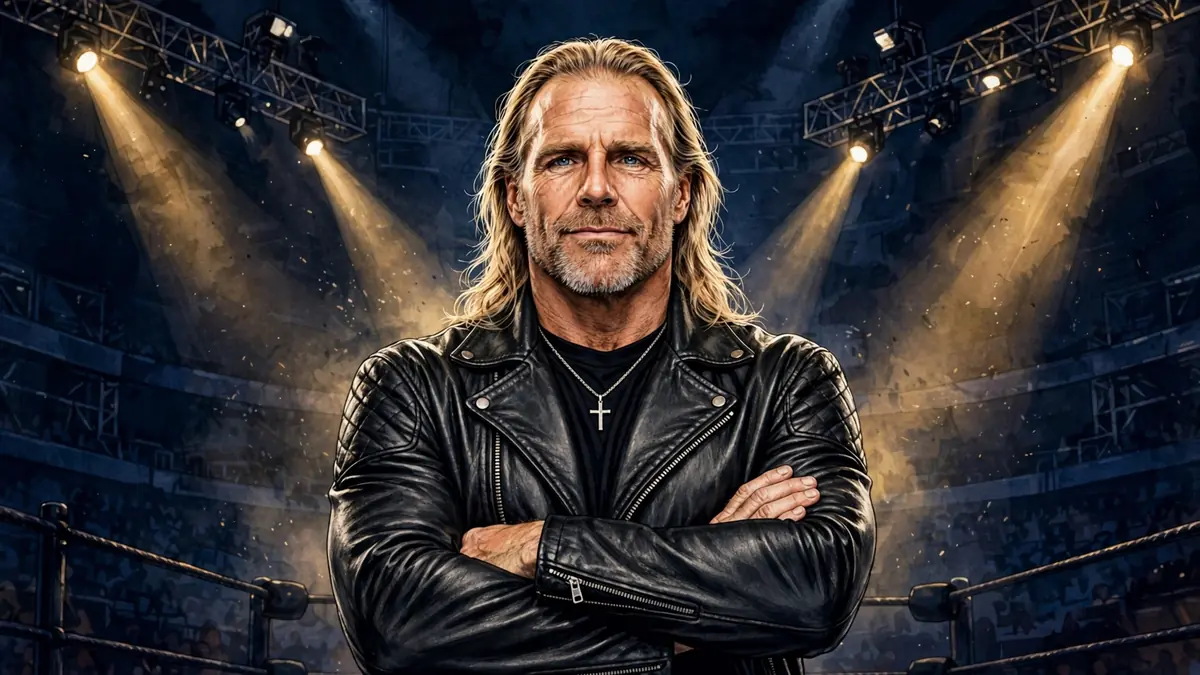
Michael Shawn Hickenbottom was born on July 22, 1965, in Chandler, Arizona. His father, Richard Hickenbottom, was an officer in the United States Air Force, and his mother, Carol, kept the household steady while the family moved from base to base. The constant moving shaped the boy: he learned to make friends fast, to read a room, and to perform for strangers — skills that would later fill arenas.
The family eventually settled in San Antonio, Texas, and San Antonio became home in every sense that mattered. Michaels went to Randolph High School on Randolph Air Force Base, where he played football and first started thinking seriously about wrestling. He was not a big kid — even at his peak he wrestled at around 225 pounds, small for a heavyweight of his era — but he was quick, coordinated, and fearless about throwing his body around.
Like a lot of kids who grew up on military bases in the 1970s, Michaels fell in love with wrestling on television. He has said in interviews that he knew early he wanted to do it for a living, and unlike most kids who say that, he never let go of the idea. After high school he went looking for someone to train him, and found Jose Lothario, a respected Texas wrestler, who took him on. Lothario taught him the basics — the bumps, the holds, the pacing of a match — and, just as importantly, the discipline of the business: show up, work hard, protect your opponent, and never phone it in.
Breaking In: The Rockers and the Road to WWE
Michaels made his professional debut in 1984, working small shows in Texas and the Mid-South territory. The pay was thin and the travel was rough — long drives between towns, cheap motels, crowds of a few hundred — but the work taught him how to wrestle a different opponent every night and make each match feel like it mattered. He spent time in Texas All-Star Wrestling and then in the American Wrestling Association (AWA), where he began teaming with Marty Jannetty.
The Rockers, as the team became known, were a revelation for their time. Two young, good-looking, high-flying wrestlers who moved at a speed the tag division had rarely seen, they became one of the most popular acts in the AWA and then in WWE, where they arrived in 1988. In an era of giants, the Rockers sold excitement: dropkicks, double-team moves, and a pace that made the crowd stand up. They never won the WWF Tag Team Championship — a famous title win over the Hart Foundation in 1990 was overturned on a technicality and never aired — but they were over with the fans, and that mattered more than gold at that stage of Michaels’ career.
Behind the scenes, the Rockers years were also where Michaels built the relationships that would define his career. He became close with the group later known as the Kliq — Kevin Nash, Scott Hall, Triple H, and Sean Waltman — a tight circle of friends whose backstage influence in the 1990s became both a source of power and a source of controversy. Those friendships, for better and worse, ran through everything that followed.
Becoming the Heartbreak Kid
The Rockers ended in one of the most famous breakups in wrestling history. In January 1992, on an episode of Brutus “the Barber” Beefcake’s talk show segment, Michaels threw Jannetty through a plate-glass window, turning on his partner in front of a stunned audience. The moment worked because the crowd genuinely liked the team; the betrayal stung, and it gave Michaels the solo push he had been waiting for.
Reborn as “The Heartbreak Kid,” Michaels leaned into a new character: vain, cocky, and impossibly smooth, a man who knew he was the best-looking and best-wrestling guy in the building and dared the crowd to disagree. He added Sherri Martel as his manager, won the Intercontinental Championship, and started stealing shows with a style built on speed, selling, and a finishing move — Sweet Chin Music, a superkick — that could end a match out of nowhere.
The gimmick fit the man, and it also fit the moment. WWE in the early 1990s was rebuilding after the steroid and courtroom troubles of the previous era, and it needed younger, smaller, faster stars. Michaels, Bret Hart, and a handful of others became the new core of the company. The rivalry with Hart, in particular, would come to define the decade — two of the best workers of their generation, with very different ideas about what wrestling should be, pushing each other to matches that still get studied today.
Championship Years and WrestleMania Classics
Michaels won his first WWF Championship at WrestleMania XII on March 31, 1996, beating Bret Hart in a 60-minute Iron Man match that went into sudden-death overtime. The match ran over an hour, ended 1–0, and is still talked about as one of the finest pure wrestling matches ever staged on the biggest show of the year. The famous image of Michaels, tears in his eyes, holding the title under falling confetti while the crowd sang along to his entrance music, became one of the defining pictures of 1990s WWE. It was the payoff for twelve years of work — and, in a way, the start of the hardest stretch of his life.
Before that title win, Michaels had already made history at the Royal Rumble. He won the 1995 Royal Rumble after entering at number one — the first man ever to win from the opening spot — and then won it again in 1996, back to back. The 1995 win, in particular, showed his endurance: he lasted from the very first bell to the end, outlasting 29 other men. Add a second Intercontinental title, a European Championship that made him WWE’s first Grand Slam Champion in 1997, and three WWF Championship reigns in total, and the resume starts to look like one of the strongest of his generation.
The numbers only tell part of it. What set Michaels apart was the quality of the matches. His ladder match against Razor Ramon at WrestleMania X in 1994 — for the Intercontinental Championship — is routinely named among the greatest matches ever televised, and it changed what fans expected from a big-show match. His WrestleMania bouts became appointment viewing in themselves, which is how he earned the nickname Mr. WrestleMania. Long after the titles were gone, promoters and fans kept measuring other performers against the standard he set in those matches.
D-Generation X, Montreal, and the Fall
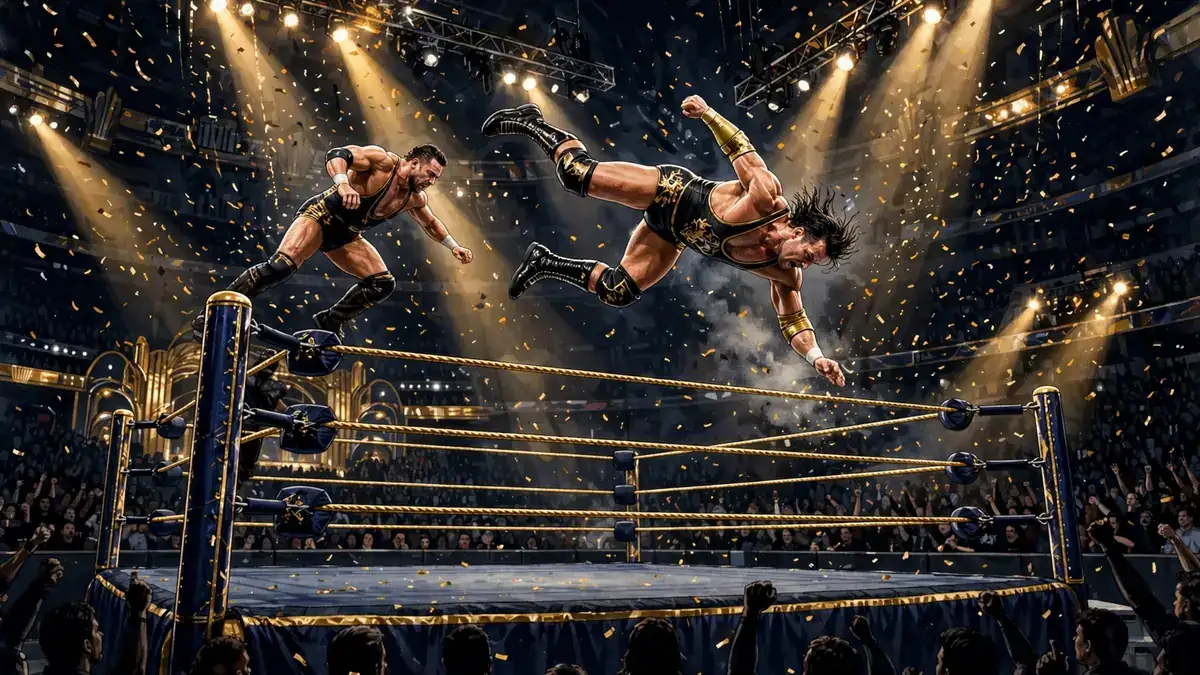
In 1997, Michaels and Triple H formed D-Generation X, a faction that threw out the rulebook of what a WWE act was supposed to be. DX was rude, crude, and openly mocking of authority, and it landed perfectly in the middle of the Monday Night Wars, when WWE was losing the ratings battle to WCW and needed something dangerous. The group’s catchphrases, its invasions of WCW shows, and its sheer attitude helped turn the tide of the war — and made Michaels, for a second time in his career, the coolest act in the company.
The same year produced the most infamous night of Michaels’ career. At Survivor Series on November 9, 1997, in Montreal, Michaels faced Bret Hart for the WWF Championship in what Hart believed was his final match before leaving for WCW. Hart had an agreement with WWE owner Vince McMahon that he would not lose the title in Canada. Mid-match, McMahon ordered the referee to ring the bell while Michaels had Hart in Hart’s own Sharpshooter hold — a finish Hart had not agreed to. Michaels left with the title while Hart, furious, spat at McMahon at ringside. The incident, known ever since as the Montreal Screwjob, remains the most argued-over moment in wrestling history.
Michaels has spoken about Montreal many times since, and his account has stayed consistent: he did what he was told to do, he knew it would damage his reputation, and he has said he regrets the way it was handled. The incident made him the most hated man in wrestling for a while, and it also poisoned his relationship with Hart for more than a decade. The two men eventually reconciled on television in 2010, in a segment that drew a huge reaction precisely because fans had waited so long to see it.
By early 1998, the lifestyle was catching up with him. Years of painkillers, a punishing schedule, and the pressure of being the company’s top heel had taken a toll. In February 1997 he had already vacated the WWF Championship on live television, tearfully telling the audience he had “lost his smile” and needed time away, citing a knee injury. He came back, won the title again, and kept going — but the tank was nearly empty.
The Back Injury and Four Years Away
The end came at the Royal Rumble in January 1998. In a casket match against The Undertaker, Michaels took a back body drop and landed hard on the lower part of his back against the edge of the casket. He finished the match, and even worked WrestleMania XIV two months later — losing the WWF Championship to Stone Cold Steve Austin in the main event — but the damage was done. Doctors found two herniated discs and a crushed disc in his lower back, and told him his in-ring career was over.
Michaels was 32 years old, at the top of the business, and suddenly done. He spent the next four years away from full-time wrestling, and by his own account, those years were the hardest of his life. He has spoken openly about his dependence on painkillers during that period, about the toll it took on his marriage, and about the search for something to fill the hole that wrestling had left. The turning point, as he tells it in his memoir “Wrestling for My Life,” came through his faith: he became a born-again Christian, got clean, and rebuilt his life around his family in San Antonio.
During the absence he stayed loosely connected to the business — a short stint as WWE Commissioner in 1999, occasional appearances — but he was not wrestling, and most people in the industry assumed he never would again. His back, doctors said, simply could not take it.
The 2002 Comeback and the Second Act
Then, in the summer of 2002, Michaels did the impossible. He returned to the ring at SummerSlam in a street fight against Triple H, his former DX partner, and delivered a match so good that it erased every doubt about whether he could still go. He had not wrestled a full match in more than four years. He looked like he had never left.
The second act ran from 2002 to 2010, and in some ways it was better than the first. Michaels was older, smarter, and free of the backstage politics that had weighed down his 1990s run. He won his fourth world championship — the World Heavyweight Championship — in the first-ever Elimination Chamber match at Survivor Series 2002. He had a celebrated feud with Chris Jericho in 2003 and again in 2008, a classic with Kurt Angle at WrestleMania 21, and a main-event run against John Cena that peaked at WrestleMania 23 in 2007.
He also settled old scores. His Survivor Series 2007 match with Randy Orton — then the young, ruthless WWE Champion — paired the old master with the new generation’s brightest star, and Orton has since spoken about what he learned working with Michaels. It was a pattern of the second act: Michaels made everyone he worked with look better, and the company leaned on him for exactly that.
What made the comeback remarkable was not just the quality but the consistency. For eight years, Michaels was the most reliable big-match performer on the roster, the man WWE turned to when a show needed a guaranteed classic. He did it on a surgically repaired back, with a style adjusted to protect it — fewer reckless bumps, more psychology, more storytelling — and the adjustment made him, if anything, a better wrestler.
The Final Matches: Flair and The Undertaker
Michaels chose his ending carefully, and it showed. At WrestleMania XXIV in 2008, he faced Ric Flair in a match billed as career-threatening for Flair: if Flair lost, he had to retire. Michaels won, and the closing moments — Michaels mouthing “I’m sorry, I love you” before delivering Sweet Chin Music — became one of the most emotional finishes in WrestleMania history. It was a passing of the torch in reverse: the younger legend sending off the older one with full honors.
Then came The Undertaker. The two men had history stretching back to the 1990s, including the casket match that ended Michaels’ first career. At WrestleMania XXV in 2009, they produced a match that many fans and critics call the greatest WrestleMania match ever — a near-30-minute epic that ended with Undertaker’s streak intact at 17–0. A year later, at WrestleMania XXVI on March 28, 2010, they did it again, this time with Michaels’ career on the line. Undertaker won, the streak moved to 18–0, and Michaels walked away for good. He has said many times since that it was the perfect ending, and he has never wrestled a singles match since.
The respect between the two men runs deep, and it shows in how they talk about each other. The Undertaker, whose own net worth and career we profiled separately, has called Michaels the best he ever faced. Read our profile of The Undertaker’s net worth and career for the other side of that rivalry. Michaels returned once more, briefly, for a tag match at Crown Jewel in Saudi Arabia in November 2018 — teaming with Triple H against Undertaker and Kane — but he has been clear that WrestleMania XXVI was his real farewell.
Life After the Ring: NXT Executive and Mentor
Retirement, for Michaels, turned out to be a promotion. He began working as a writer and producer for WWE’s NXT brand in November 2018, helping train talent at the WWE Performance Center in Orlando. When Triple H stepped back from day-to-day NXT duties, Michaels took over the brand’s creative direction, and in 2022 he was formally named Senior Vice President of Talent Development Creative — the title he still holds in 2026.
The job suits him. NXT is WWE’s developmental brand, where young wrestlers learn the craft before moving to Raw or SmackDown, and Michaels is the person who decides what they learn and how they are presented. He runs the creative team, works with talent on matches and promos, and oversees the weekly NXT television show. People who have worked under him describe a boss who is demanding about the details — the same perfectionism that made his matches great — but who also gives young performers room to find themselves.
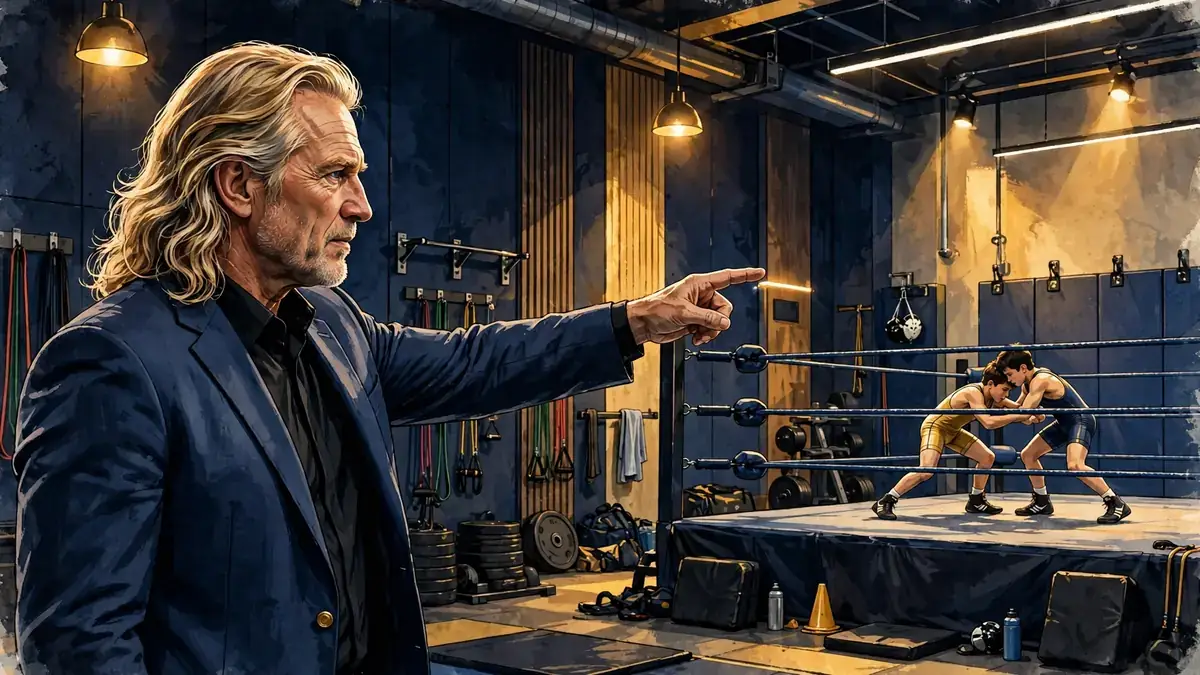
His fingerprints are all over the current generation. Wrestlers who came through NXT under Michaels talk about his coaching in the same terms older fans used for his matches: he sees things other people miss, and he can explain a fix in one sentence. The role also keeps him close to the business without the physical toll, which is exactly what his back needs. Alongside the NXT job he runs the Shawn Michaels Wrestling Academy in San Antonio, where he mentors aspiring wrestlers in person.
He has also kept a public profile outside WWE. His outdoor show, “Shawn Michaels’ MacMillan River Adventures,” aired on the Outdoor Channel and leaned into his lifelong love of hunting and the outdoors. His memoir, “Wrestling for My Life,” published in 2015, told the full story of the addiction, the faith, and the comeback in his own words — and it sold well enough to make the point that the audience for his story went far beyond wrestling fans.
The Money: Income Streams and Net Worth Breakdown
Shawn Michaels’ estimated net worth of $10 million to $25 million rests on four income streams, spread across four decades. The range is wide because the sources disagree: Celebrity Net Worth and Sports Illustrated put the figure at $10 million, while other outlets have published $17 million and even $25 million. We anchor on $10 million because it is the figure from the outlet with the most consistent track record on wrestler finances, and because the higher numbers appear to double-count royalties and merchandise that the lower figure already includes. Here is how the money breaks down.
How we estimated this: we anchored on Celebrity Net Worth’s $10 million figure, cross-checked it against Sports Illustrated’s reporting of the same number, and set the top of the range at $25 million to reflect the highest published estimates. The executive salary figure comes from BounceMojo’s June 2026 profile. No private financial records exist for Michaels, so treat every number here as a well-sourced estimate, not a bank balance.
| Income Stream | What It Covers |
|---|---|
| WWE wrestling career (1988–2010) | Two long runs as a top-of-the-card star, including three WWF Championship reigns, main-event pay-per-view paydays, and a second run (2002–2010) as the roster’s most reliable big-match draw. Peak-era main-eventers of his standing typically earned high six figures to over $1 million a year in salary plus pay-per-view bonuses; over 20-plus years, this is the foundation of the fortune. |
| WWE executive salary (2018–present) | Senior Vice President of Talent Development Creative, reported at around $2 million a year by BounceMojo (June 2026). Even at a more conservative estimate, eight years in a senior WWE executive role is a seven-figure annual income stream. |
| Royalties and merchandise | Decades of merchandise — HBK shirts, figures, and memorabilia — plus royalties from WWE Network/Peacock streaming of his classic matches, video games, and DVD compilations. Michaels remains one of WWE’s most merchandised retired stars. |
| Appearances, media, and school | Paid appearances, autograph and convention work, his Outdoor Channel show, book royalties from “Wrestling for My Life” (2015), and tuition from the Shawn Michaels Wrestling Academy in San Antonio. |
The shape of the fortune matters more than the exact number. Michaels is not a wrestler who got rich from one big contract or one business deal. He got rich the slow way: twenty-plus years near the top of the card, followed by a second career in management that pays like a senior corporate job. That is why the estimates have held steady in the $10 million range for years rather than spiking or collapsing — the income never stopped, it just changed form.
It is also worth saying what the fortune is not. Michaels has never been linked to a major outside business empire — no restaurant chain, no supplement line, no real-estate portfolio splashed across the press. His wealth is wrestling wealth, earned inside the business and kept there. That is a narrower base than some of his peers, and it is one reason the honest range stays at $10 million to $25 million rather than the $50 million-plus figures attached to wrestlers who moved into Hollywood or big business.
Net Worth Growth Over the Years
Michaels’ wealth grew in step with his career, with the sharpest gains coming late — a pattern that surprises fans who assume a wrestler’s richest years are his championship years. The timeline below uses published estimates; early figures are necessarily approximate, since nobody was tracking wrestler net worth closely in the 1990s.
| Period | Estimated Net Worth | What Drove It |
|---|---|---|
| Mid-1990s | Roughly $2 million – $4 million | First WWF Championship run, Royal Rumble wins, main-event paydays; still early in the earning curve. |
| Late 1990s | Roughly $5 million – $6 million | DX peak, top heel in the company during the Attitude Era boom, merchandise and pay-per-view bonuses. |
| 1998–2002 (away) | Flat to slightly down | Four years out of the ring; income from royalties and occasional appearances only. |
| 2002–2010 (comeback) | Rising to roughly $8 million – $10 million | Second run as a top star, World Heavyweight title, WrestleMania main events, renewed merchandise. |
| 2011 (Hall of Fame) | Around $6 million – $10 million | BounceMojo’s year-by-year tracking puts the figure near $6 million at induction, rising steadily after; other outlets already had him near $10 million. |
| 2018–2022 | Roughly $9 million – $10 million | NXT producer role, then creative head; steady executive salary replaces sporadic appearance income. |
| 2024–2026 | $10 million – $25 million | Senior VP salary (reported ~$2 million a year), continued royalties, and the higher-end estimates from outlets counting the full merchandise and licensing tail. |
The honest reading of that table is that Michaels’ net worth roughly doubled after he stopped wrestling full-time. The executive salary, the royalties from a catalog of classic matches that never stops streaming, and the absence of the huge expenses of life on the road all point the same way. It is a useful corrective to the idea that a wrestler’s earning power ends with his last match — for the ones who stay in the business, the second act can pay better than the first.
Homes, Assets and Business Ventures
Michaels has lived in the San Antonio, Texas area for most of his adult life, and that is where his property is. Reports have described his San Antonio home as valued at around $2.5 million, a comfortable but not extravagant house for a man of his earnings — consistent with a person who has said more than once that he is not interested in flashy displays of wealth. He has also been linked to a hunting ranch in Texas, which fits with his long-standing passion for the outdoors and his television work on the Outdoor Channel.
His main business venture is the Shawn Michaels Wrestling Academy in San Antonio, where he trains the next generation of wrestlers. The school is a small operation by the standards of wrestling businesses — a training facility, not a promotion — but it matters to him, and it brings in tuition income while keeping him connected to the grassroots of the sport.
Beyond that, Michaels’ asset profile is deliberately low-key. No car collection splashed across social media, no string of endorsements, no crypto or startup portfolio in the press. The one luxury that does surface regularly in profiles is his hunting — trips, gear, and the television show built around it. For a man who spent his twenties and thirties living out of suitcases, a stable home base in Texas and a job that lets him sleep in his own bed look like the real luxury.
Personal Life: Wife Rebecca and Family
Michaels married Rebecca Curci on March 31, 1999, in a ceremony at the Graceland Wedding Chapel in Las Vegas. Curci, a former dancer and model who appeared on WWE television during their courtship, has been married to Michaels for more than 27 years — a run of stability that stands out in a business famous for broken marriages. The couple has two children: a son, Cameron Kade, born in 2000, and a daughter, Cheyenne Michelle, born in 2004. The family lives in the San Antonio area, where Michaels grew up and where he has put down his deepest roots.
By his own account, the marriage nearly did not survive the 1990s. His dependence on painkillers and the lifestyle of a top star in the Attitude Era put enormous strain on the relationship, and he has credited both his wife and his Christian faith with pulling him through. He became a born-again Christian in 2002, around the time of his comeback, and he has spoken about that faith openly ever since — including in his memoir and in interviews where he describes it as the single biggest change in his life. He has also been open about the fact that the turnaround was not instant or easy, which is part of why fans who went through similar struggles have connected with his story.
These days the family keeps a low profile. Rebecca rarely appears in wrestling media, the children have stayed out of the spotlight, and Michaels’ public life is mostly the NXT job and the occasional WWE appearance. At 61, he is in the phase of life where the work is about building other people’s careers rather than his own. For the full picture of how old he is and how his age fits his career timeline, see our sister site’s profile of Shawn Michaels’ age.
Controversies and the Montreal Screwjob
No honest biography of Shawn Michaels can skip the controversies, because they are part of why his story matters. The Montreal Screwjob of November 1997 is the biggest of them, and it is covered in detail above — a real-life double-cross, ordered by the company’s owner, that left Bret Hart furious and Michaels carrying the blame for years. The two men did not speak for over a decade, and the incident still gets debated by fans who were not even born when it happened. Michaels has said he regrets how it was handled, and the on-air reconciliation with Hart in 2010 closed the book on it publicly.
The second controversy was the Kliq. Michaels’ backstage group — himself, Kevin Nash, Scott Hall, Triple H, and Sean Waltman — was accused of using its influence with management to protect its members’ spots and bury rivals. The most famous example came in May 1996, when the group broke character in the ring at Madison Square Garden to hug goodbye to Nash and Hall, who were leaving for WCW — the “curtain call” that broke wrestling’s unwritten rules and got Triple H punished while Michaels, protected by his championship status, escaped serious consequences. Critics of the era still point to the Kliq as an example of backstage politics at its worst; defenders point out that every era has its power groups, and that the Kliq’s members were also the hardest-working performers on the roster.
There were darker moments too. In October 1995, Michaels was badly beaten outside a nightclub in Syracuse, New York, suffering a concussion and injuries that kept him off television. The incident, involving a group of men outside the club, was widely reported at the time and became part of the lore of his turbulent mid-1990s years. He has also been open about his struggles with painkillers and prescription drugs in the late 1990s, a subject he discusses candidly in his memoir. None of this is ancient history to be glossed over — it is the reason the comeback story lands as hard as it does.
Legacy and Place Among Wrestling’s Greats
Ask wrestlers who the best in-ring performer of all time is, and Shawn Michaels’ name comes up more than almost anyone else’s. The Undertaker has called him the greatest he ever faced. Chris Jericho, Kurt Angle, and a generation of performers who worked with him have said the same in different words. The case rests on three things: the quality of the matches, the range of the career — he was great as a tag wrestler, as a heel champion, as a babyface, and as a veteran making others look good — and the comeback, which no one else in his position has ever pulled off.
His influence shows up in today’s wrestling in ways that are easy to miss. The modern style — fast, athletic, built around near-falls and dramatic kick-outs — owes a clear debt to the matches Michaels was wrestling in the mid-1990s, when most main-eventers were still working a slower, heavier style. Watch a top star of the current era work a big match and you will see Michaels’ fingerprints: the pacing, the selling, the way a finishing move is protected so that it still means something when it lands. Stars of the current generation, from Roman Reigns to Cody Rhodes, grew up watching his matches and have spoken about studying them.
The peer comparison puts the scale of his career in context. His great rival The Undertaker, with a longer career and a similar merchandise tail, sits in the same broad wealth bracket. Triple H, his DX partner, moved into corporate leadership earlier and is reported to be worth considerably more. John Cena left wrestling for Hollywood and built a fortune several times the size of Michaels’. None of that diminishes Michaels’ standing — it just shows the different paths available to wrestlers of his generation, and that Michaels chose the one that kept him closest to the ring.
| Wrestler | Estimated Net Worth (Celebrity Net Worth) | Career Path |
|---|---|---|
| Shawn Michaels | $10 million | Wrestling legend turned NXT executive |
| The Undertaker | $17 million | Three-decade WWE career, similar royalty tail |
| Triple H | $150 million | Wrestler turned WWE chief content officer |
| John Cena | $80 million | Wrestling turned Hollywood leading man |
| Roman Reigns | $20 million | Current-era top star, still active |
What will last longest, though, is probably not the money or even the matches — it is the example. Michaels is the rare wrestler who burned out, hit bottom, came back, and then used the second half of his career to make the business better for the people coming after him. That is a legacy that does not fit in a net worth table, and it is the reason his biography is still being written, one NXT class at a time.
Frequently Asked Questions
How old is Shawn Michaels in 2026?
Shawn Michaels is 61 years old in 2026. He was born Michael Shawn Hickenbottom on July 22, 1965, in Chandler, Arizona, and turned 61 on July 22, 2026. He grew up in San Antonio, Texas, where he still lives with his family.
What is Shawn Michaels’ net worth in 2026?
Shawn Michaels’ net worth is estimated at $10 million to $25 million as of November 2026. The figure is anchored on the $10 million estimate published by Celebrity Net Worth and echoed by Sports Illustrated, with the higher end reflecting other outlets’ estimates. His income now comes mainly from his WWE executive salary, reported at around $2 million a year, plus royalties and merchandise from his wrestling career.
What is Shawn Michaels’ real name?
Shawn Michaels’ real name is Michael Shawn Hickenbottom. He swapped his first and middle names to create his ring name — Shawn from his middle name, Michaels as the surname. He was born in Chandler, Arizona, and raised largely in San Antonio, Texas.
Who is Shawn Michaels’ wife?
Shawn Michaels’ wife is Rebecca Curci, a former dancer and model. They married on March 31, 1999, at the Graceland Wedding Chapel in Las Vegas, and have been married for more than 27 years. They have two children, Cameron Kade (born 2000) and Cheyenne Michelle (born 2004), and live in the San Antonio area.
Why did Shawn Michaels retire in 1998?
Shawn Michaels retired in 1998 because of a serious back injury. He damaged his lower back — two herniated discs and a crushed disc — in a casket match against The Undertaker at the Royal Rumble in January 1998, and doctors told him his in-ring career was over. He stayed away from full-time wrestling for four years before his comeback in 2002.
How many times did Shawn Michaels win the Royal Rumble?
Shawn Michaels won the Royal Rumble twice, in 1995 and 1996. His 1995 win was historic: he entered at number one, the first man ever to win the match from the opening spot, and outlasted all 29 other entrants. He is one of only a small group of wrestlers to win back-to-back Royal Rumbles.
What does Shawn Michaels do now?
Shawn Michaels is WWE’s Senior Vice President of Talent Development Creative, the executive in charge of the NXT brand. He runs NXT’s creative team, coaches young talent at the WWE Performance Center in Orlando, and oversees the weekly NXT show. He also runs the Shawn Michaels Wrestling Academy in San Antonio, Texas.
Is Shawn Michaels in the WWE Hall of Fame?
Yes — twice. Shawn Michaels was inducted into the WWE Hall of Fame as an individual in 2011, and again in 2019 as a member of D-Generation X, alongside Triple H, Chyna, Road Dogg, Billy Gunn, and X-Pac. He is one of the few wrestlers to be inducted twice.
Final Thoughts
Shawn Michaels’ biography is really three stories in one: the show-stealing kid from San Antonio who became the best wrestler of his generation, the champion who lost everything to injury and addiction, and the executive who came back to build the future of the business he nearly left behind. The net worth — $10 million to $25 million, anchored at $10 million — is the least interesting part of that story. What matters is the arc: a man who failed in public, fixed himself in private, and returned to do his best work after the age when most wrestlers are long gone.
For fans, the matches will always be the entry point — WrestleMania XII, the ladder match, the two Undertaker classics. For the wrestlers now coming through NXT, the legacy is the man in the suit at the Performance Center, pointing at the ring and telling them exactly how to make a moment land. Both versions are the same person, and that is the point. Browse more wrestler life stories in our Biography section.
Sources and How We Estimated
How we estimated: we anchored on Celebrity Net Worth‘s $10 million figure for Shawn Michaels, cross-checked against Sports Illustrated‘s reporting of the same number, and set the range at $10 million to $25 million to reflect the highest published estimates from other outlets. The executive salary figure (around $2 million a year) comes from BounceMojo‘s June 2026 profile. Career facts — dates, title reigns, match results, Hall of Fame inductions — were checked against WWE‘s own records and ESPN reporting, with biographical detail from Biography.com. Where sources disagreed on the net worth figure, we published the range and said which source anchors it. Net worth figures are estimates based on public information; private finances are not disclosed, and actual wealth may differ. No figures, quotes, or credentials in this article were invented.