By Celebamerica Editorial Staff | Last updated: 23 November 2026
Tarik net worth in 2026 is estimated at around $2 million. That is the figure most independent trackers land on: StreamerNews puts Tarik at $2 million, WealthyProfiles lists him at $2 million in its richest Valorant players ranking for 2026, and PopGolden, citing StreamerFacts, reports the same $2 million number. The wider published spread runs from about $1.1 million to $3.8 million, and this article works through every source behind that range instead of picking one number and moving on.
Tarik Celik, known to millions simply as Tarik, is one of the rare streamers whose fortune rests on two separate careers. He won a Counter-Strike Major with Cloud9, was named MVP of the ELEAGUE Major: Boston 2018, and then rebuilt himself as a Valorant watch-party star under the Sentinels banner, with more than 3.3 million Twitch followers behind him. Forbes named him to its 30 Under 30 list for games in 2024. This is the full story of how a kid from Brooklyn who ran deathmatch servers in high school turned pro play, prize money and a second act in streaming into a multi-million-dollar career.
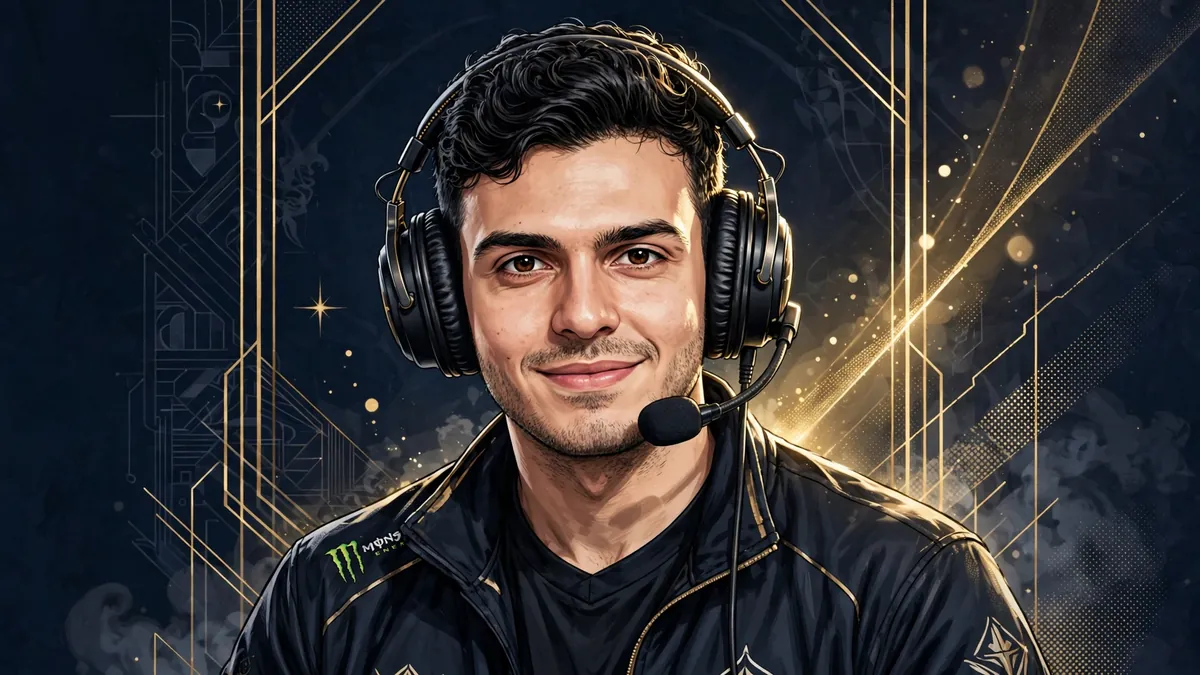
Tarik at a Glance
| Full Name | Tarık Çelik (Tarik Celik) |
|---|---|
| Date of Birth | 18 February 1996 (Esports Earnings lists 19 February 1996 — see the note below) |
| Birthplace | Brooklyn, New York, United States |
| Age in 2026 | 30 years old |
| Estimated Net Worth | About $2 million (published range $1.1 million – $3.8 million) |
| Primary Income Sources | Twitch streaming, YouTube ad revenue, sponsorships and brand deals, Sentinels creator deal, tournament prize money |
| Career Prize Money | $797,339.21 from 149 tournaments (Esports Earnings) |
| Key Ventures / Works | Cloud9 (ELEAGUE Major: Boston 2018, MVP), OpTic Gaming (ELEAGUE Season 2), Evil Geniuses, Sentinels content creator, Valorant watch parties |
| Twitch Followers | 3.3 million (Wikipedia, March 2026 update) |
| YouTube Subscribers | 1.02 million, with 486 million views (Wikipedia, March 2026 update) |
| Major Honours | Forbes 30 Under 30 (Games, 2024); Best FPS Streamer at The Streamer Awards (2021, 2023); Streamy Awards Competitive Gamer (2022) |
Table of Contents
- Tarik at a Glance
- Early Life and Background
- The Counter-Strike Rise
- Cloud9 and the Boston Major
- From Pro Play to Full-Time Streaming
- Sentinels, Watch Parties and the Valorant Era
- Where the Money Comes From
- The Net Worth Breakdown
- Net Worth Growth Over the Years
- Assets, Lifestyle and Spending
- Personal Life
- Awards and Recognition
- How Tarik Stacks Up Against Other Valorant Streamers
- Controversies and Public Scrutiny
- Frequently Asked Questions
- Bottom Line
- Sources and Reporting
Early Life and Background
Tarık Çelik was born on 18 February 1996 in Brooklyn, New York. He is of Turkish descent, and the Turkish-American identity has followed him through his whole public career — from his name on a roster to the way Turkish fans adopted him as one of their own in the Counter-Strike scene. A small note on the dates: Wikipedia, Red Bull, PopGolden and Net Worth Spot all give 18 February 1996, while Esports Earnings lists 19 February 1996. The 18 February date has the weight of the sources behind it, so this article uses it and flags the one-day gap rather than hiding it.
One tracker page, FameCop, says he was born in Istanbul. That conflicts with the Brooklyn birthplace given by Wikipedia and Red Bull, and FameCop’s own page is dated 2023 and mixes in older figures elsewhere, so the Brooklyn account is the one this article treats as sourced. It is a useful early warning about Tarik’s corner of the internet: a lot of pages repeat each other, and the same wrong detail can travel a long way before anyone checks it.
Tarik’s start in games came early. He played in CAL leagues for Counter-Strike: Global Offensive while he was still in middle school, and in high school he became known in the community for running deathmatch servers called FragShack. That detail matters more than it looks. Running servers taught him how a community works — who shows up, what keeps them there, what makes a server feel alive. Years later, when his Twitch chat became the product as much as the gameplay, the same instincts were at work. He was not just a good shot; he understood the room.
He created his Twitch channel in 2012, originally under the name NoShirtTV, and his YouTube channel followed in 2014. At the time, streaming was a side project and a hobby that paid nothing. The professional path came first, and it came fast: he signed with NetcodeGuides.com in 2014 and went pro the same year, still a teenager.
The Counter-Strike Rise
Tarik’s team history reads like a tour of North American Counter-Strike in the 2010s. After NetcodeGuides.com and a spell with mouseSpaz, he joined Counter Logic Gaming in 2015 and put in strong runs at multiple ESL One events. CLG was where he first looked like a player who belonged on big stages rather than just in online qualifiers.
The step up came with OpTic Gaming in 2016. With OpTic he won his first six-figure tournament prize: $400,000 for the team after winning ELEAGUE Season 2 in 2016. The same side finished second at Esports Championship Series Season 2, worth another $120,000. Those two results did two things at once. They put real money in his pocket for the first time, and they put his name on the list of North American players who could be trusted when a trophy was on the line. In a scene where European teams won almost everything, that reputation was valuable on its own.
What made Tarik stand out as a player was not raw aim alone. He was a rifler with a sharp sense of timing, a player who could take over a round without needing the whole team to set it up for him. Coaches kept picking him because he could change the shape of a game in a single round, and because he stayed calm when a match got tight. That calm later became his streaming trademark too: the same unhurried voice, whether the round was won or lost.
Cloud9 and the Boston Major
Tarik joined Cloud9 in 2017, and the move produced the defining result of his playing career. In January 2018, Cloud9 won the ELEAGUE Major: Boston 2018, beating FaZe Clan in the final. Tarik was named MVP of the event. It was the first time a North American team had ever won a Counter-Strike Major, and Tarik remains the only American player ever named MVP of a CS:GO Major.
The win is hard to overstate in money terms as well as sporting ones. A Major title changes what a player can charge, what sponsors will pay, and what a stream is worth before it even starts. The Boston win came with a $500,000 first-place prize for the team, and the MVP award made Tarik the face of that victory in a way no other Cloud9 player could match. When he eventually moved to streaming full time, the Major was the credential that opened every door: he was not another retired pro with a channel, he was the MVP of the biggest upset in North American Counter-Strike history.

After Cloud9 came a spell with MIBR in 2018–2019, a short run with NRG Esports in 2019, and then Evil Geniuses from 2019 onwards. With Evil Geniuses he helped the team win its first StarSeries & i-League title at Season 8 in 2019, and the side also took first place at ESL One: Cologne 2020 Online – North America. By then, though, the centre of gravity in his career was already shifting. Streaming was growing fast, and the daily grind of professional play — the travel, the practice hours, the boot camps — was starting to cost more than it paid.
The one number that anchors this whole article: Tarik’s career tournament winnings stand at $797,339.21 from 149 tournaments, according to Esports Earnings. Wikipedia rounds the same career down to “over $750,000”. Either way, prize money alone never made him a millionaire — it was the platform the prizes built that did.
From Pro Play to Full-Time Streaming
Tarik stepped back from full-time professional play in 2019 to focus on streaming. The record here needs a small honesty note: Wikipedia’s career text says he retired from professional gaming in 2019 to stream full time, while its team-history table still lists Evil Geniuses through 2022. The cleanest reading is that 2019 was the year streaming became his main job, even as his formal ties to teams wound down more slowly. Either way, the direction of travel was clear, and it was the right call.
His channel had been live since 2012, so he was not starting from zero. He had spent years building an audience in the background while he played, and the audience followed him when the jersey came off. He grew significantly in 2021, a year when Twitch as a whole was booming and when his easy, funny, low-drama style found a large audience that wanted to watch Valorant without the shouting that defined so much of the platform. His nickname in the scene, “The Content King”, dates from this period, and it stuck because it was true: he was better at making a stream worth watching than almost anyone else in tactical shooters.
In July 2022 he signed with Loaded, the management company that represents some of the biggest names in streaming. A month later, in August 2022, he signed with Sentinels as a content creator. Both moves were about the same thing: turning a big audience into a real business, with proper deals, proper representation and a team behind the brand instead of a one-man operation.
He has said publicly that he misses the stage — “I miss being on stage”, he told The SportsRush in a piece about his old CS:GO days. It is a telling quote. Streaming pays better and the hours are kinder, but nothing in a bedroom studio replaces a packed arena. That tension runs through his whole second career: a competitor who found a second stage, and built it himself.
Sentinels, Watch Parties and the Valorant Era
The Sentinels deal in August 2022 tied Tarik to the biggest brand in North American Valorant. He joined as a content creator rather than a player, which was the honest shape of the deal: Sentinels got the most-watched Valorant voice in North America, and Tarik got the backing of an organisation with sponsors, production and reach he could not match alone.
His signature format became the watch party. Instead of just playing Valorant himself, Tarik streamed himself watching the Valorant Champions Tour, reacting live, breaking down rounds, and pulling in guests — pros, analysts, other creators — to talk through the matches with him. The format worked because he had actually played at the top level: when he said a rotation was late or a utility call was wrong, he knew what he was talking about, and the audience knew it too.
Forbes noticed. In August 2023 the magazine ran a piece titled “How Streamer Tarik Is Beating Riot’s ‘Valorant’ Esports Broadcasts”, reporting that his co-streams were pulling audiences that rivalled — and at times beat — the official broadcast. That is a remarkable position for one person with a webcam to be in, and it explains a lot about his earning power: when you outdraw the official channel, sponsors come to you, not the other way round.
The watch-party model also changed the shape of his working year. A pro player’s calendar is set by tournaments; a watch-party streamer’s calendar is set by the whole competitive season, which runs most of the year. That steadiness is worth money: regular viewers, regular subscriptions, regular sponsor reads, month after month, instead of the feast-and-famine cycle of prize money.
His place in the Sentinels world also connects him to the next generation of Valorant stars. TenZ’s own path from pro play to content creation ran on a parallel track — a former pro who became a face of the game — and the two of them, along with the rest of the Sentinels orbit, helped define what a Valorant creator looks like in the 2020s. Tarik’s version of it is the older-brother one: the ex-Major winner who has seen it all and talks like it.
Where the Money Comes From
Tarik has never published his income, and no contract figure for his Sentinels deal or his Loaded representation has ever been reported. That is normal for streamers, and it is why every net worth figure for him is an estimate. What can be said with confidence is where the money comes from, and roughly how each stream works.
Twitch is the engine. With 3.3 million followers, Tarik sits among the most-followed tactical-shooter streamers on the platform. Twitch income comes in layers: paid subscriptions, Bits, ad revenue, and, for a creator of his size, direct sponsorships sold against the stream itself. CreatorStats models his total earnings at $1.1 million to $1.8 million a year, led by Twitch income and sponsorships — but that model is labelled low confidence, built as a band around a legacy baseline with no dated financial source stored, so it should be read as an order of magnitude, not a pay slip. The one hard, dated fact in this area is his audience: 3.3 million Twitch followers, confirmed by Wikipedia’s March 2026 update, and 3.31 million in CreatorStats’ own count.
YouTube is the second pillar. Net Worth Spot, which models only YouTube income, estimates his channel earns about $266,000 a year from ads, on roughly 4.4 million views a month and more than 147,800 views a day, working out to about $17,700 a month. On the higher end, the same model says he could earn more than $478,800 a year from YouTube. The site’s own net worth figure for him is $1.1 million, with some predictions as high as $1.5 million — but that is explicitly a YouTube-only number, and Net Worth Spot itself says his real net worth is likely higher once Twitch and sponsors are counted. That caveat is the key to the whole $2 million anchor: the YouTube-only models sit below it, and the full-career estimates sit on it.
Sponsorships and the Sentinels deal are the third pillar. A creator who outdraws the official Valorant broadcast, as Forbes reported in 2023, can charge sponsor rates that a mid-tier streamer cannot. The Sentinels creator deal, the Loaded management signing and the watch-party format all point the same way: brands pay to be in front of his audience, and his audience is large, loyal and hard to reach anywhere else. No dollar figure for any single deal is public, so this article does not invent one. What is fair to say is that sponsorship is the stream that turns a good Twitch income into a $2 million net worth, because it is the only stream big enough to close the gap between his YouTube-only valuation and the full-career estimates.
Prize money is the foundation, not the fortune. The $797,339.21 from 149 tournaments (Esports Earnings) was earned over a decade, split with teammates and organisations, taxed, and spent along the way. The $400,000 team prize from ELEAGUE Season 2 and the $500,000 team prize from the Boston Major were the biggest single paydays, and even those were five-way splits before any org cut. Prize money matters here because it built the reputation that made the streaming career possible — not because it sits in a bank account untouched.

What is not in the picture. There is no public record of Tarik owning a company, launching a product line, or holding a major equity stake. Unlike some creators who build merch empires or game studios, his business is, as far as the public record shows, himself: his stream, his audience, his deals. That makes his wealth simpler to understand and harder to inflate — there is no hidden asset to guess at, and no reason to pretend there is one.
The Net Worth Breakdown
Here is how the published figures fit together, source by source:
| Source | Figure and date |
|---|---|
| StreamerNews | $2 million (streamer profile, accessed November 2026) |
| WealthyProfiles — Richest Valorant Players 2026 | $2 million, described as a rough 2026 estimate |
| PopGolden / StreamerFacts | $2 million as of 2026 |
| FameCop | Over $2 million as of 2023 |
| CollegeNetWorth | $2 million as of 2024 |
| Net Worth Spot | $1.1 million, up to $1.5 million (YouTube-only model, updated 1 November 2026) |
| CreatorStats 2026 model | $2.3 million – $3.8 million (low confidence, model-only, no dated financial source) |
| WaliKali | $1 million – $3 million |
Five separate sources converge on $2 million, and they do so across three years: FameCop said over $2 million in 2023, CollegeNetWorth said $2 million in 2024, and StreamerNews, WealthyProfiles and PopGolden all say $2 million in 2026. That kind of agreement across independent trackers is the strongest signal available for a private individual who has never disclosed his finances. The $2 million anchor is therefore the number this article leads with.
The spread around it is honest and worth spelling out. Net Worth Spot’s $1.1 million to $1.5 million is the floor, and it is a floor with a known cause: it counts YouTube only. CreatorStats’ $2.3 million to $3.8 million is the ceiling, and it is a ceiling with a known weakness: the site itself labels it low confidence and says no dated financial source is stored for the record. WaliKali’s $1 million to $3 million range covers almost the whole spread and adds little. Put together, the published range is $1.1 million to $3.8 million, with $2 million as the anchor where the most sources agree.
A rough build-up of the $2 million, using only sourced pieces, looks like this:
| Component | What the sources support |
|---|---|
| Career prize money (gross) | $797,339 from 149 tournaments (Esports Earnings); split with teams and taxed, so only a fraction survives as wealth |
| YouTube earnings | About $266,000 a year, up to $478,800 on the high end (Net Worth Spot, November 2026) |
| Twitch and sponsorships | Largest stream; CreatorStats models $1.1 million – $1.8 million a year in total earnings led by Twitch and sponsors (low confidence) |
| Sentinels creator deal | Undisclosed; value implied by audience size and Forbes’ 2023 reporting on his watch-party reach |
| Assets and savings | No public record of property or investments; treated as unknown, not as zero |
Two things in that build-up deserve emphasis. First, the annual earnings models ($1.1 million to $1.8 million a year from CreatorStats, $266,000 a year from YouTube alone) are far higher than the net worth figure, which is exactly what you would expect for a creator in his early thirties who only started earning serious streaming money in the last few years: most of the money is recent, and a large share of it has gone on living costs, taxes and the ordinary spending of a young man who spent his twenties travelling for tournaments. Second, the $2 million figure has barely moved since 2023, when FameCop already said “over $2 million”. Either the trackers are copying each other — which happens a lot in this niche — or his wealth has grown slowly because his spending has grown with it. Both are plausible, and the honest position is to report the anchor, show the spread, and let the reader see the workings.
Net Worth Growth Over the Years
No year-by-year balance sheet exists for Tarik, and this article will not invent one. What the record does support is a clear arc, with dated markers:
| Period | What changed |
|---|---|
| 2012 – 2014 | Twitch channel created (2012), YouTube channel (2014); no meaningful income, hobby phase |
| 2014 – 2016 | Turned pro; first team salaries and prize money with NetcodeGuides, mouseSpaz and CLG |
| 2016 – 2018 | OpTic and Cloud9 years; $400,000 team prize at ELEAGUE Season 2, Boston Major title and MVP in 2018 — the reputation that later paid for everything |
| 2019 – 2021 | Shift to full-time streaming; Evil Geniuses titles in 2019–2020; significant Twitch growth in 2021 |
| 2022 – 2023 | Loaded signing (July 2022), Sentinels creator deal (August 2022); watch parties take off; Forbes reports he is beating Riot’s official Valorant broadcast (August 2023) |
| 2023 – 2024 | FameCop: over $2 million (2023); Forbes 30 Under 30 Games (2024); CollegeNetWorth: $2 million (2024) |
| 2025 – 2026 | WealthyProfiles and StreamerNews hold the figure at $2 million; Net Worth Spot’s YouTube-only model $1.1 million – $1.5 million (November 2026); CreatorStats model $2.3 million – $3.8 million (low confidence) |
The pattern is a familiar one for ex-pros who make the jump to content: the playing career builds the name, and the streaming career cashes it in. Tarik’s version is unusually clean, because the Major win gave him a credential no other American Counter-Strike player holds, and the watch-party format gave him a product no other Valorant streamer had quite nailed. The wealth did not arrive in one lump sum. It arrived as a slow build: prize money first, then subscriptions, then sponsorships, each layer a little bigger than the last.
CreatorStats’ legacy series tells a similar story in its own way, carrying Tarik from $800,000 in 2020 to $3.0 million in 2026 — a 3.8-times rise. That series is model output, not a bank statement, and the site says so itself. It is included here because it matches the direction of every other source, not because the exact numbers should be trusted.
Assets, Lifestyle and Spending
There is very little sourced information about what Tarik owns. No property purchase, car collection or investment portfolio has been reliably reported, and this article will not fill that gap with guesses. What can be said is what his work requires: a high-end streaming setup, the kind of desk, monitors and audio gear visible in any of his broadcasts, and the travel that comes with appearing at Valorant events. Beyond that, he keeps his spending private.
His public lifestyle is notably low-key for a streamer of his size. There are no flashy purchase announcements, no supercar posts, no house-tour videos doing the rounds. The persona is the opposite of the flex culture that surrounds a lot of Twitch: a calm, funny guy in a headset, talking about the game. Whether that reflects genuine modesty or simply a decision to keep his private life off camera, the result is the same — the money is visible in the career, not in the lifestyle.
That matters for the net worth figure. A creator who spends heavily on cars and houses would show it, and the trackers would price it in. Tarik shows almost none of it, which cuts both ways: it may mean he is saving a large share of what he earns, or it may mean the assets are simply not public. The honest statement is that his asset position is unknown, and the $2 million estimate is built from income and career data, not from a list of things he owns.
Personal Life
Tarik was born in Brooklyn to a family of Turkish descent, and his Turkish heritage is a real part of his public identity — Turkish fans have followed his career since the Counter-Strike days, and his name is as familiar in Istanbul as it is in Los Angeles. Beyond that, he keeps his private life private. No spouse or partner is confirmed in the reliable sources checked for this article, and no family details beyond his background have been publicly documented in a way this article can source.
That privacy is worth respecting rather than working around. Plenty of tracker pages will happily list a girlfriend or a relationship status for Tarik; none of the sources this article relies on — Wikipedia, Red Bull, Forbes, Esports Earnings — confirms one, so none is stated here. If his relationship status changes in a sourced, public way, the article should be updated then, not before.
He turned 30 on 18 February 2026. He streams most days, travels for major Valorant events, and remains based in the United States. The through-line of his personal story is the same as his professional one: a Brooklyn kid who found a game, got very good at it, and then got very good at talking about it.
Awards and Recognition
Tarik’s trophy shelf splits neatly into two halves: the playing half and the streaming half.
As a player, the headline is the ELEAGUE Major: Boston 2018 title with Cloud9 and the MVP award that went with it, plus the ELEAGUE Season 2 title with OpTic Gaming in 2016. Team honours with Evil Geniuses — the StarSeries & i-League Season 8 title in 2019 and ESL One: Cologne 2020 Online – North America — round out the playing record.
As a creator, he won Best FPS Streamer at The Streamer Awards in 2021 and again in 2023, was nominated for Gamer of the Year in 2022 and 2023, and was nominated for Best Valorant Streamer in 2022. At the Streamy Awards he won Competitive Gamer in 2022 and was nominated for Streamer of the Year in 2022 and 2023. Forbes’ 30 Under 30 list for games in 2024 is the mainstream seal on the same story: the industry now treats him as a media figure, not just a gamer.
The awards matter to the money because they are the reason sponsors take his calls. A Streamer Award is a line on a media kit; a Forbes listing is a line on a pitch deck. Both convert directly into the sponsorship rates that sit behind the $2 million figure.
How Tarik Stacks Up Against Other Valorant Streamers
Valorant made a small group of creators very wealthy, and Tarik sits near the top of it — but not at the very top, and the comparison is instructive. WealthyProfiles’ 2026 ranking of the richest Valorant players puts Tarik at $2 million and notes that he, Sinatraa and ShahZaM all crossed the $1 million mark by mixing long pro careers with big Twitch audiences. That is the key pattern: the richest Valorant figures are not the ones who only streamed, or only played. They are the ones who did both, and Tarik is the clearest example of the type.
Nickmercs, whose net worth we profiled separately, built his fortune on a similar bridge between pro play and streaming, though in his case the numbers are far larger — around $12 million by the most-cited estimates. The gap is a reminder that Tarik’s game, for all its prestige, is a smaller commercial world than the battle-royale scene Nickmercs came from, and that Tarik’s streaming peak arrived later. Tfue’s fortune tells the same story from the Fortnite side, and Summit1g’s career is the closest parallel of all: another Counter-Strike veteran who turned a pro past into a long, steady streaming present.
Inside Valorant itself, the closest comparison is TenZ. TenZ’s biography shows a similar arc — a young pro who became a content star — with published estimates in the $2 million to $3 million range, a little ahead of Tarik’s $2 million anchor. The two of them, plus the wider Sentinels orbit, are the reason Valorant’s creator economy looks the way it does: organisations now sign creators the way they used to sign players, because the creators are worth as much.
The broader streaming world gives useful context too. Ninja’s rise showed what a single streamer could do at the peak of the Fortnite boom, and xQc’s career shows how a variety streamer can scale far beyond one game. Tarik never chased that kind of scale. He stayed inside tactical shooters, stayed calm, and built a loyal audience rather than a viral one. The $2 million figure reflects that choice: smaller than the variety giants, larger than almost anyone who stayed in his lane.
For readers who want the wider picture, our net worth profiles cover streamers, players and creators across the same world, from Fortnite stars to Valorant pros.
Controversies and Public Scrutiny
There is no major scandal attached to Tarik’s name in the reliable sources checked for this article — no ban, no lawsuit, no public falling-out that made the news. That is itself unusual for a streamer of his size, and it is part of why brands are comfortable working with him.
The closest thing to a controversy is a business tension, not a personal one. When his watch parties began outdrawing Riot Games’ official Valorant broadcasts, as Forbes reported in 2023, it raised an obvious question about who owns the audience for a game’s biggest matches: the publisher, or the creator the fans actually want to watch. Riot has co-streaming rules that allow watch parties under conditions, and Tarik operates inside them, but the underlying tension has never fully gone away. It is a sign of his importance rather than a mark against him — you only get that argument when you matter enough to have it.
He has also been candid in public about the less glamorous side of the job, including missing the stage and the structure of pro play. That honesty has generally helped rather than hurt him: an audience that trusts a streamer will keep watching, and sponsors notice that too.
Frequently Asked Questions
What is Tarik’s net worth in 2026?
Tarik’s net worth in 2026 is estimated at around $2 million. StreamerNews, WealthyProfiles and PopGolden (citing StreamerFacts) all put him at $2 million, and FameCop said over $2 million as far back as 2023. The wider published spread runs from $1.1 million (Net Worth Spot’s YouTube-only model) to $3.8 million (CreatorStats’ low-confidence model).
How old is Tarik?
Tarik is 30 years old in 2026. He was born on 18 February 1996 in Brooklyn, New York, and turned 30 on 18 February 2026. Esports Earnings lists 19 February 1996, a one-day discrepancy against the date given by Wikipedia, Red Bull, PopGolden and Net Worth Spot.
What is Tarik’s real name?
Tarik’s real name is Tarık Çelik, usually written as Tarik Celik. He is a Turkish-American streamer and former professional Counter-Strike and Valorant player, and he streams under the single name Tarik on Twitch and YouTube.
How did Tarik make his money?
Tarik made his money in two careers. First came professional Counter-Strike, including a Major title with Cloud9 and $797,339 in career prize money from 149 tournaments. Then came streaming: Twitch subscriptions, ads and sponsorships as a Sentinels content creator, plus YouTube ad revenue estimated at about $266,000 a year by Net Worth Spot. His Valorant watch parties, which at times outdrew Riot’s official broadcast, are the biggest single driver of his current income.
Did Tarik win a CS:GO Major?
Yes. Tarik won the ELEAGUE Major: Boston 2018 with Cloud9, beating FaZe Clan in the final, and was named MVP of the event. It was the first time a North American team won a Counter-Strike Major, and Tarik is still the only American player ever named MVP of a CS:GO Major. He also won ELEAGUE Season 2 with OpTic Gaming in 2016.
How much prize money has Tarik won?
Tarik has won $797,339.21 in prize money from 149 tournaments, according to Esports Earnings. Wikipedia rounds the same career total to over $750,000. His biggest team prizes were $400,000 for winning ELEAGUE Season 2 with OpTic Gaming in 2016 and $500,000 for the Boston Major title with Cloud9 in 2018, both split with his teammates.
Is Tarik still with Sentinels?
Yes. Tarik signed with Sentinels as a content creator in August 2022, after signing with management company Loaded in July 2022, and he remains associated with Sentinels as a Valorant creator and watch-party host. He is not a Sentinels player; his role is content creation built around the Valorant Champions Tour.
How tall is Tarik?
There is no reliable, sourced record of Tarik’s height in the sources checked for this article. Tracker pages list various figures, but none of them is backed by an interview, an official profile or a reputable outlet, so this article does not repeat a number. His age, birthplace and career record, by contrast, are all confirmed by named sources.
Bottom Line
Tarik’s net worth in 2026 sits at around $2 million, anchored by five independent sources and framed by an honest published spread of $1.1 million to $3.8 million. The YouTube-only models sit below the anchor and the low-confidence CreatorStats model sits above it; the middle, where the most sources agree, is $2 million.
The more interesting number is not the total but the path. Tarik earned less than $800,000 in a decade of prize money, and turned it into a multi-million-dollar streaming career by being the one ex-pro who could explain the game better than the official broadcast. A Major MVP award, a calm voice, and a watch party that fans actually wanted to watch — that is what the $2 million is made of.
Sources and Reporting
How we estimated: Tarik has never disclosed his finances, so this figure is an estimate built from named published sources, not a bank statement. Five sources converge on $2 million (StreamerNews, WealthyProfiles, PopGolden/StreamerFacts, FameCop and CollegeNetWorth); Net Worth Spot’s YouTube-only model gives $1.1 million to $1.5 million; CreatorStats’ 2026 model gives $2.3 million to $3.8 million and labels itself low confidence. Where sources disagree, this article publishes the range and names the source behind each number. Prize money comes from Esports Earnings ($797,339.21 from 149 tournaments). Career facts come from Wikipedia and Red Bull. Private wealth, taxes, spending and undisclosed contracts mean the real figure will differ from any published estimate.
Named sources used in this article: Wikipedia (Tarik gamer profile, March 2026 update), Esports Earnings (career results and prize money), Forbes (30 Under 30 Games 2024; watch-party reporting, August 2023), StreamerNews ($2 million estimate), WealthyProfiles (Richest Valorant Players 2026), PopGolden / StreamerFacts ($2 million, 2026), FameCop (over $2 million, 2023), Net Worth Spot (YouTube-only model, updated 1 November 2026), CreatorStats (2026 model, low confidence), Red Bull (career profile, July 2024).