Richard Branson’s net worth is estimated at $2.8 billion as of November 2026, according to Forbes. The Virgin Group founder sits around 1,477th on the Forbes billionaires list (July 2026 reading; an August 2026 reading put him near 1,494th), a long way from the top of the list — and a long way from where he stood five years ago, when the same fortune was valued at close to $8 billion. That fall, and the slow climb back, is the real story here: a fortune built on a private empire that publishes no consolidated accounts, hit by a pandemic that grounded his airlines and a stock-market collapse that cut his listed space companies to a fraction of their peak value.
Branson, who turned 76 on July 18, 2026, is not a man with $2.8 billion sitting in a bank account. Almost everything he owns is tied up in the Virgin Group — a private brand and investment platform spanning airlines, hotels, cruises, gyms, trains, telecoms and space — plus a handful of listed stakes, brand-licensing income and property, above all his private island home in the Caribbean. Any number you read for him, including the one in this article, is an outside estimate of a mostly private fortune, and honest reporting says so up front. The credible range in 2026 runs from about $2.5 billion to about $3 billion, with Forbes’ $2.8 billion as the anchor. This article lays out where every part of that figure comes from, what he lost between 2021 and 2024, what has come back since, and what he actually owns — with each figure tied to the outlet that reported it.
Last updated: November 15, 2026. By Celebamerica Editorial Staff.
| Full Name | Sir Richard Charles Nicholas Branson |
|---|---|
| Date of Birth | July 18, 1950 (age 76 in 2026) |
| Birthplace | Blackheath, London, England |
| Estimated Net Worth | $2.8 billion (Forbes, July–October 2026); honest range $2.5–$3 billion |
| Primary Income Sources | Virgin Group ownership and brand licensing; Virgin Atlantic (51% stake); Virgin Hotels, Virgin Voyages, Virgin Active; listed Virgin Galactic stake; exits including Virgin Money |
| Key Ventures | Virgin Records (1972), Virgin Atlantic (1984), Virgin Mobile, Virgin Galactic (2004), Virgin Australia, Virgin Voyages, Virgin Hotels, Virgin Orbit (defunct 2023) |
| Spouse | Joan Templeman (married 1989) |
| Children | Holly Branson, Sam Branson |
| Residence | Necker Island, British Virgin Islands |
Table of Contents
- Early Life and School Days
- Student Magazine to Virgin Records
- The Virgin Atlantic Gamble
- Building the Virgin Group Empire
- Where the Money Comes From
- The Virgin Galactic Space Bet
- The Pandemic Fall: Losing Half a Fortune
- The Comeback of 2024 to 2026
- Assets, Islands and Real Estate
- Net Worth Timeline: Year by Year
- How Branson Compares to Other Billionaires
- Personal Life and Family
- Philanthropy and The Elders
- Setbacks and Controversies
- Frequently Asked Questions
- Final Thoughts
- Sources and Reporting
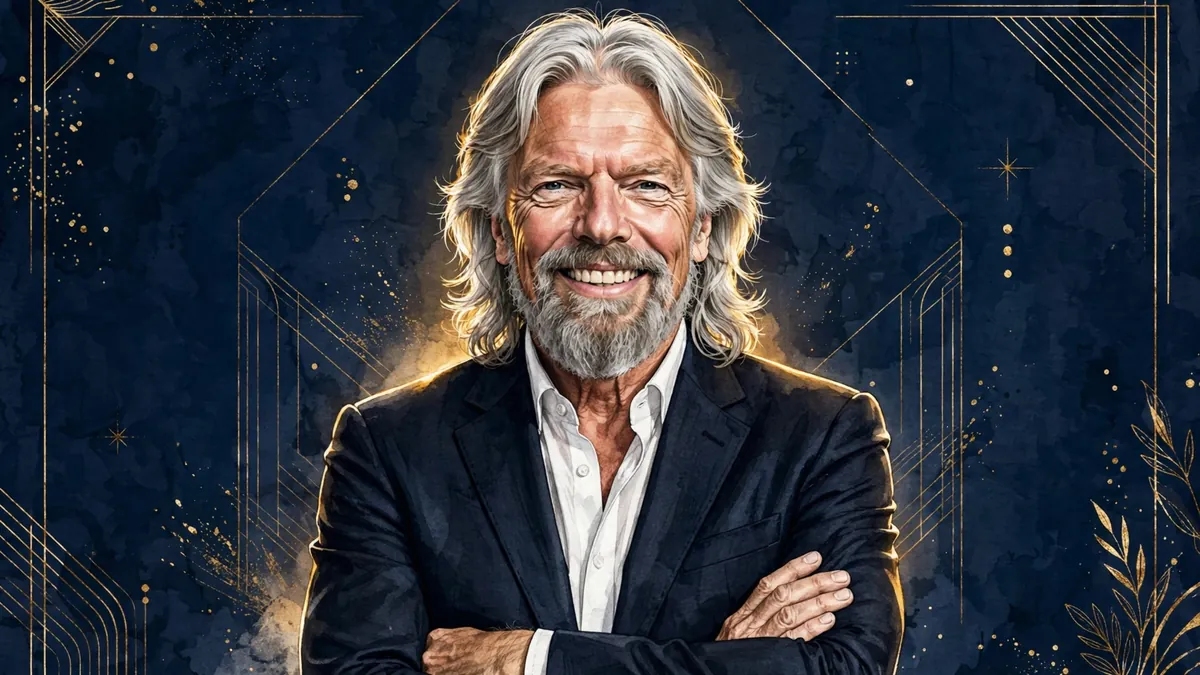
Early Life and School Days
Richard Charles Nicholas Branson was born on July 18, 1950, in Blackheath, London, the eldest of three children of barrister Edward Branson and former ballet dancer and air hostess Eve Branson. The family later moved to Shamley Green in Surrey, where Branson grew up in a household that prized enterprise: his mother ran a string of small businesses, from selling wooden tissue boxes to breeding budgerigars, and the children were expected to find ways to earn money from an early age.
School was a struggle. Branson is dyslexic, and at a time when the condition was barely understood in British classrooms, he was written off by several teachers as a boy who would not amount to much. He left Stowe School at 16 with few qualifications and no clear plan — except a conviction, already fixed, that he would rather build something of his own than work for someone else. That conviction, more than any single business idea, is the thread that runs through the next sixty years. The dyslexia that made reading and exams hard also pushed him toward the skills that made him rich: talking to people, spotting a gap, delegating the detail and selling an idea with total confidence.
His first ventures were small and scrappy. As a teenager he tried breeding budgerigars and growing Christmas trees, neither of which made him rich, but both of which taught him the same lesson he would repeat at Virgin scale: start cheap, test the idea in the real world, and move on fast if it does not work. The habit of treating failure as cheap tuition, rather than disgrace, stayed with him. It explains why a man worth billions could watch Virgin Cola, Virgin Brides and Virgin Orbit fail without losing his nerve — and why his fortune has swung by billions in both directions.
Student Magazine to Virgin Records
Branson’s first real business was Student, a magazine he launched in 1966 at the age of 16, aimed at sixth-formers and university students. He sold advertising by cold-calling companies, interviewed the famous — Mick Jagger was an early subject — and ran the operation out of a basement and, for a stretch, a crypt. The magazine never made him wealthy, but it gave him two assets that mattered far more: a mailing list of young readers and a feel for what that audience wanted to buy.
The next step followed the audience. In 1970, Branson began selling records by mail order at cut prices under the name Virgin, and in 1971 he opened the first Virgin record shop on Oxford Street in London. The name, so the story goes, came from the fact that everyone involved was a complete novice at business — a virgin at it. In 1972 he founded Virgin Records, and the following year the label released its first album, Mike Oldfield’s Tubular Bells, which became a huge seller and put the young label on the map. Virgin Records went on to sign the Sex Pistols, Culture Club, Genesis, Phil Collins and the Rolling Stones, among others. Branson sold the label to Thorn EMI in 1992 for a reported £510 million — the deal that, according to Wealthy Gorilla, coincided with his debut on the Forbes Billionaires Index that same year at an estimated $1.2 billion.
Readers who want the full life story, from Student magazine to the space flights, will find it in the Richard Branson biography on GuideNetWorth, which covers his career step by step. What matters for the money story is the pattern set in those early years: Branson did not invent a product. He took an existing industry — magazines, records, then airlines, trains, mobile phones — and attacked it with better service, lower prices and a brand that promised fun. The Virgin name, written in red, became the asset itself, and that brand is still the single most valuable thing he owns.
The Virgin Atlantic Gamble
Virgin Atlantic began, in Branson’s own telling, with a cancelled flight. In 1984, stranded in Puerto Rico after his flight to the Virgin Islands was cancelled, he chartered a plane, chalked “Virgin Airlines” on a blackboard, sold tickets to the other stranded passengers and covered the cost. The story is probably polished in the retelling, but the airline itself is real enough: Virgin Atlantic’s first flight took off from London Gatwick to Newark on June 22, 1984, with a single leased Boeing 747. The industry expected it to fail within months. British Airways, the dominant carrier, was not amused, and the two airlines spent years in open warfare, including a libel case Branson won in 1993.
The airline lost money for years and nearly sank the whole group more than once — in the early 1990s Branson sold Virgin Records to keep it flying. But Atlantic became the flagship of the Virgin brand: the business that made the name mean something to ordinary travellers, and the one that still anchors his fortune today. Virgin Group retains a 51% stake in the airline, with Delta Air Lines holding the other 49%, a structure that has been in place for more than a decade. When the pandemic grounded world aviation in 2020, that stake was also his biggest problem, as the next sections show.
Atlantic’s recent record is one of the brighter spots in Branson’s 2026 picture. The airline reported a £20 million pre-tax profit for 2024, its first profit since 2016, on record revenues of £3.3 billion, and said it had paid down £500 million of pandemic-era debt since 2022. Those are the numbers that support the Forbes estimate holding steady near $2.8 billion rather than sliding further.
Building the Virgin Group Empire
What exactly is the Virgin Group? It is not one company but a brand, a licensing operation and an investment platform that has put the Virgin name on more than 400 businesses over the years, according to company histories of the group. The model is what Branson has called “branded venture capital”: Virgin typically takes a minority stake and lends its name, its marketing muscle and Branson’s own profile, while operating partners put in the money and run the day-to-day business. The group itself is private, publishes no consolidated accounts, and much of the family’s wealth sits in trusts registered in the British Virgin Islands — which is why outside estimates of his fortune vary so widely.
The roll call of Virgin businesses covers almost every corner of consumer life. Virgin Trains ran the West Coast Main Line in Britain for more than two decades. Virgin Mobile sold phones in Britain, the United States, Australia and elsewhere before being sold off in stages. Virgin Money, the banking arm, was sold to Nationwide in 2024. Virgin Active runs gyms. Virgin Hotels has opened properties in the United States and Britain. Virgin Voyages sails cruise ships aimed at adults. Virgin Australia, the airline, collapsed into administration in 2020 and was bought out of it, then returned to the stock market in 2025. And Virgin Galactic, the space tourism company, took Branson himself to the edge of space in 2021.
Not all of them worked. Virgin Cola, launched in 1994 to take on Coca-Cola, fizzled. Virgin Brides lasted a few years. Virgin Cosmetics, Virgin Vodka and Virgin Cars came and went. The point, for the net worth story, is that the failures were mostly other people’s money — partners and licensees bore the losses — while the successes built the brand. The licensing arm is now, by some measures, his biggest single asset: Bloomberg’s wealth index has valued the Virgin brand licensing business at about $1 billion, making it the largest individual piece of his fortune. That is a remarkable fact about a man famous for airlines and rockets: the name itself may be worth more than any one company that carries it.
Where the Money Comes From
Branson’s fortune is best understood as four buckets, none of which is a salary. He does not draw a billionaire’s pay packet from a public company; he owns pieces of a private empire, collects licensing income from the Virgin name, holds a few listed stakes, and has banked large sums from selling businesses outright. Here is how the buckets stack up in 2026.
Bucket one: the Virgin Group and brand licensing. This is the core. Virgin Group owns the Virgin brand and licenses it to dozens of operating companies, collecting fees that arrive whether or not the underlying business is having a good year. Bloomberg’s wealth index has put the licensing arm at roughly $1 billion in value, and the income it throws off has risen since before the pandemic. The brand is the moat: any new Virgin venture starts with instant recognition in Britain and beyond, and the group gets paid for lending it.
Bucket two: the operating stakes. The largest is the 51% of Virgin Atlantic, an airline that returned to profit in 2024 after years of losses. Then there is the Virgin Hotels Collection, stakes in Virgin Voyages and Virgin Active, and a stake in Virgin Australia following its return to the stock market. These are private, illiquid holdings, valued by comparison with similar listed companies and by the prices paid in real transactions — which is why two honest valuers can disagree by hundreds of millions.
Bucket three: listed shares, chiefly Virgin Galactic. This was once the biggest single holding, worth close to half his fortune at the peak of the space-stock boom. It is now a much smaller minority stake, after Branson sold more than $1 billion of Virgin Galactic stock across 2020 and 2021 to fund the rescue of Virgin Atlantic, and after the shares fell about 98% from their 2021 peak. Fortune reported in April 2024 that, outside his Virgin Money stake, his disclosed publicly traded holdings totalled less than $75 million — a measure of how completely the listed part of his fortune had shrunk.
Bucket four: exits and cash. The Virgin Money sale is the most recent big one. Nationwide completed its takeover of Virgin Money on October 1, 2024, paying £2.8 billion in cash for the whole bank (some reports put the deal value at £2.9 billion). City AM valued Branson’s total windfall from the deal — his stake proceeds plus brand fees — at around £724 million. Earlier exits include Virgin Mobile, Virgin Trains and the 1992 sale of Virgin Records. Cash from exits is what let him keep funding the group through the pandemic without selling the crown jewels, and it is also why the fortune is hard to pin down: the money arrives in lumps, is reinvested through private trusts, and is rarely disclosed.
The honest range: Forbes says $2.8 billion (July–October 2026). TheCelebWiki puts him at $2.6 billion, InfoSeeMedia at $2.5 billion (June 2026), and Celebrity Net Worth at $3 billion. That cluster — $2.5 billion to $3 billion — is the credible range. Outliers exist on both sides: some content sites claim $4.2 billion, and a UK site claims £4 billion (about $5 billion), but neither shows working that stands up against Forbes and Bloomberg, and both sit far above the 2024–2026 reporting from Fortune and the Bloomberg Billionaires Index. We anchor on Forbes and show the range.
The Virgin Galactic Space Bet
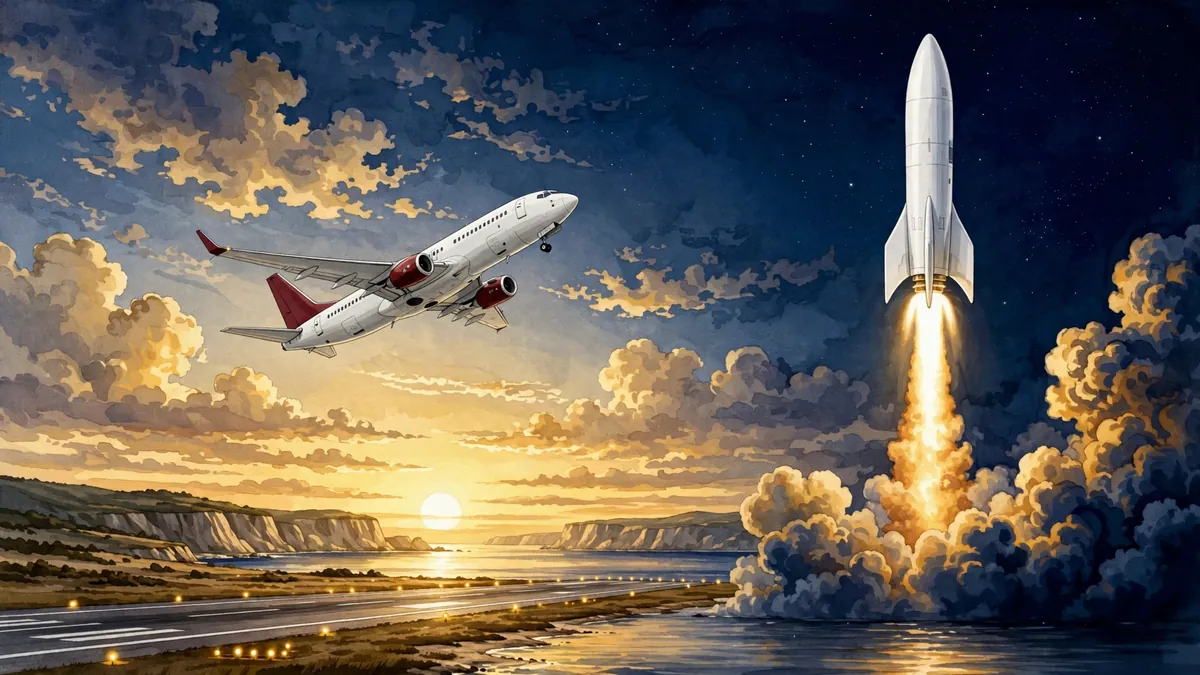
Virgin Galactic, founded in 2004, was Branson’s boldest wager: a company to fly paying tourists to the edge of space. For years it burned cash and missed deadlines. Then, in 2019, it listed on the New York Stock Exchange through a merger with a blank-cheque company founded by Chamath Palihapitiya, and the stock caught the full force of the pandemic-era market boom. In early 2021, at the peak, Branson’s fortune approached $8 billion, according to the Bloomberg Billionaires Index, and Virgin Galactic shares made up almost half of it — the stock had climbed nearly 400% in the run-up.
On July 11, 2021, Branson himself flew aboard VSS Unity to the edge of space, becoming one of the first billionaires to travel on a vehicle he had helped develop, at the age of 71. It was the perfect piece of theatre, and it marked the top. The shares then fell about 98% from their 2021 peak as flights were delayed, results disappointed and the market turned against loss-making growth stocks. Virgin Galactic completed its first fully commercial spaceflight in August 2023, but suspended commercial flights in 2024 while it builds its next-generation Delta-class spacecraft. Tickets have been priced at $450,000.
The sister venture fared worse. Virgin Orbit, the satellite-launch spin-off, listed through its own blank-cheque deal and filed for bankruptcy in April 2023, less than 18 months after listing. Its assets were sold off. The two space companies together explain most of the fortune’s collapse: they were the listed, visible part of Branson’s wealth, and the market revalued them from fantasy to reality in the space of two years. What remains is a minority stake in Virgin Galactic whose value depends entirely on whether the Delta-class ships fly, on schedule, and find enough passengers willing to pay close to half a million dollars a seat.
The Pandemic Fall: Losing Half a Fortune
The numbers tell the fall plainly. In early 2021, the Bloomberg Billionaires Index valued Branson at close to $8 billion. By April 2024, Fortune reported that his wealth had fallen by more than half since 2021, to around $3 billion, dragged down by pandemic losses and the collapse in value of his listed space ventures. A second Fortune report in May 2024 put the figure at $3 billion, roughly where it had stood in 2000. Wealthy Gorilla, tracking the Forbes series, records a two-decade low of $2.1 billion in 2024 before a rebound to $2.8 billion. The Sunday Times Rich List told the same story in pounds: the Branson family’s wealth fell by £1.79 billion in a single year to £2.41 billion in 2023, after Virgin Orbit went bankrupt and the pandemic’s bill came due.
The mechanics were brutal and simple. Virgin Atlantic, Virgin Australia and Virgin Voyages all depend on people travelling, and in 2020 almost nobody did. Virgin Australia collapsed into administration. Virgin Atlantic needed a rescue package of about £1.2 billion to stay airborne. To help fund it, Branson sold more than $1 billion of Virgin Galactic stock across 2020 and 2021 — selling his best-performing asset at a moment when he needed the cash most. He told the BBC that the pandemic had cost the group “a big percentage of our net worth, maybe £1.5 billion”. Fortune’s reporting put the wider picture bluntly: almost $2 billion of his wealth had been tied up in global stock markets, largely in cash-burning American companies listed through blank-cheque firms, and steep falls in those stocks cut their collective value by as much as 95%.
It was the second great wipeout of his career. The first came in the early 1990s, when the airline nearly took the group down and he sold Virgin Records to save it. The pandemic version was larger and faster, and it came when he was 70, not 40. The difference this time was that the brand itself survived intact — customers still trusted Virgin — and the licensing income kept flowing while the operating companies bled. That is what made a recovery possible at all.
The Comeback of 2024 to 2026
Three things have steadied the fortune since the 2024 low, and all three are documented rather than guessed. First, the Virgin Money exit: Nationwide’s £2.8 billion cash takeover completed on October 1, 2024, with City AM putting Branson’s windfall at around £724 million in stake proceeds and brand fees. Second, Virgin Atlantic’s return to profit: a £20 million pre-tax profit in 2024, the first since 2016, on record revenues of £3.3 billion, with £500 million of pandemic-era debt paid down since 2022. Third, Virgin Australia’s return to the stock market, which put a public price on another piece of the empire for the first time since its collapse.
None of this has restored the 2021 peak, and nobody serious expects it to soon. Forbes’ figure has been flat at $2.8 billion through most of 2026 — $2.8 billion in July, $2.8 billion in August, $2.8 billion again in October — which reads as stability rather than growth. The fortune is now a private-markets fortune again: airlines, hotels, cruises, gyms and a brand, valued on earnings and transactions rather than on a stock ticker. That makes it less exciting and less fragile. The next swing, in either direction, will most likely come from Virgin Galactic’s Delta-class programme and from whether Virgin Atlantic can repeat its 2024 profit in a tougher fuel and fares environment.
Branson himself, at 76, shows no sign of retiring. He remains the public face of the brand, still flying, still sailing, still launching ventures and still using his profile to push the causes he cares about. The empire’s value now depends less on his stunts than on the operating performance of the companies — which, for a man who built his name on stunts, is itself a measure of how far the business has come.
Assets, Islands and Real Estate
The most famous asset is Necker Island, the 74-acre private island in the British Virgin Islands that Branson bought in 1978. He made a lowball offer far below the asking price — Celebrity Net Worth puts it at around $150,000 against a $7.5 million asking price — and built it into a luxury resort and his family home. The island is now likely worth well north of $200 million, according to Celebrity Net Worth, and it is where Branson lives for much of the year. A fire in 2011, started by lightning during Hurricane Irene, destroyed the Great House; Branson rebuilt it. The island also hosts paying guests at rates that run into tens of thousands of dollars a night for exclusive use, so it is both a home and a business.
He also owns Makepeace Island in Australia, bought with Brett Godfrey, the co-founder of Virgin Australia, in 2007 for a reported $3 million, and Moskito Island, a second island in the British Virgin Islands bought later and developed as a separate resort. Beyond the islands, the property portfolio includes homes in London and Oxfordshire and the Necker-adjacent holdings of the Virgin Limited Edition collection — the luxury retreats arm that includes properties such as Ulusaba in South Africa and Kasbah Tamadot in Morocco. These are real, valuable assets, but they are a small slice of the total: the fortune is the businesses and the brand, not the houses.
What about cars, jets and yachts? Branson is famously uninterested in collecting them for their own sake. He has access to Virgin aircraft and has owned boats, including the Necker Belle, a catamaran kept at the island, but there is no documented collection of supercars or a private jet fleet in his own name. The toys that do exist are mostly business assets — the airline’s planes, the cruise line’s ships, the space company’s rockets — and they appear on company balance sheets, not his personal one. That is part of why the fortune is so hard to count: the line between Richard Branson the man and Virgin the brand has always been deliberately blurred.

Net Worth Timeline: Year by Year
The table below pulls together the reported figures from Forbes, the Bloomberg Billionaires Index as reported by Fortune, the Sunday Times Rich List and Celebrity Net Worth. Where sources disagree for the same year, the table shows the Forbes-anchored figure and notes the spread. Figures are estimates, not audited accounts.
| Year | Reported estimate | What was happening |
|---|---|---|
| 1992 | $1.2 billion (Forbes debut) | Virgin Records sold to Thorn EMI; Branson joins the Forbes billionaires list |
| 2000 | About $3 billion (Bloomberg, via Fortune) | Virgin Mobile and Virgin Trains era; fortune roughly where it would return to in 2024 |
| 2021 | Close to $8 billion peak (Bloomberg); about $6 billion in some readings | Virgin Galactic stock boom; Branson flies to space in July |
| 2023 | £2.41 billion (Sunday Times Rich List), down £1.79 billion in a year | Virgin Orbit bankrupt in April; pandemic losses still biting |
| 2024 | About $3 billion (Fortune, April and May); $2.1 billion low (Forbes series) | Fortune: wealth more than halved since 2021; Virgin Money sale agreed |
| 2025 | $2.7–$2.8 billion (Forbes) | Virgin Atlantic profitable again; Virgin Australia relists |
| 2026 | $2.8 billion (Forbes, July–October); range $2.5–$3 billion | Forbes rank around 1,477th–1,494th; fortune stable |
The shape of that timeline is the story in miniature: a slow build over thirty years, a sharp peak in 2021 driven by one listed stock, a fall of more than half in three years, and a flat recovery built on the private businesses rather than the market. Readers who see a single number — $2.8 billion, $3 billion, $5 billion — without the timeline are missing the point. The number matters less than the direction, and the direction since 2024 has been steady rather than spectacular.
How Branson Compares to Other Billionaires
At $2.8 billion, Branson is rich by any ordinary measure and modest by billionaire standards. He sits around 1,477th on the Forbes list, in a part of the rankings occupied by people who built one great company rather than a technology monopoly. The comparison that puts him in perspective is with the founders of the companies his empire competes with and admires.
Jeff Bezos, the Amazon founder, is worth an order of magnitude more — read the full breakdown in our Jeff Bezos net worth profile — because Amazon is a listed company whose value the market sets every day, while Virgin is private and valued on estimates. The same gap shows up against the other technology founders: our Mark Zuckerberg net worth profile covers a fortune built on a listed social network, and the numbers are in a different league. Branson’s wealth looks more like that of the old-school investors and operators: our Warren Buffett net worth profile covers a man whose fortune also comes from owning businesses rather than drawing a salary, though Buffett’s is far larger and built over a longer compounding run.
The comparison that flatters Branson most is the one with his own past self. In 2021 he was briefly worth close to $8 billion; in 2024 he was worth about $3 billion; in 2026 he is worth $2.8 billion and the businesses underneath the number are healthier than they were at the peak. A fortune built on a stock bubble is worth less than the number suggests; a fortune built on profitable airlines, hotels and a licensing arm is worth more than the number suggests. By that test, Branson in 2026 is in better shape than Branson in 2021, even though the headline figure is smaller. For more profiles in this series, browse the net worth category on CelebAmerica.
There is also a generational point. Branson belongs to the generation of British entrepreneurs who built empires from nothing in the 1970s and 1980s — the same era that produced the Virgin Records roster and the first Virgin Atlantic flight. The technology founders who now top the rich lists built their fortunes in a decade on network effects and public markets. Branson built his over six decades on brand, service and nerve. The two kinds of fortune behave differently: the technology ones move by billions in a day; Branson’s moves by hundreds of millions in a year. That is why the Forbes figure for him has barely moved through 2026 while the figures for the technology founders swing constantly.
Personal Life and Family
Branson married Joan Templeman in 1989, after meeting her in the late 1970s. They have two children, Holly and Sam, both of whom now work inside the Virgin world — Holly on the people and purpose side of the group, Sam as a film-maker and founder of the Sundog Pictures production company. The family is close and famously informal: Necker Island doubles as a family home and a company gathering place, and Branson’s children and grandchildren are regulars there. He has spoken openly about his dyslexia and about the teachers who told him he would not amount to anything, and he credits his wife with keeping him grounded through the decades of risk-taking.
He is around 5 ft 10 in tall — our Richard Branson height profile covers the measurements in full, including the spread of figures reported across profiles — and he has kept up the physical daredevil streak well into his seventies: kite-surfing, ballooning and swimming, alongside the space flight at 71. The stunts are not just hobbies; they are marketing. Every balloon crossing and every world-record attempt put the Virgin name in front of audiences that advertising could never reach, and the cost of the stunt was a fraction of the value of the coverage.
Branson’s parents shaped him more than he often admits. His father, Edward, was a barrister who supported the early ventures; his mother, Eve, was the restless entrepreneur of the family, forever starting small businesses. He has written that his mother’s habit of setting challenges — making him find his own way home from miles away as a small boy, for example — taught him self-reliance. The family story is part of the brand now, told in his books Losing My Virginity and Finding My Virginity, and it is one of the reasons the public still warms to him: the billionaire who presents himself as the school dropout who got lucky and worked hard, rather than as a financier.
Philanthropy and The Elders
Branson’s giving is organised through Virgin Unite, the group’s non-profit arm, and through his own profile as a campaigner. The best-known piece is The Elders, the group of independent global leaders he co-conceived with Nelson Mandela and Archbishop Desmond Tutu, founded in 2007 to work on peace, human rights and climate. He has also been a loud voice on drug-policy reform, on ocean conservation through the Ocean Unite initiative, and on climate: Virgin has backed sustainable fuels and Branson has offered prizes for carbon-removal technology.
He is also known for a promise that drew headlines and then questions. In 2006 he pledged to invest $3 billion of Virgin’s transport profits over ten years in renewable energy, a pledge that was later reported to have fallen short in practice. The episode is a useful reminder to treat billionaire philanthropy claims the way this article treats net worth claims: as statements to check, not facts to repeat. What is documented is the ongoing work of Virgin Unite and The Elders, and the fact that Branson gives his time and his name to causes that do not obviously help the Virgin brand — prison reform, drug policy and peace work among them.
The philanthropy also matters for the money story in a narrower sense. Branson has said he intends to give away much of his fortune, and the family trusts that hold much of the wealth are structured with that in mind. Nobody outside the family knows the details, and this article does not pretend otherwise. The point for readers is simpler: the $2.8 billion is not a pile of cash waiting to be spent, and the part of it that will end up in charitable hands is a matter for the family, not the public record.
Setbacks and Controversies
A career as long and as public as Branson’s comes with a full share of setbacks, and a fair profile records them. Virgin Orbit’s bankruptcy in April 2023 is the freshest: a satellite-launch business that listed through a blank-cheque deal and collapsed within 18 months, wiping out the investment and leaving creditors and employees to pick up the pieces. Virgin Galactic’s long delays and the suspension of commercial flights in 2024 are a second, still open, question: the company has yet to show it can fly tourists regularly and profitably.
Earlier controversies include the long war with British Airways in the 1980s and 1990s, which ended with Branson winning a libel case and BA paying damages and costs; the failure of Virgin Trains to retain its West Coast franchise, which ended in a legal fight with the government; and the collapse of Virgin Australia into administration in 2020, which cost jobs and left creditors with losses. Branson has also faced criticism for the way the group used tax-efficient structures and for asking the British government for support for Virgin Atlantic during the pandemic while living as a tax resident overseas — criticism he has answered by pointing to the jobs and the taxes the Virgin companies pay in Britain.
None of these episodes has produced a finding of wrongdoing against Branson personally, and none of them dented the brand’s public standing for long. But they belong in a net worth article because they explain the volatility: a fortune built on operating companies in cyclical industries, with big bets on unproven technology, will swing hard when those industries hit trouble. The 2021–2024 fall was not bad luck; it was the predictable result of the structure Branson chose, and the recovery since has been the predictable result of the same structure once the cycle turned.
Frequently Asked Questions
What is Richard Branson’s net worth in 2026?
Richard Branson’s net worth is estimated at $2.8 billion as of November 2026, according to Forbes, which ranked him around 1,477th among the world’s billionaires in July 2026. The honest range across credible sources is about $2.5 billion to $3 billion, with TheCelebWiki at $2.6 billion, InfoSeeMedia at $2.5 billion and Celebrity Net Worth at $3 billion.
How did Richard Branson lose half his fortune?
His fortune peaked at close to $8 billion in early 2021, according to the Bloomberg Billionaires Index, then fell to about $3 billion by April 2024, according to Fortune. The pandemic grounded his airlines and cruise line, Virgin Australia collapsed into administration, Virgin Atlantic needed a £1.2 billion rescue, and Virgin Galactic shares fell about 98% from their 2021 peak. He also sold more than $1 billion of Virgin Galactic stock in 2020 and 2021 to fund the airline rescue.
What is Richard Branson’s main source of income?
His wealth comes from owning the Virgin Group and licensing the Virgin brand, not from a salary. The biggest pieces are the brand licensing arm (valued at about $1 billion by Bloomberg’s wealth index), his 51% stake in Virgin Atlantic, stakes in Virgin Hotels, Virgin Voyages and Virgin Active, a minority stake in Virgin Galactic, and cash from exits such as the 2024 Virgin Money sale.
How old is Richard Branson?
Richard Branson was born on July 18, 1950, in Blackheath, London, and turned 76 on July 18, 2026. He flew to the edge of space aboard Virgin Galactic’s VSS Unity in July 2021 at the age of 71.
How tall is Richard Branson?
Most profiles put Richard Branson at around 5 ft 10 in (179 cm), though some sources list him as tall as 6 ft. The measurements and the spread across sources are covered in our Richard Branson height profile on CelebAmerica.
Does Richard Branson own Necker Island?
Yes. He bought Necker Island, a 74-acre island in the British Virgin Islands, in 1978 for a fraction of its asking price — Celebrity Net Worth puts his offer at around $150,000 against a $7.5 million asking price. It is his home and a luxury resort, and is now likely worth well north of $200 million. He also owns Makepeace Island in Australia and Moskito Island nearby.
Is Richard Branson still a billionaire?
Yes. Forbes estimates his fortune at $2.8 billion in 2026, and every credible source puts him between $2.5 billion and $3 billion. He has been a billionaire since his debut on the Forbes list in 1992 at an estimated $1.2 billion, and even at his 2024 low the estimates never dropped below about $2.1 billion.
What happened to Virgin Orbit?
Virgin Orbit, the satellite-launch spin-off of Virgin Galactic, listed through a blank-cheque deal and filed for bankruptcy in April 2023, less than 18 months after listing. Its assets were sold off. The failure was one of the main drivers of the fall in Branson’s fortune from its 2021 peak.
Final Thoughts
Richard Branson’s net worth in 2026 — $2.8 billion by Forbes’ estimate, in a credible range of $2.5 billion to $3 billion — is a smaller number than the one that made headlines in 2021, and a healthier fortune than the one behind that headline. The peak was built on a single listed stock at the top of a market bubble; the current figure rests on a profitable airline, a licensing arm that throws off income in good years and bad, and a string of private businesses that have survived a pandemic, a bankruptcy and a rescue. The story of the last five years is not that Branson lost half his money. It is that the half he kept is the half that was real all along: the brand, the businesses and the name. At 76, with Virgin Atlantic profitable again, Virgin Money sold and Virgin Galactic’s next spacecraft still to prove itself, the next chapter of the fortune will be decided by operations, not by stunts — which may be the most surprising turn in a career built on them.
Sources and Reporting
This article was researched from live reporting in November 2026. The headline figure is Forbes’ estimate of $2.8 billion (July–October 2026), as reported by Forbes. The 2021 peak of close to $8 billion and the fall to about $3 billion come from the Bloomberg Billionaires Index as reported by Fortune in April and May 2024. The Virgin Money sale, Virgin Atlantic’s 2024 profit and the Virgin Galactic share collapse are covered in the same Fortune reporting and in company histories at CompaniesHistory. Lower readings of $2.5 billion and $2.6 billion come from InfoSeeMedia and TheCelebWiki; the $3 billion reading from Celebrity Net Worth; and the timeline figures from the Sunday Times Rich List and Wealthy Gorilla. Biographical facts are drawn from Britannica and Virgin’s own published histories.
How we estimated this: Richard Branson’s fortune is private. Virgin Group publishes no consolidated accounts and much of the family’s wealth sits in trusts, so no audited personal figure exists. We anchor on Forbes’ $2.8 billion estimate (July–October 2026) and show the honest range of $2.5 billion to $3 billion across named sources, with dated notes on each. Figures tied to listed shares move with the market; private holdings are valued by comparison and by real transaction prices, such as the Virgin Money sale. Outlier figures above $4 billion are noted and not used, because their working does not stand up against Forbes, Bloomberg and Fortune. Estimates may differ from the private reality, and they will move — check the Forbes profile for the latest reading.