Last updated: November 10, 2026 · By Celebamerica Editorial Staff
Mark Cuban’s net worth is estimated at $6.8 billion as of October 2026, according to Forbes’ real-time billionaire tracker. The 68-year-old Dallas Mavericks minority owner, former Shark Tank star, and co-founder of Cost Plus Drugs sits inside a wider published range of $6 billion to $9.6 billion, because Forbes, Bloomberg, and Celebrity Net Worth value his private holdings differently. Forbes’ own 2026 Billionaires List put him at $6 billion, while the Bloomberg index runs higher at about $9.6 billion and Celebrity Net Worth splits the difference at $6.5 billion.
Cuban built the fortune in three big moves: a software company he sold for about $6 million in 1990, the $5.7 billion sale of Broadcast.com to Yahoo in 1999, and the Dallas Mavericks, bought for $285 million in 2000 and sold at a $3.5 billion valuation in December 2023. What follows is the full account — every deal, every income stream, the Shark Tank portfolio, the drug-pricing company, and why the trackers disagree by billions.
Quick Facts: Mark Cuban at a Glance
| Full Name | Mark Cuban |
|---|---|
| Date of Birth | July 31, 1958 — Pittsburgh, Pennsylvania |
| Age in 2026 | 68 |
| Height | 6 feet 2 inches (188 cm) |
| Estimated Net Worth | $6.8 billion (Forbes real-time, October 2026); published range $6 billion to $9.6 billion |
| Primary Income Sources | Broadcast.com sale, Dallas Mavericks, Shark Tank investments, Cost Plus Drugs |
| Known For | Broadcast.com, Dallas Mavericks, Shark Tank, Cost Plus Drugs, 2929 Entertainment |
| Spouse | Tiffany Stewart (married 2002) |
| Children | Three |
| Residence | Dallas, Texas |
In This Article
- Quick Facts: Mark Cuban at a Glance
- Who Is Mark Cuban?
- From Pittsburgh to the First Millions
- The Broadcast.com Sale That Made Him a Billionaire
- The Dallas Mavericks: Buying, Winning, and Selling
- Shark Tank: Fourteen Seasons as America’s Best-Known Shark
- Cost Plus Drugs and the Fight Over Prescription Prices
- Where the Money Sits Now: The Fortune in 2026
- Net Worth Growth Over the Years
- How Mark Cuban’s Wealth Compares With Other Billionaires
- Real Estate, Cars, and Lifestyle
- Personal Life and Family
- Controversies and Legal Battles
- What Mark Cuban Is Doing in 2026
- Frequently Asked Questions
- The Bottom Line
- Sources & Reporting
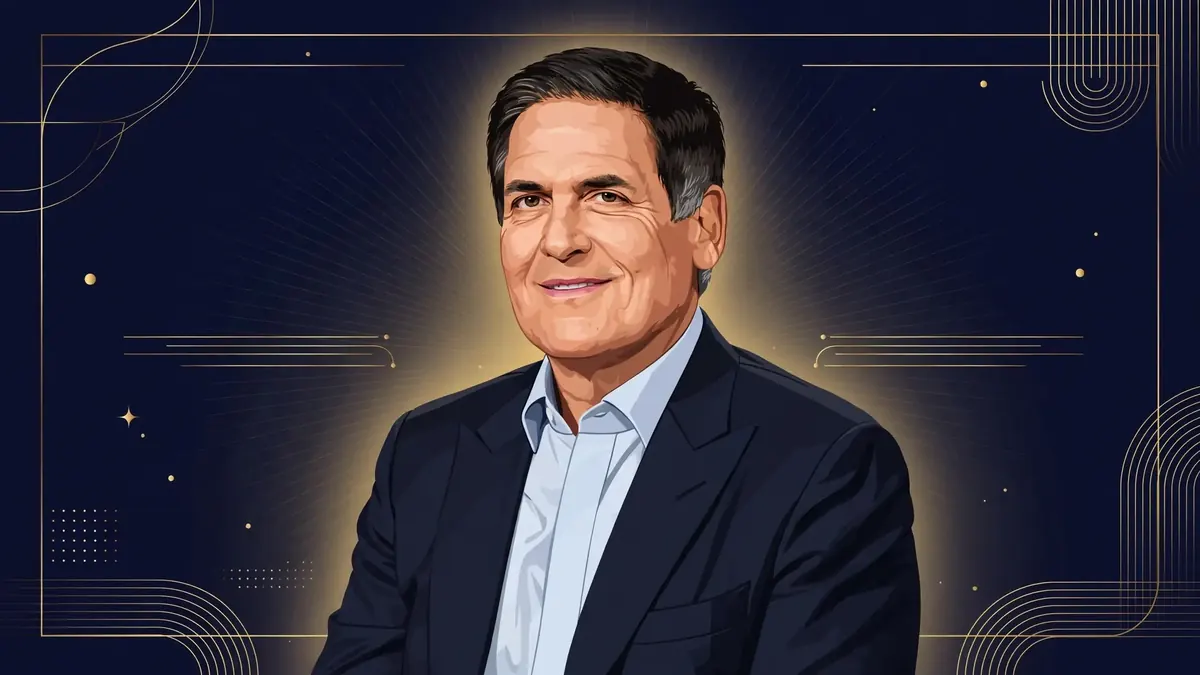
Who Is Mark Cuban?
Mark Cuban is an American businessman, entrepreneur, and television personality, born July 31, 1958, in Pittsburgh, Pennsylvania. He is the former principal owner and current minority owner of the Dallas Mavericks of the NBA, a co-owner of 2929 Entertainment, and the co-founder of Mark Cuban Cost Plus Drug Company. For fourteen years he was the most recognizable investor on ABC’s Shark Tank, and he remains one of the best-known self-made billionaires in the United States.
Cuban grew up in a working-class Jewish family in the Pittsburgh suburb of Mount Lebanon. His father, Norton Cuban, worked in an automobile upholstery shop, and his mother, Shirley, changed jobs often. Money was tight enough that the young Cuban started earning early — selling garbage bags door to door at twelve, then magazines, stamps, and coins. The habit never left him: he has said more than once that the only way he knew to get something was to sell something, and the selling started before he was a teenager.
He went to the University of Pittsburgh for a year, then transferred to Indiana University, where he studied at the Kelley School of Business and graduated in 1981. At eighteen he was already sneaking into MBA classes, a story he still tells with pride — one of the professors whose classes he crashed, Wayne Winston, later became the NBA’s first analytics hire, and the two stayed in touch for decades. Cuban’s college years were a patchwork of side businesses: he ran a bar, gave dance lessons, and wrote a chain letter that he has joked about ever since.
After graduation he moved to Dallas, where he worked as a bartender and then as a salesman for a computer software retailer. He was fired from that job at twenty-four — a firing he now calls the best thing that ever happened to him, because it pushed him to start his own company instead of working for someone else. That company was MicroSolutions, and it was the first real building block of the fortune. A fuller account of his early years and the road from Pittsburgh to Dallas is covered in our sister site’s Mark Cuban biography, which follows the same timeline from a different angle.
From Pittsburgh to the First Millions
MicroSolutions was a systems integrator — a company that sold and installed computer systems for businesses — and Cuban started it in 1983 with little more than hustle and a willingness to learn whatever a client needed. The early years were rough. In his own telling, an employee once embezzled $82,000 from the company, leaving about $2,000 in a bank account that had held $84,000. Cuban kept the business alive by sleeping on the office floor, reading software manuals at night, and doing the work himself when there was nobody else to do it.
By 1990 the company had grown enough to attract a buyer. Cuban sold MicroSolutions to CompuServe for about $6 million, personally netting roughly $2 million after taxes and other costs, according to later reporting. He was thirty-one, a millionaire for the first time, and he did what a lot of newly rich thirty-one-year-olds do: he bought a lifetime pass on American Airlines and travelled. But the travelling did not last long. Within a few years he was back in business, this time chasing a much bigger idea — putting live sports and radio on the internet.
The lesson of MicroSolutions shows up in everything Cuban did afterward. He learned to sell before he learned to build, to keep costs low, to read the manual himself rather than hire someone to read it, and to treat a firing or a setback as a starting gun rather than a verdict. Those habits explain why the next company he built sold for nearly a thousand times what the first one did.
The Broadcast.com Sale That Made Him a Billionaire
In 1995 Cuban and his college friend Todd Wagner founded AudioNet, a company that streamed live sports broadcasts and radio stations over the internet — an idea that sounded far-fetched when most people were still on dial-up. The company grew fast as the web grew, renamed itself Broadcast.com, and went public in 1998 in one of the hottest IPOs of the dot-com boom. Its shares more than doubled on the first day of trading.
A year later, in April 1999, Yahoo bought Broadcast.com for about $5.7 billion in stock. Cuban was forty years old and, on paper, a billionaire. The deal is still studied as one of the great exits of the dot-com era, not only because of its size but because of what Cuban did next. He knew the stock he had been paid in was Yahoo stock, and he knew the dot-com market was overheated. So he hedged — buying put options that locked in much of the value even as Yahoo’s share price later collapsed. When the bubble burst, most paper billionaires of 1999 lost nearly everything. Cuban kept most of his.
That hedge is the single most important financial decision of his life, and it is the reason the $5.7 billion sale turned into durable wealth instead of a footnote. It also set the pattern for the rest of his career: buy something undervalued, improve it or ride a wave, and get out at the right moment with the downside protected.
The Broadcast.com money gave Cuban the freedom to do what he wanted next, and what he wanted was a basketball team. It also gave him a reputation — the brash young billionaire who had beaten the dot-com crash — that followed him into every deal after.
The Dallas Mavericks: Buying, Winning, and Selling
In January 2000 Cuban bought a controlling interest in the Dallas Mavericks for a reported $285 million. The team was a mess at the time — it had missed the playoffs for most of the previous decade, played in a half-empty arena, and was widely seen as one of the NBA’s least serious franchises. Cuban changed that fast. He upgraded the locker room, the travel, the training staff, and the fan experience, sat courtside in a T-shirt shouting at referees, and turned the Mavericks into one of the league’s most visible teams.
The investment paid off on the court as well as on the balance sheet. With Dirk Nowitzki leading the team, Dallas reached the NBA Finals in 2006 and won its first championship in 2011, beating the Miami Heat in six games. That title remains the high point of Cuban’s time as an owner and the moment his Mavericks purchase went from a rich man’s hobby to a sporting legacy.

By 2023 the economics of the deal had become extraordinary. In December of that year Cuban sold a majority stake in the Mavericks to the families of Miriam Adelson and Patrick Dumont at a franchise valuation of about $3.5 billion — more than twelve times what he had paid in 2000. Forbes, via Parade, reported that he sold approximately 58 percent of the franchise for an estimated $2 billion before taxes. He kept about a 27 percent minority stake and control of basketball operations, according to ESPN, in one of the most unusual ownership structures in professional sports.
The Mavericks deal is the second great exit of Cuban’s career, and it works out to roughly 11 percent a year over twenty-four years on the purchase price — on an asset he also got to enjoy courtside. Even after the sale, the retained stake is one of the largest single items in his fortune, and it is also one of the hardest for the trackers to value, since NBA franchise values are private and move with each new sale in the league.
Cuban has not left sports investing behind. In July 2026 Harbinger Sports Partners, a private equity firm he backs that focuses on minority stakes in major sports franchises, acquired a minority stake in the Athletics, the Major League Baseball franchise. The move showed that the Mavericks sale was not a retirement from sports — it was a reshuffle into a new way of owning teams.
Shark Tank: Fourteen Seasons as America’s Best-Known Shark
Cuban first appeared on ABC’s Shark Tank as a guest investor in 2011 and became a regular Shark the following season. Over fourteen years he became the show’s most recognizable investor — the one who asked the bluntest questions, made the biggest offers, and closed more deals than any of his fellow Sharks. He left after season sixteen, with his final appearance airing in the season finale on May 16, 2025. He has said he wanted to spend more time with his family after more than a decade of filming.
The money side of Shark Tank is smaller than the headlines suggest, and Cuban has been honest about that. Trackers put his on-air commitments at about $67.8 million across his time on the show, and he said in 2022 that the portfolio was at a net loss overall — a reminder that television investing is not the same as the disciplined deal-making that built his fortune. The show’s real value to Cuban was different: it made him a household name, put his business judgment on display every week, and gave him a pipeline of small companies to back.
Some of those bets worked out well. In 2015 he invested $300,000 for 25 percent of Dude Wipes, a flushable-wipes company; by 2026 the company had passed $1 billion in lifetime retail sales. Other deals quietly failed, which is normal for early-stage investing. The Shark Tank years also kept Cuban in the public eye through the 2010s and early 2020s, which helped everything else he touched — from Cost Plus Drugs to his sports investments — reach a wider audience.
His exit in 2025 closed the television chapter of his career. The show’s seventeenth season premiered in September 2025 without him, and Cuban has spent the time since focused on his drug-pricing company and his sports investments.
Cost Plus Drugs and the Fight Over Prescription Prices
The most important venture of Cuban’s later career has nothing to do with basketball or television. In January 2022 he and physician-entrepreneur Alex Oshmyansky — who had cold-emailed Cuban about the idea a few years earlier — launched the Mark Cuban Cost Plus Drug Company, an online pharmacy that sells generic prescription drugs at the manufacturer’s cost plus a 15 percent markup, a $5 pharmacist fee, and $5 shipping. The price of every drug is printed in the open, and the company says it is still the only pharmacy with a fully public price list and an open API.
The contrast with normal American drug pricing is the whole point. At launch, the company showed generic imatinib, a leukemia drug, at $47.10 a month against a retail price above $9,600. That single example did more to explain the business than any press release could. By 2026 the pharmacy offered more than 2,300 prescription products and had expanded its partnerships with health plans, employers, and other pharmacies. In April 2026 it deepened its collaboration with CenterWell Pharmacy to build employer-focused prescription solutions.

Cost Plus Drugs is also the main reason the net worth trackers disagree about Cuban by billions. The company is private, its valuation is not disclosed, and Forbes prices it conservatively while Bloomberg prices it higher. Cuban himself has made the company a campaign as much as a business, arguing in interviews and in a podcast conversation in October 2026 that three pharmacy benefit managers control about 85 percent of the market and that breaking up vertically integrated insurers and benefit managers would help patients and his business alike. In 2026 the company put him on a government price-comparison site, in a partnership with a health insurer, and on a New Jersey committee working to cut state-worker health costs.
Alongside the pharmacy, Cuban co-founded and co-owns 2929 Entertainment, the media company behind film production and distribution, and co-founded AXS TV (originally HDNet). He has also backed dozens of startups through his Shark Tank portfolio and his own investment vehicles, and in May 2026 he said he had sold most of his bitcoin — a holding he had talked about publicly for years but which Forbes does not count among his named sources of wealth.
Where the Money Sits Now: The Fortune in 2026
No tracker publishes a full balance sheet for Cuban, and this article does not pretend one exists. What the public record does show is a fortune built on three exits and a portfolio of private holdings that are valued differently by every outlet that tries. The table below lays out the pieces as the sources report them.
| Holding / Event | What the sources say |
|---|---|
| Broadcast.com sale (1999) | About $5.7 billion in Yahoo stock; hedged, so most of the value survived the dot-com crash |
| MicroSolutions sale (1990) | About $6 million; Cuban personally netted roughly $2 million |
| Dallas Mavericks | Bought 2000 for a reported $285 million; majority stake sold December 2023 at a $3.5 billion valuation; about 27% retained |
| Shark Tank portfolio | About $67.8 million invested on air, per trackers; Cuban said in 2022 the portfolio was at a net loss overall |
| Cost Plus Drugs | Valuation undisclosed; the main reason trackers disagree by billions |
| Other holdings | 2929 Entertainment, AXS TV, dozens of startup stakes, Harbinger Sports Partners (Athletics minority stake, July 2026), real estate |
Why the range is so wide: Forbes’ real-time figure of $6.8 billion (October 2026) anchors this article because it is the freshest named-source figure. The Forbes 2026 Billionaires List figure of $6 billion and the Bloomberg index figure of about $9.6 billion use the same public facts and different private valuations — mostly of the Mavericks minority stake and Cost Plus Drugs. Celebrity Net Worth’s $6.5 billion sits between them. One outlet’s September 2026 figure of $10.4 billion is set aside here as an unexplained outlier. Treat every number in this article as an estimate, not a bank balance.
For readers who follow billionaire wealth more broadly, our net worth category collects the same kind of estimate for dozens of other public figures, each one adjudicated the same way — named sources, ranges on conflict, and no invented figures.
Net Worth Growth Over the Years
Cuban’s wealth did not grow in a straight line. It jumped in steps — a company sale, a stock sale, a team sale — with long flat stretches in between while private holdings sat quietly on the books. The timeline below uses the figures the trackers published at the time.
| Year | Milestone and estimate |
|---|---|
| 1990 | MicroSolutions sold for about $6 million; Cuban nets roughly $2 million |
| 1999 | Broadcast.com sold to Yahoo for about $5.7 billion in stock; Cuban becomes a billionaire at 40 |
| 2000 | Buys the Dallas Mavericks for a reported $285 million |
| 2011 | Mavericks win the NBA championship; Cuban joins Shark Tank the same year |
| 2022 | Cost Plus Drugs pharmacy launches; Forbes estimates around $4.7 billion at the time |
| 2023 | Mavericks majority stake sold at a $3.5 billion valuation; Forbes estimate rises past $6 billion |
| 2025 | Leaves Shark Tank after season sixteen; Forbes 2026 Billionaires List figure $6 billion |
| 2026 | Forbes real-time $6.8 billion (October 2026); range $6 billion to $9.6 billion |
The 2022 figure in that table deserves a note: tracker estimates from that year ran lower because the Mavericks were still valued on the books at well under their eventual sale price. The December 2023 sale repriced the team in public, and the trackers moved Cuban’s estimate up with it. That is a useful reminder of how these numbers work — a private holding is worth what the last comparable sale says it is worth, and a single transaction can move a billionaire’s published fortune by a billion dollars overnight.
How Mark Cuban’s Wealth Compares With Other Billionaires
Cuban’s $6.8 billion puts him in the second tier of the world’s rich — far below the founders of the biggest technology companies, but comfortably ahead of most celebrity entrepreneurs. The comparison is instructive because it shows how different the paths to a fortune can be.
| Billionaire | Main wealth source | Forbes 2026 (rounded) | What links them to Cuban |
|---|---|---|---|
| Warren Buffett | Investing, Berkshire Hathaway | About $150 billion | The investor Cuban is most often measured against; our profile of Warren Buffett covers his story |
| Bill Gates | Microsoft, investments | About $110 billion | Another software fortune, built a generation earlier; see the Bill Gates biography |
| Mark Zuckerberg | Meta, social media | More than $200 billion | A technology founder whose company, like Broadcast.com, rode a wave Cuban understands well; see the Mark Zuckerberg biography |
| Sara Blakely | Spanx, retail | About $1.3 billion | A self-made founder who, like Cuban, sold a stake in her own company and kept building; see the Sara Blakely biography |
| Richard Branson | Virgin Group, airlines and media | About $2.6 billion | A fellow brash entrepreneur-owner who built a brand around himself |
| Oprah Winfrey | Media, OWN, Weight Watchers stake | About $3 billion | A television fortune built on a personal brand, like Cuban’s Shark Tank years |
The pattern in that table is the point. Buffett and Gates made their money by holding great assets for decades. Zuckerberg made his by founding a platform and never selling it. Cuban made his by selling — three times, at the right moment, with the downside protected. The Broadcast.com hedge and the Mavericks sale are the same skill applied twice: know when the asset is worth more to a buyer than it is to you, and take the money.
Cuban also sits in a different league from the celebrity rich. Actors and athletes with nine-figure fortunes — the kind this site usually covers — made their money from salaries, endorsements, and licensing. Cuban made his from equity. That is why his fortune is measured in billions rather than hundreds of millions, and why it moves with private-company valuations rather than with box-office receipts or contract renewals.
Real Estate, Cars, and Lifestyle
For a billionaire, Cuban lives with unusual restraint in some areas and obvious extravagance in others. He has long lived in Dallas, in a large home in the city’s Preston Hollow neighborhood, and he keeps his daily life close to the Mavericks and his businesses rather than splitting his time between coasts. In 2021 he bought the small Texas town of Mustang — all of it — a purchase that made headlines precisely because it was so Cuban: a whole town, bought on a whim, for a price he has never confirmed.
His most famous purchase came in 1999, right after the Broadcast.com sale, when he bought a Gulfstream V private jet online for $40 million — at the time the largest single e-commerce transaction on record, according to Guinness World Records. The jet was both a toy and a statement: the internet billionaire buying a plane on the internet.
On spending generally, Cuban is famously practical. He has said for years that he does not buy expensive clothes or jewelry, that he would rather spend on experiences and on his companies, and that the best investment he ever made was in himself — learning new skills rather than buying new things. He has also been a public voice against the idea that saving alone builds wealth, arguing instead that investing in skills and in businesses is what moves the needle. That philosophy shows up in his 2026 comments as well: when asked what people should do with their money, he keeps coming back to learning and to starting something of their own.
Personal Life and Family
Cuban married Tiffany Stewart in 2002, in a quiet ceremony in Barbados that was deliberately low-key for a billionaire wedding. They have three children — daughters Alexis and Alyssa and son Jake — and the family lives in Dallas. Cuban has spoken often about keeping his children grounded: they do chores, they do not get extravagant allowances, and he has said he wants them to earn their own way rather than grow up inside a fortune.
He is close to his parents’ story — the working-class Pittsburgh upbringing, the father in the upholstery shop — and he returns to it whenever he is asked about money. It is the frame he uses for his own spending habits and for the advice he gives young entrepreneurs: start small, sell something, learn the numbers, and do not wait for permission.
Outside business, Cuban is a visible Dallas citizen: courtside at Mavericks games, active in local causes, and outspoken on politics and public policy. He has flirted publicly with the idea of running for office more than once and has backed independent candidates and causes, but he has never run. In recent years his public advocacy has focused on drug pricing, where Cost Plus Drugs gives him both a business and a platform.
Controversies and Legal Battles
The biggest legal fight of Cuban’s career came in 2008, when the U.S. Securities and Exchange Commission filed civil insider-trading charges against him over shares in a Canadian search company, Mamma.com. The SEC alleged that Cuban sold his stake after learning confidential information about a stock offering. Cuban denied the charge, fought it in court for five years, and in October 2013 a federal jury in Dallas found him not liable. He has said since that the case cost him millions in legal fees and that he pursued it to clear his name rather than settle.
He has also been fined repeatedly by the NBA for criticizing referees and league officials — more than $2 million in fines over his time as Mavericks owner, by most counts — and he has treated the fines as a cost of doing business, even matching some of them with charitable donations. The fines became part of his public image: the owner who cared too much, said so too loudly, and paid for it.
More recently, the February 2025 trade that sent Luka Dončić from Dallas to the Los Angeles Lakers drew anger from Mavericks fans, and Cuban — by then a minority owner without control of basketball decisions — has said publicly that he felt he let the fans down. The episode is a reminder of how much the sale changed his role: he kept a stake and a courtside seat, but the decisions are no longer his to make.
What Mark Cuban Is Doing in 2026
Cuban’s 2026 looks different from any year since 1999. He is no longer a television star, no longer the controlling owner of a basketball team, and no longer a crypto holder of any size — he said in May 2026 that he had sold most of his bitcoin. What he is, instead, is a drug-pricing campaigner with a company to run, a sports investor with a new vehicle, and a billionaire whose fortune now depends more on private valuations than on any single public event.
Cost Plus Drugs remains the center of his working life. The April 2026 collaboration with CenterWell Pharmacy pushed the company further into employer health plans, and its presence on a government price-comparison site and in state-level health-cost work in New Jersey showed the model moving from a startup story into public policy. Cuban’s argument has not changed since launch: publish the price, add a small markup, and let the middlemen explain themselves.
In sports, the July 2026 Athletics investment through Harbinger Sports Partners marked his return to team ownership in a new form — minority stakes across leagues, rather than control of one franchise. And in October 2026 he sat for a long podcast conversation in which he talked through the Mavericks sale, the Dončić trade, the pharmacy-benefit-manager fight, and the early hustles that started it all — selling garbage bags at twelve, getting fired at twenty-four, and the embezzlement that nearly ended MicroSolutions before it began.
At sixty-eight, Cuban shows no sign of slowing down. The fortune is secure, the companies are running, and the next chapter — drug prices, sports stakes, and whatever he starts next — is still being written.
Frequently Asked Questions
What is Mark Cuban’s net worth in 2026?
Mark Cuban’s net worth is estimated at $6.8 billion as of October 2026, according to Forbes’ real-time billionaire tracker. The published range across the major trackers runs from $6 billion (Forbes 2026 Billionaires List) to about $9.6 billion (Bloomberg index), with Celebrity Net Worth at $6.5 billion. The spread comes from different valuations of his private holdings, mainly his retained Dallas Mavericks stake and Cost Plus Drugs.
How did Mark Cuban make his money?
Cuban made his fortune in three big moves. He sold his first company, MicroSolutions, for about $6 million in 1990. He sold Broadcast.com to Yahoo for about $5.7 billion in stock in 1999, and hedged the stock so most of the value survived the dot-com crash. And he bought the Dallas Mavericks for $285 million in 2000, then sold a majority stake in December 2023 at a $3.5 billion valuation while keeping about 27 percent.
Does Mark Cuban still own the Dallas Mavericks?
Yes, but only as a minority owner. In December 2023 Cuban sold a majority stake in the Mavericks to the families of Miriam Adelson and Patrick Dumont at a valuation of about $3.5 billion. He kept roughly a 27 percent stake and control of basketball operations, according to ESPN. In July 2026 he also backed a minority investment in Major League Baseball’s Athletics through Harbinger Sports Partners.
How much did Mark Cuban sell the Mavericks for?
The sale valued the whole franchise at about $3.5 billion. Forbes, via Parade, reported that Cuban sold approximately 58 percent of the team for an estimated $2 billion before taxes. He had bought a controlling interest in 2000 for a reported $285 million, so the sale returned more than twelve times his purchase price over twenty-three years.
Why did Mark Cuban leave Shark Tank?
Cuban left Shark Tank after season sixteen, with his final appearance airing on May 16, 2025. He has said he wanted to spend more time with his family after more than a decade of filming. He joined the show as a guest investor in 2011, became a regular the next season, and committed about $67.8 million on air over his fourteen years as a Shark.
What is Mark Cuban Cost Plus Drugs?
Mark Cuban Cost Plus Drug Company is an online pharmacy Cuban co-founded with Dr. Alex Oshmyansky. Its pharmacy launched in January 2022, selling generic prescription drugs at the manufacturer’s cost plus a 15 percent markup, a $5 pharmacist fee, and $5 shipping, with every price published openly. By 2026 it offered more than 2,300 prescription products and had expanded into partnerships with health plans and employers.
How old is Mark Cuban?
Mark Cuban is 68 years old in 2026. He was born on July 31, 1958, in Pittsburgh, Pennsylvania, and became a billionaire at forty when Yahoo bought Broadcast.com in 1999.
How tall is Mark Cuban?
Mark Cuban is 6 feet 2 inches tall (188 cm). That is the figure the most detailed profiles agree on, though some sources list him slightly taller at 6 feet 3 inches.
The Bottom Line
Mark Cuban’s net worth is $6.8 billion by Forbes’ real-time count in October 2026, inside a published range of $6 billion to $9.6 billion — and the range is the honest answer, because no public filing lists his private assets. What is not in doubt is how the money was made: a $6 million software sale, a $5.7 billion internet exit protected by a smart hedge, and a $285 million basketball team sold at a $3.5 billion valuation. Three exits, three well-timed decisions, one fortune. The drug-pricing company he is building now may one day matter more than any of them — and if the trackers are still arguing about its value, that is only because it has not been sold yet.
Sources & Reporting
This article was reported from live sources in November 2026. Net worth anchor and range: Forbes real-time via Parade (October 2026) and Inc. (October 27, 2026); Forbes 2026 Billionaires List via CultureMap Dallas and Investormint ($6 billion); Bloomberg index figure via Net Worth Rankings ($9.6 billion); Celebrity Net Worth ($6.5 billion). Career dates and biography: Wikipedia and Britannica Money (updated October 9, 2026). Mavericks purchase and sale: Parade and ESPN (27% retained stake, $3.5 billion valuation, $2 billion before taxes). Shark Tank: Parade, People and TV Insider (final episode May 16, 2025), SharkTankInsights ($67.8 million on air), Total Magazine (Dude Wipes). Cost Plus Drugs: Parade, Total Magazine, Winchell House (2,300+ products, CenterWell collaboration). 2026 developments: Harbinger Sports Partners and the Athletics stake (Parade, July 2026), bitcoin sale (May 2026), and the October 2026 Build or Break podcast conversation.
How we estimated this: we anchor on the Forbes real-time figure of $6.8 billion reported in October 2026, because it is the freshest figure from a named tracker, and we show the full $6 billion to $9.6 billion range because Forbes, Bloomberg, and Celebrity Net Worth value Cuban’s private holdings — the Mavericks minority stake and Cost Plus Drugs — differently. No public filing lists his assets, debts, and taxes, so every figure here is an estimate and the true number may be higher or lower.
Sources consulted (homepages): Forbes, Bloomberg, Celebrity Net Worth, Parade, Inc., ESPN, Wikipedia, Cost Plus Drugs.