By Celebamerica Editorial Staff | Last updated: November 17, 2026
Manny Pacquiao’s net worth is estimated at $220 million as of November 2026, according to Celebrity Net Worth, whose snapshot of the Filipino boxing icon was dated November 5, 2026. That figure puts Pac-Man among the richest boxers alive — built on more than $500 million in career boxing and endorsement earnings, a record eight world titles in eight weight divisions, and a second act in politics and business that kept money moving long after most fighters walk away.
The honest range around that headline number is $190 million to $250 million. Some outlets push the figure higher, toward $300 million, but the $220 million anchor is the one most current reporting supports, and the gap between gross earnings and net worth is the real story here: purses, pay-per-view shares, taxes in two countries, a promoter’s cut, and a very generous hand all took their share before the money settled. This article lays out every stream, every big payday, and the math behind the estimate — with named sources at each step.
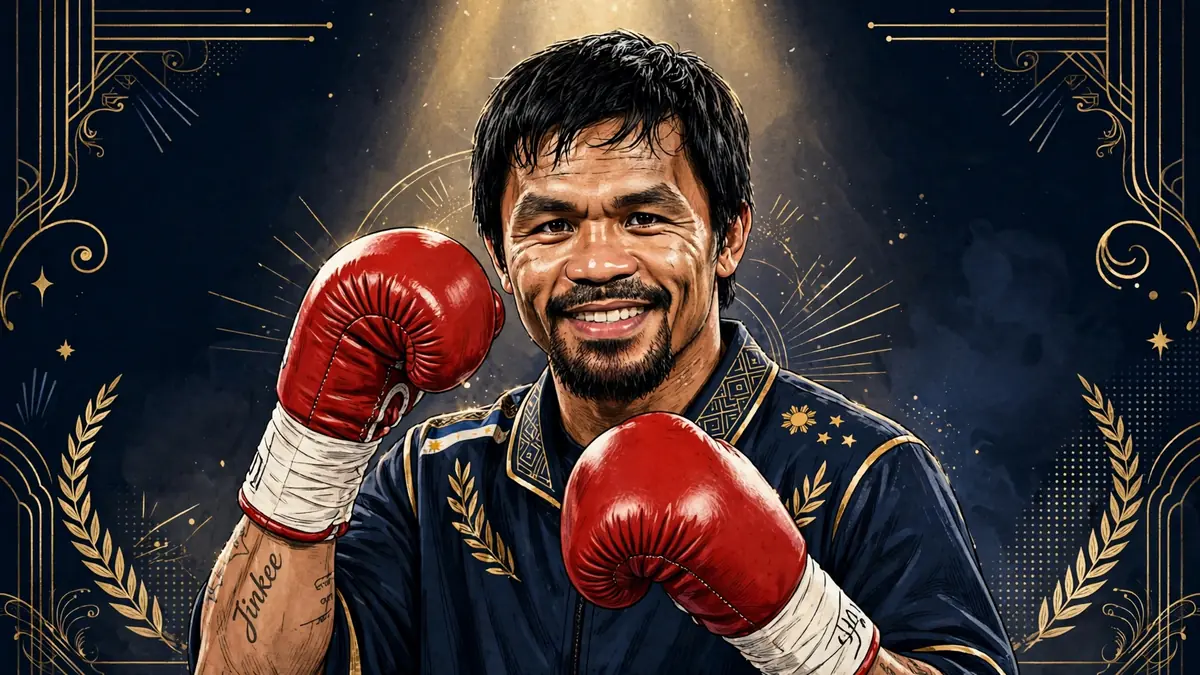
Table of Contents
- Quick Facts: Manny Pacquiao at a Glance
- Manny Pacquiao Net Worth in 2026
- From Kibawe to the Ring: Early Life
- The Rise: Eight Divisions, One Legend
- The Biggest Paydays
- Where the Money Comes From
- Business Ventures and Investments
- Homes, Cars and Assets
- Net Worth Growth Timeline
- How Pacquiao Compares With Boxing’s Richest
- Personal Life and Family
- Politics: Senate, Presidency and Public Service
- The 2025 Comeback and Hall of Fame
- Controversies and Legal Issues
- Frequently Asked Questions
- Final Thoughts: The Bottom Line
- Sources and How We Estimated
Quick Facts: Manny Pacquiao at a Glance
| Full Name | Emmanuel Dapidran Pacquiao |
|---|---|
| Date of Birth | December 17, 1978 |
| Birthplace | Kibawe, Bukidnon, Philippines |
| Age | 47 (turns 48 in December 2026) |
| Height | 5 ft 5.5 in (166 cm) |
| Estimated Net Worth | $220 million (Celebrity Net Worth, snapshot November 5, 2026; range $190M–$250M) |
| Career Boxing Record | 62 wins (39 by knockout), 8 losses, 3 draws |
| Peak / Primary Income Sources | Boxing purses, pay-per-view shares, endorsements, promotions |
| Key Ventures / Works | MP Promotions, Team Pacquiao basketball, music, acting, Philippine Senate (2016–2022) |
| Spouse | Jinkee Pacquiao (married 1999) |
| Children | Five — Jimuel, Michael, Princess, Queenie and Israel |
Manny Pacquiao Net Worth in 2026
Celebrity Net Worth lists Manny Pacquiao at $220 million, a figure it refreshed in a snapshot dated November 5, 2026. The same profile notes that his career has generated at least $500 million in boxing and endorsement earnings, including a $130 million payday for the 2015 fight against Floyd Mayweather. That pair of numbers — $500 million earned, $220 million kept — frames everything that follows.
Other outlets land in the same area. A detailed 2026 breakdown by Wine n Food put the realistic range at $220 million to $250 million after taxes and expenses, while ProfileLayers and BiographyWallah both published $220 million estimates for 2026. A few sites claim $300 million, but that higher figure usually counts gross career earnings or property values without subtracting the taxes and team costs that every boxer pays. We anchor on $220 million and show the $190 million to $250 million range as the honest spread.
Why is the net figure so much lower than the gross? Start with the shape of a boxer’s money. A headline purse is not take-home pay. From each purse, Pacquiao paid his promoter — Top Rank took its cut for most of his prime — plus trainers, cutmen, managers, sparring partners, training camp costs, and taxes in the United States and the Philippines. One 2026 model estimated those deductions at 50 to 60 percent of gross fight earnings. On $500 million-plus of career earnings, that leaves roughly $200 million to $250 million before business income, property and spending. The $220 million anchor sits squarely in that window.
There is also the spending side, which Pacquiao has never hidden. He grew up poor, and he has given away large sums across his career — funding schools, housing and medical help in the Philippines, and paying the bills of people around him. Generosity on that scale does not show up in a purse table, but it shows up in a net worth figure. Add a political career that paid a senator’s salary rather than a fighter’s purse, and the $220 million number starts to look like careful accounting rather than a lowball.
The number in one line: $220 million net worth (Celebrity Net Worth, November 2026), on $500 million-plus in career boxing and endorsement earnings (Celebrity Net Worth / Forbes), with a realistic range of $190 million to $250 million once taxes, promoter and team costs are counted.
From Kibawe to the Ring: Early Life
Emmanuel Dapidran Pacquiao was born on December 17, 1978, in Kibawe, a small town in Bukidnon province on the island of Mindanao in the Philippines. His family was poor even by the standards of rural Mindanao. His father left when Manny was young, and his mother, Dionisia, raised the children on what she could earn. As a boy, Manny sold bread and cigarettes on the streets of General Santos City to help feed the family, and he has spoken often since about going to sleep hungry. That part of his story is not decoration — it explains the spending, the giving, and the way he fought.
He found boxing the way many Filipino kids did: in local gyms and small-time bouts that paid a few pesos. He turned professional at 16, in January 1995, fighting in the lightest divisions for purses that would barely cover a week’s groceries today. His early record was built in municipal gyms and provincial arenas, far from the Las Vegas lights that would later define him. By 1998, at 19, he had won his first world title, stopping Chatchai Sasakul in Thailand to take the WBC flyweight crown. A fighter who had been selling bread on the street three years earlier was suddenly a world champion.
The full story of those early years — the move to Manila, the first trainers, the family he left behind in General Santos — is told in more detail in our companion piece, Manny Pacquiao’s biography on GuideNetWorth, which covers his life from Kibawe to the world stage. What matters for his money story is the starting point: he began with nothing, which meant every peso he earned later was new wealth, and it also meant he had no family money to fall back on and no financial education to lean on when the purses got big.

The poverty of his childhood also shaped his business sense in a way that surprises people. Fighters who grow up broke often spend wildly when the money arrives; Pacquiao did spend, but he also built. He bought property in the Philippines early, started businesses around his name, and later turned his fame into a political base. The pattern — earn in the ring, invest at home, give back in public — runs through his whole career, and it is the reason his wealth survived retirement, a comeback, and a presidential run.
The Rise: Eight Divisions, One Legend
No boxer in history has done what Manny Pacquiao did. He won world titles in eight different weight divisions, from flyweight (112 pounds) to light middleweight (154 pounds) — a span of 42 pounds that no other fighter has ever crossed with championship belts. He won 12 major world titles, held championships in four different decades, from 1998 to 2019, and became the oldest welterweight champion in history at 40, when he beat Keith Thurman by split decision in July 2019. ESPN ranked him the greatest Asian athlete of the 21st century in 2024, and The Ring placed him second among the greatest pound-for-pound fighters of the century in 2025.
The American breakthrough came in 2003, when he stopped Marco Antonio Barrera in San Antonio. Until then he was a respected name in Asia; after Barrera, he was a star in the United States. The run that followed reads like a hall-of-fame ballot on its own: Erik Morales, Barrera again, Juan Manuel Marquez four times, Oscar De La Hoya, Ricky Hatton, Miguel Cotto, Shane Mosley, Timothy Bradley three times, and finally Floyd Mayweather. He lost some of those fights — Marquez knocked him out cold in their fourth meeting in 2012 — but he kept coming back, and each return filled an arena.
His full ring story, fight by fight, is covered in Manny Pacquiao’s biography on CelebAmerica, which follows the career from the flyweight title to the Hall of Fame. For the money story, the key point is volume: Pacquiao fought 25 pay-per-view events that generated more than 20 million buys and $1.3 billion in revenue, according to figures reported by Celebrity Net Worth. He was not a one-fight wonder. He sold pay-per-views for nearly two decades, and that steady stream of eight-figure purses is what built a $500 million-plus career.
Forbes tracked him the whole way. The magazine ranked him the world’s second-highest-paid athlete in 2012, with $62 million in earnings, and again in 2015, with $160 million in its annual measurement period — the year of the Mayweather fight. He also placed sixth in 2009 with $40 million and eighth in 2010 with $42 million. Those annual rankings are useful because they are measured the same way each year: they show a fighter who was among the best-paid athletes on the planet for the better part of a decade, not just for one night.
The Biggest Paydays
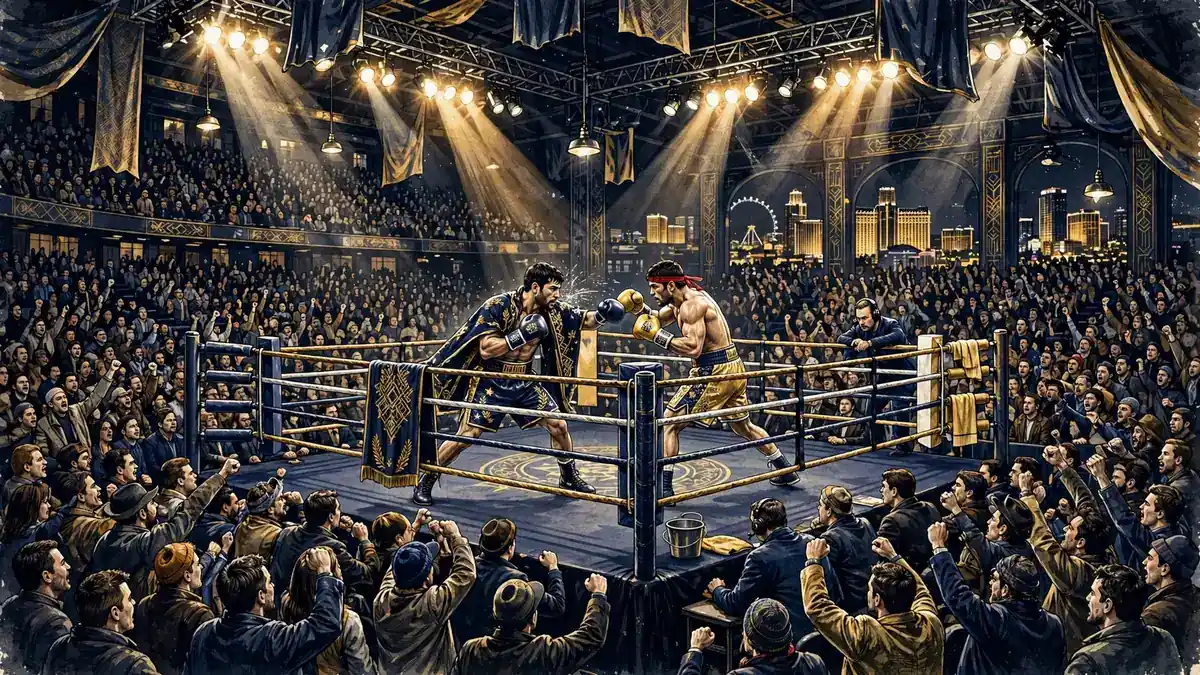
One fight towers over all the others. The Mayweather fight on May 2, 2015 — billed as the Fight of the Century — generated more than $600 million in total revenue, a boxing record that still stands. Pacquiao’s share was reported at $120 million to $130 million, depending on the outlet: Celebrity Net Worth puts it at $130 million, while other reports say $120 million. Either way, it was the biggest single payday of his life and one of the biggest in the sport’s history. He lost the fight by unanimous decision, and fought it with a torn rotator cuff in his right shoulder that needed surgery afterward — a detail that still colors how fans judge the night.
The rest of his purse list is a study in steady accumulation. Reported purses for his major bouts are estimates — outlets differ, and the final pay-per-view shares were rarely disclosed — but the shape is consistent across sources. The table below uses the most widely reported figures and flags where they vary.
| Fight | Year | Reported Pacquiao Pay |
|---|---|---|
| vs Oscar De La Hoya | 2008 | About $20 million |
| vs Ricky Hatton | 2009 | About $12 million |
| vs Miguel Cotto | 2009 | About $12 million |
| vs Antonio Margarito | 2010 | About $15 million |
| vs Shane Mosley | 2011 | About $20 million |
| vs Juan Manuel Marquez III | 2011 | About $20 million |
| vs Timothy Bradley II | 2014 | About $20 million |
| vs Floyd Mayweather | 2015 | $120–130 million |
| vs Keith Thurman | 2019 | About $10 million |
| vs Mario Barrios | 2025 | $12 million reported purse, before pay-per-view share |
Two things stand out. First, the Mayweather purse alone was worth more than all his other listed paydays combined. Second, even without it, the run from 2008 to 2014 produced well over $100 million in reported purses — and those numbers do not include pay-per-view upside, which often added millions to each fight. Forbes reported that Pacquiao had reached $500 million in career boxing and endorsement earnings by his April 2016 fight against Timothy Bradley, which means the bulk of his fortune was already banked before his first retirement.
The 2025 comeback added one more line to the table. His purse for the Mario Barrios fight was reported at $12 million before any pay-per-view participation, with no final public accounting of the event’s full compensation released. At 46, fighting for a world title after four years out, he was still earning eight figures — a measure of how much his name alone is worth to the sport.
Where the Money Comes From
Boxing purses are the foundation, but they are not the whole building. Pacquiao’s money has always come in four streams, and understanding the mix explains why his wealth held up after the big purses stopped.
1. Fight purses and pay-per-view shares. The largest stream by far. Across 25 pay-per-view events, his fights generated more than 20 million buys and $1.3 billion in revenue. His cut of that — guaranteed purses plus a share of the pay-per-view money on his biggest nights — accounts for the great majority of the $500 million-plus career earnings figure that Celebrity Net Worth and Forbes both report.
2. Endorsements. At his peak, Pacquiao was one of the most marketable athletes in the world, and the deals reflected it. His endorsement roster over the years included Nike, Hewlett-Packard, Hennessy, Wonderful Pistachios, Foot Locker, Nestlé and San Miguel Beer, among others. Endorsement income never matched the fight purses — one 2026 model put it near $50 million across his career — but it was steady money between fights, and it kept flowing in the Philippines, where his face sold everything from beer to mobile phones. The Nike deal ended in 2016 after comments he made about same-sex marriage drew a public backlash, a reminder that endorsement money depends on public image as much as on fame.
3. Business and promotions. Pacquiao stopped working only for promoters and became one himself. MP Promotions, his own promotional company, signs and stages fighters from Asia and the United States, and in April 2026 Team Boxing League announced that Pacquiao and his promotional company were joining the ownership group of its San Diego franchise — a move that ties his name to the team-boxing format. He has also been involved in Philippine basketball, as a playing coach and team owner in the PBA, and in music, acting and television work in the Philippines.
4. Politics and public office. The smallest stream in money terms, but a real one. He served in the Philippine House of Representatives from 2010 to 2016 and in the Senate from 2016 to 2022, on a public salary. In September 2026, Celebrity Net Worth reported that he had joined the government as head of the National Anti-Poverty Commission. Public office never paid like boxing, but it kept him in the public eye, protected his brand in the Philippines, and gave his business interests a platform no purse could buy.
Business Ventures and Investments
Pacquiao’s business record is harder to pin down than his fight record, because most of it sits in private Philippine companies that do not publish accounts. What is documented, from reporting by Forbes, ESPN, Philippine outlets and Celebrity Net Worth, sketches a portfolio built around his name, his home region, and his fan base.
MP Promotions is the centerpiece. Where other fighters signed with Top Rank or Golden Boy and stayed, Pacquiao built his own shop, and it now promotes cards in the Philippines and the United States. The Team Boxing League deal in 2026 added a team-ownership stake in a new format. In the Philippines he has held interests in restaurants, a record label, real estate developments, and a PBA basketball team, the Kia Picanto, where he served as playing coach — a move that was part sport, part show business, and entirely on-brand for a man whose fame crosses every line in the country.
His investment style, if it can be called that, is local and personal rather than financial. He has bought property in General Santos, Manila and the United States, and he has funded businesses run by family and friends. That loyalty is part of his public image, and it is also a risk: businesses run on trust rather than paperwork have cost him money over the years, according to Philippine reporting on his affairs. The $220 million figure already reflects that reality — it is a net number, after the ventures that worked and the ones that did not.
One more stream deserves a note because it confuses a lot of readers: exhibitions. After his 2021 retirement, Pacquiao fought exhibition bouts and stayed in the public eye with appearances that paid appearance fees rather than purses. Those paydays were far smaller than his championship purses, and they are not the reason his net worth is what it is — but they kept his name warm, and they set up the 2025 comeback, which paid a real purse.
Homes, Cars and Assets
Pacquiao owns property on both sides of the Pacific. His base is General Santos City in the Philippines, where he grew up and where his political career was built, and he holds property in Makati, the financial district of Manila. In the United States, he has owned homes in Los Angeles and Beverly Hills; property outlets have reported a Beverly Hills mansion valued at around $12.5 million. Exact current values are not public, and property reporting in this area is often based on listing prices rather than purchase prices, so treat the individual figures as reported rather than settled. What is clear is the pattern: he bought homes in the places where he fought, trained and governed, and he kept the Philippine properties as his long-term base.
His car collection has been covered by automotive and lifestyle outlets for years, and it reads like a list of every poster car of the 2010s: Ferraris, a Lamborghini, a Porsche, a Mercedes-Benz SL and a string of SUVs, many of them gifts from sponsors or bought to mark big wins. Cars are a small part of a $220 million fortune, but they matter to the story because they show how he spent at his peak — visibly, generously, and often on other people. He has given cars to family members and to people who worked for him, which is the same generosity that shows up in the gap between his gross earnings and his net worth.
Beyond property and cars, his assets include his promotional company, his stakes in Philippine businesses, and the value of his name itself. A retired fighter with Pacquiao’s record can earn appearance fees, commentary work and licensing income for years — and the 2025 comeback showed that promoters will still pay eight figures for his name on a poster. That earning power is an asset in its own right, and it is the reason his net worth did not simply freeze when he retired in 2021.
Net Worth Growth Timeline
Pacquiao’s wealth was not built in a straight line. It arrived in bursts — a title here, a pay-per-view record there — and the timeline below follows the money through the moments that moved it most. Annual earnings figures come from Forbes’ yearly athlete rankings; the net worth figures are estimates from Celebrity Net Worth and other outlets, and they are shown as ranges where sources disagree.
| Year | Milestone | Money Note |
|---|---|---|
| 1995 | Turns professional at 16 | Provincial purses, a few hundred dollars a fight |
| 1998 | First world title (WBC flyweight) | First meaningful purses; still modest by US standards |
| 2003 | Beats Marco Antonio Barrera in the US | American breakthrough; purses move into seven figures |
| 2008 | Beats Oscar De La Hoya | About $20 million reported; crossover stardom |
| 2009 | Forbes ranks him No. 6 among athletes | $40 million in annual earnings (Forbes) |
| 2012 | Forbes ranks him No. 2 among athletes | $62 million in annual earnings (Forbes) |
| 2015 | The Mayweather fight | $160 million in the Forbes measurement year; $120–130 million from the fight itself |
| 2016 | Career earnings pass $500 million (Forbes) | Measured at the Bradley III fight, April 2016 |
| 2019 | Oldest welterweight champion at 40 (Thurman) | About $10 million reported; net worth estimates near $200 million |
| 2021 | Retires after loss to Yordenis Ugas | Focus shifts to politics and business |
| 2022 | Runs for president of the Philippines | Loses; political spending draws on personal funds |
| 2025 | Hall of Fame induction; Barrios comeback draw | $12 million reported purse for Barrios |
| 2026 | Net worth anchor | $220 million (Celebrity Net Worth, November 2026); range $190M–$250M |
The shape is clear: almost all of the money was made between 2008 and 2016, the years when he was boxing’s biggest pay-per-view draw after Mayweather. The years since have been about holding on to it — through a presidential campaign, a retirement, and a comeback — and the $220 million figure says he has largely succeeded.
How Pacquiao Compares With Boxing’s Richest
Boxing pays its stars unevenly, and Pacquiao’s place in the money table tells its own story. He earned more than almost anyone in the sport’s history, and still sits well behind the one man who earned more than him. The figures below are Celebrity Net Worth estimates, and like all net worth figures they are estimates rather than audited accounts — but they come from the same source, so the comparison is apples to apples.
| Boxer | Estimated Net Worth | How It Was Built |
|---|---|---|
| Floyd Mayweather | $400 million (Celebrity Net Worth) | Undefeated 50–0; the 2015 Pacquiao fight; self-promotion |
| Canelo Alvarez | $300 million (Celebrity Net Worth) | Undisputed super middleweight; long DAZN-era paydays |
| Manny Pacquiao | $220 million (Celebrity Net Worth) | Eight-division titles; 25 pay-per-view events; $500M+ career earnings |
| Mike Tyson | $10 million (Celebrity Net Worth) | Fortune earned and lost in the 1990s; rebuilt through cannabis business and exhibitions |
The Mayweather gap is the instructive one. Mayweather earned more from the same 2015 fight — a reported $220 million to $300 million, depending on the outlet — and he kept a bigger share of his career earnings by promoting himself and spending his peak years undefeated. Pacquiao paid a promoter for most of his prime, fought more often against more dangerous opposition, and gave more away. The result is a $180 million gap between the two men who shared the richest night in boxing history.
The comparison with the current generation is just as telling. Tyson Fury’s net worth and Anthony Joshua’s net worth both rest on heavyweight paydays that did not exist at Pacquiao’s scale when he was at his peak, and Naoya Inoue’s net worth shows what the next multi-division star is building in the smaller weights Pacquiao once ruled. Pacquiao’s $220 million, earned before streaming money reshaped boxing pay, still stands up against all three. For more profiles of boxing’s biggest earners, see our net worth category.
Personal Life and Family
Pacquiao married Jinkee Jamora in 1999, and the couple have five children: Jimuel, Michael, Princess, Queenie and Israel. Jinkee has been a constant presence at ringside through his whole career — she was in the audience for his Hall of Fame induction speech in June 2025 — and she later entered politics herself, serving as vice governor of Sarangani province. The family lives mainly in the Philippines, in General Santos and Manila, with time in the United States around training camps and fights.
His sons have followed him into the public eye in different ways. Jimuel has boxed as an amateur and worked in entertainment, and Michael has pursued music. Pacquiao has been open about wanting his children to find their own paths rather than living off his name, though the family name opens doors in the Philippines that no one else’s does. The family is also deeply involved in his charitable work: the Pacquiaos fund schools, housing projects and medical missions in Mindanao, and much of that giving is done quietly, without press releases.
Faith is a large part of his public life. Pacquiao became a born-again Christian in the early 2010s and has spoken about how it changed his habits — he has said it ended his gambling and drinking — and his faith shapes his public statements, including some that have cost him commercially. He reads the Bible daily by his own account, and he has said his ring career was a platform for his faith and his charity rather than an end in itself. Readers who want the family story in full can find it in Manny Pacquiao’s biography on CelebAmerica, which covers his parents, his siblings and the move from Kibawe to General Santos.
Politics: Senate, Presidency and Public Service
Pacquiao’s political career began in the House of Representatives, where he served as congressman for Sarangani from 2010 to 2016, then moved to the Senate, where he served from 2016 to 2022. In Congress he worked on sports, education and anti-poverty measures, and his attendance record drew criticism at times — training camps and Senate sessions do not mix easily — but his name carried bills and attention that a first-term congressman rarely gets.
In 2022 he ran for president of the Philippines, finishing third behind Ferdinand Marcos Jr. The campaign was expensive, funded in large part from his own pocket, and it cost him both money and political capital. He has said he ran because he wanted to fight corruption and poverty — the same language he used as a boxer — and his supporters point out that a man who grew up hungry had a different claim to the anti-poverty message than his rivals. His critics said he lacked the experience for the job. Either way, the run is part of the money story: presidential campaigns in the Philippines cost millions, and the money came from the fortune boxing built.
He stayed in public service after the loss. In September 2026, Celebrity Net Worth reported that he had joined the government as head of the National Anti-Poverty Commission, a role that fits the story he has told about himself since Kibawe: the boy who sold bread on the street now working on the poverty he grew up in. The role pays a public salary, not a purse, but it keeps his name at the center of Philippine public life — and it keeps the Pacquiao brand, on which his business interests rest, in the news.
The 2025 Comeback and Hall of Fame
June 2025 gave Pacquiao the honor every great fighter wants. On June 8, 2025, he was inducted into the International Boxing Hall of Fame in Canastota, New York, in a ceremony at the Turning Stone Resort Casino in Verona. His induction speech, with Jinkee in the audience, looked back on a career that ran from a 16-year-old flyweight to the only eight-division champion the sport has ever seen. He was 46, four years retired, and by every normal measure done.
He was not done. Six weeks later, on July 19, 2025, he challenged WBC welterweight champion Mario Barrios at the MGM Grand in Las Vegas and fought to a majority draw. At 46, after a four-year layoff, he went twelve rounds with a champion 16 years younger and left with his record at 62 wins, 8 losses and 3 draws, with 39 knockouts. His purse was reported at $12 million before any pay-per-view share. The draw kept the story open: a rematch was talked about, and a September 2026 date against Mayweather was announced and then postponed, with Pacquiao’s promoter confirming in June that the date would not proceed amid contractual and legal complications.
For his net worth, the comeback matters in two ways. It added a real eight-figure purse to his earnings, and it proved that his name still sells — which protects the value of his promotional company, his endorsements and his appearance fees. A fighter whose name stops selling is a fighter whose wealth starts to shrink. Pacquiao’s name, at 47, still sells.
Controversies and Legal Issues
No honest profile of Pacquiao skips the rough patches, because two of them directly touched his money.
The first was tax. In 2013, the Philippine Bureau of Internal Revenue froze some of his assets over alleged unpaid taxes from 2008 and 2009, with the claimed amount reported at around 2.2 billion pesos — roughly $50 million at the time. Pacquiao said he had paid tax in the United States on his US earnings and should not be taxed twice on the same income; the BIR disagreed. The dispute ran for years and was settled in part through the courts and through payments. It is the clearest example of how a boxer who earns in two countries can end up fighting the taxman in both, and it is one reason his net worth is far below his gross earnings.
The second was the shoulder. He fought Mayweather in 2015 with a torn rotator cuff, had surgery days later, and faced lawsuits from fans who said they had been misled about his condition. The injury also fed the long argument about whether the fight happened too late — five years after fans first demanded it — and whether the result would have been different with a healthy Pacquiao. Nothing was ever settled in the ring on that question, and the rematch talks of 2026 suggest the public still wants an answer.
The third cost him an endorsement. In February 2016, comments he made about same-sex marriage drew a public backlash, and Nike ended its endorsement deal with him. He apologized, and the episode faded, but it showed the commercial risk of a fighter who speaks his mind on social issues. His faith-based views have drawn criticism more than once, and each time the cost has been measured in sponsors as well as headlines.
None of these episodes changed the core of his story. The tax case was a dispute, not a conviction; the shoulder was an injury, not a scandal; and the Nike split was a commercial decision, not a legal one. But together they explain why a man who earned $500 million-plus is worth $220 million — the money went to taxes, to teams, to promoters, to campaigns, and to charity, and what is left is still a fortune by any measure.
Frequently Asked Questions
What is Manny Pacquiao’s net worth in 2026?
Manny Pacquiao’s net worth is estimated at $220 million as of November 2026, according to Celebrity Net Worth (snapshot dated November 5, 2026). The realistic range across sources is $190 million to $250 million. His career has generated at least $500 million in boxing and endorsement earnings, so the gap between gross earnings and net worth comes down to taxes, promoter and team costs, and his well-known generosity.
How much did Manny Pacquiao earn from the Floyd Mayweather fight?
Pacquiao earned a reported $120 million to $130 million from the May 2, 2015 fight against Floyd Mayweather — Celebrity Net Worth puts it at $130 million. The fight generated more than $600 million in total revenue, a boxing record. Mayweather earned more from the same night, a reported $220 million to $300 million, which is a large part of why Mayweather’s net worth sits higher today.
How much has Manny Pacquiao earned in his whole boxing career?
At least $500 million in boxing and endorsement earnings, according to Celebrity Net Worth and Forbes — Forbes reported he had reached $500 million by his April 2016 fight against Timothy Bradley. Across 25 pay-per-view events, his fights generated more than 20 million buys and $1.3 billion in revenue. His 2025 comeback against Mario Barrios added a reported $12 million purse on top of that.
How many world titles did Manny Pacquiao win?
Pacquiao won world titles in eight different weight divisions — from flyweight (112 pounds) to light middleweight (154 pounds) — the only boxer in history to do so. He won 12 major world titles in total and held championships in four different decades, from 1998 to 2019. He was also the first boxer to win lineal championships in five divisions.
What is Manny Pacquiao’s boxing record?
His professional record is 62 wins (39 by knockout), 8 losses and 3 draws. The third draw came in his July 19, 2025 comeback fight against WBC welterweight champion Mario Barrios, which ended in a majority draw. Before that, his record stood at 62 wins, 8 losses and 2 draws after his 2021 retirement.
Is Manny Pacquiao still fighting in 2026?
He returned to professional boxing in July 2025, fighting Mario Barrios to a majority draw just weeks after his induction into the International Boxing Hall of Fame in June 2025. A rematch with Floyd Mayweather was announced for September 2026 but was postponed, with his promoter confirming in June that the date would not proceed amid contractual and legal complications. As of November 2026, no new fight date had been confirmed.
What businesses does Manny Pacquiao own?
His main business is MP Promotions, his own boxing promotional company, which signed fighters in Asia and the United States. In April 2026, Team Boxing League announced Pacquiao and his promotional company were joining the ownership group of its San Diego franchise. He has also held interests in restaurants, a record label, real estate developments in the Philippines, and a PBA basketball team, and he has worked in music, acting and television in the Philippines.
How much is Manny Pacquiao worth compared to Floyd Mayweather?
Pacquiao is worth an estimated $220 million, while Mayweather is estimated at $400 million, both per Celebrity Net Worth — a gap of about $180 million. Mayweather earned more from their shared 2015 fight and kept a larger share of his career earnings by promoting himself, while Pacquiao paid a promoter for most of his prime, fought more often, and gave more of his money away.
Final Thoughts: The Bottom Line
Manny Pacquiao’s net worth of $220 million is not the story of a man who kept everything he earned. It is the story of a man who earned more than $500 million, paid the taxes and the teams and the promoter, ran for president, gave much of the rest away, and still ended up one of the richest boxers alive. That is a different kind of wealth story from Mayweather’s — less about accumulation, more about what the money was for.
The record will outlast the money. Eight divisions, 12 major titles, four decades as a champion, the oldest welterweight champion in history, and a Hall of Fame induction followed by a comeback draw at 46 — no one else in boxing has a line like that. The fortune is the reward for it, not the reason for it. And at 47, with his name still selling pay-per-views and his promotional company signing fighters, the story is not finished yet.
Sources and How We Estimated
This article was researched from live reporting in November 2026. Figures are estimates, not audited accounts, and private wealth is never fully visible from the outside. Where sources disagreed, we published the range and named the anchor.
- Celebrity Net Worth — Manny Pacquiao Net Worth ($220 million; snapshot November 5, 2026; $500 million-plus career earnings; $130 million Mayweather payday)
- Forbes (annual highest-paid athlete rankings: 2009 No. 6, $40M; 2010 No. 8, $42M; 2012 No. 2, $62M; 2015 No. 2, $160M; $500 million career earnings reached by April 2016)
- ESPN (greatest Asian athlete of the 21st century, 2024; fight coverage and career reporting)
- BoxRec (professional record 62-8-3, 39 knockouts; Forbes ranking history)
- The Ring (second-greatest pound-for-pound fighter of the 21st century, 2025)
- International Boxing Hall of Fame (Class of 2025 induction, June 8, 2025)
- Wine n Food ($220M–$250M realistic 2026 range; deductions model)
- ProfileLayers ($220 million 2026 estimate)
- Rappler and Philstar (Philippine politics, tax dispute and public service reporting)
How we estimated: we anchored on Celebrity Net Worth’s $220 million figure (snapshot November 5, 2026) because it is the most current named-source estimate and it lines up with the $220 million to $250 million range published by other 2026 outlets. Career earnings of $500 million-plus come from Celebrity Net Worth and Forbes. The $190 million to $250 million range reflects disagreement between outlets and the uncertainty of private assets, taxes and spending. Purse figures for individual fights are reported estimates from outlets including Celebrity Net Worth, Forbes and ESPN, and they vary by source; the Mayweather figure is shown as $120 million to $130 million for that reason. Property values are reported listing-based figures, not confirmed sale prices. Estimates of private wealth may differ from reality, and this article will be updated if a named source publishes a materially different figure.