Naoya Inoue’s net worth in 2026 is estimated at $7 million to $25 million. That wide range is the honest answer: the low end comes from Surprise Sports, which put him at $7 million in its October 2026 update, while iFANN and BoxerWorth both list $15 million, and some profiles stretch the top of the range to $25 million after his record Tokyo Dome payday in May 2026. No outlet with access to his private contracts has published a verified figure, and Inoue himself has never confirmed one.
What is not in dispute is the money coming in. Surprise Sports credits Inoue with roughly $57 million in career fight earnings, and his December 2024 sponsorship agreement with Riyadh Season was reported by veteran boxing journalist Dan Rafael at close to $19.7 million. Add a May 2, 2026 undisputed title defence against Junto Nakatani — reported at $10 million to $15 million for Inoue alone, in front of about 55,000 fans at the Tokyo Dome — and the picture is clear: the fighter they call “The Monster” is the highest-earning boxer the lower weight classes have ever produced. This profile breaks down every purse, deal and estimate behind that range, with the source named for each one. Last updated: November 16, 2026.
| Full Name | Naoya Inoue (井上尚弥) |
|---|---|
| Nickname | “The Monster” |
| Date of Birth | April 10, 1993 |
| Birthplace | Zama, Kanagawa, Japan |
| Height | 5 ft 5 in (165 cm) |
| Estimated Net Worth (2026) | $7 million – $25 million (Surprise Sports: $7M; iFANN: $15M; BoxerWorth: $15M) |
| Career Fight Earnings | Approximately $57 million (Surprise Sports) |
| Professional Record | 33–0, 27 knockouts (as of May 2, 2026) |
| Division | Super bantamweight (122 lbs), undisputed champion |
| Primary Income Sources | Fight purses, Riyadh Season sponsorship, SIXPAD and Winning Japan endorsements, broadcast revenue |
| Key Ventures | Ohashi Boxing Gym (signed 2012), Top Rank co-promotion (2019–present), Riyadh Season ambassador |
| Spouse | Married his high-school sweetheart in December 2015; three children |
Table of Contents
- Early Life: A Boxing Family in Zama
- Amateur Career and Professional Debut
- First World Titles at Light Flyweight and Super Flyweight
- Bantamweight Glory and the Donaire Wars
- Undisputed at Super Bantamweight: Fulton and Tapales
- Nery, the Title Defences and the Nakatani Superfight
- The Money: Purses, Career Earnings and the Riyadh Season Deal
- Endorsements and Sponsorships
- Assets: What Inoue Owns — and What We Do Not Know
- Net Worth Growth: Year by Year
- How Inoue’s Wealth Compares to Boxing’s Biggest Names
- Personal Life: Wife, Children and Life Away From the Ring
- Controversies and Legal Issues
- What Is Next for Naoya Inoue?
- Frequently Asked Questions
- Final Thoughts
- Sources and Reporting
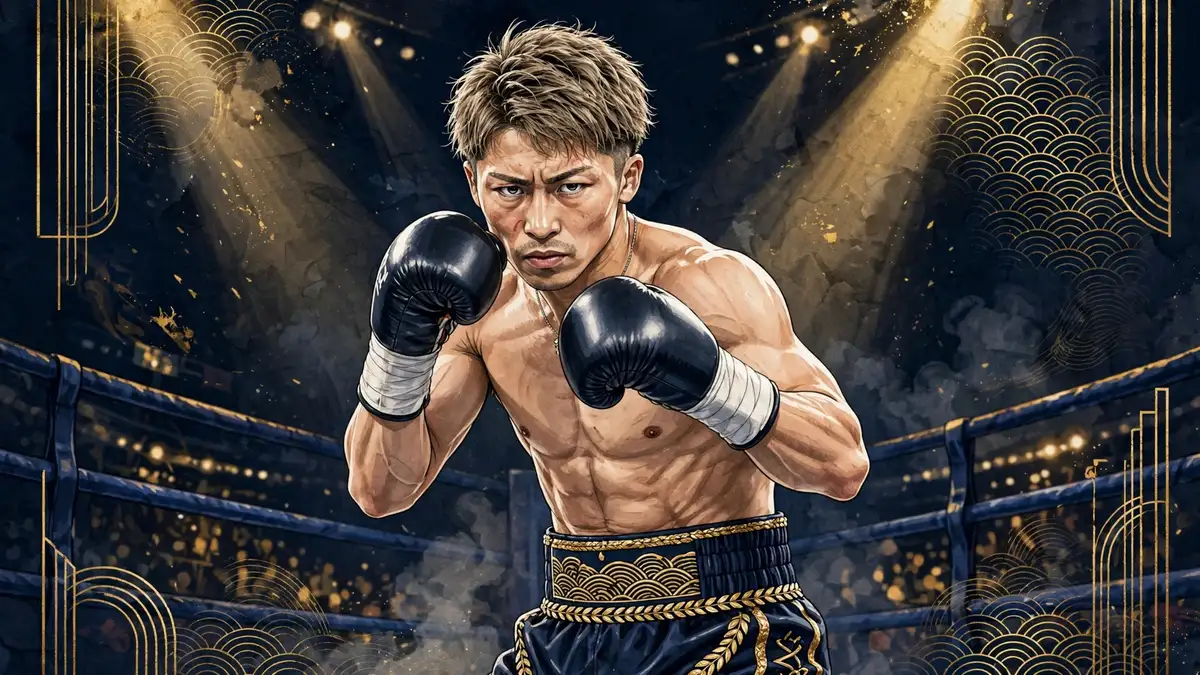
Early Life: A Boxing Family in Zama
Naoya Inoue was born on April 10, 1993, in Zama, a city in Kanagawa Prefecture, Japan. Boxing was not a hobby the family picked up later — it was the household trade. His father, Shingo Inoue, was a former amateur boxer who went on to coach, and his mother, Miho Inoue, held the family together while the gym schedule ran the week. Naoya started boxing before his eighth birthday, training under his father alongside his younger brother Takuma, who would also become a professional world champion. The family home was modest, and the sessions were famously disciplined: footwork, timing and punch technique drilled again and again until they became reflex.
As a small child Inoue also played soccer — he kicked a ball around in kindergarten before boxing took over completely — but the ring always pulled him back. Shingo’s coaching style shaped everything about his son’s career: power built on balance and timing rather than wild swinging, and a calm, almost cold approach to finishing hurt opponents. That upbringing is the reason Inoue’s punching power looks so unusual for a man who stands 5 ft 5 in and fights at 122 pounds. The power comes from his legs and hips, drilled into him from childhood, not from size.
Inoue grew up in Zama and later made his home in Yokohama, also in Kanagawa. He attended school locally, where he met the girl who would become his wife — the two were high-school sweethearts, a detail that matters because it tells you how little his private life has changed despite the fame. While other fighters of his stature moved their lives to Las Vegas or London, Inoue stayed rooted in the same prefecture where he was raised, training at the same gym system and under the same father-trainer who taught him to throw his first jab.
Amateur Career and Professional Debut
Before turning professional, Inoue built one of the strongest amateur records in recent Japanese boxing: 75 wins against 6 defeats, with 48 knockouts, according to The Sports Grail’s profile of the fighter. He won the Japanese Interscholastic Athletic Meeting and the Japanese Junior National Championships in 2009, and by the time he left the amateur ranks he was regarded as the best young boxer Japan had produced in a generation. The amateur numbers matter because they explain the unusual confidence of his professional matchmaking — he was never fed easy opponents to pad a record.
Inoue turned professional on October 2, 2012, at the age of 19, signing with Ohashi Boxing Gym under former world champion Hideyuki Ohashi. The agreement, reported by iFANN, was striking: Inoue would not face low-level opposition. Most prospects spend their first ten fights learning against journeymen. Inoue fought for a Japanese title in his fourth professional bout, beating Ryoichi Taguchi in August 2013 for the Japanese light flyweight crown, and added the OPBF belt against Jerson Mancio later the same year.
His professional debut came against Filipino national champion Crison Omayao at Tokyo’s Korakuen Hall. He won by stoppage, and the pattern was set: every step up came fast, and every step up was cleared. By his sixth professional fight he was fighting for a world title. That pace — title fights from the very start — is the single biggest reason his career earnings curve looks the way it does. He was earning championship money within 18 months of turning professional, while most fighters wait five years for their first title shot.
First World Titles at Light Flyweight and Super Flyweight
On April 6, 2014, in only his sixth professional fight, Inoue knocked out Adrián Hernández in the sixth round to win the WBC light flyweight championship. Winning a world title in six fights is rare in any era; doing it at 20 years old, against a defending champion, marked him out as a generational talent. He defended the belt once and then moved up, because his body was already outgrowing the 108-pound limit.
On December 30, 2014, he stopped Argentina’s Omar Narváez — a long-reigning WBO super flyweight champion — in the second round to win his second world title in a second weight class. The Narváez win was a statement: Narváez had held his title for years and had never been beaten like that. Inoue then ran through the super flyweight division, defending the WBO belt eight times and beating names like Kohei Kono and Jamie McDonnell, before vacating in March 2018 to chase bigger fights at bantamweight.
The money at this stage was modest by the standards of what came later. Japanese domestic cards pay far less than Las Vegas pay-per-view events, and Inoue’s early purses were reported in the low six figures. But the foundation was laid: two weight classes conquered before his 22nd birthday, a reputation for devastating power, and a growing audience in Japan that would eventually fill the Tokyo Dome. The purses would follow the audience.
Bantamweight Glory and the Donaire Wars
Inoue moved to bantamweight in 2018 and entered the World Boxing Super Series, a tournament that gathered the division’s best fighters. He beat Juan Carlos Payano by first-round knockout in the quarter-final, stopped Emmanuel Rodriguez in two rounds in the semi-final, and then met Filipino legend Nonito Donaire in the final at the Saitama Super Arena on November 7, 2019. It became an instant classic: Donaire hurt Inoue badly, fracturing his orbital bone, but Inoue scored a knockdown in the eleventh round and won a unanimous decision over twelve hard rounds. The fight won Fight of the Year honours from multiple outlets and announced Inoue to the global audience.
The rematch came on June 7, 2022, at the Saitama Super Arena. This time there was no drama. Inoue stopped Donaire in two rounds to add the WBC title to his WBA (Super) and IBF belts, and in doing so became the first Japanese fighter recognised as The Ring magazine’s pound-for-pound number one. The Donaire rematch was also a commercial step up: the fight drew a huge audience in Japan and sold out the arena, and Inoue’s purse moved firmly into seven figures for the first time.
On December 13, 2022, Inoue knocked out Paul Butler in the eleventh round at Tokyo’s Ariake Arena to win the WBO belt and become the first undisputed bantamweight champion since Enrique Pinder in 1972 — and the first ever in the four-belt era. He held all four major belts at 118 pounds. A month later, in January 2023, he vacated them all to move up again. The bantamweight run had lasted barely four years, but it had delivered the WBSS title, undisputed status, pound-for-pound recognition, and the first genuinely large purses of his career.
Undisputed at Super Bantamweight: Fulton and Tapales
At super bantamweight, Inoue faced the division’s best straight away. On July 25, 2023, he stopped the unbeaten WBC and WBO champion Stephen Fulton Jr. in the eighth round at the Ariake Arena, a performance widely described as a masterclass. Surprise Sports reports a purse of around $5 million for the Fulton fight — the largest of his career to that point, and the first time his name appeared in serious pound-for-pound pay discussions outside Japan.
Five months later, on December 26, 2023, he knocked out Marlon Tapales in the tenth round to add the WBA and IBF belts, becoming undisputed champion in a second weight class. Only Terence Crawford and Oleksandr Usyk had achieved undisputed status in two divisions in the modern four-belt era, and Inoue joined them at the age of 30. The Tapales purse was reported at roughly $1 million by aggregator breakdowns — a figure that looks small next to the Fulton number and shows how unevenly reported Japanese purses can be. Official purses for Japanese cards are rarely disclosed by promoters, so every figure in this section should be read as an estimate from the outlet named, not an official record.
The two undisputed reigns changed Inoue’s commercial standing completely. Before Fulton, he was a great fighter with a mostly Japanese audience. After Tapales, he was a two-weight undisputed champion with a global profile, a co-promotional deal with Top Rank in the United States, and broadcast relationships with ESPN and later DAZN. That profile is what made the Riyadh Season deal possible — and what made the purses jump again in 2024 and 2025.

Nery, the Title Defences and the Nakatani Superfight
On May 6, 2024, Inoue returned to the Tokyo Dome — the first boxing event there since Mike Tyson fought Buster Douglas in 1990 — to defend his undisputed super bantamweight titles against Luis Nery. Nery dropped him in the first round, the first knockdown of Inoue’s professional career. Inoue got up, took control, and knocked Nery out in the sixth. The event drew a huge crowd and confirmed that Inoue could sell out Japan’s biggest indoor arena on his own name.
The defences kept coming: TJ Doheny in September 2024, Ye Joon Kim in January 2025, Ramon Cardenas in May 2025 at the Mandalay Bay in Las Vegas (an eighth-round stoppage), and Murodjon Akhmadaliev in September 2025. Each defence added to the record and to the bank balance, with typical purses for this period reported by The Sportster at $5 million to $7 million per fight. Inoue also fought outside Japan more often in this period, building the American audience that Top Rank had been cultivating since 2019.
Then came the fight that defined his 2026. On May 2, 2026, at the Tokyo Dome, Inoue met fellow Japanese star Junto Nakatani — a three-weight world champion — in a bout billed as “The Day” and described across the boxing press as the biggest fight in Japanese boxing history. Both men entered unbeaten at 32–0. In front of about 55,000 fans, Inoue won a unanimous decision, 116–112, 116–112 and 115–113, to retain his undisputed super bantamweight titles and take his record to 33–0 with 27 knockouts. His brother Takuma defended his own WBC bantamweight belt on the same card. Boxing News and Views reported Inoue’s purse for the night at between $10 million and $15 million, calling it a figure “no other lower-weight boxer currently commands.” The card grossed more than $30 million at the gate, according to reporting cited in net-worth profiles of the fight.
The Money: Purses, Career Earnings and the Riyadh Season Deal
This is where the numbers need care. There is no single verified net worth figure for Naoya Inoue, because Japanese promoters do not disclose official purses and Inoue does not discuss his finances publicly. What exists is a set of published estimates, and they disagree — which is exactly why this profile reports a range rather than a single number. Here is the adjudication, source by source:
| Source | Net Worth Estimate | Published / Updated |
|---|---|---|
| Surprise Sports | $7 million | Updated October 10, 2026 |
| iFANN | $15 million | Updated for 2026 (May 2026) |
| BoxerWorth | $15 million | 2026 listing |
| TheCityCeleb | $12 million | 2026 profile |
| Upper-range profiles | $15 million – $25 million | Post-May 2026 estimates |
Surprise Sports anchors the low end. Its $7 million figure sits alongside its own reporting that Inoue has earned about $57 million across his career — $35 million of it at bantamweight and the rest at super bantamweight. The gap between $57 million earned and $7 million kept is the point the outlet stresses: taxes, training camp costs, management fees and team payouts take a large share of every purse. iFANN and BoxerWorth, both at $15 million, take a different view, crediting Inoue with more of his recent big paydays. TheCityCeleb splits the difference at $12 million. The $15 million to $25 million upper band comes from profiles published after the Nakatani fight, which argue that the older estimates predate his most lucrative night and the Riyadh Season money, and are now out of date.
The honest range: $7 million to $25 million. Surprise Sports’ $7 million is the most conservative published estimate, and it is also the most recently updated (October 2026). The $15 million midpoint is where two independent outlets agree. The $25 million top end reflects post-Nakatani reporting that credits him with the full value of the Riyadh Season sponsorship. Until Inoue or his team discloses real numbers, any single figure presented as fact would be guesswork — and this profile will not do that.
The purse history behind the range tells its own story:
| Fight | Date | Reported Inoue Purse | Source |
|---|---|---|---|
| vs Paul Butler (undisputed, bantamweight) | Dec 2022 | ~$1 million | Surprise Sports |
| vs Stephen Fulton (WBC/WBO, super bantamweight) | Jul 2023 | ~$5 million | Surprise Sports |
| vs Marlon Tapales (undisputed, super bantamweight) | Dec 2023 | ~$1 million | Surprise Sports |
| vs Luis Nery (Tokyo Dome) | May 2024 | $5 million – $7 million (typical for the period) | The Sportster |
| vs Junto Nakatani (Tokyo Dome) | May 2026 | $10 million – $15 million | Boxing News and Views |
The sharpest jump in Inoue’s income did not come from a purse at all. In December 2024 he signed a sponsorship agreement with Riyadh Season, the Saudi entertainment festival headed by Turki Alalshikh. Dan Rafael reported the deal at 3 billion yen — about $19.7 million — to wear the Riyadh Season logo and promote the festival, and The Ring confirmed the arrangement when Inoue began sporting the branding on his ring attire in January 2025. The deal does not require him to fight in Saudi Arabia; it is a sponsorship, not a fight contract. That distinction matters, because the $19.7 million is not a purse and should not be counted as one — but it is real money, reported by two of the most credible names in boxing journalism, and it is the single largest commercial deal of Inoue’s career.
Broadcast money adds another layer. Inoue’s fights air on Lemino pay-per-view in Japan and on DAZN worldwide, with his earlier US appearances on ESPN+ through Top Rank. Pay-per-view and streaming revenue splits are not disclosed for Japanese cards, so no reliable figure can be attached to them — but the Tokyo Dome shows sell out, and the Nakatani card’s gate alone passed $30 million, so the broadcast upside is plainly large. For readers comparing him with heavyweights, the context is this: Inoue earns heavyweight money at 122 pounds, and he does it without ever having fought on a Las Vegas pay-per-view headliner of his own.
Endorsements and Sponsorships
Inoue’s endorsement portfolio is smaller and more Japanese-focused than those of the heavyweight stars, but it is growing fast. The confirmed names, reported by Sportskeeda and others, are:
- Riyadh Season — the headline deal, worth a reported $19.7 million (Dan Rafael, December 2024), making Inoue an ambassador for the Saudi festival. The logo appears on his ring attire and around the ring at his fights.
- SIXPAD — the fitness technology brand, also associated with Cristiano Ronaldo, which has sponsored Inoue for years and uses him in its Japanese advertising.
- Winning Japan — the long-established Japanese boxing glove and equipment maker, a natural fit for a fighter whose hands are his business.
What Inoue does not have, so far, is the sprawling global endorsement roster of a Canelo Alvarez or an Anthony Joshua — no car brand, no watch deal, no fashion house. That is partly a function of weight class: the lower divisions have never commanded the same commercial attention as heavyweight, and partly a function of Inoue’s own low profile. He does not court celebrity. He rarely gives interviews in English, keeps his social media focused on training and family, and has never chased the crossover fame that drives endorsement money. The Riyadh Season deal changed the scale of his commercial income in one stroke, and it arrived precisely because Turki Alalshikh wanted the pound-for-pound elite — Inoue joined Oleksandr Usyk, Terence Crawford, Artur Beterbiev and Dmitry Bivol in that stable — rather than because Inoue went looking for it.
For more on how the heavyweight division’s money compares, see our profiles of the biggest earners in the sport — including Tyson Fury’s net worth and Oleksandr Usyk’s net worth, the two men who shared the Riyadh Season stable with Inoue and whose purses set the benchmark he is now chasing.
Assets: What Inoue Owns — and What We Do Not Know
Honesty requires a short section here: there is no reliable public record of Naoya Inoue’s real estate, cars, or investments. No reputable outlet has reported a house purchase, a car collection, or a business stake in his name, and profiles that list specific properties for him are guessing. What is known is that he lives in Yokohama, Kanagawa, trains at Ohashi Boxing Gym, and has kept his lifestyle visibly modest for a fighter of his earnings — no public displays of wealth, no supercar posts, no property portfolio bragging.
That absence of information is itself informative. Fighters who spend lavishly tend to generate reporting about it; Inoue generates almost none. His money appears to be managed quietly, through his team at Ohashi Gym and his management, rather than splashed across social media. He does not own or operate the gym himself — his income is structured around fight purses and sponsorship contracts, not a separate business venture, and no reliable reporting suggests otherwise.

One thing the record does show is discipline about the business side. Inoue signed with Ohashi Gym in 2012 and has never changed promoter in Japan. He added Top Rank as a US co-promoter in 2019, a move that opened the American market without surrendering control of his career. That stability — one gym, one trainer (his father Shingo), one Japanese promoter — has kept his team costs predictable and his career decisions in familiar hands. It is the opposite of the entourage-heavy model that has drained other fighters’ fortunes, and it is one reason the higher net worth estimates credit him with keeping more of what he earns.
Net Worth Growth: Year by Year
Surprise Sports’ own tracking gives the clearest published picture of how Inoue’s wealth has grown, and it shows a fighter whose fortune was built late and fast:
| Year | Estimated Net Worth (Surprise Sports) | What Drove It |
|---|---|---|
| 2020 | $2 million | Bantamweight titles, WBSS win over Donaire |
| 2023 | $5 million | Fulton and Tapales wins, undisputed at 122 lbs |
| 2025 | $7 million | Tokyo Dome defences, Riyadh Season deal signed |
| 2026 | $7 million – $25 million (range across outlets) | Nakatani superfight, full Riyadh Season value |
The pattern is unmistakable: a 250 percent rise between 2020 and 2025 on Surprise Sports’ numbers, with the real acceleration coming after 2023. Before the Fulton fight, Inoue was a great champion earning good money by Japanese standards. After it, he was a global star with Saudi sponsorship and eight-figure fight nights. The 2026 range widens because the outlets disagree about how much of the new money to count — Surprise Sports holds its $7 million line, while others argue the Nakatani purse and the Riyadh Season deal have already pushed him well past $15 million. Both views are defensible from the published numbers, which is why this profile keeps the range open rather than picking a side.
How Inoue’s Wealth Compares to Boxing’s Biggest Names
Inoue’s fortune looks small next to the heavyweights — and that is the wrong comparison. At 122 pounds, he is the richest fighter his division has ever seen. The comparison that matters is against fighters of similar size and against the pound-for-pound elite he now sits alongside.
Against the heavyweights, the gap is a matter of physics and pay-per-view history: Anthony Joshua’s net worth and Tyson Fury’s fortune were built on stadium fights and global pay-per-view events that the lower weight classes have never matched for gross revenue. Fury’s purses for the Usyk fights ran into nine figures; Inoue’s biggest night, by the most generous reporting, paid him $10 million to $15 million. But Inoue has something neither heavyweight can claim: he is undisputed in two weight classes, undefeated in 33 fights, and still only 33 years old with his biggest paydays arguably still ahead of him.
Against his own weight neighbourhood, Inoue stands alone. Gervonta Davis’s net worth — built at lightweight and super featherweight — is the closest parallel among smaller fighters who became pay-per-view draws, and Davis’s purses for his biggest nights sit in the same band as Inoue’s recent paydays. The difference is that Davis built his wealth on the American pay-per-view market, while Inoue built his on the Japanese domestic market plus a Saudi sponsorship — two very different roads to the same destination.
The most useful comparison is with Oleksandr Usyk, the other two-weight undisputed champion of this era, who joined Inoue in the Riyadh Season stable. Usyk’s fortune is larger, built on heavyweight undisputed fights that grossed hundreds of millions. But Usyk is also six years older and fights in the division where the money has always lived. Inoue’s achievement is different: he has squeezed heavyweight-scale money out of a 122-pound frame, in a market — Japan — that had never produced a boxer of his commercial size before. No Japanese fighter in history has earned what he has earned. For the full picture of how boxing fortunes are built across the divisions, browse our net worth profiles — from heavyweight kings to the smaller-weight stars who punch far above their pay grade.
Personal Life: Wife, Children and Life Away From the Ring
Inoue married his high-school sweetheart in December 2015. Her name is reported in some profiles as Rika Inoue; other outlets note that she keeps a low profile and stays away from public attention, and Inoue himself has never discussed her in interviews or on social media. The couple have three children, including their first son, Akiba, born in October 2017. The family lives in Yokohama, and Inoue’s public life is almost entirely about boxing — training footage, fight announcements and the occasional family photo, nothing more.
His younger brother Takuma Inoue is a professional boxer in his own right and held the WBA bantamweight title; the two brothers fought on the same Tokyo Dome card in May 2026, with Takuma defending his belt on the undercard of Naoya’s superfight against Nakatani. Their father Shingo remains Naoya’s trainer, a role he has held since Naoya was a child. The family structure around Inoue is unusually tight for a fighter of his standing: father as trainer, brother as fellow champion, wife and children kept firmly out of the spotlight.
Physically, Inoue is 5 ft 5 in (165 cm) with a reach of about 171 cm — short for a man who dominates his division, and short enough that almost every opponent he faces holds a height advantage. He turns that into a strength, fighting low and inside, slipping punches and landing his own with leverage that taller fighters struggle to match. Readers who want the full breakdown of his measurements can read our sister site’s profile of Naoya Inoue’s height, which covers his stature, reach and how his size shapes his fighting style.
Controversies and Legal Issues
There is little to report here, and that is worth saying plainly. Across a fourteen-year professional career, Inoue has not been involved in any public scandal, failed drug test, arrest or lawsuit that reputable outlets have reported. He has never missed weight badly, never pulled out of a fight in controversy, and never been involved in the kind of promotional disputes that have dogged other champions.
The closest thing to controversy in his career is sporting, not personal: the first-round knockdown against Luis Nery in May 2024 sparked brief debate about whether Inoue’s chin was a weakness, a question he answered by stopping Nery in the sixth round of the same fight. His 2025 win over Murodjon Akhmadaliev drew some criticism from fans who found the fight one-sided, but that is a complaint about matchmaking, not conduct. In an era when boxing headlines are often about out-of-ring behaviour, Inoue’s clean record is part of his commercial value — sponsors like Riyadh Season and SIXPAD are buying an athlete with no reputational risk attached.
What Is Next for Naoya Inoue?
As of November 16, 2026, no next fight has been officially announced for Inoue. The talking points around him are familiar: a move up to featherweight (126 lbs) to chase a world title in a fifth division, a rematch with Nakatani, or a US return on a Top Rank card. A fifth-division title would put him in company with only a handful of fighters in history, and at 33 he still has time — but every move up in weight costs him the physical advantages that make him so destructive at 122.
Financially, the direction is clear whatever he chooses. His purses are now in the eight-figure range for the biggest nights, the Riyadh Season deal runs on, and the Japanese market has shown it will fill the Tokyo Dome for him. If he fights twice more at the Nakatani level, his career earnings will pass $75 million — and the net worth estimates that currently top out at $25 million will start to look conservative. The question is not whether Inoue will get richer. It is whether he can keep winning while the money grows, because in boxing the two have a way of pulling in opposite directions.
Frequently Asked Questions
What is Naoya Inoue’s net worth in 2026?
Naoya Inoue’s net worth in 2026 is estimated at $7 million to $25 million. Surprise Sports puts him at $7 million (updated October 2026), iFANN and BoxerWorth both list $15 million, TheCityCeleb lists $12 million, and some post-Nakatani profiles stretch the top of the range to $25 million. No verified figure exists because Japanese promoters do not disclose official purses and Inoue has never confirmed his finances publicly.
How much has Naoya Inoue earned in his boxing career?
Surprise Sports credits Inoue with approximately $57 million in career fight earnings — about $35 million at bantamweight and the rest at super bantamweight. His biggest single reported payday was the May 2026 fight against Junto Nakatani, reported at $10 million to $15 million, and his Riyadh Season sponsorship deal was reported at close to $19.7 million on top of his purses.
How much did Naoya Inoue earn for the Junto Nakatani fight?
Boxing News and Views reported Inoue’s purse for the May 2, 2026 Tokyo Dome fight against Junto Nakatani at between $10 million and $15 million, calling it a figure no other lower-weight boxer currently commands. The card grossed more than $30 million at the gate in front of about 55,000 fans. Official purses for Japanese cards are rarely disclosed, so the figure is a reported estimate rather than an official record.
What is Naoya Inoue’s fight record?
Naoya Inoue’s professional record is 33 wins and no defeats, with 27 knockouts, as of his May 2, 2026 unanimous decision win over Junto Nakatani at the Tokyo Dome. He is a four-division world champion and a two-weight undisputed champion, holding all four major belts at both bantamweight and super bantamweight. His amateur record was 75 wins and 6 defeats, with 48 knockouts.
How tall is Naoya Inoue?
Naoya Inoue is 5 ft 5 in (165 cm) tall, with a reach of about 171 cm (67.3 inches). He is short for his division and gives away height to almost every opponent, but his power, timing and footwork — drilled into him by his father since childhood — more than make up for it. He fights at super bantamweight, with a limit of 122 pounds.
Who is Naoya Inoue’s wife?
Naoya Inoue married his high-school sweetheart in December 2015. Her name is reported in some profiles as Rika Inoue, but she keeps a low profile and stays out of the public eye, and Inoue has never discussed her in interviews. The couple have three children, including their first son, Akiba, born in October 2017.
How many weight classes has Naoya Inoue won world titles in?
Naoya Inoue has won world titles in four weight classes: light flyweight (WBC, 2014), super flyweight (WBO, 2014), bantamweight (undisputed, 2022) and super bantamweight (undisputed, 2023). He is only the second man in the modern four-belt era, after Terence Crawford and alongside Oleksandr Usyk, to become undisputed champion in two different weight classes.
What sponsors does Naoya Inoue have?
Naoya Inoue’s confirmed sponsors include Riyadh Season, in a deal reported at close to $19.7 million that makes him an ambassador for the Saudi festival; SIXPAD, the fitness technology brand; and Winning Japan, the boxing glove and equipment maker. The Riyadh Season agreement, signed in December 2024, is the largest commercial deal of his career and does not require him to fight in Saudi Arabia.
Final Thoughts
Naoya Inoue’s net worth sits somewhere between $7 million and $25 million, and the width of that range is the story. He is a fighter whose official purses are almost never disclosed, whose biggest paydays have arrived only in the last three years, and whose most valuable deal — Riyadh Season — is a sponsorship rather than a purse. The conservative $7 million from Surprise Sports and the $15 million midpoint from iFANN and BoxerWorth both have honest reasoning behind them, and the $25 million top end is a fair reflection of what the Nakatani night and the Saudi money have added since those estimates were set.
What is beyond argument is the career behind the numbers: 33 wins, no defeats, 27 knockouts, world titles in four divisions, undisputed in two, and the biggest fight in Japanese boxing history won in front of 55,000 people at the Tokyo Dome. Inoue has done what no lower-weight fighter before him has done — earned heavyweight money at 122 pounds — and he has done it without scandal, without changing teams, and without leaving home. If he moves up to featherweight and wins a title in a fifth division, the money will follow him there too. The Monster is not done yet, and neither is his fortune.
Sources and Reporting
All figures in this profile come from the outlets named in the text. The net worth estimates are from Surprise Sports ($7 million, updated October 10, 2026), iFANN ($15 million, 2026), BoxerWorth ($15 million, 2026) and TheCityCeleb ($12 million, 2026). Career earnings of roughly $57 million and the purse breakdowns are from Surprise Sports. The Riyadh Season deal, worth about $19.7 million, was reported by Dan Rafael and confirmed by The Ring. The Nakatani fight purse of $10 million to $15 million is from Boxing News and Views. Fight results and records are from Wikipedia, Bad Left Hook and BoxRec. Career history is drawn from VAVEL and Boxing Only. Biographical details are from TheCityCeleb and iFANN.
How we estimated: no official net worth figure exists for Naoya Inoue. This profile compares every published estimate from named outlets, anchors the low end on Surprise Sports ($7 million) and the midpoint on iFANN and BoxerWorth ($15 million), and reports the full range of $7 million to $25 million rather than presenting any single aggregator figure as fact. Purse figures are reported estimates from the outlets named, because Japanese promoters do not disclose official purses. Career earnings, sponsorship values and fight results are tied to their sources in the text. Estimates reflect public information and may differ from private reality. Figures were checked against live sources on November 16, 2026.
By Celebamerica Editorial Staff. Last updated: November 16, 2026.