Jorge Masvidal net worth is estimated at $6 million as of November 2026. That is the number Surprise Sports, Wealthy Gorilla (updated 21 November 2026), NetWorthBreakdown and Digestley all arrive at, and it is the figure that anchors this article. The man they call “Gamebred” built it the hard way: two decades of fighting, from bare-knuckle backyard brawls in Miami to two UFC welterweight title fights, a five-second knockout that rewrote the record books, and a second act as a fight promoter.
The headline number only tells half the story. Masvidal’s disclosed UFC purses add up to about $4.09 million, according to Wealthy Gorilla’s tally, while other trackers put his total fight earnings closer to $5.5 million once bonuses and pay-per-view shares are counted. On top of that sits a court award of $5,315,268.64 from his lawsuit against Fanmio, the promoter of his 2024 boxing rematch with Nate Diaz. How those pieces fit together, what he actually kept, and where the money sits now is what the rest of this article works through, with every figure tied to a named source.
By Celebamerica Editorial Staff | Last updated: 22 November 2026
Jorge Masvidal Quick Facts
| Full Name | Jorge Luis Masvidal |
|---|---|
| Nickname | Gamebred |
| Date of Birth | 12 November 1984 (age 42 in November 2026) |
| Birthplace | Miami, Florida, United States |
| Height / Reach | 5 ft 11 in (180 cm) / 74 in (188 cm) |
| Weight Class | Welterweight (170 lb) |
| Estimated Net Worth | $6 million (as of November 2026) |
| Primary Income Sources | UFC fight purses, pay-per-view shares, boxing purses, fight promotion, endorsements, BMF merchandise |
| Key Ventures | Gamebred Bareknuckle MMA (Gamebred FC), Gamebred Boxing, iKON FC |
| MMA Record | 35 wins, 17 losses (16 by knockout, 2 by submission, 17 by decision) |
| Signature Moment | Fastest knockout in UFC history — five seconds vs Ben Askren, UFC 239, 6 July 2019 |
| Major Honour | Inaugural UFC BMF champion (won vs Nate Diaz, UFC 244, 2 November 2019) |
| Retired | April 2023 (after UFC 287 loss to Gilbert Burns) |
Table of Contents
- Early Life: A Miami Childhood Shaped by the Streets
- From Backyard Brawls to Turning Pro
- The Long Grind: Bellator, Strikeforce and the UFC Undercard Years
- The 2019 Breakout: Three Fights That Changed Everything
- Two Shots at the Title: The Usman Fights
- Retirement, the Covington Feud and the Diaz Boxing Rematch
- Where the Money Comes From: Income Streams
- The Biggest Paydays of His Career
- The Fanmio Lawsuit and the Five Million Dollar Court Award
- Gamebred the Promoter: Bare-Knuckle MMA and the DAZN Deal
- Real Estate and Assets: The Miami Home
- How the Fortune Was Built, Year by Year
- How Masvidal Compares to Other MMA Millionaires
- Personal Life: Family, Fatherhood and Privacy
- Controversies and Legal Trouble
- Frequently Asked Questions
- Final Thoughts: The Bottom Line on Gamebred
- Sources and How We Estimated
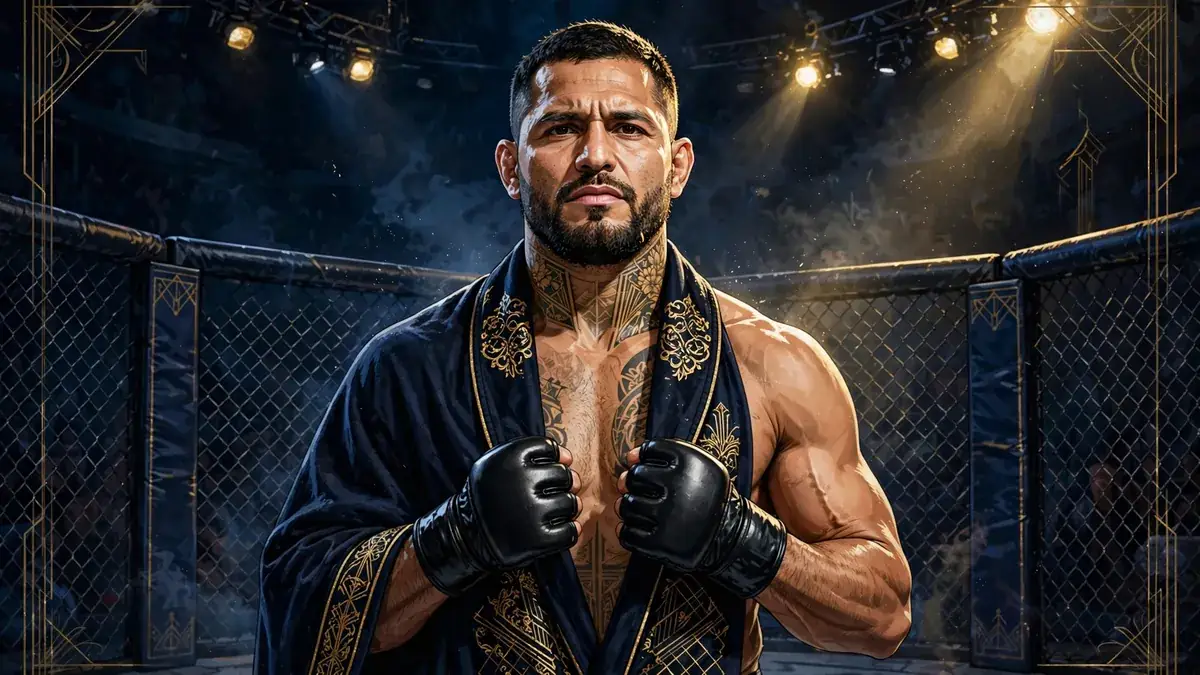
Early Life: A Miami Childhood Shaped by the Streets
Jorge Luis Masvidal was born on 12 November 1984 in Miami, Florida, to a Cuban father and a Peruvian mother. He grew up in the city’s rougher neighbourhoods, and his childhood was split between two worlds: the discipline his mother tried to hold onto at home, and the street life that pulled at him outside it. His father, a Cuban immigrant, spent years in prison, and Masvidal has spoken openly about growing up without that steady presence. The absence left a mark, and so did the neighbourhood. Fighting was not a sport he picked up at a gym first; it was the language of the streets he lived on.
School never held him. Masvidal was expelled more than once, and by his mid-teens he was spending his time in street fights rather than classrooms. Miami in the late 1990s and early 2000s had a raw, unregulated fight scene, and Masvidal was in the middle of it. He has described sleeping in his car during the hardest stretches of those years, chasing a fighting career that paid nothing at the time. There was no safety net and no plan B. What kept him going was a simple belief that he could fight better than the men around him, and that somebody, eventually, would pay to watch it.
That belief was tested early. The street fights were real, ungloved and unsanctioned, and they built a reputation that travelled faster than any record could. But they also built a style: a boxer-puncher with sharp hands, a chin he trusted, and a willingness to stand in the pocket and trade. The same traits that made him dangerous on a Miami street corner would, years later, make him one of the most feared strikers in the UFC. The through-line of Masvidal’s life is that nothing about it was polished or planned. It was earned, fight by fight, in places most fighters never have to survive.
From Backyard Brawls to Turning Pro
Masvidal first caught wider attention in the backyard brawls filmed around Kimbo Slice, the late street-fighting legend whose videos spread across the early internet. Masvidal was a teenager when he started showing up in those tapes, fighting bare-knuckle in backyards while crowds ringed the makeshift pit. The footage looks rough now — handheld cameras, no gloves, no referee worth the name — but it served as his audition tape for the professional game. Promoters and gym owners saw a kid with genuine hands and no fear, and the step from the yard to the cage was short.
He turned professional in May 2003, at 18 years old. The early years were a slog through regional shows in Florida and beyond, the kind of circuit where fighters compete for a few hundred dollars and drive home the same night. Masvidal fought in small promotions, took fights on short notice, and learned his trade the only way the sport allows: by doing it. His wrestling was a work in progress and his grappling had gaps, but his boxing kept bailing him out. By the end of the decade he had built a record that earned him a look from Bellator, then one of the bigger stages in the sport.
The street-fighting past never left him, and he never tried to hide it. Where other fighters polished their origin stories, Masvidal wore his like a badge. The nickname “Gamebred” — a Miami term for someone raised on the game, on the streets — summed it up. It would later become a brand: his promotion, his merchandise line, and the identity fans chanted back at him in arenas. But in 2003 it was just who he was, a kid from Miami who could fight and had nowhere else to go.
The Long Grind: Bellator, Strikeforce and the UFC Undercard Years
For most of his career, Jorge Masvidal was the fighter other fighters respected and promoters underpaid. He fought in Bellator in 2009 and 2010, then moved to Strikeforce, where in December 2011 he challenged Gilbert Melendez for the lightweight title and lost a decision. The loss stung, but the level of opposition told its own story: Masvidal was fighting champions while still being treated as a journeyman. When Strikeforce folded into the UFC, he came across with the rest of the roster and made his UFC debut in April 2013, beating Tim Means by decision.
The UFC years that followed were long and uneven. Masvidal fought at lightweight and then at welterweight, beating solid names and losing close decisions to better ones. He went through stretches where a single bad scorecard cost him months of momentum. Fighters who know the sport will tell you his record flatters neither his talent nor his toughness: he fought elite competition for a decade before the paydays caught up with him. Through it all he stayed at American Top Team in Coconut Creek, Florida, one of the best gyms in the world, sharpening a boxing game that was already his calling card.
By 2018, Masvidal was 34 years old, coming off two straight losses, and widely written off as a gatekeeper — the tough veteran young contenders beat to prove themselves. His disclosed purses in those years were modest by UFC standards, and his net worth at the time would have been a fraction of what it is now. What happened next is one of the sharpest late-career turnarounds in the sport’s history, and it is the reason this article exists at all. Three fights in 2019 took a respected journeyman and made him a star, and the money followed.
The 2019 Breakout: Three Fights That Changed Everything
March 2019, London. Masvidal flew into enemy territory to face Darren Till, a rising local favourite, at UFC Fight Night 147. In the second round he flattened Till with a left hand, then jumped the fence and got into a backstage altercation with Leon Edwards that went viral within hours. The “three-piece and a soda” line he gave reporters afterwards became a meme, and for the first time in his career, Masvidal was the story of the week. The knockout also earned him a performance bonus, but the real prize was attention. The UFC had a new character on its hands, and he knew exactly how to play it.
July 2019, Las Vegas. UFC 239. Ben Askren, the undefeated former Bellator and ONE champion and Olympic wrestler, had spent months needling Masvidal. When the bell rang, Masvidal sprinted across the octagon and launched a flying knee that met Askren as he ducked for a takedown. Askren was unconscious before he hit the canvas. The official time was five seconds — the fastest knockout in UFC history, a record that still stands. Sherdog named it the 2019 Knockout of the Year. In one strike, Masvidal went from cult favourite to household name, and his asking price went with him.

November 2019, New York. UFC 244 at Madison Square Garden, and the biggest stage of his life. Masvidal faced Nate Diaz for the inaugural BMF title, a one-off belt created for the two men because the UFC knew the fight would sell on attitude alone. Masvidal cut Diaz up and the doctor stopped the fight after the third round, giving him a TKO win and the belt. Dwayne “The Rock” Johnson wrapped it around his waist in the cage. The event was a commercial hit, and Masvidal had done in eight months what most fighters never manage in a career: he had become a pay-per-view draw. Three fights, three knockouts, three bonuses — and a completely different financial life.
Two Shots at the Title: The Usman Fights
Stardom brought the fights Masvidal had chased for a decade: two shots at the welterweight championship against Kamaru Usman, the dominant champion of the division. The first came at UFC 251 on 11 July 2020, on Fight Island in Abu Dhabi, and it was a rescue job. Gilbert Burns tested positive for COVID-19 and withdrew six days out; Masvidal stepped in on short notice, cut more than 20 pounds in under a week, and went the distance with Usman in front of a global audience. He lost a clear unanimous decision, but the circumstances earned him respect, and the event’s roughly 1.3 million pay-per-view buys made it the richest night of his career.
The rematch came at UFC 261 on 24 April 2021 in Jacksonville, Florida — the UFC’s first full-capacity arena show since the pandemic began. This time there was no fairytale. Usman caught Masvidal with a right hand in the second round and knocked him out cold, the first stoppage loss of Masvidal’s career. The defeat hurt, but the cheque did not: title fights with pay-per-view points pay at a level undercard fights never reach, and the two Usman fights together form the bulk of Masvidal’s career earnings. He had finally been paid like a star. He had also learned, in the hardest way, how far the gap was between being a star and being a champion.
The two fights also set the pattern for the rest of his career. Masvidal was now a name the UFC could put on a poster, but he was also 36 years old, carrying years of wear, and fighting men in their prime. The money was better than it had ever been. The results, from here on, would not be.
Retirement, the Covington Feud and the Diaz Boxing Rematch
Masvidal’s last stretch in the UFC was rough. In March 2022 he lost a five-round decision to Colby Covington, a former training partner turned bitter rival, at UFC 272. Weeks later, he was arrested after an alleged altercation with Covington outside a Miami restaurant, an incident that led to criminal charges and hung over him for more than a year. In November 2023 he pleaded guilty to a misdemeanor battery charge and was sentenced to time served, closing the criminal case. The episode is covered in more detail below, but it cost him time, money and focus at the tail end of his career.
His final fight came at UFC 287 on 8 April 2023, in front of his home crowd in Miami, against Gilbert Burns. Masvidal lost a unanimous decision, his fourth defeat in a row, and announced his retirement in the cage moments later. “It’s been a long 20 years, 50-something fights,” he told the crowd, thanking the city that raised him. He finished with a professional record of 35-17, and he left as the holder of the BMF title and the fastest knockout in UFC history. For most fighters that would be the end of the story. For Masvidal it was the end of one chapter and the start of another.
The next chapter was written in a boxing ring. On 6 July 2024, Masvidal and Nate Diaz met again, this time as boxers, in a 10-round light-heavyweight bout at the Honda Center in Anaheim, California, promoted by Fanmio. The rematch had been delayed from a planned June date and moved from the Kia Forum, but when it finally happened it delivered: nearly 1,400 punches thrown between them in front of a sold-out crowd of 18,040. Diaz won by majority decision, with scores of 95-95, 97-93 and 98-92, evening their rivalry at one win each. Masvidal landed the harder shots and outlanded Diaz in power punches, but the judges gave Diaz the nod. The fight also set up the lawsuit that would later hand Masvidal his biggest single financial win — a court award, not a purse, and one whose collection is still an open question.
Where the Money Comes From: Income Streams
Masvidal’s fortune is not one big cheque. It is a stack of smaller ones, built over 20 years, with a sharp spike in 2019 and 2020 when he finally got pay-per-view points. NetWorthBreakdown, one of the trackers that puts his net worth at $6 million, breaks his wealth down into fight purses of about $4 million, pay-per-view points of about $1 million, endorsements and sponsorships of about $800,000, BMF brand and merchandise of about $300,000, his Gamebred Boxing promotion of about $150,000 and media appearances of about $50,000. Those are the tracker’s modelled estimates, not audited accounts, and they should be read as a shape of the fortune rather than a bank statement. But the shape rings true: the fighting paid for the house, and the brand work around it paid for the rest.
| Income Stream | Estimated Contribution (NetWorthBreakdown model) |
|---|---|
| UFC Fight Purses | About $4 million |
| Pay-Per-View Points | About $1 million |
| Endorsements and Sponsorships | About $800,000 |
| BMF Brand and Merchandise | About $300,000 |
| Gamebred Boxing Promotion | About $150,000 |
| Media Appearances | About $50,000 |
| Model Total | About $6 million |
The fight purses are the most solid part of the picture. Wealthy Gorilla’s tally of Masvidal’s disclosed UFC earnings comes to $4,093,000, a figure built from the purses athletic commissions made public. Other trackers, including Digestley and SportsOnDemand, put his total fight earnings closer to $5.5 million, a higher number that folds in performance bonuses and pay-per-view shares the commissions never publish. The gap between the two numbers is not a contradiction; it is the difference between what was disclosed and what was actually paid. Both point the same way: Masvidal earned most of his fighting money late, in the three years after the Askren knockout, not in the 16 years before it.
Endorsements were never the main event for Masvidal. He was not the clean-cut sponsor’s dream, and his brand was built on being the opposite of one. But the BMF run changed the maths. Sponsorships, a sports-drink tie-in and gaming partnerships, and the Gamebred merchandise line all grew out of the same 2019 surge. None of it made him rich on its own. Together, it turned a fighter’s wage into a businessman’s portfolio, and it gave him something to sell after the fighting stopped.
The Biggest Paydays of His Career
UFC 251 against Kamaru Usman stands alone at the top. Masvidal’s disclosed purse for the fight was around $530,000, according to tracker reports, but his total take is reported at roughly $1.3 million once his pay-per-view share was added, per Digestley. The event sold about 1.3 million buys, and Masvidal, as the challenger in a title fight, was on a pay-per-view points deal for the first time in his career. It was the single richest night of his fighting life, and it came on six days’ notice, after a weight cut that would have broken most fighters.
The rematch at UFC 261 was the second-biggest night. His disclosed purse for that fight was reported at around $532,000, again before his pay-per-view share. The two Usman fights together account for more than $2.5 million of his career earnings on most trackers’ maths, which tells you how concentrated a fighter’s wealth can be: two nights, out of 52 professional fights, produced close to half the money. The Diaz boxing rematch in July 2024 was also a major payday — his contract guaranteed him $6 million for the Fanmio event, with $1 million paid upfront and a $150,000 advance — but as the next section explains, most of that money had to be chased through the courts.
| Fight | Event and Date |
|---|---|
| vs Kamaru Usman (title fight) | UFC 251, 11 July 2020 — reported total payday about $1.3 million including pay-per-view share; disclosed purse about $530,000 |
| vs Kamaru Usman II (title rematch) | UFC 261, 24 April 2021 — disclosed purse about $532,000 before pay-per-view share |
| vs Nate Diaz (BMF title) | UFC 244, 2 November 2019 — career-making win; performance bonus and pay-per-view share on a major card |
| vs Ben Askren | UFC 239, 6 July 2019 — five-second knockout; performance bonus and the win that made him a star |
| vs Nate Diaz (boxing rematch) | Fanmio PPV, 6 July 2024 — contract guaranteed $6 million; $1 million upfront plus $150,000 advance; balance pursued in court |
It is worth saying plainly what these numbers are not. Disclosed purses are the floor, not the ceiling. Bonuses, pay-per-view points, locker-room payments and sponsorship money sit on top, and none of it is public. That is why honest estimates of a fighter’s wealth come as a consensus figure — $6 million, in Masvidal’s case — rather than a precise accounting. Anyone quoting his net worth to the dollar is guessing, and anyone quoting a much bigger number is selling something.
The Fanmio Lawsuit and the Five Million Dollar Court Award
The strangest twist in Masvidal’s money story is that his biggest single financial win came in a courtroom, not a cage. After the Diaz boxing rematch in July 2024, Masvidal sued Fanmio, the event’s promoter, saying he had not been paid what his contract promised. According to Wealthy Gorilla’s reporting of the case, his contract guaranteed him $6 million, with $1 million paid upfront and a $150,000 advance, and he claimed he never received the remaining sum. In October 2025, a judge awarded him $5,315,268.64 — the $4.85 million he was still owed, plus interest.
The award is real, and it is a matter of public record. What it is not, yet, is money in the bank. A court award and a collected payment are two different things, and no public record confirms how much of the $5.3 million Fanmio has actually paid. That distinction matters for the net-worth figure. The $6 million consensus from the trackers was published both before and after the award, and most trackers treat the award as part of the picture without claiming it has been collected in full. Readers should treat the Fanmio money the same way: a genuine legal win, worth more than $5 million on paper, with the cash still to be confirmed.
The award vs the cash: Masvidal’s contract for the Diaz boxing rematch guaranteed $6 million. The court awarded him $5,315,268.64 in October 2025. Until collection is confirmed, the honest way to describe it is a $5.3 million court award, not a $5.3 million payday. This article’s $6 million net-worth figure does not assume the award has been paid in full.
Gamebred the Promoter: Bare-Knuckle MMA and the DAZN Deal
Masvidal’s second act is promotion, and it is the part of his career that looks most like a long-term business. He founded Gamebred Bareknuckle MMA, also known as Gamebred FC, the first professional bare-knuckle MMA league in the United States. The format is his own biography in a rulebook: bare knuckles, like the backyard fights he grew up in, combined with the full MMA ruleset — strikes, takedowns, grappling and submissions. The promotion runs under the Unified Rules of MMA, with the absence of gloves as the defining difference.
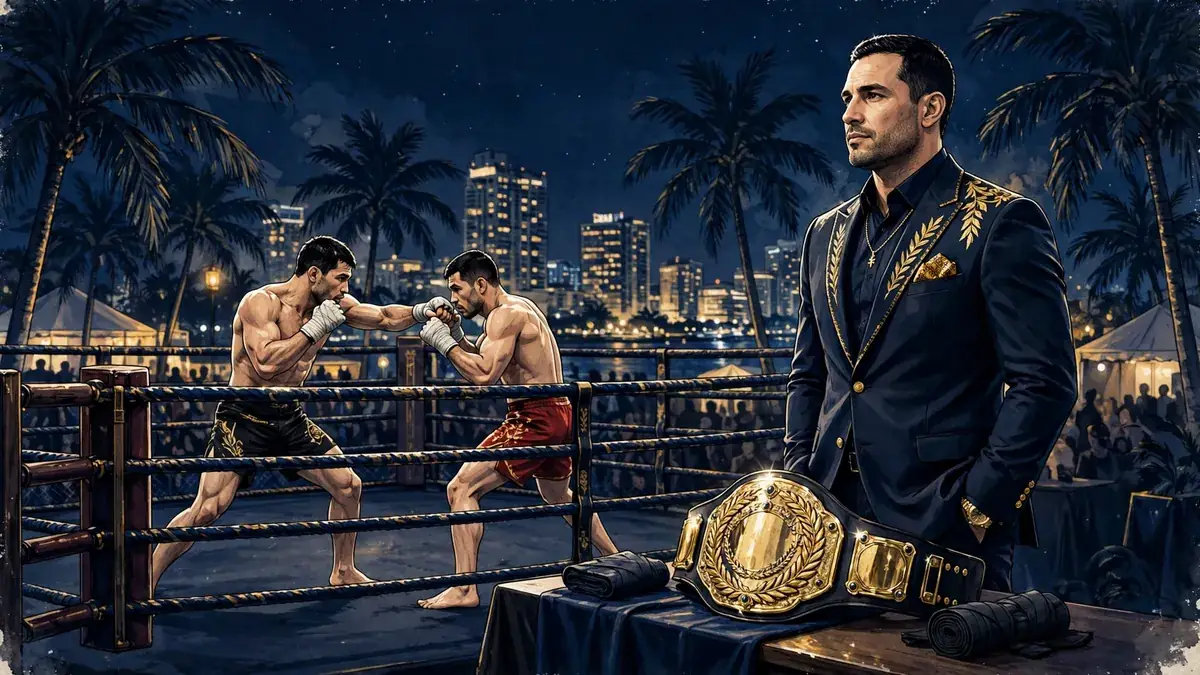
In 2026, Gamebred FC signed a global broadcast partnership with DAZN, giving the promotion a home on one of the biggest sports streaming platforms in the world. DAZN’s reporting puts four Gamebred events on the calendar for the rest of 2026, starting on 12 September, with further cards on 2 October, 30 October and 12 December, and the promotion is running heavyweight and lightweight World Grand Prix tournaments with $500,000 prizes for each winner. Masvidal also runs Gamebred Boxing and iKON FC, a regional MMA promotion. The DAZN deal is the most significant business development of his post-fighting life, and if the promotion grows, it is the asset most likely to move his net worth in the years ahead. For now, though, it is a growing business rather than a proven fortune, and this article does not put a sale value on it.
The promoter’s chair suits him. He spent 20 years inside the sport’s economics as the labour, and he knows exactly how fighters get paid and how they get short-changed. His own Fanmio experience is a case study in the second half of that sentence. Whether Gamebred FC becomes a serious player or stays a niche promotion will decide whether Masvidal’s wealth grows past the $6 million mark or plateaus where it is. Either way, he has done what few retired fighters manage: he has stayed in the sport on his own terms, selling fights instead of taking punches.
Real Estate and Assets: The Miami Home
The most solid asset in Masvidal’s portfolio is the one he lives in. In December 2019, fresh off the BMF win, he paid $1.575 million for a 5,998-square-foot, six-bedroom, four-bathroom home in Miami, Florida. Wealthy Gorilla reports he still owns the home and that it is now valued at roughly $3.1 million, a gain driven by the surge in South Florida property prices since 2019. Other trackers put the current value lower, closer to $2 million, so the honest range for the property today is about $2 million to $3.1 million. Either way, the purchase was well timed: he bought at the peak of his earning power and the asset has grown since.
Beyond the house, the public record gets thin. Masvidal has been linked in tracker reports to a small collection of cars and to rental property in Miami, but the specifics — models, values, addresses — are not backed by named sources this article can stand behind, so they are not listed here as facts. He has also spoken publicly about an interest in Bitcoin since 2021, but no verifiable figure exists for any crypto holding, and this article does not invent one. What can be said with confidence is that his wealth is concentrated in three places: his fighting earnings, the Miami home, and the Gamebred promotions. There is no evidence of the kind of sprawling property empire or investment portfolio that pads out some fighters’ net-worth pages, and this article does not pretend otherwise.
How the Fortune Was Built, Year by Year
Masvidal’s wealth curve is not a steady climb. It is flat for a very long time, then steep for about three years, then flat again. That shape is the honest story, and it is more useful than a made-up year-by-year net-worth table. The phases below are built only from dated, sourced events.
| Phase | What Happened |
|---|---|
| 2003–2012: The Regional Years | Turned pro in May 2003; fought on regional shows, then Bellator and Strikeforce; challenged Gilbert Melendez for the Strikeforce lightweight title in December 2011. Earnings were modest and the wealth built in this phase was small. |
| 2013–2018: The UFC Grind | UFC debut in April 2013; a decade of undercard and mid-card fights at lightweight and welterweight; two straight losses in 2017–2018 left him written off as a gatekeeper at 34. |
| 2019: The Breakout | Knocked out Darren Till in London in March, Ben Askren in five seconds at UFC 239 in July, and Nate Diaz for the BMF title at UFC 244 in November. Bonuses, attention and a new contract followed. |
| 2020–2021: The Paydays | Two title fights against Kamaru Usman at UFC 251 and UFC 261; the UFC 251 payday of about $1.3 million was the richest night of his career. Most of his disclosed career earnings date from this window. |
| 2022–2023: The Slide | Losses to Colby Covington and Gilbert Burns; the Covington incident and criminal case; retirement at UFC 287 in April 2023 with a 35-17 record. |
| 2024–2026: The Second Act | Boxing rematch with Nate Diaz in July 2024; $5,315,268.64 court award against Fanmio in October 2025; Gamebred FC’s global broadcast deal with DAZN in 2026. |
The lesson of the curve is that timing beat longevity. Masvidal fought professionally for 20 years, but most of his money came from about 24 months of it. Fighters who never get a pay-per-view points deal can fight just as long and retire with a fraction of his wealth. Masvidal got the deal because three knockouts in 2019 made him impossible to ignore. The second lesson is that the money did not keep growing after he stopped fighting. His net worth has sat around the $6 million mark across the trackers’ recent updates, and whether it rises from here depends on the promotions, not on another fight.
How Masvidal Compares to Other MMA Millionaires
Context helps. BounceMojo’s 2026 list of the richest MMA fighters puts Conor McGregor at the top with about $200 million, a figure built on whiskey, proper pay-per-view superstardom and a scale Masvidal never reached. On the same list, Masvidal sits at $6 million, alongside Islam Makhachev at $6 million and just behind Mauricio “Shogun” Rua at $6.5 million. That is the honest neighbourhood for a fighter of Masvidal’s standing: a star, a draw, and a wealthy man — but not in the same financial universe as the sport’s one true crossover mogul.
The comparison also shows how much of a fighter’s wealth comes from business, not fighting. McGregor’s fortune is mostly Proper No. Twelve whiskey and brand deals. Masvidal’s is mostly fight purses. Fighters who built promotions or brands early — Khabib Nurmagomedov, whose own business interests grew after his retirement, and Georges St-Pierre, whose long reign as a pay-per-view headliner banked a far larger fortune — sit above him for that reason. The gap is not about talent in the cage. It is about what happens outside it, and Masvidal’s Gamebred promotions are his attempt to close it.
Within his own generation of welterweights, the picture is kinder. Jon Jones, the sport’s greatest heavyweight talent, and Charles Oliveira, the former lightweight champion, both built their wealth on longer title reigns and bigger pay-per-view runs than Masvidal ever had. Masvidal never held a UFC championship, and that ceiling shows in the numbers. What he did hold — the BMF belt, the fastest knockout record, and a genuine connection with fight fans — paid him well, just not like a title reign would have. For more fighters in this wealth bracket, see our net worth archive.
Personal Life: Family, Fatherhood and Privacy
For a man who made his name by being loud, Masvidal keeps his private life quiet. He is a father of three, and he has kept his children almost entirely out of the public eye. Reports describe him as previously married to Iman Kawa, the mother of his children, but Masvidal himself rarely discusses the relationship, and this article does not treat tracker gossip about his love life as fact. What is clear is that fatherhood matters to him: he has spoken about fighting to give his children a life he did not have, and about the weight of being the man his kids look up to. The street kid who slept in his car became a father who bought a six-bedroom house in the city that raised him.
His parents’ story runs through everything he does. His Cuban father and Peruvian mother gave him a heritage he wears openly — the Cuban flag, the Miami accent, the pride in where he comes from. His father’s long absence, spent in prison, is the wound at the centre of his story, and Masvidal has never hidden it or used it as an excuse. He has said the experience taught him self-reliance early, and anyone who watched his career can see it: a fighter who never waited for the sport to come to him, who took short-notice fights, who built his own promotion when the UFC’s doors started to close. He is 42 now, living in Miami, running a fight league, and still training at American Top Team. The fighting made him famous. The family is what he was fighting for.
Controversies and Legal Trouble
Masvidal’s career has never been free of trouble, and an honest profile does not skip it. The most serious episode came after UFC 272 in March 2022, when he lost a five-round decision to Colby Covington, a former American Top Team training partner who had become his bitterest rival. Weeks later, Covington alleged Masvidal attacked him outside a Miami Beach restaurant. Masvidal was arrested and charged, and the case ran for more than a year. In November 2023, he pleaded guilty to a misdemeanor battery charge and was sentenced to time served, which closed the criminal case. The plea ended the matter in court, but it cost him a year of focus and a chunk of legal fees at the end of his fighting career.
There were smaller storms along the way. The backstage altercation with Leon Edwards after the Darren Till fight in London in March 2019 — the “three-piece and a soda” incident — earned him a talking-to from the UFC and a mountain of free publicity, which he turned into the BMF run. His trash talk with Ben Askren before UFC 239 was personal and relentless, and it sold the fight. None of it derailed his career the way the Covington case threatened to. Taken together, the controversies fit the same pattern as the rest of his life: a fighter whose temper and honesty got him into trouble, and whose talent kept getting him out of it. The record, for the purposes of this article, is what the courts decided: a misdemeanor battery plea, time served, case closed.
Frequently Asked Questions
What is Jorge Masvidal’s net worth in 2026?
Jorge Masvidal’s net worth is estimated at $6 million as of November 2026. Surprise Sports, Wealthy Gorilla (updated 21 November 2026), NetWorthBreakdown and Digestley all land on the same $6 million figure, built from his UFC fight purses, pay-per-view shares, endorsements, his Gamebred promotions and the court award from his Fanmio lawsuit.
How much did Jorge Masvidal make for UFC 251 against Kamaru Usman?
UFC 251 was Masvidal’s biggest payday. His disclosed purse for the fight was around $530,000, and Digestley reports his total take from the event at roughly $1.3 million once his pay-per-view share was added. He took the title fight on six days’ notice after Gilbert Burns withdrew, and the event sold about 1.3 million pay-per-view buys.
What is Jorge Masvidal’s MMA record?
Jorge Masvidal retired from MMA with a professional record of 35 wins and 17 losses across 52 fights. Sixteen of his wins came by knockout, two by submission and 17 by decision. His final fight was a unanimous decision loss to Gilbert Burns at UFC 287 in Miami on 8 April 2023, after which he announced his retirement in the cage.
Why did Jorge Masvidal retire from the UFC?
Masvidal retired after losing to Gilbert Burns at UFC 287 in April 2023, his fourth defeat in a row. He told the Miami crowd he had been fighting for 20 years and no longer felt the same inside the cage. The skid followed two title-fight losses to Kamaru Usman and a decision loss to Colby Covington, and he chose to step away at 38 rather than keep grinding as a gatekeeper.
Who did Jorge Masvidal beat to win the BMF title?
Masvidal won the inaugural BMF title by beating Nate Diaz at UFC 244 on 2 November 2019 at Madison Square Garden. The fight was stopped by the doctor after the third round because of cuts over Diaz’s eye, giving Masvidal a third-round TKO win. Dwayne ‘The Rock’ Johnson wrapped the one-off BMF belt around his waist in the cage, and the moment turned Masvidal into one of the UFC’s biggest stars.
What is the fastest knockout in UFC history?
Jorge Masvidal holds the record for the fastest knockout in UFC history: five seconds. At UFC 239 on 6 July 2019 in Las Vegas, he sprinted across the octagon as the bell rang and landed a flying knee on Ben Askren as Askren ducked for a takedown. Askren was out cold before he hit the canvas, and the finish still stands as the quickest in UFC history.
How much did Jorge Masvidal win in the Fanmio lawsuit?
In October 2025 a judge awarded Masvidal $5,315,268.64 in his lawsuit against Fanmio, the promoter of his July 2024 boxing rematch with Nate Diaz. Wealthy Gorilla reports the award was made up of the $4.85 million he was still owed under his contract, plus interest. His contract had guaranteed him $6 million, with $1 million paid upfront and a $150,000 advance. An award is not the same as cash collected, and no public record confirms how much has actually been paid.
What does Jorge Masvidal do now after retiring?
Masvidal works as a promoter. He founded Gamebred Bareknuckle MMA, also known as Gamebred FC, which combines bare-knuckle fighting with the full MMA ruleset, and he also runs Gamebred Boxing and iKON FC. In 2026 Gamebred FC signed a global broadcast deal with DAZN, with events scheduled through December 2026 and $500,000 prizes for its heavyweight and lightweight tournament winners. He has also talked publicly about a possible UFC return, but no comeback fight had been confirmed as of November 2026.
Final Thoughts: The Bottom Line on Gamebred
Jorge Masvidal’s $6 million fortune is the reward for the most unlikely late-career surge in modern MMA. He spent 16 years as a respected journeyman, then three fights in 2019 made him a star, two title fights in 2020 and 2021 paid him like one, and a courtroom win in 2025 added $5.3 million on paper. The Miami home he bought for $1.575 million in 2019 is now worth roughly twice that, and the Gamebred promotions he built from his own nickname now have a broadcast deal with DAZN. It is a real fortune, built on real fights, and the sources behind it agree.
It is also a fortune with honest limits. Masvidal never won a UFC championship, and the numbers show it: he sits beside Islam Makhachev and Shogun Rua at $6 million, not beside Conor McGregor at $200 million. The Fanmio award is the biggest single figure attached to his name, and it is still an award, not a bank balance. Whether his wealth grows from here depends on Gamebred FC, not on another night in the cage. For a kid from Miami’s streets who once slept in his car, $6 million is a long way. For a fighter who once headlined Madison Square Garden, it is also a reminder of how thin the line is between a star and a champion.
Sources and How We Estimated
How we estimated: The $6 million figure is a consensus estimate, not a bank balance. Surprise Sports, Wealthy Gorilla (updated 21 November 2026), NetWorthBreakdown and Digestley all publish $6 million for Masvidal in 2026, and BounceMojo’s richest-MMA-fighters list agrees. Where sources disagree — disclosed UFC earnings of $4,093,000 (Wealthy Gorilla) against total fight earnings near $5.5 million (Digestley, SportsOnDemand) — this article reports both and explains the difference: disclosed purses versus purses plus bonuses and pay-per-view shares. The Fanmio figure is a court award of $5,315,268.64 from October 2025, reported by Wealthy Gorilla, and is described as an award rather than collected cash. Older tracker pages that still list $1 million date from 2021 and are out of date; they were not used. Private finances, taxes, fees and spending are not public, so any estimate of a fighter’s wealth carries that uncertainty.
Named sources consulted for this article: UFC, Sports Illustrated, Sherdog, Bloody Elbow, DAZN, Surprise Sports, Wealthy Gorilla, NetWorthBreakdown, Digestley, BounceMojo.