By Celebamerica Editorial Staff | Last updated: 23 November 2026
Fernando Alonso Díaz, born 29 July 1981 in Oviedo, Spain, is a two-time Formula 1 world champion who is still racing at the top level at 45 years old. He won his titles with Renault in 2005 and 2006, collected 32 Grand Prix wins across more than 400 Grand Prix starts, then walked away from Formula 1, won the 24 Hours of Le Mans twice and a World Endurance Championship with Toyota, and came back to finish on the podium again with Aston Martin. As of November 2026 he is under contract with Aston Martin through the end of 2027.
The money matches the mileage. Published estimates put Fernando Alonso’s net worth in 2026 at between $250 million and $300 million. Celebrity Net Worth, the most widely cited source on driver wealth, lists him at $260 million in its April 2026 update, while Alux puts its own October 2026 estimate at $300 million. His Aston Martin base salary is reported at $20 million to $24 million a year, and Celebrity Net Worth puts his cumulative career earnings at roughly $545 million. This biography follows the full arc: the working-class kid from Asturias, the teenage champion, the Ferrari heartbreaks, the wilderness years outside Formula 1, and the comeback that made him the oldest driver on the grid and one of its most respected voices.
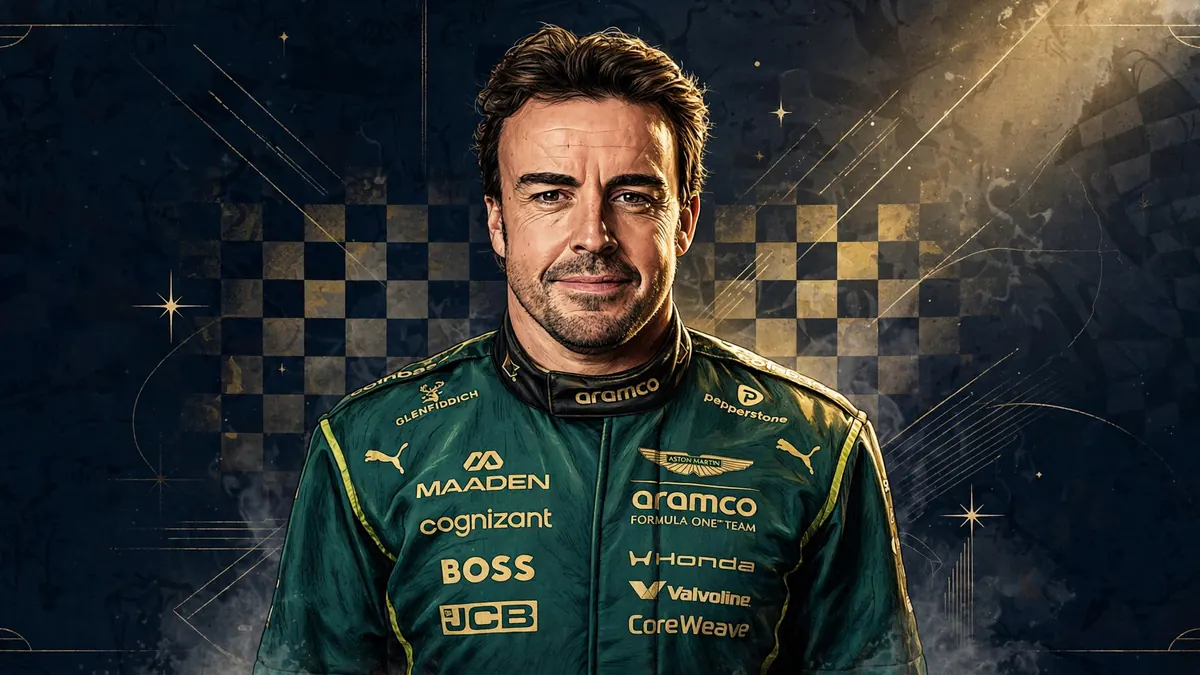
| Full Name | Fernando Alonso Díaz |
|---|---|
| Date of Birth | 29 July 1981 |
| Birthplace | Oviedo, Asturias, Spain |
| Age (November 2026) | 45 |
| Height | 171 cm (5 ft 7 in) |
| Estimated Net Worth (2026) | $250 million – $300 million (Celebrity Net Worth: $260 million, April 2026; Alux: $300 million, October 2026) |
| Current Team | Aston Martin Aramco (contracted through end of 2027) |
| F1 World Championships | 2 (2005, 2006 with Renault) |
| Grand Prix Wins / Starts | 32 wins in more than 400 Grand Prix starts |
| Other Major Titles | FIA World Endurance Champion 2018–19; 24 Hours of Le Mans winner 2018, 2019; 24 Hours of Daytona winner 2019 |
| Primary Income Sources | Formula 1 salary, bonuses, personal sponsorships, Kimoa, A14 Management, karting and museum businesses |
Table of Contents
- Early Life in Oviedo: A Kart Built by His Father
- Karting and the Junior Ladder: The Making of a Racer
- Minardi Debut and the Renault Breakthrough
- World Champion at 24: The Renault Titles of 2005 and 2006
- McLaren, Ferrari and the Long Hunt for a Third Title
- The F1 Break: Le Mans, Daytona, Dakar and the Indy 500
- The Aston Martin Comeback and the 2027 Contract
- The Money: Salary, Sponsors and Net Worth
- Business Ventures: Kimoa, A14 Management and the Asturias Complex
- Houses, Cars and the Collection
- Net Worth Timeline: How the Fortune Grew
- Personal Life: Family, Relationships and Life Away From Racing
- Controversies: Spygate and Crashgate
- Legacy: What Fernando Alonso Leaves Behind
- Fernando Alonso FAQs
- Final Thoughts
- Sources and How We Estimated
Early Life in Oviedo: A Kart Built by His Father
Fernando Alonso was born on 29 July 1981 in Oviedo, the capital of Asturias, a green, rain-washed region in the north of Spain. His father, José Luis Alonso, worked as a mechanic and was a keen amateur kart racer. His mother, Ana Díaz, worked in a department store. The family was working class, and money was tight enough that the shape of Alonso’s childhood was set by what his father could build rather than what the family could buy.
The story every Alonso profile repeats is true, and it explains a lot about the driver he became: when Fernando was three years old, his father built him a kart. It was originally meant for his older sister Lorena, but she showed little interest in racing and the kart passed to her younger brother. Fernando took to it at once. He raced his first karting event at seven and started winning almost immediately. The kart his father built by hand became the first entry in a career that would span a quarter of a century at the top of world motorsport.
Oviedo itself mattered. Asturias is not Madrid or Barcelona. It is a region of small towns, coal country and wet hills, a long way from the money and the academies of European motorsport. Alonso grew up a long way from the junior formulae heartlands of Britain, Italy and France, and that distance shaped him. He learned to race on small Spanish karting tracks, in front of small crowds, with his family doing the spanners. The self-reliance he showed later in his career — the driver who could drag an uncompetitive car to places it had no right to be — was learned in those years, when the equipment was whatever the family could put together.
School was never going to hold him. Racing was the education. By his early teens he was spending his weekends at karting circuits across Spain, and his parents were making the kind of sacrifices familiar to every karting family: long drives, late nights, money spent on tyres and engines instead of holidays. What set Alonso apart was not just speed. Even as a boy, people who watched him noticed the same things the Formula 1 paddock would notice twenty years later: the precision, the patience, the ability to read a race while it was still unfolding, and a refusal to accept that a slower kart was an excuse.
Karting and the Junior Ladder: The Making of a Racer
Alonso’s karting record reads like a steady climb rather than a single explosion. He won three straight Spanish junior karting titles from 1993 to 1995, added a fourth national title in 1996, and in the same year won the CIK-FIA Five Continents Cup, the junior karting world’s biggest prize. In 1997 he finished second in the European karting championship. He was twelve when he won his first Spanish championship, and by his mid-teens the question was no longer whether he would race cars, but how quickly he could get into them.
The move to cars came in 1999, when he was seventeen. He won the Euro Open by Nissan championship in his first season, a result that turned heads because the series was a genuine stepping stone and Alonso had barely driven a single-seater before. In 2000 he finished fourth in International Formula 3000, the last rung before Formula 1, while also working as a test driver for Minardi. The paddock talk that year was consistent: here was a driver with the complete set — speed, racecraft, technical feedback and a work rate that embarrassed drivers ten years older.
What the junior years also built was Alonso’s reputation as a driver who improves a team. Engineers who worked with him in the junior formulae remember a teenager who could describe exactly what a car was doing, lap after lap, in language the mechanics could act on. That skill — the ability to develop a car through the season rather than just drive it — became his calling card. It is the reason Renault wanted him, the reason Ferrari paid him so much, and the reason Aston Martin still values him at 45.
By the end of 2000, the path was set. Minardi, the small Italian team that had given him his first Formula 1 test, signed him to race in 2001. He was nineteen years old, one of the youngest drivers ever to start a Grand Prix, and about to spend a season in the slowest car on the grid. It was the hardest possible start, and it turned out to be the perfect one.
Minardi Debut and the Renault Breakthrough
Alonso made his Formula 1 debut at the 2001 Australian Grand Prix with Minardi. He was nineteen, the third-youngest driver to start a Grand Prix at the time, and his car was hopelessly off the pace. He scored no points all season. What he did do, race after race, was beat his team-mates by margins that made people look twice, and drag the Minardi to finishing positions it had no business reaching. The paddock noticed. Flavio Briatore, Renault’s team boss, noticed most of all.
Briatore signed Alonso to Renault for 2002, spending the year as a test driver while Jenson Button raced. It was a year of learning the team from the inside, and it paid off. When Button moved on, Alonso got the race seat for 2003, and the results came fast. At the Malaysian Grand Prix he became the youngest driver ever to take pole position. Two races later, at the Hungarian Grand Prix, he became the youngest Grand Prix winner in history at the time, aged 22. The win was not a fluke of weather or luck. He led from pole and controlled the race from the front, the way champions do.
The 2004 season brought podiums but no wins, and a lesson in patience. Renault was building toward something, and Alonso was at the centre of the project. The team had a young driver who could develop a car, a technical group hitting its stride, and an engine partnership that worked. When the R25 arrived for 2005, everything clicked. Alonso won seven of the season’s nineteen races and took the title with two rounds to spare, ending Michael Schumacher’s five-year run of dominance with Ferrari and becoming, at 24, the youngest world champion in Formula 1 history at the time and the first Spanish driver ever to win the title.
Spain changed that year. Formula 1 had been a minority sport in the country; Alonso’s title made him a national figure overnight. The television audiences grew, the newspapers put him on the front pages, and a generation of Spanish children started karting because of him. Carlos Sainz, who would reach Formula 1 a decade later, is part of that generation. Alonso had done more than win a championship. He had put Spanish motorsport on the map.
World Champion at 24: The Renault Titles of 2005 and 2006
The 2005 championship was a duel, and it was won on consistency as much as speed. Alonso’s main rival was Kimi Räikkönen in the McLaren, a car that was often faster but broke down far more often. Alonso finished on the podium in fifteen of the nineteen races. When the car was the fastest, he won. When it was not, he took the points anyway. The title was sealed at the Brazilian Grand Prix, where a third-place finish was enough, and the scenes in the Renault garage — a young Spaniard crying on the radio, a team that had been a midfield outfit five years earlier — remain one of the sport’s great images.
Defending the title in 2006 was harder. Ferrari and Schumacher were back, and the championship went down to the final race in Brazil. Alonso won seven races again, matched Schumacher win for win, and held his nerve when the pressure peaked. He took the title by thirteen points. At 25 he was a two-time world champion, and the paddock’s conversation had shifted. The question was no longer whether Alonso was good. It was how many titles he would win, and whether anyone could stop him.
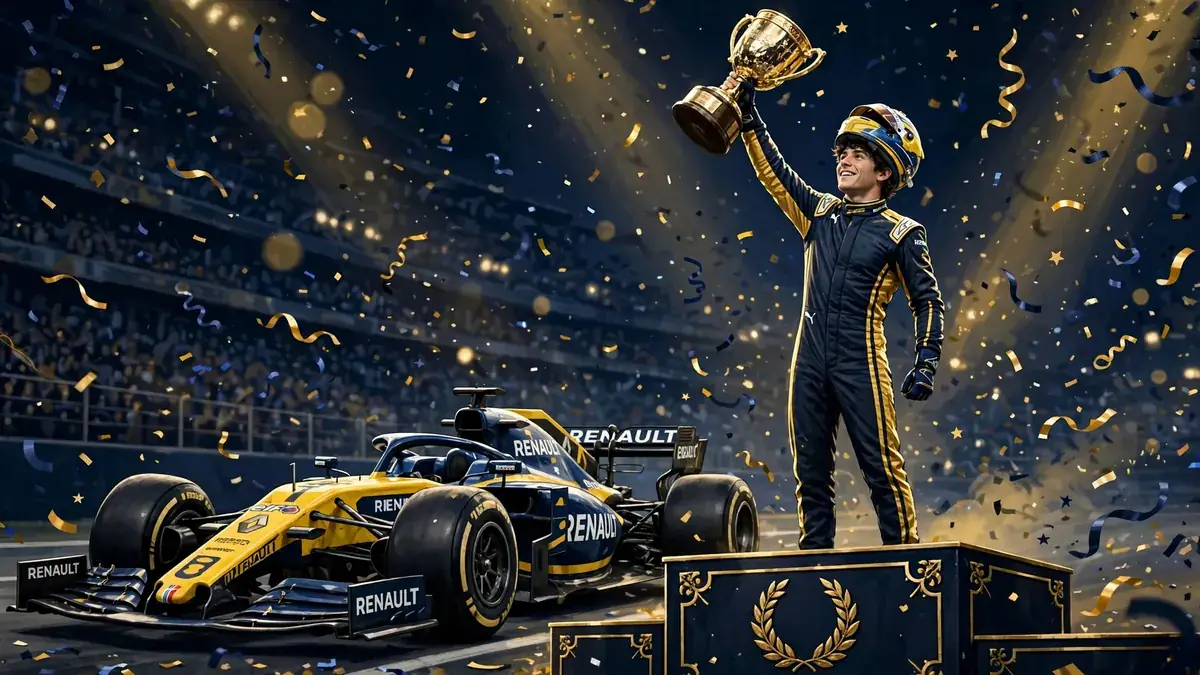
The numbers from those two seasons still frame his career. Fourteen Grand Prix wins in two years. Twenty-seven podiums. A driver who had arrived in Formula 1 at nineteen and owned it by twenty-five. The two Renault titles are the foundation of everything that followed — the fortune, the fame, the long second act — and they are also the reason his later career carries a note of what-might-have-been. Nobody in 2006 expected the third title to take twenty years and counting.
What the Renault years also proved was Alonso’s ability to lead a team. Renault in 2005 was not the biggest or richest outfit on the grid. It was a works team with a clear plan and a driver who could carry it. Alonso’s feedback shaped the car, his racecraft won the tight races, and his calm under pressure steadied the team when the championship fight got close. Every team he has driven for since has wanted the same thing from him, and every team has paid for it.
McLaren, Ferrari and the Long Hunt for a Third Title
Alonso’s next move, to McLaren for 2007, was supposed to be the next step up. Instead it became the most difficult season of his life. His team-mate was a rookie named Lewis Hamilton, and Hamilton was fast — faster than anyone at McLaren had expected. The two finished the season tied on points, with Alonso classified third on countback, one point behind champion Kimi Räikkönen. The relationship between the two McLaren drivers collapsed in public, the team was fined $100 million and stripped of its constructors’ points in the spying affair (covered below), and Alonso left after a single season.
He returned to Renault for 2008 and 2009, winning twice in 2008 — including the Singapore Grand Prix that later became the centre of the Crashgate scandal — but the team was no longer a championship force. The real prize was Ferrari, and in 2010 Alonso got it. The move to Maranello put him in the sport’s most famous car, on the biggest salary of his life, with the full weight of Ferrari’s history behind him. What followed was five seasons of near misses that have become the defining frustration of his career.
He came closest in 2010 and 2012. In 2010 he led the championship into the final race in Abu Dhabi and lost it on a strategy call that went wrong. In 2012 he lost to Sebastian Vettel by three points, dragging a Ferrari that was rarely the fastest car to the final round through sheer racecraft. He finished runner-up again in 2013. Three times in four years he was the second-best driver in the world, and each time the car was not quite good enough. The statistics tell the story plainly: eleven wins in five Ferrari seasons, but no title, and a growing sense that his peak years were being spent in cars that could not match Red Bull.
The McLaren return in 2015 was worse. The renewed McLaren-Honda partnership was slow and unreliable, and Alonso spent four seasons from 2015 to 2018 in cars that could not fight for podiums, let alone wins. His talent was never in doubt — the performances in the wet at Hungary, the defensive drives that held off faster cars for lap after lap, the radio messages that became famous — but the results were not there. By the end of 2018 he had gone five seasons without a win, and he had had enough. He announced he was stepping away from Formula 1, and most of the paddock assumed he was done.
The Ferrari years also made him rich. His salary at Maranello was reported at the time as the highest on the grid, and his personal sponsorships grew with his fame in Spain and Italy. The money from those years, invested and managed rather than spent, is the base layer of the fortune he holds today. The frustration of the Ferrari years is real, but so is the cheque book. Alonso has never been short of teams willing to pay for what he brings.
The F1 Break: Le Mans, Daytona, Dakar and the Indy 500
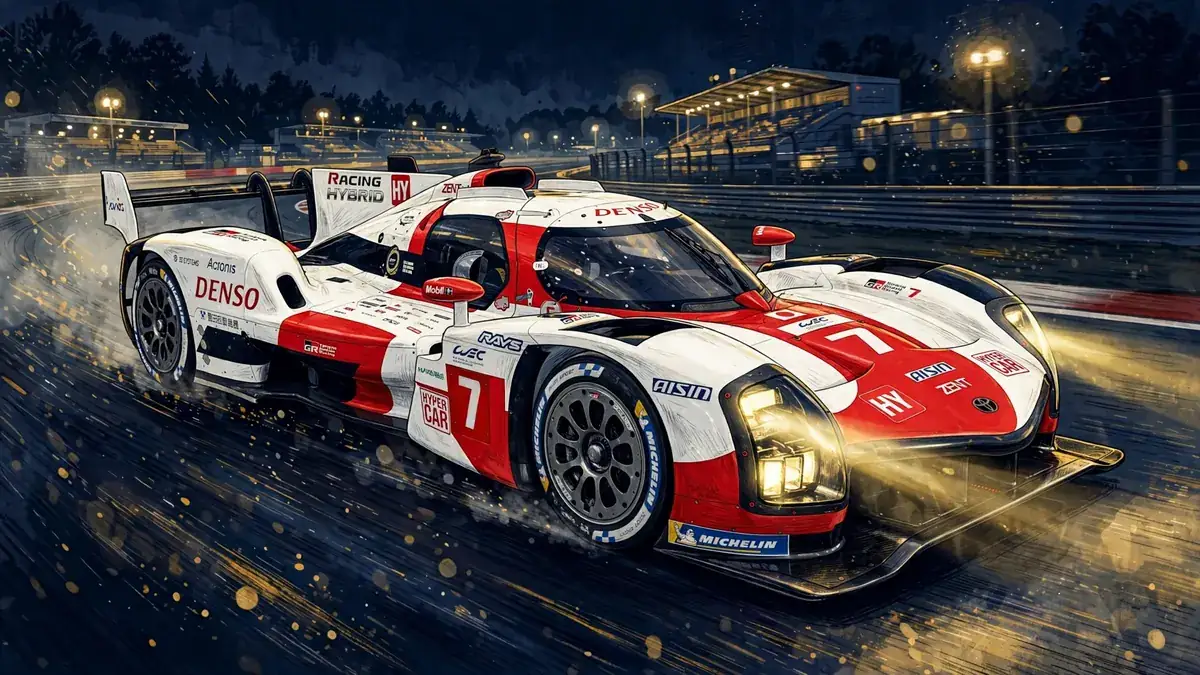
What Alonso did next is what separates him from almost every other Formula 1 driver in history. Instead of retiring to a television studio, he went chasing the Triple Crown of motorsport: the Monaco Grand Prix, which he had already won twice, the Indianapolis 500, and the 24 Hours of Le Mans. He signed with Toyota for the World Endurance Championship and won Le Mans at his first attempt in 2018, then won it again in 2019. In between he won the 2018–19 FIA World Endurance Championship, taking five wins from the season’s eight rounds, and added a victory at the 24 Hours of Daytona in 2019 with Wayne Taylor Racing. He is the only driver ever to have won both the Formula 1 world championship and the World Endurance Championship.
The Indianapolis 500 was the one that got away. In 2017 he skipped the Monaco Grand Prix to race at Indianapolis, qualified on the front row, led 27 laps and was running near the front when his engine failed with 21 laps to go. He returned in 2019 and failed to qualify, a public embarrassment that he took with typical bluntness. He tried once more in 2020 and finished 21st. The Triple Crown — a prize only Graham Hill has ever completed — remains unfinished business. The attempt matters more than the result: almost no Formula 1 driver of his standing has ever walked away from the sport to learn an entirely new discipline in public, and done it as well as Alonso did.
He went further still. In January 2020 he entered the Dakar Rally, the most punishing off-road race in the world, with Toyota Gazoo Racing. He finished 13th overall on his first attempt, a result that experienced rally-raid drivers described as remarkable, and he has spoken since about Dakar as one of the hardest physical and mental tests he has ever faced. He has also completed Ironman triathlons. The pattern is consistent: Alonso does not rest. When one challenge ends, he finds a harder one.
It was during these years away from Formula 1 that his public image shifted. The difficult, political driver of the McLaren years gave way to something else: a veteran who loved racing for its own sake, who would race anything, anywhere, and who had nothing left to prove. Daniel Ricciardo had taken the Renault seat Alonso vacated, and the sport had moved on. But when Renault — by then racing as Alpine — offered him a return for 2021, Alonso took it. He was 39 years old, and he was coming back.
The Alpine years, 2021 and 2022, were a bridge. He took a podium in Qatar in 2021, his first since 2014, and spent two seasons wringing results from a midfield car while helping develop the team. The speed was still there. The question was whether a front-running team would ever give him a car to match it. In the summer of 2022, Aston Martin answered.
The Aston Martin Comeback and the 2027 Contract
Alonso joined Aston Martin for 2023, and the first races of the season felt like a film script. He finished third in Bahrain, third in Saudi Arabia, third in Australia — three podiums in three races, in a car that had been nowhere the year before. He took eight podiums across the season, finished fourth in the drivers’ championship with 206 points, and carried Aston Martin to fifth in the constructors’ standings, the team’s best ever result. At 41, he was racing as well as he ever had. The duels defined the year, none more than the final laps in Brazil, where he held off Sergio Perez by a fraction of a second in a straight fight that had the whole paddock on its feet.
The seasons since have been harder. Aston Martin’s development stalled, and the 2024 and 2025 cars could not repeat the 2023 breakthrough. The 2026 season, the first of the new regulations and of Aston Martin’s works partnership with Honda, began slowly. The team scored only three points in the first fifteen rounds of 2026, all of them by Alonso, with his first points of the year coming at Monaco and a ninth place at the Dutch Grand Prix among the highlights. The results did not match the ambition, but the driver’s value to the team never came into question. Adrian Newey, the sport’s most celebrated designer, now leads the technical programme at Aston Martin, and Alonso’s feedback is central to the project.
On 29 September 2026, Aston Martin confirmed that Alonso and team-mate Lance Stroll would continue with the team in 2027. The team described Alonso’s deal as a long-term contract, though Alonso confirmed the next day that his racing commitment covers 2027 only, with the door open to more. The 2027 season will be his fifth with Aston Martin and, if he sees it out, will take him past his 46th birthday. At 45, how old Fernando Alonso is has become part of the story itself: he is the oldest driver on the grid by a wide margin, and he is still the driver other teams’ engineers watch most closely on a Friday.
What keeps him going is not money. He has earned enough to stop many times over. It is the third title, the win that has eluded him since the 2013 Spanish Grand Prix, and the belief that the new regulations and the Honda partnership might finally give him a car that can deliver it. Whether it happens or not, the comeback has already changed how his career will be remembered. The driver who left in frustration in 2018 came back and proved, in his forties, that he had lost none of it.
The Money: Salary, Sponsors and Net Worth
Fernando Alonso’s net worth in 2026 is estimated at between $250 million and $300 million. Celebrity Net Worth, the most widely cited source on driver wealth, lists him at $260 million in its update of 1 April 2026, and puts his cumulative career earnings at roughly $545 million. Alux, in its October 2026 estimate, puts the figure higher, at $300 million, noting that published estimates cluster around $260 million with higher guesses running to $400 million. SurpriseSports, in its March 2026 roundup, puts the range at $250 million to $260 million. The honest figure is a range, and the range is $250 million to $300 million, anchored on Celebrity Net Worth’s $260 million. For the full breakdown of Fernando Alonso’s net worth, our sister site GuideNetWorth carries a dedicated profile of the same fortune from the wealth angle.
The salary is the engine of the fortune. Reports on his Aston Martin pay differ, as they always do with driver contracts, which teams never confirm in public. Spotrac puts his base salary at around $20 million a year. F1 Salaries, drawing on Forbes reporting, puts his base at $24 million, with potential income of $26.5 million once bonuses are counted, and notes that Forbes had him on $24 million in each of his first three Aston Martin seasons. The fair reading is a base salary of $20 million to $24 million a year for 2026, before bonuses and personal sponsorships, making him the sixth-highest-paid driver on the grid. His two-year Aston Martin deal announced in April 2024 was worth about $48 million in base salary; the new deal for 2027, announced on 29 September 2026, carries no published fee.
That salary sits on top of more than two decades of top-level pay. His Ferrari years, from 2010 to 2014, were paid at the top of the grid. His McLaren and Renault contracts were substantial. His Alpine return was well paid. And the endurance years with Toyota added race fees and manufacturer backing on top of his Formula 1 income. Celebrity Net Worth’s cumulative career earnings figure of roughly $545 million, and F1 Salaries’ higher estimate of nearly $595 million, both point the same way: Alonso has been among the best-paid racing drivers in the world for most of the last twenty years.
The range, in plain terms: Celebrity Net Worth says $260 million (April 2026). Alux says $300 million (October 2026). SurpriseSports says $250 million to $260 million (March 2026). No source publishes his private accounts, his tax bills or his investment returns, so every figure is an estimate built from public salary reports, sponsorships and business holdings. Our working figure is $250 million to $300 million, anchored at $260 million.
Sponsorships add a second layer. Alonso’s personal endorsement income has never been published in the way a footballer’s is, but a driver of his profile — two world titles, a huge following in Spain and Latin America, and two decades of television exposure — commands serious personal deals alongside his team salary. The most visible commercial asset is one he owns himself: Kimoa, the clothing and sunglasses brand he founded in 2017, which he later sold a stake in to an American investment fund in 2021. The sale price was not disclosed, but the brand’s survival and growth without his daily involvement is itself a sign of how it was built — as a business, not a merchandising line.
| Income stream | What we know |
|---|---|
| Aston Martin salary (2026) | Base reported at $20 million (Spotrac) to $24 million (Forbes via F1 Salaries); potential income up to about $26.5 million with bonuses |
| Career earnings (cumulative) | Roughly $545 million per Celebrity Net Worth (April 2026); F1 Salaries estimates nearly $595 million |
| Personal sponsorships | Long-running personal deals alongside team salary; exact values not published |
| Kimoa | Clothing and sunglasses brand founded 2017; stake sold to a US investment fund in 2021 (price undisclosed) |
| A14 Management | Driver management agency co-founded by Alonso; fees from managing young drivers |
| Karting and museum | Museo y Circuito Fernando Alonso in Asturias; FA Alonso Kart brand; karting school |
Peer comparison puts the figure in context. Lewis Hamilton, the sport’s biggest earner, is listed by Celebrity Net Worth at around $450 million. Sebastian Vettel, who beat Alonso to four straight titles, is listed far below that. Max Verstappen, the current era’s dominant driver, is still building his fortune and sits below Alonso on career earnings because Alonso has been earning top-level salaries for a decade longer. Alonso’s wealth is a longevity story: not the biggest single payday in the sport, but twenty-five years of them, one after another, without a wasted season.
Business Ventures: Kimoa, A14 Management and the Asturias Complex
Alonso’s business life is unusual among racing drivers because it is built around the sport itself rather than away from it. The centrepiece is in his home region: the Museo y Circuito Fernando Alonso in Llanera, near Oviedo, a motorsport museum and karting circuit that he built as a permanent piece of racing infrastructure. The museum holds his cars, helmets and trophies. The circuit hosts events and junior competition. A karting school teaches young drivers. It is, at once, a legacy project, a business and a gateway into the sport for children from Asturias — the same path he walked, made easier for the next generation.
Alongside it sits FA Alonso Kart, his karting brand and driver development platform. Where the museum looks backwards, the kart brand looks forwards: it puts his name on the equipment young drivers race with, and it gives him a commercial presence at the very bottom of the ladder, where every Formula 1 career begins. The approach is deliberate. Alonso has spent his post-peak years building upstream, at the level where talent is found, rather than chasing fashion or property deals far from what he knows.
Kimoa, founded in 2017, was the most visible attempt to build something beyond racing. Positioned as a lifestyle brand — clothing, sunglasses, travel and sport — it was built around Alonso’s identity rather than licensed to a third party, and in 2021 he sold a stake to an American investment fund. The brand has continued without him running it day to day, which is the test of whether a celebrity business is real. It is.
A14 Management, the driver management agency he co-founded with Alberto Fernández and Albert Resclosa, formalises something Alonso had been doing informally for years: advising young drivers on contracts, career choices and the business side of racing. The agency’s pitch is simple and credible. Its founder has negotiated with every major team in the sport, has been on both sides of the biggest deals, and knows where the traps are. For a young driver, that experience is worth more than any commission rate.
He has also been a UNICEF Goodwill Ambassador since 2005, a role he has held longer than almost any other active sportsman. It is not a business, but it is part of the same picture: a driver who has used his profile steadily, over decades, rather than in bursts. The businesses, the museum, the management agency and the charity work add up to a second career that is already built and running while the first one continues.
Houses, Cars and the Collection
Alonso has never been a showy spender, at least not by the standards of modern sports stars. He has kept a base in Asturias throughout his career and has long split his time between Spain and a home in Switzerland, the country where many Formula 1 drivers live for tax and privacy reasons. He does not publish property portfolios, and the value of his homes is not public. What is known is that he has kept his life centred on Oviedo, where his museum and karting circuit sit, rather than decamping to Monaco or Dubai like many of his peers.
The car collection is the one place where the spending shows. Alonso has owned some of the most desirable Ferraris ever built, and in June 2023 he put his personal Ferrari Enzo up for auction. The Enzo, one of only 400 built, was the centrepiece of a collection that also included other rare Ferraris from his years with the team. The auction was reported widely at the time, and it is a reminder that a driver who spent five years at Maranello tends to collect the cars he raced for — and that those cars, bought well, hold their value.
Beyond the cars, the assets that matter most to his net worth are the ones that produce income: the businesses in Asturias, the Kimoa stake, the management agency and the investment portfolio built from twenty-five years of salary. None of those values are public, which is exactly why the net worth figure is a range rather than a single number. Anyone who quotes Alonso’s wealth to the dollar is guessing. The $250 million to $300 million range, anchored on Celebrity Net Worth’s $260 million, is the honest answer.
Net Worth Timeline: How the Fortune Grew
| Period | What happened |
|---|---|
| 2001–2004 | Minardi debut and Renault rise; first Grand Prix win in 2003; salary modest by Formula 1 standards, but the Renault titles were already in sight |
| 2005–2006 | Two world championships; salary and sponsorships jump sharply; first Spanish world champion becomes a national figure with major commercial value |
| 2007–2009 | McLaren and Renault return; top-of-the-grid pay continues despite the difficult 2007 season |
| 2010–2014 | Ferrari years; reported as the highest-paid driver on the grid; eleven wins and three championship runner-up finishes; the fortune’s biggest single layer |
| 2015–2018 | McLaren-Honda struggles; salary stays high while results fall; first business steps with Kimoa (2017) |
| 2018–2020 | Le Mans wins, WEC title, Daytona win, Dakar debut; Toyota fees and new commercial income away from Formula 1 |
| 2021–2022 | Alpine return; podium in Qatar 2021; Kimoa stake sold to a US investment fund (2021); A14 Management founded |
| 2023–2026 | Aston Martin comeback; eight podiums in 2023; salary reported at $20 million to $24 million a year; net worth estimates reach $250 million to $300 million |
| 2027 | Contracted to Aston Martin through the end of 2027; a fifth season with the team and a new Honda works era under way |
Personal Life: Family, Relationships and Life Away From Racing
Alonso has always kept his private life behind a high wall, and the wall has mostly held. He married Spanish singer Raquel del Rosario, lead vocalist of the pop band El Sueño de Morfeo, in November 2006, at the height of his championship fame. The marriage ended in divorce in 2011. Since then he has been linked with a small number of partners, all of them kept largely out of the press, and he has never discussed his relationships in detail in public.
His current partner is Spanish sports journalist Melissa Jiménez. Reports in 2026 said the couple welcomed their first child together, a son named Leonard, in March 2026. Alonso has not made the family a public story, and the reporting around the birth has been brief and respectful. What is clear is that fatherhood arrived at 44, in the middle of a Formula 1 comeback, and that he has spoken since about making decisions with his family in mind — including, by his own account, the decision about whether to race on beyond 2026.
Family, in the wider sense, has always been the centre of his life. His father built his first kart. His sister Lorena, for whom that kart was originally intended, has been a constant presence. His parents still live in Asturias, and the museum and circuit he built there are, in the end, a family project as much as a business one. The boy from Oviedo never really left Oviedo. He just built a reason to keep coming back.
Away from racing he is known for a punishing training regime — cycling, running, triathlon — and for a competitiveness that does not switch off. Team-mates and engineers tell the same stories: the driver who treats a charity karting race like a world championship final, who remembers every lap time from a test session years ago, who is still, at 45, the first person in the garage in the morning. The same intensity that made him a champion at 24 is what keeps him on the grid at 45.
Controversies: Spygate and Crashgate
No honest biography of Alonso skips the two scandals that marked the middle of his career, and both need telling straight. The first, Spygate, broke during his single season at McLaren in 2007. The team was found to have received confidential technical information belonging to Ferrari. McLaren was fined $100 million and stripped of its constructors’ championship points. Alonso himself was not punished by the FIA, and he gave evidence in the case, but the season left a stain on everyone involved and poisoned his relationship with the team and with Hamilton beyond repair.
The second, Crashgate, concerned the 2008 Singapore Grand Prix, which Alonso won for Renault. A year later it emerged that his team-mate Nelson Piquet Jr. had been ordered to crash deliberately to bring out a safety car that handed Alonso the race. Renault was found guilty by the FIA, team boss Flavio Briatore was banned, and Piquet’s career ended. Alonso was cleared of any involvement — the FIA found no evidence he knew about the plan — but the win has carried an asterisk in the public mind ever since. He has always denied knowing anything about it, and no evidence has ever contradicted him.
Both episodes are part of why Alonso’s reputation is complicated. Admirers see a driver who was failed by teams and politics. Critics see a driver who was at the centre of two of the sport’s ugliest episodes within thirteen months. The record itself is clear: he was not sanctioned in either case, and his driving record — two titles, 32 wins — needs no help from either affair. What the controversies did cost him was time. The fallout from 2007 ended his McLaren career after one season, and the Renault years that followed were spent in a team rebuilding rather than winning. The third title may have been lost in those rooms as much as on any track.
Legacy: What Fernando Alonso Leaves Behind
Fernando Alonso’s legacy is still being written, which is itself remarkable for a driver who debuted in 2001. The headline numbers are already secure: two world championships, 32 Grand Prix wins, 22 pole positions, more than 100 podium finishes and more than 400 Grand Prix starts — the most of any driver in the sport’s history. He is the only driver to have won both the Formula 1 world championship and the World Endurance Championship, and one of a tiny handful to have won Le Mans, Daytona and a Formula 1 title.
But the numbers understate him. Alonso’s real legacy is the standard he set for what a racing driver can be. He proved that a driver from a working-class family in a country with no Formula 1 tradition could reach the top and stay there for a quarter of a century. He proved that a driver could leave Formula 1, win in other disciplines, and come back better. And he proved that age, in a sport obsessed with youth, is a number rather than a verdict. Every driver who races into his forties from now on will be measured against the example Alonso set.
For Spain, the legacy is simpler and bigger. Before Alonso, Spain had no Formula 1 world champion, no Spanish Grand Prix winner and almost no presence in the sport. After him, Spain has a karting ladder, a museum and circuit, a generation of drivers who grew up watching him, and a place in the sport’s history that cannot be taken away. Ayrton Senna did the same for Brazil. Alonso did it for Spain. That is the comparison that matters, and it is the one his career will be judged by when the racing finally stops.
For more long-form driver stories, browse the biography archive on CelebAmerica.
Fernando Alonso FAQs
How old is Fernando Alonso in 2026?
Fernando Alonso is 45 years old in November 2026. He was born on 29 July 1981 in Oviedo, Asturias, Spain, and turned 45 in July 2026. He is the oldest driver on the Formula 1 grid by a wide margin.
What is Fernando Alonso’s net worth in 2026?
Published estimates put Fernando Alonso’s net worth in 2026 at between $250 million and $300 million. Celebrity Net Worth lists him at $260 million in its April 2026 update, while Alux estimates $300 million as of October 2026. The range reflects the fact that his private accounts, taxes and investments are not public.
How many F1 world championships has Fernando Alonso won?
Fernando Alonso has won two Formula 1 World Drivers’ Championships, in 2005 and 2006, both with Renault. He was 24 when he won the first, making him the youngest champion in Formula 1 history at the time and the first Spanish driver ever to win the title.
How many Grand Prix wins does Fernando Alonso have?
Fernando Alonso has won 32 Grands Prix in more than 400 Grand Prix starts. His last win was the 2013 Spanish Grand Prix with Ferrari, and he has taken 22 pole positions and more than 100 podium finishes across his career.
What team does Fernando Alonso drive for in 2026?
Fernando Alonso drives for Aston Martin in 2026, in the team’s first season as a Honda works partner. On 29 September 2026 Aston Martin confirmed he would continue with the team in 2027, which will be his fifth season there. His racing commitment covers 2027, with the door open to more.
Did Fernando Alonso win the 24 Hours of Le Mans?
Yes. Fernando Alonso won the 24 Hours of Le Mans twice, in 2018 and 2019, driving for Toyota, and he won the 2018–19 FIA World Endurance Championship in the same programme. He also won the 24 Hours of Daytona in 2019. He is the only driver to have won both the Formula 1 world championship and the World Endurance Championship.
Who is Fernando Alonso’s wife or partner?
Fernando Alonso was married to Spanish singer Raquel del Rosario from 2006 until their divorce in 2011. His current partner is Spanish sports journalist Melissa Jiménez, and reports in 2026 said the couple welcomed their first child together, a son named Leonard, in March 2026.
How tall is Fernando Alonso?
Fernando Alonso is 171 cm tall, which is 5 feet 7 inches, and he weighs around 68 kg according to his Honda driver profile. He is one of the shorter drivers on the Formula 1 grid.
Final Thoughts
Fernando Alonso’s biography is not a story about a driver who peaked young and faded. It is a story about a driver who peaked young, lost the thread for a decade, walked away, won in other worlds, and came back to prove the thread was never really lost. Two world championships at 24 and 25. Thirty-two Grand Prx wins. Le Mans twice. A World Endurance Championship. A Dakar Rally debut at 38. Eight podiums with Aston Martin at 41. A new contract at 45.
The money — $250 million to $300 million, anchored on Celebrity Net Worth’s $260 million — is the reward for that longevity, not the point of it. The point is the racing, and the racing is not finished. As long as Aston Martin keeps building and Alonso keeps turning up, the third title remains a live possibility, and the biography remains unfinished. For a driver who has already done more than almost anyone in the sport’s history, that is the most Alonso ending imaginable.
Sources and How We Estimated
Figures in this article come from named public sources, checked against each other where they disagree. Net worth: Celebrity Net Worth ($260 million, updated 1 April 2026; cumulative career earnings roughly $545 million), Alux ($300 million, October 2026) and SurpriseSports ($250 million to $260 million, March 2026). Salary: Spotrac (around $20 million base) and F1 Salaries ($24 million base, $26.5 million potential income, drawing on Forbes). Career facts, dates and statistics: Formula 1, Aston Martin F1 and Honda (driver profile: born 29 July 1981, Oviedo; height 171 cm; 2005 and 2006 titles; Le Mans 2018 and 2019; WEC champion 2018–19; contract extension announced 29 September 2026). Background on Kimoa, A14 Management and the Asturias museum and karting complex: Biz of Speed and F1 Decipher.
How we estimated: no source has access to Alonso’s private accounts, tax returns or investment portfolio, so his net worth cannot be stated as a single exact figure. We publish the range that the named sources support — $250 million to $300 million — anchored on Celebrity Net Worth’s $260 million, and we show the higher and lower estimates alongside it. Salary figures are reported ranges from Spotrac and Forbes-linked reporting, not team statements, because Formula 1 teams do not publish driver pay. Where sources disagree, we say so. Estimates may differ from private reality, and this article will be updated as new reporting appears.