Ayrton Senna’s net worth was estimated at $200 million at the time of his death on May 1, 1994, according to Celebrity Net Worth, which puts the figure at roughly $350 million in today’s money after adjusting for inflation. That is the most widely cited estimate — but it is far from the only one. Other reputable outlets put the three-time Formula 1 world champion’s fortune anywhere from about $60 million to $400 million, and the honest answer is that no single number is settled. This article gives you the full range, the sources behind each figure, and the career earnings that explain how a driver who raced for only a decade built one of the great fortunes in motorsport.
Senna earned around $100 million from racing alone, per Celebrity Net Worth, was paid $1 million per race at his McLaren peak, and signed a $20 million-a-year deal with Williams for 1994 — the season in which he died. He also gave away vast sums in secret during his lifetime, and his family has since channelled his image rights into the Instituto Ayrton Senna, which has reached more than 36 million Brazilian students. Last updated November 19, 2026. By Celebamerica Editorial Staff.
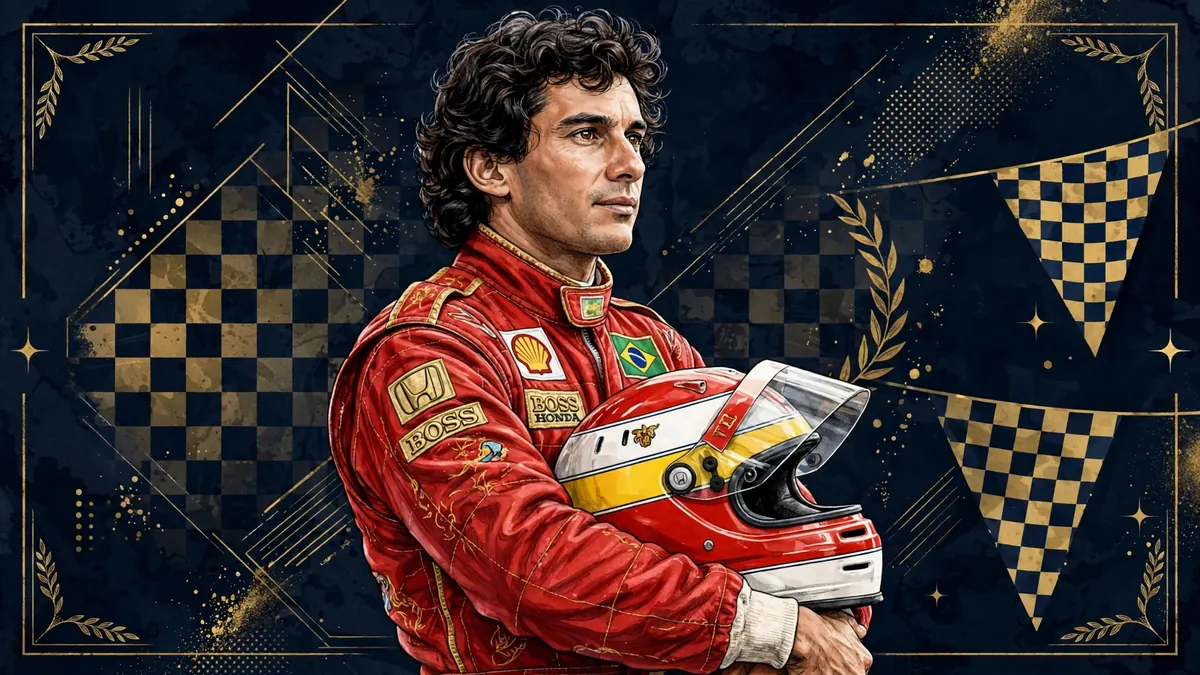
Ayrton Senna Quick Facts
| Full Name | Ayrton Senna da Silva |
|---|---|
| Date of Birth | March 21, 1960, São Paulo, Brazil |
| Date of Death | May 1, 1994, Imola, Italy (aged 34) |
| Estimated Net Worth at Death | $200 million (Celebrity Net Worth anchor); published estimates range from about $60 million to $400 million |
| Net Worth in Today’s Money | Roughly $350 million, adjusted for inflation from the $200 million figure (Celebrity Net Worth) |
| Peak Income Sources | Formula 1 salaries and win bonuses, endorsements, merchandising and licensing |
| Peak Salary | $1 million per race at McLaren; $20 million per year on the 1994 Williams deal |
| Career Earnings From Racing | About $100 million, per Celebrity Net Worth |
| Formula 1 Career | 1984–1994; Toleman, Lotus, McLaren, Williams; 161 starts, 41 wins, 65 pole positions, 80 podiums |
| World Championships | 3 — 1988, 1990, 1991 (all with McLaren) |
| Key Ventures | Senna brand and Senninha character licensing; Instituto Ayrton Senna (founded by his family after his death) |
| Family | Sister Viviane Senna (president of the Instituto Ayrton Senna); brother Leonardo Senna; nephew Bruno Senna |
Table of Contents
- Ayrton Senna Quick Facts
- The Net Worth Breakdown: Why the Estimates Disagree
- Early Life: The Boy From São Paulo
- The Road to Formula 1: Toleman and Lotus
- The McLaren Years: Three Titles and the Prost Rivalry
- Williams and the Final Season
- Where the Money Came From
- Net Worth Growth: Year by Year
- Houses, Cars and Assets
- Personal Life and Family
- The Imola Weekend and the Legacy That Followed
- How Senna Compares With Other F1 Greats
- Ayrton Senna Net Worth FAQs
- Final Thoughts
- Sources and How We Estimated
The Net Worth Breakdown: Why the Estimates Disagree
Ask ten outlets what Ayrton Senna was worth when he died, and you will get answers that span hundreds of millions of dollars. That spread is not a sign that anyone is guessing blindly. It reflects a real problem: Senna’s finances were private, his giving was secret, and he died at 34, at the very start of the richest contract of his life. Any honest account has to show the range and say which source sits behind each number.
The anchor for this article is Celebrity Net Worth, which lists Senna at $200 million at the time of his death in 1994, the equivalent of about $350 million today after inflation. Several other outlets land in the same place: VIPFortunes also reports $200 million at death, and FlowRacers puts it at about $200 million, or around $380 million in today’s money. That cluster — the most repeated figure on the public record — is why $200 million is the figure we lead with.
At the top end, F1Oversteer reports a net worth of $400 million at death, worth about $852 million in today’s money by its own calculation, and CarsGuide agrees with a $400 million fortune at the time of his death. At the bottom end, The Cinemaholic estimates roughly $60 million, built up from a careful year-by-year reconstruction of his salaries and savings rather than from headline contract values. A low-quality blog post from October 2026 even claims $15–25 million in liquid assets, but it contradicts every established outlet and offers no sourcing, so we do not treat it as a serious estimate.
| Source | Reported Net Worth at Death (1994) | Inflation-Adjusted Figure | Published / Updated |
|---|---|---|---|
| Celebrity Net Worth | $200 million | About $350 million today | Updated August 2022 |
| VIPFortunes | $200 million | About $350 million today | Published April 2025 |
| FlowRacers | About $200 million | About $380 million today | Undated fact file |
| F1Oversteer | $400 million | About $852 million today | Undated profile |
| CarsGuide | $400 million | Not stated | Updated November 2022 |
| The Cinemaholic | About $60 million | Not stated | Published November 2024 |
Why do the numbers split this way? The $400 million camp appears to count the full value of Senna’s earning power, his brand, and the enormous sums he moved to charity as if they were still sitting in his accounts. The $60 million camp counts only what he plausibly kept after tax, living costs, and years of quiet giving. The $200 million middle figure, repeated by the most outlets, treats his racing earnings of about $100 million plus endorsements, bonuses, property and licensing as the core, and it is the number most readers will meet elsewhere. Our published range is therefore $60 million to $400 million, anchored on $200 million — and any site that prints one of these figures as a settled fact is overstating what the record supports.
The donation trap: several outlets report that Senna donated more than $400 million to children’s charities during his life, a figure F1Oversteer repeats and the Senna family story supports in spirit. That money was given away. It is not part of his net worth at death, and it should never be added to a net-worth figure. Mixing the two is the single most common error in Senna net-worth coverage, and it is likely why some estimates run so high.
Early Life: The Boy From São Paulo
Ayrton Senna da Silva was born on March 21, 1960, in São Paulo, Brazil, to Milton da Silva, a wealthy landowner and businessman, and Neide Senna. The family was comfortable by Brazilian standards — Milton ran a successful car-parts and farming business — and that comfort mattered. Motor racing at the top level eats money, and Senna’s family could fund the karting years that built him.
Senna was driving a go-kart by the age of four. His father built him his first kart from a lawnmower engine, and the boy who would become the fastest qualifier in Formula 1 history spent his childhood racing karts around São Paulo, first at Interlagos and then on the national circuit. He won the South American Kart Championship in 1977 and 1978, and finished runner-up in the Karting World Championship in 1979 and 1980. The karting years taught him the two skills that defined his whole career: raw one-lap speed and an almost supernatural feel for a car in the rain.
Money shaped his path in a way his later rivals could not copy. Unlike many drivers who arrived in Europe broke and dependent on sponsors, Senna arrived with family backing. That backing let him choose teams on merit rather than on who would pay him, and it let him walk away from bad deals. It is one reason his early career moved so fast: he never had to spend a season in a car that could not show what he could do.
At 21, Senna moved to England to race single-seaters, living in a small flat and racing Formula Ford. He won the British Formula Ford 1600 championship in 1981 and the Formula Ford 2000 title in 1982, then dominated the 1983 British Formula 3 championship with 12 wins from 20 races, beating Martin Brundle in a season-long duel that caught the attention of every Formula 1 team principal. He also tested for Williams, McLaren, Brabham and Toleman in 1983. Williams offered him a test-driver role; he turned it down, because he wanted to race. Toleman offered him a race seat for 1984. He took it.
The Cinemaholic’s reconstruction of his early earnings suggests he made roughly $500,000 during his early-1980s seasons in England, most of it swallowed by accommodation and racing costs. He was not rich yet. The money came later, and when it came, it came fast.
The Road to Formula 1: Toleman and Lotus
Senna’s Formula 1 debut came at the 1984 Brazilian Grand Prix with Toleman, a small team with a fraction of the budget of the front-runners. His talent announced itself at Monaco that year, in the rain, where he charged from 13th on the grid to second in a car that had no business being there, behind Alain Prost, before the race was stopped. It was the first public display of the wet-weather mastery that would become his trademark, and it made him the most talked-about rookie in the sport.
Lotus signed him for 1985, and the wins followed at once. His first pole position and first Grand Prix victory came together at a rain-soaked Portuguese Grand Prix in 1985, where he lapped the entire field except for second-placed Michele Alboreto. He won six Grands Prix in three seasons with Lotus, took 16 pole positions, and finished third in the championship in 1987. Lotus was a fading force by then, and Senna knew it. He wanted the best car on the grid, and in 1988 he got it.
Those Lotus years also made him commercially valuable for the first time. He was already Brazil’s biggest sporting star, and sponsors in Brazil — above all Banco Nacional, whose yellow-and-blue colours sat on his helmet and his cars — paid for access to him. His helmet, yellow with a green and blue stripe, became one of the most recognisable images in world sport, and the licensing of that image would later become a fortune in its own right.

The McLaren Years: Three Titles and the Prost Rivalry
Senna joined McLaren in 1988 to partner Alain Prost, the reigning champion and the man many still call the most complete driver of his generation. What followed was the most dominant season in Formula 1 history: the Honda-powered McLaren MP4/4 won 15 of 16 Grands Prix, Senna won eight of them, and he took his first world championship by three points from Prost. He also broke the record for pole positions in a season, with 13.
The partnership curdled into the most famous rivalry in motorsport. Senna believed Prost had the ear of the sport’s French leadership; Prost believed Senna drove with a disregard for the rules. Their collisions at Suzuka decided two championships: in 1989, the two cars tangled at the chicane, Senna was disqualified after rejoining, and Prost took the title; in 1990, Senna drove into Prost at the first corner, both cars retired, and Senna took the title. The incidents remain argued about to this day, and they are part of why Senna’s story still draws new audiences — the Netflix series Senna, released in November 2024 with Gabriel Leone in the lead role, returned the rivalry to millions of viewers who were not alive in 1990.
On the track, the numbers speak plainly. Senna won his second title in 1990 and his third in 1991, when he won his home Grand Prix in Brazil for the first time, stuck in sixth gear for the final laps and barely able to lift his arms from the car at the finish. He won 35 Grands Prix for McLaren in all, and he set a record with six victories at Monaco, including five in a row from 1989 to 1993. In 1993, with Williams dominant and his McLaren outclassed, he still won five races — among them the European Grand Prix at Donington Park, where he passed four cars on the first lap in the wet in what is widely called the greatest opening lap in Formula 1 history, and the season-ending Australian Grand Prix, his 41st and last victory.
These were the years the money arrived in full. Celebrity Net Worth reports that at his peak Senna was earning $1 million per race, and The Cinemaholic’s reconstruction puts his early-1990s earnings at about $16 million a year from salary alone, before bonuses for wins and poles and before endorsement income. His McLaren contracts, his Honda relationship, and his status as Brazil’s national hero made him one of the highest-paid athletes on the planet — and unlike many sports stars, he was paid in an era when Formula 1 salaries were only beginning their climb toward the sums seen today. For a sense of how the sport’s pay has moved on, Lewis Hamilton’s biography shows what a seven-time champion of the modern era has built, in a very different commercial age.
Williams and the Final Season
Senna had wanted the Williams seat since 1992. The Williams-Renault was the fastest car on the grid, and he tried to join for nothing — famously offering to drive for free in 1993 — but Alain Prost, who had the seat, held a clause in his contract blocking Senna as a teammate. When Prost retired at the end of 1993, the door opened, and Senna signed for Williams for 1994 on a deal worth $20 million a year, per Celebrity Net Worth and several other outlets. It was the biggest salary of his life, and he would collect only a fraction of it.
The 1994 season began badly. The Williams FW16 was quick but nervous, and Senna retired from the first two races, in Brazil and at the Pacific Grand Prix, while the young Michael Schumacher won both for Benetton. He arrived at Imola for the San Marino Grand Prix under pressure he had rarely felt, chasing a first Williams win.
The Imola weekend was the darkest in modern Formula 1. On Friday, Rubens Barrichello crashed heavily and survived. On Saturday, Austrian driver Roland Ratzenberger died in a qualifying crash. Senna, who had spent the day arguing for improved safety and who had an Austrian flag folded in his cockpit — he planned to wave it for Ratzenberger if he won — started from pole on Sunday. On lap seven, leading the race, his car left the track at the Tamburello corner at high speed and struck the concrete wall. He died of his injuries that day, May 1, 1994, aged 34. Brazil declared three days of national mourning, and an estimated three million people lined the streets of São Paulo for his funeral.
Where the Money Came From
Senna’s fortune was built from four streams, and understanding them explains both the size of the estimates and why they disagree.
Race salaries and bonuses. This was the core. Celebrity Net Worth reports he earned about $100 million from racing alone across his career. The Cinemaholic’s year-by-year reconstruction fills in the shape of it: roughly $2 million a year before his first championship, rising to about $16 million a year in the early 1990s at $1 million per race, with bonuses on top for wins, poles and titles. The Williams deal for 1994 was $20 million for the season. Because he died three races into that season, most of that year’s salary was never paid in full, and the exact settlement with his estate was private — one more reason the published figures spread so wide.
Endorsements. Senna earned millions more every year from endorsements and merchandise sales, per Celebrity Net Worth. His most visible deals were with Honda, whose engines powered his McLaren title years; Shell; Hugo Boss; and Banco Nacional in Brazil. He was also the face of the Senna brand itself, and of Senninha, the cartoon character based on him, whose licensing extended across more than 200 products, from bicycles to toys. Endorsement income is the hardest stream to pin down, because the deals were private and some were paid through companies rather than directly to him — and it is the stream most likely to explain the gap between the $60 million and $200 million estimates.
Licensing and image rights. Senna’s helmet design and his name became commercial properties during his lifetime, and they became far more valuable after his death. The family set up Senna Brands to manage the image rights, and the royalties from caps, model cars, the McLaren Senna supercar, and the Ducati Senna motorcycle all flow through the brand. Autosport reported in May 2024 that the Senna family has donated more than $500 million using the royalties from Ayrton’s image rights and the Senna brands — a figure that covers thirty years of posthumous earnings, not his wealth at death, but one that shows how much the name itself was worth.
Investments and property. The least documented stream. VIPFortunes reports that at the time of his death Senna owned several properties across Brazil worth between $2 million and $5 million in total. He kept homes in São Paulo and an apartment in Monaco, and he owned cars including Honda NSX models — he had helped Honda develop the NSX, testing prototypes at Suzuka and giving feedback that shaped the finished car. Precise details of his property portfolio were never made public, and we do not present guesses as facts.
What Senna gave away: F1Oversteer reports that after his death it was discovered Senna had donated more than $400 million to children’s charities while keeping it private. The Sports Rush, citing his sister Viviane, reports that the foundation set up in his name raised about $400 million for underprivileged children. Autosport’s 2024 figure — more than $500 million donated by the family from image-rights royalties — is a separate, later total. These are three different numbers describing three different things: his secret lifetime giving, the foundation’s early fundraising, and three decades of family donations. None of them is his net worth.
Net Worth Growth: Year by Year
No bank statements from Senna’s estate have ever been published, so a growth timeline has to be built from the salary figures the sources do agree on. The shape is clear even where the exact numbers are not: a slow start, a steep climb through the McLaren title years, and a peak that arrived just as his life ended.
| Period | Career Stage | Reported Earnings | What Drove It |
|---|---|---|---|
| 1981–1983 | Formula Ford and Formula 3 in England | About $500,000 in total (The Cinemaholic) | Family backing; prize money and small sponsorships, mostly spent on racing and living costs |
| 1984 | Toleman, Formula 1 debut | Modest rookie salary; not publicly reported | Monaco podium in the rain put him on every team’s list |
| 1985–1987 | Lotus, first wins | About $2 million a year (The Cinemaholic) | Six Grand Prix wins; Banco Nacional and Brazilian sponsorships |
| 1988–1991 | McLaren, three world titles | About $16 million a year at the peak (The Cinemaholic); $1 million per race (Celebrity Net Worth) | Title bonuses, Honda deal, global endorsement value |
| 1992–1993 | McLaren, against dominant Williams | High single-digit millions a year; five wins in 1993 | Still the sport’s biggest draw; Donington and Monaco wins kept his market value high |
| 1994 | Williams | $20 million annual salary (Celebrity Net Worth); only partly collected | Richest contract of his life; three races completed |
The timing is the tragedy of the financial story as much as the human one. Senna’s earning power was still rising when he died. The Williams deal was his biggest, the licensing of his name was growing, and the posthumous value of the Senna brand — the supercar, the documentary, the Netflix series — has only grown since. Had he lived into his forties, as his rivals did, his fortune would very likely have run far past the $200 million anchor figure. The $400 million top-end estimates arguably try to price that lost future into a 1994 balance sheet, which is why we treat them as the top of a range rather than as a fact.
Houses, Cars and Assets
Senna lived well but not loudly. His tastes ran to fast cars, planes and quiet time at home rather than the public display that marked some of his rivals. What is known about his assets comes in fragments, and we present only the fragments the sources support.
He kept a home in São Paulo, where his family was based, and an apartment in Monaco, the tax-efficient base favoured by Formula 1 drivers then as now. VIPFortunes reports his Brazilian properties were worth between $2 million and $5 million in total at the time of his death. Further details of addresses, purchase prices and current values are private, and we do not invent them.
His car collection reflected his work. He owned Honda NSX sports cars — he had tested NSX prototypes for Honda at Suzuka, and his input on the car’s handling is part of the model’s story. He also owned other performance cars of the era, though no complete inventory of his collection has been published. His most famous vehicle was never his to keep: the McLaren MP4/4 he drove to the 1988 title, and the Lotus 98T and 99T of his Lotus years, belong to teams and collectors now.
What he did not own is also part of the story. Senna never bought a team, never launched a fashion label, and never turned his name into the kind of business empire that later drivers built. His commercial life was his driving, his endorsements, and his image. The business empire came later, built by his family after his death — and its proceeds, unusually, went to charity rather than to shareholders.
Personal Life and Family
Senna never married and had no children. His most public relationship was with Xuxa Meneghel, Brazil’s biggest television star, from 1988 to 1990. At the time of his death he was in a relationship with Adriane Galisteu, the Brazilian model and television presenter, who was with him through his final season. He was a private man about his personal life, and he kept his family — his parents Milton and Neide, his sister Viviane and his brother Leonardo — close and largely out of the press.
His faith mattered to him and was visible to anyone who watched him race. He spoke openly about his Catholic belief, read the Bible on the morning of the San Marino Grand Prix, and credited his faith with his calm under pressure. His sister Viviane has said that on that final morning he read a passage about receiving the greatest gift of all — God himself — a detail she shared in interviews after his death.
The family became the custodian of his legacy. Viviane Senna, a psychologist by training, founded and still presides over the Instituto Ayrton Senna, and her son Bruno Senna — Ayrton’s nephew — raced in Formula 1 himself from 2010 to 2012, carrying the family name back onto the grid. The Senna family’s handling of his image and his money is one of the least commercial stories in modern sport: the proceeds have funded education for millions of Brazilian children rather than enriching the family.

The Imola Weekend and the Legacy That Followed
The crash at Imola changed Formula 1. Within days of Senna’s death, the sport’s governing body began the safety reforms he had been demanding that very weekend: better crash structures, redesigned circuits, slower corners, and the safety car procedures that are now routine. The Grand Prix Drivers’ Association, which Senna had been working to revive with Gerhard Berger and Michael Schumacher, was reformed. No driver has died at a Formula 1 Grand Prix since.
The Instituto Ayrton Senna was founded by his family on November 20, 1994, six months after his death, following the conversation he had held with Viviane two months before Imola, when he asked her to help him find a way to improve Brazil as a country. The institute does not run schools; it works with state and municipal education departments, training teachers and designing programmes. By the institute’s own reporting it has invested around $80 million in social programmes, and Autosport reported in 2024 that it has reached more than 36 million Brazilian students. Its funding comes from donations, licensing revenue and private-sector partnerships, and its credit-card partnership with Itaú, one of Brazil’s largest banks, sends a share of every purchase to the foundation.
The commercial legacy has been managed with the same intent. Senna Brands, set up to handle image rights so the institute could focus on education, keeps the name visible to younger generations — through the McLaren Senna supercar, the Ducati Senna motorcycle, the Senninha character, and the 2010 documentary Senna, directed by Asif Kapadia, which introduced him to a generation that never saw him race. The Netflix drama series Senna followed in November 2024. Each of these earns royalties, and a share of those royalties funds the institute. It is a strange, moving arithmetic: the faster the legend grows, the more children it educates.
How Senna Compares With Other F1 Greats
Senna’s $200 million anchor figure sits in the middle of the sport’s all-time wealth table — below the modern giants, above most of his own generation, and frozen in 1994 while everyone else kept earning. The comparison only makes sense with the dates attached: a fortune built in the early 1990s, in a sport whose money has since multiplied many times over.
| Driver | Reported Net Worth | Source | Context |
|---|---|---|---|
| Michael Schumacher | $600 million–$800 million | Celebrity Net Worth, via NetWorthCraft | Seven titles, Ferrari era, long career into his forties |
| Lewis Hamilton | About $285 million | Formulapedia | Seven titles, modern Mercedes era, fashion and business ventures |
| Max Verstappen | About $250 million | Formulapedia | Four titles by his mid-twenties, Red Bull era, career still running |
| Ayrton Senna | $200 million at death (range $60M–$400M) | Celebrity Net Worth (anchor) | Three titles, died aged 34 in 1994 |
| Sebastian Vettel | $140 million | Celebrity Net Worth, via Celebamerica | Four titles with Red Bull, retired 2022 |
| Nico Rosberg | Reported at about $50 million | Celebrity Net Worth, via Celebamerica | One title, retired at 31 in 2016 |
Two things stand out. First, Senna’s figure, earned in a decade when Formula 1 paid far less than it does now, is remarkable — Sebastian Vettel’s $140 million fortune came from a longer career in a richer era, and Senna still sits above him. Second, the gap to Schumacher is a gap of longevity as much as talent: Schumacher raced until he was 43, across two decades of rising pay, while Senna’s earnings stopped at 34. For the fullest account of the driver who eventually passed Senna’s pole record and built the largest fortune in the sport, see Michael Schumacher’s net worth on our sister site NetWorthCraft. Readers who want to see how the current generation measures up can also read Max Verstappen’s biography, Nico Rosberg’s net worth and Fernando Alonso’s age profile — and our Net Worth category carries the full set of driver fortunes.
Ayrton Senna Net Worth FAQs
What was Ayrton Senna’s net worth when he died?
Ayrton Senna’s net worth at the time of his death on May 1, 1994, is most commonly reported at $200 million, according to Celebrity Net Worth, which puts the figure at about $350 million in today’s money. Published estimates range from about $60 million (The Cinemaholic) to $400 million (F1Oversteer and CarsGuide), so $200 million is the anchor figure, not a settled fact.
How much did Ayrton Senna earn per race?
At the peak of his McLaren career in the early 1990s, Senna was earning $1 million per race, according to Celebrity Net Worth. The Cinemaholic’s reconstruction puts his earnings at about $16 million a year in that period, before win and pole bonuses and endorsement income. In total he earned about $100 million from racing alone, per Celebrity Net Worth.
What was Ayrton Senna’s salary at Williams in 1994?
Senna signed with Williams for the 1994 season on a deal worth $20 million a year, according to Celebrity Net Worth and several other outlets. It was the biggest salary of his career, but he died three races into the season, so only part of the contract was ever paid, and the settlement with his estate was private.
How many world championships did Ayrton Senna win?
Senna won three Formula 1 World Drivers’ Championships, in 1988, 1990 and 1991, all with McLaren. Across 161 starts he won 41 Grands Prix, took 65 pole positions — a record that stood until 2006 — and stood on the podium 80 times.
Did Ayrton Senna really donate $400 million to charity?
Yes, in the sense that F1Oversteer reports more than $400 million was discovered to have been donated by Senna to children’s charities during his lifetime, kept secret while he was alive. Separately, the Senna family has donated more than $500 million from image-rights royalties since his death, per Autosport in 2024. Donations are not net worth — the money was given away — and the two figures describe different periods, so they should not be added together or to his fortune.
Who inherited Ayrton Senna’s money?
Senna never married and had no children, so his estate was managed by his family — his parents Milton and Neide, his sister Viviane and his brother Leonardo. His sister Viviane founded the Instituto Ayrton Senna in November 1994, six months after his death, and she still presides over it. The family channels the royalties from his image rights into the institute’s education work in Brazil.
How did Ayrton Senna die?
Senna died on May 1, 1994, after crashing at the Tamburello corner while leading the San Marino Grand Prix at Imola, Italy, in his Williams FW16. He was 34. It was the second fatality of that race weekend — Austrian driver Roland Ratzenberger had died in qualifying the day before — and the deaths led to sweeping safety reforms in Formula 1.
What is Ayrton Senna’s net worth in today’s money?
Using Celebrity Net Worth’s anchor of $200 million at death in 1994, the inflation-adjusted figure is about $350 million today. FlowRacers puts the adjusted figure at about $380 million, while F1Oversteer’s $400 million estimate adjusts to about $852 million. The honest range in today’s money is therefore roughly $350 million to $850 million, depending on which starting estimate you accept.
Final Thoughts
Ayrton Senna’s net worth is a case where the range is the story. The $200 million anchor from Celebrity Net Worth is the figure most outlets repeat, and it rests on the hardest facts in the record: about $100 million earned from racing, $1 million a race at his peak, and a $20 million Williams deal. But the $60 million estimate from The Cinemaholic and the $400 million figure from F1Oversteer are both built from real numbers too — one counting what he plausibly kept, the other counting what he earned and gave. Neither deserves to be hidden, and neither deserves to be printed as fact on its own.
What is not in dispute is the shape of the life: a driver who arrived in Europe on family money, won three world titles, earned more per race than almost anyone of his era, gave away a fortune in secret, and left a name that still funds the education of millions of Brazilian children. His fortune ended in 1994. His legacy did not — and in the only accounting that mattered to him, the institute his sister built from his final wish is worth more than any number on this page.
Sources and How We Estimated
How we estimated: Senna died in 1994 and his estate’s finances were never published, so no exact net worth exists. We anchor on Celebrity Net Worth ($200 million at death, about $350 million today) because it is the most repeated figure across outlets, and we publish the full range of about $60 million (The Cinemaholic) to $400 million (F1Oversteer, CarsGuide) so readers can see the disagreement. Salary anchors — $1 million per race, $20 million a year at Williams, about $100 million from racing — come from Celebrity Net Worth and are repeated by VIPFortunes and FlowRacers. Donation figures are reported separately from net worth and never added to it. Career statistics (161 starts, 41 wins, 65 poles, 80 podiums, titles in 1988, 1990 and 1991) are confirmed by Formula 1 and Wikipedia. Estimates may differ from the private reality of his estate.
- Celebrity Net Worth — Ayrton Senna net worth profile (updated August 2022)
- F1Oversteer — Ayrton Senna profile, including the $400 million estimate and donation reporting
- CarsGuide — “Ayrton Senna: 20 things you might not know about the Formula 1 icon” (updated November 2022)
- The Cinemaholic — “Ayrton Senna’s Net Worth” (November 2024)
- Formula 1 — “Vital Statistics: Ayrton Senna edition” (May 2014)
- Autosport — “How Senna continues to improve lives in Brazil 30 years after his death” (May 2024)
- Wikipedia — Ayrton Senna career record; Instituto Ayrton Senna
- VIPFortunes — Ayrton Senna net worth profile (April 2025)