By Celebamerica Editorial Staff | Last updated: November 18, 2026
Daymond John biography searches keep growing because his story reads like a dare: a kid from Hollis, Queens, who sewed wool hats at his mother’s kitchen table, turned them into FUBU, one of the defining fashion labels of 1990s hip-hop, and then parlayed that fame into a long run as an original investor on ABC’s Shark Tank. As of November 2026, his net worth is estimated at around $350 million, with most published estimates landing between $300 million and $380 million. Celebrity Net Worth, which updated its Daymond John profile in April 2026, anchors the $350 million figure.
That number needs a warning label right away. FUBU has generated more than $6 billion in worldwide sales over its lifetime, and that $6 billion is a company sales figure, not John’s personal bank balance. His own fortune is a mix of FUBU ownership and licensing, a famously well-timed sock investment, television pay, books, speaking fees, and a consulting firm. This biography walks through all of it — the Brooklyn birth, the Hollis childhood, the mortgaged house, the LL Cool J break, the Shark Tank years, the cancer scare, the lawsuits, and the family life — with every money figure tied to a named source and a range wherever the sources disagree.
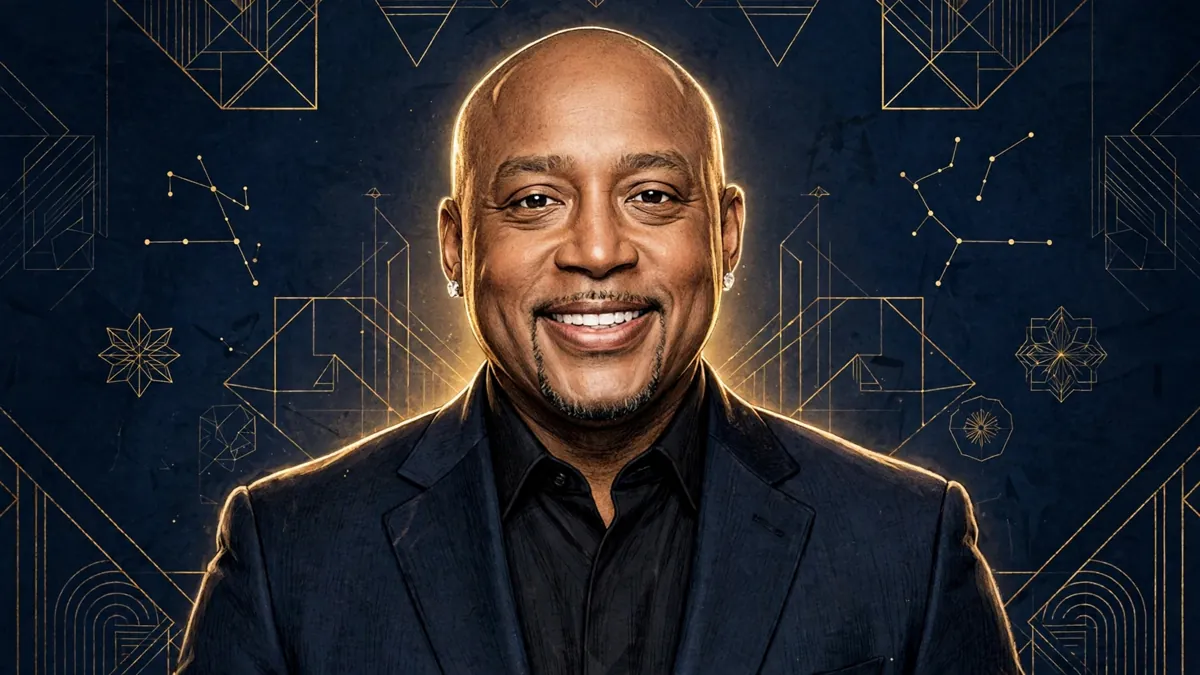
Daymond John Quick Facts
| Full Name | Daymond Garfield John |
|---|---|
| Date of Birth | February 23, 1969 |
| Age in 2026 | 57 years old |
| Birthplace | Brooklyn, New York, USA |
| Raised In | Hollis, Queens, New York |
| Estimated Net Worth | Around $350 million (range $300 million–$380 million across published 2026 estimates; Celebrity Net Worth, April 2026) |
| Best Known For | Co-founding FUBU; original investor on ABC’s Shark Tank since 2009 |
| Companies | FUBU, The Shark Group, Blueprint + Co, Next Level Success |
| Biggest Investment | Bombas — $200,000 for 17.5% on Shark Tank in 2014 |
| Books | Display of Power (2007), The Brand Within (2010), The Power of Broke (2016), Rise and Grind (2018), Powershift (2020), Little Daymond Learns to Earn (2023) |
| Spouse | Heather Taras (married 2018) |
| Children | Three daughters: Yasmeen, Destiny, and Minka Jagger John |
| Honours | Presidential Ambassador for Global Entrepreneurship (2015); FUBU featured at the Smithsonian’s National Museum of African-American History and Culture |
Table of Contents
- Daymond John Quick Facts
- Who Is Daymond John?
- Early Life: Brooklyn Roots, Hollis Hustle
- The Birth of FUBU: Hats, a Sewing Machine and a Mortgaged House
- FUBU Becomes a Hip-Hop Fashion Empire
- Shark Tank: The People’s Shark
- How Daymond John Makes His Money in 2026
- Daymond John Net Worth Timeline
- Houses, Cars and Lifestyle
- Books, Speaking and The Shark Group
- Personal Life: Wife, Children and Health
- Legal Disputes and Controversies
- Daymond John Biography FAQs
- Bottom Line
- Sources and How We Estimated
Who Is Daymond John?
Daymond John is an American entrepreneur, fashion designer, author, and television personality. Most people know him from one of two places: the FUBU label that dressed hip-hop in the 1990s, or the investor’s chair he has occupied on Shark Tank since the show’s first episode in 2009. He is the founder, president, and CEO of FUBU, the founder and CEO of The Shark Group, a brand management and consulting firm, and a six-time author whose books include two New York Times bestsellers.
What sets John’s biography apart from a standard rags-to-riches tale is how many times the story nearly ended. He has said he started and closed his first hat business three times between 1989 and 1992, running out of money each time. He has said he nearly went bankrupt three times with FUBU because he did not understand the numbers early on. And in 2017, a routine check-up found a stage II thyroid cancer nodule that had to come out. Each time, the same pattern repeated: a small, stubborn, low-budget move — sew the hats yourself, mortgage the house, take the meeting nobody else wanted — bought him the next chapter.
John’s public nickname on Shark Tank is “The People’s Shark,” a nod to his habit of backing founders who look like the kid he once was: underfunded, underestimated, and selling something handmade. That image is good television, but it also matches the record. His single best investment, Bombas, came from a pitch about donating socks to homeless shelters, not from a spreadsheet.
Early Life: Brooklyn Roots, Hollis Hustle
Daymond Garfield John was born on February 23, 1969, in Brooklyn, New York, to Garfield John, who was from Trinidad, and Margot John. His parents were Caribbean immigrants, and the family soon settled in Hollis, a working-class neighbourhood in Queens that would shape everything about him. Hollis in the 1970s and 1980s was a hip-hop hotbed: LL Cool J grew up on 203rd Street, Run-DMC came out of the same blocks, and Jam Master Jay was a local hero. John grew up watching that scene from the inside, not from a distance.
His father left the family when John was around 10 years old, and his mother, Margot, raised him largely on her own. She worked as a flight attendant and took on extra jobs to keep the household going. John has spoken openly about growing up with dyslexia, which made school a grind, and about a work-study program at Bayside High School that let him hold a full-time job while finishing his classes. The lesson he took from those years was practical rather than academic: if you wanted something, you earned it yourself, and you learned by doing it.
By his late teens, John was already juggling work. He waited tables at Red Lobster, working seven-day weeks and double shifts when they came, and he ran a small commuter van service on the side. The van business taught him his first real lessons about cash flow — fuel, fares, repairs, and the thin line between a good week and a bad one. None of it made him rich. All of it made him ready.
The Hollis connection runs deeper than geography. LL Cool J was a childhood friend from the neighbourhood, and that friendship would later become the single most valuable marketing asset FUBU ever had. Readers who want the full story of another Hollis-raised star can read our Jay-Z biography, which traces a parallel rise from the same Queens streets to a business empire — Jay-Z grew up in Brooklyn’s Marcy Houses but built his empire in the same New York hip-hop world John was selling hats into.
The Birth of FUBU: Hats, a Sewing Machine and a Mortgaged House
The FUBU origin story has been told so often that it risks sounding like a myth, so here are the pieces the sources agree on. In the late 1980s, John noticed that the wool ski hats popular in hip-hop cost far more than they should. He taught himself to sew — his mother showed him the basics — and started making his own at the kitchen table in the family home in Hollis. He sold them for $10 each on street corners and at concerts, including shows at the Coliseum in Queens. In the first few weeks he sold more than $800 worth of hats and related items, and one famous day on Jamaica Avenue brought in $800 in a single day.
John has said the first version of the business failed three times between 1989 and 1992. Each time he ran out of money — first $1,000, then $2,000, then $5,000 — and each time he went back to waiting tables and started again. The name came from the idea itself: “For Us, By Us,” shortened to FUBU. The clothes were made by young Black New Yorkers, for young Black New Yorkers, at a moment when mainstream fashion houses were either ignoring that customer or charging them a premium for the privilege.
In 1992, John made it official. He brought in three childhood friends as co-founders — Carlton (Carl) Brown, J. Alexander Martin, and Keith Perrin — and set up shop in the basement of his mother’s house. The four of them sewed, packed, and sold. His mother, Margot, made the decision that changed everything: she took out a $100,000 mortgage on the family home to fund the business. It was not a small bet. It was the house. She also placed a newspaper advertisement that led to a fabric supply deal with Samsung Textiles, which gave the young company the material it needed to fill real orders.

The breakthrough came at a Las Vegas apparel trade show, MAGIC, in 1994. John and his partners arrived with samples and left with roughly $300,000 in orders from retailers. There was only one problem: they did not have the money or the capacity to fill them. The answer was a second mortgage on his mother’s house, which funded production. It was the kind of all-in move that either ends a family business or makes one, and this time it made one.
John also understood something his competitors did not: in hip-hop, the artist is the advertisement. In 1993, he talked his childhood friend LL Cool J into wearing a FUBU T-shirt for a promotional push. Then came the moment that branding textbooks still cite. In 1997, while filming a commercial for The Gap, LL Cool J wore a FUBU hat on camera and worked the line “For Us, By Us” into the spot. A rival brand’s own advertisement had just sold FUBU to America for free. Orders flooded in, and the label went from a basement operation to a national name in months.
FUBU Becomes a Hip-Hop Fashion Empire
At its peak in 1998, FUBU was pulling in around $350 million a year in sales, according to reporting at the time. The brand expanded from hats and T-shirts into a full clothing line, footwear, and licensing deals that put the name on everything from jeans to fragrances. For a few years, FUBU was not just a clothing company; it was the uniform of a cultural moment, worn by the same artists whose videos had made it famous.
Success on that scale brought its own problems. John has been frank that FUBU nearly went bankrupt three times, largely because the company grew faster than its bookkeeping. Cash was coming in, but nobody was tracking it properly, and the founders were learning the difference between sales and profit in real time. The brand also faced the classic fashion trap: what is hot in 1998 can be tired by 2002. As hip-hop style moved on and the early-2000s retail climate turned rough, FUBU’s US sales fell sharply.
What saved the brand was the licensing model. Instead of trying to run a giant American clothing operation forever, John and his partners licensed the FUBU name for international markets, where demand stayed strong. That pivot is the reason the lifetime sales figure — more than $6 billion in worldwide sales, according to John’s official biography and his speakers’ bureau profile — keeps growing even though the brand’s 1990s heyday is long past. FUBU’s cultural weight was recognised formally when pieces from the label were featured at the Smithsonian’s National Museum of African-American History and Culture.
John never left the company. As of 2026, he remains its founder, president, and CEO, and he still talks about FUBU as his first and defining business school. The arc from a mortgaged house in Hollis to a brand with billions in lifetime sales is the spine of his biography, and it is also the credential that got him the Shark Tank chair. The hip-hop fashion boom minted more than one fortune in that era — our 50 Cent biography follows another Queens rapper who turned music fame into a business empire, and our Kanye West net worth profile covers a later generation’s attempt to do the same thing in fashion at a far bigger scale.
The $6 billion question, answered plainly: FUBU’s lifetime sales of more than $6 billion belong to the brand, not to Daymond John personally. His net worth — around $350 million per Celebrity Net Worth — is his share of that story: equity, licensing income, investments, and everything he built after FUBU. Confusing brand sales with personal wealth is the most common mistake in Daymond John coverage, and it is worth about $5.65 billion.
Shark Tank: The People’s Shark
In 2009, John became one of the original investors on ABC’s Shark Tank, the show in which entrepreneurs pitch their businesses to a panel of wealthy investors. He has said he turned down the first two offers to join the show before signing on the third time. Seventeen years later, he is still in the chair, with ABC including him in the season 18 line-up as of October 2026. The show has won multiple Emmy Awards, and John’s seat has become one of the most recognisable in reality television.
His investing record on the show is well documented. Across his Shark Tank run, John has put more than $8.5 million of his own money into more than 60 companies, according to deal trackers and his speakers’ bureau profile. His style is distinct from the other Sharks: he looks for founders with a story he can market, brands with a clear identity, and products he can help place in stores. He has said openly that he dislikes investing in clothing, even though that is where he made his name — the margins are thin and the trends are fickle — and he has leaned toward direct-to-consumer brands, wellness products, and food businesses in recent seasons.
The show also pays. John has never confirmed his exact per-episode fee, and no reliable source publishes one, so we will not invent a number here. What is public is the value of the platform itself: Shark Tank turned a fashion founder into a household name, and that fame feeds everything else — book sales, speaking fees, consulting clients, and deal flow from founders who walk into the Tank already wanting him as their partner.
His fellow Shark Mark Cuban is the panel’s other famous face, a tech billionaire whose fortune dwarfs John’s and whose investing style is almost the opposite. The contrast makes for good television and a useful comparison: Cuban bets on scale and software, John bets on brand and hustle. Readers can see the other side of that coin in our Mark Cuban net worth profile, which puts his fortune at several billion dollars, and in our Mark Cuban age profile for the basics on the Dallas Mavericks’ former majority owner.
How Daymond John Makes His Money in 2026
John’s fortune does not come from one pay cheque. It comes from five streams that have stacked up over three decades, and the balance between them has shifted as his career has changed. FUBU built the fortune; Shark Tank grew it; the rest keeps it compounding.
1. FUBU and licensing. The brand is still the foundation. Even in a quiet year, FUBU’s international licensing deals produce income from a name that is now a piece of hip-hop history. John’s equity in the company he co-founded is the single largest asset in his portfolio, and it is also the hardest to value precisely, because FUBU is private and publishes no audited accounts. That opacity is exactly why the published net worth figures are estimates with a range, not a balance.
2. Bombas — the best deal in Shark Tank history. In 2014, sock company Bombas came to the Tank asking for $200,000. John offered $200,000 for 17.5% of the company, and the founders accepted. The pitch had a hook he loved: for every pair sold, the company donates a pair to homeless shelters. Co-founder David Heath later credited John with the advice to focus on socks first and build from there. By 2024, Bombas had passed $1 billion in lifetime sales, according to Celebrity Net Worth, and later reporting put the total past $2 billion. At even a conservative valuation, John’s 17.5% stake is worth at least $100 million, Celebrity Net Worth reported — making it his most valuable single asset and, by most accounts, the most successful investment in the show’s history. For the full money breakdown of this story, our sister site’s Daymond John net worth profile looks at the same fortune from the numbers side, with the full estimate breakdown.
3. Ring and the wider portfolio. John was an early investor in Ring, the smart doorbell company that Amazon bought for more than $1 billion in 2018. His other Shark Tank wins include Bubba’s-Q Boneless Ribs, Tipsy Elves, and Ten Thirty One Productions, plus later deals in food and wellness brands such as Yum Crumbs and Once Upon A Coconut. Not every bet paid off — he has talked about deals that went nowhere, including a diamond dog-collar company — but the portfolio as a whole has been a steady second engine behind FUBU.
4. Books, speaking, and television. John is a six-time author with two New York Times bestsellers, and he is represented by a major speakers’ bureau for keynotes built around his “5 S.H.A.R.K. Points” framework. Speaking fees for a name of his profile run into five figures per appearance, and the books sell year after year. Television pay from Shark Tank adds a steady annual stream, though the exact figure is not public.
5. The Shark Group and consulting. The Shark Group is John’s brand management and consulting firm, where he sells the expertise he bought with FUBU’s near-bankruptcies: branding, licensing, marketing, and how to take a small product into big retail. He also co-founded Blueprint + Co, a co-working and community space for entrepreneurs, and Next Level Success, his coaching and education venture.
| Income Stream | What It Contributes |
|---|---|
| FUBU ownership & licensing | Foundation of the fortune; international licensing income from a brand with $6B+ lifetime sales |
| Bombas stake (17.5%) | Most valuable single asset; worth at least $100M per Celebrity Net Worth (2026) |
| Other Shark Tank deals | 60+ companies, $8.5M+ invested; Ring, Bubba’s-Q, Tipsy Elves among the wins |
| Books & speaking | Six books, two NYT bestsellers; keynote fees and ongoing royalties |
| Television | Shark Tank salary since 2009 (exact figure not public) |
| Consulting | The Shark Group, Blueprint + Co, Next Level Success |
Daymond John Net Worth Timeline
No net worth figure for a private businessman is ever exact, and John’s is no exception. The timeline below uses the figures the sources actually published, with the range shown wherever they disagree. Forbes has never published a verified personal fortune for John, which is itself a useful fact: the $350 million consensus comes from celebrity-finance outlets, not from a Forbes rich list.
| Year | Estimate & What Drove It |
|---|---|
| 1992 | Near zero — hats sold for $10 a time, business failed three times |
| 1994 | $300,000 in trade-show orders; second mortgage to fill them |
| 1998 | FUBU peaks at ~$350 million in annual sales |
| 2009 | Joins Shark Tank; FUBU licensing income plus new TV platform |
| 2014 | Bombas deal: $200,000 for 17.5% |
| 2016 | FUBU passes $6 billion in cumulative worldwide sales; The Power of Broke published |
| 2021 | ~$350 million (Celebrity Net Worth) |
| 2024 | Bombas passes $1 billion in lifetime sales; John’s stake valued at $100M+ |
| 2026 | Around $350 million (Celebrity Net Worth, updated April 2026); other outlets range $300M–$380M |
The honest read is a band, not a point: $300 million to $380 million, anchored at $350 million. The low end reflects outlets that value his private holdings conservatively and strip out the most optimistic Bombas maths; the high end adds real estate, stocks, and crypto holdings that some profiles include. Until John or FUBU ever publish audited accounts, the $350 million anchor from Celebrity Net Worth — the figure most 2026 profiles repeat — is the best single number available, and the range is the honest version of it.

Houses, Cars and Lifestyle
John lives far more quietly than his television persona might suggest. He owns property in New York and has been reported to keep a home in the Hamptons, but the details of his real estate holdings are not publicly documented in the way a celebrity home tour would show them, and this article will not guess at addresses or prices. What is on the record is a lifestyle built around work: he has said he still treats FUBU as his day job, still takes Shark Tank pitches seriously, and still speaks at events most weeks of the year.
On cars, John has been linked over the years to the usual luxury mix — high-end SUVs and sports cars in the garage — but there is no reliable, sourced inventory of his collection, and car lists on celebrity-finance sites are mostly guesswork. We would rather say that plainly than print a fake fleet. What is verifiable is the spending that matters to his story: he puts money into businesses, not into showing off. The “Power of Broke” philosophy he writes about is not a slogan; it is how he still describes his own decisions — stay lean, spend on the thing that makes money, and let the brand do the talking.
One public asset is worth naming: his personal brand itself. The Daymond John name — the books, the speaking, the television chair — is an income-producing asset that most founders never build. It is also the asset that lets him keep earning long after FUBU’s peak sales years are behind him.
Books, Speaking and The Shark Group
John is a six-time author, and the books trace his career in order. Display of Power: How FUBU Changed a World of Fashion, Branding and Lifestyle came out in 2007 and told the FUBU story while the brand was still a fresh memory. The Brand Within: The Power of Branding from Birth to the Boardroom followed in 2010. Then came the two New York Times bestsellers that made him a business author in his own right: The Power of Broke: How Empty Pockets, a Tight Budget, and a Hunger for Success Can Become Your Greatest Competitive Advantage (2016) and Rise and Grind: Outperform, Outwork, and Outhustle Your Way to a More Successful and Rewarding Life (2018). Powershift: Transform Any Situation, Close Any Deal, and Achieve Any Outcome arrived in 2020, and his first children’s book, Little Daymond Learns to Earn, was published in 2023 and became a New York Times and Amazon bestseller in its first week.
The books feed the speaking business. John’s signature keynote, “5 S.H.A.R.K. Points: Fundamentals for Success in Business and Life,” is built around the principles he credits for his own rise, and he delivers it to corporate audiences, universities, and entrepreneurship events around the world. In 2015, President Barack Obama named him a Presidential Ambassador for Global Entrepreneurship, a role that took him to events promoting entrepreneurship in the United States and abroad. It was a formal stamp on a reputation he had already earned the hard way.
The Shark Group, his consulting firm, is where the lessons get sold directly: brand strategy, licensing, and retail placement for companies that want what FUBU had. Blueprint + Co, his co-working and entrepreneur community venture, is the same idea in physical form — a place for founders to work alongside each other the way John and his three partners once worked in a basement in Hollis. If you want more stories from this world of founder biographies, our celebrity biography archive collects the full set.
Personal Life: Wife, Children and Health
John married Heather Taras in 2018. The couple’s daughter, Minka Jagger John, was born in 2016, two years before the wedding. John also has two older daughters, Yasmeen and Destiny, from an earlier relationship. He keeps his family life mostly private — there are no reality-show cameras in his house and no regular family content on his feeds — but he has spoken about fatherhood as the reason he works the way he does, and about wanting his daughters to understand money early. That last point is the whole premise of Little Daymond Learns to Earn, the children’s book he wrote to teach kids about earning and saving.
Health is the other personal chapter that changed him. In 2017, John went public with the news that doctors had found a stage II thyroid cancer nodule in his throat — a lump he said had probably been there for about five years. He had surgery to remove it, and the operation was successful. He is cancer-free, and he has talked since then about the scare as a wake-up call: he started taking his health seriously, spending more time with his family, and thinking harder about what the money was actually for. Some profiles from that period wrongly reported that he had left Shark Tank; he did not. He took time to recover and came back to the chair.
He has also been open about his dyslexia, which he has described as a business advantage in disguise: it forced him to delegate reading and paperwork, to trust people, and to judge opportunities by instinct and conversation rather than by a spreadsheet. Whether or not you buy that framing, it matches the way he invests — on the founder in front of him, not on the deck behind them.
Legal Disputes and Controversies
A biography that skipped John’s legal fights would be incomplete, and the record here is public and well reported. The most prominent dispute involved Bubba’s-Q Boneless Ribs, a Shark Tank company he had invested in. The relationship with the founders, Al “Bubba” Baker and his daughter, broke down badly, with accusations flying in both directions about the deal and the brand. In 2023, a federal judge granted John a restraining order against the Bakers, a decision that went his way and effectively ended the public phase of the fight. John has said little about it since, and the episode is a reminder that even the show’s friendliest Shark has a hard edge when a deal goes wrong.
More recently, in April 2026, John filed a $30 million lawsuit against former business partners, alleging that he helped secure roughly $150 million in personal protective equipment contracts during the COVID-19 pandemic but was cut out of the profits and denied commissions he says he was owed. The case was reported by Celebrity Net Worth in its April 2026 update and by other outlets at the time. As of this writing, no final judgment has been reported, and this article will not predict an outcome. What the filing does show is that John’s business life is still active, still contested, and still generating headlines in 2026.
Beyond those two cases, John’s public record is clean in the ways that matter for a biography: no criminal record, no fraud findings, and no regulatory action against him or his companies. The controversies are commercial disputes, not scandals, and they sit alongside a career that includes a presidential appointment and a Smithsonian honour.
Daymond John Biography FAQs
How old is Daymond John in 2026?
Daymond John is 57 years old in 2026. He was born on February 23, 1969, in Brooklyn, New York, and raised in the Hollis neighbourhood of Queens.
What is Daymond John’s net worth in 2026?
Daymond John’s net worth is estimated at around $350 million in 2026, according to Celebrity Net Worth, which updated its profile in April 2026. Other published estimates range from $300 million to $380 million. His fortune comes from FUBU, his Shark Tank investments — above all Bombas — books, speaking, television, and his consulting firm The Shark Group.
How did Daymond John start FUBU?
John started FUBU in 1992 with three childhood friends — Carlton Brown, J. Alexander Martin, and Keith Perrin — after teaching himself to sew wool hats and selling them for $10 each on Queens street corners. His mother, Margot, mortgaged the family home for $100,000 to fund the business, and a $300,000 order at a 1994 Las Vegas trade show turned the basement operation into a real company.
Is Daymond John still on Shark Tank?
Yes. Daymond John has been an original investor on ABC’s Shark Tank since the show’s first episode in 2009, and ABC included him in the season 18 line-up as of October 2026. He has invested more than $8.5 million of his own money in more than 60 companies on the show.
What was Daymond John’s best Shark Tank investment?
Bombas, the sock company. John invested $200,000 for 17.5% of Bombas in 2014. The company passed $1 billion in lifetime sales by 2024, and Celebrity Net Worth values John’s stake at $100 million or more, making it his most valuable single asset and the most successful investment in Shark Tank history.
Who is Daymond John’s wife?
Daymond John is married to Heather Taras. The couple married in 2018 and have a daughter, Minka Jagger John, born in 2016. John also has two older daughters, Yasmeen and Destiny, from an earlier relationship.
Did Daymond John have cancer?
Yes. In 2017, John revealed that doctors had found a stage II thyroid cancer nodule in his throat. He had surgery to remove it, the operation was successful, and he is cancer-free. He has spoken about the scare as a turning point that made him focus more on his health and his family.
What books has Daymond John written?
Daymond John is a six-time author. His books are Display of Power (2007), The Brand Within (2010), The Power of Broke (2016), Rise and Grind (2018), Powershift (2020), and the children’s book Little Daymond Learns to Earn (2023). The Power of Broke and Rise and Grind are New York Times bestsellers.
Bottom Line
Daymond John’s biography is the story of a man who turned a $10 hat into a $350 million fortune — not by one lucky break, but by stacking small, stubborn advantages for thirty years. The mortgaged house, the LL Cool J friendship, the licensing pivot that saved FUBU, the Bombas bet that made him richer than FUBU ever did on its own: each step looks obvious in hindsight and felt reckless at the time. That is the whole point of his “Power of Broke” idea. Being broke is not the obstacle. It is the training.
As of November 2026, John is 57, still running FUBU, still in the Shark Tank chair, still writing, and still suing over a deal he believes cheated him. The $350 million figure is an estimate, the range is $300 million to $380 million, and the honest version of his wealth is the range, not the headline. What is not an estimate is the arc: a dyslexic kid from Hollis who waited tables at Red Lobster, sewed hats at his mother’s table, and built a brand that now sits in the Smithsonian. Few biographies in American business cover that much ground, and fewer still are still being written.
Sources and How We Estimated
How we estimated: Daymond John’s net worth is not published in any audited account, and Forbes has no verified listing for him. We anchor on Celebrity Net Worth’s $350 million figure (profile updated April 16, 2026) because it is the most widely repeated 2026 estimate and is built from his FUBU equity, the Bombas stake, and his other holdings. We publish a range of $300 million to $380 million because other 2026 profiles land across that band. Where sources conflict — Bombas lifetime sales, the exact year of the cancer diagnosis going public, the count of his Shark Tank deals — we say so and use the figure the strongest source supports. Estimates may differ from private reality; no figure here should be read as a bank balance.
Named sources used in this article: Celebrity Net Worth (net worth estimate, Bombas stake valuation, April 2026 PPE lawsuit reporting); Eagles Talent (official speakers’ bureau biography, FUBU $6 billion sales figure, six books, Shark Tank investment total); BlackPast.org (birth, family, FUBU founding details); Business Insider (Red Lobster years, thyroid cancer interview, FUBU peak sales); A Touch of Business (biography timeline, 1994 trade show orders, Presidential Ambassador appointment, season 18 line-up); MoneyMade (Shark Tank deal count and investment total); Sophisticated Investor (net worth range and company list). All figures are as reported by those outlets; no figure in this article was invented.