Joe Root is England’s greatest Test run-scorer, the second-highest run-scorer in the history of Test cricket, and — since 30 July 2026 — England’s Test captain for a second time. Born Joseph Edward Root on 30 December 1990 in Sheffield, he has built a career that now spans 169 Tests and 14,278 runs at an average of 50.45, with only Sachin Tendulkar ahead of him on the all-time list. His net worth is estimated at between £3 million and £8 million (roughly $4 million to $10 million) as of 2026, according to SurpriseSports, with several profiles settling on the £8 million end of that range. No figure is officially verified, and this biography says so plainly wherever money comes up.
Root’s story is unusual in modern cricket. He was never the loudest player in the room, never the biggest hitter, and never a bowler who turned matches on his own. He became England’s most reliable batter by doing the same unglamorous things for more than a decade: watching the ball late, nudging singles into gaps, and refusing to give his wicket away. That patience carried him from a Sheffield schoolboy cricketer to the England captaincy, through a bruising first spell in charge, to a World Cup winners’ medal in 2019, and back to the captaincy in 2026 after Ben Stokes retired from international cricket. This biography follows that whole arc — the Sheffield childhood, the Yorkshire rise, the records, the money, the family life with his wife Carrie Cotterell, and the second stint as captain that nobody saw coming four years ago.
By Celebamerica Editorial Staff | Last updated: 8 November 2026
| Full Name | Joseph Edward Root |
|---|---|
| Date of Birth | 30 December 1990 (35 years old in 2026) |
| Birthplace | Sheffield, South Yorkshire, England |
| Height | 6 ft (183 cm) |
| Role | Right-handed top-order batter, occasional off-spin bowler |
| Teams | England (2012–present), Yorkshire (2009–present), Rajasthan Royals, Trent Rockets, Welsh Fire, Paarl Royals |
| Estimated Net Worth | £3 million – £8 million (about $4 million – $10 million) as of 2026 — estimate only, not officially verified |
| Primary Income Sources | ECB central contract and match fees, IPL and franchise league fees, endorsements (New Balance, Vitality, Brut) |
| Key Achievements | England’s all-time leading Test run-scorer; second-highest Test run-scorer ever; 2019 World Cup winner; England Test captain 2017–2022 and again from 2026; MBE |
| Spouse | Carrie Cotterell (married 1 December 2018) |
| Children | Son Alfred William (born January 2017), daughter Isabella (born July 2020) |
Table of Contents
- Early Life and Family in Sheffield
- Yorkshire Rise and the Road to England
- Test Debut in India and the First Years
- First Spell as England Test Captain (2017–2022)
- The 2019 World Cup Win
- Records: England’s Leading Test Run-Scorer
- Captain Again: The 2026 Reappointment
- The Money: Contracts, IPL and Endorsements
- Net Worth in 2026: What the Estimates Say
- Homes, Cars and Life Off the Field
- Personal Life: Wife Carrie and the Children
- Setbacks and Criticism
- How Root Stacks Up Against His Peers
- Frequently Asked Questions
- Final Thoughts
- Sources and Reporting
Early Life and Family in Sheffield
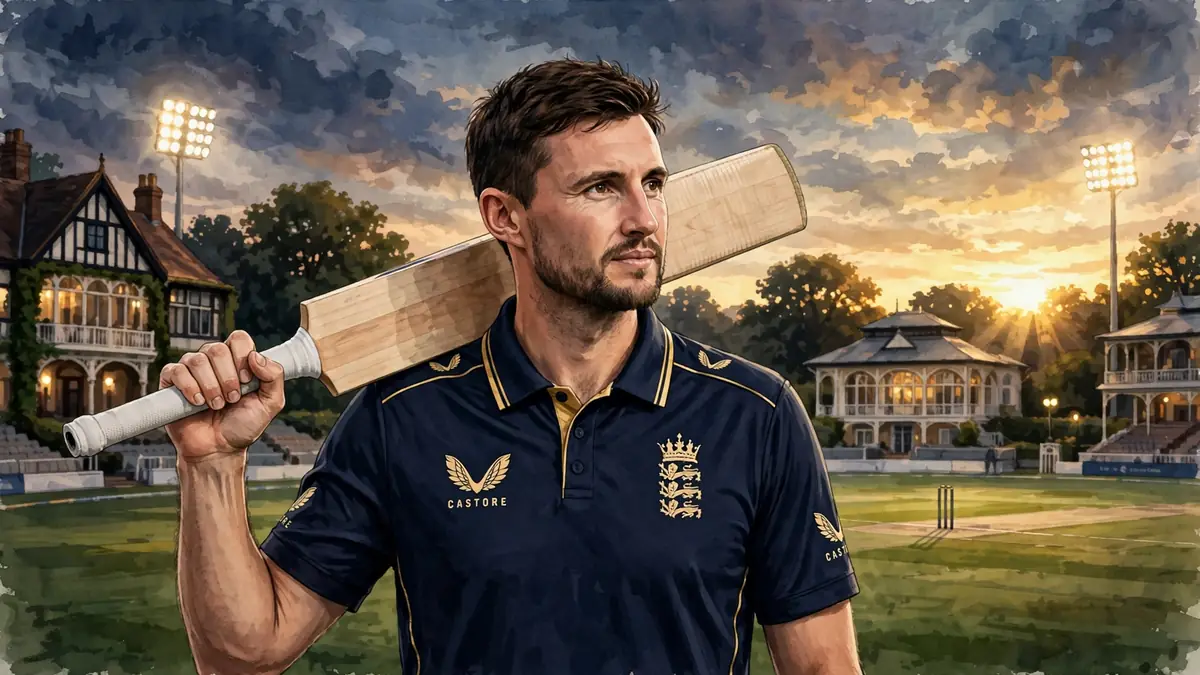
Joe Root grew up in Dore, a village suburb on the south-west edge of Sheffield, in a house where cricket was part of the furniture. His father, Matt Root, played club cricket for Sheffield Collegiate Cricket Club at Abbeydale Park and later worked as a medical representative. His mother, Helen Root, kept the household running while both sons were drawn into the game. Joe is the elder of two boys. His younger brother, Billy Root, followed the same path into professional cricket and plays for Glamorgan, which makes the Roots one of the rare families in English cricket with two brothers earning a living from the sport.
The young Root’s schooling followed the route of a talented Sheffield sportsman. He went to Dore Primary School, then King Ecgbert School in Sheffield, and at 15 he won a cricket scholarship to Worksop College in Nottinghamshire, where he boarded during the week. The scholarship mattered. Worksop gave him proper coaching, proper facilities and regular matches against strong school sides, and it put him on the radar of the Yorkshire academy system. Like his father, he played his club cricket at Sheffield Collegiate, a club with deep roots in the city game.
People who watched Root as a teenager tend to describe the same player who later turned up for England: small for a batter, technically neat, and almost stubbornly calm. He did not overpower bowling. He outlasted it. Coaches at Yorkshire noticed that he scored runs without taking risks, that he left the ball well, and that he seemed to enjoy batting for long periods rather than looking for quick boundaries. Those habits, learned on club and school grounds in South Yorkshire, became the foundation of everything that followed.
Sheffield itself is worth a line here, because Root has never really left it behind. He still speaks of the city as home, he married there, and his family base remains in Yorkshire. For a player who has spent most of his adult life in hotels and dressing rooms around the world, that anchor has been part of his steadiness. He is a Yorkshire cricketer in the old sense — developed by the county, loyal to it, and shaped by its expectations.
Yorkshire Rise and the Road to England
Root joined the Yorkshire setup as a teenager and made his first-class debut for the county in 2011, at the age of 20. The step up did not faze him. He scored runs in the County Championship with the same unhurried method he had shown at school and club level, and within a year the England selectors were paying attention. Yorkshire has produced a long line of England batters — Geoffrey Boycott, Michael Vaughan and Alastair Cook’s generation all passed through county cricket the same way — and Root looked like the next in that line before he had played a full season.
His progress through the England age-group and Lions sides was fast. He toured with England Lions, scored heavily against quality attacks, and by the autumn of 2012 he was picked for a full England tour of India. That was a bold selection. England were going to India to play spin on turning pitches, and Root had played only a handful of first-class matches. The selectors were betting on temperament as much as technique, and the bet paid off almost at once.
County cricket gave Root something else that international cricket could not: a place to go back to. Across his whole career he has returned to Yorkshire between England commitments, playing Championship cricket when the schedule allowed and keeping his connection to Headingley alive. He has also played franchise cricket in short bursts — Sydney Thunder in Australia’s Big Bash early in his career, Trent Rockets and later Welsh Fire in The Hundred, Paarl Royals in South Africa’s SA20, and Rajasthan Royals in the Indian Premier League. None of those stints defined him. Yorkshire and England did.
Test Debut in India and the First Years
Root made his Test debut on 13 December 2012 against India at Nagpur, in the fourth Test of the series. He was 21 years old, batting in a side that needed a draw to win its first Test series in India in 28 years. He scored 73 from 229 balls in his only innings, a knock built on patience rather than strokeplay, and the match ended in a draw that sealed the series for England. It was a debut that told you everything about the player: he had been picked for his temperament, and his temperament delivered under pressure on a turning pitch.
His one-day international debut followed a month later, on 11 January 2013, also against India. He played Twenty20 internationals for England between 2012 and 2019, though the shortest format never became his home — his game was built for long innings, and his white-ball value showed most in 50-over cricket, where he could build an innings over time.
The next few years brought the landmarks in quick succession. He scored his first Test century, made himself a fixture at number three or four, and became the batter England turned to when a series was on the line. By 2015 he was England’s vice-captain under Alastair Cook, learning the leadership side of the job while still establishing himself as the side’s best batter. He was named one of Wisden’s Cricketers of the Year, topped the ICC Test batting rankings for the first time, and finished 2015 as one of the most talked-about young batters in world cricket.
There was also an early lesson in how quickly a reputation can wobble. During the 2013 Champions Trophy, Australian opener David Warner punched Root in a Birmingham bar after a night out, an incident that led to Warner being suspended and fined. Root was the victim in that episode, not the aggressor, and it passed without lasting damage to his standing. But it was a reminder that England’s young star was now living in public, and that every night out could become a headline.
First Spell as England Test Captain (2017–2022)
In February 2017, Root was appointed England Test captain, succeeding Alastair Cook. He became the 80th captain of the England Test team, with Ben Stokes as his vice-captain. He was 26, England’s best batter, and the choice felt natural. The job, as it turned out, was anything but.
Root led England in 64 Tests between 2017 and 2022, winning 27 of them — more wins than any other England Test captain. That record is the part of his captaincy that gets quoted least, and it deserves a fair hearing. Under Root, England won series at home against India in 2018 and South Africa in 2017, beat Sri Lanka away, and produced famous wins that had little to do with his own batting. He also kept scoring runs while carrying the captaincy, which is harder than it looks: the job eats into a batter’s preparation, and plenty of captains have seen their averages fall. Root’s did not fall far.
But the second half of the spell was grim. England won only one of their last 17 Tests under Root, lost the Ashes in Australia 4–0 in the winter of 2021–22, and lost a series in the West Indies in March 2022. The team looked tired, the bowling attack looked thin, and the criticism landed on the captain. On 15 April 2022, Root resigned. He said the job had taken a toll and that the team needed a new voice. Ben Stokes took over, Brendon McCullum arrived as coach, and English Test cricket changed direction sharply under the attacking style that became known as Bazball.
Root’s own view of that period has been consistent: he was proud of the wins, honest about the defeats, and clear that he did not enjoy the last months. A Wisden retrospective published when he was reappointed in 2026 argued that his captaincy was better than its reputation — 27 wins from his matches in charge, and the same number of defeats — and that the collapse at the end owed as much to a thin squad and a packed calendar as to the captain. That is a fair reading. He was not a great tactical captain, and he would probably say so himself, but he held a struggling side together longer than most people remember.
A note on the numbers: sources differ slightly on Root’s first captaincy stint. ESPNcricinfo figures quoted by The Cricket Paper in October 2026 put it at 64 Tests between 2017 and 2022, while Wisden’s July 2026 retrospective counts 65 Tests with the same 27 wins. The 27 wins — the most by any England Test captain — is agreed across sources.
The 2019 World Cup Win
If Root’s captaincy years were mixed, his white-ball career peaked in the summer of 2019. England hosted the Cricket World Cup, and Root was the side’s top run-scorer with 556 runs at an average of 61.77. He scored two centuries in the group stage and anchored innings that let the big hitters — Jason Roy, Jonny Bairstow, Jos Buttler, Stokes — play around him. His role was the same one he had always played: hold one end, keep the scoreboard moving, and let others take the risks.
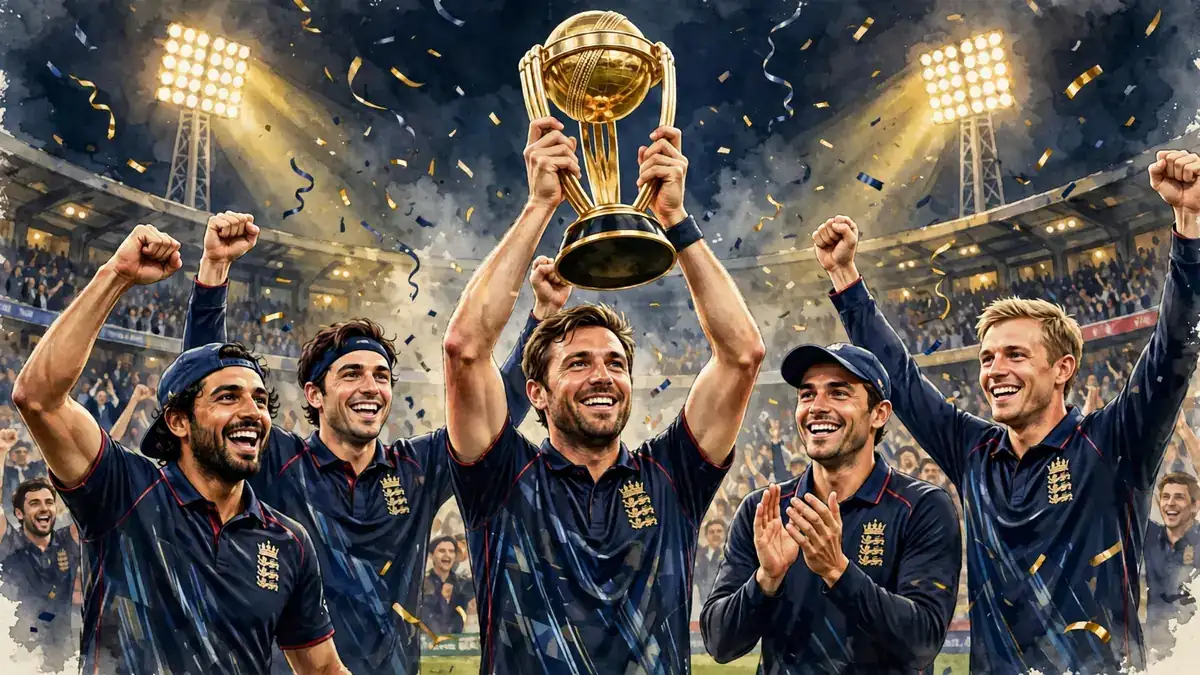
The final at Lord’s on 14 July 2019 became the most famous one-day match ever played. England and New Zealand tied the match, tied the Super Over, and England won on a boundary countback rule that was changed afterwards. Root’s contribution that day was a steady 7 in a low-scoring chase — not a headline innings, but part of a tournament in which he had done the heavy lifting early. The medal mattered more than the numbers. England had spent four years rebuilding their white-ball side after a dismal 2015 World Cup, and Root was one of the players who carried that rebuild from embarrassment to a trophy at home.
The World Cup win also shaped how Root is remembered outside Test cricket. Ask a casual fan to name his finest moment and many will pick Lord’s in July 2019, not any of his 41 Test centuries. That is the power of a home World Cup. It put Root on a stage that Test cricket, for all its history, cannot match — a Sunday afternoon final, a full house, and a finish that people who never watch cricket still talk about.
Records: England’s Leading Test Run-Scorer
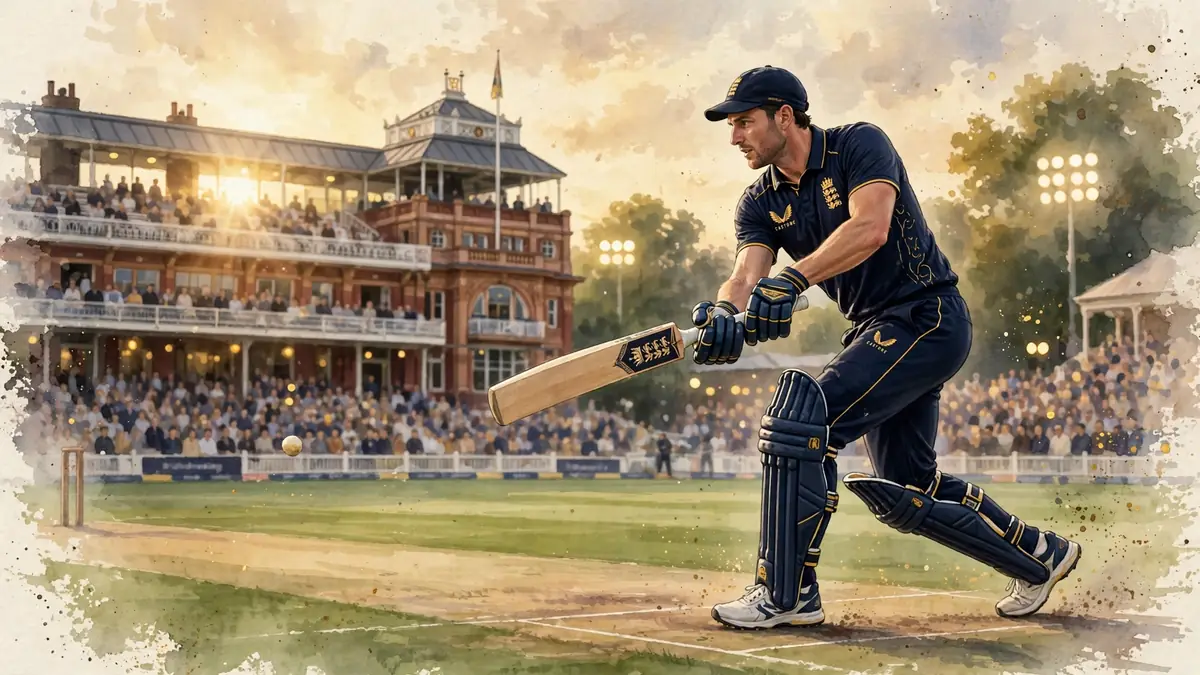
Root’s record-breaking run began in earnest in 2021, when he scored 1,708 runs in a calendar year — the most by any England batter in a single year. He was named the ICC Men’s Test Cricketer of the Year for 2021, and from that point the records started falling in order. In October 2024, during the series in Pakistan, he passed Alastair Cook to become England’s all-time leading Test run-scorer, sealing the moment with a career-best 262 in Multan. In May 2025, against Zimbabwe at Trent Bridge, he passed 13,000 Test runs. In July 2025, at Old Trafford against India, he moved past Rahul Dravid, Jacques Kallis and Ricky Ponting to become the second-highest run-scorer in Test history.
By the end of September 2026, the figures stood like this, according to ESPNcricinfo: 169 Tests, 14,278 runs at an average of 50.45, with 41 centuries and 69 half-centuries. He had passed 14,000 Test runs during the 2026 season. Only Tendulkar, with 15,921 runs from 200 Tests, sits ahead of him. His 41 Test centuries are the most by any England batter, and his highest score remains the 262 against Pakistan in October 2024. In one-day cricket, his numbers are just as strong: 197 matches, 8,005 runs at an average of 50.66, with 20 centuries — one of only a handful of players to average over 50 in both Tests and one-day internationals while passing 8,000 runs in each.
Two of those centuries carry extra weight. His 39th Test hundred came at The Oval in August 2025 against India, his third of that series. His 40th came in December 2025, in the second Ashes Test at the Gabba — his first Test century in Australia, a gap in his record that had followed him for years and that Australian crowds had enjoyed pointing out. Scoring it in Brisbane, in an Ashes series, closed one of the last open questions about his career.
He was appointed MBE in the 2020 New Year Honours for services to cricket. It was a modest honour for a player of his standing, and it arrived before the records did — a recognition of the career to that point, not the one that followed.
| Format | Matches | Runs | Average | Centuries | Best |
|---|---|---|---|---|---|
| Test (to end of September 2026) | 169 | 14,278 | 50.45 | 41 | 262 |
| One-Day International (to October 2026) | 197 | 8,005 | 50.66 | 20 | 166 not out |
| Test captaincy, first spell (2017–2022) | 64 | — | — | 27 wins | Most wins by an England captain |
Sources: ESPNcricinfo figures via The Cricket Paper (October 2026) and Jagran Josh (October 2026). Career totals move with every match Root plays.
Captain Again: The 2026 Reappointment
On 30 July 2026, the England and Wales Cricket Board announced that Joe Root would return as England Test captain. The trigger was Ben Stokes’s retirement from international cricket during the 2026 series against New Zealand, which left England without a captain and without their most visible leader. The selectors turned to the one man in the side who had done the job before, and who had spent four years away from it scoring runs without the burden.
The announcement came with a second one: Stephen Fleming, the former New Zealand captain, was appointed England’s Test head coach, replacing Brendon McCullum in the red-ball role. Root’s first assignment back in charge was a three-Test home series against Pakistan, opening at Headingley on 19 August 2026. In September 2026, during that series, he became the third-highest capped player in Test cricket history, passing Ricky Ponting and Steve Waugh — a milestone that arrived in his first weeks back as captain.
Root has said he will keep the attacking core of the McCullum era — the positive intent, the willingness to chase results — while bringing his own experience to the decisions that cost England in his first spell. At 35, he is a different captain from the 26-year-old who took over in 2017. He has led before, he has failed in public before, and he has spent four years watching how Stokes and McCullum ran the side. The 2027 home Ashes sit on the horizon, and he has never won an Ashes series as captain. That is the gap this second spell exists to close.
The ECB underlined its backing on 12 October 2026, announcing a new two-year central contract for Root that runs to 30 September 2028. The deal covers a cycle that includes the 2027 home Ashes and the 2027 ODI World Cup, and it signals that the board sees him as a central figure for at least two more years, not a stopgap. Harry Brook, who captains England’s white-ball sides and was the other candidate for the Test job, has publicly backed the appointment.
The Money: Contracts, IPL and Endorsements
Root’s earnings come from four places: his England contract, match fees, franchise leagues, and endorsements. None of the figures are published by Root himself, so every number below carries its source, and the sources do not always agree. That disagreement is part of the story of estimating a cricketer’s wealth — the ECB does not publish individual contract values, and endorsement deals are private.
The England contract is the base. IceCric News, reporting in 2026, puts Root’s ECB central contract retainer at around £318,000 a year, with match fees of about £15,000 per Test on top. Other profiles describe a larger all-in package: Criczop reports a three-year central contract worth roughly £870,000 to £925,000 a year once match fees and bonuses are included. The gap between those two figures is the difference between a bare retainer and a full annual package, and both can be true at once. What is certain is that Root has held a top-grade ECB contract for more than a decade, and that the October 2026 two-year extension keeps him in the top bracket until September 2028.
Franchise cricket has added real money in short bursts. Rajasthan Royals bought Root for Rs 1 crore (about £100,000) at the December 2022 IPL auction, and he played three matches in the 2023 season. It was a modest IPL stint by the standards of the league’s stars — he was not a first-choice pick and did not play a full season — but it paid well for a few weeks’ work and added to his profile in India. In The Hundred, he has played for Trent Rockets and Welsh Fire, with IceCric News reporting a Welsh Fire deal worth £240,000. He has also played for Paarl Royals in South Africa’s SA20. None of these deals approach the sums earned by the IPL’s biggest names, and Root has never chased the franchise circuit the way some of his peers have. His calendar has always been built around England.
Endorsements are the third leg. Criczop estimates his brand deals bring in around £1.6 million a year, naming Vitality, New Balance and Brut among his partners. IceCric News reports that the New Balance bat deal alone is worth about £200,000 a year. He also had a two-year deal with wealth management firm Brewin Dolphin. These are the kinds of partnerships that suit Root’s image: steady, mainstream brands rather than flashy one-off deals. He is not a player who sells headlines, and his sponsors reflect that.
| Income Stream | Reported Figure | Source |
|---|---|---|
| ECB central contract retainer | About £318,000 a year | IceCric News, 2026 |
| ECB package incl. match fees and bonuses | About £870,000 – £925,000 a year | Criczop |
| Test match fee | About £15,000 per Test | IceCric News, 2026 |
| IPL 2023 (Rajasthan Royals) | Rs 1 crore (about £100,000), 3 matches | InfoCelebs; auction records |
| The Hundred (Welsh Fire) | About £240,000 | IceCric News, 2026 |
| Endorsements (New Balance, Vitality, Brut) | About £1.6 million a year | Criczop |
Net Worth in 2026: What the Estimates Say
Joe Root’s net worth is estimated at between £3 million and £8 million — roughly $4 million to $10 million — as of 2026. That range comes from SurpriseSports, which updated its Root profile on 25 October 2026 and was the only profile we found that published a range rather than a single figure. Two other profiles, InfoCelebs (May 2026) and Criczop, both settle on £8 million, or about $10.5 million at the exchange rates they used. The top of the range is the most commonly quoted figure; the bottom reflects the honest uncertainty in the exercise.
Why a range, and why does it matter? Because no official figure exists. Root has never disclosed his finances, the ECB does not publish player pay in detail, and endorsement values are private. A net worth estimate for a cricketer is built from public pieces — contract values reported in the press, auction prices, match fees, and typical endorsement rates — minus the things nobody can see: tax, agents’ fees, property costs, and private investments. SurpriseSports says exactly that in its own disclaimer, and it is worth repeating here: these are estimates built from publicly available information, not accounts.
The £8 million figure is plausible on the earnings above. A decade of top-grade ECB contracts, match fees across 169 Tests and nearly 200 one-day internationals, the IPL and Hundred deals, and endorsement income in the region of £1.6 million a year add up to career earnings well into eight figures before tax and expenses. Whether what remains after tax, fees and spending sits closer to £3 million or £8 million is something only Root and his advisers know. This biography reports the range, names the sources behind it, and does not pretend to know more than that.
It is also worth saying what Root is not. He is not among cricket’s richest players. The Indian stars, the IPL’s biggest earners and the players with global shoe and soft-drink deals operate on a different scale. Root’s wealth is the wealth of a long, well-paid international career in English cricket — substantial, but built match by match rather than deal by deal.
How we estimated this: SurpriseSports (updated 25 October 2026) gives a range of £3 million to £8 million; InfoCelebs (May 2026) and Criczop both report £8 million. Contract and endorsement figures come from IceCric News and Criczop as shown in the table above. No official net worth figure has ever been published for Root, and private tax, fees and investments are unknown — so treat every figure here as an estimate, not a fact.
Homes, Cars and Life Off the Field
Root lives in Yorkshire, close to his family and to Headingley, and reports describe a family home in the county rather than a portfolio of properties. Criczop describes a luxury home in Yorkshire as part of his overall wealth, but no reliable profile publishes an address, a purchase price or a list of properties, and this biography will not invent one. What can be said is that his life off the field is deliberately low-key: he is not a player known for property deals, restaurant openings or public displays of wealth.
The same honesty applies to cars. Some profiles mention an opulent car collection, but none that we could verify names a specific make, model or value. Root is not photographed with supercars and does not talk about them in interviews. The absence of detail here is itself informative — for a sportsman of his earnings, the public record of his spending is thin, because he keeps it that way.
What he does spend time on, in public at least, is cricket beyond his own career. He has spoken about coaching young players, he turns up for Yorkshire when the schedule allows, and he has been a visible supporter of grassroots cricket in the county. He also lends his name to charity work around Sheffield and Leeds, though he does it without the fanfare that some players attach to such work. The picture is consistent with everything else about him: a private man whose public life is the cricket, and not much else.
Personal Life: Wife Carrie and the Children
Joe Root is married to Carrie Cotterell. The two met at The Arc, a bar in Headingley, Leeds, where Carrie worked while Root was coming through the Yorkshire system. They started dating around 2014, got engaged in March 2016 — just before that year’s T20 World Cup — and married on 1 December 2018 in a private Christian ceremony in Sheffield, surrounded by close friends, family and teammates.
Carrie was born in England in 1990 and has kept her life largely out of the public eye. She left her job at the bar after the wedding and has focused on raising the couple’s two children. Their son, Alfred William Root, known as Alfie, was born on 7 January 2017 — before the wedding, which the couple have never made a fuss about. Their daughter, Isabella, was born on 8 July 2020. Root has spoken about how fatherhood changed his view of the game: the bad days hurt less, the good days matter in a different way, and the time away from home on tour became the hardest part of the job.
The family keeps a low profile. Carrie rarely gives interviews, the children are kept out of the spotlight, and Root’s social media is mostly cricket. That privacy is a choice, and it has mostly been respected. In a sport where players’ families are often part of the coverage, the Roots have managed to keep theirs separate — which is probably why the marriage has survived more than a decade of international touring without becoming a story in itself.
His parents remain part of his life. Matt Root, the club cricketer who first took him to Sheffield Collegiate, still follows his career closely, and his brother Billy’s own professional career gives the family a second player to watch. Root’s nickname in the England dressing room is “Rooty”, and his shirt number, 66, has become a small brand of its own — fans know it as “Root66”, a play on the American Route 66 highway.
Setbacks and Criticism
Root’s career has been remarkably free of scandal, which is part of why the setbacks that did come were sporting rather than personal. The biggest was the end of his first captaincy. England won one of their last 17 Tests under him, lost the 2021–22 Ashes 4–0, and the post-mortems were unsparing. Some critics said he was too nice for the job, that he let senior players set the tone, and that his field placings and bowling changes were too passive. Others pointed out that he was captaining a side with a thin fast-bowling group, a revolving cast of openers, and a schedule that left no time to fix anything. Both readings contain some truth, and Root himself has never blamed anyone else for the defeats.
He also faced questions about his own batting in Australia. Until December 2025 he had never scored a Test century there, and Australian crowds and media never let him forget it. The Gabba hundred in the 2025–26 Ashes answered that one directly. There was a similar thread about his conversion rate — for years he made more fifties than hundreds, and critics asked why a batter of his class did not turn more starts into big scores. The second half of his career has answered that too: 41 Test centuries, six of them doubles, and a career-best 262.
One episode deserves a careful mention. In November 2021, during the hearings into racism at Yorkshire sparked by Azeem Rafiq’s testimony, Root said he had never personally experienced racist language at the county, while supporting Rafiq and saying the game had to listen to him. The statement was reported widely and drew mixed reactions — some felt a senior Yorkshire player should have seen more, others accepted that his experience was his own. It was not a scandal for Root, but it placed him, briefly, at the centre of English cricket’s most painful argument. He handled it by saying what he knew and refusing to speak for others, which is consistent with how he handles most things.
How Root Stacks Up Against His Peers
Root’s place in history is now a matter of arithmetic. Only one batter has scored more Test runs than him, and that batter is Sachin Tendulkar, whose 15,921 runs from 200 Tests have stood as the game’s great landmark since 2013. Root is 1,643 runs behind Tendulkar as of the end of September 2026. At his career average of just over 50, that gap is roughly 33 innings — around 16 or 17 Tests if he bats twice in each. With a central contract to September 2028 and the 2027 home Ashes ahead, he has a genuine chance of passing the record, and the cricket world knows it.
The comparison with his own generation is just as telling. Virat Kohli retired from Test cricket in May 2025 with 9,230 runs from 123 Tests; Steve Smith, Kane Williamson and Root were grouped as the great batters of their era, and Root has outlasted them all in the format, playing more Tests and scoring more runs than any of them. Among England players, the gap is wider still: Alastair Cook, the previous record holder, finished with 12,472 runs, nearly 1,800 behind Root’s total at the end of September 2026 — and Root is still adding to his.
| Batter | Test Matches | Test Runs | Average | Centuries |
|---|---|---|---|---|
| Sachin Tendulkar (India) | 200 | 15,921 | 53.78 | 51 |
| Joe Root (England) | 169 | 14,278 | 50.45 | 41 |
| Ricky Ponting (Australia) | 168 | 13,378 | 51.85 | 41 |
| Jacques Kallis (South Africa) | 166 | 13,289 | 55.37 | 45 |
| Rahul Dravid (India) | 164 | 13,288 | 52.31 | 36 |
| Alastair Cook (England) | 161 | 12,472 | 45.35 | 33 |
Test figures to the end of September 2026 (Root) and career totals for retired players, via ESPNcricinfo figures quoted by The Cricket Paper and Jagran Josh.
What the table cannot show is style. Tendulkar was a prodigy who carried a nation’s hopes from the age of 16. Ponting was a ruthless winner in a dominant side. Kallis was the game’s great all-rounder. Root is the accumulator — the player who scores without fuss, who rarely dominates a session the way a Lara or a Pietersen could, and who ends up with more runs than almost all of them anyway. It is a less glamorous way to reach the top of the list, and it may be why his greatness took longer to be recognised. The numbers no longer leave much room for doubt.
Frequently Asked Questions
Who is Joe Root?
Joe Root, full name Joseph Edward Root, is an English international cricketer born on 30 December 1990 in Sheffield. He is England’s all-time leading Test run-scorer, the second-highest run-scorer in Test cricket history behind Sachin Tendulkar, and England’s Test captain for a second time since 30 July 2026. He also won the 2019 Cricket World Cup with England.
How old is Joe Root in 2026?
Joe Root is 35 years old in 2026. He was born on 30 December 1990 in Sheffield, South Yorkshire, England, so he turns 36 on 30 December 2026.
What is Joe Root’s net worth in 2026?
Joe Root’s net worth is estimated at between £3 million and £8 million (about $4 million to $10 million) as of 2026, according to SurpriseSports, which updated its profile on 25 October 2026. InfoCelebs and Criczop both report £8 million. No official figure has ever been published, so every number is an estimate built from his ECB contract, match fees, IPL and Hundred deals, and endorsements.
Is Joe Root England’s Test captain again?
Yes. Joe Root was reappointed England Test captain on 30 July 2026, after Ben Stokes retired from international cricket. He previously held the role from February 2017 to April 2022, leading England in 64 Tests and winning 27 — the most wins by any England Test captain. Stephen Fleming was appointed Test head coach at the same time, and Root signed a new two-year ECB central contract on 12 October 2026 running to 30 September 2028.
How many Test runs has Joe Root scored?
By the end of September 2026, Joe Root had scored 14,278 Test runs in 169 Tests at an average of 50.45, with 41 centuries and 69 half-centuries, according to ESPNcricinfo. That makes him England’s leading Test run-scorer and the second-highest in history, behind only Sachin Tendulkar’s 15,921. He passed 14,000 Test runs during the 2026 season.
Who is Joe Root’s wife?
Joe Root’s wife is Carrie Cotterell. They met at The Arc bar in Headingley, Leeds, where she worked, started dating around 2014, got engaged in March 2016, and married on 1 December 2018 in a private ceremony in Sheffield. They have two children: son Alfred William, born in January 2017, and daughter Isabella, born in July 2020.
Did Joe Root win the World Cup?
Yes. Joe Root was part of the England team that won the 2019 Cricket World Cup on home soil, beating New Zealand in the final at Lord’s on 14 July 2019. He was England’s leading run-scorer in the tournament with 556 runs at an average of 61.77, including two centuries.
How tall is Joe Root?
Joe Root is 6 feet tall (183 cm). He bats right-handed in the top order and bowls occasional right-arm off-spin. His shirt number is 66, which fans know as “Root66”, and his dressing-room nickname is “Rooty”.
Final Thoughts
The Bottom Line
Joe Root’s biography is the story of patience rewarded on a scale that English cricket had never seen before. A Sheffield schoolboy who batted without fuss became, over fourteen years, the man with more Test runs than any Englishman who ever lived — and the second-most of anyone, ever. He captained his country, lost the job, won a World Cup, broke records that looked unbreakable, and then, at 35, was asked to lead again. His estimated net worth of £3 million to £8 million reflects a long, well-paid career rather than a fortune built on deals, and it is an estimate, not a published fact. What is a fact is the record: 14,278 Test runs and counting, 41 centuries, and a second spell as captain with the 2027 Ashes and Tendulkar’s record both in reach. If he passes 15,921, this biography will need a new first paragraph. Until then, the one it has is enough.
Sources and Reporting
This biography was researched from live reporting and statistical sources in November 2026. Career figures are ESPNcricinfo statistics as quoted by The Cricket Paper (21 October 2026) and Jagran Josh (25 October 2026). Biographical details draw on Wikipedia (Joe Root profile, updated November 2026), Cricket Australia and ESPNcricinfo. The 2026 captaincy reappointment was reported by Wisden (30 July 2026) and the ECB’s own announcements via ecb.co.uk. Net worth and contract figures come from SurpriseSports (updated 25 October 2026), InfoCelebs (May 2026) and Criczop player profiles, with endorsement reporting from IceCric News.
How we estimated: no official net worth figure exists for Joe Root. We report a range — £3 million to £8 million (about $4 million to $10 million) — anchored by SurpriseSports’ range and the £8 million point estimates from InfoCelebs and Criczop, and we show the contract, fee and endorsement figures behind it with their sources. Career statistics change with every match Root plays; figures here are as of the end of September and October 2026 as dated above. Where sources disagree — most notably the count of Tests in his first captaincy spell, 64 or 65 — we say so in the text rather than picking a number silently. Estimates may differ from private reality.