Shaun White is 5 ft 8 in (173 cm) tall. That is the figure listed on his Wikipedia profile, his Team USA bio and most Olympic reference pages, and it has stayed the same across his whole career, from the 19-year-old who won gold in Turin in 2006 to the 35-year-old who took his final run in Beijing in 2022. As of November 2026, no official source has ever listed him at a different height by more than half an inch.
White, the American snowboarder and skateboarder known as the Flying Tomato, is a three-time Olympic gold medalist in the halfpipe and the most decorated X Games athlete in history. His height sits right in the middle of the range for elite halfpipe riders: shorter than big-air specialists like Scotty James, taller than rivals like Ayumu Hirano and Chloe Kim. This page settles the number with a source-by-source check, compares White with the riders he competed against, and covers the career, the money and the life behind the measurement.
Last updated: November 19, 2026. By Celebamerica Editorial Staff.
Shaun White Quick Facts
| Full Name | Shaun Roger White |
|---|---|
| Date of Birth | September 3, 1986 |
| Birthplace | San Diego, California, United States |
| Height | 5 ft 8 in (173 cm) |
| Weight | About 154 lb (70 kg) during his competitive career |
| Age in 2026 | 40 years old (turned 40 on September 3, 2026) |
| Nickname | The Flying Tomato |
| Sports | Snowboarding (halfpipe, slopestyle) and skateboarding (vert) |
| Olympic Gold Medals | 3 — halfpipe, Turin 2006, Vancouver 2010, PyeongChang 2018 |
| X Games Gold Medals | 15 (13 snowboarding, 2 skateboarding) |
| Estimated Net Worth | $65 million (Celebrity Net Worth, 2026 estimate; see the money section for the range) |
| Primary Income Sources | Competition prize money, Burton and Red Bull endorsements, Oakley and HP deals, Mammoth Resorts stake, Whitespace brand, The Snow League |
| Key Ventures | Whitespace (activewear, launched 2022), The Snow League (competition circuit, founded 2024), Air + Style festival |
| Retirement | Retired from competition after the Beijing 2022 Winter Olympics |
Table of Contents
- Shaun White Quick Facts
- How Tall Is Shaun White?
- Where the 5 ft 8 in Figure Comes From
- Shaun White Height Compared to Other Snowboarders
- Early Life: Born With a Heart Condition in San Diego
- From Child Prodigy to the Flying Tomato
- Three Olympic Golds and the Perfect 100
- X Games Dominance: 15 Gold Medals
- Did His Height Help or Hurt on the Halfpipe?
- The Money Behind the Height
- Homes, Cars and Business Ventures
- Personal Life: Family, Relationships and Life After the Pipe
- Controversies and Setbacks
- Shaun White Height FAQs
- Bottom Line
- Sources and Reporting
How Tall Is Shaun White?
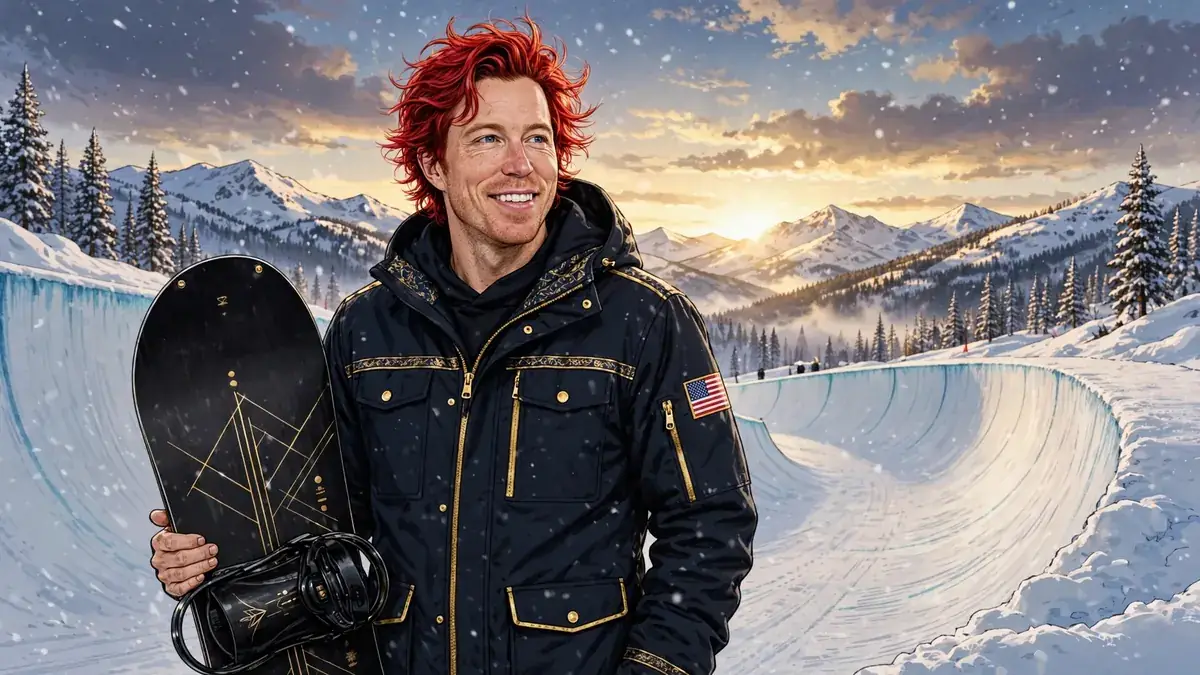
Shaun White is 5 feet 8 inches tall, or 173 centimetres. That measurement is the one used by Wikipedia, Simple Wikipedia, Team USA and NBC Olympics profiles, and it matches the figure printed in his athlete bios since his first Olympic appearance in 2006. For readers outside the United States, 173 cm is the metric equivalent, and it is the number most international outlets use.
The figure is unusually stable for a celebrity height. Athletes measured for Olympic competition tend to have consistent listings because their profiles are drawn from official team data rather than fan estimates, and White’s listing has not moved across two decades of coverage. A children’s biography of White published by Penguin Random House describes him in the 2010 Olympic halfpipe final as “a five-foot-eight-inch-tall American snowboarder,” which lines up exactly with the current listing.
There are small variations floating around online, and they are worth naming rather than hiding. An old rider bio on The-House listed him at 5 ft 8.5 in. Celebrity Net Worth lists his height as 1.75 m, which converts to about 5 ft 9 in. One Australian report on Scotty James described White as 175 cm. Put together, the honest range across sources is 173 to 175 cm (5 ft 8 in to about 5 ft 9 in), with 5 ft 8 in (173 cm) as the anchor because it is the figure carried by Wikipedia, Team USA and the bulk of Olympic reference material. The half-inch and two-centimetre gaps are the normal noise of rounding, morning versus evening measurement, and shoes versus bare feet — not evidence of a different height.
Short answer: Shaun White is 5 ft 8 in (173 cm). If you see 5 ft 9 in or 175 cm, you are looking at the same measurement rounded up, not a different person or a growth spurt.
Where the 5 ft 8 in Figure Comes From
Height figures for public figures are only as good as their sources, so here is the source-by-source picture. The table below lists what each named source says, so readers can see why 5 ft 8 in is the settled figure and where the small disagreements sit.
| Source | Height Listed | Notes |
|---|---|---|
| Wikipedia | 5 ft 8 in (173 cm) | Personal information box, current as of November 2026 |
| Simple Wikipedia | 173 cm (5 ft 8 in) | Matches the main Wikipedia entry |
| Team USA | 5 ft 8 in | Official U.S. Olympic team bio (cited by Wikipedia, October 2024) |
| NBC Olympics / Olympic profiles | 5 ft 8 in | Consistent with Team USA across his five Olympic appearances |
| Britannica (via Universalium, 2007 profile) | 1.72 m (5 ft 8 in) | Listed him at 1.72 m as a 19-year-old in 2006; rounding accounts for the 1 cm gap |
| The-House rider bio | 5 ft 8.5 in | Older rider bio; the only source adding the half inch |
| Celebrity Net Worth | 1.75 m | Converts to about 5 ft 9 in; the highest listing, likely rounded up |
| Penguin Random House, “Who Is Shaun White?” | Five-foot-eight | Children’s biography describing the 2010 Olympic final |
Two things stand out from that table. First, the cluster is tight: every source lands between 172 and 175 cm, a spread of three centimetres. Second, the sources closest to official measurement — Team USA, the Olympic profiles and Wikipedia’s infobox — all agree on 5 ft 8 in (173 cm). That is why this article anchors on that figure and treats 175 cm as the top of the range rather than a competing claim.
Weight is a related number that readers often search for alongside height, and it is less settled. Most current profiles list White at about 154 lb (70 kg) during his competitive career. The Britannica profile from 2007 listed him at 63 kg (about 140 lb) as a 19-year-old, which fits a teenager who was still filling out. His listed weight rose as he built the muscle needed to land double cork 1440s, so the 154 lb figure is the right one for his peak years, while the 140 lb figure belongs to his first Olympic season.
Shaun White Height Compared to Other Snowboarders
Height matters in snowboarding, but not in the way it matters in basketball. A halfpipe rider needs explosive leg power, a low centre of gravity for balance on landings, and enough air awareness to spin four times before the snow rushes back up. White’s 5 ft 8 in frame gave him a blend of those traits: compact enough to rotate fast, tall enough to generate real amplitude above the pipe wall. The comparisons below show where he sits against the riders he shared podiums with, and against athletes from other sports readers often compare him with. The figures are commonly listed heights from athlete profiles, and listings can vary by an inch between sources.
| Athlete | Listed Height | Difference vs. Shaun White |
|---|---|---|
| Chloe Kim (snowboarder) | 5 ft 3 in (160 cm) | 5 in shorter |
| Ayumu Hirano (snowboarder) | 5 ft 5 in (165 cm) | 3 in shorter |
| Shaun White | 5 ft 8 in (173 cm) | — |
| Eileen Gu (freestyle skier) | 5 ft 9 in (175 cm) | 1 in taller |
| Scotty James (snowboarder) | 6 ft 2 in (188 cm) | 6 in taller |
| Tony Hawk (skateboarder) | 6 ft 3 in (191 cm) | 7 in taller |
| Simone Biles (gymnast) | 4 ft 8 in (142 cm) | 1 ft shorter |
Three comparisons tell the story best. Ayumu Hirano, the Japanese rider who took silver behind White in 2018 and then gold in Beijing in 2022, stands about three inches shorter, and his smaller frame helped him become the first rider to land a triple cork in Olympic competition — tighter rotation, faster spins. Scotty James, the Australian who won silver in Beijing, is roughly six inches taller than White, and his height gives him the long, muscular amplitude that commentators praised in his runs. Chloe Kim, the dominant women’s halfpipe rider of the same era, is five inches shorter than White, and her compact build is part of why her spins look so quick.
The cross-sport comparison is just as telling. Simone Biles, at 4 ft 8 in, is a full foot shorter than White, which is normal for an elite gymnast whose sport rewards a tiny, powerful frame. Tony Hawk, the skateboarder White grew up idolising, is seven inches taller at 6 ft 3 in. White sits between the two extremes, and that middle ground is part of his story: he was never the biggest rider on the hill or the smallest, and his success came from technique and nerve rather than a physical edge.
Early Life: Born With a Heart Condition in San Diego
Shaun Roger White was born on September 3, 1986, in San Diego, California, to Roger and Cathy White, and grew up in nearby Carlsbad. He has an older brother, Jesse, and an older sister, Kerri. Our Shaun White age profile covers his birthday and age in detail; this section looks at the childhood that shaped the athlete.
White was born with Tetralogy of Fallot, a congenital heart defect that required two open-heart operations before his first birthday. Doctors and family have spoken about those early surgeries as the first fight of his life, and White himself has talked about the scar on his chest as a reminder of where he started. He spent his early years riding at Okemo Mountain in Vermont and Bear Mountain in the San Bernardino Mountains of Southern California, small resorts where a kid with red hair and a skateboard could spend whole winters learning to fly.
Skateboarding came first. White followed his older brother Jesse to the local YMCA and took up a board, then took up snowboarding at six years old. By seven he had his first snowboarding sponsorship, and snowboarding legend Jake Burton Carpenter took an interest in the young rider, mentoring him and backing him through Burton Snowboards. That early sponsorship is one of the reasons White’s career lasted so long: he was a professional in all but name before he was a teenager, with a sponsor who understood the sport and a family that moved around his training.
School and a normal childhood took a back seat early. White was competing nationally while other kids his age were still learning to ride, and at 15 he fell just 0.3 points short of qualifying for the United States team for the 2002 Winter Olympics in Salt Lake City. Missing that team by a fraction of a point became a defining near-miss, and it set up the next four years: five Grand Prix wins to qualify for Turin, and a first Olympic gold at 19.
From Child Prodigy to the Flying Tomato
The nickname came from the hair. White’s thick mop of bright red hair made him easy to spot on a white mountain, and “the Flying Tomato” stuck from his teenage years onward. It was a joke that became a brand: red hair, big air, and a rider who seemed to hang in the sky longer than physics allowed.
His rise was fast and well documented. White won a medal at the Winter X Games every year from 2002 onward, and by the time he reached Turin in 2006 he had already won halfpipe events on the Grand Prix circuit and built a reputation as the most exciting young rider in the sport. He also crossed over into skateboarding in a way no snowboarder had before, competing in both the Winter and Summer X Games — the first athlete ever to do so — and winning vert gold in skateboarding at the Summer X Games in 2007 and again in 2011.
Off the snow, White built a second career as a musician, playing guitar in the band Bad Things, and as a television personality and actor in small roles. He released a snowboarding DVD, The White Album, in 2004, and featured in the 2006 snowboarding documentary First Descent. The crossover appeal mattered commercially: sponsors were not just buying a snowboarder, they were buying a recognisable figure who could carry a brand across snow, skate and music.
By his early twenties White was the face of American snowboarding, with a ten-year deal with Burton Snowboards and a long-standing partnership with Red Bull, plus deals with Oakley, Hewlett-Packard and Ubisoft. Celebrity Net Worth puts his peak salary at about $10 million per year, a figure that reflects endorsement income rather than prize money, since snowboarding purses are small next to the deals a star rider can sign.
Three Olympic Golds and the Perfect 100
White competed in five Winter Olympics — 2006, 2010, 2014, 2018 and 2022 — and won the halfpipe gold in three of them, a record for a snowboarder. No other snowboarder has won three Olympic gold medals, and no other rider has won the halfpipe three times.
Turin 2006 was the arrival. At 19, White won the halfpipe gold with the amplitude and style that had already made him famous, announcing himself as the sport’s new star. Vancouver 2010 was the defence: he secured the gold on his first run, then used his second run — a victory lap — to land the Double McTwist 1260, a trick no other Olympic snowboarder had landed in competition. The run became one of the most replayed moments in Winter Olympic history.
Sochi 2014 was the stumble. White finished fourth in the halfpipe, off the podium for the only time in his first four Games, and the result fed a round of questions about whether his best years were behind him. He answered in PyeongChang 2018 with one of the great Olympic comebacks: after a bad crash in training in October 2017 that left him in intensive care for five days with 62 stitches, he qualified for the team, then won gold on his final run with back-to-back double cork 1440s and a score of 97.75. The gold was the 100th for the United States at the Winter Olympic Games, and Ayumu Hirano took silver with Scotty James taking bronze.
Beijing 2022 was the farewell. White had announced before the Games that they would be his last, and he finished fourth in the halfpipe in his final competition, crashing on his second turn after landing a frontside 1440 on his first. He received a standing ovation from the crowd and from fellow riders during his final run, and retired at 35 after a 22-year career. Hirano won the gold with a triple cork, James took silver, and Jan Scherrer of Switzerland took bronze.
Alongside the Olympic medals, White holds the Winter X Games record for the first perfect 100 in the halfpipe, scored in Aspen in 2012. A perfect score in a judged action sport is rare enough that it still gets mentioned in every profile of him, and it sits alongside the Olympic record score of 97.75 as the two numbers that define his competitive peak.
X Games Dominance: 15 Gold Medals
If the Olympics made White famous, the X Games made him a record-holder. Across his career he won 23 X Games medals in total, of which 15 were gold: 13 in snowboarding and two in skateboarding vert. He holds the world record for the most X Games gold medals, and the most Olympic gold medals by a snowboarder.
The winter tally alone is remarkable. Through 2013, White had amassed 18 Winter X Games medals — 13 gold, 3 silver and 2 bronze — including four straight wins in snowboard slopestyle, the first quadruple win streak in a single discipline by a male athlete. He won medals every winter from 2002 onward, a run of consistency that no other rider in the sport has matched. His eight halfpipe golds and five slopestyle golds at the Winter X Games show a range that went beyond one event: he was the best pipe rider of his generation and, for a stretch, the best slopestyle rider too.
The summer side of the record is what separates him from every other snowboarder. White won skateboard vert gold at the Summer X Games in Los Angeles in 2007 and 2011, with silver in 2005 and 2010 and bronze in 2008. He is the first and so far only athlete to have competed in both the Winter and Summer X Games, and the only snowboarder to win gold in both seasons. That dual-sport record is the strongest answer to anyone who wonders whether his height helped or held him back: the same 5 ft 8 in frame won gold on snow and on concrete.
He also collected 10 ESPY Awards over his career, a tally that puts him among the most honoured action-sports athletes in the history of those awards. The ESPYs, the X Games medals and the Olympic golds together explain why White’s name still leads any list of the greatest snowboarders, four years after his last competition.
Did His Height Help or Hurt on the Halfpipe?
Readers ask this because height looks like it should matter in a sport built on jumping out of a giant frozen trench. The honest answer is that it matters less than technique, and that White’s 5 ft 8 in frame sat in a sweet spot for the halfpipe.
Rotation speed is the first factor. A shorter rider has a smaller moment of inertia, which means spins come around faster for the same effort. That is one reason smaller riders like Hirano and Kim have been able to push trick difficulty: tighter bodies spin quicker. White was not the smallest rider in the field, but at 5 ft 8 in he was compact enough to land back-to-back double cork 1440s, two of the hardest tricks in the sport, on his final run in PyeongChang.
Amplitude is the second factor, and it cuts the other way. Taller riders with longer legs can generate more pop off the wall and more height above it, which is why Scotty James, at around 6 ft 2 in, is regularly praised for the sheer size of his airs. White matched that amplitude through leg strength and timing rather than leg length, and his airs were among the biggest in the sport even against taller rivals.
Balance on landing is the third factor, and here a lower centre of gravity helps. White’s frame gave him a stable base for landings after four rotations in the air, and his crash in Beijing — on the second turn of his final run, after landing the first trick cleanly — was a timing error rather than a balance failure. Across five Olympics, his landing record was among the best in the field.
The fair summary is that height was neither White’s advantage nor his limitation. His edge was built from starting at six, from a decade of X Games competition before most rivals had turned professional, and from a willingness to keep adding tricks — the Double McTwist 1260 in 2010, the double cork 1440s in 2018 — when other champions were defending old runs. A taller or shorter White would still have needed the same nerve to drop into a 22-foot pipe at full speed.
The Money Behind the Height
Height articles rarely need a money section, but White’s height is inseparable from the fortune it helped him build, so here is the honest picture. Celebrity Net Worth estimates Shaun White’s net worth at $65 million as of 2026, a figure repeated by most outlets that cover him. Other estimates sit lower — Net Worth Explained has put the figure at $45.5 million — so a fair range is $45.5 million to $65 million, anchored on the Celebrity Net Worth figure because it is the most widely cited. One recent analysis noted that some corners of the internet cite figures as high as $150 million, but no named financial outlet has published a sourced total anywhere near that, and this article does not repeat it as fact. White is a private individual; no tax filing or audited account confirms any exact total.
For the full breakdown of how that fortune was built, GuideNetWorth’s Shaun White net worth profile covers his earnings in depth, and NetWorthCraft’s Shaun White net worth page gives a second angle on the same career. The short version is that the money came from four places: prize money, endorsements, equity stakes, and his own brands.
Prize money was the smallest of the four. Olympic medals pay modest bonuses and X Games purses are small next to the purses in golf or tennis, so competition winnings were never the main engine of his wealth. The engine was endorsements. White’s ten-year deal with Burton Snowboards and his long partnership with Red Bull were the two pillars, joined by Oakley, Hewlett-Packard and Ubisoft. Celebrity Net Worth puts his peak earnings at about $10 million per year, almost all of it from those deals, earned even in years when he was not competing regularly.
Equity came next. In 2016 White acquired a minority ownership stake in Mammoth Resorts, the California resort operator, and took control of the Air + Style festival, a music and snowboarding event. The size of the Mammoth stake was never disclosed, so no honest estimate can put a dollar figure on it, but it marked the turn from sponsored athlete to owner — a move few snowboarders had made.
His own brands are the current chapter. Whitespace, the activewear and outerwear brand he launched in January 2022, covers snowboarding, skating and streetwear, and no public revenue figures exist for it. The Snow League, the professional snowboarding and freeskiing circuit he founded in 2024, held its first event in Aspen on March 7, 2025, with a $1.6 million prize pool, and signed a multiyear media rights deal with NBC and Peacock in November 2024. The league has attracted tens of millions of dollars in investment funding, and its commercial impact on White’s personal net worth is still early-stage because his own equity percentage has never been made public.
For scale, White’s fortune sits in the middle of the Olympic greats. Usain Bolt’s net worth profile shows a sprinter whose global fame translated into a larger fortune, while Simone Biles’ net worth shows a gymnast whose earnings grew sharply after her return to competition. White’s $65 million estimate puts him comfortably among the richest winter-sport athletes ever, and his post-retirement businesses mean the figure is still moving.
| Income Stream | Status |
|---|---|
| Olympic and X Games prize money | Documented results; aggregate winnings never totalled by a named outlet |
| Burton Snowboards (10-year deal) | Reported; the longest and largest endorsement of his career |
| Red Bull, Oakley, HP, Ubisoft | Reported long-term partnerships |
| Peak annual earnings | About $10 million per year (Celebrity Net Worth) |
| Mammoth Resorts minority stake | Reported 2016; size undisclosed |
| Air + Style festival | Took control in 2016; reported |
| Whitespace brand | Launched January 2022; revenue undisclosed |
| The Snow League | Founded 2024; first event March 2025, $1.6 million prize pool; NBC/Peacock deal |
Homes, Cars and Business Ventures
White’s asset picture is thinner in public records than his career record, and this section says so plainly rather than filling the gap with guesses. No reliable outlet has published a verified inventory of his homes or cars, and this article does not invent one. What is documented is his business portfolio, which is where most of his wealth now sits.
Whitespace is the most visible asset. Launched in January 2022, just before his retirement, the brand sells outerwear, snowboarding gear and streetwear, and White has positioned it around public lands and climate themes. It is a founder-led brand in the same mould as the athlete brands that followed him — a rider selling gear to riders, with his name and reputation as the marketing.
The Snow League is the bigger bet. Founded in 2024 and co-founded with Miles Nathan, it is a professional winter-sports circuit built to give snowboarding a more unified, athlete-focused competitive structure, with major prize money and a four-stop inaugural season covering Aspen, Zhangjiakou in China, Laax in Switzerland, and a season finale after the 2026 Milan-Cortina Olympics. Eileen Gu joined as a global ambassador. The league’s first event in Aspen carried a $1.6 million prize pool, and its NBC and Peacock deal puts it on mainstream American television — a step snowboarding has rarely managed outside the Olympics.
His earlier moves still count. The Mammoth Resorts stake and the Air + Style festival gave him ownership experience before he launched his own brands, and his long Burton relationship gave him a front-row view of how a snowboarding company is run. Add his band Bad Things, his broadcasting work for NBC at the Olympics after retirement, and his keynote speaking, and the picture is of an athlete who planned his second career while his first was still going.
Personal Life: Family, Relationships and Life After the Pipe
White’s family story starts with the heart surgeries and the move to Carlsbad, and his parents and siblings have stayed close to his career throughout. His brother Jesse was the one who took him to the YMCA where he first picked up a skateboard, and his sister Kerri was a year old when he was born. The family moved around his training and competition schedule from childhood, a commitment that shows in how long his career lasted.
His most public relationship was with actress Nina Dobrev, whom he began dating in 2019. The two were a regular presence at events together for years, and reports in 2025 said the couple had split. White has not spoken publicly in detail about the split, and this article does not repeat speculation about the reasons. As of early 2026, no new relationship had been confirmed by White or by a reputable outlet.
Music has been the constant outside sport. White plays guitar in Bad Things, the band he formed with friends, and the group toured and recorded while he was still competing. After retirement he moved into Olympic broadcasting for NBC, a natural fit for a five-time Olympian who knows the halfpipe better than anyone alive, and he has taken on keynote speaking about performance and reinvention.
He remains involved in snowboarding every day through The Snow League and Whitespace, and through his role as a mentor figure for the next generation of American riders. The 2026 Milan-Cortina Winter Olympics, where The Snow League’s season finale is scheduled, will be the first Winter Games since 2002 without White as a competitor — and the first where his influence shows up mainly as an organiser rather than a rider. Fans looking for more on his life off the mountain can find it in our celebrity profiles, which cover athletes and entertainers in the same style.
Controversies and Setbacks
White’s career has not been free of controversy, and a complete profile has to cover it. In 2016, Lena Zawaideh, the former drummer of his band Bad Things, sued him alleging sexual harassment and breach of contract. The case was settled in May 2017, with the terms undisclosed. At a press conference during the PyeongChang 2018 Olympics, White dismissed the allegations as “gossip” and later apologised for that remark after widespread criticism. The episode remains the most serious allegation of his public life, and it is part of why profiles of him now routinely mention it alongside the medals.
Earlier, in September 2012, White was arrested in Nashville after an incident at a hotel, with charges including public intoxication and vandalism. He apologised publicly afterward. The incident did not lead to a lasting legal consequence and did not interrupt his competitive career, but it is part of the record.
On the sporting side, the setbacks were physical. The crash in training in October 2017, before PyeongChang, left him in intensive care for five days with 62 stitches and nearly ended his bid for a third gold. The fourth-place finishes in Sochi in 2014 and Beijing in 2022 were the two Olympic disappointments of his career, and both came in finals where he was capable of winning. His answer to both was the same: keep riding, keep adding tricks, and let the next Games settle it. In 2018 that answer produced a gold medal. In 2022 it produced a standing ovation and a retirement.
Shaun White Height FAQs
How tall is Shaun White?
Shaun White is 5 ft 8 in (173 cm) tall. That is the figure listed by Wikipedia, Team USA and most Olympic reference profiles, and it has been consistent across his whole career.
How tall is Shaun White in cm?
Shaun White is 173 cm tall. A few sources list 175 cm, which is the same measurement rounded up, so the honest range across sources is 173 to 175 cm.
Is Shaun White 5 ft 9 in?
No. The most widely used listing is 5 ft 8 in. Celebrity Net Worth lists 1.75 m, which converts to about 5 ft 9 in, but that is the highest listing and appears to be rounded up. The anchor figure from Wikipedia and Team USA is 5 ft 8 in (173 cm).
How much does Shaun White weigh?
Shaun White weighed about 154 lb (70 kg) during his competitive career. As a 19-year-old at the 2006 Olympics he was listed at about 140 lb (63 kg), so his listed weight rose as he built muscle through his twenties.
How old is Shaun White?
Shaun White was born on September 3, 1986, in San Diego, California. He turned 40 years old on September 3, 2026, and retired from competition after the Beijing 2022 Winter Olympics at the age of 35.
Who is taller, Shaun White or Scotty James?
Scotty James is taller. The Australian halfpipe rider is listed at about 6 ft 2 in (188 cm), roughly six inches taller than White’s 5 ft 8 in (173 cm). James won silver behind Ayumu Hirano in Beijing 2022, where White finished fourth.
How many Olympic gold medals did Shaun White win?
Shaun White won three Olympic gold medals, all in the snowboard halfpipe: Turin 2006, Vancouver 2010 and PyeongChang 2018. He is the only snowboarder with three Olympic golds, and he also won 15 X Games gold medals.
What is Shaun White’s net worth?
Shaun White’s net worth is estimated at $65 million as of 2026, according to Celebrity Net Worth. Other estimates sit lower, around $45.5 million, so a fair range is $45.5 million to $65 million. His peak earnings were about $10 million per year, mostly from Burton and Red Bull endorsements.
Bottom Line
Shaun White is 5 ft 8 in (173 cm) tall — a figure settled by Wikipedia, Team USA and two decades of Olympic profiles, with a small range up to 175 cm in a handful of secondary listings. His height never defined him: he won three Olympic gold medals and 15 X Games golds with a frame that sat in the middle of the field, beating taller riders like Scotty James and shorter ones like Ayumu Hirano on technique, nerve and twenty years of practice.
What defines him now is what he built after the medals. Whitespace and The Snow League turned a retired champion into a founder, and a $65 million estimated fortune into a still-growing one. The height question has a simple answer; the career behind it is the reason people keep asking.
Sources and Reporting
This article was researched from live sources in November 2026. The height figure is anchored on Wikipedia and Team USA, with the Britannica profile, The-House rider bio and Celebrity Net Worth listed in the source table above so readers can see where the small variations come from. Career facts come from Wikipedia, Team USA and NBC Olympics reporting on the 2006, 2010, 2018 and 2022 Winter Games. Net worth figures come from Celebrity Net Worth and the outlets cited in the money section. The Snow League details draw on NBC and Yahoo Sports reporting.
How we estimated: the height is a measured fact, not an estimate, so this article reports the figure carried by official athlete profiles (5 ft 8 in / 173 cm) and names the sources that differ, with the range 173–175 cm. The net worth is an estimate: Celebrity Net Worth’s $65 million is the anchor because it is the most widely cited, with Net Worth Explained’s $45.5 million as the lower end of the range. White is a private individual and has never disclosed his finances, so any exact total would be a guess, and this article does not offer one. Figures may differ from private reality, and this page will be updated if an official source publishes a new measurement or a named outlet revises its estimate.