Future — born Nayvadius DeMun Wilburn in Atlanta, Georgia — is one of the most influential rappers of the last fifteen years, and his fortune is estimated at $50 million as of November 2026. That figure is anchored by Celebrity Net Worth, the outlet most other biographies cite, while other trackers put him anywhere from $40 million to $62 million. The honest answer is a range: somewhere between $40 million and $62 million, with $50 million the figure the strongest sources agree on.
He did not get there overnight. Future spent a decade as a songwriter and mixtape grinder before his debut album Pluto arrived in 2012, then built one of the most consistent hit runs in modern rap — nine Billboard 200 number-one albums, a Grammy win, a record-setting 2024 in which he topped the chart three times in under six months, and a catalog that still earns millions every year from streaming alone. This biography covers the whole story: the Kirkwood childhood, the Dungeon Family years, the mixtape trilogy that changed trap music, the money, the homes, the eight children, the courtroom fights, and the 2024 comeback that put him back at the center of hip-hop.
By Celebamerica Editorial Staff | Last updated: November 7, 2026
| Full Name | Nayvadius DeMun Cash (born Nayvadius DeMun Wilburn) |
|---|---|
| Stage Name | Future (also Future Hendrix, Pluto, Meathead) |
| Date of Birth | November 20, 1983 (age 42) |
| Birthplace | Atlanta, Georgia, United States |
| Height | 6 feet 2 inches (188 cm) |
| Estimated Net Worth | $50 million (range $40M–$62M across sources), as of November 2026 |
| Primary Income Sources | Music streaming and royalties, touring, songwriting, Freebandz label |
| Key Works | Pluto (2012), DS2 (2015), Future and Hndrxx (2017), We Don’t Trust You (2024), Mixtape Pluto (2024) |
| Labels | Freebandz (his own label, founded 2011), Epic Records, A1 Recordings |
| Children | Eight children with eight different mothers |
| Grammy Awards | 1 win (Best Rap Performance, 2019, “King’s Dead”) from multiple nominations |
Table of Contents
- Early Life in Atlanta’s Kirkwood Neighborhood
- The Dungeon Family Years and the Meathead Days
- The Mixtape Grind That Built the Buzz
- Pluto and the Breakthrough
- DS2, EVOL and the Two-Albums-in-a-Week Record
- The Money: How Future Built a Fifty Million Dollar Fortune
- Income Streams: Streaming, Touring, Freebandz and Deals
- Homes, Cars and Investments
- Net Worth Timeline: Year by Year
- Personal Life: Family, Children and Relationships
- Legal Battles and Controversies
- The 2024 Comeback: Metro Boomin, Like That and Mixtape Pluto
- Legacy: The Sound That Reshaped Rap
- Frequently Asked Questions
- Final Thoughts
- Sources and Reporting
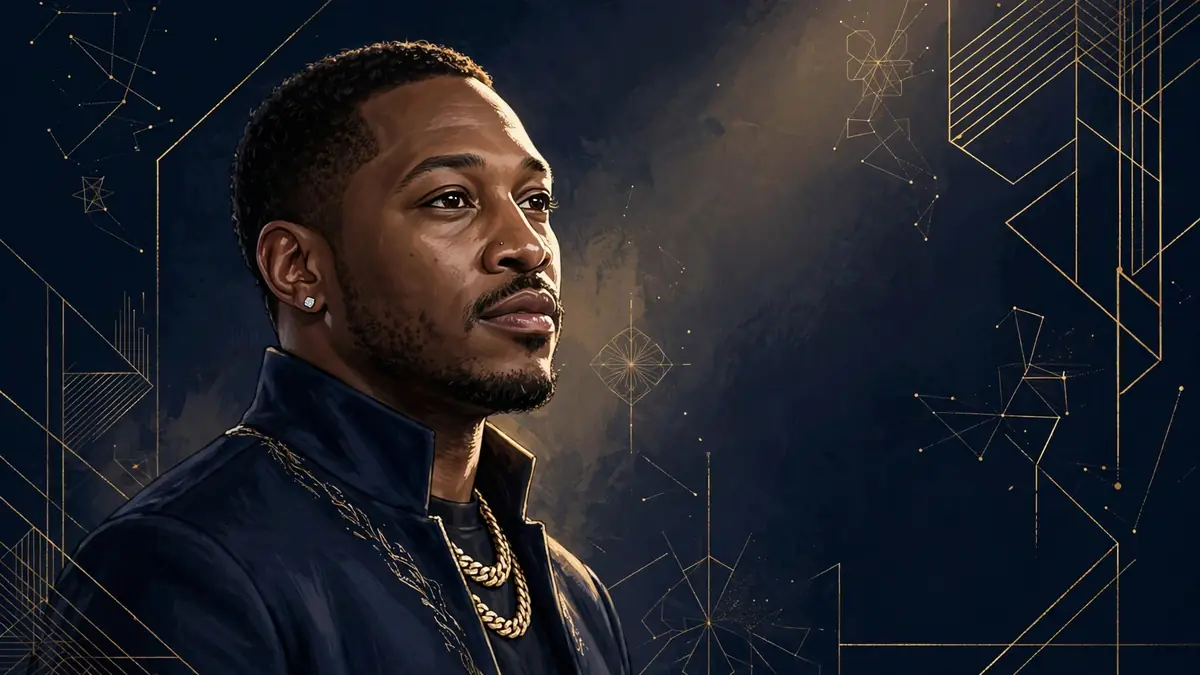
Early Life in Atlanta’s Kirkwood Neighborhood
Nayvadius DeMun Wilburn was born on November 20, 1983, in Atlanta, Georgia, the son of Stephanie Jester. He grew up in Kirkwood, a working-class neighborhood on Atlanta’s east side that has produced more than its share of rap talent. His father left the family when he was young, and he was raised largely by his mother in a single-parent home. Money was tight, the streets were rough, and music was the one thing that pulled him in a different direction.
Future attended Columbia High School in nearby Decatur. He has spoken openly about a turning point at age sixteen, around 1999 or 2000, when he was shot in the hand and robbed. He has described that night as the moment he decided he needed a different path. It did not make him quit the streets right away, but it gave him a reason to take music seriously — not as a hobby, but as a way out.
What set him apart early was not just rapping. He started out writing songs for other people. Before he was known as a performer, he was a songwriter for Southern rappers, including Ludacris, learning how a hit is built from the inside. That songwriting habit never left him. Even at the height of his fame, the melodies and hooks that made his songs stick came from that early training in writing for others.
His family ties ran straight into Atlanta music royalty. His first cousin was Rico Wade, a member of the production team Organized Noize and a central figure in the Dungeon Family collective that gave the world Outkast, Goodie Mob and Killer Mike. Wade, who died in 2024, became Future’s mentor — the person who saw something in the teenager’s voice and pushed him to keep going. Without Rico Wade, there may never have been a rapper called Future at all.
The Dungeon Family Years and the Meathead Days
Future’s first rap name was “Meathead.” Under that name he joined the Dungeon Family, the Georgia collective built around Outkast, Goodie Mob and the Organized Noize producers. The collective’s studio, known as “the Dungeon,” was a basement in East Point where some of the most important Southern hip-hop ever made was recorded. Future was a younger member of that world — watching, learning, writing, and slowly finding a voice of his own.
The stage name “Future” came from members of the Dungeon Family, who started calling him that because of the way he talked about where music was headed. He kept it. It fit the sound he was chasing: melodic, hazy, slightly ahead of what everyone else was doing. Where most Atlanta rappers of the time were either street-hard or club-ready, Future sang through Auto-Tune in a way that made his voice sound like an instrument — half rapper, half singer, and fully his own.
Those early years were slow. He was active from around 2003, but for most of the decade he was a local name, not a national one. He wrote songs, did guest verses, and built relationships in Atlanta studios. The Dungeon Family connection gave him credibility, but it did not hand him a career. That took a run of mixtapes and a deal with a local label boss who believed in him.

The Mixtape Grind That Built the Buzz
Between 2010 and early 2011, Future released a run of mixtapes that turned him from a local songwriter into one of the most talked-about new voices in rap: 1000, Dirty Sprite, True Story and others arrived in quick succession. The tapes were raw and melodic, built on Zaytoven’s piano-driven trap production and Southside’s heavy drums, and they spread through Atlanta clubs and the internet at the same time.
“Tony Montana,” a single built around the Scarface character and featuring Drake on the remix, became his first real breakout moment. The song’s hook and Future’s warbled delivery were unlike anything on the radio, and the Drake co-sign put him in front of a national audience. In 2011 he signed with Rocko’s A1 Recordings, which entered a joint venture with Epic Records shortly after. He also founded his own label, Freebandz, the same year — a move that would matter enormously to his finances later, because it meant he owned a piece of his own output from the start.
The mixtape run also produced his first chart single. “Magic,” featuring T.I., and “Same Damn Time” set up the debut album, and “Turn On the Lights” became his first top-five single on the U.S. R&B chart in 2012. By the time the album arrived, Future was no longer a promising local act. He was the new face of Atlanta rap.
Pluto and the Breakthrough
Future’s debut studio album, Pluto, was originally planned for January 2012 and was eventually released on April 17, 2012. It debuted at number eight on the Billboard 200 and sold around 400,000 copies in the United States. The singles — “Turn On the Lights,” “Same Damn Time” and “Magic” — were all platinum-certified, and the album’s mix of Auto-Tune melody and street lyrics gave him a sound that other rappers immediately started copying.
His second album, Honest, followed in 2014. It was more polished and featured bigger names — Drake, Kanye West, Pharrell Williams, André 3000 — but it did not land as hard as the debut. The singles “Honest” and “Move That Dope” (featuring Pharrell, Pusha T and Casino) kept him on the charts, yet the album felt like a holding pattern. What came next was the run that made him a star.
Between October 2014 and March 2015, Future released a mixtape trilogy that is now treated as one of the great runs in rap history: Monster, Beast Mode (with Zaytoven) and 56 Nights (with DJ Esco). The trilogy was dark, drugged-out and melodic, and it reset his sound. Critics who had written him off as a one-album act suddenly had to reckon with him again. The trilogy also set up the album that would take him to number one.
DS2, EVOL and the Two-Albums-in-a-Week Record
DS2 (Dirty Sprite 2) arrived on July 16, 2015, and debuted at number one on the Billboard 200 — Future’s first chart-topping album. It was supported by the singles “Where Ya At” (featuring Drake), “Stick Talk” and “Blood on the Money,” and it became the album that defined his sound for the rest of the decade. Two months later he released the collaborative mixtape What a Time to Be Alive with Drake, which also debuted at number one and produced the hit “Jumpman,” one of the most streamed rap songs of the era.
EVOL followed in February 2016 and also debuted at number one. In 2016 Future became the fastest artist to score three number-one albums on the Billboard 200 since 2010. The run peaked in February 2017, when he released his self-titled fifth album Future on February 17 and its follow-up Hndrxx just one week later — becoming the first musical act ever to release two chart-topping projects on the Billboard 200 in consecutive weeks. “Mask Off,” the flute-driven single from Future, became his biggest solo hit, passing two billion streams on Spotify and turning into a cultural moment that outlived the album cycle entirely.
The albums kept coming: Future Hndrxx Presents: The Wizrd (2019), which also debuted at number one and was accompanied by a documentary film on Apple Music; High Off Life (2020), featuring “Life Is Good” with Drake; and I Never Liked You (2022), which produced “Wait for U” with Drake and Tems — Future’s third number-one single on the Billboard Hot 100. By then he had a streak few rappers in history can match: every studio album since DS2 had debuted at number one.
The awards caught up, too. His work on “King’s Dead” from the Black Panther soundtrack — alongside Kendrick Lamar, Jay Rock and James Blake — earned him two Grammy nominations and his first Grammy win, Best Rap Performance, at the 2019 Grammy Awards. It was a fitting honor: a song that showed he could be both a hitmaker and a heavyweight on a prestige project.
The Money: How Future Built a Fifty Million Dollar Fortune
Future’s net worth is estimated at $50 million as of November 2026, according to Celebrity Net Worth — the figure most biographies and wealth trackers use as their anchor. Other outlets disagree on the exact number: some put him at $40 million, a few at $62 million or higher, and one stale tracker still lists $8 million from an old update. That is why the honest figure is a range of $40 million to $62 million, with $50 million the number the strongest sources settle on. For a full breakdown of Future’s net worth and how the figure is calculated, see our sister site’s Future net worth breakdown on GuideNetWorth.
The money did not arrive in one lump sum. It came in waves, and the biggest wave was 2017 to 2019. Forbes-tracked earnings show Future made $23 million in the year before September 2017, then $30 million between September 2017 and September 2018 — a year that put him among the top ten highest-paid rappers in the world — and another $20 million between September 2018 and September 2019. Added up, that is $73 million earned in roughly three years, driven by touring, endorsements, royalties and streaming. Even after taxes, management, and the costs of running a label and a large family, that three-year stretch is the foundation of the fortune.
What makes Future’s wealth different from many rappers of his generation is how much of it he controls. He founded Freebandz in 2011, so a share of his own music revenue flows through his own label rather than only through a major. He has been a songwriter since the start, which means publishing income on top of recording income. And his catalog is unusually durable: “Mask Off” alone has passed two billion Spotify streams, and songs like “Jumpman,” “Life Is Good” and “Wait for U” keep generating royalties years after release. A catalog that streams every day is an asset that pays every month.
The estimate in one line: Celebrity Net Worth puts Future at $50 million in 2026. Lower-end trackers say $40 million; higher-end ones say $62 million. We report $50 million as the anchored figure and $40–62 million as the honest range, because no private financial records for Future are public and every published number is an estimate.
Income Streams: Streaming, Touring, Freebandz and Deals
Future’s income comes from at least five channels, and they reinforce each other. Streaming is the biggest and steadiest. His catalog generated three billion streams in a single year during his 2017–2018 peak, and “Mask Off” alone has crossed two billion Spotify streams. Analysts who track rapper earnings estimate his streaming and digital sales bring in roughly $4 million to $6 million a year — a number that holds up because his older songs keep finding new listeners through playlists, samples and social media.
Touring is the second pillar. During his peak years, a 45-minute Future performance was reported to command around $150,000, and his tours have been major earners: the Future Hndrxx Tour in 2017, the Legendary Nights Tour with Meek Mill in 2019, and the joint runs with Drake that grossed tens of millions. Live shows also pay in a second way — they drive streaming spikes for the songs performed, which feeds the first channel.
Freebandz, the label he founded in 2011, is the third pillar. It releases his own music and signs and develops other artists, and trackers estimate it generates around $1 million to $2 million a year. Owning the label matters because it changes the split: instead of a major label keeping the larger share of his recordings, Future keeps more of what his own music earns.
Songwriting and features are the fourth. Future has written for others since before he was famous, and he remains one of the most in-demand featured artists in rap — his verses on other people’s hits pay both a fee and a royalty share. Endorsements are the fifth: he has worked with brands including Nike and Reebok over the years, and his fashion and lifestyle presence has produced additional deals. None of these is as large as the music itself, but together they explain why the fortune kept growing even in years without a new album.
| Income Source | Estimated Annual Contribution |
|---|---|
| Streaming and digital sales | $4M–$6M per year |
| Touring and live shows | Peaked at $30M in a single year (2017–18); $150,000 per 45-minute show reported |
| Freebandz label | $1M–$2M per year |
| Songwriting, features and publishing | Millions per year; varies with output |
| Endorsements and brand deals | Supplemental; Nike and Reebok among past partners |
Homes, Cars and Investments
Future’s most publicized purchase is the Miami Beach mansion he bought in 2022 for $16.3 million, reported by MEAWW and other outlets at the time. The home sits in one of Miami’s most expensive neighborhoods and fits a pattern: as his money grew, he put a large share of it into real estate in Atlanta and Miami, the two cities where he spends most of his time. He has kept the details of his full property portfolio private, so the Miami home is the one asset with a confirmed public price.
His car collection is part of the same picture. Future has been photographed and filmed with a rotation of luxury vehicles — Lamborghinis, Bentleys, Rolls-Royces and custom SUVs — the standard fleet of a rapper at his level. He does not publish a car list, and values attached to celebrity car collections online are mostly guesswork, so we will not attach a number to it here. What is documented is the spending pattern: high-end cars, jewelry and watches appear constantly in his videos and social media, which is both lifestyle and brand — for a rapper whose image is part of the product, the look is a business expense as much as a luxury.
On investments, Future has kept a lower profile than peers who talk publicly about tech stakes or startups. There are reports of investments in tech startups, but no confirmed public portfolio, and no verified business venture on the scale of a drinks brand or a fashion line. The honest summary is that his wealth is music wealth: catalog, label, touring and publishing, with real estate as the main hard asset. That is a narrower base than some of his peers, and it is also why his fortune tracks his music output so closely.
Net Worth Timeline: Year by Year
Future’s wealth grew in clear stages. In 2016, before the peak, his net worth was already estimated in the low tens of millions after the DS2 and EVOL runs. The 2017–2019 stretch changed the scale: $23 million earned in one year, $30 million the next, $20 million the year after — $73 million in three years, according to the Forbes-tracked figures cited by Celebrity Net Worth and other trackers.
| Period | What Happened |
|---|---|
| 2010–2011 | Mixtape run (1000, Dirty Sprite, True Story); signs with A1/Epic; founds Freebandz |
| 2012 | Debut album Pluto; first platinum singles; net worth in the low single-digit millions |
| 2015–2016 | DS2 and EVOL both hit No. 1; What a Time to Be Alive with Drake; wealth jumps into the tens of millions |
| 2017 | Future and Hndrxx released one week apart, both No. 1; “Mask Off” becomes his biggest hit; earns $23M |
| 2017–2018 | Peak earning year: $30M from touring, endorsements and royalties; top-10 highest-paid rapper |
| 2018–2019 | Earns $20M more; Grammy win for “King’s Dead”; three-year total reaches $73M |
| 2020–2022 | High Off Life and I Never Liked You both No. 1; “Wait for U” tops the Hot 100; buys $16.3M Miami mansion |
| 2024 | We Don’t Trust You, We Still Don’t Trust You and Mixtape Pluto — three No. 1 albums in under six months |
| 2026 | Net worth estimated at $50M (range $40M–$62M), anchored by Celebrity Net Worth |
One thing worth noting for readers comparing trackers: the low outlier figures for Future — the $8 million still floating around on some sites — come from updates that were never revised after his peak years. The $40 million figure comes from older Celebrity Net Worth updates, while the $50 million figure is the current one. The $62 million and $64 million figures from smaller trackers appear to roll his gross three-year earnings into a net-worth number without subtracting taxes and expenses. That is why we anchor on $50 million and show the range.
Personal Life: Family, Children and Relationships
Future is a father to eight children with eight different women, a fact that has been one of the most reported parts of his personal life. His eldest child, Jakobi, was born in 2002 to Jessica Smith. His other children include Londyn (with India J), Prince (with Brittni Mealy, born December 2013), Future Zahir Wilburn (with Ciara, born May 19, 2014), Hendrix (with Joie Chavis, born December 2018), Kash and Paris (whose mothers have stayed out of the public eye), and Reign (with Eliza Seraphin, born April 2019). A ninth child, Legend, was claimed by Cindy Parker in a 2019 lawsuit, but Parker later withdrew the suit and the claim was never confirmed.
His most famous relationship was with singer Ciara. The two started dating in 2012, got engaged in October 2013, and welcomed their son Future Zahir Wilburn on May 19, 2014. The engagement ended three months later, in August 2014, amid allegations of infidelity on Future’s part. Ciara went on to marry former NFL quarterback Russell Wilson, with whom she has three more children, while Future and Ciara have co-parented their son — not always smoothly, as the legal section below shows.
Future has never married. His relationships have played out largely in public, and he has been linked to several high-profile women over the years, but he keeps the day-to-day details of his family life private. What he has said publicly is that he takes fatherhood seriously even when the relationships with the mothers are strained, and that his children are a reason he keeps working. His eldest son Jakobi has followed him into music, releasing singles under the name King Kobi.
He stands 6 feet 2 inches tall and weighs around 180 pounds. He was born under the Scorpio sign, if you follow that sort of thing, and he still lives between Atlanta and Miami. His mother, Stephanie Jester, remains a central figure in his life, and his late cousin Rico Wade was the mentor he credits most often in interviews.
Legal Battles and Controversies
Future’s personal life has produced as many court filings as headlines, and the honest biography has to cover them. The biggest was the Ciara case. In 2016 Ciara sued Future for $15 million for defamation, slander and libel, saying he had attacked her parenting in interviews and on social media after their split. Future countersued, arguing he could not have damaged her reputation because her career was already in decline — a claim a judge rejected. The two also fought over custody of their son, with Ciara seeking primary custody and Future contesting it; the case went to trial in 2016 and Ciara was granted primary custody. The defamation suit was dropped in January 2017.
The paternity cases came later. In 2019, Eliza Seraphin (known as Eliza Reign) filed a paternity suit claiming Future was the father of her daughter, born in April 2019, and sought $53,000 a month in child support based on his income. Future initially denied paternity, and a court ordered a DNA test. In May 2020 the test confirmed with 99.9 percent accuracy that he was the father of Reign, making her his eighth child. Future later sued Seraphin for libel, invasion of privacy and intentional infliction of emotional distress, according to The Blast.
Cindy Parker filed a separate paternity suit in 2019 claiming Future was the father of her son Legend. A DNA comparison between Parker’s child and Reign reportedly showed the two were half-siblings, but Parker withdrew her lawsuit before a court ruled, and Future has never confirmed the child as his. Jessica Smith, the mother of his eldest son, sued him for child support in 2016, saying their son suffered from emotional and behavioral issues stemming from Future’s absence. Brittni Mealy has also accused him of not paying child support.
None of these cases produced a criminal conviction, and Future has never served jail time. But they are part of the story of his wealth, too: child support for eight children is a real and ongoing cost, and the $53,000-a-month figure Seraphin sought shows how expensive the family side of his life can be. It is also the reason some wealth trackers’ higher numbers look too high — gross earnings are not the same as money kept.
The 2024 Comeback: Metro Boomin, Like That and Mixtape Pluto
By 2023, some people were ready to write Future off as a legacy act. He had not released a solo album since 2022, and the conversation had moved on to younger rappers. Then came 2024 — the biggest year of his career since 2017.
On March 22, 2024, Future and producer Metro Boomin released We Don’t Trust You, their first collaborative album, through Freebandz, Epic Records, Boominati Worldwide and Republic. It debuted at number one on the Billboard 200 with 251,000 album-equivalent units, including 324.31 million on-demand streams — the biggest opening week of 2024 up to that point. The album featured the Weeknd, Travis Scott, Playboi Carti, Kendrick Lamar and Rick Ross. Three weeks later, on April 12, they released the sequel, We Still Don’t Trust You, which also debuted at number one.
The single that defined the year was “Like That,” featuring Kendrick Lamar. Released to radio on March 26, 2024, it debuted at number one on the Billboard Hot 100 — Future’s third number-one single, Metro Boomin’s first as a credited artist — powered by 59.6 million streams in its first week. It stayed on the Hot 100 for 32 weeks, including three weeks at number one, and topped the Billboard Global 200 as well. Kendrick’s verse, a direct response to Drake and J. Cole’s 2023 collaboration, ignited the biggest rap feud of the decade and put Future’s album at the center of it. The album was later nominated for Best Rap Album at the 67th Grammy Awards, with “Like That” nominated for Best Rap Performance and Best Rap Song.
Then, on September 20, 2024, Future released his seventeenth mixtape, Mixtape Pluto, which also debuted at number one. That made him the first hip-hop artist ever to have three number-one albums in the same year — and in less than six months. At 40 years old, in a genre that discards stars fast, Future had just set a record no rapper before him had managed.

Legacy: The Sound That Reshaped Rap
Future’s influence is bigger than his own chart positions. The melodic Auto-Tune trap sound he built with producers like Metro Boomin, Zaytoven, Southside and DJ Esco became the default sound of mainstream rap in the late 2010s. Rappers who came after him — from Lil Uzi Vert and Young Thug’s melodic experiments to the entire SoundCloud generation — were working in a lane Future helped clear. His use of Auto-Tune as an emotional instrument rather than a pitch corrector changed what a rap voice could sound like.
He also changed how careers are built. The mixtape trilogy of 2014–2015 showed that a rapper could reset a career without a major-label album cycle. The two-albums-in-a-week feat of 2017 showed that the album cycle itself could be bent. And the 2024 run — three number-one albums in six months at age 40 — showed that a veteran could still dominate a chart built for the young. Few rappers have had three separate peaks; Future has had at least that many.
His place in the numbers backs it up. Nine Billboard 200 number-one albums, three Billboard Hot 100 number-one singles, a Grammy win, a catalog with multiple songs past a billion streams, and a fortune estimated at $50 million. In 2025, Billboard’s ranking of the most successful artists of 2000–2024 put him among the defining acts of the era. The kid from Kirkwood who started out writing songs for other people ended up writing the sound of a generation.
Frequently Asked Questions
What is Future’s real name?
Future’s real name is Nayvadius DeMun Cash, born Nayvadius DeMun Wilburn. He was born on November 20, 1983, in Atlanta, Georgia. His stage name “Future” was given to him by members of the Dungeon Family collective, and he has also gone by Future Hendrix, Pluto and, early in his career, Meathead.
How old is Future in 2026?
Future is 42 years old in 2026. He was born on November 20, 1983, in Atlanta, Georgia, so he will turn 43 in November 2026. He started his music career in the early 2000s and has been active since 2003.
What is Future’s net worth in 2026?
Future’s net worth is estimated at $50 million as of November 2026, according to Celebrity Net Worth. Other outlets put the figure between $40 million and $62 million. His wealth comes from streaming and royalties, touring, his Freebandz label, songwriting and endorsements, with peak earnings of $30 million in a single year (2017–2018).
How tall is Future?
Future is 6 feet 2 inches tall (188 cm) and weighs around 180 pounds. He is one of the taller rappers of his generation, a fact fans often notice when he performs alongside collaborators like Drake and Metro Boomin.
How many children does Future have?
Future has eight children with eight different women. They are Jakobi (with Jessica Smith), Londyn (with India J), Prince (with Brittni Mealy), Future Zahir Wilburn (with Ciara), Hendrix (with Joie Chavis), Kash and Paris (whose mothers have stayed private), and Reign (with Eliza Seraphin). A ninth child claimed by Cindy Parker was never confirmed, and she withdrew her lawsuit.
What happened between Future and Ciara?
Future and Ciara dated from 2012, got engaged in October 2013, and had a son, Future Zahir Wilburn, on May 19, 2014. They split in August 2014 amid infidelity allegations. Ciara later sued Future for $15 million for defamation in 2016; the suit was dropped in January 2017, and Ciara was granted primary custody of their son. Ciara is now married to former NFL quarterback Russell Wilson, and the two co-parent their son.
What are Future’s biggest songs and albums?
Future’s biggest songs include “Mask Off” (over two billion Spotify streams), “Jumpman” with Drake, “Life Is Good” with Drake, “Wait for U” with Drake and Tems, and “Like That” with Metro Boomin and Kendrick Lamar — all three of the last-named reached number one on the Billboard Hot 100. His biggest albums are DS2 (2015), Future and Hndrxx (2017), We Don’t Trust You (2024) and Mixtape Pluto (2024), all of which debuted at number one on the Billboard 200.
What did Future release in 2024, and what is next?
In 2024 Future released three number-one albums in under six months: We Don’t Trust You and We Still Don’t Trust You with Metro Boomin, and his seventeenth mixtape, Mixtape Pluto — a first for any hip-hop artist. “Like That” with Kendrick Lamar topped the Hot 100 for three weeks and sparked the year’s biggest rap feud. As of late 2026 he has not announced a new solo album, but his catalog keeps earning millions a year from streaming, and his 2024 run proved he can still top the charts at 40-plus.
Final Thoughts
Future’s biography is a story of second acts. He was a songwriter before he was a star, a mixtape rapper before he was a chart-topper, and a veteran before his biggest year. The $50 million fortune is real, but the more interesting number is three: three number-one albums in six months at age 40, three number-one singles across a decade, three distinct peaks in a career most rappers get one of. The kid from Kirkwood who was shot at sixteen and told by his cousin to take music seriously did exactly that — and then kept doing it long after everyone else stopped expecting him to.
For readers keeping score: the fortune is estimated at $50 million (range $40–62 million), the catalog is still growing, and the next chapter is unwritten. If the last fifteen years are any guide, it will arrive without warning, probably on a Friday, and it will probably debut at number one.
Sources and Reporting
How we estimated: Future’s net worth is an estimate, not a disclosed fact — no private financial records for him are public. We anchor on Celebrity Net Worth’s $50 million figure because it is the most widely cited and the most recently updated of the major trackers, and we show the full $40 million–$62 million range because other outlets disagree. Earnings figures for 2017–2019 come from Forbes-tracked reporting as cited by Celebrity Net Worth and other wealth trackers. Career facts (albums, chart positions, release dates, Grammy results) come from Wikipedia and Billboard reporting. The Miami mansion price ($16.3 million) was reported by MEAWW. Family and legal details come from Showbiz Cheat Sheet, The Things and OK! Magazine reporting, cross-checked against each other where the counts differed. Where sources conflicted — most often on the net-worth number itself and on the exact count of his children — we published the range and said which source anchors it, rather than picking the most flattering figure.
- Celebrity Net Worth — net worth anchor ($50 million) and 2017–2019 earnings breakdown
- Wikipedia — Future (rapper) biography, discography, We Don’t Trust You and Like That chart history
- Billboard — Billboard 200 and Hot 100 chart positions, 2024 opening-week figures
- Forbes — highest-paid rappers earnings reporting, 2017–2019
- MEAWW — $16.3 million Miami mansion purchase (2022)
- Showbiz Cheat Sheet — children and mothers reporting, updated October 2026
- The Things — family details and paternity case reporting
- Stereogum — We Don’t Trust You debut numbers and Like That chart performance
- TheRichest — celebrity wealth comparisons
- GuideNetWorth — Future Net Worth — sister-site net worth profile (same person, different angle)