Last updated: November 10, 2026 · By Celebamerica Editorial Staff
Tiger Woods is 50 years old, a 15-time major champion, and — by every serious measure — the richest golfer who ever lived. His net worth in 2026 is estimated at $1.3–$1.5 billion: Forbes puts the figure at $1.5 billion on its real-time billionaires list (as of April 2026), while Celebrity Net Worth and TheRichest both publish $1.3 billion. We report the honest range and anchor it on Forbes, the most widely cited source in current reporting.
Born Eldrick Tont Woods on December 30, 1975, in Cypress, California, Woods turned professional at 20, won the Masters by 12 shots at 21, held all four major titles at the same time, and spent a record 683 weeks as world No. 1. He has earned nearly $2 billion before tax across his career, according to Forbes — and only about a tenth of that came from tournament prize money. The rest came from endorsements, golf-course design, and a business empire that now stretches from a tech-driven indoor golf league to his own apparel brand. This is the full story of how a child prodigy became a billionaire, lost almost everything in public, and rebuilt himself into something the sport had never seen before.
Quick Facts: Tiger Woods
| Full Name | Eldrick Tont Woods |
|---|---|
| Date of Birth | December 30, 1975 (Cypress, California, USA) |
| Age (2026) | 50 years old |
| Height | 6 ft 1 in (185 cm) |
| Estimated Net Worth (2026) | $1.3–$1.5 billion (Forbes: $1.5 billion; Celebrity Net Worth / TheRichest: $1.3 billion) |
| Total Pretax Career Earnings | Nearly $2 billion, per Forbes |
| PGA Tour Prize Money | About $121 million (PGA Tour official career earnings) |
| Major Championships | 15 (second all time, behind Jack Nicklaus with 18) |
| PGA Tour Wins | 82 (tied for first all time with Sam Snead) |
| Weeks at World No. 1 | 683 (all-time record) |
| Turned Professional | 1996, at age 20 |
| Key Ventures | TMRW Sports / TGL, TGR Design, TGR Foundation, Sun Day Red, PopStroke, Full Swing, The Woods Jupiter |
| Children | Sam Alexis Woods (born 2007) and Charlie Axel Woods (born 2009) |
| Relationship Status | In a relationship with Vanessa Trump, confirmed March 2025 |
Table of Contents
- Quick Facts: Tiger Woods
- Early Life and Background
- Amateur Stardom and Stanford
- Turning Professional and the 1997 Masters
- The Tiger Slam and the Years of Dominance
- The Money: Prize Winnings, Endorsements and Business
- Net Worth Growth Timeline
- Real Estate, Cars and Investments
- Personal Life and Family
- Injuries, the 2021 Crash and the Long Road Back
- The 2026 Crash and the Plea Deal
- Life at 50 and What Comes Next
- Tiger Woods vs. the Other Golf Greats
- Frequently Asked Questions
- Final Thoughts
- Sources and Reporting
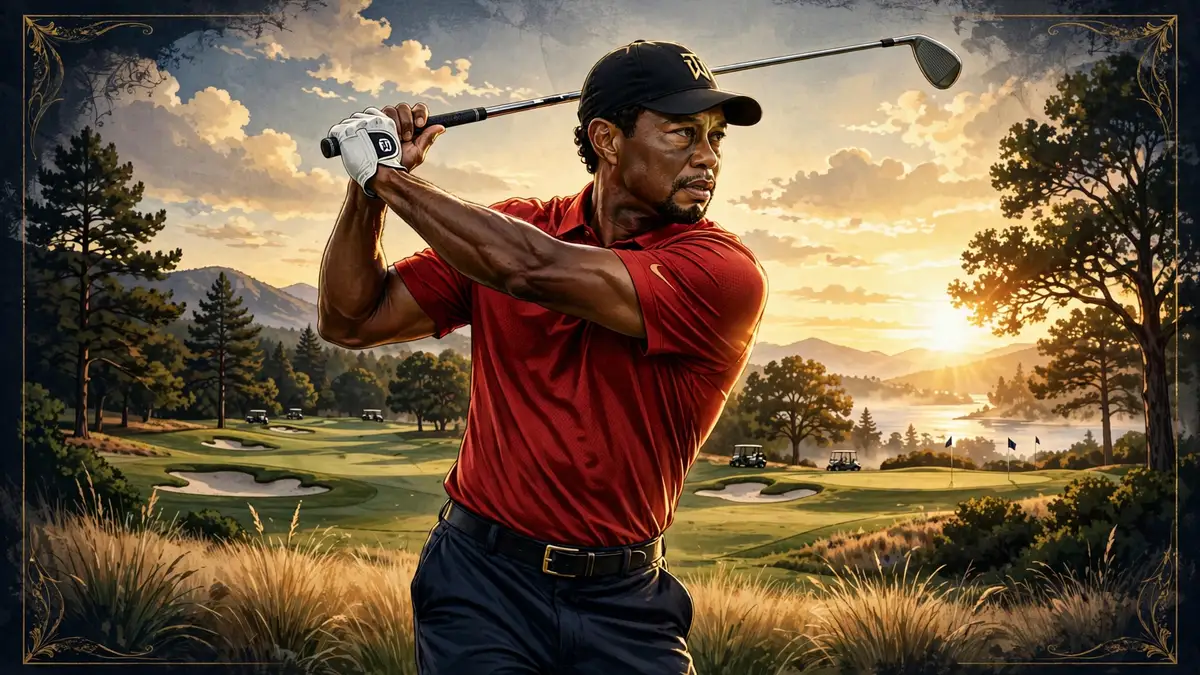
Early Life and Background
Eldrick Tont Woods was born on December 30, 1975, in Cypress, California, a suburb of Los Angeles. He is the only child of Earl Woods, a retired U.S. Army lieutenant colonel, and Kultida Woods, who was born in Thailand. His father gave him the nickname “Tiger” in honor of a fellow soldier and friend from the Vietnam War, Vuong Dang Phong, whose nickname was Tiger. The name stuck so completely that most of the world has never known him as anything else.
Golf entered his life almost before he could walk. Earl Woods has said his son was watching him hit balls in the garage at six months old, and by the time he was two, Tiger was putting on national television — a 1978 appearance on The Mike Douglas Show, where he putted against Bob Hope. At three he was shooting 48 for nine holes. At five he appeared in Golf Digest. The family home in Cypress had a putting green in the back yard, and Earl, who had taken up the game late himself, drilled his son with a military discipline that would define the rest of his life.
By the time he was a teenager, Woods was already the most talked-about young golfer in America. He won the Junior World Golf Championships six times between 1984 and 1991, a run no other junior golfer has matched. He won the U.S. Junior Amateur three years in a row, from 1991 to 1993 — the first player ever to do it — and then won the U.S. Amateur three straight years, from 1994 to 1996, another first. His mother, Kultida, was the quiet force behind the competitive edge: she taught him the Buddhist discipline and mental control that later became his trademark on the course, including the habit of never letting an opponent see him rattled.
Woods turned 50 on December 30, 2025, a milestone that puts his whole career in perspective: he has now been famous for longer than most golfers’ entire careers. Our sister site Guide Net Worth has the full age breakdown in its Tiger Woods age profile, covering the birth date, the 50th-birthday milestone, and his new eligibility for the PGA Tour Champions.
Amateur Stardom and Stanford
Woods enrolled at Stanford University in the fall of 1994, on a golf scholarship, and spent two years there before turning professional. He won the NCAA individual championship in 1996 and was named the college player of the year. His Stanford coach, Wally Goodwin, has said Woods practiced harder than anyone he ever coached, often hitting balls until dark and then working on his short game under the lights.
The amateur years also showed the commercial pull that would later make him a billionaire. By the summer of 1996, shoe and equipment companies were already circling, and when he won his third straight U.S. Amateur at Pumpkin Ridge in August 1996, the offers turned into a bidding war. He left Stanford after two years, without a degree, and announced his professional career on August 28, 1996, at a press conference in Milwaukee with the words “Hello, world” — a line that was scripted by his agent, Mark Steinberg, and has been quoted ever since.
What is easy to forget is how quickly the amateur star became a professional winner. He played his first event as a pro at the Greater Milwaukee Open, and five weeks later he won the Las Vegas Invitational — his first PGA Tour title. He won twice more before the year ended and was named the PGA Tour Rookie of the Year. The sport had never seen a 20-year-old arrive that fast, and it has not seen one since.
Turning Professional and the 1997 Masters
The 1997 Masters was the moment golf changed. Woods arrived at Augusta National as a 21-year-old with one professional season behind him, and he won by 12 strokes — the largest margin in Masters history — with a score of 18 under par, the lowest ever recorded at the tournament at the time. He became the youngest Masters champion ever and the first Black golfer to win a major championship. The television ratings set records, and the crowds at Augusta were younger and more diverse than the tournament had ever seen.
The win also set the money machine in motion. Woods had signed with Nike before turning professional — a five-year, $40 million deal, according to Golf Digest — and added Titleist soon after. Nike built its entire golf business around him, and the “Hello, world” campaign ran for years. By the end of 1997, Woods had won four times on the PGA Tour, finished as the tour’s leading money winner, and was already the most famous athlete in the sport.
Then came the first swing change, and the first lesson in how Woods works. Unhappy with his game despite the Masters win, he rebuilt his swing with coach Butch Harmon, a process that took nearly two years and cost him results in 1998. He won only once that year. The rebuild looked like a mistake until 1999, when the new swing clicked: he won eight times, including the PGA Championship, his second major, and took the money title again. The pattern — tear the swing down, rebuild it, come back better — would repeat through his career, and each time the golf world doubted him, he answered on the course.
The Tiger Slam and the Years of Dominance
The stretch from the 2000 U.S. Open to the 2001 Masters is the greatest run of golf ever played, and it has a name: the Tiger Slam. Woods won the 2000 U.S. Open at Pebble Beach by 15 strokes, the largest margin in major championship history. He won the 2000 Open Championship at St Andrews by eight shots, completing the career Grand Slam at 24 — the youngest ever to do it. He won the 2000 PGA Championship in a playoff over Bob May, and then the 2001 Masters, holding all four major titles at the same time. No golfer had ever done that. No golfer has done it since.
The numbers from those years still look like misprints. In 2000, Woods won nine times on the PGA Tour, including three majors, and finished in the top ten in 17 of 20 starts. He led the tour in scoring average by a margin that statisticians still cite. Between 1999 and 2002 he won 21 times on the PGA Tour and seven majors. His lead over the world No. 2 in the rankings stretched to a gap wider than the gap between No. 2 and No. 100.
The dominance continued, in waves, through the decade. He won the Masters and the U.S. Open in 2002, then rebuilt his swing again — this time with Hank Haney — and won the Masters and the Open Championship in 2005. He won the PGA Championship in 2006 and 2007, months after his father Earl died of cancer in May 2006, a loss Woods has called the hardest of his life. In 2008, playing on a torn ACL and a stress fracture in his left leg, he beat Rocco Mediate in a 19-hole playoff to win the U.S. Open at Torrey Pines, then had reconstructive knee surgery and missed the rest of the season. It was his 14th major, and at 32, the record of 18 held by Jack Nicklaus looked like a matter of time.
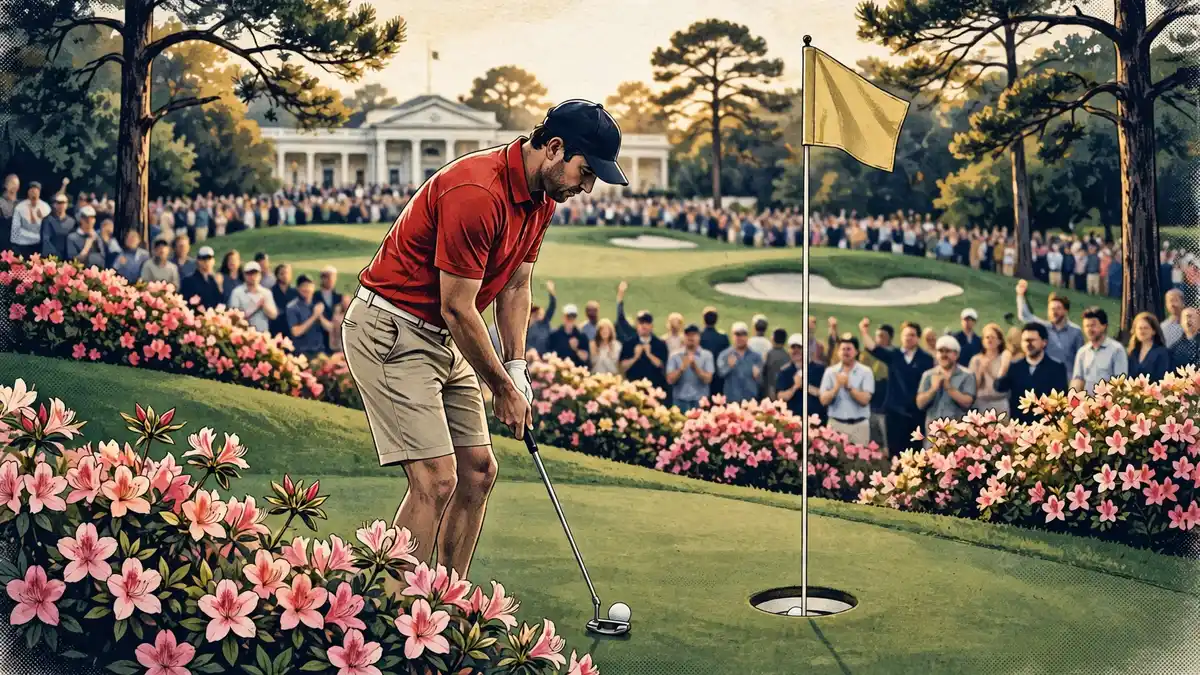
It was not a matter of time. The 2008 U.S. Open was his last major for nearly 11 years. What followed was the most public collapse and the most unlikely comeback in modern sports — a story told in full in the sections below.
The Money: Prize Winnings, Endorsements and Business
The first thing to understand about Tiger Woods’ money is how little of it came from actually playing golf. His official PGA Tour prize money stands at about $121 million — a record, and a huge sum on its own. But Forbes attributes nearly $2 billion in pretax career earnings to him, and the gap between those two numbers is the real story of his fortune: roughly 90% of his wealth came from endorsements and business, not from winning tournaments.
The endorsement run began with Nike. The 1996 deal was worth $40 million over five years, per Golf Digest, and it grew into one of the longest and richest athlete partnerships in sports history. Nike paid Woods a reported $20 million a year in the later years of the deal, and at his peak in the mid-2000s, Forbes reported he earned as much as $100 million a year from endorsements alone. He carried deals with Titleist, American Express, Accenture, AT&T, Gillette, Gatorade, and Rolex, among others. When his personal life unraveled in late 2009, several sponsors walked away — Accenture, AT&T, and Gatorade ended their deals — but Nike, EA Sports, and others stayed, and the endorsement income never fully stopped.
For a fuller breakdown of the fortune itself — the year-by-year figures, the sources behind the range, and how the endorsement money stacks up against the prize money — see our Tiger Woods net worth profile on this site, which carries the full financial picture behind this biography.
The Nike chapter closed in January 2024, after 27 years, when the two sides announced the partnership had ended. A month later, Woods launched Sun Day Red, his own apparel brand, in partnership with TaylorMade. The name nods to the red shirt he has worn on Sundays since his mother suggested it as a power color when he was a junior golfer. TaylorMade also supplies his clubs, a deal that began when he left Nike’s equipment business in 2017. Bridgestone makes his golf balls, and Monster Energy is among his current sponsors.
His business portfolio now runs through TGR Ventures, the holding company he built around his name. Its pieces include:
- TMRW Sports — the sports and entertainment company he co-founded in 2022 with Rory McIlroy, the golfer who shares his taste for building businesses off the course. TMRW is the company behind TGL, the tech-driven indoor golf league that launched in January 2025, and has been reported at a valuation of about $500 million.
- TGR Design — his golf-course design firm, which has built courses in Mexico, the Bahamas, and the United States, including the nine-hole par-3 course at Augusta Municipal Golf Course, known as The Loop, announced in 2025.
- TGR Foundation — the charity he founded in 1996, which runs learning centers and education programs for young people and has served tens of thousands of students.
- PopStroke — the putting and entertainment venue chain he invested in and helped design, which has expanded across the southern United States.
- Full Swing — the golf simulator company he backed, which was reported sold to Versant in 2026 for about $530 million.
- The Woods Jupiter — his restaurant in Jupiter, Florida, and Nexxus, a luxury real-estate venture he is a partner in.
Forbes’ 2026 reporting put his annual earnings at about $46 million, nearly all of it from off the course. That is a long way from the $100 million-plus endorsement years of the mid-2000s, but it is also the income of a man who has barely played a tournament in two years — a measure of how much of his fortune now runs on its own.
Net Worth Growth Timeline
No outlet publishes a verified year-by-year balance sheet for a private individual, and Woods has never disclosed an audited net worth. The timeline below is built from the dated estimates that Forbes, Celebrity Net Worth, and other outlets have published along the way, and it shows the shape of the fortune rather than a precise ledger.
| Year | Milestone |
|---|---|
| 1996 | Turns professional; signs a $40 million Nike deal and a Titleist deal. Prize money is a small share of the income from the start. |
| 1997 | Wins the Masters by 12 shots; becomes the PGA Tour’s leading money winner and the most marketable athlete in golf. |
| 2000–2001 | The Tiger Slam. Endorsement income passes $50 million a year; Forbes names him the world’s highest-paid athlete, a title he would hold for a record 11 years. |
| 2005–2008 | Peak earning years, with Forbes reporting endorsement income as high as $100 million a year. Wins six more majors, taking his total to 14. |
| 2009–2010 | Personal scandal and divorce. Several sponsors end their deals, and his reported annual income falls sharply — but Nike and the core deals stay. |
| 2013 | Returns to world No. 1 and wins five times. Endorsement income recovers as the golf comes back. |
| 2019 | Wins the Masters — his 15th major and first in 11 years — then ties Sam Snead’s record of 82 PGA Tour wins at the Zozo Championship. |
| 2022 | Forbes certifies him as a billionaire, the second active athlete ever to reach that mark, after LeBron James. Co-founds TMRW Sports with Rory McIlroy. |
| 2024 | Nike partnership ends after 27 years; launches Sun Day Red with TaylorMade; TMRW Sports reported at a valuation of about $500 million. |
| 2025 | TGL launches in January; ruptures his Achilles in March and has surgery, missing the season; turns 50 in December with career earnings near $2 billion. |
| 2026 | Full Swing reported sold to Versant for about $530 million; TGL renews with ESPN; Forbes real-time estimate $1.5 billion; Celebrity Net Worth $1.3 billion. |
Real Estate, Cars and Investments
Woods keeps his property holdings private, and the details that are public come from county records and reporting rather than from him. The centerpiece is his Jupiter Island, Florida compound: a 12-acre waterfront estate he bought in 2006 for a reported $40 million, where he built a mansion with its own practice facilities, including a golf studio and a four-hole practice course. It is the base he has lived at for nearly two decades, and it is also where his life off the course is centered — near the TGR Foundation’s Florida operations, near his restaurant, and a short drive from the courses where his son Charlie plays junior golf.
Before Jupiter Island, Woods owned a home in the Isleworth community in Windermere, Florida, the gated neighborhood where he lived through the 2000s. He has also been linked to property in California, where he grew up, and to the Nexxus luxury real-estate venture, in which he is a partner rather than just a buyer. The pattern is consistent: he buys land, builds what he wants on it, and holds it for years rather than flipping it.
His cars have drawn almost as much attention as his houses, though rarely in the way he would have chosen. The Cadillac Escalade he was driving in the November 2009 crash outside his Windermere home became one of the most photographed vehicles in America. Over the years, reporting has linked him to high-end sports cars including a Porsche Carrera GT, and his early career carried a Buick endorsement that put him in commercials for the brand’s sedans. He has never made a show of a car collection the way some athletes do; the cars are a footnote to a fortune built on golf, not on garages.
The investment side is where the money has quietly compounded. Beyond the ventures listed above, Woods has put money into golf technology, hospitality, and real estate, and his equity stakes — in TMRW Sports, PopStroke, and Full Swing — are the part of the fortune that Forbes’ estimate leans on most heavily. Those stakes are private, their values are estimates, and they are the main reason Forbes’ $1.5 billion and Celebrity Net Worth’s $1.3 billion do not match. Neither number is a bank balance. Both are educated readings of the same private holdings, and the truth sits somewhere in the range between them.

Personal Life and Family
Woods married Elin Nordegren, a Swedish model he met through a mutual friend, in October 2004. They had two children: Sam Alexis, born in June 2007, and Charlie Axel, born in February 2009. The marriage ended in divorce in August 2010, after the scandal that broke in November 2009, when reports of infidelity surfaced following a car crash outside the family home in Windermere. Woods took a break from golf, entered treatment, and issued a public apology in February 2010. He and Nordegren have kept their co-parenting private since then, and both children have grown up largely out of the spotlight — until golf pulled them back into it.
Sam Woods plays soccer and has committed to playing the sport at Stanford, her father’s old university. Charlie Woods plays golf, and the father-and-son pairing at the PNC Championship has become one of the sport’s most watched traditions: the two have played the event together every December since 2020, with Charlie’s swing drawing comparisons to his father’s at the same age. Woods played the 2024 PNC in a cart, months after back surgery, and the sight of the two of them together — one of the greatest golfers ever, and a teenager learning the game from him — has become the warmest image of his later career.
Woods’ mother, Kultida, died on February 4, 2025, at the age of 80. He announced her death on social media, calling her “a force of nature all her own.” Her passing came weeks before he was due to play the Genesis Invitational, the tournament he hosts; he withdrew from the event. She had been the steady presence at his tournaments for three decades, the one who taught him the mental discipline that carried him through the majors, and her death marked the end of an era for the family.
In March 2025, Woods confirmed a new relationship, posting on Instagram that he was dating Vanessa Trump, the former wife of Donald Trump Jr., and asking for privacy for those close to them. The relationship has since become a regular part of his public life: Vanessa Trump has been seen with him at TGL events, including the 2026 finals, where she watched from the stands with her daughter Kai, a rising amateur golfer who has committed to the University of Miami.
Injuries, the 2021 Crash and the Long Road Back
It is hard to overstate how much of Tiger Woods’ body has been rebuilt. He has had five back surgeries, including a microdiscectomy in 2014, two more procedures in 2015, spinal fusion surgery in April 2017, another back operation in September 2024, and a lumbar disc replacement in October 2025. He has had multiple knee surgeries, including the reconstruction after the 2008 U.S. Open. He has had Achilles surgery, ankle surgery, and a foot operation. By his own account, there are days when getting out of bed is the hardest part.
The worst of it came on February 23, 2021. Woods was driving on Hawthorne Boulevard near Los Angeles when his SUV left the road, rolled several times, and came to rest on its side. He suffered compound fractures in his right leg and a shattered ankle, and doctors at Harbor-UCLA Medical Center said amputation was considered. He spent weeks in hospital, then months in rehabilitation, learning to walk again. Investigators found he had been driving at up to 87 miles per hour, with no evidence of impairment.
Fourteen months later, he walked the fairways at Augusta National and made the cut at the 2022 Masters, finishing 47th. It was one of the most remarkable returns in sports history — a man who had nearly lost a leg, playing 72 holes at the hardest tournament in golf, on foot, in the Georgia heat. He was inducted into the World Golf Hall of Fame the month before, presented by his daughter Sam, who told the audience that her father had worked his way back from a hospital bed to the Masters.
The comebacks kept getting harder. He withdrew from the 2023 Masters with a foot injury, had ankle surgery, and played only a handful of events in 2023 and 2024. His last PGA Tour start came at the 2024 Open Championship at Royal Troon, where he missed the cut. In March 2025, while training at home, he ruptured his left Achilles tendon and had surgery performed by Dr. Charlton Stucken of the Hospital for Special Surgery in West Palm Beach — an injury that ended his 2025 season before it began. He has not completed a four-round PGA Tour event since the 2024 Masters.
The 2026 Crash and the Plea Deal
On March 27, 2026, Woods was involved in a single-vehicle rollover crash on Jupiter Island, Florida, near his home. His Land Rover clipped a truck, rolled onto its side, and he was arrested on suspicion of driving under the influence, according to the Martin County Sheriff’s Office. No injuries were reported in the crash, though the truck sustained about $5,000 in damage, according to the incident report cited by ESPN.
The arrest affidavit, as reported by Parade and ESPN, said deputies found Woods sweating and moving slowly, that he failed field sobriety tests, and that two hydrocodone pills were found in his pants pocket. A breath test showed no signs of alcohol, but Woods refused to submit to a urinalysis or blood test, which added a second misdemeanor charge of refusal to submit to a lawful test. He initially pleaded not guilty to the DUI charge.
On September 2, 2026, Woods appeared at the Martin County Courthouse in Stuart, Florida, and changed his plea to no contest as part of a plea agreement. The DUI charge was reduced to reckless driving and refusal to submit to a lawful test. As part of the deal, his driver’s license was suspended for five years, and he agreed to pay $1,500 in fines. The judge told him that driving for any reason would send him back to jail, according to Page Six, as cited by Parade. Woods had spent time in inpatient treatment in Switzerland after the crash, according to reporting at the time.
The episode is the darkest chapter of his life since 2009, and it is also the one that says the most about where he stands at 50. He was aiming for a return at the 2026 Masters when the crash happened. Instead, he spent the spring in treatment and the summer in court. The golf world that once argued about whether he could catch Jack Nicklaus now argues about whether he will play again at all.
Life at 50 and What Comes Next
Woods turned 50 on December 30, 2025, which makes him eligible for the PGA Tour Champions, the circuit for golfers aged 50 and over. He has not said whether he will play it. What he has said, through his actions, is that the indoor league matters more to him now than the outdoor tour: he played in the 2026 TGL season with Jupiter Links GC, alongside Tom Kim and Max Homa, and the team reached the finals, where it lost 9-2 to Los Angeles Golf Club — Justin Rose, Sahith Theegala, and Tommy Fleetwood — at the SoFi Center in Palm Beach Gardens in March 2026.
ESPN reported on October 27, 2026, that Woods is expected to play in the TGL season opener on December 27, 2026, when Jupiter Links meets Los Angeles Golf Club again in a rematch of the finals. It would be his first competitive outing since the March crash and the plea deal, and the league has built its opening-day schedule around him. Kevin Kisner, who played for Jupiter Links last season, told the Fore Play podcast that Woods is planning to play a full schedule in the indoor league this season.
The question nobody can answer is whether he will play a PGA Tour event again. His body has had five back surgeries, a rebuilt knee, a repaired Achilles, and a leg that was nearly amputated. He has said his body does not recover the way it did when he was 24 or 25, and that he is still trying. The Masters in April is the tournament that has always pulled him back, and the 2027 edition will be the 30th anniversary of the win that made him famous. Whether he tees it up there is the single most-watched question in golf.
What is certain is that his influence no longer depends on playing. The generation now winning majors grew up watching him: Justin Thomas, a two-time major winner and one of the tour’s biggest stars, has spoken about modelling his game on Woods, and Jordan Spieth, who won three majors before turning 24, came through the junior ranks that Woods had already transformed. The purses they play for, the television deals, the crowds, the fitness culture on tour — all of it traces back to the player who made golf a television sport for a new audience.
Tiger Woods vs. the Other Golf Greats
Woods’ place in golf history is usually argued in two numbers: majors and tour wins. On majors, he sits second with 15, behind Jack Nicklaus with 18. On PGA Tour wins, he is tied for first with Sam Snead at 82. On weeks at world No. 1, he is alone at the top with 683 — more than double the next-best total in the history of the ranking. The table below sets his career against the other names that define the sport.
| Golfer | Major Titles | PGA Tour Wins | Weeks at World No. 1 |
|---|---|---|---|
| Tiger Woods | 15 | 82 | 683 |
| Jack Nicklaus | 18 | 73 | 172 |
| Arnold Palmer | 7 | 62 | — |
| Phil Mickelson | 6 | 45 | — |
| Rory McIlroy | 5 | 29 | 122 |
The rivalry that defined the 2000s was with Phil Mickelson, the left-hander who won six majors and spent his prime chasing a player who seemed unbeatable. Mickelson’s 2004 Masters win — his first major, at 33 — came after years of being cast as the man who could not win the big one while Woods collected them. The two men have little in common off the course, and their relationship has been cool for most of two decades, but Mickelson’s career only makes sense in the context of Woods: he won more, and won later, because the standard Woods set forced him to.
On money, there is no argument at all. Forbes ranks Woods as the richest golfer in history, ahead of Arnold Palmer and Jack Nicklaus, and the gap is wide: his estimated $1.3–$1.5 billion is several times the fortune of any other golfer. Palmer built a business empire on iced tea and golf courses, Nicklaus built one on course design, and both men made far more off the course than on it — the same model Woods followed, at a scale neither of them could have imagined. He is also one of only a handful of athletes ever to become a billionaire while still competing, and the second active athlete to be certified as one by Forbes, after LeBron James.
The one number that settles it: 683 weeks at world No. 1. That is more than 13 years at the top of the sport — longer than most great golfers’ entire prime. Nicklaus, the only man ahead of him on majors, spent 172 weeks there. Nobody else in golf history comes close.
Frequently Asked Questions
How old is Tiger Woods?
Tiger Woods is 50 years old. He was born Eldrick Tont Woods on December 30, 1975, in Cypress, California, and turned 50 on December 30, 2025. That birthday also made him eligible for the PGA Tour Champions, the circuit for golfers aged 50 and over.
What is Tiger Woods’ net worth in 2026?
Tiger Woods’ net worth in 2026 is estimated at $1.3–$1.5 billion. Forbes puts the figure at $1.5 billion on its real-time billionaires list (as of April 2026), while Celebrity Net Worth and TheRichest both publish $1.3 billion. About 90% of the fortune came from endorsements and business, not tournament prize money — his official PGA Tour earnings are about $121 million, against nearly $2 billion in pretax career earnings, per Forbes.
How many major championships has Tiger Woods won?
Tiger Woods has won 15 major championships: five Masters (1997, 2001, 2002, 2005, 2019), three U.S. Opens (2000, 2002, 2008), three Open Championships (2000, 2005, 2006), and four PGA Championships (1999, 2000, 2006, 2007). That is the second-highest total in history, behind Jack Nicklaus with 18. He also holds 82 PGA Tour wins, tied with Sam Snead for the all-time record.
Is Tiger Woods still playing golf in 2026?
Woods has not played a PGA Tour event since the 2024 Open Championship at Royal Troon. He played in the TGL indoor league in early 2026 with Jupiter Links GC, reaching the finals in March, and ESPN reported in October 2026 that he is expected to play in the TGL season opener on December 27, 2026. He has not announced whether he will return to the PGA Tour or play the PGA Tour Champions.
Who is Tiger Woods dating?
Tiger Woods is in a relationship with Vanessa Trump, the former wife of Donald Trump Jr. He confirmed the relationship in a March 2025 Instagram post, writing that “love is in the air and life is better with you by my side.” She has since been seen with him at TGL events, including the 2026 finals in Palm Beach Gardens.
How tall is Tiger Woods?
Tiger Woods is 6 feet 1 inch tall (185 cm) and weighs about 185 pounds (84 kg), according to public profiles. His height and athletic build were part of what set him apart from other golfers of his era: he brought a fitness-first approach to a sport that had never seen it, and the tour’s training culture changed around him.
What happened in Tiger Woods’ 2026 car crash?
On March 27, 2026, Woods was involved in a single-vehicle rollover crash on Jupiter Island, Florida, and was arrested on suspicion of driving under the influence. No injuries were reported. A breath test showed no alcohol, but he refused a urine or blood test, and two hydrocodone pills were found in his pocket, according to the arrest affidavit. On September 2, 2026, he pleaded no contest to reckless driving and refusal to submit to a lawful test; his driver’s license was suspended for five years and he was fined $1,500.
What is Tiger Woods’ real name?
Tiger Woods’ real name is Eldrick Tont Woods. “Tiger” is a nickname his father, Earl Woods, gave him in honor of a fellow soldier from the Vietnam War, Vuong Dang Phong, who was known as Tiger. Woods has used the nickname since childhood, and it is the name under which he has won all 15 of his major championships.
Final Thoughts
Tiger Woods’ biography is not a straight line. It is a child prodigy who became the most dominant golfer ever, a billionaire who lost his marriage and his sponsors in public, a man who rebuilt his body five times and his swing three times, and a 50-year-old who still has the sport watching his every move. The numbers — 15 majors, 82 tour wins, 683 weeks at No. 1, $1.3–$1.5 billion — are the biggest the sport has ever produced. But the story that will last is the one about what he did after the winning stopped: the comebacks, the surgeries, the 2019 Masters, and the refusal to walk away from a game that has taken almost everything from him and given him almost everything in return.
Whether he plays the 2027 Masters, the PGA Tour Champions, or only the indoor league from here on, his place is already set. He is the golfer who made the sport matter to people who had never watched it, the athlete who turned golf into a billion-dollar business, and the only player in history who held all four majors at once. That is the life this biography set out to tell — and it is not finished yet.
For more athlete life stories, browse the biography archive on CelebAmerica.
Sources and Reporting
This biography was researched from live reporting and public records in November 2026. Money figures are estimates from named outlets, not audited statements, and they differ between sources — where they conflict, we publish the range and say which source anchors it.
- Forbes — net worth estimate of $1.5 billion (real-time billionaires list, as of April 2026); nearly $2 billion in pretax career earnings; billionaire certification in 2022; 2026 annual earnings of about $46 million.
- Celebrity Net Worth — net worth estimate of $1.3 billion.
- Wikipedia — Tiger Woods — career record, birth details, and the Forbes April 2026 estimate as cited there.
- PGA Tour — official career prize money of about $121 million; March 11, 2025 report on the Achilles rupture and surgery by Dr. Charlton Stucken.
- ESPN — October 27, 2026 report that Woods is expected to play the TGL opener on December 27, 2026; September 2026 court reporting on the plea change.
- Parade — 2026 net worth reporting; September 2, 2026 plea agreement details, including the five-year license suspension and $1,500 in fines.
- Golf Digest — the 1996 Nike deal ($40 million over five years) and career reporting.
How we estimated: the net worth range of $1.3–$1.5 billion comes from Forbes ($1.5 billion, real-time list, April 2026) and Celebrity Net Worth / TheRichest ($1.3 billion). The gap reflects different valuations of private holdings — mainly his stakes in TMRW Sports, PopStroke, and Full Swing — none of which are publicly traded or disclosed. Tournament prize money is a matter of public record through the PGA Tour; endorsement and business income is estimated by the outlets cited. Private wealth is never exact, and these figures are the best public estimates available as of November 2026.