Last updated: November 8, 2026. Saquon Barkley is one of the most complete running backs of his generation — a Bronx-born star who went from Penn State highlight reels to a Super Bowl ring with the Philadelphia Eagles. As of November 2026, his net worth is estimated at $30–32 million, according to Parade, Pro Football Network and Surprise Sports, built on roughly $80 million in NFL career earnings and an endorsement portfolio worth an estimated $10 million a year.
That figure comes with a warning label, and this biography does not hide it. Celebrity Net Worth revised its Barkley page in October 2026 to list $100 million — an outlier that appears to count his full future contract value and career cash earnings rather than current net assets. The $30–32 million range is the one most independent outlets still publish, and it is the figure this article anchors on. The full adjudication, with sources, is in the net worth section below.
Barkley’s story is the rare modern NFL tale with a genuine second act. Drafted second overall by the New York Giants in 2018, he won Offensive Rookie of the Year, then spent six seasons carrying a struggling franchise through injuries, a franchise tag and a contract standoff. Written off by many as a running back past his best, he signed with the rival Eagles in March 2024 and produced one of the greatest seasons any running back has ever had: 2,005 rushing yards, the AP NFL Offensive Player of the Year award, and a Super Bowl LIX title won on his 28th birthday. Three weeks later he signed the richest running back contract in NFL history.
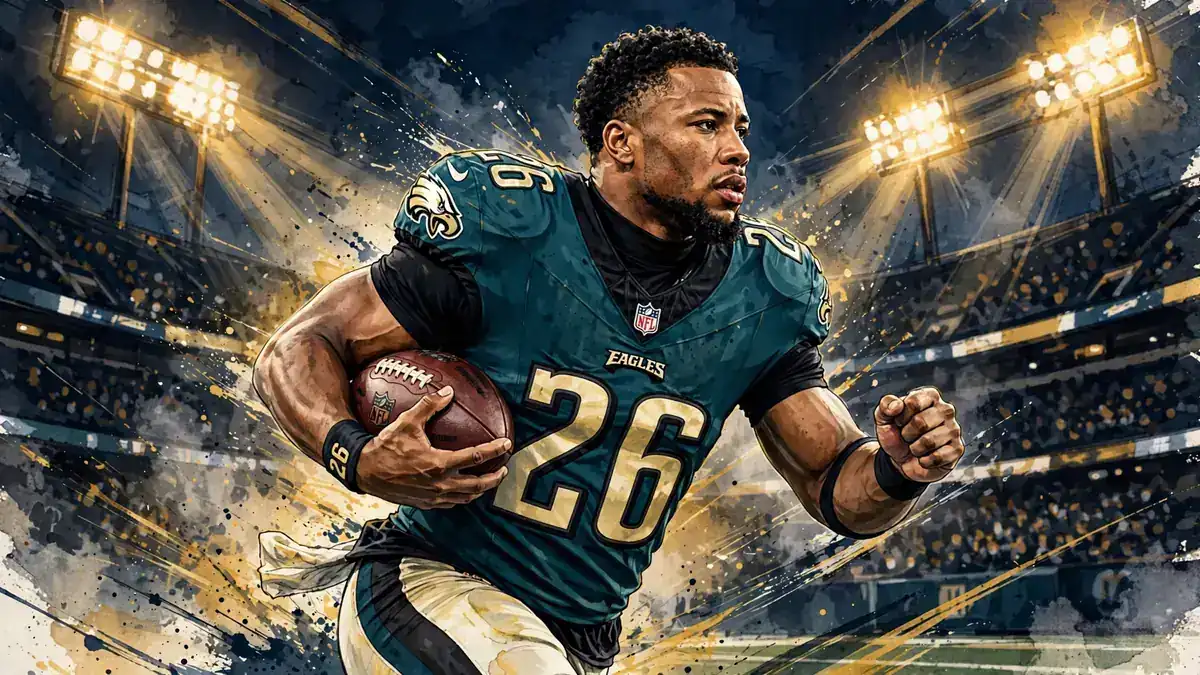
Table of Contents
- Quick Facts
- From the Bronx to Bethlehem
- Whitehall High School: The Making of a Star
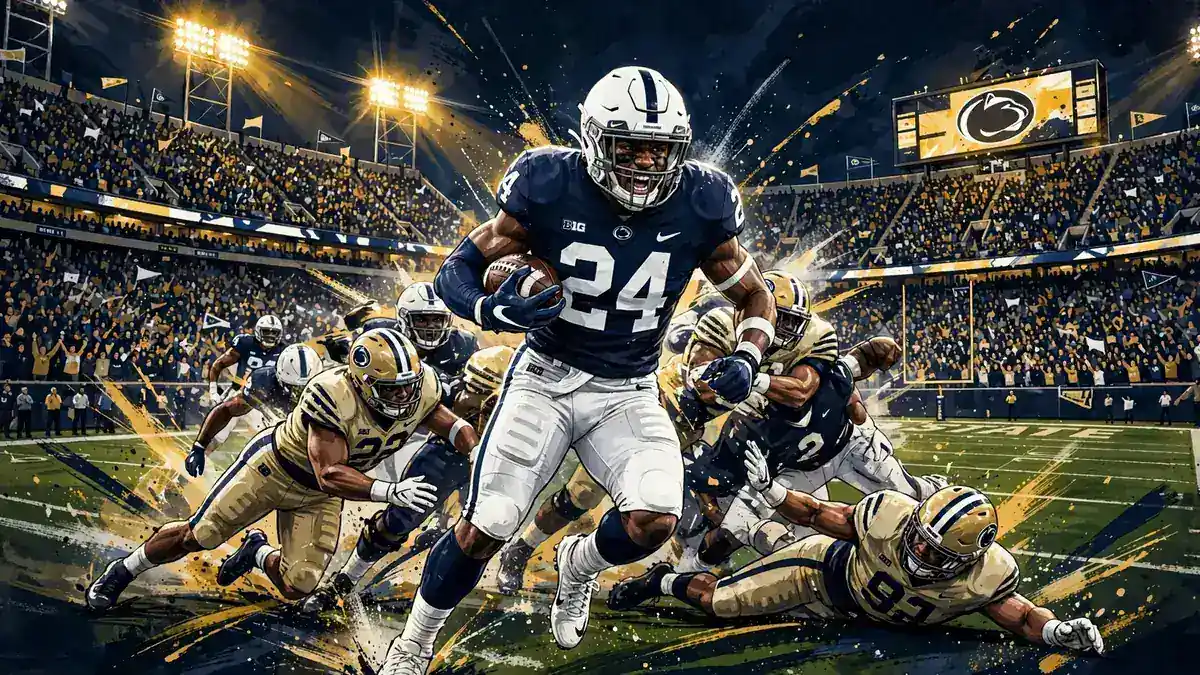
- Penn State: Three Seasons That Made a Star
- The 2018 NFL Draft and Rookie of the Year
- Six Seasons with the New York Giants
- The Philadelphia Gamble: March 2024
- The 2024 Season: 2,005 Yards and a Record
- Super Bowl LIX on His 28th Birthday
- The Extension That Reset the Running Back Market
- The Money: Contracts, Endorsements and Investments
- Net Worth in 2026
- Playing Style: What Makes Barkley Different
- Personal Life: Anna Congdon and Family
- Controversies and Public Scrutiny
- Records and Awards
- Frequently Asked Questions
- Final Thoughts
- Sources and Reporting
Quick Facts
| Full Name | Saquon Rasul Quevis Barkley |
|---|---|
| Date of Birth | February 9, 1997 |
| Birthplace | The Bronx, New York, United States |
| Age | 29 (as of November 2026) |
| Height / Weight | 6 ft 0 in (1.83 m) / 232 lbs (105 kg) |
| Position / Number | Running back, No. 26 |
| Current Team | Philadelphia Eagles (2024–present) |
| College | Penn State University (2015–2017) |
| NFL Draft | 2018, 1st round, 2nd overall pick (New York Giants) |
| Estimated Net Worth | $30–32 million (as of 2026; see adjudication below) |
| Career NFL Earnings | Roughly $80 million in salary through the 2025 season (Pro Football Network, sportDA) |
| Current Contract | Two-year, $41.2 million extension signed March 2025 ($36 million guaranteed); under contract through 2028 |
| Primary Income Sources | NFL salary and bonuses; endorsements (Nike, Pepsi, Toyota, Visa, Dunkin’); investments |
| Partner | Anna Congdon (engaged February 2025) |
| Children | Daughter Jada Clare Barkley (born April 2018); son Saquon Barkley Jr. (born September 2022) |
| Career Highlights | Super Bowl champion (LIX), AP NFL Offensive Player of the Year (2024), NFL Offensive Rookie of the Year (2018), 3× Pro Bowl, First-team All-Pro (2024) |
From the Bronx to Bethlehem
Saquon Rasul Quevis Barkley was born on February 9, 1997, in the Bronx, New York, the son of Alibay Barkley, a boxer, and Tonya Johnson. His first name, pronounced SAY-kwon, was chosen by his parents and has followed him from a Bronx childhood to the biggest stages in American football. Athletic ability ran through the family: his father boxed, and his older brother Alibay Jr. was a talented baseball player at George Washington High School in New York City who was drafted by a Major League Baseball team.
The defining move of Barkley’s childhood came in 2001, when he was four years old. His family left the Bronx for Bethlehem, Pennsylvania, in the Lehigh Valley, looking for a safer and more suburban place to raise their children. The family eventually settled in Coplay, a small borough near Allentown. It was a move Barkley has credited many times since — the Lehigh Valley gave him space, structure and a football culture that the Bronx could not offer at that age.
Growing up, Barkley was a New York Jets fan who idolised running back Curtis Martin, the Hall of Famer whose patient, upright running style he would later echo in his own game. He played multiple sports as a boy, and the athleticism that would later make him famous — the balance, the jumping ability, the quick feet — was visible early. Teachers and coaches in the Lehigh Valley remember a kid who was fast before he was strong, and strong before he was big.
The family move also shaped Barkley’s outlook in a way that still shows in his public life. He has spoken about the Bronx as home and Pennsylvania as the place that raised him, and he has kept ties to both. When his career took him back to the New York area with the Giants, and later to Philadelphia, he was playing within a few hours of the two places that made him.
Whitehall High School: The Making of a Star
Barkley attended Whitehall High School in Whitehall Township, Pennsylvania, which plays in the Eastern Pennsylvania Conference — a league known nationally for producing NFL talent. At Whitehall he was a three-sport athlete, excelling in football, basketball and track, but football was where his future lay.
His high school numbers were eye-catching. As a senior he ran for more than 1,800 yards and scored 28 touchdowns, and over his career he piled up yardage that put him among the best running backs in Pennsylvania history. College recruiters noticed early: he was rated a four-star prospect, and the scholarship offers stacked up from across the country.
He chose Penn State, a decision that tied him to a programme rebuilding its reputation after the Sandusky scandal and the NCAA sanctions that followed. When Barkley arrived in State College in 2015, the Nittany Lions were still climbing back. By the time he left, he was the most famous player in college football.
Whitehall has kept its connection to Barkley. His high school coach and the Lehigh Valley media have followed every step of his career, and local coverage of his record-breaking 2024 season treated it as a hometown story as much as a national one. The Lehigh Valley public media outlet covered his Super Bowl record in detail, a reminder that for a corner of Pennsylvania, Barkley’s success is personal.
Penn State: Three Seasons That Made a Star
Barkley needed no adjustment period at Penn State. As a true freshman in 2015 he ran for 1,076 yards and seven touchdowns, setting the school record for rushing yards by a freshman. He followed it with 1,496 yards and 18 touchdowns as a sophomore in 2016, and 1,271 yards and 18 touchdowns as a junior in 2017. Across three seasons he totalled 3,843 rushing yards and 43 rushing touchdowns, plus 1,195 receiving yards and eight receiving touchdowns — 5,557 all-purpose yards in all.
The awards piled up just as fast. He was twice named Big Ten Offensive Player of the Year (2016 and 2017), twice the Ameche–Dayne Running Back of the Year, and a consensus All-American in 2017, when he also won the Paul Hornung Award as the nation’s most versatile player. In the 2017 Heisman Trophy voting he finished fourth with 304 votes, behind Baker Mayfield, Bryce Love and Lamar Jackson — the highest finish for a Penn State player in years.
What set Barkley apart in college was not one skill but the combination. He could run between the tackles, catch passes out of the backfield, return kicks and, famously, leap clean over defenders. The hurdle became his signature: a running back who treated a would-be tackler as a piece of furniture to step over. Defences had no clean answer, because the same player who could outrun a secondary could also lower his shoulder and finish a run through contact.
His junior season ended with a decision that surprised nobody: he would forgo his senior year and enter the 2018 NFL Draft. He left Penn State as one of the most decorated players in school history, and the draft conversation immediately centred on whether a running back — a position the league had spent a decade devaluing — was worth the second overall pick.
The 2018 NFL Draft and Rookie of the Year
The New York Giants answered the question about Barkley’s draft value by taking him second overall in the 2018 NFL Draft, behind only quarterback Baker Mayfield. It was the highest a running back had been drafted in years, and the Giants’ general manager Dave Gettleman defended the pick by calling Barkley a “gold jacket” player — a future Hall of Famer. The pressure that comes with that kind of label would have flattened many rookies. Barkley wore it lightly.
He signed a fully guaranteed four-year rookie contract worth $31.2 million, including a signing bonus of just over $20.7 million. Two days before the draft, his life had already changed in a bigger way: his daughter Jada Clare was born on April 24, 2018. He has said since that becoming a father two days before becoming a professional football player sharpened everything about how he approached the job.
His rookie season justified the pick. Barkley ran for 1,307 yards and 11 touchdowns, caught 91 passes — an NFL record for receptions by a rookie running back — for 721 yards, and totalled 2,028 yards from scrimmage with 15 touchdowns overall. He was named NFL Offensive Rookie of the Year, made the Pro Bowl and the PFWA All-Rookie Team, and set a Giants franchise record for receptions by a rookie. The Giants finished 5–11, but they had found the centrepiece of their offence.
The numbers only tell part of the story. Barkley’s rookie year produced a highlight reel that travelled far beyond Giants fans: long touchdown runs, one-handed catches, hurdles over defenders. He looked like a player built in a laboratory for the modern game — big enough to run inside, fast enough to run outside, and skilled enough to line up as a receiver.
Six Seasons with the New York Giants
The six seasons that followed were a study in contrast between individual brilliance and team frustration. Barkley was often the best player on a bad team, and his body paid the price for it.
In 2019 he missed three games with a high ankle sprain but still ran for 1,003 yards. In 2020 his season ended in Week 2 against the Chicago Bears, when he tore the ACL in his right knee. The injury cost him the rest of that season and shaped the next two years: he returned in 2021 to a reduced workload, running for 593 yards in 13 games as the Giants managed his knee and his confidence.
The comeback came in 2022. Fully healthy, Barkley ran for 1,312 yards and 10 touchdowns, caught 57 passes, made his second Pro Bowl and carried the Giants to the playoffs, where they beat the Minnesota Vikings in the wild-card round before losing to the Eagles. It was the only playoff appearance of his Giants career, and it was also the season that set up the contract fight that would end his time in New York.
After 2022 the Giants placed the franchise tag on Barkley rather than giving him the long-term deal he wanted. He played the 2023 season on the one-year tag, worth around $10.1 million, and ran for 962 yards with 10 total touchdowns on a team that finished 6–11. The two sides talked about an extension, but the numbers never met. Running backs across the league were discovering the same hard truth that year: teams no longer paid the position the way they once had, and even a star with Barkley’s resume could not get a market deal from the team that drafted him.
When free agency opened in March 2024, the Giants let him walk. Barkley has been open about the hurt of that ending — he wanted to stay a Giant for his whole career — and about the chip on his shoulder it left. The next team to sign him would get a motivated player with something to prove. It happened to be the Giants’ most bitter rival.
His Giants totals tell the story of those six years: 5,211 rushing yards, 35 rushing touchdowns, 288 receptions and more than 7,300 yards from scrimmage, across 74 games. The individual production was never the problem. The team around him was.
The Philadelphia Gamble: March 2024
On March 11, 2024, Barkley agreed to a three-year, $37.75 million contract with the Philadelphia Eagles, the team Giants fans love to hate. The deal included $26 million guaranteed and an $11.6 million signing bonus, at an average of $12.6 million a year — the third-highest average among running backs at the time, behind Christian McCaffrey and Jonathan Taylor. The reaction in New York was fury; the reaction in Philadelphia was disbelief that a rival had handed them a star.
The fit made football sense. The Eagles had the best offensive line in the league, a dual-threat quarterback in Jalen Hurts who kept defences honest, and a pair of elite receivers in A.J. Brown and DeVonta Smith who stopped teams from loading the box. Barkley had spent six years running behind an average line for a team that opponents could stack up against. Now he would run behind the line that had powered the Eagles to a Super Bowl two seasons earlier.
The debut was a statement. In his first game as an Eagle, a season opener against the Green Bay Packers in São Paulo, Brazil, Barkley scored three touchdowns. The message was unmistakable: the player the Giants had decided was not worth a long-term deal was going to be a problem for them twice a year.
What followed was beyond even the optimistic projections. Week by week, Barkley stacked up long runs, and the Eagles kept winning. By midseason the question was no longer whether the signing had worked, but how far it could go.
The 2024 Season: 2,005 Yards and a Record
Barkley’s 2024 regular season ended with 2,005 rushing yards — the ninth running back in NFL history to reach 2,000 yards in a season, and an Eagles franchise record. He averaged 5.8 yards per carry, led the league in rushing, and totalled 2,283 yards from scrimmage. He scored seven touchdowns of 60 or more yards, including the postseason, an NFL record for a single season.
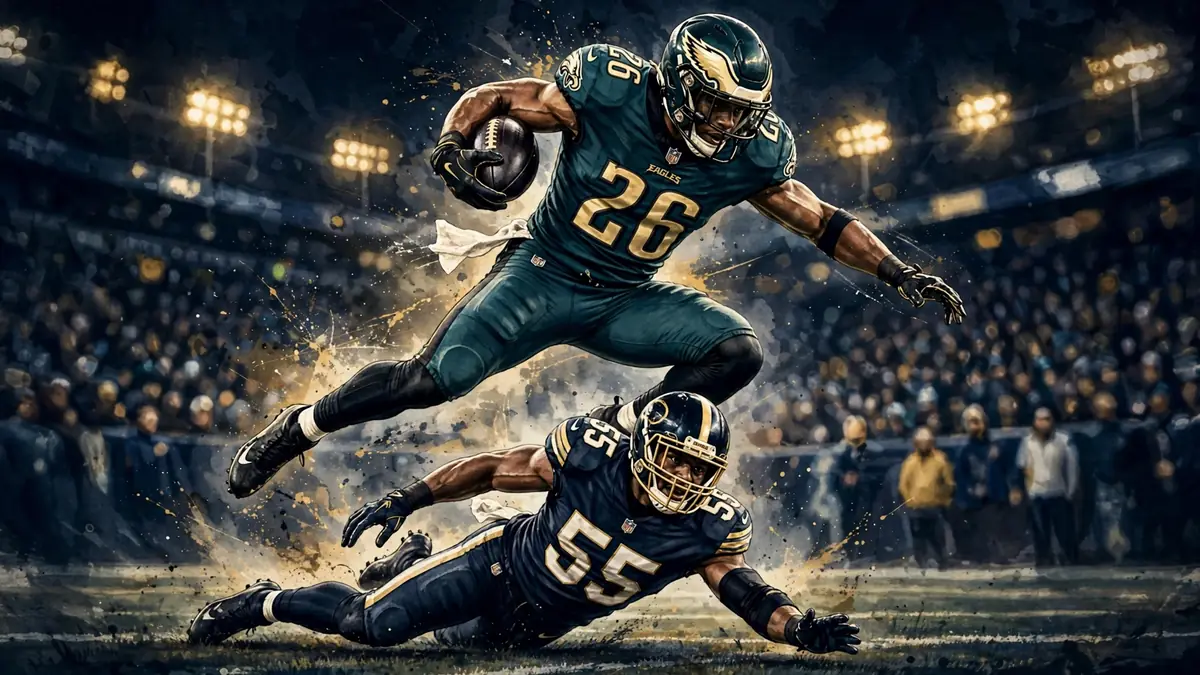
The signature moment came in November against the Jacksonville Jaguars, when Barkley hurdled a defender backwards — a reverse hurdle that instantly became one of the most replayed plays of the decade. It was the Penn State hurdle, perfected, executed on a professional field against a professional defence, and it summed up what made his season special: the same player who could grind out four yards on third-and-three could also do things no other back in the league could attempt.
He finished the regular season 101 yards short of Eric Dickerson’s single-season record of 2,105 yards, set in 1984. The Eagles rested him in the final game of the regular season with the playoffs already secured, a decision that traded the record for health. It was the right call, because the postseason gave him a bigger one.
In the playoffs Barkley kept producing: 499 rushing yards across the Eagles’ run to the Super Bowl, including 205 yards in the divisional round against the Los Angeles Rams in the snow. He became only the second player in NFL history, alongside Terrell Davis, to rush for at least 400 yards and five touchdowns in a single postseason.
By the time the Eagles reached the Super Bowl, Barkley needed 30 yards to pass Davis’s mark of 2,476 rushing yards in a full season, regular season and playoffs combined. He would get it on the biggest stage of all.
Super Bowl LIX on His 28th Birthday
Super Bowl LIX was played on February 9, 2025 — Barkley’s 28th birthday. The Eagles faced the Kansas City Chiefs, the two-time defending champions, in New Orleans. Barkley himself had a quiet game by his standards: 57 rushing yards and 40 receiving yards, as the Chiefs’ defence sold out to stop him and quarterback Jalen Hurts picked them apart through the air.
But the quiet game still made history. With a two-yard run late in the second quarter, Barkley passed Terrell Davis’s record for rushing yards in a single season including the postseason, finishing the year with 2,504 yards — a mark later recognised by Guinness World Records. He also set the record for scrimmage yards in a full season, with 2,857. The Eagles won 40–22, and Barkley held his young daughter in the confetti as he finally got his hands on the Lombardi Trophy.
The victory made him the third player in NFL history to lead the league in rushing and win the Super Bowl in the same season, after Davis and Emmitt Smith. It also settled the argument that had followed him since the draft: he was named the AP NFL Offensive Player of the Year for 2024, the first running back to win the award since Derrick Henry in 2020.
For a player who had spent six seasons on a team that won one playoff game, the speed of the change was startling. In his first season in Philadelphia he had won a rushing title, an Offensive Player of the Year award and a Super Bowl. The Giants, meanwhile, finished 3–14.
The Extension That Reset the Running Back Market
Less than a month after the Super Bowl, on March 4, 2025, the Eagles signed Barkley to a two-year, $41.2 million extension, with $36 million fully guaranteed at signing and up to $15 million more available in incentives. The deal’s average annual value of $20.6 million made him the first running back in NFL history to average more than $20 million a year, moving him past Christian McCaffrey at the time.
The extension folded into his original three-year deal, keeping him under contract with the Eagles through 2028. Its structure tells the story of the market: $16.75 million guaranteed for the 2026 season, with a cap number of $9.88 million, while only $2.5 million of his 2027 salary is guaranteed and the cap number rises to about $13.06 million. The Eagles get flexibility in the later years; Barkley got the guarantee and the headline number now.
The deal also mattered beyond Philadelphia. For years, running backs had argued that the league’s pay structure undervalued them — that teams would draft them high, run them into the ground on rookie deals, and replace them rather than pay a second contract. The franchise-tag standoff of 2023, when Barkley, Josh Jacobs and Tony Pollard were all tagged in the same summer, had become the symbol of that fight. Barkley’s extension did not fix the market for every back, but it set a new ceiling, and it was a direct reward for the season that proved a great running back could still change a team’s fortunes.
His scheduled 2026 cash compensation was $16.75 million, including a $15.45 million option bonus and a $1.3 million base salary, according to Celebrity Net Worth’s contract reporting. Counting the full 2026 season, his cumulative NFL cash earnings reached roughly $97 million on that site’s tally — a figure that explains part of the net worth confusion discussed below.
The Money: Contracts, Endorsements and Investments
Barkley’s wealth comes from three streams: NFL contracts, endorsements and investments. The contracts are the foundation, and they are public record, which makes them the easiest part of his finances to track.
The career contract timeline runs like this. His fully guaranteed rookie deal with the Giants in 2018 was worth $31.2 million over four years. The franchise tag in 2023 paid about $10.1 million for a single season. The Eagles’ three-year deal in March 2024 was worth $37.75 million with $26 million guaranteed. The two-year extension in March 2025 added $41.2 million in new money with $36 million guaranteed. Added together, the headline value of his NFL contracts exceeds $120 million, though headline value is not the same as money received: guarantees, incentives and the years he actually plays determine the real total.
What he has actually banked is a smaller, still large number. Pro Football Network puts his career NFL earnings at roughly $79.7 million, and sportDA puts the figure close to $80 million. Celebrity Net Worth’s October 2026 update counts about $96.7 million including the full 2026 season’s scheduled cash. The gap between those tallies is a counting choice — whether the current season’s money is treated as earned — not a disagreement about the contracts themselves.
Endorsements are the second stream, and Barkley’s are unusually strong for a running back. Sports marketing analyst Bob Dorfman told Front Office Sports that Barkley earns an estimated $10 million a year from endorsements, with Nike as the anchor partner. Nike signed him early in his career, and his brand list has grown to include Pepsi, Toyota, Visa, Dunkin’, Bose and Old Spice. He has also fronted campaigns away from the field: in 2025 he starred in a Super Bowl commercial for the financial technology company Ramp, in which he is an investor.
Investments are the third stream, and the hardest to verify, because private stakes are not public record. The Profile has reported that Barkley holds a portfolio worth around $13.2 million spread across the S&P 500 and more than ten startups, including the AI company Anthropic, Elon Musk’s neurotechnology firm Neuralink, the prediction market Polymarket and Peter Thiel’s Founders Fund venture vehicle. Those names should be read as reported, not confirmed: startup valuations move, private stakes are rarely disclosed, and the figures come from a single profile rather than filings. What is on firmer ground is the direction of travel — Barkley has spoken publicly about investing in Bitcoin through the Strike app, and in 2021 he announced plans to convert his endorsement income into Bitcoin. The Profile has reported that Bitcoin’s price rise since then turned that income stream into a far larger asset position, but the exact numbers are private and should not be treated as fact.
The pattern is clear enough without precise private numbers: a player who earned his first big money at 21, watched the running back market squeeze his peers, and decided early that salary alone would not be his whole financial story.
How the contracts stack up: Barkley’s $20.6 million average on his 2025 extension made him the highest-paid running back in the league at signing. For comparison, Christian McCaffrey’s four-year, $64 million extension with Carolina in 2020 reset the market then; Jonathan Taylor’s three-year, $42 million extension with Indianapolis in 2023 set the bar Barkley was measured against; and Derrick Henry’s two-year, $16 million deal with Baltimore in 2024 showed how far the market had fallen for veteran backs. Barkley’s deal stands out because he got it at 28, after a franchise-tag year, on the back of one historic season.
Net Worth in 2026
As of November 2026, Saquon Barkley’s net worth is estimated at $30–32 million. That range is anchored by the outlets that publish dated, sourced estimates: Parade put the figure at around $30 million in September 2026, Pro Football Network at around $32 million, Surprise Sports at $32 million in an October 2026 update, and sportDA at $30 million in July 2026. All four agree on the shape of the story — roughly $80 million in career NFL earnings, minus taxes, agent fees and living costs, plus endorsement income — even if they round to slightly different totals.
One source disagrees sharply, and honesty requires saying so. Celebrity Net Worth’s Barkley page, updated on October 28, 2026, lists his net worth at $100 million, citing cumulative cash earnings approaching $97 million through the full 2026 season. That is a large jump from the $30 million the same site published earlier in 2026, which Parade cited in September. The higher figure appears to count future and current-season contract cash as wealth already held, rather than net assets after tax and expenses. This article does not adopt it: no other independent outlet supports a $100 million figure, and the consensus range of $30–32 million is the better-supported estimate. Readers who see the $100 million number elsewhere should know it exists, and why this page treats it as an outlier.
| Source | Estimate (2026) | Basis |
|---|---|---|
| Parade (September 2026) | ~$30 million | Citing Celebrity Net Worth’s earlier figure |
| Pro Football Network | ~$32 million | Career earnings ~$79.7 million, after tax and expenses |
| Surprise Sports (October 2026) | $32 million | Contracts plus endorsements |
| sportDA (July 2026) | $30 million | Career earnings near $80 million; endorsements ~$10 million a year |
| Celebrity Net Worth (October 2026) | $100 million | Outlier — appears to count full contract cash through 2026; not adopted here |
The range will keep moving. Barkley is under contract through 2028, with roughly $35 million in scheduled cash for 2027 and 2028 before incentives, according to Celebrity Net Worth’s contract pages. If he plays through the deal healthy, the $30–32 million figure will rise. If injuries or a release intervene, it will not. What the range captures is a snapshot: a 29-year-old running back at the peak of his earning power, with the richest contract at his position and an endorsement portfolio that pays even in the offseason.
Playing Style: What Makes Barkley Different
Scouts have used the same word for Barkley since high school: complete. Most great running backs have a calling card — power, speed, receiving skill. Barkley’s calling card is that he has all of them, and the tape backs it up.
The power is measurable. At the 2018 NFL Combine he bench-pressed 225 pounds 29 times, a total that would have been respectable for an offensive lineman, and his 41-inch vertical jump was among the best ever recorded by a running back. He runs through arm tackles, finishes runs falling forward, and has the lower-body strength to break tackles that stop other backs cold.
The speed is just as real. He ran the 40-yard dash in 4.40 seconds at the combine, and his long runs in the NFL — the 70- and 80-yard touchdowns that defined his 2024 season — show a back who gets faster the further he runs. Seven touchdowns of 60 or more yards in a single season, including the playoffs, is a record for a reason: most backs get one or two such runs in a career.
The receiving skill is what separates him from pure rushers. His 91 catches as a rookie remain an NFL record for a rookie running back, and he has 365 career receptions for 2,692 yards through Week 8 of the 2026 season. Defences cannot treat him as a runner only, because the Eagles can split him out wide and throw him the ball like a receiver.
And then there is the balance. Barkley’s hurdle — the full-extension leap over a defender, done forwards at Penn State and backwards against Jacksonville in 2024 — is not a trick. It is the visible result of a player with unusual body control and confidence in the air. Coaches sometimes wince at the risk, but the play has become his signature because it works.
The knock on Barkley, when there has been one, is durability. The 2020 ACL tear cost him a season, and ankle injuries cost him games in 2019 and 2021. The 2024 season answered the durability question in the best possible way — he played 16 games, carried the ball 345 times in the regular season and stayed healthy through a four-game playoff run — but at 29, with more than 1,800 career carries, workload is the number the Eagles will keep watching.
Personal Life: Anna Congdon and Family
Barkley’s personal life has been steady where his professional life has been turbulent. He met Anna Congdon at Penn State, at a Pi Kappa Phi party in December 2016, and the two began dating in January 2017. Congdon was a student at Penn State, and their relationship grew alongside his rise from college star to the second pick in the draft.
Their daughter, Jada Clare Barkley, was born on April 24, 2018 — two days before the NFL Draft. Their son, Saquon Barkley Jr., whom they call S.J., was born in September 2022. Barkley has said that fatherhood changed how he thinks about every decision, from contracts to investments, and the image of him holding Jada in the Super Bowl confetti became one of the defining pictures of the 2024 season.
In February 2025 Barkley told People magazine that he and Congdon were engaged, revealing that he had proposed about six months earlier and that they had kept the news private. As of November 2026 there has been no public announcement of a wedding, and Congdon is accurately described as his fiancée, not his wife — a distinction several outlets have had to correct after using the wrong word.
Congdon keeps a lower public profile than her fiancé. She is a social media personality with brand partnerships of her own, including work with Savage X Fenty, but her net worth has never been publicly disclosed, and figures attached to her name online are speculation rather than reporting. This article does not repeat them.
Off the field, Barkley has built a public profile that extends beyond football. The Prime Video documentary “Saquon,” released in 2025 and executive produced by Martin Scorsese, followed his move from the Giants to the Eagles and his historic season. He has done community work in both New York and Pennsylvania, and he has spoken about wanting his post-football life to include business and media — the investments in Ramp and other startups are the early shape of that plan.
He is also active on social media, where his Instagram handle is @saquon, and he has a speaking profile that lists him for corporate appearances as a Super Bowl champion and former Offensive Player of the Year.
Controversies and Public Scrutiny
Barkley’s career has been remarkably free of the off-field trouble that follows some NFL stars. There are no arrests, no league suspensions and no conduct investigations on his record. The scrutiny he has faced has been of a different kind: the contract fight, the rivalry move, and a brief social media storm involving his fiancée.
The contract standoff with the Giants in 2023 was the most public dispute of his career. Barkley skipped parts of the offseason programme while the two sides negotiated, and when the deadline for a long-term deal passed he signed the franchise tag — a one-year deal that paid well but offered no security. The episode became part of a league-wide argument about running back pay, and Barkley was one of its most visible faces. He handled it without public attacks on the team, and when he left for Philadelphia he spoke about the Giants with more sadness than anger.
The move to the Eagles brought its own heat. Giants fans burned his jersey, the team’s co-owner John Mara said on the “Hard Knocks” documentary that he would lose sleep if Barkley signed with Philadelphia, and the first Giants–Eagles game of the 2024 season was circled as a grudge match. Barkley answered on the field, running for 176 yards and a touchdown in a 28–3 Eagles win at MetLife Stadium.
In February 2025, when the engagement was announced, old tweets from Congdon’s teenage years resurfaced and drew criticism online. She deleted the posts, locked her accounts temporarily and issued an apology, saying the words did not reflect the person she is today. The episode lasted days and had no effect on Barkley’s standing with the Eagles, but it is a reminder of how little privacy surrounds the family of a star athlete.
There is also the question that follows every running back who signs a big second contract at 28: was the 2024 season a peak, or a new level? The 2025 season did not repeat the 2,005-yard mark — the career totals tell the story, with 8,630 rushing yards through Week 8 of the 2026 season against 7,216 at the end of 2024, meaning 1,414 yards across the whole of 2025 and the first eight weeks of 2026 combined. That is a comedown from a historic year, but it is also normal: no running back sustains a 2,000-yard pace. The honest read is that Barkley’s value now rests on the whole package — the receiving, the pass protection, the leadership — and not on repeating a once-in-a-generation rushing total.
Records and Awards
| Year | Honour / Record |
|---|---|
| 2016, 2017 | Big Ten Offensive Player of the Year |
| 2017 | Consensus All-American; Paul Hornung Award; 4th in Heisman Trophy voting (304 votes) |
| 2018 | NFL Offensive Rookie of the Year; Pro Bowl; PFWA All-Rookie Team; NFL record for receptions by a rookie running back (91) |
| 2022 | Pro Bowl (second selection) |
| 2024 | AP NFL Offensive Player of the Year; First-team All-Pro; Pro Bowl (third selection); NFL rushing yards leader (2,005); Bert Bell Award |
| 2024 season | Most rushing yards in a single season including postseason: 2,504 (Guinness World Records); most scrimmage yards in a full season: 2,857; ninth running back to reach 2,000 rushing yards in a regular season |
| 2024 season | Most touchdowns of 60+ yards in a single season (including postseason): 7 |
| 2025 | Super Bowl champion (LIX); third player to lead the NFL in rushing and win the Super Bowl in the same season |
| 2025 | First running back in NFL history to average more than $20 million a year on a contract |
Through Week 8 of the 2026 season, Barkley’s career NFL totals stood at 8,630 rushing yards and 57 rushing touchdowns, with 365 receptions for 2,692 yards and 16 receiving touchdowns, according to Wikipedia’s career statistics table, sourced from Pro Football Reference. He has played 8 NFL seasons and remains the Eagles’ lead running back under contract through 2028.
Frequently Asked Questions
What is Saquon Barkley’s net worth in 2026?
Saquon Barkley’s net worth is estimated at $30–32 million as of November 2026. Parade puts it at around $30 million, while Pro Football Network and Surprise Sports put it at $32 million. The range reflects roughly $80 million in career NFL earnings plus about $10 million a year in endorsements, after taxes, agent fees and living costs. Celebrity Net Worth’s October 2026 page lists $100 million, but that is an outlier no other outlet supports, and this article does not adopt it.
How old is Saquon Barkley?
Saquon Barkley was born on February 9, 1997, in the Bronx, New York. He is 29 years old as of November 2026. He won Super Bowl LIX on February 9, 2025 — his 28th birthday — when the Eagles beat the Kansas City Chiefs 40–22.
What teams has Saquon Barkley played for?
Barkley has played for two NFL teams: the New York Giants, who drafted him second overall in 2018 and kept him for six seasons through 2023, and the Philadelphia Eagles, who signed him as a free agent in March 2024. He played college football at Penn State from 2015 to 2017 before entering the NFL.
How much is Saquon Barkley’s contract with the Eagles worth?
Barkley first signed a three-year, $37.75 million deal with the Eagles in March 2024, with $26 million guaranteed. In March 2025 he signed a two-year, $41.2 million extension with $36 million fully guaranteed, at an average of $20.6 million a year — the first running back contract in NFL history to average more than $20 million annually. He is under contract through 2028.
Did Saquon Barkley break the single-season rushing record?
Yes — for a full season including the playoffs. Barkley finished 2024 with 2,504 rushing yards (2,005 in the regular season plus 499 in the postseason), passing Terrell Davis’s 1998 mark of 2,476. The record was confirmed in Super Bowl LIX and later recognised by Guinness World Records. He also set the full-season scrimmage yards record with 2,857. Eric Dickerson’s regular-season record of 2,105 yards still stands.
Is Saquon Barkley married?
No. Barkley is engaged to his longtime partner Anna Congdon, whom he met at Penn State in 2016. He confirmed the engagement to People magazine in February 2025, saying he had proposed about six months earlier. The couple have two children — daughter Jada Clare, born in April 2018, and son Saquon Jr., born in September 2022 — but no wedding has been publicly announced.
How tall is Saquon Barkley?
Saquon Barkley is 6 feet tall (1.83 m) and weighs 232 pounds (105 kg). His size is part of what makes him unusual: he has the build of a power back, the 4.40-second 40-yard speed of a breakaway runner, and the receiving skills of a third-down specialist.
What is Saquon Barkley’s salary in 2026?
Barkley’s scheduled 2026 cash compensation is $16.75 million, including a $15.45 million option bonus and a $1.3 million base salary, under his extension with the Eagles. His career NFL earnings stand at roughly $80 million in salary through the 2025 season, according to Pro Football Network and sportDA, with endorsements adding an estimated $10 million a year.
Final Thoughts
Saquon Barkley’s biography is a story about timing — and about what happens when talent meets a second chance. The Giants years showed what he could do with little help around him. The Eagles years showed what he could do with a great offensive line, a balanced offence and a team built to win now. The difference between the two halves of his career is the difference between a star and a champion, and it is why his 2024 season will be remembered long after the contract numbers fade.
The money tells the same story in numbers. A $31.2 million rookie deal, a $10.1 million franchise-tag year, a $37.75 million free-agent contract and a $41.2 million extension that made him the first $20 million-a-year running back. A net worth of $30–32 million at 29, with more than $35 million in scheduled contract cash still to come. An endorsement portfolio worth about $10 million a year and an investment habit that started early. None of it was guaranteed when he tore his ACL in 2020, or when the Giants let him walk in 2024. He earned the second act the hard way.
What comes next depends on the one thing no running back controls: health. Barkley is under contract through 2028, the Eagles remain contenders, and his game — power, speed, receiving, balance — ages better than that of a pure speed back. If he stays healthy, the record books and the earnings will keep growing. If not, the 2024 season alone has already secured his place: a 2,000-yard rusher, a Super Bowl champion on his birthday, and the running back who reset the market for everyone who came after him.
Sources and Reporting
This biography is based on live research conducted in November 2026. Money figures are tied to the named sources below, and where sources disagree — most notably on net worth — the article says so and explains why one figure was chosen over another. Figures are estimates drawn from public reporting, not private financial records, and they will change as contracts pay out and new reporting appears.
- Wikipedia — Saquon Barkley (biography, career statistics through Week 8, 2026, records)
- Celebrity Net Worth — Saquon Barkley Net Worth (contract details, cash earnings; October 2026 update)
- Parade — Saquon Barkley Net Worth in 2026 (net worth estimate, contract details)
- Pro Football Network — Saquon Barkley’s Contract, Salary, and Net Worth (net worth, career earnings)
- sportDA — Saquon Barkley Net Worth 2026 (net worth estimate, career earnings by year)
- Surprise Sports — Saquon Barkley Net Worth in 2026 (net worth estimate, contract details)
- Guinness World Records — Most rushing yards in an NFL season, regular and postseason combined
- Sportsnet — Eagles’ Barkley sets single-season rushing yards record in Super Bowl LIX
- Parade — Saquon Barkley’s Girlfriend: All About Anna Congdon (engagement, children)
- Lehigh Valley Public Media — Saquon Barkley breaks NFL rushing record in Super Bowl LIX
- bet365 News — Saquon Barkley: Player Profile and Stats
- All American Speakers — Saquon Barkley (documentary, career summary)
How we estimated: Barkley’s net worth is estimated from his public NFL contracts (rookie deal $31.2 million, franchise tag ~$10.1 million, Eagles deal $37.75 million, extension $41.2 million), his reported career earnings of roughly $80 million (Pro Football Network, sportDA), and his reported endorsement income of about $10 million a year (sports marketing analyst Bob Dorfman, via Front Office Sports). The $30–32 million range is the consensus of Parade, Pro Football Network, Surprise Sports and sportDA. Celebrity Net Worth’s October 2026 figure of $100 million is noted in the article but not adopted, because it appears to count future contract cash as current wealth and no other outlet supports it. Private investments, taxes and expenses are not public, so the true figure may differ from this estimate.