Naoya Inoue, the fighter they call “The Monster,” is the most feared small man in boxing history. Born on 10 April 1993 in Zama, Japan, he has built a perfect professional record of 33 wins and no defeats, with 27 knockouts, and since May 2026 he has held the number one pound-for-pound ranking from The Ring, ESPN, the Transnational Boxing Rankings Board and BoxRec at the same time. He is one of only three men in the four-belt era to become undisputed champion in two weight classes, and the first Japanese boxer ever to sit at the top of the pound-for-pound list.
This biography follows Inoue from the home-built gym his father put together in Zama to the sold-out Tokyo Dome on 2 May 2026, when 55,000 fans watched him outpoint fellow unbeaten star Junto Nakatani in the biggest fight in Japanese boxing history. Along the way it covers the amateur career that produced 75 wins, the world titles collected across four weight classes, the money behind the fame — an estimated net worth of $7 million to $15 million, with some profiles stretching the figure to $25 million — and the quiet family life that keeps him grounded. Last updated: November 20, 2026.
| Full Name | Naoya Inoue (井上 尚弥) |
|---|---|
| Nickname | “The Monster” |
| Date of Birth | 10 April 1993 |
| Birthplace | Zama, Kanagawa, Japan |
| Height | 5 ft 5 in (165 cm) |
| Professional Record | 33–0, 27 knockouts (as of 2 May 2026) |
| Division | Super bantamweight (122 lbs), undisputed champion |
| World Ranking | No. 1 pound-for-pound (The Ring, ESPN, TBRB, BoxRec — since May 2026) |
| Estimated Net Worth (2026) | $7 million – $15 million (Surprise Sports: $7M; iFANN: $15M; BoxerWorth: $15M) |
| Career Fight Earnings | Approximately $57 million (Surprise Sports) |
| Primary Income Sources | Fight purses, Riyadh Season deal, Mizuno partnership, broadcasting |
| Spouse | Married his high-school sweetheart in December 2015; three children |
| Promoter / Gym | Ohashi Boxing Gym; promoted in the United States by Top Rank |
Table of Contents
- Early Life in Zama: A Boxing Family
- Amateur Career and the Road to the Pros
- Professional Debut and First World Titles
- The Bantamweight Reign and the World Boxing Super Series
- Undisputed in Two Divisions
- The Nakatani Night: Tokyo Dome, May 2026
- Pound-for-Pound Number One
- What Makes “The Monster” So Dangerous
- The Money: Purses, Deals and the Mizuno Shoe
- Personal Life: Family, Home and Life Outside the Ring
- Legacy and What Comes Next
- Frequently Asked Questions
- Final Thoughts
- Sources and Reporting
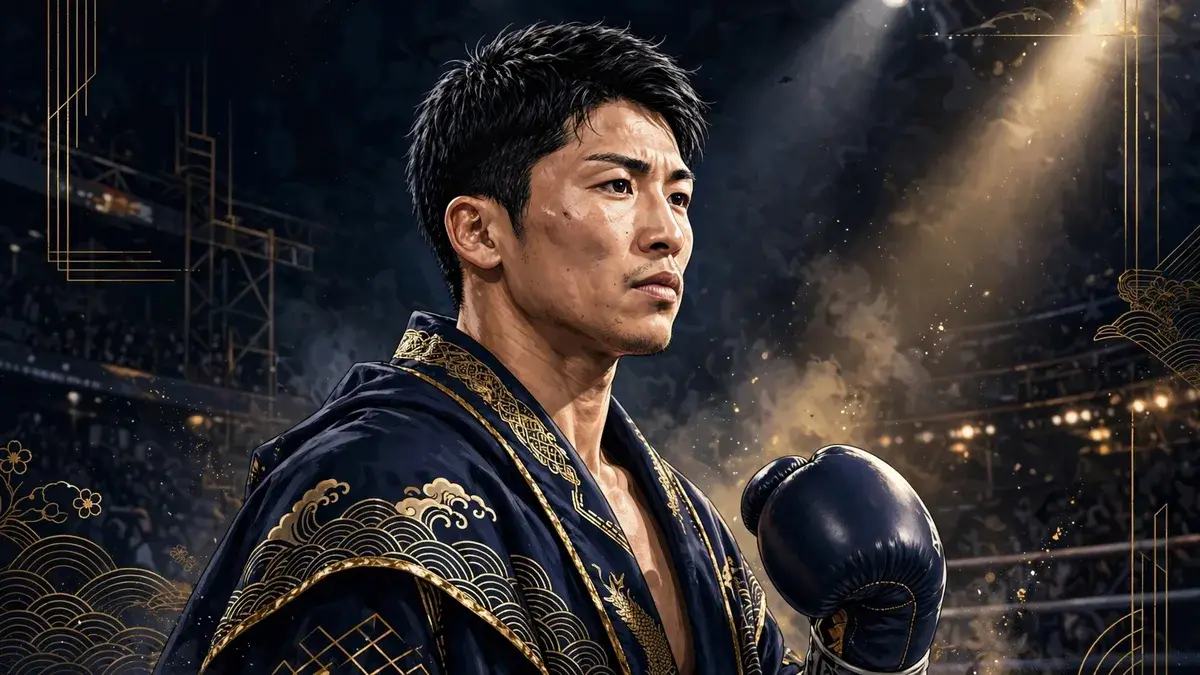
Early Life in Zama: A Boxing Family
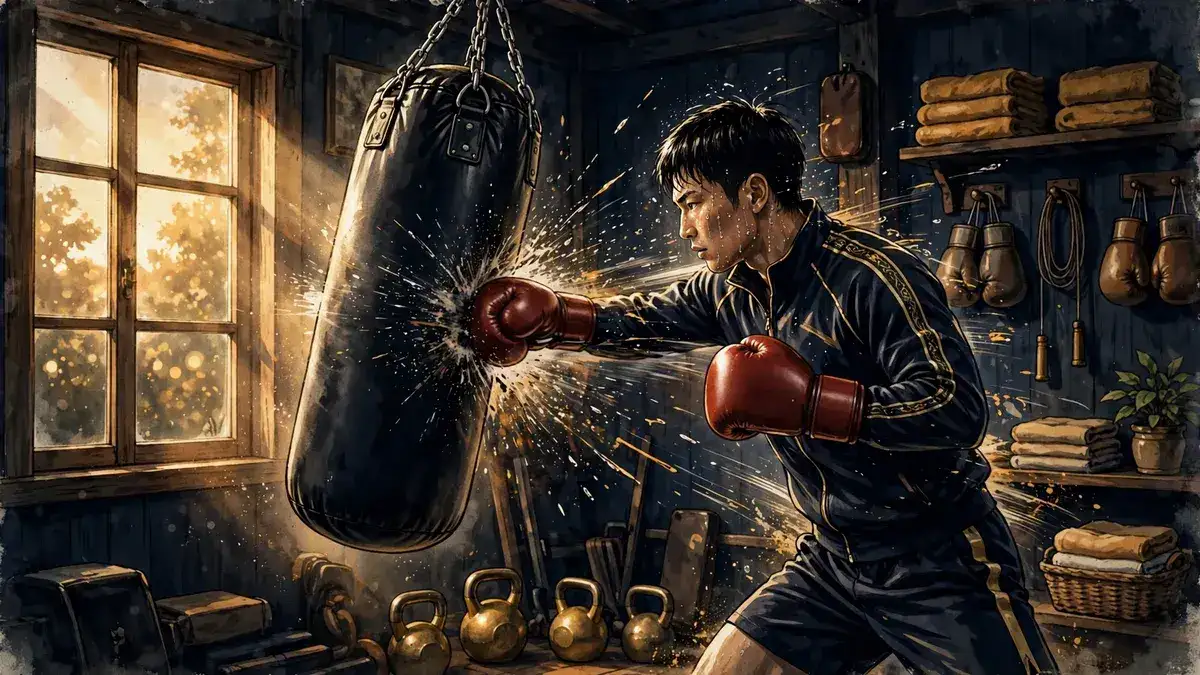
Naoya Inoue was born on 10 April 1993 in Zama, a city in Kanagawa Prefecture, Japan. Boxing was not a hobby the family picked up later in life. It was the household trade. His father, Shingo Inoue, had boxed as an amateur and then turned to coaching, and he introduced both of his sons to the sport before either boy had started elementary school. The training ground was a gym Shingo built at home, where Naoya and his younger brother Takuma learned to wrap their hands, move their feet and throw straight punches long before most children learn to ride a bicycle.
Shingo’s approach was old-fashioned and strict. The boys ran long distances, worked on the heavy bag, and drilled the same combinations until the movements became automatic. Naoya’s mother, Miho, held the family together while the gym schedule ran the week. The setup produced something rare: two brothers who would both go on to win world titles. Takuma Inoue later became a bantamweight world champion in his own right, and the two remain close, with Takuma often appearing on the same cards as his older brother.
Zama itself is an ordinary commuter city southwest of Tokyo, and Inoue has never tried to make his upbringing sound more dramatic than it was. He was not discovered on the streets or rescued by the sport. He was raised inside it, by a father who knew the game and a family that treated training as a daily routine rather than a special event. That calm, workmanlike start explains a lot about the fighter he became: no trash talk, no theatre outside the ring, and a focus on the job that has never really wavered in more than a decade as a professional.
As a schoolboy, Inoue split his time between classes and the gym, and his talent showed early. He was fast, balanced and unusually powerful for his size, and he carried himself with a quiet confidence that coaches noticed. By his mid-teens he was winning national schoolboy honours, and the path toward the professional ranks was already clear. He later made his home in Yokohama, also in Kanagawa, where he still lives and trains.
Amateur Career and the Road to the Pros
Before turning professional, Inoue built one of the strongest amateur records in recent Japanese boxing: 75 wins against 6 defeats, with 48 of those wins coming by knockout or referee stoppage, according to The Sports Grail’s profile of the fighter. The numbers matter because they show that his power was there from the start. Most amateur standouts win on points. Inoue stopped people.
His amateur honours stacked up quickly. In 2009 he won both the Japanese Interscholastic Athletic Meeting and the Japanese Junior National Championships. In 2010 he took a bronze medal at the Asian Youth Championships in Tehran, Iran, fighting older and more experienced opposition. In 2011 he won gold at the 21st President’s Cup in Jakarta, Indonesia. Each tournament added a layer to his reputation, and by the time he finished his amateur career, Japanese boxing insiders were already talking about him as a future world champion.
The amateur years also shaped his style. Japanese amateur boxing rewards clean technique, fast feet and sharp counters, and Inoue absorbed all of it while adding the punching power that would later define him. He learned to fight going forward and going backward, to slip a punch by inches rather than feet, and to finish a combination with a body shot that took the air out of an opponent. Those habits are still visible in his professional fights today: the same short, compact punches, the same balance, the same refusal to waste movement.
There was no long debate about whether to turn professional. Inoue signed with Ohashi Boxing Gym, run by former world champion Hideyuki Ohashi, one of the most respected stables in Japan. Ohashi had guided champions before and understood how to move a young fighter quickly without rushing him into fights he was not ready for. The plan worked. Inoue’s professional debut came fast, and his rise through the ranks would be faster still.
Professional Debut and First World Titles
Inoue turned professional on 2 October 2012 at the age of 19, stopping Crison Omayao in the fourth round at Korakuen Hall in Tokyo. The venue is the spiritual home of Japanese boxing, a small hall where the crowd sits close enough to hear every punch land, and Inoue announced himself there with a performance that mixed patience with sudden violence. He boxed carefully for three rounds, then ended the fight with the kind of combination that would become his signature.
What followed was one of the quickest climbs to a world title in modern boxing. In April 2014, in only his sixth professional fight, Inoue won the WBC light flyweight title by stopping Adrian Hernandez. Six fights to a world championship is almost unheard of, and it told the boxing world that Ohashi and his team believed their fighter was ready for the top level. Inoue did not disappoint. He defended the belt once, then moved up in weight.
By the end of 2014 he had claimed the WBO junior bantamweight title, stopping the long-reigning Omar Andres Narvaez in two rounds. Narvaez had held a version of the world title for years and had never been stopped. Inoue knocked him down twice and finished him before the fight had properly started. It was the moment the wider boxing world began to pay attention to a 21-year-old from Zama who was collecting belts at a pace nobody could match.
The junior bantamweight years were a period of steady, unspectacular dominance. Inoue defended the WBO title seven times between 2014 and 2018, stopping almost everyone put in front of him. The opposition was solid rather than famous, and some critics wondered whether he was being protected in Japan. The answer came when he moved up to bantamweight and entered the World Boxing Super Series, a tournament that would put him in the ring with the best fighters in the division.
The Bantamweight Reign and the World Boxing Super Series
Inoue’s move to bantamweight in 2018 changed everything. He entered the World Boxing Super Series, an eight-man tournament featuring the best 118-pound fighters on the planet, and he treated it like a personal showcase. In the quarter-final he stopped Juan Carlos Payano in 70 seconds. In the semi-final he demolished the previously unbeaten Emmanuel Rodriguez in two rounds, taking the IBF title and handing Rodriguez the first defeat of his career. Both fights were so one-sided that they raised a question nobody had an answer for: who could actually compete with this man?
The final, against Nonito Donaire in November 2019, gave the answer: Donaire could, and very nearly did. The Filipino veteran, a future Hall of Famer, hurt Inoue badly in the second round and fought him to the final bell in a fight later named the 2019 Fight of the Year. Inoue fought through a fractured orbital bone and a cut over his right eye to win a unanimous decision and lift the tournament trophy along with the WBA and IBF titles. It remains the hardest fight of his career, and the one that proved he could win a war as well as a walkover.
The rematch in June 2022 was a different story. Inoue stopped Donaire in two rounds to add the WBC bantamweight title, and in doing so became the first Japanese boxer ever ranked number one pound-for-pound by The Ring magazine. The magazine’s ranking is the most respected in the sport, and no Japanese fighter had topped it before. Inoue was 29 years old, and he was already being talked about as one of the greats of his generation.
Six months later, in December 2022, he completed the job at bantamweight. He stopped Paul Butler in the eleventh round to become the undisputed bantamweight champion, holding all four major belts at once. He was the first undisputed bantamweight champion since Enrique Pinder in 1972, a gap of fifty years. The division had been waiting half a century for someone to clean it out. Inoue did it in four years.
The Donaire lesson: Inoue’s first fight with Nonito Donaire in 2019 is the fight his team still points to when people call him unbeatable. He won it with a fractured eye socket and a cut that needed attention between rounds. Fighters who only win easily never learn how to win hurt. Inoue learned it at 26, and it has shown in every close round since.
Undisputed in Two Divisions
Having cleaned out bantamweight, Inoue moved up again in 2023, this time to super bantamweight at 122 pounds. The pattern repeated itself. In July 2023 he beat Stephen Fulton, the unbeaten WBC and WBO champion, stopping him in the eighth round to take both belts. Fulton was a slick, confident American who had never lost, and Inoue broke him down with body punches before finishing him upstairs. It was a performance that settled any argument about whether his power would travel up in weight. It did.
On 26 December 2023, Inoue stopped Marlon Tapales in the tenth round to add the WBA and IBF titles, becoming the undisputed super bantamweight champion. He was the first fighter ever to hold all four belts at 122 pounds, and only the second man in history — after Terence Crawford — to become undisputed champion in two weight classes during the four-belt era. Oleksandr Usyk has since joined that small club, but the list remains three names long. For his work across 2023, Inoue was named Fighter of the Year by The Ring, the Boxing Writers Association of America and ESPN, a clean sweep of the sport’s three biggest honours.
The defences that followed only added to the record. In May 2024 he beat Luis Nery at the Tokyo Dome, getting off the canvas in the first round — the first knockdown of his professional career — to stop the Mexican in six. In May 2025 he stopped Ramon Cardenas, a late replacement, by technical knockout. That win gave him a 23rd knockout victory in a world title fight, passing the longstanding mark held by Joe Louis. Records held by Joe Louis do not fall often. Inoue took one at 32 years old and barely mentioned it afterwards.
The Nakatani Night: Tokyo Dome, May 2026
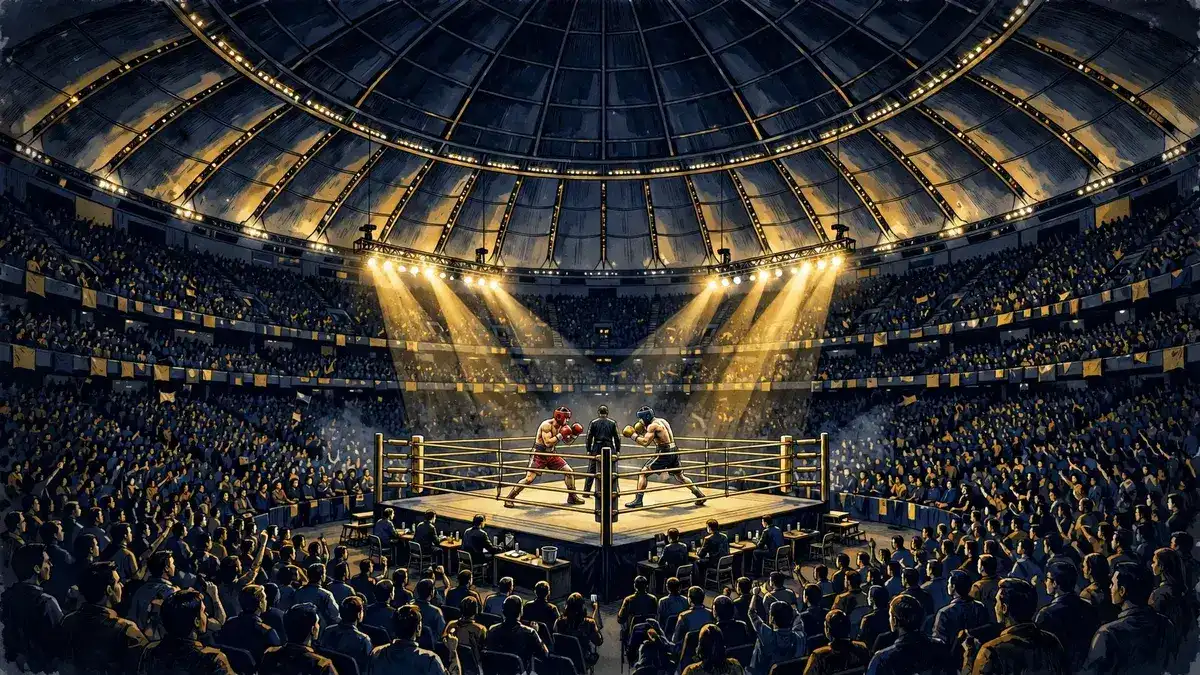
The biggest fight of Inoue’s career, and the biggest fight in Japanese boxing history, took place on 2 May 2026 at the Tokyo Dome. His opponent was Junto Nakatani, a fellow unbeaten Japanese star and a three-division world champion. Both men entered the ring at 32-0. Both were ranked among the best pound-for-pound fighters in the world. The bout had been billed for months as a meeting of Japan’s two finest boxers, and 55,000 fans filled the Dome to see it — a sellout, and the largest all-Japanese boxing event ever staged.
The fight lived up to the billing. Nakatani’s height and reach troubled Inoue early, and the challenger found his rhythm in the middle rounds, out-landing the champion over rounds eight through ten. An accidental clash of heads late in the tenth opened a cut outside Nakatani’s left eye, and Inoue went straight to work on the injury in the eleventh, throwing a fight-high 53 power punches and landing 21 of them. In the championship rounds he out-landed Nakatani 32 to 17 in power punches, pulling away when the fight hung in the balance. There were no knockdowns. The judges scored it 116-112, 116-112 and 115-113, all for Inoue.
The numbers behind the night were just as large as the occasion. The gate passed $30 million, according to BoxingNews24, and several hundred thousand domestic pay-per-view buys were reported within days. Inoue’s purse for the fight was reported at $10 million to $15 million, the biggest of his career. The win extended his professional record to 33-0 with 27 knockouts, marked his 28th win in world title bouts, and was his seventh defence of the undisputed super bantamweight crown.
Afterwards, Inoue sounded less like a man celebrating a career-defining win and more like a man who needed a rest. He had fought five times since the beginning of 2025, a punishing schedule for a champion who defends undisputed titles. “Please give me some rest,” he told the 55,000 fans at the Tokyo Dome, and he has not fought since. The Nakatani win stands as his most recent fight as of November 2026, and it is the performance that finally settled the pound-for-pound argument in his favour.
Pound-for-Pound Number One
Within days of the Nakatani win, Inoue’s standing in the sport changed. The Ring magazine, the Transnational Boxing Rankings Board and BoxRec all moved him to number one pound-for-pound, and ESPN followed. Since May 2026 he has been ranked the number one pound-for-pound boxer in the world by The Ring, TBRB, ESPN and BoxRec at the same time — a position no Japanese fighter had ever held, and one that made him the first boxer ever ranked the undisputed pound-for-pound number one by all four lists at once.
The man he replaced at the top was Oleksandr Usyk, the heavyweight champion whose own claim had rested on his undisputed run at heavyweight. Usyk’s move toward a novelty exhibition against kickboxing star Rico Verhoeven opened the door, but Inoue walked through it by beating a fellow top-six pound-for-pound talent in Nakatani. That is the difference between inheriting a ranking and earning one. Inoue earned his by beating the best available opponent in the biggest fight his country had ever staged.
Comparisons with the other two-division undisputed champions of the four-belt era are natural. Terence Crawford did it at light welterweight and welterweight, Usyk at cruiserweight and heavyweight. Inoue did it at bantamweight and super bantamweight, the smallest weights of the three — and he did it while carrying a knockout ratio above 80 percent. The pound-for-pound list exists to answer a question that can never truly be answered: who would win if size did not matter? Since May 2026, the four most respected lists in boxing have all given the same answer.
What Makes “The Monster” So Dangerous
Inoue’s nickname, “The Monster,” was given to him early in his career, and it stuck because it fits. He hits far harder than a 122-pound fighter should, and he does it with technique rather than wild swings. His punches are short, straight and perfectly timed. He steps in behind a jab, shifts his weight, and lands a right hand or a left hook to the body that opponents do not see coming. The knockout ratio tells the story: 27 knockouts in 33 wins, and 23 of those knockouts coming in world title fights.
His physical gifts are easy to measure. He stands 5 ft 5 in (165 cm) with a reach of about 67.5 inches, and he carries his power in both hands rather than relying on one big shot. For a closer look at how his height stacks up against the rest of the division, our sister site’s guide to Naoya Inoue’s height breaks down the numbers in detail. What the measurements do not capture is his balance. Inoue is almost never out of position, which means he is almost always ready to punch, and he can throw with full power while moving in any direction. That is rare at any weight. At 122 pounds, where most fighters need room to generate force, it is close to unique.
The other half of his game is defence. Inoue slips punches by inches, rolls with shots he cannot avoid, and keeps his chin tucked behind his shoulder. He was knocked down for the first time in his career by Luis Nery in May 2024, in the first round of their Tokyo Dome fight, and his response was to get up, take control, and stop Nery in six rounds. Fighters who rely on power alone fall apart when they get hurt. Inoue has been hurt twice in his career — by Donaire in 2019 and by Nery in 2024 — and both times he won by stoppage.
Trainers who study him point to the same thing: his timing. Inoue does not throw more punches than his opponents. He throws better ones, at the exact moment an opponent is open, and he varies the target — head, body, head again — so that the defence never settles. The body punching is the part casual fans miss and professionals fear. A hard shot to the ribs in the third round pays off in the eighth, when the opponent’s hands drop and the head opens up. Inoue has built a career on that slow, patient arithmetic.
The Money: Purses, Deals and the Mizuno Shoe
For a fighter who has headlined sold-out stadiums and held undisputed titles in two divisions, Inoue’s estimated net worth is modest by the standards of boxing’s heavyweight stars — and the published figures disagree with each other by a wide margin. Surprise Sports put him at $7 million in its October 2026 update, while iFANN and BoxerWorth both list $15 million. Some profiles stretch the top of the range to $25 million after the Tokyo Dome payday in May 2026. Our honest estimate for 2026 is $7 million to $15 million, anchored by the named sources above, with the $25 million figure noted as the top end of the published range rather than a settled fact. No outlet with access to his private contracts has published a verified figure, and Inoue himself has never confirmed one.
The reason the estimates lag behind his fame is simple: the smaller weight classes have never paid like the heavyweights, and Inoue spent most of his career fighting in Japan, where purses are lower than in Las Vegas or Riyadh. That has changed in the last two years. Surprise Sports credits him with roughly $57 million in career fight earnings, and the money has grown sharply as his profile has grown. His December 2024 sponsorship agreement with Riyadh Season was reported by veteran boxing journalist Dan Rafael at close to $19.7 million, a deal that brought him into the Saudi-backed boxing economy that has transformed purses across the sport. His purse for the Nakatani fight in May 2026 was reported at $10 million to $15 million, more than he earned in his first dozen professional fights combined.
The biggest single commercial moment of his career outside the ring came on 27 January 2026, when he released his signature shoe, the Mizuno Wave Monster. The shoe was developed over about three years in collaboration between Inoue and Mizuno, with Inoue personally contributing to its design, according to Wikipedia. It is a rare honour for a boxer in the lighter divisions — signature shoes belong mostly to basketball and football stars — and it shows how far his profile has travelled beyond boxing. Mizuno is Japan’s biggest sports brand, and the partnership puts Inoue’s name in shops where boxing fans are not the only customers.
His other income follows the usual pattern for a modern champion: broadcasting money from DAZN, which carries his fights to a global audience; promotion through Top Rank in the United States; and endorsement work in Japan, where his clean image and quiet manner make him an easy fit for mainstream brands. He does not live loudly. There are no fleets of supercars or property portfolios splashed across social media, and no reliable reporting of a real estate empire or a car collection. What is documented is a fighter who has earned his money the slow way — fight by fight, defence by defence — and whose biggest paydays have arrived late, as the sport’s biggest stages finally came to him. Readers who want the full figure-by-figure breakdown of his fortune can read our companion piece on Naoya Inoue’s net worth, which works through every purse, deal and estimate behind the range.
Personal Life: Family, Home and Life Outside the Ring
Inoue married his high-school sweetheart in December 2015, and the couple have three children. He guards his family’s privacy closely — his wife’s name is not a matter of public record in the way celebrity spouses usually are, and his children do not appear in the boxing press. That privacy is a choice, and it fits the rest of his public life. He does not court attention outside the ring, gives short and polite interviews, and lets his fighting do the talking.
He lives in Yokohama, Kanagawa, not far from where he grew up, and he still trains at Ohashi Boxing Gym under the team that guided him from his debut. His father Shingo remains part of his corner and his life, and his brother Takuma’s career runs alongside his own. The family structure is the spine of his career: the same people, the same gym, the same routines, year after year. In a sport full of changing trainers, promoters and entourages, Inoue’s stability stands out.
Outside boxing, his interests are modest and mostly private. He is known to enjoy golf and time with his family, and he has spoken about wanting to give his children a normal life despite his fame. He is not active on social media in the way many fighters are, and he has never built a personal brand around controversy or trash talk. The result is a public figure who is famous for exactly one thing: being very good at boxing. In Japan, where he is one of the country’s biggest sports stars, that is enough.
Legacy and What Comes Next
At 33, Inoue’s legacy is already secure, and the only open question is how much further it goes. He is the greatest Japanese boxer of all time by any reasonable measure — the first from his country to top the pound-for-pound rankings, the first to become undisputed champion in two divisions, and the owner of a perfect record built against the best opposition available in four weight classes. The comparisons that follow him now are not with other Japanese fighters but with the all-time greats of the smaller divisions: men like Manny Pacquiao, whose rise through the weights rewrote what a small fighter could achieve, and whose career is covered in our Manny Pacquiao biography.
His place among the current greats is just as clear. Alongside Terence Crawford and Oleksandr Usyk, he is one of only three men to hold undisputed titles in two divisions during the four-belt era — and Usyk is the man he replaced at the top of the pound-for-pound list in May 2026, a story told in full in our profile of Oleksandr Usyk’s net worth and career. Crawford’s own path through the divisions is a useful comparison point for readers following the pound-for-pound debate, covered in our look at Terence Crawford’s age and career timeline.
What comes next is genuinely uncertain, and Inoue has said nothing concrete since the Nakatani fight beyond asking for rest. The options are all big ones. A move up to featherweight at 126 pounds would put a fifth weight class and a third undisputed run within reach, something no man has ever done. A rematch with Nakatani would sell out the Tokyo Dome again. A fight in the United States, where his Top Rank deal gives him a platform, would test whether his fame can travel as far as his talent has. At 33, with 33 wins and no defeats, he has earned the right to choose. Whatever he picks, the boxing world will be watching — and the fighter who once trained in a home-built gym in Zama will walk out to another enormous crowd.
For readers who want to keep exploring the sport’s great life stories, our boxing biography archive collects the full series in one place.
Frequently Asked Questions
Who is Naoya Inoue?
Naoya Inoue is a Japanese professional boxer born on 10 April 1993 in Zama, Kanagawa, Japan. Nicknamed “The Monster,” he is the undisputed super bantamweight champion and has been ranked the world’s number one pound-for-pound boxer by The Ring, ESPN, TBRB and BoxRec since May 2026. He holds a perfect professional record of 33 wins and no defeats, with 27 knockouts.
What is Naoya Inoue’s net worth in 2026?
Naoya Inoue’s net worth in 2026 is estimated at $7 million to $15 million. Surprise Sports put him at $7 million in its October 2026 update, while iFANN and BoxerWorth both list $15 million, and some profiles stretch the figure to $25 million after his Tokyo Dome payday in May 2026. His career fight earnings are reported at roughly $57 million by Surprise Sports.
What is Naoya Inoue’s professional boxing record?
Naoya Inoue’s professional record is 33 wins and no defeats, with 27 knockouts, as of his most recent fight on 2 May 2026. He has won 28 world title bouts, and his May 2025 win over Ramon Cardenas gave him a 23rd knockout victory in a world title fight, passing the record held by Joe Louis.
Who did Naoya Inoue beat on 2 May 2026?
On 2 May 2026, Naoya Inoue beat fellow unbeaten Japanese star Junto Nakatani by unanimous decision at the Tokyo Dome in front of 55,000 fans. The judges scored the fight 116-112, 116-112 and 115-113. Both men entered the ring at 32-0, and the win was Inoue’s seventh defence of his undisputed super bantamweight crown.
How many weight classes has Naoya Inoue won titles in?
Naoya Inoue has won world titles in four weight classes: light flyweight, junior bantamweight, bantamweight and super bantamweight. He became undisputed champion at bantamweight in December 2022 and at super bantamweight in December 2023, making him one of only three men in the four-belt era to hold undisputed titles in two divisions, alongside Terence Crawford and Oleksandr Usyk.
Is Naoya Inoue the number one pound-for-pound boxer?
Yes. Since May 2026, Naoya Inoue has been ranked the number one pound-for-pound boxer in the world by The Ring, the Transnational Boxing Rankings Board, ESPN and BoxRec at the same time. He took the top spot after beating Junto Nakatani at the Tokyo Dome, replacing heavyweight champion Oleksandr Usyk, and he is the first Japanese boxer ever to hold the ranking.
Who is Naoya Inoue’s wife and family?
Naoya Inoue married his high-school sweetheart in December 2015, and the couple have three children. His father, Shingo Inoue, was an amateur boxer who coached Naoya and his younger brother Takuma from childhood in a home-built gym in Zama. Takuma Inoue is also a professional boxer and a former bantamweight world champion.
What is the Mizuno Wave Monster shoe?
The Mizuno Wave Monster is Naoya Inoue’s signature shoe, released on 27 January 2026. It was developed over about three years in collaboration between Inoue and Mizuno, with Inoue personally contributing to its design. It is a rare honour for a boxer in the lighter divisions and reflects how far his profile has travelled beyond boxing in Japan.
Final Thoughts
Naoya Inoue’s story is not really a story about money, although the money has finally arrived. It is a story about a boy from Zama who learned to box in a gym his father built at home, won 75 amateur fights, turned professional at 19, and then spent fourteen years beating everyone the sport could put in front of him — 33 wins, no defeats, 27 knockouts, undisputed in two divisions, and the number one pound-for-pound fighter on the planet since May 2026. The Tokyo Dome night against Junto Nakatani was the moment the rest of the world caught up with what Japanese boxing fans had known for a decade. What he does next, at 33 and with nothing left to prove, is the most interesting question in the sport.
Sources and Reporting
This biography was researched from live reporting and reference sources in November 2026. Fight results and records were checked against The Ring, ESPN, BoxingScene and Bad Left Hook; career history and rankings against Wikipedia and BoxingScene; net worth estimates against Surprise Sports, iFANN and BoxerWorth; and the Nakatani fight gate and purse reporting against BoxingNews24 and theScore.
How we estimated: net worth figures in this article are estimates drawn from the named sources above, not from Inoue’s private finances, which have never been published. Where sources disagree, we publish the range and name the source behind each end of it. Figures may differ from private reality, and they will move as new purses and deals are reported. Fight records and rankings are a matter of public record and were checked against multiple outlets before publication.
Byline: Celebamerica Editorial Staff. Last updated: November 20, 2026.