By Celebamerica Editorial Staff | Last updated: November 21, 2026
Daniel Cormier’s net worth is estimated at $6 million as of November 2026, according to Celebrity Net Worth, with other outlets placing the figure anywhere from $6 million to $15 million. The former two-division UFC champion built that fortune the hard way: first as a six-time United States national wrestling champion and two-time Olympian, then as a Strikeforce champion, then as one of the highest-paid fighters of his era in the UFC — and now as one of the most recognisable voices in combat sports broadcasting.
This Daniel Cormier biography traces the full arc. A boy from Lafayette, Louisiana, who lost his father to murder at seven years old. A wrestler who reached the Olympic semi-finals in Athens and captained the American team in Beijing. A mixed martial artist who started his professional career at 30 and still became only the second fighter in UFC history to hold two divisional titles at the same time. And a retired champion who traded the cage for the commentary desk, the high-school wrestling room and a growing media career.
| Full Name | Daniel Ryan Cormier |
|---|---|
| Date of Birth | March 20, 1979 (age 47 in November 2026) |
| Birthplace | Lafayette, Louisiana, United States |
| Nickname | DC |
| Height / Weight | 5 ft 11 in (180 cm) / 251 lb (114 kg) at heavyweight |
| Estimated Net Worth | $6 million (Celebrity Net Worth, 2026); published estimates range from $6 million to $15 million |
| Career Earnings (fights) | About $10.2 million in disclosed UFC fight earnings alone (GiveMeSport / BetMGM); roughly $12.5 million across UFC and Strikeforce (Surprise Sports) |
| Primary Income Sources | UFC fight purses and pay-per-view shares, ESPN / UFC broadcasting, endorsements (Monster Energy, Reebok, Popeyes), coaching, podcasts and YouTube |
| Key Achievements | UFC Light Heavyweight Champion, UFC Heavyweight Champion, Strikeforce Heavyweight Grand Prix Champion, 2004 Olympian (4th place), UFC Hall of Fame Class of 2022 |
| Spouse | Salina Deleon (married June 2017) |
| Children | Three with Salina: Daniel Jr., Marquita Kalani and Luna Rose |
| Current Roles | UFC colour commentator and ESPN analyst, head wrestling coach at Gilroy High School, Daniel Cormier Wrestling Academy founder |
Table of Contents
- Early Life in Lafayette: Loss, Wrestling and a Football Crossroads
- Colby and Oklahoma State: Building an Olympic Wrestler
- The Olympic Years: Athens 2004, Beijing 2008 and Heartbreak
- From the Mat to the Cage: Strikeforce and the Heavyweight Grand Prix
- UFC Arrival and the Light Heavyweight Title
- The Jon Jones Rivalry: Brawl, Defeat and a No-Contest
- Two-Division Champion: The Night He Knocked Out Stipe Miocic
- The Miocic Trilogy and Retirement
- Daniel Cormier Net Worth and Career Earnings
- Income After Fighting: Broadcasting, Coaching and Business
- Personal Life: Family, Gilroy and Giving Back
- Controversies and Setbacks
- Legacy: Where Cormier Ranks Among the Greats
- Frequently Asked Questions
- Final Thoughts
- Sources and How We Estimated
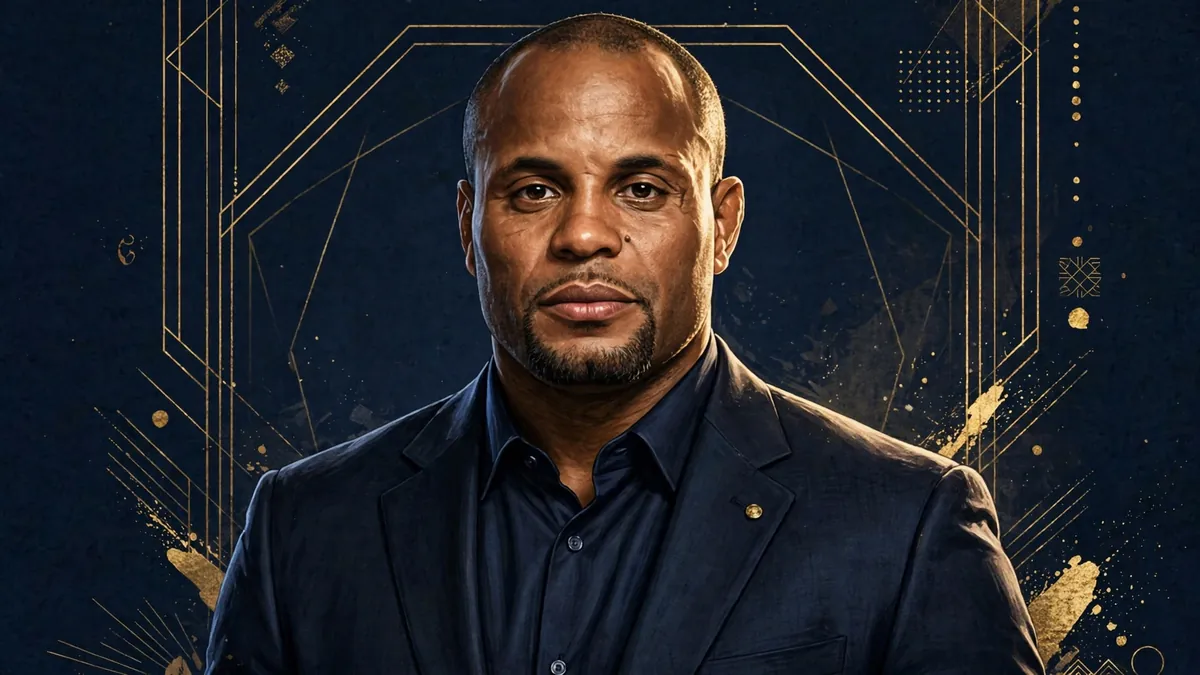
Early Life in Lafayette: Loss, Wrestling and a Football Crossroads
Daniel Ryan Cormier was born on March 20, 1979, in Lafayette, Louisiana, to Joseph and Audrey Cormier. He grew up with an older brother, Joseph, a sister, Felicia, and a younger brother, Ferral. The family lived a working-class life in south Louisiana, and wrestling entered Daniel’s world early — but so did tragedy.
When Cormier was seven years old, his father was shot and killed on Thanksgiving Day in 1986 by the father of his second wife. The loss shaped the rest of his childhood. His mother Audrey raised the children, and a stepfather, Percy Benoit, later came into his life and helped raise him. Cormier has spoken warmly about Benoit over the years; Benoit died in 2019, and Cormier’s mother Audrey died in 2022.
At Northside High School in Lafayette, Cormier became a three-time Louisiana state wrestling champion. He was not only a wrestler. He played linebacker on the football team, earned all-state honours, ran a 4.5-second 40-yard dash, and was offered a football scholarship by Louisiana State University. He turned LSU down to keep wrestling — a decision that looks obvious now, but at the time meant walking away from the sport that dominates Louisiana Friday nights.
The talent showed early on the international stage too. In 1995, still a teenager, Cormier won a bronze medal at the World Championships in the Greco-Roman cadet (15–16 years old) division. Wrestling was not a hobby for him. It was the one place where discipline and hard work produced results he could count on, and he poured himself into it completely.
Colby and Oklahoma State: Building an Olympic Wrestler
After high school, Cormier enrolled at Colby Community College in Kansas. There he won two junior college national championships at 197 pounds, in 1998 and 1999. The junior college route is a common one for wrestlers who need seasoning before the Division I level, and Cormier used it exactly as intended — he arrived at his next stop ready to compete with the best in the country.
That next stop was Oklahoma State University, one of the great wrestling programmes in American college history. Cormier became an NCAA Division I All-American in 2001 and reached the national championship final at 184 pounds, where he lost to Cael Sanderson — a wrestler who would go on to one of the most celebrated careers the sport has ever seen. Losing a national final to Sanderson was no disgrace; it was proof Cormier belonged at the very top of the college game.
He graduated from Oklahoma State with a degree in sociology. The degree matters to his story because it hints at the second career that would follow: Cormier has always been a talker, a teacher and a student of people, not just a fighter. The commentary booth he occupies today was built, in part, in those college years.
The Olympic Years: Athens 2004, Beijing 2008 and Heartbreak
Cormier’s freestyle wrestling career after college was remarkable by any measure. He was the senior United States national champion every year from 2003 to 2008 — six straight titles. He won gold at the 2003 Pan American Games, took silver at the 2005 World Cup in Tashkent, and won a bronze medal at the 2007 World Championships in Baku. He also won the Ivan Yarygin Grand Prix in Russia in 2005, one of the toughest tournaments in the sport, and in 2004 he won the 211-pound title in the first and only season of the Real Pro Wrestling league.
At the 2004 Athens Olympics, Cormier finished fourth in the 96-kilogram division after losing to Khadzhimurat Gatsalov of Russia in the semi-finals. Fourth place at an Olympics is a strange kind of result — close enough to a medal to taste it, far enough away to hurt for years. Cormier kept going. He was named captain of the 2008 United States Olympic wrestling team for the Beijing Games, the highest honour a team can give one of its own.
Beijing ended in heartbreak. Cormier was pulled from competition after suffering kidney failure brought on by excessive weight cutting. He never got to compete at those Games. The episode nearly ended his athletic career and left him, by his own later accounts, broke and at a crossroads at 29 years old — an age when most combat athletes are already deep into their professional careers.

That low point is the hinge of the whole biography. Within a year of the Beijing disaster, Cormier had walked into the American Kickboxing Academy in San Jose and started over in a sport he had never competed in professionally. He was 30 years old, with no professional fights, no following and no money. What he had was the best wrestling base in American MMA, a work ethic forged by two Olympic cycles, and nothing left to lose.
From the Mat to the Cage: Strikeforce and the Heavyweight Grand Prix
Cormier made his professional MMA debut in September 2009, at age 30. He won his first fights quickly, and in July 2010 he beat Lucas Browne to win the XMMA Heavyweight Championship in Australia. Strikeforce, then the second-biggest promotion in the sport, signed him to an eight-fight deal. He debuted for the promotion in September 2009 with a technical knockout win over Gary Frazier, and he kept winning — the wrestling that had carried him to two Olympics turned out to translate brutally well to the cage.
The breakthrough came in the Strikeforce Heavyweight Grand Prix, a tournament that gathered the best heavyweights outside the UFC. Cormier entered as a late replacement and beat Antonio “Bigfoot” Silva, then defeated Josh Barnett in the final in May 2012 to win the tournament. He also won the King of the Cage Heavyweight Championship along the way. By the time Strikeforce folded into the UFC in early 2013, Cormier was unbeaten at 11–0 and held a championship belt in every promotion he had fought for — a distinction he would carry with him for the rest of his career.
His Strikeforce run also built the relationships that defined his fighting life. Training at the American Kickboxing Academy alongside Cain Velasquez, the UFC heavyweight champion, Cormier learned the professional side of the sport from one of its best. The two became close friends and training partners, and Cormier has often said he would never fight Velasquez — a promise that later pushed him down to light heavyweight rather than challenge his friend for the heavyweight crown.

UFC Arrival and the Light Heavyweight Title
Cormier debuted in the UFC in April 2013, beating former heavyweight champion Frank Mir by decision at UFC on Fox 7. He added a win over Roy Nelson, then made the cut to light heavyweight in 2014 — a move driven by his refusal to fight Velasquez and by the chance to chase the 205-pound title. His light heavyweight debut came against Patrick Cummins at UFC 170 in February 2014, and he won by first-round stoppage.
The division’s champion was Jon Jones, the most talented fighter of his generation and the man Cormier would spend the next four years circling. Before their first meeting, Cormier beat Dan Henderson at UFC 173 in May 2014, a performance that stamped him as the clear number-one contender. Then, in January 2015 at UFC 182, he got his shot — and lost a unanimous decision to Jones in front of 800,000 pay-per-view buyers. It was the first defeat of his professional career.
Jones was stripped of the title later in 2015 after legal trouble outside the cage, and Cormier got his second chance. At UFC 187 in May 2015 he beat Anthony “Rumble” Johnson by third-round submission to win the vacant UFC Light Heavyweight Championship. He defended it against Alexander Gustafsson at UFC 192 in October 2015 in a five-round war, and against Johnson again at UFC 210 in April 2017. The Gustafsson fight, in particular, is remembered as one of the best light heavyweight title fights ever staged — Cormier took heavy damage, kept coming forward, and won the decision.
The stat that defines him: Cormier is the second fighter in UFC history to hold titles in two weight classes at the same time, and the first to successfully defend titles in two divisions. Only a handful of fighters have ever held belts in two divisions at all.
The Jon Jones Rivalry: Brawl, Defeat and a No-Contest
No account of Daniel Cormier is complete without the Jon Jones rivalry, one of the most bitter and most lucrative feuds in UFC history. The two men genuinely disliked each other, and the sport sold that dislike to enormous audiences. Their first fight at UFC 182 drew 800,000 pay-per-view buys. Their rematch at UFC 214 in July 2017 drew 860,000. Together, those two nights did more for Cormier’s bank balance than any other fights of his career.
The rivalry boiled over before the first fight even happened. At a media day in August 2014, the two came to blows on stage in Las Vegas, crashing through the backdrop in a brawl that was replayed endlessly on sports television. Both men were fined by the Nevada State Athletic Commission and ordered to do community service. It was ugly, it was unprofessional, and it sold a lot of pay-per-views.
Jones won the rematch at UFC 214 by third-round knockout — or so it seemed. Weeks later, Jones failed a drug test, the result was overturned to a no-contest, and the light heavyweight title was returned to Cormier. The ending satisfied nobody: Cormier got his belt back but not the win, and the rivalry never got the clean third fight fans wanted. For the full story of the other side of this feud, read our Jon Jones biography, which covers his rise, his falls and his own account of those years.
What the rivalry did give Cormier, beyond the belt, was money and fame. His two biggest disclosed paydays came against Jones, and the feud made him a household name far beyond the hardcore MMA audience. It also gave him something rarer: a genuine sporting enemy, the kind that turns good fighters into stars.
Two-Division Champion: The Night He Knocked Out Stipe Miocic
With the light heavyweight title back around his waist, Cormier did what almost nobody expected: he moved back up to heavyweight to challenge Stipe Miocic, the most successful heavyweight champion in UFC history. The fight headlined UFC 226 on July 7, 2018, at the T-Mobile Arena in Las Vegas. Miocic was the favourite. Cormier knocked him out in the first round, at 4:33, with a short right hand in the clinch.
The win made Cormier only the second fighter in UFC history to hold two divisional titles at the same time, after Conor McGregor. It also made him the first fighter ever to defend titles in two divisions, a record he sealed a few months later. For the scale of what McGregor achieved in the same era — and how different the money was — see our profile of Conor McGregor, whose crossover fame set the pay bar Cormier’s generation chased.
He defended the heavyweight belt against Derrick Lewis at UFC 230 in November 2018, winning by second-round submission at Madison Square Garden — a remarkably quick turnaround, just four months after winning the title. The Lewis defence is easy to overlook, but it is the fight that completed the two-division record: Cormier had now won and defended championships at both light heavyweight and heavyweight. No one else had done that.
The two-division era also put Cormier in rare company among women champions. Amanda Nunes, the only woman to hold two UFC titles at once, built her own two-division run in the same years, and the two are now spoken of together whenever the sport debates its greatest champions.
The Miocic Trilogy and Retirement
Miocic wanted the belt back, and the UFC gave him the rematch at UFC 241 in August 2019. Cormier won the early rounds, then Miocic adjusted, attacked the body, and stopped him in the fourth round. The trilogy fight followed at UFC 252 on August 15, 2020, at the UFC Apex in Las Vegas, in front of no crowd during the pandemic. Miocic won a unanimous decision over five rounds, in a fight Cormier later said was badly affected by an eye poke that left him unable to see properly out of one eye.
After UFC 252, Cormier retired. He had said for years that he would not fight past 40, and at 41 he kept his word. His final professional record stands at 22 wins, three losses and one no-contest. The three losses came against two men — Jon Jones and Stipe Miocic, twice — and the no-contest was the overturned Jones rematch. Few champions in the sport’s history have a record that clean against that level of opposition. For the other half of the trilogy, read our piece on how tall Stipe Miocic is and his own long road to the heavyweight record books.
Across his nine headlined UFC pay-per-views, Cormier’s fights sold about 3.7 million buys in total, according to figures compiled on his Wikipedia page — with the two Jones fights (800,000 and 860,000 buys) and the UFC 252 trilogy bout (500,000) leading the way. Those numbers are the engine of his earnings, because a champion’s pay-per-view share is worth far more than any disclosed base purse.
Daniel Cormier Net Worth and Career Earnings
So how much is Daniel Cormier worth? The honest answer is a range, because no two outlets agree. Celebrity Net Worth puts the figure at $6 million, and that number is the one most often repeated by other outlets writing in 2026. Surprise Sports, in a 2026 update, estimates $10 million to $15 million. SynonymWave puts it at $8 million to $12 million. Older estimates, such as Wealtholino’s, sat closer to $4 million. Our anchored estimate is $6 million, following Celebrity Net Worth, with a fair published range of $6 million to $12 million and higher estimates reaching $15 million.
Why the spread? Net worth figures for retired fighters are educated guesses built from disclosed purses, estimated pay-per-view shares, broadcast salaries and endorsements — none of which are fully public. Cormier’s disclosed UFC fight earnings alone were about $10.2 million, according to GiveMeSport’s ranking of the highest-paid UFC fighters, based on BetMGM figures — and that number excludes discretionary bonuses and pay-per-view revenue. Surprise Sports estimates his combined UFC and Strikeforce career earnings at roughly $12.5 million. After taxes, training costs, management and a decade of living, a $6 million net worth sitting against $10 million-plus in career fight income is a believable picture, and it is the one the most-cited source supports.
| Source | Net Worth Estimate | Date |
|---|---|---|
| Celebrity Net Worth | $6 million | 2026 (cited October 2026) |
| Surprise Sports | $10 million – $15 million | 2026 |
| SynonymWave | $8 million – $12 million | 2026 |
| Wealtholino | $4 million | Older estimate |
| CelebAmerica anchored estimate | $6 million (range $6M – $12M) | November 2026 |
The biggest paydays of his fighting career came in his final five years, when he was a champion headlining pay-per-views. The table below uses reported and estimated total payouts compiled by Surprise Sports, including bonuses and pay-per-view shares where estimated. Disclosed base salaries reported to the Nevada State Athletic Commission are lower — for example, Cormier’s disclosed purse for UFC 226 was $500,000 — because the commission figures exclude pay-per-view points, which is where champions make their real money.
| Fight | Event | Reported / Estimated Total Payout |
|---|---|---|
| Jon Jones 2 | UFC 214 (July 2017) | About $2.29 million |
| Jon Jones | UFC 182 (January 2015) | About $2.27 million |
| Anderson Silva | UFC 200 (July 2016) | About $1.08 million |
| Stipe Miocic 2 | UFC 241 (August 2019) | About $940,000 |
| Stipe Miocic 3 | UFC 252 (August 2020) | About $930,000 |
| Stipe Miocic | UFC 226 (July 2018) | About $770,000 |
| Derrick Lewis | UFC 230 (November 2018) | About $590,000 |
Those seven fights alone account for roughly $8.9 million in reported and estimated payouts, before Strikeforce purses, earlier UFC fights, sponsorship money and Reebok outfitting pay are counted. It is also worth noting what Cormier did not earn: he never got the Brock Lesnar superfight that was talked about through 2018 and 2019, a bout that would likely have been his biggest payday by a wide margin. Lesnar’s return never materialised, and the fight that would have made Cormier the richest version of himself never happened.
Income After Fighting: Broadcasting, Coaching and Business
Retirement did not slow Cormier’s income down so much as change its shape. He is now one of the most prominent voices in the sport: a lead analyst for ESPN and a regular colour commentator on UFC broadcasts, working the biggest pay-per-view events of the year. ESPN does not publish individual salaries, and industry estimates for top combat sports analysts vary widely — one outlet suggests $500,000 to $1 million a year for the top tier, while another reports a figure closer to $300,000 a year for Cormier’s ESPN work. Neither number is confirmed, so treat any single figure with care. What is certain is that the broadcasting chair is a steady, well-paid, long-term job, and Cormier holds one of the best seats in it.
He has built a media presence beyond the broadcast booth. He co-hosts the DC and Helwani show, the Good Guy / Bad Guy podcast with Chael Sonnen, and the DC and RC show with former NFL star Ryan Clark. His own YouTube channel, built around his “DC Check-In” series, had about 497,000 subscribers and 119 million views as of December 2025, according to his Wikipedia page — a real, monetisable audience that keeps him visible between fight nights. The modern middleweight of the division, Israel Adesanya, has built a similar media-first second act, and Cormier’s broadcasting career is now the model younger fighters study.
Endorsements have been a smaller but steady stream. During his fighting prime, Cormier worked with Monster Energy, Reebok and Popeyes, among others. He also appeared in the 2014 film Mantervention and has done acting and voice work since. Away from the cameras, he co-owns several barbershops in the Los Angeles area with his close friend Lavoris Walker, a business he has talked about as part of his long-term plan for life after fighting.
Coaching pays less than commentary, but it is the work Cormier seems to care about most. He has been head wrestling coach at Gilroy High School in California since the summer of 2018 — a job he kept even while defending a UFC title, training late at night around the school schedule. In 2021 he opened the Daniel Cormier Wrestling Academy, coaching youth teams out of the American Kickboxing Academy in San Jose, where his son Daniel Jr. also trains. The academy is both a business and a mission: Cormier has said repeatedly that he wants to give young wrestlers the guidance he had to find for himself.
Personal Life: Family, Gilroy and Giving Back
Cormier lives in Gilroy, California, with his wife Salina Deleon. The two began dating in 2010 and married in June 2017. Their son, Daniel Jr., was born on February 16, 2011, and their daughter Marquita Kalani was born on March 4, 2012. They later had a third child together, Luna Rose. Daniel Jr. trains in amateur wrestling at the American Kickboxing Academy, where his father is an assistant coach — the family business, in the most literal sense.
His family story also carries real grief. Cormier and a former girlfriend had a daughter, Kaedyn, who died in a car accident on June 14, 2003. He was previously married to a woman named Robin before his relationship with Salina. Cormier has spoken about Kaedyn’s death rarely and carefully, and it is one of the reasons those who know him describe his devotion to his children as something deeper than a talking point.
Outside fighting, Cormier is a dedicated fan of the New Orleans Saints and of professional wrestling — he even auditioned for a WWE analyst role in 2018, a try-out delayed only because the Derrick Lewis title defence came up at short notice. His family is Catholic. His mother Audrey died in 2022, and Cormier missed a UFC broadcast that March to attend her funeral. In April 2021 he was inducted into the Louisiana High School Sports Hall of Fame for his sporting achievements, and in May 2022 the UFC announced his induction into the UFC Hall of Fame’s Modern Wing as part of the Class of 2022, with the ceremony held on June 30, 2022, at the T-Mobile Arena in Las Vegas. He entered alongside Khabib Nurmagomedov, whose own net worth story is one of the most remarkable in the sport’s history.
Controversies and Setbacks
Cormier’s career was not free of controversy, though his record is cleaner than most champions of his era. The 2014 stage brawl with Jon Jones at a UFC 182 media day earned both men fines and community service from the Nevada commission. The UFC 210 weigh-in in April 2017 drew heavy criticism when Cormier, struggling to make the 205-pound limit, appeared to use a towel to support some of his weight on the scale before weighing in at exactly 205 pounds; he made weight on the second attempt, and the incident became known as “towel-gate” among fans. The UFC 214 rematch with Jones ended in a no-contest after Jones failed a drug test — a result that restored Cormier’s title but robbed him of a clean resolution to the rivalry. And at UFC 252, the eye poke from Miocic that Cormier said left him unable to see out of one eye became the defining talking point of his final fight.
None of these episodes involved a failed drug test or a criminal charge against Cormier himself. That distinction matters: in a sport where many of the biggest names of his generation were suspended at one point or another, Cormier’s reputation stayed intact, and it is a large part of why broadcasters trusted him with a microphone the moment he stopped fighting.
Legacy: Where Cormier Ranks Among the Greats
How good was Daniel Cormier, really? The case is strong. He is one of only a handful of fighters to win UFC titles in two weight classes, the first to defend titles in two divisions, a Strikeforce Grand Prix champion, a two-time Olympian, and a UFC Hall of Famer. He beat Stipe Miocic, the greatest heavyweight champion the UFC has had, and he beat Anthony Johnson twice, Alexander Gustafsson, Dan Henderson, Frank Mir and Derrick Lewis. His only losses came against Jon Jones — widely considered the greatest fighter of all time — and Miocic, twice. There is no soft loss on his record.
The counter-argument, and it is a fair one, is that his peak came late and his reign was short. He did not reach the UFC until he was 34, won his first UFC title at 36, and retired at 41. He never got the third Jones fight, never got the Lesnar superfight, and his heavyweight title run lasted barely a year. His supporters answer that the shortness of the run is the point: he did in five years what most fighters cannot do in fifteen, starting from zero at 30 years old.
What is not in doubt is his second act. Fighters who become great broadcasters are rarer than fighters who become champions. Cormier has managed both, and his voice now shapes how millions of fans understand the sport. Between the commentary desk, the Gilroy High wrestling room and his academy, he has built a life after fighting that looks more durable than the career that paid for it — and that, for a man who started professional fighting at 30 with nothing, is the most impressive part of the story. Readers who enjoy fighter biographies can explore more profiles in our biography section, where the same standard is applied to champions across every sport.
Frequently Asked Questions
What is Daniel Cormier’s net worth in 2026?
Daniel Cormier’s net worth is estimated at $6 million as of November 2026, according to Celebrity Net Worth. Other outlets estimate higher: Surprise Sports puts the figure at $10 million to $15 million and SynonymWave at $8 million to $12 million. Our anchored estimate is $6 million, with a fair published range of $6 million to $12 million.
How old is Daniel Cormier?
Daniel Cormier was born on March 20, 1979, in Lafayette, Louisiana, which makes him 47 years old as of November 2026. He began his professional MMA career unusually late, at age 30, and retired at 41 after his trilogy fight with Stipe Miocic at UFC 252 in August 2020.
Who is Daniel Cormier’s wife?
Daniel Cormier is married to Salina Deleon. The two began dating in 2010 and married in June 2017. They have three children together: son Daniel Jr. (born February 16, 2011), daughter Marquita Kalani (born March 4, 2012) and daughter Luna Rose. The family lives in Gilroy, California.
What is Daniel Cormier’s MMA record?
Daniel Cormier’s professional MMA record is 22 wins, three losses and one no-contest. His three losses came against Jon Jones (UFC 182, January 2015) and Stipe Miocic twice (UFC 241 in August 2019 and UFC 252 in August 2020). The no-contest was the UFC 214 rematch with Jones, which was overturned after Jones failed a drug test.
How many UFC titles did Daniel Cormier win?
Cormier won UFC titles in two weight classes: the Light Heavyweight Championship, which he won against Anthony Johnson at UFC 187 in May 2015, and the Heavyweight Championship, which he won by knocking out Stipe Miocic at UFC 226 in July 2018. He was the second fighter in UFC history to hold two titles at the same time and the first to defend titles in two divisions.
Why did Daniel Cormier retire from fighting?
Cormier retired after losing the trilogy fight to Stipe Miocic at UFC 252 on August 15, 2020. He had said for years that he would not fight past the age of 40, and at 41 he kept his word. He moved straight into broadcasting as an ESPN analyst and UFC commentator, and into coaching as head wrestling coach at Gilroy High School.
What does Daniel Cormier do now?
Since retiring, Cormier works as a lead UFC analyst for ESPN and a colour commentator on UFC broadcasts. He co-hosts the DC and Helwani show, the Good Guy / Bad Guy podcast with Chael Sonnen and the DC and RC show with Ryan Clark, runs a YouTube channel, coaches wrestling at Gilroy High School, and runs the Daniel Cormier Wrestling Academy in San Jose.
Was Daniel Cormier an Olympian?
Yes. Cormier was a six-time United States senior national freestyle wrestling champion (2003–2008) and a two-time Olympian. He finished fourth at the 2004 Athens Olympics in the 96-kilogram division and was named captain of the 2008 United States Olympic team for Beijing, but was withdrawn from those Games after suffering kidney failure caused by excessive weight cutting.
Final Thoughts
Daniel Cormier’s story is not really a story about money. The $6 million net worth, the pay-per-view shares, the broadcasting salary — those are the receipts, not the reason. The reason is a wrestler from Lafayette who lost his father at seven, lost his daughter at 24, missed an Olympic medal by one match, nearly lost his kidneys cutting weight, and still rebuilt himself into a two-division UFC champion starting at an age when most fighters are winding down.
What makes him worth remembering is not any single belt. It is the range: Olympic wrestler, Strikeforce champion, UFC champion in two divisions, Hall of Famer, broadcaster, high-school coach. Very few athletes in any sport have been excellent in that many different rooms. Cormier was, and the second act — the commentary desk, the wrestling room, the academy — may end up mattering more than the first. If his fighting career was about proving a wrestler could become a champion, his life after fighting is about proving a champion can become a teacher.
Sources and How We Estimated
How we estimated: Net worth figures for retired athletes are estimates, not audited facts. We anchored our figure at $6 million following Celebrity Net Worth, the most-cited source in 2026 reporting, and published the full published range ($6 million to $12 million, with some outlets reaching $15 million) so readers can see where sources disagree. Career earnings figures come from disclosed purses reported to state athletic commissions and from published estimates that include pay-per-view shares; the UFC does not publish pay-per-view points, so those parts of the totals are estimates. Private taxes, expenses and investments are not public and are not reflected in these figures.
Sources consulted for this article: Wikipedia — Daniel Cormier; Celebrity Net Worth — Daniel Cormier; Surprise Sports — Daniel Cormier Net Worth in 2026; GiveMeSport — Best-Paid Fighters in UFC History; Sports Illustrated — Daniel Cormier, High School Coach; myKhel — Daniel Cormier inducted into UFC Hall of Fame Class of 2022; TheCityCeleb — Daniel Cormier Biography; Nairobi News — Daniel Cormier Net Worth, MMA and UFC Career Achievements; Wikipedia — UFC 226. All figures were checked against at least one named source before publication; where sources conflict, the article says so and gives the range.