Naomi Osaka is 29 years old in 2026. She was born on 16 October 1997 in Osaka, Japan, and turned 29 on 16 October 2026 — which is why so many older pages still list her as 28. Those pages were written before her birthday, and they have not caught up. As of November 2026, the four-time Grand Slam champion is 29, a mother of a three-year-old daughter, back inside the world’s top 20, and talking openly about how much longer she wants to keep playing.
Age matters more than usual in Osaka’s story because she did so much of it so young. She won her first major at 20, reached world No. 1 at 21, stepped away from the sport at 23 to protect her mental health, became a mother at 25, and came back to the tour at 26. At 29, she is in a phase few tennis stars reach with this much already behind them: a comeback veteran with a young child, a business empire, and a ranking that climbed back to No. 18 by the end of the 2026 season. This article settles her exact age with dated evidence, walks through what she had achieved by every age, and explains what 29 means for her tennis and her money.
Last updated: 16 November 2026 — Celebamerica Editorial Staff
Naomi Osaka Quick Facts
| Full Name | Naomi Osaka |
|---|---|
| Date of Birth | 16 October 1997 |
| Age (as of November 2026) | 29 years old (turned 29 on 16 October 2026) |
| Birthplace | Osaka, Japan |
| Nationality | Japanese (also holds American ties; raised in the United States from age three) |
| Height | 5 ft 11 in (180 cm) |
| Turned Professional | 2013 (age 15) |
| Grand Slam Titles | 4 — US Open 2018 and 2020; Australian Open 2019 and 2021 |
| Career-High Ranking | World No. 1 (first reached January 2019, age 21) |
| Career Prize Money | About $25.7 million (WTA official total, June 2026) |
| Estimated Net Worth | $45 million to $120 million (range — see the money section below) |
| Peak Income Sources | Endorsements (Nike, Louis Vuitton, Nissan, Yonex, TAG Heuer, Mastercard), prize money, business ventures |
| Key Ventures | Kinlò skincare, Hana Kuma production company, Evolve sports agency, stake in North Carolina Courage |
| Partner | Rapper Cordae (father of her daughter) |
| Children | One daughter, Shai, born July 2023 |
| 2026 Year-End Ranking | World No. 18 |
Table of Contents
- Naomi Osaka Quick Facts
- How Old Is Naomi Osaka in 2026?
- Her Birthdate, and Why Some Sites Still Say 28
- Naomi Osaka’s Age Timeline: What She Achieved at Every Age
- Early Life and Background
- Career Rise: From Teenage Prospect to World No. 1
- Her Age at Every Grand Slam Title
- The Money at 29: Net Worth, Prize Money and Endorsements
- Business Ventures and Investments
- How Age 29 Compares With Her Peers
- Motherhood, the Comeback and Life at 29
- What the 2026 Season Showed About Her Career Stage
- How Long Can She Keep Playing?
- Personal Life
- Mental Health, Activism and Public Stances
- Naomi Osaka Age FAQs
- Final Thoughts: 29 and Still Writing the Story
- Sources and Reporting
How Old Is Naomi Osaka in 2026?
Naomi Osaka is 29 years old. She was born on 16 October 1997, so she spent the first nine and a half months of 2026 as a 28-year-old and turned 29 in mid-October 2026. Reuters described her as “the 29-year-old Japanese” in its reporting from the Pan Pacific Open in Tokyo on 25 October 2026, and Sportradar’s player profile lists her date of birth as 1997-10-16 with an age of 29. The Australian Open’s own magazine profile from August 2026 still called her 28 — correctly, at the time it was written, since her birthday had not yet arrived.
That timing explains the confusion you will find online right now. Search results are split between 28 and 29 because so many profiles were published or last updated before 16 October 2026. The rule is simple: any source dated before that birthday that says 28 is stale, not wrong at the time. Any source dated after it that still says 28 has not been updated. Her next birthday is 16 October 2027, when she will turn 30 — a milestone that will bring a fresh round of “how old is Naomi Osaka” searches, and one she will reach as a 29-year-old mother still chasing a fifth Grand Slam title.
The short answer: Born 16 October 1997 in Osaka, Japan. Age 29 as of November 2026. She will turn 30 on 16 October 2027.
Her Birthdate, and Why Some Sites Still Say 28
Osaka’s birthdate is one of the best-documented facts in tennis. She was born in Osaka, Japan, on 16 October 1997, to a Japanese mother, Tamaki Osaka, and a Haitian father, Leonard François. The family moved to the United States when Naomi was three years old, first to Long Island, New York, and later to Florida, where she and her older sister Mari trained. Her birthdate appears the same way across the WTA’s official records, the Olympic profiles from Tokyo 2020, and every major sports reference site — there is no dispute about it, unlike the net-worth figures that surround her.
The “28 or 29” split online comes down to update timing, and it is worth understanding because it shows up with almost every celebrity birthday. A profile written in September 2026 was accurate when it said 28. A profile written in late October 2026 that says 29 is accurate now. The problem is the large number of pages that sit in between — auto-generated bio pages, net-worth roundups and fan wikis that compute age once and never refresh it. When you see 28 attached to a 2026 date, check the page’s own update stamp. If it predates 16 October 2026, the page is simply old. Reuters, AFP and the BBC all used 29 in their late-October 2026 coverage of her Tokyo campaign, which is the strongest signal available: wire services update ages as a matter of routine.
There is a second, smaller source of confusion. Osaka’s sister Mari was born in 1996, and some casual write-ups mix the sisters up. Mari is a year older. Naomi, born in October 1997, is the younger sister — and the one with four Grand Slam titles.
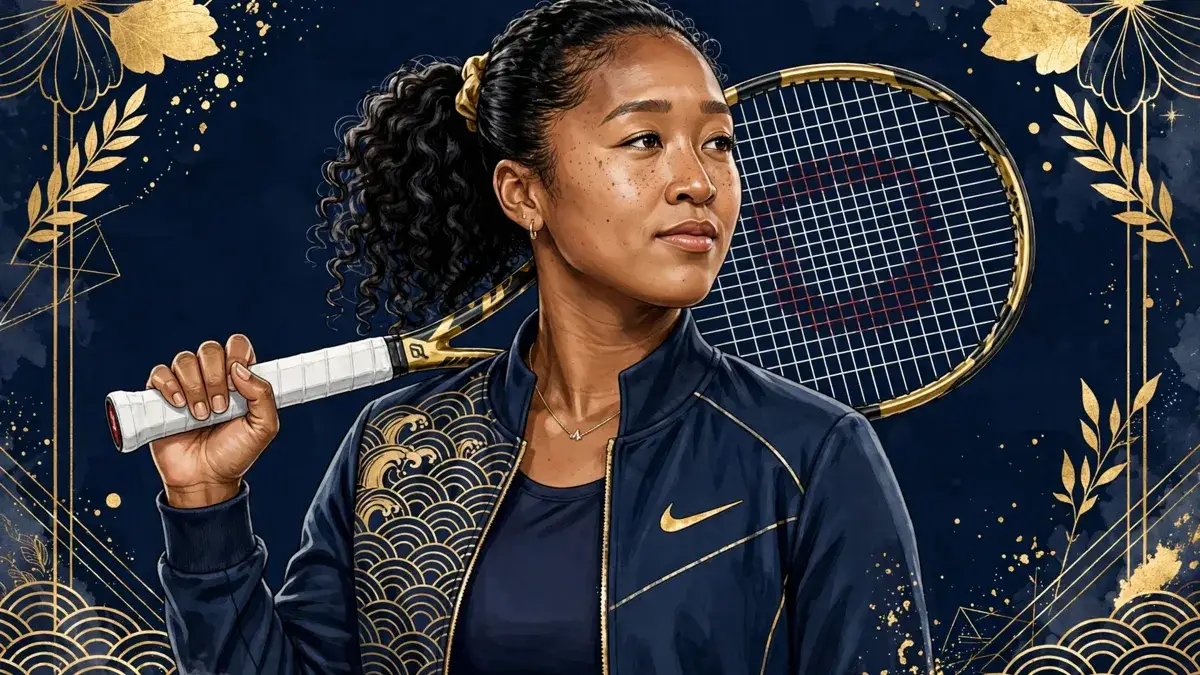
Naomi Osaka’s Age Timeline: What She Achieved at Every Age
Few athletes compress as much into their twenties as Osaka has. The timeline below shows what she had done by each age — and it explains why 29 feels, for her, less like a peak and more like a second act.
| Age | Year | What happened |
|---|---|---|
| 3 | 2000 | Moved with her family from Japan to the United States |
| 15 | 2013 | Turned professional |
| 18 | 2016 | First WTA final (Tokyo); named WTA Newcomer of the Year |
| 19 | 2017 | Broke into the world’s top 50 |
| 20 | 2018 | Won the US Open — her first Grand Slam title, beating Serena Williams in the final |
| 21 | 2019 | Won the Australian Open and reached world No. 1, the first Asian player to top the singles rankings |
| 22 | 2020 | Won her second US Open; became the world’s highest-paid female athlete, per Forbes |
| 23 | 2021 | Won her fourth Grand Slam at the Australian Open; stepped away from tennis in May–June to protect her mental health; lit the Olympic cauldron at the Tokyo Games |
| 24 | 2022 | Played a limited schedule; reached the Miami Open final |
| 25 | 2023 | Gave birth to daughter Shai in July; took 15 months away from the tour |
| 26 | 2024 | Returned to competition in January at Brisbane; climbed back toward the top 50 |
| 27 | 2025 | Continued the rebuild; reached the Montreal final and returned to the top 20 conversation |
| 28 | 2026 (Jan–Oct) | Reached the Wimbledon quarter-finals, beating top seed Aryna Sabalenka; last-16 finishes at the French Open and US Open |
| 29 | 2026 (Oct–Nov) | Ended the season ranked world No. 18 after a second-round loss in Tokyo; spoke openly about retirement thoughts and her daughter’s role in her future |
Read that table as a whole and one thing stands out: Osaka won all four of her Grand Slam titles before her 24th birthday. Everything since — the break, the baby, the comeback — has been about building a second career on top of a first one that most players never get. At 29, she is older than the age at which she won her last major, but younger than the age at which many of the game’s greats won theirs. Serena Williams won majors at 35. That comparison is not a promise, but it is the reason Osaka’s camp still talks about winning more Slams rather than winding down.
Early Life and Background
Naomi Osaka was born in Osaka, Japan, on 16 October 1997, and spent her first three years there before the family moved to Long Island, New York. Her father, Leonard François, had been inspired by watching the Williams sisters — Venus and Serena — and decided his own daughters would play tennis. The family later moved to Florida, the heartland of American tennis academies, where Naomi and her older sister Mari trained through their childhood and teenage years.
The Williams influence is not a footnote in Osaka’s story; it shaped it. Her father modelled her development on the sisters’ path, and the teenager who grew up watching Serena would one day beat her in a US Open final — at 20 years old, in one of the most talked-about matches of the decade. Osaka has spoken about how the sisters’ example made a career in tennis feel possible for a girl who did not look like the typical player on tour. She grew up between cultures: born in Japan, raised in the United States, speaking English with her family and Japanese in public settings, and eventually choosing to represent Japan, the country of her birth.
Osaka turned professional in 2013, at 15, and spent her mid-teens working through the lower tiers of the tour. She did not arrive as a finished product. Her early years were marked by a huge serve, a powerful forehand, and the raw edges you would expect from a teenager learning to win at tour level. By 2016, at 18, she reached her first WTA final in Tokyo and was named the WTA’s Newcomer of the Year. A year later she was inside the world’s top 50. The rise from there was fast — almost startlingly fast — and it set up the two-year burst, from 2018 to 2021, that made her one of the most famous athletes on the planet.
Career Rise: From Teenage Prospect to World No. 1
Osaka’s breakthrough came in March 2018, when she won her first WTA title at Indian Wells at the age of 20, beating a string of top players along the way. Six months later she won the US Open, beating Serena Williams 6–2, 6–4 in a final remembered as much for the controversy around chair umpire Carlos Ramos as for the tennis. Osaka was 20 years and 11 months old. She cried through the trophy ceremony, apologised to the crowd, and became, overnight, a global star.
The Australian Open followed in January 2019. Osaka beat Petra Kvitova in a three-set final, won her second straight Grand Slam, and rose to world No. 1 at 21 — the first Asian player, man or woman, to top the singles rankings. She held the top spot for 25 weeks across her career. Between 2018 and 2021 she won four majors in four attempts at finals, a perfect record in Grand Slam finals that still stands. Her third and fourth titles — the 2020 US Open and the 2021 Australian Open — came at 22 and 23, and by then she was not just a tennis champion but a cultural figure: a Time magazine cover star, an Olympic cauldron lighter in Tokyo, and, according to Forbes, the highest-paid female athlete in the world.
The same period brought the pressures that would define her next chapter. In May 2021, at 23, she withdrew from the French Open after declining to attend mandatory press conferences, saying the media obligations were harming her mental health. She spoke publicly about depression and anxiety, took time away from the sport, and returned later that year. The candour changed the conversation around athletes and mental health across sport, and it also marked the point where Osaka’s career stopped being a straight line upward. She played a reduced schedule in 2022, reached the Miami final at 24, and then stepped away again — this time for motherhood.
Her Age at Every Grand Slam Title
Osaka’s four major titles are spread across just two and a half years, and each one came at a different age. The pattern shows how young she was when she reached the top — and how long ago, in tennis terms, her last major now feels.
| Title | Age at the time | Final opponent |
|---|---|---|
| US Open 2018 | 20 years, 10 months | Serena Williams, 6–2, 6–4 |
| Australian Open 2019 | 21 years, 3 months | Petra Kvitova, 7–6, 5–7, 6–4 |
| US Open 2020 | 22 years, 10 months | Victoria Azarenka, 1–6, 6–3, 6–3 |
| Australian Open 2021 | 23 years, 4 months | Jennifer Brady, 6–4, 6–3 |
Her 2018 US Open win made her the first Japanese player to win a Grand Slam singles title. Her 2019 Australian Open win made her the first Asian world No. 1. The 2020 US Open title, won in a near-empty stadium during the pandemic, is the one many fans remember best for what happened off the court: Osaka wore a different face mask bearing the name of a Black victim of violence for each of her seven matches, turning a tennis tournament into a daily statement. She was 22. The 2021 Australian Open, at 23, was her last major title — more than five years ago as of November 2026.
That gap is the central fact of her late twenties. Players who win four majors by 23 usually add to the total. Osaka’s count has stood still since February 2021, first because of her mental-health break, then because of pregnancy and the long road back. Her 2026 results — a Wimbledon quarter-final and last-16 runs at the French Open and US Open — are her best at the majors since the comeback began, and they are the reason the question at 29 is not “is she finished?” but “can she get back to a final?”

The Money at 29: Net Worth, Prize Money and Endorsements
Osaka’s wealth is one of the most argued-over numbers in tennis, and an honest article has to show the range rather than pick one figure and pretend it is settled. Celebrity Net Worth, updated 7 February 2026, puts her net worth at $120 million, built on its estimate that she earned about $230 million between 2019 and 2025, only around $25 million of it on court. Forbes, by contrast, has put her net worth at over $60 million. Other outlets land lower still, and one careful July 2026 survey of the published estimates kept the range at $45 million to $120 million. The defensible summary is that her net worth in 2026 sits somewhere in that wide band — anchored by verifiable prize money at the bottom and a much larger, far less transparent body of endorsement and business income on top. Osaka publishes no balance sheet, and current sponsor values and private-company valuations are not public.
What is verifiable is the prize money. The WTA’s official career prize-money list, updated to 29 June 2026, records Osaka at $25,724,612 — 17th on the all-time women’s list. EssentiallySports, using a slightly later cut of the same records, puts the figure at $26.6 million. Either way, the on-court total is a small share of what she has earned. Her peak years were extraordinary by the standards of women’s sport: Forbes calculated her earnings for the 12 months to May 2020 at $37.4 million ($3.4 million in prize money, $34 million in endorsements), and her 2021 earnings at $57.3 million (just $2.3 million in prize money, roughly $55 million off court) — a single-year earnings record for a woman in sport at the time. She was the world’s highest-paid female athlete two years running.
The endorsement portfolio behind those numbers is long: Nike, Yonex, Louis Vuitton, TAG Heuer, Beats by Dre, Mastercard, Nissan, Panasonic, Nissin Foods and more. The Nike deal, signed after her US Open win, and the Louis Vuitton fashion partnership made her one of the few tennis players treated as a fashion figure in her own right. Her agent, Stuart Duguid, has spoken about the choices that built the fortune — including turning down a Coca-Cola deal to back BodyArmor instead, a sports-drink brand that was later sold to Coca-Cola in a deal valued at over a billion dollars. The fullest breakdown of her fortune, with the sources behind each figure, is covered in our companion piece on Naomi Osaka’s net worth on GuideNetWorth, which works through the same $45 million to $120 million range in detail.
At 29, the money picture has two halves. The endorsement income of 2020–21, when she was 22 and 23, has not been matched since — she has not won a title since 2021, and sponsors pay for winning. But the business income has kept growing, and her commercial value has proved more durable than most comeback stories: brands stayed with her through the break and through motherhood, and her 2026 return to the top 20 gives them fresh results to attach to. A deep run at a major in 2027 would likely lift the endorsement side again, just as the 2026 Wimbledon quarter-final did.
Business Ventures and Investments
Osaka’s off-court work is unusually serious for a tennis player her age, and it is a big reason her net worth held up while her ranking fell. She founded Kinlò, a skincare line built for melanin-rich skin, after finding that the products on the market did not serve her own skin. She launched Hana Kuma, a production company focused on bringing underrepresented stories to screen, in partnership with LeBron James’s SpringHill Company. She co-founded Evolve, a sports agency, with her agent Stuart Duguid, signing other athletes rather than only representing herself. And she holds an ownership stake in the North Carolina Courage, the National Women’s Soccer League club, making her one of the few athletes with equity in a professional women’s sports franchise.
These are not endorsement deals with her name attached; they are equity positions and companies she helped build. That distinction matters for the age story. A 29-year-old whose income depends only on prize money faces a hard clock — tennis careers end, and the money stops. A 29-year-old with a skincare brand, a production company, an agency and a club stake has income that does not depend on winning her next match. PlayersTV, writing in August 2026, made exactly this point: her fortune was built “not just on prize money and traditional endorsements, but on a series of decisions” like the BodyArmor call, and her business footprint “operates independently of the tennis calendar.” That independence is what lets her talk about retirement on her own terms rather than her bank balance’s terms.
The growth of that portfolio also tracks her age in a useful way. The BodyArmor decision and the first big endorsement deals came at 20 to 23, when she was the hottest property in women’s sport. The founder-era moves — Kinlò, Hana Kuma, Evolve, the Courage stake — came in her mid-twenties, as she started thinking about life after tennis. At 29, she is in the harvest phase of both: the companies are established, and the tennis is a bonus rather than the only engine. For the full year-by-year money picture, see the companion profile of Naomi Osaka’s net worth on NetWorthCraft, which traces the fortune from the early endorsement years to the business era.
How Age 29 Compares With Her Peers
Twenty-nine sits in an interesting spot in modern women’s tennis. It is older than the game’s new stars and younger than its greats at their last triumphs. Iga Swiatek, the dominant player of the mid-2020s, is younger than Osaka — see our profile of Iga Swiatek’s age for the exact comparison — and Coco Gauff, the American star who won the US Open at 19, is a full generation behind her; our Coco Gauff biography covers a career that began while Osaka was already a Grand Slam champion. Aryna Sabalenka, the player Osaka beat on her way to the 2026 Wimbledon quarter-final, is close in age but on a different curve: still adding majors in her late twenties, while Osaka is trying to get back to them.
The more telling comparison is with the players who won late. Serena Williams, whose biography we cover on this site, won the Australian Open at 35 and reached Grand Slam finals at 37 — proof that the late twenties and early thirties are not a cliff in the women’s game. Read our Serena Williams biography and the pattern is clear: her greatest longevity came after she had already been written off more than once. Osaka’s idol-turned-rival is the best argument that 29 is not too late. On the men’s side, the same point holds even more strongly: Novak Djokovic was still winning majors at 36, and Rafael Nadal at 36 too — see our pieces on Novak Djokovic’s age and Rafael Nadal’s age for how the game’s greats stretched their primes.
But the honest version of the comparison cuts both ways. Williams won her late majors without a three-year gap in her record; Osaka has not won a title of any kind since 2021, and her best Grand Slam result since the comeback is a quarter-final. Her peers at 29 are mostly players in the middle of their primes, not players rebuilding after 15 months away. The age itself is not the obstacle — the gap in match sharpness is. Her 2026 results suggest the gap is closing: she beat the top seed at Wimbledon, reached the last 16 at two more majors, and finished the year at No. 18, her best year-end position since the comeback began.

Motherhood, the Comeback and Life at 29
Osaka gave birth to her daughter, Shai, in July 2023, at 25. She took 15 months away from the tour and returned in January 2024 at the Brisbane International, at 26. The comeback has been slower than the fairytale version — no titles yet, no Grand Slam final — but steadier than many expected. By 2025 she was reaching finals again, including the Canadian Open final in Montreal, and by 2026 she was back inside the top 20, with a Wimbledon quarter-final as the headline result of her season.
Motherhood changed how she talks about her career, and that change was on full display in Tokyo in October 2026. Speaking before the Pan Pacific Open, days after her 29th birthday, Osaka said she had thought about retirement and often wondered how long she would continue playing — and that she would consider quitting if her three-year-old daughter asked her to. “Tennis no longer fills her entire day,” one report of the press conference put it. The quote travelled widely because it was so different from the way athletes usually talk at 29, with a ranking climbing and a season ending well. But it was consistent with everything Osaka has said since 2021: that her priorities are her own, and that she will not pretend otherwise to fit the script of a comeback.
At 29, she is also a different kind of public figure than she was at 21. The teenager who cried through her first US Open trophy ceremony is a mother, a founder and a business owner, and the tennis is one part of a larger life rather than the whole of it. That is a strength and a complication at once. It protects her from the desperation that drives some veterans, and it means the sport has to compete for her attention with a daughter and a portfolio of companies. Anyone trying to predict her next three years has to weigh both sides of that.
What the 2026 Season Showed About Her Career Stage
Osaka’s 2026 season, her third year back and her age-28-to-29 season, was her best since the comeback began. The headline was Wimbledon: she reached the quarter-finals, beating top seed Aryna Sabalenka on the way, her deepest run at a major since she returned. She also reached the last 16 at both the French Open and the US Open. She did not win a title in 2026, and she has not reached a Grand Slam final since the comeback — both facts her critics note. But the ranking told the story of the year: she entered the Pan Pacific Open in Tokyo, her final event of the season, ranked 19th, and finished the year at No. 18.
The season ended on 29 October 2026, when she lost 6–3, 7–5 to 18-year-old Slovakian Mia Pohankova, ranked 144th in the world, in the second round in Tokyo. Osaka had opened her campaign with a straight-sets win over Jasmine Paolini, but could not build on it. Afterwards she said she would “keep attempting” to get back to her Grand Slam-winning best, that she was “at peace” with herself and feeling good about her game. The AFP report of the match noted the symbolism plainly: a 29-year-old former champion beaten by a teenager who had turned 18 that same month. It was a reminder of how the tour works — new talent arrives every year, and the veterans have to keep earning their place.
Two things about the season matter for the age question. First, her results improved with every year of the comeback — 2024 was about returning, 2025 about reaching finals again, 2026 about deep runs at majors and a top-20 ranking. Second, the improvement came at an age when many players are slowing down, which suggests the limiting factor was never her age but the time away. If the curve continues into 2027, when she turns 30, a Grand Slam semi-final is a realistic target, and a final is not out of reach.
How Long Can She Keep Playing?
Osaka has never given a retirement date, and at 29 she does not need to. The physical facts are in her favour: she is 5 ft 11 in, her game is built on a big serve and clean power rather than endless running, and she has had long breaks that spared her body the wear of continuous seasons. Players with her build and her style have played well into their thirties — Serena Williams won majors at 35, and on the men’s side Carlos Alcaraz’s generation is still learning from veterans like Djokovic, who won majors at 36. Our profile of Carlos Alcaraz’s age shows how young the new champions are, but the tour still has room for the older ones.
The real question is not her body but her appetite. In Tokyo in October 2026 she said openly that she had thought about retirement, that she wondered how long she would continue, and that her daughter’s wishes would weigh heavily. That is not the language of a player planning a farewell tour, but it is not the language of a player planning five more years either. The most likely path is the one she has already described: keep attempting, season by season, while her daughter is happy and her body holds up. If a fifth major comes, the conversation changes. If it does not, she has a business empire and a family to walk toward — and, unlike most athletes, she has said so out loud.
For fans doing the maths: if she plays until 32, that is three more seasons and twelve more Grand Slam chances. If she plays until 35, like her idol, that is six more seasons and twenty-four more. Either way, 29 is not the end of the story. It is the middle of the second chapter.
Personal Life
Osaka’s partner is the rapper Cordae, and their daughter Shai was born in July 2023. The couple have kept the details of their relationship mostly private, and Osaka has spoken about motherhood in her own time rather than on the tour’s schedule. Shai, who turned three in July 2026, travels with her mother at times and is now old enough, as Osaka said in Tokyo, to have opinions about how much her mother travels. That fact — a three-year-old who can ask her mother to stop — is now part of the career calculation in a way it was not a year ago.
Her family remains central to her life: her mother Tamaki, her father Leonard, and her older sister Mari, who also played professional tennis before retiring. Osaka was raised in the United States from the age of three, and she has lived between American and Japanese culture all her life — representing Japan in competition, speaking English at home, and becoming one of Japan’s most recognisable faces during the Tokyo Olympics, where she lit the cauldron at the opening ceremony at 23. Our personal life archive on this site covers more celebrity family stories in the same style.
Off court, her interests run to fashion — the Louis Vuitton partnership, her own Met Gala appearances, the runway-inspired outfits she wore in Tokyo in 2026 — and to the businesses she has founded. She has also stayed close to the causes she spoke up for in 2020, when she wore masks naming victims of racial violence at the US Open. At 29, her public identity is a mix of athlete, mother, founder and activist, and no single label covers it.
Mental Health, Activism and Public Stances
The most important public episode of Osaka’s career came in May and June 2021, when she was 23. Ahead of the French Open she announced she would not attend mandatory press conferences, saying they harmed her mental health, and after winning her first-round match she withdrew from the tournament. She then spoke publicly about suffering from depression since the 2018 US Open and about anxiety before speaking to the media. The response was sharply divided at the time — some officials fined her and warned of further penalties, while many fellow players and public figures supported her — but the long-term effect is not in doubt: it forced tennis, and sport more widely, to talk about athletes’ mental health as a real issue rather than a weakness.
Her activism is best remembered from the 2020 US Open, when she was 22. She wore seven different face masks, one for each match, each bearing the name of a Black person killed in encounters with police or in racial violence — Breonna Taylor, Elijah McClain, Ahmaud Arbery, Trayvon Martin, George Floyd, Philando Castile and Tamir Rice. She won the tournament. The masks made her the face of athlete activism that summer, and the gesture is still cited whenever her legacy is discussed.
None of this is controversy in the usual celebrity sense — there are no scandals, lawsuits or feuds attached to her name — but it is the part of her story that explains her twenties. She stepped away from the sport at the height of her fame to protect her health, came back on her own terms, and has been open about the cost of both decisions. At 29, she talks about retirement the same way she talked about press conferences at 23: honestly, in public, and without asking permission.
Naomi Osaka Age FAQs
How old is Naomi Osaka in 2026?
Naomi Osaka is 29 years old in 2026. She was born on 16 October 1997 and turned 29 on 16 October 2026. Older pages that still say 28 were written or last updated before her birthday.
When is Naomi Osaka’s birthday?
Naomi Osaka’s birthday is 16 October. She was born on 16 October 1997 in Osaka, Japan, and will turn 30 on 16 October 2027.
How old was Naomi Osaka when she won her first Grand Slam?
She was 20 years and 10 months old when she won the 2018 US Open, beating Serena Williams 6–2, 6–4 in the final. She went on to win three more majors before her 24th birthday.
How old was Naomi Osaka when she became world No. 1?
She was 21 when she reached world No. 1 in January 2019, after winning the Australian Open. She was the first Asian player, man or woman, to top the singles rankings, and she held the top spot for 25 weeks across her career.
How old is Naomi Osaka’s daughter?
Her daughter Shai was born in July 2023, so she turned three in July 2026. Osaka has said her daughter’s wishes will be a major factor in how long she keeps playing.
What is Naomi Osaka’s net worth at 29?
Published estimates range from $45 million to $120 million. Celebrity Net Worth puts the figure at $120 million (updated February 2026), while Forbes has put it at over $60 million. Her verifiable career prize money stands at about $25.7 million, per the WTA.
Is Naomi Osaka retiring at 29?
No retirement has been announced. In October 2026 she said she had thought about retirement and would consider quitting if her daughter asked, but she also said she would keep attempting to return to her Grand Slam-winning best. She finished the 2026 season ranked world No. 18.
How tall is Naomi Osaka?
Naomi Osaka is 5 ft 11 in (180 cm) tall. Her height, combined with a powerful serve, has always been a major part of her game.
Final Thoughts: 29 and Still Writing the Story
Naomi Osaka turned 29 on 16 October 2026 with four Grand Slam titles, a world No. 1 ranking, a three-year-old daughter, a business empire and a ranking back inside the top 20. That is a full life by any measure, and it is not finished. Her 2026 season — a Wimbledon quarter-final, last-16 runs at the French Open and the US Open, a year-end ranking of No. 18 — was her best since she came back from motherhood, and it came at an age when the tennis world is happy to write players off.
The next chapter depends on two things she has been honest about: whether her body holds up, and whether her daughter wants her to keep travelling. Neither is in doubt today. She has three more seasons before she turns 32, and twelve more Grand Slam chances in that time. If she wins a fifth major, 29 will look like the age the comeback finally caught fire. If she does not, she will still walk away as a four-time champion who changed how sport talks about mental health, built companies that outlast her playing days, and did it all before her thirtieth birthday. Either way, the number that matters most about Naomi Osaka in 2026 is not 29. It is four — and whether it becomes five.
Sources and Reporting
This article was researched from live reporting and official records in November 2026. Key sources: Reuters (Osaka’s retirement comments and age, 25 October 2026; Tokyo exit, 29 October 2026); BBC Sport (Osaka on her future, 25 October 2026); Australian Open (Osaka profile, August 2026); WTA (official career prize money, $25,724,612, June 2026); Celebrity Net Worth (net worth $120 million, updated 7 February 2026); Forbes (2020 earnings $37.4 million; 2021 earnings $57.3 million; net worth over $60 million); EssentiallySports (net worth and career earnings, September 2026); Sportradar (date of birth 1997-10-16, age 29).
How we estimated: Osaka’s age is settled by her documented birthdate, 16 October 1997, cross-checked against Reuters and AFP reporting from October 2026 that describes her as 29. Net worth is an estimate, not a verified fact: published figures disagree, so this article reports the range of $45 million to $120 million, anchored by Celebrity Net Worth’s $120 million at the top and lower published estimates at the bottom, with Forbes’ over-$60 million figure inside the range. The one fully verifiable money figure is her WTA career prize money, about $25.7 million. Private assets, sponsor contract values and business valuations are not public, so any net-worth figure for Osaka should be read as an estimate. Figures were checked against named sources at the time of writing; where sources disagree, the disagreement is stated rather than hidden.