By Celebamerica Editorial Staff | Last updated: 9 November 2026
MS Dhoni stands 5 feet 9 inches tall (175 cm), according to the figure most sources use — Wikipedia, citing ESPNcricinfo, lists him at 5 ft 9 in (175 cm), and Sportradar and CricketAddictor agree. That is the number to anchor on. But it is not the only number in circulation: TheSportsDB lists him at 1.78 m (5 ft 10 in), and older Wikipedia-derived pages put him at 180 cm (5 ft 11 in). The honest answer, then, is a range — 175 to 180 cm — with 175 cm as the most widely cited figure.
Why does a two-inch gap matter enough for millions of searches? Dhoni is one of the most photographed athletes on the planet, and in team photos he never looks like the tallest man in the frame — yet he never looks short either. He stands shoulder to shoulder with Virat Kohli, a touch above Rohit Sharma, and well below the fast bowlers. This page settles the question properly: every published figure with its source, a side-by-side comparison with the other Indian greats, and what his height actually meant for the way he kept wicket and finished games.
| Full Name | Mahendra Singh Dhoni |
|---|---|
| Known As | MS Dhoni, Mahi, Captain Cool, Thala |
| Date of Birth | 7 July 1981 (45 years old in 2026) |
| Birthplace | Ranchi, Bihar (now Jharkhand), India |
| Height | 5 ft 9 in (175 cm) — most-cited figure; reported range 175–180 cm |
| Weight | Listed at around 75 kg (165 lb) by profile databases |
| Role | Wicketkeeper-batter, former India captain |
| IPL Team | Chennai Super Kings (since 2008; retained for IPL 2026 at ₹4 crore) |
| Estimated Net Worth (2026) | ₹1,060–1,200 crore (about $127–145 million), per CricTracker, CricHeroes and SportsMint |
| Primary Income Sources | IPL salary, brand endorsements, business equity (Seven, Chennaiyin FC, Garuda Aerospace, Dhoni Entertainment) |
| Key Career Works | 2007 T20 World Cup, 2011 ODI World Cup, 2013 Champions Trophy, five IPL titles with CSK |
Table of Contents
- How Tall Is MS Dhoni?
- Why the Numbers Differ: 175, 178 or 180 cm
- MS Dhoni Height Compared With Other Indian Cricketers
- Dhoni’s Height in Photos and on Television
- Did His Height Help Him as a Wicketkeeper?
- Height and the Helicopter Shot: How His Build Shaped His Batting
- Early Life in Ranchi: From Ticket Collector to India Cap
- Career Rise: Captain Cool and Three ICC Trophies
- Chennai Super Kings and IPL 2026
- Money and Net Worth in 2026
- Assets: Ranchi Farmhouse, Cars and Businesses
- Personal Life: Sakshi, Ziva and Life Away From Cricket
- Frequently Asked Questions
- Bottom Line
- Sources and Reporting
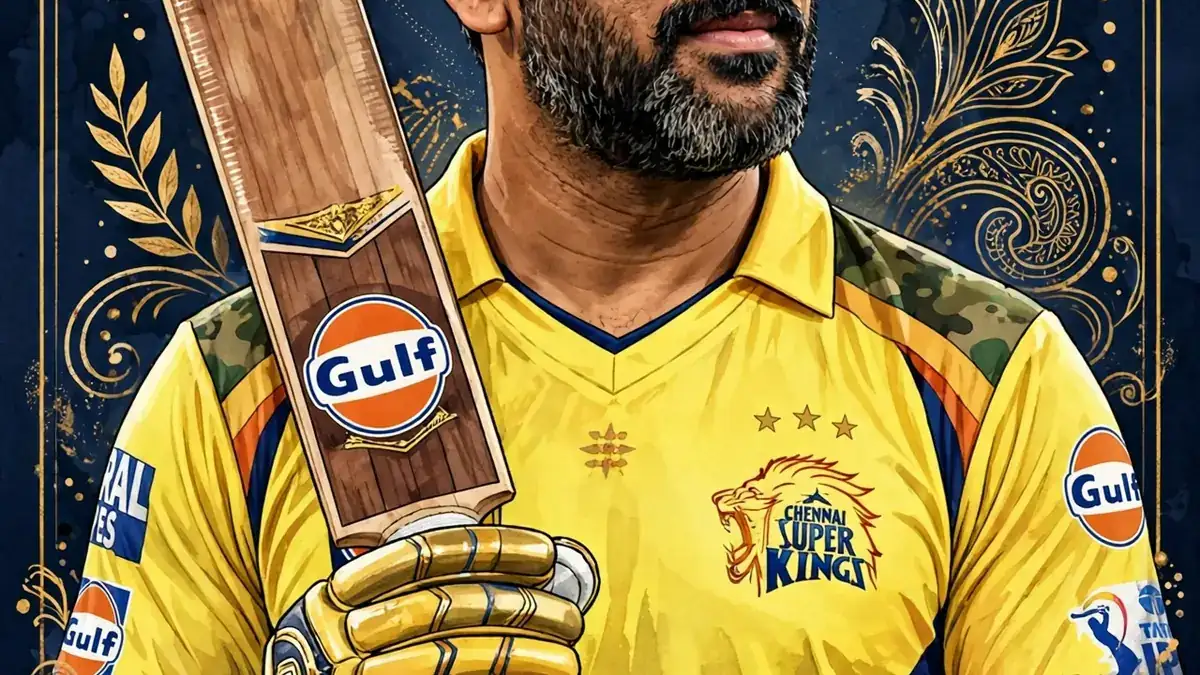
How Tall Is MS Dhoni?
The short answer: 5 feet 9 inches, or 175 centimetres. That is the figure Wikipedia carries in its personal-details box, sourced to ESPNcricinfo’s player profile as of 30 March 2025. It is also the figure Sportradar lists in its athlete bio, and the one CricketAddictor publishes on both its player profile and its IPL profile page. When three independent profile sources converge on the same number, that number earns the anchor spot.
Here is the full spread of published figures, so you can see exactly where the disagreement sits:
| Source | Height Listed |
|---|---|
| Wikipedia (citing ESPNcricinfo) | 5 ft 9 in (175 cm) |
| Sportradar | 175 cm |
| CricketAddictor | 5 ft 9 in (1.75 m) |
| TheSportsDB | 1.78 m (5 ft 10 in) |
| HowHeight.org (Indian cricketers comparison) | 178 cm baseline, with an honest range of 175–180 cm |
| Older Wikipedia-derived pages | 180 cm (5 ft 11 in) |
Put together, the published record runs from 175 cm to 180 cm — a spread of five centimetres, or about two inches. Our reporting line is this: Dhoni is 5 ft 9 in (175 cm) on the most-cited figure, with a reported range of 175–180 cm. Any page that gives you a single number without mentioning the others is hiding the disagreement from you.
One more thing worth saying plainly: nobody has published a verified, measured height for Dhoni. The Board of Control for Cricket in India (BCCI) does not publish stadiometer readings for its players, and the figures in circulation come from player profiles, broadcast graphics and databases that copy each other. HowHeight.org makes exactly this point in its Indian cricketers comparison — cricketer heights are reported figures, not officially verified measurements. So the right way to read Dhoni’s height is as a well-supported estimate with a small, honest margin of error, not as a laboratory measurement.
The one-line answer: MS Dhoni is 5 ft 9 in (175 cm) tall on the most widely cited figure. If you see 5 ft 10 in or 5 ft 11 in elsewhere, those come from other profile databases — the true figure sits somewhere in the 175–180 cm range.
Why the Numbers Differ: 175, 178 or 180 cm
Three numbers, three stories. Understanding where each one comes from explains why the internet cannot agree on a man who has been on television for twenty years.
The 175 cm figure is the ESPNcricinfo lineage. Wikipedia’s infobox draws on ESPNcricinfo, the standard reference for cricket player data, and that 5 ft 9 in figure has survived years of edits. Sportradar, which supplies sports data to media outlets and betting platforms, lists the same 175 cm. CricketAddictor, one of the most-read Indian cricket sites, also publishes 5 ft 9 in on its Dhoni profile. When the sport’s own data providers agree, the case for 175 cm is strong.
The 178 cm figure comes from profile databases that round differently or draw on a different original source. TheSportsDB lists 1.78 m (5 ft 10 in), and an older mirror of the Wikipedia article — preserved on sites such as Chess.com’s blog — also carried 1.78 m. HowHeight.org, which compared nine Indian cricketers on one consistent baseline, uses 178 cm for Dhoni so its numbers agree with its own Kohli-versus-Dhoni comparison page, while openly flagging that Sportradar and SportsDigest list him at 175 cm. That is a database-consistency choice, not a new measurement.
The 180 cm figure is the oldest of the three. It appears on older Wikipedia-derived pages and on some fan-compiled profiles that copied them. It has not survived on the current Wikipedia article, which now reads 175 cm, and no current data provider we checked lists 180 cm as its headline figure. It survives mainly as a copied number on lower-quality profile pages.
There are also ordinary, human reasons for small gaps. Players are measured at different ages — Dhoni was first profiled as a 23-year-old debutant in 2004 and is now 45. Morning height runs a centimetre or so taller than evening height because the spine compresses slightly through the day. Footwear adds another couple of centimetres on television. And cricket, unlike football or the NBA, has never run a standardised pre-season measurement like a draft combine, so there was never one authoritative weigh-in day to settle it.
None of this is unusual. Across sports, listed heights for athletes from the pre-combine era drift by an inch or two between sources. Dhoni’s five-centimetre spread is normal for a cricketer of his generation — and small next to the gaps you find for some footballers and boxers.
MS Dhoni Height Compared With Other Indian Cricketers
Height only means something in context, so here is Dhoni lined up against the other Indian greats of his era, using the consistent baseline from HowHeight.org’s comparison, cross-checked against the same profile sources used above:
| Cricketer | Height |
|---|---|
| Ishant Sharma | 193 cm (6 ft 4 in) |
| Hardik Pandya | 183 cm (6 ft 0 in) |
| Jasprit Bumrah | 178 cm (5 ft 10 in) |
| Shubman Gill | 178 cm (5 ft 10 in) |
| MS Dhoni | 175–180 cm (anchor 175 cm / 5 ft 9 in) |
| Virat Kohli | 175 cm (5 ft 9 in) |
| Rohit Sharma | 173 cm (5 ft 8 in) |
| Ravindra Jadeja | 173 cm (5 ft 8 in) |
| Sachin Tendulkar | 165 cm (5 ft 5 in) |
The comparison that fans search for most is Dhoni against Virat Kohli, and the answer depends on which Dhoni figure you take. On the 175 cm anchor, Dhoni and Kohli are exactly the same height — both 5 ft 9 in. On the 178 cm figure, Dhoni stands three centimetres taller than Kohli. Either way, the gap is a rounding error: in every team photo of the two together, they are level, and neither man looks taller than the other.
Against Rohit Sharma, the gap is clearer. Rohit is listed at 173 cm (5 ft 8 in) on the same sources, so Dhoni is two centimetres taller than Rohit on the anchor figure, and five centimetres taller on the 178 cm figure. In photos from the 2011 World Cup and the 2013 Champions Trophy, Dhoni does sit a fraction above Rohit — enough to notice if you look, small enough to miss if you don’t.
The more telling comparison is with the man Dhoni replaced behind the stumps and the man he captained. Sachin Tendulkar, at 165 cm, is ten centimetres shorter than Dhoni — a full head of difference in the old team photos. And among the current generation, the fast bowlers tower over him: Ishant Sharma at 193 cm stands eighteen centimetres above Dhoni, which is why Dhoni always looked compact next to his own pace attack even while he was the biggest presence in the side.
Within world cricket, 175 cm puts Dhoni on the shorter side of modern wicketkeepers. Australia’s Alex Carey is listed around 183 cm; England’s Jos Buttler around 183 cm as well. But keeping has never rewarded height the way fast bowling does, and Dhoni’s career is the best evidence of that — he finished with 829 international dismissals, the most by any Indian wicketkeeper, including a record 123 stumpings in one-day internationals.
Dhoni’s Height in Photos and on Television
If you have ever looked at a team photo and thought Dhoni looks taller than 5 ft 9 in, you are not imagining things. Three visual tricks inflate him on screen. First, posture: Dhoni stands with a straight back and still shoulders, the bearing of a man who spent years standing behind the stumps for hours. Second, build: he is broad across the chest and shoulders, and broad men read taller than narrow men of the same height. Third, company: for most of his career he stood between Rohit Sharma and the spinners, not between the fast bowlers, so the men beside him were his height or shorter.
The reverse happens too. Stand Dhoni next to Ishant Sharma or the overseas quicks at the toss and he looks like the smallest senior player in the side. Cameras at the toss shoot slightly upward, which flattens differences, but a broadcast shot of Dhoni walking out with the six-foot-plus bowlers tells the truth: he is a shade under average for an international cricketer, and dead average for an Indian man of his generation.
There is also the long-hair effect from his early career. The Dhoni of 2005–2007, with hair past his shoulders and a swagger that filled the screen, looked bigger than the close-cropped, bearded Dhoni of the later years. Same man, same height — different silhouette. It is one more reason fan estimates drift: people remember the impression, not the measurement.
Did His Height Help Him as a Wicketkeeper?
Keeping is a crouching job, and height cuts both ways. A taller keeper covers more ground standing up to the stumps and takes high balls more easily; a shorter keeper gets down low faster and stays balanced through long spells in the crouch. At 175 cm, Dhoni sat in the sweet spot: tall enough to gather cleanly, compact enough to stay low for hours without his knees giving out.
What made him special behind the stumps had little to do with centimetres. His hands were famously fast — the stumping, where the bails come off in a fraction of a second, became his signature dismissal, and he holds the one-day international record with 123 stumpings. He kept to spinners standing up, which demands balance and nerve more than reach, and to quicks standing back, where anticipation matters more than wingspan. His height never limited him; his reflexes and his reading of batters did the work.
There is a quieter point here too. Dhoni kept wicket for India in 90 Tests, 350 one-day internationals and 98 T20 internationals — 538 international matches in the gloves — and was still keeping in the IPL at 44. A taller keeper carries more weight through the knees over that many games; a much shorter one strains to reach the wide balls. Dhoni’s build, medium height and powerful legs, was part of why his body lasted as long as it did.
Height and the Helicopter Shot: How His Build Shaped His Batting
Dhoni’s batting was built around power, not reach. His most famous shot, the helicopter — a full-blooded flick over mid-wicket where the bat whirls in a circle after contact — works because of timing and wrist strength, not height. A taller batter gets more leverage on the high ball; Dhoni’s gift was the low, full ball, which he met with a flat bat and forearms that did the rest. His height, or lack of it, never showed up in his scoring areas: he scored 10,773 runs in one-day internationals at an average a shade under 51, with ten centuries, and 4,876 runs in Tests.
Where height did show was in his stance. Dhoni stood deep in the crease, bat held high, weight settled — a set-up that lets a medium-height batter cover the stumps and still reach the wide ball. Bowlers who tried to bounce him found a man who pulled and hooked with control; bowlers who went full found the helicopter. The 2011 World Cup final is the lasting image: 91 not out off 79 balls, finished with a six over long-on, the captain sealing the trophy with a shot that had nothing to do with how tall he was and everything to do with how calm he was.
Finishing was his real skill, and it is a skill that rewards a low centre of gravity. Dhoni batted best with the game on the line, running hard between the wickets — he was one of the fastest runners between the wickets in the Indian side well into his thirties — and turning ones into twos. Shorter strides, quicker turns: his build suited the running game that won India so many close chases.
Early Life in Ranchi: From Ticket Collector to India Cap
Mahendra Singh Dhoni was born on 7 July 1981 in Ranchi, in what was then Bihar and is now Jharkhand. His father, Pan Singh, worked for the public sector water utility, and his mother, Devaki Devi, kept the home. Ranchi in the 1980s and 1990s was a small town a long way from India’s cricket centres, and nobody in the family had a cricket background — Dhoni’s first organised sport was football, where he played goalkeeper for his school team.
The goalkeeping matters, because it is where the wicketkeeping began. His school coach, seeing a boy with quick hands and no fear of the ball, moved him behind the stumps. Dhoni took to it at once. He played for Bihar in age-group cricket, then for the state side, and his big break came in the 2003–04 domestic season, when a run of heavy scores — including a century against Central Zone in the Duleep Trophy — put his name in front of the national selectors.
Before the breakthrough, there was the job that has become part of the legend. From 2001 to 2003, Dhoni worked as a travelling ticket examiner with Indian Railways at Kharagpur station in West Bengal, checking tickets on long-distance trains while playing cricket whenever he could. The story gets retold so often that it risks sounding like folklore, but it is documented fact: the railway job paid the bills while the cricket career waited, and Dhoni has spoken about those years as the making of his patience. He made his one-day international debut against Bangladesh in December 2004, aged 23 — old for a debutant, and a reminder of how far he had travelled from Ranchi.
Career Rise: Captain Cool and Three ICC Trophies
Dhoni’s rise was fast once it started. A maiden one-day century — 148 against Pakistan at Visakhapatnam in April 2005 — announced him as a hitter. By 2007, with the senior players rested, he was handed the captaincy of the young side for the first Twenty20 World Cup in South Africa. India won it, beating Pakistan in a last-over final, and a captain was made overnight.
What followed is the most decorated captaincy in Indian cricket. Dhoni took over the one-day side full time, then the Test side in 2008. India won the 2011 ODI World Cup at home — the 91 not out in the final at the Wankhede, the six that ended a 28-year wait — and the 2013 Champions Trophy in England. He remains the only captain in history to have won all three ICC white-ball trophies, a record that still stands in 2026.
The numbers behind the captaincy hold up on their own: 90 Tests, 4,876 runs and six centuries; 350 one-day internationals, 10,773 runs at an average just under 51; 98 T20 internationals. As a keeper, 829 international dismissals. As a captain, 27 Test wins, 110 ODI wins and 41 T20I wins. He led India to the top of the Test rankings in 2009, the first time the side had held the position.
He stepped down from the Test captaincy in December 2014, gave up the limited-overs captaincy in January 2017, and retired from international cricket on 15 August 2020 with a short, understated video post — no farewell series, no press conference, just a note that he was done. It was, by common consent, the most Dhoni exit imaginable.
For the full story of how a boy from Ranchi became Indian cricket’s most successful captain — the early years, the leadership years and the records in detail — read MS Dhoni’s full biography on our sister site GuideNetWorth, which covers his career in depth while this page settles the height question.
Chennai Super Kings and IPL 2026
If the Indian team made Dhoni, the Chennai Super Kings made him immortal. CSK bought him in the first IPL auction in 2008 for about ₹6 crore — the most expensive player in that auction — and he has been the face of the franchise ever since. Five IPL titles as captain (2010, 2011, 2018, 2021, 2023) and two Champions League T20 titles made the yellow jersey a second skin; in Chennai, he is simply “Thala”, the leader.
The IPL 2026 season brought the question every year brings: will he play on? The answer came from the franchise itself. CSK chief executive Kasi Viswanathan confirmed to the press that Dhoni would be available for IPL 2026, and the franchise retained him for ₹4 crore under the league’s uncapped-player rule — the provision that lets a team retain an Indian player who retired from international cricket more than five years ago at a reduced price. Ruturaj Gaikwad stayed on as captain, with Dhoni continuing as keeper-batter.
There was a twist to the season. Reports during IPL 2026, including from Crex and CricketGully, said Dhoni did not play a match all season after an injury interrupted his campaign — the first time in his IPL career that happened — though his fixed-fee retention contract meant his ₹4 crore salary was paid in full regardless. The story is a reminder of where he stands now: still contracted, still central to CSK’s plans, but at 44 and 45, managing a body that has kept wicket in more than 500 international and IPL matches combined.
Money and Net Worth in 2026
Height may be the search, but the money is the context that keeps readers on the page, so here it is plainly. MS Dhoni’s estimated net worth in 2026 sits between ₹1,060 crore and ₹1,200 crore — roughly $127 million to $145 million — according to the 2026 trackers that follow him most closely: CricTracker, CricHeroes, SportsMint and Cricket Winner all publish the same ₹1,060–1,200 crore range. Celebrity Net Worth’s global figure sits at the top of that range, about $145 million, while Unstop’s estimate comes in lower, at over ₹1,000 crore (about $120 million). The range exists because Dhoni’s private equity stakes are estimated, not audited — nobody outside his companies knows their exact value.
His income now comes mostly from beyond the boundary. Endorsements are the biggest slice: SportsMint reports annual endorsement income of ₹40 crore to ₹100 crore, at ₹4–6 crore per deal, and Unstop counts about 50 brands across his career. The Kroll Celebrity Brand Valuation Report of late 2025 put his brand value alone at $102.9 million (₹869 crore) — higher than most active cricketers.
The IPL pays far less than it used to, in relative terms. His CSK salary is ₹4 crore a season under the uncapped retention, a long way from the ₹15 crore he earned at his peak and a small share of his annual income. Unstop calculates his cumulative IPL earnings at about ₹188.84 crore by the end of the 2024 season, and his BCCI earnings — contracts and match fees over 16 years — at more than ₹50 crore.
The businesses are where the fortune compounds. He owns the sportswear and footwear brand Seven, co-owns the Indian Super League club Chennaiyin FC, holds a stake in the drone company Garuda Aerospace, and runs Dhoni Entertainment, the film and media production house he founded in 2019 with his wife Sakshi. CricHeroes also lists stakes in 7InkBrews and EMotorad among more than 15 companies. Trackers project his net worth crossing ₹1,500 crore by 2030 — a forecast, not a fact, but a measure of how the market values a man who has not played international cricket in six years.
Assets: Ranchi Farmhouse, Cars and Businesses
Dhoni’s most famous asset is the one he goes home to. His farmhouse on the outskirts of Ranchi, built on several acres, is valued at around ₹100 crore in media reports — Zoom TV’s 2026 profile of his fortune puts the figure there — and it is a working farm as much as a home, with training facilities, an indoor setup and space for the animals he keeps. He also holds property in Mumbai and has been linked to hotel investments, though the details of those are private and we do not repeat unverified numbers.
The car collection is the part fans photograph most. Dhoni is a well-known bike and car enthusiast, and reports over the years have listed a Hummer H2, a Ferrari 599 GTO, a Jeep Grand Cherokee Trackhawk, an Audi Q7 and a collection of superbikes including a Confederate Hellcat and a Kawasaki Ninja H2. The exact inventory changes with each new purchase and each new article, so treat any single list as a snapshot — the safe statement is that his garage is one of the most talked-about in Indian sport, and the spending on it is a fraction of the endorsement income above.
What matters more than the cars is the pattern of the money. Dhoni has never been a lavish spender in public, and the fortune was built the slow way: a long career, disciplined endorsement choices — he has turned down deals that did not fit — and equity stakes taken early, when his name could still buy into companies cheaply. The farmhouse, the brand Seven, the football club: these are the assets of a man who planned for the second half of his life while the first half was still going on.
Personal Life: Sakshi, Ziva and Life Away From Cricket
Dhoni married Sakshi Singh Rawat on 4 July 2010, in a quiet ceremony in Dehradun that caught the press by surprise — the couple had kept the relationship out of the headlines until the wedding itself. Sakshi, who had studied hotel management, now works alongside him on Dhoni Entertainment, the production house they founded together in 2019. Their daughter, Ziva, was born in February 2015 and has become a familiar face at CSK games, often photographed in the stands in a miniature yellow jersey.
Away from cricket, Dhoni’s public image is deliberately low-key. He is an honorary Lieutenant Colonel in the Indian Army’s Territorial Army — a rank conferred in 2011 — and has spent time with his regiment, including a stint in Kashmir in 2019. He plays football, rides bikes, farms at the Ranchi property, and avoids the social-media churn that follows most stars of his stature. At 45, with his international career behind him and the IPL winding down, Ranchi is home in a way Mumbai or Chennai never quite became — the small town that sent him out, and the place he keeps coming back to.
Frequently Asked Questions
How tall is MS Dhoni in feet and cm?
MS Dhoni is listed at 5 feet 9 inches (175 cm) by the most widely cited sources — Wikipedia, citing ESPNcricinfo, Sportradar and CricketAddictor all give 175 cm. Some profiles list 1.78 m (5 ft 10 in) and older pages list 180 cm (5 ft 11 in), so the honest published range is 175–180 cm, anchored on 175 cm.
Is MS Dhoni taller than Virat Kohli?
On the most-cited figures, no — both Dhoni and Virat Kohli are listed at 175 cm (5 ft 9 in), so they are the same height. On the 178 cm figure some databases give Dhoni, he would be three centimetres taller than Kohli. In team photos the two are level, and the gap, if it exists at all, is too small to see.
How tall is MS Dhoni compared to Rohit Sharma?
Dhoni is taller than Rohit Sharma. Rohit is listed at 173 cm (5 ft 8 in), so Dhoni stands two centimetres above him on the 175 cm anchor figure and five centimetres above him on the 178 cm figure. In photos from the 2011 World Cup and 2013 Champions Trophy, Dhoni sits a fraction above Rohit.
What is MS Dhoni’s weight?
Profile databases list MS Dhoni’s weight at around 75 kg (165 lb). Like his height, this is a reported figure from player profiles rather than a published official measurement, and it has stayed in the same range across his career thanks to his fitness routine.
How old is MS Dhoni in 2026?
MS Dhoni was born on 7 July 1981 in Ranchi, India, so he turned 45 in July 2026. He made his international debut in December 2004, retired from international cricket on 15 August 2020, and continues to play in the IPL for Chennai Super Kings.
What is MS Dhoni’s net worth in 2026?
MS Dhoni’s estimated net worth in 2026 is between ₹1,060 crore and ₹1,200 crore (about $127–145 million), according to CricTracker, CricHeroes, SportsMint and Cricket Winner. The range reflects private equity stakes that are estimated rather than audited. His biggest income sources now are brand endorsements (₹40–100 crore a year) and his businesses, with his CSK salary at ₹4 crore a season.
Is MS Dhoni still playing IPL in 2026?
Yes — Chennai Super Kings retained MS Dhoni for IPL 2026 at ₹4 crore under the league’s uncapped-player rule, and CSK CEO Kasi Viswanathan confirmed his availability. Reports during the season said he did not play a match after an injury interrupted his campaign, though his fixed-fee contract meant his full ₹4 crore salary was still paid.
What is MS Dhoni’s jersey number and why 7?
MS Dhoni wears number 7 for India and for Chennai Super Kings. He has said the number is special to him because he was born on 7 July — the seventh day of the seventh month — and the BCCI retired the number 7 jersey from Indian cricket after his international retirement, a rare honour.
Bottom Line
MS Dhoni is 5 ft 9 in (175 cm) tall on the figure most sources use — Wikipedia and ESPNcricinfo, Sportradar and CricketAddictor all agree. A few databases list 1.78 m (5 ft 10 in) and older pages list 180 cm, so the full published range runs 175–180 cm, and no official body has ever published a verified measurement. He stands level with Virat Kohli, a touch above Rohit Sharma, and well below the fast bowlers — a medium height that served him perfectly behind the stumps for 829 international dismissals and three ICC trophies as captain. The height was never the story. The hands, the nerve and the calm were.
Sources and Reporting
How we estimated: Dhoni’s height is a reported figure, not an officially measured one — the BCCI does not publish player measurements. We anchored on the most widely cited figure, 5 ft 9 in (175 cm), from Wikipedia citing ESPNcricinfo, and showed the full 175–180 cm range because TheSportsDB (1.78 m) and older Wikipedia-derived pages (180 cm) disagree. Net worth is an estimate range (₹1,060–1,200 crore) from 2026 trackers; private equity stakes are estimated, not audited, so real figures may differ. Career statistics are from ESPNcricinfo’s player profile. Figures were checked against live sources on 9 November 2026.
Sources consulted: Wikipedia, ESPNcricinfo, Sportradar, TheSportsDB, CricketAddictor, HowHeight, CricTracker, CricHeroes, SportsMint Media, Unstop, Livemint, Cricket Winner, Zoom TV.