Mick Schumacher’s net worth is estimated at $5 million to $8 million as of November 2026, with the best-supported figure sitting at the lower end of that range, around $5 million. Three of the main sources that publish a number for him — F1Oversteer, DailyWikiBio and ConsultantVue — all land on roughly $5 million, while Fanamp puts him higher at about $8 million and CoastReview gives a wide $1 million to $5 million band. There is no Forbes or Celebrity Net Worth figure for Mick, so the honest answer is a range, not a single number carved in stone.
That range is small by Formula 1 standards, and the reason is simple: Mick’s top-level career lasted two seasons. He raced for Haas in 2021 and 2022, spent 2023 and 2024 as a Mercedes reserve driver, raced sports cars for Alpine in the World Endurance Championship in 2024 and 2025, and then rebuilt his career in America, signing a full-time IndyCar deal with Rahal Letterman Lanigan Racing for 2026. He is 27 years old, a two-time junior champion, and the son of the most famous racing driver who ever lived — a name that opened doors and also made every failure louder. This page works through the money, the career, and the gap between the two, with every figure tied to a named source.
Last updated: 21 November 2026. By Celebamerica Editorial Staff.
Table of Contents
- Quick Facts: Mick Schumacher at a Glance
- Early Life: Growing Up Schumacher
- Karting and the Junior Formulas
- Formula 3 and Formula 2 Titles
- Formula 1 With Haas
- Mercedes Reserve Years and the Long Wait
- World Endurance Championship With Alpine
- The IndyCar Move
- Where the Money Comes From
- The Net Worth Verdict
- Cars, Homes and Lifestyle
- Personal Life
- Mick vs Michael: Two Very Different Fortunes
- Crashes, Criticism and the Hard Questions
- What Comes Next
- Frequently Asked Questions
- Final Thoughts
- Sources and Reporting
Quick Facts: Mick Schumacher at a Glance
| Full Name | Mick Schumacher |
|---|---|
| Date of Birth | 22 March 1999 |
| Birthplace | Genolier, Vaud, Switzerland (raised in Vufflens-le-Château and Gland) |
| Nationality | German |
| Height | About 1.76 m (5 ft 9 in) — some profiles list 1.70–1.75 m |
| Estimated Net Worth | $5 million – $8 million (anchored at ~$5 million) |
| Primary Income Sources | Formula 1 salary (Haas, 2021–2022), Mercedes reserve role, WEC salary (Alpine), IndyCar contract (RLL, 2026), endorsements and sponsorships |
| Key Career Marks | European F3 champion 2018, FIA F2 champion 2020, 43 Formula 1 starts, 12 F1 points, 3 WEC podiums, full-time IndyCar driver from 2026 |
| Current Team | Rahal Letterman Lanigan Racing, No. 47 Honda (IndyCar, 2026); Meyer Shank Racing from 2027 |
| Parents | Michael Schumacher (father), Corinna Schumacher (mother) |

Early Life: Growing Up Schumacher
Mick Schumacher was born on 22 March 1999 in Genolier, in the canton of Vaud, Switzerland, and grew up in nearby Vufflens-le-Château and Gland. His father is Michael Schumacher, the seven-time Formula 1 world champion; his mother is Corinna Schumacher, a European champion in western riding. His older sister Gina-Maria is a western rider, his uncle Ralf Schumacher raced in Formula 1 for a decade, and his cousin David Schumacher is a sports car driver. Racing was not a hobby the family picked up. It was the family trade.
That background is both the best and the hardest thing about Mick’s story. The Schumacher name gets a young driver meetings, sponsors and headlines that other juniors have to fight years to earn. It also means every result is measured against a father who won 91 Grands Prix and seven world titles. Mick has handled that comparison with a patience that has become part of his reputation: he rarely talks about his father in public, he guards his family’s privacy, and he has always insisted on being judged as a driver, not as a surname.
He was skiing with his father on 29 December 2013 when Michael suffered the life-changing brain injury that ended his public life. Mick was 14. He kept racing. His mother Corinna has been the steady presence behind his career ever since, and the family has kept Michael’s condition private — a boundary the racing world has, for the most part, respected. Mick almost never discusses his father’s health in interviews, and this article will not speculate about it either.
School and karting ran side by side. Mick started karting in 2008, and for his first seasons he raced under the name Mick Betsch — his mother’s maiden name — precisely so that nobody in the paddock would treat him as Michael Schumacher’s son. The pseudonym worked for a while. It stopped working the moment results started coming, because the karting world is small and the driving style, the focus and the work rate gave him away.
Karting and the Junior Formulas
Mick’s karting years ran from 2008 to 2014. He finished as runner-up at the junior World and European Championships in 2014, behind Enaam Ahmed, and that result was enough to move him into single-seaters. The step up came in 2015 with Van Amersfoort Racing in ADAC Formula 4, where he finished tenth in his first season — solid, not spectacular, and a fair picture of a driver learning the craft rather than arriving fully formed.
2016 was the year the picture changed. Mick switched to Prema, the Italian team with close ties to Ferrari’s junior programme, and finished runner-up in both ADAC Formula 4 and the Italian F4 championship. Prema would become the team of his junior career: F3 and F2 titles both came with them. He also raced the MRF Challenge in the 2016–17 winter, finishing third, picking up experience on circuits and in conditions he had never seen before.
There is a pattern here that runs through Mick’s whole career. He is rarely the fastest driver in his first season in a new category. He learns, he works, and in year two he is usually the driver to beat. That pattern held in F4, it held in F3, and it held in F2. It is also why so many people inside the sport kept faith with him after Formula 1 ended — his best results have always come after a season of learning, and his career has been a slow build rather than a single explosion of talent.
The Ferrari connection became formal in January 2019, when Mick joined the Ferrari Driver Academy. It was a natural fit — his father won five of his seven titles with Ferrari — and it came with a Formula 2 seat at Prema and a clear path toward Formula 1. He stayed in the Academy until December 2022, when the two sides parted by mutual agreement after his Haas exit.
Formula 3 and Formula 2 Titles
Mick entered the FIA Formula 3 European Championship with Prema in 2017. His first season was a learning year: twelfth in the standings, a best result of third at Monza, and third among the rookies. Nobody was writing headlines about him yet. Then 2018 happened.
The 2018 F3 season is still the best single season of Mick Schumacher’s career. After a slow start — he was tenth in the standings and 67 points behind Dan Ticktum after the first 14 rounds — he won his first race at Spa-Francorchamps and then went on a run that few junior drivers have matched: eight wins in total, seven of them in the second half of the season, including five in a row, plus seven pole positions. He sealed the title at Hockenheim in October 2018, finishing 57 points clear of Ticktum. It was the kind of comeback that makes a reputation, and it put him on every Formula 1 team’s list.
Formula 2 followed the same shape. In 2019, his first season with Prema alongside Sean Gelael, he finished twelfth with one win — a sprint race victory in Hungary — and 53 points. In 2020, with fellow Ferrari Academy member Robert Shwartzman as his teammate, he was a different driver. A slow start gave way to podiums in both Hungary races, then five straight podiums from Spain to Monza, including a feature race win at Monza that put him in the championship lead at Mugello. He went into the final round in Bahrain with a 14-point lead over Callum Ilott, survived a dreadful qualifying session and a flat-spotted tyre in the sprint race, and took the title on 6 December 2020 when Ilott also fell out of the points. Yuki Tsunoda’s net worth is a useful comparison here: Tsunoda finished third in that same 2020 F2 season and went straight to Formula 1 with AlphaTauri in 2021, the same year Mick arrived at Haas.
Two junior titles in three years, both with Prema, both won in the second season. That was the CV Haas signed in late 2020 — before the final F2 race had even been run. Mick had earned the promotion on results, not on his name. The trouble was what waited for him in Formula 1.
Formula 1 With Haas
Mick Schumacher made his Formula 1 debut at the Bahrain Grand Prix in March 2021, driving for Haas alongside Nikita Mazepin. The car he was given, the VF-21, was a problem Haas had chosen on purpose: the team had decided not to develop its 2021 car at all, saving everything for the new regulations in 2022. The result was the slowest car on the grid by a clear margin, and no amount of driving could change that. Mick finished the season without a point, his best result twelfth in Hungary, while Mazepin finished behind him in the standings. In a car that slow, the only honest measure was the gap to your teammate, and Mick beat his by a distance.
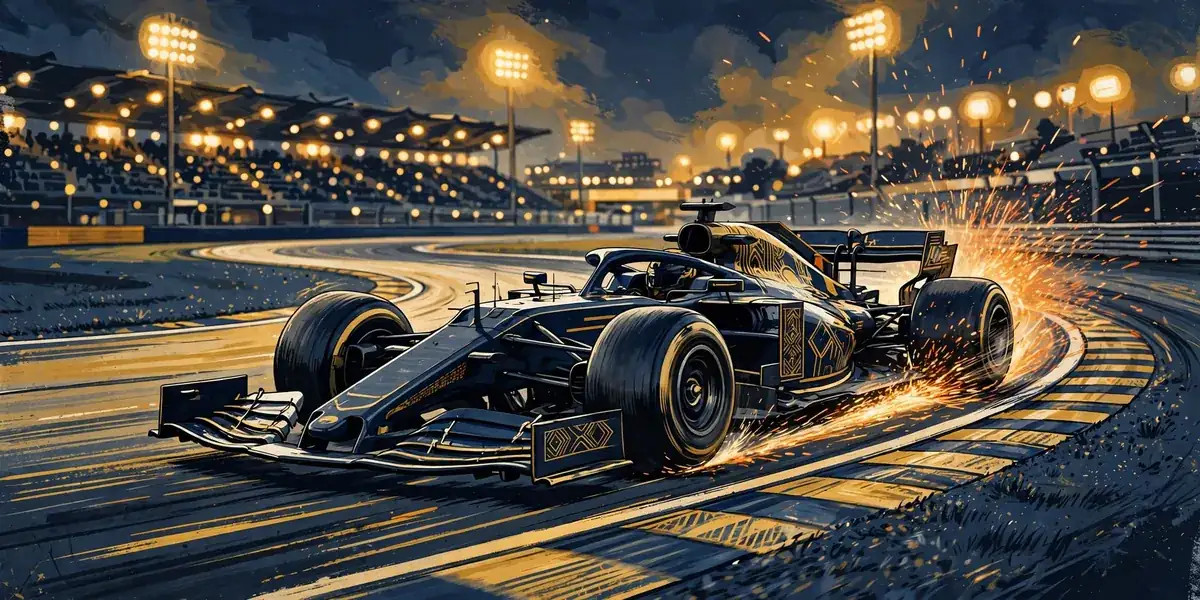
2022 was supposed to be the real test. The new regulations gave Haas a genuinely competitive car, Mazepin was gone after the team cut its Russian backing, and Kevin Magnussen arrived as Mick’s teammate. The first half of the season was rough: a huge crash in qualifying at the Saudi Arabian Grand Prix that split his car and kept him out of the race, another big crash at Monaco, and no points from the first nine races while Magnussen scored freely. The pressure built fast, and team principal Guenther Steiner’s patience wore thin in public.
Then came the two races that define Mick’s Formula 1 record. At the British Grand Prix in July 2022 he finished eighth — his first points in Formula 1. A week later in Austria he finished sixth, his best result in the sport, after a long and hard-fought battle with Lewis Hamilton. Twelve points in two weekends. For a moment it looked like the season had turned. It had not. He scored no more points in the remaining twelve races, and at the end of the season Haas let him go, replacing him with Nico Hülkenberg. Nico Hülkenberg’s net worth tells the other side of that decision: the experienced German took the seat Mick lost and has held it since.
The final numbers from his Formula 1 career are modest: 43 Grand Prix starts, 12 points, a best finish of sixth, no podiums, no pole positions, no fastest laps. He raced in an era when the midfield was brutally tight, and his two seasons came in a backmarker car and then a midfield car that only occasionally had the pace to score. Sebastian Vettel’s net worth is worth a look for context on what a long Formula 1 career at the front is worth — Vettel raced against Mick in 2021 and 2022 before retiring, and his fortune is on a different scale entirely. Max Verstappen’s biography covers the driver who defined the same era from the front of the field. Mick’s two seasons sit in the shadow of both men, and that is the plain truth of his Formula 1 record.
There is a fair debate about whether Haas gave him a proper chance. The 2022 car was good enough to score points, and Magnussen outscored him 25 points to 12. But Mick was also a 23-year-old in his second season, driving for a team that had built its whole identity around squeezing results from nothing, and the crashes — especially the two big ones in Saudi Arabia and Monaco — cost the team serious money and patience. F1Oversteer, reporting on the Netflix series Drive to Survive, put the cost of the Saudi crash at roughly $500,000 to $1 million. Haas never published a repair bill, so treat that as a reported estimate rather than a fact, but it explains why the team’s patience ran out when it did.
Mercedes Reserve Years and the Long Wait
When Haas released him, Mick did not leave Formula 1 at once. Mercedes signed him as a reserve driver for 2023, and he also held a reserve role with McLaren that year. It was, in one sense, a lifeline from the team his father had raced for at the end of his own career. In another sense it was a waiting room, and everyone knew it.
A reserve driver’s job is mostly invisible: hours in the simulator, debriefs, standing by at Grands Prix in case a race driver falls ill. Mick was widely praised inside Mercedes for the quality of his simulator work — Lewis Hamilton spoke well of him behind the scenes — but simulator work does not put points on a CV, and it does not pay like a race seat. Lewis Hamilton’s biography covers the driver Mick worked alongside at Mercedes, and the contrast is sharp: Hamilton was fighting for wins while Mick waited for a phone call that never came.
The call never came because the seats never opened. When Hamilton announced his move to Ferrari for 2025, Mercedes chose 18-year-old Andrea Kimi Antonelli to replace him rather than promote its reserve driver. Sauber, Alpine, Haas and Williams all passed on Mick for 2025 as well. By the end of 2024 he had been out of a race seat for two full seasons, and he made the decision that defined the next phase of his career: he left Mercedes, announced he would race full-time with Alpine in the World Endurance Championship in 2025, and stopped waiting for Formula 1 to call back.
It was the right call, and it was also a brave one. Plenty of ex-Formula 1 drivers spend years circling the paddock hoping for a return that never arrives. Mick chose to go racing instead. That choice is a big part of why his story is still moving in 2026 while other drivers from his generation have already faded from view.
World Endurance Championship With Alpine
Mick joined Alpine’s Hypercar programme for the 2024 World Endurance Championship, driving the Alpine A424 prototype in the No. 36 car. Endurance racing is a different discipline from single-seaters — three drivers sharing a car for six hours or a full day, traffic management, night driving, fuel and tyre strategy — and Mick took to it quickly. On 15 September 2024, at the 6 Hours of Fuji, he took the A424 to third place alongside Nicolas Lapierre and Matthieu Vaxivière. It was the car’s first podium in the Hypercar class, and Mick’s first podium since leaving Formula 1.
He stayed with Alpine for 2025, partnered with Jules Gounon and Frédéric Makowiecki, and added two more podiums: third at the 6 Hours of Imola and third at the 6 Hours of Spa-Francorchamps. He also finished tenth at the 24 Hours of Le Mans in 2025, the race that sits at the top of endurance racing. Across his two WEC seasons he made 16 starts and scored three podiums — a solid return in a series where Alpine was still building its programme against Toyota, Ferrari and Porsche.
The WEC years matter for the money story too. A Hypercar factory drive pays a professional salary, but it is not Formula 1 money, and it does not come with the same endorsement market. Mick’s two seasons with Alpine kept him racing at the top level and kept his name in front of manufacturers, but they did not add a large sum to his fortune. What they did add was proof that he could win podiums in a second discipline — and that proof is part of what made his next move possible.
In November 2025, Mick and Alpine parted ways after two seasons. He posted a short message thanking the team and telling his followers to stay tuned for 2026. Within days, the news broke: he was going to America.
The IndyCar Move
On 24 November 2025, Rahal Letterman Lanigan Racing announced that Mick Schumacher would drive for the team in the NTT IndyCar Series for the entire 2026 season. He would drive the No. 47 Honda — a number with family meaning, since 47 was his father’s number in his karting days and Mick has carried it through his career — alongside Graham Rahal and 2025 Rookie of the Year Louis Foster. He had tested for the team at the Indianapolis Motor Speedway road course on 13 October 2025, and both sides came away wanting to make it happen.
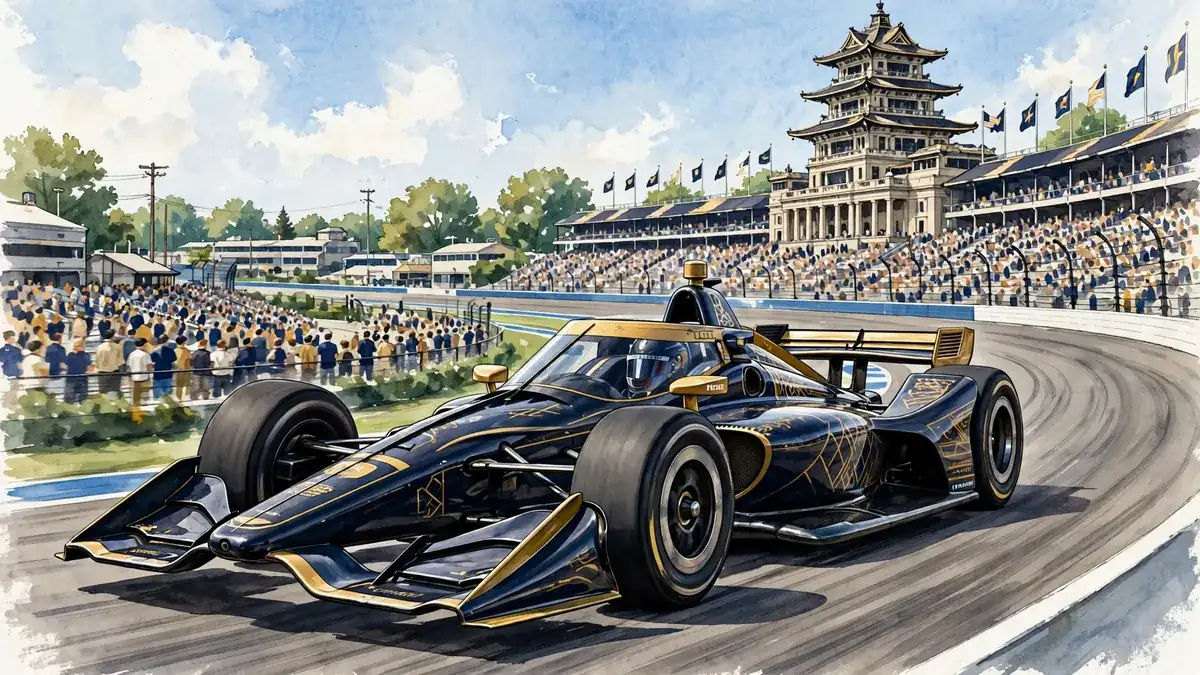
The move makes sense on the track. IndyCar is the closest thing to Formula 1 outside Formula 1: fast single-seaters, road courses, street circuits and ovals, with a 17-race calendar that in 2026 runs from the Firestone Grand Prix of St. Petersburg on 1 March to the season finale, including the 110th running of the Indianapolis 500 on 24 May. Six of the 17 races are on ovals, which is new for Mick — he had never raced on an oval before — but the road and street courses play to his strengths, and the series has a long record of giving ex-Formula 1 drivers a genuine second act.
It also makes sense off the track. IndyCar pays its drivers, and a full-time seat with a name as big as Schumacher’s brings sponsors with it. RLL said when it announced the deal that sponsorship details would follow, and no salary figure has been published. IndyCar teams do not publish driver pay, so anyone quoting a precise number for Mick’s 2026 salary is guessing. What can be said is that a full-time IndyCar seat, plus the endorsements that travel with the Schumacher name in the American market, is a real income stream again after two years in which his only racing pay came from Alpine.
There is already a next chapter beyond 2026. On 4 September 2026, Meyer Shank Racing announced Mick for its 2027 IndyCar line-up, driving the No. 66 Honda. The announcement also noted that ENVE Composites, the cycling company that backed him in 2026, is moving teams with him — a small detail that says a lot about how sponsors view him. A driver whose backers follow him from team to team is a driver with commercial value, and that is the part of the IndyCar story that matters most for his net worth in the years ahead.
Where the Money Comes From
Mick Schumacher’s fortune is built from four income streams, and none of them is large on its own. That is the whole story of his net worth: he has earned steadily at every step of his career, but he never had the long, high-paid run at the top that turns a racing driver into a very rich man.
Formula 1 salary (Haas, 2021–2022). Haas never published Mick’s salary, and no contract figure has ever been confirmed through a reliable outlet. Secondary net-worth sites commonly repeat an unverified figure of around $1 million a year for his Haas deal, and that number may be roughly right — rookie drivers at backmarker teams are paid at the low end of the Formula 1 scale — but we do not treat it as confirmed, and readers should not either. Two seasons at that level, after tax and after the costs of running a racing career, do not build a large fortune. They build a start.
Reserve driver pay (Mercedes and McLaren, 2023–2024). Reserve drivers are paid, but the pay is a fraction of a race driver’s salary. Mercedes has never disclosed the figure, and Mick’s two years in the role were about staying in Formula 1’s orbit rather than earning. The value of those years was the simulator work, the relationships and the Mercedes badge on his CV — all of which helped him later, but none of which shows up in a bank balance.
Endurance racing (Alpine, 2024–2025). A factory Hypercar drive is a proper professional salary, in line with what a top sports car driver earns, but it sits well below Formula 1 money. Alpine has never published driver pay either. Two seasons of WEC racing kept Mick earning while he rebuilt his career, and the three podiums raised his market value, but the WEC years were a holding pattern financially, not a windfall.
IndyCar (RLL, 2026; Meyer Shank, 2027). This is the stream that changes the picture. A full-time IndyCar seat pays a real salary, and the American market is new ground for the Schumacher name — new sponsors, new fans, new commercial deals. RLL has not published Mick’s pay, and IndyCar salaries are not public, so no figure is quoted here. What matters is the direction: after two years of reserve and sports car pay, Mick is a full-time single-seater driver again, with a second IndyCar season already signed, and with at least one sponsor, ENVE Composites, following him between teams.
Endorsements and sponsorships. The Schumacher name is a sponsor’s asset in itself, and Mick has carried personal backing through every stage of his career — most visibly ENVE Composites in IndyCar. He has never had the kind of mega-deal that a world champion commands, and he has never fronted a global campaign, but his name opens doors that stay shut for most drivers at his level. That is worth real money over a career, even if it is impossible to put a precise number on it from public information.
The honest gap: no major outlet — not Forbes, not Celebrity Net Worth, not Bloomberg — has published a researched estimate of Mick Schumacher’s wealth. Every number in circulation comes from net-worth aggregation sites, and those sites disagree with each other. That is why this article publishes a range and shows its working, instead of picking the biggest number and pretending it is certain.
The Net Worth Verdict
Here is the adjudication, source by source, with dates where they are known:
| Source | Estimate | Note |
|---|---|---|
| Fanamp | ~$8 million | Highest figure in circulation; a driver profile updated for 2026, also reports his IndyCar move and his relationship |
| F1Oversteer | ~$5 million | Motorsport specialist site; notes the figure is likely to have risen after his Formula 1 years |
| DailyWikiBio | ~$5 million | Biography site, figure given as of 2025 |
| CoastReview | $1 million – $5 million | Wide range in a 2026 IndyCar career piece; attributes the range to Wikipedia-linked estimates |
| ConsultantVue | ~$5 million | Biography aggregator; same ballpark as the other two $5 million figures |
Three sources converge on about $5 million, one goes higher at $8 million, and one gives a wide band that tops out at $5 million. The weight of the evidence sits at $5 million, with $8 million as the optimistic top end. So the estimate this article publishes is $5 million to $8 million, anchored at $5 million. If his IndyCar years go well — a win, a strong run at the Indianapolis 500, a bigger sponsor portfolio — the top of that range will start to look conservative. If they do not, the bottom of the range is the safer read. Either way, the figure is a working estimate built from public sources, not a look at his bank account, and it should be read that way.
For a sense of scale, here is how Mick’s figure sits next to other drivers covered on this site and elsewhere:
| Driver | Estimated Net Worth | Source |
|---|---|---|
| Mick Schumacher | $5M – $8M | F1Oversteer / Fanamp / DailyWikiBio (this article) |
| Michael Schumacher (father) | $600M – $800M | SportsLeo, BounceMojo, Alux, Net Worth Breakdown |
| Sebastian Vettel | ~$140M | CelebAmerica |
| Lewis Hamilton | ~$550M | Alux |
| Yuki Tsunoda | ~$5M | GuideNetWorth / CelebAmerica |
The comparison with Tsunoda is the telling one. Both men came through the 2020 Formula 2 season, both reached Formula 1 in 2021, and both are now valued at roughly the same figure. The difference is that Tsunoda stayed in Formula 1 and Mick did not — and staying is what pays. A single season as a Formula 1 race driver at a midfield team is worth more than two seasons as a reserve driver and two seasons in sports cars combined.
Cars, Homes and Lifestyle
There is not much to report here, and that is itself a finding. Mick Schumacher does not live the public billionaire lifestyle that fills gossip pages for other drivers’ children. He does not flaunt a car collection, he does not post about property, and no reliable outlet has reported a home purchase, a supercar garage or an investment portfolio in his name. What is known is modest and mostly second-hand.
He grew up in Switzerland, in the family’s homes around Lake Geneva, and he has lived in Switzerland for most of his life. He keeps a low profile off the track and his social media is mostly racing — testing, training, team work, the occasional holiday photo. He is known to be a keen cyclist, which fits with the ENVE Composites sponsorship, and he trains hard: endurance racing and IndyCar both demand a level of fitness that Formula 1 drivers sometimes get away with easing off.
He will, of course, have driven some remarkable cars — Formula 1 cars, a Hypercar prototype, and now an IndyCar — but those are his employers’ cars, not his own, and this article will not dress them up as personal assets. The honest summary is that Mick lives like a working racing driver, not like a celebrity heir, and his spending has never been the story. His story is the racing.
Personal Life
Mick is reported to be dating Portuguese model Clara Ramos, who studies at the University of Barcelona, according to Fanamp’s 2026 profile. The relationship is not something Mick discusses publicly, and there is no confirmed engagement or marriage. Like his father, he keeps his private life out of the press as far as he can, and that is a deliberate choice rather than an accident.
His family remains close. His mother Corinna has been a constant presence at races through his career, his sister Gina-Maria is a successful western rider, and his uncle Ralf — a six-time Grand Prix winner himself — has sometimes spoken publicly about Mick’s career, including criticism of how Haas handled his exit. Mick’s relationship with his father is private, and the family has asked for that privacy to be respected. It is.
Outside racing, Mick is a keen skier and cyclist, and he has spoken about how much he enjoys the American racing culture since moving to IndyCar — the access to fans, the openness of the paddock, and the chance to race in front of crowds that are new to him. The 2026 season is his first full year living and racing in the United States, and by all accounts he has thrown himself into it.
Mick vs Michael: Two Very Different Fortunes
Every article about Mick Schumacher has to deal with the comparison, so let us deal with it properly. Michael Schumacher’s net worth is estimated at between $600 million and $800 million: SportsLeo and BounceMojo put him at about $600 million, Alux and Net Worth Breakdown at about $800 million, and GQ’s sports reporting, quoted by Net Worth, at about $790 million. Forbes once put his career earnings at about $1 billion. At his peak with Ferrari, Michael was reportedly earning $80 million to $100 million a year in salary and sponsorships. He was, as F1Oversteer notes, the first billionaire athlete. You can read the full breakdown on our sister site: Michael Schumacher’s net worth on GuideNetWorth.
Mick’s $5 million to $8 million is roughly one percent of his father’s fortune. That is not a failure — it is arithmetic. Michael had 19 seasons in Formula 1, seven world titles, 91 wins, and two decades at the top of the highest-paid sport in the world. Mick has had two seasons in Formula 1, both in cars that could not win, and he is 27 years old. Nobody builds a $600 million fortune in two seasons at Haas.
The comparison is also unfair in the other direction. Michael’s wealth came from being the best driver of his generation for a very long time. Mick’s career, judged on its own terms, is a strong one: two junior championships, a Formula 1 seat earned on merit, three WEC podiums, and now a full-time IndyCar career with a second season already signed. Plenty of drivers with famous fathers never got as far as a Formula 1 grid at all. Mick got there, and he got there by winning titles.
There is one more thing worth saying plainly. A large part of Michael’s fortune is not Mick’s money, and Mick has never presented it as his own. He races for his own living, on his own contracts, and the $5 million to $8 million in this article is his own figure — built from his own salaries, his own deals and his own results. That is the number that matters here.
Crashes, Criticism and the Hard Questions
No honest profile of Mick Schumacher skips the crashes. The 2022 season had two that everyone remembers: the qualifying crash at the Saudi Arabian Grand Prix, which split his car and ruled him out of the race, and the crash at Monaco, which broke the car in two. Both were heavy impacts, both were his fault, and both cost Haas a lot of money. Reported estimates of the Saudi repair bill run from about $500,000 to $1 million. The crashes became the story of his season, and they were a major reason Haas let him go.
The criticism went further than the crashes. Guenther Steiner, the Haas team principal, was openly frustrated with Mick’s performance in 2022, and the Netflix series Drive to Survive showed that frustration in full. Steiner later said Mick was in over his head. Mick’s defenders — and there are many inside the sport — point out that he was 23, in his second season, driving a car that his far more experienced teammate also struggled to score points in, and that young drivers crash. Both things can be true at once: the crashes were costly and avoidable, and the reaction to them was harsher than a driver without his surname would have faced.
There are no other controversies of note in Mick’s career. No legal trouble, no scandals, no public rows with other drivers, no social media storms. His record off the track is clean, and his reputation inside the paddock — for work rate, for simulator feedback, for professionalism — is strong. The hard questions about Mick are all about speed and results, not behaviour, and that is a better place to be than most drivers who lose a Formula 1 seat.
What Comes Next
The 2026 IndyCar season is the biggest year of Mick Schumacher’s career since 2022, and it will decide what the rest of it looks like. A strong first season with RLL — points, a podium, a good run at the Indianapolis 500 — would make him a fixture in American racing for years, and the Meyer Shank deal for 2027 already suggests the series sees him as a long-term driver rather than a one-season story. A poor season would leave him where he was in 2024: talented, well-liked, and out of a top seat.
There is also the question everyone asks and nobody can answer: could he return to Formula 1? As of November 2026, the honest answer is almost certainly not as a race driver. He is 27, he has been out of the series for four years, and Formula 1 teams now promote teenagers. The door that matters is the one he has already walked through: IndyCar, where he can build a second career on his own terms, in a series that values experience and racecraft over youth. If he wins races there, the money will follow — and the net worth figure in this article will need updating.
For readers who want to follow the rest of the story, our Net Worth category carries the same treatment for the other drivers of Mick’s generation — the ones he raced against in F2, the ones who stayed in Formula 1, and the ones who, like him, had to find a second act.
Frequently Asked Questions
What is Mick Schumacher’s net worth in 2026?
Mick Schumacher’s net worth is estimated at $5 million to $8 million as of November 2026, anchored at around $5 million. F1Oversteer, DailyWikiBio and ConsultantVue all put him at roughly $5 million, Fanamp puts him higher at about $8 million, and CoastReview gives a $1 million to $5 million range. There is no Forbes or Celebrity Net Worth figure for him, so the honest answer is a range.
How did Mick Schumacher make his money?
His money comes from racing: two seasons as a Formula 1 driver with Haas (2021–2022), two years as a Mercedes reserve driver (2023–2024), two seasons in the World Endurance Championship with Alpine (2024–2025), and now a full-time IndyCar contract with Rahal Letterman Lanigan Racing for 2026, plus endorsements and sponsorships — most visibly ENVE Composites. Haas never published his salary, so no single contract figure is confirmed.
Is Mick Schumacher as rich as his father Michael Schumacher?
No — not even close. Michael Schumacher’s net worth is estimated at $600 million to $800 million, built over 19 Formula 1 seasons, seven world titles and 91 Grand Prix wins, with peak earnings of $80 million to $100 million a year at Ferrari. Mick’s $5 million to $8 million is roughly one percent of his father’s fortune, and it is entirely his own money from his own career.
What team does Mick Schumacher drive for in 2026?
Mick Schumacher drives for Rahal Letterman Lanigan Racing in the NTT IndyCar Series in 2026, in the No. 47 Honda, alongside Graham Rahal and Louis Foster. The deal was announced on 24 November 2025. He has already signed for 2027 with Meyer Shank Racing, where he will drive the No. 66 Honda.
Why did Mick Schumacher leave Formula 1?
Haas released him at the end of the 2022 season after two seasons in which he scored 12 points, all in 2022, with a best finish of sixth in Austria. Costly crashes in Saudi Arabia and Monaco and being outscored by teammate Kevin Magnussen (25 points to 12) cost him the seat. He spent 2023 and 2024 as a Mercedes reserve driver, but no race seat opened up, so he moved to endurance racing with Alpine and then to IndyCar.
Who is Mick Schumacher’s girlfriend?
Mick Schumacher is reported to be dating Portuguese model Clara Ramos, who studies at the University of Barcelona, according to Fanamp’s 2026 profile. Mick keeps his private life out of the press, and the relationship has not been confirmed by him publicly.
How tall is Mick Schumacher?
Mick Schumacher is listed at about 1.76 metres (5 ft 9 in) by F1Oversteer, though some profiles list him slightly shorter, at 1.70 to 1.75 metres. The 5 ft 9 in figure is the most commonly cited.
Did Mick Schumacher win any championships?
Yes — two. He won the FIA Formula 3 European Championship in 2018 with Prema, taking eight wins and finishing 57 points clear of Dan Ticktum, and he won the FIA Formula 2 Championship in 2020, also with Prema, beating Callum Ilott to the title in the final round in Bahrain on 6 December 2020. Both titles came in his second season in the category.
Final Thoughts
Mick Schumacher’s net worth — $5 million to $8 million, anchored at $5 million — is the fortune of a driver who reached the top, lost his seat, and refused to stop racing. It is a fraction of his father’s wealth and a fraction of what a long Formula 1 career pays, but it is his own, earned across four disciplines and three continents. The number that matters now is not the one in this article. It is the one his IndyCar years will produce. If the 2026 season with Rahal Letterman Lanigan Racing goes the way his junior career went — a learning year, then a winning one — the next version of this page will tell a bigger story. For now, the honest figure is $5 million to $8 million, the honest assessment is a career still being written, and the honest verdict is that Mick Schumacher has already done something most racing drivers never do: he came back.
Sources and Reporting
How we estimated: Mick Schumacher’s net worth is an estimate built from published figures, not a statement of his private finances. We collected every published estimate we could find from named sources — Fanamp (~$8 million), F1Oversteer (~$5 million), DailyWikiBio (~$5 million), CoastReview ($1–$5 million) and ConsultantVue (~$5 million) — and published the range they describe, anchored at the figure most sources agree on. No Forbes, Celebrity Net Worth or Bloomberg estimate exists for Mick. Where sources disagreed, we said so. Where a salary or contract figure was never published — his Haas pay, his Mercedes reserve pay, his Alpine pay, his IndyCar pay — we said that too, rather than repeating an unverified number as fact. Career facts (dates, teams, results, championships) were checked against Wikipedia, IndyCar, Rahal Letterman Lanigan Racing, PlanetF1, RacingNews365 and F1Oversteer. Estimates change as new contracts are signed; this page will be updated when they do.
Sources consulted: Fanamp, F1Oversteer, DailyWikiBio, CoastReview, Wikipedia, IndyCar, Rahal Letterman Lanigan Racing, PlanetF1, RacingNews365, Alux, SportsLeo, BounceMojo.