By Celebamerica Editorial Staff | Last updated: 12 November 2026
Lionel Messi is 5 feet 7 inches tall (170 cm, or 1.70 m), according to the official player profile published by his club, Inter Miami CF. That is the figure used across his current MLS listing, Transfermarkt and most major databases as of November 2026 — and it makes him one of the shortest greats the game has ever seen. A small number of older listings still show 169 cm (5 ft 6.5 in), a half-inch gap that comes down to rounding and measurements taken at different points in his career, so the honest range is 169–170 cm, anchored on the Inter Miami figure of 5 ft 7 in.
What makes Messi’s height worth a full article is not the number itself. It is the story behind it: a childhood diagnosis of growth hormone deficiency, daily injections his working-class family could barely afford, a trial in Barcelona at 13 that changed everything, and a career built on turning a small frame into the sharpest weapon in football. This page answers every version of the question — Messi’s height in feet, inches and centimetres, how he measures up against Cristiano Ronaldo, Kylian Mbappé and the rest, and why being short helped rather than held him back.
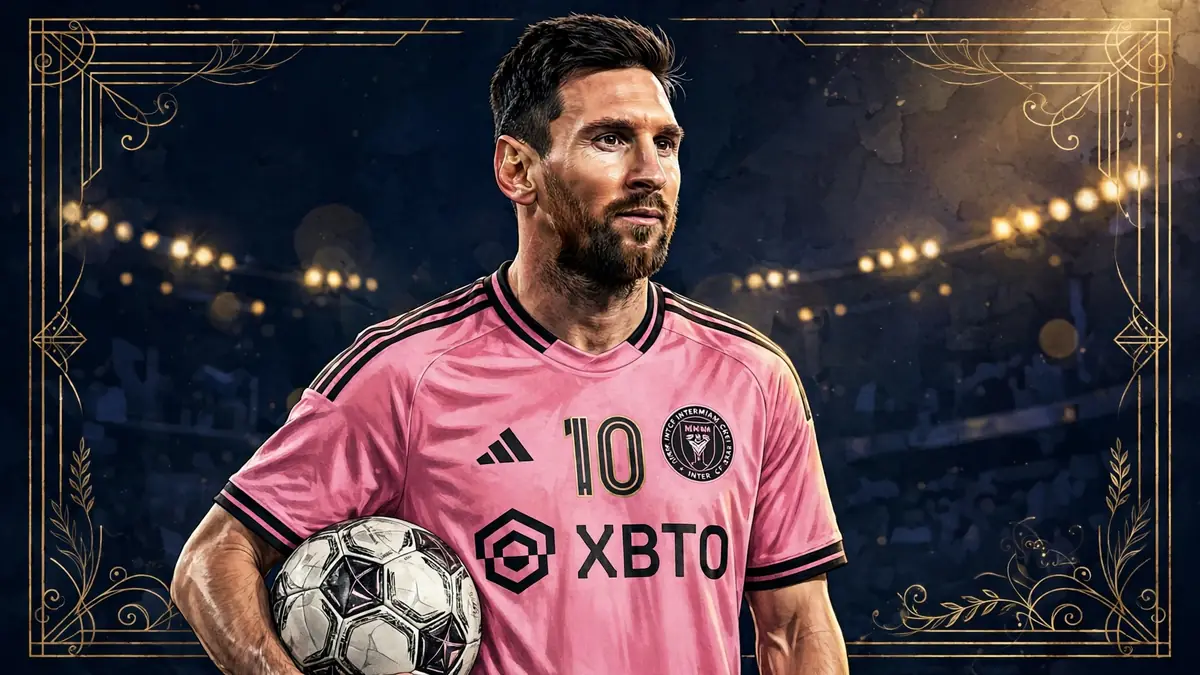
Quick Facts: Lionel Messi at a Glance
| Full Name | Lionel Andrés Messi Cuccittini |
|---|---|
| Date of Birth | 24 June 1987 (age 39 as of November 2026) |
| Birthplace | Rosario, Santa Fe, Argentina |
| Height | 5 ft 7 in (170 cm / 1.70 m) — Inter Miami CF official listing; some older listings give 169 cm (5 ft 6.5 in) |
| Weight | Reported at 67–72 kg (148–159 lbs); listings differ by source |
| Current Club | Inter Miami CF (Major League Soccer), contract through the 2028 season |
| Position | Forward / attacking midfielder, No. 10 |
| National Team | Argentina (captain); 2022 World Cup winner |
| Major Honours | 8× Ballon d’Or, 2022 FIFA World Cup, 2× Copa América (2021, 2024), 4× UEFA Champions League, MLS Cup 2025 |
| Primary Income Sources | Inter Miami salary, Adidas lifetime endorsement, sponsorships and business ventures |
| Family | Wife Antonela Roccuzzo; sons Thiago, Mateo and Ciro |
In This Article
- Quick Facts: Lionel Messi at a Glance
- How Tall Is Lionel Messi?
- Messi’s Height in Every Unit
- Why Some Sources List 169 cm Instead of 170 cm
- The Growth Hormone Story Behind Messi’s Height
- From Rosario to Barcelona: How Treatment Shaped a Career
- Messi vs Ronaldo: The Height Gap
- Messi vs Mbappé, Neymar and the Rest
- How Being 5 ft 7 in Shaped Messi’s Playing Style
- How Messi Compares to the Average Footballer
- Messi in 2026: World Cup Final, MLS Cup and Life in Miami
- Messi’s Wealth in Brief
- Personal Life: Family, Home and Life Off the Pitch
- Frequently Asked Questions About Lionel Messi’s Height
- The Bottom Line on Lionel Messi’s Height
- Sources and How We Estimated
How Tall Is Lionel Messi?
Lionel Messi stands 5 feet 7 inches tall. In metric terms that is 170 centimetres, or 1.70 metres — the figure printed on his official Inter Miami CF player profile and repeated by MLS, the league he has played in since July 2023. MLS itself spelled it out in plain language during the 2025 season: “As so many soccer fans know so well, Lionel Messi stands a modest 5 feet 7 inches (170 centimeters) in height.” FotMob, Sportradar and Transfermarkt all carry the same 170 cm entry, and the specialist height database HeightComparative lists his height as 5 ft 7 in with the MLS player profile as its source, verified in September 2026.
For a player of his standing, that number surprises people. Football’s modern stars keep getting taller — the average Ballon d’Or winner stands 1.78 m, according to an analysis published by ballondor.com in July 2026 — yet Messi, the record eight-time winner of that same award, measures 8 cm below that average. He is shorter than almost every forward he lines up against, shorter than the average professional footballer by a clear margin, and shorter than the average man in Argentina. And none of it has ever mattered on the pitch. If anything, the opposite is true: the low centre of gravity that comes with 170 cm is a large part of what makes his dribbling so hard to stop.
Search interest in Messi’s height never really fades, because the number sits at the centre of two different curiosities. The first is simple: fans want the fact, in their own units, and they want it from a source they can trust. The second is the medical story — the growth hormone deficiency diagnosed when he was 10 or 11, and the treatment that carried him from a predicted adult height of about 4 ft 7 in to the 5 ft 7 in he stands at today. Both are covered in full below, with the sources named at every step.
Messi’s Height in Every Unit
Because Messi’s height is quoted in different units around the world, here is the full conversion from the anchored figure of 5 ft 7 in, plus the range that appears in older listings.
| Unit | Messi’s Height |
|---|---|
| Feet and inches | 5 ft 7 in |
| Inches | 67 inches |
| Centimetres | 170 cm (range in listings: 169–170 cm) |
| Metres | 1.70 m (range in listings: 1.69–1.70 m) |
| Feet (decimal) | 5.58 ft |
The conversion is exact: 5 ft 7 in equals 170.18 cm, which rounds to 170 cm. The half-inch version that shows up in some places — 5 ft 6.5 in, or 169 cm — is the same height rounded down, or measured at an earlier stage of his career. Neither figure is a mistake in the way a wrong number would be; they are two roundings of the same man. For this article, 5 ft 7 in (170 cm) is the anchor because it is the figure his current club publishes, it matches Transfermarkt, FotMob and Sportradar, and it is the figure MLS uses in its own coverage.
His weight is less settled. Listings put him anywhere from 67 kg (148 lbs) to 72 kg (159 lbs), and the spread is wider than the height spread because weight moves with training load, season and age. A 67 kg figure appears in several player databases; 72 kg appears in others, including Transfermarkt-linked profiles. This article gives the range rather than picking one number and pretending the sources agree.
Why Some Sources List 169 cm Instead of 170 cm
If you have ever seen Messi listed at 169 cm and wondered whether one of the numbers is wrong, the answer is more boring — and more honest — than a conspiracy. Club heights are not measured the way a doctor measures a patient. There is no published record of when, where or how Inter Miami or Barcelona measured him, whether shoes were on, or what time of day it was. Human height varies by up to a centimetre over a single day as the spine compresses, and a listing compiled when Messi was 21 will not be identical to one compiled at 35. Rounding does the rest: 170.18 cm becomes 170 cm in one database and 1.69 m in another that truncates instead of rounding.
The specialist site heightandtall.com, which checked Inter Miami’s profile in October 2026, puts it plainly: the club lists 5 ft 7 in, the imperial figure converts to 170.18 cm, and no measurement procedure is published. That is the right way to read every footballer’s listed height — as an official roster figure, not a laboratory measurement. What matters for readers is that the disagreement is half an inch at most. No credible source lists Messi at 5 ft 6 in or 5 ft 8 in. The whole debate lives inside a 1 cm window, and the anchor — 5 ft 7 in, 170 cm — is the figure his current club, his league and the major databases agree on.
The short answer: Lionel Messi is 5 ft 7 in (170 cm) tall. If you see 169 cm, you are looking at the same height rounded the other way — not a different measurement, and not a sign that he has shrunk.
The Growth Hormone Story Behind Messi’s Height
Messi’s height cannot be understood without the medical story that nearly ended his career before it started. At around age 10 or 11, doctors in Rosario diagnosed him with growth hormone deficiency (GHD), a condition in which the pituitary gland does not produce enough growth hormone for normal childhood growth. His childhood endocrinologist, Dr Diego Schwarzstein, has spoken publicly about how difficult the condition was to pin down — Messi looked like a normal child, just a small one, and the diagnosis only came after more than a year of tests. A detailed account published by Dartmouth College records that at 11 he stood just 4 ft 4 in and had barely grown since he was nine, and that his doctor predicted a maximum adult height of about 4 ft 7 in without treatment.
The treatment was daily injections of recombinant human growth hormone, which Messi learned to give himself in the thigh from the age of 11. The injections worked — they let him grow toward a normal adult height — but they were ruinously expensive for his family. His father Jorge worked in a steel factory and his mother Celia cleaned houses part-time. Published accounts put the cost at roughly $900 to $1,500 a month in the late 1990s, depending on the source: Athlon Sports, reporting in October 2026, cites about $900 a month, while the Dartmouth account, drawing on Guillem Balague’s biography, cites $1,500 a month. Either figure was far beyond what a working-class household of six could carry for years, and the strain is a central part of the story. River Plate, one of Argentina’s biggest clubs, showed interest in covering the treatment, then backed away.
Two points matter for anyone reading this story today. First, the treatment was medicine for a diagnosed deficiency, given under a doctor’s care — not the performance enhancement that the words “growth hormone” sometimes suggest to casual readers. Medical Daily, reporting on the condition in July 2026, stresses the same distinction: GHD therapy replaces a hormone the body fails to make, and Messi’s success came from talent, discipline and years of development, not from the treatment alone. Second, the treatment did not make him tall. It carried him from a predicted 4 ft 7 in to 5 ft 7 in — a normal height for a man, and still short for a professional footballer. The injections gave him a chance; everything after that was football.

From Rosario to Barcelona: How Treatment Shaped a Career
Messi was born on 24 June 1987 in Rosario, a port city in Argentina’s Santa Fe province, and he was kicking a ball almost as soon as he could walk. He joined the youth academy of Newell’s Old Boys at six and scored more than 500 goals for their youth sides, according to the biographical record cited by Dartmouth. Coaches and opponents alike remember the same thing: a child so small that he looked out of place, doing things with the ball that nobody else on the pitch could do. The size gap was obvious even then, and it only widened as his teammates shot up and he did not.
The turning point came in September 2000, when Messi was 13. His family, who had relatives in Catalonia, arranged a trial with FC Barcelona’s famed La Masia academy. The story has become legend: he scored five goals in the trial game, and the coach was convinced within two minutes. On 14 December 2000, in a tennis club restaurant, Barcelona’s sporting director Carles Rexach wrote a commitment on a paper napkin — the club would sign Messi and pay for his growth hormone treatment in full. Rexach and the club official Horacio Gaggioli signed it. Messi himself later said Barcelona was “the only club in the world that offered” to pay for his treatment. The full account of his rise from Rosario to the top of the game is told in our Lionel Messi biography, which covers the Barcelona years, the trophies and the move to Miami in detail.
Barcelona’s gamble paid off beyond any reasonable expectation. Messi made his competitive debut for the club at 17, in October 2004, and went on to spend 21 years there, winning 10 La Liga titles, four UEFA Champions League titles and seven Copa del Rey trophies, along with a record eight Ballon d’Or awards. The treatment continued through his teenage years — some accounts say he may still have been receiving it around the time of his debut — and then stopped once he had finished growing. The small boy from Rosario had become the best player on the planet, and his height, which once looked like the thing that would stop him, had become part of his identity: La Pulga, the Flea, the little genius who could not be caught.
There is a quiet lesson in the timeline that often gets lost in the romance. The napkin contract is usually told as a football story, but it was a medical story first. Without a club willing to pay for years of injections, there is no La Masia, no debut at 17, no World Cup in 2022. Messi’s height is not just a trivia answer — it is the visible record of a childhood illness, a family’s sacrifice and a club’s decision to pay a medical bill that no one else would.
Messi vs Ronaldo: The Height Gap
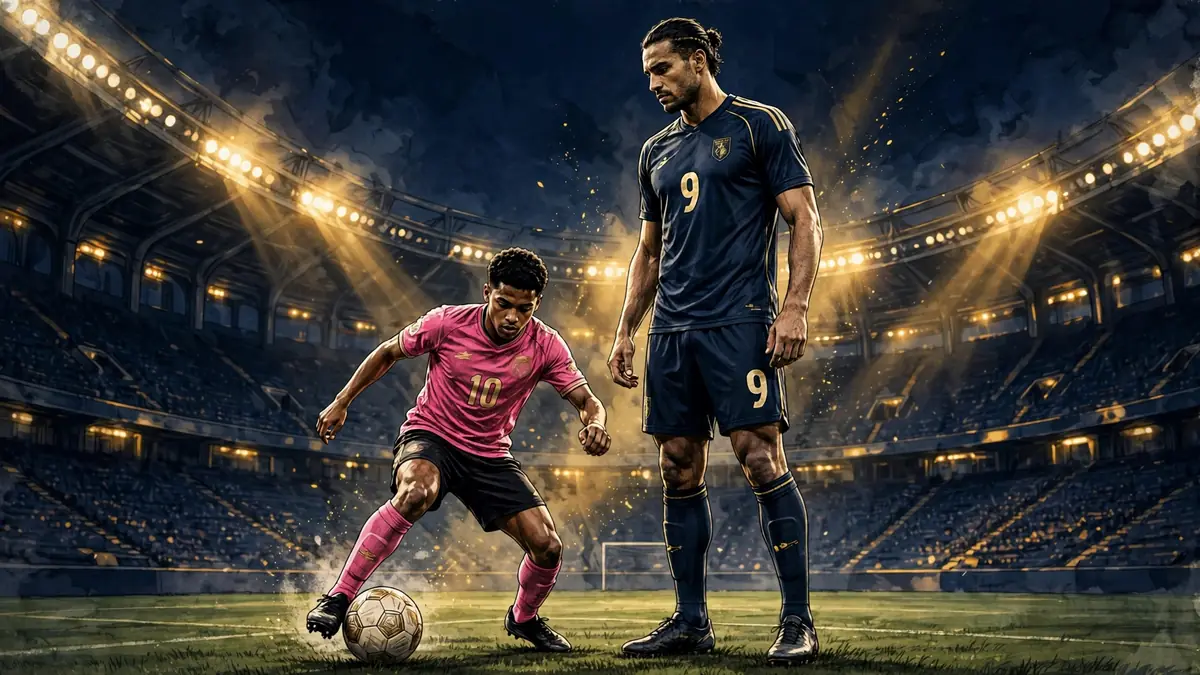
No height comparison in football is asked about more than Messi vs Cristiano Ronaldo. The numbers are not close. Ronaldo is listed at 6 ft 2 in (187 cm) by most major databases — 17 cm, or about 7 inches, taller than Messi. Stand the two side by side and the difference is obvious: Ronaldo is a full head taller, with the broad shoulders and leaping power to match. For a sense of how their ages line up across the same rivalry, see our piece on Cristiano Ronaldo’s age.
| Player | Height |
|---|---|
| Lionel Messi | 5 ft 7 in (170 cm) |
| Cristiano Ronaldo | 6 ft 2 in (187 cm) |
| Difference | 7 inches (17 cm) |
The gap shaped both players’ games in opposite directions. Ronaldo built his career on physical dominance: the leap that lets him hang in the air for headers, the sprint power, the physique that has been sculpted over two decades. His headed goals — including the famous 2.93 m leap against Sampdoria in 2019 — are a direct product of height plus athleticism. Messi went the other way. At 5 ft 7 in he rarely contests aerial balls, and his heading record is modest by elite standards. What he gained instead was a centre of gravity that sits inches lower than a taller player’s, which lets him change direction at full speed without the long levers of a 6 ft 2 in frame slowing him down.
The comparison has followed them for nearly two decades, through nine seasons of El Clásico, five Ballon d’Or awards for Ronaldo against Messi’s eight, and a rivalry that defined an era. What the numbers make clear is that football has room for both body types at the very top. Ronaldo proved that a tall, powerful forward could dominate the modern game; Messi proved that a short, low-slung dribbler could dominate it just as completely. The height gap never decided anything between them — the trophies, the goals and the longevity did.
Messi vs Mbappé, Neymar and the Rest
Against the rest of his generation, Messi is short almost across the board. Kylian Mbappé, the French forward who succeeded him as the game’s great young star, stands 5 ft 10 in (178 cm) — three inches taller. Our guide to Kylian Mbappé’s height breaks down how his 178 cm frame powers his sprinting game. Neymar, Messi’s former Barcelona teammate and close friend, is 5 ft 9 in (175 cm); for the timeline of his career, see Neymar’s age profile. Erling Haaland, the Norwegian striker who now sets the standard for centre-forward play, towers at 6 ft 5 in (195 cm) — a full 10 inches above Messi — and his rise is covered in our Erling Haaland biography.
| Player | Height | vs Messi |
|---|---|---|
| Lionel Messi | 5 ft 7 in (170 cm) | — |
| Diego Maradona | 5 ft 5 in (165 cm) | 2 in shorter |
| Kylian Mbappé | 5 ft 10 in (178 cm) | 3 in taller |
| Neymar | 5 ft 9 in (175 cm) | 2 in taller |
| Mohamed Salah | 5 ft 9 in (175 cm) | 2 in taller |
| Cristiano Ronaldo | 6 ft 2 in (187 cm) | 7 in taller |
| Robert Lewandowski | 6 ft 1 in (185 cm) | 6 in taller |
| Harry Kane | 6 ft 2 in (188 cm) | 7 in taller |
| Erling Haaland | 6 ft 5 in (195 cm) | 10 in taller |
The table hides an interesting pattern. The players closest to Messi in height are the ones whose games most resemble his: Maradona, at 5 ft 5 in, was the original low-gravity genius, and the comparisons between the two Argentines have run for decades; Pelé, at 5 ft 8 in, was only an inch taller. The great dribblers and close-control artists of football history cluster at the shorter end of the scale, while the great target men and aerial threats cluster at the taller end. Height does not sort players into good and bad. It sorts them into different kinds of good.
That pattern holds in Messi’s own Argentina team. His Inter Miami and Argentina teammate Rodrigo De Paul stands 5 ft 11 in; Luis Suárez, his strike partner at both Barcelona and Miami, is 6 ft 0 in. In team photos Messi is often the shortest outfield player in the frame — and, just as often, the one holding the trophy at the end of the night.
How Being 5 ft 7 in Shaped Messi’s Playing Style
Ask coaches why Messi is so hard to tackle and the answer almost always comes back to his height — not in spite of it, but because of it. A shorter player has a lower centre of gravity, which means he can shift his weight from one foot to the other faster, lean into a turn without losing balance, and keep the ball close to his feet while changing direction at full pace. Watch Messi run at a defender and you will see the same sequence again and again: a dip of the shoulder, a touch that takes the ball a few inches to one side, and a burst of acceleration while the defender is still planting his feet. That sequence is physics. A 6 ft 2 in defender needs more time and more space to make the same turn; Messi needs almost none.
His dribbling numbers back up what the eye sees. Across his Barcelona career he routinely led Europe’s top leagues in successful dribbles per game, often by a wide margin, and he did it while being fouled more than almost any player of his era. Defenders learned that the only reliable way to stop him was to foul him — and the foul counts became part of his legend. The low centre of gravity also explains his balance: Messi is knocked off the ball far less often than his size would suggest, because his weight sits close to the ground and his feet stay under him.
There are trade-offs, and honest coverage should name them. Messi wins very few headers. In aerial duels he is at a clear disadvantage against taller centre-backs, and his headed-goal tally across a 20-year career is small next to Ronaldo’s. He is also less of a physical presence in defensive duels, and teams that press him high have occasionally forced him into rushed passes. But the trade-offs never came close to outweighing the advantages. His free-kick record, his passing range, his vision — none of those depend on height, and all of them sit at the top of the sport’s history. The 2026 Ballon d’Or analysis made the point directly: among the shortest winners in the award’s history is also the record holder, with eight wins, at 1.70 m.
The style also shaped how he aged. Taller players who rely on pace and power tend to fade earlier as their legs go; Messi’s game was built on balance, touch and reading the game, which age far more slowly. That is a large part of why he was still producing 41 goals and 19 assists across 47 games for club and country in 2026, at 39, and why his move to MLS in 2023 looked less like a retirement tour and more like a second peak.
How Messi Compares to the Average Footballer
Put Messi next to the average professional footballer and the gap is plain. The typical male professional stands somewhere between 5 ft 9 in and 6 ft 1 in (1.75–1.85 m), depending on position, and forwards average around 5 ft 10 in (1.78 m). Messi, at 5 ft 7 in, sits three inches below the average forward and four inches below the average World Cup player, whose height has been measured at around 5 ft 11 in. Goalkeepers average taller still, often 6 ft 2 in or more, which is why Messi shooting over a wall of defenders has always looked faintly improbable — and why it keeps working.
Position matters here. Centre-backs and target strikers are the tallest players on the pitch because their jobs reward height: winning headers, shielding the ball, dominating the box. Attacking midfielders and wingers run shorter, because their jobs reward agility. Messi plays as a forward, a position where the average is 5 ft 10 in, yet his game is that of a playmaker who happens to score like a striker. His height fits the playmaker’s profile far better than the striker’s — and that mismatch is precisely what made him so hard to plan against. Opponents set up to stop a forward and found themselves facing a midfielder with a goalscorer’s record.
It is worth saying plainly that short footballers are not rare, and Messi is not an outlier in the way a 5 ft 2 in player would be. Xavi Hernández, one of the great midfielders of the modern era, is 5 ft 7 in. Lorenzo Insigne is 5 ft 4 in. Marco Verratti is 5 ft 5 in. What makes Messi unusual is not that a short player succeeded, but that a short player succeeded so completely — eight Ballon d’Or awards, a World Cup, and a goal record that may never be matched — while playing in an era when the sport kept getting bigger, faster and more physical around him.
Messi in 2026: World Cup Final, MLS Cup and Life in Miami
Messi’s height has not changed in 2026, but almost everything around it has had a remarkable year. He began 2026 as the reigning MLS Cup champion, after leading Inter Miami to a 3–1 win over the Vancouver Whitecaps in the final on 6 December 2025 — the club’s first league title — with two assists in the final and the MLS Cup MVP award. His 2025 regular season, 29 goals and 19 assists in 28 matches, won him the Golden Boot and a second straight Landon Donovan MLS MVP award, the first back-to-back MVP run in league history. For a 38-year-old in a new league, it was a statement season.
The summer brought his sixth and final World Cup. Captaining defending champions Argentina at the 2026 tournament in the United States, Mexico and Canada, Messi scored eight goals and added four assists in eight games, carrying Argentina to the final against Spain on 19 July 2026. Spain won 1–0 in extra time in New Jersey, and Messi finished as the tournament’s runner-up in the scoring charts behind Mbappé’s 10 goals — a final that ended one short of a second straight title, but a campaign that confirmed, at 39, that he could still decide games at the highest level. ESPN’s 2026 tracker put his year at 41 goals and 19 assists in 47 games for club and country, and in the autumn he was nominated for the 2026 Ballon d’Or, with the ceremony held on 26 October at the London Palladium.
Back in Miami, the story continued. His contract extension, signed in October 2025, runs through the 2028 season, which will take him past his 41st birthday. Inter Miami, co-owned by David Beckham — whose own fortune is covered in our piece on David Beckham’s net worth — moved into its new home, and Messi kept producing: on 1 November 2026 his late winner at New England moved Miami into second place in the Eastern Conference heading into the playoffs. Few players in history have been this good this late, at any height. For readers wondering about the other half of that sentence — how old Lionel Messi is now at 39 — our sister site GuideNetWorth carries the full age profile.
The move to Miami also changed what Messi means to American soccer. His arrival in July 2023 lifted Inter Miami from an afterthought into a global brand overnight, and the club has since added three major titles: the Leagues Cup in 2023, the Supporters’ Shield in 2024 and the MLS Cup in 2025. His presence sits among the most-read celebrity profiles on this site for a reason — he is the rare athlete whose biography, wealth, age and height all draw millions of searches a year, and the height question is usually where new fans start.
Messi’s Wealth in Brief
This is a height article, not a net worth profile, but no Messi page is complete without a word on the money — and the money is inseparable from the height story, because the boy whose treatment Barcelona paid for became one of the richest athletes on earth. His Inter Miami deal, signed in July 2023, pays a little over $20.4 million a year in guaranteed compensation according to the MLS Players Association’s published figures for 2024, before bonuses, endorsements and his equity stake in the club’s commercial ventures. On top of the salary sits a lifetime deal with Adidas, one of the most valuable boot contracts in sport, plus long-running partnerships with brands including Pepsi and Budweiser.
Estimates of his total fortune run into ten figures: our sister site NetWorthCraft puts Lionel Messi’s net worth at $1.1 billion in its 2026 profile, a figure built from his career earnings, endorsements and investments. Other outlets land lower, in the $850 million to $1 billion range, and the spread is a reminder that private wealth is always an estimate. The direction of travel is not in doubt, though: the child whose family could not afford $900 a month of medicine now earns more in a week than that treatment cost in a year. If the full money story is what you came for, the NetWorthCraft profile linked above is the place to read it — this page keeps its focus on the 170 cm that made it all possible.
Personal Life: Family, Home and Life Off the Pitch
Messi’s life off the pitch has stayed remarkably steady while his career moved across three countries. He married Antonela Roccuzzo, his childhood sweetheart from Rosario, in June 2017, and the couple have three sons: Thiago, born in 2012, Mateo, born in 2015, and Ciro, born in 2018. The family moved to Miami with him in 2023 and settled in Florida, where Messi has spoken about enjoying a quieter daily life than the fishbowl of Barcelona or Paris — school runs, family dinners and a home life that stays mostly out of the cameras.
His property moves have been widely reported: a long-time family home in the Barcelona suburb of Castelldefels, a Paris base during his two seasons at PSG, and in Miami a waterfront home in Fort Lauderdale, plus a reported $7.3 million condo purchase in Sunny Isles Beach in 2021 that he later rented out. He is also known for his charitable work through the Leo Messi Foundation, which supports children’s health and education projects — a cause that sits close to a man whose own childhood depended on medical help he could not afford.
On the question of retirement, Messi has been careful. He has said Inter Miami will probably be his last club, and reports in November 2026 described the 3–0 friendly win over Benin on 6 October 2026 as his final appearance for Argentina, closing an international career that ended with 126 goals in 208 games and the 2022 World Cup. Whatever comes next, his height will remain what it always was: the first thing people notice, the last thing that ever stopped him.
Frequently Asked Questions About Lionel Messi’s Height
How tall is Lionel Messi exactly?
Lionel Messi is 5 feet 7 inches tall (170 cm / 1.70 m), according to the official player profile published by Inter Miami CF. The same figure appears on his MLS listing, Transfermarkt, FotMob and Sportradar. It is the figure this article anchors on, as of November 2026.
How tall is Messi in centimetres?
Messi is 170 cm tall. That is 1.70 metres, or 67 inches. A small number of older listings give 169 cm (5 ft 6.5 in) — the same height rounded the other way, not a different measurement.
Why do some sources list Messi at 169 cm instead of 170 cm?
The gap comes from rounding and from measurements taken at different times. His listed 5 ft 7 in converts to 170.18 cm, which rounds to 170 cm in most databases and 1.69 m in others. Clubs do not publish the date or method behind their height entries, and a person’s height can vary by up to a centimetre over a single day. No credible source lists him outside the 169–170 cm range.
What is growth hormone deficiency, and did it cause Messi’s height?
Growth hormone deficiency (GHD) is a condition in which the pituitary gland does not make enough growth hormone for normal childhood growth. Messi was diagnosed at around age 10 or 11 in Rosario, and his doctor predicted an adult height of about 4 ft 7 in without treatment. Daily hormone injections over several years carried him to his adult height of 5 ft 7 in — a normal height, and still short for a professional footballer.
Did Barcelona pay for Messi’s growth hormone treatment?
Yes. When Messi trialled with FC Barcelona at 13 in September 2000, the club agreed to pay for his treatment in full — a commitment famously written on a paper napkin by sporting director Carles Rexach on 14 December 2000. Messi later said Barcelona was the only club that offered to cover the cost, which published accounts put at roughly $900 to $1,500 a month at the time.
How tall is Messi compared to Cristiano Ronaldo?
Ronaldo is 6 ft 2 in (187 cm), about 7 inches (17 cm) taller than Messi’s 5 ft 7 in (170 cm). The gap shaped both players’ games: Ronaldo built his career on aerial power and physical dominance, while Messi’s lower centre of gravity made him one of the great dribblers in the sport’s history.
How tall is Messi compared to Kylian Mbappé?
Mbappé is 5 ft 10 in (178 cm), three inches taller than Messi. Mbappé’s height suits his game — top-end sprint speed and power in behind defences — while Messi’s shorter frame suits close control, quick turns and balance in tight spaces. Both styles have won the game’s biggest prizes.
Does Messi’s height help or hurt his game?
On balance, it helped. His 5 ft 7 in frame gives him a low centre of gravity, which means faster changes of direction, better balance under contact and the close ball control that defines his dribbling. The trade-off is real — he wins few headers and loses most aerial duels — but eight Ballon d’Or awards and a World Cup suggest the trade was worth making. As the Ballon d’Or’s own analysis notes, its shortest winner is also its record holder.
The Bottom Line on Lionel Messi’s Height
Lionel Messi is 5 ft 7 in (170 cm) tall, and that number tells a bigger story than any measurement should. It is the height of a boy who was told he would stop growing at 4 ft 7 in, who injected himself with growth hormone every day from the age of 11, whose family could barely afford the medicine, and who was saved — in the most literal sense — by a club that wrote a promise on a napkin. It is also the height of the most decorated player the game has produced: eight Ballon d’Or awards, a World Cup, an MLS Cup at 38 and a World Cup final at 39.
The next time someone asks how tall Messi is, the honest answer has two parts. The number is 5 ft 7 in, 170 cm, anchored on his Inter Miami listing. And the meaning is that height never decided anything about him. He turned the thing that was supposed to stop him into the thing that made him unstoppable — a low centre of gravity, a balance no defender could break, and a career that proved the smallest man on the pitch can be the biggest player in the world.
Sources and How We Estimated
Height figures in this article are anchored on the official player profile published by Inter Miami CF (5 ft 7 in), cross-checked against MLS coverage, Transfermarkt, FotMob and Sportradar, all of which list 170 cm. The 169 cm variant is reported by specialist height databases and older listings; the range 169–170 cm is published rather than resolved by picking one side. The growth hormone story draws on a Dartmouth College account of Messi’s medical journey, Medical Daily (July 2026) and Athlon Sports (October 2026), with treatment costs reported as roughly $900–$1,500 a month depending on the source. Career and 2026-season facts — the MLS Cup 2025 final, the 2026 World Cup final, the Ballon d’Or nomination and the 2026 goal tallies — come from MLS and ESPN reporting from 2026, and the Ballon d’Or height analysis from ballondor.com (July 2026).
How we estimated: this is a height profile, not a valuation — the only figure that matters is the listed height, and it is anchored on the subject’s current club rather than on any single database. Where sources disagree (169 cm vs 170 cm; weight 67 kg vs 72 kg; treatment cost $900 vs $1,500 a month), this article publishes the range and names the sources on each side instead of hiding the disagreement. Private measurements do not exist in the public record, and no figure here is presented as a fresh measurement. Net worth and salary figures are cited from the named outlets in the text and linked where a fuller breakdown exists on a sister site; they are estimates, and estimates from different outlets will differ.