By Celebamerica Editorial Staff | Last updated: 9 November 2026
Lionel Andrés Messi Cuccittini was born on 24 June 1987 in Rosario, Argentina, and by November 2026 he stood as the most decorated footballer the sport has ever produced: a record eight Ballon d’Or awards, a 2022 World Cup winners’ medal as captain of Argentina, 672 goals for FC Barcelona, and a fortune that Forbes valued at about $1.1 billion in June 2026, making him one of only a handful of athletes to reach billionaire status while still playing. Other trackers are more cautious — Celebrity Net Worth puts him at about $850 million — so the honest figure for 2026 is a range of $850 million to $1.1 billion, with Forbes anchoring the top end.
That range is the money headline, but this is a biography, and the life behind the numbers is what made the money possible. Messi grew up in a working-class home in Rosario, needed medical treatment his family could not afford, left Argentina at thirteen on the strength of a promise scribbled on a paper napkin, and then spent seventeen years turning Barcelona into his personal record book. He lost four major finals with Argentina before winning the Copa América in 2021 and the World Cup in Qatar in 2022, the two trophies that closed every remaining argument about his place in the game. Since 2023 he has played for Inter Miami in Major League Soccer, where his contract runs through the 2028 season, and where his arrival changed the league’s profile overnight.
This biography follows that whole arc: the Rosario childhood, the Barcelona years, the long wait for Argentina, the Paris and Miami chapters, the money and the businesses, the family life, and the one serious legal case that still appears in every honest account of his career. Every figure is tied to a named source, and where sources disagree, the range is stated plainly.
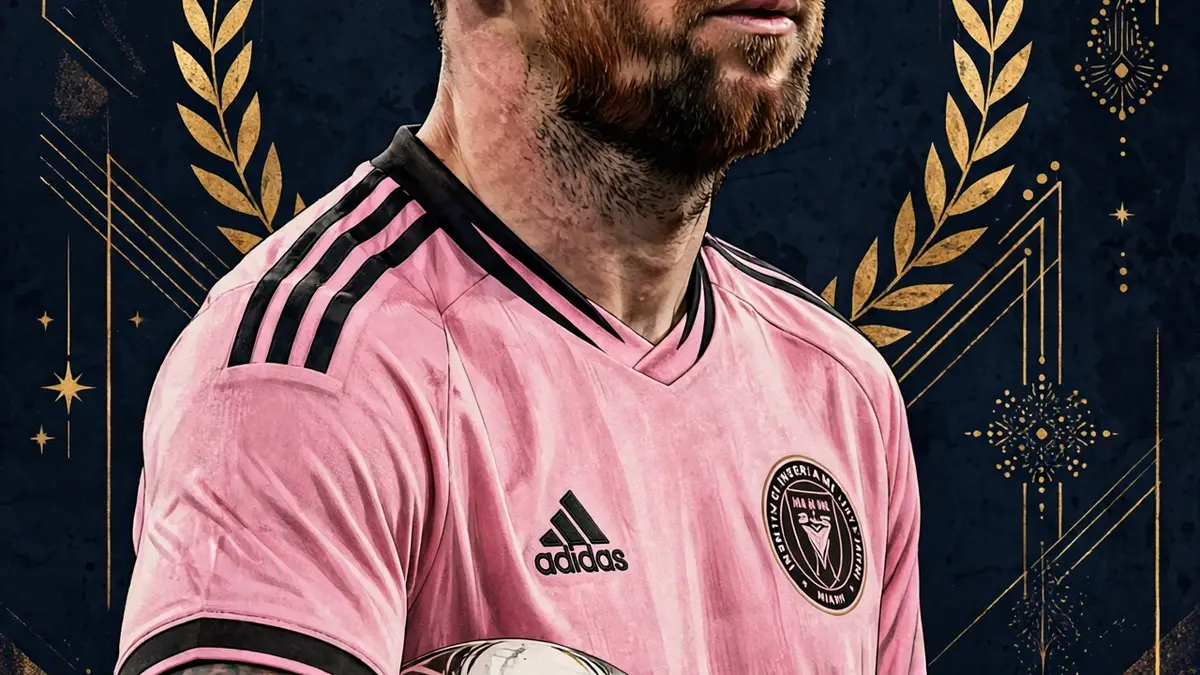
Quick Facts: Lionel Messi at a Glance
| Full Name | Lionel Andrés Messi Cuccittini |
|---|---|
| Date of Birth | 24 June 1987 (age 39 as of November 2026) |
| Birthplace | Rosario, Santa Fe, Argentina |
| Height | 1.70 m (5 ft 7 in) |
| Current Club | Inter Miami CF (Major League Soccer), contract through the 2028 season |
| National Team | Argentina (captain; senior debut 2005) |
| Estimated Net Worth (2026) | $850 million – $1.1 billion; Forbes estimated about $1.1 billion in June 2026, Celebrity Net Worth about $850 million |
| Career Earnings (pre-tax) | About $1.8 billion, per Forbes — roughly $1.2 billion from playing contracts and about $600 million from endorsements and business |
| Ballon d’Or Awards | 8 (2009, 2010, 2011, 2012, 2015, 2019, 2021, 2023) — a record |
| Barcelona Record | 672 goals in 778 appearances; 35 trophies, including 10 La Liga titles and 4 UEFA Champions League titles |
| Major International Honours | FIFA World Cup 2022, Copa América 2021 and 2024, Olympic gold 2008, FIFA U-20 World Cup 2005 |
| Wife | Antonela Roccuzzo (married 30 June 2017) |
| Children | Three sons: Thiago (born 2012), Mateo (born 2015), Ciro (born 2018) |
| Primary Income Sources | Inter Miami salary and commercial package, lifetime Adidas deal, endorsements, MiM Hotels, investments |
In This Article
- Quick Facts: Lionel Messi at a Glance
- Early Life in Rosario: A Small Boy With a Big Problem
- The Napkin Contract and the Move to Barcelona
- Seventeen Years at Barcelona: Records, Trophies and the Guardiola Era
- The Long Road With Argentina: Heartbreak, Then the World Cup
- Paris Saint-Germain and the Inter Miami Revolution
- The Money: Net Worth, Salary and Career Earnings
- The Business Empire: Adidas, Hotels and Investments
- Homes, Cars and Lifestyle
- Personal Life: Antonela, the Boys and Family
- Controversies and the Tax Case
- Records and Honours in Full
- Messi vs Ronaldo: The Rivalry That Defined an Era
- Net Worth Timeline: How the Fortune Grew
- Frequently Asked Questions
- Final Thoughts
- Sources and Reporting
Early Life in Rosario: A Small Boy With a Big Problem
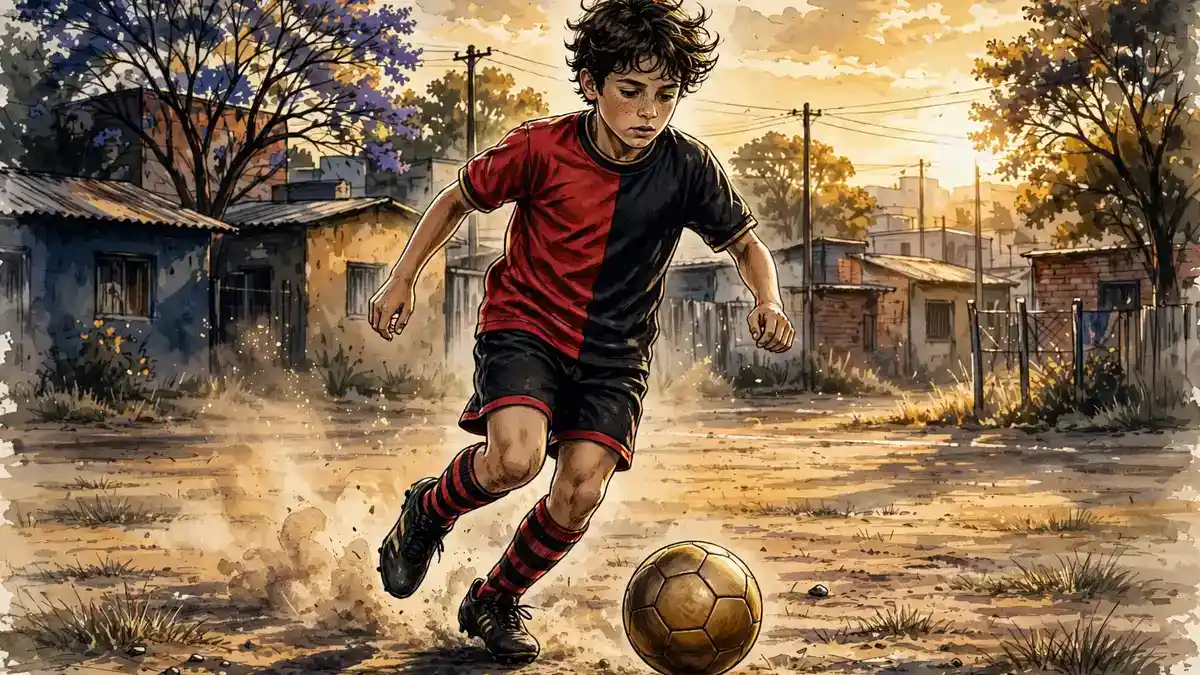
Messi was born in Rosario, a river port city in Argentina’s Santa Fe province, as the third of four children of Jorge Messi, a steel factory manager, and Celia María Cuccittini, who worked in a magnet manufacturing workshop. The family lived in the working-class neighbourhood of La Bajada, where football was played on dusty streets and gravel pitches, and where the young Messi’s talent was obvious almost as soon as he could walk. His maternal grandmother, Celia Olivera Cuccittini, was the person who first pushed him onto a pitch, taking him to the local club Grandoli when he was four years old. His father coached there, and the boy who was smaller than everyone else kept scoring anyway.
At five he joined Grandoli, and by eight he was at Newell’s Old Boys, Rosario’s biggest club, where he played for the youth side nicknamed La Máquina del 87 — the Machine of ’87 — a team that went close to three years unbeaten. He scored relentlessly, but around the age of ten a different problem took over the family’s life. Messi was diagnosed with a growth hormone deficiency. Without treatment he would stay far shorter than his peers, and the treatment cost roughly $900 a month, a sum the Messi family could not carry on its own. Argentine clubs, including River Plate, showed interest in the boy but would not pay for the injections.
That medical bill is the hinge on which his whole life turned. It meant the family needed a club willing to treat a child as an investment rather than a cost, and no club in Argentina would do it. The search for one led them to Spain, to a club that had been watching the boy through its scouts, and to one of the most famous stories in football: a contract written on a napkin in a tennis club restaurant.
Rosario never left him. He still returns, still speaks of the city as home, and in later years his family business became involved in a residential development there. His three sons were all born far from Rosario, but the family’s roots, and the grandmother who first took him to Grandoli — she died when he was eleven, and he still points to the sky after goals in her memory — stayed at the centre of how he talks about himself.
The Napkin Contract and the Move to Barcelona
In September 2000, when Messi was thirteen, Barcelona’s technical secretary Carles Rexach watched him in a trial and was convinced within minutes. The problem was paperwork and nerve: the club’s board hesitated over signing a child from another continent and paying for his medical treatment. On 14 December 2000, in the Pompeia tennis club in Barcelona, Rexach ended the argument by writing a commitment on a paper napkin, promising to sign the boy. The napkin is now kept as a piece of football history, and it did what months of negotiation had not: it got the family to Spain.
Messi moved to Barcelona with his father in 2001, and the rest of the family followed. The club paid for the hormone treatment, and he entered La Masia, Barcelona’s academy, where he grew up alongside players who would become his teammates for the next two decades — Cesc Fàbregas, Gerard Piqué, and later the generation that defined the club’s golden era. He was homesick at first, quiet by nature, and small even after treatment, but on the pitch he was already different: low centre of gravity, close control at full speed, and a habit of beating three or four defenders in one run.
He moved through the youth teams fast. He played for Barcelona C at sixteen in 2003, then Barcelona B, and made his first-team debut on 16 October 2004 against Espanyol, aged seventeen years and 114 days, becoming the youngest player to appear for the club in La Liga at the time. His first senior goal followed on 1 May 2005 against Albacete, a delicate chip from a Ronaldinho pass that made him the club’s youngest ever scorer in the league. Ronaldinho, the Brazilian star who was then the best player in the world, took the teenager under his wing, and the image of the two of them together — the joyful Brazilian and the shy Argentine — became one of the defining pictures of that Barcelona side.
The 2005 FIFA World Youth Championship in the Netherlands gave the wider world its first full look at him. He finished as the tournament’s top scorer and best player as Argentina won the title, and by the time he returned to Barcelona, the plan was clear: the club would build its next era around him.
Seventeen Years at Barcelona: Records, Trophies and the Guardiola Era
Messi’s Barcelona career lasted from 2004 to 2021, and the final numbers are still hard to take in all at once: 778 official appearances, 672 goals, 35 trophies, ten La Liga titles, seven Copa del Rey titles, four UEFA Champions League titles, and six European Golden Shoes as the top scorer across Europe’s leagues. FC Barcelona itself lists him as the club’s all-time record holder for appearances, goals and trophies. He passed Pelé’s record of 643 goals for a single club — Santos — on his way to 672, a mark Guinness World Records recognises as the most goals scored by a player for one club.
The first peak came under Pep Guardiola, who took over as coach in 2008 and moved Messi into a central, free-roaming role that became known as the false nine. In the 2008–09 season Barcelona won the treble — La Liga, the Copa del Rey and the Champions League — and in 2009 they won six trophies in a calendar year, a feat no club had managed before. Messi won the first of his eight Ballon d’Or awards in 2009, then three more in a row, in 2010, 2011 and 2012, a run nobody else has matched. He was 24 years, six months and seventeen days old when he won his third, the youngest player ever to do so.
The year 2012 remains the single most astonishing season any footballer has produced. He scored 73 goals in all competitions in the 2011–12 season, including a La Liga record of 50 league goals, and 91 official goals in the calendar year — 79 for Barcelona and 12 for Argentina — breaking Gerd Müller’s 1972 record of 85. FC Barcelona’s own record pages break the 91 down precisely: 59 league goals, 13 in the Champions League, five in the Copa del Rey, two in the Spanish Super Cup and 12 for Argentina. It is the kind of number that looks like a typing error until you check it against three different sources and find it in all of them.
The trophies kept coming. A second treble arrived in 2014–15, this time with Luis Suárez and Neymar alongside him in the front three that fans called MSN. Messi won further Ballon d’Or awards in 2015, 2019 and 2021, the last of those recognising performances that included his final months at Barcelona. His free-kick against Liverpool in the 2019 Champions League semi-final, his solo goal against Real Madrid in 2011, his five goals in a single Champions League match against Bayer Leverkusen in March 2012 — the first player ever to do that — each became a clip that still circulates years later. On 7 March 2012 he also passed César Rodríguez’s 232 goals to become Barcelona’s all-time top scorer, a record he then stretched by another 440 goals.
There were failures too, and they matter to the story. Barcelona lost Champions League ties from winning positions against Roma in 2018 and Liverpool in 2019, and the 8–2 defeat to Bayern Munich in 2020 ended an era. In the summer of 2020 Messi tried to leave, sending a formal request to the club, and was told his release clause still applied; he stayed, unhappily, for one more season. Then, in August 2021, his contract expired and the club announced it could not register a new one under La Liga’s salary limits. He wept at his farewell press conference. After seventeen years, 672 goals and 35 trophies, he was a free agent, and the club that had raised him could not afford to keep him.
The number that defines him: 672 goals in 778 games for one club, plus 91 goals in a single calendar year. No other player in history owns both records. The first says he lasted; the second says that, at his peak, he scored at a rate the sport had never seen and has not seen since.
The Long Road With Argentina: Heartbreak, Then the World Cup
For the first decade of his senior career, Messi’s Argentina story was a study in frustration. He won the FIFA World Youth Championship in 2005 and Olympic gold in Beijing in 2008, and he made his senior debut in 2005, but the senior trophies would not come. Argentina lost the 2014 World Cup final to Germany in extra time in Rio de Janeiro, with Messi winning the Golden Ball as the tournament’s best player in a losing cause. Then came three more final defeats in three years: the Copa América in 2015 and 2016, both lost to Chile on penalties, and the sense that his generation would be remembered for falling short.
After the 2016 Copa América final, Messi announced his retirement from international football, saying he had done everything he could and that it was not enough. He was 29. The reaction in Argentina was extraordinary — the president called him, fans marched in Buenos Aires, and within weeks he reversed the decision. He returned for the 2018 World Cup in Russia, where Argentina lost to France in the round of 16, and the criticism started again, this time sharper: that he could not carry his country the way Diego Maradona had.
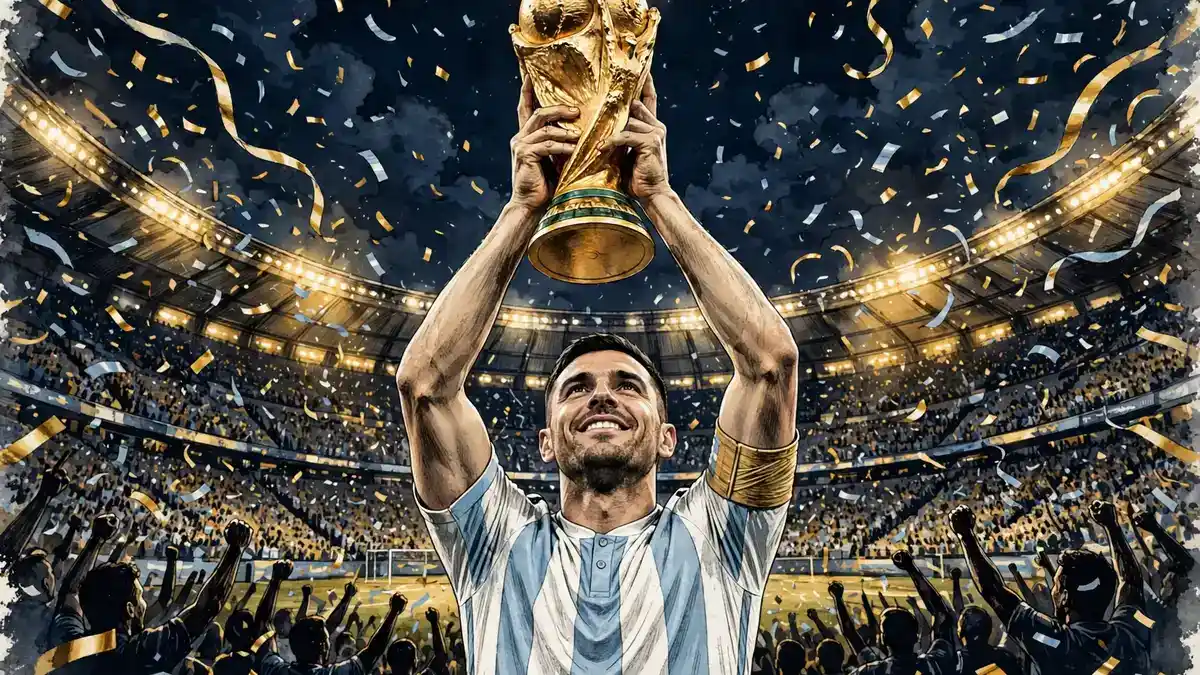
The turn came in Brazil in 2021. Argentina beat the hosts 1–0 in the Copa América final at the Maracanã, with Ángel Di María scoring the only goal, and Messi finally held a senior trophy with his country. He was the tournament’s joint top scorer and its best player. A year later came the Finalissima, a 3–0 win over Italy at Wembley, and then the World Cup in Qatar. In Lusail on 18 December 2022, Argentina beat France 3–3 after extra time and 4–2 on penalties in a final widely called the greatest ever played. Messi scored twice in the match, seven goals across the tournament, and won his second World Cup Golden Ball — the first player ever to win the award twice. He had waited sixteen years between his senior debut and that night, and the photographs of him lifting the trophy in a black-and-gold robe, the bisht, became the most-liked images in the history of Instagram.
He added a second Copa América in the United States in 2024, Argentina’s sixteenth title in the competition, even though injury forced him off in the final against Colombia and Lautaro Martínez scored the extra-time winner. By 2026 the question hanging over him was how much longer he would keep playing for his country, with reports through the year discussing his international future as the 2026 World Cup approached and passed. What is certain is the completed record: two World Cup Golden Balls, a World Cup winners’ medal, two Copa América titles, an Olympic gold, and the status, finally, of a captain who delivered the trophy his country had wanted for 36 years.
Paris Saint-Germain and the Inter Miami Revolution
Messi signed for Paris Saint-Germain on 10 August 2021, ten days after Barcelona’s farewell. The move reunited him with Neymar and put him alongside Kylian Mbappé in the most star-heavy front line in club football, but the two seasons in Paris were the quietest of his career by his standards. He won Ligue 1 in 2022 and 2023 and the Trophée des Champions, and he scored 32 goals in 75 games, yet the team fell in the Champions League round of 16 in both seasons, and sections of the Parc des Princes crowd turned on him. He later said he had not been happy in Paris, that the move had been a shock rather than a choice, and that he missed Barcelona. His family, by most accounts, never settled in the city the way they had in Catalonia.
Inter Miami changed the mood completely. He signed in July 2023 for the Major League Soccer club co-owned by David Beckham, reuniting in Florida with former Barcelona teammates Sergio Busquets, Jordi Alba and later Luis Suárez. The effect on the league was immediate and measurable: ticket prices for Miami’s away games multiplied, Apple’s MLS Season Pass subscriptions surged, and the club’s social media following overtook clubs that had existed for a century. Within weeks of arriving he delivered the club’s first trophy, the 2023 Leagues Cup, scoring ten goals in seven games in the competition. In 2024 Miami won the Supporters’ Shield with a record regular-season points total, and in 2025 the club won its first MLS Cup, the league championship, with Messi as its centrepiece.
In October 2025 Inter Miami announced that Messi had signed a contract extension running through the 2028 MLS season. The 2026 salary figures published by the MLS Players Association tell the story of his standing in the league: a base salary of $25 million and guaranteed compensation of $28.33 million, more than double the next-highest-paid player in the league, LAFC’s Son Heung-min. Inter Miami’s total payroll of $54.6 million was the highest in MLS, well ahead of LAFC’s $32.7 million, according to the Associated Press report on the 2026 salary release. The extension also matters for the long game, because his Miami deal includes an option to take an equity stake in the club after he retires — the piece of the package Forbes points to as one of the most valuable parts of his fortune.
Off the pitch in Miami he has settled in a way he never did in Paris. The family lives in Fort Lauderdale, the children are in local schools, and the club built its commercial strategy around him without hiding it: pink shirts, packed stadiums, and a global audience for a league that had spent three decades trying to be noticed. Whether the 2026 World Cup, played in the United States, Mexico and Canada, proves to be his final act in the sport is a question he has left open; what is settled is that his American chapter has already been a commercial success for everyone involved, and that he will be 41 when the Miami contract ends.
The Money: Net Worth, Salary and Career Earnings
The money question has a clear answer in 2026, once you accept that two honest sources can disagree. Forbes named Messi a billionaire in June 2026, estimating his net worth at about $1.1 billion and repeating the figure in later updates that year. Celebrity Net Worth, using a more conservative view of his private business stakes, puts him at about $850 million, and in May 2026 rounded its figure to an even $1 billion. Bloomberg’s reporting also placed his fortune above $1 billion. The range this biography uses — $850 million to $1.1 billion — is the span between the lowest and highest of those named estimates, and Forbes anchors the top of it.
For a fuller picture of how that fortune was built, the place to look is the breakdown of Lionel Messi’s net worth in full on our sister site GuideNetWorth, which works through the same Forbes and Celebrity Net Worth figures from the wealth angle. The short version is this: Forbes puts his career earnings at about $1.8 billion before taxes and agents’ fees, split roughly $1.2 billion from playing contracts and about $600 million from endorsements, memorabilia and business income. That is earnings, not wealth — taxes, agent fees, spending and investments sit between the two numbers — but it explains why the net worth figure is so large: he has been among the best-paid athletes on the planet for nearly twenty years, and he has kept a large share of it.
The annual figures underline the point. Forbes estimated his total earnings at about $140 million over the twelve months to mid-2026, split almost evenly between on-field pay and off-field income, and ranked him third on its 2026 list of the world’s highest-paid athletes. The MLS Players Association’s 2026 salary guide lists his base salary at $25 million and guaranteed compensation at $28.33 million — the playing contract alone. Inter Miami co-owner Jorge Mas has said publicly, in an ESPN interview reported in March 2026, that the full package is worth between $70 million and $80 million a year once sponsorships, the Apple revenue-sharing deal and other commercial arrangements are counted. His first Miami deal, signed in 2023, carried a base salary of $12 million and guaranteed compensation of about $20.45 million; the renegotiated contract more than doubled the base.
Earlier contracts set the scale. At Barcelona his final deal, signed in 2017, was reported by Spanish newspaper El Mundo in 2021 to be worth up to €555 million over four years including bonuses and image rights — the largest sports contract ever reported at the time, and a figure Barcelona did not dispute in substance. He also turned down far more: in 2023, before choosing Miami, he was reported to have been offered a deal by Saudi club Al-Hilal worth around $400 million a year, an offer he declined in favour of the Miami package and the life it offered his family. The choice cost him money on paper and bought him something he valued more: a city his family liked, a league he could reshape, and a club he may one day partly own.
| Money Figure | Amount and Source |
|---|---|
| Net worth, 2026 | $850 million – $1.1 billion (Forbes: about $1.1 billion, June 2026; Celebrity Net Worth: about $850 million) |
| Career earnings, pre-tax | About $1.8 billion (Forbes) — about $1.2 billion from playing contracts, about $600 million from endorsements and business |
| 2026 earnings | About $140 million (Forbes), split roughly evenly between on-field and off-field income |
| Inter Miami base salary, 2026 | $25 million (MLS Players Association salary guide, 2026) |
| Inter Miami guaranteed compensation, 2026 | $28.33 million (MLS Players Association salary guide, 2026) |
| Inter Miami total package | $70 million – $80 million a year (club co-owner Jorge Mas, via ESPN, March 2026) |
| Endorsement and business income | About $70 million a year (Forbes, 2026) |
| Final Barcelona contract | Reported at up to €555 million over four years (El Mundo, 2021) |
The Business Empire: Adidas, Hotels and Investments
Messi’s business life is quieter than his football, but by 2026 it had become a portfolio in its own right, managed first by his father Jorge and later by a wider team of advisers. The cornerstone is Adidas. He wore Nike as a teenager, then switched to Adidas in 2006 after a legal dispute, and in 2017 the German brand signed him to a lifetime contract — the only such deal in football from a major sportswear brand. The financial terms were never disclosed, but reporting consistently puts the value at around $25 million a year, with a total that could pass $1 billion across his lifetime once retirement-era brand work is included. Adidas has built whole product lines around him, from the F50 boots to the Messi 15 and the Nemeziz range, and in June 2026 launched the F50 El Último Tango as a tribute to what is widely expected to be his final World Cup. One Wall Street analyst argued that his move to Miami alone was worth about $10 billion in added market value to Adidas, a figure that says more about the scale of his commercial pull than any single pay cheque.
Beyond Adidas, his sponsorship list has included Pepsi, Lay’s, Gatorade, Mastercard, Michelob Ultra, Hard Rock International, Jacob & Co. watches, and a tourism partnership with Saudi Arabia. In 2026 he appeared in nearly a quarter of the major World Cup advertising campaigns tracked by measurement firm System1 — 18 of 80 campaigns — with Adidas’s “Impossible is Nothing” work and Louis Vuitton’s “Victory is a State of Mind” campaign generating hundreds of millions of engagements between them during the 2022 tournament cycle. Forbes puts his endorsement and business income at about $70 million a year, a figure that has held steady even as his on-field salary changed clubs and continents.
The owned businesses are where the fortune’s future lies. The best known is MiM Hotels, a chain of boutique hotels in Spain and Andorra operated by the Majestic Hotel Group, which was consolidated under a real estate investment fund that Forbes valued at $282 million. In 2019 he launched The Messi Store, a premium clothing line developed with Ginny Hilfiger, the sister of designer Tommy Hilfiger. In 2022 he set up Play Time Sports-Tech HoldCo, a San Francisco-based holding company that runs a fund with a fundraising target of about $200 million, investing in sports technology and artificial intelligence, including AI data-labelling platform SuperAnnotate and robotics company Field AI. His other investments include gaming platform Matchday.com, digital memorabilia venture AC Momento, trading-card platform Sorare, and KRÜ Esports, the esports organisation he co-owns with his friend and former Argentina teammate Sergio Agüero.
Football ownership is the newest strand. In 2025 he and Luis Suárez founded Deportivo LSM, a club in Uruguay that won promotion to the country’s third tier in its first season. In April 2026 he bought Spanish fifth-tier club UE Cornellà, to be run as a development base for young players. And the Inter Miami equity option in his playing contract — the right to buy into the club after he retires — may prove the most valuable piece of all: Forbes valued Inter Miami at $1.35 billion in 2026, the most valuable franchise in MLS, with $200 million in revenue for the 2024–25 season. A stake in that, bought at the terms agreed in 2023, would be worth far more than the salary he gave up to get it.
Homes, Cars and Lifestyle
Messi’s property portfolio follows his career: a home in each city he has lived in, kept rather than sold. In Barcelona he lived for years in Castelldefels, a coastal town south of the city, in a house reported to be worth several million euros and chosen partly because its neighbours included his team-mates and because the area’s flight paths made it quiet — local reporting has long noted that planes do not fly over the neighbourhood, a detail his family valued. In Paris the family rented rather than bought, which fits with how short and unsettled that chapter felt. In Florida he bought a waterfront mansion in Fort Lauderdale for a reported $10.75 million in 2023, a property with a pool, a spa, a dock for his boat and enough bedrooms for the extended family that travels with him.
The car collection is reported widely and verified rarely, so the honest version is short: he has owned Ferraris, a Maserati GranTurismo, a Pagani Zonda Tricolore reported to have cost around $2 million, and an Audi RS6, among others. He has also given cars away — he once gifted a Mini Cooper to a member of his staff — and he has auctioned vehicles for charity. The collection is a footnote, not the story: the houses and the hotels are the assets that matter, and the cars are the part of the lifestyle that makes for photographs.
His daily life is deliberately unflashy for a billionaire. He is known for barbecues with family and friends, for mate — the Argentine tea he drinks from a gourd, which he later turned into a multi-year drinkware collection with Stanley — and for a small circle that has barely changed since Rosario. He flies private, as his schedule demands, and his Instagram following, well past half a billion, makes him one of the most followed people on earth, but the people who know him describe a routine built around training, school runs and family dinners rather than the celebrity circuit. The Leo Messi Foundation, set up in 2007, funds children’s health and education projects, including work with UNICEF, and has paid for medical treatment for children in Argentina and Spain — a direct echo of the treatment his own family once could not afford.
Personal Life: Antonela, the Boys and Family
Messi married Antonela Roccuzzo on 30 June 2017 in Rosario, in a wedding attended by around 260 guests including most of his Barcelona team-mates. They had known each other since childhood — Antonela is the cousin of his best friend from Rosario, Lucas Scaglia — and their relationship became public in 2009. She runs her own businesses, including a footwear brand and a modelling career, and she is the person most often credited, by those around the couple, with keeping the family’s life stable through three countries and two decades of fame.
Their three sons were born in Barcelona: Thiago in November 2012, Mateo in September 2015, and Ciro in March 2018. All three play football, and the eldest, Thiago, has played in Inter Miami’s academy since the family moved to Florida. Messi’s goal celebrations have long been dedicated to them — he points to the sky for his grandmother, and he has celebrated by sucking his thumb in a gesture for his children. The tattoos tell the same story in ink: his mother’s face on his shoulder blade, his sons’ names and birth details, a clock, a lotus flower, and the number 10. His left leg, famously, is covered in tattoos including a football, a sword and his children’s handprints.
His parents and siblings remain close. His father Jorge has managed his career and his business interests since the beginning, and his brothers Rodrigo and Matías work in the family businesses. His mother Celia is rarely in public, but she is the person he has named, more than once, as the reason he stayed grounded: the woman who cleaned houses while her son’s talent was being priced at $900 a month. He is a practising Catholic, he has spoken about his faith in interviews without making a display of it, and he has never cultivated the public persona of a celebrity. That reserve is part of why the biography reads the way it does: the football is loud, the life is quiet, and the gap between the two is where the money sits.
Controversies and the Tax Case
No honest biography of Messi skips the tax case, because it was the one serious legal trouble of his career and it was resolved in court, on the record. In 2016 a Spanish court found Messi and his father Jorge guilty of tax fraud relating to image-rights income between 2007 and 2009, routed through companies in Belize and Uruguay. Messi was given a 21-month suspended prison sentence and a fine of about €2 million, and his father a 15-month suspended sentence. Neither served time in prison — Spanish law allows suspended sentences of under two years for first-time offenders — and in 2017 the Supreme Court confirmed the conviction but reduced Messi’s sentence to a fine. He has always said he trusted his father and his advisers with his finances and did not understand the structures involved, a position the court did not accept as a defence but which shaped how the case was reported.
His name also appeared in the Panama Papers in 2016, in connection with a company called Mega Star Enterprises, and in later reporting about offshore structures linked to his image rights. He has never been charged in connection with those reports, and the tax case remains the only conviction. The episode is worth including because it changed how his money was managed — the family professionalised its advisers afterwards — and because it is the one clear mark against a career otherwise free of scandal. He has never faced a doping allegation, never been involved in a public dispute with a team-mate, and his disciplinary record is clean: in more than 1,100 senior games he has been sent off three times, twice for Argentina and once for Barcelona.
There have been smaller rows along the way. In 2020 his attempt to leave Barcelona produced a public exchange with the club’s then-president Josep Maria Bartomeu. In Paris, his unauthorised trip to Saudi Arabia in 2023 led to a brief suspension by the club. In Hong Kong in February 2024, his failure to play in a friendly because of injury led to anger from fans and a political row, and he issued a video explanation. None of these dented his standing for long. The tax case is the one that stays in the record, and it stays there as a conviction, a fine, and a lesson in why the richest athletes now employ armies of accountants.
Records and Honours in Full
The record book is the part of this biography that needs the least commentary, because the numbers speak for themselves. The table below uses FC Barcelona’s own published records for the club figures and competition sources for the honours, and it avoids mixing figures from different dates into a single running total — a habit that produces the inflated career totals you see on fan sites.
| Record or Honour | Detail |
|---|---|
| Ballon d’Or awards | 8 (2009, 2010, 2011, 2012, 2015, 2019, 2021, 2023) — the most by any player |
| European Golden Shoes | 6 (2010, 2012, 2013, 2017, 2018, 2019) — the most by any player |
| Goals for one club | 672 for Barcelona in 778 appearances — Guinness World Records, most goals for a single club |
| Goals in a calendar year | 91 in 2012 (79 for Barcelona, 12 for Argentina) — Guinness World Records |
| Goals in a La Liga season | 50 in 2011–12 — a league record |
| La Liga goals, career | 474 — the most in the competition’s history |
| La Liga titles | 10 (2005, 2006, 2009, 2010, 2011, 2013, 2015, 2016, 2018, 2019) |
| UEFA Champions League titles | 4 (2006, 2009, 2011, 2015) |
| Copa del Rey titles | 7 (2009, 2012, 2015, 2016, 2017, 2018, 2021) |
| Barcelona trophies, total | 35 — the most by any player in the club’s history |
| World Cup | Winner 2022; Golden Ball 2014 and 2022 — the only player to win the award twice |
| Copa América | Winner 2021 and 2024; runner-up 2007, 2015, 2016 |
| Olympic gold | Beijing 2008 |
| Inter Miami honours | Leagues Cup 2023, Supporters’ Shield 2024, MLS Cup 2025 |
| Argentina goals | More than 100 senior international goals — the most in Argentina’s history, and among the highest totals in the history of the men’s game |
Messi vs Ronaldo: The Rivalry That Defined an Era
No biography of Messi is complete without Cristiano Ronaldo, because the two men shared the stage for fifteen years and because the comparison shaped how both were judged. They won thirteen Ballon d’Or awards between them from 2008 to 2023 — eight for Messi, five for Ronaldo — and they met in five Champions League ties, including two finals, in 2009 and 2011, both won by Messi’s Barcelona. Ronaldo scored more career goals overall, passing 900 senior goals, and he won five Champions League titles to Messi’s four; Messi won more league titles in Spain, more Ballon d’Or awards, and, decisively in the eyes of most judges, the World Cup that Ronaldo has never won.
The money comparison is just as close, and it has now flipped in Messi’s favour in one sense and not in another. Ronaldo became a billionaire first, with Forbes estimating his net worth above Messi’s in 2026 after his deal with Al-Nassr in Saudi Arabia, while Messi’s fortune is built more on accumulated cash, investments and the Miami equity option. Ronaldo earns more per year; Messi’s wealth is more diversified. Both are billionaires, both are still playing past forty or close to it, and both have turned their rivalry into the most valuable personal duel in the history of sport. The honest verdict is that the argument will never be settled to everyone’s satisfaction, which is exactly why it lasted so long — but the World Cup in Qatar is the one trophy that only one of them owns, and it is the reason most neutral judges now place Messi first.
Net Worth Timeline: How the Fortune Grew
The table below is our own reconstruction from the named sources cited in this article — Forbes, Celebrity Net Worth, the MLS Players Association and club reporting — and it is the element most competitor biographies do not offer: a year-by-year view of how a boy who needed $900 a month of medical treatment became a billionaire. The early figures are estimates from the wealth trackers of the time, and they should be read as orders of magnitude, not bank statements.
| Year | What Changed | Estimated Net Worth |
|---|---|---|
| 2004 | First-team debut for Barcelona, aged 17 | Under $1 million |
| 2005 | First senior goal; World Youth Championship winner | About $2 million |
| 2009 | First Ballon d’Or; treble with Barcelona | About $40 million |
| 2012 | 91 goals in a calendar year; fourth Ballon d’Or in a row | About $110 million |
| 2015 | Second treble; fifth Ballon d’Or | About $210 million |
| 2017 | Lifetime Adidas contract; final Barcelona deal signed | About $300 million |
| 2019 | Sixth Ballon d’Or; sixth Golden Shoe | About $400 million |
| 2021 | Copa América win; move to Paris Saint-Germain | About $600 million |
| 2022 | World Cup win in Qatar; eighth Ballon d’Or follows in 2023 | About $650 million |
| 2023 | Move to Inter Miami; Leagues Cup win; Messi Store and Play Time growing | About $750 million |
| 2025 | MLS Cup win; contract extension through 2028 | About $850 million – $1 billion |
| 2026 | Forbes names him a billionaire at about $1.1 billion | $850 million – $1.1 billion |
The shape of that timeline is the real lesson. The fortune did not arrive in one contract. It arrived in layers: a decade of Barcelona salaries, then endorsements, then businesses, then the Miami package with its equity option. The biggest jump came not from a single deal but from the compounding of all of them — and from the fact that, unlike many athletes, he never had a lost decade. He was the best-paid player in the world, or close to it, for almost twenty years running.
Frequently Asked Questions
How old is Lionel Messi?
Lionel Messi was born on 24 June 1987 in Rosario, Argentina, which makes him 39 years old as of November 2026. He made his Barcelona debut at seventeen and his Argentina senior debut at eighteen, and he is still playing for Inter Miami under a contract that runs through the 2028 MLS season, when he will be 41.
What is Lionel Messi’s net worth in 2026?
The honest answer is a range of $850 million to $1.1 billion. Forbes estimated his net worth at about $1.1 billion in June 2026 and named him a billionaire, while Celebrity Net Worth puts him at about $850 million, valuing his private business stakes more conservatively. Forbes also puts his career earnings at about $1.8 billion before taxes and fees.
How many Ballon d’Or awards has Lionel Messi won?
Eight — in 2009, 2010, 2011, 2012, 2015, 2019, 2021 and 2023. That is the record for the award, ahead of Cristiano Ronaldo’s five. He also won six European Golden Shoes as the top scorer across Europe’s leagues, another record.
What team does Lionel Messi play for now?
Inter Miami CF in Major League Soccer. He joined in July 2023, won the Leagues Cup in his first weeks, the Supporters’ Shield in 2024 and the MLS Cup in 2025, and in October 2025 he signed a contract extension running through the 2028 MLS season. His deal includes an option to take an equity stake in the club after he retires.
How many goals did Lionel Messi score for Barcelona?
672 goals in 778 official appearances, according to FC Barcelona — the most goals any player has scored for a single club, a record recognised by Guinness World Records. He also scored 474 La Liga goals, the most in that competition’s history, and 91 goals in the calendar year of 2012, another world record.
Did Lionel Messi win the World Cup?
Yes. Argentina won the 2022 World Cup in Qatar, beating France 4–2 on penalties after a 3–3 draw in the final at Lusail on 18 December 2022. Messi scored twice in the final and seven goals in the tournament, and he won the Golden Ball as the tournament’s best player — the second time he had won that award, after 2014, making him the only player to win it twice.
Who is Lionel Messi’s wife?
Antonela Roccuzzo, his childhood sweetheart from Rosario. They married on 30 June 2017 in Rosario and have three sons: Thiago (born 2012), Mateo (born 2015) and Ciro (born 2018). The family lives in Fort Lauderdale, Florida, since his move to Inter Miami.
Why did Lionel Messi leave Barcelona?
His contract expired in the summer of 2021 and Barcelona could not register a new one under La Liga’s salary limits, because the club’s wage bill had grown beyond what the league’s financial rules allowed. He had wanted to stay and had agreed terms, but the deal could not be completed, and he joined Paris Saint-Germain as a free agent ten days later.
Final Thoughts
Messi’s biography is, at its heart, a story about time. He was the best player in the world at twenty-two, and he was still the best player in the world at thirty-five, when he finally won the trophy that had eluded him. In between he broke records that had stood for forty years, lost finals that broke his country’s heart, retired from international football and came back, and built a fortune that Forbes now values at about $1.1 billion. The money is real, and it is large, but it is the least interesting part of the story. What matters is the arc: a boy from Rosario who needed medicine his family could not pay for, a napkin in a tennis club, seventeen years at one club, and a night in Lusail when the last argument ended. He will be 41 when his Inter Miami contract runs out in 2028. Whatever he does next — owner, investor, or simply a father watching his sons play — the biography is already complete, and it is the finest the sport has ever produced.
Sources and Reporting
Figures in this article are estimates from named sources, not audited accounts, and they can differ between trackers because private businesses and property are valued differently. The main sources used were Forbes (billionaire estimate, June 2026; career earnings of about $1.8 billion; 2026 earnings of about $140 million), Celebrity Net Worth (about $850 million estimate), FC Barcelona (672 goals in 778 appearances, 91 goals in 2012, eight Ballon d’Or awards, trophy totals), the MLS Players Association salary guide via its published 2026 figures (base salary $25 million, guaranteed compensation $28.33 million), ESPN (Jorge Mas on the $70 million to $80 million total package, March 2026), BBC Sport (Barcelona departure and contract reporting, 2021), FIFA (2022 World Cup final and Golden Ball), and Bloomberg (reporting placing his fortune above $1 billion). The net worth timeline table is our own reconstruction from those sources. How we estimated: we took the highest and lowest named 2026 estimates and published the range, anchored the top end on Forbes, and kept salary, career earnings and net worth separate — they are three different numbers, and adding them together would be wrong. Estimates may differ from private reality, and this page will be updated as new figures are published.