By Celebamerica Editorial Staff | Last updated: November 13, 2026
Lex Fridman is 43 years old as of November 2026. He was born on August 15, 1983, in Chkalovsk, in what was then the Tajik Soviet Socialist Republic, and he turned 43 on August 15, 2026. That makes him a Leo, a member of the millennial generation, and — by the standards of the podcast world — a late bloomer who did not start the show that made him famous until he was 35.
If you have seen a different number online, you are not imagining things. A string of low-quality biography sites lists 1986 as his birth year, which would make him 40. That date is wrong, and this article shows exactly where it came from and why the 1983 date is the one the record supports. Wikipedia lists August 15, 1983, Drexel University — the school that awarded all three of his degrees — records the same life story, and a structured biographical record updated on November 9, 2026, confirms 1983 as well. The 1986 figure has no primary source behind it, and some of the pages that print it contradict themselves, giving 1983 in one paragraph and 1986 in the next.
Age matters more than usual in Fridman’s case because his whole public story is a story of timing. He arrived in the United States at 11, speaking little English. He finished a PhD at 31. He spent a short spell at Google, then joined MIT at 32. He started a podcast at 35 that began as part of an MIT course, and within a year an Elon Musk interview turned him from a little-known researcher into one of the most listened-to interviewers on the planet. By 43, he had recorded more than 500 episodes, sat down with presidents, and built an estimated net worth of $3 million to $12 million, with $8 million the figure most outlets cite. This page answers the age question in full: the exact birth date, the 1986 mix-up, his age at every turning point, how he stacks up against other podcasters, and what he is worth now.
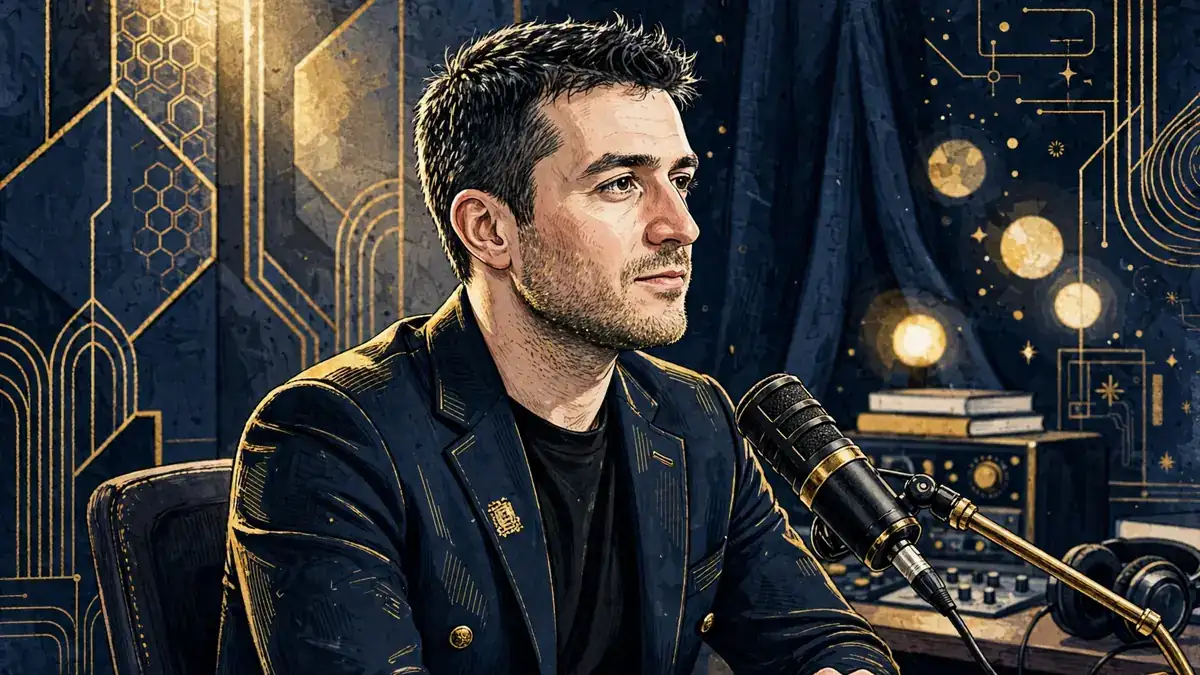
| Full Name | Alexei Alexandrovich Fridman (known as Lex Fridman) |
|---|---|
| Date of Birth | August 15, 1983 |
| Age (November 2026) | 43 years old (turned 43 on August 15, 2026) |
| Birthplace | Chkalovsk, Tajik SSR, Soviet Union (now Buston, Tajikistan) |
| Zodiac Sign | Leo |
| Height | 5 ft 9 in (175 cm) — most-reported figure; some sources say 5 ft 8.5 in |
| Education | Neuqua Valley High School, Naperville, Illinois; BS and MS in computer science, Drexel University (2010); PhD in electrical and computer engineering, Drexel University (2014) |
| Occupation | Research scientist at MIT (Laboratory for Information and Decision Systems); host of the Lex Fridman Podcast |
| Estimated Net Worth | $3 million – $12 million (most-cited figure: about $8 million) |
| Primary Income Sources | YouTube advertising, podcast sponsorships, Patreon support, speaking, MIT research salary |
| Known For | The Lex Fridman Podcast (since 2018); MIT research on human-centered AI and self-driving cars |
| Residence | Texas (as of February 2024) |
| Relationship Status | Not publicly married; keeps his private life out of the spotlight |
Table of Contents
- How Old Is Lex Fridman Right Now?
- The 1983 vs. 1986 Birth-Year Mix-Up
- Early Life: Born in Tajikistan, Raised in Moscow
- Education: From Naperville to Drexel, Google, and MIT
- Lex Fridman Age by Age: A Timeline
- The Podcast That Made Him Famous at 35
- How Lex Fridman’s Age Compares With Other Podcasters
- What Lex Fridman Is Worth at 43
- Personal Life: Texas, Jiu-Jitsu, and a Private Life
- Criticism and Controversies
- Frequently Asked Questions
- Final Thoughts
- Sources and Reporting
How Old Is Lex Fridman Right Now?
Lex Fridman is 43 years old. He was born on August 15, 1983, so he turned 43 on August 15, 2026, and he will turn 44 on August 15, 2027. His next birthday falls on a Sunday in 2027. Anyone who says he is 39 or 40 in 2026 is working from the wrong birth year, 1986, which appears on a handful of content-farm biography pages and nowhere in the serious record.
The math is simple, and it is worth spelling out because so many pages get it wrong by three years. Born in August 1983, Fridman was 35 when he launched his podcast in 2018, 36 when Elon Musk first sat down with him in April 2019, 40 when he interviewed Donald Trump in 2024, and 41 when he interviewed Narendra Modi in March 2025. He turned 42 in August 2025 and 43 in August 2026. Every dated milestone in his career lines up with 1983. None of them lines up with 1986: a man born in 1986 would have been 28 when he finished his PhD in 2014 and 32 when he started the podcast, and the biographical record — Drexel’s own alumni materials — puts his degrees in 2010 and 2014, after a high-school graduation in 2001. A 1986 birth would mean graduating high school at 15 and finishing a master’s degree at 24, which is not what any credible source describes.
His age also puts his career in perspective. Most of the podcasters he is grouped with started much younger or much earlier. Joe Rogan was already a working comedian and television host in his twenties; Fridman was still a graduate student at that age. Andrew Huberman was a tenured Stanford professor before he ever recorded a podcast. Fridman’s path ran through a decade of university study and lab research first, and the podcast came second. That is why his show sounds different from most interview shows: it is the work of a man who spent his thirties in a research lab before he ever sat in front of a microphone.
The 1983 vs. 1986 Birth-Year Mix-Up
The single most confusing thing about Lex Fridman’s age is that Google will happily show you both 1983 and 1986, sometimes on the same page. Here is how the two dates stack up, source by source, so you can judge for yourself which one to trust.
| Source | Birth Year Given | Why It Carries Weight |
|---|---|---|
| Wikipedia (Lex Fridman entry) | 1983 — August 15, 1983, age 43 | The most-watched biography page on the subject; lists his birth name as Alexei Alexandrovich Fridman and his birthplace as Chkalovsk, Tajik SSR |
| Archania structured biography (updated November 9, 2026) | 1983 — 15 August 1983 | Fresh, sourced record citing Drexel University materials and Encyclopaedia Britannica |
| Drexel University (official alumni news) | Consistent with 1983 — BS/MS in 2010, PhD in 2014, high school class of 2001 | Primary institutional source; the degree dates only fit a 1983 birth |
| MN2S talent profile | 1983 — August 15, 1983 | Booking-agency biography drawn from the public record |
| StarInfoZone, SagalNews, WorthCollector, 9takes | 1983 — August 15, 1983 | Independent biography outlets, all on 1983 |
| GuestCollab (2026) | 1986 — August 15, 1986, age 39 | Content-farm style page; no primary source cited for the year |
| The UFO Library | 1986 | Single-line listing, no sourcing |
| EnglishRecaps, EveryPetNames | Both years on the same page | These pages print 1986 in one place and 1983 in another — a copy-paste error, not a fact |
| Klover.ai, GrandPeoples, Wikiversity | 1986 | Low-authority pages that repeat the same unsourced date |
The pattern is clear. Every source with editorial standards, institutional backing, or a dated record says 1983. Every source that says 1986 is a low-authority biography mill, and several of them cannot even keep their own story straight: EnglishRecaps states in its own text that Fridman was born on August 15, 1986, and then answers its own FAQ — “How old is Lex Fridman?” — with “born on August 15, 1983, making him currently 41 years old.” EveryPetNames does the same thing, printing 1986 in one paragraph and 1983 in the next. Humans of YouTube lists 1983 in its fact box and 1986 in its article body. When a page disagrees with itself, it is not a source of truth; it is a site that copied text from two different places and never checked either one.
How did 1986 get into circulation at all? Nobody has ever produced a document for it — no interview, no university record, no official bio. The most likely explanation is the ordinary one for this kind of error: an early content-farm page typed the wrong year, and dozens of other low-effort sites copied it, because copying is cheaper than checking. The 1986 date then spread through the same network of sites that also claim, variously, that he was born in Moscow, that his birth name was Alexei Fedotov, and that he is 5 ft 7 in tall — details that likewise trace back to no primary source. Wikipedia, by contrast, gives his birth name as Alexei Alexandrovich Fridman, and Drexel’s own materials describe his degrees and dates in a way that only fits 1983.
The bottom line on the birth year: Lex Fridman was born on August 15, 1983. He is 43 in November 2026. Any page that tells you he was born in 1986 is repeating an unsourced error — and if that page also gives his age as 39 or 40, its other facts deserve the same skepticism.
There is one more small wrinkle worth clearing up. A few pages give his birth name as “Alexei Fedotov” or “Alexey Fedotov.” Wikipedia and the better-sourced profiles give his birth name as Alexei Alexandrovich Fridman, and that is the name this article uses. The “Fedotov” version appears only on the same low-authority pages that push the 1986 date, and no institutional source supports it.
Early Life: Born in Tajikistan, Raised in Moscow
Lex Fridman was born Alexei Alexandrovich Fridman on August 15, 1983, in Chkalovsk, a small industrial town in the Tajik Soviet Socialist Republic of the Soviet Union. The town is now called Buston and sits in modern-day Tajikistan. He did not grow up there. His family moved to Moscow while he was still a small child, and Moscow is the city he calls his childhood home — the place where, as he has described it in interviews, he was a confident, popular kid who loved football and chess and had no idea how much his life was about to change.
His family background is Ukrainian-Jewish. His father, Alexander Fridman, is a plasma physicist, born in Kharkiv, who became a professor at Drexel University in Philadelphia. His mother was born in Kyiv. Profiles of Fridman often note the weight of his family’s history: relatives murdered at Babi Yar during the Second World War, and a grandmother who survived the Holodomor and lived to 91. Fridman rarely talks about his family in public, and he has kept his mother and any siblings out of the spotlight entirely, but the family’s journey — from Ukraine to Central Asia to Moscow to the United States — shaped the outlook he brings to his interviews: curious about other people’s stories, patient with long answers, and allergic to easy conclusions.
The move that defined his childhood came in 1994, when he was 11 years old, soon after the collapse of the Soviet Union. The family left Moscow and settled in the Chicago area. Fridman has described the move as a shock: a boy who had been comfortable and sure of himself in Moscow suddenly could not speak the language of the country he lived in. He has talked on his podcast about how that experience — losing his whole social world at 11 and having to rebuild it from nothing — stayed with him, and how it taught him to listen. It is not hard to see the connection between that 11-year-old, learning English by paying close attention to the people around him, and the 43-year-old interviewer whose trademark is long, quiet, patient listening.

He attended Neuqua Valley High School in Naperville, Illinois, graduating in 2001, when he was 17 turning 18. By then the boy who had arrived speaking little English was on his way to a university career that would run, almost without a break, for the next thirteen years. The Chicago suburbs gave him his American education; Philadelphia gave him his degrees; Boston gave him his research career. But the first eleven years — Tajikistan, then Moscow — gave him the accent, the outlook, and the questions he still asks.
Education: From Naperville to Drexel, Google, and MIT
Fridman’s education is one of the few parts of his life documented by an institution rather than by biography sites, and Drexel University’s own engineering school has published the details. After graduating from Neuqua Valley High School in 2001, he went to Drexel University in Philadelphia, where he earned both a Bachelor of Science and a Master of Science in computer science in 2010. He was 26 turning 27 that year. He stayed on for a doctorate, and in 2014 — at 30 turning 31 — he completed his PhD in electrical and computer engineering. His dissertation was titled Learning of Identity from Behavioral Biometrics for Active Authentication, supervised by engineering educators Moshe Kam and Steven Weber, and it asked how computers could recognize people from patterns in their behavior: how they type, how they move a mouse, how they hold a phone.
Two points about his education are often misstated, and both are worth getting right. First, all three of his degrees come from Drexel, not MIT. He is a research scientist at MIT, and he has lectured there, but MIT is his employer, not his alma mater. Drexel’s engineering news page says so plainly, and careful profiles note the distinction because casual readers often blur it. Second, his PhD work was funded in part through a DARPA project on active authentication — the same thread that ran through his early career and into his first job.
That first job was at Google. In 2014, after finishing his PhD, Fridman spent about six months at Google, continuing his dissertation work on deep learning for large-scale, behavior-based authentication. He has described the spell as useful and well-paid, and also as a mismatch: he wanted a research life, not a product life. After six months he left, and in 2015, at 31 turning 32, he joined the Massachusetts Institute of Technology as a research scientist. He has been affiliated with MIT ever since — more than a decade now — working in the Laboratory for Information and Decision Systems (LIDS) on human-centered artificial intelligence, deep learning, autonomous vehicles, and personal robotics.
At MIT his best-known research was a study of driver behavior in Tesla cars using the Autopilot system. The study, published in 2019, concluded that drivers stayed focused while using the semi-autonomous system — a finding that drew praise from Elon Musk and criticism from other researchers who questioned the methods. Whatever the scientific verdict, the study changed Fridman’s life: Musk invited him to Tesla’s headquarters for an interview, and that conversation became episode 18 of his podcast. He was 35 years old. Before that interview his audience was counted in the thousands. After it, his audience was counted in the millions.
Alongside his research, Fridman taught. MIT’s Sloan School professor Gary Gensler once described Fridman’s online machine-learning courses as “online before online became such the vogue,” and Fridman’s lectures on deep learning — long, careful, and free on YouTube — built him an audience of students years before the podcast made him famous. Teaching, in fact, is the bridge between his two careers: the podcast began in 2018 as part of an MIT course on artificial intelligence, and it kept the course’s habit of long, technical, unhurried conversation.
Lex Fridman Age by Age: A Timeline
Here is Fridman’s life laid out by age, so the 1983 birth date can be checked against every dated event in his career. If any single date in this table looks wrong to you, the birth year is the thing to check first — and every row below fits 1983.
| Age | Year | Milestone |
|---|---|---|
| 0 | 1983 | Born August 15, 1983, in Chkalovsk, Tajik SSR (now Buston, Tajikistan) |
| 0–11 | 1983–1994 | Grows up in Moscow after the family moves there from Tajikistan |
| 11 | 1994 | Family immigrates to the United States and settles in the Chicago area |
| 17–18 | 2001 | Graduates from Neuqua Valley High School in Naperville, Illinois |
| 18–27 | 2001–2010 | Studies at Drexel University in Philadelphia |
| 26–27 | 2010 | Earns BS and MS degrees in computer science from Drexel |
| 30–31 | 2014 | Completes PhD in electrical and computer engineering at Drexel; spends six months at Google |
| 31–32 | 2015 | Joins MIT as a research scientist in the Laboratory for Information and Decision Systems |
| 34–35 | 2018 | Launches the podcast (as the Artificial Intelligence Podcast) as part of an MIT course |
| 35–36 | 2019 | MIT Tesla Autopilot study draws Elon Musk’s attention; first Musk interview, episode 18, in April 2019 |
| 36–37 | 2020 | Podcast renamed the Lex Fridman Podcast as its range widens beyond AI |
| 40 | 2023–2024 | Interviews Elon Musk for a fourth time (November 2023); moves to Texas (by February 2024) |
| 41 | 2024–2025 | Interviews Donald Trump (September 2024), Volodymyr Zelenskyy (January 2025), and Narendra Modi (March 2025) |
| 42 | 2025–2026 | Podcast passes 500 episodes; YouTube audience near five million |
| 43 | 2026 | Turns 43 on August 15, 2026; continues at MIT and hosts one of the world’s biggest interview shows |
Two rows in that table do more than any other to settle the birth-year question. The high-school graduation in 2001 and the Drexel degrees in 2010 and 2014 are documented by the school itself, and they fit a boy born in August 1983: 18 at graduation, 27 at his master’s, 31 at his PhD. A 1986 birth would make him 15 at high-school graduation and 24 at his master’s — possible in theory, but no source anywhere describes a teenage prodigy, and Drexel’s own timeline does not read that way. The podcast launch is the second check: Fridman was 35, a research scientist with a decade of study behind him, when he started interviewing people. The show’s depth makes sense for a 35-year-old researcher. It makes much less sense for a 32-year-old.
The Podcast That Made Him Famous at 35
The Lex Fridman Podcast began in April 2018, when Fridman was 34 turning 35, as the Artificial Intelligence Podcast — a series of long conversations recorded as part of his MIT teaching. The early episodes were exactly what the name promised: researchers talking about machine learning, robotics, and self-driving cars, often for two or three hours at a time. The audience was small and mostly academic. What changed the show was not a new format but a new range of guests. Fridman kept the long, slow, technical style and applied it to everyone: scientists, philosophers, musicians, athletes, and eventually presidents.
The break came in 2019. Fridman was the lead author on an MIT study of Tesla’s Autopilot system, and Elon Musk praised the work publicly. Musk then agreed to be interviewed, and the conversation — episode 18, published on April 12, 2019 — became the show’s turning point. It was Fridman’s first meeting with Musk, and it was short and technical by the show’s later standards, but it opened a door: Musk came back, again and again, for a second, third, and fourth conversation, the fourth in November 2023. Columbia Journalism Review, profiling Fridman, put it plainly: before the Musk interview his viewership was counted in the thousands, and after it, in the millions.
By early 2025 the show had close to five million YouTube subscribers and its videos had been watched close to a billion times, according to the same Columbia Journalism Review profile. A podcast database that tracks the show counted 504 published episodes by November 2026. The guest list by then ran from the expected — AI researchers, physicists, neuroscientists — to the unexpected: Donald Trump in September 2024, Volodymyr Zelenskyy in January 2025, and Narendra Modi in March 2025, three sitting or former heads of government interviewed within twelve months. For a fuller account of how the researcher became the interviewer, our sister site’s Lex Fridman biography traces the same journey from MIT to podcast fame in more detail.
What makes the show unusual is not just the guest list but the length. Episodes routinely run three, four, five, even six hours. Fridman asks long questions and then stays quiet. He has said his aim is conversation rather than confrontation, and that choice is also the main criticism of the show — more on that below. For now, the numbers tell the story: a man who started podcasting at 35, with no media background, built one of the largest interview shows in the world before he turned 43, while keeping his day job at MIT.

He has also kept a second channel, Lex Clips, for short excerpts, and his main YouTube channel dates back to September 2006 — long before the podcast existed — when he used it for lectures and research videos. The podcast’s growth has been steady rather than sudden: a slow build through 2018, the Musk break in 2019, a widening guest list through the pandemic years, and the political interviews of 2024 and 2025 that pushed him from a tech audience into a general one. At 43, he is still adding to that list, and the show’s episode count keeps climbing past 500.
How Lex Fridman’s Age Compares With Other Podcasters
Age is relative, and Fridman’s 43 years look different depending on who you set him beside. Next to the comedians who built podcasting’s first wave, he is young. Next to the science communicators who came up with him, he is right in the middle of the pack. Here is how he compares with the interviewers and podcasters his audience also listens to.
| Podcaster | Born | Age (November 2026) | How They Compare |
|---|---|---|---|
| Joe Rogan | August 11, 1967 | 59 | Sixteen years older; started podcasting in 2009, a decade before Fridman, and remains the biggest name in the format — how old Joe Rogan is now |
| Bill Burr | June 10, 1968 | 58 | Fifteen years older; a stand-up veteran whose podcast grew out of his comedy career |
| Dax Shepard | January 2, 1975 | 51 | Eight years older; an actor turned interviewer, like Fridman a late arrival to podcasting |
| Andrew Huberman | September 26, 1975 | 51 | Eight years older; a fellow scientist-podcaster who went from Stanford lab to microphone — see Andrew Huberman’s biography |
| Lex Fridman | August 15, 1983 | 43 | The MIT researcher of the group; started podcasting latest, at 35 |
| Theo Von | March 19, 1980 | 46 | Three years older; a comedian whose show leans on storytelling where Fridman’s leans on questions — how old Theo Von is |
The comparison brings out something useful about Fridman’s career. Rogan was 42 when he started his podcast in 2009. Huberman was 45 when his show launched in 2021. Fridman was 35. In other words, the three biggest interviewers in the format all started in their late thirties or forties, after a first career — comedy, acting, or science — had already made them who they were. Fridman is the youngest of the group and the only one who kept his academic job while doing it, which is why his show still reads, in its habits and its guest list, like a research seminar that accidentally became a mass-media program.
Height is the other number people ask about alongside age, and it is worth a line here because the same low-quality pages that get his birth year wrong also get his height wrong. The most-reported figure is 5 ft 9 in (175 cm), given by the majority of biography outlets. A few pages say 5 ft 8.5 in, and at least one says 5 ft 7 in. Our own Lex Fridman height page works through that disagreement in full; the short version is that 5 ft 9 in is the figure most sources agree on, and it puts him at an average height for an American man of his generation.
What Lex Fridman Is Worth at 43
An age article still has to answer the money question, because it is the question most readers ask next — and because Fridman’s wealth, like his age, is reported in wildly different numbers. The honest answer is a range: Lex Fridman’s net worth is estimated at $3 million to $12 million as of 2026, with about $8 million the figure most outlets cite. No outlet has access to his bank accounts, his MIT salary is not public, and he has never confirmed a number himself, so any single figure presented as fact would be invented. The range below shows where each number comes from.
| Source | Estimate | What It Counts |
|---|---|---|
| Net Worth Spot (updated October 1, 2026) | About $2.1 million, up to $3 million | YouTube advertising revenue only; the site says the real figure is likely higher once other income is counted |
| Finty | $4 million | Podcast, academic work, YouTube ads, and sponsorships combined |
| SagalNews (2025) | $3 million | Conservative estimate from the same mix of income |
| WorthCollector (2025) | About $8 million | Academic career plus podcasting and related work; roughly $2 million a year from podcasting and YouTube |
| Growth Hackers | About $8 million | Same $8 million anchor, counting YouTube, sponsorships, and research work |
| StarInfoZone (2026) | $8 million – $12 million | Upper-range estimate for 2026 |
| GuestCollab (2026) | $10 million – $12 million | Upper-range estimate; note this is the same page that gives the wrong 1986 birth year, so treat its figures with care |
| Zyntharo (July 2026) | $10 million – $20 million | Outlier on the high side; assumes large sponsorship and ad income |
Read that table from the bottom up and the picture clears. Net Worth Spot’s $2.1 million is a floor, not a total: it counts YouTube ads alone and says so. The $3 million to $4 million figures come from outlets that add in a modest allowance for sponsorships and salary. The $8 million figure is the one that shows up most often — WorthCollector, Growth Hackers, and the middle of StarInfoZone’s range all land there — and it is the figure this article anchors on. The $10 million to $20 million figures are the top end, from pages that also tend to overstate his audience and, in one case, his age. Our range of $3 million to $12 million covers the serious estimates and sets aside the highest outlier, and the $8 million midpoint is where the weight of the reporting sits.
Where does the money come from? Four streams, in rough order of size. First, YouTube advertising: Net Worth Spot estimates his channel earns about $529,000 a year from ads alone, on the strength of close to five million subscribers and videos that run for hours — long watch time pays better than short clips. Second, podcast sponsorships: the show carries sponsors, but Fridman has said he turns down many more deals than he accepts, which is one reason his net worth trails podcasters with similar audiences. Third, Patreon and direct support from listeners, which the show has offered since its early days. Fourth, his MIT research salary and speaking engagements, neither of which is publicly disclosed. He has no known book deal, no product line, and no exclusive platform contract — the kind of deal that made Joe Rogan far richer — and that absence is itself part of the story: Fridman has monetized less aggressively than almost any podcaster with his reach.
His wealth has grown with his age, and the curve is easy to trace. At 35, when the podcast began, he was a research scientist on an academic salary with a small audience. At 36, the Musk interview changed the audience. By 40, with the show past 400 episodes and sponsors attached, the first $8 million estimates appeared. At 43, with more than 500 episodes and a guest list no other interviewer can match, the estimates run from $3 million to $12 million. If he ever signed an exclusive platform deal, the numbers would jump — one 2026 analysis suggested a $50 million to $100 million deal would not be out of line for a host with his guest access — but he has shown no sign of wanting one, and his public statements suggest he values the freedom to publish everywhere over a single large payday.
Personal Life: Texas, Jiu-Jitsu, and a Private Life
For a man who asks other people personal questions for a living, Fridman keeps his own life unusually private. As of the latest reliable reporting, he is not married, has no wife, and has never publicly confirmed a long-term partner. Biography pages that claim otherwise are guessing: his relationship status is listed as undisclosed in the careful profiles, and he has never introduced a partner on the show or on social media. What he has talked about is his daily life rather than his love life — training in jiu-jitsu, playing guitar, reading, and the long, solitary work habits of a researcher who records conversations for a living.
He moved to Texas at some point before February 2024, when Wikipedia’s entry recorded him as living there while still employed at MIT. The move fits a pattern among tech figures of his generation, and it also fits the show: Texas gave him room for a studio, and his guests fly in from everywhere anyway. He has not said much about the house, the neighborhood, or the reasons, and this article will not invent any. What is known is that he works from Texas, researches at MIT, and records wherever his guests are — a commute that would have been unthinkable for an academic a generation ago and is routine for a podcaster now.
He is also known for habits that sound minor but explain the show. He plays guitar, trains in jiu-jitsu, and has spoken about the discipline both demand — showing up, practicing slowly, and accepting that progress is measured in years. He has described himself, in interviews, as someone who thinks best in long conversations and who reads widely across science, history, and philosophy. None of that is glamorous, and none of it is the stuff of a gossip column, which is probably the point: Fridman’s public image is built on being the opposite of a celebrity, a researcher who happened to become famous by asking good questions and then listening to the answers.
Criticism and Controversies
Fridman’s career has drawn two kinds of criticism, and both are worth recording because they are part of why people search for him. The first concerns his research. The 2019 MIT study of Tesla’s Autopilot system — the work that brought him to Elon Musk’s attention — was described by Columbia Journalism Review as controversial, and other researchers questioned whether its methods supported its conclusion that drivers stayed focused while using the system. The debate was a real scientific disagreement, not a scandal: researchers argued about sample size, measurement, and interpretation, as researchers do. But it set a pattern for Fridman’s public life, in which his closeness to powerful subjects — first Musk, then political leaders — became a subject of discussion in its own right.
The second criticism concerns the podcast’s style. Commentators who admire the show’s patience argue that it lets guests speak at length and reveal themselves. Critics argue that the same patience becomes softness when the guest is a politician: long interviews with Donald Trump, Volodymyr Zelenskyy, and Narendra Modi drew praise for their reach and criticism for their lack of hard follow-up questions. Fridman has answered that his aim is conversation, not confrontation, and that he would rather understand a person than catch them out. Readers can judge that choice for themselves; it is a matter of taste, not of fact, and this article records both sides rather than taking one.
What he has not faced, so far, is the kind of personal scandal that fills other celebrity pages. There are no lawsuits, no public feuds, no arrests, and no retracted claims attached to his name in the serious record. His controversies are arguments about method and style — the kind of arguments a researcher expects — and that, at 43, is a notably clean record for a public figure with an audience of millions.
Frequently Asked Questions
How old is Lex Fridman in 2026?
Lex Fridman is 43 years old as of November 2026. He was born on August 15, 1983, and turned 43 on August 15, 2026. He will turn 44 on August 15, 2027.
When is Lex Fridman’s birthday?
His birthday is August 15. He was born on August 15, 1983, which makes his zodiac sign Leo.
Why do some websites say Lex Fridman was born in 1986?
Because an unsourced 1986 date spread through low-quality biography sites that copy each other. Wikipedia, Drexel University’s own records, and a structured biography updated on November 9, 2026, all say 1983, and the degree dates (high school 2001, BS/MS 2010, PhD 2014) only fit 1983. Some pages that print 1986 contradict themselves and give 1983 elsewhere on the same page.
Where was Lex Fridman born, and how old was he when he moved to America?
He was born in Chkalovsk, in what was then the Tajik Soviet Socialist Republic (now Buston, Tajikistan), grew up in Moscow, and moved with his family to the Chicago area in 1994, when he was 11 years old.
How old was Lex Fridman when he started his podcast?
He was 35. He launched the show in 2018 — originally called the Artificial Intelligence Podcast — as part of an MIT course. His first Elon Musk interview, episode 18, followed in April 2019, when he was 35 turning 36.
How tall is Lex Fridman?
He is most often listed at 5 ft 9 in (175 cm). A few sources say 5 ft 8.5 in, and at least one low-quality page says 5 ft 7 in, but 5 ft 9 in is the figure most biography outlets agree on.
What is Lex Fridman’s net worth at 43?
His net worth is estimated at $3 million to $12 million as of 2026, with about $8 million the figure most outlets cite. The range reflects real disagreement: Net Worth Spot puts the YouTube-only figure near $2.1 million, while other outlets estimate $8 million to $12 million once sponsorships, Patreon, and his MIT salary are counted.
Is Lex Fridman married, and where does he live?
He is not publicly married and has never confirmed a partner; his relationship status is undisclosed. As of February 2024, he lives in Texas while remaining employed as a research scientist at MIT.
Final Thoughts
Lex Fridman is 43 years old, born August 15, 1983 — not 1986, whatever a dozen copy-paste biography pages say. The three years matter, because they are the difference between a man who finished his PhD at 31 and started a podcast at 35, and a fiction in which he did both years younger. The record — Wikipedia, Drexel University, and a freshly updated structured biography — is on the side of 1983, and the degree dates prove it without needing anyone’s word for it.
His age is also the key to his appeal. He did not become famous young. He spent his twenties and early thirties in lecture halls and labs, arrived in America at 11 without the language, earned three degrees from one university, worked briefly at Google, and joined MIT at 32. The podcast came at 35, the fame at 36, and the interviews with presidents at 41. At 43, with more than 500 episodes behind him and an estimated $3 million to $12 million to show for it, he is proof that a slow start is not a late start. For more on the people who share his corner of podcasting, browse our celebrity profiles — including fellow interviewers who, like Fridman, found their audience after their first career was already behind them.
Sources and Reporting
How we estimated: Lex Fridman’s age is a matter of public record, not an estimate: his birth date of August 15, 1983, is given by Wikipedia and confirmed by Drexel University’s degree dates and a structured biography updated November 9, 2026. Where sources disagree — the 1986 date, the height figures, and the net worth — this article publishes the range, names the sources on each side, and says which figure the weight of the evidence supports. Net worth figures are estimates from named outlets, never confirmed by Fridman himself, and his private finances may differ from every published number.
Sources consulted for this article: Wikipedia — Lex Fridman; Drexel University — Alum Lex Fridman Visits From MIT; Columbia Journalism Review — The Idiot; Archania — Lex Fridman; Net Worth Spot — Lex Fridman Net Worth; Finty — Lex Fridman Net Worth; MN2S — Lex Fridman; Lex Fridman — Official Website; MIT; Rephonic — Lex Fridman Podcast. Outlets that publish the incorrect 1986 birth year (GuestCollab, The UFO Library, EnglishRecaps, EveryPetNames, Klover.ai, GrandPeoples) are named in the article as the source of the error and are not linked as sources.