By Celebamerica Editorial Staff | Last updated: November 6, 2026
Andrew David Huberman was born on September 26, 1975, in Palo Alto, California, and is now a tenured associate professor of neurobiology and ophthalmology at the Stanford University School of Medicine — and the host of Huberman Lab, one of the most listened-to health and science podcasts in the world. His estimated net worth in 2026 sits in a range of $20 million to $30 million, anchored at $30 million by Celebrity Net Worth in May 2026. That figure is an outside estimate, not a number Huberman has ever confirmed himself, and the wide spread between published sources tells its own story: a Stanford salary is public record in broad terms, but podcast sponsorships, equity stakes, and book money are private.
What makes Huberman’s story different from most celebrity biographies is the shape of the turn it took. He did not start out as a polished academic. He was a Palo Alto teenager who loved skateboarding, clashed with school, spent time in a youth detention facility, and only found his way back through a court-ordered therapist and a sudden, consuming interest in how the brain works. From there he went to UC Santa Barbara, UC Berkeley, and UC Davis, did postdoctoral work at Stanford under one of the most respected neuroscientists of his generation, ran his own lab at UC San Diego, and returned to Stanford as a tenured professor in 2016. Then, in January 2021, at the height of the COVID-19 pandemic, he launched a free podcast from his lab’s knowledge — and within three years it was the third most popular podcast in the United States on Spotify, with millions of listeners who now plan their mornings, their sleep, and their workouts around his “protocols.”
This biography covers the full arc: the Palo Alto childhood and the detour that nearly ended his schooling, the slow academic climb, the science itself, the podcast that changed his income and his public standing, the money behind it all, the book that debuted at number one on the New York Times bestseller list in September 2026, and the criticism that has followed him since a March 2024 New York Magazine investigation. Every figure in this article is tied to a named source, and where sources disagree, the range is shown rather than smoothed over.
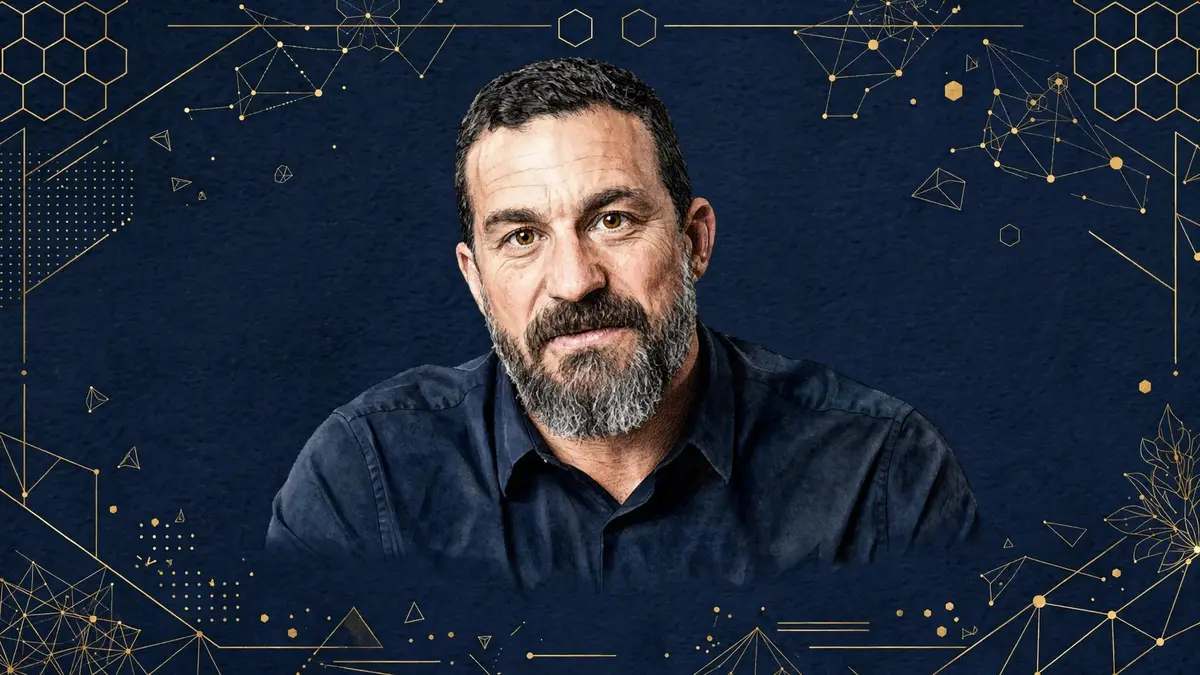
| Full Name | Andrew David Huberman |
|---|---|
| Date of Birth | September 26, 1975 (age 51 as of November 2026) |
| Birthplace | Stanford Hospital, Palo Alto, California, United States |
| Estimated Net Worth (2026) | $20–$30 million — anchored at $30 million (Celebrity Net Worth, May 2026); thinner sources put it at $5–$16 million |
| Primary Income Sources | Huberman Lab podcast sponsorships, Scicomm Media, Huberman Lab Premium ($10/month), book royalties, live events, Stanford salary |
| Key Ventures / Works | Huberman Lab podcast (launched January 2021), Scicomm Media (co-founded 2021), Protocols: An Operating Manual for the Human Body (September 15, 2026) |
| Current Role | Tenured associate professor of neurobiology and ophthalmology, Stanford University School of Medicine; director of the Huberman Laboratory |
| Education | B.A. Psychology, UC Santa Barbara (1998); M.A. Psychology, UC Berkeley (2000); Ph.D. Neuroscience, UC Davis (2004) |
| Height | 6 feet 1 inch (185 cm) — see the height section below |
| Nationality | American |
Table of Contents
- Early Life and Education
- Academic Career and the Stanford Lab
- The Huberman Lab Podcast
- How Much Is Andrew Huberman Worth?
- Income Streams and Business Ventures
- The Book, Protocols, and Live Events
- Net Worth Growth Timeline
- How He Compares to His Peers
- Personal Life and Relationships
- Controversies and Criticism
- Height, Weight, and Physical Stats
- Frequently Asked Questions
- Final Thoughts
- Sources and Reporting
Early Life and Education
Andrew David Huberman was born on September 26, 1975, at Stanford Hospital in Palo Alto, California — a fitting detail, given that he would eventually hold a tenured post a short drive from the hospital where he was born. His father, Bernardo Huberman, is an Argentine physicist who worked for Silicon Valley technology companies and later served as a consulting professor at Stanford. His mother was a children’s book author. The household was academic and intellectually serious, but Huberman’s own school years were anything but smooth.
His parents divorced when he was 12, and the years that followed were rough. Huberman has spoken openly in interviews about being a difficult teenager: skateboarding took up most of his attention, school felt pointless, and by 10th grade he had skipped enough classes to be sent to a detention center for at-risk youths. He has described lobbying the Palo Alto City Council at age 13 to build the Greer Skatepark, and forging a work permit at the same age to get a job at a local muffin shop. The detention-center stay ended on one condition — that he continue weekly therapy — and the therapist he was assigned turned out to be the pivot point of his life.
What changed was not discipline imposed from outside but a subject that caught him. Huberman discovered biopsychology and, by his own description, became obsessed with it. The question of how the brain works, how experience rewires it, and how behavior can be changed on purpose gave him a reason to sit still and study. He enrolled at Foothill College, a community college in Los Altos Hills, and then transferred to the University of California, Santa Barbara, where he earned a B.A. in psychology in 1998. He followed that with an M.A. in psychology from the University of California, Berkeley, in 2000, working in the laboratory of Irving Zucker and with Marc Breedlove on how early hormone exposure shapes brain development, and on the structure of the binocular visual pathways that set the body’s circadian clock.
His doctoral work took him to the University of California, Davis, where he studied under Barbara Chapman at the Center for Neuroscience and earned a Ph.D. in neuroscience in 2004. His dissertation work — on how neural activity and axon guidance molecules work together to wire the brain’s binocular maps — won the Allan G. Marr Prize for the best Ph.D. dissertation. It was a long way from the detention center, and it happened in about a decade.
The early-life story matters because it explains the tone of everything Huberman does now. His podcast is built around the idea that the nervous system can be trained — that sleep, light, focus, and stress are not fixed traits but levers a person can learn to pull. That is not an abstract idea for him. He has said, in different ways across many interviews, that he is living proof that a brain can be retrained, because his own was.
Academic Career and the Stanford Lab
After his Ph.D., Huberman did postdoctoral research at Stanford University School of Medicine under Ben Barres, one of the most influential neuroscientists of his generation, as a Helen Hay Whitney Postdoctoral Fellow. His work there focused on the visual system — on the genetic tools that could be used to study how the retina and the brain’s visual circuits develop, function, and repair themselves. Barres, who died in 2017, remained a defining influence; Huberman still cites him and has described the postdoctoral years as the period when he learned what rigorous science actually looks like.
From 2011 to 2015, Huberman held his first faculty post as an assistant professor of neurobiology and neuroscience at the University of California, San Diego, where he set up an independent lab studying visual system repair and neural plasticity. In 2016 he returned to Stanford as an associate professor of neurobiology at the School of Medicine, where he now directs the Huberman Laboratory. His lab’s work centers on three connected questions: how the visual system regenerates after damage, how stress and fear are wired into the brain, and how non-drug interventions — light, visual stimulation, breathing, behavior — can change nervous system function.
The publication record is substantial. Stanford’s own profile lists more than 75 peer-reviewed articles in journals including Nature, Science, Cell, Neuron, Current Biology, and the Journal of Neuroscience, with a Google H-index of 46 and more than 14,700 citations. His awards include the McKnight Foundation Neuroscience Scholar Award and a Pew Biomedical Scholar Award, both in 2013, and the Cogan Award from the Association for Research in Vision and Ophthalmology in 2017 — an annual award given to the most significant contributor to the field of vision science. In 2016, his lab published work showing that non-invasive visual stimulation, paired with gene therapy, could enhance regeneration of damaged retinal neurons and partly restore vision in animal models — the kind of result that, if it ever translated to people, could matter for glaucoma and other blinding conditions.

One fact about the lab deserves an honest note, because it became a point of public dispute in 2024. New York Magazine reported that year that the lab had been scaled back sharply during the COVID-19 pandemic and, in the magazine’s words, “barely exists,” with only a single postdoctoral researcher working there. A spokesperson for Huberman said the lab was still operational. The two claims are not as contradictory as they sound: a lab can be operational and still much smaller than it once was, and Huberman’s own time has plainly shifted toward the podcast and the media company built around it. Readers should keep that split in mind when weighing the science against the show — the Stanford post is real and tenured, and the podcast is a separate enterprise produced by Scicomm Media, not by the university.
The Huberman Lab Podcast
In January 2021, Huberman launched the Huberman Lab podcast. The timing was deliberate: the pandemic had left millions of people stuck at home, anxious, sleeping badly, and hungry for clear information about their own brains and bodies. Huberman’s pitch was simple — take what neuroscience actually knows about sleep, focus, stress, exercise, and learning, and turn it into free, practical tools anyone could use the same day. Episodes run long, often two to three hours, and they are dense: guest episodes with leading scientists sit next to solo episodes in which Huberman walks through a single topic, study by study, for the full length of the show.
The growth was fast by any measure. By 2023 the show ranked third among all podcasts in the United States on Spotify, and it has held the number-one spot in the Science, Education, and Health & Fitness categories for long stretches since. As of November 2026, his YouTube channel had crossed 8 million subscribers with more than 535 million total views across 550 videos, according to the analytics tracker SpeakRJ. The New York Post reported in September 2026 that the podcast draws about 3 million weekly listeners, and that searches for Huberman had surged 2,100 percent over five years. His email list tells a similar story: the marketing platform Kit published a case study showing the list growing from 6,000 to more than 1 million subscribers, with over 580,000 of those coming through a single lead magnet — a free PDF of Huberman’s daily routine.
The show’s format is part of its appeal. Huberman does not do short clips or hot takes. He explains a mechanism — how morning sunlight sets the circadian clock, how the cortisol spike after waking works, how the brain consolidates learning during sleep — and then gives a protocol: what to do, when, and for how long. Morning sunlight within an hour of waking, a 30-minute walk outside, cold exposure, non-sleep deep rest, and specific breathing patterns have become signature items, repeated so often by listeners that a 55,000-member Reddit community calls itself “sungazers.” That reach is also the source of the show’s sharpest criticism, covered in detail later in this article: several scientists argue that Huberman speaks with more certainty than the evidence supports when he moves outside vision science into nutrition, supplements, and hormones.
In 2021, the same year the podcast launched, Huberman and Robert Mohr — a New York-based health and fitness publicist who had produced the TV show The Doctors — co-founded Scicomm Media to produce science-related content. Huberman Lab’s own site is careful to state that the podcast is produced by Scicomm Media and is independent from Huberman’s teaching and research at Stanford. That separation matters for the money story: the podcast is a private media business, not a university project, and its revenue belongs to that business.
The turn that made the fortune: Huberman spent fifteen years building an academic career that, on a professor’s salary alone, would have made him comfortable but not rich. The podcast changed the scale entirely. A tenured professor earns a few hundred thousand dollars a year; a top-three podcast with millions of weekly listeners, a seven-figure email list, and a roster of supplement and sleep brands can earn many times that — and it can be sold, licensed, and built into a book, a membership, and a live tour. Everything in the money sections below follows from that one decision in January 2021.
How Much Is Andrew Huberman Worth?
Andrew Huberman’s estimated net worth in 2026 is $20 million to $30 million, anchored at $30 million by Celebrity Net Worth, which updated its figure in May 2026. That is the number this article uses as its headline figure, and it is the figure most often repeated across the web — but readers should know exactly how it was reached, and how shaky the ground under it is.
No audited statement of Huberman’s personal finances exists in the public domain. He has never published his income, his equity stakes, or his book advance. What exists instead is a set of outside estimates built from audience size, typical podcast advertising rates, and known business relationships. The table below lays out every published figure we could find, with its source and date, so the reader can see the disagreement instead of being handed a single number as fact.
| Source | Figure | Date | Notes |
|---|---|---|---|
| Celebrity Net Worth | $30 million | May 2026 | Headline figure; cites podcast, sponsorships, equity, and book income; Stanford salary estimated at $250,000–$350,000 a year |
| InvestorMint | $20–$30 million | May 2026 | Agrees with the $30 million headline while noting thinner sources at $5–$16 million; estimates podcast income above $10 million a year |
| Uplarn | $5–$16 million | February 2026 | Lower range; treats all figures as unconfirmed third-party estimates |
| TheCityCeleb / CelebWikiCorner | $5 million | 2025 | Lowest published figures; based mainly on YouTube and podcast income, and now out of date against the 2026 book and live tour |
| The Most 10 | $15 million | April 2025 | Mid-range older estimate, predating the book launch |
The pattern is clear: the higher, fresher estimates cluster around $20–$30 million, while the lower figures come from older or thinner roundups that count little beyond YouTube ad revenue. InvestorMint’s reasoning is worth spelling out, because it shows the math. A show with millions of downloads per episode, several sponsor reads per episode, and top-tier podcast advertising rates — industry data cited by sponsors puts leading health podcasts at $25 to $100 per thousand listeners — can plausibly generate eight figures a year from sponsorships alone. Celebrity Net Worth puts the annual total from all revenue streams at “well over $15 million.” Against that, the honest caveats are real: sponsorship contracts are private, Momentous equity cannot be sold on a public market, Premium subscriber counts are not disclosed, and the book advance is unknown. The $20–$30 million range is the best outside estimate available; the $30 million anchor is the figure the most widely cited source stands behind.
One more check keeps the range honest. If Huberman’s media business really does bring in well over $15 million a year, and he has been earning at that level for roughly three to four years since the podcast broke into the top tier, then a $20–$30 million net worth after taxes, business costs, and spending is plausible without stretching. If, on the other hand, the sponsorship market softens or the audience shrinks, the number could fall just as fast. Net worth for a creator-led business is a snapshot of a moving target, not a bank balance.
Income Streams and Business Ventures
Huberman’s income comes from five streams, and their sizes are very different. The table below ranks them by the weight of the evidence, not by guesswork, and marks how much of each figure is actually public.
| Income Stream | What We Know | Confidence |
|---|---|---|
| Podcast sponsorships | Largest stream by a wide margin. Long-running sponsors include AG1 (formerly Athletic Greens), InsideTracker, LMNT, Eight Sleep, ROKA, Thesis, and Helix Sleep. Industry estimates put AG1 alone in the six- to seven-figure annual range; total sponsorship income is estimated above $10 million a year (InvestorMint, May 2026). | High that it is the largest stream; the exact total is private |
| Huberman Lab Premium | Paid membership at $10 a month, offering full episode transcripts and extra material. Subscriber numbers are not disclosed, so revenue cannot be pinned down — but even a small fraction of an 8-million-subscriber YouTube audience converting to paid would be substantial. | Medium — the price is public, the subscriber count is not |
| Book royalties | Protocols (Simon & Schuster, September 15, 2026) debuted at number one on the New York Times bestseller list. The advance and royalty terms are private; a number-one hardcover with a 688-page list price generates serious royalty income, but the exact amount is not public. | Medium — the bestseller status is confirmed, the money is not |
| Equity and advisory roles | Huberman is an investor in AG1 and holds equity in Momentous, the supplement company, where he also has an advisory relationship. AG1 has been reported as valued at over $1 billion, which gives his stake real upside on paper — but private equity cannot be spent until there is a sale or a new funding round, and the size of his stake is not public. | Low on value — real upside, unknown size, illiquid |
| Stanford salary | His tenured associate professor post pays an estimated $250,000–$350,000 a year, according to Celebrity Net Worth. That is a solid academic salary and the smallest of his major income streams — roughly a tenth of the media business, by InvestorMint’s breakdown of about 80 percent media and business, 10 percent salary, and 10 percent investments and equity. | Medium — the range is an estimate, not a published pay slip |
| Live events and speaking | Live shows, including a September 17, 2026 performance at Radio City Music Hall in New York that drew fans in the thousands, plus speaking engagements. Ticket and fee figures are private. | Medium — the events are confirmed, the fees are not |
Two details in that list deserve a closer look, because they explain both the money and the criticism. The first is AG1. Huberman has promoted the supplement for years across podcast episodes and social channels, and he is also an investor in the company and has served as a scientific advisor. That dual role — endorser and stakeholder — is the heart of the conflict-of-interest questions raised by scientists and by New York Magazine: when a host recommends a product he partly owns, the line between advice and advertising gets thin. Huberman’s defenders point out that he discloses the sponsorships on air and that the sponsors pay for the free content; his critics reply that disclosure does not remove the incentive.
The second is Scicomm Media, the company he co-founded with Robert Mohr in 2021. Scicomm is the business behind the podcast, the newsletter, and the Premium membership, and it is where the sponsorship money actually lands. Owning the production company, rather than just hosting a show someone else owns, is what turns a popular podcast into a durable business — and it is why Huberman’s net worth looks more like a media founder’s than a professor’s. The email list is part of the same machine: Kit’s case study shows a list that grew from 6,000 to more than 1 million subscribers, and the list both sells Premium memberships and keeps sponsors coming back, because it is an audience Huberman owns outright rather than renting from YouTube or Spotify.
YouTube advertising itself is a smaller piece than many readers assume. Analytics trackers put the channel at about 8 million subscribers and 535 million total views as of November 2026, and one tracker estimated monthly YouTube income around $201,000 — a large number on its own, but a fraction of the sponsorship total. The real value of YouTube for Huberman is distribution: it is where new listeners find him, and where clips of his long episodes travel to audiences who would never sit through a three-hour show.
The Book, Protocols, and Live Events
On September 15, 2026, Huberman published his first book, Protocols: An Operating Manual for the Human Body, with Simon & Schuster. The 688-page book distills the most requested practices from the first 200-plus podcast episodes into scripted routines for sleep, focus, energy, learning, and physical performance — the same material his listeners had been asking him to put in one place for years. It debuted at number one on the New York Times Best Seller list in the Advice, How-To & Miscellaneous category, a result the publisher and Wikipedia both record, with the Times listing retrieved September 25, 2026.
The book launch was paired with a live tour. On September 17, 2026, two days after publication, Huberman performed his live Huberman Lab show at Radio City Music Hall in New York, with fans turning out in the thousands. The New York Post covered the event as part of a wider profile of his super-fans — people who plan their days around his protocols, buy the supplements he discusses, and, in at least one case reported by the Post, experiment with nicotine after hearing him praise its effects on cognition. That last detail is a reminder of how far his influence now reaches beyond the lab: a passing comment from Huberman can move behavior across millions of people, for better and for worse.
The book also changed the shape of his business. A number-one bestseller brings royalty income, but it also brings a new audience — book buyers who may never have listened to a three-hour podcast — and it gives sponsors a fresh reason to stay. The tour, the book, and the Premium membership now reinforce each other: the podcast feeds the book, the book feeds the live shows, and the shows feed the email list. That loop is the reason the 2026 estimates of his net worth run higher than the 2025 figures, which were set before any of it existed.
Net Worth Growth Timeline
Because no official figures exist for any single year, the timeline below is built from the dated estimates and the dated career events that drive them. It shows how a professor’s income became a media fortune, and how quickly that happened.
| Year | What Happened | Estimated Net Worth |
|---|---|---|
| 2011–2015 | Assistant professor at UC San Diego; academic salary only, plus research grants | Under $1 million (no published estimate; academic salary range) |
| 2016–2020 | Returns to Stanford as tenured associate professor; lab work, awards, and a growing reputation in vision science — but no public profile outside academia | Low single-digit millions at most (no published estimate) |
| 2021 | Launches Huberman Lab in January; co-founds Scicomm Media; podcast begins its climb | Rising; first sponsorship deals signed |
| 2023 | Podcast ranks third among all US podcasts on Spotify; audience passes 5 million subscribers | $5–$15 million (older published estimates cluster here) |
| 2025 | Channel passes 7 million YouTube subscribers; low-end roundups still cite $5 million, mid-range sources $15 million | $5–$16 million in thinner sources |
| May 2026 | Celebrity Net Worth updates its figure to $30 million; InvestorMint lands on $20–$30 million | $20–$30 million |
| September–November 2026 | Protocols debuts at number one on the New York Times bestseller list; Radio City Music Hall live show; YouTube passes 8 million subscribers | $20–$30 million (anchored $30 million) |
The timeline makes one thing plain: almost all of the money arrived after 2021, and most of it after 2023. That is a fast build for a man who was 45 when the podcast started, and it explains why the older $5 million figures still floating around the web are out of date. They describe a smaller business from a smaller moment. It also explains the risk: a fortune built in five years on one show, one audience, and a handful of sponsors can shrink just as quickly if the audience moves on or a sponsor walks away.
How He Compares to His Peers
Huberman occupies an unusual spot. He is not a celebrity in the usual sense — he has no film, no chart hit, no sports contract — and he is not a typical academic either, because few professors have 8 million YouTube subscribers. The honest comparison is with the other people who turned expertise into a media business: the doctors, scientists, and interviewers who built audiences around health and ideas.
| Person | Field | Audience / Reach | What Sets Them Apart |
|---|---|---|---|
| Andrew Huberman | Neuroscience | 8M YouTube subscribers; ~3M weekly podcast listeners; 1M+ email subscribers | Tenured Stanford professor; science-first protocols; book debuted at number one in September 2026 |
| Peter Attia | Longevity medicine | Large podcast and newsletter audience; bestselling author (Outlive, 2023) | Physician with a clinical practice; deeper focus on medicine and lifespan |
| Rhonda Patrick | Nutritional biochemistry | Millions of YouTube subscribers; FoundMyFitness | Research-first, smaller commercial footprint; no tenured university post |
| Lex Fridman | Computer science / AI | Millions of YouTube subscribers; long-form interviews | MIT research scientist turned interviewer; broader guest range, less health focus |
| Tim Ferriss | Self-improvement / business | One of the longest-running hit podcasts; bestselling author | Earlier to the format by a decade; business and productivity rather than lab science |
Two points stand out from that table. First, Huberman’s audience is now on the same scale as the biggest names in the space, and his email list — more than a million subscribers — is an asset most of his peers would envy, because it is a direct line to his audience that no platform can take away. Second, his Stanford tenure is the thing none of the others can copy: it gives his advice a stamp of institutional weight, and it is also the reason the criticism of him cuts deeper. When a tenured professor at one of the world’s best medical schools talks about supplements or hormones, listeners hear it as science, not as a sales pitch — and that is exactly what his critics say he should be more careful about.
On money, the comparison is harder to draw honestly, because reliable net worth figures for Attia, Patrick, and Fridman are just as thin as Huberman’s. What can be said is that Huberman’s $20–$30 million range puts him among the best-paid science communicators alive, and that the gap between his academic salary and his media income — roughly ten to one, by InvestorMint’s split — is wider than for any of his peers who still practice or teach full-time.
Personal Life and Relationships
Huberman keeps his private life mostly private, and the record reflects that. He has never publicly confirmed a wife or a marriage, and no reliable source reports that he has children. Profiles that describe him as single and without children as of late 2025 are repeating the absence of any public announcement rather than a confirmed fact, and this article will not dress that absence up as certainty: what is known is that he has not introduced a partner publicly, and that his public identity is built entirely around his work.
That privacy was broken open in March 2024, when New York Magazine published Kerry Howley’s investigation “Andrew Huberman’s Mechanisms of Control,” which reported allegations from several women that he had maintained overlapping long-term relationships while presenting himself as a committed partner to each of them. The full account, and Huberman’s response to it, is covered in the next section. What matters here is the shape of his life outside that story: he lives in California, trains hard — his Venice Beach gym routine was profiled in September 2026 — and spends much of his time between the Stanford lab, the podcast studio, and the road for live shows. His father, Bernardo Huberman, has appeared on the podcast, and Huberman has spoken warmly about him; his mother, a children’s book author, is mentioned less often in his public remarks.
He is also open about the habits he preaches. Morning sunlight, resistance training, cold exposure, and a strict sleep routine are not just episode topics — they are his own daily practice, and the “Daily Blueprint” lead magnet that grew his email list past a million subscribers is literally a PDF of his own day. That consistency is part of his appeal: listeners feel he lives the protocols he sells. Whether that makes the advice better is a separate question, and one the scientific criticism addresses directly.
Controversies and Criticism
Huberman’s rise has drawn two kinds of criticism, and they should not be mixed up: one about his science, and one about his private life. Both are well documented, and both deserve a fair hearing.
The scientific criticism came first. As early as April 2023, the science writer Jonathan Jarry wrote that the podcast was sponsored by companies offering “questionable products from the perspective of science-based medicine,” including AG1. Cancer biologist Joseph Zundell, who says he trusts Huberman’s neuroscience, criticized him for extrapolating animal research to humans without proper justification and for straying outside his area of expertise. Neuroscientist David Berson, who has known Huberman since his postdoctoral years and has been a guest on the show, has said his research is respected among neuroscientists — a useful counterweight, because it shows the criticism is about the podcast’s reach, not the lab’s work. New York Magazine echoed the point, writing that Huberman often “posits certainty where there is ambiguity.” The specific flashpoints are easy to list: his past comments on sunscreen, in which he said he was as scared of sunscreen as of melanoma; his admission that he avoided flu vaccines despite acknowledging that they work; and his praise of nicotine’s effects on cognition, which the New York Post reported had led some listeners to experiment with it. None of these is a finding of misconduct. Taken together, though, they are the reason scientists keep asking the same question: when a vision neuroscientist speaks with total confidence about nutrition, hormones, and supplements, should the audience treat it as settled science?
The second criticism arrived on March 25, 2024, with Kerry Howley’s New York Magazine investigation. The article reported that Huberman had maintained at least five simultaneous relationships, with most of the women believing they were his only partner, and described alleged patterns of manipulation and angry outbursts. One woman, referred to as Sarah in the piece and later identified as the key source, described a serious long-term relationship she believed was exclusive. Huberman responded on the Jocko Willink podcast, calling the framing overblown — “Six girlfriends? I’ve had challenges maintaining one girlfriend,” he said — and arguing that the magazine had tried to tie his work on dopamine and protocols to “some diabolical controlling mastermind thing.” He has never confirmed the specific allegations in detail, and no legal action followed the article. In a Men’s Health interview published on September 20, 2026, he gave his clearest recent public response, acknowledging that he has not always made the best choices in relationships and partners, and that his greatest error was failing to be open about his imperfections. Claims circulating on social media beyond those published interviews remain unverified and should not be treated as established fact.
Readers should weigh both stories the same way: the science criticism is about evidence and scope, and it is made by named scientists on the record; the relationship story is about conduct reported by named and anonymous sources in a major magazine, answered in part by Huberman himself, and never tested in court. Neither story has stopped his rise — the book debuted at number one two and a half years after the New York Magazine piece, and the Radio City show sold thousands of tickets — but both are part of any honest biography, because both shape how his audience should listen to him.
Height, Weight, and Physical Stats
Andrew Huberman stands 6 feet 1 inch tall (185 cm) and weighs around 225 pounds, according to the source-by-source adjudication published by our sister site GuideNetWorth in October 2026, which found eight of nine published sources agreeing on the 6-foot-1 figure and confirmed it against two independent September 2026 profiles — one covering his live show at Radio City Music Hall, the other touring his Venice Beach gym. For the full source-by-source breakdown of Andrew Huberman’s height, including the one outlier source that contradicts itself on its own pages, see that profile. Huberman has never published his own measurements, so every height figure is a reported estimate rather than a confirmed fact.
The physical stats matter to his audience for a practical reason: Huberman’s training is part of his brand. He talks openly about resistance training, zone-two cardio, and the morning routine that starts with sunlight and ends with a workout, and his Venice gym was profiled in September 2026 as part of the coverage of his live tour. At 51, he is visibly fit, and the fitness content is one of the most shared parts of the show — which is also why the weight figure, like the height, gets argued over online. The 225-pound figure is corroborated by the September 2026 gym profile; older guesses that put him several inches shorter have been retired by the newer reporting.
Frequently Asked Questions
When was Andrew Huberman born?
Andrew Huberman was born on September 26, 1975, at Stanford Hospital in Palo Alto, California. He turned 51 in September 2026. His father is Argentine physicist Bernardo Huberman, and his mother was a children’s book author.
What is Andrew Huberman’s net worth in 2026?
His estimated net worth in 2026 is $20 million to $30 million, anchored at $30 million by Celebrity Net Worth in May 2026. Thinner and older sources put it lower, at $5 million to $16 million. The figure is an outside estimate — Huberman has never disclosed his finances — and most of it comes from the Huberman Lab podcast, sponsorships, equity, and his book, not his Stanford salary.
What does Andrew Huberman do at Stanford?
He is a tenured associate professor of neurobiology and ophthalmology at the Stanford University School of Medicine, where he directs the Huberman Laboratory. His lab studies vision regeneration, stress, fear, and non-drug interventions for anxiety. He joined Stanford as an associate professor in 2016 after five years as an assistant professor at UC San Diego, and he has published more than 75 peer-reviewed papers.
When did the Huberman Lab podcast start?
The Huberman Lab podcast launched in January 2021, during the COVID-19 pandemic. It is produced by Scicomm Media, the company Huberman co-founded with Robert Mohr in 2021, and is independent from his Stanford teaching and research. By 2023 it ranked third among all US podcasts on Spotify, and as of November 2026 it had more than 8 million YouTube subscribers.
Is Andrew Huberman married?
No — he has never publicly confirmed a wife or a marriage, and no reliable source reports that he has children. He keeps his private life mostly private. In March 2024, New York Magazine reported allegations that he had maintained several overlapping relationships; Huberman disputed the framing on the Jocko podcast, and in a September 2026 Men’s Health interview he acknowledged he had not always made the best choices in relationships.
How tall is Andrew Huberman?
Andrew Huberman is 6 feet 1 inch tall (185 cm) and weighs around 225 pounds, according to a source-by-source adjudication by GuideNetWorth in October 2026, which found eight of nine published sources agreeing on 6 feet 1 inch. He has never published his own measurements, so the figure is a reported estimate.
What is Andrew Huberman’s book Protocols about?
Protocols: An Operating Manual for the Human Body, published September 15, 2026 by Simon & Schuster, distills the most requested practices from the first 200-plus Huberman Lab episodes into scripted routines for sleep, focus, energy, learning, and physical performance. The 688-page book debuted at number one on the New York Times Best Seller list in the Advice, How-To & Miscellaneous category.
Why is Andrew Huberman controversial?
Two separate issues. Scientists have criticized him for promoting supplements and for speaking with certainty about nutrition, hormones, and other topics outside his vision-science expertise, and for extrapolating animal research to humans. Separately, a March 2024 New York Magazine investigation reported allegations of overlapping relationships and angry outbursts; Huberman disputed the framing, and no legal action followed. His research itself remains respected among neuroscientists.
Final Thoughts
Andrew Huberman’s biography is, at its core, a story about a second act. The first act was a troubled Palo Alto childhood, a detention center, and a slow climb through three California universities to a tenured post at Stanford — a climb that took fifteen years and produced real science on vision and the brain. The second act began in January 2021, when a 45-year-old professor started a free podcast and, within five years, built a media business worth an estimated $20 million to $30 million, a number-one bestselling book, and an audience of millions who plan their mornings around his advice.
That second act is also the reason this biography carries a warning label alongside the admiration. The same reach that makes Huberman useful — millions of people actually changing their sleep, their light exposure, and their training because he told them to — makes his mistakes land harder, whether it is a supplement he partly owns or a health claim stretched beyond the evidence. The honest way to read him is the way his own Stanford profile invites: take the protocols, check them against the science, and remember that the man giving the advice is a vision neuroscientist who became a media founder, not a doctor treating you. If you do that, the story holds together — a kid who nearly lost school altogether, who rebuilt himself through the brain, and who now teaches millions of strangers to try the same thing.
Sources and Reporting
How we estimated: Huberman has never disclosed his income or net worth, so every money figure in this article is an outside estimate. We anchored the headline range at $30 million from Celebrity Net Worth (May 2026) and cross-checked it against InvestorMint ($20–$30 million, May 2026), while showing the lower $5–$16 million figures from thinner and older sources so readers can see the disagreement. Stanford salary, sponsorship, equity, and book figures are all labeled as estimates or private where the underlying numbers are not public. Biographical facts are drawn from Stanford’s own profile and Wikipedia, cross-checked against each other; where they differ on small details, such as the exact years of his postdoctoral work, we used the Stanford profile’s dates. Estimates may differ from private reality.
Named sources used for this article: Stanford Profiles, Wikipedia, Celebrity Net Worth, InvestorMint, Huberman Lab, Simon & Schuster, Kit, SpeakRJ, GuideNetWorth, Uplarn. All links point to the outlets’ homepages or the specific pages cited; no URL was used that we could not verify.