Kevin Durant height is officially listed at 6 feet 11 inches (211 cm), and that single number has caused more arguments than almost any other measurement in basketball. For most of his career the programmes, the trading cards and the television graphics said 6 feet 9 inches. Durant himself said 6 feet 9 inches. Then, in 2016, he admitted the number was not true, and in 2019 the NBA measured every player barefoot and put the argument on an official footing: Durant stands 6 feet 10 inches without shoes, which makes him 6 feet 11 inches in the shoes he actually plays in, and a full 7 feet tall by his own tape measure when he laces up his game shoes.
This page settles the question with the dated record — the old listing, the 2016 admission, the 2019 NBA re-measurement, and the numbers the league’s own databases carry today — then explains why a two-time champion spent a decade shaving two inches off his own height, what his 7-foot-5 wingspan does for his game, and how he stacks up against LeBron James, Giannis Antetokounmpo and Victor Wembanyama. Last updated: 13 November 2026.

Kevin Durant Quick Facts
| Full Name | Kevin Wayne Durant |
|---|---|
| Date of Birth | 29 September 1988, Washington, D.C., United States |
| Age | 38 years old (as of November 2026) |
| Height (official listing) | 6 feet 11 inches (211 cm) |
| Height (barefoot, 2019 NBA measurement) | 6 feet 10 inches (208 cm) |
| Height (with shoes, per Durant) | 7 feet 0 inches (213 cm) |
| Wingspan | 7 feet 5 inches (226 cm) |
| Weight | 240 lbs (109 kg) |
| Shoe Size | US 17–18 (sources disagree) |
| Current Team | Houston Rockets (since July 2025) |
| Position | Small forward / power forward |
| Jersey Number | No. 7 in Houston; No. 35 for most of his career |
| Estimated Net Worth | Around $300 million (Celebrity Net Worth, via EssentiallySports, February 2026) |
| Peak Income Sources | NBA salary, lifetime Nike deal, endorsements, Thirty Five Ventures investments |
| Key Career Marks | 2× NBA champion, 2× Finals MVP, 2014 league MVP, 4× scoring champion, 16× All-Star, 4× Olympic gold medallist |
Contents
- Kevin Durant Quick Facts
- The Short Answer: How Tall Is Kevin Durant?
- The Numbers, Side by Side
- Why He Said 6 Feet 9 for a Decade
- The 2019 NBA Measurement Rule That Ended the Guessing
- Height Through the Years: High School, Texas, the Draft
- Wingspan, Weight and Shoe Size
- How His Height Shapes His Game
- Kevin Durant vs Other NBA Giants
- Career in Brief: Seattle to Houston
- The Money: Salary, Rockets Deal and Net Worth
- Business Off the Court: Nike, Thirty Five Ventures
- Personal Life
- Kevin Durant Height FAQs
- Final Thoughts
- Sources and Reporting
The Short Answer: How Tall Is Kevin Durant?
Kevin Durant is 6 feet 11 inches (211 cm) tall on the NBA’s current official listing, the figure carried today by Basketball-Reference and the league’s own player databases. That is the number to use if someone asks you in a quiz, on a broadcast, or in a bar argument. It is the height he plays at, in shoes, on an NBA floor.
The confusion comes from the fact that three different numbers have all been “official” at different times, and all three were attached to the same man. From his rookie year in 2007 until the league changed its rules in 2019, Durant was listed at 6 feet 9 inches (206 cm). That was the number on the roster sheets, and it was the number Durant gave out himself. In a 2016 interview he owned up to the gap, saying he had been recorded at 6 feet 10 and three-quarters without shoes, “so with my shoes I’m seven feet.” Then the NBA’s 2019 re-measurement, done barefoot by team doctors, put him at 6 feet 10 inches (208 cm) with no shoes on. Add a pair of basketball shoes — roughly an inch — and you land right back at the 6-foot-11 listing the league uses now.
So the honest answer is a small range, not a single figure: 6 feet 10 inches barefoot, 6 feet 11 inches listed, 7 feet in game shoes. Any source that gives you only one of those numbers without saying which measurement it is will look like it is contradicting the others. It is not. The measuring stick changed; Durant did not.
The one-line version: Kevin Durant is 6’11” (211 cm) tall. Barefoot he measures 6’10”, and in his playing shoes he stands a full 7 feet. The old 6’9″ listing was his own choice, not a measurement — the full story is below.
For scale, that puts him about five inches taller than the average NBA player, who stands around 6 feet 6 inches, and roughly fourteen inches taller than the average American man, who measures about 5 feet 9 inches. A standard interior doorway in the United States is 6 feet 8 inches high. Durant has to duck to walk through one. He has spent his whole adult life in rooms, cars, aeroplane seats and hotel beds built for people a foot shorter than he is, and he has built one of the great scoring careers in basketball history out of the reach that height gives him.
The Numbers, Side by Side
Here is every figure in the argument, in one place, with where each one comes from and when it applied. If you only read one table on this page, read this one.
| Measurement | Height | Source and date |
|---|---|---|
| Current official NBA listing | 6 ft 11 in (211 cm) | Basketball-Reference; Sportradar player bio, November 2026 |
| Barefoot (2019 re-measurement) | 6 ft 10 in (208 cm) | NBA’s 2019 barefoot measurement programme; reported by the Brooklyn Nets that year |
| Barefoot, Durant’s own figure | 6 ft 10¾ in (210 cm) | Durant in a 2016 interview: “I was recorded at 6’10” and three quarters with no shoes” |
| With shoes, Durant’s own figure | 7 ft 0 in (213 cm) | Same 2016 interview: “so with my shoes I’m seven feet” |
| Old career listing (2007–2019) | 6 ft 9 in (206 cm) | NBA roster listings for Seattle, Oklahoma City and Golden State; Durant’s own stated height |
| College listing (Texas, 2006–07) | 6 ft 9 in (206 cm) | Texas Longhorns roster for his single college season |
| Wingspan | 7 ft 5 in (226 cm) | Widely reported; pre-draft and career measurements |
| Standing reach (reported) | About 9 ft 2 in (279 cm) | Reported pre-draft measurement; treat as approximate |
Two things in that table deserve a second look. First, the gap between Durant’s own barefoot figure (6 feet 10 and three-quarters) and the NBA’s 2019 barefoot figure (6 feet 10) is three-quarters of an inch — the kind of difference that comes from time of day, posture, and who is holding the tape. Human beings are a fraction taller in the morning than at night, and a man who has played professional basketball for nearly two decades does not measure the same at the end of a season as at the start of one. Second, several height websites still carry the old 6-foot-9 listing, or split the difference at 6 feet 10, because they scraped a roster page from 2015 and never updated it. When a site tells you Durant is 6 feet 9 inches, check the date on the page. It is almost always quoting a listing that stopped being used seven years ago.
The figure we anchor this article on is the one the league uses today: 6 feet 11 inches (211 cm), with the barefoot 6-foot-10 measurement stated alongside it so the range is visible. That matches Basketball-Reference, which answers its own “How tall is Kevin Durant?” prompt with “6-11 (211 cm)”, and Sportradar, which lists his height as 211 cm in his current Houston Rockets bio.
Why He Said 6 Feet 9 for a Decade
The strangest part of the Kevin Durant height story is that the wrong number was his own idea. Most players who fudge their height add an inch or two. Durant took inches off. He did it on purpose, for a basketball reason, and he explained it plainly once he stopped.
Speaking to Chris Herring of The Wall Street Journal in 2016, in a conversation later picked up by ClutchPoints, Durant said he had always liked the sound of being a 6-foot-9 small forward. “Really, that’s the prototypical size for a small forward,” he said. “Anything taller than that, and they’ll start saying, ‘Ah, he’s a power forward.'” He wanted to be judged as a wing — a scorer who handles the ball, runs the floor and shoots over people — not as a big man who lives near the basket. In his mind, 6 feet 9 inches was the size of a small forward. Seven feet was the size of a centre. So he told the world he was 6 feet 9 inches, and the league printed it, and everyone who watched him play quietly knew it was not true.
It was an open secret for years. Teammates joked about it. Opponents noticed it. In a famous Team USA photograph, Durant stood visibly taller than DeMarcus Cousins, who was listed at 6 feet 11 inches. When reporters asked him about it, he had a line ready: “For me, when I’m talking to women, I’m 7 feet. In basketball circles, I’m 6’9″.” The joke landed because everybody in basketball circles could see he was not 6 feet 9 inches. He was a seven-footer playing on the wing, and that was exactly what made him so hard to guard.
There was also a practical side to the choice. Durant came into the league rail-thin — about 215 pounds on a frame that would eventually carry 240 — and the 6-foot-9 label helped him avoid being pushed into a bruising interior role before his body was ready for it. Coaches who think of a player as a power forward ask him to wrestle with centres and fight for rebounds in traffic. Coaches who think of a player as a small forward let him face up, shoot and create. Durant wanted the second job, and the label helped him get it. By the time he was strong enough to play anywhere on the floor, the number had stuck, and there was no reason to correct it.
He finally did correct it in 2016, telling reporters he was really almost 6 feet 11 inches barefoot and seven feet in shoes. Even then, the official listing did not change right away. The league still printed 6 feet 9 inches on its rosters, because the league still let teams report whatever height they liked. It took a rule change three years later to fix the paperwork.
The 2019 NBA Measurement Rule That Ended the Guessing
Durant was not the only player whose listed height was more of a wish than a measurement. For years, NBA heights were a mess: some teams measured with shoes on, some without, some rounded up, and some simply wrote down what the player asked for. The New York Daily News’ Dennis Young reported on the problem in detail, and the stories piled up — players who grew two inches overnight when they changed teams, veterans who shrank an inch in their thirties, rookies listed taller than the men standing next to them in team photos.
In 2019 the league had enough. It ordered every team to measure every player barefoot, without shoes or socks, with team doctors doing the measuring, and to submit those numbers as the official listings. The results were a small scandal of their own. Dwight Howard, long listed at 6 feet 11 inches, came in at 6 feet 9 and three-quarters. Plenty of guards lost an inch. And Durant, the most famous case of all, was measured at just under 6 feet 11 inches barefoot — the Brooklyn Nets, his team at the time, updated his official height to 6 feet 10 inches, which is the barefoot figure that has stuck in the record since.
That 2019 number is the most trustworthy single measurement in Durant’s file, because it was taken under a standard protocol rather than reported by a team with an interest in the answer. It also explains why the listing moved again afterward: once the league started publishing barefoot heights, most databases added the shoe back in for the number fans actually see, and 6 feet 10 inches barefoot plus a basketball shoe is 6 feet 11 inches. That is how Basketball-Reference, Sportradar and the league’s own current pages all land on the same 6-foot-11 figure today.
The rule change also settled an old argument about how the league’s numbers should be read. Before 2019, a “listed height” could mean anything. After 2019, the barefoot number is the measurement and the listed number is the playing height. When you see Durant at 6 feet 11 inches now, you are seeing a number with a method behind it — and that is a genuine improvement on the decade when the number on the roster was whatever the player felt like saying.
Height Through the Years: High School, Texas, the Draft
Durant was not born tall. He grew into it late and fast, and the growth spurt is a big part of his story. Born on 29 September 1988 in Washington, D.C., and raised mostly in Seat Pleasant, Maryland, in Prince George’s County, he was a skinny kid who played on the PG Jaguars youth team and looked up to his AAU coach, Charles Craig — the man whose number 35 Durant has worn for most of his career, in honour of a coach who was killed at the age of 35.
By high school he was shooting up. He played at National Christian Academy in Fort Washington, Maryland, then spent time at Oak Hill Academy in Virginia, one of the country’s most famous basketball schools, before finishing at Montrose Christian in Rockville, Maryland. He was already close to his full height by the time he arrived at the University of Texas in 2006, listed at 6 feet 9 inches for his single college season — a number that, like the later NBA listing, was already behind the truth. As a Longhorn freshman he averaged 25.8 points and 11.1 rebounds a game, won the Naismith College Player of the Year award as the first freshman ever to do so, and had his No. 35 jersey retired by Texas after he left. Durant turned 38 in September 2026, and you can read the full breakdown of how old Kevin Durant is today on our age page for him.
The 2007 NBA Draft made the height question official for the first time. The Seattle SuperSonics took Durant second overall, behind Greg Oden of Ohio State, and the pre-draft measurements had him at 6 feet 10 inches barefoot with a 7-foot-5 wingspan. He won Rookie of the Year in 2008, and the franchise moved to Oklahoma City that same year and became the Thunder. For the next nine seasons he was listed at 6 feet 9 inches while playing like a man who was plainly taller than that, winning four scoring titles, the 2014 league MVP award, and a trip to the 2012 NBA Finals.
What is easy to miss in the height debate is that Durant kept growing after the draft. He entered the league as a teenager and filled out over his first few seasons, adding weight and strength to a frame that had been all arms and legs at Texas. The 6-foot-9 listing froze him in time as a 19-year-old. The 2019 measurement caught up with the adult. That is another reason the old number looks so wrong in hindsight: it described a kid who no longer existed.
Wingspan, Weight and Shoe Size
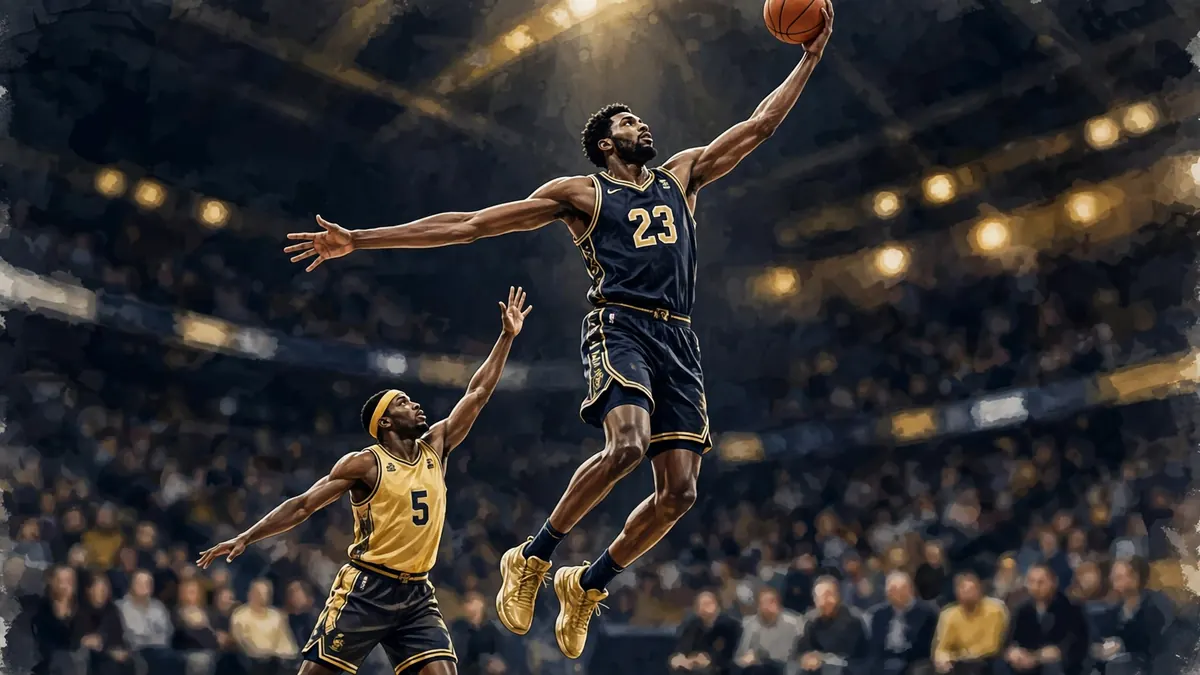
Height is only the first number in Durant’s physical profile. The second number, his wingspan, is the one that actually explains his game. Durant’s arms stretch 7 feet 5 inches (226 cm) from fingertip to fingertip — six inches wider than he is tall. That is an enormous reach for a wing player, and it is the reason his jump shot is so hard to contest: by the time the ball leaves his hands, it is already above the outstretched arm of the man guarding him.
For comparison, most NBA players have a wingspan a few inches wider than their height. Durant’s is six inches wider, and combined with a reported standing reach of around 9 feet 2 inches, it means he can shoot over defenders, grab rebounds outside his area, and block shots without leaving his feet. Coaches talk about “length” as a separate quality from height, and Durant has more of it than almost anyone who has played his position. His arms are the reason a 6-foot-11 man plays like a 7-foot-2 man on defence and a 6-foot-9 man on offence — the best of both measurements.
His weight has moved a long way since his rookie year. Durant entered the league at around 215 pounds, a weight that made scouts worry about whether he could survive the physical pounding of an NBA season. Today he is listed at 240 pounds (109 kg) by Basketball-Reference and Sportradar, a gain of about 25 pounds of muscle and maturity spread across nearly two decades. He is still lean for his height — a man of his size carrying 240 pounds looks thin, and Durant has always looked thin — but the extra weight is what has let him play into his late thirties, hold his ground against bigger forwards, and survive the Achilles injury that cost him the whole 2019–20 season.
His shoe size is the one measurement where the sources genuinely disagree, and we will not pretend otherwise. Some profiles list him at a US 18, others at a US 17. The honest range is US 17–18, and the disagreement is a reminder of how loosely shoe sizes are reported: they vary by brand, by model, and by whether the player is wearing his game shoe or a casual pair. What is not in doubt is that he wears one of the largest sizes in the league, and that Nike has built his signature KD line around a foot that needs a shoe most shops do not stock.
Put the numbers together and the picture is a player built like no one else at his position: 6 feet 11 inches tall, 7 feet 5 inches across, 240 pounds, with feet that need a size-18 shoe. There has never been another small forward with that combination of height, reach and shooting touch, and that is why the height question keeps coming up. People ask how tall Kevin Durant is because the answer explains what they just watched him do.
How His Height Shapes His Game
Durant’s height does not just make him tall. It changes what he is allowed to do on a basketball court, and it has shaped his whole style of play. Most scorers need separation — a step, a screen, a pump fake — to get a clean look. Durant needs almost none. He rises up from anywhere inside 25 feet, releases the ball from a point roughly nine feet off the floor, and the defender’s hand arrives a fraction too late. It is the most reliable shot in the sport: a seven-foot man shooting a jump shot like a guard, with a release no one can reach.
That is why his scoring has lasted so long. Speed fades. Leaping fades. A jump shot released from nine feet up does not fade, because it never depended on beating a man to a spot — it depended on being taller than the man standing in front of him. Through the 2025–26 season, Durant was still averaging close to 26 points a game at the age of 37, and in the opening weeks of the 2026–27 season with Houston he was still putting up 20-plus on most nights. Players who rely on quickness fall off a cliff in their mid-thirties. Players who rely on height and shooting touch age like fine wine.
Height also lets him play three positions. He has spent his career listed as a small forward, but he defends power forwards, switches onto guards, and has played stretches at centre in small-ball line-ups, most famously with the Golden State Warriors. A coach can put him anywhere because there is no mismatch that scares him: he is too tall for guards, too quick for big men, and too skilled for anyone in between. That flexibility is the reason every contender of the last fifteen years has wanted him, and the reason Houston paid a king’s ransom to get him at 36.
There is a cost, too, and it is worth stating. Tall, lean players carry more stress through their knees, feet and Achilles tendons, and Durant’s career has had its share of it — the foot fracture that cost him much of the 2014–15 season, and the Achilles tear in Game 5 of the 2019 Finals that wiped out a full year. His height is not a free gift. It is a physical advantage he has paid for with injuries and with the daily work of keeping a 6-foot-11 frame moving like a guard’s. The fact that he is still doing it at 38, in his nineteenth NBA season, is the most impressive part of the story.
Kevin Durant vs Other NBA Giants
Height arguments are always relative, so here is Durant against the other big names fans ask about. All figures are current listed heights, taken from the same databases, so the comparison is apples to apples.
| Player | Listed Height | Wingspan | How Durant compares |
|---|---|---|---|
| Kevin Durant | 6 ft 11 in (211 cm) | 7 ft 5 in | The benchmark — a wing with a centre’s measurements |
| Giannis Antetokounmpo | 6 ft 11 in (211 cm) | 7 ft 3 in | Exactly the same height; Durant’s wingspan is two inches longer. See how tall Giannis Antetokounmpo is for the full breakdown. |
| LeBron James | 6 ft 9 in (206 cm) | 7 ft 0 in | Durant is two inches taller, with five more inches of wingspan. See how tall LeBron James is. |
| Nikola Jokic | 6 ft 11 in (211 cm) | 7 ft 3 in | Same listed height; Jokic carries far more weight at around 284 lbs |
| Joel Embiid | 7 ft 0 in (213 cm) | 7 ft 6 in | One inch taller than Durant, and one inch more wingspan — the rare man who out-measures him |
| Anthony Davis | 6 ft 10 in (208 cm) | 7 ft 6 in | An inch shorter, but with a longer wingspan than Durant |
| Victor Wembanyama | 7 ft 4 in (224 cm) | 8 ft 0 in | Five inches taller with a seven-inch wingspan edge — the one active player who dwarfs him |
| Stephen Curry | 6 ft 2 in (188 cm) | 6 ft 4 in | Nine inches shorter — Durant shot over him in practice for three years at Golden State |
The table makes two things clear. First, Durant is not the tallest player in the league, and he never has been. Wembanyama is five inches taller, Embiid is an inch taller, and a handful of centres match him. Second, height alone was never the point. Durant’s edge is the combination: a wing’s skills on a near-seven-foot frame, with a 7-foot-5 wingspan on top. Giannis matches his height but not his shooting. Embiid matches his size but not his mobility. Wembanyama has more of everything, but he is a 21-year-old still learning the league, and Durant has been doing this since Wembanyama was a small child.
It is also worth noting how rare a 6-foot-11 wing is in basketball history. Most players that tall become centres, because coaches put tall players near the basket. Durant is one of a tiny group — along with Giannis and a few others — who kept the ball-handling, shooting and footwork of a guard while growing to a centre’s height. That is what people mean when they call him a unicorn, and it is why the height question matters: the number is the explanation for a style of play that should not be possible.
Career in Brief: Seattle to Houston
Durant’s height has been the same story at every stop of a career that now spans six franchises and nineteen seasons. The Seattle SuperSonics drafted him second overall in 2007, and he won Rookie of the Year in the franchise’s last season before it moved to Oklahoma City. With the Thunder he became a superstar: four scoring titles, the 2014 MVP award, and a run to the 2012 Finals, where his young team lost to LeBron James and the Miami Heat.
In 2016 he made the most argued-over move in modern basketball, leaving Oklahoma City to join the Golden State Warriors, where he played alongside Stephen Curry, whose biography charts the greatest shooting career the game has seen. The partnership produced back-to-back championships in 2017 and 2018, with Durant named Finals MVP both times — he averaged 35.2 points in the 2017 Finals — and it also produced the “snake” criticism that has followed him ever since, from fans who felt a star of his standing should not join a team that had just won 73 games.
He left Golden State in 2019 for the Brooklyn Nets, signing a four-year deal worth a reported $164 million, but tore his Achilles in the 2019 Finals and missed his entire first Nets season. The Brooklyn super-team with Kyrie Irving and James Harden never reached a Finals, and Durant asked out in 2022 before being traded to the Phoenix Suns in February 2023. Two and a half seasons in Phoenix produced plenty of scoring and no deep playoff run, and in June 2025 the Suns traded him to Houston in a seven-team deal built around Jalen Green, Dillon Brooks, the No. 10 pick in the 2025 draft and five future second-round picks.
He is now the veteran centrepiece of a young Rockets team, playing under coach Ime Udoka alongside Alperen Sengun and Jabari Smith Jr., and still scoring at a rate that would be a career year for most players. He passed 30,000 career points in February 2025, becoming only the eighth player in NBA history to reach the mark, and he owns four Olympic gold medals — from London 2012, Rio 2016, Tokyo 2020 and Paris 2024 — more than any other male basketball player in history. Sixteen All-Star selections, six first-team All-NBA honours, and a place on the NBA’s 75th Anniversary Team round out a record that needs no height to impress. The height only explains how he did it.
The Money: Salary, Rockets Deal and Net Worth
Height has made Durant rich, in the most literal sense: his size is what lets him do a job that pays tens of millions of dollars a year. His current deal is a good place to start. When Houston acquired him in July 2025 he was entering the final year of the contract he had signed with Brooklyn, worth about $54.7 million for the 2025–26 season. Weeks later, ESPN’s Shams Charania reported that Durant had agreed a two-year, $90 million extension with the Rockets, including a player option for the 2027–28 season — a deal that takes roughly $30 million less than the $120 million maximum he was eligible for, in exchange for giving Houston room to build around him. Spotrac lists his base salary for 2025–26 at about $53.3 million, with a cap hit of about $54.7 million.
The extension carries a piece of history with it. With the new deal, Durant’s career earnings are set to reach $598.2 million, passing LeBron James’ $583.9 million and making him the highest-paid player in NBA history by total contract money. His career earnings to date already stood above $501 million before the extension, according to Spotrac figures reported by EssentiallySports. For a full accounting of the fortune those contracts have built, Kevin Durant’s net worth sits at around $300 million according to Celebrity Net Worth, a figure EssentiallySports carried in its February 2026 update — and our sister site GuideNetWorth has the full breakdown of how that fortune was put together.
The salary is only part of the money. Durant signed with Nike as a rookie in 2007, turning down a reported $70 million offer from Adidas to take a seven-year, $60 million Nike deal, and in 2023 he signed a lifetime contract with Nike — only the third basketball player, after Michael Jordan and LeBron James, to be given one. The signature KD line of shoes is now on its seventeenth model. Add endorsement work with Gatorade, 2K Sports, Panini and Foot Locker, and the off-court income runs into the tens of millions across his career.
Then there is the investing. In 2017 Durant and his business partner Rich Kleiman founded Thirty Five Ventures, the company behind the Boardroom media platform, and it has put money into dozens of start-ups, sports teams and media properties. Durant has also bought into a Major League Soccer club, the Philadelphia Union, and a women’s football club, Gotham FC. None of this would exist without the basketball, and the basketball would not exist without the frame: a 6-foot-11 scorer with a guard’s game is a scarce asset, and scarce assets get paid like scarce assets.

Business Off the Court: Nike, Thirty Five Ventures
Durant’s business career is really a second career, and it started early. The Nike deal he signed as a 19-year-old was the biggest rookie shoe contract of its time, and he has worn Nike for every season since. The lifetime deal he signed in 2023 changed the shape of the relationship: instead of a contract that ends, he now has a partnership that runs for the rest of his life, with the KD line continuing after he retires. For a player who was once criticised for chasing money, the Nike deal is the quiet answer — a company does not offer a lifetime contract to a player it thinks is finished.
Thirty Five Ventures, founded with Rich Kleiman in 2017, is the vehicle for almost everything else. The company invests in start-ups — it was an early backer of companies in food delivery, sports technology and media — and it runs Boardroom, the sports business media outlet that has become Durant’s public voice on money, ownership and athlete investing. The number 35, which he wears in honour of his late AAU coach Charles Craig, is the brand: the company, the media outlet and the jersey all carry the same story.
Durant has also moved into team ownership, with stakes in the Philadelphia Union of Major League Soccer and Gotham FC of the National Women’s Soccer League, and he has backed a string of food and drink brands. His approach to investing is steady rather than flashy: small stakes, many of them, in businesses he understands, held for years. It is the same patience that defines his game — he does not force a shot, and he does not force a deal.
Personal Life
Off the floor, Durant is a private man who has spent his adult life in the public eye without ever seeming comfortable in it. He was born in Washington, D.C., to Wanda Durant and Wayne Pratt, and raised largely by his mother and grandmother in Seat Pleasant, Maryland, with his brother Tony. His mother, who worked for the postal service while raising two boys on her own for long stretches, has become a public figure in her own right — “The Real MVP” speech Durant gave when he won the 2014 MVP award, in which he called his mother the real most valuable player, is one of the most watched moments of his career.
His father, Wayne Pratt, was absent for much of his childhood and returned to his life when Durant was a teenager, travelling with him on the AAU circuit and helping to guide his basketball career. The family story is complicated, and Durant has spoken about it with unusual honesty over the years, including the fact that his grandmother died when he was young and that basketball was the thing that held his family together.
Durant was engaged to the WNBA player Monica Wright in 2013, and the engagement was called off the following year. He has no children that are publicly known, and he keeps his relationships out of the press. His public life off the court is mostly his charity work: the Durant Family Foundation, which he set up to support youth programmes, and a series of large donations, including $1 million to the Red Cross for tornado relief in Oklahoma in 2013, a gift that won him wide praise in a state where he had played for five years.
He has had his share of public scrapes. In 2017 he admitted to running anonymous social media accounts that defended him against criticism, a story that dogged him for months and that he has since laughed about. The move to Golden State in 2016 brought years of “snake” taunts from fans in Oklahoma City, and he has never quite shaken the reputation for being thin-skinned online. None of it has touched his standing as a player. If anything, the online spats are part of the same honesty that made him admit his real height in 2016: Durant says what he thinks, and then he goes back to work.
He lives mostly in the off-season between his homes, trains year-round, and at 38 is one of the oldest active players in the league. The question people ask about him now is not how tall he is — that one is settled — but how much longer a 6-foot-11 scorer with a guard’s touch can keep doing this. On the evidence of his first months in Houston, the answer is: for a while yet.
Kevin Durant Height FAQs
How tall is Kevin Durant?
Kevin Durant is officially listed at 6 feet 11 inches (211 cm). That is the figure carried by Basketball-Reference and the NBA’s current player databases, and it is the height he plays at in shoes. Barefoot he measures 6 feet 10 inches, and in his game shoes he stands a full 7 feet tall.
How tall is Kevin Durant without shoes?
Without shoes, Kevin Durant measures 6 feet 10 inches (208 cm), according to the NBA’s 2019 barefoot measurement programme, when every player was measured by team doctors without shoes or socks. Durant himself has said he measured 6 feet 10 and three-quarters barefoot, so the honest barefoot range is 6 feet 10 inches to 6 feet 10 and three-quarters.
Why did Kevin Durant say he was 6 feet 9 inches?
Durant chose the 6-foot-9 listing himself because he wanted to be seen as a small forward, not a power forward. He told The Wall Street Journal in 2016 that 6 feet 9 inches was “the prototypical size for a small forward” and that anything taller would make coaches treat him as a big man. He kept the number for most of his career before admitting in the same interview that he was really almost 6 feet 11 inches barefoot.
What is Kevin Durant’s wingspan?
Kevin Durant’s wingspan is 7 feet 5 inches (226 cm), six inches wider than he is tall. That reach is the real secret of his game: it lets him release his jump shot above almost any defender, grab rebounds outside his area, and block shots without leaving his feet. His reported standing reach is around 9 feet 2 inches.
How much does Kevin Durant weigh?
Kevin Durant weighs 240 pounds (109 kg), according to Basketball-Reference and Sportradar. He entered the NBA at around 215 pounds as a teenager and has added roughly 25 pounds of muscle across his career. He is still lean for his height, which is part of why he has stayed quick enough to play on the wing at 38.
What shoe size does Kevin Durant wear?
Kevin Durant wears a US size 17 to 18, and sources disagree on the exact number — some profiles list a 17, others an 18. The honest answer is the range, since shoe sizes vary by brand and model. Either way, he wears one of the largest sizes in the NBA, and Nike builds his signature KD line around a foot most shops do not stock.
Is Kevin Durant taller than LeBron James?
Yes. Kevin Durant is two inches taller than LeBron James. Durant is listed at 6 feet 11 inches (211 cm) while LeBron is listed at 6 feet 9 inches (206 cm), and Durant’s 7-foot-5 wingspan is five inches longer than LeBron’s 7-foot-0 reach. The gap is visible whenever the two stand side by side, and it is one reason Durant has been able to shoot over LeBron’s teams for years.
Who is taller, Kevin Durant or Victor Wembanyama?
Victor Wembanyama is taller. The San Antonio Spurs star is listed at 7 feet 4 inches (224 cm) with an 8-foot wingspan, which makes him five inches taller than Durant’s 6 feet 11 inches, with seven more inches of reach. Wembanyama is the one active player who genuinely dwarfs Durant — though Durant has been doing what he does since Wembanyama was a small child.
Final Thoughts
Kevin Durant is 6 feet 11 inches tall — 6 feet 10 inches barefoot, 7 feet in his playing shoes — and the decade he spent listed at 6 feet 9 inches was a choice, not a mistake. He wanted to be a small forward, so he told the world he was small-forward sized, and the league printed it until its own rule change caught up with him in 2019. The numbers in this article come from that measurement, from Durant’s own words in 2016, and from the databases that carry his current listing, and they agree with each other once you know which measurement each one is.
What the height really explains is the career. A 6-foot-11 man with a 7-foot-5 wingspan and a guard’s jump shot should not exist, and for nineteen seasons Durant has made a living out of the fact that he does. Two championships, two Finals MVPs, a league MVP, four scoring titles, four Olympic golds and more than $500 million in career earnings all trace back to the same physical fact: he is taller than the men guarding him, and he can shoot over all of them. The Rockets are paying him $90 million over two more years because that fact is still true at 38.
If this page answered your question, it has done its job — and if you want more profiles like this one, you can browse the Celebrity section on CelebAmerica for the rest of our coverage. By Celebamerica Editorial Staff. Last updated: 13 November 2026.
Sources and Reporting
Every figure in this article comes from a named source. The headline height — 6 feet 11 inches (211 cm) — is the current listing carried by Basketball-Reference and Sportradar. The barefoot figure of 6 feet 10 inches comes from the NBA’s 2019 re-measurement programme, reported by the Brooklyn Nets and covered at the time by the New York Daily News; Durant’s own barefoot and in-shoes figures come from his 2016 interview with Chris Herring of The Wall Street Journal, as reported by ClutchPoints. Career honours, draft history and team history follow Wikipedia’s Kevin Durant profile and NBA.com. Salary and contract figures come from Spotrac and ESPN reporting on the Rockets extension; the net-worth estimate of around $300 million is Celebrity Net Worth, as reported by EssentiallySports in February 2026.
How we estimated: this is a height profile, not a net-worth estimate, so the “estimate” here is a measurement range. Where sources disagreed — most plainly on shoe size (US 17 vs US 18) and on the exact barefoot figure (6 feet 10 inches vs 6 feet 10 and three-quarters) — we published the range and named the sources behind each end of it rather than picking one number and hiding the other. Money figures in this article are estimates from named outlets, not Durant’s private accounts, and they will differ from source to source; the range is the honest figure. Figures were checked against live sources on 13 November 2026. By Celebamerica Editorial Staff.