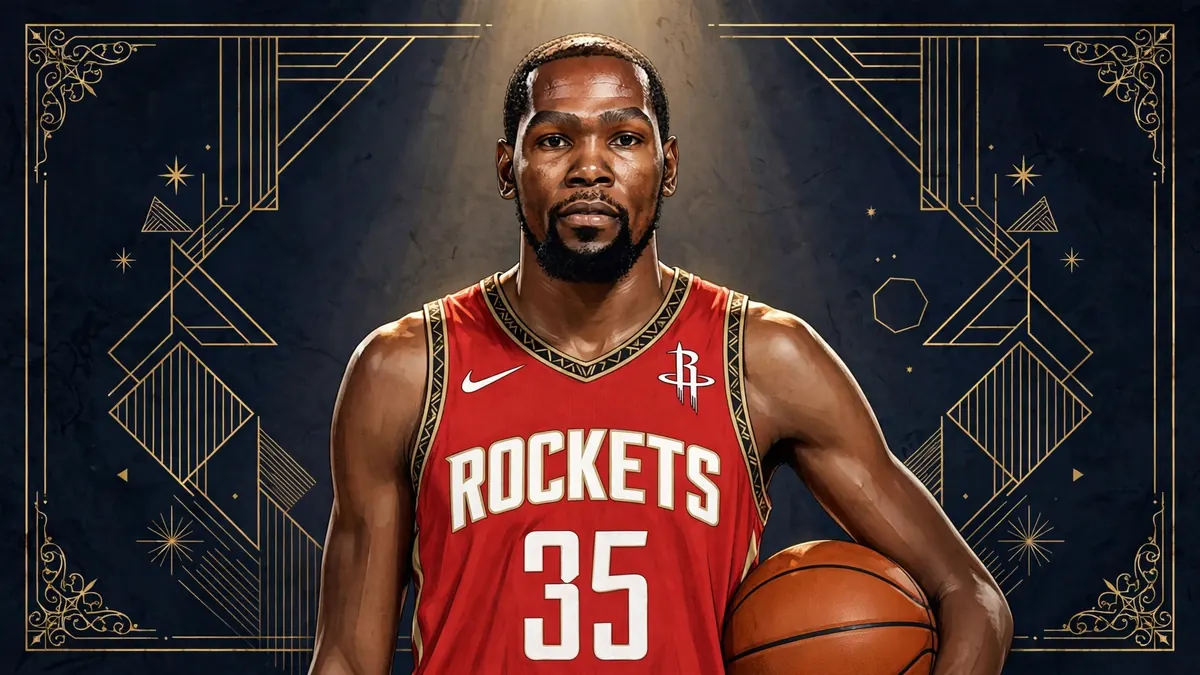
Kevin Durant is 38 years old. Born on September 29, 1988, the Houston Rockets forward celebrated his 38th birthday at the start of the 2026-27 NBA season — his 20th season in the league — and he is still ranked among the top 15 players in basketball. As of November 5, 2026, Durant is 38 years, 1 month old, and the question around him has shifted from how long he can keep scoring to how much longer a player this skilled needs to play at all.
Age has become the defining storyline of Durant’s Houston chapter. He arrived with the Rockets in the summer of 2025 as a 36-year-old veteran expected to lift a young roster into contention, then spent his first season in Houston putting up numbers most players in their prime would envy: 26.0 points per game across 78 appearances, All-NBA Second Team honors, and a two-year, 90 million dollar extension that keeps him under contract through the 2027-28 season. The 2026-27 campaign opened with the same debate that has followed him for two years — whether a 38-year-old should carry a contender’s heaviest minutes, and whether Houston should protect him for the playoffs after an injury cut his first postseason with the team short.
This page answers the age question in full: his exact date of birth, how old he was at every major turn of his career, how his game has changed at 38, what the 2026-27 season looks like so far, and how his age connects to the money — a net worth most recently estimated at 400 million dollars by Celebrity Net Worth, with older estimates from early 2026 sitting closer to 300 million. Every figure below is tied to a named source, and where sources disagree, the range is shown rather than hidden.
Quick Facts
| Detail | Kevin Durant |
|---|---|
| Full name | Kevin Wayne Durant |
| Date of birth | September 29, 1988 |
| Age (as of November 5, 2026) | 38 years old |
| Birthplace | Washington, D.C., United States (raised in Prince George’s County, Maryland) |
| Height | 6 ft 11 in (2.11 m) listed |
| Current team | Houston Rockets (since 2025) |
| Position | Forward |
| NBA seasons | 20th season in 2026-27 |
| Draft | 2nd overall pick, 2007 NBA Draft, Seattle SuperSonics |
| College | Texas Longhorns, 2006-07 (one season) |
| Estimated net worth | 300 to 400 million dollars (Celebrity Net Worth most recently lists 400 million) |
| 2026-27 salary | 43.9 million dollars (Houston Rockets) |
| Career honors | 2x NBA champion, 2x Finals MVP, 2014 NBA MVP, 16x All-Star (per 2026 reporting) |
| Primary income sources | NBA salary, Nike lifetime deal, Thirty Five Ventures investments, Boardroom media |
| Mother | Wanda Durant (née Pratt) |
Table of Contents
- Quick Facts
- How Old Is Kevin Durant in 2026?
- Early Life in Maryland and the Road to Texas
- One Season at Texas That Changed Everything
- His NBA Career, Year by Year and Age by Age
- The Golden State Years and Two Championships
- The Achilles Injury and the Long Comeback
- Houston at 38: His First Season and the 2026-27 Campaign
- How His Game Has Changed at 38
- How Durant’s Age Compares With Other NBA Greats
- Net Worth and Earnings at 38
- Net Worth Growth Timeline
- Thirty Five Ventures, Boardroom and the Nike Lifetime Deal
- Houses, Cars and Assets
- Personal Life and Family
- Controversies and Public Flashpoints
- How Long Can He Keep Playing?
- Frequently Asked Questions
- Final Thoughts
- Sources and Reporting
How Old Is Kevin Durant in 2026?
Kevin Durant turned 38 on September 29, 2026. He was born on September 29, 1988, in Washington, D.C., which makes him 38 years old as of November 2026. He is one of the oldest active players in the NBA, and one of a small group of players still producing at a high level in their late thirties.
The math is simple, but the context is what makes his age worth a full article. Durant entered the NBA at 19, straight out of one college season at Texas. He won his first scoring title at 21, his MVP award at 25, his first championship at 28, and he tore his Achilles at 30 — an injury that has ended many careers outright. He is now playing his 20th season at 38, an age at which most of his draft class has been retired for years. Only a handful of players in league history have averaged 25 points per game at 37 or older, and Durant did exactly that in 2025-26, his age-37 season.
His listed height is 6 feet 11 inches, and that height is part of why his age has not slowed him the way it slows other players. A jump shot released from nearly seven feet, with a wingspan reported at around 7 feet 5 inches, does not depend on the burst and lift that fade first. His game was built on length and touch rather than raw athleticism, and that build ages better than almost any other style in the sport.
There is one small point of confusion worth clearing up for anyone searching his birthplace. Some profiles list Suitland, Maryland, as his hometown, and Durant did grow up in Prince George’s County, Maryland, around Seat Pleasant and Suitland. His birthplace, however, is Washington, D.C., according to his biography and standard reference sources. He was raised in Maryland by his mother Wanda and his grandmother Barbara Davis, and that Maryland upbringing — the Boys and Girls Club in Capital Heights, the AAU circuits around Washington — is where his basketball story really starts.
Early Life in Maryland and the Road to Texas
Kevin Wayne Durant was born on September 29, 1988, in Washington, D.C., to Wanda Durant and Wayne Pratt. His father left the family when Durant was still an infant, and his parents later divorced. His grandmother Barbara Davis helped raise him, and his father came back into his life when Durant was about 13, traveling with him to basketball tournaments around the country. He has an older brother, Tony, a younger brother, Rayvonne, and a sister, Brianna.
The family lived in Prince George’s County, Maryland, on the eastern edge of Washington, D.C. Money was tight. Durant has spoken in later years about a childhood move that left the family sleeping in a living room without furniture, a memory he has described as one of his happiest because the family was together. His mother worked to keep her sons busy and out of trouble, and basketball became the structure around which his days were organized.
When Durant was seven, his mother enrolled him in the Boys and Girls Club in Capital Heights, Maryland. The fee covered every sport the club offered, and when football season ended, his name went to the basketball coach. He was already the tallest kid on the team. A teammate’s grandmother suggested he play for coach Taras Brown at the Seat Pleasant Activity Center, and Brown became one of the first coaches to drill him seriously. Brown’s program was strict: no street ball, fundamentals first, conditioning always. Durant later described Brown as a father figure, and Brown’s murder in 2005, when Durant was 16 and playing at Oak Hill Academy, hit him hard.
By middle school Durant was already 6 feet tall, and he kept growing through his teens. He played AAU basketball around Maryland alongside future NBA players including Michael Beasley, Greivis Vasquez and Ty Lawson, and at 11 he led his team to a national championship, scoring 18 points in the second half of the final. After that game he went home and told his mother he was going to play in the NBA.
His high school path took him through three schools: two years at National Christian Academy in Fort Washington, Maryland, one year at Oak Hill Academy in Virginia, where he averaged 19.6 points and 8.8 rebounds per game, and a senior year at Montrose Christian School in Rockville, Maryland. He grew five inches before his senior season, starting the year at 6 feet 7 inches, and by the time he reached college he was listed at 6 feet 9 inches. His close friend Ty Lawson tried to steer him toward North Carolina; Durant chose Texas instead, committing to the Longhorns before his senior season.
One Season at Texas That Changed Everything
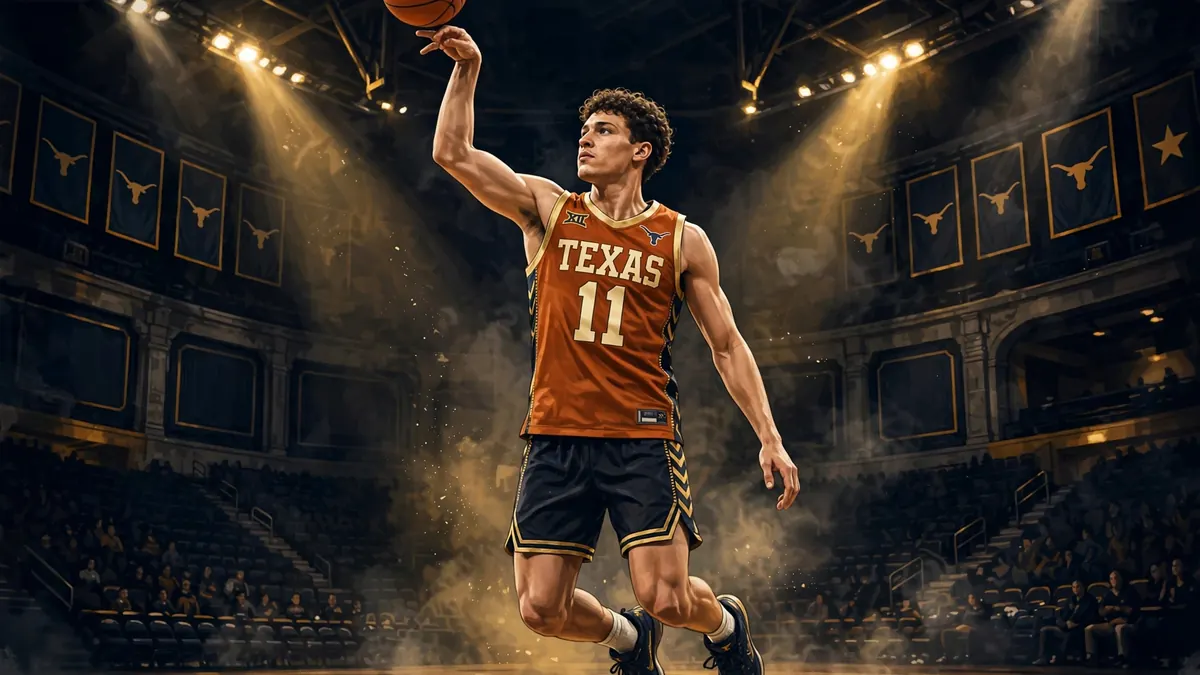
Durant played one season of college basketball, 2006-07, for the Texas Longhorns under coach Rick Barnes. He was 18 when the season started and turned 19 during it. He averaged 25.8 points, 11.1 rebounds and 1.3 assists per game, led all freshmen in scoring nationally, and carried Texas to a 25-10 record. He won the Naismith College Player of the Year award and the Wooden Award, the first freshman ever to win both, and Texas later retired his No. 35 jersey.
His college season answered the only real question scouts had about him: whether a skinny 19-year-old could score against grown men. He arrived in Austin at around 215 pounds and left as the obvious No. 2 pick in the 2007 NBA Draft, behind Greg Oden. The Seattle SuperSonics took him second overall in June 2007, weeks before his 19th birthday season began. He was 19 years and 31 days old when he played his first NBA game.
His NBA Career, Year by Year and Age by Age
Durant’s career splits neatly into chapters, and his age at each turn tells the story of a player who peaked early, rebuilt himself after a devastating injury, and then refused to fade.
Age 19-20, Seattle and the move to Oklahoma City (2007-2009). Durant won Rookie of the Year in 2008 after averaging 20.3 points per game for a Seattle team that won 20 games and then relocated to Oklahoma City. His second season was spent learning to win with a young core that included Russell Westbrook and, a year later, James Harden.
Age 21-23, the scoring titles and the first Finals (2009-2012). Durant won his first scoring title at 21, averaging 30.1 points per game in 2009-10, then won two more in a row. At 23 he carried Oklahoma City to the 2012 NBA Finals, where the Thunder lost to LeBron James and the Miami Heat in five games. He was already one of the three best players alive, and he was not yet old enough to rent a car in some states without a surcharge.
Age 24-27, the MVP and the near-miss (2012-2016). Durant won the 2014 NBA MVP award at 25, averaging 32.0 points per game and delivering the famous “you the real MVP” speech to his mother. The Thunder reached the 2016 Western Conference Finals and led Golden State 3-1 before losing in seven games. That summer, at 27, he made the most debated free-agency decision of his generation and joined the Warriors.
Age 28-30, Golden State and the Achilles tear (2016-2019). Two championships, two Finals MVP awards, and then the injury that changed the second half of his career. He was 30 when he ruptured his right Achilles tendon in Game 5 of the 2019 NBA Finals against Toronto.
Age 31-34, Brooklyn and the comeback (2019-2023). Durant missed the entire 2019-20 season recovering, then returned at 32 and played some of the best basketball of his life in Brooklyn, including a 48-point game in a Game 7 loss to Milwaukee in the 2021 playoffs. He asked for a trade in the summer of 2022 at 33, stayed, and was traded to Phoenix in February 2023 at 34.
Age 34-36, Phoenix and the trade to Houston (2023-2025). Two and a half seasons with the Suns produced big scoring numbers and no deep playoff run. In June 2025, at 36, he was traded to the Houston Rockets, a young team with a strong defense and a clear need for a closer. He signed a two-year, 90 million dollar extension that October, taking roughly 30 million dollars less than the maximum he could have commanded, according to reporting at the time — a discount that gave Houston room to build around him.
Age 37-38, Houston (2025-2027). His first Rockets season, at 37, was one of his most durable in a decade: 78 games, the most he had played since 2018-19, with averages of 26.0 points, 5.5 rebounds and 4.8 assists on 52.0 percent shooting from the field. He was named to the All-NBA Second Team. The season ended badly — a first-round playoff exit to the Los Angeles Lakers, with Durant appearing in just one playoff game after an injury — and that ending is why his workload at 38 has become a talking point in Houston this season.
The Golden State Years and Two Championships
Durant was 27 when he signed with Golden State in July 2016, and the decision drew a wave of criticism that has never fully left him. The Warriors had just won 73 regular-season games and lost the Finals; adding the league’s second-best player looked, to many fans, like a shortcut. Durant’s answer was to win, and to win as the best player on the floor.
He was 28 when Golden State beat Cleveland in the 2017 Finals, and he won Finals MVP after averaging 35.2 points per game in the series. He was 29 when the Warriors repeated in 2018, sweeping Cleveland, and he won Finals MVP again. Those two seasons settled the argument about whether he could be the best player on a championship team. They also left a different question hanging: whether the titles counted the same when the team was already great without him. Durant has heard that question for nine years now, and at 38 it is part of why a third title in Houston — as the veteran leader of a young team — would mean something different to his legacy than the two in Oakland did.
His Golden State years also made him rich in a way his earlier contracts had not. He took pay cuts in both 2017 and 2018 to help the Warriors keep their core together, a choice that cost him tens of millions in salary at the time and that he later said he did not regret. The money he gave up on the court, he more than made up for off it, as his investment portfolio began to grow through Thirty Five Ventures.
The Achilles Injury and the Long Comeback
On June 10, 2019, in Game 5 of the NBA Finals in Toronto, Durant ruptured his right Achilles tendon. He was 30 years old, a month from free agency, and he had rushed back from a calf strain to try to save Golden State’s season. The injury is one of the worst a basketball player can suffer: for most players, it costs a step they never get back, and for players over 30 it has often been the beginning of the end.
Durant missed the entire 2019-20 season. He was 31 when he finally returned in a Brooklyn Nets uniform in December 2020, and what followed surprised almost everyone who studies Achilles recoveries. He averaged 26.9 points per game in his first season back, shot over 50 percent from the field, and in the 2021 playoffs he played all 48 minutes of a Game 7 against Milwaukee and scored 48 points, with a shot at the buzzer that would have won the series if his foot had been an inch further back behind the three-point line.
That comeback is the foundation of everything that has happened since. A player who returned from an Achilles tear at 31 and was still averaging 26 points at 37 is a player whose game was never built on the things the injury takes away. His shooting touch, his length, his feel for space — none of those live in the Achilles. The injury cost him a season and a half of his prime, but it did not cost him his skill, and that is the simplest explanation for why he is still this good at 38.
Houston at 38: His First Season and the 2026-27 Campaign
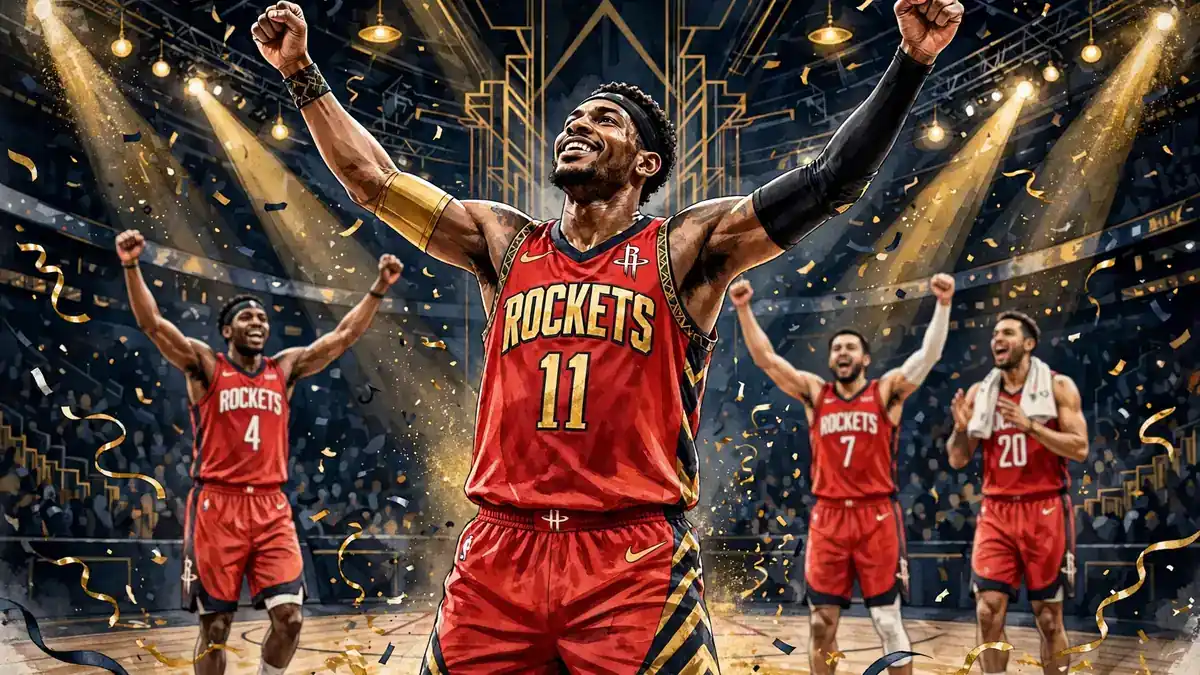
Durant’s first season in Houston, 2025-26, was a success by almost every measure except the ending. He played 78 games — matching the most he had played in a season in over a decade — and averaged 26.0 points, 5.5 rebounds and 4.8 assists while shooting 52.0 percent from the field and over 41 percent from three-point range. He was named to the All-NBA Second Team, and the Rockets won enough to enter the playoffs with real expectations.
The playoffs undid the good feeling. Houston lost in the first round to the Los Angeles Lakers, and Durant appeared in just one playoff game after an injury derailed his postseason. He averaged 36.4 minutes per game across the regular season — the second-heaviest total workload in the league at 2,840 minutes — and that workload became the central argument of Houston’s summer. Coach Ime Udoka spoke at media day about lowering Durant’s minutes; Durant pushed back, saying he did not want his birth certificate making decisions for him. That exchange, reported by Heavy in September 2026, set the tone for the season: the team wants to protect its 38-year-old star for April, and the star wants to play.
Entering the 2026-27 season, the rankings still placed him among the league’s best. ESPN ranked him No. 13 in its preseason player rankings, and CBS Sports ranked him No. 15. Sports Illustrated’s Houston coverage in September 2026 put it plainly: at 38, Durant is still widely considered the Rockets’ best player. Through the opening weeks of the season, he was averaging 20.8 points, 5.3 rebounds and 3.1 assists per game on 53.1 percent shooting, per a November 4, 2026 report — a slower scoring start than last season, and the kind of early-season line that says more about a team spreading the offense around than about a player in decline.
The trade rumors have not gone away either. In September 2026, Bleacher Report’s Zach Buckley ranked Durant third among the NBA’s top trade assets entering the season, and reporting around that list noted the obvious tension: Durant turns 38 in September while much of Houston’s foundation is very young. If the Rockets start poorly, the question of whether his timeline matches theirs will come back. If they contend, the extension he signed — 43.9 million dollars for 2026-27, with a 46.1 million dollar player option for 2027-28 — looks like the best money Houston has spent in years.
How His Game Has Changed at 38
Watch Durant at 38 and the first thing you notice is how little has changed. The pull-up jumper over a smaller defender, the long strides in transition, the soft touch on mid-range shots that most of the league has abandoned — all of it is still there. The changes are quieter, and they are the reason he can still do this.
He shoots more and drives less. At his peak in Oklahoma City, Durant attacked the rim constantly and lived at the free-throw line. At 38 he picks his spots, using his jumper to create space and saving his legs for the possessions that matter. His 52.0 percent shooting in 2025-26 was not an accident; it was the product of a player taking better shots, mostly from spots where his height makes the defense irrelevant.
He plays fewer minutes in theory and heavy minutes in practice. The Rockets have talked about managing his workload, but last season he still logged 36.4 minutes per game, and his 2,840 total minutes were the second-most in the league. That is the tension of his age: the team knows rest would help him in April, and the games keep demanding that he play. His own position is clear — he has said he does not want an arbitrary minutes limit, and he has the track record to make that argument.
His defense has changed too. Durant was never a lockdown defender in his twenties, but his length made him a useful rim protector and a disruptive help defender. At 38 he is best used in short bursts of effort — switching onto wings, protecting the rim in help, and saving his energy for offense. Houston’s roster is built to cover for that, with young athletes around him who can chase and rotate.
What has not changed is his scoring in the biggest moments. In the 2021 playoffs, at 32 and fresh off the Achilles tear, he nearly beat Milwaukee single-handedly in Game 7. In 2025-26, at 37, he was still the player Houston turned to when a game tightened up. The skill that ages worst in basketball is speed. The skills that age best are shooting, size and judgment. Durant’s game is built almost entirely from the second list.
How Durant’s Age Compares With Other NBA Greats
Durant’s age-38 season puts him in rare company. LeBron James, born in December 1984, is the only player of his generation still going at a similar level, and LeBron is nearly four years older. Michael Jordan retired for the second time at 35 and came back to Washington at 38, averaging 20 points per game for the Wizards — a mark Durant has already passed in his sleep. Kareem Abdul-Jabbar played until 42, but as a center whose game was built around the skyhook, the most age-proof shot in history. Dirk Nowitzki played until 40, and his one-legged fadeaway is the closest comparison to Durant’s jumper in terms of a shot that never needed athleticism to work.
The more telling comparison is with his own draft class. Of the players taken in the 2007 draft, almost none are still in the league. Greg Oden, the No. 1 pick, was out of the NBA within a few years. Al Horford, the No. 3 pick, has hung on as a role player into his late thirties, but no one in that class has carried a team’s offense at 38 the way Durant still does. His 20th season is itself the statement: only a small group of players in league history have reached 20 seasons, and almost all of them are in the Hall of Fame.
There is also the scoring milestone that frames his age. Durant passed 30,000 career points in February 2025, becoming one of only eight players in NBA history to reach that mark. He did it at 36, younger than most of the others on that list, and he has kept climbing since. Every point he scores now moves him up a list that includes Jordan, Kobe Bryant, LeBron James and Kareem — and every season he adds at this level strengthens a Hall of Fame case that was already settled years ago.
His 16 All-Star selections, as reported in 2026 coverage, put him among the most-selected players ever. He was a 15-time All-Star through the 2024-25 season, and the 2026 reports count a 16th selection. The exact count matters less than what it represents: for a decade and a half, coaches and fans have voted him among the league’s best, and at 38 that has not stopped.
Net Worth and Earnings at 38
Age matters to Durant’s money story because his earnings have compounded the same way his career has: slowly at first, then very fast. Celebrity Net Worth most recently lists his net worth at 400 million dollars, up from the 300 million dollar figure that appeared on the same site and in many other outlets in early 2026. That gap is the honest answer to the net worth question: public estimates disagree, and the fair range is 300 to 400 million dollars, anchored at 400 million by the most recent Celebrity Net Worth update.
His NBA salary alone explains most of it. His current deal pays him 43.9 million dollars for the 2026-27 season, with a 46.1 million dollar player option for 2027-28. Celebrity Net Worth projects his career NBA salary at approximately 598.2 million dollars if he completes his current deal — a figure that would put him ahead of LeBron James as the highest-paid player in league history by salary alone. He has already earned more than 500 million dollars in NBA salary, and his career earnings from salary, endorsements and business now sit well past 1 billion dollars in total, a club he joined alongside LeBron James and Stephen Curry.
Off the court, Forbes estimated he earned approximately 49 million dollars in the 12 months ending in May 2026, and reporting that cites Forbes puts his total earnings in that period at about 103.8 million dollars. The biggest single piece is Nike: he signed a lifetime deal with the brand in 2023, becoming only the third basketball player ever to do so, after Michael Jordan and LeBron James. Reporting in early 2026 put his annual Nike income at around 26 million dollars a year.
For readers who want the full money picture — the contract history, the endorsement portfolio and the investment returns broken down in detail — our sister site has the numbers in one place: Kevin Durant’s net worth breakdown on GuideNetWorth covers the same fortune from the wealth angle, while this page focuses on what his age means for the seasons ahead.
Net Worth Growth Timeline
| Year | Age | Estimated Net Worth | What Drove It |
|---|---|---|---|
| 2010 | 21-22 | About 20 million dollars | First scoring title; rookie extension and early Nike deal |
| 2014 | 25-26 | About 60 million dollars | MVP season; new Nike contract reported near 300 million over 10 years |
| 2017 | 28-29 | About 120 million dollars | First championship; Thirty Five Ventures founded in 2016 |
| 2020 | 31-32 | About 170 million dollars | Brooklyn max contract; investment portfolio growing |
| 2023 | 34-35 | About 300 million dollars | Phoenix trade; Nike lifetime deal signed |
| Early 2026 | 37 | About 300 million dollars | Estimates from Celebrity Net Worth and other outlets at the time |
| Late 2026 | 38 | About 400 million dollars | Most recent Celebrity Net Worth update; Hugging Face windfall reported |
The timeline above uses rounded figures from published estimates, not audited accounts. Durant’s private investments are not public in full, so any net worth number is an estimate built from salary records, reported endorsement income and the known outcomes of a few investments. The direction of travel, though, is not in doubt: his wealth roughly doubled between his late twenties and his late thirties, and the biggest single jump in recent years came not from basketball but from a venture bet.
Thirty Five Ventures, Boardroom and the Nike Lifetime Deal
Durant co-founded Thirty Five Ventures — named for his jersey number — with his longtime business partner Rich Kleiman in 2016, when he was 27. The firm invests early in startups across fintech, sports tech, media and consumer brands, and its portfolio now counts more than 100 companies, according to Boardroom’s own reporting. Early positions included Coinbase, Postmates, Acorns, Overtime, SeatGeek and WHOOP, and the firm has added stakes in sports properties including the Philadelphia Union, NJ/NY Gotham FC, the Premier Lacrosse League and a Major League Pickleball franchise.
The single best-known investment came to light in August 2026. Durant and Kleiman put 250,000 dollars into the AI company Hugging Face across its seed and Series A rounds — 100,000 in the seed round and 150,000 in the Series A, according to investor Joe Pompliano, who broke the story. When Nvidia agreed to acquire Hugging Face for 12.9 billion dollars that month, Durant’s stake was reported to be worth more than 60 million dollars. One early bet had returned more than his entire season’s NBA salary.
Boardroom, the media company born from Thirty Five Ventures, has grown from a newsletter about sports and business into a full media property covering athlete contracts, venture funding and league economics, with events and an advisory arm for athletes and executives. Durant’s role in it is not a side project. At 38, with his playing career closer to its end than its start, Boardroom and Thirty Five Ventures are the businesses he will still be running when the basketball stops.
The Nike lifetime deal, signed in 2023, is the third such deal in Nike basketball history, after Michael Jordan and LeBron James. His signature KD line has been one of the brand’s most durable basketball franchises for more than a decade, and the lifetime structure means the checks keep coming long after he retires. It also explains why his off-court earnings stay near 50 million dollars a year even as his on-court role changes: the money no longer depends on how many minutes he plays.
Houses, Cars and Assets
Durant’s real estate moves have been quieter than his investments, but the ones that are public fit the same pattern: buy well, hold, and let the asset work. Property coverage reported that he paid 15.6 million dollars for a house in Hidden Hills, California, in 2021, a property later valued at around 18 million dollars. His firm has also been reported to have bought 515 acres of land in Maryland, close to where he grew up — a purchase that reads as much like a homecoming as an investment.
He is not known as a car collector in the way some of his peers are. His public spending has always been low-key for a player of his wealth — no fleet of supercars on display, no string of nightclub ventures. The image of Durant as a player who lives well below his means has followed him for years, and the 2026 reporting around his Houston extension fits it: a player who left about 30 million dollars on the table in his Rockets deal because winning mattered more than the last dollar. His assets are mostly the quiet kind — equity stakes, land, a house that has gone up in value — rather than the loud kind.
That restraint is part of why the 400 million dollar net worth figure is believable. Durant has earned more than 500 million dollars in salary alone, and his off-court income has run at tens of millions a year for a decade. A player who spends modestly and invests early ends up with a number like this. The Hugging Face return is the headline, but the real story is ten years of steady compounding.
Personal Life and Family
Durant has always kept his private life private, and at 38 that has not changed. He is not married, and no marriage has ever been publicly reported. His closest public relationship is with his mother, Wanda Durant, who raised him and his brother Tony largely on her own in Maryland. His 2014 MVP speech — “Mom, you the real MVP” — became one of the most replayed moments in NBA history, and Lifetime later made a film about her, The Real MVP: The Wanda Pratt Story.
His older brother Tony played college basketball and later went to military school; his younger brother Rayvonne and sister Brianna have stayed mostly out of the public eye. His father Wayne Pratt came back into his life when Durant was 13 and traveled with him to tournaments. His grandmother Barbara Davis, who helped raise him, remained a central figure in his life until her death.
Off the court, his most consistent work has been through the Kevin Durant Charity Foundation, founded in 2013, and its BUILD IT AND THEY WILL BALL program, which builds high-quality basketball courts in low-income neighborhoods. The foundation has funded youth programs and court renovations in Oklahoma City, Maryland, Seattle and elsewhere, and it is the part of his public life he talks about with the least hesitation. He is also known for his social media presence — he is famously active and famously combative online, replying to fans and critics alike from accounts under his own name and, in the past, from accounts he later admitted were his.
Controversies and Public Flashpoints
No account of Durant’s career is complete without the episodes that have defined his public image, and most of them trace back to the same thing: a superstar who refuses to pretend he does not hear the criticism.
The best-known is the burner account episode of 2017. Durant admitted that he had used anonymous social media accounts to defend himself against critics and to argue with fans about his decision to join Golden State. He apologized, called it a mistake, and then kept arguing with fans from his real account anyway. The episode became shorthand for his relationship with the public: thin-skinned, honest about it, and unwilling to perform indifference.
The Golden State move itself was the bigger controversy. Joining a 73-win team at 27 was seen by many as the easiest path to a championship, and the criticism followed him through both titles. Durant has answered it in different ways over the years — sometimes by pointing to the Finals MVP awards, sometimes by saying he owed his career to himself rather than to anyone’s idea of how it should look. At 38, with a third title in Houston as his stated goal, the debate has a new shape: nobody calls the Rockets a superteam, and a championship there would answer the question in a way the Golden State titles never could.
His trade request from Brooklyn in the summer of 2022, at 33, was another flashpoint. He asked out, the Nets refused to move him for less than a franchise-altering return, and he stayed — then was traded to Phoenix six months later. The episode damaged his reputation as a teammate in some quarters and confirmed, in others, that star players now run their own careers. His Phoenix years were quieter but ended the same way: a trade, this time to Houston, and a new start at 36 with a team that needed exactly what he still does best.
None of these episodes involved the law, and none of them changed his standing as a player. They are part of the story because they explain the player Houston got: a 38-year-old who has heard every version of the argument about his career, and who is still playing to settle the last one.
How Long Can He Keep Playing?
The honest answer is that nobody knows, including Durant. The evidence points in two directions. On one side: he has played 20 seasons, he tore his Achilles at 30, and his playoff run last season ended with an injury. His body has given him warnings, and the Rockets’ coaching staff is already talking about managing his minutes. On the other side: he averaged 26 points at 37, his game is built on skills that age well, and his contract runs through 2027-28, when he will be 39. Houston legend Ralph Sampson told Action Network in October 2026 that Durant’s shooting means he can play “for as long as he wants” — and Sampson, a 7-foot-4 center who knows what long careers cost, is worth listening to.
The comparison that matters most is LeBron James, who is still playing at 41. LeBron’s game is built on athleticism and power, and he has kept it going through conditioning and load management. Durant’s game is built on shooting and length, which need less of both. If LeBron can play at 41, there is no physical reason Durant cannot play at 40. The question is whether he wants to — and whether Houston is still the right place when he is 39 and the team’s young core is ready to lead.
His player option for 2027-28, worth 46.1 million dollars, is the natural decision point. If he plays it out, he will finish his 21st season at 39. If he retires before it, the Rockets get cap room and Durant gets to walk away on his own terms. Either way, the age story ends the same way: a player who entered the league at 19, won everything there was to win by 30, rebuilt himself after an injury that ends careers, and was still one of the 15 best players in the world at 38.
Frequently Asked Questions
How old is Kevin Durant?
Kevin Durant is 38 years old. He was born on September 29, 1988, in Washington, D.C., and he turned 38 on September 29, 2026, just before the start of the 2026-27 NBA season.
When is Kevin Durant’s birthday?
Kevin Durant’s birthday is September 29, 1988. He shares his birth date with the start of the NBA season in most years, which is why his age often becomes a talking point just as the new campaign begins.
How tall is Kevin Durant?
Kevin Durant is listed at 6 feet 11 inches tall (2.11 m). He was listed at 6 feet 9 inches when he entered the NBA in 2007 and has been listed at 6 feet 11 inches for most of his career. His wingspan is reported at around 7 feet 5 inches.
What team does Kevin Durant play for in 2026?
Kevin Durant plays for the Houston Rockets in 2026. He was traded to Houston in June 2025, played his first season with the team in 2025-26, and signed a two-year, 90 million dollar extension in October 2025. The 2026-27 season is his second with the Rockets and his 20th in the NBA.
How many NBA championships has Kevin Durant won?
Kevin Durant has won two NBA championships, both with the Golden State Warriors in 2017 and 2018. He was named Finals MVP in both series. He also won the NBA MVP award in 2014 with the Oklahoma City Thunder and has been selected to the All-Star team 16 times, according to 2026 reporting.
What is Kevin Durant’s net worth in 2026?
Kevin Durant’s net worth is estimated at 300 to 400 million dollars, with Celebrity Net Worth most recently listing 400 million dollars. Older estimates from early 2026 put the figure at 300 million dollars. His wealth comes from more than 500 million dollars in career NBA salary, a lifetime Nike deal, and investments through Thirty Five Ventures, including a Hugging Face stake reported to be worth more than 60 million dollars after Nvidia’s 12.9 billion dollar acquisition in August 2026.
How long has Kevin Durant been in the NBA?
Kevin Durant has been in the NBA for 20 seasons as of 2026-27. He was drafted second overall by the Seattle SuperSonics in 2007 at age 19, won Rookie of the Year in 2008, and has played for Seattle/Oklahoma City, Golden State, Brooklyn, Phoenix and Houston.
Is Kevin Durant retiring soon?
There is no sign that Kevin Durant is retiring soon. He is under contract with the Houston Rockets through the 2027-28 season, with a 46.1 million dollar player option for that final year, and he has said he does not want his age deciding his minutes for him. He will be 39 when that contract ends, and his shooting-based game is the kind that ages well.
Final Thoughts
Kevin Durant is 38 years old, and that number now tells you less about him than it tells you about everyone else. At an age when most scorers have become role players or retired, he is still the best player on a team trying to win a championship, still ranked in the top 15 in the league, and still under contract at more than 40 million dollars a season. His age is not a weakness in his story. It is the proof of it.
The 2026-27 season will decide how the Houston chapter is remembered. If the Rockets manage his minutes well and he stays healthy into April, a third championship — won as the veteran leader of a young team, not as the addition to a 73-win roster — would be the most meaningful title of his career. If injuries return, the conversation will shift to whether 20 seasons was enough. Either way, the numbers are already settled: 38 years old, 20 seasons, two championships, an MVP, more than 30,000 points, and a fortune estimated at 300 to 400 million dollars that keeps growing whether he plays or not. That is what 38 looks like when the player is Kevin Durant.
Sources and Reporting
All figures in this article are drawn from named, published sources. Net worth and contract figures come from Celebrity Net Worth, Forbes (via 2026 reporting of its earnings estimates), ESPN and Sports Illustrated. Age, season statistics and rankings are drawn from Sports Illustrated‘s Houston Rockets coverage, Yardbarker, ClutchPoints and Heavy reporting from September-November 2026, and Sportradar‘s player profile. Early-life and college details come from the Austin American-Statesman reporting republished by ClutchFans and standard biographical sources. Business and investment details come from Boardroom, HITC and EssentiallySports. Career earnings projections come from Celebrity Net Worth.
How we estimated: Kevin Durant’s net worth is an estimate, not a verified fact. His NBA salary is public record, but his private investments, taxes and spending are not. We used the most recent Celebrity Net Worth figure (400 million dollars) as the anchor and showed the older 300 million dollar figure from early 2026 as the low end of the range, so readers can see where sources disagree instead of being given a single number that pretends to be exact. Salary figures are taken from published contract reporting. Where a detail could not be confirmed from a named source — such as the current value of private real estate — it is described as reported rather than stated as fact. Estimates will change as new contracts, deals and investment outcomes are reported.