By Celebamerica Editorial Staff | Last updated: November 20, 2026
Garth Brooks’ net worth in 2026 is an estimated $400 million — a combined figure with his wife, fellow country star Trisha Yearwood, according to Celebrity Net Worth. Of that total, between $300 million and $350 million is attributable to Brooks himself, which makes him one of the three richest country artists alive. Some 2026 reports put the combined figure a little higher, at $420 million to $430 million, but the $400 million estimate from Celebrity Net Worth, updated in June 2026, remains the anchor most outlets use.
That number could change fast. In June 2026 the Wall Street Journal reported that Brooks was exploring a sale of his music catalog — publishing and master recordings together — at a valuation that could reach roughly $2 billion. If a deal like that ever closed, it would make him the richest singer in the world. For now, though, the fortune rests on something far more old-fashioned: more than three decades of record sales, stadium tours that broke every attendance record country music had, a Las Vegas residency, and a string of business moves that kept the money working long after he first walked away from the stage.
This page breaks down where every part of that fortune comes from, how it grew year by year, how Brooks compares with Dolly Parton, Shania Twain and the rest of country music’s richest names, and what the 2024 civil lawsuit means for his money — and what it does not.
Garth Brooks Quick Facts
| Full Name | Troyal Garth Brooks |
|---|---|
| Date of Birth | February 7, 1962 (age 64 in 2026) |
| Birthplace | Tulsa, Oklahoma, United States |
| Estimated Net Worth (2026) | $400 million combined with wife Trisha Yearwood (Celebrity Net Worth, June 2026); $300–$350 million attributable to Brooks alone |
| Peak / Primary Income Sources | Album sales, stadium touring, Las Vegas residency, music publishing and royalties |
| Key Ventures / Works | Capitol Nashville recording career (1989–present), the Chris Gaines project (1999), GhostTunes (2014–2017), Friends in Low Places Bar & Honky-Tonk, Nashville (opened 2024), Teammates for Kids Foundation |
| Spouse | Trisha Yearwood (married December 10, 2005) |
| Children | Three daughters — Taylor, August and Allie — with first wife Sandy Mahl |
| Record Sales | Best-selling solo artist in US history per the RIAA; 157 million certified albums, with total certified units passing 200 million in June 2026 |
| Major Honors | Country Music Hall of Fame (2012), Songwriters Hall of Fame, Kennedy Center Honors (2020), Gershwin Prize (2020), two Grammy Awards, 17 American Music Awards |
Table of Contents
- How Much Is Garth Brooks Worth in 2026?
- Garth Brooks Quick Facts
- From Tulsa to Nashville: Early Life and the Road to Capitol
- The Rise: How Garth Brooks Rewrote Country Music
- Where the Money Comes From: Albums, Tours and the Stadium Machine
- The Las Vegas Residency and the Comeback Years
- Business Moves Beyond the Stage
- Real Estate and Assets
- The Two Billion Dollar Catalog Question
- Garth Brooks Net Worth Growth Over the Years
- How Garth Brooks Stacks Up Against Country Music’s Richest
- Personal Life: Family, Marriage and Life in Oklahoma
- The 2024 Lawsuit: What Is Known So Far
- Frequently Asked Questions
- The Bottom Line
- Sources and How We Estimated
How Much Is Garth Brooks Worth in 2026?
The short answer is $400 million, shared with Trisha Yearwood. Celebrity Net Worth, the source most 2026 coverage cites, lists Brooks at $400 million combined with his wife and is clear about the split: the vast majority of the couple’s wealth — $300 million to $350 million — belongs to Garth. Parade, reporting on the catalog-sale story in June 2026, used the same $400 million figure. A handful of smaller outlets put the number at $420 million to $430 million, which is why this page works with a $400 million–$430 million range and treats $400 million as the anchored figure.
Two things about that number are worth understanding before going further. First, it is an estimate built from public information — record sales, reported tour grosses, real estate records and business filings — not a disclosure from Brooks himself. He has never published his finances, and neither has Yearwood. Second, it is a combined household figure. Yearwood has her own career income from music, her Food Network show Trisha’s Southern Kitchen, and a string of best-selling cookbooks, so part of the $400 million is hers. The $300 million–$350 million slice that Celebrity Net Worth attributes to Garth alone is the cleaner way to think about his personal fortune.
What makes the figure striking is how it was built. Brooks did not get rich from one windfall. He got rich from selling more albums in the United States than any solo artist in history, from touring at a scale no country act had attempted before, and from walking away at the top — then coming back and doing it all again. The sections below follow that money, piece by piece.
From Tulsa to Nashville: Early Life and the Road to Capitol
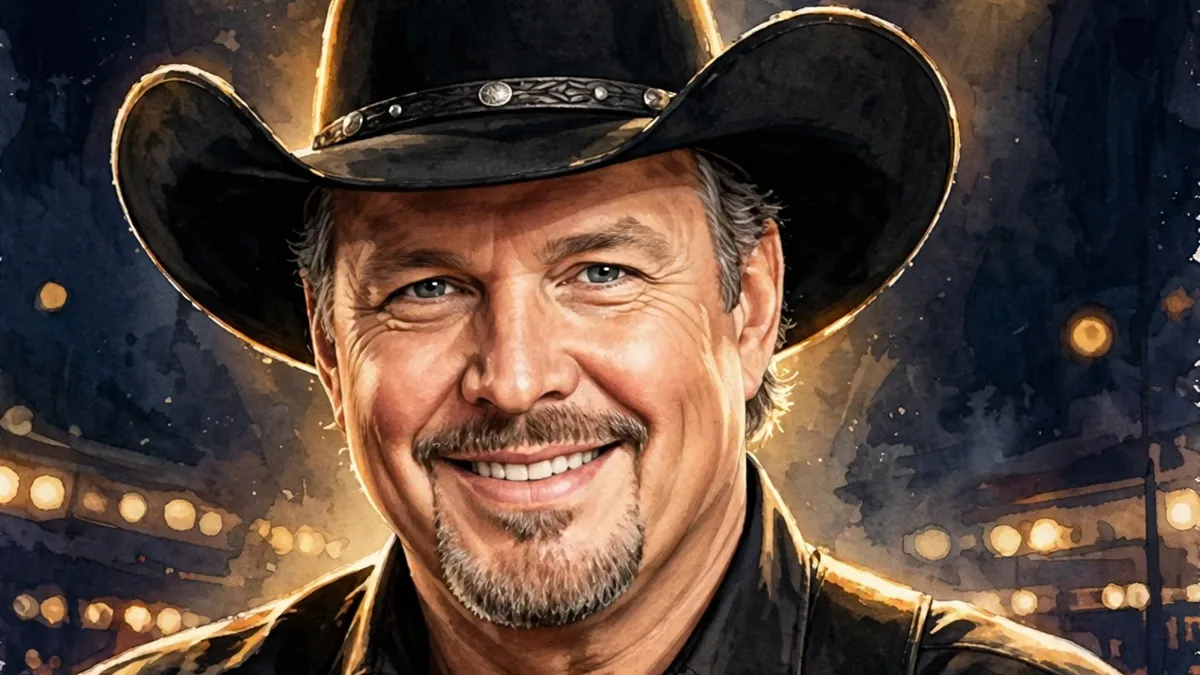
Troyal Garth Brooks was born on February 7, 1962, in Tulsa, Oklahoma, the youngest of six children. His father, Troyal Raymond Brooks, worked as a draftsman for an oil company. His mother, Colleen McElroy Carroll, had been a country singer who recorded for Capitol Records in the 1950s before giving up her own career to raise a family. Music was in the house from the start — his mother sang, his father played, and the kids grew up around instruments and harmony singing.
The family moved to Yukon, Oklahoma, where Brooks went to high school and played football, baseball and ran track. He was good enough at the javelin to earn an athletics scholarship to Oklahoma State University in Stillwater, where he studied advertising and graduated in 1984. He played in bars around Stillwater while he was a student, working out the high-energy stage show that would later become his trademark — running across the stage, climbing rigging, and treating a country concert like a rock show.
After graduation he tried Nashville once, in 1985, and left within a day after a discouraging meeting. He went back to Oklahoma, married his college girlfriend Sandy Mahl in 1986, and worked odd jobs while playing clubs. In 1987 he tried Nashville again, this time for good. He worked in a boot store, sang demos, and played the songwriter rounds. Within a year he had met the people who would shape his career: songwriter Kent Blazy, manager Bob Doyle, and producer Allen Reynolds, the man who had produced Crystal Gayle and Don Williams and who would go on to produce almost everything Brooks recorded.
Capitol Nashville signed him in 1988. His self-titled debut album arrived in April 1989 with “Much Too Young (To Feel This Damn Old)” as its first single. It went to number two on the country chart. Two more singles from that record — “If Tomorrow Never Comes” and “The Dance” — went to number one. The album itself eventually sold more than 10 million copies in the United States. For a debut, that was already extraordinary. What came next was not normal by any standard.
The Rise: How Garth Brooks Rewrote Country Music
Brooks’ second album, No Fences, released in August 1990, is the record that changed country music. It carried “Friends in Low Places,” “The Thunder Rolls,” “Two of a Kind, Working on a Full House” and “Unanswered Prayers” — four number-one singles on one album. It stayed on the charts for years and has been certified 17-times platinum by the RIAA, making it one of the best-selling country albums ever made. A year later, Ropin’ the Wind (1991) became the first country album ever to debut at number one on the Billboard 200, the all-genre album chart. It held the top spot for weeks and sold more than 14 million copies in the United States.
The numbers only tell half the story. Brooks changed what a country concert looked like. He ran, jumped, swung from ropes, smashed guitars and played to the back rows of arenas as if they were front-row seats. Country audiences had never seen anything like it, and the ticket sales showed it. By 1992 he was playing stadiums. The Chase (1992) and In Pieces (1993) kept the run going, and Fresh Horses (1995) and Sevens (1997) each debuted at number one on the Billboard 200. Between 1989 and 1998, Brooks released seven studio albums and sold tens of millions of copies of each one.
Then came the strangest turn of his career. In 1999 he released Garth Brooks in… the Life of Chris Gaines, an album recorded as a fictional Australian rock star named Chris Gaines — complete with a different look, a soul patch and a wig — as a prequel to a film called The Lamb that was never made. The album sold two million copies, respectable for anyone else, but a disappointment by Brooks’ standards, and the film died in development. Critics were baffled. Fans were divided. Brooks has since said he enjoyed the experiment, and the Gaines character has become a running joke he is happy to play along with — but it marked the end of his untouchable run.
In 2000 he announced he was retiring from recording and touring to raise his three daughters in Oklahoma. His final concert of that era was in 2001. He was 39 years old, at the peak of his fame, and he walked away. It was the first of two retirements that would define his money story almost as much as the records did — because each time he came back, the audience was bigger than the one he had left.
Where the Money Comes From: Albums, Tours and the Stadium Machine
Brooks’ wealth has three engines, and they have run in roughly the same order for 35 years: records, touring, and everything else. The records came first and the touring eventually overtook them.
Album sales. The RIAA ranks Brooks as the best-selling solo artist in United States history, with 157 million certified albums — ahead of Elvis Presley and second only to The Beatles among all acts. In June 2026 the RIAA confirmed his total certified units had passed 200 million. American Songwriter puts his worldwide album sales at more than 170 million. Nine of his albums have been certified diamond by the RIAA, more than any other artist. Because Brooks has always controlled his catalog tightly — he famously refused for years to put his music on streaming services, selling instead through his own GhostTunes store and later through Amazon Music — a larger share of each sale stayed with him than with most artists of his generation.
Touring. This is where the real money lives. In a strong touring year, Brooks has been known to earn as much as $90 million, according to Celebrity Net Worth, and he has at times been the highest-paid celebrity on the planet. Forbes put him at number 59 on its 2018 list of the world’s highest-paid celebrities with $45.5 million earned that year, after he wrapped his three-year World Tour with Yearwood — a tour that sold more than six million tickets and grossed over $250 million, making it the best-selling North American tour of its time. Forbes named him the highest-paid country artist of 2019.
The Stadium Tour, which ran from 2019 to 2022, went further still. It sold more than 6.3 million tickets, making it the biggest North American tour in history and the biggest American tour in the world, according to tour reporting. Five sold-out nights in Dublin closed the run in September 2022, with 400,000 tickets selling out within four hours. Brooks’ model helps explain why the grosses are so large: he has long kept ticket prices low by arena standards — often under $100 — and filled stadiums of 70,000 to 90,000 people instead. Low prices, huge rooms, and merchandise sold to tens of thousands of fans a night add up to grosses that few acts in any genre can match.
He is still doing it. In 2026 Brooks launched the Blame It All On My Roots tour, and by August 2026 he was adding dates after selling out multiple nights on stop after stop, with demand showing no sign of fading even as the 2024 lawsuit worked its way through the courts.

Royalties and publishing. Brooks writes or co-writes much of his own material, which means he collects songwriter royalties as well as artist royalties. His publishing catalog — the songs themselves, separate from the recordings — is the asset at the center of the reported $2 billion sale talks covered below. Even without a sale, the catalog pays every year: radio play, streaming, licensing for film and television, and the steady drip of a catalog that includes “Friends in Low Places” and “The Dance,” two songs that never leave country radio.
Television and specials. Brooks has been a television draw since the early 1990s, when his concert specials pulled huge ratings for NBC. Later deals, including his exclusive streaming arrangement with Amazon Music and a series of televised concerts and documentaries, added seven-figure paydays without the grind of the road. These are smaller than touring, but they are the reason his income never fell to zero during his years away from the stage.
The Las Vegas Residency and the Comeback Years
Brooks’ first retirement lasted 13 years. He returned in 2014 with the World Tour alongside Yearwood, and the comeback was bigger than the original run: three years on the road, more than six million tickets sold, and a new generation of fans who had grown up hearing his records at home. The tour closed in December 2017, and Brooks went straight into another chapter — a Las Vegas residency.
Garth Brooks/Plus ONE opened at The Colosseum at Caesars Palace in May 2023. The show was built as a one-man performance: Brooks alone on stage with his guitar, telling stories between songs, in a room of about 4,100 people — a fraction of the stadiums he was used to, but a far more intimate and far more expensive ticket. The residency ran through 2024 and added tens of millions of dollars to his earnings while letting him stay in one place. Residencies are the most profitable format in live music for an established star: no travel, no staging costs repeated nightly, and a guaranteed room full of fans who flew in specifically for the show.
The comeback years also brought the record-breaking Stadium Tour, a new studio album (Fun, released in November 2020), and Time Traveler, released in November 2023 as part of a seven-disc box set sold exclusively through Bass Pro Shops. The box-set model is pure Brooks: skip the traditional retail chain, sell direct to fans through a partner, and keep the margin.
Business Moves Beyond the Stage
Brooks has always run his career like a business, and several of his moves show a pattern: control the product, cut out the middleman, and own the customer relationship.
GhostTunes. In 2014, when most artists were surrendering their catalogs to Spotify and Apple Music, Brooks launched his own digital music store, GhostTunes, and kept his music off the major streaming services for years. The store closed in March 2017, and he eventually struck an exclusive streaming deal with Amazon Music, but the point had been made: he would rather own the storefront than rent space in someone else’s.
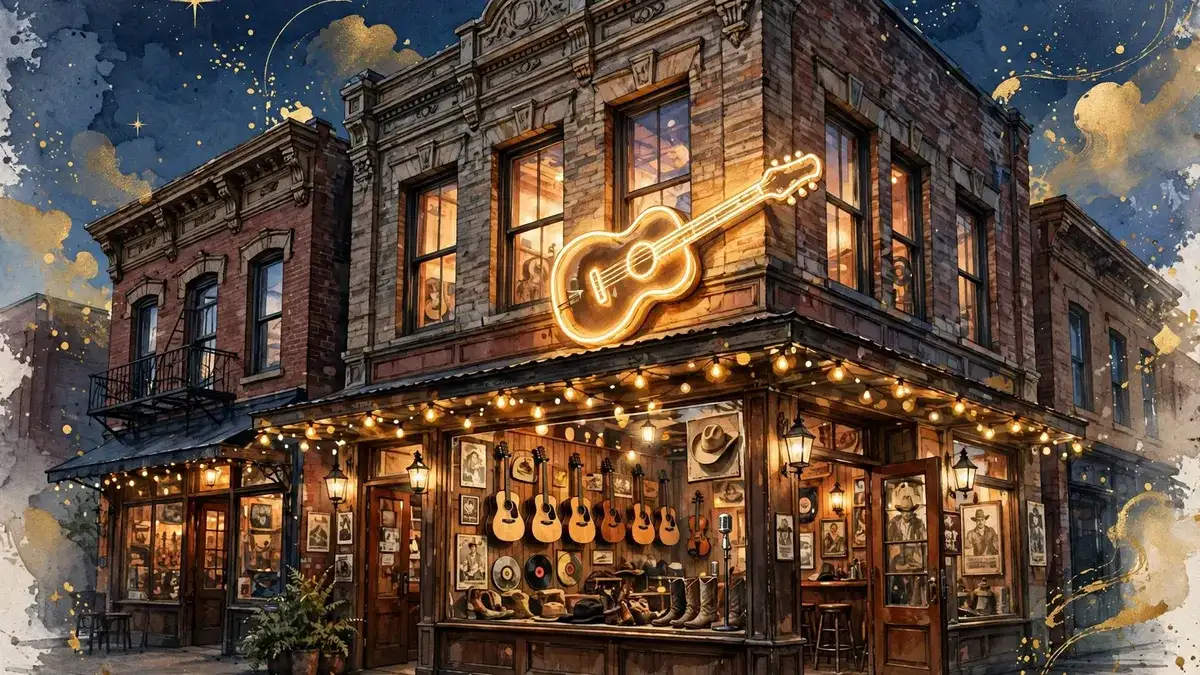
Friends in Low Places Bar & Honky-Tonk. In March 2024 Brooks opened a four-story bar and live-music venue on Lower Broadway in Nashville, named after his most famous song. The venue — part honky-tonk, part restaurant, part rooftop — sits on the most valuable strip of real estate in country music and gives him a permanent, income-producing presence in the city where his career started. It also sells a lot of merchandise. A Lower Broadway venue with Brooks’ name on it is a business that pays rent to no one and draws tourists who came to Nashville specifically because of him.
Teammates for Kids. Brooks’ charity, the Teammates for Kids Foundation, has raised more than $100 million for children’s charities since he founded it, with professional athletes donating based on their on-field performance. It is not a money-maker — it is the opposite — but it is part of how he has kept his name attached to goodwill rather than controversy for most of his career, and it is the reason his endorsement and partnership value has stayed high into his sixties.
Endorsements and partnerships. Brooks has been selective about endorsements, which is itself a business choice: scarcity keeps the price high. His long-running relationships have included retail partnerships such as the Bass Pro Shops box-set deal, and his name has been attached to major brand campaigns without the constant churn of smaller deals that other stars accept. The result is endorsement income that is steady rather than spectacular — a supporting line in the fortune, not the headline.
Real Estate and Assets
Brooks’ property holdings are spread across the places that matter to his life: Oklahoma, Tennessee and Florida. He has said he keeps homes in states with no income tax, including Tennessee and Florida, which matters a great deal when a catalog sale could one day be taxed — Celebrity Net Worth noted in June 2026 that a $2 billion sale would face only federal long-term capital gains tax for a resident of those states.
His best-known home is in Goodlettsville, Tennessee, outside Nashville, where he and Yearwood have lived for years. He also owns property in Oklahoma, where his daughters grew up and where he spent his retirement years, and a home in Florida. He has spoken publicly about buying land for his daughters so they could keep horses — a detail he shared in a 2026 interview with The Times about how he has spent his millions — and about making sure his parents were looked after before they died.
Beyond property, his assets include the music catalog itself (publishing and masters), the Nashville bar and venue, and the touring business, which owns its own staging and production. He has also been linked in some reports to a stake in a professional sports team, but that claim appears only in low-quality sources and is not backed by any reputable outlet, so it is not counted here.
The honest range: $400 million combined with Trisha Yearwood is the figure Celebrity Net Worth and Parade both used in June 2026, with $300 million–$350 million attributable to Brooks himself. A few outlets cite $420 million–$430 million. The much larger figures — $800 million to $1 billion — come from low-quality content sites with no named methodology and no Forbes reporting behind them, and they are not used in this article.
The Two Billion Dollar Catalog Question
In June 2026 the Wall Street Journal reported that Brooks was exploring a sale of his entire music catalog, with a target valuation that could reach roughly $2 billion. The deal would cover both his publishing rights — the songwriting — and his recorded-music rights, the master recordings. SoapCentral and Parade picked up the story the same week, and Celebrity Net Worth ran the numbers: a $2 billion gross sale would theoretically push his pre-tax fortune toward $2.4 billion, making him the richest singer in the world on a gross basis.
Before anyone gets carried away, the tax math matters. Celebrity Net Worth calculated that, living in no-income-tax states like Tennessee and Florida, Brooks would pay roughly $476 million in federal long-term capital gains tax on a $2 billion sale, leaving about $1.524 billion after tax and a final net worth of roughly $1.874 billion. That is their estimate, not a fact, and it depends on how the catalog is owned, how the deal is structured, and what fees and ownership splits apply.
As of November 2026, no sale has been announced. The Journal’s report described exploratory talks, not a signed deal, and nothing since has confirmed a buyer or a price. Catalog sales of this size are slow, complicated transactions — the buyer has to value decades of future royalties, and the seller has to decide whether the money today is worth giving up the income forever. Brooks has spent his whole career refusing to give up control of his music. A $2 billion check is the one offer that could change his mind, but until a deal is signed, the $2 billion is a possibility, not a fortune.
Garth Brooks Net Worth Growth Over the Years
| Year | What Happened | Estimated Net Worth |
|---|---|---|
| 1989 | Debut album Garth Brooks released; first number-one singles | Under $5 million |
| 1991 | Ropin’ the Wind debuts at No. 1 on the Billboard 200; stadium touring begins | Approaching $50 million |
| 1995 | Fresh Horses; five years of diamond-selling albums and sold-out arenas | $100 million+ |
| 1999 | Chris Gaines experiment; career peak in record sales | $200 million+ |
| 2001 | Retires to raise his daughters; divorce from Sandy Mahl (reported settlement around $125 million) | ~$200 million |
| 2005 | Marries Trisha Yearwood; combined household wealth begins | $250 million+ (combined) |
| 2014 | Comeback World Tour launches; GhostTunes opens | $300 million+ (combined) |
| 2018 | Forbes lists him at $45.5 million earned in a year (No. 59 highest-paid celebrity) | $350 million+ (combined) |
| 2019 | Stadium Tour begins; Forbes names him the highest-paid country artist | $400 million (combined) |
| 2023 | Las Vegas residency Garth Brooks/Plus ONE opens at Caesars Palace | $400 million (combined) |
| 2026 | Catalog sale talks reported at ~$2 billion (WSJ); Blame It All On My Roots tour selling out | $400 million–$430 million (combined) |
The figures before 2019 are reconstructions from reported earnings, record sales and tour grosses, not published estimates from a single source — treat them as the shape of the growth, not exact numbers. The 2019 figure onward rests on Celebrity Net Worth’s published $400 million estimate, which has held steady across its updates through June 2026.
How Garth Brooks Stacks Up Against Country Music’s Richest
Inside country music, Brooks sits third on the wealth ranking that Parade published in June 2026 — behind Beyoncé, whose Cowboy Carter era pushed her past $1 billion according to Forbes, and Dolly Parton, at an estimated $650 million. Brooks comes in at $400 million, with Shania Twain close behind at somewhere between $350 million and $410 million. Our own Dolly Parton net worth profile covers her fortune in full, and GuideNetWorth’s breakdown of Dolly Parton’s $450M–$650M fortune shows why her range is wider than his — her money comes from songwriting, Dollywood, and a business empire, while his comes mostly from records and the road.
The comparison that matters most is the sales one. Brooks has sold more albums in the United States than any solo artist in any genre, ever — more than Elvis Presley, more than Michael Jackson, more than Billy Joel. Dolly Parton has sold more songs and built a bigger business. Beyoncé has a bigger fortune. But nobody in country music has sold more records than Garth Brooks, and nobody has filled more stadiums.
The generational shift is visible in the numbers too. Luke Combs, the stadium headliner who picked up where Brooks left off, built his career on the model Brooks invented — big rooms, loyal fans, and country music played like rock. Morgan Wallen’s biography on this site tells a similar story of a modern star whose touring grosses now rival the veterans, and NetWorthCraft’s Morgan Wallen net worth breakdown puts his fortune at $35 million — a reminder of how long it takes to build what Brooks has. Tim McGraw’s $200 million fortune, built over a career that ran alongside Brooks’ for three decades, is the closest peer comparison of all: same era, same touring model, half the money. You can browse more country fortunes in our Net Worth archive.
Personal Life: Family, Marriage and Life in Oklahoma
Brooks married Sandy Mahl, his college girlfriend from Oklahoma State, in 1986. They had three daughters — Taylor (born 1992), August (born 1994) and Allie (born 1996). The marriage ended in divorce in 2001, the same year he retired, and the settlement was widely reported at around $125 million, one of the largest celebrity divorce settlements of its time. Brooks has rarely discussed the divorce in detail, and the figure has never been confirmed by either side.
His retirement was built around his daughters. He has said many times that he wanted to be the parent who drove them to school and showed up for their games, and for 13 years he largely was. All three daughters are now adults. Allie Brooks has followed her parents into music as a singer-songwriter, while Taylor and August have stayed mostly out of the public eye.
In December 2005 Brooks married Trisha Yearwood, the country singer and television cook he had known since the late 1980s — she had sung backing vocals on his records and toured with him for years. They married in a small ceremony at their home in Oklahoma. Yearwood’s own career has been substantial: three Grammy Awards, a long-running Food Network show, and a shelf of best-selling cookbooks. Together they are country music’s most durable power couple, and they tour together whenever Brooks is on the road — Yearwood opens his shows and joins him on stage.
Off stage, Brooks is known for a low-key life. He hunts and fishes in Oklahoma, supports the Teammates for Kids Foundation, and has kept his family largely out of the tabloids. He is a registered Democrat who has played for presidents of both parties, and he sang “Amazing Grace” at President Joe Biden’s inauguration in January 2021 — a performance that drew praise across the political spectrum and reminded everyone that his audience has never belonged to one side.
The 2024 Lawsuit: What Is Known So Far
On October 3, 2024, a woman identified in court papers as Jane Roe filed a civil lawsuit against Brooks in Los Angeles County Superior Court, alleging that he sexually assaulted her while she worked for him and his wife as a hairstylist and makeup artist, including an alleged rape during a May 2019 work trip to Los Angeles, along with other alleged harassment and sexual battery. The case was later moved to federal court in California. About three weeks earlier, on September 13, 2024, Brooks had filed his own lawsuit in Mississippi — where Roe lives — under the name John Doe, accusing her of extortion and defamation and seeking to stop her from filing her claims.
Brooks has denied every allegation from the start. In October 2024 he said he trusted the justice system, that he was not the man the claims painted him to be, and that he would not pay to make the case go away. He told CNN the claims were extortion. None of the competing claims has been tested at trial or decided on the merits.
The cases have moved slowly. The California case was stayed in December 2024 while the Mississippi case developed, and for long stretches almost nothing happened in either courtroom. On November 4, 2026, the US Court of Appeals for the Fifth Circuit vacated a Mississippi judge’s order that had refused to let Roe proceed under a pseudonym, and sent the question back for reconsideration. The appeals court did not rule that she must remain anonymous, did not decide whether Brooks committed the acts she alleges, and did not decide whether her claims are extortion, as Brooks says. Both cases remain civil — no criminal charges have been filed — and as of November 2026 no trial date, settlement or final resolution has been reported.
For his money, the lawsuit has had no visible effect so far. His 2026 tour has sold out repeatedly, his Nashville bar is open and busy, and the catalog-sale talks reported in June 2026 came eight months after the lawsuit was filed. That does not mean the case carries no financial risk: civil litigation of this kind can bring legal costs and, if a claim ever succeeded, damages. But nothing in the public record so far suggests it has cost him touring income or a business deal, and this article does not speculate about outcomes that no court has decided.
Frequently Asked Questions
What is Garth Brooks’ net worth in 2026?
Garth Brooks’ net worth in 2026 is an estimated $400 million, according to Celebrity Net Worth (June 2026). That is a combined figure with his wife, Trisha Yearwood. Some outlets put the combined figure slightly higher, at $420 million to $430 million, but $400 million is the most widely cited estimate.
How much of the $400 million is Garth Brooks’ alone?
Between $300 million and $350 million of the couple’s $400 million is attributable to Brooks himself, according to Celebrity Net Worth. The remainder reflects Trisha Yearwood’s own earnings from music, her Food Network show Trisha’s Southern Kitchen, and her cookbooks.
Is Garth Brooks selling his music catalog for $2 billion?
As of November 2026, no sale has been announced. The Wall Street Journal reported in June 2026 that Brooks was exploring a sale of his catalog — publishing and master recordings together — at a valuation that could reach roughly $2 billion. The talks were described as exploratory, and no buyer or signed deal has been confirmed since.
How much does Garth Brooks make per tour?
In a strong touring year, Brooks has been known to earn as much as $90 million, according to Celebrity Net Worth. His 2014–2017 World Tour sold more than six million tickets and grossed over $250 million, and his 2019–2022 Stadium Tour sold more than 6.3 million tickets, making it the biggest North American tour in history. Forbes listed him at $45.5 million earned in 2018 alone.
How many albums has Garth Brooks sold?
The RIAA ranks Brooks as the best-selling solo artist in United States history, with 157 million certified albums — ahead of Elvis Presley and second only to The Beatles among all acts. His total certified units passed 200 million in June 2026, and American Songwriter puts his worldwide album sales at more than 170 million.
What happened with the Garth Brooks lawsuit?
In October 2024 a former hairstylist and makeup artist, identified as Jane Roe, filed a civil lawsuit in California alleging sexual assault, including an alleged rape during a May 2019 work trip. Brooks denies all the allegations and had filed his own lawsuit in Mississippi in September 2024, accusing her of extortion and defamation. On November 4, 2026, the Fifth Circuit Court of Appeals sent the question of whether Roe may proceed anonymously back to the trial judge. No trial has taken place and no settlement has been reported. Both cases are civil; no criminal charges have been filed.
Who is Garth Brooks married to?
Garth Brooks has been married to country singer and television cook Trisha Yearwood since December 10, 2005. They had known each other since the late 1980s, when she sang backing vocals on his records. He was previously married to Sandy Mahl from 1986 to 2001, and they have three daughters together.
What is Garth Brooks doing in 2026?
In 2026 Brooks is touring again on the Blame It All On My Roots tour, which has sold out multiple nights on stop after stop and added dates through the year. He also runs the Friends in Low Places Bar & Honky-Tonk on Nashville’s Lower Broadway, which opened in March 2024, and he remains in exploratory talks about a possible catalog sale reported by the Wall Street Journal in June 2026.
The Bottom Line
Garth Brooks built a $400 million fortune the slow way: by selling more albums than any solo artist in American history, by playing to more people in one tour than most acts reach in a lifetime, and by walking away twice and coming back to an even bigger audience. The $300 million to $350 million that belongs to him alone, out of the combined figure with Trisha Yearwood, is money earned on stage and in record stores, not from a single deal or a lucky investment.
The $2 billion catalog question is the only thing that could change the picture quickly. If the sale the Wall Street Journal reported ever closes, Brooks would become the richest singer in the world overnight. If it never happens, he will still be the third-richest country artist alive, touring sold-out stadiums at 64, with a catalog that pays him every day. Either way, the fortune is real, the sources behind it are named, and the range is honest: $400 million combined, $300 million to $350 million his alone.
Sources and How We Estimated
How we estimated: The headline figure is anchored to Celebrity Net Worth’s June 2026 estimate of $400 million combined with Trisha Yearwood, with $300 million–$350 million attributable to Brooks himself. Where other outlets differ — a few cite $420 million–$430 million — we publish the range and say which source anchors it. Figures from before 2019 in the timeline are reconstructions from reported earnings, tour grosses and record sales, not single-source estimates. Low-quality sites claiming $800 million to $1 billion were checked and rejected: they cite no methodology and no Forbes reporting. Brooks has never disclosed his finances, so every figure here is a public estimate, not a confirmed fact.
Sources consulted:
- Celebrity Net Worth — Garth Brooks net worth profile and June 2026 catalog-sale analysis
- The Wall Street Journal — June 2026 report on the possible ~$2 billion catalog sale, via Parade and SoapCentral coverage
- Parade — June 2026 catalog-sale report; November 2026 Fifth Circuit lawsuit ruling
- Forbes — 2018 highest-paid celebrities list ($45.5 million) and 2019 highest-paid country artist ranking
- RIAA — certified album sales; best-selling solo artist in US history; 200 million certified units milestone, June 2026
- American Songwriter — worldwide album sales (170 million+) and 2026 tour reporting
- Billboard — chart history, including Ropin’ the Wind debuting at No. 1 on the Billboard 200
- Whiskey Riff — August 2026 lawsuit status update and Blame It All On My Roots tour coverage
- SoapCentral — June 2026 catalog-sale reporting