Tim McGraw’s net worth in 2026 is estimated at between $165 million and $200 million. The figure most often quoted — $200 million — comes from Celebrity Net Worth, whose page was updated on September 17, 2026, and it is a combined net worth shared with his wife of nearly three decades, fellow country superstar Faith Hill. Other outlets put the couple’s fortune lower, around $165 million to $185 million, and no public source separates Tim McGraw’s individual share from Faith Hill’s. So the honest answer is a range, anchored at the top by the $200 million household figure.
That range still places McGraw among the richest country artists alive. It was built the old-fashioned way: more than 90 million records sold worldwide, according to Celebrity Net Worth, decades of arena touring — including the Soul2Soul II Tour, which grossed roughly $140 million and was once the highest-grossing country tour ever — a steady acting career in films like The Blind Side and the television series 1883, and a growing stack of businesses, from a Las Vegas bar to a fitness brand. This page breaks down where every dollar came from, what the couple owns, and why the headline number needs that one big asterisk.
Last updated: November 7, 2026. By Celebamerica Editorial Staff.
Quick Facts: Tim McGraw at a Glance
| Full Name | Samuel Timothy McGraw |
|---|---|
| Date of Birth | May 1, 1967 (59 years old in 2026) |
| Birthplace | Delhi, Louisiana, USA |
| Estimated Net Worth (2026) | $165 million – $200 million (combined with wife Faith Hill; Celebrity Net Worth reports $200 million, updated September 17, 2026) |
| Primary Income Sources | Record sales and streaming royalties, arena and stadium touring, acting roles in film and television |
| Key Ventures | Soul2Soul tours with Faith Hill, TRUMAV fitness line, McGraw’s bar and kitchen in Las Vegas, book Grit & Grace (2019) |
| Records Sold | More than 90 million worldwide (Celebrity Net Worth); some outlets report 80 million to 106 million |
| Studio Albums | 16 |
| Grammy Awards | 3 |
| Spouse | Faith Hill (married October 6, 1996) |
| Children | Three daughters: Gracie, Maggie and Audrey |
| Residence | Nashville, Tennessee |
Table of Contents
- Quick Facts: Tim McGraw at a Glance
- Early Life: A Louisiana Childhood and a Famous Father
- From Nashville Dreamer to Country Superstar
- How Tim McGraw Makes His Money
- Touring: The Biggest Payday of All
- Acting Career and Hollywood Paychecks
- Business Ventures, Endorsements and the Fitness Brand
- Real Estate: Nashville Mansion, Franklin Farm and a Private Island
- Net Worth Growth: Year by Year
- How Tim McGraw Compares to Country Music’s Richest
- Personal Life: Faith Hill and the Family
- Controversies and Legal Issues
- Frequently Asked Questions
- Final Thoughts: The Bottom Line
- Sources and Reporting
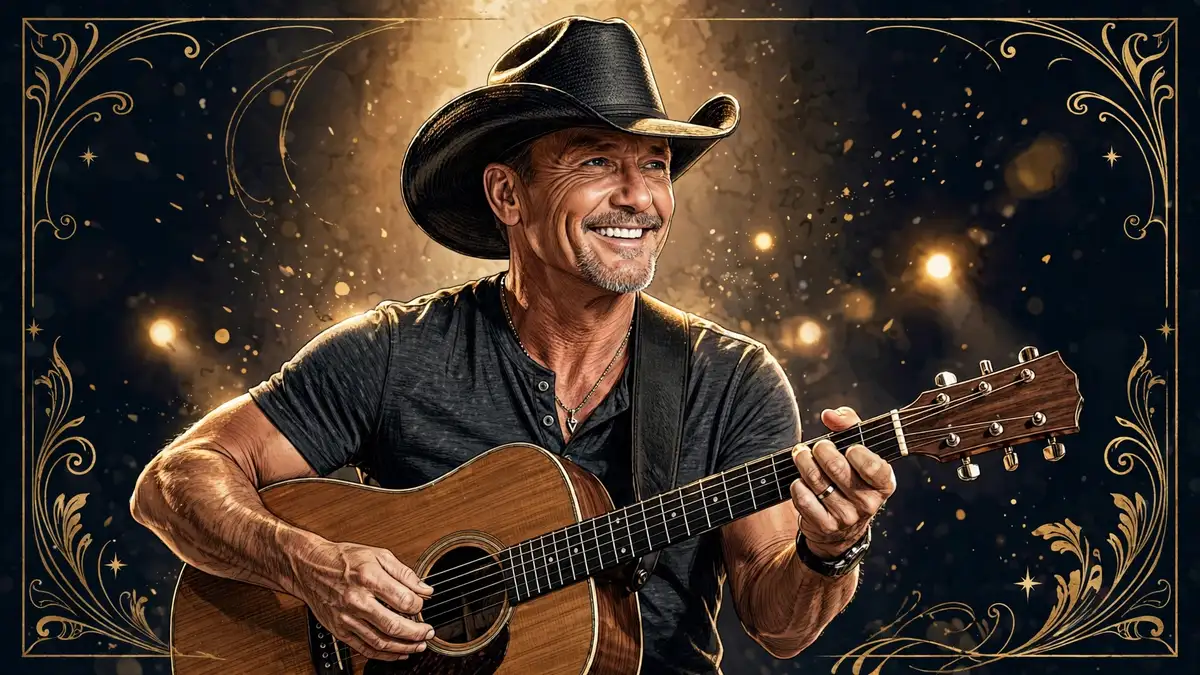
Early Life: A Louisiana Childhood and a Famous Father
Samuel Timothy McGraw was born on May 1, 1967, in Delhi, Louisiana, a small town in Richland Parish in the northeast of the state. He was raised by his mother, Betty Trimble, in the nearby town of Start, Louisiana, and grew up in modest circumstances — a long way from the private island and the 22,000-square-foot Nashville mansion that would come later.
The most famous fact of McGraw’s childhood is one he did not learn until he was 11 years old: his biological father was Tug McGraw, the Major League Baseball relief pitcher who won two World Series, with the New York Mets in 1969 and the Philadelphia Phillies in 1980. Young Tim found his father’s name on his birth certificate in a box in his mother’s closet. Tug McGraw had been a star athlete; his son would become a star of a different kind, but the competitive streak and the comfort on big stages seem to have run in the family.
McGraw played sports through school — he was a promising baseball player himself — and after graduating from high school in 1985 he went to Northeast Louisiana University (now the University of Louisiana at Monroe) on a baseball scholarship. He studied sports medicine, played shortstop, and, by his own later telling, spent his spare time learning guitar and singing in local clubs. A knee injury ended any serious baseball ambitions, and the guitar started to matter more than the glove.
In 1989, at 22, McGraw dropped out of college and moved to Nashville with little more than a guitar and a plan. He spent the next few years playing the honky-tonk circuit, working odd jobs, and knocking on record-label doors. It was a slow grind: he signed with Curb Records in 1992, and his self-titled debut album arrived in 1993 to almost no attention. The record produced no hit singles, and for a while it looked like the move to Nashville might not pay off.
Then came 1994. His second album, Not a Moment Too Soon, produced the single “Indian Outlaw,” which broke through on country radio despite — or perhaps because of — its controversy, and then “Don’t Take the Girl,” which became his first number one. The album became the best-selling country album of 1994, according to the Recording Academy, and McGraw was suddenly one of the hottest new names in Nashville. The small-town kid from Delhi, Louisiana, had arrived.
From Nashville Dreamer to Country Superstar
The second half of the 1990s turned Tim McGraw from a breakout act into a fixture. All I Want (1995) gave him “I Like It, I Love It,” a song that still closes his shows three decades later. Everywhere (1997) produced four number-one singles. By the end of the decade he was winning awards, headlining tours, and releasing platinum album after platinum album with a reliability that few of his peers could match.
The 2000s brought the songs that defined him. “Live Like You Were Dying” (2004) won the Grammy for Best Country Song and became one of the most loved country records of the decade. “My Little Girl” (2006), written for the film Flicka, became a father-daughter dance staple. “Southern Girl,” “Shotgun Rider,” “One Bad Habit” — the hits kept coming across 16 studio albums, a run that stretches from 1993 to Standing Room Only in 2023.
Three Grammy Awards sit on his shelf, alongside dozens of Academy of Country Music and Country Music Association awards. His catalog has produced more than 40 number-one singles on the country charts, and his records have sold more than 90 million copies worldwide, per Celebrity Net Worth. Some outlets put the total lower, around 80 million; others, like NextBiography, report 106 million. The Recording Industry Association of America credits him with 95 million units sold in the United States alone, according to a 2026 ranking of the best-selling country artists. Whichever count you use, the scale is the same: McGraw is one of the best-selling country artists of all time.
What set McGraw apart from many of his peers was staying power. Country radio moved on from one generation of stars to the next — the 1990s hat acts, the 2000s crossover boom, the streaming era — and McGraw kept showing up. He adapted without chasing trends, kept touring at arena scale, and in 2017 reunited with Faith Hill for the Soul2Soul World Tour. In 2024 he launched the Standing Room Only Tour in support of his sixteenth studio album, and in the summer of 2026 he was back on the road again with the Pawn Shop Guitar Tour, which launched on July 9, 2026, at Bethel Woods Center for the Arts in Bethel, New York. At 59, he was still playing the big rooms.
That staying power is the foundation of the fortune. A catalog that deep generates royalties every single day, whether or not he is on tour, and a live draw that strong lets him command arena fees year after year.
How Tim McGraw Makes His Money
Tim McGraw’s wealth comes from four streams that reinforce each other: music, touring, acting, and business. Music provides the base — royalties from a catalog of 16 studio albums and dozens of number-one singles, plus streaming income that keeps growing as country catalog listening rises. Touring provides the spikes. Acting provides both paychecks and a second public profile. Business ventures provide the long tail.
Forbes tracked his earnings through his peak years, and the numbers show how lumpy a country star’s income can be. He earned $38 million in 2015, according to Forbes, a year when he was touring hard and releasing new music. Between June 2018 and June 2019 he earned $18 million before taxes, enough to land on Forbes’ list of highest-paid country acts in 2019. Earlier, Forbes recorded $30 million between 2009 and 2010 and $23 million between 2008 and 2009. Parade, working from those four data points, calculated that he averaged $27.25 million a year across those four years. The lesson is simple: in touring years, McGraw earns like a top-tier star; in quieter years, the catalog keeps the money flowing at a lower level.
Record sales remain the quiet engine. More than 90 million records sold worldwide means decades of royalty payments, and older country catalogs have become more valuable, not less, in the streaming era. In 2024, Spirit Music Group acquired the master rights to three of McGraw’s albums — the announcement did not disclose a purchase price, and this article will not guess at one — which is a reminder that the catalog itself is an asset that can be sold, licensed, or borrowed against.
Songwriting adds another royalty layer. McGraw has writing credits on a number of his own songs, which means he earns both as the performer and as a songwriter when those songs are played, streamed, or covered. Publishing income is rarely the headline in a net-worth story, but over thirty years it adds up.
The table below gives a sense of how the fortune is thought to break down. These are informed estimates based on the public record, not audited figures — nobody outside the McGraw-Hill household knows the exact split.
| Income Stream | What It Contributes |
|---|---|
| Music sales, streaming and royalties | The largest single pillar: 90 million-plus records sold, 16 studio albums, decades of radio play and streaming |
| Touring and live performance | The biggest paydays: Soul2Soul II grossed about $140 million; career touring gross reported above $434 million by Billboard |
| Acting (film and television) | Supporting and leading roles across two decades, including The Blind Side and 1883 |
| Business ventures | TRUMAV fitness brand, McGraw’s bar and kitchen in Las Vegas, book royalties from Grit & Grace |
| Real estate | Nashville mansion (about $15.7 million), former Bahamas island listed at $35 million in 2021, and past sales in Beverly Hills and Franklin |
Touring: The Biggest Payday of All
If record sales built Tim McGraw’s fortune, touring multiplied it. Billboard has reported that McGraw has earned more than $434 million from touring since the 1990s, a figure cited by Kicks 99 from Billboard’s touring data. That is gross box-office revenue, not profit — promoters, venues, crews, and costs all take their share — but even after everyone is paid, headlining arena tours are where a country star of McGraw’s stature makes his real money.
The crown jewel is the Soul2Soul II Tour with Faith Hill, which ran through 2006 and 2007 and grossed approximately $140 million, according to Celebrity Net Worth. At the time it became the highest-grossing country tour in history and ranked among the 20 highest-grossing tours of any genre. The couple had already toured together in 2000, and they returned to the road as a pair for the Soul2Soul World Tour beginning in 2017, which grossed more than $100 million in ticket sales.
The economics are easy to see. A solo arena date can gross well over $1 million in a single night, and McGraw has played hundreds of them. Festival appearances at Stagecoach and Country Thunder add six-figure fees. His per-concert asking price has been reported in the range of $250,000 to $1 million per show, though booking-site figures like these are asking prices, not confirmed paychecks, and they swing with the venue, the market, and the year.
McGraw’s solo touring has been just as steady. The Standing Room Only Tour in 2024 supported his sixteenth studio album of the same name, and the Pawn Shop Guitar Tour launched in the summer of 2026, with dates in Nashville, Toronto, and Chicago and support acts including The Chicks, Lady A, 49 Winchester, and Timothy Wayne. The setlist mixed new material like “One Bad Habit” and “Pawn Shop Guitar” with the old warhorses — “I Like It, I Love It” and “Live Like You Were Dying” — the songs that fill arenas.
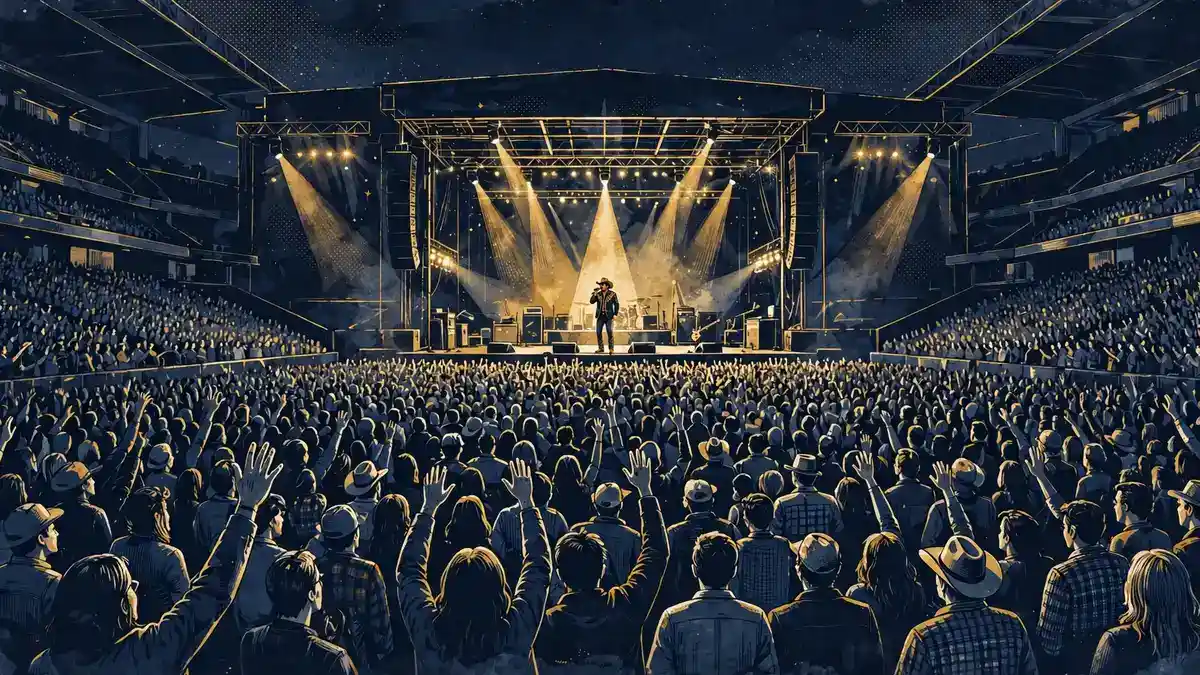
Touring also feeds the rest of the business. A tour sells albums and streams, it sells merchandise, and it keeps an artist in the news cycle that drives the next tour. It is the flywheel of McGraw’s career, and it is why his earnings spike in tour years and settle in the years between.
Acting Career and Hollywood Paychecks
Tim McGraw’s acting career started as a side project and grew into a genuine second career. His early screen work included the film Flicka (2006), in which he played the father of a young horse trainer and contributed the song “My Little Girl,” and a role in the television series Friday Night Lights. His best-known film role is Sean Tuohy in The Blind Side (2009), the Sandra Bullock drama that grossed $309 million worldwide on a $29 million budget, according to Parade. McGraw’s salary for the film was never made public, and this article will not invent one, but a hit of that size raised his value in Hollywood at once.
He kept working steadily: Country Strong (2010), The Kingdom (2007), Tomorrowland (2015), and the western 1883 (2021–2022), the Yellowstone prequel in which he starred as James Dutton alongside Faith Hill as Margaret Dutton. 1883 was a streaming hit for Paramount+, and it put McGraw in front of an audience that had never bought a country record. He has continued to take screen roles in the mid-2020s, and a planned Netflix bull-riding drama series built around McGraw was reported in 2024 as no longer moving forward.
Acting money works differently from music money. Film and television pay flat fees, and for a star of McGraw’s standing those fees run into the low millions per project, plus residuals. It is not the main pillar of his fortune — touring and music still dwarf it — but it adds up across two decades of steady work, and it matters in another way: it keeps his name in front of audiences between album cycles, which protects the value of the music business.
Business Ventures, Endorsements and the Fitness Brand
The third pillar of the McGraw fortune is business, and it is the one that has grown fastest in the last decade. The most personal of his ventures is fitness. McGraw’s physical transformation in the 2010s — he lost weight, quit drinking, and built a serious training routine — became a public story in its own right, and he turned it into a brand: TRUMAV, his fitness and lifestyle line, built around the training program he follows himself, and the earlier McGraw Machine Fitness concept. Fitness is not a side hobby for McGraw; it is a daily discipline, and the brand lets him sell the system he actually uses.
In 2021 he opened McGraw’s, a country bar and kitchen in Las Vegas, in which he holds an equity stake. The venue puts his name on a room in one of the most lucrative live-entertainment markets in America, and it doubles as a showcase for his music. It is a familiar country-star playbook — a branded venue in a tourist city — and it works because the name on the door is also the name on the marquee.
His 2019 book, Grit & Grace: Train the Mind, Train the Body, Own Your Life, became a bestseller and added book royalties to the mix. The book is essentially the TRUMAV philosophy in print: training, discipline, and the mindset that carried him from a Louisiana small town to arenas. He has also worked with clothing lines and a wine label alongside Faith Hill, and endorsement deals have added to the total over the years — some estimates have suggested the couple earns upwards of $10 million a year from endorsements in strong years, though that figure is not independently confirmed and should be treated as a rough guide, not a fact.
None of these ventures alone rivals the music money. Together, they do something just as important: they make the fortune less dependent on any single tour or album. A catalog, a fitness brand, a Vegas bar, a book, and a film career do not all go quiet at the same time.
Real Estate: Nashville Mansion, Franklin Farm and a Private Island
Tim McGraw and Faith Hill have owned some of the most talked-about homes in country music, and their property history is a story in itself. Their main residence is a custom-built mansion in Forest Hills, an affluent wooded area south of downtown Nashville. According to Hello! Magazine, the home is worth an estimated $15.7 million, and it measures roughly 22,460 square feet, with five bedrooms and ten or eleven bathrooms, set on about 17 acres of land the couple acquired in 2004. The house has a private gym — no surprise, given McGraw’s training routine — and it is where the couple raised their three daughters.
Before that, they owned a historic Belle Meade home in Nashville, a 1934 house on 11.6 acres with five bedrooms and eleven bathrooms across about 9,900 square feet, which they bought in 2004 and sold in 2013 for $2.8 million. They also owned an 11,000-square-foot mansion in Beverly Hills, with six bedrooms and nine bathrooms, which they sold in 2009 for $9.5 million. And they owned a sprawling Tennessee farm near Franklin — Beechwood Hall, an antebellum mansion dating to around 1850, set on more than 600 acres of rolling countryside at Leiper’s Fork — which they sold in 2021.
The most spectacular property of all was the private island. In 2003, McGraw and Hill bought a roughly 20-acre island in the Exuma Cays of the Bahamas, known as Goat Cay, which they named L’île d’Anges — “Island of Angels.” There was no infrastructure at all when they bought it. Working with architects Bobby McAlpine and Greg Tankersley, they built a 6,517-square-foot main house with four bedrooms and five bathrooms, plus eight separate pavilions connected by thatched-roof open-air walkways, a pool, and staff housing. The project took years — the family spent time in seaside yurts before the permanent home was finished in 2012 — and the island came with 1.3 miles of white-sand beachfront. In 2021 they listed it for $35 million. The island has since sold, though the final sale price was never publicly disclosed.

Real estate has been a genuine contributor to the couple’s wealth, not just a lifestyle expense. The Beverly Hills sale, the Belle Meade sale, the Franklin farm sale, and the island listing all returned large sums, and the Nashville home has appreciated well beyond its building cost. Reports have suggested the couple has also looked at a beachfront retreat in Mexico since selling the island, but nothing has been officially confirmed, so this article will not present it as fact.
| Property | Details |
|---|---|
| Nashville mansion (Forest Hills) | Custom-built on ~17 acres acquired in 2004; ~22,460 sq ft, five bedrooms; estimated value about $15.7 million (Hello! Magazine) |
| Bahamas private island (L’île d’Anges / Goat Cay) | ~20 acres bought in 2003; 6,517 sq ft main house plus eight pavilions; listed for $35 million in 2021 and sold (final price undisclosed) |
| Belle Meade, Nashville | 1934 home on 11.6 acres, ~9,900 sq ft; bought in 2004, sold in 2013 for $2.8 million |
| Beverly Hills mansion | ~11,000 sq ft, six bedrooms; sold in 2009 for $9.5 million |
| Franklin farm (Beechwood Hall) | Antebellum mansion on 600-plus acres near Leiper’s Fork; sold in 2021 |
Net Worth Growth: Year by Year
No public source tracks Tim McGraw’s net worth year by year with audited numbers, and any table that pretends otherwise is guessing. What the public record does support is a clear arc: a slow start, a breakout in the mid-1990s, a steep climb through the 2000s as touring and acting stacked up, and a plateau in the 2010s and 2020s as the catalog, the tours, and the businesses matured. The figures below are the estimates reported by outlets at the time, and they are best read as a trend, not a bank statement.
| Period | Reported Estimate |
|---|---|
| Early 1990s | Modest — a new Nashville act on Curb Records; debut album (1993) produced no hits |
| Mid-1990s | Breakout — Not a Moment Too Soon (1994) was the best-selling country album of the year; first number-one singles and first arena tours |
| 2000s | Rapid growth — Soul2Soul II Tour grossed about $140 million (2006–07); Forbes recorded $23 million earned in 2008–09 and $30 million in 2009–10 |
| 2015 | Peak earning year on record — $38 million, per Forbes |
| 2018–19 | $18 million earned between June 2018 and June 2019, per Forbes; Soul2Soul World Tour grossed more than $100 million |
| 2022 | $165 million combined estimate reported by TheRichest and others |
| 2026 | $165 million – $200 million range; Celebrity Net Worth reports $200 million combined with Faith Hill (updated September 17, 2026) |
The pattern is worth noting: the fortune did not arrive in one windfall. It accumulated over thirty years, in touring seasons and album cycles, and it held its value because the catalog kept earning between tours. That is the difference between a star who had a few big years and a star who built a durable business.
The $200 million question, answered plainly: when you read that Tim McGraw is worth $200 million, you are reading a household number. Celebrity Net Worth says so on its own page, and Parade repeated it in its 2026 profile: the $200 million is a combined net worth with Faith Hill, his wife of nearly 30 years. Faith Hill is a superstar in her own right, with her own catalog, tours, and acting work. The couple’s money has been pooled for decades, and no public source has ever separated it into his share and hers. Lower estimates — $165 million from TheRichest and Nicki Swift, around $180 million from several 2026 outlets — reflect different methods and different years, not a disagreement about the basic facts. Our range of $165 million to $200 million is the honest way to state it.
How Tim McGraw Compares to Country Music’s Richest
Context helps. McGraw sits in the top tier of country wealth, but he is not the richest man in the genre — and the gap tells you something about how country fortunes are made. The very richest country stars, like Garth Brooks and Dolly Parton, built their numbers on a combination of record-breaking tours and business empires that extend well beyond music. McGraw’s fortune is more purely a performer’s fortune: records, tours, and acting, with businesses on the side.
| Country Star | Reported Net Worth (Celebrity Net Worth) |
|---|---|
| Garth Brooks | About $400 million |
| Dolly Parton | About $650 million |
| Tim McGraw (with Faith Hill) | $200 million combined |
| Kenny Chesney | About $180 million |
| Luke Bryan | About $160 million |
| Blake Shelton | About $130 million |
These are all estimates from the same source, reported the same way, so they are comparable in method even if none of them is exact. Two things stand out. First, McGraw’s combined figure puts the McGraw-Hill household ahead of every solo male country star except Garth Brooks. Second, the combined nature of the number matters for the comparison: on a solo basis, McGraw’s individual fortune would sit closer to Chesney’s or Bryan’s range. That is not a knock on McGraw — it is a reminder that the McGraw-Hill fortune is a partnership, built by two superstars over thirty years, and that is exactly how it should be read.
Personal Life: Faith Hill and the Family
Tim McGraw married Faith Hill on October 6, 1996, in Rayville, Louisiana, while she was touring as his opening act on the Spontaneous Combustion Tour. The wedding was famously low-key — the ceremony took place in her aunt’s home — and the marriage has lasted nearly three decades in an industry where few do. In October 2026, the couple marked their 30th wedding anniversary, and McGraw posted a public tribute to Hill, as reported by Us Weekly.
They have three daughters: Gracie (born 1997), Maggie (born 1998), and Audrey (born 2001). All three have pursued creative work of their own — Gracie as a singer and actress, Maggie in the music and media world, Audrey as a model and actress — and the family has appeared together publicly, including at the premiere of 1883, in which both parents starred.
Faith Hill’s own career is part of the financial story. She is one of the best-selling country artists of all time in her own right, with hits like “This Kiss,” “Breathe,” and “The Way You Love Me,” and her own arena tours. The Soul2Soul tours were joint ventures in the fullest sense: two headliners, one stage, one gross. Any honest account of the $200 million has to credit both of them.
McGraw has been open about his health and fitness, and that openness is part of his public image. In the 2010s he quit drinking, overhauled his diet, and built a training routine that includes early-morning workouts on tour — a routine he has described in interviews and in his book Grit & Grace. He has said the change was driven by wanting to be present and healthy for his family, and by a moment on stage when he realized he was out of shape. The fitness brand grew directly out of that personal change, which is why it reads as genuine rather than as a licensing deal.
Controversies and Legal Issues
McGraw’s career has been remarkably free of scandal for a star of his size, but there have been two episodes worth recording, because readers ask about them.
The first was a long-running dispute with his record label. In 2011, McGraw sued Curb Records, alleging breach of contract and seeking to be released from his deal; Curb countersued, claiming he had recorded songs for a rival label. The case went to trial in Nashville in 2012, and the two sides reached a settlement that allowed McGraw to move to Big Machine Records, where he released Two Lanes of Freedom in 2013. The dispute was a business fight, not a personal scandal, and it ended with McGraw free to record where he chose.
The second was a concert incident in Atlanta in July 2014. During a show, a fan in the front row grabbed McGraw’s leg and would not let go; McGraw slapped the fan’s hand away, and the moment was caught on video and widely shared. McGraw later said the fan had grabbed him in a sensitive area, and the episode was treated in the press as an awkward on-stage moment rather than a serious controversy. No charges were filed.
He has also had health scares on stage. In March 2018, McGraw collapsed on stage during a concert in Dublin, Ireland, while performing with Faith Hill, and was taken to hospital. He was diagnosed with dehydration and recovered quickly, returning to the stage the next night. The episode was a reminder of the physical demands of touring at 50, and it fed into the fitness story that became central to his public image.
Frequently Asked Questions
What is Tim McGraw’s net worth in 2026?
Tim McGraw’s net worth in 2026 is estimated at between $165 million and $200 million. The most quoted figure, $200 million, comes from Celebrity Net Worth (updated September 17, 2026) and is a combined net worth with his wife, Faith Hill. Lower estimates of $165 million to $185 million appear in other outlets, which is why this article reports an honest range rather than a single number.
Is the $200 million figure Tim McGraw’s alone, or combined with Faith Hill?
It is combined. Celebrity Net Worth states on its own page that the $200 million is a combined net worth with Faith Hill, his wife of nearly 30 years, and Parade repeated that in its 2026 profile. No public source separates Tim McGraw’s individual share from Faith Hill’s, so the $200 million should always be read as a household figure.
How much does Tim McGraw make per year?
It depends on the year. Forbes recorded $38 million in 2015, $30 million between 2009 and 2010, $23 million between 2008 and 2009, and $18 million between June 2018 and June 2019. Parade calculated that he averaged $27.25 million a year across those four years. He earns far more in touring years than in quiet years, when royalties from his catalog keep the income flowing.
How many records has Tim McGraw sold?
More than 90 million records worldwide, according to Celebrity Net Worth. Some outlets report lower figures of around 80 million, while others report as many as 106 million. The Recording Industry Association of America credits him with 95 million units sold in the United States alone, per a 2026 ranking of the best-selling country artists. Whichever count is used, he is one of the best-selling country artists of all time.
What was the highest-grossing Tim McGraw tour?
The Soul2Soul II Tour with Faith Hill, which ran in 2006 and 2007 and grossed approximately $140 million, making it the highest-grossing country tour in history at the time. The couple’s 2017 Soul2Soul World Tour grossed more than $100 million. Billboard has reported that McGraw has earned more than $434 million from touring since the 1990s.
Where does Tim McGraw live?
Tim McGraw and Faith Hill live in Nashville, Tennessee, in a custom-built mansion in the Forest Hills area estimated at about $15.7 million, according to Hello! Magazine. The home measures roughly 22,460 square feet with five bedrooms and ten bathrooms, on about 17 acres. They previously owned homes in Belle Meade, Beverly Hills, and Franklin, Tennessee, and a private island in the Bahamas.
What businesses does Tim McGraw own?
His main ventures are the TRUMAV fitness brand, built around the training program he follows himself; McGraw’s, a country bar and kitchen in Las Vegas that opened in 2021, in which he holds an equity stake; and book royalties from his 2019 bestseller Grit & Grace. He has also worked with clothing lines and a wine label alongside Faith Hill.
Is Tim McGraw still touring in 2026?
Yes. His Pawn Shop Guitar Tour launched on July 9, 2026, at Bethel Woods Center for the Arts in Bethel, New York, with dates in Nashville, Toronto, and Chicago and support acts including The Chicks, Lady A, 49 Winchester, and Timothy Wayne. It followed the Standing Room Only Tour in 2024. At 59, McGraw remains an active arena headliner.
Final Thoughts: The Bottom Line
Tim McGraw’s net worth in 2026 sits at an estimated $165 million to $200 million — a combined household fortune with Faith Hill, anchored by Celebrity Net Worth’s $200 million figure and its September 17, 2026 update. It is a fortune built the slow way: 16 studio albums, more than 90 million records sold, tours that grossed hundreds of millions of dollars, a steady acting career, and businesses that keep earning between tours.
The number that matters most is not the headline figure but the way it was built. McGraw never had a single windfall. He had thirty years of number-one singles, arena tours, and catalog royalties, stacked on top of each other, and he and Faith Hill invested the proceeds in property, in businesses, and in a second career on screen. That is why the fortune has held its value while other stars’ fortunes have faded — and why, at 59, he is still headlining arenas in 2026.
Sources and Reporting
How we estimated: This article’s headline figure is a range, not a single number, because the sources disagree and because the most quoted figure is a household estimate. Celebrity Net Worth reports $200 million as a combined net worth with Faith Hill (page updated September 17, 2026). Parade’s 2026 profile repeats that figure and confirms it is combined. TheRichest and Nicki Swift have reported $165 million, and several 2026 outlets report around $180 million. We anchor on Celebrity Net Worth’s $200 million at the top of the range and $165 million at the bottom. No source separates Tim McGraw’s individual share from Faith Hill’s, and this article does not pretend to. Earnings figures come from Forbes via Parade. Tour grosses come from Celebrity Net Worth and Billboard (via Kicks 99). Property details come from Hello! Magazine and reported property coverage. All figures are estimates drawn from public sources; the couple’s private finances are not public, and the real number may differ.
Sources consulted:
- Celebrity Net Worth — Tim McGraw Net Worth
- Parade — Tim McGraw’s Net Worth (2026)
- TheRichest — Inside the Power Couple’s $165 Million Empire
- Nicki Swift — How Much Is Tim McGraw Worth?
- Kicks 99 — How Much Money Country Stars Make From Touring (Billboard data)
- NextBiography — Tim McGraw Bio, Net Worth, Age, Height, Family
- This Old House — Inside Tim McGraw House Tour in Nashville
- ShunSpirit — Tim and Faith’s Caribbean Home
- Hillbilly Live — The 10 Highest-Selling Country Artists of All Time (RIAA)
- CountryBios — Tim McGraw Bio: Wife Faith Hill, Daughters & 2026 Tour Details