Last updated: November 8, 2026 · By Celebamerica Editorial Staff
Dolly Parton died on August 25, 2026, at the age of 80, leaving behind a fortune that Forbes had put at $450 million in its 2025 estimate — and that Forbes later reassessed at about $525 million in October 2026. Celebrity Net Worth, the other most-cited tracker of her wealth, put the figure higher still, at $650 million at the time of her death. The honest answer, the one every source agrees on once you read past the headlines, is a range: $450 million to $650 million, with Forbes as the conservative anchor and Celebrity Net Worth as the upper end.
That range is not a rounding error. It comes down to two assets that no outsider can price exactly: her half of the Dollywood Company, which Forbes valued at about $165 million, and a songwriting catalog of more than 3,000 songs, which Forbes put at about $120 million and Celebrity Net Worth at about $200 million. Everything else in her fortune — royalties, film and television work, real estate, licensing — sits on top of those two pillars. This article lays out each piece with its source and its date, so you can see where every number comes from, and what is still not public: her will has never been released, no court inventory of her estate exists, and the trust documents that now hold her business interests remain private.
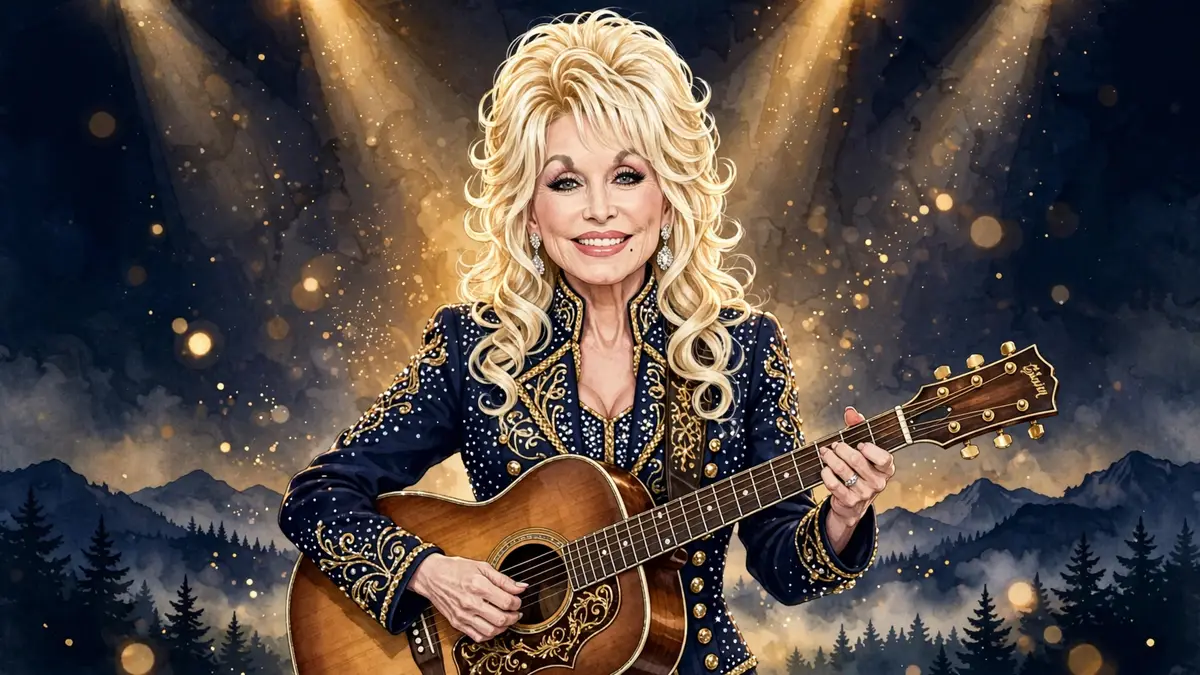
Dolly Parton: Quick Facts
| Full Name | Dolly Rebecca Parton Dean |
|---|---|
| Date of Birth | January 19, 1946 |
| Date of Death | August 25, 2026 (age 80, Nashville, Tennessee) |
| Birthplace | Locust Ridge, Sevier County, Tennessee |
| Estimated Net Worth at Death | $450 million to $650 million (Forbes: $450 million in 2025, about $525 million in October 2026; Celebrity Net Worth: $650 million) |
| Primary Income Sources | Songwriting royalties from a catalog of 3,000+ songs; 50% ownership of the Dollywood Company; recording, touring, film and television |
| Key Ventures | Dollywood theme park (opened 1986), Dollywood’s Splash Country, DreamMore Resort and Spa, HeartSong Lodge & Resort, Dolly Parton’s Imagination Library |
| Career Totals | 49 studio albums, 25 Billboard country No. 1 singles, 11 Grammy Awards, 3 Emmy Awards, more than 100 million records sold |
| Spouse | Carl Dean (married 1966; died March 3, 2025, age 82) |
| Children | None |
Table of Contents
- Early Life: A One-Room Cabin in the Smokies
- Nashville and the Porter Wagoner Years
- Jolene, I Will Always Love You, and the Elvis Decision
- Hollywood, 9 to 5, and the Pop Crossover
- Dollywood: The Theme Park That Became an Empire
- The Net Worth Breakdown, Source by Source
- How Her Fortune Grew Over the Years
- Real Estate and Other Assets
- Giving It Away: The Imagination Library and Beyond
- Personal Life: Carl Dean, Family, and Privacy
- Final Years, Death, and the Estate
- The Estate Dispute That Followed
- What Other Net Worth Pages Get Wrong
- Dolly Parton Net Worth FAQs
- Final Thoughts
- Sources & Reporting
Early Life: A One-Room Cabin in the Smokies
Dolly Rebecca Parton was born on January 19, 1946, in a one-room cabin in Locust Ridge, a small community in Sevier County, Tennessee, in the foothills of the Great Smoky Mountains. She was the fourth of twelve children born to Robert Lee Parton, a sharecropper, and Avie Lee Owens Parton. The family was poor in the plainest sense of the word — no electricity, no running water in the early years — and Dolly spent the rest of her life turning that childhood into songs, books, and a theme park.
Music was in the house from the start. Her mother sang and played guitar; her grandfather was a Pentecostal preacher, and Dolly sang in church as a little girl. She started writing songs before she was ten, and by her early teens she was performing on local radio and television in Knoxville. At 13 she made her debut on the Grand Ole Opry in Nashville, introduced by Johnny Cash. The story she told for decades afterward was that Cash told her to keep going, and she did.
The detail that shaped everything she built later is the one about her father. Robert Lee Parton could not read or write. He worked the land, raised twelve children, and never learned to read a word. Dolly never forgot it, and in 1995 she built a literacy program in his honor that would go on to mail hundreds of millions of books to children around the world. That program, the Imagination Library, is the thread that runs through her money story: she gave away sums that rival the fortune she kept.
The day after she graduated from Sevier County High School in 1964, Parton moved to Nashville. She was 18, she had a suitcase, and she had already decided she would write her own songs and keep the rights to them. That second decision — keeping her publishing — is the single most important financial choice of her life, and it is the reason her catalog was still worth nine figures sixty years later.
Nashville and the Porter Wagoner Years
Nashville in 1964 was a songwriter’s town, and Parton arrived as a writer first. Her early songs were recorded by other artists — Bill Phillips took her “Put It Off Until Tomorrow” into the country top ten in 1966 — and in 1967 she signed with RCA Victor and released her debut album, Hello, I’m Dolly. The same year, Porter Wagoner, one of country music’s biggest television stars, hired her as the “girl singer” on his syndicated show, The Porter Wagoner Show. For the next seven years, she was a weekly presence in American living rooms.
The Wagoner years made her famous and, for a while, boxed her in. The duets with Wagoner sold well — “The Last Thing on My Mind,” “Please Don’t Stop Loving Me,” “If Teardrops Were Pennies” — and the show gave her a national audience. But Parton wanted a solo career, and Wagoner did not want to let her go. She finally left the show in 1974, a break that cost her professionally in the short term and defined her in the long term. The song she wrote about that goodbye became one of the most valuable songs ever written.
Her first solo No. 1 came earlier, with “Joshua” in 1971, which also brought her first Grammy nomination. By the time she left Wagoner, she had a string of hits and a reputation as the sharpest songwriter in Nashville. The seven years with Wagoner taught her the business from the inside — television, touring, recording, publishing — and she left with the rights to her own work in her own hands. That was not an accident. She had been careful about ownership from the beginning, and she stayed careful for the next fifty years.
Jolene, I Will Always Love You, and the Elvis Decision
The year 1974 gave Parton three solo No. 1 country singles, and two of them are among the most famous songs in American music. “Jolene,” released in late 1973, topped the country chart in February 1974. It was written about a bank clerk with striking auburn hair — a real woman, by Parton’s own telling — and it has been covered, reinterpreted, and streamed by generations since. “I Will Always Love You,” written as her farewell to Porter Wagoner, also went to No. 1 on the country chart in 1974.
Then came the decision that made her rich. Around the same time, Elvis Presley said he wanted to record “I Will Always Love You.” Parton was thrilled — she has said so many times — until Presley’s manager, Colonel Tom Parker, told her the standard condition: Elvis would record the song only if the songwriter signed over half of the publishing rights. Parton refused. She had promised herself she would never give away her songwriting, and she kept that promise even when the biggest star in the world was asking.
That refusal is credited with earning her many millions of dollars in royalties over the decades that followed. When Whitney Houston recorded “I Will Always Love You” for The Bodyguard in 1992, it became the best-selling single by a woman in history, and Parton, who owned the song outright, collected the publishing royalties on one of the biggest-selling singles of all time. Priscilla Presley later told Parton that Elvis had sung the song to her during their divorce — a small, human postscript to a business decision that defined Parton’s fortune.
The lesson of the Elvis story runs through every dollar figure in this article. Parton’s wealth did not come from one lucky hit. It came from writing more than 3,000 songs and owning them. Most songwriters of her generation sold their catalogs, signed away their publishing, or watched their hits earn money for someone else. Parton did the opposite, and the catalog she kept is the reason Forbes and Celebrity Net Worth still argue over its value — about $120 million on Forbes’ books, about $200 million on Celebrity Net Worth’s — more than fifty years after the songs were written.
Hollywood, 9 to 5, and the Pop Crossover
By the late 1970s, Parton was a country star with pop ambitions, and she went after them deliberately. “Here You Come Again” in 1977 crossed over to the pop charts and won her the first of her eleven Grammy Awards in 1978. Then came Hollywood. In 1980 she starred in 9 to 5 alongside Jane Fonda and Lily Tomlin, a comedy about three office workers fighting back against a sexist boss. The film was a box-office hit, and the title song Parton wrote for it — tapping out the rhythm with her acrylic fingernails, as the story goes — reached No. 1 on the Billboard Hot 100 and earned her an Academy Award nomination for Best Original Song and a Golden Globe nomination.
She followed it with The Best Little Whorehouse in Texas in 1982, which brought another Golden Globe nomination for Best Actress, and later with Rhinestone (1984), Steel Magnolias (1989), Straight Talk (1992), and Joyful Noise (2012). Her acting paychecks were real money, but the films did something more valuable: they made her a household name far beyond country radio, and they kept her songs in front of audiences who had never bought a country record.
The duet “Islands in the Stream” with Kenny Rogers, written by the Bee Gees, reached No. 1 on the Hot 100 in 1983. Her record totals by the end of her career were staggering: 49 studio albums, 25 No. 1 Billboard country singles — tied with Reba McEntire for the most by a woman — 44 career Top 10 country albums, a record for any artist, 110 career-charted singles, and more than 100 million records sold worldwide. She won eleven Grammy Awards from more than fifty nominations, three Emmy Awards, and was nominated for two Academy Awards, six Golden Globes, and a Tony Award for the Broadway musical 9 to 5 in 2009. She entered the Country Music Hall of Fame in 1999, received the National Medal of Arts in 2004, the Kennedy Center Honor in 2006, the Grammy Lifetime Achievement Award in 2011, and the Jean Hersholt Humanitarian Award in 2025 — the Academy’s honor for humanitarian work, given in the final year of her life.
Her later career stayed busy in ways that kept the money coming in. She produced and starred in Netflix features, including Christmas on the Square (2021), which earned her a Primetime Emmy Award. She recorded a rock album, Rockstar, in 2023, at 77, with guest appearances from Paul McCartney, Ringo Starr, Elton John, and dozens of others — a project that debuted at No. 1 on the Billboard Top Album Sales chart and showed, once more, that she could still command a paying audience six decades after her first record. She also wrote books, launched a line of baking mixes and frozen foods, and licensed her name and likeness across a range of products. None of these was the fortune on its own. Together, they were a steady stream of income that never really stopped.
Dollywood: The Theme Park That Became an Empire
The biggest single piece of Dolly Parton’s fortune was not a song. It was a theme park in the mountains where she grew up. On May 3, 1986, a small park in Pigeon Forge, Tennessee — then called Silver Dollar City — reopened as Dollywood, with Parton as a 50% partner in the Dollywood Company alongside the Herschend family, the park operators. She lent the park her name, her story, and her face, and she showed up there season after season, waving from parade floats and opening new attractions in person.
What Dollywood became over forty years is hard to overstate. The park draws around 4 million visitors a year. It employs more than 4,000 people — the largest employer in Sevier County — and local reports credit the park with about $1.8 billion a year in economic impact on the region. Sevier County recorded $3.8 billion in visitor spending in 2023, ranking third among Tennessee’s 95 counties. The Dollywood Company grew far beyond the original 165-acre park: Dollywood’s Splash Country, a 35-acre water park; Dollywood’s DreamMore Resort and Spa; and Dollywood’s HeartSong Lodge & Resort, a second resort property. The company celebrated Dollywood’s 40th anniversary season in 2025, with Parton herself at the park for the opening-day anniversary.

Forbes’ most detailed breakdown of her wealth, published in August 2021, valued her 50% Dollywood stake at about $165 million — the single largest line item in her fortune, bigger than the song catalog as Forbes valued it then. That number is an estimate, and it is worth saying plainly why: the Dollywood Company is private. There is no share price, no public filing, no auction record. Forbes’ figure rests on the park’s attendance, its revenues, and comparisons with other theme-park businesses. It is the best public number available, and it is the figure Reuters repeated in its obituary coverage on August 26, 2026. But it is an estimate of a private asset, not a sale price, and it is one of the two reasons the total net worth range in this article is as wide as it is.
The park also explains something about Parton that the money figures miss. She did not buy a theme park in Florida or California. She built one in the county where she was born poor, and she built it around the culture she came from — crafts, music, food, mountain stories. Dollywood’s success was her success in the most literal sense: the park’s fortunes and her own rose together for forty years, and the jobs and tourist dollars it brought to Sevier County are the part of her legacy that does not fit on a balance sheet.
The Net Worth Breakdown, Source by Source
Here is the part readers actually come for, laid out with each figure attached to the outlet that published it and the date it was published. There is no single “official” number. There never is for a private fortune. What follows is the full picture, with the disagreements left in.
| Source | Estimate | Date | What it covers |
|---|---|---|---|
| Forbes | $450 million | 2025 estimate, repeated in post-death coverage in August 2026 | Her net worth before death; the figure Reuters cited in its August 26, 2026 obituary reporting |
| Forbes | About $525 million | October 30, 2026 | The fortune she left behind, reassessed after her death, covering business holdings, music rights, licensing, and continuing projects |
| Celebrity Net Worth | $650 million | At the time of her death, August 2026 | Her net worth at death, with a range of roughly $600 million to $700 million |
Our anchored figure is Forbes’ $450 million, and our honest range is $450 million to $650 million. Forbes is the anchor because it is the most detailed and most consistently reported of the three numbers: the outlet published a full breakdown in 2021, updated the total through 2023 and 2024, and its 2025 figure was the one Reuters, Inc., Parade, and other major outlets cited in the days after her death. Celebrity Net Worth’s $650 million is the upper end of the range, and it is not a fringe number — it is the figure many outlets reported alongside Forbes’ — but its catalog valuation is much higher, and it carries less public detail about how the total was built.
Inside the Forbes figure, the pieces break down like this, using the outlet’s own published valuations:
| Asset | Forbes value | Celebrity Net Worth value |
|---|---|---|
| 50% stake in the Dollywood Company | About $165 million (2021 breakdown) | Not separately published |
| Songwriting catalog (3,000+ songs) | About $120 million (2025) | About $200 million |
| Real estate, royalties, film and TV, licensing, cash and other holdings | The remainder, roughly $165 million on Forbes’ $450 million total | The remainder on a $650 million total |
The catalog is where the two sources part company. Forbes valued the catalog at about $150 million in its 2021 breakdown and about $120 million in its 2025 estimate. Celebrity Net Worth put it at about $200 million, and some post-death commentary has suggested the publishing rights could fetch $200 million to $300 million on the open market. The gap is real and it is not a mistake on either side: a song catalog is worth what a buyer will pay for it, and the only way to know for certain is a sale that has not happened. Until it does, the $120 million to $200 million spread is the honest spread.
The October 2026 Forbes reassessment — about $525 million left behind — sits between the two poles, and it deserves a careful reading. It is not a correction of the $450 million figure, and it is not an estate inventory. It is a later estimate, made two months after her death, that looked again at her business holdings, music rights, licensing arrangements, and continuing commercial projects. The difference between a living person’s net worth and the fortune left behind is not just arithmetic: valuations move, projects continue, and an estate’s worth is measured differently from a working star’s. Treat the three numbers as three dated estimates of a private fortune, not as a scoreboard.
How Her Fortune Grew Over the Years
Parton’s wealth was not built in a single deal. It accumulated over six decades, and the public estimates trace a steady climb rather than a sudden jump. The timeline below uses Forbes’ published figures, which are the most consistent series available, with Celebrity Net Worth’s figure at the end.
| Year | Forbes estimate | What changed |
|---|---|---|
| 1964–1973 | Not publicly estimated | Songwriting income, Wagoner show salary, early hits; wealth modest by later standards |
| 1974–1985 | Not publicly estimated | “Jolene” and “I Will Always Love You” royalties begin compounding; “9 to 5” film and song; “Islands in the Stream” |
| 1986 | Not publicly estimated | Dollywood opens; her 50% stake becomes the long-term anchor of her fortune |
| 1992 | Not publicly estimated | Whitney Houston’s “I Will Always Love You” becomes the best-selling single by a woman; publishing royalties surge |
| 2021 | $350 million | Forbes’ detailed breakdown: Dollywood stake about $165 million, catalog about $150 million; she joins America’s Richest Self-Made Women list |
| 2023 | $440 million | Forbes updates the total upward as Dollywood and the catalog appreciate |
| 2024–2025 | $450 million | Forbes’ standing estimate; catalog revalued at about $120 million |
| August 2026 | $450 million (Forbes) / $650 million (Celebrity Net Worth) | Death on August 25, 2026; both figures widely reported in obituary coverage |
| October 2026 | About $525 million (Forbes) | Forbes reassesses the fortune left behind after her death |
Two things stand out in that timeline. First, the fortune kept growing in her seventies and eightieth year, which is unusual for a performer whose biggest hits were fifty years old. The reason is ownership: the catalog kept earning, Dollywood kept drawing visitors, and the songs kept finding new audiences through films, streaming, and covers. Second, the growth was slow and steady — $350 million to $450 million over four years — which is what you would expect from a fortune built on real businesses and royalty streams rather than a single windfall. There was no IPO, no sale, no lottery ticket. There was a theme park, three thousand songs, and sixty years of work.
Real Estate and Other Assets
Parton’s real estate was substantial but modest next to her business holdings, and it was held quietly. The best-documented property is her longtime home in Brentwood, Tennessee, outside Nashville: a 60-acre compound that property records show was transferred into a trust in April 2026, appraised at approximately $10.7 million. She had lived in the Brentwood area for decades, and the house was where she and her husband Carl Dean spent most of their married life. Dean, who died in March 2025, had his own estate planning in place: his 2013 will left everything to a trust, with Parton as trustee.
Beyond Brentwood, reporting after her death noted homes in California and Tennessee, and House Beautiful has written that she owned five residences over the course of her life. The details — addresses, purchase prices, current values — are mostly private, and this article does not guess at them. What can be said with confidence is that real estate was a small slice of the fortune. On Forbes’ $450 million total, the Brentwood compound at about $10.7 million is roughly two percent. The money was in the park and the songs, not the houses.
Her other assets were the kind that do not photograph well but pay steadily: publishing rights in more than 3,000 songs, some master-recording ownership, licensing arrangements for her name and image, and the continuing commercial projects — books, food products, the resorts — that her estate now manages. Forbes’ October 2026 reassessment specifically noted licensing and continuing projects among the holdings it reviewed, a reminder that a star of her size keeps earning after death. The songs do not stop being played, the park does not stop selling tickets, and the books do not stop being mailed.
Giving It Away: The Imagination Library and Beyond
No account of Dolly Parton’s money is complete without the money she gave away, because the giving was on a scale that rivals the fortune she kept. TheStreet reported that her charitable giving was estimated to be as high as $500 million. The Standard, a separate outlet, put lifetime charitable contributions at about $600 million. Those are estimates, and they should be read as estimates — but even the lower of them means she gave away a sum comparable to her entire net worth.

The centerpiece is the Imagination Library, which she founded in 1995 through the Dollywood Foundation as a tribute to her father, who never learned to read. It began as a small local effort: one free, high-quality book a month, mailed to every child in Sevier County from birth until kindergarten. It went national within five years, then spread to Canada in 2006, the United Kingdom in 2007, Australia in 2013, and Ireland in 2019. A child enrolled at birth receives up to 60 books by age five.
The numbers are remarkable, and they kept climbing in her final year. The program passed its 300 millionth book in November 2025, reached 325 million books by June 2026, and had gifted more than 332 million books by the time of her death in August 2026. In 2025 alone, the foundation gifted more than 40 million books — one book mailed roughly every 0.78 seconds. Today the program mails more than three million books every month to children in all fifty states and four other countries.
Her giving went well beyond books. In 2020 she donated $1 million to Vanderbilt University Medical Center for COVID-19 vaccine research, a gift that helped fund the Moderna vaccine — and she did it quietly, then encouraged others to get vaccinated when the time came. She funded scholarships, supported wildlife and eagle conservation through the American Eagle Foundation, and gave to hospitals, schools, and disaster relief in Tennessee, including help for families after the 2016 Gatlinburg wildfires. The Dollywood Foundation also ran a program that paid for every high-school graduate in Sevier County to attend college, and for years the company gave its employees help with childcare and education. She once said her plan was to give from the heart, and the record shows she did — at a scale that makes the net worth figures almost beside the point.
Personal Life: Carl Dean, Family, and Privacy
Parton married Carl Dean on May 30, 1966, in Ringgold, Georgia. She was 20, he was 23, and they had met two years earlier outside a Nashville laundromat, on her first day in the city. Dean ran an asphalt-paving business in Nashville and stayed out of the spotlight for nearly sixty years of marriage — a deliberate choice by both of them. He attended almost none of her public events, gave almost no interviews, and was, by her own description, the private half of a very public life. He died on March 3, 2025, at the age of 82. Parton kept working after his death, and she spoke openly about missing him, including in the months before her own death.
The couple had no children, a fact Parton discussed with unusual candor over the years. She often said she had not been able to have children, and that she had come to see the children of the world — through the Imagination Library and through her nieces and nephews — as her own. She was close to her family all her life: six of her eleven siblings survived her, and her nieces and nephews were a constant presence, including her nephew Bryan Seaver, the son of her sister Cassie Parton, who served as her head of security for years and who announced her death to the world in a video on August 25, 2026.
Her privacy was legendary, and it extended to her health. For most of her career, the public knew her as tireless — up before dawn, writing songs, answering fan mail, running a business empire. She was open about her faith, her love of the Smoky Mountains, and her habit of working through the night. What she did not share, until the end, was the state of her health. That discretion is part of why her death, when it came, felt sudden to the public even though her team described a brief illness.
Final Years, Death, and the Estate
Parton’s final years were busy by any measure. She released the Rockstar album in 2023 at 77, celebrated Dollywood’s 40th anniversary season in 2025, and received the Jean Hersholt Humanitarian Award in 2025. She worked from her home studio in Brentwood on her musical archives and on the long-term future of the Imagination Library. She also, according to property records, transferred her Brentwood compound into a trust in April 2026 — one of several signs, visible only in hindsight, that she was putting her affairs in order.
She died on Tuesday, August 25, 2026, at the age of 80, after a brief battle with cancer. Her representatives confirmed that she died surrounded by loved ones at Vanderbilt-Ingram Cancer Center in Nashville, and her nephew Bryan Seaver announced the death in a video shared publicly. The announcement came from her official website and her publicist. Tributes followed from across music, film, and politics, and Dollywood’s president, Eugene Naughton, said the company was committed to carrying her light forward.
What happens to the fortune now is, for the most part, not public — and that is by design. Parton planned her estate carefully and privately, over decades. In 1997, nearly thirty years before her death, she established the D.P. Dean Trust to oversee her property and assets. The trust directs that her professional property and business interests transfer on her death into a separate entity, the Dolly Parton Professional Property Trust. In September 2026, a new entity, She’s Alive LLC, was established to manage and protect her estate’s professional and commercial interests, with her longtime manager Danny Nozell as its manager and as advisor to the trust.
Her will has not been made public, and as of October 2026 reporting, no probate filing had identified her beneficiaries. That is the point of a trust-based estate plan: the details stay private instead of becoming public through probate court. Reports that she left most of her estate to charity rely on unnamed sources and are unconfirmed. What is confirmed is the structure — trusts, not a public will — and the people running it: Nozell and the trustees she chose. Anyone publishing a list of heirs as fact is guessing, and this article does not.
The Estate Dispute That Followed
Within weeks of her death, her estate was in the news for a different reason. In September 2026, She’s Alive LLC and Danny Nozell filed a lawsuit against Bryan Seaver, Parton’s nephew and longtime head of security, alleging extortion, violent threats, and attempts to damage her business empire. A Nashville judge granted a temporary restraining order against Seaver. Seaver was fired from his security role by the estate, and he asked a court to delay a hearing on the order that had been set for October 9 by about ten days.
The dispute is still unfolding, and the details in the filings are allegations, not findings. Two facts are worth holding onto. First, the lawsuit was brought to protect the business, not to cut anyone out: legal filings confirm that Seaver remains a named beneficiary of the Parton trust even as the restraining order stands. Second, the episode shows how much was at stake in the weeks after her death — a private empire worth hundreds of millions, run through trusts, with the person who announced her death to the world now on the other side of a court filing from the estate. It is a sad postscript to a life that was, by every account, devoted to family. It is also a reminder that even the most careful estate plan cannot prevent a fight over what it contains.
What Other Net Worth Pages Get Wrong
Most of the pages ranking for Dolly Parton’s net worth repeat one of two numbers — $450 million or $650 million — without saying which outlet published it, when, or what it was based on. That is the first thing this article does differently: every figure here carries its source and its date. A reader who finishes this page should know that Forbes said $450 million in 2025, that Forbes said about $525 million in October 2026, and that Celebrity Net Worth said $650 million at her death — and should understand that these are three dated estimates of a private fortune, not three facts that can all be true at once.
The second gap in most coverage is the death itself. Many pages still describe her as alive, or list her net worth as a living person’s fortune, because they were written before August 25, 2026 and never updated. Others report the death but keep the old framing — “her net worth is” — without explaining that the figure now describes a fortune left behind, managed by trusts and an estate company, not a working star’s bank balance. This article is written as a legacy and estate piece for that reason: the “net worth at death” framing, dated and sourced per source, is the only honest way to write about her money now.
The third gap is the giving. The $450 million figure looks different once you know she may have given away as much as $500 million over her lifetime. A fortune of $450 million kept, alongside $500 million given, is a different story from $450 million kept alone — and it is the story Parton herself would have wanted told. The Imagination Library’s 332 million books, the Vanderbilt vaccine gift, the scholarships, and the Sevier County jobs are not footnotes to her wealth. They are the other half of it.
Finally, the estate dispute is missing from most net worth coverage entirely, even though it is the most important development in her money story since her death. The trusts, the She’s Alive LLC structure, the Brentwood transfer, and the lawsuit against her nephew are all matters of public record as of October 2026, and they are the reason no one can yet say with certainty who inherits what. Any page that names her heirs as fact is inventing them. This one says what is known, what is not, and why.
Dolly Parton Net Worth FAQs
What was Dolly Parton’s net worth when she died?
Dolly Parton’s net worth at death is estimated at $450 million to $650 million. Forbes put it at $450 million in its 2025 estimate, repeated that figure in post-death coverage in August 2026, and later reassessed the fortune she left behind at about $525 million in October 2026. Celebrity Net Worth put it at $650 million at the time of her death. There is no audited estate inventory, so the range is the honest answer.
How did Dolly Parton make her money?
She made it from three things: songwriting, Dollywood, and performing. She wrote more than 3,000 songs and kept the publishing rights, so royalties from hits like “Jolene” and “I Will Always Love You” paid her for decades. Her 50% stake in the Dollywood Company, valued by Forbes at about $165 million, was the single largest piece of her fortune. Recording, touring, films, television, books, and licensing added steady income on top.
How much was Dolly Parton’s Dollywood stake worth?
Forbes valued her 50% ownership stake in the Dollywood Company at about $165 million in its August 2021 breakdown. The park, which opened on May 3, 1986, in Pigeon Forge, Tennessee, draws around 4 million visitors a year and employs more than 4,000 people. Because the company is private, the figure is an estimate based on attendance, revenues, and comparisons with other theme-park businesses.
How much was Dolly Parton’s song catalog worth?
It depends on the source. Forbes valued her catalog of more than 3,000 songs at about $120 million in its 2025 estimate (about $150 million in its 2021 breakdown), while Celebrity Net Worth put it at about $200 million. Some post-death commentary has suggested the publishing rights could fetch $200 million to $300 million on the open market. The catalog’s true value will only be known if it is ever sold.
When and how did Dolly Parton die?
Dolly Parton died on August 25, 2026, at the age of 80, after a brief battle with cancer. Her representatives confirmed she died surrounded by loved ones at Vanderbilt-Ingram Cancer Center in Nashville. Her nephew Bryan Seaver, her longtime head of security, announced her death in a video shared publicly the same day.
Who inherits Dolly Parton’s fortune?
That is not public. Her will has never been released, and as of October 2026 reporting, no probate filing had identified her beneficiaries. Her assets sit in trusts — the D.P. Dean Trust, set up in 1997, and the Dolly Parton Professional Property Trust — and her business interests are managed by She’s Alive LLC under her longtime manager Danny Nozell. Reports that she left most of her estate to charity rely on unnamed sources and are unconfirmed. Her nephew Bryan Seaver remains a named beneficiary of the trust, according to legal filings, even though the estate sued him in September 2026.
How much did Dolly Parton give to charity?
TheStreet reported her charitable giving was estimated to be as high as $500 million, and The Standard put lifetime charitable contributions at about $600 million. Her best-known gift is the Imagination Library, founded in 1995, which had mailed more than 332 million free books to children by the time of her death. She also gave $1 million to Vanderbilt University for COVID-19 vaccine research in 2020.
Did Dolly Parton really turn down Elvis Presley?
Yes. Elvis Presley wanted to record “I Will Always Love You” in 1974, but his manager, Colonel Tom Parker, required the songwriter to sign over half of the publishing rights. Parton refused, keeping full ownership of the song. When Whitney Houston recorded it for The Bodyguard in 1992, it became the best-selling single by a woman in history, and Parton collected the publishing royalties. The decision is credited with earning her many millions of dollars.
Final Thoughts
Dolly Parton was born in a one-room cabin with no electricity, and she died leaving a fortune that the best sources in the business put somewhere between $450 million and $650 million. The gap between those two numbers is not a failure of reporting. It is the honest measure of a private fortune built on two assets — a theme park and three thousand songs — that no outsider can price to the dollar. Forbes’ $450 million is the conservative anchor, and it is the figure this article stands behind. Celebrity Net Worth’s $650 million is the upper end, and it is not unreasonable. Forbes’ own later reassessment, about $525 million in October 2026, sits between them.
But the number is the smaller part of the story. The larger part is what she did with the money while she had it: she built a park in the county where she grew up poor, mailed more than 332 million books to children who needed them, funded a vaccine, and gave away sums that rival the fortune she kept. She kept the rights to her songs when Elvis Presley asked for half of one, and that single refusal paid her for fifty years. She planned her estate in private, through trusts, so that her family and her work would be looked after without a public fight over her will — even if a fight came anyway, weeks after her death.
She once said she wanted to be remembered as someone who gave from the heart. The balance sheet says she did exactly that, on a scale few stars of any era have matched. The songs will keep earning, the park will keep its gates open, and the books will keep arriving in children’s mailboxes. That is the fortune that matters most, and it is the one that will still be growing long after the estimates are forgotten.
Sources & Reporting
How we estimated this: Every money figure in this article is tied to the named outlet that published it, with its date. Forbes is the anchor: its 2021 breakdown ($350 million total, Dollywood stake about $165 million, catalog about $150 million), its 2023 update ($440 million), its 2025 estimate ($450 million, catalog about $120 million), and its October 30, 2026 reassessment (about $525 million left behind). Reuters cited the Forbes 2025 figure in its August 26, 2026 obituary reporting. Celebrity Net Worth put her net worth at $650 million at the time of her death, within a range of roughly $600 million to $700 million, and valued the catalog at about $200 million. TheStreet reported charitable giving estimated as high as $500 million; The Standard put lifetime charitable contributions at about $600 million. No audited estate inventory exists, and her will has not been made public, so all figures are outside estimates of private assets — not audited financial statements — and the real value of her estate may differ.
Career and biographical facts come from the sources below, checked against each other where they overlap. Death, estate, and trust details come from post-death reporting in August through October 2026, including Forbes, Reuters, Parade, The Independent, and legal reporting on the She’s Alive LLC filing.
- Forbes — net worth estimates and breakdowns, 2021–2026, including the October 30, 2026 reassessment
- Reuters — obituary and business reporting, August 26, 2026
- Celebrity Net Worth — $650 million estimate at the time of her death
- Parade — net worth at time of death and Dollywood history, August 2026
- TheStreet — charitable giving estimate
- Wikipedia — Dolly Parton — career totals, awards, discography
- Inc. — business decisions behind the fortune, August 2026
- Business Wire — Dollywood at 40 and Imagination Library milestones, May 2025
- Dolly Parton’s Imagination Library — program history and book totals
- Dollywood — park history and operations