By Celebamerica Editorial Staff | Last updated: November 18, 2026
Eric Church’s net worth in 2026 is estimated at $40 million, according to Celebrity Net Worth — the figure repeated by LoveMoney in its March 2026 ranking of the richest country music stars. That number is the most widely cited estimate for the North Carolina singer, but it is far from the only one: published guesses for Church’s fortune run from $14 million on older tracker pages all the way to $150 million on content-farm sites. No audited statement of his assets exists, and Church himself has never confirmed a figure, so the honest answer is a range — roughly $14 million to $150 million, anchored at $40 million.
What is not in dispute is how the money was made. Church, 49, built his fortune the slow way: two decades of sold-out arena tours, a catalog of platinum albums led by Chief and The Outsiders, songwriting royalties, and — in the last few years — a set of business moves that reach well past music, including a minority stake in the NBA’s Charlotte Hornets, a six-story bar and venue on Nashville’s Lower Broadway, a whiskey brand, and a co-ownership share in Field & Stream. This profile breaks down every income stream, traces the fortune year by year, and separates the solid numbers from the guesswork.
| Full Name | Kenneth Eric Church |
|---|---|
| Date of Birth | May 3, 1977 (age 49 in 2026) |
| Birthplace | Granite Falls, North Carolina, USA |
| Estimated Net Worth (2026) | $40 million (Celebrity Net Worth, via LoveMoney, March 2026); published range $14M–$150M |
| Primary Income Sources | Arena touring, album and song sales, streaming and songwriting royalties, merchandise |
| Key Ventures | Minority owner, Charlotte Hornets (since 2023); Chief’s bar and venue, Nashville; Whiskey JYPSI; co-owner, Field & Stream; SiriusXM’s Outsiders Radio |
| Career Highlights | CMA Entertainer of the Year 2020; 11 Grammy nominations; 4 CMA Awards; 7 ACM Awards; 11M+ albums sold |
| Spouse | Katherine Blasingame (married January 8, 2008) |
| Children | Boone McCoy Church (born 2011), Tennessee Hawkins Church (born 2015) |
| Latest Album | Evangeline vs. The Machine (May 2, 2025, MCA Nashville) |
Table of Contents
- From Granite Falls to Nashville: Eric Church’s Early Life
- The Nashville Grind: Songwriting, Capitol Nashville and Sinners Like Me
- Chief and the Breakthrough: How Springsteen Changed Everything
- Where the Money Comes From: Touring, Records and Royalties
- The Touring Machine: Arena Records and the Free the Machine Tour
- Beyond the Music: The Hornets, Chief’s, Whiskey JYPSI and Field & Stream
- Net Worth Growth Over the Years
- How Eric Church Compares to Other Country Stars
- Homes, Cars and Lifestyle
- Wife Katherine, Sons and Life Away From the Stage
- Giving Back: Chief Cares and the Hurricane Helene Response
- Controversies and the Outsider Reputation
- Frequently Asked Questions
- Bottom Line
- Sources & Reporting
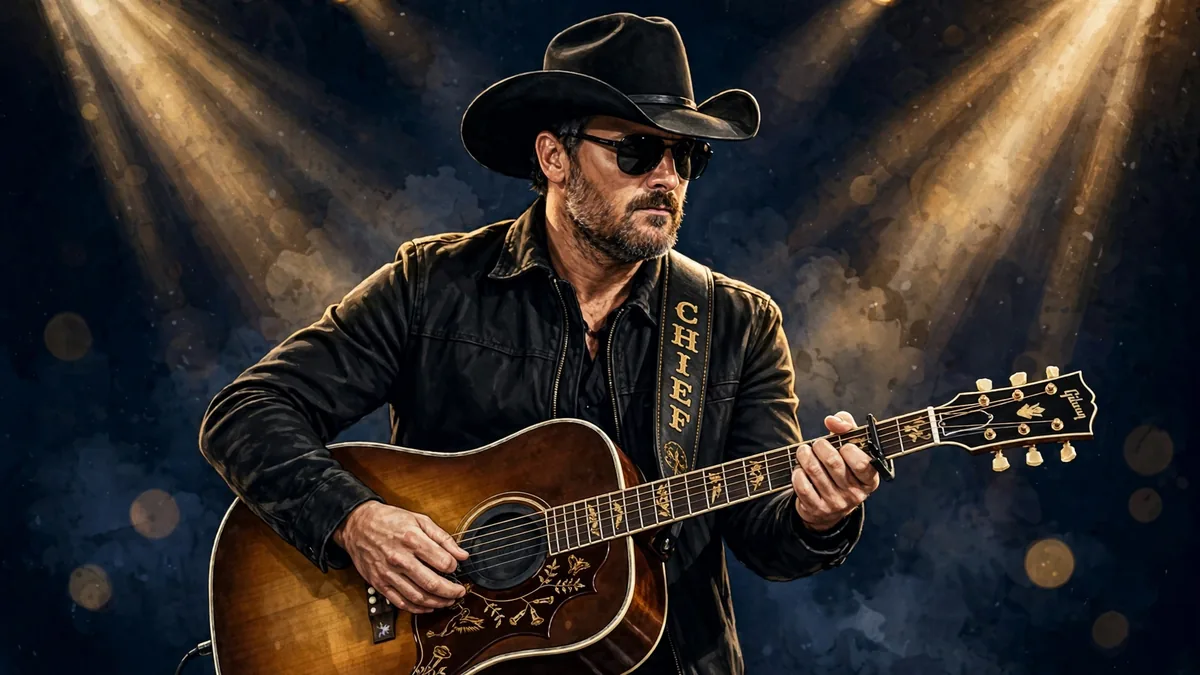
From Granite Falls to Nashville: Eric Church’s Early Life
Kenneth Eric Church was born on May 3, 1977, in Granite Falls, a small furniture-manufacturing town in Caldwell County, North Carolina. He grew up in a household where music was a pastime rather than a profession: his father ran a furniture company, and young Eric learned guitar as a teenager, playing local bars and school events while he figured out what he wanted to do with his life. The nickname that would follow him for his whole career — “Chief” — came later, but the stubborn streak was there from the start.
Church went to Appalachian State University in Boone, North Carolina, and graduated with a degree in marketing. The business training matters more than it first looks: two decades later, Church would run his career like a company, controlling his touring, his publishing, his brand deals and his side businesses with unusual care for an artist. After college he did what thousands of hopefuls do every year — he moved to Nashville with a guitar and a handful of songs. To pay the rent he sold knives on late-night shifts, a detail that has become part of his origin story, while he worked the songwriter circuit during the day.
Nashville in the early 2000s was a tough room for a singer who did not fit the mold. Church’s voice was rough-edged, his songs leaned toward rock and outlaw country, and he wrote about drinking, small towns and bad decisions with a bluntness that radio programmers found hard to place. He spent his first years in town writing songs for other people and waiting for a break that took longer to arrive than it does for most stars of his size. That slow start shaped the way he later handled success: he has always talked about his audience — the “Church Choir,” as his fans call themselves — as a community he built one room at a time, not a fan base handed to him by a label.
The Nashville Grind: Songwriting, Capitol Nashville and Sinners Like Me
Church’s first real opening came as a songwriter. Producer Jay Joyce, who would become his most important collaborator across his whole career, heard something in Church’s demos and started working with him. In 2005, Church signed with Capitol Nashville, and his debut album Sinners Like Me arrived in 2006. Its first single, “How ‘Bout You,” cracked the country Top 20, and follow-ups like “Guys Like Me” and “Two Pink Lines” introduced a singer who sounded like nobody else on the radio — a baritone with a rasp, writing songs that mixed honky-tonk with Southern rock.
The debut did not make Church rich. First albums rarely do: the label recoups recording and marketing costs before an artist sees much, and Church was still playing clubs and opening slots. But the record did something more valuable — it got him on the road. In 2006 he was booked as an opening act for Rascal Flatts, one of the biggest touring acts in country music at the time. The run ended early and famously: Church was fired from the tour for playing too loud and too long, stretching his opening set past its allotted time night after night. Most singers would have treated it as a disaster. Church treated it as a badge of honor, and the story became part of his outlaw image — the opener who refused to play by the rules.
His second album, Carolina, arrived in 2009 and moved him a step forward. “Smoke a Little Smoke,” “Love Your Love the Most” and “Hell on the Heart” all charted, and the album’s sales were strong enough to keep Capitol invested. Behind the scenes, Church was building the two things that would later make him wealthy: a loyal live audience that bought tickets in any market, and a publishing catalog of songs he had written himself. Songwriting royalties pay for decades, and Church owned a large share of his own material from the beginning.
Chief and the Breakthrough: How Springsteen Changed Everything
Everything changed in July 2011 with Chief, Church’s third album and the record that turned him from a respected mid-tier act into a headliner. Chief debuted at No. 1 on both the Billboard 200 and the Top Country Albums chart — the first time Church had topped either. It went on to be certified 4x Platinum, and its singles read like a greatest-hits set on their own: “Homeboy,” “Drink in My Hand,” “Springsteen,” “Creepin'” and “Like Jesus Does.”
“Springsteen” was the song that broke him through to the mainstream. A nostalgic, Springsteen-referencing love song built around a melody that sounded both familiar and new, it became Church’s signature track and one of the most-played country songs of the decade. It earned him Grammy nominations for Best Country Song and Best Country Solo Performance, and it still anchors his setlists fifteen years later. “Drink in My Hand” gave him his first No. 1 single on country radio, and the album won Album of the Year at both the CMA Awards (2012) and the ACM Awards (2013).
The money followed the music. In 2011 Church won the ACM’s Top New Solo Vocalist award — his first major trophy — and in 2012 he launched his first arena headlining run, the Blood, Sweat & Beers Tour. The tour sold out 25 dates and was extended, proof that the Chief audience was willing to pay arena prices. Album sales, radio royalties and touring income started to compound, and by the time his next album arrived, Church was no longer a gamble for promoters. He was a headliner.
The Outsiders, released in February 2014, doubled down on the rock edge of his sound and was certified 2x Platinum. Its singles — “The Outsiders,” “Give Me Back My Hometown,” “Cold One,” “Talladega” and “Like a Wrecking Ball” — kept him at the top of country radio, and the album earned another Grammy nomination for Best Country Album. Then came the move that showed how well Church understood his audience: in November 2015, on the same day as the CMA Awards, he surprise-released Mr. Misunderstood, mailing free copies to tens of thousands of fan-club members. The album won the CMA Album of the Year award in 2016, and its singles “Record Year” and “Round Here Buzz” became staples. “Record Year” — a song about drowning a breakup in vinyl — is still one of the most-streamed tracks in his catalog.
Desperate Man, his sixth studio album, arrived on October 5, 2018, and debuted at No. 1 on the Top Country Albums chart. The title track, co-written with Texas songwriter Ray Wylie Hubbard, set the tone for a record that mixed soul, rock and classic country. By this point Church had released six albums in twelve years, won two CMA Album of the Year trophies, and built a touring business that could fill football stadiums.
Where the Money Comes From: Touring, Records and Royalties
Eric Church’s fortune comes from four main streams, and the balance between them explains why his net worth is so hard to pin down. Touring is the biggest by a wide margin. Church is one of the highest-grossing live acts in country music, and his tours are built for profit: he plays long sets with no opening act on many runs, which means more of the ticket revenue stays with his own operation, and his fans — the Church Choir — buy tickets early and in large numbers. His 2019 Double Down Tour played two different three-hour shows in each of 19 cities, a format that doubled the number of tickets he could sell in a single market.
Record sales and streaming form the second stream. Across his career Church has sold more than 11 million albums, according to a 2026 report, and his catalog carries 32 Gold, Platinum and multi-Platinum certified songs. Chief alone is certified 4x Platinum, and The Outsiders is 2x Platinum. Streaming pays far less per play than album sales did, but a deep catalog with songs like “Springsteen,” “Record Year” and “Drink in My Hand” racking up hundreds of millions of streams produces steady, year-round income.
The third stream is songwriting and publishing royalties. Church writes or co-writes most of his own songs, which means he collects the writer’s share of royalties every time one of them is played on the radio, streamed, used in a film or covered by another artist. Publishing income is the quiet engine of a country star’s wealth: it arrives in smaller amounts than touring checks, but it never stops, and it grows as the catalog ages. Church’s decision in October 2024 to sign over all of his publishing royalties from the single “Darkest Hour” to Hurricane Helene relief in North Carolina showed how much those royalties are worth — he gave away a real, ongoing income stream, not a one-off check.
The fourth stream is merchandise and brand work. Church’s sunglasses, his “Chief” branding and his fan-club operation all sell directly to an audience that treats his shows like gatherings. He has also put his name on products that fit his image rather than chasing every endorsement offer: his own whiskey brand, Whiskey JYPSI, and his SiriusXM channel, Outsiders Radio, are both extensions of the brand his fans already know. For readers tracking the wider country scene, our net worth archive covers the fortunes of Church’s peers in the same style.
The estimate problem: Celebrity Net Worth lists Church at $40 million, and LoveMoney repeated that figure in its March 2026 ranking of country music’s richest stars. Older pages from the same tracker showed $14 million, while other sites publish $80 million, $90 million, $100 million, $145 million and $150 million without showing their working. None of these sites has access to Church’s bank accounts, tax returns or private business books. The $40 million figure is the best-anchored estimate available — it is the one the most careful outlets repeat — but readers should treat it as an informed estimate, not a verified balance.
The Touring Machine: Arena Records and the Free the Machine Tour
If one thing explains Eric Church’s wealth, it is the road. His touring history reads like a steady climb from clubs to arenas to stadiums, and each step up multiplied his nightly earnings.
The Holdin’ My Own Tour, which ran from January to May 2017, was the tour that proved his drawing power. Church played 62 sold-out dates in 61 cities, performing two full sets a night with no opening act. The run was reported at the time as the most-attended music tour in the world in 2017 — a remarkable claim for a country singer, and a sign of how completely his fan base had bought into the Church Choir idea. Two years later, the Double Down Tour (2019) pushed the format further: two unique shows per city, three hours a night, 19 cities, and a record-breaking night at Nissan Stadium in Nashville, where more than 56,000 fans turned out and Church became the first artist to sell out the venue with a solo lineup.
The Gather Again Tour, which ran from 2021 into 2022, was his post-pandemic return: a 55-city arena run that ended at Madison Square Garden in New York. Church framed the tour as a crusade to bring live music back, and the demand was there — fans who had waited through the pandemic bought tickets in bulk. Then came the Free the Machine Tour, launched in September 2025 behind his ninth studio album, Evangeline vs. The Machine. The run was extended into 2026 with 24 new dates, opening January 22 at The Anthem in Washington, D.C., and running through April with stops in Omaha, Toronto, Kansas City, Atlanta, Charlotte, Tampa and Austin, with guests including Ella Langley, Ashley McBryde, 49 Winchester, Caylee Hammack and Stephen Wilson Jr.

Touring also feeds everything else. A sold-out arena night sells merchandise, drives streaming of the setlist, and keeps the catalog earning. Church’s choice to play long, no-opener shows is a business decision as much as an artistic one: fewer acts to pay, more time on stage for his own songs, and an audience that feels it got its money’s worth and comes back next time. That loyalty is why his tours keep selling out twenty years into his career.
Beyond the Music: The Hornets, Chief’s, Whiskey JYPSI and Field & Stream
In the last few years, Church has quietly built a business portfolio that looks less like a singer’s side hustles and more like a small holding company. The headline move came in 2023, when he joined the ownership group that bought a majority stake in the NBA’s Charlotte Hornets from Michael Jordan. The deal, led by hedge-fund founder Gabe Plotkin and private-equity executive Rick Schnall, valued the team at $3 billion and was finalized on August 3, 2023. Church and rapper J. Cole — both North Carolina natives — joined as minority owners, while Jordan kept a minority share of his own. The exact size of Church’s stake has never been made public, and any site that prints a precise dollar figure for it is guessing. What is certain is that he now owns a slice of a franchise in a league where team values have climbed steeply for a decade, and that the stake is the single most valuable asset in his portfolio outside his music catalog.
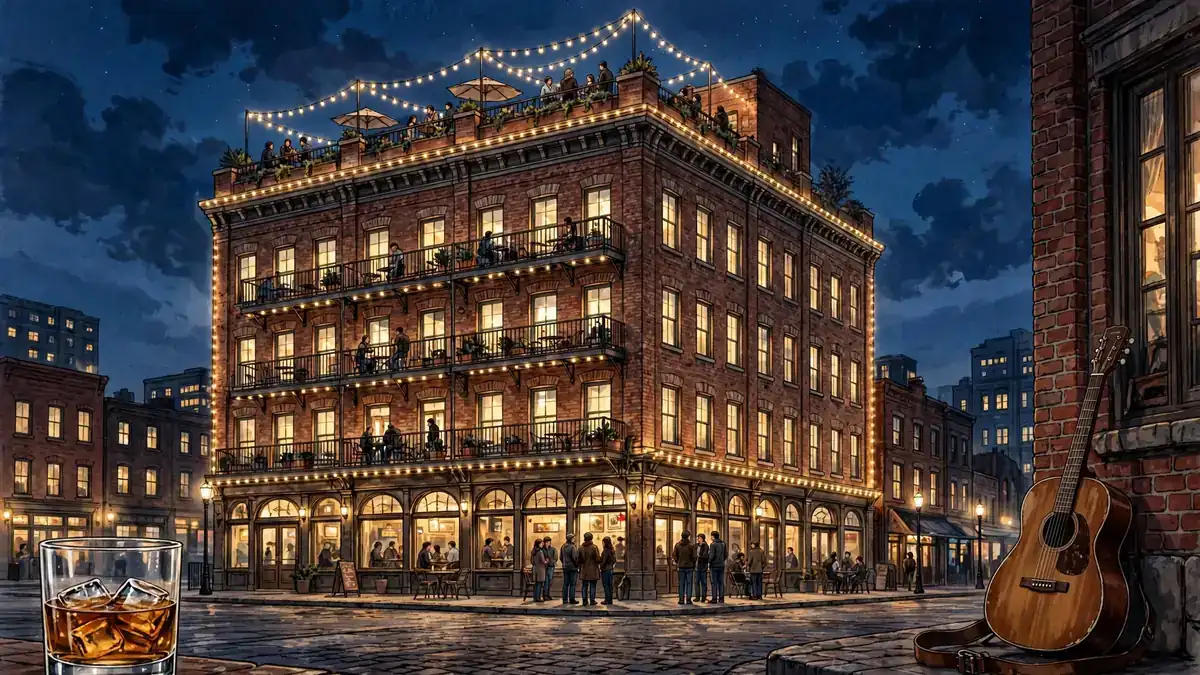
Closer to home, Church opened Chief’s in April 2024: a six-story bar, restaurant and live-music venue on Lower Broadway in Nashville. The building sits in the heart of the city’s honky-tonk strip, and it gives Church a permanent stage in the town where he made his name — plus a hospitality business that earns money whether or not he is on tour. He is also a co-owner of the Field & Stream brand, the century-old outdoor magazine and retailer, a fit for a singer whose image has always leaned toward hunting, fishing and the outdoors.
His drinks business is Whiskey JYPSI, his own whiskey label, and his media footprint includes Outsiders Radio, his own channel on SiriusXM. None of these ventures is large enough on its own to explain a $40 million fortune, but together they do two things that matter for his net worth: they spread his income beyond touring, and they turn his name into an asset that earns money while he sleeps. That is the difference between a singer who earns a lot and a singer who keeps a lot.
Net Worth Growth Over the Years
Because Church has never disclosed his finances, any year-by-year table is a reconstruction from public estimates, not a bank statement. Still, the shape of the story is clear: a slow build through the 2000s, a sharp jump after Chief, steady growth through the arena-touring years, and a further step up after the Hornets deal and the opening of Chief’s.
| Period | What was happening | Reported estimate |
|---|---|---|
| 2006–2010 | Debut and Carolina eras; club and theater touring, opening slots | Under $5 million (early-career estimates) |
| 2011–2013 | Chief goes 4x Platinum; first No. 1 singles; first arena headlining tour | $10 million–$14 million |
| 2014–2018 | The Outsiders and Mr. Misunderstood; Holdin’ My Own and Double Down tours | $14 million–$28 million |
| 2019–2022 | CMA Entertainer of the Year 2020; Heart & Soul triple album; Gather Again Tour | $30 million–$40 million |
| 2023–2026 | Hornets minority stake; Chief’s opens; Whiskey JYPSI; Evangeline vs. The Machine and Free the Machine Tour | $40 million (Celebrity Net Worth anchor); wider published range $14M–$150M |
The wide range in the last row is the point. Tracker sites that publish $100 million-plus figures for Church are usually doing simple math — big tours plus a Hornets stake plus a Nashville venue — without accounting for taxes, touring costs, label splits or the fact that a minority stake in a sports team is not cash in hand. The $40 million anchor is the figure the most careful outlets keep returning to, and it fits the shape of his career: a very successful touring artist with real businesses, not a billionaire and not a flash in the pan.
How Eric Church Compares to Other Country Stars
Church sits in the upper middle of country music’s wealth table — well above the new generation of streaming-era stars, below the genre’s biggest crossover names. The comparison is useful because it shows what kind of fortune touring builds versus what television and pop crossover build.
Take Morgan Wallen’s story: Wallen is a decade younger and a streaming giant, but his fortune is still catching up to his fame, with estimates around $35 million. Zach Bryan’s rise is even newer — a singer who went from the Navy to stadiums in a few short years on the strength of songwriting and a devoted audience, a path that looks a lot like Church’s own, just faster. Chris Stapleton’s career runs on a parallel track: a songwriter’s songwriter who became a headliner on the strength of his voice and his catalog, with a fortune built on the same pillars of touring and publishing that support Church’s.
Above Church in the rankings sit the lifers with decades of hits and television exposure. Tim McGraw’s fortune, built over thirty years of albums, films and arena tours, is in a different bracket — the kind of wealth that comes from staying at the top for a generation. Church’s edge over most of his peers is not the size of any single paycheck but the breadth of his income: few country stars his age own a piece of an NBA team, a Broadway venue, a whiskey label and a publishing catalog at the same time. If his net worth keeps growing, it will grow the way it has so far — a tour at a time, with the businesses compounding quietly in the background.
Homes, Cars and Lifestyle
Church lives in Nashville, Tennessee, with his wife and two sons, in a home that was once featured on CMT’s Cribs — including the “man cave” where he keeps his guitars and memorabilia. Beyond that, he is famously private about his property and his spending, and no reliable public record puts a price on his house or lists his car collection. Sites that print detailed real-estate portfolios for Church are filling gaps with guesses, so this profile will not do that.
What is visible is a lifestyle built around work rather than display. Church’s public image is sunglasses, a cowboy hat, a guitar and a long set — not supercars or red-carpet fashion. His spending, as far as it is public, goes into things that earn: the Broadway venue, the whiskey brand, the Hornets stake. He has talked in interviews about growing up in a furniture-manufacturing family and about the marketing degree he earned at Appalachian State, and the way he runs his career shows it. The Chief brand is a business, and the man behind it spends like a businessman, not a lottery winner.
Wife Katherine, Sons and Life Away From the Stage
Eric Church married music publisher Katherine Blasingame on January 8, 2008, in a private ceremony at the Westglow Resort & Spa in Blowing Rock, North Carolina. They had met through work: Katherine was a music publisher in Nashville who wanted to pitch Church on a songwriter she represented, and the business meeting turned into a relationship. Church has said more than once that meeting Katherine changed the course of his career — accepting the ACM Icon Award in 2025, he joked that without her he would be “playing Woodlands BBQ tonight.”
The couple has two sons: Boone McCoy Church, born on October 3, 2011, and Tennessee Hawkins Church — known as “Hawk” — born on February 15, 2015. Boone inspired the song “Three Year Old,” and fatherhood has threaded through Church’s later writing. The family keeps a low profile: the boys are rarely photographed, and Church and Katherine almost never discuss their private life in public. That privacy is a choice, and it is one reason so little hard financial information about Church exists — a singer who does not sell his personal life also does not leave much of a paper trail.
Church’s faith and his North Carolina roots also shape his public life. He has written openly about his grandfather and about the small-town values of Granite Falls, and his songs return again and again to family, home and the people he grew up with. The Chief Cares Fund, which he and Katherine co-founded in 2013, is run with the same low-key approach: most of its work happens without press releases.
Giving Back: Chief Cares and the Hurricane Helene Response
The Chief Cares Fund, founded by Eric and Katherine Church in 2013, supports underprivileged families in Tennessee and North Carolina and funds aid for orphans in Nepal, providing clothes, beds and schooling. It is a family-run operation rather than a celebrity foundation with a big staff, and Katherine manages much of its long-term grant work.
The fund’s biggest test came in late 2024, when Hurricane Helene devastated western North Carolina — Church’s home region. Church responded with unusual speed and scale: he released the song “Darkest Hour” in October 2024 and signed over all of his publishing royalties from the track to relief efforts, giving the people of North Carolina an income stream that keeps paying rather than a single donation. Through Chief Cares, the family also backed rebuilding work in Avery County, including a housing project for families who lost their homes. In 2025, Church was named to the TIME100 Philanthropy list, recognition of a giving record that had mostly happened out of the spotlight.
Controversies and the Outsider Reputation
Church’s career has had its share of friction, and most of it traces back to the same trait: he does not like being told how to behave. The Rascal Flatts firing in 2006 is the best-known example — an opening act who played too loud and too long, and got shown the door for it. Church has told the story himself many times, and it has become a founding myth of his outlaw image rather than a stain on it.
A more serious moment came in 2018, after the Route 91 Harvest festival shooting in Las Vegas. Church, a gun owner and a member of the National Rifle Association, told Rolling Stone that the massacre had shaken him and that he believed something had to change — a striking thing for a country star to say to a national magazine, and a comment that drew both praise and anger from different corners of his audience. He did not become a political activist, and he has mostly kept his public comments focused on music since, but the interview showed a side of Church that his “outsider” branding usually keeps hidden: a willingness to say an unpopular thing in public and live with the reaction.
His other public fights have been with the industry itself. He has criticized award shows for overlooking artists he admires, and his surprise release of Mr. Misunderstood in 2015 was itself a quiet protest against the usual album-rollout machinery — a record mailed free to fans on the day of the CMA Awards, with no advance singles and no warning. None of these episodes has damaged his career. If anything, they have fed the loyalty of the Church Choir, who see in him a singer who answers to his audience first and to Nashville second.
Frequently Asked Questions
What is Eric Church’s net worth in 2026?
Eric Church’s net worth in 2026 is estimated at $40 million, according to Celebrity Net Worth, a figure repeated by LoveMoney in March 2026. Published estimates range widely, from $14 million to $150 million, because no audited statement of his finances exists — $40 million is the most widely cited and best-anchored figure.
How does Eric Church make his money?
Mostly from touring — he is one of country music’s highest-grossing live acts, with sold-out arena runs like the Holdin’ My Own, Double Down and Free the Machine tours. He also earns from album sales and streaming (11 million-plus albums sold), songwriting and publishing royalties, merchandise, and businesses including a minority stake in the Charlotte Hornets, Chief’s bar and venue in Nashville, Whiskey JYPSI and a co-ownership share in Field & Stream.
How old is Eric Church?
Eric Church is 49 years old in 2026. He was born Kenneth Eric Church on May 3, 1977, in Granite Falls, North Carolina.
Is Eric Church part owner of the Charlotte Hornets?
Yes. Church is a minority owner of the Charlotte Hornets. He joined the ownership group led by Gabe Plotkin and Rick Schnall that bought a majority stake from Michael Jordan in a deal valued at $3 billion, finalized on August 3, 2023. The exact size of Church’s stake has never been made public.
What is Eric Church’s newest album?
His newest studio album is Evangeline vs. The Machine, his ninth, released on May 2, 2025, on MCA Nashville and produced by Jay Joyce. A concert film and 19-track live album, Evangeline vs. The Machine Comes Alive, arrived in IMAX theatres on February 13, 2026, while his Free the Machine Tour continued across the United States.
Who is Eric Church’s wife?
Eric Church is married to Katherine Blasingame, a music publisher. They met through work in Nashville and married on January 8, 2008, at the Westglow Resort & Spa in Blowing Rock, North Carolina. They have two sons, Boone McCoy (born 2011) and Tennessee Hawkins, known as Hawk (born 2015).
Has Eric Church won a Grammy?
No — despite 11 Grammy nominations, including four for Best Country Album, Church has never won one. His first nomination came in 2012 for Chief. He has had more luck at the country awards: four CMA Awards, including Entertainer of the Year in 2020 and two Album of the Year wins, plus seven ACM Awards, including the ACM Icon Award in 2025.
What is Chief’s in Nashville?
Chief’s is Eric Church’s six-story bar, restaurant and live-music venue on Lower Broadway in Nashville, which opened in April 2024. It sits in the heart of the city’s honky-tonk strip and gives Church a permanent stage — and a hospitality business — in the town where he built his career.
Bottom Line
Eric Church’s net worth in 2026 sits at an estimated $40 million on the most careful reading of the available sources, with honest published estimates stretching from $14 million to $150 million. It is a fortune built the hard way: twenty years of touring, a catalog of songs he mostly wrote himself, and — in the last few years — a set of businesses that turn his name into an asset. The Hornets stake, Chief’s, Whiskey JYPSI and Field & Stream will not make him a billionaire overnight, but they do what his tours cannot: they earn while he is off the road. At 49, with a new album, an IMAX film and a tour running into 2026, the Chief’s fortune is still growing — and the next chapter is likely to be written on stage, where it always has been.
Sources & Reporting
How we estimated: Eric Church has never published his finances, so no figure in this article is a verified balance. We anchor on Celebrity Net Worth’s $40 million estimate, as repeated by LoveMoney in its March 26, 2026 ranking of the richest country music stars, and we publish the full published range ($14 million–$150 million) so readers can see how much disagreement exists. Higher figures from content-farm sites are noted but not adopted, because they show no working. Touring, album and business facts are drawn from the sources below; where a figure could not be verified — such as the size of Church’s Hornets stake — we say so rather than guessing.
Sources consulted: Celebrity Net Worth (net worth estimate); LoveMoney (March 2026 country rich list); Eric Church official site (tour dates, album and IMAX announcements); ESPN and NBA.com (Hornets sale, August 2023); Katten (buyer-group legal notice); Billboard (chart history); CMA Awards and ACM Awards (awards record); The Recording Academy (Grammy nominations); Rolling Stone (2018 interview); Whiskey Riff (career and awards reporting, October 2026). Last updated November 18, 2026.