Zion Williamson’s net worth in 2026 is estimated at $18 million to $70 million — a spread so wide that it tells you more about how net worth gets counted than about the player himself. The honest answer sits inside that range: Celebrity Net Worth puts him at $70 million (updated December 2025), while Forbes puts the figure near $45 million and SurpriseSports at about $46 million (updated October 25, 2026). As of November 2026, the New Orleans Pelicans power forward has banked over $154 million in NBA salary alone, plus a $75 million Jordan Brand deal signed before he ever played a professional game. The gap between the estimates comes down to one question: how much of his future contract money do you count today?
That question matters more for Williamson than for almost any other young star in the league. His five-year, $197 million extension with the Pelicans — signed in July 2022 — is one of the most heavily protected max contracts in NBA history, with its final three seasons tied to games played and weight checkpoints. When he is on the floor, he is paid like a franchise cornerstone. When he is not, the money stops being guaranteed. This article works through the full picture: the Duke season that made him the most hyped prospect since LeBron James, every contract and endorsement dollar we can verify, the injury record that shapes his value, and why the most-quoted number attached to his name — $46.1 million from Forbes — is not his net worth at all.
By Celebamerica Editorial Staff | Last updated: November 19, 2026
| Full Name | Zion Lateef Williamson |
|---|---|
| Date of Birth | July 6, 2000 (age 26 in November 2026) |
| Birthplace | Salisbury, North Carolina, USA |
| Team | New Orleans Pelicans (No. 1 overall pick, 2019 NBA Draft) |
| Position | Power forward (jersey No. 1) |
| Estimated Net Worth (2026) | $18 million – $70 million; anchored at $70 million (Celebrity Net Worth) vs. ~$45–46 million (Forbes / SurpriseSports) |
| 2025–26 NBA Salary | $39,446,090 |
| Career NBA Salary to Date | Over $154 million (SurpriseSports) |
| Biggest Contract | 5-year, $197.23 million rookie max extension (July 2022) |
| Biggest Endorsement | Jordan Brand — $75 million (signed July 2019) |
| Other Endorsements | Gatorade, Mountain Dew, NBA 2K, Fanatics, Panini, Huupe |
| Annual Endorsement Income | About $16–20.7 million per year |
| College | Duke University (2018–19), National Player of the Year |
| Partner / Children | Partner Ahkeema Rose; daughter Azira, born November 2023 |
Table of Contents
- Who Is Zion Williamson?
- Early Life, Spartanburg and the One Season at Duke
- The 2019 Draft and the Rookie Deal
- The Big Contract and Its Unusual Clauses
- Salary by Season: What Zion Has Actually Been Paid
- Endorsements and the Jordan Brand Deal
- Why the Net Worth Estimates Disagree So Much
- Net Worth Growth Over Time
- Injuries and the Availability Problem
- How Zion Compares With His NBA Peers
- Personal Life and Family
- Controversies and Legal Matters
- What Comes Next for Zion Williamson
- Frequently Asked Questions
- Bottom Line
- Sources and Reporting
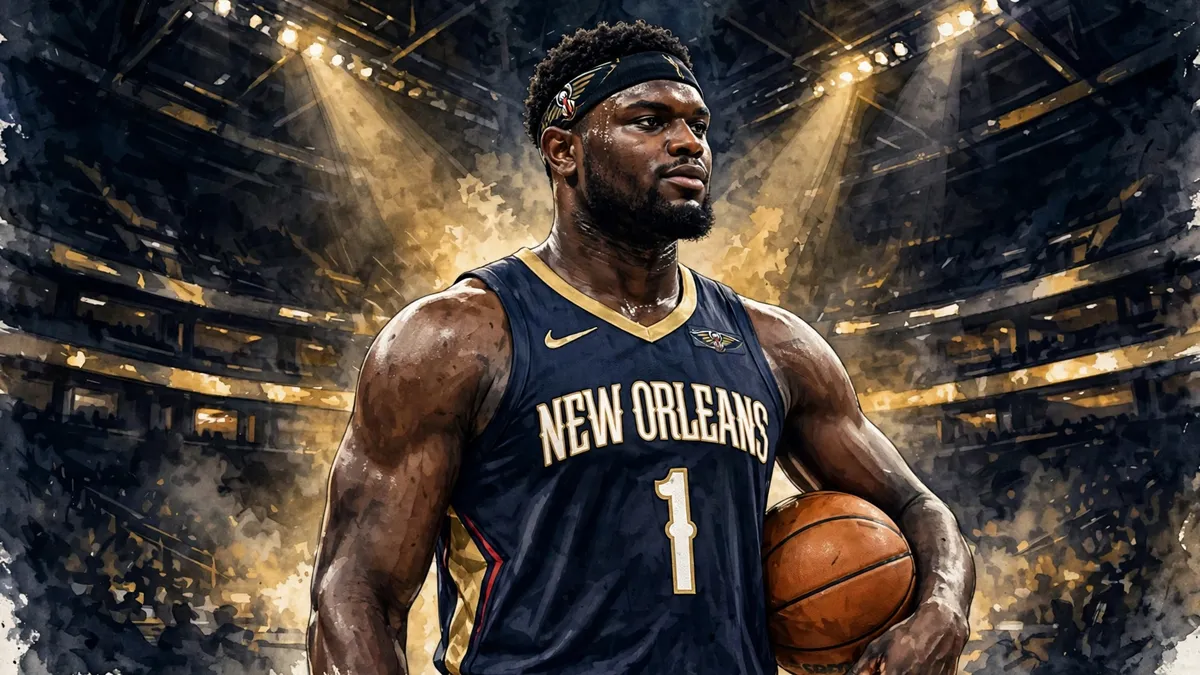
Who Is Zion Williamson?
Zion Lateef Williamson was born on July 6, 2000, in Salisbury, North Carolina, and grew up to become the most talked-about American basketball prospect of his generation. At 6 feet 6 inches and a listed 284 pounds, he plays power forward for the New Orleans Pelicans with a combination of size, speed and leaping ability the league had simply never seen in one body. He dunks like a center, handles the ball like a guard, and — when healthy — scores at a rate that puts him among the most efficient players in the NBA, averaging just under 25 points per game across his professional career.
The hype arrived before the paychecks did. By the time he finished high school, his dunk videos had tens of millions of views. By the time he finished one season at Duke, he had swept every major National Player of the Year award. And by the time he played his first NBA game, Nike’s Jordan Brand had already handed him one of the richest rookie shoe deals in basketball history. That is the pattern of Williamson’s career in a sentence: the talent and the money both arrived early, and the injuries arrived early too.
Seven seasons into his NBA career, the story is no longer just about potential. Williamson is a two-time All-Star, a former No. 1 overall pick, and a player whose contract contains clauses no other star of his standing has ever had to live with. He has earned more than $154 million in salary, yet the team that pays him built in the right to walk away from the final years of his deal. Understanding his net worth means understanding that tension — between a generational talent and a body that has kept him off the floor for nearly half of his team’s games.
Early Life, Spartanburg and the One Season at Duke
Williamson was born to two college athletes. His father, Lateef Williamson, played football at Livingstone College, and his mother, Sharonda Sampson, was a sprinter at Livingstone who later became a physical education teacher and coached her son’s youth teams. His parents divorced when he was five. His mother later married Lee Anderson, a former Clemson basketball player who became the defining influence on Zion’s development — Anderson began training him at age four, had him doing 5 a.m. workouts by age nine, and coached him through his youth career. The family moved from Florence to Spartanburg, South Carolina, specifically to put Zion in a better basketball situation at Spartanburg Day School.
At Spartanburg Day, Williamson led the school to three consecutive state championships and became a national sensation. His high school numbers read like a video game: 24.4 points per game as a freshman, 28.3 as a sophomore, and 36.8 points with 13 rebounds per game as a junior. The dunks — windmills, 360s, put-backs off the backboard — spread across social media and made him the rare high school player with a national following before he had signed a college letter. He was rated the No. 2 overall prospect in the class of 2018 and a McDonald’s All-American.
He chose Duke, joining a freshman class with RJ Barrett and Cam Reddish under coach Mike Krzyzewski, and his single college season exceeded even the hype. In 2018–19 he averaged 22.6 points, 8.9 rebounds, 2.1 steals and 1.8 blocks per game while shooting 68.0 percent from the field — a number almost unheard of for a high-usage scorer. He was named ACC Player of the Year, ACC Rookie of the Year and ACC Athlete of the Year, set the school’s single-game freshman scoring record, won the Naismith Award, the Associated Press Player of the Year, the Sporting News College Player of the Year and the Wayman Tisdale Award, and led Duke to an ACC championship. There was never any real doubt about what came next. In April 2019 he declared for the NBA draft, and two months later the New Orleans Pelicans took him first overall.
The number that explains the hype: Williamson shot 68 percent from the field at Duke while averaging 22.6 points a night. Most college stars who score that much shoot in the mid-40s. He was finishing at the rim at a rate no high-volume freshman had ever managed — and that efficiency is exactly what made shoe companies fight over him before his first NBA game.
The 2019 Draft and the Rookie Deal
The Pelicans selected Williamson with the first overall pick in the 2019 NBA Draft on June 20, 2019, and he signed a four-year rookie-scale contract worth $44,271,137. It was the standard deal for a No. 1 pick, and in a normal career it would have been a footnote. In Williamson’s case, the rookie deal was overshadowed almost immediately by what happened off the court: before he played a single NBA game, he had already signed endorsement deals worth more than the contract itself.
His NBA debut had to wait. A torn meniscus in preseason required surgery, and he did not play until January 22, 2020. When he finally took the floor, the wait looked worth it — he scored 22 points in his debut and finished his rookie season averaging 22.5 points and 6.3 rebounds per game, earning a place on the NBA All-Rookie First Team despite playing only 24 games. The following season, 2020–21, was his best to date: 27.0 points, 7.2 rebounds and 3.7 assists per game, a first All-Star selection, and the fourth-youngest All-Star in NBA history at the time. The Pelicans had their franchise player. What nobody knew yet was how rarely they would actually get to watch him.
The 2021–22 season was lost entirely to a foot fracture — he did not play a single game. It was the first of several long absences, and it changed the financial shape of his career in a way that is still playing out today. When the Pelicans offered him a max extension in the summer of 2022, they did not offer a normal max extension. They offered one with conditions attached, and those conditions now decide how much of his money is truly his.
The Big Contract and Its Unusual Clauses
On July 5, 2022, Williamson signed a five-year, $197.23 million designated rookie max extension with the Pelicans, running from the 2023–24 season through 2027–28, at an average salary of $39,446,090 a year. The deal could have risen to $231 million if he had made an All-NBA team in the 2022–23 season; he did not, so the headline value stayed at $197.23 million. On paper it was a franchise-player contract. In the fine print, it was something the NBA had never quite seen before.
The reason was his availability. In his first three seasons Williamson had played just 85 games, missing more than half of New Orleans’ schedule. So the Pelicans, on the reporting of The Athletic’s Mike Vorkunov, built in protections that tied his pay directly to his health. The final three seasons of the deal — 2025–26, 2026–27 and 2027–28 — were originally non-guaranteed. Williamson could re-earn the guarantees each year by hitting benchmarks: playing at least 41 games locked in 40 percent of the following season’s salary, 51 games added another 20 percent, and 61 games added a further 20 percent. The remaining 20 percent came from passing six weigh-in and body-composition checkpoints per season, with his weight and body-fat percentage required to stay below a combined 295 pounds. Each successful weigh-in guaranteed a further slice of the next season’s pay.
The mechanism has worked exactly as designed — for both sides. Because Williamson missed 29 games in the 2022–23 season, the non-guarantee clause was triggered and the last three years of the deal lost their guaranteed status. But he has also re-earned money by playing. His 2025–26 salary of $39,446,090 became fully guaranteed on July 15, 2025, after he met the conditions the previous season, and the Pelicans chose not to waive him before that deadline. In February 2026, playing his 41st game of the season against the Milwaukee Bucks triggered roughly $16.8 million in guarantees for his 2026–27 salary, according to NBA reporter Keith Smith; reaching 51 games lifted that figure to about $25.3 million. The full $42.2 million for 2026–27 only locks in if he reaches 61 games and meets the weight conditions, or on July 15 of that summer.
That structure is the single most important fact in any honest account of Williamson’s wealth. Most star contracts are money in the bank. His is money he has to earn, season by season, with his body. It is also why the low-end net worth estimates exist: a tracker that counts only money already banked, and discounts a contract that can be walked away from, will always land far below one that counts the full $197 million as his.
Why this contract is different: No other young star of Williamson’s standing has a max deal with games-played and weigh-in triggers in it. The Pelicans did not write these clauses because they doubt his talent — they wrote them because, in his first three seasons, he played 85 of a possible 236 games. The deal pays him like a superstar and protects the team like an insurance policy, both at once.
Salary by Season: What Zion Has Actually Been Paid
Salary is the one part of an athlete’s fortune that can be counted rather than guessed, and Williamson’s numbers are public through Spotrac and league reporting. The table below uses the figures reported by SurpriseSports and Sportskeeda, whose career-earnings totals agree closely: roughly $154 million in NBA salary banked through the 2025–26 season.
| Period | Deal | Salary |
|---|---|---|
| 2019–2023 | Rookie-scale contract (4 years) | $44,271,137 total |
| 2023–2028 | Rookie max extension (5 years) | $197,230,450 total (could have risen to $231M with All-NBA) |
| 2025–26 | Extension year 3 | $39,446,090 (fully guaranteed July 15, 2025) |
| 2026–27 | Extension year 4 | About $42.17 million (scheduled; guarantee builds with games played) |
| 2027–28 | Extension year 5 | About $44.9 million (scheduled; non-guaranteed) |
| Career NBA salary to date | — | Over $154 million |
A few things in that table deserve a second look. First, the jump between the two deals is enormous: Williamson went from a rookie deal worth about $11 million a year to an extension worth nearly $40 million a year — the standard leap for a No. 1 pick who pans out, and the reason his net worth estimates climbed so fast after 2022. Second, the per-game math is startling. The Richest calculated in December 2025 that Williamson had earned roughly $580,357 per game played across 224 Pelicans appearances, and about $71.4 million of his career earnings had come during periods when he was not playing at all — the guaranteed money kept arriving while he sat out. Third, the 2026–27 and 2027–28 figures are scheduled salaries, not money in hand. If his availability does not hold up, the Pelicans can walk away from the 2027–28 season for only around $8–10 million in dead cap space, according to cap analysis reported by Last Word on Sports. That is the cliff edge his fortune sits on.
Forbes’ 2024 World’s Highest-Paid Athletes list is worth a careful read here, because it is the source of the most common misunderstanding about Williamson’s money. Forbes credited him with $46.1 million in 2024 earnings — salary plus endorsements combined — and ranked him 48th in the world and 17th among NBA players. That $46.1 million is one year’s income. It is not his net worth. Yet it is repeated as a net worth figure across dozens of low-quality sites, and it is the reason some trackers still publish a number in the mid-40s as if it were a lifetime total. It is not. One year of earnings and a lifetime of accumulated wealth are different things, and confusing them is the single most common error in coverage of this player.
Endorsements and the Jordan Brand Deal
If the NBA contract is the foundation of Williamson’s fortune, endorsements are the second floor — and they arrived before the foundation did. In July 2019, before he had played a professional minute, Nike’s Jordan Brand signed him to a deal reported at $75 million, making it one of the richest rookie shoe contracts in NBA history. The only rookie shoe deal bigger was LeBron James’s $90 million agreement with Nike in 2003 — a comparison that followed Williamson everywhere, fairly or not, from the day he was drafted. The Jordan deal also gave him his own signature line, the Jordan Zion series, which ran through four models, the Zion 1 to the Zion 4.
There is an honest disagreement in the reporting about the deal’s length, and it matters for the annual math. Forbes and The Richest reported it as five years at about $15 million a year. Most other outlets, including SurpriseSports and Sportskeeda, reported it as seven years at about $10.7 million a year. Either way, the total is $75 million, and the annual value sits somewhere between $10.7 million and $15 million. Sports Illustrated reported in January 2026 that the contract runs out later in 2026 — which means the richest endorsement of his life may be ending just as he enters his late twenties, and whether Jordan renews, and on what terms, is one of the biggest open questions in his financial future.
The rest of the portfolio was assembled in the same heady summer of 2019. He signed a multi-year deal with Gatorade, joining a tiny group of active NBA players on the brand’s roster alongside Paul George, Jayson Tatum and Karl-Anthony Towns, in a deal widely reported to be worth seven figures a year. He signed a five-year deal with Mountain Dew, leaning into his powerful, almost comic-book image. He added NBA 2K, a collectibles agreement with Fanatics and an exclusive trading-card deal with Panini, plus a partnership with Huupe, a basketball-focused tech company. He is represented by Creative Artists Agency (CAA). All told, his endorsement income runs to about $16–20.7 million a year, according to the most recent detailed breakdowns — a figure that, in some years, has approached half of his total annual income.

That endorsement income is also the part of his fortune most exposed to his availability. Shoe deals are built on visibility: games played, highlights, playoff runs, a signature shoe on the feet of kids in playgrounds. A star who plays half his team’s games is a harder sell than one who plays 75. The Jordan deal’s reported expiry in 2026 is the moment that tension comes to a head. If he stays healthy and productive, a renewal — or a rival brand’s offer — could be worth tens of millions. If he does not, the endorsement floor under his net worth gets thinner, and the range of estimates will narrow downward.
Why the Net Worth Estimates Disagree So Much
Open ten sites and you will find ten different answers for Zion Williamson’s net worth, from $18 million to $100 million. That is not normal, even in a niche where every figure is an estimate. Most established stars have estimates that cluster within 20 percent of each other. Williamson’s span covers a factor of nearly four. The reason is not that the sources are guessing wildly. It is that they are answering different questions, with different rules, about a player whose money is unusually hard to count.
| Source | Estimate | Date / note |
|---|---|---|
| Celebrity Net Worth | $70 million | Updated December 3, 2025; also cited by Sportskeeda (March 2026) and The Richest (December 2025) |
| Forbes | $45 million | Net worth figure; separate from Forbes’ $46.1M 2024 earnings list |
| SurpriseSports | About $46 million | Updated October 25, 2026 |
| Velontia | $65 million | 2026 estimate |
| NetWorthBreakdown | $35 million | 2026; argues injuries cost him $50M+ in potential earnings |
| Low-end trackers | $18–20 million | Stale figures from early in his career, still republished in 2026 |
| Outlier trackers | Up to $100 million | Counts the full contract value as wealth already held |
Three things drive the gap. The first is the contract itself. A tracker that treats the $197 million extension as money already earned will produce a much higher number than one that counts only salary already paid — and a tracker that discounts the non-guaranteed final seasons will land lower still. The second is taxes and spending, which no public tracker can see: Williamson has earned over $154 million in salary and tens of millions more in endorsements, but after federal and Louisiana taxes, agent fees, and living costs, the amount actually retained is far below the gross. Trackers that model those deductions land in the $40s; trackers that do not land in the $60s and $70s. The third is staleness. The $18 million figure still circulating on some sites dates from the early years of his career, before the extension money arrived, and it keeps being republished with a fresh date stamped on it. It is not a 2026 estimate in any meaningful sense.
Our judgment, after weighing the sources against each other, is that the honest published range for November 2026 is $18 million to $70 million, with the credible core of the range at $45 million to $70 million — Forbes and SurpriseSports at the lower end, Celebrity Net Worth at the top. We anchor the headline on Celebrity Net Worth’s $70 million because it is the most widely cited current figure and it is consistent with his verified career earnings, while making clear that Forbes’ lower figure reflects a more conservative treatment of future and non-guaranteed money. Anyone who gives you a single precise number for this player, with no range and no method, is selling certainty they do not have.
The Forbes trap, stated plainly: Forbes’ $46.1 million is Williamson’s 2024 earnings — one year of salary plus endorsements. It is not his net worth, and it was never presented as one. If a site tells you his net worth is $46.1 million and cites Forbes, it has mistaken a single year’s paycheck for a lifetime of wealth. That error is the most common one in circulation about this player, and it is worth checking for every time you see the number.
Net Worth Growth Over Time
Williamson’s fortune has grown in steps, each one tied to a contract or a deal rather than to steady accumulation. The timeline below tracks the public estimates against the money events behind them. The early years show how fast endorsement money can move a number before a player has even established himself — and the later years show how injuries can freeze it in place.
| Year | Estimated net worth | What happened |
|---|---|---|
| 2019 | About $10–18 million | Drafted No. 1 overall; $75M Jordan Brand deal and Gatorade/Mountain Dew deals signed before debut; rookie contract $44.27M |
| 2020 | About $18 million | NBA debut January 2020; All-Rookie First Team; endorsement income begins in full |
| 2021 | About $20–25 million | Best season to date (27.0 ppg); first All-Star selection |
| 2022 | About $30–40 million | Entire 2021–22 season missed with foot fracture; $197.23M extension signed July 2022 |
| 2023 | About $40–45 million | Extension begins; second All-Star selection; final contract years lose guaranteed status |
| 2024 | About $45 million | Forbes lists $46.1M in 2024 earnings; net worth estimates cluster in the mid-40s |
| 2025 | $46–70 million | Estimates split: SurpriseSports ~$46M; Celebrity Net Worth and The Richest $70M |
| 2026 | $18M–$70 million (range) | 2025–26 salary $39.4M fully guaranteed; Jordan deal reported to expire later in 2026; estimates still split by method |
The pattern is clear. The big jumps came from contracts, not from year-to-year saving: the Jordan deal in 2019, the extension in 2022. Between those events, the number moved slowly — and the low-end estimates barely moved at all, because the missed seasons meant the extension money was not being banked at the rate the headline suggested. For a player of his age and talent, the trajectory should have been steeper. The injuries are the reason it was not, and they remain the reason the range is still so wide.
Injuries and the Availability Problem
No honest account of Zion Williamson can avoid the injury record, because it is the injury record that explains everything else — the contract clauses, the split net worth estimates, the trade speculation, and the sense that a generational career has so far delivered only flashes of what was promised. The numbers are stark. According to Sports Illustrated, by the time the 2025–26 season was underway Williamson had appeared in just 234 of a possible 447 regular-season games since entering the league — available about 52 percent of the time. He has played 60 or more games in only two of his first five seasons. The Richest’s December 2025 count was similar: 224 games played, at least 280 missed.

The absences have come in every form. A torn meniscus delayed his debut by three months in 2019. A foot fracture wiped out the entire 2021–22 season. Hamstring trouble cost him most of the 2022–23 season — 29 games played — and that was the season that triggered the non-guarantee clause in his extension. A right hip adductor strain cost him the early part of the 2025–26 season; he had played in only 20 of the Pelicans’ first 37 games when the reporting turned to whether the team might move on from him entirely. A sprained right ankle in March 2026 and right knee management late in the 2025–26 season added to the list. None of these injuries, on its own, is career-ending. Together, they have cost him roughly half his career.
The cost is not only sporting. Every missed game is a game in which his contract guarantees do not grow, his endorsement value does not grow, and his trade value falls. CBS Sports writer Sam Quinn predicted during the 2025–26 season that the Pelicans would waive Williamson after the campaign, pointing out that the contract’s structure makes that decision far cheaper than it would be for a normal max player. Trade proposals — including a widely discussed Golden State Warriors scenario in January 2026 — have circulated for the same reason: a team acquiring him gets a top-20 talent at a price depressed by his medical record, and a team moving him gets out from under a deal it no longer trusts. None of that has happened yet. The Pelicans guaranteed his 2025–26 salary in full, and he responded by hitting the games-played triggers that began locking in 2026–27. But the speculation itself is a financial fact: it is the market telling you what his availability is worth.
There is a counter-argument, and it deserves its place. When Williamson plays, he produces at a level few players in the league can match — roughly 25 points a night on elite efficiency, with the physical force to bend a defense out of shape. Early in the 2026–27 season he was averaging around 21 points per game, according to Basketball Network’s November 2026 reporting, in his eighth year in the league. The talent has never been the question. The question has always been whether the body will let the talent show up often enough — and that question, more than any single contract or endorsement, is what his net worth will depend on over the next two years.
How Zion Compares With His NBA Peers
Comparison is the fastest way to see where Williamson stands, and the fastest way to see how unusual his situation is. Put him next to the other young stars of his generation and two things jump out: his per-game production belongs in the top tier, and his availability does not. The table below uses the genuinely relevant comparisons — players whose careers intersect with his on contracts, endorsements, injuries or draft position — and links to their profiles on this site.
| Player | The comparison |
|---|---|
| LeBron James | The benchmark for everything about Williamson’s early career. LeBron’s $90 million rookie shoe deal in 2003 is still the biggest ever; Zion’s $75 million Jordan deal is second. The difference is what followed: LeBron stayed healthy and built a billion-dollar fortune; Zion’s body has not let him follow the same path yet. |
| Giannis Antetokounmpo | Another physically overwhelming forward who signed a max extension young — but Giannis paired his with durability and two MVPs, and his deal carries none of the games-played protections in Zion’s contract. |
| Kevin Durant | A fellow franchise scorer whose career shows the other side of the coin: even after a torn Achilles, Durant’s availability and production kept his earning power at the very top of the league. |
| Kawhi Leonard | The closest parallel to Zion’s predicament — a top-five talent whose teams have had to manage his availability with load management and protected deals, and whose fortune has grown more slowly than his talent suggested. |
| Devin Booker | A same-generation star who stayed on the floor, signed his max deal, and built his wealth on steady availability — the path Williamson’s contract was designed to push him toward. |
| Victor Wembanyama | The next generational prospect after Zion, and a useful contrast: the league now watches a young star’s health from day one, in part because of what happened with Williamson. |
The peer view also sharpens the endorsement question. Williamson’s $75 million Jordan deal was the second-biggest rookie shoe contract ever signed — but the players ahead of and around him on that list turned their shoe deals into the foundation of long commercial careers, with signature lines that ran for a decade or more. Williamson’s line ended with the Jordan Zion 4, and the deal itself is reported to run out in 2026. The next shoe contract he signs, if he signs one, will be priced on what he has done lately, not on what he was supposed to become in 2019. That is the real stakes of his health over the next two seasons.
For readers tracking the wider picture of NBA wealth, our net worth category page carries the full set of player profiles in this series, including the stars above.
Personal Life and Family
Williamson keeps his private life quieter than most stars of his profile, but the outlines are public. His mother, Sharonda Sampson, remains the central figure in his life — the former sprinter who coached his youth teams, drove him to 5 a.m. workouts, and shaped the discipline behind the talent. His stepfather, Lee Anderson, the former Clemson player who trained him from the age of four, has stayed close to his career. He has a younger brother, Noah Anderson, whom he speaks about often and fondly.
His partner is Ahkeema Rose, a content creator. In June 2023 the couple announced they were expecting their first child in a baby shower video posted to YouTube, and their daughter, Azira, was born in November 2023. Becoming a father has been the one part of his life he has talked about with open warmth — a contrast with the guardedness that marks most of his public appearances.
Off the court, his interests are well documented and slightly unexpected for a player of his physical reputation: he is a devoted anime fan, Naruto in particular, and he writes poetry. His charitable work has included a $250,000 donation to Louisiana schools, and he has a foundation that works with young people in New Orleans and South Carolina. Those details matter to the money story in a small but real way: athletes whose public image rests on more than highlight reels tend to hold endorsement value longer, and Williamson’s off-court interests have given brands something to work with even when he has not been on the floor.
Controversies and Legal Matters
Williamson’s off-court record is the part of this story that has to be reported carefully, because it involves serious allegations that are unresolved and disputed. In June 2023, shortly after he and Ahkeema Rose announced they were expecting a child, adult film performer Moriah Mills claimed on social media that she had recently had an affair with Williamson. Mills has repeated claims about the relationship since, including an appearance on a podcast in November 2026 in which she claimed Williamson paid her a monthly allowance of $107,000 and posted what she said were wire-transfer receipts. Those claims are hers, they have not been verified by any court or by Williamson, and they should be read as allegations from one party, not as established fact.
More seriously, on May 30, 2025, a civil lawsuit was filed against Williamson in Los Angeles Superior Court by a woman identified as Jane Doe, who said she had dated him for five years. The suit alleges a series of serious misconduct between 2018 and 2023, including two rapes alleged to have taken place in September and October 2020 at a Beverly Hills residence, and claims he filmed her without consent and threatened her. Williamson’s legal team has denied the allegations, said there was no dating relationship and described the involvement as casual and consensual, and said they would file a counterclaim for defamation, describing the suit as an extortion attempt. As of this writing there has been no court finding on the claims, and no disciplinary action from the NBA. We report the existence of the suit and both sides’ positions because it is a matter of public record and relevant to his public standing; we do not treat unproven allegations as fact, and neither should any reader.
The controversies have had a visible effect on his commercial standing even without any finding against him. Endorsement value depends on public trust, and a star at the center of repeated off-court stories is a harder sell than one who is not. That is part of the context for the Jordan deal’s reported expiry in 2026 and for the caution with which brands now approach him. It is also a reminder that a net worth figure is not only a count of contracts — it is a count of a reputation, and reputations are priced by the market every day.
What Comes Next for Zion Williamson
Williamson turns 27 in July 2027, and the next eighteen months will decide the shape of his fortune more than the last seven years did. The mechanics are simple enough to state. His 2026–27 salary of about $42.17 million becomes more guaranteed with every game he plays — 41 games locks in roughly $17 million, 51 games about $25.3 million, 61 games plus the weigh-in checkpoints the full amount. His 2027–28 salary of about $44.9 million is non-guaranteed, and the Pelicans can walk away from it cheaply if they choose. His Jordan Brand deal is reported to expire in 2026. And the trade and waiver speculation that has followed him since the 2025–26 season will not go away until he gives teams a full, healthy season to point at.
There are three plausible paths. In the first, he plays 60-plus games, the guarantees lock in, the Pelicans keep him or trade him at something close to full value, and a new shoe deal — with Jordan or a rival — restores the endorsement floor. In that world the top-end estimates, $65–70 million and beyond, start to look conservative, because the remaining contract money becomes real and bankable. In the second, he misses another long stretch, the guarantees stall, the Pelicans move on, and his next contract is a short prove-it deal at a fraction of max money. In that world the lower estimates, $45 million and below, are the honest ones, and the $197 million extension becomes a cautionary tale about guaranteed money that never was. In the third, he lands somewhere in between — a solid, productive, injury-managed career on a team that builds around his availability rather than pretending it does not exist, with a fortune that settles in the $50–60 million range and grows slowly from there.
Which path he takes is not a matter of talent. It never has been. It is a matter of the one thing no contract clause can buy and no endorsement can insure: showing up, night after night, for a full season. Until he does that, every estimate of his wealth will carry the same wide range you see at the top of this article — and every honest writer will tell you why.
Frequently Asked Questions
What is Zion Williamson’s net worth in 2026?
Zion Williamson’s net worth in 2026 is estimated at $18 million to $70 million. Celebrity Net Worth puts the figure at $70 million (updated December 2025), while Forbes estimates about $45 million and SurpriseSports about $46 million (updated October 2026). The wide range reflects different ways of counting his contract money, which is partly non-guaranteed.
How much does Zion Williamson make per year?
In the 2025–26 season his NBA salary was $39,446,090, and his endorsement income runs to about $16–20.7 million a year, led by his $75 million Jordan Brand deal. Combined, his annual income in a healthy year is roughly $55–60 million before taxes and agent fees. Forbes credited him with $46.1 million in total 2024 earnings (salary plus endorsements).
What is Zion Williamson’s contract with the Pelicans?
He signed a five-year, $197.23 million rookie max extension in July 2022, running through the 2027–28 season. It could have risen to $231 million with an All-NBA selection in 2022–23, which he did not make. The final three seasons were originally non-guaranteed, with guarantees re-earned through games played (41, 51 and 61-game thresholds) and six weigh-in checkpoints per season.
How much is Zion Williamson’s Jordan Brand deal worth?
The Jordan Brand deal is reported at $75 million, signed in July 2019 before his NBA debut. Reports differ on its length — Forbes says five years at about $15 million a year, while most other outlets say seven years at about $10.7 million a year. His signature line ran through four models, the Jordan Zion 1 to Zion 4, and Sports Illustrated reported in January 2026 that the deal runs out later in 2026.
Is Forbes’ $46.1 million figure Zion Williamson’s net worth?
No. The $46.1 million is Forbes’ estimate of his earnings in a single year, 2024 — salary plus endorsements combined — from its World’s Highest-Paid Athletes list, where he ranked 48th globally. It is one year’s income, not his lifetime net worth, though many sites repeat it as if it were. His net worth is estimated separately, at $45–70 million depending on the source.
How many games has Zion Williamson missed in his career?
He has missed roughly half of his team’s games. Sports Illustrated reported he had played in just 234 of a possible 447 regular-season games since entering the league — about 52 percent availability — and had played 60 or more games in only two of his first five seasons. A torn meniscus, a foot fracture that cost him the entire 2021–22 season, and hamstring and hip injuries account for most of the absences.
Who is Zion Williamson’s girlfriend, and does he have children?
His partner is Ahkeema Rose, a content creator. The couple announced in June 2023 that they were expecting their first child, and their daughter, Azira, was born in November 2023. Williamson keeps his family life largely private.
What is Zion Williamson’s height and weight?
Zion Williamson is 6 feet 6 inches tall (1.98 m) and listed at 284 pounds. His contract includes weight and body-composition checkpoints requiring him to stay below a combined 295 pounds, with six weigh-ins per season that each guarantee a further slice of his following season’s salary.
Bottom Line
Zion Williamson’s net worth in 2026 sits somewhere between $18 million and $70 million, with the credible core of the range at $45 million to $70 million — Celebrity Net Worth at the top, Forbes and SurpriseSports at the lower end. He has earned over $154 million in NBA salary and tens of millions more from a $75 million Jordan Brand deal, yet his fortune is smaller than his talent promised, because his contract’s final seasons are not guaranteed and his body has kept him off the floor for nearly half his career. The next eighteen months decide everything: play a full season and the money locks in; miss another long stretch and the Pelicans can walk away from $44.9 million of scheduled salary for almost nothing. No player in the league has more riding on simply staying healthy.
Sources and Reporting
How we estimated: Net worth figures for private individuals are estimates, not audited accounts. We anchor this article on the named sources below, publish a range where they disagree, and explain the method behind each figure. The headline range of $18 million to $70 million reflects the full published spread; the core range of $45–70 million reflects the most credible current sources (Celebrity Net Worth, Forbes, SurpriseSports). Salary figures come from Spotrac-based reporting and league sources. Contract clauses are reported from The Athletic’s Mike Vorkunov. Endorsement figures are reported from Forbes, Nike/Jordan Brand announcements and trade-press coverage. Figures may differ from private reality — taxes, agent fees, spending and investments are not public — and should be read as informed estimates, not exact totals.
Sources consulted: Celebrity Net Worth, Forbes, SurpriseSports, Sportskeeda, Spotrac, Sports Illustrated, ESPN, NBA.com, Wikipedia, The Richest.
By Celebamerica Editorial Staff. If you spot an error in this article, please contact us and we will correct it.