By Celebamerica Editorial Staff | Last updated: November 9, 2026
Tom Brady is 6 feet 4 inches tall (193 cm). That is the height the NFL listed him at for all 23 seasons of his career, from the day the New England Patriots drafted him in 2000 to his final snap with the Tampa Bay Buccaneers in January 2023. If you want the number down to the eighth of an inch, the tape measure at the 2000 NFL Combine read 6 feet 4 and 3/8 inches, with Brady weighing just 211 pounds that day.
So the short answer is settled. The longer answer is more interesting, because Brady’s height was one of the few things scouts ever praised about him in 2000 — and one of the few physical gifts he actually had. He ran a slow 40-yard dash, he jumped a modest 24 and a half inches, and his arm was described as average. But at 6 feet 4 inches, he could see over an NFL offensive line, and that single trait, paired with the quickest release in the game, turned a sixth-round pick into the most decorated quarterback who ever played. This article lays out the official number, the combine tape, how Brady stacks up against the other great quarterbacks, how his height and weight changed across his career, and the money his frame helped him earn.
Tom Brady Height at a Glance
| Full Name | Thomas Edward Patrick Brady Jr. |
|---|---|
| Date of Birth | August 3, 1977 (age 49 in 2026) |
| Birthplace | San Mateo, California, United States |
| Height (official NFL listing) | 6 feet 4 inches (193 cm / 1.93 m / 76 inches) |
| Height (2000 NFL Combine) | 6 feet 4 and 3/8 inches (193.99 cm) |
| Playing Weight | 225 lbs (102 kg) |
| Weight at the Combine | 211 lbs (96 kg) |
| Position | Quarterback |
| Teams | New England Patriots (2000–2019), Tampa Bay Buccaneers (2020–2022) |
| Career Highlights | 7 Super Bowl wins, 3 NFL MVP awards, 5 Super Bowl MVP awards, 15 Pro Bowl selections |
| Estimated Net Worth | $650 million, per Celebrity Net Worth (2026), with other outlets at $300–$350 million before the Raiders revaluation — see the money section below |
| Primary Income Sources | NFL salary, Fox Sports broadcasting, team ownership, endorsements, TB12 and BRADY Brand |
Contents
- Tom Brady Height at a Glance
- The Official Number: Six Feet Four Inches
- The 2000 NFL Combine Measurements
- Tom Brady Height vs Other NFL Quarterbacks
- How His Height Shaped His Game
- Early Life: Growing Up Tall in San Mateo
- From Pick 199 to Seven Super Bowls
- The Money Behind the Height
- Tom Brady Height and Weight Over Time
- Personal Life: Family, Gisele, and Life After Football
- Tom Brady Height Myths, Debunked
- Controversies: Deflategate and the Fox-Raiders Debate
- Tom Brady Height FAQs
- Final Thoughts
- Sources and Reporting
The Official Number: Six Feet Four Inches
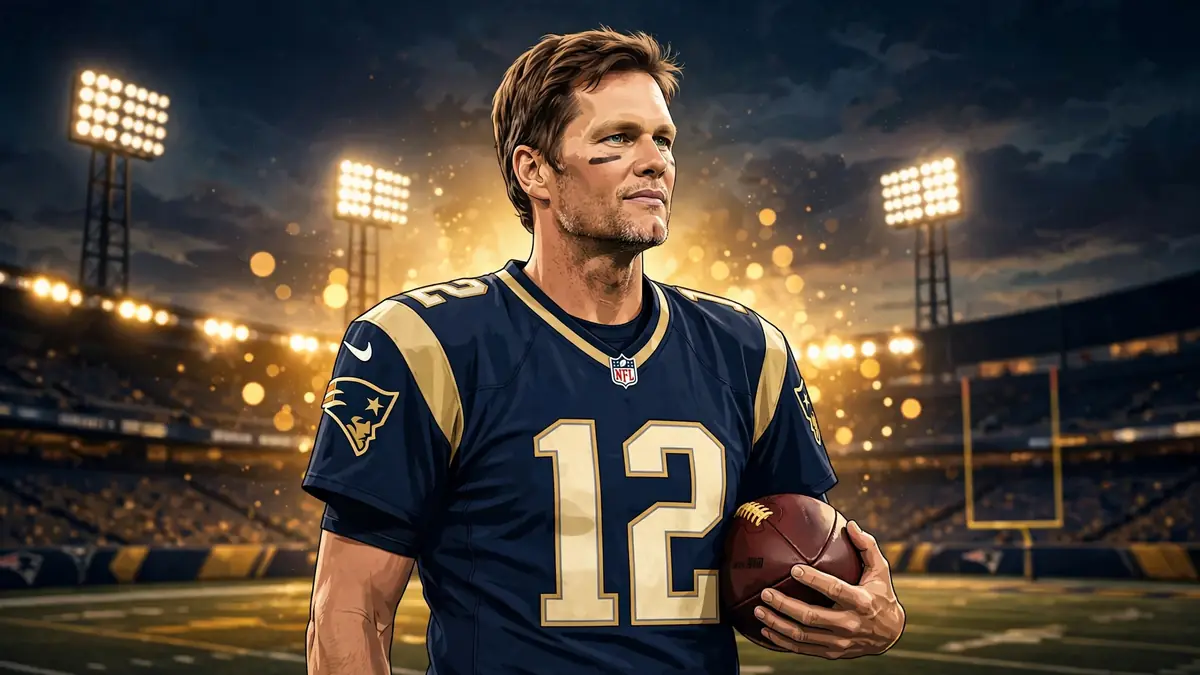
Every official source that matters agrees on the same figure. Wikipedia lists Tom Brady at 6 feet 4 inches (1.93 m) and 225 pounds. The NFL’s own listings carried 6 feet 4 inches and 225 pounds through his Patriots and Buccaneers years. Pro Football Reference, StatMuse, and the league’s team pages all print the same pair of numbers. There is no real dispute about the headline figure, which is rare for a celebrity height — most famous athletes have at least one outlet claiming an inch more or less.
The number converts cleanly for readers outside the United States: 6 feet 4 inches is 193 centimetres, or 1.93 metres, or 76 inches from heel to crown. In the metric world, that puts Brady just short of the 195-centimetre mark that many European fans use as a rough line for “very tall”. For an American reader, the easier picture is this: the average adult man in the United States stands about 5 feet 9 inches, which makes Brady a full seven inches taller than the average man walking down the street. Put him in a normal crowd and his head clears almost everyone around him.
What makes the figure worth a second look is how steady it stayed. NFL listings are not always honest — teams have been known to add an inch to a prospect they like or shave one off a player they want to look quicker. Brady’s number never moved. It was 6 feet 4 inches when he was a 22-year-old rookie, and it was still 6 feet 4 inches when he walked off the field at 45 after his final playoff game. The tape measure at the combine backs it up, which is the next thing to look at.
The one wrinkle: the specialist site CelebHeights lists Brady at 6 feet 4 and a quarter inches (193.7 cm), a fraction below the combine reading. That is the kind of half-inch wobble you get when different measurers round differently, or when a morning measurement is compared with an evening one — people are slightly taller in the morning, before gravity compresses the spine through the day. For every practical purpose, 6 feet 4 inches is the right answer.
The 2000 NFL Combine Measurements
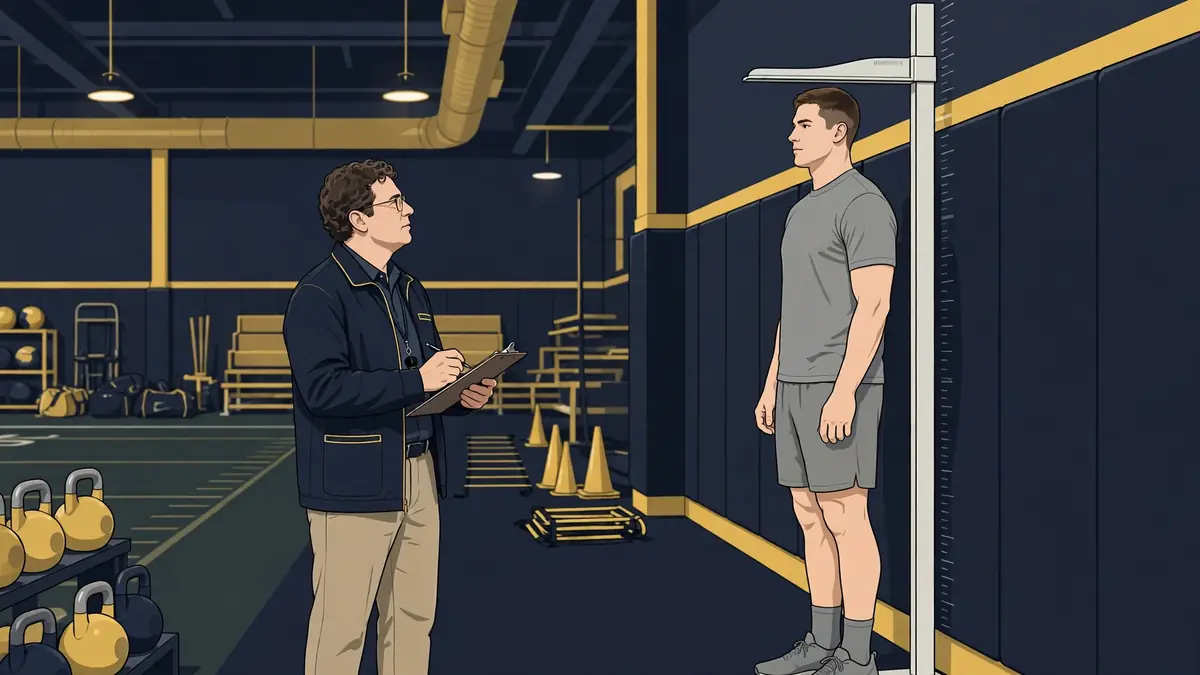
The 2000 NFL Scouting Combine in Indianapolis is now famous as the weekend the league got Tom Brady badly wrong. Scouts watched a skinny quarterback from Michigan run, jump, and throw, and they wrote him off. His measurements, preserved in the combine records and quoted by outlets including ESPN, NESN, and the Relative Athletic Score database, tell the story in numbers:
| Measurement | Result |
|---|---|
| Height | 6 feet 4 and 3/8 inches (76.375 inches / 193.99 cm) |
| Weight | 211 lbs (96 kg) |
| Arm length | 32 and 3/4 inches |
| Hand span | 9 and 3/8 inches |
| 40-yard dash | 5.28 seconds |
| Vertical jump | 24.5 inches |
| Broad jump | 8 feet 3 inches |
| 20-yard shuttle | 4.38 seconds |
| Three-cone drill | 7.20 seconds |
| Wonderlic score | 33 |
Two things jump out. First, the height was genuinely good. At 6 feet 4 and 3/8 inches, Brady tied for the tallest quarterback measured in that draft class, and his height scored in the top ten percent of all quarterbacks measured that year. Second, almost everything else was poor. A 5.28-second 40-yard dash is slow even for a quarterback, and a 24.5-inch vertical jump is the kind of number that gets a prospect crossed off a list. His Relative Athletic Score, a composite that grades combine athletes from 0 to 10, came out at just 2.74.
The scouting report ESPN’s Mel Kiper Jr. filed before the draft listed Brady at 6 feet 4 and a quarter inches and 211 pounds, gave him a fifth-round grade, and ranked him only the tenth-best quarterback available. The Patriots took him with the 199th pick in the sixth round. The famous photo from that combine — a pale, shirtless Brady standing on the scales looking more like a graduate student than a football player — became the defining image of the weekend, and it is still shared every draft season as a warning about judging athletes by their testing numbers.
One detail worth clearing up: some accounts of the combine quote a 5.24-second 40-yard dash rather than 5.28. The difference comes from hand-timing versus electronic timing, a known quirk of combine records from that era. Either way, Brady was among the slowest quarterbacks tested. What the stopwatch missed was the thing that mattered — his release was fast, his decisions were faster, and his height let him throw over the line without needing to move.
Tom Brady Height vs Other NFL Quarterbacks
Brady’s height sits right in the sweet spot for an NFL quarterback. The average starting quarterback in the league stands around 6 feet 3 inches, according to position-by-position breakdowns of league rosters, which makes Brady an inch taller than the average man at his own position. That single inch matters more than it sounds: over a 6-foot-5 offensive line, every inch of eye level changes what a quarterback can see downfield.
Here is how Brady’s 6 feet 4 inches compares with the listed heights of the other quarterbacks he is most often measured against:
| Quarterback | Listed Height | Difference vs Brady |
|---|---|---|
| Peyton Manning | 6 feet 5 inches | 1 inch taller |
| Josh Allen | 6 feet 5 inches | 1 inch taller |
| Ben Roethlisberger | 6 feet 5 inches | 1 inch taller |
| Tom Brady | 6 feet 4 inches | — |
| Joe Burrow | 6 feet 4 inches | Same height |
| Justin Herbert | 6 feet 6 inches | 2 inches taller |
| Aaron Rodgers | 6 feet 2 inches | 2 inches shorter |
| Patrick Mahomes | 6 feet 2 inches | 2 inches shorter |
| Drew Brees | 6 feet 0 inches | 4 inches shorter |
| Russell Wilson | 5 feet 11 inches | 5 inches shorter |
The table makes a useful point about the modern game: height helps, but it is not a pass to greatness. Drew Brees, four inches shorter than Brady, retired with the second-most passing yards in league history. Russell Wilson, five inches shorter, won a Super Bowl and made nine Pro Bowls. On the other side, Justin Herbert is two inches taller than Brady and has not yet reached a Super Bowl. Brady’s edge was never the raw inches — it was what he did with them.
Brady also ranks among the tallest players ever to play the position at a high level, though he is far from the tallest player in league history. Linemen and tight ends routinely clear 6 feet 6 inches, and a handful of quarterbacks, including the 6-foot-7 Brock Osweiler, stood taller than Brady. What set Brady apart was the combination: tall enough to see the field, light enough on his feet to slide inside the pocket, and disciplined enough to throw from a clean platform nearly every time.
How His Height Shaped His Game
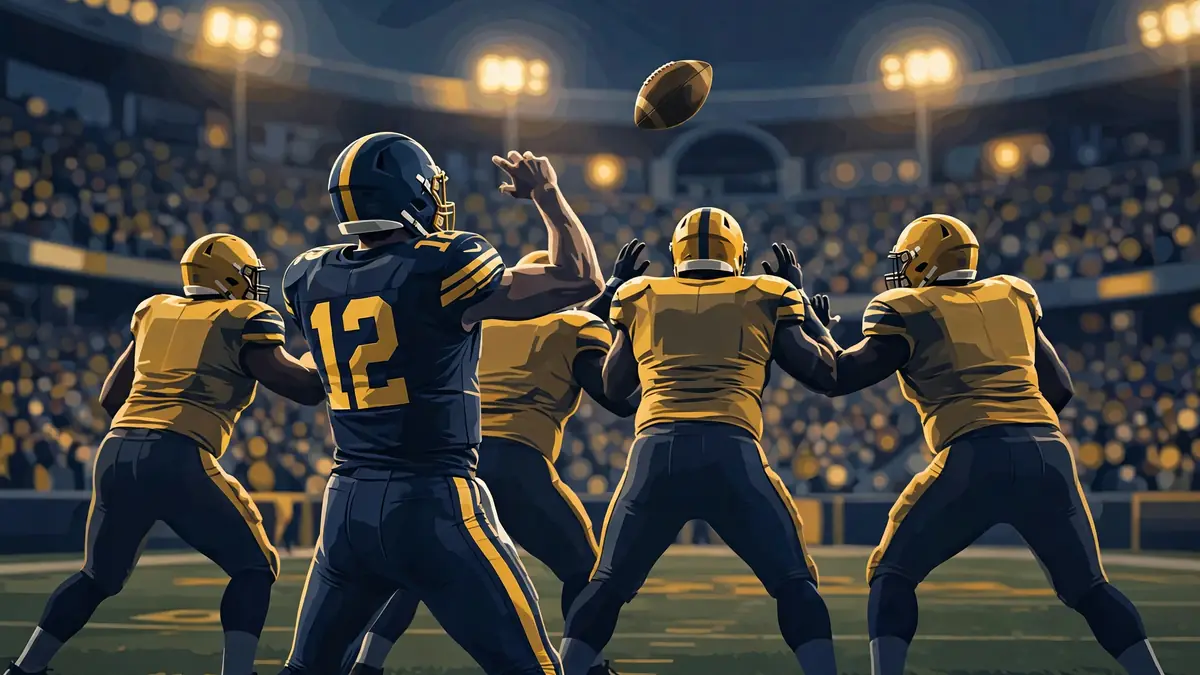
Ask a coach what a quarterback’s height is actually for, and the answer is simple: it buys vision. A quarterback has to read the defense over the heads of five offensive linemen who average 6 feet 5 inches and 315 pounds, while defensive linemen with their arms raised try to block his throwing lane. At 6 feet 4 inches, Brady’s eyes sat high enough to see the middle of the field, and his release point — the ball leaving his hand above his head — sat higher still.
That vision showed up in the numbers. Brady’s career was built on short and intermediate throws over the middle, the hardest throws for a shorter quarterback to make, because the ball has to travel over linebackers and between safeties in a tight window. He led the league in passing yards three times and finished his career as the all-time leader in passing yards (89,214) and passing touchdowns (649), per Pro Football Reference. He did it without ever being fast, without a cannon arm, and without leaving the pocket much — he took what his height and his brain gave him and turned it into the most efficient passing career on record.
His height also shaped how defenses played him. Because Brady rarely ran, and because he got the ball out in about 2.5 seconds on average in his later years, pass rushers could not count on chasing him down. They tried to bat his passes instead, and at 6 feet 4 inches with a high release, there was less ball to bat. Former teammates have said the same thing in different words: Brady was hard to sack not because he escaped, but because the ball was already gone.
There was one physical price to his frame. At 211 pounds in 2000, Brady was thin for a man his height, and early in his career he took hits that a heavier quarterback might have absorbed better. He answered that by rebuilding his body over the next decade: the TB12 Method, his pliability-focused training and diet programme, and a playing weight of 225 pounds gave him the durability to play until 45. He missed just one full season to injury, the 2008 campaign, when a knee injury in the opener ended his year.
Early Life: Growing Up Tall in San Mateo
Thomas Edward Patrick Brady Jr. was born on August 3, 1977, in San Mateo, California, the youngest of four children and the only son of Galynn and Tom Brady Sr. His three older sisters — Maureen, Julie, and Nancy — were all accomplished athletes, and the family home ran on sports. Brady grew up in the stands at Candlestick Park, where his father took him to watch Joe Montana and the San Francisco 49ers, and Montana became the player he copied in the backyard.
By the time he reached Junípero Serra High School in San Mateo, Brady was already tall for his age and still growing. He played football, baseball, and basketball, and his height made him a natural on the basketball court as well as the gridiron. In baseball, he was good enough to be drafted by the Montreal Expos as a catcher in the 18th round of the 1995 MLB draft — a fact that still surprises people who only know him as a football player. He chose football instead, and Michigan instead of the minor leagues.
At the University of Michigan, Brady spent two years as a backup before winning the starting job for the 1998 and 1999 seasons. He was 6 feet 4 inches by then, and he filled out slowly — the skinny kid from the combine photo was still a work in progress at 21. His college numbers were solid rather than spectacular: 5,351 passing yards and 35 touchdowns in four seasons, with a famous Orange Bowl win over Alabama to close his college career. Nothing in those numbers predicted what came next. The height was the one part of his profile that already looked like an NFL starter’s.
From Pick 199 to Seven Super Bowls
The career that followed is the most decorated in NFL history, and it is worth setting out in full because it explains why anyone still cares how tall a retired quarterback is. Brady was the 199th pick of the 2000 draft. He began as a fourth-string quarterback, took over as starter in 2001 after Drew Bledsoe was injured, and won his first Super Bowl that same season. Over 20 years in New England he won six championships, then moved to Tampa Bay at 43 and won a seventh in his first season there, Super Bowl LV.
The full count: seven Super Bowl wins in ten appearances, three NFL Most Valuable Player awards (2007, 2010, 2017), five Super Bowl MVP awards, 15 Pro Bowl selections, and league records for career passing yards and touchdowns. He retired on February 1, 2023, at 45, having played 23 seasons — the longest career of any quarterback in league history. No other quarterback has won more than four Super Bowls, which is why the “greatest of all time” argument around Brady is less an argument than a fact most of the sport now accepts.
Readers who want the career told start to finish — the Michigan years, the Bledsoe injury, the dynasty seasons, the Tampa Bay move, and the retirement — can find it in our sister site’s full account: Tom Brady’s biography on GuideNetWorth, from Michigan backup to seven-time Super Bowl champion. That piece covers the life story in detail; this one stays with the question in the headline.
Height ran through the whole story as a quiet constant. He was tall enough that the Patriots never worried about his sight lines, and his game aged well precisely because it was never built on speed. When his arm strength faded slightly in his forties, his height and his reading of defenses did not. His final season, 2022 with Tampa Bay, still produced 4,694 passing yards — the third-highest single-season total of his career. A quarterback who depends on his legs cannot do that at 45. A quarterback who depends on his eyes can.
The Money Behind the Height
Brady’s height did not make him rich on its own, but the career it supported did. The honest figure for his net worth comes with a range, because the sources disagree — and the disagreement itself is the story of 2026.
Celebrity Net Worth, in an article published August 31, 2026 and refreshed to a November 2026 snapshot, puts Brady’s net worth at $650 million. Its reasoning is that his 5 percent stake in the Las Vegas Raiders, bought for roughly $110 million when the franchise was valued near $3.5 billion, is now worth around $500 million after a May 2026 transaction valued the Raiders at roughly $9.9 to $10 billion. Other outlets that still print $300 million to $350 million are working from older valuations, before that Raiders revaluation. The fair reading, on the sources as they stand in November 2026, is a range of $350 million to $650 million, anchored at the top end by Celebrity Net Worth’s $650 million and at the bottom by the pre-revaluation estimates.
The building blocks are well documented. Spotrac records roughly $333 million in NFL salary across his 23 seasons — about $230 million of it from New England and the rest from Tampa Bay. Forbes estimated his career endorsement income at more than $160 million by early 2022, from deals with Under Armour, UGG, Tag Heuer, and others. Then came the second career: in May 2022, while he was still playing, Fox Sports signed him to a 10-year, $375 million contract to become its lead NFL analyst, worth $37.5 million a year. He took up the role in the 2024 season and, as of the 2026 season, is in his third year in the booth, calling games alongside Kevin Burkhardt.
The ownership portfolio is the part that moved his fortune most in 2026. NFL owners approved his purchase of a 5 percent stake in the Las Vegas Raiders in October 2024, a deal he struck with investment partner Tom Wagner for a combined 10 percent at about $220 million. He also holds a minority stake in the WNBA’s Las Vegas Aces, bought in March 2023, and about 3.3 percent of English football club Birmingham City, bought in August 2023. His businesses include TB12, the BRADY Brand clothing line, a stake in NOBULL — which raised $50 million at a reported $1 billion valuation in January 2026 — the NFT platform Autograph, and his production company, 199 Productions. For the full breakdown of how those pieces add up, see Tom Brady’s net worth on NetWorthCraft, inside his $650 million fortune.
One more honest note: Brady has said he left money on the table as a player. Business Insider estimated in 2020 that he gave up at least $60 million in salary during his Patriots years by signing team-friendly deals so New England could build better rosters around him. The bet paid off in rings — six of them in New England — and the Fox contract and the Raiders stake have since repaid the discount many times over.
Tom Brady Height and Weight Over Time
Height, unlike weight, barely moved across Brady’s life. He was 6 feet 4 inches at the combine in 2000 and 6 feet 4 inches at retirement in 2023. His weight is the number that tells the story of his career, and it moved in three clear phases:
| Period | Weight | Notes |
|---|---|---|
| 2000 NFL Combine | 211 lbs (96 kg) | Measured at the RCA Dome, Indianapolis |
| Early Patriots years (2000–2006) | 211–220 lbs | Still filling out; listed around 220 lbs by the mid-2000s |
| Peak playing years (2007–2022) | 225 lbs (102 kg) | Official listed weight for most of his career |
| Retirement (2023–2026) | About 215 lbs (reported) | Reports put his post-retirement weight near 215 lbs as he shifted to broadcasting |
The gain from 211 to 225 pounds was deliberate. Brady added the weight slowly, through the strength work and the TB12 programme, so that his frame could take hits without losing the quickness in his feet. He also changed how he ate: the famous TB12 diet cut out sugar, white flour, and most dairy, and leaned on vegetables, lean protein, and water — a regimen he has talked about in his book and in interviews for years. Teammates joked about the avocado ice cream. The results were hard to argue with: he played until 45, and his final season was one of his most productive.
For readers who track these numbers, one caution: the retirement figure of about 215 pounds is a reported estimate, not an official measurement. Brady has not stood on a combine scale since 2000, and no broadcaster publishes an official weigh-in. The 225-pound playing weight and the 211-pound combine weight are documented; the rest is informed reporting, and it should be read that way.
Personal Life: Family, Gisele, and Life After Football
Brady’s height shows up in his personal life mostly in photographs — and the most famous comparison is with his former wife. Gisele Bündchen, the Brazilian supermodel he was married to from 2009 until their divorce was finalised in October 2022, stands 5 feet 11 inches. That makes Brady five inches taller than one of the tallest women in fashion, a gap that was easy to spot in every red-carpet photo of the couple. They have two children together, Benjamin and Vivian, and Brady also has a son, Jack, from his earlier relationship with actress Bridget Moynahan.
The divorce, finalised in late 2022, was widely reported, and the financial split was part of the coverage: at the time, Celebrity Net Worth estimated Brady’s fortune at about $200 million and Bündchen’s at $400 million, and noted in its 2026 update that her fortune had stayed roughly stable while his had grown past hers on the strength of the Raiders stake. The couple have both spoken publicly about co-parenting since, and Brady has said his children are his priority in retirement.
Life after football has kept Brady busy. Beyond the Fox booth and the ownership stakes, he launched a broadcasting-adjacent media presence, stayed involved with TB12 and the BRADY Brand, and in 2026 played in the inaugural Fanatics Flag Football Classic. He lives largely in Miami, where he and Bündchen bought a reported $17 million lot on Indian Creek Island in 2020, and he has been linked in the press to the city’s sports and business scene. At 49 in 2026, he still looks every bit the 6-foot-4 quarterback, just in a suit instead of pads.
Tom Brady Height Myths, Debunked
A player as famous as Brady collects myths, and his height has a few of its own. Here is what the record actually says.
Myth: Brady is 6 feet 5 inches. Some fan sites and a few television graphics have listed him at 6 feet 5 inches over the years. The combine measurement was 6 feet 4 and 3/8 inches, and every official roster listing said 6 feet 4 inches. The 6-foot-5 figure appears to come from rounding up, or from photographs where he stands next to shorter players. He is not 6 feet 5 inches.
Myth: Brady was short when he entered the league. The opposite is true. His height was one of the best things about his combine performance — he tied for the tallest quarterback in his draft class, and his height scored in the top ten percent of the position. What was poor was his speed and his build, not his height. The famous combine photo looks unimpressive because he was 211 pounds and slow, not because he was small.
Myth: Brady has shrunk with age. People do lose a little height as they age, usually from the spine compressing in their sixties and seventies, but at 49 Brady is far too young for that to show, and there is no measurement on record showing a change. Photographs from his Fox broadcasting work in 2026 show the same tall frame. Any “he looks shorter now” impression is the suit, the camera angle, and the fact that he is standing next to former linemen.
Myth: His height is the reason he won seven Super Bowls. Height helped — it gave him the vision and the release point — but it does not explain him. Plenty of 6-foot-4 quarterbacks have had ordinary careers, and two of the best quarterbacks of his era, Drew Brees at 6 feet and Russell Wilson at 5 feet 11 inches, won plenty while giving away inches. Brady won because of his preparation, his accuracy, his decision-making, and his refusal to lose. The height was a tool, not the reason.
Controversies: Deflategate and the Fox-Raiders Debate
No honest account of Brady skips the two episodes that drew the most criticism, and both are well documented.
Deflategate followed the January 2015 AFC Championship game, when the NFL investigated whether Patriots footballs had been deliberately under-inflated. The league’s Wells Report concluded it was more probable than not that Brady was generally aware of the practice. The Patriots were fined $1 million and lost draft picks, and Brady was suspended for the first four games of the 2016 season. He returned to win the Super Bowl that same year, being named Super Bowl MVP. The episode remains contested by his supporters, but the punishment and the report are matters of record.
The second controversy is current. Since Brady became both Fox’s lead analyst and a minority owner of the Raiders, the NFL has placed limits on his access: he cannot attend production meetings, in person or virtually, and he has no access to team facilities, players, or coaches. Critics have called the dual role a conflict of interest. Brady pushed back in a September 2026 interview with Sports Business Journal, calling the criticism “clickbait” and saying he intends to complete his full 10-year Fox contract. Fox Sports president Brad Zager has said he has never received any sign that Brady views broadcasting as anything but a long-term pursuit. The debate will run as long as the contract does.
Tom Brady Height FAQs
How tall is Tom Brady?
Tom Brady is 6 feet 4 inches tall (193 cm / 1.93 m). That was his official listed height throughout his 23-season NFL career with the New England Patriots and the Tampa Bay Buccaneers, and it is the figure given by the NFL, Wikipedia, and Pro Football Reference.
How tall was Tom Brady at the NFL Combine?
At the 2000 NFL Combine in Indianapolis, Brady measured 6 feet 4 and 3/8 inches (76.375 inches / 193.99 cm) and weighed 211 pounds. His height tied for the tallest quarterback in that draft class, even though his 5.28-second 40-yard dash and 24.5-inch vertical jump were among the weakest marks recorded that year.
How much does Tom Brady weigh?
Brady’s listed playing weight was 225 pounds (102 kg) for most of his career. He weighed 211 pounds at the 2000 NFL Combine and added about 14 pounds over his first decade in the league through strength work and the TB12 programme. Reports put his post-retirement weight near 215 pounds, though that is a reported estimate rather than an official measurement.
Is Tom Brady taller than the average NFL quarterback?
Yes. The average NFL starting quarterback stands around 6 feet 3 inches, which makes Brady about an inch taller than the average at his position. He is two inches taller than Aaron Rodgers and Patrick Mahomes (both 6 feet 2 inches), four inches taller than Drew Brees (6 feet), and one inch shorter than Peyton Manning and Josh Allen (both 6 feet 5 inches).
How tall is Tom Brady compared to Gisele Bundchen?
Gisele Bundchen stands 5 feet 11 inches, which makes Tom Brady five inches taller than his former wife. The gap was easy to spot in photographs of the couple, who were married from 2009 until their divorce was finalised in October 2022 and have two children together.
How tall is Tom Brady in cm?
Tom Brady is 193 cm tall (1.93 metres). His exact combine measurement converts to 193.99 cm, which is why some specialist sites round him to 193.7 cm or list him at 6 feet 4 and a quarter inches. In feet and inches, the answer is 6 feet 4 inches.
Did Tom Brady’s height help him win seven Super Bowls?
It helped, but it was not the reason. At 6 feet 4 inches, Brady could see over the offensive line and throw with a high release point, which suited his game of quick, accurate passes over the middle. But plenty of tall quarterbacks have had ordinary careers, and shorter quarterbacks like Drew Brees (6 feet) won plenty. Brady’s edge was his preparation, accuracy, and decision-making — his height was the tool, not the cause.
How old is Tom Brady in 2026?
Tom Brady is 49 years old in 2026. He was born on August 3, 1977, in San Mateo, California, and turned 49 in August 2026. He retired from the NFL on February 1, 2023, at the age of 45, after 23 seasons, and now works as Fox Sports’ lead NFL analyst.
Final Thoughts
Tom Brady is 6 feet 4 inches tall — measured at 6 feet 4 and 3/8 inches at the 2000 NFL Combine, listed at 6 feet 4 inches and 225 pounds for 23 seasons, and still standing at that height in the broadcast booth at 49. It was the one part of his combine profile that already looked like a franchise quarterback’s, and it stayed a quiet constant through seven Super Bowl wins, a $375 million broadcasting contract, and a business empire that Celebrity Net Worth now values at $650 million.
The lesson of Brady’s height is the same as the lesson of his career: the number itself was ordinary for his position — an inch above average, a long way from the tallest — and what he did with it was not. He turned good vision and a quick release into the most productive passing career in league history, and he turned the fame that followed into a second fortune. If you came here for a number, you have it. If you stayed for the story, the number was only ever the start of it.
Sources and Reporting
How we estimated: the height figure in this article is anchored to official measurements, not estimates — the 2000 NFL Combine record (6 feet 4 and 3/8 inches, 211 pounds) and the NFL’s career listing (6 feet 4 inches, 225 pounds), cross-checked against Wikipedia, Pro Football Reference, StatMuse, ESPN, and NESN. Where sources differ by a fraction of an inch, this article says so rather than picking one silently. Net worth figures are estimates: Celebrity Net Worth’s $650 million (2026) is the top-end anchor, while other outlets still print $300 million to $350 million from before the Raiders revaluation, so this article reports the range and explains the gap. Private wealth is never directly observable, and every net worth figure here should be read as an informed estimate, not a bank statement.
- Wikipedia — Tom Brady (listed height 6 ft 4 in, 225 lb; born August 3, 1977, San Mateo)
- ESPN (2000 draft scouting report; combine measurements)
- NESN (Brady at the NFL Combine: measurements and highlights)
- Pro Football Reference (career statistics: 89,214 passing yards, 649 touchdowns)
- Celebrity Net Worth — Tom Brady Net Worth ($650 million estimate, 2026; Raiders stake and Fox contract)
- Celebrity Net Worth (Raiders valuation and the Gisele comparison, August 2026)
- Forbes (endorsement income estimates; Raiders September 2026 valuation)
- Spotrac (career salary, roughly $333 million)
- Sportscasting (Fox contract commitment and Raiders ownership, September 2026)
- Nicki Swift (Brady height, average quarterback height, Gisele at 5 feet 11 inches)
- CelebHeights (6 ft 4 and a quarter inches listing)
- StatMuse (Tom Brady height and weight listing)
By Celebamerica Editorial Staff. This article is an original CelebAmerica report. Figures are drawn from the named sources above; where sources disagree, the range is shown. Last updated November 9, 2026.