Shakur Stevenson is 5 ft 8 in (173 cm) tall, with a reach of 68 in (173 cm). That is the figure carried by Wikipedia, Tapology, DAZN, and the official tale of the tape for his January 31, 2026 fight against Teofimo Lopez — and it is the number this article anchors on, as of November 21, 2026. A smaller group of older listings still rounds him down to 5 ft 7 in (170 cm), and we explain where that inch went later in this piece.
Height is the first thing people argue about with Stevenson, and the argument misses the point. At 5 ft 8 in he is not a big lightweight. He is a normal-sized one who fights like a much longer one. His jab, his footwork, and a southpaw stance that keeps opponents at the end of his lead hand have carried him to world titles in four weight classes — featherweight, super featherweight, lightweight, and super lightweight — without a single defeat in 25 professional fights. This article settles the height question with dated sources, measures him against every rival who matters, and walks through the career that made the number worth looking up in the first place.
Last updated: November 21, 2026. By Celebamerica Editorial Staff.
Quick Facts: Shakur Stevenson at a Glance
| Full Name | Ash-Shakur Nafi-Shahid Stevenson |
|---|---|
| Date of Birth | June 28, 1997 (age 29 as of November 2026) |
| Birthplace | Newark, New Jersey, United States |
| Height | 5 ft 8 in (173 cm) — some older listings say 5 ft 7 in (170 cm) |
| Reach | 68 in (173 cm) |
| Stance | Southpaw |
| Professional Record | 25-0, 11 knockouts (as of November 2026) |
| Weight Classes | Featherweight (126 lb), super featherweight (130 lb), lightweight (135 lb), super lightweight (140 lb) |
| Major Honours | 2016 Olympic silver medallist; world champion in four weight classes; WBO and Ring super lightweight champion since January 31, 2026 |
| Estimated Net Worth | $3 million–$7 million per 2025–2026 trackers (Surprise Sports puts it at $5 million in 2026) |
| Primary Income Sources | Fight purses, pay-per-view shares, endorsements, promotional deal with Zuffa Boxing (signed July 2026) |
| Promoter | Zuffa Boxing (since July 9, 2026) |
Table of Contents
- Quick Facts: Shakur Stevenson at a Glance
- How Tall Is Shakur Stevenson?
- Height vs Reach: Why His 68-Inch Reach Matters More
- The 5 ft 7 in vs 5 ft 8 in Discrepancy, Explained
- Shakur Stevenson Height Compared to Lightweight Rivals
- How His Height Stacks Up Across Boxing
- Early Life: Newark Roots and the Olympic Silver
- Career Rise: Four Weight Classes, Zero Losses
- The Teofimo Lopez Win That Proved the Point
- Money and Net Worth: What the Height Is Worth
- Zuffa Boxing and What Comes Next
- Personal Life
- Controversies and Criticism
- Frequently Asked Questions
- Final Thoughts: The Bottom Line on Shakur Stevenson Height
- Sources and Reporting
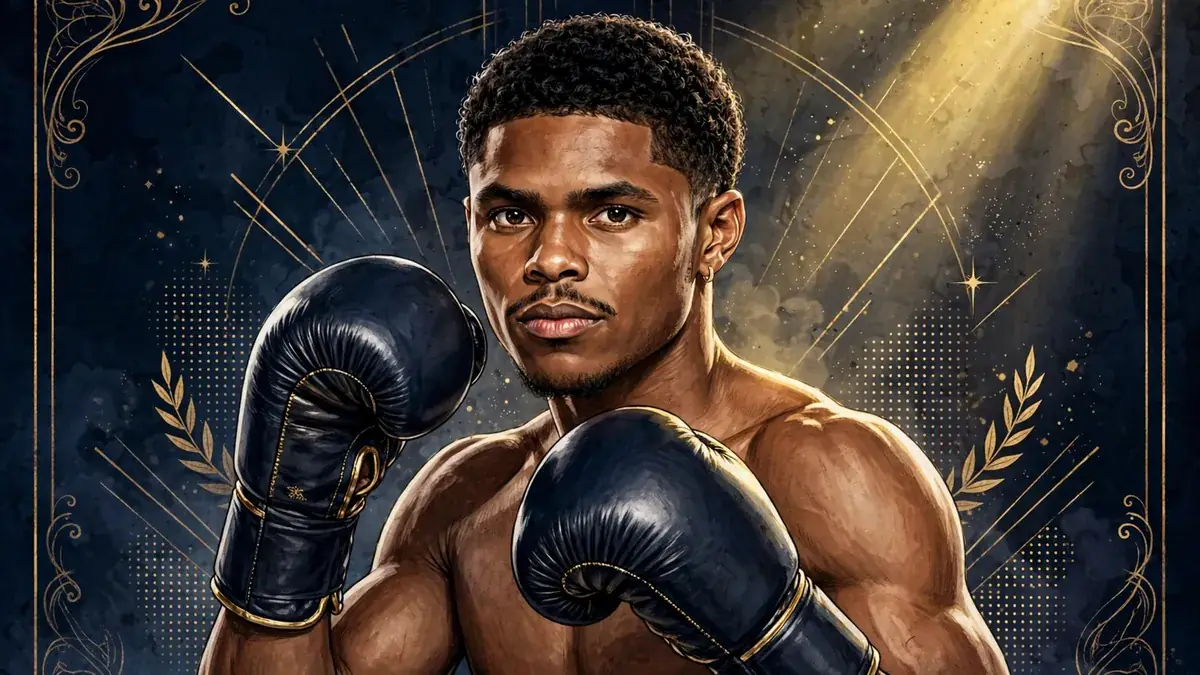
How Tall Is Shakur Stevenson?
Shakur Stevenson is 5 ft 8 in tall, which converts to 173 cm. That measurement is the one used by the most current and most authoritative sources available in November 2026, and it is consistent across the outlets that publish an official tale of the tape before his fights.
Wikipedia lists his height at 5 ft 8 in (173 cm) and his reach at 68 in (173 cm). Tapology, the fight database, lists the same pair of numbers: 5 ft 8 in and a 68-inch reach, alongside a birth date of June 28, 1997 and a birthplace of Newark, New Jersey. Boxing247, whose profile was updated on September 16, 2026, also records 5 ft 8 in and a 68-inch reach, with a 25-0 record and a residence in Houston, Texas.
The broadcasters agree. DAZN listed Stevenson at 5 ft 8 in with a 68-inch reach in its tale of the tape for the William Zepeda fight in July 2025, and again at 5 ft 8 in and 68 inches for the Teofimo Lopez fight on January 31, 2026. Sports Illustrated printed the same figures — 5 ft 8 in, 68-inch reach — in its tale of the tape for Lopez vs Stevenson. The World Boxing Organization’s own promotional tale of the tape for that fight, shared on its official channels on January 30, 2026, listed Stevenson at 5 ft 8 in with a 68-inch reach, weighing 138.6 lbs. When Zuffa Boxing announced his signing on July 9, 2026, its official poster carried the same measurements: height 5 ft 8 in, reach 68 in.
That is a wide consensus, and it is worth spelling out because boxing heights are famously slippery. Fighters are measured in shoes or out of them, in the morning or at a weigh-in, by promoters with an interest in making a bout look even. When Wikipedia, Tapology, DAZN, Sports Illustrated, the WBO, and a promoter’s own announcement all land on the same number, the measurement has survived every one of those filters. Stevenson is 5 ft 8 in.
For readers who think in metric, 173 cm puts him a touch above the average height for an American man, which sits around 175 cm in some surveys and closer to 170 cm worldwide — in other words, an ordinary height for a man, and a useful height for a lightweight boxer. He is tall enough to box from range and short enough to slip under punches, and his whole style is built around that balance.
Height vs Reach: Why His 68-Inch Reach Matters More
If height is the number people search for, reach is the number that decides fights. Stevenson’s reach is 68 inches (173 cm) — exactly the same as his height. His arms are, inch for inch, as long as he is tall. That one-to-one ratio is unusual enough to be worth pausing on, because most fighters have a reach that runs a few inches longer than their height. A long reach relative to height is one of the clearest physical advantages in boxing: it lets a fighter land a jab while staying out of range of the reply.
Stevenson gets that advantage a different way. His reach is not long for his height — it is exactly his height — but his style makes it play longer. He fights southpaw, left hand forward, which puts his power hand closer to the opponent and his jab on the side most orthodox fighters are least used to reading. He steps in behind the jab, touches, and steps out before the counter arrives. Against Teofimo Lopez on January 31, 2026, that pattern produced one of the most lopsided CompuBox lines of the year: Stevenson landed 165 of 372 punches (44.4 percent) while Lopez landed 72 of 468 (15.4 percent), according to The Ring’s CompuBox report. Lopez was held to five landed punches or fewer in seven of the twelve rounds. The reach did not do that on its own — footwork and timing did — but the reach is what let the jab arrive first, round after round.
The reach also explains why Stevenson has been able to move up in weight without losing his edge. He won his first world title at featherweight (126 lbs), then at super featherweight (130 lbs), then lightweight (135 lbs), and then super lightweight (140 lbs). At each step the opponents got bigger, and at each step the jab still worked. A fighter whose game depended on being the bigger man in the ring would have run out of road by 135 lbs. Stevenson never depended on that. His game depends on distance, and distance travels with him.
Compare that with the men he is most often matched against. Gervonta Davis stands around 5 ft 5 in to 5 ft 5.5 in but carries a 67.5-inch reach — two inches longer than his height, which is why Davis can fight like a much bigger man despite being the shortest elite lightweight of his generation. Teofimo Lopez, listed at 5 ft 9 in in the January 2026 tale of the tape, has a 68.5-inch reach. William Zepeda, at 5 ft 9 in, has a 69.5-inch reach. Stevenson sits in the middle of that group on reach, and he has beaten the two tallest men in it.
There is also a defensive side to the reach question. A 68-inch reach sounds modest until you watch what Stevenson does with it after he punches. He rolls his shoulder, dips his head off the centre line, and takes half a step back, so the counter that should be in range falls an inch short. That is not reach; that is craft. But craft needs a starting point, and 68 inches is enough of one. Fighters with shorter reaches who try to box the same way get caught on the way in. Stevenson, for the most part, does not.
The 5 ft 7 in vs 5 ft 8 in Discrepancy, Explained
Search for Stevenson’s height and you will find two answers. Most current sources say 5 ft 8 in (173 cm). A visible minority says 5 ft 7 in (170 cm). Both numbers have real sources behind them, so the honest answer is a range — 5 ft 7 in to 5 ft 8 in — anchored at 5 ft 8 in, which is what the current official listings use. Here is where the lower number comes from and why the higher one wins.
The 5 ft 7 in figure shows up in older coverage and in databases that have not been refreshed. Box.Live, a fight database, currently lists Stevenson at 5 ft 7 in (170 cm) with a 68.1-inch reach. Pro Boxing Insider described him as “5-feet-7-inches tall” with a 68-inch reach in previews published in 2021 and 2022, around the Jamel Herring and Robson Conceicao fights. EssentiallySports listed him at 5 ft 7 in in a November 2023 piece ahead of the Edwin De Los Santos fight. CelebsFact, a celebrity bio site, also carries 5 ft 7 in. These are not invented numbers; they were published by real outlets at real dates. They are, however, older numbers, and they sit against a wall of newer ones.
The 5 ft 8 in figure is what the fight-night paperwork says now. The WBO’s tale of the tape for January 31, 2026 lists 5 ft 8 in. DAZN’s tale of the tape for the same fight lists 5 ft 8 in. Sports Illustrated lists 5 ft 8 in. Sherdog’s preview of the Lopez fight lists 5 ft 8 in with a 68-inch reach. The Ring’s coverage of the fight lists the same. Boxing247’s profile, updated September 16, 2026, lists 5 ft 8 in. Zuffa Boxing’s signing announcement in July 2026 lists 5 ft 8 in. When the sanctioning body, the broadcaster, the magazines, and the promoter all agree on fight week, that is the working official height, and it is the one this article uses as its anchor.
Why would the number move by an inch at all? A few ordinary reasons, none of them sinister. Stevenson turned professional at 19 and won his first world title at 22; a young athlete’s listed height can shift by an inch as early-career measurements get corrected. Different listings round differently — 172 cm rounds to 5 ft 7.7 in, which one database calls 5 ft 7 in and another calls 5 ft 8 in. Some databases carry forward a measurement taken at the amateurs, where Stevenson fought at bantamweight as a teenager. And boxing has a long habit of rounding up or down by an inch depending on who is printing the poster. None of that makes either number a lie. It makes the range the truthful way to report it: 5 ft 7 in to 5 ft 8 in, with 5 ft 8 in the figure the current official sources support.
One more note on the pattern. The same inch of wobble follows almost every boxer in this weight range. Teofimo Lopez is listed at 5 ft 8 in by Wikipedia and ESPN, and at 5 ft 9 in by BoxRec, Boxing247, and the January 2026 tale of the tape. Devin Haney is listed at 5 ft 8 in by most outlets, while BoxRec records him at 175 cm — a shade under 5 ft 9 in. Gervonta Davis is 5 ft 5 in on Wikipedia and 5 ft 5.5 in on BoxRec and DAZN. If a single inch of disagreement disqualified a height, there would be no listed heights in boxing at all. The range is the measurement.
The short version: Shakur Stevenson is 5 ft 8 in (173 cm) tall according to Wikipedia, Tapology, DAZN, Sports Illustrated, the WBO, and Zuffa Boxing. Older listings, including Box.Live and 2021–2023 previews, say 5 ft 7 in (170 cm). His reach is 68 in (173 cm) in every listing we found — nobody argues about the reach.
Shakur Stevenson Height Compared to Lightweight Rivals
Height only means something next to the people you actually fight. At lightweight and super lightweight, Stevenson shares the division with a set of rivals whose heights are all within a few inches of his — and the differences, small as they look on paper, shape every matchup. Here is how he measures up, with each figure tied to its source.
| Fighter | Height | Reach | Stevenson vs Rival |
|---|---|---|---|
| Shakur Stevenson | 5 ft 8 in (173 cm) | 68 in (173 cm) | — |
| Gervonta Davis | 5 ft 5 in (165 cm) per Wikipedia; 5 ft 5.5 in (166 cm) per BoxRec and DAZN | 67.5 in (171 cm) | Stevenson is about 2.5–3 in taller |
| Devin Haney | 5 ft 8 in (173 cm) per most outlets; BoxRec lists 175 cm | 71 in (180 cm) per BoxRec | Same height; Haney has the longer reach |
| Teofimo Lopez | 5 ft 8 in (173 cm) per Wikipedia and ESPN; 5 ft 9 in (175 cm) in the January 2026 tale of the tape | 68.5 in (174 cm) | Level, or Lopez an inch taller |
| William Zepeda | 5 ft 9 in (175 cm) | 69.5 in (177 cm) | Zepeda is an inch taller with a 1.5 in reach edge |
| Ryan Garcia | 5 ft 10 in (178 cm) | 70 in (178 cm) | Garcia is 2 in taller |
| Vasiliy Lomachenko | 5 ft 7 in (170 cm) | 65.5 in (166 cm) | Stevenson is an inch taller with a 2.5 in reach edge |
The Davis comparison is the most striking one. Gervonta Davis, the WBA lightweight champion and the biggest puncher in the division, gives away two and a half to three inches in height to Stevenson and still carries a 67.5-inch reach — only half an inch short of Stevenson’s. That is why a Stevenson vs Davis fight has been talked about for years without ever being made: it would pit the division’s best boxer against its best puncher, with height on one side and power on the other. Davis has made a career of knocking out taller men, including Ryan Garcia, who stands 5 ft 10 in, and Leo Santa Cruz. Height has never been the thing that saves you from Davis. What saves you is not being there when the punch lands, which is exactly Stevenson’s skill set. When Stevenson signed with Zuffa Boxing in July 2026, he named Davis and Devin Haney as his two main targets, and the height table is part of why both fights are so easy to sell.
Haney is the mirror image. Devin Haney’s height is listed at 5 ft 8 in by most outlets, the same as Stevenson’s, though BoxRec records him at 175 cm. What separates them is reach: Haney’s is listed at 71 inches, three inches longer than Stevenson’s. A Haney fight would be the first time in years Stevenson faced someone who could out-jab him from outside, and the first time Haney faced someone who could match his height while taking away his usual size advantage. The two men came up together in the amateurs and as young professionals, and the rivalry has been simmering since both were teenagers. If it happens under Zuffa Boxing, the tale of the tape will be a dead heat on height and a genuine contest on reach.
Lopez is the comparison with a result attached. Going into January 31, 2026, the official tale of the tape gave Lopez a one-inch height edge at 5 ft 9 in and a half-inch reach edge at 68.5 inches, though Wikipedia and ESPN both list Lopez at 5 ft 8 in. On the night, the inch did not matter. Stevenson won 119-109 on all three cards, landing more than twice as many punches as Lopez. It was the clearest demonstration of the point this article keeps returning to: at this level, an inch of height is worth far less than an inch of timing.
Zepeda is the one rival who genuinely outsized him. William Zepeda stands 5 ft 9 in (175 cm) with a 69.5-inch reach, per Wikipedia and his Golden Boy Promotions profile, and he throws more punches than almost anyone in the sport. Stevenson beat him by unanimous decision on July 12, 2025, in what many observers called his best performance before the Lopez fight — a night when he stood in range, traded more than usual, and still barely got hit clean. Beating the taller, longer, busier man is the best evidence that Stevenson’s height is not a limitation he works around. It is a platform he works from.
One more name belongs in this table even though they never shared a division at the same time: Vasiliy Lomachenko, listed at 5 ft 7 in with a 65.5-inch reach. Lomachenko is the fighter Stevenson is most often compared to stylistically — the footwork, the angles, the refusal to take a clean punch — and he did it all an inch shorter than Stevenson with a shorter reach. The comparison flatters Stevenson, and it also sets the standard he is measured against. Lomachenko’s height never defined him. Stevenson’s should not define him either.
How His Height Stacks Up Across Boxing
Step outside the lightweights and Stevenson’s 5 ft 8 in frame looks small in a hurry — which is exactly why the comparison is useful. Boxing is the rare sport where the same height means something different in every division, and Stevenson’s career is a case study in how far skill can stretch a normal-sized body.
At heavyweight, Tyson Fury’s height is listed at 6 ft 9 in — thirteen inches taller than Stevenson, with a reach of 85 inches. Fury is an outlier even among heavyweights, but the gap shows what Stevenson is not: he is not a fighter who wins by being the biggest man in the ring, because he never has been. The heavyweight comparison also puts his weight-class journey in perspective. Stevenson has fought from 126 lbs to 140 lbs, a fourteen-pound climb across four divisions. Fury walks around heavier than two Stevensons. The sports share a ring and almost nothing else.
Drop down to the smaller weights and the picture flips. At featherweight, where Stevenson won his first world title in 2019, 5 ft 8 in is tall — most featherweights stand between 5 ft 5 in and 5 ft 7 in. That is part of why his early career looked so easy: he was a tall, long featherweight with Olympic-level footwork, fighting men he could jab from a distance they could not close. As he moved up, the height advantage shrank — at lightweight he is average, at super lightweight he is average — and the wins kept coming anyway. That is the strongest argument that the height was never the point. The point was always the skill, and the skill held up as the size advantage disappeared.
The pound-for-pound comparison is the one that matters most. Floyd Mayweather’s height is listed at 5 ft 8 in — the same as Stevenson’s — with a 72-inch reach. Mayweather built the most lucrative career in boxing history on the same physical template: average height, long arms for his frame, a shoulder roll, and a refusal to get hit. Stevenson is compared to Mayweather constantly, sometimes fairly and sometimes not, but the physical resemblance is real. Both men are 5 ft 8 in southpaw-leaning defensive masters who turned “don’t get hit” into a business model. The difference is reach: Mayweather’s 72 inches gave him four more inches to work with than Stevenson’s 68. Stevenson compensates with footwork and volume. Whether he can compensate all the way to Mayweather’s level of commercial success is the open question of his career — and the reason his Zuffa Boxing deal matters as much as any fight.
For a sense of scale across the sport, here is where 5 ft 8 in sits division by division: tall at featherweight, average at lightweight and super lightweight, short at welterweight, and small at middleweight and above. Stevenson has already fought at the top of the range where his height is an asset and at the bottom of the range where it is neutral. If he ever moves to welterweight (147 lbs), as some have suggested for a fight with the winner of the division’s biggest names, he would be giving away height to almost everyone. That he is even discussed as a welterweight tells you how little his height has held him back so far — and why he remains one of the most talked-about fighters in our celebrity coverage.
Early Life: Newark Roots and the Olympic Silver
Ash-Shakur Nafi-Shahid Stevenson was born on June 28, 1997, in Newark, New Jersey. He was named after the rapper Tupac Shakur — his mother chose the name, and the story has followed him ever since, partly because it fits: a Newark kid named after an icon, carrying the name into arenas that would have been unimaginable from the streets where he grew up.
Newark is the thread that runs through everything Stevenson says about himself. He started boxing as a child at a local gym, and by his early teens he was the best amateur in the country at his weight. The amateur career peaked at the 2016 Rio Olympics, where he won a silver medal in the bantamweight division at 19 years old, losing the final to Cuba’s Robeisy Ramirez. A silver medal at 19, in a sport where Olympic medals are the hardest currency for a young professional, made him the most sought-after American amateur of his generation. Top Rank signed him before he had thrown a professional punch.
The Olympic run matters to the height story for a simple reason: at bantamweight, Stevenson was fighting at 123 lbs, and his height was already 5 ft 7 in or 5 ft 8 in depending on the listing. He was a tall, rangy bantamweight, and the amateur system — three rounds, headgear in those days for men, scoring on clean punches — rewarded exactly what he did best: hit and don’t get hit. The style he uses now, the one that frustrates opponents and sometimes bores crowds, was built in the amateurs, where a point scored and a point avoided count the same. He has never really changed it. He has only refined it.
He turned professional in April 2017, at 19, and the early years were a procession: opponents outclassed, rounds banked, a record built without a scare. By 2019 he was fighting for a world title. The speed of that rise is worth remembering when people call him cautious. A fighter who wins his first world title at 22 and his fourth-division title at 28 is not cautious. He is careful, which is a different thing — and in boxing, it is usually the thing that keeps a fighter undefeated.
Career Rise: Four Weight Classes, Zero Losses
Stevenson’s professional record stands at 25-0 with 11 knockouts as of November 2026, and the shape of that record tells its own story. He does not knock many people out — 11 stoppages in 25 fights is a 44 percent knockout rate, modest for an elite champion — and he does not need to. He wins rounds. He wins them clearly, widely, and repeatedly, and the scorecards from his biggest fights read like a pattern: 119-109, 119-109, 119-109 against Lopez; wide unanimous decisions against Zepeda, De Los Santos, and Harutyunyan.
The titles came in order, one weight class at a time. In October 2019, at 22, he beat Joet Gonzalez by unanimous decision to win the WBO featherweight title — his first world championship. In June 2021 he stopped Jamel Herring in the tenth round to win the WBO super featherweight title. In April 2022 he outpointed Oscar Valdez to unify the WBC and WBO super featherweight titles, the first unification win of his career. In November 2023 he beat Edwin De Los Santos by unanimous decision to win the vacant WBC lightweight title, becoming a three-division world champion.
The lightweight reign brought the defences that tested him. He beat Artem Harutyunyan by unanimous decision in July 2024, stopped Josh Padley in nine rounds in February 2025, and then faced William Zepeda — the taller, busier, harder-punching Mexican — in July 2025, winning by unanimous decision in a fight many called his most complete performance. Each defence answered a different question: Harutyunyan asked whether he could handle a durable European technician; Padley asked whether he could close the show against a late replacement; Zepeda asked whether he could handle size, reach, and volume at the same time. He answered all three.
There was one blemish on the road, and it is worth recording honestly. In September 2022, ahead of his fight with Robson Conceicao, Stevenson missed weight — he came in at 131.6 lbs for a 130-lb title fight — and was stripped of his WBC and WBO super featherweight titles on the scales. He won the fight by unanimous decision, but the belts were gone before the first bell. It remains the only time his professionalism has been seriously questioned, and it is the reason his move to lightweight a year later was framed as a fresh start as much as a step up. Fighters who miss weight once rarely do it twice, and Stevenson has not.
What stands out across the whole run is the steadiness of it. Nine years as a professional, four weight classes, no losses, no knockdowns that changed a fight, no controversy inside the ring beyond the scales in 2022. The Ring ranked him No. 3 pound-for-pound at the time of the Zuffa signing in July 2026. That ranking, more than any single belt, is the measure of where he stands: not the biggest, not the hardest puncher, but one of the three best fighters in the world at any weight.
The Teofimo Lopez Win That Proved the Point
January 31, 2026, at Madison Square Garden, was the night Stevenson’s height stopped being a talking point and became a footnote. He moved up to 140 lbs for the first time to challenge Teofimo Lopez for the WBO and Ring super lightweight titles, in the main event of The Ring 6, live on DAZN pay-per-view. Lopez was the lineal champion, a former lightweight king, and a man whose power had ended fights at every level. The pre-fight tale of the tape gave Lopez the physical edges: 5 ft 9 in to Stevenson’s 5 ft 8 in, a 68.5-inch reach to Stevenson’s 68. Stevenson was the betting favourite anyway, and the fight showed why.
He won by unanimous decision, 119-109 on all three cards — Max DeLuca, Eric Marlinski, and Steve Weisfeld each gave him eleven of the twelve rounds. The CompuBox numbers, reported by The Ring, were stark: Stevenson landed 165 of 372 punches (44.4 percent); Lopez landed 72 of 468 (15.4 percent). Lopez was held to five landed punches or fewer in seven rounds. Stevenson cut Lopez over the left eye, had him chasing shadows by the middle rounds, and finished the fight in complete control. BoxingScene scored it 119-109 as well. It was, by any measure, a one-sided win over one of the best fighters of the generation.
The win made Stevenson a four-division world champion — featherweight, super featherweight, lightweight, and now super lightweight — and, according to ESPN’s reporting at the time, the fastest fighter to win titles in four weight classes. It also settled the only physical question that had followed him up the weights: could he carry his style to 140 lbs against a bigger, stronger champion? The answer was a shutout. Height, reach, weight — none of it mattered, because Lopez could not find him often enough to use any of it.
The money matched the moment. Bleacher Report estimated the bout’s prize money at between $15 million and $25 million, which would make it the biggest payday of either man’s career. The exact split was not made public, and this article does not guess at it — but the scale of the number is the point. A fight built on Stevenson’s skill, not his size, produced the richest night of his life. That is the commercial version of the argument this article has been making: in boxing, what you can do matters more than how tall you are, and the market pays for what you can do.
Money and Net Worth: What the Height Is Worth
This is a height article, not a net worth article, but the money question follows Stevenson everywhere, and the honest answer is a range. The celebrity-wealth trackers that publish estimates for him do not agree, and the gap between them is wide enough that any single number would be misleading. Surprise Sports puts his net worth at $5 million as of 2026. AthleteWiki estimates $3 million to $7 million. TheCityCeleb carries the same $3 million to $7 million range for 2025. CovMedia, in a 2026 profile, reports the same $3 million to $7 million band and notes that one video-based tracker pushes the figure toward $10 million. EssentiallySports, writing in November 2023, had it at $3 million to $5 million. The picture that emerges is consistent: a net worth in the low-to-mid single-digit millions, most plausibly $3 million to $7 million, anchored at $5 million by the most recent dated estimate from Surprise Sports. Higher figures up to $10 million and beyond circulate on social media, but they are not backed by named sources we could verify, and this article does not repeat them as fact.
The shape of his earnings is easier to describe than the total. His purses have climbed steadily with his profile. Early title fights paid in the hundreds of thousands — CovMedia reports around $150,000 for the Joet Gonzalez fight and $450,000 for an early-career bout against Felix Caraballo, though both figures are tracker-sourced rather than officially disclosed. By the time he was headlining, the numbers had moved into seven figures: TheCityCeleb reports around $2 million for the Zepeda fight in July 2025. The Lopez fight in January 2026 was a different order of magnitude, with Bleacher Report estimating total bout prize money of $15 million to $25 million — the richest night of his career by a wide margin, and the first time his purse entered the range where a single fight can change a net worth estimate on its own.
Endorsements add a second stream. CovMedia reports sponsorship and endorsement deals with Reebok, PRIME Hydration, SNAC (a supplement and recovery company), and Ptsch Tequila. None of those deals has a publicly disclosed value, so this article does not put a number on them — but their existence matters, because endorsement money is what separates a well-paid fighter from a wealthy one, and Stevenson’s profile has grown enough to attract brands that do not sponsor ordinary champions.
The third stream is the one that could change everything: his promotional deal. When Stevenson signed with Zuffa Boxing on July 9, 2026, he told ESPN, in the words reported by Bad Left Hook, that he was “in the money-getting business” and that “the money is insane” — without disclosing figures. The Ring reported that Zuffa, the Dana White and TKO-backed promotion, is capable of paying eight-figure purses to its top talent. If that proves true for Stevenson, his next contract could be worth more than everything he has earned so far combined. That is speculation about the future, not a fact about the present, and it is labelled as such here. What is factual is that the deal exists, it is multi-year and multi-fight, and it was announced on ESPN’s SportsCenter by Dana White himself — the kind of platform that does not get used for ordinary signings.
One tracker claim deserves a flag. Surprise Sports, in a separate super featherweight earnings piece, credits Stevenson with roughly $25 million in career earnings — a figure that sits well above the purse reports for his individual fights and is not corroborated by any other named source we found. It is included here because readers will find it, and because ignoring a widely circulated number is worse than reporting it with a warning. Treat it as a tracker claim, not a verified total. The verified picture is simpler: purses rising from five figures to seven, a $15 million to $25 million prize pool for the Lopez fight, endorsements on top, and a Zuffa deal whose value has not been disclosed.

Zuffa Boxing and What Comes Next
The Zuffa Boxing signing, announced July 9, 2026, is the biggest business story of Stevenson’s career so far, and it is also the biggest clue about what comes next. Zuffa Boxing is the upstart promotion run by UFC chief Dana White and TKO Group Holdings, and Stevenson is its highest-profile signing — The Ring called him the promotion’s biggest acquisition, and ESPN described the deal as a landmark. He joined a roster that includes Conor Benn, Jai Opetaia, Richardson Hitchins, and Edgar Berlanga, and he did so as a 29-year-old, four-division champion with a 25-0 record: the most decorated fighter Zuffa has signed.
The terms were not disclosed, and neither side has put a number on the deal. What was reported is the shape of it: a multi-year, multi-fight agreement, announced by White on ESPN’s SportsCenter, with Stevenson insisting — in comments reported by Sports Illustrated and ESPN — that he signed only on the condition that he could still get the fights he wants. That condition matters, because Zuffa does not currently operate a 140-lb division and has a frosty relationship with the sanctioning bodies; Boxing Insider reported at the time that Stevenson is expected to vacate the WBO title he won from Lopez. The belts, in other words, may be less important to his next chapter than the opponents.
The opponents he named tell the story. On SportsCenter, Stevenson said his main focus was Devin Haney or Gervonta Davis — the two fights the sport has wanted for years. Both are natural Zuffa-era fights in theory: Haney is the same height with a longer reach and a rivalry that goes back to their amateur days, and Davis is the shorter, harder-punching champion whose size disadvantage has never stopped him. Whether Zuffa can make either fight depends on promoters, networks, and sanctioning bodies that have spent years not making them. Stevenson himself, speaking to The Ring after the signing, insisted the big fights can still happen. The coming months will test that claim.
What is certain is that the height conversation will follow him into whatever comes next. If he fights Haney, the tale of the tape will be a dead heat. If he fights Davis, he will be the taller man by nearly three inches — and Davis will be the harder puncher by a wide margin. If he moves to welterweight, he will be the smaller man for the first time in his career. None of those matchups is decided by the measurements. All of them are sold on the measurements. That is the strange double life of a boxer’s height: it is the least important thing about him in the ring, and the first thing on the poster outside it.
Personal Life
Stevenson keeps his private life out of the headlines more successfully than most fighters of his profile, and this article does not fill the gaps with guesswork. What is public is straightforward: he was born and raised in Newark, New Jersey, and he has spoken often about the city and about his mother, whose choice of his first name — after Tupac Shakur — he has discussed in interviews. He is a father, and he has posted about his daughter on social media. Beyond that, the record is thin, and the thinness is his choice. He is not a fighter who courts attention outside the ring, and the coverage reflects that.
One detail worth recording is where he trains. Boxing247 lists his residence as Houston, Texas, and he has spent significant parts of his career training outside Newark. Fighters move for trainers, sparring, and gyms, and Stevenson has done what most elite fighters do: kept his roots in one place and his camp in another. His team, his trainers, and his day-to-day routine are not the subject of this article, and the sources that cover them in detail are the boxing press, not the celebrity press — which is itself a statement about how he is seen. He is covered as an athlete first, and a celebrity second.
He is also, by the standards of his sport, unusually online and unusually direct. He calls out opponents on social media, answers critics in interviews, and has never been shy about saying he believes he is the best fighter in the world. That confidence is part of the product: it sells the fights, it fills the press conferences, and it gives the height articles — this one included — a reason to exist. People look up the height of fighters they have an opinion about. Stevenson has made sure people have an opinion about him.
Controversies and Criticism
No honest profile of Stevenson skips the two criticisms that follow him, because both are well sourced and both are relevant to how his career is judged.
The first is the missed weight in September 2022. Ahead of his defence against Robson Conceicao, Stevenson weighed in at 131.6 lbs for a 130-lb title fight and was stripped of his WBC and WBO super featherweight titles on the scales. He won the fight by unanimous decision, but the titles were gone, and the incident is still cited whenever his discipline is discussed. It was a genuine professional failure, it cost him two belts, and he has not repeated it — but it happened, and it belongs in any complete account of his career.
The second is the style criticism, which is less a controversy than a running argument. Stevenson wins by not getting hit, and a vocal part of the boxing public finds that boring. The criticism peaked after some of his more one-sided wins, where the scorecards were wide and the action was sparse, and it follows him into every big fight: the Lopez win, dominant as it was, drew the same complaint from some quarters — that a 119-109 shutout can still feel like a clinic rather than a contest. The Ring’s own coverage has noted the tension, and Stevenson has answered it directly, saying in interviews that his job is to win and that the critics will come around when the big fights arrive. The Lopez fight was supposed to be that moment, and for many observers it was. For others, the argument continues.
There is a third, quieter criticism worth naming: inactivity. Between the Lopez win in January 2026 and the Zuffa signing in July, and again in the months after the signing, there were stretches with no fight announced and no date set. World Boxing News, in an October 2026 piece, described his career as “stalled” under Zuffa, noting that no promotional debut had been announced. The signing was supposed to accelerate his career; the first months after it looked, from the outside, like a pause. Whether that pause is a delay or a build-up depends on what gets announced next, and as of November 2026 nothing has been. It is the one real question hanging over a fighter who has answered every question inside the ring.
Frequently Asked Questions
How tall is Shakur Stevenson?
Shakur Stevenson is 5 ft 8 in (173 cm) tall. That is the figure listed by Wikipedia, Tapology, DAZN, Sports Illustrated, the WBO, and Zuffa Boxing. A smaller group of older listings says 5 ft 7 in (170 cm), so the honest range is 5 ft 7 in to 5 ft 8 in, anchored at 5 ft 8 in.
What is Shakur Stevenson’s reach?
His reach is 68 in (173 cm) — exactly the same as his height. Every source we checked agrees on the reach, including the sources that disagree about his height. A 68-inch reach is average for a lightweight, but his southpaw stance and footwork make it play longer than the number suggests.
Why do some sites say Shakur Stevenson is 5 ft 7 in?
The 5 ft 7 in figure comes from older listings. Box.Live still lists him at 5 ft 7 in, Pro Boxing Insider used 5 ft 7 in in previews from 2021 and 2022, and EssentiallySports listed 5 ft 7 in in November 2023. The current official listings — the WBO tale of the tape, DAZN, Sports Illustrated, and Zuffa Boxing’s July 2026 announcement — all say 5 ft 8 in. The inch likely comes from early-career measurements and different rounding, and the newer figure is the one the sport’s own paperwork supports.
How tall is Shakur Stevenson compared to Gervonta Davis?
Stevenson is about two and a half to three inches taller than Gervonta Davis. Davis is listed at 5 ft 5 in by Wikipedia and at 5 ft 5.5 in by BoxRec and DAZN, with a 67.5-inch reach. Stevenson, at 5 ft 8 in with a 68-inch reach, would hold the height edge — but Davis has knocked out taller men throughout his career, including the 5 ft 10 in Ryan Garcia, so the height gap would not decide the fight.
Is Shakur Stevenson taller than Devin Haney?
No — they are listed at the same height. Both men are listed at 5 ft 8 in by most outlets, though BoxRec records Haney at 175 cm, a shade under 5 ft 9 in. The difference between them is reach: Haney’s is listed at 71 inches, three inches longer than Stevenson’s 68. A fight between them would be a dead heat on height and a genuine contest on reach.
How tall is Teofimo Lopez compared to Shakur Stevenson?
Lopez was listed an inch taller than Stevenson on fight week: the January 31, 2026 tale of the tape had Lopez at 5 ft 9 in with a 68.5-inch reach against Stevenson’s 5 ft 8 in and 68 inches. Wikipedia and ESPN list Lopez at 5 ft 8 in, so the two men are effectively the same height. Stevenson won the fight by unanimous decision, 119-109 on all three cards.
What is Shakur Stevenson’s weight and record?
Stevenson is 25-0 with 11 knockouts as of November 2026. He weighed 138.6 lbs for the Teofimo Lopez fight on January 31, 2026, and has won world titles at featherweight (126 lbs), super featherweight (130 lbs), lightweight (135 lbs), and super lightweight (140 lbs). He is a 2016 Olympic silver medallist and a southpaw.
What is Shakur Stevenson’s net worth in 2026?
Trackers put his net worth at $3 million to $7 million, with Surprise Sports estimating $5 million as of 2026. The range reflects disagreement between trackers rather than a single verified figure, and higher numbers circulating on social media are not backed by named sources. His biggest payday so far is believed to be the Teofimo Lopez fight, whose total prize money Bleacher Report estimated at $15 million to $25 million.
Final Thoughts: The Bottom Line on Shakur Stevenson Height
Shakur Stevenson is 5 ft 8 in (173 cm) tall, with a 68-inch reach, a southpaw stance, and a 25-0 record across four weight classes. The inch of disagreement in older listings does not change the picture: he is an average-sized lightweight who fights like a much longer one, and he has beaten taller men, longer men, and harder punchers without losing a round that mattered.
The height question is the wrong question, in the end, and it is also the right one. It is the wrong question because height has never decided one of his fights — timing, footwork, and a jab that lands first have. It is the right question because it is the question people ask before the fights that will define him: Haney, Davis, and whatever comes after Zuffa Boxing. The measurements will be on the poster for all of them. The fights will be decided by everything the measurements leave out.
For readers keeping track: 5 ft 8 in, 68-inch reach, 25-0, four divisions, one Olympic silver, and a promotional deal that could make his next fight the biggest of his life. That is the whole of Shakur Stevenson in one paragraph — and the height is the least interesting part of it.
Sources and Reporting
Height and reach figures in this article come from Wikipedia, Tapology, DAZN, Sports Illustrated, Sherdog, Boxing247, Box.Live, Pro Boxing Insider, EssentiallySports, and the World Boxing Organization’s official tale of the tape for January 31, 2026. Fight results and CompuBox figures come from The Ring, BoxingScene, Bad Left Hook, and Bleacher Report. The Zuffa Boxing signing is reported from The Ring, ESPN, Sports Illustrated, Boxing Insider, and Bad Left Hook (July 9–10, 2026). Net worth estimates come from Surprise Sports, AthleteWiki, TheCityCeleb, CovMedia, and EssentiallySports. Rival heights come from Wikipedia, BoxRec, DAZN, Golden Boy Promotions, and Boxing247.
How we estimated: this is a height article, so the headline figure is a measurement, not a valuation — but the same standard applies. Where sources disagree, we publish the range and name the anchor: 5 ft 8 in, supported by the current official listings, with the 5 ft 7 in minority noted and dated. Net worth is reported as a tracker range ($3 million–$7 million), not a single figure, because no official disclosure exists and the trackers disagree. Fight purses are reported only where a named outlet published them; undisclosed splits and deal values are not guessed. Estimates may differ from private reality, and figures will move as new fights and disclosures arrive. This article was last updated on November 21, 2026.
Sources: Wikipedia, Tapology, DAZN, Sports Illustrated, The Ring, ESPN, BoxRec, Sherdog, Surprise Sports, AthleteWiki.