By Celebamerica Editorial Staff | Last updated: 9 November 2026
Ranbir Kapoor is the fourth-generation star of Hindi cinema’s most famous family, and in 2026 he is having the biggest year of his career. Born on 28 September 1982 in Mumbai, the son of Rishi Kapoor and Neetu Singh and the grandson of Raj Kapoor, he has spent nearly two decades turning a famous surname into a record of his own — seven Filmfare Awards, four of them for Best Actor, and the two biggest hits of his life arriving in the last few years. As of November 2026, his estimated net worth sits in the range of $45–50 million (roughly ₹345–450 crore), anchored by Celebrity Net Worth’s $50 million figure, with Indian trade reporting clustering between ₹345 crore and ₹400 crore.
This biography covers the whole arc: the Kapoor childhood, the New York training, the false start of Saawariya, the run of films that made him the most respected actor of his generation, the lean years that nearly broke that run, the Sanju and Animal comebacks, the marriage to Alia Bhatt, the business bets — and the role of Lord Rama in Ramayana: Part 1, which opened in cinemas in November 2026 and is already rewriting his box-office record.
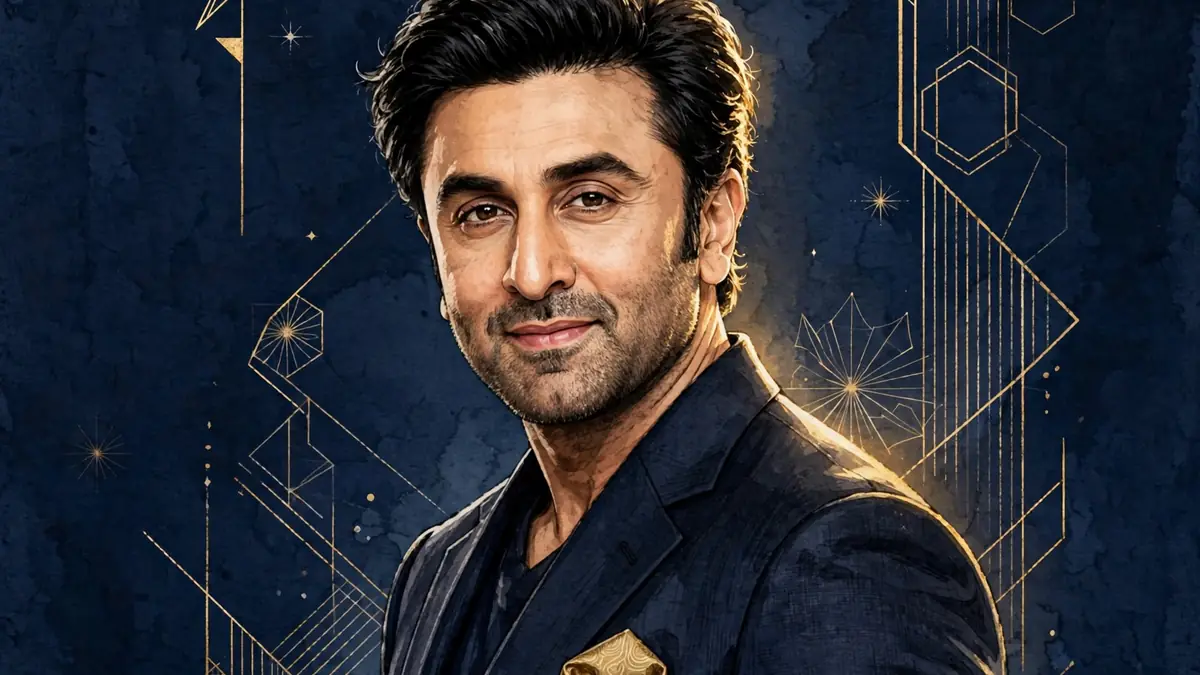
Table of Contents
- Ranbir Kapoor at a Glance
- Early Life and the Kapoor Legacy
- Education in New York and Learning the Craft
- Saawariya and the First Steps in Bollywood
- Breakthrough: Wake Up Sid to Rockstar
- Barfi, Yeh Jawaani Hai Deewani and the Peak Years
- The Lean Years and the Lessons They Taught
- Sanju, Brahmastra and Animal
- Ramayana, Love and War and What Comes Next
- Net Worth and How the Money Is Made
- Homes, Cars and the Life the Money Buys
- Business Ventures: Mumbai City FC, Production and ARKS
- Personal Life: Alia Bhatt, Raha and Family
- Awards and Recognition
- Controversies and Public Scrutiny
- Frequently Asked Questions
- Final Thoughts
- Sources and Reporting
Ranbir Kapoor at a Glance
| Full Name | Ranbir Raj Kapoor |
|---|---|
| Date of Birth | 28 September 1982 |
| Birthplace | Mumbai (then Bombay), Maharashtra, India |
| Age (as of November 2026) | 44 years old |
| Height | 6 feet (1.83 m) |
| Parents | Rishi Kapoor (father) and Neetu Singh (mother) |
| Grandfather | Raj Kapoor, actor-director and founder of RK Studios |
| Spouse | Alia Bhatt (married 14 April 2022) |
| Children | Daughter Raha Kapoor (born 6 November 2022) |
| Occupation | Actor, producer, football club co-owner |
| Years Active | 2007–present |
| Estimated Net Worth | $45–50 million (₹345–450 crore), anchored by Celebrity Net Worth at $50 million |
| Primary Income Sources | Film fees (reported ₹45–50 crore per film), profit shares, brand endorsements, production, football club ownership |
| Key Films | Saawariya (2007), Wake Up Sid (2009), Rockstar (2011), Barfi! (2012), Yeh Jawaani Hai Deewani (2013), Sanju (2018), Brahmāstra (2022), Animal (2023), Ramayana: Part 1 (2026) |
| Major Awards | Seven Filmfare Awards, including four Best Actor wins; six IIFA Awards; named to the TIME 100 list in 2026 |
Early Life and the Kapoor Legacy
Ranbir Kapoor was born on 28 September 1982 in Bombay, as Mumbai was then called, into a family that had already shaped Hindi cinema for three generations. His father, Rishi Kapoor, was one of the biggest romantic stars of the 1970s and 1980s; his mother, Neetu Singh, was a leading actress of the same era. His grandfather was Raj Kapoor, the actor-director behind Awara, Shree 420 and Mera Naam Joker, and the founder of RK Studios. His great-grandfather, Prithviraj Kapoor, had founded Prithvi Theatre and helped build the Bombay film industry itself. Ranbir is the fourth generation of that line, and his older sister is Riddhima Kapoor Sahni. His cousins include Kareena Kapoor Khan and Karisma Kapoor.
Growing up inside that world had two sides. The doors were open, but the comparisons were constant. Every Kapoor before him had carried the family name on screen, and the press had been measuring him against his father and grandfather since before he had shot a single scene. Ranbir has spoken in interviews over the years about how the weight of the surname pushed him to train properly rather than walk straight onto a set. He went to Bombay Scottish School in Mumbai, and like many star kids of his generation, he was sent abroad to learn the craft before anyone would take him seriously as an actor.
The family home in those years was the Krishna Raj bungalow in Pali Hill, Bandra — the house named after his grandparents Raj and Krishna Kapoor. It is the same property, rebuilt as a six-storey home, that Ranbir and Alia Bhatt moved into with their daughter in November 2025. The bungalow is more than real estate in this story: it is the physical centre of the Kapoor family, and Ranbir’s decision to raise his own daughter there, in the house his grandfather built, says a lot about how he sees his place in the family line.
Rishi Kapoor died in April 2020 after a long illness, and the loss changed the shape of Ranbir’s public life. He had always been private about his family; after his father’s death he spoke more openly about him, and the following years — the marriage, the birth of his daughter, the move back into Krishna Raj — read as a man settling into the role of family anchor that his father once held.
Education in New York and Learning the Craft
Instead of debuting straight out of school, Ranbir went to New York to study. He took filmmaking at the School of Visual Arts and method acting at the Lee Strasberg Theatre and Film Institute, the school built on the teaching of Lee Strasberg and associated with some of the most intense screen acting of the last century. The choice mattered: the Strasberg training gave him the naturalistic, interior style that later set him apart from the more theatrical Bollywood acting of his father’s generation. Watch Rockstar or Barfi! and you can see the training in the small choices — the pauses, the way he listens on camera, the refusal to push a scene further than it needs to go.
Back in Mumbai, he worked as an assistant director before facing the camera himself. He assisted Sanjay Leela Bhansali on Black (2005), the Amitabh Bachchan and Rani Mukerji film about a deaf-blind girl, and he also worked on Aa Ab Laut Chalen. Assisting Bhansali, one of Hindi cinema’s most demanding directors, was a deliberate apprenticeship: long days, exacting standards, and a front-row view of how a big film is actually built. By the time Bhansali offered him his own debut, Ranbir had seen the machine from the inside.
That preparation is part of why his debut, even though the film failed, was taken seriously by critics. He arrived looking like someone who had done the work, not someone who had been handed a launch. In an industry where star children are often accused of skipping the queue, the New York years and the assistant-director stint gave him a defence that held up: he had trained, and he had waited.
Saawariya and the First Steps in Bollywood
Ranbir made his acting debut in Bhansali’s Saawariya in November 2007, opposite another debutante, Sonam Kapoor. The film was a tragic romance shot almost entirely on a vast blue set built in Mumbai, and it was one of the most expensive and most talked-about launches of its year. It was also a commercial failure. Audiences stayed away, critics were mixed, and the debut that was supposed to announce a new star instead became a lesson in how little a famous surname guarantees.
What saved Ranbir from being written off was the performance itself. He won the Filmfare Award for Best Male Debut, and reviewers singled out his ease in front of the camera even while panning the film around him. The industry read it the same way: the launch had misfired, but the actor was real. He followed it with Bachna Ae Haseeno (2008), a lighter romantic film in which he played a charming drifter opposite Deepika Padukone, Bipasha Basu and Minissha Lamba. It did respectable business and showed a different side of him — comic timing, lightness, a willingness to be unlikeable on screen.
Those first two years set the pattern for the career that followed. Ranbir would keep choosing directors and scripts over safe star vehicles, and the box office would keep rewarding him unevenly for it. The failures were never about the acting; they were about the films. That distinction is what kept top directors calling even when a release flopped, and it is why the next phase of his career arrived so fast.
Breakthrough: Wake Up Sid to Rockstar
The year 2009 changed everything. Ranbir released three films, and each one showed a different register. In Wake Up Sid, directed by Ayan Mukerji, he played Sid Mehra, a spoiled, directionless rich kid in Mumbai who grows up through a friendship with an older woman played by Konkona Sensharma. The performance was quiet, funny and unforced, and it won him the Filmfare Critics Award for Best Actor. In Ajab Prem Ki Ghazab Kahani, a broad romantic comedy with Katrina Kaif, he proved he could carry a commercial crowd-pleaser. And in Rocket Singh: Salesman of the Year, Shimit Amin’s sharp, small-scale film about a Sikh salesman who builds his own company inside a corrupt firm, he played an ordinary man with total conviction. The Critics Award that year was given jointly for all three films — an unusual honour, and a sign that the industry had stopped treating him as a debutante and started treating him as an actor.
Raajneeti (2010), Prakash Jha’s political drama modelled loosely on the Mahabharata, added scale: an ensemble cast, a darker character, and a big box-office hit. But the film that locked his reputation was Rockstar (2011), Imtiaz Ali’s story of Janardhan, a middle-class Delhi boy who becomes the tortured rock star Jordan. Ranbir grew his hair, learned to hold a guitar like he meant it, and played the character’s slide from innocence to self-destruction without asking the audience to like him. The music, by A. R. Rahman, became a phenomenon on its own, and Ranbir won his first Filmfare Award for Best Actor. It remains the performance most critics name first when they talk about him.
The Rockstar win matters for another reason: it was the moment the comparisons to his father stopped being the story. Rishi Kapoor had been a romantic hero; Ranbir was building a career on difficult, flawed men. The two careers rhyme — charm, musicality, an instinct for the camera — but they are not the same career, and Rockstar is where that became plain.
Barfi, Yeh Jawaani Hai Deewani and the Peak Years
If Rockstar proved Ranbir could carry a dark drama, Barfi! (2012) proved he could do almost anything. Directed by Anurag Basu, the film cast him as Murphy “Barfi” Johnson, a deaf-and-mute young man in 1970s Darjeeling who falls in love twice and speaks barely a word on screen. It was a silent-film performance in a modern Bollywood movie — physical comedy borrowed from Charlie Chaplin, heartbreak played out in the face and hands. The film was India’s official entry for the Best Foreign Language Film Oscar that year, and Ranbir won his second consecutive Filmfare Best Actor award. Two Best Actor trophies in two years, for two performances that could hardly be more different, put him in a class of his own among actors his age.
Yeh Jawaani Hai Deewani (2013), reuniting him with Ayan Mukerji and Deepika Padukone, was the commercial peak of this run. He played Bunny, a restless young man who wants to travel the world and keeps running from commitment, and the film became one of the biggest hits of the year. It also fixed his screen image for a generation of young viewers: the charming, footloose, slightly selfish boy who grows up late. The film’s songs and its portrayal of friendship and ambition made it a fixture of Indian pop culture, and it is still one of his most rewatched films.
By the end of 2013, Ranbir was 31, had two Best Actor awards, a Critics Award, and a string of hits behind him. He was also the most sought-after leading man in Hindi cinema, the actor every major director wanted for their most ambitious project. The next few years would test whether that position could survive a run of failures — and the answer, for a while, was not clear.
The Lean Years and the Lessons They Taught
Between 2015 and 2017, almost nothing worked. Bombay Velvet (2015), Anurag Kashyap’s big-budget period crime film, was one of the most expensive flops in Hindi cinema. Tamasha (2015), his reunion with Imtiaz Ali and Deepika Padukone, found a cult audience later but underperformed on release. Jagga Jasoos (2017), the musical adventure he produced with Anurag Basu through their company Picture Shuru Productions, took years to make and failed at the box office. Ranbir later said he regretted the production venture, a rare public admission from an actor who almost never talks about his failures.
The one bright spot in that stretch was Ae Dil Hai Mushkil (2016), Karan Johar’s romantic drama, which did strong business and gave him one of his most popular songs and performances. But the overall picture was stark: three years, four releases, one hit. Trade writers began asking whether the Kapoor heir had lost his touch, and whether the industry’s faith in him had been misplaced.
What is worth noting about those years is what Ranbir did not do. He did not flood the market with safe films to rebuild his numbers. He did not take a string of two-hero action movies or sign every big franchise offer. He waited, and he picked a biopic of a controversial actor — a film that most stars would have thought twice about. The patience is part of the story of the comeback, because the comeback was not luck. It was a choice to bet on the hardest role available.
Sanju, Brahmastra and Animal
Sanju (2018), Rajkumar Hirani’s biopic of Sanjay Dutt, was that bet. Ranbir played Dutt across decades — the young star, the addict, the prisoner, the older man trying to make peace with his father. He changed his body, his walk and his voice for the role, and the transformation was so complete that audiences forgot they were watching an impersonation. The film grossed over ₹587 crore worldwide, making it the highest-grossing Hindi film of 2018 and, at the time, the biggest hit of Ranbir’s career. He won his third Filmfare Best Actor award for it. More than the money, Sanju restored his standing: the actor who could open a film on his own name was back.
He then took a four-year break from the big screen — partly by choice, partly because the pandemic stalled productions — and returned with Brahmāstra: Part One – Shiva (2022), Ayan Mukerji’s fantasy epic, in which he starred opposite Alia Bhatt. The film was a large commercial success despite mixed reviews, and it was the first time the couple had appeared together on screen. The following year brought two more releases: the romantic comedy Tu Jhoothi Main Makkaar (2023) with Shraddha Kapoor, a solid hit, and then Animal (2023).
Animal, directed by Sandeep Reddy Vanga, cast Ranbir as Ranvijay Singh, a son whose obsession with his father turns into violence on a grand scale. The film split critics down the middle: some praised the raw, committed performance, others condemned the film’s violence and its treatment of women. Audiences, however, turned out in huge numbers. The film grossed over ₹915 crore worldwide according to trade tracker Sacnilk, making it Ranbir’s highest-grossing release by a wide margin, and it won him his fourth Filmfare Best Actor award. Whatever anyone thought of the film, the performance itself — feral, wounded, funny in flashes — was widely agreed to be one of the most committed of his career.
The Animal success also changed his market value in a concrete way. Reports after the film put his fee at around ₹70 crore plus a share of profits for the project, up from the ₹45–50 crore per-film range reported before it. It is the clearest example in his career of how a single hit can reprice a star — and of why his reported fee for Ramayana climbed higher still.
Ramayana, Love and War and What Comes Next
The biggest project of Ranbir’s career arrived in November 2026. Ramayana: Part 1, directed by Nitesh Tiwari and produced by Namit Malhotra’s Prime Focus Studios with Yash’s Monster Mind Creations, casts him as Lord Rama, with Sai Pallavi as Sita, Yash as Ravana and Sunny Deol as Hanuman. It is one of the most expensive Indian films ever made, and its release on 5–6 November 2026 — the Diwali window — was treated as an event across the industry. Early trade tracking from Bollywood Hungama listed the film past ₹300 crore net in India within its first four days, a pace that would put it among the fastest openers in Hindi cinema. The second part is reported for Diwali 2027.
Playing Rama is a different kind of risk from anything Ranbir has done before. The character is not a flawed, modern man like Jordan or Ranvijay; he is a figure of reverence for hundreds of millions of people, and the performance will be judged against a devotional standard as much as a dramatic one. The casting itself was debated for months before release, and the film’s reception — both at the box office and among audiences — will shape the next phase of his career more than any single film since Sanju.
Next on the slate is Love & War, Sanjay Leela Bhansali’s period romance reuniting Ranbir with Alia Bhatt and Vicky Kaushal. The film has been delayed more than once — it was first talked about for 2025, then pushed through 2026 — and Ranbir himself confirmed in a February 2026 Instagram live session that it had been rescheduled so Ramayana could come first. Current reporting puts its release on 21 January 2027, though the film’s history suggests treating any date as provisional until the studio confirms it. Also in the pipeline are Ramayana: Part 2, the Animal sequel Animal Park, and Brahmāstra: Part Two – Dev, which Ranbir has said will move faster than the long wait for the first film suggested.
The 2026 TIME 100 listing — his inclusion in TIME magazine’s annual list of the world’s most influential people — arrived in the same year as the Ramayana release, and it captures the scale of the moment: after nearly twenty years, Ranbir Kapoor is no longer just a Bollywood star. He is the face of Indian cinema’s biggest-ever productions, and the next two years will decide whether that bet pays off.
Net Worth and How the Money Is Made
As of November 2026, Ranbir Kapoor’s estimated net worth is $45–50 million, roughly ₹345–450 crore. The range reflects a genuine split in the reporting. Celebrity Net Worth puts the figure at $50 million, a number repeated in September 2026 coverage by Bollywood Bubble. Indian outlets cluster lower in rupee terms: HerZindagi reported ₹345–400 crore in July 2026, Koimoi reported ₹369–400 crore citing News24 in April 2026, and Zoom TV reported approximately ₹345 crore in September 2026. A few low-quality sites publish far higher numbers — one puts him at $110 million — but that figure has no named source behind it and does not match the pattern of every other report, so we have set it aside. The honest picture is a fortune in the mid-forties of millions of dollars, built steadily over nineteen years rather than in a single windfall.
For the full money breakdown, including the per-film fees and the property list, see Ranbir Kapoor’s net worth in detail on GuideNetWorth, our sister site’s look at the same fortune from the wealth angle.
Film fees are the engine. Reports put his standard fee at ₹45–50 crore per film, with profit-sharing on top for the bigger projects. Animal reportedly paid him around ₹70 crore plus a share of profits, according to Bollywood Shaadis reporting cited by Koimoi, and his fee for the Ramayana franchise is reported by the Times of India, via Koimoi, at around ₹75 crore per film — roughly ₹150 crore for the two parts combined. If those numbers hold, the two Ramayana films alone will pay him more than most Bollywood stars earn in a decade.
Endorsements are the second pillar. He is reported to charge around ₹6 crore or more per brand deal, according to the Financial Express via Koimoi, and his portfolio has covered food, fashion, technology, automobiles and more. His annual income has been reported at over ₹30 crore in recent years by Zoom TV — a figure that covers fees, endorsements and appearances, and that rises sharply in years when a big film releases.
The growth of the fortune follows the shape of the career. The early years paid modestly; the 2011–2013 peak lifted him into the top fee bracket; the lean years slowed the growth without reversing it, because endorsements and the Mumbai City FC stake kept money coming in; and the Sanju and Animal years pushed the numbers up sharply. The Ramayana franchise, if it performs as its opening suggests, will be the biggest single payday of his life. The table below shows how the estimate has moved.
| Period | What changed | Reported estimate |
|---|---|---|
| 2007–2010 | Debut and early hits; fees still modest for a newcomer | Under $10 million |
| 2011–2013 | Rockstar, Barfi!, Yeh Jawaani Hai Deewani; entry into the top fee bracket | About $20–25 million |
| 2014–2017 | Lean years at the box office; endorsements and Mumbai City FC stake steady the income | About $30–35 million |
| 2018–2019 | Sanju becomes the biggest hit of his career to that point | About $35–40 million |
| 2022–2023 | Brahmāstra and Animal; Animal becomes his biggest grosser at over ₹915 crore worldwide | About $45 million |
| 2024–2026 | Ramayana franchise fees reported at ₹75 crore per film; Celebrity Net Worth at $50 million | $45–50 million (₹345–450 crore) |
How we estimated: the headline range is built from named sources, not a single site. Celebrity Net Worth anchors the dollar figure at $50 million; HerZindagi (₹345–400 crore, July 2026), Koimoi/News24 (₹369–400 crore, April 2026) and Zoom TV (₹345 crore, September 2026) set the rupee range. Fee figures come from the Times of India and Bollywood Shaadis as cited by Koimoi, and endorsement rates from the Financial Express via Koimoi. Private finances are never public in full, so any net worth figure for a working actor is an estimate — the range above is the honest one.
Homes, Cars and the Life the Money Buys
The centrepiece of Ranbir’s property portfolio is the Krishna Raj bungalow in Pali Hill, Bandra — the six-storey family home named after his grandparents Raj and Krishna Kapoor, reported to be worth around ₹250 crore. Ranbir and Alia moved into the rebuilt bungalow in November 2025, after years of construction, and it is where they are raising their daughter. The house is both a home and a statement: the Kapoor family’s most famous address, kept in the family and rebuilt for the next generation.
Before the move, the couple lived in a 2,460-square-foot apartment at Vastu in Pali Hill, bought for a reported ₹35 crore in 2016 — the same building where their wedding took place. The wider portfolio, as reported by the Financial Express, the Times of India and other outlets, includes a flat in Pune’s Trump Towers worth around ₹13 crore that generates rental income, and a property in London. In 2026 he added two land purchases reported by HerZindagi: a 2,134-square-foot plot in Ayodhya for ₹3.31 crore in May 2026, and a 25.7-acre parcel in Pune’s Mulshi region for ₹16.42 crore. The Ayodhya purchase, in particular, drew attention — land in the temple town has become a sought-after asset since the Ram Mandir consecration, and the timing, just as he was preparing to play Rama on screen, did not go unnoticed.
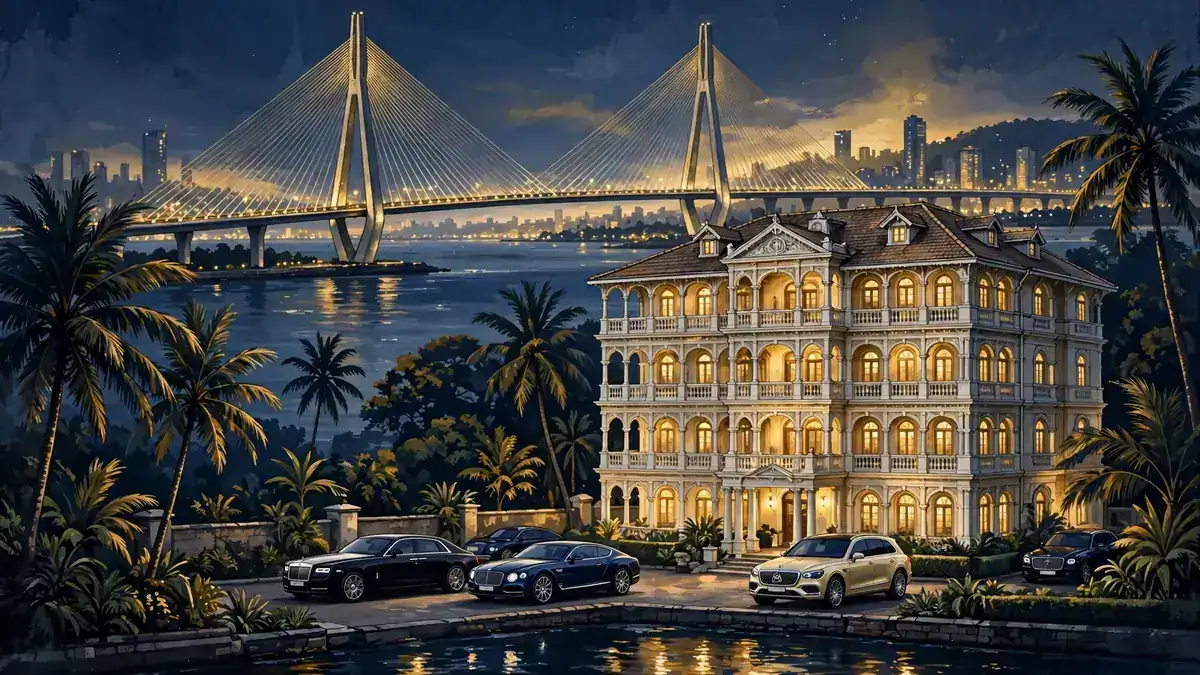
His car collection is one of the most reported in Bollywood, and the names recur across outlets: a Bentley Continental GT, a Land Rover Range Rover Autobiography, a Mercedes-AMG G63, an Audi R8, an Audi A8 L, a Lexus LM 350h, and a Mercedes-AMG SL 55 added in late 2024, according to Zoom TV. Valuations vary by report — the Bentley has been listed anywhere from ₹3.5 crore to ₹8 crore depending on the variant and the outlet — so the sensible way to read the collection is as a fleet worth roughly ₹15–20 crore in total. He is also reported to own a Harley-Davidson Fat Boy motorcycle, valued at around ₹20 lakh, and a watch collection that includes a Richard Mille, a Rolex Cosmograph Daytona and a Patek Philippe.
None of this is unusual for a star at his level; what stands out is how much of the wealth sits in one asset. If the Krishna Raj bungalow is really worth ₹250 crore, it accounts for more than half of the lower end of his estimated net worth. That is a family home first and an investment second, and it means the headline net worth number is less liquid than it looks: most of it is bricks, land and a football club, not cash in a bank.
Business Ventures: Mumbai City FC, Production and ARKS
Ranbir’s most durable business bet is football. He became co-owner of Mumbai City FC in 2014, when he and chartered accountant Bimal Parekh won the bid for the Mumbai franchise in the Indian Super League. In November 2019, the City Football Group — the Manchester City owners — bought a 65% stake, leaving Ranbir and Parekh with the remaining 35%. Then, in December 2025, the City Football Group divested its stake and the club returned to the full control of its founding owners, Ranbir and Parekh, as the club itself confirmed. The club has won two ISL League Winners’ Shields and two ISL Cups, and Ranbir has said his ambition is to make it the best club in Asia. The ISL itself faces an uncertain period, with no confirmed calendar and unresolved contracts, so the club is a long-term holding rather than a cash machine — but it is also the venture he talks about with the most visible enthusiasm.
His production venture has had a rougher ride. He formed Picture Shuru Productions with director Anurag Basu, and its first release was Jagga Jasoos (2017), a musical adventure that took years to make and failed commercially. Ranbir later said he regretted the venture into production — a candid admission, and one reason he has been slower to put his own money behind films since. The company remains part of his story, but it is not currently the engine of his wealth.
More recent is ARKS, the lifestyle brand he announced on his 42nd birthday in September 2024. Details have been thin so far, and the brand has not yet become a major public venture, but it signals where his interests are heading: beyond acting, into products and businesses that carry his name. He has also been reported to hold a stake in the music-streaming service Saavn. Taken together, the ventures show a pattern: he invests in things he personally cares about — football, film, music, lifestyle — rather than in a spread of anonymous deals, and he is willing to stay with a holding through lean years.
Personal Life: Alia Bhatt, Raha and Family
Ranbir married Alia Bhatt on 14 April 2022, in a small ceremony at their home in Mumbai. The wedding was deliberately low-key by Bollywood standards: family and close friends, no big public spectacle, and the couple have kept much of their private life that way since. Their daughter, Raha Kapoor, was born on 6 November 2022. The couple are frequently photographed together at work and in public, but they have been careful about how much of Raha’s life they share, and they have spoken about wanting her to have as normal a childhood as a film family’s child can have.
Before the marriage, Ranbir’s relationships were a staple of the gossip press — most notably with Deepika Padukone, his co-star in Bachna Ae Haseeno and Yeh Jawaani Hai Deewani, and with Katrina Kaif, his co-star in Ajab Prem Ki Ghazab Kahani and Jagga Jasoos. He has rarely discussed those relationships in detail, and this biography does not dwell on them: they are part of the public record, but they are not the story of his career.
Family remains the centre of his life outside work. His mother, Neetu Singh, is a regular presence at family events and has returned to acting in recent years. His sister Riddhima lives in Delhi with her family. The wider Kapoor clan — cousins Kareena and Karisma, uncles Randhir and the late Rajiv Kapoor — form one of the most connected families in Indian film, and Ranbir is now, at 44, one of its senior working members. The move into Krishna Raj with his own young family is the clearest sign of that shift: the house his grandfather built is now his house, and the family line runs through him.
He is also known for his love of football — he plays regularly, follows the sport closely, and his Mumbai City FC ownership grew out of that fandom rather than the other way round. He supports charities and causes quietly, without the public campaigns some stars run, and he is famously private in interviews, giving little away about his views or his daily life. That privacy is part of his appeal: in an industry that rewards oversharing, he has built a career on keeping something back.
Awards and Recognition
Ranbir has won seven Filmfare Awards from fourteen nominations, a record that puts him among the most awarded actors of his generation. The list tells the story of his career in miniature: Best Male Debut for Saawariya (2007); the Critics Award for Best Actor, given jointly for Wake Up Sid, Ajab Prem Ki Ghazab Kahani and Rocket Singh (2009), and again for Rockstar (2011); and four Best Actor awards — for Rockstar (2011), Barfi! (2012), Sanju (2018) and Animal (2023). He has also won six IIFA Awards, seven Zee Cine Awards, ten Stardust Awards and more than fifty honours in total across his career, according to the awards listings compiled on Wikipedia.
The recognition has gone beyond film awards. He has appeared on the Forbes India Celebrity 100 list, and in 2026 he was named to the TIME 100 list of the most influential people in the world — a rare honour for a Hindi film actor, and one that arrived in the same year as his biggest-ever film release. The TIME listing reflects something the awards do not quite capture: Ranbir’s standing is no longer just about acting. He is now one of the faces Indian cinema shows the world, and the Ramayana release is the industry betting that face on its largest-ever stage.
| Year | Film | Filmfare honour |
|---|---|---|
| 2008 | Saawariya | Best Male Debut |
| 2010 | Wake Up Sid / Ajab Prem Ki Ghazab Kahani / Rocket Singh | Critics Award for Best Actor (joint) |
| 2012 | Rockstar | Best Actor; Critics Award for Best Actor |
| 2013 | Barfi! | Best Actor |
| 2019 | Sanju | Best Actor |
| 2024 | Animal | Best Actor |
Controversies and Public Scrutiny
A career this long, lived this publicly, has not been free of controversy, and an honest biography has to record it. The most serious episode came in October 2023, when Ranbir was questioned by the Enforcement Directorate in connection with the Mahadev online betting-app case, over endorsements linked to the app. He was summoned and questioned; no charges against him have been reported, and the episode did not lead to any public case against him. It did, however, put a spotlight on the endorsement economy that pays stars like him — the same brand deals that make up a large share of his income — and on how little due diligence sometimes sits behind them.
Animal brought a different kind of scrutiny. The film was attacked by critics and commentators for its violence and for what they saw as regressive treatment of women, and the debate ran for weeks after release. Ranbir himself has defended the film and the character, while acknowledging that the film was designed to provoke a reaction. The argument matters for this biography because it marks a shift: the actor once known for charming romantic leads is now the actor at the centre of Indian cinema’s loudest arguments about what films should show.
There have been smaller storms too — a beef remark in a 2011 interview that drew criticism from some quarters, and the usual cycle of gossip around his relationships before his marriage. None of these derailed his career, and none of them is the reason audiences buy tickets. But they are part of the record, and the pattern they show is consistent: Ranbir rarely apologises publicly, rarely explains himself at length, and lets the next film do the talking. So far, the next film usually has.
Frequently Asked Questions
How old is Ranbir Kapoor?
Ranbir Kapoor was born on 28 September 1982 in Mumbai, which makes him 44 years old as of November 2026. He turned 44 on 28 September 2026, just weeks before the release of Ramayana: Part 1.
What is Ranbir Kapoor’s net worth in 2026?
His estimated net worth in 2026 is $45–50 million, roughly ₹345–450 crore. Celebrity Net Worth anchors the figure at $50 million, while Indian outlets including HerZindagi and Koimoi report ₹345–400 crore. The range reflects real disagreement between sources, not a single settled number.
Who is Ranbir Kapoor’s wife?
Ranbir Kapoor is married to actress Alia Bhatt. They married on 14 April 2022 in a small ceremony at their Mumbai home, and their daughter Raha Kapoor was born on 6 November 2022.
What was Ranbir Kapoor’s first film?
His acting debut was Saawariya (2007), directed by Sanjay Leela Bhansali, opposite Sonam Kapoor. The film failed commercially, but Ranbir won the Filmfare Award for Best Male Debut for his performance.
How many Filmfare Awards has Ranbir Kapoor won?
He has won seven Filmfare Awards, including four Best Actor awards for Rockstar (2011), Barfi! (2012), Sanju (2018) and Animal (2023), plus a Best Male Debut award and Critics Awards for his 2009 films and Rockstar.
What is Ranbir Kapoor’s biggest hit movie?
Animal (2023) is his highest-grossing film, with a worldwide gross of over ₹915 crore according to trade tracker Sacnilk. Before that, Sanju (2018) held the record with over ₹587 crore worldwide.
What are Ranbir Kapoor’s upcoming movies?
Ramayana: Part 1 released on 5–6 November 2026 with Ranbir as Lord Rama, and Part 2 is reported for Diwali 2027. Love & War, directed by Sanjay Leela Bhansali and co-starring Alia Bhatt and Vicky Kaushal, is reported for 21 January 2027. Animal Park and Brahmāstra: Part Two are also in the pipeline.
Is Ranbir Kapoor related to Raj Kapoor?
Yes. Raj Kapoor was his grandfather, and Ranbir is a fourth-generation member of the Kapoor film family. His father was Rishi Kapoor, his mother is Neetu Singh, and his great-grandfather Prithviraj Kapoor founded Prithvi Theatre.
Final Thoughts
Ranbir Kapoor’s biography reads like a story in three acts. The first act was inheritance: a famous name, a famous house, and a debut that failed. The second was proof: a run of performances — Wake Up Sid, Rockstar, Barfi! — that showed the name was not the reason he was working. The third, still being written, is scale: Sanju, Animal, and now Ramayana, films that bet the biggest budgets in Indian cinema on one actor’s ability to carry them.
What ties the three acts together is patience. He waited through the New York training, waited through the lean years instead of grabbing safe hits, and waited four years between Sanju and Brahmāstra. The fortune — $45–50 million by our estimate, anchored by Celebrity Net Worth’s $50 million — is the reward for that patience as much as for the talent. It is also, for now, mostly tied up in a family home, land, and a football club, which tells you something about the man: he buys what he loves and keeps it.
The next two years will decide the ending of this chapter. If Ramayana and Love & War land the way their makers hope, Ranbir Kapoor will have done something no Kapoor before him did: carried Indian cinema’s biggest-ever productions to a global audience. If they do not, he will still have the seven Filmfares, the two career-defining comebacks, and a family home full of history. Either way, the biography so far is already one of the fullest in modern Bollywood — and it is far from finished.
Sources and Reporting
Figures and facts in this biography come from named sources, checked against each other where they disagree. The net worth range rests on Celebrity Net Worth ($50 million) and Indian reporting from HerZindagi (₹345–400 crore, July 2026), Koimoi (₹369–400 crore, April 2026) and Zoom TV (₹345 crore, September 2026). Career, family and awards details follow Wikipedia‘s Ranbir Kapoor biography and filmography, cross-checked against Bollywood Hungama box-office tracking and Hindustan Times reporting. Property and lifestyle reporting comes from Hello! Magazine India and Bollywood Bubble. The Mumbai City FC ownership history follows The Bridge and the club’s own statements. Release dates for Ramayana and Love & War follow trade reporting from The Times of India and Forbes India listings.
How we estimated: celebrity net worth is never a public fact — no actor publishes a balance sheet. We anchor on Celebrity Net Worth’s $50 million and the ₹345–400 crore cluster from Indian outlets, publish the range where they disagree, and set aside unsourced outlier figures (including a $110 million claim from a low-quality site). Fee figures are reported fees, not confirmed contracts, and property values are reported valuations. Where sources conflict, we say so rather than picking the biggest number. Figures will move as Ramayana box-office results and new reporting come in, and this page will be updated when they do.