Mohamed Salah is 1.75 metres tall — 5 feet 9 inches. That is the figure listed by Wikipedia, FotMob, StatMuse, Sportradar and VJStats, and it has stayed the same across his whole senior career, from his early days at Basel to his nine years at Liverpool and his fresh start at Trabzonspor in 2026. As of November 2026, the Egyptian winger is 34 years old, weighs around 71 kg (156 lbs), and is playing in Turkey after leaving Liverpool at the end of the 2025–26 season.
Salah’s height sits right in the middle of the range for elite attacking players. He is taller than Lionel Messi, the same height as Neymar, and shorter than Cristiano Ronaldo, Erling Haaland and Harry Kane — yet his goal record at the top level stands next to any of them. This page gives you the verified number in every unit, the sources behind it, how his build shapes the way he plays, comparisons with the game’s biggest names, and the full 2026 picture: his Trabzonspor move, his salary, his net worth, and his life off the pitch.
Last updated: 15 November 2026. By Celebamerica Editorial Staff.
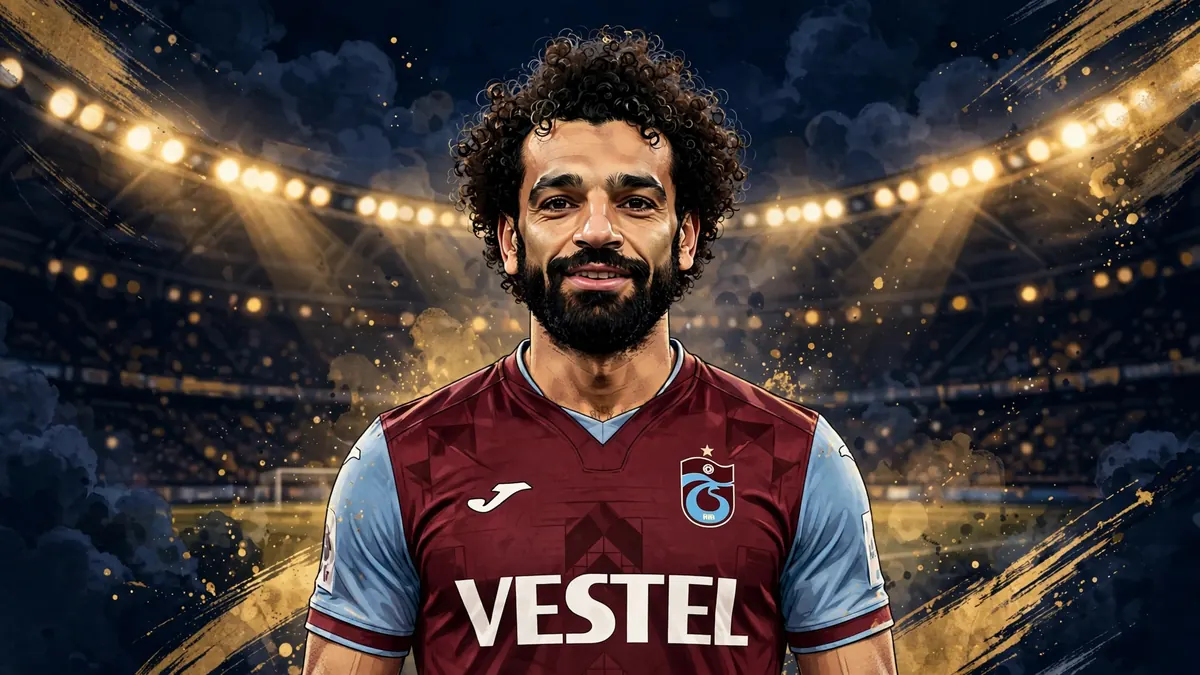
Mohamed Salah Height: Quick Facts
| Full Name | Mohamed Salah Hamed Mahrous Ghaly |
|---|---|
| Date of Birth | 15 June 1992 (age 34 as of November 2026) |
| Birthplace | Nagrig, Basyoun, Gharbia Governorate, Egypt |
| Height | 1.75 m / 175 cm / 5 ft 9 in |
| Weight | 71 kg (156 lbs) — listed as 71–72 kg by some sources |
| Position | Right winger (left-footed) |
| Current Club | Trabzonspor (Süper Lig, Turkey) — joined 3 August 2026 on a free transfer |
| Shirt Number | 10 at Trabzonspor |
| National Team | Egypt — captain |
| Estimated Net Worth | $90 million–$140 million (Celebrity Net Worth: $140 million) |
| Peak / Primary Income Sources | Club wages, endorsements (Adidas, Pepsi, Vodafone, DHL), image rights |
| Key Works | 257 goals in 442 Liverpool appearances; two Premier League titles; 2019 Champions League winner |
Table of Contents
- Mohamed Salah Height: Quick Facts
- How Tall Is Mohamed Salah?
- Mohamed Salah Height in cm, Feet and Inches
- The Sources Behind the Number
- Why Salah’s Height Works on the Pitch
- Mohamed Salah Height vs Other Stars
- Mohamed Salah Weight and Build
- From Nagrig to Trabzonspor: The Career Behind the Number
- Mohamed Salah Salary and Net Worth in 2026
- Personal Life, Family and Charity
- What Fans Get Wrong About Salah’s Height
- FAQs
- Final Thoughts
- Sources & Reporting
How Tall Is Mohamed Salah?
Mohamed Salah stands 1.75 metres tall, which converts to 5 feet 9 inches. The number is one of the most consistent physical facts in football: Wikipedia lists “1.75 m (5 ft 9 in)” in his personal information box, FotMob’s player profile answers “How tall is Mohamed Salah?” with “175 cm tall. Or 5 ft 9 in.”, StatMuse records his height as 1.75 m, Sportradar lists 175 cm, and VJStats also gives 175 cm. Short Box, a specialist height site that checked the figure in July 2026, put it the same way: “Mohamed Salah is 1.75 meters tall, which is about 5 feet 9 inches. That number is agreed upon by most sources, such as Wikipedia and Transfermarkt.”
For a footballer, 5 ft 9 in is a shade under the average height of a Premier League outfield player, which sits close to 6 ft, but it is a very common height for wide attackers and playmakers. The modern game is full of wingers and forwards in the 5 ft 7 in to 5 ft 10 in band: quick enough to beat a defender over five yards, low enough to change direction at full speed, and strong enough to hold off a challenge. Salah has built one of the great careers of his generation inside that band, and his height is part of the reason his game works the way it does — not a limit on it.
There is also a simple visual test that anyone can run. Watch Salah stand next to Virgil van Dijk, who is 6 ft 4 in, and the gap is obvious — around seven inches. Put him next to Andy Robertson, listed at 5 ft 10 in, and the two look almost level, with Robertson a touch taller. Put him beside Sadio Mané, around 5 ft 8 in to 5 ft 9 in, and they look the same height. The eye test lines up with the listed figure, which is not always the case with footballers: listed heights in the sport are often rounded up by an inch or two, and a few famous names carry figures that do not survive a team photo. Salah’s 1.75 m survives both the data and the photos.
The short answer: Mohamed Salah is 1.75 m (5 ft 9 in) tall and weighs about 71 kg. Every major database agrees, and the figure has not changed since his Liverpool debut in 2017.
Mohamed Salah Height in cm, Feet and Inches
Different countries and different sites state the same measurement in different units, which is where a lot of the confusion comes from. Here is the full conversion, all from the same 1.75 m base figure:
| Unit | Measurement |
|---|---|
| Metres | 1.75 m |
| Centimetres | 175 cm |
| Feet and inches | 5 ft 9 in |
| Inches only | 69 inches |
| Millimetres | 1,750 mm |
The conversion is exact: 175 cm divided by 2.54 cm per inch gives 68.9 inches, which rounds to 5 ft 9 in. Anyone searching “Mohamed Salah height in feet” wants 5 ft 9 in, and anyone searching “Mohamed Salah height in cm” wants 175 cm — both are the same measurement, and both are correct.
One quirk worth knowing: some databases list Salah at 175 cm while others round to 1.75 m, and a small number of fan-run pages list 177 cm (5 ft 10 in). The 177 cm figure has no backing from any major database or club listing, and it most likely comes from a measurement taken in boots or a simple rounding error that got copied from site to site. The 175 cm figure is the one carried by Wikipedia, FotMob, StatMuse, Sportradar and VJStats, and it is the figure this article uses throughout.
The Sources Behind the Number
Height figures for footballers are only as good as the sources behind them, so here is how each of the main listings lines up — and where the few disagreements sit.
Wikipedia lists Salah’s height as 1.75 m (5 ft 9 in) in the personal information box of his article, a figure that has been stable across the page’s history. Wikipedia also records his full name, Mohamed Salah Hamed Mahrous Ghaly, his birth date of 15 June 1992, and his birthplace of Nagrig, Egypt — and, as of its latest 2026 update, his current team as Trabzonspor, with league appearances and goals updated to 23 August 2026.
FotMob, the live-stats platform, lists Salah as a 34-year-old right winger for Trabzonspor, born 15 June 1992, left-footed, and answers its own FAQ “How tall is Mohamed Salah?” with “175 cm tall. Or 5 ft 9 in.” FotMob also carries his 2026–27 Süper Lig numbers: 9 goals and 3 assists in 913 minutes, with an average rating of 8.02 — the kind of form that has put him at the top of the Turkish league’s scoring charts in his first months there.
StatMuse records Salah at 1.75 m and 71 kg, born 15 June 1992 in Basyoun, Egypt. Sportradar, the sports data provider, lists him at 175 cm, wearing shirt number 10 for Trabzonspor, left-footed. VJStats gives the same pair of numbers: 175 cm and 71 kg.
Against that wall of agreement, the outliers are thin. Short Box’s July 2026 height guide notes that “some fan sites list it a little higher, at 177 cm, and one even says it’s 6 feet, which seems more like a typing mistake than a real measurement.” An older Fox Sports listing once gave 5 ft 8 in. Neither figure appears in any major database, and the 6 ft claim — which would make Salah 1.83 m — is plainly wrong to anyone who has seen him next to his teammates. The honest range across sources is 5 ft 8 in to 5 ft 10 in, with 5 ft 9 in the figure every authoritative source settles on.
There is a wider point here about how football heights are recorded. Clubs measure players in bare feet at medicals, but the number that reaches the public often passes through several hands: a club programme, a league database, a stats site, then dozens of biography pages that copy each other. Small errors get frozen in place. Salah’s figure has survived that chain unusually cleanly, which is why this article treats 1.75 m as settled rather than as an estimate.
Why Salah’s Height Works on the Pitch
Salah’s game is built on three things — acceleration over the first five yards, the ability to cut inside from the right wing onto his left foot, and balance when a defender leans into him — and his height feeds all three. At 1.75 m with a listed weight of 71 kg, his centre of gravity sits low. That is the physical trait coaches talk about when they describe a player as hard to knock off the ball: a lower centre of gravity means a defender has to get lower still to shift him, and at full sprint that is a hard thing to do without fouling.
The cut-inside move is the clearest example. Salah receives the ball wide on the right, drops a shoulder, and drives infield onto his left foot. The move needs a short, sharp change of direction at pace, and shorter players change direction faster because there is less body mass to redirect. Taller wingers can do it too, but they tend to rely more on long strides and straight-line speed; Salah’s version is tighter, which is why full-backs who know exactly what he is going to do still cannot stop it. Nine years at Liverpool, 257 goals in 442 appearances, and a record-equalling haul of left-footed Premier League goals were built on that one move, repeated hundreds of times.
His height also shapes his heading game — or rather, the lack of fuss around it. At 5 ft 9 in, Salah is not a target man, and nobody asks him to be one. He wins headers he should not win by timing his jump and reading the flight of the ball, and he has scored headed goals at every club he has played for, but heading is a bonus in his game rather than a weapon. That matters for how a team uses him: he plays off the shoulder of the last defender or drifts wide, rather than standing in the penalty area waiting for crosses. His teams have always had a taller striker to do that job.
There is a defensive side to it as well. Modern wingers are asked to press, and pressing is about short bursts and quick turns as much as it is about running. A 1.75 m player with Salah’s build can press in bursts for 90 minutes without the recovery cost a heavier player pays. That is one reason his work rate stayed so high into his thirties, and why, at 34, he is still scoring at a goal-a-game rate in Turkey rather than fading into a bit-part role.
None of this means height does not matter in football. It matters a great deal for centre-backs and goalkeepers, and it matters for strikers who live on crosses. But for a right winger whose game is built on pace, balance and a left foot, 5 ft 9 in is not a compromise — it is close to the ideal build. The list of great wide forwards at or under that height runs long: Messi at 5 ft 7 in, Eden Hazard at 5 ft 9 in, Sadio Mané at around 5 ft 8 in. Salah belongs in that company, and his height is part of the reason why.

Mohamed Salah Height vs Other Stars
Height only means something in comparison, so here is how Salah stacks up against the other forwards of his generation — including the men whose own height pages on this site draw the same questions.
| Player | Height |
|---|---|
| Mohamed Salah | 1.75 m (5 ft 9 in) |
| Lionel Messi | 1.70 m (5 ft 7 in) |
| Neymar | 1.75 m (5 ft 9 in) |
| Kylian Mbappé | 1.78 m (5 ft 10 in) |
| Cristiano Ronaldo | 1.87 m (6 ft 2 in) |
| Harry Kane | 1.88 m (6 ft 2 in) |
| Erling Haaland | 1.95 m (6 ft 5 in) |
Salah is two inches taller than Lionel Messi, who stands 1.70 m (5 ft 7 in), and exactly the same height as Neymar — the two of them would be level in a team photo. He is an inch shorter than Kylian Mbappé at 1.78 m (5 ft 10 in), five inches shorter than Cristiano Ronaldo, and eight inches shorter than Erling Haaland at 1.95 m (6 ft 5 in). Harry Kane, at 1.88 m (6 ft 2 in), is five inches taller than Salah, and the difference shows in their games: Kane is a penalty-box striker who wins headers and holds the ball up, while Salah is a wide forward who beats men with pace and balance.
The comparison with Ronaldo is the most instructive. Ronaldo’s 1.87 m frame gives him one of the great heading records in the sport — he has scored more than 100 headed goals in his career — while Salah’s heading is a useful extra rather than a signature. But the trade runs the other way too: Ronaldo at 34 was already reshaping his game around the penalty area, while Salah at 34 is still beating full-backs on the outside and scoring nine goals in his first ten Turkish league matches. Different builds, different strengths, and no single height that wins.
The Haaland comparison makes the same point from the other end. At 6 ft 5 in, Haaland is a physical outlier — the tallest elite striker of his generation — and his game is built around power, long strides and dominance in the air. Salah cannot play that way and has never tried to. What he can do, and what Haaland cannot, is drop a shoulder at full speed and be past a defender before the defender’s feet have moved. That is a height advantage, not a height problem, and it is why the 5 ft 9 in band has produced so many great wingers.
There is also a useful comparison inside Salah’s own career. His former Liverpool teammate Sadio Mané is listed at around 5 ft 8 in, a touch shorter than Salah, and the two of them formed one of the most feared wide partnerships in Europe for five seasons. Both were quick, low to the ground and hard to knock over; both scored at a rate that taller forwards would envy. The lesson of that partnership is the same as the lesson of the table above: in the wide positions, balance and acceleration beat raw height almost every time.

Mohamed Salah Weight and Build
Salah’s listed weight is 71 kg, or 156 lbs, a figure carried by StatMuse, VJStats and several biography sources. A few sources list 72 kg, and one American listing gives 172 lbs, which converts to about 78 kg and looks like a simple error or an out-of-date figure from his early twenties. The honest range is 71–72 kg, and this article uses 71 kg as the anchored figure.
At 1.75 m and 71 kg, Salah’s body mass index works out to about 23.2, which sits in the middle of the healthy range for an adult man — but BMI is a poor guide for an elite athlete, because it cannot tell muscle from fat. What the numbers actually describe is a compact, densely muscled build: broad shoulders, strong legs, very little body fat. Anyone who has seen Salah’s post-match photos, or the famous image of him holding off a defender twice his width, knows the weight is working muscle, not bulk for its own sake.
That build is not an accident. Salah is known as one of the hardest trainers in the sport, with a routine built around strength work, sprint training and recovery. His physique became a talking point in itself during his Liverpool years, when photos of his upper-body condition circulated every pre-season and his teammates talked openly about how seriously he took the gym. The result is a player who, at 34, is still out-sprinting defenders a decade younger — and still scoring at a goal-a-game rate in a new league.
The weight matters for his height story in a specific way. A 1.75 m player at 71 kg has a power-to-weight ratio that suits explosive movement: enough mass to hold off a challenge, not so much that it slows the first step. If Salah were ten kilos heavier at the same height, he would be stronger in a shoulder-to-shoulder duel but slower off the mark; ten kilos lighter and he would be quicker still but easier to push off the ball. The 71 kg figure is the balance point his whole game is built on, and it is one reason his body has held up through nine seasons of Premier League football and into a new chapter in Turkey.
For readers comparing him with other players, the useful context is that most elite wingers cluster in the same band. Messi is listed at around 72 kg at 1.70 m — heavier per inch than Salah. Mané is listed at around 69 kg. The differences are small, and they track with playing style: the stockier the build, the more the player relies on holding off defenders; the lighter the build, the more on pure pace. Salah sits in the middle, which is where his game sits too.
From Nagrig to Trabzonspor: The Career Behind the Number
Mohamed Salah was born on 15 June 1992 in Nagrig, a farming village in the Basyoun district of Egypt’s Gharbia Governorate, in the Nile Delta. He grew up playing football on the streets of the village and joined the youth ranks of Al Mokawloon, the Cairo club also known as Arab Contractors, making his senior debut as a teenager. His full story — the long bus rides to training, the breakthrough at Basel, the difficult spell at Chelsea, the rebirth at Fiorentina and Roma — is told in detail in our Mohamed Salah biography, and it is worth reading alongside this page because the height question only makes sense inside the career it belongs to.
The short version runs like this. Basel spotted him in 2012 and took him to Switzerland, where his pace and direct running stood out in the Champions League. Chelsea signed him in January 2014, but he barely played under José Mourinho and spent the next eighteen months on loan — first at Fiorentina, then at Roma — rebuilding his reputation. Roma made the move permanent in 2016, and a season of 15 league goals there earned him the move that defined his career: Liverpool, in the summer of 2017, for a fee reported at €42 million.
What followed was one of the great individual runs in Premier League history. Salah scored 44 goals in all competitions in his first Liverpool season, won the Premier League Golden Boot, and went on to win the Champions League in 2019 and the Premier League in 2020 and again in 2025. He finished his Liverpool career with 257 goals in 442 appearances, according to TNT Sports, making him the third-highest scorer in the club’s history, and with 191 Premier League goals — a record-equalling haul of left-footed goals in the competition. He was 34 when he left, and the numbers he left behind put him among Liverpool’s greatest ever players.
The end of that chapter was messier than the middle. Salah signed a two-year contract extension in April 2025, but the 2025–26 season was difficult: he scored only seven Premier League goals, his relationship with head coach Arne Slot broke down, and in March 2026 he announced that he would leave Liverpool at the end of the season. The two sides mutually agreed to terminate the final year of his deal, and Salah left Anfield as a free agent after nine years.
His next move surprised almost everyone. Rather than the Saudi Pro League, where he was heavily linked, or a return to Italy, Salah signed for Trabzonspor, the Turkish Süper Lig club, on 3 August 2026. The move was confirmed by multiple outlets in 2026: Liverpool.com reported on 8–9 November 2026 that he had joined “following the expiration of his contract with Liverpool in the summer”; Sportbible reported on 3 November 2026 that he had signed a two-year deal as a free transfer and was already one of the highest-paid players in the league; TNT Sports reported on 19 October 2026 that he had joined on a free transfer after nine years at Anfield. The deal runs to June 2028, and the reported wage is around €17 million per season — a €10 million annual salary plus a €7 million signing payment in each season, according to reporting cited by The Middle East Icons, with Reuters reporting the same €17 million guarantee plus a share of merchandise proceeds and performance bonuses.
The move has worked on the pitch. Salah made his debut off the bench in Trabzonspor’s opening league game against Kasımpaşa in August, and by early November he was leading the Süper Lig Golden Boot race. TNT Sports reported on 19 October 2026 that he had nine goals in 11 matches in all competitions with four assists; FotMob’s live data credits him with 9 goals and 3 assists in 913 Süper Lig minutes at an average rating of 8.02. Sportbible’s 3 November 2026 report put it at eight goals and three assists in ten league appearances. Whichever count you use, the pattern is the same: a 34-year-old written off by some after a hard final season in England, scoring again at a goal a game in a new country. The height has not changed. The hunger has not either.
Club correction worth knowing: many biography pages still list Liverpool as Salah’s current club, because they were written before the summer of 2026 and never updated. As of November 2026, his current club is Trabzonspor. He announced his Liverpool departure in March 2026 and signed for Trabzonspor on a free transfer on 3 August 2026.
Mohamed Salah Salary and Net Worth in 2026
Salah’s height is the question that brings most readers here, but the money question follows close behind, and the two are linked: his build and his game are what earned the contracts. Here is the money picture as of November 2026, with the sources named and the disagreements kept visible.
Net worth. The honest range across sources is $90 million to $140 million. Celebrity Net Worth puts the figure at $140 million, a number repeated by Liverpool.com in July 2026 and by Sports Brief in its June 2026 ranking of the richest players at the 2026 World Cup, where Salah and Harry Kane were listed jointly at $140 million each. At the other end of the range, SportsDunia and several other 2026 profiles give $90 million, and SportsDunia’s contract guide states the range outright as $90–$140 million. Celebrity Net Worth says its figure folds in career playing salary of more than $160 million earned through 2026 plus endorsement income. No source publishes audited accounts, so a range is the honest way to state it — and the $140 million end is the figure the best-known estimator currently anchors on. For the full breakdown of his earnings, contracts and endorsements, see our Mohamed Salah net worth profile on GuideNetWorth.
Salary. At Liverpool, Salah’s final contract paid a reported £400,000 a week, or £20.8 million a year, according to wage data from FBref based on Capology figures — a figure that made him the second-highest-paid player in the Premier League behind Erling Haaland. That contract, agreed in April 2025, was terminated early by mutual agreement in the summer of 2026. At Trabzonspor, the reported package is around €17 million (about $19 million) per season: a €10 million salary plus a €7 million signing payment in each season of his two-year deal, with a 20% share of merchandise sold under his name and performance bonuses on top, according to reporting cited by The Middle East Icons and Reuters. Sportbible’s November 2026 report adds that he became one of the highest-paid players in the Turkish league, and that the chance to focus entirely on his football — rather than the money alone — drove the decision. The wage figure is reported, not disclosed: neither the club nor the player has published the terms.
Annual earnings. Forbes estimated that Salah earned $55 million in its 2025 football earnings period — $35 million on the field and $20 million off it. The off-field money comes from long-term deals with Adidas, Pepsi, Vodafone Egypt and DHL, and from his image rights company, Salah UK Commercial Ltd, which SportsDunia reports holds nearly £37 million in assets. His commercial standing in the Middle East and Africa is unmatched by any other footballer: Sports Brief’s World Cup wealth ranking describes him as “the most commercially dominant athlete across Middle Eastern and African markets,” and that dominance is why his endorsement income has stayed above $15–$18 million a year even as his club salary changed.
What the money has bought. Salah owns property in Egypt and England, including the family home in London that has been described in the press as strikingly minimal — his wife Magi has joked that it looks like a hospital, all white walls and clean lines. His car collection has been covered widely, though the details change with each new purchase and are not the focus of this page. What is documented, and far more interesting than the cars, is what he has put back into Nagrig: a school, a hospital, a mosque, a youth centre and an ambulance unit in his home village, funded from his own earnings, plus repeated donations to hospitals and charities across Egypt.
Personal Life, Family and Charity
Salah married his childhood sweetheart, Magi Sadeq, on 17 December 2013 in their hometown of Nagrig, before the fame and before the money. The two grew up in the same village, attended the same school — Mohammed Eyad Al Tantawi School, where Magi’s parents both taught — and were together for years before the wedding, which was attended by thousands of local residents. Magi, born in 1994, studied biotechnology at Alexandria University and has stayed almost entirely out of the public eye, a deliberate choice the family has kept for more than a decade.
The couple have two daughters: Makka, born in 2014 in London while Salah was at Chelsea, named after the holy city of Mecca; and Kayan, born in February 2020. Those two children are the ones named by Essentially Sports, Athlon Sports, SportsDunia and our own Mohamed Salah biography. One November 2026 blog, OhMyFootball, reports a third child, a son named Lail born in September 2026 — but no major outlet has confirmed that, and it conflicts with the family picture carried by every other source, so this article notes it as an unconfirmed report rather than a fact. If a reputable outlet confirms it, this page should be updated.
Salah is a practising Muslim, and his faith is visible in his public life: the sujood celebration after goals, the Ramadan observance during the season, and the naming of his eldest daughter. He has spoken about how his faith steadies him, and it is part of why he is held up as a role model far beyond football — in Egypt, where he is the country’s most famous living sportsman, and in England, where his presence at Liverpool coincided with a measurable fall in anti-Muslim hate crime in Merseyside, according to academic research that made headlines during his peak years.
The charity work is the through-line of his personal life. Salah has funded a school, a hospital, a mosque, a youth centre and an ambulance unit in Nagrig, and he and Magi return to the village every Ramadan to distribute food, medical supplies and other help to residents. He has donated to hospitals in Cairo, funded treatment for children with serious illnesses, and supported food and education programmes across Egypt, including during the pandemic and after national emergencies. Magi supervises much of the charity work in Egypt, according to Arab News reporting, and neighbours say she helps newlywed couples in the village with home appliances and other essentials. It is a side of Salah that has nothing to do with height or goals, and everything to do with why he is loved in the village he came from.
What Fans Get Wrong About Salah’s Height
A player as famous as Salah collects wrong facts the way a magnet collects pins, and his height is no exception. Here are the claims that circulate, and what the evidence actually says.
“Salah is 6 feet tall.” This one appears on a handful of fan-run biography pages, and it is wrong. At 6 ft, Salah would be 1.83 m — the same height as many centre-backs — and anyone who has watched him stand next to Virgil van Dijk knows that is not the case. Short Box’s July 2026 guide calls the 6 ft listing what it is: most likely a typing mistake that got copied. The authoritative figure is 5 ft 9 in.
“Salah is 177 cm (5 ft 10 in).” A few sites list 177 cm. It is close enough to look plausible, and it may come from a measurement taken in football boots, which add roughly 2 cm. But no major database carries it, and the 175 cm figure is the one Wikipedia, FotMob, StatMuse, Sportradar and VJStats all use. Treat 177 cm as a rounding error, not a rival fact.
“Salah is 5 ft 8 in.” An older Fox Sports listing gave 5 ft 8 in, and the figure still turns up occasionally. It is a single inch below the consensus, and it most likely comes from an early-career measurement or a simple error. The consensus is 5 ft 9 in.
“Salah still plays for Liverpool.” This is the most common stale fact about him, and it is wrong as of the summer of 2026. He announced in March 2026 that he would leave at the end of the season, his contract was terminated by mutual agreement, and he signed for Trabzonspor on 3 August 2026. Biography pages that still say Liverpool were written before the move and never updated. Any page that calls him a Liverpool player in November 2026 is out of date.
“Salah is too short to be a great striker.” This one misunderstands his position. Salah is not a striker and has never tried to be one: he is a right winger whose game is built on pace, balance and a left foot. The great wide forwards of the modern game — Messi at 5 ft 7 in, Hazard at 5 ft 9 in, Mané at around 5 ft 8 in — are all at or below Salah’s height, and all of them scored at rates that taller strikers envy. Height is a tool, not a verdict, and Salah’s tool kit has never depended on it.
“His shoe size is a matter of public record.” It is not. No reliable source publishes Salah’s shoe size, and the numbers that circulate on biography aggregators are guesses. This article does not state one, and readers should treat any site that does with suspicion.
FAQs
How tall is Mohamed Salah?
Mohamed Salah is 1.75 m tall, which is 175 cm or 5 feet 9 inches. The figure is listed by Wikipedia, FotMob, StatMuse, Sportradar and VJStats, and it has stayed the same throughout his senior career.
How tall is Mohamed Salah in feet and inches?
Mohamed Salah is 5 feet 9 inches tall. That is 69 inches in total, converted from his listed height of 175 cm (175 divided by 2.54 cm per inch gives 68.9 inches, which rounds to 5 ft 9 in).
How much does Mohamed Salah weigh?
Mohamed Salah weighs 71 kg (156 lbs), according to StatMuse, VJStats and several biography sources. A few sources list 72 kg, so the honest range is 71–72 kg. At 1.75 m, that gives him a compact, muscular build with a low centre of gravity.
Is Mohamed Salah taller than Lionel Messi?
Yes. Mohamed Salah is 1.75 m (5 ft 9 in), two inches taller than Lionel Messi, who is listed at 1.70 m (5 ft 7 in). Salah is the same height as Neymar (1.75 m), an inch shorter than Kylian Mbappé (1.78 m), and five inches shorter than Cristiano Ronaldo (1.87 m).
What club does Mohamed Salah play for in 2026?
As of November 2026, Mohamed Salah plays for Trabzonspor in the Turkish Süper Lig. He joined on a free transfer on 3 August 2026 after leaving Liverpool at the end of the 2025–26 season, signing a two-year deal. He wears shirt number 10 and was leading the league’s Golden Boot race in his first months at the club.
How old is Mohamed Salah?
Mohamed Salah is 34 years old as of November 2026. He was born on 15 June 1992 in Nagrig, Egypt, and turned 34 in June 2026, shortly before his move to Trabzonspor.
What is Mohamed Salah’s net worth in 2026?
Mohamed Salah’s net worth in 2026 is estimated at $90 million to $140 million. Celebrity Net Worth anchors the top of the range at $140 million, while other 2026 profiles give $90 million. His Trabzonspor deal is reported at around €17 million per season, and Forbes estimated his 2025 earnings at $55 million, including $20 million from endorsements.
Does Mohamed Salah’s height affect his game?
Yes, and mostly in his favour. At 1.75 m and 71 kg, Salah has a low centre of gravity that helps him change direction at full speed, hold off defenders, and cut inside from the right wing onto his left foot — the move his whole career is built on. His height is a disadvantage only in aerial duels, which is why he plays as a winger rather than a target striker.
Final Thoughts
Mohamed Salah is 1.75 m (5 ft 9 in) tall, weighs about 71 kg, and has turned that build into one of the great careers in modern football: 257 goals in 442 Liverpool appearances, two Premier League titles, a Champions League, and now a fresh start at Trabzonspor, where a 34-year-old written off by some is leading the Golden Boot race. His height is not a footnote to that career — it is part of how it works. The low centre of gravity, the balance, the first five yards: those are the tools that made him, and they come in a 5 ft 9 in frame.
The number itself is settled. Wikipedia, FotMob, StatMuse, Sportradar and VJStats all say 175 cm, and the outliers — 177 cm here, 6 ft there — fall apart the moment you check them. What changed in 2026 was not the measurement but the shirt: Liverpool is now the past, Trabzonspor is the present, and the goals have followed him to Turkey. If you came here for a single number, you have it. If you stayed for the career behind it, that is the better story — and you can keep reading it in our celebrity profiles here on CelebAmerica.
Sources & Reporting
Height, weight and biographical facts in this article are drawn from Wikipedia, FotMob, StatMuse, Sportradar and VJStats, all of which list Mohamed Salah at 1.75 m / 175 cm and around 71 kg. The Trabzonspor move and 2026 form are reported by Liverpool.com (8–9 November 2026), Sportbible (3 November 2026), TNT Sports (19 October 2026) and the Associated Press (26 October 2026), with transfer details from SoccerStat. Salary and net worth figures come from Celebrity Net Worth, Forbes, FBref/Capology, Reuters and The Middle East Icons, and family details from Essentially Sports, Athlon Sports, SportsDunia and Arab News. Sources were checked live on 15 November 2026.
How we estimated: height is a measured fact, not an estimate — every major database agrees on 1.75 m, so no range is needed. Net worth is different: no source publishes audited accounts, so this article gives the honest range of $90 million–$140 million and names the source anchoring each end. Salary figures are reported, not disclosed, and are labelled as such. Where a claim rests on a single weak source — such as the November 2026 report of a third child — this article says so rather than presenting it as fact. Figures may differ from private reality, and this page will be updated as new reporting lands.
Source homepages: Wikipedia, FotMob, StatMuse, Sportradar, Liverpool.com, Sportbible, TNT Sports, Forbes, Reuters, Celebrity Net Worth.