Mohamed Salah is one of the defining footballers of his generation: a boy from the Egyptian village of Nagrig who became Liverpool’s record-breaking winger, Egypt’s captain, and one of the most marketable athletes on the planet. As of November 2026, his net worth is estimated at $90 million to $140 million — NetWorth Africa puts the figure at $90 million, while Celebrity Net Worth, in a snapshot dated 6 November 2026, estimates $140 million, built on roughly $160 million in career playing salary and around $18 million a year in endorsements. The range reflects how different outlets count image rights, bonuses and business holdings, and no private fortune of this size is ever audited in public.
Salah’s story changed again in the summer of 2026. After nine seasons at Anfield, two Premier League titles and a Champions League winners’ medal, he left Liverpool as a free agent and signed a two-year deal with Turkish club Trabzonspor in August 2026. Weeks earlier he had captained Egypt at the 2026 FIFA World Cup, leading the Pharaohs to their first-ever World Cup match wins and their first appearance in the round of 16. This biography follows the full arc: the long bus rides from Nagrig to Cairo, the false start at Chelsea, the Italian rebuild, the Anfield years that made him a legend, and the Turkish chapter that began at 34.
Last updated: 12 November 2026. By Celebamerica Editorial Staff.
| Full Name | Mohamed Salah Hamed Mahrous Ghaly |
|---|---|
| Date of Birth | 15 June 1992 (age 34 as of November 2026) |
| Birthplace | Nagrig, Basyoun, Gharbia Governorate, Egypt |
| Estimated Net Worth | $90 million – $140 million (NetWorth Africa: $90M; Celebrity Net Worth: $140M, Nov 2026) |
| Current Club | Trabzonspor (Süper Lig, Turkey) — signed August 2026, two-year deal, free transfer |
| Position | Right winger |
| Former Club | Liverpool (2017–2026): 315 league appearances, 191 league goals; 442 appearances and 257 goals in all competitions |
| National Team | Egypt captain — 122 caps, 68 goals (as of September 2026) |
| Peak Income Sources | Club salary (Liverpool final wage reported at £400,000 per week; Trabzonspor deal reported at about €17 million per season), endorsements of around $18 million a year (Adidas, Pepsi, Vodafone, DHL) |
| Key Honours | Premier League 2019–20 and 2024–25; UEFA Champions League 2019; FA Cup 2022; Carabao Cup 2022 and 2024; four Premier League Golden Boots; African Footballer of the Year 2017 and 2018 |
| Spouse | Magi Sadeq (married 2013); two daughters, Makka and Kayan |
Contents
- From Nagrig to Cairo: Early Life
- First Steps: Al-Mokawloon and Basel
- The Chelsea Setback and the Italian Rebuild
- Liverpool: The Record-Breaking Arrival
- Nine Years at Anfield: Titles, Records and Golden Boots
- Why He Left Liverpool in 2026
- Trabzonspor: The Turkish Chapter
- Egypt Captain and the 2026 World Cup
- The Money: Salary, Endorsements and Net Worth
- Net Worth Growth: Year by Year
- Homes, Cars and Business Interests
- Personal Life: Family, Faith and Charity
- Setbacks and Criticism Along the Way
- Legacy: What Salah Changed
- Frequently Asked Questions
- Final Thoughts
- Sources & Reporting
From Nagrig to Cairo: Early Life
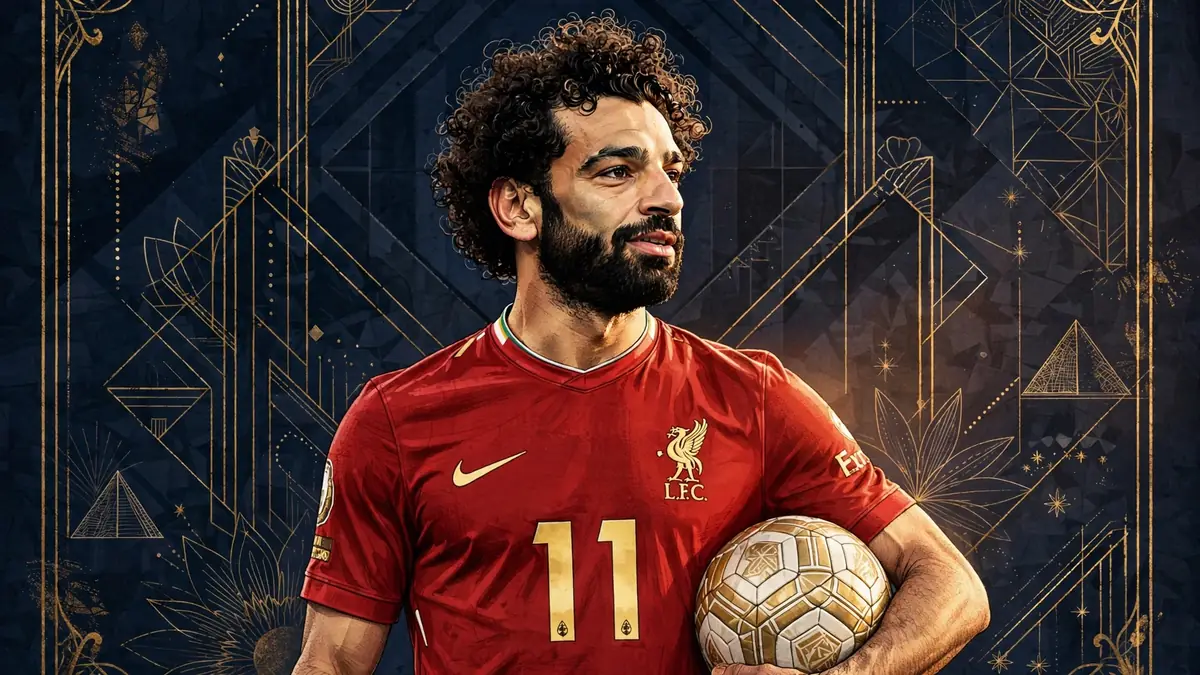
Mohamed Salah Hamed Mahrous Ghaly was born on 15 June 1992 in Nagrig, a farming village in the Basyoun district of Egypt’s Gharbia Governorate, in the Nile Delta. Nagrig is the kind of place where football is played on dusty ground between houses, and Salah’s childhood was modest and ordinary by the standards of the Delta: a middle-class family, school in the morning, football whenever the day allowed it. He grew up watching Ronaldo and Zinedine Zidane on television, and later named Francesco Totti among the players he admired most — a detail that would matter years later, when the two briefly shared a dressing room in Rome.
The first test of Salah’s resolve was not talent but distance. As a teenager he joined the youth setup of Cairo club Al-Mokawloon (Arab Contractors), and the journey from Nagrig to training in the capital took hours each way. Accounts of those years, including a biographical profile by VAVEL, describe a commute that could involve as many as five buses a day. He left home before dawn, trained, studied, and came back late — a routine he kept up for years. It is a part of his story that still gets told in Egypt whenever a young player complains about the grind, because it strips away the glamour and leaves the work.
Salah’s family backed him throughout. His father, who worked in local government administration, and his mother kept him in school while he chased the game, and the discipline of those years — early mornings, long rides, homework on buses — shaped a player who would later be known as one of the hardest trainers in every squad he joined. Nothing about Nagrig suggested a future global star. That is exactly why the village now treats him as its own proof that the distance can be closed.
First Steps: Al-Mokawloon and Basel
Salah made his senior debut for Al-Mokawloon in 2010, at 18, as a raw, quick winger who liked to run at defenders from the right. The Egyptian Premier League was a hard place to learn: physical, direct, and short on patience for teenagers. He learned anyway. By 2012 he had done enough to catch the eye of European scouts, and Swiss club FC Basel signed him that summer.
Basel was the perfect first step abroad. The Swiss Super League was competitive without being punishing, and Basel played in Europe every season, which gave a 20-year-old from the Delta a stage he could never have found at home. Salah won two Swiss Super League titles in his two seasons there, and his performances in the Champions League — most famously against Chelsea in 2013, when he scored in both group games against the London club — put him on the radar of the biggest leagues. Chelsea, the club he had just hurt, came calling.
Those two years in Switzerland did more than add medals. They taught Salah how a professional club works: recovery, nutrition, video analysis, the daily standards that separate a talented winger from a reliable one. He arrived in Basel as a sprinter with a good left foot. He left as a player who understood his job.
The Chelsea Setback and the Italian Rebuild
In January 2014, Chelsea signed Salah for a fee reported at around £11 million. On paper it was a dream move: the Premier League, a Champions League club, a manager in José Mourinho who had personally pushed for the deal. In practice it was a dead end. Mourinho’s Chelsea was built around established stars, and Salah made only a handful of starts across eighteen months. He scored twice in 19 appearances in all competitions, but he never got the run of games a young attacker needs to settle. By the winter of 2015 he was, in the blunt language of the English press, a flop.
The loan to Fiorentina in February 2015 saved his career. In Florence he played regularly, scored nine goals in 26 appearances, and rediscovered the direct, fearless running that had marked him out at Basel. That summer he moved on loan to Roma, where the rebuild became a transformation. Under first Rudi Garcia and then Luciano Spalletti, Salah became a complete inside forward: cutting in from the right onto his left foot, timing his runs behind defences, and adding goals to his pace. He scored 14 league goals in 2015–16, then 15 in 2016–17, and Roma made the move permanent.
Italy gave Salah three things Chelsea could not: minutes, trust, and a tactical education. Serie A defences are organised and cynical, and a winger who learns to beat them learns to beat anyone. When Liverpool came calling in the summer of 2017, they were not buying the Chelsea reject. They were buying a 25-year-old who had just scored 19 goals in all competitions for Roma and looked ready for the biggest stage. The fee, £36.9 million, was a Liverpool club record at the time. Within a year it looked like a bargain.
Liverpool: The Record-Breaking Arrival
Jürgen Klopp signed Salah in July 2017 to play on the right of a front three alongside Roberto Firmino and Sadio Mané, and the fit was instant. Salah scored on his Premier League debut against Watford, and then he simply did not stop. He scored 32 league goals in his first season — a record for a 38-game Premier League campaign — and 44 in all competitions. He won the PFA Players’ Player of the Year, the Football Writers’ award and the Premier League Player of the Season, and he carried Liverpool to the Champions League final in Kyiv, where a shoulder injury in a challenge with Sergio Ramos ended his night early and Liverpool lost to Real Madrid.
What made that first season so startling was not just the volume of goals but the variety: curlers from the edge of the box, tap-ins from six yards, headers, free-kicks, and solo runs that started in his own half. Defenders knew he wanted to cut inside onto his left foot, and they still could not stop it. The Kop took to him at once, and the chant that followed him — “Mo Salah, Mo Salah, running down the wing” — became the soundtrack of Anfield. A statue of sorts followed in the stands: a mural, a song, and the nickname “the Egyptian King”, which has stuck ever since.
Nine Years at Anfield: Titles, Records and Golden Boots
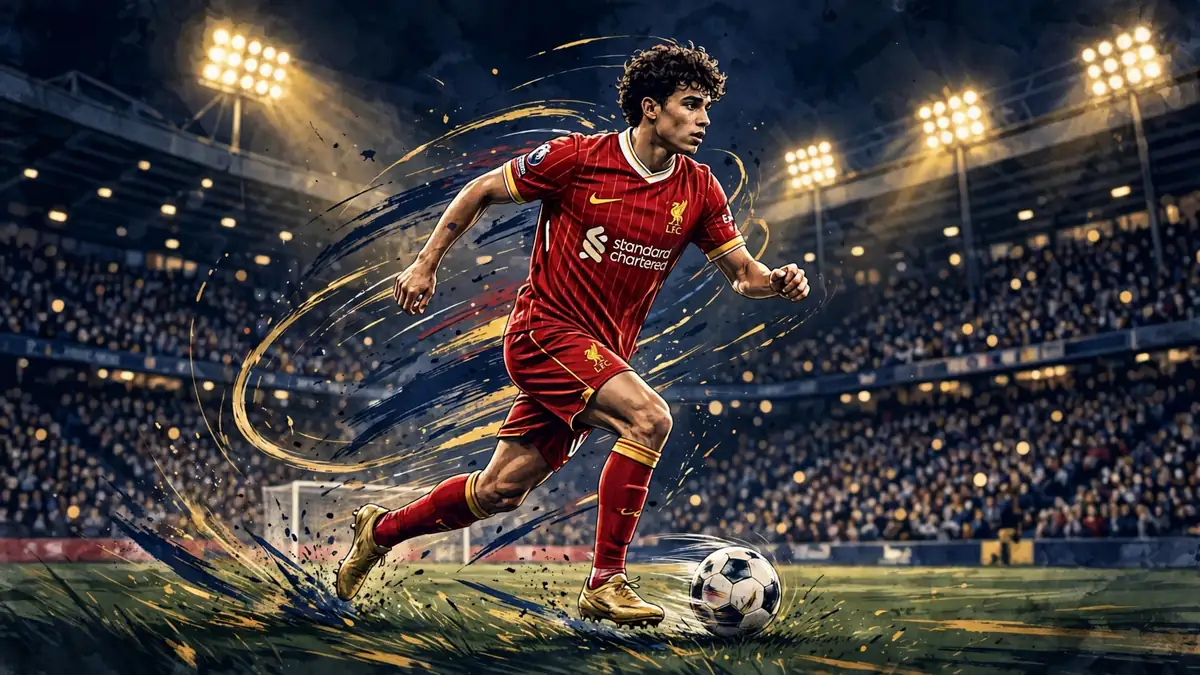
The trophies arrived in a rush after that first season. In 2018–19 Salah shared the Premier League Golden Boot with 22 goals and scored Liverpool’s opening goal from the penalty spot in the Champions League final against Tottenham in Madrid, as the club won its sixth European Cup. The following season he helped deliver the prize Liverpool had chased for three decades: the Premier League title in 2019–20, the club’s first league championship in 30 years, won with seven games to spare.
He kept producing through every phase of Klopp’s Liverpool and beyond. The 2021–22 season brought the FA Cup and Carabao Cup double, another Golden Boot shared with Tottenham’s Son Heung-min, and a second Champions League final. In the summer of 2022 he signed a new three-year contract reported at £350,000 a week, making him Liverpool’s highest-paid player. A further Carabao Cup followed in 2024, and then, under new manager Arne Slot, the 2024–25 season became one of the great individual campaigns in Premier League history: 29 league goals, 18 assists, a record 47 goal contributions in a 38-game season, a fourth Golden Boot, and a second Premier League title. He was named PFA Players’ Player of the Year for a third time.
The numbers he left behind are the measure of the era. Across nine seasons Salah made 442 appearances for Liverpool and scored 257 goals, making him the club’s third-highest scorer of all time, behind only Ian Rush and Roger Hunt. In the league alone he recorded 315 appearances and 191 goals, passing Robbie Fowler to become Liverpool’s all-time leading scorer in the Premier League era. He won the African Footballer of the Year award in 2017 and 2018, finished in the top three of Ballon d’Or voting conversations more than once, and became the highest-scoring African player in Premier League history. Longevity at that level is rare, and it invites comparison with the very best of his generation — the kind of sustained excellence that Lionel Messi’s biography also charts across two decades at the top.
The Anfield record in brief: 442 appearances, 257 goals, 191 league goals. Two Premier League titles (2019–20, 2024–25), one Champions League (2019), one FA Cup (2022), two Carabao Cups (2022, 2024), one Club World Cup (2019) and one UEFA Super Cup (2019). Four Premier League Golden Boots (2018, 2019, 2022, 2025). PFA Players’ Player of the Year 2018, 2022 and 2025.
Why He Left Liverpool in 2026
The end, when it came, was sudden and public. In April 2025 Salah had signed a two-year contract extension that was reported to pay more than £400,000 a week — the richest deal in Liverpool’s history — and was due to run until June 2027. Less than a year later, in March 2026, he announced that he would leave at the end of the 2025–26 season. The club and the player reached a mutual agreement to end the contract a year early, and Salah became a free agent on 30 June 2026, walking away from roughly £20 million in remaining wages according to Celebrity Net Worth’s accounting of the deal.
Reporting around the split pointed to a breakdown in his relationship with manager Arne Slot after Salah was left out of the starting line-up during the 2025–26 season. Biography Diary’s profile of Salah, re-checked in September 2026, cites that deteriorated relationship as the central reason, and ESPN’s reporting on the transfer saga noted that talks with Turkish club Beşiktaş had stalled over demands from Salah’s long-time agent and adviser, Ramy Abbas Issa, before Trabzonspor made their move. Salah himself said little in public beyond confirming his decision. He left Anfield with the supporters’ affection intact and the manner of the exit debated — a nine-year love affair that ended in a disagreement rather than a farewell tour.
Whatever the cause, the football logic was clear. At 34, with his contract cancelled a year early, Salah was free to choose his next club without a transfer fee changing hands, and a long list of suitors in Europe, Turkey and Saudi Arabia made their interest known. He chose Turkey, and he chose a club almost nobody had predicted.
Trabzonspor: The Turkish Chapter
On 6 August 2026, Trabzonspor announced the signing of Mohamed Salah on a free transfer, on a two-year contract running to June 2028. The move stunned football: Trabzonspor, the Black Sea club from Turkey’s fourth-most popular side in ESPN’s words, had beaten richer and bigger clubs to the most famous free agent of the summer. Thousands of fans greeted him at Trabzon Airport, and he was presented as the biggest signing in the club’s history — and its highest-paid player ever.
The terms were never officially disclosed, which is normal for a deal of this kind, but the reporting converged on a figure in the region of €17 million per season. ESPN’s sources put his package at around that level; Celebrity Net Worth breaks the reported deal down as a €10 million annual salary plus a €7 million signing fee in each season; Reuters reported that the package also includes 20% of the proceeds from products sold under his name through the club’s retail operation, plus conditional performance bonuses. Treat the €17 million figure as reported, not confirmed — neither the club nor the player has published the terms.
He made his debut on 16 August 2026, coming off the bench in the 58th minute of a 1–1 draw away at Kasımpaşa, and the start could hardly have gone better. As of early November 2026, Salah had scored nine goals in 11 league appearances for Trabzonspor, with 10 goals and five assists in 13 appearances across all competitions according to SportPesa’s tally dated 3 November 2026. The club sat third in the Süper Lig in early November, three points behind leaders Galatasaray. The Black Sea crowds, who had waited decades for a signing of this size, were getting exactly what they had paid for.
Egypt Captain and the 2026 World Cup
Salah’s international career runs alongside his club story, and in 2026 it produced the finest chapter of his life in an Egypt shirt. He has captained Egypt since the mid-2010s and, as of September 2026, holds 122 caps and 68 goals for his country. He played at the 2018 World Cup in Russia, scoring twice, and reached two Africa Cup of Nations finals, in 2017 and 2021, losing both. In January 2026, during the Africa Cup of Nations, his goal against Ivory Coast in the quarter-final made him the first African player to score against eleven different teams in the tournament’s history.
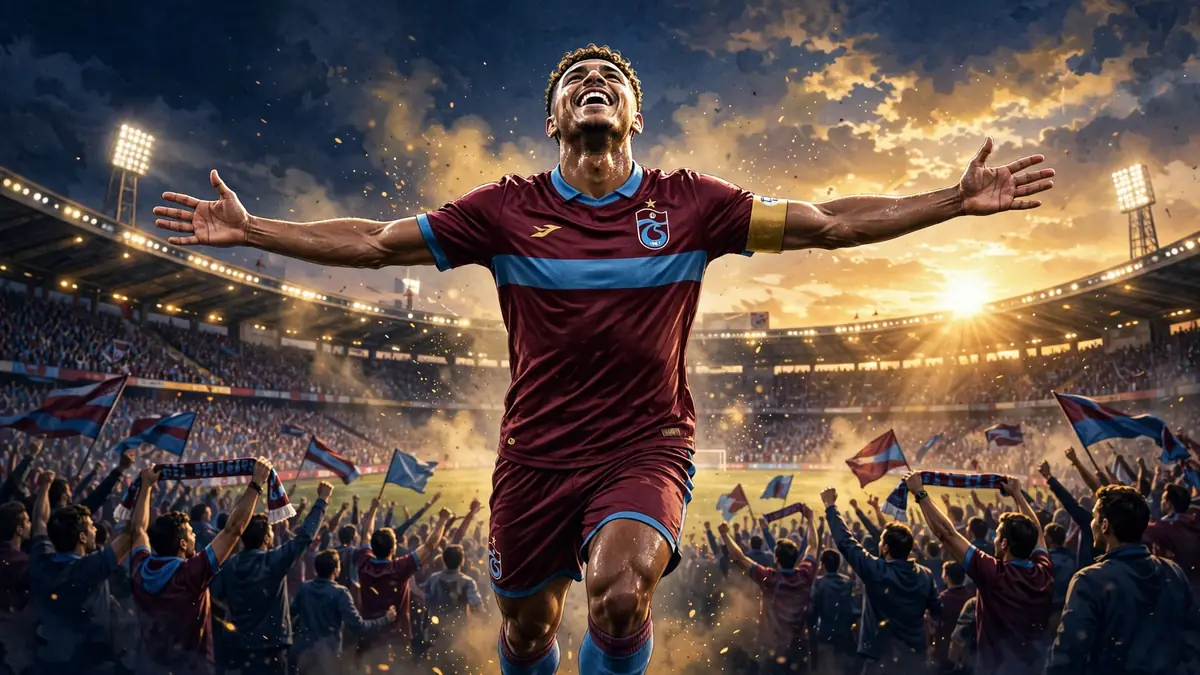
The 2026 FIFA World Cup, held in June and July 2026, was the stage where Egypt finally broke through. Salah, 34 years old at the tournament, captained the side to its first-ever victories at a World Cup. Egypt drew their opener 1–1 with Belgium in Seattle on 15 June — Salah’s birthday — setting up Emam Ashour’s goal. Six days later, on 21 June, he scored one and set up another in a 3–1 win over New Zealand, earning man-of-the-match honours as Egypt secured their first World Cup win in history. The run carried the Pharaohs into the round of 16 for the first time, a result that was celebrated across Egypt as a national milestone and sealed Salah’s standing as the greatest Egyptian footballer of all time.
The Money: Salary, Endorsements and Net Worth
Salah’s fortune was built the old-fashioned way for a footballer: a long career at the top, a salary that rose with every contract, and a commercial profile that eventually rivalled his wages. Celebrity Net Worth estimates that he earned around $160 million in playing salary alone through 2026, and its current estimate of his net worth is $140 million. NetWorth Africa’s 2026 profile puts the figure lower, at $90 million, and other outlets land between the two — SportsDunia’s 2026 guide gives a range of $90 million to $140 million. Our headline figure is that range, anchored by the two named sources, because the truth is that no one outside Salah’s own accountants knows the exact number.
The salary arc tells the story. At Liverpool his first contract paid a reported £120,000 a week. The 2022 renewal lifted him to about £350,000 a week, and the April 2025 extension pushed him above £400,000 a week — roughly £20.8 million a year, or about $27 million — making him Liverpool’s highest-paid player ever. Forbes estimated his total earnings at $55 million during its 2025 football earnings period: $35 million on the field and $20 million off it. His Trabzonspor deal, reported at around €17 million a season, keeps him among the best-paid players outside Europe’s top five leagues, even at 34.
Endorsements are the second pillar, worth an estimated $18 million a year according to Celebrity Net Worth. Adidas is the headline partner — Salah has been one of the brand’s most prominent football ambassadors for years. Pepsi signed him as a Middle East and North Africa ambassador back in 2016, and Vodafone Egypt built campaigns around his goal tally. DHL and a string of Egyptian financial and telecoms brands have also featured him. His appeal is unusual: he is a global star in Europe and a national hero across the Middle East and Africa, which makes him valuable to brands in three markets at once. That commercial reach is what separates him from most players of similar ability, and it is the same blueprint that made David Beckham’s net worth a story of business as much as football.
The comparison with his peers puts the money in context. Erling Haaland’s biography shows a younger star whose wages already match the game’s biggest names, while Kevin De Bruyne’s net worth reflects a similar Premier League career at the very top. Salah’s fortune sits comfortably in that company — built over a longer career, and topped up by a commercial profile few players can match.
Net Worth Growth: Year by Year
Salah was not rich when he left Egypt. His first professional wages at Al-Mokawloon and Basel were modest by European standards, and the real money arrived only after the Liverpool move in 2017. The table below is an estimate built from reported salaries and endorsement figures, not a bank statement — it shows the shape of the rise, not a precise balance.
| Period | What happened | Estimated wealth |
|---|---|---|
| 2010–2012 | Al-Mokawloon debut; move to Basel | Under $1 million |
| 2012–2014 | Two Swiss titles at Basel; Chelsea move | $1–3 million |
| 2014–2017 | Chelsea struggle; Fiorentina and Roma rebuild | $5–12 million |
| 2017–2019 | Liverpool arrival; 44-goal debut season; Champions League win | $25–40 million |
| 2020–2022 | Premier League title; FA Cup and Carabao Cup; £350,000-a-week deal | $50–75 million |
| 2023–2025 | Second league title; record 47 goal contributions; £400,000-a-week extension | $80–120 million |
| 2026 | World Cup with Egypt; free transfer to Trabzonspor on a reported €17M-a-season deal | $90–140 million |
The steepest climb came between 2017 and 2022, when his salary roughly tripled and his endorsement income went from a side-line to a second salary. The 2025 extension, even though it was cut short a year early, locked in the highest wages of his career, and the Trabzonspor deal means his earning power has not fallen off a cliff at 34 — it has simply moved to a different league. One honest caveat: net worth estimates routinely ignore tax, agent fees and lifestyle spending, and they assume endorsement income stays flat. The real number moves every year, which is why the range matters more than any single figure.
Homes, Cars and Business Interests
Salah is famously private about his property, and much of what circulates about his homes comes from reporting rather than public records, so this section sticks to what is documented. His UK commercial vehicle, Salah UK Commercial Ltd, holds nearly £37 million in assets according to SportsDunia’s 2026 reporting — the clearest public window into how his earnings have been structured. That company handles his image rights and commercial income, a standard setup for a player of his standing.
On the housing side, reporting around the Trabzonspor move noted that the family had already bought a home in Bodrum, on Turkey’s Aegean coast, and that his wife Magi’s preference for relocating to Turkey played a part in the decision. During his Liverpool years he lived in the north-west of England, close to the club’s training ground, and he has property interests in Egypt, including in his home village. He has not flaunted any of it. There are no social-media tours of his houses and no public garage reveals — the British press has linked him with luxury cars over the years, but no verified inventory exists, and this article will not invent one.
What is documented, and far more interesting than the cars, is what he has put back into Nagrig. Salah has funded a school, a hospital, a mosque and a youth centre in his home village, and he has made repeated donations to hospitals and charities in Egypt, including during the pandemic and after national emergencies. In a country where footballers are often criticised for forgetting where they came from, Salah’s record in Nagrig is the opposite of the stereotype — and it is the part of his wealth story that his own village talks about most.
Personal Life: Family, Faith and Charity
Salah married his childhood sweetheart, Magi Sadeq, in 2013, before the fame and before the money. The couple have two daughters, Makka and Kayan, and Magi has stayed almost entirely out of the public eye — a deliberate choice the family has kept for more than a decade. When Salah scores, his celebration is often a sujood, a prostration in prayer, and his faith is a visible part of who he is on the pitch. He has spoken rarely about it in interviews, but the gesture is now one of the most recognised in world football.
Off the pitch he is known for a quiet, disciplined life: early nights, careful diet, extra training sessions, and a small circle. Former team-mates describe him as intensely professional and famously reluctant to waste a day. That discipline explains the longevity — a 34-year-old winger who relies on pace does not keep scoring nine goals in 11 league games by accident. It also explains why, when the Liverpool exit turned sour, the criticism stayed focused on the football and not on his conduct: there was nothing in his private life for the press to chase.
His charity work extends beyond Nagrig. He has donated to hospitals in Cairo, funded treatment for children with serious illnesses, and supported food and education programmes in Egypt. He does most of it without announcement, which is why the full scale of it is hard to measure — and why it rarely makes the headlines that his goals do.
Setbacks and Criticism Along the Way
No career this long is free of rough patches, and Salah’s has had three. The first was Chelsea, where eighteen months on the bench could have ended his time in a top league before it began. The second was the 2018 Champions League final, when the shoulder injury against Real Madrid cost him the biggest night of his career and then hampered his World Cup in Russia a month later. The third was the ending at Liverpool: a contract extension signed in April 2025, a falling-out with the manager, and a departure that felt abrupt for a player who had given the club nine years.
The Trabzonspor move itself drew criticism from some pundits, including former Liverpool defender Jamie Carragher, who questioned the step down in competitive level for a player of Salah’s standing. The counter-argument is on the pitch: nine goals in his first 11 league games, a club sitting third in the table, and a player who looks happy and free. Time will tell whether the move was a graceful late-career chapter or a footnote, but the early returns have silenced most of the doubters.
There have also been the usual pressures of fame: transfer rumours to Saudi Arabia that have followed him for years, speculation about his future every summer, and the weight of carrying a nation’s hopes at every tournament. He has handled it by saying very little and letting the goals do the talking — a strategy that has worked for a decade.
Legacy: What Salah Changed
Salah’s legacy is bigger than his goal tally, and it is worth stating plainly. He is the greatest African player in Premier League history by the numbers, and one of the greatest African players of all time by any measure. He changed how English football sees Egyptian and Arab players: before him, no player from the region had been the face of a club as big as Liverpool. After him, the pathway is obvious to every kid in Nagrig, in Cairo, and across the Arab world.
He also changed Liverpool. He arrived at a club that had not won the league in 27 years and left it with two titles, a European Cup, and a statue’s worth of records. He did it without ever being the loudest voice in the room. His legacy is the quiet kind: show up, score, go home, repeat — for nine years, at the highest level, in the hardest league in the world.
For readers who want to keep going, CelebAmerica’s celebrity biography profiles cover the other greats of his era, from the strikers he chased in the Golden Boot race to the playmakers who set him up. Salah’s story belongs in that company — and, as the Trabzonspor chapter shows, it is not finished yet.
Frequently Asked Questions
How old is Mohamed Salah?
Mohamed Salah was born on 15 June 1992 in Nagrig, Egypt, which makes him 34 years old as of November 2026. He celebrated his 34th birthday on the opening day of the 2026 FIFA World Cup, when Egypt drew 1–1 with Belgium.
What is Mohamed Salah’s net worth in 2026?
Estimates range from $90 million to $140 million. NetWorth Africa’s 2026 profile puts his net worth at $90 million, while Celebrity Net Worth estimates $140 million in a snapshot dated 6 November 2026, based on roughly $160 million in career playing salary and around $18 million a year in endorsements. The range exists because private wealth is never publicly audited.
Which club does Mohamed Salah play for now?
Since August 2026, Mohamed Salah plays for Trabzonspor in Turkey’s Süper Lig. He joined on a free transfer after leaving Liverpool, signing a two-year contract that runs to June 2028. He wears the number 10 shirt and made his debut on 16 August 2026 in a 1–1 draw at Kasımpaşa.
Why did Mohamed Salah leave Liverpool?
In March 2026 Salah announced he would leave Liverpool at the end of the 2025–26 season, and the club agreed to end his contract a year early by mutual consent. Reporting around the split pointed to a breakdown in his relationship with manager Arne Slot after he was left out of the starting line-up during the season. He left as a free agent on 30 June 2026 after nine seasons at Anfield.
How many goals did Mohamed Salah score for Liverpool?
Salah scored 257 goals in 442 appearances for Liverpool across all competitions, including 191 league goals in 315 league appearances. That makes him Liverpool’s third-highest scorer of all time and the club’s all-time leading scorer in the Premier League era, ahead of Robbie Fowler.
Is Mohamed Salah married?
Yes. Mohamed Salah has been married to his childhood sweetheart, Magi Sadeq, since 2013. The couple have two daughters, Makka and Kayan, and the family keeps a very private life away from the cameras.
What is Mohamed Salah’s salary at Trabzonspor?
The exact terms were never officially disclosed, but reporting converges on a package worth around €17 million per season. ESPN’s sources put the figure at about €17 million a year, while Celebrity Net Worth describes it as a €10 million annual salary plus a €7 million signing fee in each season, with Reuters reporting additional merchandise revenue and bonuses on top.
What did Mohamed Salah win with Liverpool?
With Liverpool, Salah won the Premier League in 2019–20 and 2024–25, the UEFA Champions League in 2019, the FA Cup in 2022, the Carabao Cup in 2022 and 2024, the FIFA Club World Cup in 2019 and the UEFA Super Cup in 2019. He also won four Premier League Golden Boots and was named PFA Players’ Player of the Year three times.
Final Thoughts
Mohamed Salah’s biography is a story of distance closed: from five buses a day between Nagrig and Cairo to the top of the Premier League, from a Chelsea bench to a Champions League winners’ medal, and from Anfield to a new life on Turkey’s Black Sea coast. His net worth, estimated at $90 million to $140 million as of November 2026, is the financial shadow of that journey — nine seasons of elite wages, a commercial profile that spans three continents, and a late-career deal that keeps him among the game’s best-paid players at 34.
The Liverpool numbers will outlast the arguments about how it ended: 257 goals, two league titles, a European Cup, and a place among the club’s three greatest scorers. The World Cup run with Egypt in 2026 added the one thing his career had lacked — a national-team triumph on the biggest stage. And the Trabzonspor chapter, written at an age when most wingers have slowed down, is still being written. If the first three months are any guide, the Egyptian King is not done yet.
Sources & Reporting
Figures in this article come from named, published sources, checked against live reporting in November 2026. Where sources disagree — most notably on net worth — the article gives the range and names the outlet behind each figure rather than picking one number and presenting it as fact.
- Wikipedia — Mohamed Salah: career statistics, club history, Liverpool totals (315 league appearances, 191 league goals), Trabzonspor move and 2026 World Cup details.
- Celebrity Net Worth — Mohamed Salah: net worth estimate of $140 million (snapshot 6 November 2026), career playing salary of around $160 million, Liverpool wage above £400,000 a week, Trabzonspor deal breakdown.
- NetWorth Africa — Mohamed Salah: 2026 net worth estimate of $90 million.
- ESPN — Why did Salah leave Liverpool for Türkiye’s fourth-most popular club? (6 August 2026): the departure, Beşiktaş talks, and the reported €17 million-a-season Trabzonspor package.
- VAVEL — Mohamed Salah biography and honours: early life in Nagrig, the nine-year Liverpool era and the free transfer to Trabzonspor.
- SportPesa — Mohamed Salah: Biography, Career Stats, Goals & Trophies (3 November 2026): Trabzonspor 2026–27 statistics and contract details.
- SportsDunia — Mohamed Salah Contract: Net Worth and Salary Details (2026): net worth range of $90–$140 million, Liverpool contract history and Salah UK Commercial Ltd assets.
- Liverpool.com — Mohamed Salah handed new Trabzonspor challenge (17 September 2026): early Trabzonspor form, four goals in five league matches at that point.
- Biography Diary — Mohamed Salah Biography (2026): departure reasons, the Slot relationship, and the Bodrum home.
How we estimated: net worth figures are estimates built from publicly reported salaries, contract terms and endorsement income, cross-checked across at least two named sources. Celebrity Net Worth ($140 million) and NetWorth Africa ($90 million) anchor the range used in this article; the Trabzonspor wage (around €17 million a season) is reported by ESPN and others but was never officially disclosed, so it is labelled as reported throughout. Private assets, tax and spending are not public, so the true figure may sit outside the published range. Career statistics are taken from Wikipedia’s records as of November 2026 and from club and competition reporting.