By Celebamerica Editorial Staff | Last updated: 7 November 2026
Khabib Nurmagomedov is 5 feet 10 inches tall (178 cm). That is the figure on his official UFC athlete profile, and it has stayed the same across his whole career, from his UFC debut in 2012 to his retirement as undefeated lightweight champion in 2020. His reach is listed at 70 inches (178 cm), which means his arm span matches his height exactly.
If you have watched him stand next to Conor McGregor, Dustin Poirier or Justin Gaethje and wondered whether the official number tells the full story, you are not alone. Fighters’ listed heights are one of the most argued-over numbers in MMA, and Khabib’s is no exception. This page settles it with the official record, the tale of the tape from his biggest fights, side-by-side comparisons with his rivals, and the full story of how a 5 ft 10 in wrestler from a mountain village in Dagestan retired 29-0 and built a fortune estimated at $25 million to $40 million.
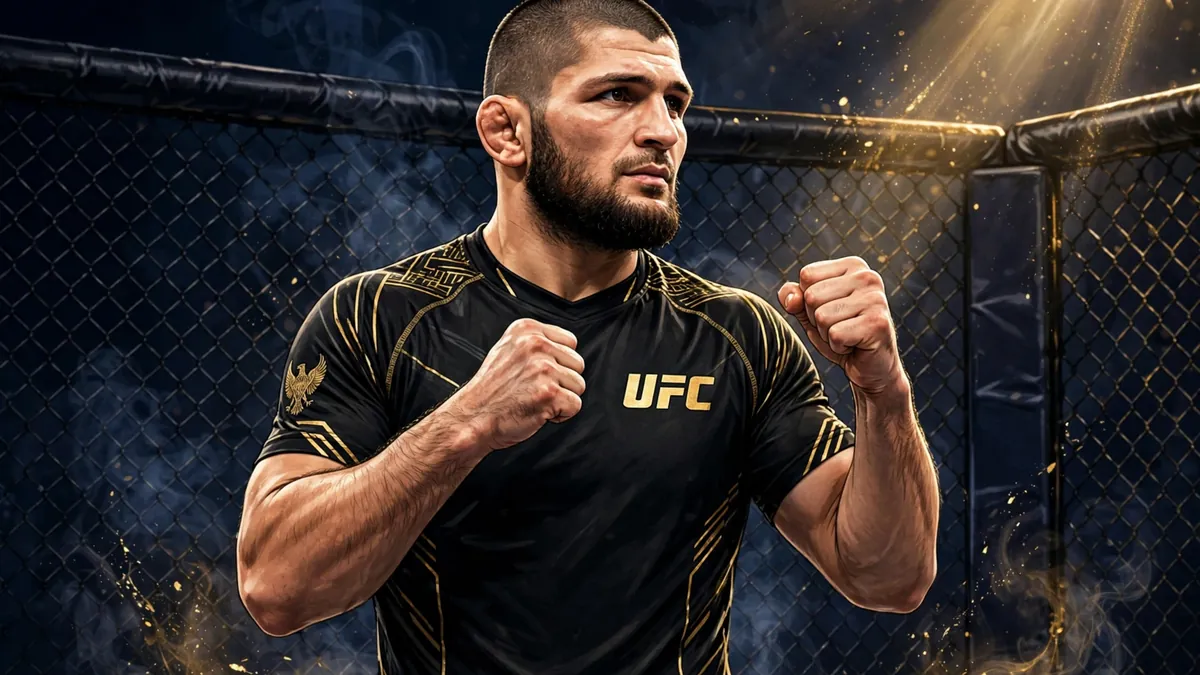
Quick Facts: Khabib Nurmagomedov
| Full Name | Khabib Abdulmanapovich Nurmagomedov |
|---|---|
| Date of Birth | 20 September 1988 (age 38 as of November 2026) |
| Birthplace | Sildi, Dagestan, Russia |
| Height | 5 ft 10 in (178 cm) — official UFC listing |
| Reach | 70 in (178 cm) |
| Weight Class | Lightweight — 155 lb (70 kg) fighting weight |
| Nickname | “The Eagle” |
| Career Record | 29 wins, 0 losses (8 knockouts, 11 submissions) |
| UFC Title | Lightweight champion, April 2018 – March 2021 (longest reign in division history, 1,134 days) |
| Estimated Net Worth | $25 million to $40 million (2026 estimates; see the money section below) |
| Primary Income Sources | UFC fight purses and pay-per-view shares, endorsements and speaking fees, coaching, Eagle FC promotion |
| Key Ventures | Eagle Fighting Championship (Eagle FC), coaching Islam Makhachev and Team Khabib |
Table of Contents
- How Tall Is Khabib Nurmagomedov?
- Khabib Nurmagomedov’s Tale of the Tape
- Khabib vs His Rivals: Height Comparison
- Did Khabib’s Height Help or Hurt His Fighting Style?
- Early Life in Dagestan: The Making of The Eagle
- The Road to the UFC
- The Championship Years: 2018–2020
- Retirement and Life After Fighting
- Khabib Nurmagomedov Net Worth in 2026
- Business Ventures and Endorsements
- Cars, Homes and Lifestyle
- Personal Life and Family
- Controversies and Setbacks
- Frequently Asked Questions
- Final Thoughts
- Sources and Reporting
How Tall Is Khabib Nurmagomedov?
Khabib Nurmagomedov is 5 feet 10 inches (178 cm) tall, according to the UFC’s official athlete profile and the tale of the tape published for every one of his UFC fights. The number has never changed during his career. Wikipedia’s biography, which draws on the UFC record, lists the same figure: 5 ft 10 in (178 cm).
A handful of smaller profile sites list 177 cm instead of 178 cm. That one-centimetre gap comes from rounding: 5 ft 10 in converts to 177.8 cm, so some sites round down to 177 while the UFC and most reference sources round to 178. The honest answer, then, is 5 ft 10 in — 177 to 178 cm depending on rounding — and the UFC’s 178 cm is the figure this article anchors on.
For readers who think in other units, here is the same height expressed every way people search for it:
- Feet and inches: 5 ft 10 in
- Centimetres: 178 cm
- Metres: 1.78 m
- Inches only: 70 inches
Why do some fans insist he looks shorter? Two reasons. First, Khabib is thickly built. At a fighting weight of 155 lb packed onto a 5 ft 10 in frame, with broad shoulders and a heavy wrestling base, he reads as stocky rather than tall on screen. Second, height in MMA is measured the way it is in every sport — in shoes off, standing straight — while fans judge it from face-offs, where posture, footwear and camera angles all play tricks. The face-off photos from UFC 229 show him standing nearly eye to eye with Conor McGregor, who is listed at 5 ft 9 in, and a touch shorter than Justin Gaethje, listed at 5 ft 11 in. Both of those visual checks line up with 5 ft 10 in.
The short version: Khabib Nurmagomedov is 5 ft 10 in (178 cm) tall with a 70-inch reach. The figure is consistent across the UFC’s own records, Wikipedia and every major tale-of-the-tape listing from his career. Claims that he is 5 ft 8 in or 5 ft 11 in do not match the official record.
Khabib Nurmagomedov’s Tale of the Tape
Height is only one line on a fighter’s tale of the tape. The full set of measurements explains far more about how Khabib fought than height alone ever could. Here is the complete official picture:
| Measurement | Value |
|---|---|
| Height | 5 ft 10 in (178 cm) |
| Reach | 70 in (178 cm) |
| Leg reach | 40 in (102 cm) |
| Fighting weight | 155 lb (70 kg) — lightweight limit |
| Walking-around weight | Reported at 180–190 lb between camps in retirement |
| Stance | Orthodox |
| Style | Combat sambo, wrestling, judo |
| Division | Lightweight (2008–2010, 2012–2020); welterweight (2009–2011) |
The reach number deserves a second look. At 70 inches, Khabib’s reach equals his height exactly — a 1:1 ratio that is common but not generous for a champion. Many elite lightweights carry a reach several inches longer than their height. Khabib’s comparatively short reach is one reason his game was built around closing distance rather than striking from range: he had to get inside to do his best work, and his wrestling made that safe for him.
His leg reach of 40 inches is listed in the same UFC records. It is an average figure for the division, and it fits the same pattern — Khabib was never a rangy, long-limbed fighter. He was a compact, powerful one.
The weight line matters too. Khabib fought at the lightweight limit of 155 lb, but cutting to that number was famously hard for him. He missed weight once in his career, at UFC 209 in 2017, when a planned interim title fight with Tony Ferguson fell apart during fight week. In retirement, without the weight cut, he has been visibly heavier — reports put him closer to a natural middleweight, around 185 lb, in his post-fighting life as a coach.
Khabib vs His Rivals: Height Comparison
The best way to picture 5 ft 10 in is to stand Khabib next to the men he actually fought. His height sat right in the middle of the lightweight elite — not the tallest man in the division, not the shortest, and never far from the average.
| Fighter | Listed height |
|---|---|
| Justin Gaethje | 5 ft 11 in (180 cm) |
| Khabib Nurmagomedov | 5 ft 10 in (178 cm) |
| Islam Makhachev | 5 ft 10 in (178 cm) |
| Conor McGregor | 5 ft 9 in (175 cm) |
| Dustin Poirier | 5 ft 9 in (175 cm) |
| Tony Ferguson | 5 ft 11 in (180 cm) |
| Al Iaquinta | 5 ft 10 in (178 cm) |
Against Conor McGregor at UFC 229, Khabib held a one-inch height edge, and the face-off photos show it: he stood a fraction taller, with the broader frame. Against Dustin Poirier at UFC 242 in Abu Dhabi, the same one-inch edge applied, and the tale of the tape listed Poirier at 5 ft 9 in. Against Justin Gaethje at UFC 254, the tables turned — Gaethje’s 5 ft 11 in made him the taller man by an inch, and talkSPORT’s tale of the tape for that fight listed the pair at 5 ft 10 in and 5 ft 11 in respectively.
The comparison with Islam Makhachev is the most telling of all. Makhachev, Khabib’s protégé and the man he coaches today, is listed at exactly the same height: 5 ft 10 in. The two men came out of the same Dagestani wrestling system, share the same build and the same style, and the numbers match. When Khabib corners Makhachev now, the two look like mirror images at the cage door.
Zoom out to the division and the picture holds: the average UFC lightweight stands right around 5 ft 10 in. Khabib was not undersized for his weight class, and he was not oversized either. He was the average height of his division — and he beat every man he ever faced anyway, which is the point the numbers miss. His dominance did not come from being bigger than his opponents. It came from being better at the parts of fighting where height barely matters: balance, grip, pressure and control on the mat.
Did Khabib’s Height Help or Hurt His Fighting Style?
Khabib’s height shaped his style in ways that are easy to miss if you only watch the knockouts. His whole game was built on getting close, staying close and never letting go — and a 5 ft 10 in frame with a 70-inch reach is built for exactly that.
First, the low centre of gravity. A shorter, stockier wrestler is harder to sprawl against and harder to push off balance. Khabib’s takedowns were not the explosive double-legs of a tall, rangy wrestler; they were chain-wrestling sequences — a single leg, then a trip, then a body lock against the fence — where his compact build let him stay attached to his opponent’s hips. Once he had a leg, his height became an asset: he was already low, already underneath his opponent’s balance, and already in position to finish.
Second, the clinch. Against the fence, Khabib’s game was famous: wrist control, a foot stomping on his opponent’s instep to pin it in place, and a slow grind that drained the other man’s legs. That “smesh” style, as fans call it, works best for a fighter who can get chest-to-chest without reaching. At 5 ft 10 in, Khabib could walk most lightweights to the fence and stay glued to them.
Third, the trade-off. The same build that made him a nightmare in the clinch cost him at range. With a 70-inch reach, Khabib could not jab from outside the way taller strikers do, and his striking was the least polished part of his game early in his career. Opponents knew it: the game plan against him was always the same — keep him at distance, make him walk through punches to get inside. Nobody made it work for long, because his chin was granite and his entries were timed off his opponents’ strikes. By the end of his career, his striking had improved to the point where he dropped McGregor in the second round at UFC 229, a moment that still surprises people who remember him only as a wrestler.
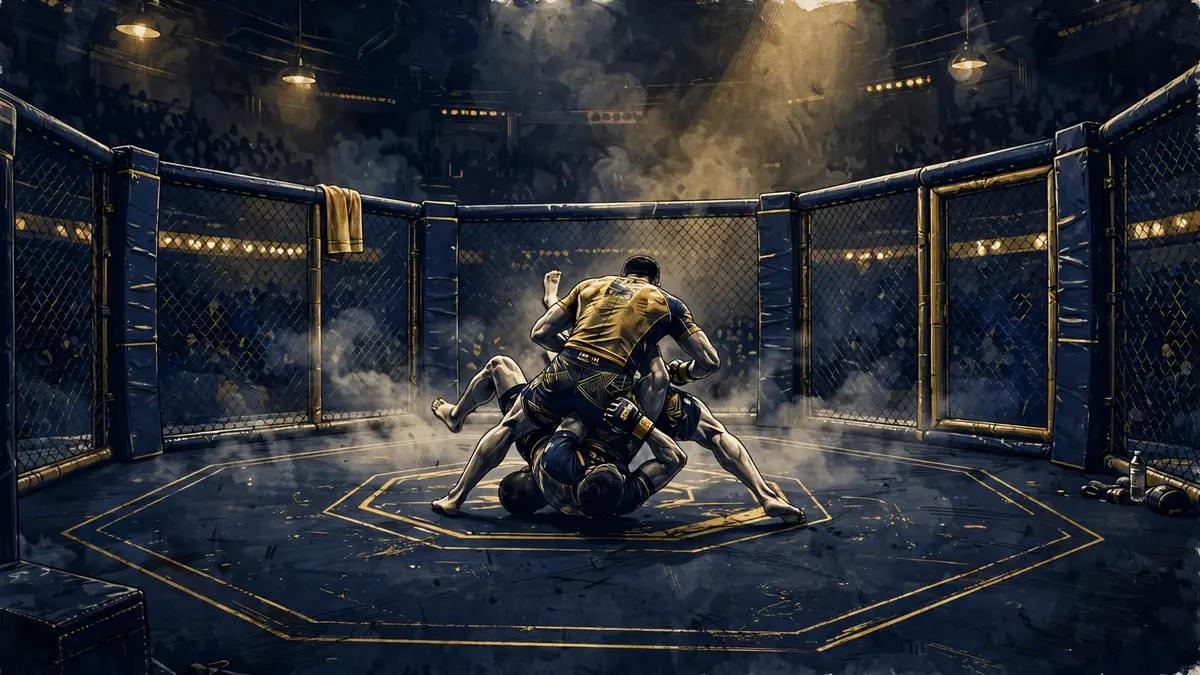
The honest verdict is that his height was neither an advantage nor a disadvantage on its own. It was average for his division, and his style turned an average frame into an exceptional weapon. Fighters a head taller than him would still have had to deal with the same problem every one of his 29 opponents faced: once Khabib got hold of you, the fight was happening on his terms, at his distance, and your height stopped mattering.
Early Life in Dagestan: The Making of The Eagle
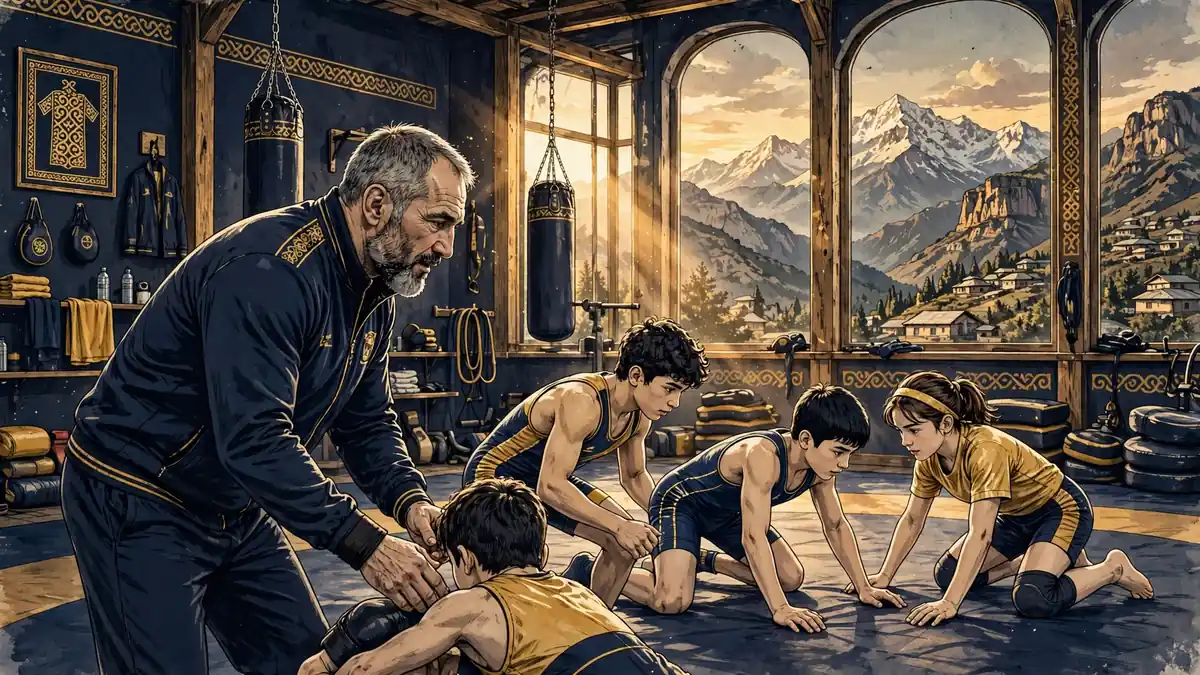
Khabib Abdulmanapovich Nurmagomedov was born on 20 September 1988 in Sildi, a small mountain village in the Tsumadinsky District of Dagestan, then part of the Soviet Union. His father, Abdulmanap Nurmagomedov, was a decorated wrestler, sambo coach and military veteran who ran a gym and trained fighters from across the region. Khabib’s childhood was not a normal one by any measure — it was a training camp that happened to be a family home.
He started wrestling as a small child under his father’s eye, and the stories from those years have become part of MMA folklore. The most famous is the bear: at around nine years old, Khabib was filmed wrestling a chained bear cub in Dagestan, a clip that still circulates today. It was not a stunt so much as a training drill in his father’s system — a way of teaching a boy to stay calm with something stronger than him holding on. The footage looks wild now, but it explains a lot about the fighter he became: comfortable in the clinch, unbothered by pressure, and patient under weight.
The family later moved to Makhachkala, Dagestan’s capital on the Caspian Sea, where Abdulmanap’s gym became Khabib’s second home. He trained in freestyle wrestling first, then judo, then combat sambo — the Russian martial art that blends wrestling, judo and striking and that shaped his whole approach to fighting. He won two world sambo championships before his MMA career took off, and the sambo base stayed visible in everything he did inside the cage: the trips, the throws, the way he controlled an opponent’s wrists before he ever thought about a submission.
For readers who want the full arc of his life beyond his height and measurements, our sister site’s Khabib Nurmagomedov biography covers his childhood, his father’s coaching and his rise through the Russian regional scene in detail.
The Road to the UFC
Khabib turned professional in September 2008, winning his first fight in his home region. Over the next three years he built a 16-0 record fighting across Russia and Ukraine, mostly in the M-1 Global promotion, and briefly tested welterweight before settling at lightweight, where his frame belonged.
The UFC signed him in late 2011, and he debuted on 20 January 2012 in Nashville, Tennessee, submitting Kamal Shalorus in the third round. It was a quiet debut by the standards of what followed, but the pattern was already there: constant forward pressure, a takedown in the first minute, and an opponent who spent the rest of the fight trying to get up.
What followed was one of the longest winning runs in the sport’s history. He beat Gleison Tibau in a controversial decision at UFC 148 in July 2012, stopped Thiago Tavares in January 2013, and then ran through Abel Trujillo, Pat Healy and Rafael dos Anjos — the last of those a dominant decision win in April 2014 over a man who would hold the lightweight title himself within a year. By then it was clear to everyone in the division that Khabib was the hardest puzzle in the weight class, and also the hardest man to book: injuries and cancelled fights kept him out of the cage for long stretches between 2014 and 2016, and a planned title fight with Tony Ferguson fell through four separate times.
His return run in 2016 and 2017 — wins over Darrell Horcher, Michael Johnson and Edson Barboza — rebuilt his momentum, and when Conor McGregor was stripped of the lightweight title for inactivity, Khabib finally got his shot at the belt.
The Championship Years: 2018–2020
On 7 April 2018, at UFC 223 in Brooklyn, Khabib fought Al Iaquinta for the vacant lightweight championship and won a clear unanimous decision over five rounds. He became the first Russian-born fighter to win a UFC title, and the longest-reigning lightweight champion the division has ever had — he would hold the belt for 1,134 days.
What came next was the biggest fight in UFC history. On 6 October 2018, at UFC 229 in Las Vegas, Khabib defended the title against Conor McGregor in a grudge match that had been building for years. The event reportedly drew around 2.4 million pay-per-view buys, a UFC record at the time. Khabib won by fourth-round submission, dropping McGregor in the second round along the way, and the night ended in a brawl that spilled out of the cage — a story covered in the controversies section below.
His second defence came on 7 September 2019 at UFC 242 in Abu Dhabi, where he submitted Dustin Poirier in the third round in front of a crowd that treated him like a homecoming hero. The third and final defence was on 24 October 2020 at UFC 254, also in Abu Dhabi, where he submitted interim champion Justin Gaethje in the second round with a triangle choke. It was his 29th straight win, and it was his last fight.
| Title Fight | Opponent |
|---|---|
| UFC 223 — 7 April 2018 | Al Iaquinta — won by unanimous decision (title win) |
| UFC 229 — 6 October 2018 | Conor McGregor — won by submission, round 4 |
| UFC 242 — 7 September 2019 | Dustin Poirier — won by submission, round 3 |
| UFC 254 — 24 October 2020 | Justin Gaethje — won by submission, round 2 |
Three title defences, three finishes in the championship rounds, and not a single loss on the record. No lightweight champion before or since has matched that run.
Retirement and Life After Fighting
Khabib announced his retirement in the cage at UFC 254, moments after beating Gaethje. His father, Abdulmanap, had died in July 2020 from complications related to COVID-19, and Khabib had promised his mother that the Gaethje fight would be his last without his father in his corner. He kept that promise. The UFC formally confirmed his retirement in March 2021 and vacated the lightweight title.
He was inducted into the UFC Hall of Fame on 30 June 2022, and he has stayed in the sport as a coach rather than a fighter. His most visible role is in the corner of Islam Makhachev, his longtime training partner and fellow Dagestani, who won the lightweight title in October 2022 with Khabib coaching him. He also corners other fighters from his team, including his cousin Umar Nurmagomedov and former champion Usman Nurmagomedov in Bellator.
He has been firm about not coming back. Despite years of speculation — and the kind of money a return against McGregor or a new star would command — Khabib has said repeatedly that his fighting career is finished. At 38, and with his father’s promise to keep, there is no sign of that changing.
Khabib Nurmagomedov Net Worth in 2026
Height may be the reason readers land on this page, but the question that follows it almost every time is about money — and Khabib’s fortune is one of the most argued-over numbers in MMA. The honest answer is a range, because the sources that track it disagree.
As of 2026, Khabib Nurmagomedov’s net worth is estimated at $25 million to $40 million. Celebrity Net Worth, which updated its Khabib profile in May 2026, puts the figure at $25 million. Most other outlets land higher: Wealthy Gorilla, updated in November 2026, lists $40 million, as do Surprise Sports, BounceMojo and several 2026 rich-list roundups. A few recent estimates stretch to $50 million or even $60 million, citing the growth of his business ventures in retirement.
The gap between the low and high ends has a clear explanation. Celebrity Net Worth’s $25 million is a net figure after its own accounting for taxes, expenses and the way it treats gross career revenue. Its own reporting says Khabib grossed $47 million to $55 million across his career — around $22 million to $25 million from fighting itself, once pay-per-view shares and discretionary bonuses are counted, plus roughly $20 million from endorsements and speaking fees. The $40 million estimates from other outlets tend to start from that gross revenue and discount less aggressively. Neither side is inventing numbers; they are applying different assumptions to the same career.
| Source | 2026 estimate |
|---|---|
| Celebrity Net Worth (updated May 2026) | $25 million |
| Wealthy Gorilla (updated Nov 2026) | $40 million |
| Surprise Sports (updated Oct 2026) | $40 million |
| BounceMojo (updated Jun 2026) | $40 million |
| Fox Estates (Mar 2026) | $40 million, with some estimates up to $60 million |
| Our anchored range | $25 million to $40 million |
The disclosed purses tell only part of the story. Wealthy Gorilla’s tally of his officially reported UFC pay comes to about $14.85 million across his career, and Celebrity Net Worth puts the disclosed total near $14.7 million — both far below his real fight income, because UFC pay-per-view points and locker-room bonuses are not published. His biggest disclosed payday was the McGregor fight, where the Nevada commission reported a $2 million purse for Khabib, before any pay-per-view share. The Poirier and Gaethje fights in Abu Dhabi carried far larger guarantees in reports at the time, though the exact numbers were never officially confirmed.
| Income Stream | Estimated career value |
|---|---|
| Disclosed UFC purses | About $14.7 million to $14.85 million |
| True fight income (with PPV shares and bonuses) | $22 million to $25 million (Celebrity Net Worth estimate) |
| Endorsements and speaking fees | Around $20 million (Celebrity Net Worth estimate) |
| Total gross career revenue | $47 million to $55 million (Celebrity Net Worth estimate) |
One more number puts the career in perspective: the McGregor fight at UFC 229 reportedly drew around 2.4 million pay-per-view buys, the biggest UFC event ever at the time. A champion’s share of an event that size is worth many multiples of his disclosed purse, which is why the gap between $14.7 million in disclosed pay and $47 million to $55 million in gross revenue is not a contradiction — it is the pay-per-view business working as designed.
Business Ventures and Endorsements
Khabib’s money after fighting comes from three places: his promotion, his coaching, and his name.
The biggest of the three is Eagle Fighting Championship, known as Eagle FC. Khabib bought the Russian promotion Gorilla Fighting Championship and relaunched it under the Eagle banner, building it into a home for Dagestani and Central Asian fighters with events in Russia, the United States and the Middle East. It is a real operating business with broadcast deals and a roster, not a vanity project, and it is the venture most often cited when newer estimates push his net worth toward the top of the range.
His endorsement income during his fighting years came from the usual mix for a UFC star: the UFC’s outfitting deal, Russian brands that wanted the most famous athlete in the country on their packaging, and a long list of appearance and speaking fees after retirement. Celebrity Net Worth credits endorsements and speaking fees with roughly $20 million of his career gross — a large share for a fighter who never chased the celebrity circuit the way McGregor did.
Coaching is the third leg. Khabib does not charge for his corner work the way a hired coach would — his role with Makhachev and his team is closer to a head coach and mentor than a paid contractor — but it keeps his name attached to championship fights, which keeps the speaking fees, the Eagle FC brand and the endorsement value alive. It is a business model built on reputation rather than a salary, and it works because the reputation is undefeated.
Cars, Homes and Lifestyle
Khabib is famous in MMA for the opposite of a lavish lifestyle. While his great rival McGregor built a public image around supercars, suits and yachts, Khabib built his around the opposite: a quiet life in Dagestan, training, family and faith. He has spoken openly about not caring for luxury, and the public record backs that up — there is no verified reporting of a supercar collection or a property portfolio to rival other stars of his earning power.
What is documented is simpler. He lives in Makhachkala, Dagestan, where he trains and coaches, and spends time between there and the mountains of his childhood. He has been photographed with a Mercedes, as many Russian athletes have, but no reliable outlet has published a verified list of his cars or homes, and this article will not invent one. The honest picture is a man who earned tens of millions and kept living largely the way he did before the money arrived.
That restraint is part of why his net worth estimates hold up as well as they do. A fighter who grossed $47 million to $55 million and spent modestly keeps far more of it than one who spent it on the lifestyle. It is also why the $25 million to $40 million range, wide as it looks, is more believable for Khabib than it would be for a star with a public record of heavy spending.
Personal Life and Family
Khabib is married with three children — two daughters and a son — and he keeps his family almost entirely out of public view. His wife’s name has never been publicly confirmed, and his children are rarely photographed. That privacy is deliberate and consistent: he has said his family is not part of his public career, and he has held that line since he became famous.
His faith is central to his public identity. He is a devout Muslim, and his post-fight speeches and interviews have often included thanks to God and references to his beliefs. He does not drink alcohol, and he has spoken about the discipline his faith gave him during the hardest weight cuts and training camps of his career.
His father remains the defining figure of his life. Abdulmanap Nurmagomedov coached him from childhood, cornered him for his biggest fights, and died in July 2020, months before the Gaethje fight. Khabib has said his retirement was a promise to his mother as much as a decision about fighting, and he still speaks about his father’s teaching when he coaches his own fighters now. The gym in Makhachkala and the team he leads are, in a real sense, his father’s work carried on.
Controversies and Setbacks
No honest account of Khabib’s career skips UFC 229. After submitting McGregor in October 2018, Khabib climbed out of the cage and attacked a member of McGregor’s team, setting off a brawl in and around the octagon. The Nevada State Athletic Commission fined him $500,000 and suspended him for nine months; McGregor was fined $50,000 and suspended for six months. Khabib later said the bad blood had been building for months and that he regretted the scene, though not the rivalry that caused it.
The other public flashpoint came before the fight, when McGregor and his entourage attacked a bus carrying Khabib and other fighters at the Barclays Center in April 2018, throwing a dolly through a window and injuring two fighters on board. McGregor was arrested and later pleaded guilty to disorderly conduct. The incident turned a sporting rivalry into a genuine feud and helped make UFC 229 the biggest event in the sport’s history.
Inside the cage, Khabib’s setbacks were almost all medical rather than competitive. He missed weight once, withdrew from fights with injuries several times between 2014 and 2017, and saw the Ferguson fight collapse four times — a sequence that cost both men years of their primes. He also had a difficult weight cut before UFC 209 that ended with him being hospitalised during fight week. None of it ever cost him a fight. He retired 29-0, the only champion of his era who never lost a round of public argument about his record.
Frequently Asked Questions
How tall is Khabib Nurmagomedov?
Khabib Nurmagomedov is 5 feet 10 inches (178 cm) tall, according to his official UFC athlete profile. A few smaller sites list 177 cm, which is the same height rounded down instead of up — 5 ft 10 in converts to 177.8 cm. His reach is 70 inches (178 cm).
How tall is Khabib Nurmagomedov in cm?
178 cm. That is the UFC’s official figure for his 5 ft 10 in height, or 1.78 metres. Some sources round the conversion to 177 cm, but 178 cm is the number the UFC and Wikipedia both publish.
Is Khabib taller than Conor McGregor?
Yes, by one inch. Khabib is listed at 5 ft 10 in (178 cm) and McGregor at 5 ft 9 in (175 cm). The face-off photos from UFC 229 show the difference: Khabib stood a fraction taller, with a broader frame, and he won the fight by fourth-round submission.
What is Khabib Nurmagomedov’s reach?
His reach is 70 inches (178 cm), exactly the same as his height. His leg reach is listed at 40 inches (102 cm). His reach was average for a lightweight, which is why his game was built on closing distance and wrestling rather than striking from range.
How much does Khabib Nurmagomedov weigh?
He fought at the lightweight limit of 155 lb (70 kg). Between camps and in retirement, without the weight cut, he has been reported at around 180 to 190 lb — closer to a natural middleweight. Cutting to 155 lb was famously hard for him, and he missed weight once, at UFC 209 in 2017.
How old is Khabib Nurmagomedov?
He was born on 20 September 1988 in Sildi, Dagestan, which makes him 38 years old as of November 2026. He retired from fighting in October 2020 at the age of 32, after beating Justin Gaethje at UFC 254.
What is Khabib Nurmagomedov’s net worth in 2026?
Estimates range from $25 million to $40 million. Celebrity Net Worth, updated in May 2026, puts it at $25 million, while Wealthy Gorilla, Surprise Sports and BounceMojo all list $40 million. His total gross career revenue is estimated at $47 million to $55 million, including pay-per-view shares, endorsements and speaking fees.
Is Khabib Nurmagomedov still fighting?
No. He retired undefeated at 29-0 after beating Justin Gaethje at UFC 254 in October 2020, and the UFC confirmed his retirement in March 2021. He was inducted into the UFC Hall of Fame in June 2022 and now works as a coach, most notably in the corner of lightweight champion Islam Makhachev, and as the promoter of Eagle FC.
Final Thoughts
Khabib Nurmagomedov is 5 ft 10 in (178 cm) tall — average height for a UFC lightweight, and the least interesting thing about him. What made him the most feared fighter of his generation was not his size but what he did with it: a low centre of gravity, a sambo base drilled into him since childhood, and a kind of patience on the mat that broke 29 men in a row without a single loss.
He retired on his own terms, kept his promise to his mother, and walked away with a fortune estimated at $25 million to $40 million and a reputation no one in the sport has matched since. The height question has a simple answer. The legacy behind it does not.
Sources and Reporting
Height, reach, record and career facts in this article were checked against the UFC’s official athlete profile and tale-of-the-tape listings, Wikipedia, DAZN and talkSPORT. Net worth figures come from Celebrity Net Worth (updated May 2026), Wealthy Gorilla (updated November 2026), Surprise Sports and BounceMojo. Additional background from The Sportster and DiffSense.
How we estimated: the headline height is the UFC’s official listing, cross-checked against Wikipedia, DAZN and talkSPORT tale-of-the-tape records; the one-centimetre spread (177 vs 178 cm) is a rounding difference, not a dispute. The net worth figure is published as a range because named sources disagree: Celebrity Net Worth anchors the low end at $25 million and most other outlets anchor the high end at $40 million. Fighters do not publish their finances, so all net worth figures are estimates drawn from public sources and may differ from private reality.